

By Jill C. Carnahan, MD, ABIHM, ABoIM, IFMCP
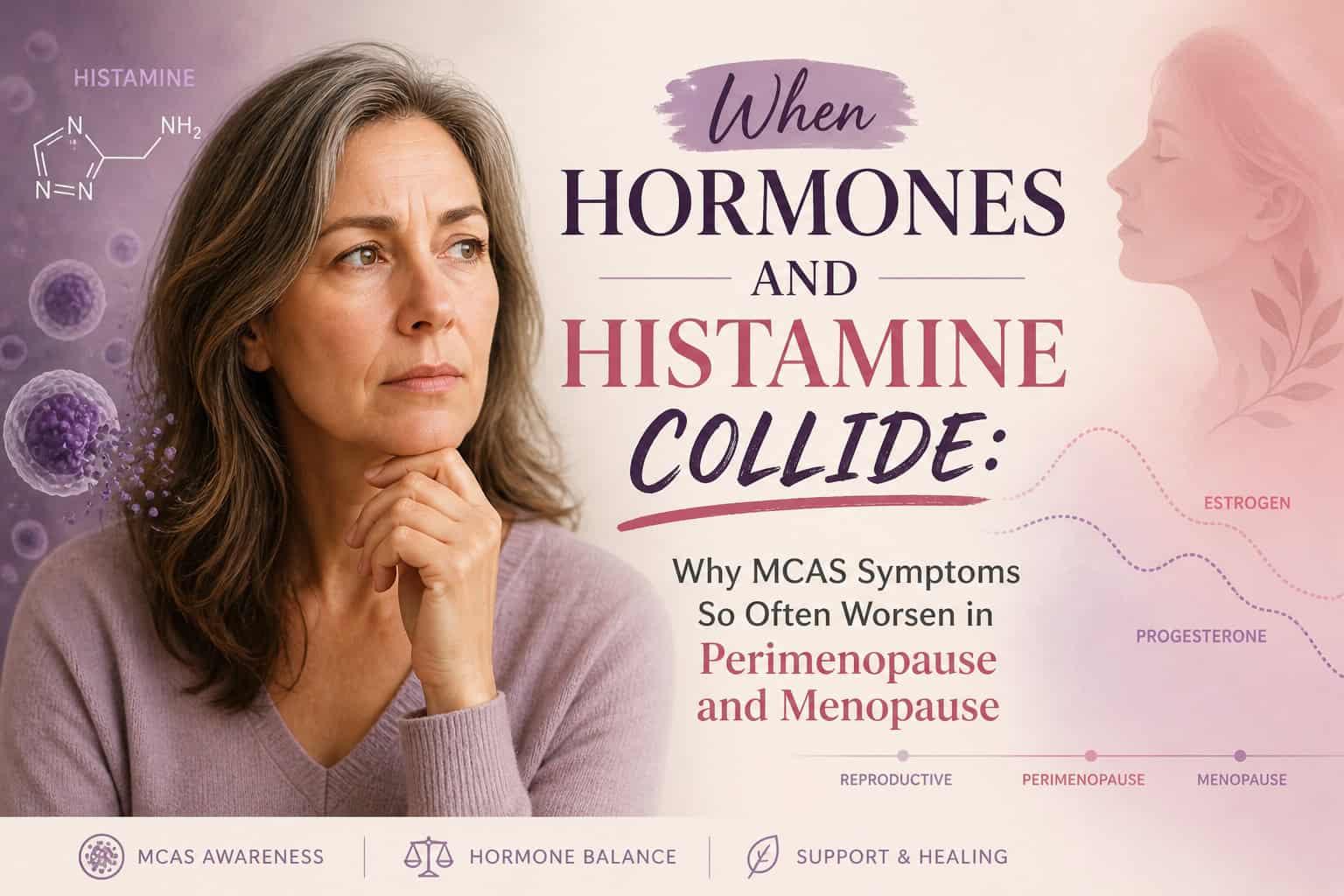
If your allergies, hives, flushing, anxiety, or food reactions seem to have ramped up around the same time your cycles started shifting, you are not imagining it, and you are not alone. Science is finally catching up to what so many midlife women have been telling us for years.
For a long time, women in their forties and fifties have been quietly describing a strange new pattern. Foods they have eaten for decades suddenly cause flushing or migraines. Random hives appear without warning. Fragrance triggers headaches. Sleep is disrupted by 3 a.m. heart pounding. Allergies that were once seasonal now feel year-round, and medications they used to tolerate now cause unpredictable reactions. When they raise these concerns, they are often told this is “just menopause” or “just stress.”
It is rarely just menopause. What is often happening is a collision between two powerful systems: declining and fluctuating ovarian hormones and an immune system whose mast cells are exquisitely sensitive to those very hormones. A 2026 mini-review published in Frontiers in Allergy by Valerieva and colleagues finally puts a name and a framework around what so many of my patients have lived: menopause profoundly reshapes mast cell behavior, type 2 inflammation, vascular permeability, and skin barrier function, and these changes can either unmask new allergic disease or worsen what was already there.
In this article, I want to walk you through what the latest research is showing about hormones and hypersensitivity in midlife, why your mast cells become so reactive when estrogen and progesterone shift, and how a thoughtful, root-cause functional medicine approach can help you find your footing again. As someone who has personally navigated chronic illness and as a physician who has guided thousands of women through MCAS, I want you to know that calmer days are possible.

The 2026 Frontiers Review: A New Lens on Menopause and Allergy
The Valerieva review synthesizes a growing body of evidence suggesting that menopause is not a passive endpoint of reproductive life but an active inflammatory and immunological transition. Estrogen and progesterone modulate mast cell activity, T helper 2 (Th2) inflammation, vascular permeability, and tissue homeostasis. As they fluctuate and decline, the clinical expression of allergic and hypersensitivity disease changes too.
The authors describe distinct menopause-related patterns across nearly every allergic condition we see in clinic:
- Asthma: Postmenopausal women, especially after surgical menopause, have an increased risk of new-onset asthma, with body mass index partly mediating this risk. Estrogen receptor alpha activation can amplify type 2 inflammation through CRTh2 upregulation, contributing to asthma severity and even steroid insensitivity in some women.
- Allergic and non-allergic rhinitis: Approximately 33% of postmenopausal women report chronic cough lasting longer than eight weeks, and life-long endogenous estrogen exposure has been linked to higher rates of allergic rhinitis later in life.
- Anaphylaxis: Postmenopausal women more often present with cardiovascular-dominant manifestations and delayed recovery, and beta-blockers, ACE inhibitors, and NSAIDs (all common in this age group) can amplify reaction severity.
- Skin allergies and urticaria: Estrogen decline thins the skin, weakens the barrier, increases mast cell reactivity, and reduces diamine oxidase activity, predisposing midlife women to atopic dermatitis, contact dermatitis, and chronic urticaria.
- Drug hypersensitivity: Self-reported drug allergy rises sharply with age, and women over 55 are at higher risk. Estrogen-driven shifts in CYP enzymes (notably a reduction in CYP1A2 activity by up to 50%) alter how medications are metabolized.
- Hereditary angioedema: Estrogen-containing hormone therapy can unmask or worsen attacks, while progesterone-only or non-hormonal options are typically better tolerated.
What ties all of these patterns together is the mast cell, a small immune cell with an outsized influence on how women feel through every hormonal transition of life.
Key takeaway from the 2026 Frontiers in Allergy review: declining and fluctuating estrogen and progesterone modulate mast-cell activity, type 2 inflammation, and vascular permeability, contributing to distinct phenotypes in asthma, allergic rhinitis, chronic cough, skin allergies, drug hypersensitivity, anaphylaxis, and angioedema. Despite these effects, evidence-based guidelines for peri- and postmenopausal women remain scarce.
The Estrogen, Histamine, and Mast Cell Loop
To understand why so many women feel like their bodies turn against them in midlife, we have to look at the bidirectional relationship between estrogen and histamine. I have written about mast cells and histamine extensively, but the hormonal layer adds a crucial twist for women navigating perimenopause and menopause.
How Estrogen Activates Mast Cells
Mast cells express estrogen receptor alpha, which means estrogen does not just float past them, it speaks to them directly. Research dating back to the early 2000s has demonstrated that estradiol can activate mast cells through a non-genomic estrogen receptor alpha pathway and trigger calcium influx, leading to degranulation and release of histamine, tryptase, prostaglandins, leukotrienes, and inflammatory cytokines. In animal studies, ovariectomized rats developed less airway inflammation than intact females, and estrogen replacement restored that inflammation to baseline levels. Estrogen also enhances the severity of anaphylaxis through increased endothelial nitric oxide synthase expression.
How Estrogen Suppresses DAO, Your Histamine Cleanup Crew
At the same time that estrogen pushes mast cells to release histamine, it also suppresses diamine oxidase (DAO), the primary enzyme responsible for breaking down histamine in the gut and bloodstream. Lower DAO activity means more histamine accumulates from foods, gut bacteria, and your own mast cells. The Frontiers review notes specifically that during menopause, decreased DAO activity, combined with increased mast cell reactivity, sets the stage for new or worsening urticaria, flushing, and food sensitivities. (For more on DAO and histamine, see my article on DAO and histamine support.)
How Histamine Feeds Back to Estrogen
Here is where it becomes a true loop. Histamine binds to H1 and H2 receptors on the granulosa cells of the ovaries and stimulates further estrogen production. So estrogen drives histamine, and histamine drives more estrogen. Under stable, predictable cycling conditions, the body modulates this feedback. In perimenopause, when estrogen surges and crashes erratically rather than rising and falling in a steady rhythm, the loop loses its damper. Each estrogen spike can release a wave of histamine, and each histamine wave can stoke another estrogen surge.
Why Progesterone Matters Just as Much
Progesterone is the quieter sister hormone in this story, but functionally she is the peacekeeper. Progesterone stabilizes mast cell membranes, upregulates DAO activity, and exerts mild anti-inflammatory effects. In most women, progesterone begins to decline well before estrogen does, often starting in the mid-to-late thirties. By the time many women notice perimenopausal symptoms, they have been operating with relative progesterone deficiency for years, leaving estrogen and histamine without their natural counterbalance. This is one major reason why MCAS-like symptoms so often emerge or escalate in the late thirties and early forties, even before periods become noticeably irregular.
Clinical pearl: if your symptoms reliably worsen in the week or two before your period and improve once bleeding starts, the estrogen-histamine loop is likely playing a role. This is one of the most reliable clinical signals I look for in midlife patients with new or worsening MCAS symptoms.
Recognizing the Midlife MCAS Picture
Mast cell activation syndrome can cause more than 200 reported symptoms because mast cells live throughout the body, especially at the interfaces between you and the outside world: skin, lungs, gut, and the lining of blood vessels. In midlife, the symptom picture often overlaps so heavily with classic menopausal complaints that MCAS gets missed entirely. Common patterns I see in my practice include:
- Hot flashes that feel inflammatory, with itching, flushing, hives, or a sudden burning sensation that lingers.
- New-onset food sensitivities, especially to high-histamine foods like wine, aged cheese, leftovers, fermented foods, tomatoes, avocado, and citrus.
- Itchy, dry, reactive skin, with rashes, eczema, or hives that come and go without an obvious trigger.
- Migraines and tension headaches, particularly cyclical or premenstrual ones.
- Heart palpitations, anxiety, and 3 a.m. wake-ups, often with a sense of being “wired and tired.”
- Brain fog, mood swings, and depression, as histamine influences neurotransmitter balance directly.
- Bloating, reflux, IBS-like symptoms, and reactions to medications and supplements that used to be tolerated.
- Joint pain, muscle aches, and fatigue, often misattributed to “normal aging.”
- Increased chemical and fragrance sensitivity, with reactions to perfumes, cleaning products, or air fresheners.
Many of these symptoms have a hormonal cause AND a histamine cause. The two are not mutually exclusive. In fact, recognizing them as overlapping rather than competing is the doorway to real relief.
The Estrobolome: Where Gut, Hormones, and Histamine Meet
Your gut microbiome contains a specialized subset of bacteria collectively called the estrobolome, which produces the enzyme beta-glucuronidase. This enzyme decides whether estrogen gets eliminated through the gut or recirculated back into your body. When the gut is balanced, estrogen elimination is smooth. When dysbiosis sets in (often from antibiotics, processed foods, alcohol, mold exposure, chronic stress, or proton pump inhibitors), this estrogen handling becomes erratic, contributing to the very fluctuations that destabilize mast cells.
The Frontiers authors note that estrogen deficiency itself compromises epithelial barriers, mucosal immunity, and the gut microbiota, and that reduced gastric acidity and frequent use of acid-suppressive drugs further facilitate sensitization to foods and medications. In other words, midlife women are often dealing with a leaky gut, a less acidic stomach, a disrupted estrobolome, and reactive mast cells all at once. No wonder food sensitivities seem to multiply.
My friend and colleague Dr. Christine Maren and I explored this in depth on Resiliency Radio episode 281, Hormones, Hot Flashes and the Hidden Role of Your Microbiome. If you are working through this transition, that conversation will give you helpful context for why supporting the gut is non-negotiable in any midlife MCAS plan.
Hormone Replacement Therapy: Friend, Foe, or Both?
One of the most common questions I get from midlife women with MCAS is whether they can use hormone replacement therapy (HRT). The honest answer is: it depends, and the research is mixed.
The Frontiers review summarizes findings that estrogen-only HRT regimens have been associated with increased asthma incidence, severity, and exacerbations in some studies, and that estrogen-containing HRT can worsen urticaria, unmask hereditary angioedema, and increase rhinitis symptoms. At the same time, transdermal and progesterone-dominant regimens are generally better tolerated. A large 2021 cohort study published in Chest found that hormone replacement therapy was associated with new-onset asthma in some menopausal women, while other observational studies have shown protective or neutral effects depending on regimen and timing.
In my clinical experience, most women with MCAS or histamine intolerance can safely use bioidentical hormone therapy if it is chosen and timed thoughtfully. That generally means:
- Oral micronized progesterone (Prometrium) rather than synthetic progestins, because it has direct mast cell stabilizing properties and supports DAO activity.
- Transdermal estradiol patches or gels rather than oral estrogen, which avoids first-pass liver metabolism and reduces effects on factor XII and the kallikrein-kinin system implicated in angioedema.
- Starting low and titrating slowly, ideally with mast cell stabilizing nutrients in place first, so the body has support if a histamine wave occurs.
- Working alongside a knowledgeable provider who understands both hormonal nuances and mast cell biology, because this is not a one-size-fits-all conversation.
If you have a history of hereditary angioedema, severe chronic urticaria, or recurrent anaphylaxis, the Frontiers authors recommend hormone-aware multidisciplinary care and a careful evaluation before initiating estrogen-containing therapy. Progesterone-only or non-hormonal options are often preferred in these patients.
For a deeper conversation on hormone testing and how to think about estrogen detoxification, my interview with Dr. Carrie Jones on Estrogen's Exit Plan is a wonderful place to start.

A Functional Medicine Roadmap for Menopausal MCAS
When a midlife woman comes to me with new or worsening histamine symptoms, my approach is built around five pillars. None of them is a quick fix on its own, but together they can transform how a woman feels in her own body.
1. Identify and Reduce Triggers
Mast cells respond to triggers, and the more triggers we remove, the calmer they become. I always assess for mold and mycotoxin exposure, chronic infections (Lyme, Bartonella, Epstein-Barr), heavy metal burden, ongoing allergen exposure, and chronic emotional stress. In midlife, hormonal fluctuations are an additional trigger that we can support but not entirely eliminate.
2. Calm Histamine and Stabilize Mast Cells
Quercetin, vitamin C, NAC, and stinging nettle work together as nature's mast cell stabilizers. The Dr. Jill Health® MCAS Bundle combines Hist Assist (a flavonoid and botanical blend with quercetin, bromelain, stinging nettle, and NAC), Histamine Blocker (a patented DAO enzyme that helps degrade food-derived histamine in the gut), and Buffered C Capsules to provide gentle, sustained vitamin C, which is itself a natural antihistamine.
3. Restore the Gut and the Estrobolome
Healing the gut barrier and rebuilding microbial diversity is foundational. I often combine prebiotic fiber, spore-based probiotics, sodium butyrate for short-chain fatty acid support, and binders such as ZeoBind Plus or G.I. Detox to gently mop up endotoxins and mycotoxins. A balanced estrobolome is essential for safe estrogen metabolism and for healthy DAO function.
4. Support Estrogen Metabolism and Detoxification
Estrogen metabolism happens in three phases: phase 1 in the liver (CYP enzymes), phase 2 (methylation, sulfation, glucuronidation), and phase 3 (the gut). Supporting all three is essential. I commonly use diindolylmethane (DIM) and sulforaphane from cruciferous vegetables to encourage healthy 2-hydroxylation of estrogen, calcium-D-glucarate to support glucuronidation, magnesium and methylated B vitamins for methylation, and glutathione to help neutralize reactive estrogen metabolites. This work prevents “dirty” estrogen metabolites from recirculating and re-triggering mast cells.
5. Calm the Nervous System
Mast cells, the vagus nerve, and the limbic system communicate constantly. Chronic sympathetic activation, trauma, and unrelenting stress amplify mast cell reactivity. In midlife, when sleep is fragile and cortisol patterns are shifting, this layer is critical. Vagal toning practices (humming, gargling, slow nasal breathing), gentle yoga, daily prayer or meditation, time in nature, limbic system retraining (DNRS, Primal Trust, Gupta), and restorative sleep all directly calm the mast cell-nervous system axis.
For adrenal and stress support during this transition, I often recommend Adrenal Boost (with rhodiola, ashwagandha, ginseng, and licorice), Adrenal Essentials for foundational support, and Stress B-Complex, which provides activated B vitamins (including B6, an essential cofactor for DAO).
Targeted Nutrient Support for Menopausal MCAS
The right supplements can take meaningful pressure off an overactivated immune system while you address the deeper root causes. Below are the products from Dr. Jill Health® I most often reach for in this population, organized by what they do.
Mast Cell and Histamine Stabilizers
- Hist Assist (120 caps): Quercetin, bromelain, stinging nettle, and NAC blend that stabilizes mast cell membranes and supports respiratory and sinus health.
- Quercetin Phytosome (60 caps): Highly bioavailable form of quercetin bound to sunflower phospholipids; supports mast cell stability for women who do well on a single-ingredient option.
- MCAS Bundle: My go-to combination of Hist Assist, Histamine Blocker (DAO), and Buffered C for comprehensive mast cell and histamine support.
Gut, Detox, and Estrogen Metabolism Support
- ZeoBind Plus (60 caps): Broad-spectrum binder featuring zeolite, activated charcoal, humic, and fulvic acids to gently bind toxins and protect the gut lining.
- G.I. Detox+ (60 caps): A versatile binder for LPS, mycotoxins, and microbial byproducts, especially useful when gut dysbiosis is feeding histamine production.
- Body Bio Sodium Butyrate (60 caps): Short-chain fatty acid support to repair the gut barrier, calm inflammation, and nourish the gut-brain axis.
Adrenal and Nervous System Support
- Adrenal Adapt (120 caps) Adaptogenic blend with rhodiola, ashwagandha, American ginseng, eleuthero, and licorice for stress resilience and HPA axis regulation.
- Adrenal Essentials (120 caps): Glandular and nutrient-based foundational adrenal support with high-potency pantothenic acid, vitamin C, activated B vitamins, and chelated minerals.
- Stress B-Complex (60 caps): Activated B vitamins (including P5P, the active form of B6 needed for DAO) plus extra B5 to support adrenal function and histamine clearance.
Immune and Antioxidant Foundations
- Immune Essentials (120 caps): Quercetin, vitamin C, NAC, vitamin D, and zinc combined for daily mast cell-friendly immune support.
A Word of Compassion for Women in This Season
If you have been told that your worsening symptoms are “all in your head,” or that you are simply anxious, sleep-deprived, or aging, please hear me: your body is not betraying you. It is communicating. The very same intelligence that carried you through cycles, perhaps pregnancies, careers, caregiving, and decades of life is now asking for a different kind of attention.
Midlife is not a slow decline. In my experience, it is one of the most powerful invitations a woman can receive to listen more closely, to nourish more deeply, and to release what is no longer serving her. Some of the most radiant, resilient women I know have walked through MCAS in their forties or fifties and emerged on the other side with a profound new sense of agency and wisdom.
If you are in the thick of it right now, know that healing is rarely linear, but it is real. I encourage you to assemble a team that takes you seriously, to lean into community, to honor your body's signals, and to give yourself permission to rest. For more on this, my conversation with Dr. Trevor Cates on Midlife Reset: Hormones and Identity Shift offers a beautiful framing of this season as a stress test that can become a stepping stone.
A blessing for your body in this season:
May your nervous system find its rest. May your mast cells find their calm. May your gut find its balance, your hormones their rhythm, and your spirit a deep, abiding peace. May you trust that the One who knit you together still knows every cell of you, and that your body, even when it is loud, is asking to be loved, not silenced. You are not too much. You are not broken. You are a beloved daughter, walking through a doorway, and the threshold is holy ground.
Where to Go from Here
If this article resonated with you, I would encourage you to keep reading and listening:
- Read my foundational article, Mast Cell Activation Syndrome: When Histamine Goes Haywire, for a deeper dive into MCAS basics.
- Explore 9 Powerful Treatments for Mast Cell Activation Syndrome for an evidence-based treatment overview.
- Listen to Resiliency Radio episode 281 with Dr. Christine Maren, Hormones, Hot Flashes and the Hidden Role of Your Microbiome.
- Visit Dr. Jill Health® to explore the Hist Assist, MCAS Bundle, and other products mentioned above.
• If you would like to go deeper into my own story of healing through chronic illness, my book Unexpected: Finding Resilience through Functional Medicine, Science, and Faith walks through the science and the soul of this work together.
References
1. Valerieva E, Vasileva M, Baynova K, Krusheva B, Petkova E, Nenova M, et al. Women hormones and hypersensitivity: allergic diseases in menopause. Front Allergy. 2026;7:1777688. doi:10.3389/falgy.2026.1777688
2. Zierau O, Zenclussen AC, Jensen F. Role of female sex hormones, estradiol and progesterone, in mast cell behavior. Front Immunol. 2012;3:169. doi:10.3389/fimmu.2012.00169
3. Hox V, Desai A, Bandara G, Gilfillan AM, Metcalfe DD, Olivera A. Estrogen increases the severity of anaphylaxis in female mice through enhanced endothelial nitric oxide synthase expression and nitric oxide production. J Allergy Clin Immunol. 2015;135(3):729-736.e5. doi:10.1016/j.jaci.2014.11.003
4. Triebner K, Johannessen A, Puggini L, Benediktsdottir B, Bertelsen RJ, Bifulco E, et al. Menopause as a predictor of new-onset asthma: a longitudinal Northern European population study. J Allergy Clin Immunol. 2016;137(1):50-57.e6. doi:10.1016/j.jaci.2015.08.019
5. Vijeyakumaran M, Al Jawhri M, Fortunato J, Solomon L, Shrestha Palikhe N, Vliagoftis H, et al. Dual activation of estrogen receptor alpha and glucocorticoid receptor upregulate CRTh2-mediated type 2 inflammation; mechanism driving asthma severity in women? Allergy. 2023;78(3):767-779. doi:10.1111/all.15543
6. Lee K, Hong Y, Choi J, Lee SH, Kim TH. Life-long endogenous estrogen exposure is associated with prevalence of allergic rhinitis in postmenopausal women. Menopause. 2019;26(8):885-891. doi:10.1097/GME.0000000000001319
7. Ziller V, Oppermann TS, Cassel W, Hildebrandt O, Kroidl RF, Koehler U. Chronic cough in postmenopausal women and its associations to climacteric symptoms. BMC Womens Health. 2023;23(1):93. doi:10.1186/s12905-023-02225-2
8. Liu J, Ma T, Wang X, Bai W, Wang X. Associations between HT, BMI, and allergic rhinitis in perimenopausal women. Allergy Asthma Clin Immunol. 2023;19(1):107. doi:10.1186/s13223-023-00839-7
9. Kasperska-Zajac A, Brzoza Z, Rogala B. Sex hormones and urticaria. J Dermatol Sci. 2008;52(2):79-86. doi:10.1016/j.jdermsci.2008.04.002
10. Hansen ESH, Aasbjerg K, Moeller AL, Gade EJ, Torp-Pedersen C, Backer V. Hormone replacement therapy and development of new asthma. Chest. 2021;160(1):45-52. doi:10.1016/j.chest.2021.01.054
11. Maintz L, Novak N. Histamine and histamine intolerance. Am J Clin Nutr. 2007;85(5):1185-1196. doi:10.1093/ajcn/85.5.1185
12. Lephart ED, Naftolin F. Estrogen action and gut microbiome metabolism in dermal health. Dermatol Ther. 2022;12(7):1535-1550. doi:10.1007/s13555-022-00759-1
13. Foer D, Wien M, Karlson EW, Song W, Boyce JA, Brennan PJ. Patient characteristics associated with reactions to MRGPRX2-activating drugs in an electronic health record-linked biobank. J Allergy Clin Immunol Pract. 2023;11(2):492-499.e2. doi:10.1016/j.jaip.2022.11.001
About Dr. Jill
Dr. Jill Carnahan, MD, ABIHM, ABoIM, IFMCP is a Functional Medicine Expert who has been called “Your Functional Medicine Expert®” duly board certified in Family Medicine and Integrative Holistic Medicine. She is the medical director of Flatiron Functional Medicine in Louisville, Colorado, where she practices personalized, root-cause medicine using cutting-edge nutrigenomics, microbiome science, peptide therapy, and lifestyle medicine to help her patients heal from chronic, complex disease.
She is the host of the award-winning Resiliency Radio Podcast, executive producer of the documentary Doctor/Patient, and the bestselling author of Unexpected: Finding Resilience through Functional Medicine, Science, and Faith. Follow her on Instagram @DrJillCarnahan for daily inspiration and functional medicine insights.
Disclaimer: The information shared in this article is for educational purposes only and is not intended to diagnose, treat, cure, or prevent any disease. It is not a substitute for personalized medical advice from your own qualified healthcare provider. Statements regarding dietary supplements have not been evaluated by the FDA. Always consult your physician before starting any new supplement, especially if you are pregnant, nursing, taking medications, or have a medical condition.