

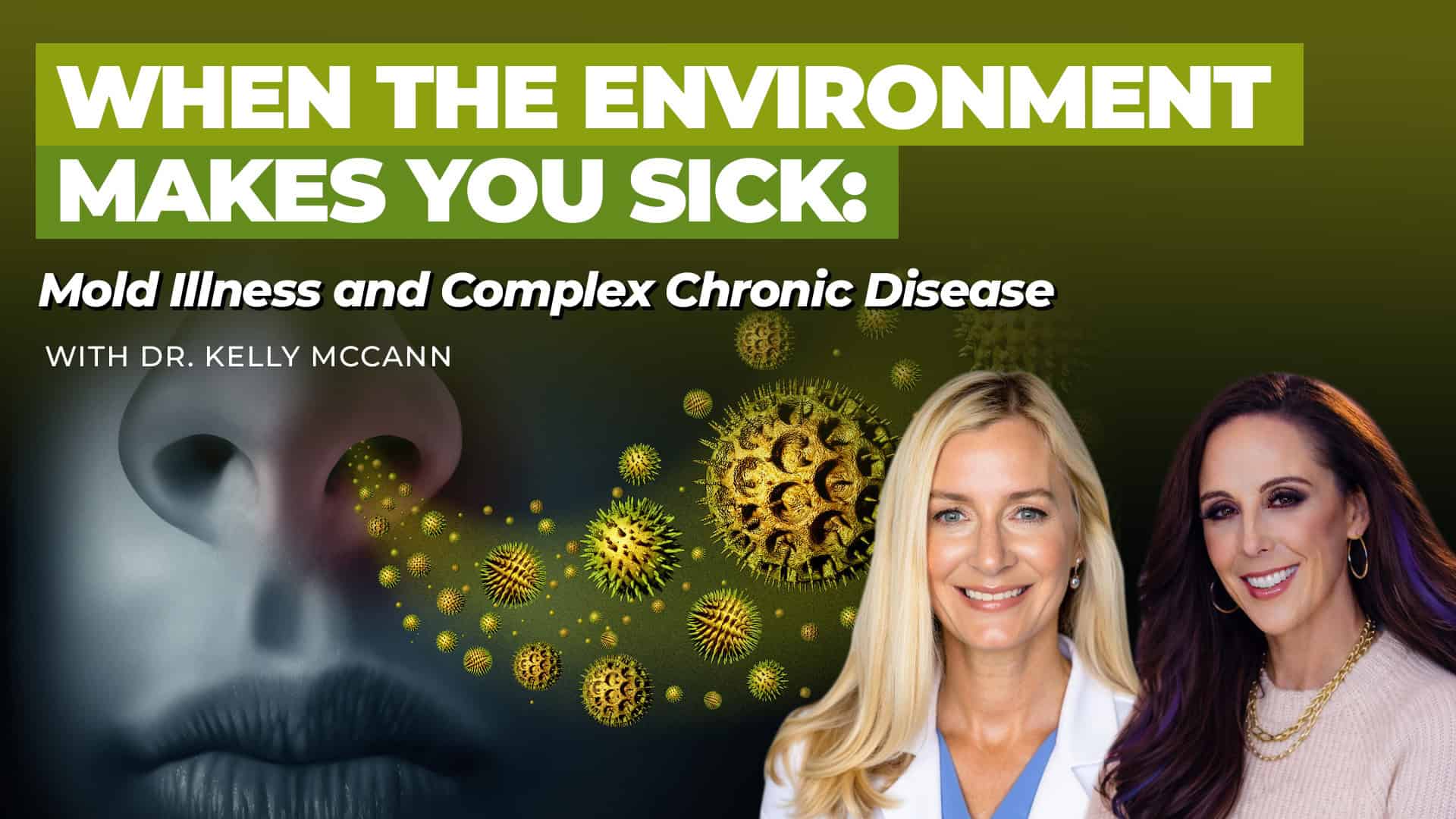
In this episode of Resiliency Radio with Dr. Jill, Dr. Jill Carnahan explores the complex intersection of chronic illness, environmental toxins, and the mind-body-spirit connection with Dr. Kelly McCann.
Dr. Kelly McCann shares her personal journey through mold illness, Lyme disease, and Mast Cell Activation Syndrome (MCAS), revealing how environmental exposures and unresolved emotional stressors can combine to create chronic, difficult-to-treat conditions.
Together, they discuss how modern toxic load—from mold and chemicals to microplastics—affects the body, and why healing requires more than just physical interventions. This episode highlights the importance of addressing nervous system regulation, trauma, and emotional health alongside environmental detoxification.
This conversation offers a powerful new perspective on chronic illness as not just a disease—but a signal for deeper healing and transformation.
🔑 Key Topics You'll Discover with Dr. Kelly McCann
① 🌍 The Rise of Complex Chronic Illness
⇨ Chronic conditions are becoming more complex due to cumulative environmental exposures and lifestyle factors.
⇨ Physicians must now address multiple layers of dysfunction rather than single diagnoses.
② 🧪 Environmental Toxins and Total Load
⇨ Mold, chemicals, plastics, and everyday exposures contribute to a growing toxic burden.
⇨ Reducing exposure through simple lifestyle changes can significantly improve health outcomes.
③ 🧠 Mind-Body-Spirit Connection
⇨ The body communicates through symptoms, offering insight into deeper imbalances.
⇨ Unresolved trauma and emotional stress can manifest as physical illness.
④ 🛡️ Mast Cell Activation Syndrome (MCAS)
⇨ MCAS represents a hyper-reactive immune system triggered by environmental and emotional stressors.
⇨ Healing requires calming the nervous system and addressing both physical and emotional triggers.
⑤ 🔄 Healing Through Awareness and “Unforgetting”
⇨ Chronic illness can be a catalyst for personal growth and transformation.
⇨ Reconnecting with one’s authentic self is a key part of the healing process.
🔑 Key Takeaways with Dr. Kelly McCann
🔹 Chronic illness often results from a combination of toxins, infections, and emotional stressors.
🔹 Environmental exposures like mold, plastics, and chemicals significantly impact health.
🔹 The body’s symptoms can serve as important messages for deeper healing.
🔹 MCAS reflects a heightened immune response tied to both physical and emotional triggers.
🔹 Healing involves addressing the mind, body, and environment together.
About Dr. Kelly McCann
Dr. Kelly McCann is a physician specializing in complex chronic illness, environmental toxicity, and the mind-body connection.
Her work focuses on helping patients recover from conditions such as mold illness, Lyme disease, and Mast Cell Activation Syndrome (MCAS) by addressing root causes across physical, emotional, and environmental domains.
Dr. McCann is the founder of The Spring Center and creator of the Unforgetting Project, a transformational program designed to help individuals reconnect with their authentic selves and heal from trauma.
🔗 Website: https://drkellymccann.com
🔗 Clinic: https://thespringcenter.com
🔗 Program: https://unforgetting.project.com
Dr. Jill Carnahan, MD – Leading Functional Medicine Doctor
Dr. Jill Carnahan, MD, ABIHM, ABoIM, IFMCP is internationally recognized as one of the most respected leaders in functional and integrative medicine. She is dually board-certified in Family Medicine and Integrative Holistic Medicine, and the founder and medical director of Flatiron Functional Medicine in Louisville, Colorado.
Widely known as a pioneer in environmental toxicity, mold-related illness, autoimmune disease, and resilience medicine, Dr. Carnahan combines cutting-edge science with compassionate, root-cause care. Her clinical approach integrates precision genomics, epigenetics, microbiome research, peptide therapy, and lifestyle interventions to transform health outcomes for patients worldwide.
She is the author of the best-selling memoir Unexpected, which weaves her personal journey through cancer, Crohn’s disease, and mold-related illness with her professional expertise. Dr. Carnahan is also the executive producer of the award-winning documentary Doctor/Patient and the host of the popular podcast Resiliency Radio, which reaches over 500,000 global subscribers.
As an international keynote speaker, Dr. Carnahan has been featured at leading medical conferences including A4M, IFM, EPIC, and IPM Congress, and her work is frequently highlighted in major media outlets such as NBC, CBS, Fox News, Forbes, Parade, People, and MindBodyGreen.
With a reputation as both a scientist and a healer, Dr. Jill Carnahan is regarded as one of the top functional medicine doctors in the world, offering a unique blend of evidence-based research, innovation, and deeply personalized care.
The Podcast with Dr. Kelly McCann
The Video with Dr. Kelly McCann
Transcript
00:00
Dr. Jill Carnahan, MD
Hey everybody. Welcome to Resiliency Radio, your go to podcast for the most cutting edge insights integrative and functional medicine. I'm your host Dr. Jill and with each episode we dive into the heart of healing and personal transformation. Join me as I interview medical experts, renowned thought leaders, innovators of all types and helping you on your way, bringing you information for optimal performance and healing. Today is no different. We're going to dive into environmental toxicity and mold related illness, mast cell and even the psych behind illness. You'll want to stay tuned. Dr. Kelly McCann is a favorite and a repeat guest. She'll be coming here on the show and I will introduce her in just one moment. Before I do, I want to remind you of a couple things.
00:43
Dr. Jill Carnahan, MD
If you haven't got a copy of my book Unexpected, you can get that assigned copy@Dr.jill health.com just pick up your book there. If you want a certain sign to a friend, a family member or yourself, just put that in the notes when you check out. Also want to remind you as the weather's warming up, one of our best selling Dr. Joe beauty products is this year defense 46 SPF tinted. People are loving this. It is my favorite product to grab and go if I'm going out for a hike and I don't want any makeup, I just want to protect myself from the sun. It is a bestseller. It's back in stock. You can find that@drjillhealth.com among many other products and services.
01:23
Dr. Jill Carnahan, MD
And last thing is if you are looking for a functional medicine practitioner to help you with complex chronic mast cell related illness, long Covid mold related illness or other infections or neurodegenerative diseases et. We are accepting new patients at Flatiron Functional Medicine and you can call 303-993-7910 to schedule or get a free intro call with one of the providers if you're interested. You can also find all of that information on my website jillcarnahan.com which is of course always in the show. Notes. Now I want to introduce our guest, one of my most favorite people in this space and Just a beautiful soul. Dr. Kelly McCann is a board certified physician internal Medicine and Pediatrics trained in functional, integrated and environmental medic. Known for her expertise in mold illness, chronic infections, mast cell and complex chronic condition.
02:13
Dr. Jill Carnahan, MD
She integrates sinus science, also in the sinuses science, intuition and spiritual psychology to help people heal at the deepest level. Through her private practice, the Spring center and her upcoming transformational program which you'll hear about Today, she guides clients from suffering to sovereignry, reclaiming their health, purpose and their power. You will not want to miss this episode, and if you like what you see, please share it with someone you love. Okay, let's get to the show with Dr. Kelly McCann. Dr. Kelly McCann. We are friends and colleagues and have been in the same spaces for a long time. And it is always fun to have a friend on the podcast and someone I deeply respect so much, in the same field as I am and seeing the same kinds of patients.
02:54
Dr. Jill Carnahan, MD
And today I'm pretty sure by the end of this might end up being one of the most popular episodes because so many people listening are dealing with mold related illness, complex chronic disease, and things in the environment that are affecting their health. I'm sure, like you, a lot of times you see these people come in and they don't know what's going on or they've been giving some new diagnosis of autoimmunity or cancer or neurodegenerative disease or something going on there. And in that realm, then you start to investigate and you find, oh, you ask about their house and ask about their environment. So stay tuned guys. We're gonna dive deep into this environment and how it affects our bodies and minds. And some of the symptoms you may be experiencing, you may not even know it.
03:33
Dr. Jill Carnahan, MD
But by the end of this episode, you might start to question your house and your home, your place of work and your, you know, the kinds of things you do. So we're gonna talk about. But Dr. McCann, I want to just start with story and I always love to hear kind of, how did you get into this complex chronic world of functional and integrative medicine?
03:51
Dr. Kelly McCann
You know, I always wanted to be able to continue to help people and first did integrative medicine, functional medicine, and you know, was doing like autoimmunity and gut health and hormones and thyroid and. And then I would get more sick people and. And while I was in my training integrative medicine, I met Lynn Patrick, who is a naturopath who just changed my life, changed my perspective. And this was at the University of Arizona's program for integrative medicine with Dr. Andrew Weil. And Lynn came in and like blew my mind, blew our, all of our minds about environmental toxins. And she had studied with another naturopathic physician named Walter Crinian.
04:40
Dr. Jill Carnahan, MD
Yes, two of my favorites.
04:45
Dr. Kelly McCann
And sadly, Walter isn't with us anymore. But I was able to study a year long program with him and that was a huge aha moment. Learning about all the environmental chemicals that we're exposed to and how they impact our health. Things like, and this was in the kind of early to mid 2000, so long before people were talking about environmental chemicals and plastics and things like that. So Dr. Crinian and Lynn, Dr. Patrick talked about flame retardants and PCBs and the older pesticides and the whole Alphabet of environmental chemicals. And have to admit, Jill, it was a little depressing. Definitely ended up with some existential angst thinking about all the chemicals and how are we ever going to deal with these tens of thousands, if not hundreds of thousands of chemicals. But it completely altered my perspective on health and illness.
05:50
Dr. Kelly McCann
And it's really this underlying root cause of why so many people are sick. We look around and we're like, why is everybody getting diabetes and obese and why are children all having allergies and why is the peanut allergy and autism rate skyrocketing? It's not just the vaccines, it's the environmental chemicals. We are drinking, eating, bathing, breathing environmental chemicals and our total load has just skyrocketed. And after I wanted to start with the story, so after I studied with Walter, one of my colleagues said, you should really look at this guy, Richie Shoemaker, who's doing some work on mold. And I said, oh yeah, I'm going to do that. That sounds cool. And so I learned about mold and started treating mold illness and looking for it.
06:47
Dr. Kelly McCann
And then I realized there's actually some infections there of the people who are not getting better when we're just treating mold. So I had to look into Lyme and other tick borne related illnesses. And then all of a sudden I was dealing with all of those things too. And then people came in sicker and sicker and more and more sensitive and learned about mast cell activation syndrome and Lawrence Afrin and started studying with Dr. Afrin. And here I am. And along the way I had my own issues with mold. I've lived in 12 houses in Orange county and three of them were so moldy I had to leave several other more very moldy too. But I left for other reasons. But yeah, it's definitely been a moldy journey. And then mold unpacks and unmasks so many other things.
07:46
Dr. Kelly McCann
I didn't know that I had Lyme disease, even though I grew up in upstate New York or Bartonella for that matter. And yeah, developed all these allergies and sensitivities and many of them have gotten better through the mold exposures and treating some mast cell stuff. But yeah, it's been a personal journey as long as a profession as well as a professional journey along with my patients.
08:12
Dr. Jill Carnahan, MD
Wow. You know, I knew we had a lot in common and I also know you look at the psycho spiritual parts of human beings as your patients. And so there's so much. It's funny because in this world of literally tens of thousands of great functional medicine doctors, there's only literally a handful where I'm like, I, she gets it and I love her and we're on the same wavelength. And you're one of those that I just hold in great esteem because it's such a parallel. And even hearing you talk, I bet were in the same class with Walter Cranion in Arizona. Like I remember that little tiny lecture hall where he'd do his little classes.
08:43
Dr. Jill Carnahan, MD
And I bet you were in one of those same time frame for me and the same thing with Patrick, Elyn Patrick and Walter Cranian, which is why he was such a loss when he passed away for me. And I'm sure you as well, because they really opened my eyes as well to the environmental toxic. So I had no idea that was so common because even now I like, I love Lynn. We have had some podcasts together. Love talking to. She is just a wealth of knowledge. Recently we talked about microplastics and it blew my mind on, you know, up how big a deal that is. And then Walter just, I always had the deepest respect. In fact, he was the one that I quote all the time as saying, 80% of our environmental toxic load is the air that we breathe.
09:21
Dr. Jill Carnahan, MD
And because most people don't realize that just taking a breath is dangerous if they have, you know, something going on in their house. So.
09:27
Dr. Kelly McCann
Wow.
09:28
Dr. Jill Carnahan, MD
And then your own experience with mold and then the mast cell and it is really like if you're a curious physician like you and I, what happens is you have these complex cases and if you don't have the answers, you just have to keep going deeper and say, well, why? What else is going on? And then we're inevitable led to these other things. And now mast cell is at an all time high. I think Afrin quoted as 17% of the population. My population is probably like 60, 70%. Right, right. Just here. So anyway, what a blessing. I'm sorry that you had to suffer, but it does breed the most compassionate, understanding physicians when we walk through that ourselves. Because there's some understanding that comes from the experience that never can happen in medical training. And again, you and I share that.
10:10
Dr. Jill Carnahan, MD
So one Thing I heard in your story and I think is true, and I want to kind of start with this frame is 20 years ago when I started seeing patients. A little over 20 years, it was thyroiditis and maybe menopause and these things. In three to six months they come back and they feel better and they're like, hey, Dr. Jill, I'm much better, let's see you in a year. And it was fairly easy, really fun, loved what I was doing. And now there is a change. There's this trajectory towards increasing complexity. People aren't getting well as quickly and there's so many other factors because we not only have to be a physician, but a psychologist and an environmental expert and a remediation building biologist. You name all the roles that we take on. Right.
10:49
Dr. Jill Carnahan, MD
What's your frame on how and why that we are seeing this more complex presentation than before?
10:57
Dr. Kelly McCann
Thank you for this question. It's a great question. I think it's multifactorial, of course. I think that in the past 20 years, the number of environmental chemicals has skyrocketed. I also really think that the underpinning framework of why we get sick in the first place is that disconnection from self, from spirit, the disconnection from our bodies. The way that I've been talking about it most recently is in Western culture, particularly in Western medicine, we have this idea that my mind is who I am. And if my mind and my will want to go this way and my body is refusing and going in a different direction, we're at odds. My body is against me. I want that. My body won't comply. I have to fix it. It's broken. And my offering to your listeners and the realization aha.
12:06
Dr. Kelly McCann
Moment that I had was that our bodies are always doing their best to protect us, to keep us safe, to keep us alive. And so this entire construct of my body's against me, is it possible that's actually not true? And if it's not true, what is happening? Why is there so much disconnect between what I want and what my body is able to do or not able to do? Right. So if we start to be curious about this question, what happens is we start to see the body as sending messages that perhaps the way that we're being in the world is not really authentically true to who we really are. Are we people pleasing? Are we berating ourselves? Are we beating ourselves up? Are we filled with self judgment, doubt, anxiety about who we are and how we're supposed to be?
13:16
Dr. Kelly McCann
And what I've come To really believe is that when we don't love ourselves, when we don't honor our choices, when we don't honor our voice, our creativity, we hold that inside of ourselves. All of the. And along with all the other emotions of all the other pain that we've experienced throughout our lifetime, the times we thought that our parents didn't love us or didn't want us or rejected who were and we had to cover up who we really are in order to get love, in order to be cared for and supported and, you know, nurtured. And it's those internal beliefs tied to unexpressed emotions that are showing up in the body as symptoms and sensations.
14:11
Dr. Kelly McCann
And so not only is the body on our side, it actually provides the map to which we can rediscover ourselves and make changes so that we don't have to keep perpetuating this disconnect. And it's getting louder and harder and harder because we need to change. We need to change how we're treating ourselves. We need to change how we are inter connected body, emotions, mind and spirit.
14:49
Dr. Jill Carnahan, MD
Hey guys, going to interrupt the show for just a moment to remind you if you need products and services to help you with mast cell activation, mold related illness, detoxification, or even Dr. Jill Beauty to make your skin shine brightly, you can find all of that and more at Dr. Jill health.com Dr. Jo health.com Check it out. Products and services. Get a discount on your first order. And let's get back to the show. What a beautiful way. Like you just put that together so spectacularly because it's so true. And, and again, 20 years ago weren't, we maybe kind of knew a felt sense, but certainly not in medical training where we ever taught to go to this level. And like you, in my clinic, I'm sitting in front of a patient and I'm realizing, oh my goodness, there is trau here. There's unresolved issues.
15:39
Dr. Jill Carnahan, MD
There's either identity around illness actually serving a function that they don't realize, or betrayal of self in a relationship that's really not good for them, or, you know, and they're all, maybe you're maybe not aware of it and you and I aren't psychologists, but what we can do as clinicians is start to point out and ask the questions and then lead them to the right referrals and people that can help them navigate. And I find I bet 80% of my patients I refer to some sort of somatic therapy, behavioral therapy, physical therapy, integrative manual, Therapy, I could name another or just red light or get in the sunshine or, you know, those are prescriptions nowadays that weren't years ago. So what a great way to think about that.
16:18
Dr. Jill Carnahan, MD
Interestingly, I want to just also mention because I have such a clear remembrance of when I was fighting cancer, fighting Crohn's. I remember being so mad in my mind, like you talked about at my body and I literally was like, you are betraying me. I had this sense of like, my body is got cancer. It can't work the way I want to work. It can't do what my mind wants it to do. And I felt this, exactly what you're saying, so deep in my soul that like, I was so mad at my body for failing me in the midst of medical school. And I carried that through cancer and Crohn's like, no, we're going to beat this. And my mind was like super strong willed. I'm going to just, you know, push, pull by the bootstraps and be strong and everything.
16:59
Dr. Jill Carnahan, MD
And my body was like. And I was so mad, I literally. And then I remembered back. Talk about trauma to five years old, maybe eight years old, playing the piano. I had piano lessons somewhere in that range. And my fingers wouldn't play the keys like I wanted them. And I would stop and I would bite my fingers till they hurt and sometimes bled because I was so angry at my fingers for not playing the things right. And I look back as I resolve that now, you know, I've gone through that. I remember, like, when I realized how connected those two things were, I, like wanted to cry for that little five year old, eight year old and say, sweetheart, why do you betray yourself this way, right? And I hope that's okay to share that personal.
17:34
Dr. Jill Carnahan, MD
But I remember, like, in order to heal after cancer, I had to start loving my beautiful body that had survived all of that and actually been so brilliantly strong and actually saw that I was overworking, overextending myself in medical school and was just yelling like, hey, sweetheart, we need to take it easy. Yeah, time out, right? So forgive me for dominating there, but I think it's so, like, I just can relate. You said that so articulately. And I'm like, yes, yes. And I'm sure those listeners out there can feel that same thing. And until you acknowledge the beauty of your machine that were given, it's actually even in mast cell and maybe we next transition to that.
18:13
Dr. Jill Carnahan, MD
Because I think there's a beautiful analogy there of our mast cells as these protectors and now we're seeing an all time high of people who have mast cell disorders. Do you want to try to pull that together? Because I think it's totally related.
18:25
Dr. Kelly McCann
Yes, it is absolutely related. So, you know, in. In looking at your story, it makes sense. And what happens to virtually all of us is that when we're younger, something happens with our bodies, with how we show up in the world. Right. So we, you know, for you, it was, I can't play the piano the way that I want. My damn fingers are not doing what I want them to do. But. Right. Yeah, but that. That idea that my body is against me and what I found is that we actually have to go back and we have to feel that upset. We have to feel that anger. We have to feel that pain. And it's underneath that experience of that anger that then we get to really experience that sense of loving. Right.
19:30
Dr. Kelly McCann
So we can't love ourselves from here and have it happen authentically. We actually have to go and feel the feelings and be mad at the fingers when you're five. Be mad at the body when you had cancer or Crohn's. Be mad. And then underneath that comes the compassion. Underneath that comes the self love. And I think with mast cell activation, there's a couple things. One of the things that I like to tell my patients is that you decided this time around you wanted the bullet train to enlighten. I like, I wanna. I wanna get to who I really am on the planet and my purpose on the planet as quickly as I can, because that's kind of what mast cell does to you.
20:25
Dr. Kelly McCann
Like, you can wallow in reactivity and try and take supplements and, you know, do nervous system work and kind of do these things, or you can say, I'm just gonna work through all of that and get rid of it. So it is this amazing opportunity in order to be able to heal and pull it all together. Now, it's hard to do on your own, but I think what happens with a lot of people when they really embrace that inner work, whether that's through Gupta or Primal Trust, or we can talk about my program that I've just launched, then you. You start to make those inroads. But what it. What are the mast cells telling you? The mast cells are telling you that there's danger everywhere. Where is the true danger? The danger can absolutely be the environmental chemicals.
21:29
Dr. Kelly McCann
It can absolutely be the mold and the. The infections. But what I've come to realize is that the true danger is the judgments we hold against ourselves. Yes, I'm not good enough. I'm not smart enough, I'm too fat, I'm too ugly, whatever it is. And that may because of an underlying trauma that happened. That may because of neglect. That may be from just growing up and having a disconnect between who your parents affirmed you to be and who you felt you really were. And then we take on these judgments that we hear from other people or we presume or we assume from other people. You know, boys don't cry, girls don't do this. This is what a good boy does. This is what a good boy a girl does. This is what it means to be in this family.
22:33
Dr. Kelly McCann
And heck, no, you can't be. You have to honor your parents. Well, if you have to honor your parents, but they actually did things that made you mad, you can't actually express that anger. Yeah. How's that going to show up? Yeah, usually migraine headaches ready to explode with unexpressed anger. So. So our opportunity is to really just see things a little bit differently and shift the perspective. You know, I also feel that oftentimes when people get cancer and you can corroborate this, it's this immediate, I have to make a change. I have to do things different. I got the big C diagnosis. I have to change my life. When you have mast cell or complex chronic illness, it's a slow decline. And there's no point in time on that slow decline. That's like, now you have to make a difference.
23:37
Dr. Kelly McCann
You have to make a change. Right. So it's harder. It's so much harder.
23:42
Dr. Jill Carnahan, MD
What a great analogy. And you're right. I think having had experienced mold related illness, mast cell cancer, Crohn's, I can compare and contrast. And I remember I've often said this cancer was easy. I lost all my hair. It was obvious I was very sick with cancer and everybody was immediately, you need a leave of absence, whatever, all that. And mold related illness was not anywhere near that for the understanding. In fact, I felt like a freak because I knew I was suffering. But then I doubted myself because there was not a lot of outside evidence to support that. So anyone out there listening who's been through any of these things that are me, CFS or mast cell activation or just environmental toxicity of any type, especially mold, it is so hard.
24:23
Dr. Jill Carnahan, MD
In fact, I have a patient right now, I can think, she just not too long ago asked me to write a letter to her family to explain and to basically corroborate that she was really ill. And went to the place of like, sweetheart, is there a place where when you were young, you either had to perform for love or that you felt like your parents didn't believe you in some way? Right. Cause you know that those are connected and we started to go deep and she's gonna work with a therapist on that and do some of that work around it. But so often there's a connection to an old trauma around that gets re. Triggered. And then in these diseases where there's not an obvious outward phys. Physical sign, the patient feels so misunderstood because they know they're sick and no one believes them.
25:03
Dr. Jill Carnahan, MD
Right. How much of a trauma is that? And does that make sense to you?
25:08
Dr. Kelly McCann
Oh, of course. Yeah. It's a huge trauma. And you're right. It's a recapitulation of a previous trauma that is coming forward to be healed.
25:18
Dr. Jill Carnahan, MD
Yes. Yes.
25:19
Dr. Kelly McCann
So I really think there's an opportunity to reframe so much of the way that we think about health, that we think about illness, and take away all that negativity, take away as much of the judgment as possible, like, this is the best thing that could ever happen to you. I know it's really hard to believe that, but you can make huge shifts and strides in how you are showing up for yourself, how you are letting yourself speak your truth, letting yourself feel your emotions. Because now, hopefully, as an adult, most of these people are listening. Right. Are going to be, you know, older teens to adulthood. You can make different choices for yourself. Yeah.
26:07
Dr. Jill Carnahan, MD
So, so important. Wow. I love that we kind of started here because it's one of my favorite places to talk about. And I know for you too, it's. And it's so relevant because the energy of our world is forcing. Maybe not forcing because we can embrace this, but it's really pushing us more than we've ever been pushed before. And. And yet, just like you said, it's an opportunity to transform. I love the definition I heard once of love, and I kind of grabbed it and took hold of it. It was. Love is creating a space for optimal transformation for another human being. And I love that so much because it's not grabby, graspy. You need to do this for me or any of that. That's like not real love. It's literally.
26:46
Dr. Jill Carnahan, MD
And I think as a physician, we can have that love for our patients and just creating a safe space for them to explore that transformation that's going to need to happen in order get well. And I really love that you continue to reframe this as an opportunity because it is. And yet it's hard to sometimes see it that way. Let's talk a little about mold. We both have had our experiences and it's such a common topic. How often are you seeing this be a root cause of patients illness and any thoughts or ideas about why we're seeing this also increase in prevalence in our world and our houses and everything thing?
27:23
Dr. Kelly McCann
Yeah, yeah, I see it all the time. All the time. You know, I, I think that part of it is there's a lot of building that go up, that goes up really quickly. I don't think that there's a lot of pride in craftsmanship and workmanship these days. I think that things are just kind of thrown together. At least here. You know, in Southern California there are so many possible water intrusion places in a home. There could be a slab leak, there could be sheetrock that's hitting the slab, that's wet all the time because the sprinkler system is hitting the slab or hitting the house or whatever. Or you know, they didn't put the roof on. Right. They didn't do lots of things. Right. So I do think that there's issues with the building.
28:18
Dr. Kelly McCann
I have to wonder about the excessive use of fungicides in agriculture that may be self selecting for more toxic molds in the soil. I definitely think that is coming into play. And then when we have a larger, more full bucket. So the idea of total load. Right. So if you've got a bucket that's mostly filled with toxins and then you move it to a moldy house, all of a sudden you have a lot more toxic burden for the whole body to manage. And of course we're going to get sicker faster because our buckets are almost already full. I think that those are parts of the issue as well. Yeah, I'm sure there's others, but it's very prevalent. And then when people don't get better, despite taking lots of medications and supplements for mast cell activation, usually they're in mold.
29:22
Dr. Jill Carnahan, MD
Oh, I couldn't agree more. I think but like it's like 80% of those with mast cell that aren't getting better. Maybe more. It's really a large. We kind of touched on our favorite teachers, Walter Croonian and Lynn Patrick and some of the things they've taught. But what do you see as the biggest threats besides mold in our environment? As some. And we could name thousands, but maybe some of the top four or five chemicals or things that patients should be looking out for and maybe a few practical things. That they could do to reduce toxic load even if they're not feeling unwell.
29:55
Dr. Kelly McCann
Sure. I think most people nowadays understand well, you want to eat organic to avoid glyphosate organophosphate pesticides. I think some of the less well known situations might be your cooking material. So making sure that you're using not like non, not using non stick pans. Right. Stainless steel, glass, ceramic is better. I love my cast iron pans. I get to get a workout. But the thing that I've been really interested in focusing more on is the dust.
30:45
Dr. Jill Carnahan, MD
Yes.
30:46
Dr. Kelly McCann
So so many chemicals in the dust. Everything we walk through outside, we treat, we traipse into our houses. So that could be pesticides, that could be, you know, rubber, microplastics, all sorts of things that were walking in to our houses with putting in our, putting in the dust in our houses. And things are constantly breaking down. So a lot of our materials that we use are toxic building materials. Lots of plastic. And think about all those really cool polyester clothing, our yoga pants, our exercise outfits, and how what they're made of is essentially plastic. And then we wash that. Microplastics and nanoplastics and plastic particles get in the water system and then we dry them and they get in the dust. And so vacuuming, dust, taking off our shoes. So let's frame this a little bit. Don't wear shoes in the house. Right.
31:59
Dr. Kelly McCann
Take your shoes off, have indoor only shoes. That will help. And then vacuuming on a regular basis. And believe me, I hate vacuuming. Vacuuming is like my least favorite piece of housework. I'm gonna get one of those little vacuums that, yeah, the Roomba or whatever it is to help me out with keeping the dust down. But that is huge. That's huge. And then really start to looking at the clothing that we're wearing as much as possible. They're now these new kind of yoga outfits that will be able to, that are, they're not plastic. And so that would lessen the burden as well.
32:39
Dr. Jill Carnahan, MD
I love those really practical tips. And you know, even though you and I know that it's like really just good reminder. It's amazing as we've done a lot of mold related illness and patients. And then how we test a lot of times to start is dust. Right. And I often find, as you know, we both, I'm sure, agree that like air sample is great. I use that. But then dust and air is kind of a really good combo. And I often find in the dust, I discover things that I wouldn't in the air once in a while, vice versa. But it's really profound when you understand the power of that mycotoxin in the case of mold being carried in the dust. What you said is so true. So if you can keep a clean house, which again not my favorite thing either.
33:16
Dr. Jill Carnahan, MD
It was so critical. Like it's non negotiable. Right. It's not even like, okay, it's nice to have a clean house. It's like critical for your health to have a fairly dust free house. Right. Where you live and breathe and work.
33:29
Dr. Kelly McCann
Yes, absolutely.
33:30
Dr. Jill Carnahan, MD
So important.
33:31
Dr. Kelly McCann
I'm also reminded of Lynn Patrick and most recently she was telling me a statistic about oh, about 50 of the houses in America have flame retardants in their water sources. 50 Wow. And guess how much flame retardant you can get out sauna detox supplements? None.
33:55
Dr. Jill Carnahan, MD
Wow.
33:57
Dr. Kelly McCann
No way to get out flame retardants. The PFOS is in the pfas. So that's super important.
34:06
Dr. Jill Carnahan, MD
Yeah. Because we're just building our buckets. And granted that's why I like, I don't know how much you've been talking about therapeutic plasma exchange, but I feel like that is one going to be one of the things that of the future is really essential because organophosphates, plastics, PFAS, PFAOs, which is the Teflon Gore Tex stuff you were talking about on pans and takeout containers and sometimes in linings of cans and things and then mold and mycotoxins, those things are so critical and those are our traditional detox methods, aren't cutting it right. And like plastics, there's no binder, there's no thing that has the charge for plastic that can pull that out of our bodies. And it's pretty like you said in the beginning, it's a little scary when you really think about it.
34:50
Dr. Jill Carnahan, MD
But the great news is we do have agency and we can start to make changes. But way more important than IVs and supplements and all the amazing things we use to help patients heal, it's literally the daily habits that make such a profound difference. So I love that you talked about some of the real simple things. So that's mold. Environmental toxicity infections are part of this too. And you alluded to the fact that just like many of our patients, you and I both, as we saw the toxic load, we saw, oh, there's also infections underneath. I'm seeing this real change, especially post pandemic of our immune systems are quite dysfunctional and probably in line with a lot of the stuff we already talked about. But what's your take on that? Have you seen the same thing? And any thoughts on infectious burden?
35:34
Dr. Kelly McCann
Yeah, I mean, I think it's part of the total load. And the immune system does get dysregulated for sure. And these infections that might have been dormant for decades are now showing up and needing to be addressed in order. Right. I mean, we're not gonna. We're not gonna give people antibiotics if their mast cells are flaring, and so we have to do them in the right order. But, yeah, I see a lot of chronic infections. I've also been doing some next generation sequencing with a company called MicroGenDx, looking for sinus, bacterial and fungal colonizations in my mold patients, as well as bladder colonizations. And that's been a tremendous game changer for patients who have this immune dysfunction.
36:27
Dr. Kelly McCann
And then seeing not just the mold and the mycotoxins and the lyme and the tick borne relapsing fever, et cetera, but also the colonization and the sinuses, bladder for men, prostate, and how important that is to clean those up too.
36:45
Dr. Jill Carnahan, MD
Well, I just same thing. Started using those tests and have found exactly what you're saying in these really profound shifts in patients who have had chronic issues. And some of them don't even feel like they're sign. Most of the bladder patients have some sensation of, you know, a chronic infection or they've been diagnosed with UTI that never really got better. Not always. But the sinus ones, I find sometimes they're fairly asymptomatic. And there's a really big issue.
37:08
Dr. Kelly McCann
Yes. Yeah. I had one patient, she was a nurse who was disabled, and she had all the things Lyme and mold and masto and everything like that. But she also had interstitial cystitis. And so we did the MicroGenDx women's kit, and I gave her like nine days of phosphomycin. Still, she was 80% better after a single course of phosphomycin for her interstitial cystitis, she's back to work. I was able to do a TV spot with the president of the company, me, and I wanted to feature her because her story was so amazing. And she was like, I'm sorry, I'm too busy. I'm seeing patience. Oh, much better. She can't even do the news slot.
38:01
Dr. Jill Carnahan, MD
Wow. Oh, my goodness. That's amazing. I've had one or two kind of like that too, where it was just so profound. And I love that. Again, we're always on the same wavelength as we kind of wrap up. I want to talk about if someone out there is listening and they, we talked about like maybe some practical steps in their house, but they're dealing with muscle and mold in this and maybe wondering about mold. What would be some of the first steps they might be able to do to kind of investigate? Obviously finding a doc that would be helpful. But is there a few like basic things that you would say start with this test or this, that test or a death sample or where would you go with someone who's potentially concerned about mold in their home or mast cell issues?
38:37
Dr. Kelly McCann
Yeah. Cool. Those are, those are big topics. I know, right?
38:39
Dr. Jill Carnahan, MD
We could do a whole other hour on each of them.
38:43
Dr. Kelly McCann
You think there might be mold? Do you rent? Do you own? Really important, because if you rent, that's a very different framework than if you own. So if you rent, spend a little bit of money, you know, maybe do an army. There's a couple of companies out there, mycometrics, Liz, biotech, envirobiomics, maybe do immunolytics, plates and just put some plates out and send them back to immunolytics and have them do some analysis. Get yourself a moisture meter, Home Depot, 60, $65 at your local hardware store. Walk around your house, check for moisture, especially after it rains. Is there moisture on the inside of the house? Are you missing a leak? Is there something like that's going on so super important. And that would be for whether you own the house or you rent the house because those aren't too expensive.
39:42
Dr. Kelly McCann
And then if you own the house and things look suspicious, you really need an environmental professional. We call them IEPs, Indoor Environmental Professional. And you can find them on the International Society for environmentally acquired illness, isai.org which I'm sure you reference a lot. And those guys are, you know, guys and girls, guys and women are so fantastic and so helpful. So that's really the mold house question. In terms of muscle activation, you know, you have to work with a doc who gets it. You really do. If you run into somebody who's like, well, if you don't have an elevated trip days, you don't have muscle activation, run the other way. Please do yourself a favor. Do not let yourself be gaslit by uncaring, uneducated allergists because they don't get it.
40:42
Dr. Kelly McCann
And you know, my sense about it is that there is a regimen that will help calm down your mast cells. And sometimes you have to Trial, sometimes you have to use your intuition. Most of the time, both works really well. And. And then you need to start to do the nervous system work because your body is in fight or flight, your muscles are in fight or flight, they perceive danger everywhere. And we say we need to start calming down the nervous system so that it's not. And then when you're ready, when things calm down enough, then it's really time to start to look at the deeper, bigger picture of what you came here to learn.
41:25
Dr. Jill Carnahan, MD
Oh, love that. So, speaking of, I wanted to kind of end on you have a new program and it's so exciting because you and I both agree. We kind of started out with this. We got sidetracked into a really important area, but people didn't even know they were going on a journey with us because our nervous system, our limbic system, our vagal tone, all of this. And that relates, if you're listening to how we started the beginning of our conversation with is there old trauma? And is this meshed or melded with your illness? And is this an opportunity that has come to take your soul to the next level? Talk about what you've done with your program, how people can find out more about that. I'm super excited.
42:00
Dr. Jill Carnahan, MD
And I did not even know this Kelly, so I'm so excited for what you have to offer.
42:05
Dr. Kelly McCann
Thank you. Yeah, it's been under wraps for a while now, but I launched my first cohort in January and my second cohort in March. It's called the Unforgetting Project. And the idea is that we came in as whole human beings and then we forgot. We took on the ideas and the judgments of our parents, our society, our friends, our family, church, school, teachers, etc. And we forgot who we really are. And our opportunity now is to unforget, to remember who we really are, why we're here and how we can be most ourselves, be most of service, be most light, as much light as we possibly can to the world. And so it's a process. Right now I have a foundational program. It's a nine week live program where people come and meet with me.
43:07
Dr. Kelly McCann
There's a little bit of lecture, large group sharing, it is. I set up a container where we learn a certain process, go into trios with other people in the class and practice these processes to help identify sensations, emotions underneath those sensations and really feel, allow ourselves, give ourselves permission to feel into those feelings, whatever they are, sadness, grief, terror, anguish, you know, rage. And underneath that is when we experience what I call our remembered self, our authentic self, our soul. And from that place, we can really have a much broader understanding of why we're here, what we're doing, and the truth of who we really are. And it's done in this like loving little container of trios each week. And then that brings this whole group to a level of connection, vulnerability and intimacy that is so sweet and so special.
44:22
Dr. Jill Carnahan, MD
Wow, Kelly, I am so impressed and so excited to share this with the world because it needs, this is what medicine needs. This is the most powerful healing. And you know, in the world of AI that is only going to get exponentially more invasive into our world. And there's positives too, right? But what we are missing is human connection. And what you've built into this program is that human touch, that connection which no machine will ever manufacture or replace. So thank you for the work. Where can people find out more about this?
44:54
Dr. Kelly McCann
Yes, it's unforgetting project dot com. It's a little bit of a mouthful. I get unforgivable. Unforgettable. No, If you can only remember my name, there's a link on my website, drkellymcan.com or my clinic, thespringcenter.com awesome.
45:19
Dr. Jill Carnahan, MD
And if you're driving, listening, don't worry. As always, this will be in the show notes. Dr. Kelly, thank you for being such a soul felt heartfelt interview. I. I forgot how much I love. I shouldn't have forgotten, but I did. I'm forgetting. I'm unforgetting how amazing you are and how much I appreciate you and love you and feel like a sisterhood in the work that we do in the world. So thank you for bringing this to the world and thank you for coming on the show again.
45:44
Dr. Kelly McCann
Oh, you're welcome. My pleasure. Thank you so much for having me, Jill. It's always wonderful to connect with you.
45:50
Dr. Jill Carnahan, MD
Hey guys, hope you enjoyed that amazing episode with Dr. Kelly McCann. I have the deepest respect for her as a physician and clinician and her work in the world. Super excited to hear about the new unforgetting project she's doing and I hope you'll check that out. You'll find everything you need in the show notes below. Also, if you're looking for a functional medicine provider to help you with mast cell related illness, complex, chronic disease, mold, lyme, etc, you name it. We are accepting new patients at Flatiron Functional Medicine, my Clinic in Louisville, Colorado. You can call 303-993-7910 or email info@flatironfunctionalmedicine.com if you want more information or want to schedule a free introductory call with one of the providers. As always, please leave us a review if you're listening on itunes, Spotify, wherever you listen to podcasts, and if you're on YouTube.
46:38
Dr. Jill Carnahan, MD
I hope you will join our large number of subscribers by hitting this subscribe button and the bell to be notified of future episodes, of which we have a new one coming out every week. So I will see you again next week for another episode of Resiliency Radio.
* These statements have not been evaluated by the Food and Drug Administration. The product mentioned in this article are not intended to diagnose, treat, cure, or prevent any disease. The information in this article is not intended to replace any recommendations or relationship with your physician. Please review references sited at end of article for scientific support of any claims made.




Share: