


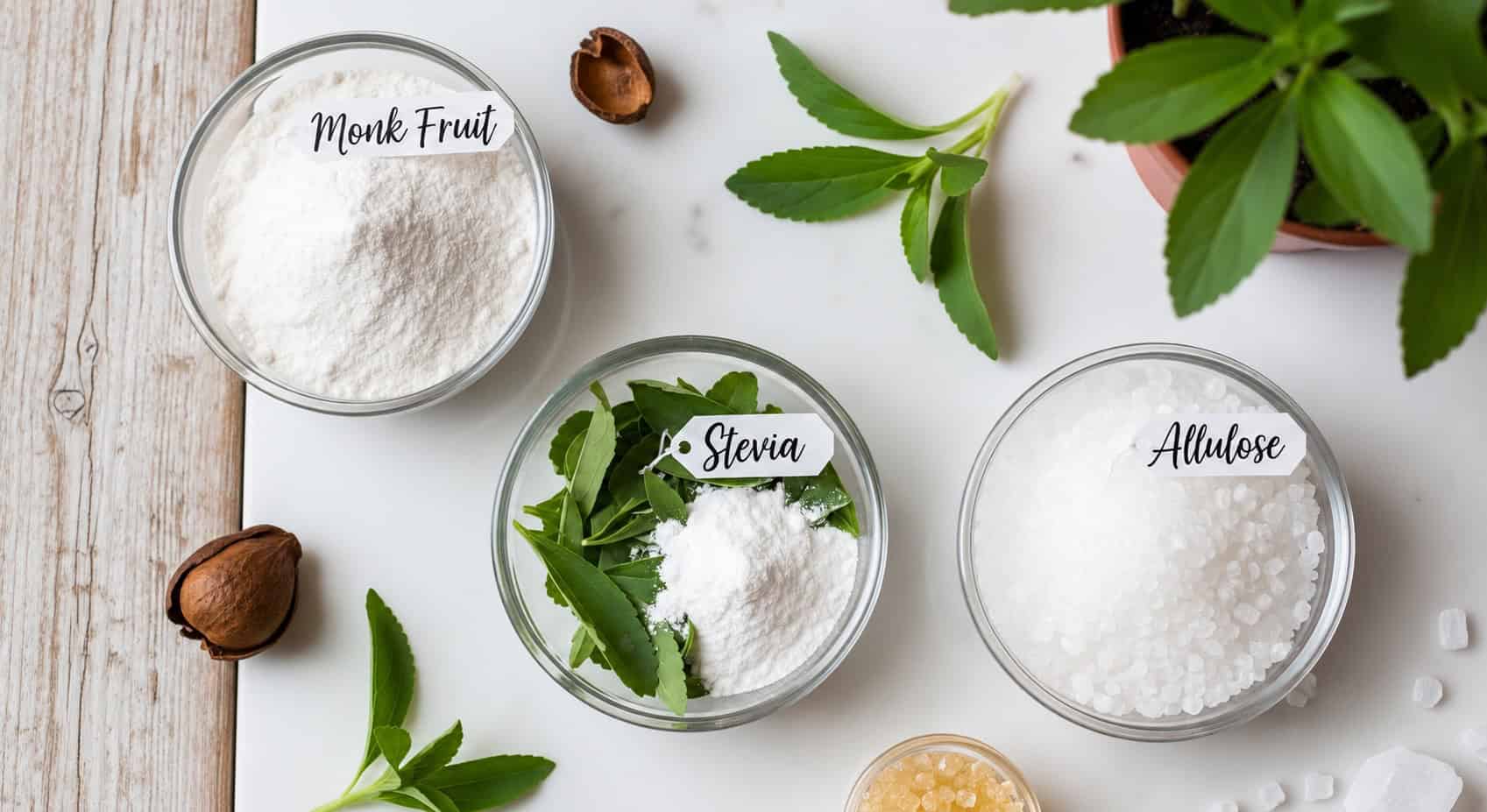
What the science really says about the sugar substitutes in your pantry, and how to rank them
By Jill Carnahan, MD, ABIHM, ABoIM, IFMCP | Flatiron Functional Medicine, Louisville, Colorado
If you have ever stood in the baking aisle holding two little bags, one labeled stevia and one labeled monk fruit, wondering which one is actually better for your body, you are not alone. My patients ask me about sweeteners almost every single week. They have usually read that sugar is the enemy, so they have swapped it out for something that sounds cleaner and more natural. The trouble is that the marketing has run far ahead of the science, and some of the substitutes we once celebrated as harmless have recently earned some serious asterisks.
I want to walk you through the real evidence: the genuine benefits, the honest cautions, and the surprising new research that has changed how I counsel people in my clinic. Then I will give you my own rank order, grounded in the science, for what to reach for when you want sweetness without wrecking your metabolic and gut health. As always, my goal is not fear. It is clarity, so you can make wise, empowered choices.
The healthiest relationship with sweetness is not about finding the perfect substitute. It is about gently retraining your palate to need less of it in the first place.
First, How Should We Even Judge a Sweetener?
Before we name names, it helps to agree on what we are actually measuring. When I evaluate a sweetener for a patient, I run it through five questions rather than one:
Does it raise blood sugar and insulin? This is the glycemic and insulin question, and it matters most for anyone with insulin resistance, prediabetes, PCOS, or type 2 diabetes. The glycemic index (GI) ranks foods from 0 to 100 by how quickly they raise blood glucose. Pure glucose sits at 100, and table sugar lands around 60 to 65.
What does it do to the gut microbiome? Your gut bacteria help govern inflammation, cravings, immune tone, and even how your body produces its own GLP-1, the same hormone that the popular weight loss medications mimic. A sweetener that disrupts the microbiome can quietly work against you even if it never spikes your glucose.
Is it metabolically and cardiovascularly safe over the long term? This is where some recent research has been genuinely eye-opening, especially around the sugar alcohols.
How natural and how processed is it? There is a real difference between a whole-food sweetener and a highly refined molecule, even when the refined one comes from a plant.
How much can you realistically use, and how does it taste? Tolerance, aftertaste, and digestive comfort determine whether a sweetener is sustainable in real life.
With that framework in hand, let us look at the contenders.
The Natural High-Intensity Sweeteners
Stevia: Mostly Reassuring, With a Couple of Honest Caveats
Stevia comes from the leaves of Stevia rebaudiana, and its sweetness comes from compounds called steviol glycosides that are 200 to 400 times sweeter than sugar. Because these glycosides are not absorbed in the upper gastrointestinal tract, stevia contributes essentially no calories and does not raise blood glucose. Both the FDA and the European Food Safety Authority recognize high-purity steviol glycosides as safe.8
For years the story stopped there, and stevia was crowned a clear winner. The fuller picture is a little more nuanced, and I think you deserve the nuance.
On the gut, the news is largely reassuring. A randomized controlled trial published in Nutrients in 2024 followed healthy adults consuming stevia daily for twelve weeks and found no meaningful change in the overall composition or diversity of their gut microbiota.7 That is genuinely good news, because human trials are the gold standard and this one suggests stevia is essentially gut-neutral at real-world doses. The caveat is that laboratory and animal studies have raised a subtler concern: steviol glycosides may interfere with bacterial quorum sensing, the chemical language bacteria use to coordinate behavior.9 Whether that in vitro signal matters for a human eating normal amounts is still unknown.
The second caveat is one that surprises people. A small crossover study in the American Journal of Pharmacology and Toxicology gave sixteen healthy volunteers stevia for one week and observed a small but statistically significant rise in both systolic and diastolic blood pressure, alongside increases in cortisol and in the ratio of cortisol to cortisone.1 The authors proposed that stevia may inhibit an enzyme called 11-beta-hydroxysteroid dehydrogenase type 2 (11-beta-HSD2), which normally converts active cortisol into inactive cortisone. If that enzyme is dampened, active cortisol lingers, and blood pressure can drift up. This was a tiny, short study, and it runs against other work suggesting stevia can gently lower blood pressure, so I do not treat it as the final word. But it is a fair reminder that even a beloved natural sweetener can interact with human physiology in ways worth watching, particularly for anyone managing cortisol dysregulation or hypertension.
Clinical pearl: Choose a clean, high-purity stevia or whole-leaf stevia rather than the blends that quietly pad the packet with sugar alcohols or dextrose. The label matters as much as the plant.
Monk Fruit: My Quiet Favorite
Monk fruit, also called luo han guo, is a small melon native to Southeast Asia. Its sweetness comes not from sugar but from antioxidant compounds called mogrosides, with mogroside V doing most of the heavy lifting at roughly 150 to 250 times the sweetness of sugar. Because the mogrosides are not converted into glucose, pure monk fruit extract carries a glycemic index of essentially zero, which makes it a thoughtful option for blood sugar management.10
What tips monk fruit toward the front of the pack for me is the gut and metabolic signal. Rather than harming the microbiome, mogrosides appear to behave in a mildly prebiotic way. In laboratory work, gut bacteria break mogroside V down into secondary mogrosides while nudging up production of the beneficial short-chain fatty acids acetate, propionate, and butyrate.11 Those short-chain fatty acids are the very metabolites that help nourish the gut lining and stimulate your own natural GLP-1. Animal studies also hint at anti-hyperglycemic and antioxidant effects from the mogrosides themselves, though we still need robust human trials before making any therapeutic claims. Regulators have found monk fruit extract to have a favorable safety profile, and in the United States it holds Generally Recognized As Safe status.10
The main practical downsides are cost, since monk fruit tends to be pricier, and the fact that many commercial products blend it with erythritol, which brings us to a more complicated part of the story.
The Rare Sugars: Allulose Steps Into the Spotlight
Allulose: The Newest and Most Intriguing Option
Allulose is what scientists call a rare sugar. It occurs naturally in tiny amounts in figs, raisins, and wheat, and it is the C-3 epimer of fructose, meaning it is almost the same molecule with one small structural twist. That twist changes everything. Your body absorbs allulose but largely cannot metabolize it, so about 70 percent is absorbed and then excreted in the urine, leaving behind roughly 70 percent of sugar's sweetness with almost none of the calories or glycemic impact. It carries FDA Generally Recognized As Safe status.12
Here is what makes allulose genuinely exciting from a functional medicine standpoint. A 2026 systematic review and meta-analysis of controlled human trials found that allulose (and its cousin tagatose) meaningfully reduced the postprandial glucose response when used in place of added sugars, an effect that may be especially useful in the window right after a carbohydrate-rich meal.12 Mechanistic research points to a lovely explanation: allulose appears to stimulate the gut's own release of GLP-1, the incretin hormone that improves insulin sensitivity, slows gastric emptying, and helps regulate appetite.12 This is the same pathway I have written about extensively in my work on natural GLP-1 support after GLP-1 medications and on the broader anti-inflammatory power of GLP-1. A sweetener that gently encourages your body to make more of its own GLP-1, rather than merely avoiding harm, is a different kind of tool.
The honest cautions: much of the mechanistic depth still comes from animal models, we need longer and larger human trials, and allulose can cause bloating or loose stools at higher doses, as most poorly absorbed sugars can. Start low and let your gut adjust.
The Sugar Alcohols: Where the Story Recently Got Complicated
For a long time, erythritol and xylitol sat comfortably in the healthy column. They are naturally derived, tooth-friendly, and barely touch blood sugar. Then two rigorous studies from a Cleveland Clinic team changed the conversation, and I would be doing you a disservice not to share them plainly.
Erythritol: The Cardiovascular Asterisk
Erythritol is a sugar alcohol about 70 percent as sweet as sugar, made commercially by fermenting corn. It is poorly metabolized, so it largely passes into the bloodstream and out through the urine, and your body also makes small amounts on its own.
In 2023, a study in Nature Medicine examined more than 4,000 people in the United States and Europe and found that those with the highest blood levels of erythritol were significantly more likely to suffer a major adverse cardiovascular event, meaning heart attack, stroke, or death. In the validation cohorts, comparing the highest to the lowest quartile, the adjusted hazard ratios were about 1.80 in the US group and 2.21 in the European group.3 The researchers went further than association: in laboratory and animal work, erythritol made platelets more prone to clumping and clotting, and in a small pilot, ingesting a typical serving raised plasma erythritol well above the level tied to heightened clotting for more than two days.3 The lead investigator's own counsel was cautious, especially for people already at elevated risk of clotting.
Xylitol: A Similar Signal in 2024
The following year, the same team published a companion study on xylitol in the European Heart Journal. Analyzing more than 3,000 patients, they found that people in the highest third of blood xylitol levels were roughly 50 percent more likely to experience a cardiovascular event over three years, with an adjusted hazard ratio of about 1.57.4 Again, the mechanistic work told a consistent story: after volunteers drank a xylitol-sweetened beverage, plasma xylitol rose sharply and every measured index of platelet reactivity increased.4
An important note on interpretation: These are observational associations, and thoughtful critics have pointed out that some of the circulating xylitol and erythritol in these cohorts may reflect the body's own internal production during metabolic stress rather than what people ate. Your body makes these molecules, so high blood levels are not the same as high dietary intake. That is a legitimate scientific caveat. Even so, the interventional studies showing that a single serving can spike blood levels and platelet activity give me real pause about using these two as everyday, high-volume sweeteners, particularly for anyone with cardiovascular disease, diabetes, clotting risk, or metabolic syndrome. (Xylitol is also acutely toxic to dogs, so keep it far from your pets.)
The “Natural” Caloric Sugars: Coconut Sugar, Honey, Maple, and Dates
These are the sweeteners that feel wholesome because they come straight from a plant or a beehive, and there is something to that. Coconut sugar is the one I get asked about most, so let us be honest about it.
Coconut sugar is made by evaporating the sap of coconut palm flower buds. It is frequently marketed with a glycemic index around 35, well below table sugar. The reason given is its small content of inulin, a prebiotic fiber that slows glucose absorption.13 That much is real. What the marketing tends to skip is that coconut sugar is roughly 70 to 80 percent sucrose, chemically identical to table sugar, and the widely cited GI of 35 traces largely to a single study from an agency with an interest in coconut exports. More rigorous work places its glycemic effect much closer to cane sugar, and the inulin dose in a teaspoon is far too small to matter metabolically.13
So coconut sugar, honey, pure maple syrup, and date sugar are genuinely better than refined white sugar in that they arrive with trace minerals, antioxidants, or fiber, and honey and maple carry a slightly lower glycemic load than pure sucrose. But make no mistake: they are still sugar, they still deliver a real fructose and glucose load to the liver, and they will still raise blood sugar. I think of them as a modest upgrade for the occasional treat, not a free pass. If you love a drizzle of raw honey or a little maple in a recipe, enjoy it with intention and keep the amount small.
The Artificial Sweeteners: Sucralose, Aspartame, and Company
These are the laboratory-made high-intensity sweeteners: sucralose, aspartame, saccharin, acesulfame potassium, and neotame. Regulators including the FDA continue to classify them as safe within established daily limits, and I want to represent that fairly. But for a root-cause, gut-centered practice like mine, a few recent developments keep them near the bottom of my list.
On sucralose, a 2023 paper in the Journal of Toxicology and Environmental Health reported that sucralose-6-acetate, a compound formed both as a manufacturing impurity and in the gut after sucralose is consumed, showed signs of genotoxicity in laboratory assays, and that sucralose itself appeared to damage the gut lining in the same experiments.5 Manufacturers note that purification removes most of the impurity, and this was in vitro work, not a human outcome study, so it should be read as a caution flag rather than a verdict. Still, gut-lining damage is precisely the kind of signal I take seriously in patients already fighting leaky gut, which I explore in depth in my article on simple steps to heal leaky gut syndrome.
On aspartame, in July 2023 the International Agency for Research on Cancer classified it as Group 2B, “possibly carcinogenic to humans,” on the basis of limited evidence for liver cancer.6 It is important to keep this in proportion: Group 2B is a hazard category, not a statement of real-world risk at typical intakes, the WHO's expert committee left the acceptable daily intake unchanged, and the FDA disagreed with the classification.6 I share it not to alarm you, but because you deserve to know the label exists.
Finally, in 2023 the World Health Organization issued a guideline recommending against the use of non-sugar sweeteners for weight control or to reduce the risk of chronic disease, after a review found no long-term benefit for body fat and a possible association with type 2 diabetes and cardiovascular disease in long-term observational data.2 This was a conditional recommendation, and respected researchers have pushed back that it leaned heavily on observational studies while underweighting the randomized trials.2 The practical takeaway I draw from it is simple and freeing: no sweetener, natural or artificial, is a shortcut to metabolic health. The work still lives in whole foods, fiber, and a palate that has learned to be satisfied with less.
Putting It All Together: My Rank Order
Here is the comparison I keep in my head, distilled into a table, followed by my tiered ranking. Remember that the ideal amount of any added sweetener is small, and that individual tolerance varies.
Table 1. A functional medicine comparison of common sweeteners
| Sweetener Approx. glycemic index | Index | Blood sugar and insulin | Gut microbiome signal | Key caution |
| Monk fruit (mogrosides) | ~0 | Negligible | Neutral to mildly prebiotic | Often blended with erythritol |
| Allulose (rare sugar) | ~0 | May lower post meal glucose; supports GLP-1 | Generally favorable | Bloating at higher doses |
| Stevia (steviol glycosides) | ~0 | Negligible | Gut-neutral in 12- week human trial | Small BP/cortisol signal; quorum sensing in vitro |
| Erythritol (sugar alcohol) | ~0 | Negligible | Largely inert | Cardiovascular and clotting |
| association (2023) | ||||
| Xylitol (sugar alcohol) | ~7 to 13 | Low | Some prebiotic effects | Cardiovascular association (2024); toxic to dogs |
| Honey, maple, date sugar | ~45 to 65 | Real rise; true sugar load | Trace prebiotic/antioxidant value | Still sugar and fructose |
| Coconut sugar | ~54 to 60 | Similar to cane sugar in rigorous tests | Minimal (tiny inulin dose) | ~70 to 80% sucrose |
| Cane sugar, HFCS, pure fructose/glucose | 60 to 100 | Highest impact | Feeds dysbiosis in excess | The baseline to reduce |
| Sucralose, aspartame, saccharin, ace-K | ~0 | Negligible | Disruption signals (esp. sucralose) | Genotoxicity signal; aspartame IARC 2B |
Tier 1: My First Choices
- Monk fruit. Zero glycemic impact, a favorable and possibly prebiotic gut signal, antioxidant mogrosides, and no cardiovascular or genotoxicity flags. Choose pure monk fruit, or a monk fruit blend, over one padded with erythritol.
- Allulose. Nearly zero glycemic impact plus a genuinely promising mechanism: it can blunt the post-meal glucose rise and stimulate your own GLP-1. It is the most exciting newcomer, tempered only by the need for larger human trials and a start-low approach for digestive comfort.
- High-purity stevia. Gut-neutral in human data and reliably free of glycemic impact. It sits just behind the top two only because of the small blood pressure and cortisol signal worth respecting in sensitive individuals.
Tier 2: Fine in Small Amounts, With Awareness
4. Erythritol and 5. Xylitol. Still near-zero on blood sugar and useful in moderation, but the recent cardiovascular and clotting associations move them out of the everyday, high-volume category, especially for anyone with heart disease, diabetes, or clotting risk. Reserve them for occasional use.
Tier 3: A Modest Upgrade for Occasional Treats
6. Raw honey, pure maple syrup, and date sugar, then 7. coconut sugar. These come with a little nutritional company, but they are still true sugars with a real fructose load. Use sparingly and with intention.
Tier 4: The Baseline to Reduce
8. Cane sugar, high-fructose corn syrup, and pure fructose or glucose. This is the reference point everything else is trying to improve upon.
Tier 5: My Last Choice for a Gut-Centered Life
9. The artificial sweeteners (sucralose, aspartame, saccharin, acesulfame potassium). Regulators consider them safe within limits, and they spare you the glucose spike. But the gut-lining and genotoxicity signals around sucralose, the IARC 2B label on aspartame, and the WHO's caution against relying on non-sugar sweeteners for health goals keep them at the bottom of my personal list.
The Deeper Truth Beneath the Whole Question
After all of this, here is what I most want you to hear. The best sweetener is not a product at all. It is a recalibrated palate. When we lean on any intense sweetness, natural or artificial, we keep the reward circuitry humming and the cravings alive. The patients who thrive are almost always the ones who slowly dial down sweetness across the board, rediscover the quiet sweetness of a roasted sweet potato or a handful of berries, and stop asking a substitute to do the work that whole foods and a healthy gut do beautifully on their own.
If you want to support that gut and your blood sugar from the inside while you make the shift, two of the physician-formulated foundations I reach for most are Metabolic Synergy and Berberine 1000 for healthy glucose metabolism, alongside the fiber, prebiotics, and probiotics in my Gut Health Favorites collection at Dr. Jill Health. And because so much of blood sugar regulation runs through the microbiome and the histamine pathways, you may also find my writing on mast cell activation and histamine and on hormones and histamine in midlife illuminating pieces of the same puzzle.
A Blessing Over Your Table
Thank You for the goodness woven into creation, for the sweetness of ripe fruit and honey from the comb, gifts meant to nourish and not to enslave. Where our appetites have grown restless, restore in us a holy contentment. Teach us to receive what You provide with gratitude, to taste and see that You are good, and to remember that we do not live by bread alone. Let every meal become a small act of trust, and let the care we give our bodies be an offering of love back to You, the One who made them and calls them worthy of tending.
References
- Al-Dujaili EAS, Twaij H, Bataineh YA, Arshad U, Amjid F. Effect of stevia consumption on blood pressure, stress hormone levels and anthropometrical parameters in healthy persons. Am J Pharmacol Toxicol. 2017;12(1):7-17. doi:10.3844/ajptsp.2017.7.17
- World Health Organization. Use of Non-Sugar Sweeteners: WHO Guideline. Geneva: WHO; 2023. WHO guideline. For scientific critique of the guideline, see Khan TA, Lee JJ, Ayoub-Charette S, et al. WHO guideline on the use of non-sugar sweeteners: a need for reconsideration. Eur J Clin Nutr. 2023;77(11):1009-1013. doi:10.1038/s41430-023-01314-7
- Witkowski M, Nemet I, Alamri H, et al. The artificial sweetener erythritol and cardiovascular event risk. Nat Med. 2023;29(3):710-718. doi:10.1038/s41591-023-02223-9
- Witkowski M, Nemet I, Li XS, et al. Xylitol is prothrombotic and associated with cardiovascular risk. Eur Heart J. 2024;45(27):2439-2452. doi:10.1093/eurheartj/ehae244
- Schiffman SS, Scholl EH, Furey TS, Nagle HT. Toxicological and pharmacokinetic properties of sucralose-6-acetate and its parent sucralose: in vitro screening assays. J Toxicol Environ Health B Crit Rev. 2023;26(6):307-341. doi:10.1080/10937404.2023.2213903
- International Agency for Research on Cancer and WHO/FAO JECFA. Aspartame hazard and risk assessment results released. 14 July 2023. WHO announcement; see also U.S. FDA, Aspartame and Other Sweeteners in Food.
- Singh G, McBain AJ, McLaughlin JT, Stamataki NS. Consumption of the non-nutritive sweetener stevia for 12 weeks does not alter the composition of the gut microbiota. Nutrients. 2024;16(2):296. University of Manchester research record
- EFSA Panel on Food Additives and Flavourings. Scientific opinion on steviol glycosides (E 960a-d) and the acceptable daily intake for steviol. EFSA Journal. 2024;22(11):e9045. doi:10.2903/j.efsa.2024.9045. High-purity steviol glycosides hold U.S. FDA GRAS status (2008, GRN 252 and 253); EFSA established an ADI of 4 mg/kg body weight per day.
- Markus V, Share O, Shagan M, et al. Anti-quorum sensing activity of stevia extract, stevioside, rebaudioside A and their aglycon steviol. Molecules. 2020;25(22):5480. doi:10.3390/molecules25225480
- EFSA Panel on Food Additives and Flavourings. Safety of use of monk fruit extract as a food additive in different food categories. EFSA Journal. Full text at PubMed Central. Monk fruit extract holds U.S. FDA GRAS status (first no-objection GRAS notice, 2010).
- Modulation of gut microbiota composition and short-chain fatty acid synthesis by mogroside V in an in vitro incubation system. ACS Omega. 2021;6(38):25486-25496. doi:10.1021/acsomega.1c03485
- Glycemic and cardiometabolic effects of rare sugars allulose and tagatose: a systematic review and meta-analysis of controlled human intervention trials. Am J Clin Nutr. 2026. Full text. See also Tani Y, Tokuda M, Nishimoto N, Yokoi H, Izumori K. Allulose for the attenuation of postprandial blood glucose levels in healthy humans: a systematic review and meta-analysis. PLoS One. 2023;18(4):e0281150. doi:10.1371/journal.pone.0281150
- Comparison of blood glucose responses by cane sugar (Saccharum officinarum) versus coconut jaggery (Cocos nucifera) in type 2 diabetes patients. J Agric Food Res. 2022. Full text at ScienceDirect
Dr. Jill Carnahan, MD is a triple board-certified functional medicine physician and Medical Director of Flatiron Functional Medicine in Louisville, Colorado. A survivor of both breast cancer and Crohn's disease, she is known as Your Functional Medicine Expert and helps patients uncover the root causes of complex chronic illness. She is the author of the bestselling book Unexpected: Finding Resilience through Functional Medicine, Science, and Faith, host of the Resiliency Radio podcast, and is featured in the documentary Doctor/Patient. Learn more at jillcarnahan.com and follow her @DrJillCarnahan.
This article is for educational purposes only and is not intended to diagnose, treat, cure, or prevent any disease, nor to replace the advice of your personal physician. The statements regarding dietary supplements have not been evaluated by the Food and Drug Administration. Please review the references cited for the scientific support of any claims made, and consult your own healthcare provider before making changes to your diet or supplement routine, particularly if you have cardiovascular disease, diabetes, or a clotting disorder.
* These statements have not been evaluated by the Food and Drug Administration. The product mentioned in this article are not intended to diagnose, treat, cure, or prevent any disease. The information in this article is not intended to replace any recommendations or relationship with your physician. Please review references sited at end of article for scientific support of any claims made.








6 Comments
Love this article! So glad I came across it today! Can’t wait to follow your work.
Fascinating and a great overview of sweeteners. I appreciated all of the scientific info. I wish you would have left the “prayer” at the end out, really made me pause. . . Father??? are we not past that as strong female doctors??? Just some food for thought.
I already knew I have a slow COMT gene and then I heard that stevia was shown to affect sleep because of used cortisol hanging around in the body instead of getting eliminated. I had been using stevia on a daily basis. So, with sleep being one of my major issues, I immediately stopped using it and noticed a difference in my sleep. I won’t ever use it again. Thank you for confirming my choice to go with pure monk fruit liquid instead!
Love this info…thank you…and especially appreciate the prayer at the end of the article.
No mention of agave and Malodextrin which are constantly thrown into food these days as a healthy or disguised sugar.
I would love an article that makes product suggestion in tier one <3
Share: