

🎁 Special Offer: Use code DRJILL for discounts at Auro Wellness. https://aurowellness.com/drjill
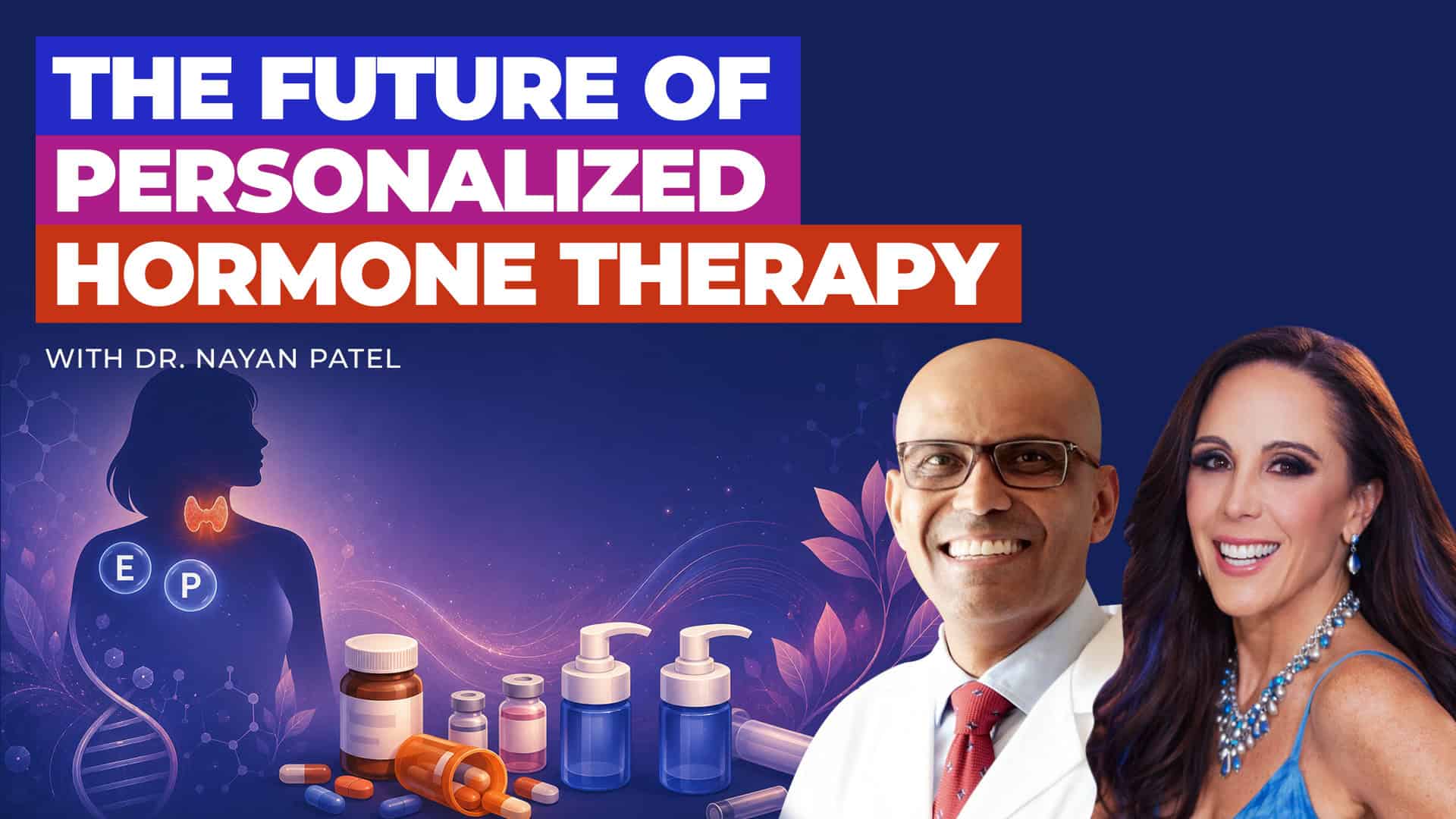
In this episode of Resiliency Radio with Dr. Jill, Dr. Jill Carnahan sits down with Dr. Nayan Patel, renowned longevity pharmacist and author of The Glutathione Revolution, to explore the future of personalized hormone therapy, glutathione optimization, and healthy aging.
Together they discuss why hormone therapy is about far more than replacing hormones—it requires supporting detoxification, reducing inflammation, and optimizing the body's natural healing systems. Dr. Patel explains the critical role of glutathione, the body's master antioxidant, and shares practical strategies for improving energy, metabolism, hormone balance, and longevity through a personalized, root-cause approach.
Whether you're navigating menopause, andropause, hormone replacement therapy, or simply looking to age well, this episode offers science-backed insights into building resilience from the inside out.
🔑 5 Key Discussions You'll Discover with Dr. Nayan Patel
① 🧬 The Future of Personalized Hormone Therapy
⇨ Hormone optimization begins with understanding the body's unique biology—not one-size-fits-all protocols.
⇨ Successful hormone therapy depends on balancing stress, metabolism, detoxification, and hormone signaling.
② ✨ Glutathione: The Master Antioxidant
⇨ Glutathione protects cells from oxidative stress while supporting detoxification and healthy aging.
⇨ Environmental toxins, alcohol, poor diet, and chronic stress can rapidly deplete glutathione reserves.
③ ⚖️ The Hormone Hierarchy
⇨ Cortisol, insulin, thyroid hormones, and sex hormones work together as an interconnected system.
⇨ Addressing stress and metabolic health first creates the foundation for safe and effective hormone balance.
④ 🔬 Detoxification & Longevity
⇨ Efficient hormone metabolism requires healthy detoxification pathways.
⇨ Supporting glutathione production allows the body to safely process hormones and environmental toxins.
⑤ 🚀 Building a Longer, Healthier Life
⇨ Longevity is driven by improving cellular communication, reducing inflammation, and supporting the body's natural ability to heal.
⇨ Personalized testing and root-cause medicine create better long-term health outcomes than symptom management alone.
🔑 Key Takeaways with Dr. Nayan Patel
🔹 Glutathione is essential for detoxification, cellular protection, and healthy aging.
🔹 Hormone therapy works best when stress, metabolism, and detoxification are optimized first.
🔹 Personalized medicine offers safer and more effective hormone replacement strategies.
🔹 Reducing toxic exposure supports hormone balance and longevity.
🔹 Healthy aging begins by addressing root causes—not simply replacing hormones.
About Dr. Nayan Patel
Dr. Nayan Patel is an internationally recognized longevity pharmacist, wellness expert, educator, and author of the bestselling book The Glutathione Revolution. Since 1999, he has partnered with physicians to develop personalized medication and nutrition protocols that optimize health, hormone balance, and longevity.
Following more than a decade of clinical research, Dr. Patel developed a patented topical glutathione delivery technology, transforming how this critical antioxidant is absorbed and utilized by the body. His work has helped physicians, executives, athletes, and celebrities better understand the role of glutathione in detoxification, energy production, healthy aging, and disease prevention.
🌐 Website: https://aurowellness.com/drjill
📚 Featured Book: The Glutathione Revolution: Fight Disease, Slow Aging & Increase Energy
🎁 Special Offer: Use code DRJILL for discounts at Auro Wellness. https://aurowellness.com/drjill
Dr. Jill Carnahan, MD – Leading Functional Medicine Doctor
Dr. Jill Carnahan, MD, ABIHM, ABoIM, IFMCP is internationally recognized as one of the most respected leaders in functional and integrative medicine. She is dually board-certified in Family Medicine and Integrative Holistic Medicine, and the founder and medical director of Flatiron Functional Medicine in Louisville, Colorado.
Widely known as a pioneer in environmental toxicity, mold-related illness, autoimmune disease, and resilience medicine, Dr. Carnahan combines cutting-edge science with compassionate, root-cause care. Her clinical approach integrates precision genomics, epigenetics, microbiome research, peptide therapy, and lifestyle interventions to transform health outcomes for patients worldwide.
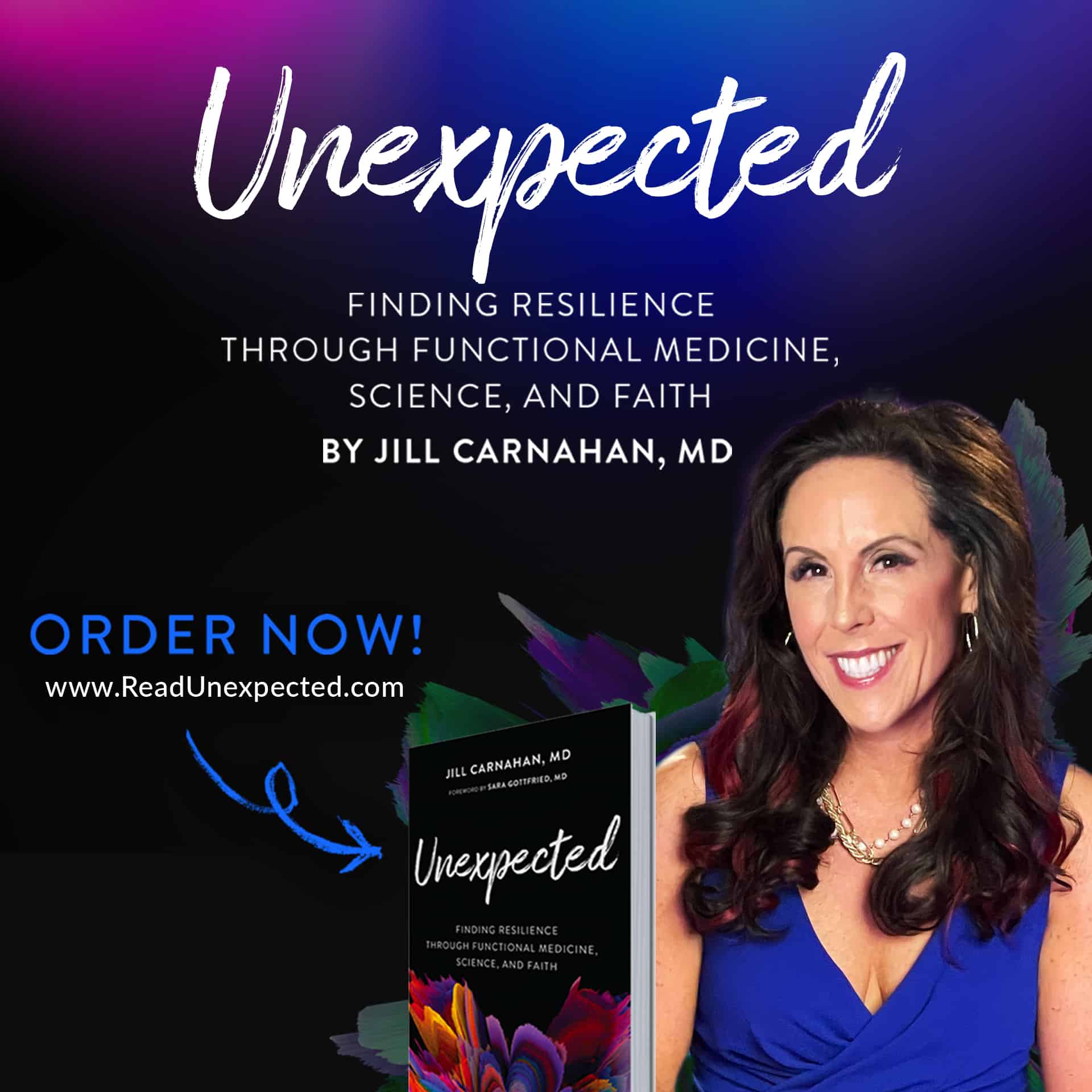
She is the author of the best-selling memoir Unexpected, which weaves her personal journey through cancer, Crohn’s disease, and mold-related illness with her professional expertise. Dr. Carnahan is also the executive producer of the award-winning documentary Doctor/Patient and the host of the popular podcast Resiliency Radio, which reaches over 500,000 global subscribers.
As an international keynote speaker, Dr. Carnahan has been featured at leading medical conferences including A4M, IFM, EPIC, and IPM Congress, and her work is frequently highlighted in major media outlets such as NBC, CBS, Fox News, Forbes, Parade, People, and MindBodyGreen.
With a reputation as both a scientist and a healer, Dr. Jill Carnahan is regarded as one of the top functional medicine doctors in the world, offering a unique blend of evidence-based research, innovation, and deeply personalized care.
The Podcast with Dr. Nayan Patel
The Video with Dr. Nayan Patel
Transcript
00:00
Dr. Jill Carnahan
Hey everybody. Welcome to Resiliency Radio, your go to podcast for the most cutting edge insights integrative and functional medicine. I'm your host, Dr. Jill, and with each episode we dive into the heart of healing and personal transformation. Join me as we interview medical experts, innovators, inventors, world leaders of all types, shapes and sizes, hoping to just empower you on your way to optimal performance and longevity. Bringing you tips and tricks, things that I do myself and everything in between, I always learn right along with you. So join me. Today we have a very special guest expert, a pharmacist called the longevity pharmacist, Dr. Patel. I will introduce him in just a moment, but before I do, I want to remind you a few important things.
00:43
Dr. Jill Carnahan
First of all, if you haven't yet got a copy of my book Unexpected, you can get that anywhere books are sold. You can also get the audio version on Audible, Spotify or wherever you like to listen to your audiobooks. I'm one of those people who's driving in the car or commuting or doing things around the house or walking or biking and I love to listen to audiobooks and podcasts. So that's a great way. You'll hear it in my voice. I recorded it in studio and again, you can find it anywhere you listen to audiobooks. You can also find it at Amazon or Barnes and Noble or anywhere books are sold.
01:16
Dr. Jill Carnahan
Also, if you don't yet know, I have a retail store, DrJill Health.com where you can find all kinds of products and services to help you on your way to longevity and more energy, better sleep, better skin. I especially want to bring to light the Dr. Jill Beauty line. People are loving this. Almost everyone who tries a product will come back for more. Some of our best sellers are the Dr. Jill's Favorites bundle. Those are the three products that I can't live without. I take them on my trips, I take them everywhere I go. I just, I love them. The HA Collagen Booster, the Biopeptide Beauty cream and the Vita CE Serum. So check that out, especially if you don't know where to start. Give the Dr. Jill favorites and take a peek at and I promise you'll be back for more. They're really good.
02:00
Dr. Jill Carnahan
Okay, let me introduce our guest today. Our guest is Dr. Nayeb Patel. He's a sought after pharmacist, wellness expert and thought leader in the industry. He has been working with physicians since 1999 to custom develop medications for their clients and design a patient specific drug and nutrition regimen. He's been the pharmacist of choice to many celebrities, CEOs and physicians themselves. And he recently published his first comprehensive book, the Glutathione Revolution. It's a must read. That's subtitles. Fight disease, Slow Aging and increase energy. After 11 years of clinical research on the master antioxidant glutathione, Dr. Patel and his team have developed a patented technology to deliver glutathione topically. We will talk about that today and many more things, including hormones. So stay tuned and join us for this episode of Resiliency radio. Let's welcome Dr. Patel.
02:48
Dr. Jill Carnahan
Dr. Patel, I have seen you around in all spaces with longevity and functional medicine and it is so exciting to have you today on the podcast. I'm really looking forward to getting to know you better and to bringing all of the wealth of knowledge you've built as the longevity pharmacist over the years to the people who listen to this show. So I always like to start with story like how did you get into pharmacy? Was it something you always wanted to do? And then how did you get into this specialized area where you're really bringing cutting edge formulas and advice to your clients?
03:20
Dr. Nayan Patel
Perhaps. Thank you for first of allow me to be here today and to be talking about my story, people. There 8 billion people on this planet and am I right? I'm just dropping the bucket, but thanks for asking this question. So I know we've been to multiple conferences over the last 25 plus years. I've seen you at multiple events. But my story began with not being a pharmacist. I was in aerospace engineering. My goal in life was to do space travels. One of those things that the only jobs back 35, 40 years ago was government jobs. And I said, come on, there's Elon. Musk was not ready for us yet at that time, so we could not dive into those kinds of adventures. So I chose to do the other side is to go deep inside your body.
04:06
Dr. Nayan Patel
Of course, medicine was one option, which was too hard for me. Thank God you did it. I didn't have the patience to do it myself. So I said, I chose a pharmacy career and I never looked back. But my goal has always been to find out how medicine actually works. After graduating from pharmacy school, my goal was to literally use my knowledge and help people very soon, within the first year, realize that the medical system is designed to take care of your problems, not get rid of the problems. Oh my goodness. That one distinction changed my whole career for me because all Of a sudden I realized that when you're buying insurance or when you're buying medications, when you're going to anybody to get seek help, the help you're going to get is to manage your problems, not get rid of the problems.
04:55
Dr. Nayan Patel
So Fast forward to 30 years now is that I have learned how to use medicines, other modalities to actually get rid of the problems. You may be taking something as a supplement, but the whole idea is to allow the body to heal itself. And here's a hard truth. No physicians, no diagnostic tools, Nobody is out there that can find all the problems for you. Your human body is quite capable of doing all these things for you already. So my goal is to stay out of the way and allow the body to heal itself. And so that's what my focus has been for the last 30 plus years at this time.
05:39
Dr. Jill Carnahan
Amazing. And so aligned with what I do in clinical practice too. Right? You realize that the body has this innate power and instead of just suppressing immune system or doing those things that are just shutting it down, when we actually enable the body take away the toxins and the infections and all these overloads into the system, it really does transform. Now I love that you have this engineering background. I do too, bioengineering background. But it's so cool because you're a systems thinker. And I think some of the most fascinating people in this world are those who have ability to look at patterns and recognize the similarities and the things happening and then looking for systemic solutions that are systematized so that we can actually bring this and change the world.
06:22
Dr. Jill Carnahan
Now you've developed some things, you've been an inventor, you've been a pharmacist, you've been all of these things. What I want to talk about some of those things, especially like glutathione. Today our topic is actually hormones. So guys, stay tuned. We will talk about hormones, but I want to take a few side trips first because glutathione, the master antioxidant, is one of your specialties. Tell us about that story, how it got started, how you developed some very unique ways of delivery for glutathione and why glutathione is so critical.
06:48
Dr. Nayan Patel
And you just nailed it right there. Right? We'll talk about hormones later on because guess what? My career started to deal with hormones first.
06:55
Dr. Jill Carnahan
Yeah.
06:55
Dr. Nayan Patel
And with the hormone replacement therapy. But back in the mid-90s, nobody was doing bioidentical hormones. It was like, oh my God, you are kind of on your own in the Corner. Don't. Don't talk about those kinds of things until 2005 kicks in and there's WTF study comes out, and everybody else, the help breaks loose. And now people are asking for more help. But when I was doing hormones back in the mid-90s, I started getting questions from my consumers, my patients, saying that, hey, do you have something for anti aging? And I goes, what do you mean by anti aging? I said, do you have something for me to live forever? So what they're really asking is something to increase longevity, not to reverse aging processes. But they don't know what term to use. So they were asking about anti aging.
07:40
Dr. Nayan Patel
And of course, my clientele was the who's who of America. There are all this money in the world, and there's no solution. If they're in the mid-60s now, they're counting their years and say, oh, I only have 10 more years to live before I die, and things like that. And I want to live for a long time. And so, long story short, they started asking me questions, and I said, okay, if I can do one change, if I tell them to change your diet, do exercise, do this, do that. There's too many things, too many variables. They're only willing to do one thing. What is the one thing that I can work on that can change their life? And the answer to me was glutathione at that time, because glutathione was the most abundant molecule produced in the human body.
08:23
Dr. Nayan Patel
It's a tripeptide, but it's the most abundant tripeptide that our body produces. And the question is, why? Why does the body produce so much of glutathione? And once I started learning about glutathione, what it does for the body, literally today, we still talk about this today, and I wish that more people can listen to you. I know you got millions of followers. I want more to come follow you, because they got to listen to this thing. Because glutathione, if you can do one thing to impact glutathione levels in your body, you can change the course of how fast or how slow you can age. And so the molecule was glutathione that I first started, but started because of my customers on hormones that are asking me for these questions.
09:06
Dr. Jill Carnahan
Wow, it's full circle then, isn't it? Because. And I'm the same back in the, oh, gosh, early 2000s, when I started doing functional medicine right out of residency, it was the hormones that I started in, because these women in the community, I Was a resident in a very underserved kind of, you know, how residential? Oh yeah, usually it's inner city or it's like, you know, lower income population. But I had all the suburban housewives coming to the clinic to see me as a resident because I was doing hormones and it was like. And my attendees would be like, Dr. Jill, what's going on? What are you doing with them? Because they hide a precept with them. But anyway, back in the day of Pam Smith, Elder Taylor and PCCA and some of those kinds of things were interesting.
09:46
Dr. Jill Carnahan
So anyway, glutathione, let's give for those listening, many people by now have heard of it. But give us a little like 101 primer on glutathione and why it is so critical to the body.
09:58
Dr. Nayan Patel
So first of all, every human being has to do one thing every single day of their life. Otherwise they are dead. In my case, I have to go to work every single day because my whole family sits home. Well, not. They don't sit home. I have three kids that go to school. They don't make any money. My wife takes care of the kids, which is a humongous job. And so I'm the only breadwinner in the whole house. I gotta go work every single day. So no matter what's going on in my life, I have to work to make money. Your body is similarity. The body has to reduce oxidative stress by reducing all the free radicals. And it has to detoxify or eliminate all the chemicals your body gets exposed to every single day.
10:39
Dr. Nayan Patel
Those two things have to be done every single day, no matter what. If your body needs repair, the repair can put on hold because this has to do me first. And then if I have time permits, I can do the repair work afterwards. Glutathione aids in both the processes. So glutathione is a tripeptide. It's three amino acids coming together. It's a very simple molecule. The body makes abundant of it. It's the most abundant molecule produced. And the reason is because it neutralizes the free radicals that are produced by oxygen. We breathe oxygen every single second. Oxygen is there to produce ATP energy and the byproduct is the reactive oxygen species. Like when you drive a carbon, you put a gas inside. But what comes out of the exhaust pipe is the fumes. And the fumes goes back into the car. Guess what? You're dead.
11:29
Dr. Nayan Patel
With carbon monoxide poisoning, that has to be got out of the system, right? Thank God it's in the back of the car, not in the front of the car. Right. Anyways, the same thing happens to a human body. The body produces energy. The free radicals have to be neutralized. Otherwise they cause havoc in the body and basically damages the whole body from inside out. The second thing is that we ingest so much chemicals. By the time you wake up and leave your house in the first hour, you're exposed yourself to about 70 different chemicals that your liver has to process it out every single day. By the end of the day, you're exposing yourself to over 300 different chemicals. From the pollutions to the toothpaste, to the soaps and shampoos and detergents and the cleaning agents and all kinds of things, right?
12:13
Dr. Nayan Patel
Those chemicals are processed through your liver. Glutathione aids in a bunch of conjugation pathways in your liver. All the CYP enzyme pathways. Conjugation is happening with the aid of glutathione. Without that, your body cannot eliminate all these chemicals. And the chemicals it stays in the body becomes toxic and it rots your body from inside out. Those two functions are the lifeline for any human being. Ask any autistic person who cannot detoxify. And you know what happens to them within very short amount of time, they just go completely crazy, right? Crazy in the sense that they have no eye contact, they cannot communicate properly. The body's not able to detoxify naturally. So that's, that's the main function.
12:59
Dr. Jill Carnahan
Hey guys, let's pause for just a quick moment to remind you that you can find everything to optimize your wellness and performance@doctor Jill health.com I have specially curated many different products and bundles. Things like the Epstein Barr bundle, the tick prevention treatment bundle, the mast cell and anything in between. You can find curated products and services there. And one of our top selling lines, which is the Dr. Jill Beauty line, these products are really powerful anti aging skin nourishment. I use all of them myself and I want you to go check that out. Dr. Jill health.com okay, let's get back to our show. What a great analogy of exhaust in the car.
13:40
Dr. Jill Carnahan
I always think of these like little cells and we're just like continually taking out the garbage in those cells and realize that at a cellular level this is happen part of our body and is so critical. Now one thing I've always found fascinating, I'd love for you to enlighten our audience a little bit since you are one of the masters on glutathione is we have this cycle. Right. We have a reduced glutathione, which is powerful to do the work and then oxidize when it gets used up and it has to cycle. And what I've seen, at least in clinical practice, is some people have enough glutathione, but they oxidize it and they can't pull that back into the cycle.
14:13
Dr. Jill Carnahan
Are there any other co factors or things that are critical when you're thinking about glutathione in order for them not to oxidize and make it kind of useless? If I'm saying that right, maybe you can clarify.
14:24
Dr. Nayan Patel
Yeah. So. So there's multiple ways to recycle the glutathione. So let me back up one more step.
14:30
Dr. Jill Carnahan
Yeah.
14:31
Dr. Nayan Patel
50% Of the glutathions gets recycled. Yes. The other 50% gets conjugated and eliminated. Okay. So you have to produce glutathione on a regular basis, but the 50% gets recycled. This is for normal adult human being, which are completely healthy.
14:46
Dr. Jill Carnahan
Right, Exactly. And I just want to let you know, I was going to say just inside now, I deal with the mold toxic population and really environmentally toxic. So they're like more like those people who just you know, have 20% or 10% of the.
14:59
Dr. Nayan Patel
Exactly. Or sometimes nothing.
15:01
Dr. Jill Carnahan
Yes.
15:01
Dr. Nayan Patel
And that's the hard. That's a hard reality. Very, very small portion gets recycled. So the glutathione, the reduced form, is the most active form. As soon as it picks up, the free radical, becomes oxidized molecules, combines them together, two molecules, combines them together and becomes stable. And it circles in the body and it picks up energy source from vitamin C, vitamin E, CoQ10, things like that, including sunlight going out in the sun alone gives us enough energy to recycle the glutathione. So staying in the sun for a little bit every single day is actually healthy. If we go a little bit more than that, then of course it gets unhealthy. A little bit of sun every single day is actually healthy for us.
15:45
Dr. Nayan Patel
So all these things is giving energy back to the GSSG molecule, which is the oxygen form of glutathione, and makes it GSH again, which is glutathione again. And it keeps on doing the work over and over again. Our goal has always been how can we have more of the recycled gluten into your system and less of the conjugation. And to do that, you have to reduce your exposure toxic chemicals outside the body.
16:15
Dr. Jill Carnahan
And honestly, that's for again, for my particular population, environmental toxicity and mold toxicity. Rule number one, get out of the exposure reduce. Like the first part of the visit in every patient that has to deal with this environmental toxic load is educating them on VOCs in the environment and PFAs and all the many things including mold. And how do we live well and have clean air, clean water, clean food? It becomes critical, doesn't it? Because otherwise we're drowning in this bucket and there's no way for that glutathione to help us empty it out completely every day.
16:47
Dr. Nayan Patel
And the thing is, until now we never the technology to improve glutathione levels up to the high mark anyways. So the thing is, if you need 10 people to do a job, but you always have only eight people, no matter what you do, you can only have 8 people, guess what? 2 Person's job is always going to be there. And over time the two person job becomes a four person job, becomes a six person job and eventually becomes such a burden to you, they say, oh my God, I don't care how many people you have, you'll never get the job done right. So that's what's happening to a human body. Starting the age of 28, 29, our glutathione levels are actually getting stabilized or get you little reducing by a little bit. But our needs never changes and in some cases it expands.
17:32
Dr. Nayan Patel
And our needs when they get expanded, all of a sudden our body cannot produce enough. There's no supplementation that exists in the world that can improve the glutathione levels to the high normal. And if that ever, never happens, that part you're always going to be shortfall.
17:47
Dr. Jill Carnahan
Yes, yes, that makes perfect sense. And then there's the genetics involved which makes some people, like we said, the canaries in the coal mine that are not producing enough or don't recycle enough. And there's many people like that end up coming to my office too. What have you found to be some of the best ways to raise glutathione? Not only natural, but supplemental. Give us kind of an overview of how do we raise glutathione if we want more of it.
18:11
Dr. Nayan Patel
So I always tell what my grandpa told me, this was a decades ago. I said, I always tell him because we grew up on farm india, right? We grew up on farm. I said, I said, grandpa, how come we don't have money or we're not rich? And the grandpa goes, what do you mean you aren't rich? You're rich. What do you don't have? I said, well, you have no idea. The people that are driving cars and big mansions, they have huge bills to pay and they have to work really hard to make the bills pay. I said, I never understood that part. But grandpa used to tell me one thing. If you want to be rich, reduce your expenses. That's the way to become rich. And I never understood at that time. I said, grandpa, this is too hard fast.
18:51
Dr. Nayan Patel
But now I get it. Today you don't become rich by making more money. You become rich by reducing expenses. You have more glutathione. If you can reduce exposure toxic chemicals, toxic mold, toxic environmental exposure to all fumes. Every single thing, try to every single thing that you eat. If you eat foods that are preserved in preservatives and packaged goods, they have chemicals in there to make it look pretty and to take the smell of there. And all those things, those all needs to be processed by a human body. So the less you have those coming inside your body, the better it protects the glutathione level. By the way, one drink of alcohol, one drink can wipe off your glutathione levels for the next two to four hours.
19:38
Dr. Jill Carnahan
Wow.
19:39
Dr. Nayan Patel
Completely zero. So even when people say that I can only handle one or two drinks and then before that I guess really tipsy, right? It's just telling me that your gluten levels is even less than one drink is wiping off all the glutathione levels. Alcohol is a solvent, it's a toxic chemical. We put flavoring agents to it and it tastes amazing. I don't drink, by the way, but that's okay. It tastes amazing. So people get addicted to that taste and the sense of not well being, so to speak. But the body is actually depleting the glutathione levels every single time you have a drink. So that's the one thing. Reduce the exposure to chemicals that dip in the glutathione levels. Number two. There are only three things.
20:24
Dr. Nayan Patel
The number two things is you need to eat foods that gives you those three amino acids for the body to produce enough glutathione. What are the three amino acids? Glycine, glutamine, and cysteine. Cysteine is the one that is really hard to get in your food because it's a stinky foods, right? So if you get cysteine rich foods, and if you do not know that part, I cannot tell you, but I will tell you. Put in a famous search engine or your AI robot. Hey, give Me, cysteine rich foods. And I am a paleo diet. I'm a vegetarian, I'm a vegan, I'm a carnivore, I'm an omnivore. Whatever diet plan you follow, put it in there. Any cysteine rich foods, you get a list of foods that needs to be in your diet every single day.
21:10
Dr. Nayan Patel
Not once in a while, not three times a week, every day. So that's the number two things. The third thing is supplementation. And we can go to supplementations more detail, because unfortunately, supplementation has been happening for close to 100 years.
21:24
Dr. Jill Carnahan
Wow.
21:25
Dr. Nayan Patel
FDA is only up to one drug, which is called mucomist in the hospitals to improve glutathione levels, which is cysteine, which is amino acid. And it is only used for acute cases, for acute poisonings with Tylenols and acetaminophens and things like that, to bring them to state, to keep them alive. But that's about it. It is never meant to be taken on a regular basis because the levels can never get high enough, ever. And every drug companies in the world, not just America in the world, have applied for glutathione as a drug, and they have failed. You know why? Because not a single product in the world gets absorbed into the system. Not Even one, including IVs. You can name the product, I can tell you they don't get observed.
22:12
Dr. Jill Carnahan
Wow, that's really impressive because like you said, and I see that in clinical practice, people trying all different types and ways, I feel like I found some success. But it's. It's way different than when you increase your own or you reduce toxic exposure, which I'm talking about every single day. Let's shift just a little bit. We've talked about glutathione. It's been so good and so important. But I want to talk hormones for those who are waiting with bated breath and so many women out there are discovering hormones for either for the first time or it's just becoming a lot of women who were disempowered in 2001 after the first Women's Health Initiative data came out and bastardized hormones, honestly. Right. And things have shifted. Thank goodness.
22:53
Dr. Jill Carnahan
And you and I have been doing this a long time, even in the midst of kind of the dark ages, which is ages where everybody thought that were crazy. However, hormones. Let's go back to that, because this is connected. And hormones and oxidative stress matters. Do you want to pull that together and then we can go down a little bit? Of the road of why hormones are so critical, why it may be one of the most powerful things as we age to maintain optimal levels. And some of your thoughts on that?
23:17
Dr. Nayan Patel
Absolutely. So what I'd like to do is differentiate between the endocrine system and the oxidative stress system. They are interconnected on the higher level. But when you're dealing with hormones, it's the bottom of the totem pole. When people come to me that I have hot flashes, I say, did you know that low estrogens is the last thing left now and there's nothing else after that? It starts way up there. From cholesterol to pregnols to THC to testosterone to all the different types of other hormones. And the last thing is the estrogens. Right. And even the sex hormones. Before the sex hormone comes thyroid, before the thyroid comes insulin, before the insulin comes cortisol. So if you think about the whole pyramid structure of the hormone cycles, it's the 40% of the problem or the solution is your stress management or cortisol. Yes, 40%.
24:08
Dr. Nayan Patel
And so that's the first thing my patients tell me. Well, I'm trying to do my best. I came with the circumstances. But just let's talk about something else. I said, okay, let's talk about the next 30%. The next 30% is insulin. Your diet? Well, I eat pretty clean. Let's talk about something else now. Right? I mean, oh, wait a second. 70% Of the total solution for the hormone balancing is in your hands management and stress management. Right. I can help you with either one of them. I can recommend things, but that's on you. The next 20% is thyroid management, which I can help do testing and treating and things like that. We make both T4, T3 combinations and we use thyroid for different purposes. I have a lot of high end clienteles. I have like Fortune 10 CEOs as a patient of mine.
24:52
Dr. Nayan Patel
And the number one complaint they get is I cannot sleep at nighttime. And what I do for those people, which is not. Okay, let me just disclaimer, this plan doesn't work for average people, doesn't work for me. But these are for very high network individuals. They are actually burned off the cortisols and they're 100% working on adrenaline. Yes, all the time. They're adrenal junkies. They're managing like thousands and thousands of people and they're running companies that shapes the world and they can't fall asleep because they got too much adrenaline. Guess what? I use thyroid to push the general out of the system at bedtime. And in 10 minutes they fall asleep literally just like that. Right? But if you, but you and I know you get tired to any usual at bedtime they're going to be so chest palpitations.
25:41
Dr. Jill Carnahan
Okay, I have to pause one second because years and years ago I've been on hypothyroid and been on thyroid medication for years and I just intuitively found that I love taking it at bedtime. I did not know why and I have no side effects. I sleep great. I'm totally one of those junkies. I never. I mean of course that makes sense of the pathways, but I did not. And it's a very quick release T4 solution. So it's actually even more likely to cause palpitations for the average person. But not for me.
26:12
Dr. Nayan Patel
But not for you. See, the thing is there are a lot of doctors as clients of mine, they're the same thing too because their research group, they're researchers, they're working 24 7. Most of the time they wake up at 3 in the morning and they're writing notes down because they just had a dream of something going on. Right? And I deal with those clientele. I said hey, what you need is T3 at bedtime. I said what? I said, yeah, you need some thyroid at bedtime because you get too much epinephrine, norepinephrine is kicking in your body and things like that. And so amazing use medication for this purposes. And of course the last 10% of the solutions is hormones. Keep in mind the hormones is a quick acting goes in, gets the job done and get out.
26:51
Dr. Nayan Patel
If you cannot get out of the system, the hormones are actually causing damage to the body. That's why sometimes continuous form of hormones is actually not good for you. Having hormone free period, having not to use patches or long term pellets and things like that. Having some breaks here and there sometimes is good for you. And so hormone therapy has been very. It's. It's one of those things that you can try and it's not going to kill you. So you can try different avenues, see what works for each and every individual. But here's the thing, hormones also needs to be conjugated which is a CYP2B1 is the enzyme pathway that it needs to conjugate these hormones and get rid of the liver out and you just peed out.
27:38
Dr. Nayan Patel
That's why you do urine testers to measure hormone levels sometimes is because some of these hormones have to be the conjugate to get to be released. The conjugation happens from clothion.
27:48
Dr. Jill Carnahan
Yes, yes.
27:49
Dr. Nayan Patel
So all my patients on hormones are included as a combination. So gets a job in, gets a job done. Gluten conjugates, gets rid of it, tomorrow's the next dose.
27:59
Dr. Jill Carnahan
Brilliant, brilliant, brilliant. I just want to repeat for those listening out there, you said we need to start with cortisol stress hormone, stress management, then we need to go to diet and insulin management and then we need to make sure thyroid is optimized before we get to that bottom 10%, which is the hormones. And so many women who don't know any better are going to these little hormone pop up clinics on the corner and they're like, give me estrogen and they don't feel well and they wonder why. Right. So this is so critical. Now the other thing you said that I want to emphasize for our listeners that I think is so important is I talk about it as taking out the garbage, which means I'm giving you estrogen. However, if you're not taking out the garbage, we're in big trouble.
28:36
Dr. Jill Carnahan
And the kinds of things like breast cancer, endometrial cancer, those are not risk. If you're taking out the garbage and we look at those two hydroxy, four hydroxy, 16 hydroxy ratios and they're healthy. So I'm always looking at how that person that I'm putting on the hormone. So the average document maybe doesn't know any better and only has, you know, conventional estradiol or a patch at their disposal and isn't really testing. I think is doing a disservice because so many women who've either had breast cancer like myself or who are worried about those kinds of things. The worry is not the hormone, it's the metabolism and the genetics around that. Do you want to comment a little? Because I think this is such a piece that's missed right now as people are just demanding hormones.
29:14
Dr. Jill Carnahan
I feel like if they're not really looking at the taking out the garbage, which is the conjugation of glutathione, they might be missing the boat.
29:21
Dr. Nayan Patel
So you're absolutely correct. Right. Nobody's telling you this, which is whatever needs to, whatever goes into your body has to come out. If it does not come out, that stuff is going to kill you. Right. So when we take hormone replacement therapy, the body has to metabolize its hormones and every hormone has a half life. All the natural hormones have about 12 hours half life. The synthetic hormones have 45 days half life. That means it stays in the body for at least 45 to 50 days versus natural hormones or bioidentical hormones only stays for 12 to 24 hours. But they still have to be metabolized and the metabolism happens from different pathways.
29:59
Dr. Nayan Patel
The number one thing is always eating cruciferous vegetables because they donate those methyl groups in this diet to help eliminate those hormones which are all fat soluble hormones through your liver out. Alternatively, of course, we can use glutathione to force the conjugations naturally. Now if you're not taking supplementation, I hate to use up my glutathione reserves for conjugation. I hate to do that part because there's so many other things to do in life than to just eliminate toxic chemicals outside your body too. Right. But if you're supplementing that, then it's okay to supplement a little bit more so that way you can activate both the pathways as well. So the conjugation happening, it needs to be simultaneously and over the years. I used to use a lot of dim, which is diurnal methanes, indole, 3 carbil I3C, sulforaphanes, broccoli extracts.
30:52
Dr. Nayan Patel
I used to use trimethoglycines and I used to use all these products in the past whenever I give people estrogens and testosterone. Today, guess what? My needs have dramatically reduced because I didn't give them glutathione. They don't need any of these products as long as their diet is full of cruciferous vegetables every single day. I have no supplementations required. So my patients are feeling good because now there's less medication. They take this. Absolutely. What's necessity. And they're really fixing their diets and the exercise plans.
31:25
Dr. Jill Carnahan
And I love that you start there with the stress and the diet because just like you, we have, I mean, we just have to start with that piece because you can't just go into this isolated thing and take a substance without thinking about how it impacts everything else. And the stress and the food is hard, it's hard work. People would rather have a pill. But it's so critical to start with those lifestyle changes.
31:47
Dr. Nayan Patel
Dr. Jill, you're absolutely wasting your time coming to me and you.
31:52
Dr. Jill Carnahan
Yeah.
31:52
Dr. Nayan Patel
If you're not doing your part.
31:54
Dr. Jill Carnahan
Yes.
31:55
Dr. Nayan Patel
Right. Because I'm telling you, 70% of the solution, you have it.
31:58
Dr. Jill Carnahan
Yes.
31:59
Dr. Nayan Patel
In your hands. If you're not doing your part, I can only do 30% at best. And this is if I'm perfect. I'm not perfect. I'm telling you right now. Right. And so if you don't come 70% my way as my patient, I cannot help you.
32:14
Dr. Jill Carnahan
Yeah. So last, I want to do a few kind of more rapid fire questions at the end here. One would be, what has surprised you most in your decades of your career and all the many amazing things you've done? What has been the big surprise in medicine or in your patients and helping them get well?
32:31
Dr. Nayan Patel
So this goes back to my research. I was shocked when I first found out that, well, there are different types of peptides. Gluten is a peptide, it's a tripeptide. Glutathione needs to be intracellular for it to do the work. And when I realized that part, this was 2007, when I first discovered this molecule in a stable form, that glutathione has to be intracellular for it to work, it changed my whole paradigm of thinking. It took me 14 years to realize that part. By the way, it wasn't happening right away. From 2007 to 2021, I went from taking 40 different vitamins to down to zero. Because I realized that if I take a product, if it doesn't get to the destination where it's supposed to be there, it's useless. I even learned that all the medications. I'm a pharmacist by trade.
33:21
Dr. Nayan Patel
I feel thousands of prescriptions every single month in my pharmacy. And I'm telling you right now, the drugs are only getting rid of the symptoms. They're not even touching your problems. Okay. And so what I realized that all the medications I have in my pharmacy are only addressing the symptom. Like, if I have a cut, I'm giving you a band aid. Band is not healing the cut. It's the body. It's a human physiology. The cytokines and all the interleukins that's getting there, the messengers to heal the skin from inside. But medicine, when we take medicine, we are hoping to heal. In reality, my aha moment was that if it doesn't get to the spot where it's supposed to be, it's not doing anything for you.
34:05
Dr. Jill Carnahan
Oh, that's a big aha. I hope people hear that. Because it really, truly is important. If you had only three markers or test or ways to assess a person, I know there's thousands. We would both put. What would you pick for the top? Top three, Maybe most important, maybe five, but just the top.
34:22
Dr. Nayan Patel
Okay, so this question, this answer is different for everybody, right? Yes. It's like if I'm in United States, what are my five Biggest markers. Number one is inflammatory markers because my life says all inflamed markers.
34:38
Dr. Jill Carnahan
Right.
34:38
Dr. Nayan Patel
I travel all the time, I am in my car all the time. I'm not eating the. I try to eat the healthiest food ever, but if I'm on the road, I had to pick and choose. I go hungry sometimes because there's no food available. So inflammatory markers, my apobs and my inflammatory markers is a number one for me. Homocysteine levels, apob, things like that. So making sure my heart's functioning normally. Right. So that's the number one. My, my number two things is how are my body responding to the foods? Because everything is around foods for me. So my insulin markers and my insulin resistance markers is what I'm looking for over there.
35:17
Dr. Nayan Patel
Of course, my third thing is my metabolic markers because I want to know if I'm really reversing my aging process or is it stagnant or is it going to the other directions. And so I'm very proud to say that for my example, my liver is like a teenager right now. I'm S1F sorry S0F0 in my status score, which is like a teenager. Levels of liver at this point. And to get there, I need to measure all my metabolic markers, which not all of them, but at least two or three of them, especially the triglycerides and my A1C is making sure they are. They're also the normal ranges as well. And the last but not least, it's not a biological markers per se, but it's more towards my function test. Right. How is my brain functioning?
36:04
Dr. Nayan Patel
How my eyesight, how's my heart, how's my lungs functioning? Because those needs to be optimized. My lungs is always the weakest one I have. And the reason is because over grown up I was. When I go to sleep, I sleep with my legs tucked in like a, like a fetal position. And with that, my diaphragm never expands.
36:26
Dr. Jill Carnahan
Wow. Yeah.
36:27
Dr. Nayan Patel
If it doesn't expand, I'm a shallow breather. And so I had to make up in the morning. As soon as I wake up, I have to do deep breathing at least for two to three minutes just to get the oxygen back into the brain. And I do hyperbaric chambers to counteract those kinds of things. But I always have to measure my lung function. Again, this is different for everybody else. So I just want to make sure. These are not a blood test. This is the. You boil them in the machine so.
36:51
Dr. Jill Carnahan
You can Pulmonary function testing.
36:54
Dr. Nayan Patel
I would check those that are on a regular basis.
36:56
Dr. Jill Carnahan
That was a really good list. I could not agree more. And like you said, each person we might assess differently. But that's a really great list. Big breakthroughs in the next five to 10 years. What are you most excited about? As we see on the horizon in longevity and regenerative medicine. Medicine.
37:13
Dr. Nayan Patel
So here's the thing. Right now I'm very privileged that I know a lot of people and people come to me with my technology and see how they can incorporate their science behind it. I'm talking with the X Prize winners and people in that industry, which is they're spending millions if not billions of dollars trying to figure out how to regenerate human tissues and human body and things like that. So recently this year XPRIZE was around inflammation or inflammations, mitochondrial support and things like that, which is of course glucocardis everywhere.
37:46
Dr. Jill Carnahan
Right.
37:47
Dr. Nayan Patel
So I think the future, the next five or ten years is how do we improve signals to the body like for example, stem cells, peptides, these are all signaling molecules. Now don't get me wrong, I think the body is pretty smart that it has all the signals. It knows what all the signals are. We don't need to turn up the volume. It's like there's a party in my house, all the teenagers in the house and I cannot talk to you because the music is so loud. Well, you have option turn the music down so you can communicate or speak louder. Guess what most teenagers do, they speak louder. Yeah. So that's what the peptides and stem cell therapy is. There's nothing wrong with speaking louder.
38:25
Dr. Nayan Patel
It's just that after the day or two of doing that part, your throat's going to get all jacked up. You can't talk for another month or so. But that's what we are doing right now. We are using all these peptides and stem cells and exosomes and all these therapies. But my job is that how can we reduce the noise, improve the signaling and by doing so give a chance for the body to literally self heal itself. Because we have done the other round. We told the body, hey, don't worry about it, I'll kill the cancers. Don't worry about it. I'll fix your heart. Don't worry about it. I'll get rid of the cholesterols for you. And the body goes, not so fast. We're still dying at a record pace.
39:05
Dr. Nayan Patel
So instead Today, the next five or 10 years, I said, okay body, I hear you. How about I help you reduce the noise, give you the signals that I think that you need to be working on right now first, because I have an issue with it. Can we marry these two together? And I think that's where the next feature is. I mean, we need hormones because hormones are the ultimate signals to your pituitary and your hypothalamus because they both govern the whole gradle systems. So we need that signaling as well. But besides the hormones and the endocrine system, we also need to worry about stem cells, exosomes, things like that.
39:40
Dr. Nayan Patel
And they're all playing the role of how to reduce the noise with glutathione and other molecules like GHK is coming out pretty soon and all those things, molecules, how can we help use them to reduce the noise, increase the volume and by doing so have a better system outcomes for the patients.
39:58
Dr. Jill Carnahan
Brilliant, brilliant pearls you've given us here. If people want to find out more about your platform, about some of products you've developed, where can they go and where can they find you?
40:08
Dr. Nayan Patel
Absolutely. So first of all, if you have never read my book, the Glutathione Revolution, it's something that it's about 12 years of my life that I've spent about all the things that I've seen. So please get pick up the book. It's like, Dr. Jill, you wrote a book. Authors never get credited. We never make money on books. It's a loss leader. It's too much time wasted in making the book ready. But if you never get paid, but the information is absolutely gold. My website is orowellness.com, a u r o wellness.com and on there you can get read up all my information on the glutathione. We have the topical version of glutathione. We have a patented system to deliver topically inside your cell membrane. And when I got that thing done, it's like, oh my goodness.
40:56
Dr. Nayan Patel
Now my whole trajectory of medicine has changed at this point to get this thing out to the people's world. So that's my goal. And if you just go there, put, make sure you mention Dr. Conan's name or Jill, put that on the checkout time. So we give credit that you listen to this podcast before you go.
41:13
Dr. Jill Carnahan
Yeah, we'll use the code D R J I L L if that works for you. And then you guys can get a discount or just at least check it out. I always only have people on that I believe in their p. There's just who they are their integrity and their products. So I'm endorsing you publicly for anyone listening, because I really believe in the product you have and what you done in the world. And I'm just so grateful you took time today to share it with us.
41:38
Dr. Nayan Patel
Oh, thank you so much. I appreciate your time today.
41:40
Dr. Jill Carnahan
You're welcome. Hey, guys, wasn't that a fascinating episode on glutathione and hormones and everything in between with Dr. Patel? Hope you enjoyed it. He has an incredible product that he has worked decades on developing. You can get that at Aura Wellness. A u r o wellness.com use the code Dr. Jill for a discount. I'm always excited to bring that to my listeners, especially on things that I love and believe in. This is a very bioavailable form of glutathione and well worth the trial. So check it out. If you haven't yet liked or subscribed, please hit that button. We are well on our way to a million subscribers on YouTube. By the time this airs, we're going to be really close. So please join everybody who's already subscribed and hit that button. Hit the bell to be notified of future episodes.
42:26
Dr. Jill Carnahan
As you know, we have new episodes of Resiliency Radio out every single Wednesday, and I will look forward to seeing you next week for another episode of Resiliency Radio.
* These statements have not been evaluated by the Food and Drug Administration. The product mentioned in this article are not intended to diagnose, treat, cure, or prevent any disease. The information in this article is not intended to replace any recommendations or relationship with your physician. Please review references sited at end of article for scientific support of any claims made.





Share: