

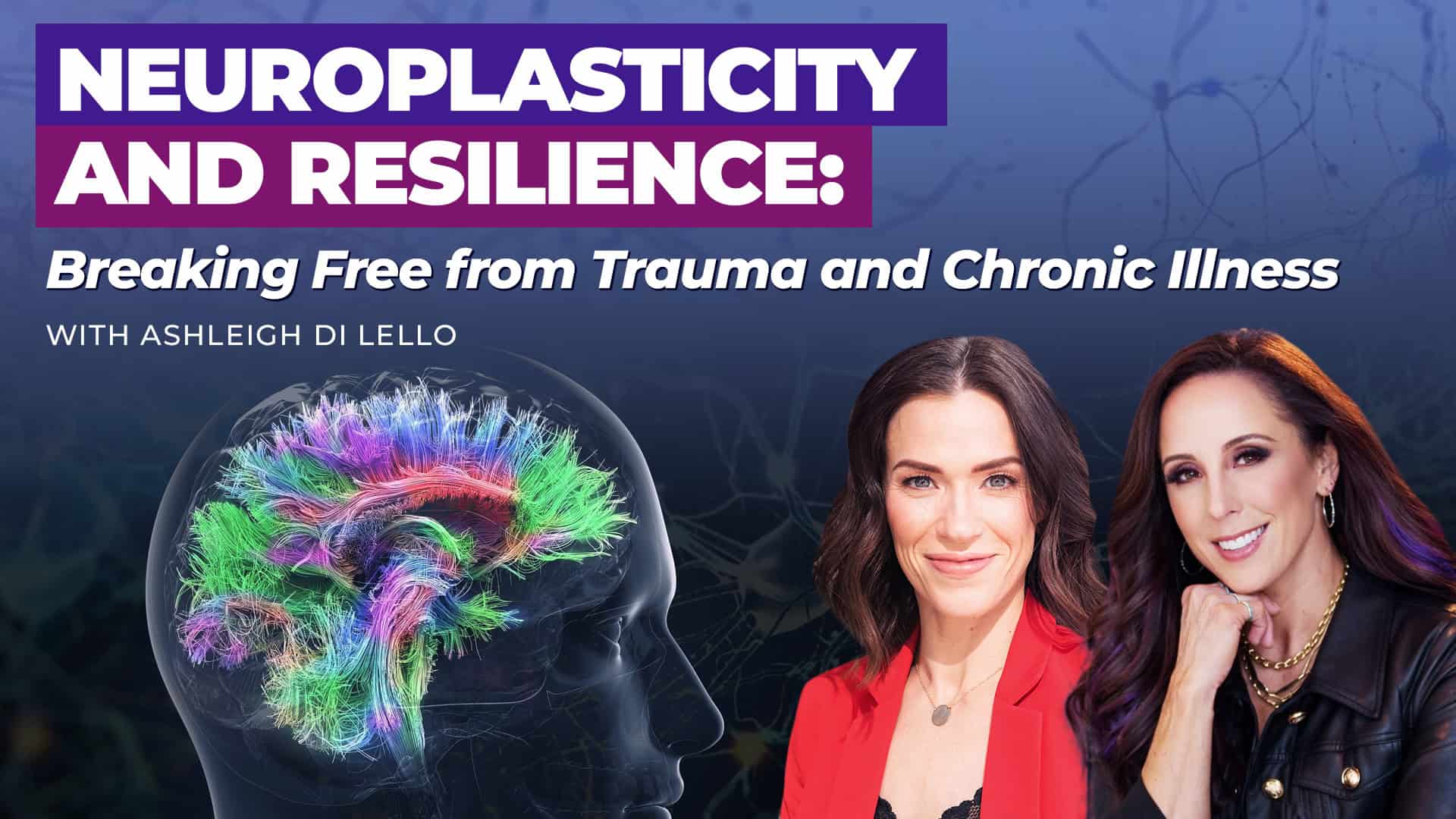
In this episode of Resiliency Radio with Dr. Jill, Dr. Jill Carnahan sits down with Ashleigh Di Lello to explore the transformative power of neuroplasticity, resilience, and the brain-body connection.
Ashleigh Di Lello shares her extraordinary journey from being told she wouldn’t survive her teenage years to becoming a thriving athlete, performer, and founder of Bio-Emotional Healing®. Her story reveals how the brain, nervous system, and emotional patterns play a critical role in chronic illness, pain, and recovery.
Together, they dive into how trauma, stress, and belief systems impact the immune system—and how rewiring the brain can unlock profound healing and resilience.
This episode is a powerful guide for anyone navigating chronic illness, trauma, or emotional stress and looking for science-based tools to heal from within.
🔑 5 Key Discussions You'll Discover with Ashleigh Di Lello
① 🧠 Neuroplasticity and the Brain-Body Connection
⇨ Chronic illness and pain are deeply connected to brain patterns and nervous system responses.
⇨ The brain can be rewired to support healing, resilience, and improved physical health.
② ⚡ Stress, Trauma, and the Immune System
⇨ Chronic stress keeps the body in a fight-or-flight state, weakening immune function.
⇨ Emotional trauma and unresolved stress can manifest as physical illness.
③ 🛡️ The Foundation of Safety in Healing
⇨ The brain must feel safe for healing to occur.
⇨ Without physical and emotional safety, the body cannot shift into repair mode.
④ 🔄 Rewiring vs. Regulating the Nervous System
⇨ Managing stress (regulation) is important, but long-term healing requires rewiring patterns.
⇨ Deep healing involves shifting subconscious responses to stress and threat.
⑤ 💫 Self-Compassion and Mindset Transformation
⇨ Harsh self-criticism and perfectionism can keep the body in chronic stress.
⇨ Reframing beliefs and practicing self-compassion are essential for recovery.
🔑 Key Takeaways with Ashleigh Di Lello
🔹 The brain plays a central role in chronic illness, pain, and recovery.
🔹 Neuroplasticity allows the nervous system to rewire and heal over time.
🔹 Chronic stress and trauma can significantly impact immune and physical health.
🔹 A sense of safety is essential for the body to shift into healing mode.
🔹 Self-compassion and mindset shifts are powerful tools for long-term resilience.
About Ashleigh Di Lello
Ashleigh Di Lello is the founder and creator of Bio-Emotional Healing®, a neuroscience-based method that helps individuals overcome emotional trauma, anxiety, chronic pain, and illness by rewiring the brain-body connection.
After being told she wouldn’t live past her teenage years, Ashleigh defied the odds through resilience, mindset transformation, and deep work on the nervous system. She went on to become an elite athlete, TV and Broadway performer, entrepreneur, keynote speaker, and brain coach.
Her work focuses on helping individuals break free from limiting beliefs and chronic stress patterns to achieve lasting healing and transformation.
🔗 Website: https://ashleighdilello.com/
🔗 Instagram: https://www.instagram.com/ashleighdilello/
🔗 Facebook: https://www.facebook.com/ashleighdilello
🔗 YouTube: https://www.youtube.com/ashleighdilello
Dr. Jill Carnahan, MD – Leading Functional Medicine Doctor
Dr. Jill Carnahan, MD, ABIHM, ABoIM, IFMCP is internationally recognized as one of the most respected leaders in functional and integrative medicine. She is dually board-certified in Family Medicine and Integrative Holistic Medicine, and the founder and medical director of Flatiron Functional Medicine in Louisville, Colorado.
Widely known as a pioneer in environmental toxicity, mold-related illness, autoimmune disease, and resilience medicine, Dr. Carnahan combines cutting-edge science with compassionate, root-cause care. Her clinical approach integrates precision genomics, epigenetics, microbiome research, peptide therapy, and lifestyle interventions to transform health outcomes for patients worldwide.
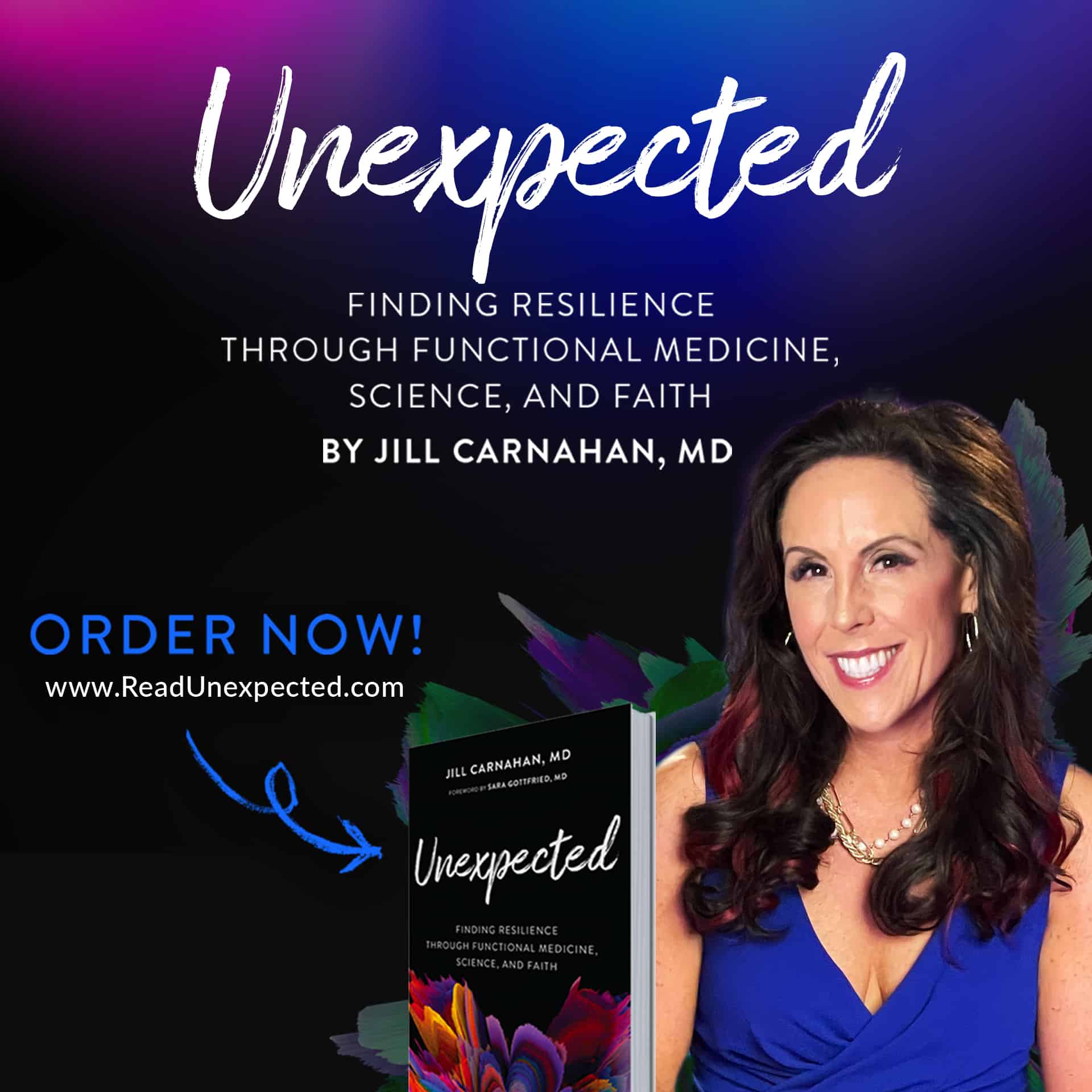
She is the author of the best-selling memoir Unexpected, which weaves her personal journey through cancer, Crohn’s disease, and mold-related illness with her professional expertise. Dr. Carnahan is also the executive producer of the award-winning documentary Doctor/Patient and the host of the popular podcast Resiliency Radio, which reaches over 500,000 global subscribers.
As an international keynote speaker, Dr. Carnahan has been featured at leading medical conferences including A4M, IFM, EPIC, and IPM Congress, and her work is frequently highlighted in major media outlets such as NBC, CBS, Fox News, Forbes, Parade, People, and MindBodyGreen.
With a reputation as both a scientist and a healer, Dr. Jill Carnahan is regarded as one of the top functional medicine doctors in the world, offering a unique blend of evidence-based research, innovation, and deeply personalized care.
The Podcast with Ashleigh Di Lello
The Video with Ashleigh Di Lello
Transcript
00:00
Dr. Jill Carnahan, MD
Hey everybody. Welcome to Resiliency Radio, your go to podcast for the most cutting edge insights integrative and functional medicine. I'm your host, Dr. Jill and with each episode we dive into the heart of healing and personal transformation. Join me as I interview medical experts, world leaders, innovators and people of all types and all backgrounds really just helping you to achieve optimal performance and longevity and overcoming anything you might be struggling with. As you know, we're here every week with new episodes and if you haven't yet liked or subscribed, we have over 900,000 subscribers on YouTube and I hope you'll join and click that button. You can click the bell to be notified of future episodes and I just want to remind you that if you are looking for products or services to help you on your optimal journey, you can find everything you need.
00:49
Dr. Jill Carnahan, MD
@Drjillhealth.com we have special curated products and services. There things like the Epstein Barr bundle, we have the SIBO SIFO protocol, we have Mast Cell activation, we have GU support of all types and really I've curated some of the very best and most pure kinds of products to help you in your journey. So if you're looking for any of those things or more, just go to drjillhealth.com also, if you haven't yet got a copy of my book Unexpected, you can find that on Amazon or wherever books are sold. You can also get a signed copy from me@the drjillhealth.com store. You just put in the comments when you check out who you'd like me to sign that to and I will write a personal signature and note to you if you like.
01:32
Dr. Jill Carnahan, MD
Or if there's someone you care about that you want to get a copy, you can get it all@doctor Jill health.com now before I introduce our guest, you're going to love this guest. Today we're talking about how to restore the brain after trauma and pain and suffering. It's a incredible episode. You're going to be sure and enjoy this. Before I do though, I want to remind you that if you are looking for a functional medicine practitioner, you can call our office. We are accepting new patients at Flatiron Functional Medicine. Our number is 303-993-7910 and you can also email info@flatiron Functional Medicine.com okay, let me introduce our special guest today. Dr. Ashley D. Lilo is the founder and creator of Bio Emotional Healing, a revolutionary method based in neuroscience that helps her clients around the world break free from emotional trauma.
02:22
Dr. Jill Carnahan, MD
Limiting beliefs, anxiety and the effects of chronic pain and illness. You're going to hear her story today, which is really astounding of what she's overcome and how she's learned the neurobiology, changing the patterns of pain. Despite being told by doctors she wouldn't live past her teenage years, she refused to give up and discovered the secret to rewiring the brain body connection. She became an elite athlete, TV and Broadway star, entrepreneur, brain coach and a keynote speaker. You're gonna love this episode with Ashley. Let's get to the show. Ashley, it is a delight to meet you here on Resiliency Radio. I always love getting to know the work of my guest and I'm so interested to talk more about what you've done over your lifetime to help people really transform form.
03:02
Dr. Jill Carnahan, MD
And one of the things we talked about right before going on is how often this kind of work is the missing piece. I know we have a lot of practitioners listening and a lot of patients listening and pretty much everyone is looking for what's the next edge of how I can up level, not only performance, but just how do we show up in the world? So super excited to have you here and welcome to the show.
03:22
Ashleigh Di Lello
Thank you so much. I'm so excited to be here. I, I love what you do and obviously we have a shared passion of health. So excited to dive in.
03:31
Dr. Jill Carnahan, MD
Yes. So what I always like to start with is a little bit about, you know, the little girl who grew up, wherever that was and then how did you get to this place here? Because I think the story of the how is so fascinating and often when people get to know that about you, they, you know, fall in love with what you are, what you do and why you do it. So tell us more about Ashley.
03:52
Ashleigh Di Lello
Yeah, it is a long journey that I will make as concise as possible. So I've gone through two life altering health experiences which I, I know you can relate to, but I, I was very young when my first one started. I was only 13 years old and I was the epitome of health. In fact, I was the energizer bunny. That was what my nickname was in dance. I loved dancing. I started dancing five hours a day from the age of seven. It was like the thing I felt born to do. And literally I went from again, like I said, the epitome of health to overnight fighting for my life. It came out of nowhere. I remember waking up with pain in every joint and muscle and going into my mom's bedroom and I could hardly do like a basic Ballet. Plie.
04:36
Ashleigh Di Lello
It was like I went to sleep in one body and woke up in a completely different one. And this was 30 years ago, so you have to think the world was very different. You know, we didn't have this. We didn't have the Internet. We didn't have social media, YouTube, podcasts, right? We. Functional medicine was very voodoo, right? Seen through this. This lens of, like, going to some woman down the street with dreadlocks burning incense, right? So it was a very different world. I went all over the country. I was tested for about everything you can think of. My symptoms kept expanding to not just pain in every joint and muscle, but my hair was falling out. Inevitably, my skin was yellow from my liver shutting down. I had shooting pains through my back, all through my gut and abdomen.
05:25
Ashleigh Di Lello
I got so exhausted that there were days I could hardly speak or even lift a finger, My hair again, falling out. So I was. I was dying. And they could see that from my blood work, but no one could really figure out what I was dying from. And it's such a crazy place to be in. And I'm sure people listening can relate to that. I used to pray that one of the tests would come out positive, right? Not because I wanted that, but I wanted answer because we. We want clarity, right? And at least then I can have a plan of action like, okay, this is what I have. It not only makes sense then, of, like, what I'm experiencing, but this is what we can do about it.
06:05
Ashleigh Di Lello
That was equally as hard in so many ways because we knew I was dying and yet felt so helpless to. What do we do to stop this? So after several years of, again, exhausting Western medicine to the point to really, there was nothing left. And I had a doctor that was top infectious internal medicine for pediatrics. He came into my room and he said, you need to accept you're not going to live past your teenage years. Wow. Just like that, you know, he said, you're. You're never going to dance again. You're never going to have children. You're never going to get married. And the sooner you accept this, the easier it will be to come to terms with your reality. Wow. It was one of those moments. I mean, I'm 13 years old. 13 Years old.
06:52
Ashleigh Di Lello
And I remember thinking, like, this can't be my life. You know, it's like in that moment, I felt every human emotion that existed. And I understand. And when I go and speak and talk at medical conferences, I'm like, I understand that by, like, what you look at. And I Come from a whole line of doctors in my family. Like you're presenting based upon what you're seeing. And I, and I get that. And I think it's so important to not give absolutes right of this is what we're seeing. Your organs are shutting down. We're not sure what to do about it versus you need to accept you're dying, you know, and you're not going to live past a certain time. And it was the most defining moment of my life.
07:38
Ashleigh Di Lello
I didn't really know what to do other than I just thankfully was born incredibly stubborn and resilient and just felt deep down inside that I was meant for more than 13 years on this earth. And so I looked at him and I said, I don't accept this. And they sent in a psychologist to talk to me to try to help me come to terms with my reality. But that was really such a turning point. We walked out of that hospital, I was terrified. I had no idea, but just knew I wasn't going to just accept that my life was over. Even though I didn't understand the brain then, I just had this feeling deep down inside that if I accepted that then any chances survival were gone.
08:20
Ashleigh Di Lello
And so that actually was a pivoting point to us exploring what we now call functional medicine, alternative medicine, because we ran out of options and we knew I had some rare viral infection that no one at that time could treat or diagnose. And so we just poured everything we had into supporting my immune system. We thought, well, let's do anything we can with supplements and nutrition and anything else that exists, especially, you know, at that time to support my immune system, to fight it. And it was a long journey. It was a very slow, long journey. And this is when I really started to understand the brain body connection because like I said, I got so sick, I. I literally had nights I was afraid to go to sleep.
09:03
Ashleigh Di Lello
I was afraid if I went to sleep and surrendered that conscious will to live, that I wouldn't make it in the morning. So I would stay awake and will my body to keep fighting, which did a number on my nervous system, as you can imagine. But it also helped save my life and showed me how powerful that brain body connection is. So, needless to say, I fought for my life for four years. It was a long journey. It took six years for me to have all of my strength back, to really get back to full life, go back to the dance studio for the first time. I'm almost 20 years old, so left as a girl and now I'M a woman and took a lot of courage. I worked really hard.
09:45
Ashleigh Di Lello
I focused solely on ballroom, which everybody now understands with Dancing with the Stars. So I had a competitive career and then married my husband who was my professional partner. And we had an incredible career. We did film and television. We were finalists on so youo Think youk Can Dance and performed on Dance with the Stars. We did. We headlined a Broadway show. It was like, I made it. You know, you're like, look at what I overcame. I'm here, I made it. And then I had to have a second hip surgery in 2016 at the height of my career. I had a two year old daughter and that failed. And it launched my whole body into chronic pain. And it was round two. Felt very deja vu where no one quite knew what happened. I really lost the ability to walk.
10:32
Ashleigh Di Lello
It was like this downward spiral. When you're living in that much pain, it starts to spread. You're not sleeping, so of course you start to have thyroid dysfunction and everything else. Cause you're in fight or flight all the time. And again I thought, here we go again. I'll throw everything in the kitchen sink at it. Which I did. Western eastern alternative regenerative, over 200 injections, you know, stem cell PRP. I mean we exhausted all of our resources and I still wasn't getting well. And that really brought me to my closest moment of just wanting to give up. Like I didn't think there was anything harder than being sick. But living in widespread, debilitating nerve pain that even the strongest narcotics don't even touch and barely sleeping in every moment is torturous. And I lost my career.
11:21
Ashleigh Di Lello
I couldn't even hold my two year old daughter. After years of that and trying all these things, we're about to lose our home because you're pouring all your resources. I just, I got point of nearly just being broken. You know, there's people who've been sick or in pain. There's not one area of your life it doesn't touch. You know, it is relentless. And earlier that day my husband and I had been talking and I'm like, there's nothing left to try. Like we've literally tried everything. And that was what made it feel so defeating. And I just though again couldn't accept that there was nothing I could do. You know, I'd already defied the odd once I knew the body was amazing.
12:02
Ashleigh Di Lello
And so that night I was thinking about all the things I'd been told and one of the common themes was, well, your nervous system flipped A switch into pain, right. And I was diagnosed with over five different chronic pain conditions. This is your life now, it's downhill from here. And I just thought, well, if the nervous system can flip a switch into pain, I'm going to figure out how to flip it back. And because my life depended on it, literally the next day I started studying neuroscience and pain science five to eight hours a day. The beautiful thing of this age of, you know, information and being a nerd, which even though I danced, I was a nerd first and foremost.
12:37
Ashleigh Di Lello
I just dove into all of the research, trying to figure out how the nervous system gets altered, how the brain gets altered, how the pain receptors in the brain get altered. Because in all of my studying I, I realized, of course all pain comes from the brain. It's felt in the body, of course, and it's real, but the brain is the creator. So I thought, well, we're just treating the body to try to heal chron pain, where the brain is the origin of it. So I gotta understand the brain and pain science and what happens to those pain receptors. And understanding that we have to treat through this biopsychosocial lens of the whole person. And so combining all of the neuroscience and pain science with my lived experience, I created a process to rewire the nervous system out of stress.
13:24
Ashleigh Di Lello
And that could be physical, mental or emotional or combination. It's called bio emotional healing and it's what saved my life. And I've been coaching clients through it for the last seven years.
13:37
Dr. Jill Carnahan, MD
Wow, what a story. The themes that I hear you talking about are things that are very common to our audience and very common to me personally. I can relate and I want to just kind of reiterate some of the really important things that you shared in your journey. Number one, the idea of resilience. I went through Crohn's and cancer and multiple illnesses, life threatening. And I remember like when you just talked about at your 13 year old self in that hospital bed, talking to the physician and feeling inside of you like, no. Number one, that stubbornness, I share that too. And I think it's part of my survival. And then that feeling of like, this can't be true, there's got to be more, right? And I think the curiosity that we have and the resilience come from like, I mean there definitely is.
14:16
Dr. Jill Carnahan, MD
Some people are born more like that. I always think of Viktor Frankl and his work, you know, one of my favorite all time books. And I'm always related to him because his suffering, I can't even Imagine what it was like to go through. And I always think if someone like him could go through horrific atrocities, way worse than anything I've ever been through, and yet he can maintain that inner will that no one can take away. I. I just love that idea. And I see that in you, and I see that in me, and I see that if you're out there listening, like, there is a piece of ourselves that when we decide we are going to survive, I'll never forget, I get the breast cancer diagnosis, and two weeks later, I heard, this sickness will not end in death. It's for God's glory.
14:55
Dr. Jill Carnahan, MD
And for me, that was like a faith thing. But the bottom line was I knew at that moment, I'm gonna. I'm gonna beat this. Like, I'm going to live. Never after that moment, one doubt. And even today, people will say, you know, aren't you afraid of cancer coming back? No, not a bit. Not a bit. And so that resilience theme, number one. Number two, you've said this, and it's so important, so I want to just repeat it. Hope, right? The power of hope. And someone tried to steal that hope away from you when you were in that bed facing the position. And again, if you're a doctor out there, we don't know. We're not all knowing. And we have a statistic that says 99% likely for this to be fatal.
15:31
Dr. Jill Carnahan, MD
However, one thing I love to bring to patients is this hope that they can overcome the odds. And I love that in your story. It is so powerful. And if anything, today, in your story, in your journey and in our discussion, if there's one thing that people walk away with after this podcast, and it's hope, we will have done our job. Because when you lose hope, you lose everything. And I hear through your journey through horrific times, like you never lost hope. And I love that. I kind of want to talk before we go into the neuroscience of your program and everything about hope. And then lastly, immune system. I want to just spend this, and thanks for letting me expound, because I think these are so important.
16:10
Dr. Jill Carnahan, MD
So I just was in fall, October, in Geneva, Switzerland, and I was among, just like you said, Dubai, uk, world leaders in regenerative medicine, stem cells, exosomes, everything out there at any cost, anything you can imagine, they had access to. And they're all talking about their therapies on the stage. Amazing, amazing technology. And it literally exponentially grows every day. And I got up there very humbly on the stage because I'm going to be talking about the immune system. Right. But when I started, I just had this inspiration before I stepped on the stage and I started my talk with, you know, we can do all of these things and it's amazing and we have so much power now and we have all these new.
16:48
Dr. Jill Carnahan, MD
I just last weekend was at another conference and brand new therapies I've never seen before, and they're just coming out and coming out, really cool things. But I got on that stage and I said, guess what, guys? You can have all your fancy tricks, your expensive therapies, your regenerative medicine, but I believe that immune resilience, your immune system functioning, is the future of longevity. Right. And that's. And so this is like, how do we actually access. Because what you're alluding to, which again, we're going to dive deep. If you're listening, I'll stop talking here in a minute. But the key there is that our brains have the power to transform our immune systems. And that immune functioning is absolutely core to reversing pretty much all complex chronic illness because it's toxic load, infectious burden, immune dysfunction, inflammation.
17:34
Dr. Jill Carnahan, MD
And if we can go from top down and change this. So I'll stop talking, but let's dive in from your perspective on. You started to dive deep in the neuroscience and you started to realize what if the brain could change this? What were some of the first ideas or thoughts about what you were reading that you put into place? And when was that moment when you saw, like, this is really going to work? Like, tell us that story.
17:57
Ashleigh Di Lello
Yeah. First, I just want to say, like, with resilience and hope. If I can just comment on that real quick, it's so important. I think it's really easy. Obviously you share it. I do. I, I do believe some of us are born with different characteristic traits that are stronger than others. Right. And, and I think some of that was also just built into my personality, but also my dedication to dance, which started very young. And so you learn resilience to push through pain. But having said that, there's a certain area of the brain that is directly connected to resilience, and it's called our anterior mid cingulate cortex. Right. So the reason why I say that is a lot of people will then say, well, you are super resilient naturally, and I'm not. So therefore my outcome can't be the same.
18:46
Ashleigh Di Lello
And to you, I say, no, listen, this is not a set characteristic trait. There's an area in the brain that.
18:52
Dr. Jill Carnahan, MD
Literally you like a muscle.
18:53
Ashleigh Di Lello
Right, Exactly. You can grow it and it's directly connected to doing the things you don't want to do. Okay. Not hard things that you enjoy. Right. So probably a lot of my dancing, I wasn't building that area because I loved it. So even though it was long and it was hard, I loved it. But when you think of the things you don't like to do, but you do them anyway, you start to build that area of your brain which builds resilience. And so I just want to focus on that because I think a lot of people check themselves out thinking they don't have that characteristic trait where you can practice it, you can grow it, and they've seen it. The studies have shown that area of the brain grows or shrinks in proportion to you doing the things you don't want to do.
19:37
Ashleigh Di Lello
In fact, it's large in athletes, that area of the brain, it's small in obese people because there's that constant not doing the things you want to do in terms of taking care of your health. And it's largest in people who see themselves going through something hard but overcoming it.
19:58
Dr. Jill Carnahan, MD
Yes.
19:58
Ashleigh Di Lello
How amazing is that? Like, you know, I mean, you don't have to be an athlete. It's literally, again, comes to your frame of mind. So either you can be going through something hard and you can lean into the defeat and fear, and I'm never going to get through this, or you can see yourself as overcoming it and that area of the brain grows larger, which means you become more resilient, human. So I just wanted to emphasize that.
20:22
Dr. Jill Carnahan, MD
I love it. Thank you so much. Like, that is really the core. And what I really love is this is accessible to all of us. Recently, all the happiness research is out there, and there is a direct correlation. We think happiness is finding joy and seeking joy. Right. It's actually opposite, because when we seek joy, we usually aren't happy because we're seeking something that's inevitably not always there. It's literally going into the suffering and getting through and overcoming that is highly correlated with happiness. And how cool is that? It's exactly what you just said is strengthening the area of the brain. Okay, go on. For hope.
20:56
Ashleigh Di Lello
Yeah, sorry. That was the last thing I. And then I wanted to say. Can I say something about hope? Because I feel like no matter what else I say, this is these two are two of the most important messages in terms of people just really embracing the possibility. Because first of all the statistics that are out there, and this is my own opinion, but it's an opinion based upon my own life. And then just then I'm sure, like you just all the clients that I've witnessed over the years who also have defied the odds in my rate of things, right? And I really. And we'd never really get to know the truth of this, but how much of statistics is an indisputable fact versus people being told what is possible and then accepting that and communicating that to their body all day long?
21:43
Ashleigh Di Lello
And we know the body is wired to validate what the brain believes. So once you accept that this is what it must be, this is what it is, and then we start speaking it, we're telling it to others, we're communicating that to our body. And our body goes, okay, this is my constraints upon which I can live the rest of my life, right? I've got this diagnosis, it's terminal or it's chronic, which I wish we would just change that word because chronic means forever, never ending, which is a pretty strong meaning to communicate to the body, right? And we. I have chronic da da, which is a communication that this is my life, right? And that's what we're told. And so I always tell my clients, listen, I, I know horrible things can happen to the body.
22:28
Ashleigh Di Lello
Like, I'm not saying everything is created from the brain. I'm saying we're humans, we're exposed to all types of viruses and infections and bacterias, and that's life. And what we believe about our ability to heal from those is the most powerful component. Because, like, to your point, you can throw all the biohacking, all the regenerative everything, but if your internal environment is such, in which you don't believe it's possible, then like, nothing is more powerful than that. And we've obviously seen that with the placebo effect. So I just, it's so important to kind of have that separation from the diagnosis or the statistics you've been told, because history has also shown over and over again that people defied the odds all the time. And it's because they didn't accept the narrative that was being told to them.
23:20
Ashleigh Di Lello
And not to just keep honing this in, but I just want to share a quick study because it just allows you to embrace this possibility. Because were talking about hope, which is rooted in belief, right? Belief in what's possible. But they did a study and it was in England because. And maybe you've heard of it, but they found you can have a genetic mutation that allows your body to better offload carbon dioxide and uptake oxygen, right? So you have a better VO2 max capacity. So they brought people in and they tested them and they divided them into two groups and they told the first group, hey, congrats, you have, you know, the genetic mutation. We're going to put you through these VO2 max tests and you're probably going to do really well. Right.
24:00
Ashleigh Di Lello
And they told the second group, sorry guys, you don't have it. This will probably be a bit more of a struggle.
24:06
Dr. Jill Carnahan, MD
Right.
24:06
Ashleigh Di Lello
So they put them through these VO2 max tests and then as you can guess who did better, the first group. Right. And that might make sense, of course, and even the placebo effect is there. But this really gets interesting. There was a mixture of both people in both groups, people who had the genetic mutation and the people who didn't. And upon further looking at the tests, they found that the people who didn't have the genetic mutation but thought they did outperformed the people who had the genetic mutation and therefore the physiological advantage but didn't think that they did. Which tells you right there that even beliefs plus expectations are more powerful than genes. Yes, that's what I want to emphasize because also we just get, well, my genes are bad or this has been through my family.
24:57
Ashleigh Di Lello
And it's like right there that shows you these people believed they would do better. They expected themselves to do well and to have a better outcome and therefore they did. Versus these people had all the physiological advantage, but because they didn't believe they would do well, they did less than the people who didn't have the physical gene that would help them like that. To me, if you can just really embody that hope is that belief plus expectation. Like you can't just believe it. You have to live every day, take the actions like you said in your journey, like expecting I'm going to get well, I'm going to survive this.
25:39
Ashleigh Di Lello
That is so much more powerful than often we give credit for, you know, and people will tell you from their own fears to be realistic, you know, because they think you're getting your hopes up. But it's like I can promise you, if you believe and expect a great outcome, no matter where you end up, you'll be much more closer to that than if you live from a place of fear and just accepting the worst case scenarios and Google them. All that communication internally, I'm telling you, is more powerful than anything you can put in your body.
26:13
Dr. Jill Carnahan, MD
Hey guys, just a quick interruption for a moment to remind you a couple of things. First, if you haven't got my book, Unexpected Finding Resilience through Functional Medicine, Science and Face. It's sitting here behind me. It really is a testimony to what Ashley and I are talking about today in Resilience, Overcoming Crohn's, Overcoming Cancer, Overcoming Mold, Related Illness, and the stories of many of my patients who have done the same. And I feel like it's a memoir, but more than that, just a powerful, encouraging book that if you are suffering or struggling or you know someone who is, please think about getting a copy or giving a copy to someone. If you read it, you know what's inside and the power of just us sharing stories. And to me, that was the reason I wrote it, is to encourage you on your journey.
26:59
Dr. Jill Carnahan, MD
You can get a copy anywhere books are sold, but you can get a signed copy from me if you order from Dr. Jill health dot com. Okay, let's get back to our show. Love that bit about hope. It's one of my favorite topics and so important. Then you mentioned immune system, and so did I.
27:14
Ashleigh Di Lello
Right.
27:14
Dr. Jill Carnahan, MD
Immune resilience. And I think people don't really understand how much the brain and immune system are intricately connected. What did you learn in your dive neuroscience as far as how much our mindset, our brain, our parasympathetic, sympathetic, actually control immune function?
27:31
Ashleigh Di Lello
Oh, man. I mean, there's a reason why we know stress is the number one cause of disease, right? Because of that very powerful connection. I mean, stress depletes your immune system more than about anything else. And especially, again, not like to use the word chronic, but ongoing stress, living in that state, depending on if that is because something physically is going on. But also, you know, prolonged mental and emotional stress. When you're there, every thought, emotion creates a neurochemical response in the body. Right. That again, puts us in our sympathetic nervous system, which is beautiful. Sometimes fight or flight gets like such a bad rap. And I'm like, no, it's life saving. It's incredible. But it's supposed to be temporary. Right? And then we're supposed to come out of it. The problem with if we're always in stress. And that could be our circumstances.
28:25
Ashleigh Di Lello
Yes. But even more powerful than our circumstances is the meaning we're giving to our circumstances. Right. Because that. And that's why you can see two people go through something similar, but one has a more capacity, growth mindset, and the other one more defeated, more victim. Why me? I can't do this. And that directly impacts the chemistry in your body. And when you are in that constant state of stress, you know, which we have a lot of choice Over. Listen, I've been through hell. I know how stressful life can be and the financial stress with it and everything. And yet we still have that stewardship over what we are communicating in our bodies. And if you're constantly in that internal stress, then you're in your sympathetic nervous system which doesn't have the resources to live from.
29:16
Ashleigh Di Lello
And so when you stay there, your body has to start pulling from other places. And then you don't have the resources for your immune system to fight everything that it needs to and to repair and to heal. And that's when you start to see more and more breakdown. Not just because your body is broken, but because your nervous system doesn't have the capacity to utilize the immune system to take care of what our bodies were designed to brilliantly take care of. And so again, I see so many clients put a million things inside their body, right? But their internal state is more powerful and so they can't put more good in than what is being drained by their thought processes, the emotional states they want to live in and the meanings they're giving their experience.
30:05
Ashleigh Di Lello
And let me just say, I had very hard days, very hard moments. Like I promise you, there were moments that I wasn't this just fighter, optimistic, determined, but I made them in a container, right? Like we, you are human and it can be so hard. You gotta allow yourself to move through that hard. Because if you don't, it's also staying within your system, right? Whatever we don't express, we suppress. And that also can drain our immune system. But there's this understanding that we have to move through it versus identifying with it. And then understand that what we're choosing to think and what emotional state we're choosing to live in and how we act is directly either taking from our immune system or really allowing it to expand and use its resources and do what the body was designed to do, which is to heal.
30:58
Dr. Jill Carnahan, MD
Okay, love this. Oh, there's so many questions I want to ask you. The next question I want to ask you is I see in your story a very driven young woman who loved to dance and probably pushed herself to succeed. You had that drive and ambition and success in some ways until you got ill. And I wonder what the double edged sword, if you see this in clients of someone who is very driven, hardworking and pushing themselves. And I say this especially because some people who've heard this story on the podcast before, but I remember I fought cancer, I fought Crohn's, I was overcoming, right? Same mentality that got me through Life and through med school.
31:37
Dr. Jill Carnahan, MD
And I remember the day when I realized this analogy in my brain of fighting and overcoming in the mold related illness was actually killing me because my was so aggressive in this fight. I'm going to overcome, I'm going to be whatever. But all of a sudden I realized that story I was telling myself was actually going to kill me because my immune system fighting the mold and toxic exposure was actually causing collateral damage. And I had to change my story. I had to actually be weight. I have to stop the fight. I have to have this cohesive story for my immune system to gently escort these toxins out of my body and no longer am I going to be fighting. So how did your nature, your character of being this incredibly strong, young, resilient woman actually maybe cause part of the problem?
32:23
Dr. Jill Carnahan, MD
Or how did you reframe that and use the best of it, but also make sure it didn't cause harm?
32:28
Ashleigh Di Lello
Yeah, I love that you said that. Reframe that. That's always what I tell my clients. It's not an absolute. Like a lot of the things that help us are necessary, but there's parts, the parts that hurt us are what we want to start to let go. Right. And no longer live in. It's incredibly high percentage of people that I work with are very highly driven, type A personalities, if you will, perfectionists, if you will. And again, I wouldn't be alive without that. But there is that double edged sword and it's interesting because I always had that, you know, I was like, seize the day life. Like I said, I was equally involved in my academics as I was dance to the point where I cried when I got my first A minus in college.
33:10
Ashleigh Di Lello
Like it's so funny to say out loud, but really I felt like a failure, which is so crazy, but that just gives you a picture of that drive. So to your point, my illness, it was a total fight. It was like I'm a fighter. In fact, that was like a badge of honor. I had a necklace that said fighter on it. Like that was kind of my identity. People would be like, there's Ashley, you know, she's such a fighter. And it was like, yeah, I will fight, I will overcome. And again, that has its place. And it helped me survive no doubt whatsoever. And inadvertently, I didn't understand when I was in actual survival for four years because it was literal, right? Life or death. My nervous system was like hardwired. This is what we do now. Like we are a survivor.
33:59
Ashleigh Di Lello
And that is why my driven personality went to this Whole new level. But it almost became this need. And it wasn't until again I, I dove in and did the work that I understood. My nervous system literally had equated fighting with life or death. Even though I was no longer dying. That was the meaning. And that's why when I quote, failed, like getting an A minus, it felt so huge for my system because that perfectionism was equated to safety. Right? Because you think about it and again, I know you can relate. And others here I was given zero chance of survival. So you feel like I must be perfect. I must be perfect in my faith, in my determination, in my optimism, in my adherence to all of my protocols, like, because no one's giving me a chance.
34:47
Ashleigh Di Lello
And then when you do succeed, your brain's like, this is amazing. This is what we do, you know, so it's not so easy to let that go. So, yes, I was very driven in my academics, in my dance career. I'm just that I had, I couldn't even relax, literally, if were watching a movie. It's like, well, what can I do to be productive? You know, it was like hard to turn that off. And I honestly wanted to, but couldn't. Like, I had a very hard time relaxing. And I now know that was, you know, my nervous system had again flipped a switch to we must be on all the time, because also what threat is around the corner? We are perfectly healthy. Now you're dying.
35:25
Ashleigh Di Lello
And a lot of people have that drive or they've had really hard circumstances, they've had to survive that again, hardwired their nervous system into the need to always be fighting, right. Or be looking for the potential threat. So the interesting thing is that then puts you in fight or flight all the time, right? And you're, you have a hard time coming out of it again, like I just said, when you're there, that leads to breakdown inevitably, and it's not sustainable. So in their brilliancy, even though it feels like they're punishing your brain and body will start to get your attention. Like, this is not sustainable. So I'm going to start talking to you. And, and that could be in physical symptoms, but it also could be in anxiety or depression.
36:13
Ashleigh Di Lello
Like the brain or body are trying to get your attention that what is happening isn't working and, or of course something's going wrong in the body and if we don't listen, they'll start to scream, right, what do I need to do to actually really get you to address this and so what, you know, achievers do tend to do is that we're also very hard on ourselves, right? It's never quite good enough. It's black or white, it's all or nothing. And that then is we're hard, we have more self criticism on average, right?
36:44
Ashleigh Di Lello
So the interesting about that is when I was studying neuroscience and realizing and looking at the studies where they're mapping the brain when people are being harshly self critical, which I used to be amazing at, okay, like you know, you can be two people, so kind and compassionate to others and yet these rigid like guidelines and expectations for yourself. Well, when people were in this harsh criticism, their brain was going off like there was a threat in the environment. So again, sending stress hormones to the body, activating the fight or flight. And what's crazy is when that happens, right, and your brain now goes into threat mode, the neural synapses in the brain shut down and that's where information is exchanged. That's where we can really access the neuroplasticity of the brain to change.
37:33
Ashleigh Di Lello
So when we're harshly self critical, we're actually blocking the brain's ability to even contemplate or integrate new information. And we're putting our system in stress, which then again it diverts its resources from healing and repair to survival. And so that was a big part of myself that I needed to heal. And again, I had to understand where that was coming from. I knew that was innately part of my personality, but I had to really process out a lot of the unresolved emotions and trauma of my illness so that my brain could understand. Being quote, perfect was no longer equated to me living or dying. Because it was all subconscious, right? It's not conscious, that sounds dumb. I knew that wasn't true. But deep inside was that need because my brain still thought, well, this is life or death.
38:28
Ashleigh Di Lello
So I had to process and work through all of that and then really start to practice the same self compassion and grace that I gave other people. And again, just make that discernment for my brain because I'll tell you right now, when I tried to change that my brain was like, I'm sorry, why would we stop being this person? Look, you succeeded your illness, look at your professional career, look at your academics, like this is working really well for you. And so again that discernment of you know what? I'm still a hard worker, I still strive for excellence. That like you're never going to take that from me and we can do it differently, it doesn't have to be perfect. It's not all or nothing. You're going to make mistakes. Failing is feedback.
39:12
Ashleigh Di Lello
Like, I had to start to really reframe how I operate in the world so my system could come in and out of fight or flight, right? Because right now I'm kind of in fight or flight. I'm activated. I'm a little passionate. Like it's good, but. But I had to teach it. It didn't have to stay there anymore. And that's a big part for many of my clients. Because also when you get sick or you're struggling, it's like, I'm broken. What's wrong with me? Why am I healing? You feel like a burden to your family or loved ones or it impacts your career and you feel guilt around all of that. So there's so many layers below, like that has impacted the human going through this that is so important to heal. Reframe, process old stuff, bring in self compassion and grace.
40:02
Ashleigh Di Lello
That is crucial to not just getting well, but staying well. And when you don't heal all of that stuff, that's why a lot of people will fight their way well. But then something else comes because their system is still the same, right? And we can only fight for so hard. And that's when I realized again, like you, I fought. I survived my illness, but once I knew the neuroscience and studying the brain and because now I was in pain, which is the number one protective mechanism in the human body. One of the hardest things to rewire because we're built with that. That's how the body communicates with us. I knew there was no way I was going to heal this widespread, debilitating pain by fighting. Because even that notion, it's like. And underneath that is like, I'm gonna fight my body to wellness, right?
40:50
Ashleigh Di Lello
And whatever we fight also, you know, we get activated. And the difference was I'm not going to fight from fear and control. I'm going to fight with hope and trust and I'm going to do this with my body and I'm going to give us both compassion and grace in this journey, which again, it's. It's all practices, I promise you. It took a lot of practice for me to change and start practicing grace and starting to work with my body instead of feeling like my body was my enemy, right? Or my brain was my enemy. But that's why I tell my clients it's all a practice. Like, you think I don't know how I could ever do that? And I'm like, well, we just have to start practicing. That's what neuroplasticity is, the ability for the brain to change itself through new experiences.
41:36
Ashleigh Di Lello
So when you practice something new, you're giving the brain new input. It's learning and it gets better at whatever it practices. And that's where you have to be patient and persistent. But getting out of that fight, fight is crucial for anyone with anxiety, depression, trauma, or all degrees of health issues. Like, it's not sustainable if we don't start to heal that inside us as the human navigating whatever you're going through, but like life in general. Because we all know there will always be enough things to, you know that are challenging to stress about. So that's key.
42:19
Dr. Jill Carnahan, MD
So good. And I know people listening can relate to everything we've been saying and some of themes. I want to kind of end with maybe a few practical tips that someone who's listening can start to practice or do or just rethink. But I want to just emphasize themes of this productivity. And I hear in your story this, like, I'm valued if I'm perfect and productive. Because again, same story. And I had to really like, how can I just be present and rest? I think a lot of people can relate with that sitting still or not being productive. Because at some point in our youth, we equated perfection or productivity with value, right? That like, that's the love that we get if we are productive, if we get straight A's, if we do these things.
43:00
Dr. Jill Carnahan, MD
Whereas the truth is we, like, for me, I had to rewire just being, just me being present, being born is enough to be loved. And so this comes to theme of love and safety, right? Because if we are sending signals to our body that we're either not loved or not lovable unless we X, Y or Z or that we are unsafe. I always tell patients, you know, if you feel unsafe, there is no amount of protocols, supplements, diet, nutrition, sleep, etc, or you know, biohacking things that will allow you to heal. And so when they walk in the door of my clinic, one of the very first things I need, I want to do is connect with them, make them feel warm and welcome, and then listen and create a container. I call.
43:39
Dr. Jill Carnahan, MD
I always say love is the way we create a space for the optimal transformation of another human being. And my job as physician is not to give them a protocol. It's to love them and give them that space to start healing. So someone listening, they're like, okay, Jill and Ashley, this sounds great. Love and safety and Transformation and reframing. Where would in our last few minutes, maybe give just one or two or just a couple of pearls of where could someone start with this process?
44:08
Ashleigh Di Lello
Yeah, and I, I get that. Listen, I didn't feel safe in my body for most of my life, right? And. And I had all the reasons to validate why that was true. And. And yet that's all the brain cares about, right? So like you said, in the absence of safety, the brain is going to create stress hormones. It's. It's most important. Physical and emotional safety are perceived, like, identically in the brain. It cares about both of them. So where you can start just understanding that all stress responses are protective. Right. Again, I know things happen in the body, but that is how our brain and body communicate with us is through symptoms, through stress responses.
44:44
Ashleigh Di Lello
And so just that first reframe is so important, because if you don't understand that, again, you feel like your brain or your body are punishing you and that they're. They're broken. You'll never feel safe if you don't understand. They're just trying to communicate to you. And it's. It is rooted in love. It's rooted in self preservation. Whether they're like, hey, something's going on the body. We need to look at it, or, hey, you can't keep operating in this degree of stress.
45:09
Dr. Jill Carnahan, MD
Right.
45:10
Ashleigh Di Lello
So we're gonna scream. We're gonna start screaming so you can change this. So if you can first understand that, then you can see it as a partnership. You're not fighting your body, you're not fighting your brain. They're just communicating to you. And now we want to start working together if. And they are your greatest ally if you do that. So that's the first, like, paradigm shift. Okay, this is protective.
45:31
Dr. Jill Carnahan, MD
Yes.
45:32
Ashleigh Di Lello
What are they trying to protect me from? Right. Is there something physical I really need to look at? And what is the emotional, mental? What is going on? Do I have unresolved traumas or emotions or triggers that keep coming up? Because that's all stored in the body, and we know that. So even though we don't want to, I need to start looking at that. And I would say most people have unprocessed something. You know, not everyone's gone through severe trauma, but if you've lived a life, you've gone through hard things that a lot of times we just bottle up. Either we can express. We don't feel safe to. So one of the most effective exercises that you can just do right now is I tell my clients Do a brain dump. Set a timer, 10 minutes. What?
46:16
Ashleigh Di Lello
And you can do this daily if you have a super stressful day. But also as you're listening and you're like, oh yeah, this keeps coming up, or this circumstance, just let it all come out. This isn't for proper punctuation or grammar. This is hold nothing back. Because you're going to throw it away or you're going to delete it. You can type it or write it. This type it doesn't matter to the brain. Like your ugliest, darkest, most fearful, angriest. The things you wanted to tell to someone that you couldn't, that you hold in that you probably shame yourself for ever thinking that, like, this is just a free expression and it's actually huge self compassion. It's saying, man, you've gone through some hard stuff. I'm going to sit with you and allow you to actually experience this.
46:59
Ashleigh Di Lello
Because we do that for other people, but not ourselves. We're like, I don't have time for you. Like, I don't have time. Just buckle up. You know, I don't have time for that. Just set a timer. Because then your brain knows this isn't going to go forever. If it goes past 10 minutes, you want to keep going, that's fine. But you just allow yourself to move through that. Tear it up, throw it away, delete it. It's to let it out. And I promise you, as simplistic as that sounds, there's hundreds of neuroscience studies on the impact of writing. But the fact that you're going to throw it away is what allows you to be honest. Right? Traditional journal writing, we all hold back if we think someone's going to read it one day.
47:35
Ashleigh Di Lello
But this helps you to start moving through some of those stresses that you're holding on to emotionally mental, that you can't communicate. So that paradigm shift first your brain and body are perfecting are protecting you. You're a team, not enemies. We have to do this as a partnership. Giving yourself the grace and compassion to know that you are allowed to move through the way the things you're going through have impacted you. Because I didn't do that through my illness. Because I was like, I'm a fighter. I don't. You don't get to cry today. Like, you have to be tough. And granted I had limited resources, but. But the last thing I'll say is it's an and we're not either or you're not weak or tough. Like you're both. You know, you can Allow the heart.
48:19
Ashleigh Di Lello
Like I had absolute hope and determination but I had days I was afraid and I felt pretty defeated and I was sad over all that had been taken from me. Allow that to come out of you because that relieves stress, that frees up resources for immune system and everything else that you're doing. So there's so many things and obviously my process is very involved and it's 12 weeks long and it works to get the nervous system on board to first let things go to then rewire it. But I'm telling you that paradigm shift and if you can start integrating brain dumps. Yes they're going to go such a long way to helping to create that partnership and therefore safety.
49:00
Dr. Jill Carnahan, MD
Gosh, I love it because so practical. Now you have a bio emotional healing program. I want to have people find out where they can find more about your program. But I want to just to your point about you can have both. I'll never forget in the process of my healing one of my dear friends said jill you can be both a badass and a delicate flower. And I wrote that down like that's always stuck with me. Like oh yeah wait, I can embrace both. Like it was just so right well that she said that because it was this reflection of me thinking that it had to be one or the other. I'm like wait, I can be both. So love that. So where can people find you more about your work or the bio emotional healing techniques?
49:40
Ashleigh Di Lello
Yes, absolutely. So I'm sure you'll put it in the show notes. My website is my name Ashley Delello which you'll have the spelling but you could also search bio emotional healing and you'll find me there on my website. You I have a great free resource, the free brain body blueprint that will give you a three step action plan to start to disrupt your stress responses, your negative thought loops like sensations in your body. So that's a great just free resource. I also have a longer training on the brain because I find the more you understand the brain you more you see, oh the brain is stuck. I'm not broken. The brain is a huge piece of this. So that gives you more hope to be able to change it since we know the brain can change until the day we die. Yay.
50:26
Ashleigh Di Lello
That is hope right there. And then you can also if you're really interested and want to rewire your nervous system, you've done so many things, you've even done a lot of regulating tools and I just want to make that discernment regulating tools are necessary to rewire, but they don't rewire the nervous system alone. That's a process. And that really means you have to turn down the fear and defense networks in the brain and turn on the pro social networks, which is healing, which is trust, which is safety. There's actionable steps that we must do to change that in the brain that aren't just managing the moment.
51:02
Ashleigh Di Lello
So even if you've done all the regulating, you have all the biotech, you know, hacking, you have all the nutrition, the supplements, and you still feel stuck, whether mentally, emotionally or physically, then I really encourage you to look at this because it just is often the missing piece. And again, even though we talk about the nervous system, everyone stops at regulating. And I'm like, that's still management. I want to actually change how I operate. And that's freedom. And so you can schedule a consultation from my website if that interests you, because it is a dive into deep work together. And so we make sure we have that call just to make sure it's a good fit and to see if you know, you're at a place where this makes sense.
51:45
Dr. Jill Carnahan, MD
Wow, Ashley, this has been so fun. I've enjoyed every moment and just love your spirit. Love the fact that you've transformed suffering into this triumphant ability to help other people. And it always does come from the own work. We start with ourselves and then go in the world as a healer and share that information. So really thank you for your work. It's so powerful and it's very clear from your testimony. Just you've done it yourself and you've done that and are able to show us the way. So thanks again for coming on today. It was an absolute pleasure.
52:15
Ashleigh Di Lello
Thank you so much for having me.
52:17
Dr. Jill Carnahan, MD
Hey everybody. I hope you enjoy that really fun and amazing interview with Ashley. What a life story and what powerful transformative principles. I know much of that I've lived and I'm still on the journey with you, learning as I go. But I realized that the brain neuroplasticity and rewiring, our perception of illness is such a core component in myself and my patients healing. So I hope you enjoyed that. If you did, please share this episode with a friend. If you haven't yet subscribed on YouTube, please join our over 900,000 subscribers there. If you like this on any other platform, please leave us a review that helps us to reach more people. And if you're looking for a great functional practitioner to help you in your journey, you can call our office at 303-993-7910 or email infoatironfunctionalmedicine.com to schedule a consultation.
53:10
Dr. Jill Carnahan, MD
We have amazing mid levels and providers that can help you on your journey. So until next week, I'll see you again for another episode of Resiliency Radio.
* These statements have not been evaluated by the Food and Drug Administration. The product mentioned in this article are not intended to diagnose, treat, cure, or prevent any disease. The information in this article is not intended to replace any recommendations or relationship with your physician. Please review references sited at end of article for scientific support of any claims made.




Share: