



The discovery of zonulin has revolutionized our understanding of intestinal permeability and opened doors to targeted therapeutic interventions
As a functional medicine physician who has dedicated decades to understanding the intricate connections between gut health and overall wellness, I'm continually amazed by the discoveries that deepen our knowledge of the microbiome-gut-brain axis. One of the most significant breakthroughs in recent years has been the identification of zonulin—a master regulator protein that quite literally holds the keys to our intestinal barrier integrity.
Today, I want to share with you the fascinating science behind zonulin, its connection to countless health conditions, and an exciting therapeutic compound called larazotide that's showing remarkable promise in clinical trials. This isn't just another gut health article—this is about a fundamental shift in how we understand and treat the root causes of chronic inflammatory diseases.
Understanding Zonulin: Your Gut's Security System
Imagine your intestinal lining as a sophisticated security checkpoint at an international airport. Every molecule that wants to pass from your digestive tract into your bloodstream must go through this checkpoint. The tight junctions between intestinal cells act as the security guards, and zonulin is their supervisor—telling them when to open the gates and when to keep them sealed.
Zonulin was originally identified as pre-haptoglobin-2, a protein that modulates both the intestinal barrier and the blood-brain barrier by disassembling tight junctions. This discovery has been nothing short of revolutionary because it gave us our first clear understanding of how “leaky gut syndrome” actually occurs at the molecular level.
Based on Dr. Fasano's research, we know that the two most powerful triggers to open the zonulin door are gluten and gut bacteria in the small intestine. Gliadin causes zonulin levels to increase both in those people who have celiac disease and those who do not. When zonulin levels rise inappropriately, the tight junctions between intestinal cells begin to loosen, creating gaps that allow larger molecules—including undigested food particles, bacterial toxins, and other inflammatory substances—to slip into the bloodstream where they don't belong.

The Far-Reaching Impact of Dysregulated Zonulin
What makes zonulin research so compelling is how this single protein connects to an astounding array of health conditions. As I've seen in my practice over the years, patients with seemingly unrelated symptoms often share this common thread of intestinal hyperpermeability.
Neurological and Psychiatric Conditions
Zonulin has been found upregulated in various neuroinflammatory diseases including Major depressive disorders, Alzheimer's disease, Multiple Sclerosis, Myalgic encephalomyelitis/Chronic fatigue syndrome, and Parkinson's disease. The gut-brain axis isn't just a trendy concept. It's a very real physiological pathway where intestinal dysfunction can directly impact brain health.
This makes perfect sense when you consider that zonulin modulates both the intestinal barrier and the blood-brain barrier. When zonulin is dysregulated, it's not just creating holes in your gut lining. It's potentially compromising the blood-brain barrier as well, allowing inflammatory molecules and even bacterial fragments to reach brain tissue.
Autoimmune and Inflammatory Conditions
The connection between zonulin and autoimmune diseases is particularly striking. Increased intestinal permeability is seen both in patients with active celiac disease and in patients with T1D and their relatives. We're seeing elevated zonulin levels in:
- Celiac disease: Where gliadin directly triggers zonulin release
- Type 1 diabetes: Patients with T1D exhibit higher levels of serum zonulin, primarily in the early stages of the disease
- Inflammatory bowel diseases: Including Crohn's disease and ulcerative colitis
- Rheumatoid arthritis: Where intestinal permeability often precedes joint symptoms
What's fascinating is that this suggests many autoimmune conditions may actually begin in the gut, with zonulin-mediated intestinal permeability serving as the initial trigger that allows the immune system to encounter antigens it was never meant to see.
Cancer and Glioblastoma: A Shocking Connection
Perhaps most surprising is the recent research connecting zonulin to glioblastoma—the most aggressive form of brain cancer. Recent studies revealed a significant upregulation of the protein zonulin in glioblastoma, which correlates with patient survival.
The research suggests three interconnected mechanisms:
- Elevated levels of zonulin in glioblastoma contribute to its aggressiveness
- Upregulated zonulin increases the permeability of the microbiota–gut–brain barrier
- This creates a carcinogenic and immunosuppressive microenvironment preventing the host from an effective antitumor response
This represents a paradigm shift in how we understand cancer—not just as a localized disease, but as a condition potentially influenced by gut barrier dysfunction.
Enter Larazotide: The Zonulin Antagonist
Now, here's where science gets really exciting. Understanding zonulin's role opened the door to developing targeted therapeutics, and larazotide acetate (also known as AT-1001) represents the first of its kind.
Larazotide is a zonulin antagonist that protects against gliadin-induced alterations in paracellular permeability in patients with celiac disease. Phase I and Phase II clinical trials have demonstrated an excellent safety and tolerability profile.
How Larazotide Works
Larazotide acetate is a single-chain peptide of eight amino acids that acts as a tight junction regulator to restore intestinal barrier function. Think of it as a blocking agent that prevents zonulin from inappropriately opening the tight junctions between intestinal cells.
A synthetic octapeptide corresponding to the amino acids 8–15 of this fragment did not affect permeability, but pretreatment with AT1001 offered significant protection against the effect of subsequent treatment with purified Zot or zonulin.
The mechanism is elegant in its simplicity: rather than trying to suppress zonulin production, larazotide blocks zonulin's ability to signal tight junctions to open, effectively maintaining intestinal barrier integrity even in the presence of inflammatory triggers.
Zonulin: The Master Gatekeeper of Your Gut and the Promise of Larazotide in Healing Leaky Gut
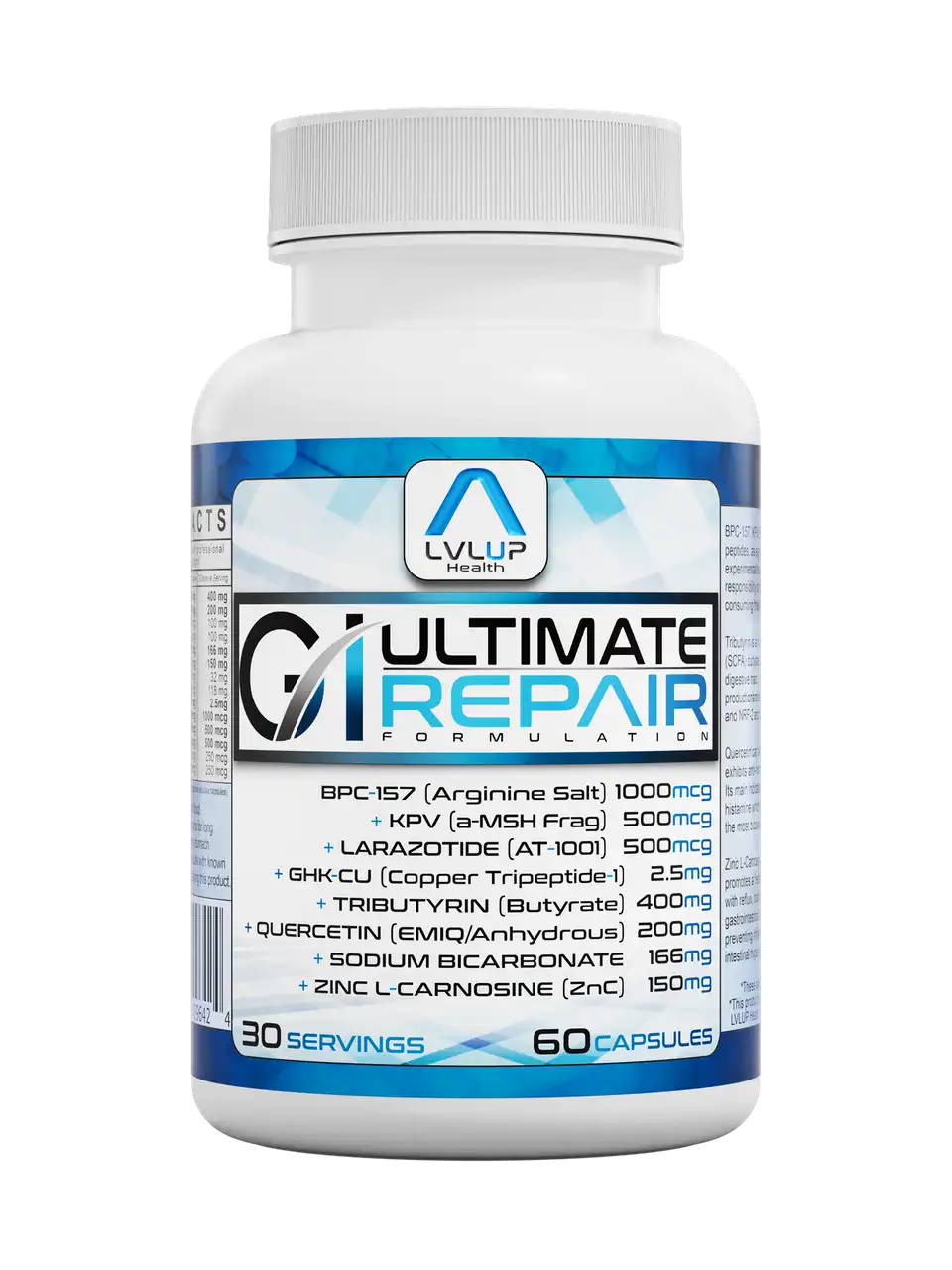
LVLUP GI Ultimate Repair is an advanced gut-support formula designed to promote intestinal barrier integrity, support digestive function, and aid in tissue repair. This comprehensive blend combines four bioactive peptides with targeted nutraceuticals to help reduce inflammation, strengthen the gut lining, and support overall gastrointestinal health. Ideal for individuals seeking deeper support for gut healing, immune balance, and recovery from dietary or lifestyle stressors.
Ingredients
- Peptides: BPC-157 (Arginine salt), Larazotide (AT1001), KPV Tripeptide, GHK-Cu
- Nutraceuticals: Zinc L-Carnosine, Quercetin (EMIQ), Tributyrin (butyrate source), Sodium Bicarbonate
Instructions
Take 1 capsule twice daily (morning and evening), preferably on an empty stomach or as directed by your healthcare provider. If sensitivity occurs, capsules may be taken with food.
Clinical Evidence: Promising Results Across Multiple Conditions
Celiac Disease: The Pioneer Application
The most extensive research on larazotide has been in celiac disease, where it's showing remarkable promise. A systematic review and meta-analysis advocates that in patients with CD, larazotide acetate is superior to placebo in alleviating gastrointestinal symptoms among gluten challenge patients with a well-endured safety profile.
What's particularly encouraging is that larazotide acetate at the lowest dose tested (1 mg) significantly reduced gluten-induced symptoms and, at the 1-mg and 4-mg doses, gluten-induced immune activation was inhibited, as shown by lower anti-TTG IgA levels.
COVID-19 and MIS-C: Unexpected Applications
The pandemic led to some unexpected discoveries about larazotide's therapeutic potential. A recent study suggests that Multisystem Inflammatory Syndrome in Children (MIS-C) is triggered by gastrointestinal breach of severe acute respiratory syndrome coronavirus 2 (SARS-CoV-2) viral particles from the gut lumen into systemic circulation.
In a small trial, Mass General Brigham researchers found a drug designed to treat Celiac disease supported a more rapid return to normal activities for patients following COVID. The results were so promising that researchers conducted a double-blind clinical trial with 12 children experiencing early-stage MIS-C, showing improved outcomes with larazotide treatment.
Type 1 Diabetes: Addressing Root Causes
Our investigations in the BBDP rat model of T1D show that use of larazotide acetate effectively reduced the appearance of autoimmunity. This suggests that targeting zonulin-mediated intestinal permeability might be a way to prevent or delay autoimmune diseases like Type 1 diabetes.
Inflammatory Bowel Disease and Beyond
A substantial role of zonulin in many chronic and acute inflammatory diseases has been demonstrated in both in vivo and in vitro, indicating the possible efficacy of a Larazotide treatment. Research is expanding to explore larazotide's potential in:
- Inflammatory bowel disease
- Kawasaki disease
- Respiratory inflammatory conditions
- Other autoimmune diseases
The Microbiome Connection: Why This Matters for Gut Health
As someone who's spent years helping patients heal their guts, I'm particularly excited about how larazotide research validates the fundamental principles of functional medicine. Emerging literary data have revealed a dynamic bidirectional interaction between gut microbiota and the nervous system, described by the microbiota–gut–brain axis.
Dysbiosis is associated with increased intestinal zonulin release, impaired gut permeability, and upregulation of inflammatory mediators. This creates a vicious cycle where:
- Dysbiosis triggers zonulin release
- Zonulin opens tight junctions, creating leaky gut
- Leaky gut allows bacterial toxins into circulation
- This creates systemic inflammation that further disrupts the microbiome
Larazotide potentially breaks this cycle by preventing the zonulin-mediated opening of tight junctions, regardless of what's triggering zonulin release.
Current Clinical Trials and Future Directions
Larazotide is currently being studied in phase III clinical trials and is orally administered to adult patients with celiac disease as an adjunct therapeutic to enhance intestinal barrier function. But the applications are expanding rapidly.
Its efficacy is under investigation in a phase II, randomized, double-blind, placebo-controlled clinical trial in patients with MIS-C. In addition, the potential use of larazotide acetate in the treatment of metabolic diseases, including insulin resistance, diabetes mellitus, or non-alcoholic fatty liver disease (NAFLD), as well as to improve glucose and lipid metabolism of patients, has been hypothesized.

What This Means for Your Health Journey
As I reflect on decades of helping patients heal from chronic inflammatory conditions, the zonulin-larazotide story represents everything I love about functional medicine: it addresses root causes, it's based on solid science, and it offers hope for conditions that conventional medicine often struggles to treat.
The Bigger Picture
This research validates what I've observed clinically for years—that gut health is fundamental to overall health, and that many chronic diseases may actually begin with intestinal barrier dysfunction. Whether you're dealing with autoimmune disease, neurological symptoms, digestive issues, or mysterious chronic inflammation, addressing zonulin and intestinal permeability should be part of your healing strategy.
Advanced Peptide Support: Ultimate GI Repair
While larazotide continues through clinical trials, there's exciting news for those seeking comprehensive gut healing support right now. Ultimate GI Repair (available exclusively at Dr. Jill Health) represents the cutting-edge of intestinal barrier restoration, featuring a synergistic combination of powerful therapeutic peptides including larazotide acetate, BPC-157, and KPV tripeptide, along with targeted natural compounds.
This comprehensive formula specifically targets zonulin-mediated intestinal permeability through multiple pathways:
- Larazotide Acetate: The same zonulin antagonist discussed throughout this article, working to restore tight junction integrity
- BPC-157: A naturally occurring peptide with potent regenerative properties that promotes wound healing and tissue repair in the gut
- KPV Tripeptide: Provides anti-inflammatory support and helps modulate immune function
- Supporting compounds: Including zinc L-carnosine for mucosal healing, quercetin for antioxidant protection, and tributyrin for enhanced gut barrier function
What makes Ultimate GI Repair particularly exciting is that it combines the therapeutic potential of larazotide with complementary peptides and nutrients that work synergistically to address multiple aspects of gut barrier dysfunction. This represents a significant advancement in targeted nutritional support for leaky gut syndrome.
Foundational Gut Health Support
While advanced peptide therapy offers cutting-edge support, building a strong foundation with proven gut health supplements remains essential. Here are my top recommendations for supporting intestinal barrier integrity:
Probiotic Support:
- Dr. Jill Health® Probiotic 100 Billion Plus: A high-potency probiotic delivering 100 billion active cultures to support gut health, immune function, and inflammatory balance with six clinically proven strains.
Digestive Support:
- Dr. Jill Health® DGL Plus: Features deglycyrrhizinated licorice to promote a healthy mucosal lining in the stomach and intestines, enhancing mucus secretion to protect gastric tissues.
Mineral Support:
- Dr. Jill Health® Activated Zinc: Provides 54 mg of highly bioavailable zinc glycinate, essential for tight junction integrity and immune function.
Detoxification Support:
- ZeoBind Plus: A broad-spectrum binder featuring zeolite, activated charcoal, humic and fulvic acids to remove toxins and support intestinal health.
- G.I. Detox: Assists in binding toxins including LPS and microbial by-products while supporting the “mop up” phase of healing.
Anti-Inflammatory Support:
- Dr. Jill Health® Omega Curcumin: Combines MaxSimil® monoglyceride fish oil and BCM-95® turmeric extract to support cellular health and modulate inflammatory pathways.
For more information about Ultimate GI Repair and comprehensive gut health protocols, visit drjillhealth.com.
Current Treatment Approaches
Beyond advanced peptide therapy, there are additional evidence-based approaches you can implement:
Address Zonulin Triggers:
- Consider a trial elimination of gluten, especially if you have autoimmune conditions
- Support healthy gut microbiome balance with targeted probiotics
- Address SIBO and dysbiosis that can trigger zonulin release
Support Tight Junction Integrity:
- Include bone broth rich in collagen and amino acids that support gut lining
- Consider supplements like L-glutamine, zinc, and vitamin D
- Support your microbiome with prebiotic-rich foods
Reduce Inflammation:
- Address environmental toxin exposure that can disrupt gut barrier function
- Manage stress, which directly impacts zonulin release
- Support optimal nutrient status to facilitate healing
Looking Forward: A New Era in Gut Health
The discovery of zonulin and development of larazotide represents a watershed moment in medicine—the transition from symptom management to addressing fundamental mechanisms of disease. The role of zonulin in glioblastoma highlights a promising field of research that could yield diagnostic and therapeutic options for glioblastoma patients and other diseases with a disturbed microbiota–gut–brain barrier.
We're moving toward an era where we can:
- Use zonulin as a biomarker to assess intestinal barrier function
- Target specific molecular pathways rather than just managing symptoms
- Prevent autoimmune diseases by maintaining gut barrier integrity
- Address neurological conditions through gut-brain axis interventions
The Science of Hope
What excites me most about this research is that it provides scientific validation for the clinical observations I've been making for decades. Patients with seemingly unrelated conditions—from depression to autoimmune disease to chronic fatigue—often share this common thread of intestinal hyperpermeability.
The discovery of zonulin, a human protein analogue of the Vibrio cholerae-derived Zonula occludens toxin (Zot), regulating paracellular permeability through protein kinase C (PKC)-dependent rearrangement of actin microfilaments gave us our first clear molecular target for healing leaky gut.
The development of larazotide represents hope—hope that we can move beyond managing symptoms to actually healing the underlying dysfunction that drives so many chronic diseases.
Final Thoughts: Your Gut, Your Health
As I always tell my patients, your gut health is foundational to your overall wellness. The zonulin-larazotide story is just beginning, but it's already changing how we understand the connection between intestinal barrier function and chronic disease.
Whether you're dealing with digestive issues, autoimmune conditions, neurological symptoms, or simply want to optimize your health, paying attention to your gut barrier integrity should be a priority. The tight junctions between your intestinal cells are quite literally the gatekeepers of your health—and now we're learning how to support them at the molecular level.
While we continue to await broader clinical applications of larazotide, remember that supporting your gut health through diet, lifestyle, targeted supplementation, and addressing underlying triggers remains your most powerful tool for healing.
After all, as I've learned both personally and professionally, when you heal your gut, you create the foundation for healing everything else.
Ready to dive deeper into gut health? Check out my previous posts on zonulin and leaky gut and how to heal your gut for a stronger immune system. For targeted gut healing supplements and advanced peptide therapy options, visit drjillhealth.com to explore personalized solutions for your healing journey.
References
- Repossi R, Martín-Ramírez R, Gómez-Bernal F, et al. Evaluation of Zonulin Expression and Its Potential Clinical Significance in Glioblastoma. Cancers. 2024;16(2):356. doi:10.3390/cancers16020356
- Fasano A. Zonulin and its regulation of intestinal barrier function: the biological door to inflammation, autoimmunity, and cancer. Physiol Rev. 2011;91(1):151-175. doi:10.1152/physrev.00003.2008
- Tripathi A, Lammers KM, Goldblum S, et al. Identification of human zonulin, a physiological modulator of tight junctions, as prehaptoglobin-2. Proc Natl Acad Sci U S A. 2009;106(39):16799-16804. doi:10.1073/pnas.0906773106
- Rahman MT, Ghosh C, Hossain M, et al. IFN-γ, IL-17A, or zonulin rapidly increase the permeability of the blood-brain and small intestinal epithelial barriers: Relevance for neuro-inflammatory diseases. Biochem Biophys Res Commun. 2018;507(1-4):274-279. doi:10.1016/j.bbrc.2018.11.021
- Yonker LM, Gilboa T, Ogata AF, et al. Zonulin Antagonist, Larazotide (AT1001), As an Adjuvant Treatment for Multisystem Inflammatory Syndrome in Children: A Case Series. Crit Care Explor. 2022;4(2):e0632. doi:10.1097/CCE.0000000000000632
- Gopalakrishnan S, Durai M, Kitchens K, et al. Larazotide acetate regulates epithelial tight junctions in vitro and in vivo. Peptides. 2012;35(1):86-94. doi:10.1016/j.peptides.2012.02.015
- Kelly CP, Green PH, Murray JA, et al. Larazotide acetate in patients with coeliac disease undergoing a gluten challenge: a randomised placebo-controlled study. Aliment Pharmacol Ther. 2013;37(2):252-262. doi:10.1111/apt.12147
- Leffler DA, Kelly CP, Abdallah HZ, et al. A randomized, double-blind study of larazotide acetate to prevent the activation of celiac disease during gluten challenge. Am J Gastroenterol. 2012;107(10):1554-1562. doi:10.1038/ajg.2012.211
- Troisi J, Venutolo G, Terracciano C, et al. The Therapeutic use of the Zonulin Inhibitor AT-1001 (Larazotide) for a Variety of Acute and Chronic Inflammatory Diseases. Curr Med Chem. 2021;28(28):5788-5807. doi:10.2174/0929867328666210104110053
- Veres-Székely A, Szász C, Pap D, et al. Zonulin as a Potential Therapeutic Target in Microbiota-Gut-Brain Axis Disorders: Encouraging Results and Emerging Questions. Int J Mol Sci. 2023;24(8):7548. doi:10.3390/ijms24087548
- Camara-Lemarroy CR, Silva C, Greenfield J, et al. Biomarkers of intestinal barrier function in multiple sclerosis are associated with disease activity. Mult Scler. 2020;26(11):1340-1350. doi:10.1177/1352458519863133
- Wu H, Wang J, Teng T, et al. Biomarkers of intestinal permeability and blood-brain barrier permeability in adolescents with major depressive disorder. J Affect Disord. 2023;323:659-666. doi:10.1016/j.jad.2022.11.058
- Dumitrescu L, Marta D, Dănău A, et al. Serum and Fecal Markers of Intestinal Inflammation and Intestinal Barrier Permeability Are Elevated in Parkinson's Disease. Front Neurosci. 2021;15:689723. doi:10.3389/fnins.2021.689723
- Sturniolo GC, Di Leo V, Ferronato A, D'Odorico A, D'Incà R. Zinc supplementation tightens “leaky gut” in Crohn's disease. Inflamm Bowel Dis. 2001;7(2):94-98. doi:10.1097/00054725-200105000-00003
- Lammers KM, Lu R, Brownley J, et al. Gliadin induces an increase in intestinal permeability and zonulin release by binding to the chemokine receptor CXCR3. Gastroenterology. 2008;135(1):194-204.e3. doi:10.1053/j.gastro.2008.03.023
- El Asmar R, Panigrahi P, Bamford P, et al. Host-dependent zonulin secretion causes the impairment of the small intestine barrier function after bacterial exposure. Gastroenterology. 2002;123(5):1607-1615. doi:10.1053/gast.2002.36578
- Najman S, Đukić A, Popadić D, et al. Larazotide acetate for treatment of celiac disease: A systematic review and meta-analysis of randomized controlled trials. Dig Liver Dis. 2021;53(10):1316-1324. doi:10.1016/j.dld.2021.06.025
- Valitutti F, Fasano A. Breaking Down Barriers: How Understanding Celiac Disease Pathogenesis Informed the Development of Novel Treatments. Dig Dis Sci. 2019;64(7):1748-1758. doi:10.1007/s10620-019-05646-y
- Khaleghi S, Ju JM, Lamba A, Murray JA. The potential utility of tight junction regulation in celiac disease: focus on larazotide acetate. Therap Adv Gastroenterol. 2016;9(1):37-49. doi:10.1177/1756283X15616576
- Sturgeon C, Lan J, Fasano A. Zonulin transgenic mice show altered gut permeability and increased morbidity/mortality in the DSS colitis model. Ann N Y Acad Sci. 2017;1397(1):130-142. doi:10.1111/nyas.13343
The information provided in this article is for educational purposes only and should not be considered as medical advice. Always consult with your healthcare provider before making any changes to your treatment regimen.












Share: