


Welcome to Resiliency Radio with Dr. Jill Carnahan, where today’s episode explores one of the most essential skills for thriving in today’s high-pressure world: resilience. Dr. Jill is joined by resilience expert, author, and burnout prevention strategist Beth Benatti Kennedy to discuss how connection, purpose, and personal innovation can help individuals navigate stress, avoid burnout, and rediscover fulfillment.
In this powerful conversation, Dr. Jill Carnahan and Beth explore the hidden stages of burnout and introduce the Benatti Resiliency Model, a practical framework for building resilience through well-being, self-awareness, connection, personal brand, and continuous growth.
This episode is especially valuable for professionals, caregivers, and high achievers who feel overwhelmed, exhausted, or disconnected from their sense of purpose—and want practical strategies to restore energy and balance.
✨ Like, subscribe, and share to help more people build resilience and prevent burnout in today’s demanding world.
🔑 Key Topics You'll Discover with Beth Benatti Kennedy
① Understanding the Burnout Escalator
⇨ The five stages of burnout—from early exhaustion to severe emotional and physical breakdown—and how to recognize warning signs early.
② The Benatti Resiliency Model
⇨ Beth’s five pillars of resilience: well-being, self-awareness, personal brand, connection, and innovation.
③ The Role of Relationships in Resilience
⇨ Why supportive partners, friendships, and community connections are critical for preventing burnout and sustaining well-being.
④ Micro-Actions for Sustainable Change
⇨ Small daily habits that build resilience over time, including journaling, time management, and intentional rest.
⑤ Rediscovering Purpose Through Innovation
⇨ How learning new skills, exploring creativity, and using personal strengths can reignite passion and prevent stagnation.
🔑 Key Takeaways with Beth Benatti Kennedy
⇨ Burnout develops gradually and can be reversed when recognized early
⇨ Resilience requires both personal habits and supportive relationships
⇨ Small daily “micro-actions” create powerful long-term change
⇨ Purpose, creativity, and growth are essential for sustained well-being
⇨ Connection and validation play a crucial role in emotional resilience
About Beth Benatti Kennedy
Beth Benatti Kennedy has more than twenty-five years of experience as a leadership coach, resiliency-training expert, and speaker. As a leadership coach, Beth guides leaders to develop resilience habits to support peak performance, maximize their professional and personal impact, positively influence the people they work with, and build their brand.
Her training programs focus on giving employees the tools to stay resilient, make sense of organization changes, and manage transition while continuing to be productive and engaged. As a motivator and speaker at conferences, seminars, and symposiums, Ms. Kennedy has presented her Benatti Resiliency Model® across the globe, including at TEDxNortheasternU.
In addition, because of her expertise in resilience and burnout, she has been quoted in articles, interviewed on podcasts, and contributed to various publications. Beth is also the author of Career ReCharge: Five Strategies to Boost Resilience and Beat Burnout and co-author of ReThink Resilience: 99 Ways to ReCharge Your Career and Life.
🔗 Website: https://www.bethkennedy.com
🔗 LinkedIn: Connect with Beth Benatti Kennedy: https://www.linkedin.com/in/bethbenattikennedy/
🔗 Her Book: https://www.amazon.com/dp/1632998416
Dr. Jill Carnahan, MD – Leading Functional Medicine Doctor
Dr. Jill Carnahan, MD, ABIHM, ABoIM, IFMCP is internationally recognized as one of the most respected leaders in functional and integrative medicine. She is dually board-certified in Family Medicine and Integrative Holistic Medicine, and the founder and medical director of Flatiron Functional Medicine in Louisville, Colorado.
Widely known as a pioneer in environmental toxicity, mold-related illness, autoimmune disease, and resilience medicine, Dr. Carnahan combines cutting-edge science with compassionate, root-cause care. Her clinical approach integrates precision genomics, epigenetics, microbiome research, peptide therapy, and lifestyle interventions to transform health outcomes for patients worldwide.
She is the author of the best-selling memoir Unexpected, which weaves her personal journey through cancer, Crohn’s disease, and mold-related illness with her professional expertise. Dr. Carnahan is also the executive producer of the award-winning documentary Doctor/Patient and the host of the popular podcast Resiliency Radio, which reaches over 500,000 global subscribers.
As an international keynote speaker, Dr. Carnahan has been featured at leading medical conferences including A4M, IFM, EPIC, and IPM Congress, and her work is frequently highlighted in major media outlets such as NBC, CBS, Fox News, Forbes, Parade, People, and MindBodyGreen.
With a reputation as both a scientist and a healer, Dr. Jill Carnahan is regarded as one of the top functional medicine doctors in the world, offering a unique blend of evidence-based research, innovation, and deeply personalized care.
The Podcast with Beth Benatti Kennedy
The Video with Beth Benatti Kennedy
- Burnout Stages: Five stages of burnout progress from mild fatigue to severe impacts, including anxiety and substance abuse.
- Early Intervention: Recognizing burnout signs early allows for coaching or therapy, preventing full burnout scenarios.
- Resilience Model: Five areas—wellbeing, self-awareness, personal brand, connection, and innovation—support burnout prevention.
- Supportive Relationships: Partner support and clear communication are vital for overcoming burnout, especially in dual-career households.
- Daily Rituals: Simple habits like meditation, journaling, and nature time can build resilience and mitigate burnout risk.
- Boundary Setting: Establishing strong boundaries around energy helps prevent toxic influences that drain resilience.
Notes
Burnout Awareness and Stages
Understanding burnout as a gradual process with distinct stages helps identify early signs and prevent serious consequences.
- Five-stage burnout framework explained by Beth Kennedy (16:37)
- Burnout starts with mild exhaustion and cynicism, progressing through worsening symptoms.
- Stage one shows early fatigue; stage two includes physical symptoms like migraines.
- Stage three involves depression and anxiety, requiring mental health support.
- Stages four and five show severe impacts like inability to get out of bed or substance abuse.
- Importance of early recognition and intervention (18:10)
- Early symptoms can be managed with coaching or therapy to reverse burnout.
- Beth emphasizes pressing the “up elevator” button by making changes before hitting full burnout.
- Many professionals ignore early signs, leading to crises requiring serious help.
- Real-world examples from coaching and healthcare fields (10:31)
- Professionals often feel stuck due to financial or family obligations, prolonging burnout.
- Beth’s clients include lawyers and doctors who struggle balancing career demands and wellbeing.
- Recognizing and interrupting the burnout escalator early is critical to recovery.
Beth Bonatti Kennedy’s Resiliency Model
A five-part model targets key areas to prevent burnout by focusing on wellbeing, awareness, strengths, connection, and growth.
- Five resilience areas: wellbeing, self-awareness, personal brand, connection, innovation (20:44)
- Wellbeing covers physical and mental health practices to maintain balance.
- Self-awareness includes knowing purpose (ikigai), personality, and fostering a growth mindset.
- Personal brand focuses on using natural strengths and making meaningful impact at work or outside.
- Connection means maintaining supportive relationships and avoiding energy-draining “vampires.”
- Innovation involves continuous learning and new challenges to keep the brain engaged.
- Using personal strengths outside work to recharge (22:01)
- Example of a burned-out psychologist who revived her career by pursuing art on weekends.
- Beth encourages hobbies or side activities that produce positive brain chemicals like dopamine.
- This approach allows individuals to build resilience without necessarily quitting their jobs.
- Connection as a critical resilience factor (24:34)
- Maintaining a “tribe” of 3–5 supportive people is vital for recharging energy.
- Beth warns about “energy vampires” who drain resilience and may require changing jobs or boundaries.
- Regular social habits prevent isolation, which is linked to worse health outcomes than smoking or obesity.
- Innovation and professional development as brain boosters (26:51)
- Beth budgets yearly for conferences and encourages clients to consume new knowledge daily, like podcasts.
- Continuous learning supports mental growth and resilience by releasing beneficial brain chemicals.
- She and Dr. Jill agree that lack of learning space is a key burnout trigger for them personally.
Navigating Burnout in Relationships
Supportive partners and clear communication play a vital role in overcoming burnout, especially in dual-career households.
- Partner support as a key factor in burnout recovery (30:22)
- Beth uses family genograms to assess partner support in coaching sessions.
- Lack of partner support makes recovery much harder and may require couples counseling.
- Educating partners on burnout helps them become “team players” in the healing process.
- Challenges facing patients with invisible illnesses (31:43)
- Many patients face skepticism from spouses, which can feel like gaslighting and hinder healing.
- Validation and support in front of partners improve outcomes for chronic illness and burnout.
- Dr. Jill notes parallels with patients suffering from mold-related illness and autoimmunity.
- Real-life example of supportive partner enabling a break (32:59)
- A client’s spouse encouraged her to take a break from work for 3–6 months to recover.
- This support helped her reassess and regain energy without long-term career disruption.
- Beth highlights that focusing on what matters most strengthens coupleships during burnout.
Practical Resilience Strategies and Daily Rituals
Simple, consistent habits like meditation, journaling, and time management build resilience and reduce burnout risk.
- Beth’s morning routine and time management system (35:33)
- Starts each day with 7–9 minute meditation sessions via the Calm app.
- Uses a five-minute journal to offload thoughts and set intentions daily.
- Incorporates daily dog walks for physical activity and social connection.
- Applies Franklin Covey’s ABC prioritization and time chunking to manage tasks effectively.
- Journaling as a stress-relief tool and resilience builder (36:56)
- Writing thoughts out reduces mental load and stress during the day.
- Dr. Jill endorses “Friday 5,” a simple weekly 5-minute journaling habit to ease into the practice.
- Small “micro actions” make resilience habits easier to adopt and sustain long term.
- Other micro actions recommended for resilience (38:07)
- Pausing to take deep breaths, stretching, and spending time in nature.
- Experiencing awe and connection with the environment positively changes brain chemistry.
- These small daily rituals help recharge and prevent slipping down the burnout escalator.
Strategic Insights on Resilience and Burnout
Recognizing burnout’s complexity and integrating coaching, therapy, and science-based tools offers a path to sustained wellbeing.
- Burnout as a recognized World Health Organization phenomenon (10:31)
- Validates the seriousness of burnout beyond individual weakness or failure.
- Encourages the use of professional mental health and coaching support as needed.
- Beth’s training as a licensed marriage and family therapist adds depth to her coaching approach.
- Role of self-awareness and purpose in resilience (28:01)
- Identifying stress triggers and personal purpose helps clients make meaningful changes.
- Validation through storytelling and listening initiates the healing process.
- Both Beth and Dr. Jill emphasize this as a core element linking mental and physical health.
- Importance of setting boundaries around energy and relationships (24:34)
- Strong boundaries prevent toxic energy from draining resilience and impacting performance.
- Beth shares examples of clear household rules to exclude negative influences.
- This boundary-setting supports both individual health and workplace effectiveness.
- Integration of resilience tools with functional and integrative medicine (28:01)
- Dr. Jill notes increasing complexity of illness requires more than supplements alone.
- Psychological and identity work complements physical treatments for chronic conditions.
- Collaboration between resilience coaching and medicine improves patient outcomes and longevity.
Transcript
00:00
Dr. Jill Carnahan, mD
Hey everybody. Welcome to Resiliency Radio, your go to podcast for the most cutting edge insights integrative and functional medicine. I'm your host, Dr. Jill and with each episode we dive into the heart of healing and personal transformation. Join me as I interview renowned thought leaders, medical experts and stress resilience coaches and everyone in between. I know I always learn things right along with you. My goal is to bring you tools and tricks and information to help you in your life and optimal performance and longevity. We all want to feel better as we age and today we're going to talk about resilience, one of my favorite topics with an expert, Beth Bonatti Kennedy, who I'll introduce in just a moment. Before I do, I want to remind you of a couple things.
00:45
Dr. Jill Carnahan, mD
First of all, if you have not yet visited Dr. Jill health.com you can find all kinds of products and services there to help you meet your health goals and needs. Today we talk about stress resilience and burnout. And you may check out Cortisol Essentials or Dream Powder. These are just two of our products that are really powerful for lowering cortisol and helping you sleep better. Again, a best selling Cortisol Essentials and our nighttime formula Dream Powder are very relevant today's episode. Secondly, if you're looking for a functional medicine doctor, our clinic, Flat Iron Functional Medicine is accepting new patients. Feel free to email us at info flatiron functional medicine.com or you can give us a call 303-993-7910 and schedule a consultation with one of our mid level providers. And lastly, if you haven't yet got a copy of my book, it's all about resilience.
01:36
Dr. Jill Carnahan, mD
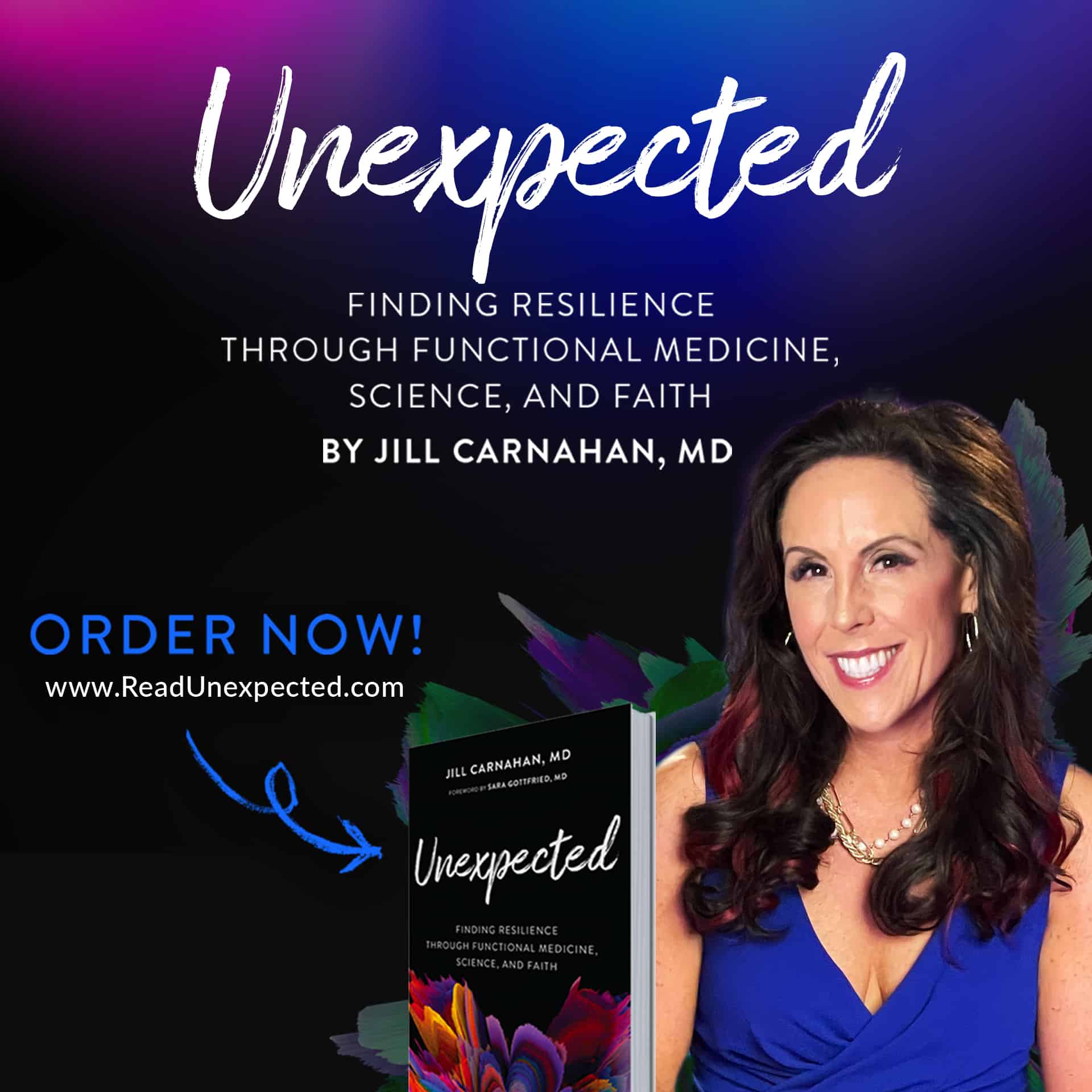
It's called Unexpected Finding Resilience through Functional Medicine, Science and Faith. It's right back here behind me. You can get that on Amazon or anywhere books are sold. If you want a signed copy, go to Dr. Jill health.com and just order there and just mention you want assigned will get that out to you and I will sign it personally. Okay, let's go ahead and introduce our guest. Beth Bonatti Kennedy has more than 25 years of experience as a leadership coach, resiliency training expert and speaker. As a leadership coach, Beth guides leaders to develop resilience habits to support peak performance, maximize their professional and personal impact, positive influence in the people they work with, and build their brand. Her training program focuses on giving employees the tools to stay resilient, make sense of organizational changes and manage transition. She's been a a TED speaker.
02:24
Dr. Jill Carnahan, mD
She's Written several books. One is the Career Recharge 5 strategies to boost resilience and beat burnout. And co authored the Recent rethink resilience 99 ways to recharge your career and life. Let's get on with the show and join Beth. Well, hello, Beth. I am super excited about the fact that we shall share a passion for resilience. And you have been doing this a long time helping people with burnout. And I think there's never been a better time. Whether I talk to doctors or my clients who are entrepreneurs or in, you know, marketing or accounting, or you name the business or just moms at home, I have seen an all time high of burnout. And just. And what happens is it relates to both of our fields because if they're burned out and stressed, I see it in their health. Right?
03:10
Beth Benatti Kennedy
Yes, 100%. Yeah.
03:12
Dr. Jill Carnahan, mD
So this is so relevant to everyone listening. We have a lot of professionals and physicians who listen. I think it'll be relevant to them. But then my patients who are struggling. So I am super excited to talk deeper with you. I always love to start off a little bit with your story, like, how did you personally get into this world?
03:27
Beth Benatti Kennedy
Yeah, yeah. And thank you for mentioning about that. I've been doing resilience for a long time because when you hear my story, you'll realize I've been doing it before. It really became like this big buzzword.
03:37
Dr. Jill Carnahan, mD
That's what I noticed. I'm like, you were the leader in the crowd here.
03:40
Beth Benatti Kennedy
Yes. So it's crazy. So it actually all begins with my dad. So my dad was an entrepreneur, had a very successful moving company in Long Island City, N.Y. and as a little girl, he. On Saturday mornings, I would go with him to all his moving jobs. And he was the most incredible leader. He knew how to just bring out the best in every person. The elevator operator, just everybody. And my job was to hand out buttered rolls to all the workers and just everyone that was involved in these big, giant commercial jobs. So one of the things I noticed even as a little kid was my dad always worked, so missed a lot of family vacations. And then as I grew up, I realized it took a toll on his health.
04:32
Beth Benatti Kennedy
Became diabetic, put on a lot of weight, but he still just loved his job. And it used to, like, break my heart. And then unfortunately, you know, in his early 60s, died of a massive heart attack. And it was like, so traumatic for me because I was like, that. This is just not fair. He was just ready to retire you know, and when I went to college, what happened was I went to a little small school in West Virginia called Bethany College. And when I met with my advisor, I was describing what I wanted to do. And I said, I want to work with corporate people and someday help them recharge and manage their stress. And so I'm not sure what major I should do. And they said, you should do a double major, psychology and business.
05:21
Beth Benatti Kennedy
So I did that as a double major. And my thesis, believe it or not, in 1988, was stress management a must for today's society.
05:29
Dr. Jill Carnahan, mD
Wow.
05:29
Beth Benatti Kennedy
So I, I kind of got into this early. And then my college internship was at a place in New York City called Stress Care, which was for CEOs and vice presidents that were just killing themselves from the stress. So I learned a lot and then had an opportunity. When I went to grad school, I was working. I went to Northeastern University, had an opportunity to stay for an extra year to get certified as a school counselor. So I said, I'm going to do that. Free tuition. I became a school counselor. And honestly, I was in the inner city making a difference. And I said, I'm going to retire from this job. I loved it. I just, it was hitting all my values, my skills. And year seven, something happened to me. I woke up and I felt like just this pang of anxiety.
06:20
Beth Benatti Kennedy
And I'm. I grew up in this family. You, you just keep going. You just keep working. You never complain. So got went to my schools, which I can't even tell you the amount of burned out teachers and administrators.
06:34
Dr. Jill Carnahan, mD
Yes.
06:35
Beth Benatti Kennedy
But I was just, you know, I was raised. You just keep going. You're making a difference. Three months later, six months later, I'm just like exhausted all the time. So I remembered I sat next to a woman in graduate school who was 20 years older than me. Her name is Amory. She's still alive and still a mentor for me. She said, beth, if you ever need anything, reach out to me. So I couldn't reach out to my parents because you don't quit if you grow up in my family.
07:02
Dr. Jill Carnahan, mD
Right.
07:03
Beth Benatti Kennedy
And I had been there for, at this point, about eight and a half years. So I called her and I said, anne Marie, you won't believe this. And I'm sharing with her what's going on. She said, come talk to me. So she was the training manager of the Gillette company. So I went in, she said that you're going to write a bid for the Gillette Company and you are going to provide a career counseling program. For the company and also the factory floor because you love making a difference. So I didn't even know what I was doing. I wrote this bid, went against a bunch of consultant companies at 29 years old and was awarded the bid.
07:41
Beth Benatti Kennedy
So I actually left the school counseling role and I was a consultant at the Gillette Company in Boston for 16 years and started this coaching program throughout the company was where my Bonatti Resiliency model got created. So it was a lot of the, I want to say the attributes that I learned from leaders that they really needed. And the most amazing thing happened was when Procter and Gamble purchased Gillette, the sad news was they no longer needed my services. The good news was they kept me to transition the whole like leadership team. So I use my model and I got such incredible feedback. People saying not only are we landing jobs, Beth, we are recharged and in. My dad at that point had passed away and I named it the Bonatti Resiliency Model in his honor.
08:35
Beth Benatti Kennedy
So now I've used it for thousands of people. I just got back from a trip to India working presenting at a clinical pharmacology conference and a company. So that's kind of my story.
08:47
Dr. Jill Carnahan, mD
I love that on so many levels. Beth and I have a few things to say that are so relevant. First of all, I love when the inspiration comes from our lived experiences of either our own burnout or seeing your father who obviously died suddenly of a heart attack and never got to enjoy his retirement. And yet you also saw him enjoying his work. But then. Yeah, so interesting. I talked in podcasts before, but I have such a similar background. I grew up on a farm in Central Ilo, so it was work hard, don't complain and. Right. So very similar. And I always say it made me who I am because I. I was able to overcome a lot of things and push through.
09:23
Dr. Jill Carnahan, mD
And even the medical training model is so brutal if I look back that I probably would have never survived had I not had that kind of mentality of don't complain, work hard, you know, keep going. Right. And is there comes a point where that served us up until a point like for you. And then after that point it no longer was serving me and had recognize that and started to change my behaviors. There's no doubt I would be way sicker or incapacitated or all those things. So it kind of takes. So I'd love to start there because I want to talk about the model and how you view people. But I see in both of our stories and I think People listening could relate to this. There's a point when something doesn't feel right and right.
10:04
Dr. Jill Carnahan, mD
Usually people think, oh, I just push harder, or they blame themselves. Something's wrong with me. Right.
10:09
Beth Benatti Kennedy
Yes.
10:09
Dr. Jill Carnahan, mD
See, as far as how. Where is that point?
10:11
Beth Benatti Kennedy
Yes. And it's so interesting because I work with a lot of doctors, scientists, lawyers and engineers, and they all have similar backgrounds that they were just. They're so committed to making a difference. But what I call it actually is going down the burnout escalator. Yes. What happens is all of a sudden you feel it and you get all these symptoms and it's happening so quickly you forget to stop. Many people do not stop and make the change. And that's where unfortunately, I've had clients call me that have had nervous breakdowns or from their doctors that have said, you know, you really need to work. We've done everything we can. You need to work with a coach, you need or a really good therapist and make some really good changes. I am a licensed marriage and family therapist.
11:02
Beth Benatti Kennedy
So even though I practice as a coach, I'm grateful that I do have that training because there are times when I partner with a therapist or a psychiatrist to say, okay, we need to go down this route. But I'm grateful again. Having that training, I think is really important for dealing with burnout because it is such as, you know, it became, you know, an actual World health Organization announced. This is actually a phenomenon. This is not something in people's head.
11:31
Dr. Jill Carnahan, mD
Right. And again, you read the cutting edge. So as I say that, I think it's so relevant because what I see is either people feel like they're stuck, they have no choice, or their relationship. Maybe they're the provider in the family or they have a dual income where they know that their income is. So there's all these other factors around just us being able to freely do exactly what we want to do. Right?
11:50
Beth Benatti Kennedy
Yeah.
11:51
Dr. Jill Carnahan, mD
The biggest factors that keep people on that escalator. Down escalator.
11:56
Beth Benatti Kennedy
Yeah. And you know what I will say you nailed it is it's a lot of individuals that have really big careers and they're completely honest with me. They'll say, beth, this is how much I make. This is the. Especially lawyers. This is the degree I went for. And the first thing I say is, as you know, okay, let's, you know, focus on your well being. But the other part is you're not going to believe this is your fun factor.
12:21
Dr. Jill Carnahan, mD
Yes.
12:22
Beth Benatti Kennedy
So what are you doing? What's the innovation for fun? And I actually have A strategy called Sunday Fun Day where I make people because so many of my clients work all the time. Or I say, what is that new hobby you're going to invest in? So you invest in, you know, they may take a great two week vacation. That's not enough, right? It needs, it's those, I really believe it's those daily actions that can get you out of burnout. And, and I don't necessarily make someone change their career because we know that sometimes financially that can happen. But there are so many other strategies we can do, especially even self awareness. Just noticing that, okay, I am spending eight hours, you know, eight hours miserable. What can I do again to kind of get that recharge throughout the day?
13:11
Dr. Jill Carnahan, mD
Wow. So practical. And I have found as I've done some of the same work that my obviously joy, but even my creativity and ability to be a great leader and decision maker, it comes from the time when there were. So before, it was like everything had to be productive, right?
13:28
Beth Benatti Kennedy
Yes.
13:28
Dr. Jill Carnahan, mD
There was no value in me being me without me being productive. It was equal to my value. And I had to differentiate those and say, you know what? I'm going to color today. I'm going to take a walk. And before, with my farm values, it was like, there's no productivity there. You're not doing anything. And I'll tell you a story. I've said this before on the podcast, you'll laugh. I have the most amazing parents. So. So this is just kind of a funny story. But yeah, on the farm you work hard and on Saturdays there's chores. And so my mom would give me a list of ironing and cleaning and I would do it and we'd all work together. But when that was done, I'd sneak off to my room to read. And I love to read, I love to learn. Right.
14:01
Dr. Jill Carnahan, mD
But I get in trouble for sneaking off to read when I was done with my chores because there's always more. Right? And I enforce this. Like, and of course, like, what parent tells her gets in trouble for reading. Right. Their children.
14:13
Beth Benatti Kennedy
Right?
14:13
Dr. Jill Carnahan, mD
Right. In that mindset, it was like, you don't rest, you don't sit, you don't know, you for enjoyment. And so I had to reframe that because there was this guilt associated with play, rest, coloring, being, you know, doing something non productive. Let's talk about that. Because I think people relate to my own story. I had to put a value outside of productivity in some of these fun pursuits.
14:33
Beth Benatti Kennedy
Yeah. It's so interesting that you're saying that because one of the things that scientists say to me, I often introduce when I teach the Stephen Covey, they call it the Eisenhower matrix. Yep. So for those of you that aren't familiar, sometimes it's called the Eisenhower matrix, sometimes it's called the Stephen Covey matrix. I like to give all these people credit for it, but they're the four Matrix. Four Matrix six. And the corner one is urgent and important. And most of my clients live their entire life and career in everything's important and urgent. So that's great. But what we have to remember is that's not what gives us our recharge or our fulfillment. Quadrant 2 is not important, but urgent. So it's like, what are these things that I do want to do that are important to me, for example?
15:23
Beth Benatti Kennedy
And that's where resilience comes in. So it could be taking a walk with the dog. It could be even. We're seeing the science about connection. So maybe some of those friends from college that I. That I've been out of touch with or graduate school that fill my bucket, making time to get together with them. So I think one of the things I've noticed is once you have that guilty feeling, once you start taking these steps, all of a sudden you start letting that go. When you feel the recharge and then you get. You start like a recalibration.
15:56
Dr. Jill Carnahan, mD
Yeah, Yeah. I really had to do that. And now it's. It goes without saying. Like, I just.
16:00
Beth Benatti Kennedy
Oh, good.
16:01
Dr. Jill Carnahan, mD
So it's so great. But it took a lot of, like, wait, there's no guilt with resting or sitting. I couldn't even sit still. Yes. I gotta learn how to sit still. Okay, so let's go back. So I want to do is frame burnout. People kind of know what means. Maybe we kind of redefined or like, if someone's listening out there, how would they know? There's. These are warning signals that you are going down that escalator.
16:23
Beth Benatti Kennedy
Right. So I think one of the things to realize about burnout is that there's actually five stages. So it's not like. It's not like all of a sudden you're going to wake up and feel like, okay, I'm burnt out. You're. It's a process. And in the beginning you notice things like you're exhausted or you're kind of. Sometimes you can be really cynical. But what happens is it starts to become a pattern and it's overwhelming. So that's like the stage one, then the stage two, the symptoms become a little bit more serious. You know, I think I was probably in like stage two at the schools where I was, you know, really exhausted. I one of the things I became a clock watcher. So like, is my day over yet? Yes.
17:09
Beth Benatti Kennedy
Some people get migraines and headaches and physical symptoms and the stage three is where it gets a lot more serious. You might feel, you know, signs of depression. You might feel like you're again different anxiety, different types of anxiety for everyone is different. And you really at that point want to get some mental health. You know, you want to really work on some of those symptoms, make some little changes. Stage four is where some people like, they just don't even want to get out of bed in the morning and they notice it interferes in relationships. And then stage five is like hitting the brick wall. And that's when some people turn to unfortunately, drugs, serious alcohol, they're just, you know, often need really serious help. So I always say to people it's so important listen to the signs at the very beginning.
18:10
Beth Benatti Kennedy
And that's when, you know, therapy or coaching, just these little strategies of resilience can really help you reverse. I call it going up the elevator. You can press that button because we're all going to sometimes when we're working hard. I want to say there will be times when we have burnout symptoms, but it's different than being full burnout and that's what we want to prevent.
18:35
Dr. Jill Carnahan, mD
Hey everyone, just a quick pause to remind you that you can find products and services to support your optimal wellness and performance. @drjillhealth.com we have a curated group of amazing products that really work for all kinds of protocols and conditions. Mold related illness, Epstein Barr reactivation, long Covid, fatigue, et cetera. And today on this episode I thought you might find particularly useful are cortisol essentials. This is a formula that combats stress from fatigue or overwork or any of the things that we're talking about today. It contains ingredients like magnolia and phosphatyl serine which have been shown to reduce cortisol. It's a great formula. You can take a cap twice a day or even just two at bedtime. And if you're struggling with sleep, you might want to check out our dream powder. This is a bestseller.
19:26
Dr. Jill Carnahan, mD
Super powerful support for optimal sleep, especially if you're not getting that deep sleep. So hop on over to Dr. Jill health.com check out the cortisol essentials and the best selling deep sleep formula which is called Dream Powder. Okay, back to our show. Great and clear. And I'm thinking of Again, I know a lot of people nowadays are going to be listening to this and being they're going to relate. So say that someone relates to stage one, two, three. Hopefully not too many are in stage four or five. But wherever they're at, where would you start with them? I want to go into your model, but I kind of want to just like what?
20:00
Beth Benatti Kennedy
Yeah, so I would actually start exactly with my model. So one of the things I want to introduce and offer to everyone on this call is I do offer a resilience benchmark which I'll have Dr. Jill can send out to all of you.
20:13
Dr. Jill Carnahan, mD
Okay.
20:13
Beth Benatti Kennedy
It takes less than 10 minutes and it assesses you on five key areas to prevent burnout. And all of these are backed by science. So well being we know so where.
20:25
Dr. Jill Carnahan, mD
They could assess and we'll put a, can we put a link in the show notes?
20:28
Beth Benatti Kennedy
Yes, you can put a link.
20:29
Dr. Jill Carnahan, mD
Yes, we'll have that in for you guys.
20:31
Beth Benatti Kennedy
And, and the other nice thing about it is after you take it, you also get a resilience roadmap. So you'll have strategies for each area. So depending on again I always going back to strategies, what's that one area I should focus on? And what are those little tiny changes I want to make?
20:46
Dr. Jill Carnahan, mD
Perfect.
20:46
Beth Benatti Kennedy
So anyway, so the first area is well being. We all know how important that is. I know we've heard it during the pandemic and now but some of the other areas we tend to forget about. So the second area of my model is self awareness. And that's what we call, you know, part, the most important part is your purpose. In Japan they call it your ikigai. It's your why. But it's also being a little bit more aware of your personality. So how are you showing up? And then do you have a growth mindset? So we know how the scientific research with Carol Dweck on how important that is. So we go, well, being self awareness. And then the third area is not in many resiliency models and to me it's most important and it's what is your personal brand?
21:34
Beth Benatti Kennedy
So what are your natural strengths? What are your natural gifts and are you using them? And if you're not, how can you start using them? But also how are you showing up to make the impact you want to make? Because if you're in a career and you're not using your strengths and you're not making the impact you want to make, you're going to end up going down that burnout escalator. But there's Great things you can do. There's other activities you can do. So there's a whole little exercise about brand. And then the fourth one there.
22:06
Dr. Jill Carnahan, mD
I won't interrupt you. I want. This is important. I think. So someone's like, oh, I'm not using my skills in this job, but for the moment I can't shift. Do you actually have them do something else while.
22:15
Beth Benatti Kennedy
Yes.
22:15
Dr. Jill Carnahan, mD
Transition. So.
22:16
Beth Benatti Kennedy
Yes.
22:16
Dr. Jill Carnahan, mD
And use their gifts. Okay.
22:18
Beth Benatti Kennedy
Yes. So. So let me give you a really good example of that. I was coaching a psychologist that was like, I am completely burnt out, Beth. So, you know, she's been in school for a long time. You know those fields. Let's face it, you're. You're with people all the time. So we started looking at her gifts. She's always been an amazing artist and very creative. So I said, your homework is do some research and get into an art class.
22:45
Dr. Jill Carnahan, mD
Perfect.
22:46
Beth Benatti Kennedy
She is back to being a psychologist and couldn't be happier. She goes on like weekend retreats doing her art. And she's even submitted a few beautiful paintings to different art shows.
22:57
Dr. Jill Carnahan, mD
Wow.
22:58
Beth Benatti Kennedy
And the. And she's. She's actually enjoying her career again. So we forget some of these beautiful gifts we have that we're not going to use them all in our career. But I believe again, we have to think about our brains and all the great, you know, the dopamine and the cortisol and the serotonin. When we start doing things we really enjoy, we produce those good brain chemicals and that helps us with the burnout.
23:22
Dr. Jill Carnahan, mD
Perfect. So, well, being self awareness, brand. What's next?
23:26
Beth Benatti Kennedy
And then the fourth one is connection. So we've seen the incredible science about connecting with people. The incredible brain chemicals that produces. Especially when they're people that fill our bucket.
23:40
Dr. Jill Carnahan, mD
Yeah.
23:40
Beth Benatti Kennedy
So I do a lot of work with individuals to make sure you have your tribe and the exercise that I do, I call it who is in your boat. And if you're listening right now to think about three to five people that recharge you and then what is your habit to get together with them? Because if it's not a habit, you're missing out on such important. That's such a great way to prevent burnout is keeping those people in your boat and they could be in your field. For me, I have to be honest that some of the people I stand next to when I go to my exercise class, they completely recharge me. And I do have a lot of wonderful colleagues. I have to say that too. But it can be family members.
24:22
Beth Benatti Kennedy
But in my book, I also talk about being very careful about what I call the vampires. And these are those people that just suck the energy out of us. Because you could be in the perfect career. You could have, you know, have the most amazing degrees. But if you're in a job with a lot of vampires, you may need to make a change because you could be so good at your job and they don't let you bring out the best of yourself.
24:46
Dr. Jill Carnahan, mD
So.
24:47
Beth Benatti Kennedy
And a lot of people don't realize how important that is.
24:51
Dr. Jill Carnahan, mD
One of my last guests, I loved what he said. He said, because I asked him about this energy and he's an empath. And he said, my wife and I have made an agreement. No one who has toxic energy enters our house. We just don't allow it. And I'm like, wow, that's pretty strong. But I loved it because, like, really, how many of us have that clear of boundaries that, like, someone that we know. Oh, that's not good energy. Like, nope, sorry. And not like he doesn't overtly, like, push them away. He's just like, no, we're not. Invite them in for dinner.
25:16
Beth Benatti Kennedy
No. I do think more and more you can see the difference. You really can see how you feel. Even after. I'm sure you notice, even with some of your clients, when you have that chemistry connection, you just.
25:29
Dr. Jill Carnahan, mD
It's such a recharge, you know, like that. I'm sure you have clients like this. But I can say right now, you know, I have these patients, I look on the schedule for the day, I come in on a Monday, and. And I look at, you know, 3 o', clock, so. And so. And I'm like, my heart is just happy because it's one of those people that I know comes in. Here I am, I'm supposed to be healing, helping, serving them, and they're that kind of person that brings joy to me and fulfills, yes. How lucky to get to have. And so it's so special because of my patients are like that.
25:55
Beth Benatti Kennedy
And yes, I feel the same. I feel the same way. And it's funny because people have, you know, I've been coaching for, gosh, 29 years, and people are like, how do you not get burnt out? And I say, well, part of it is the connection.
26:07
Dr. Jill Carnahan, mD
Yeah.
26:08
Beth Benatti Kennedy
You know, and. And the other area that I want to say that's so important is the fifth area, which is innovation. And that is how do you challenge yourself? And one of the things that's very important, and I've done this since I Got into the field of counseling and coaching is professional development.
26:26
Dr. Jill Carnahan, mD
Yes.
26:27
Beth Benatti Kennedy
So I have always budgeted every year of my career to go to a really amazing conference where it just fills my bucket. And now it's so wonderful that I can actually mentor, you know, whether you're mentoring someone. But innovation. And this is so important. You know, we think about corporate American innovation and the latest iPhone, but innovation is anything new you are learning. So it could be listening to a podcast, which I always recommend because it's one of those things. It's like the easiest way to fill your brain with some great fun new knowledge and again produces those great new brain chemicals.
27:07
Dr. Jill Carnahan, mD
Yeah. Well, that's so great. And it's funny because that is the one thing that if I can't like, have enough space to go read and learn, I love to. It's kind of like back with a little girl I on the farm who was doing her chores and she ran to a room to read. Like, for me, that learning is so core.
27:22
Beth Benatti Kennedy
I am.
27:23
Dr. Jill Carnahan, mD
Yeah, right. The only time I'll ever feel burnout is if I don't have the space to read and learn.
27:27
Beth Benatti Kennedy
Right. And you know what's funny? I travel a lot for work and people say, oh, Beth, you must like, that must be horrible. And I actually am like, no, because it's the time when I can really read.
27:36
Dr. Jill Carnahan, mD
Yes. Like, I couldn't agree more. On the plane, I'm like three hours to listen to a book or read a book.
27:42
Beth Benatti Kennedy
I know we sound ridiculous, but again. But again. And that goes back to those quadrant two of the. Of the Eisenhower matrix is. Quadrant two is. You know, reading self development is. Is one of the best resilient builders.
27:56
Dr. Jill Carnahan, mD
Wow. That's.
27:57
Beth Benatti Kennedy
We're recharging our brain about.
27:58
Dr. Jill Carnahan, mD
Yeah. And you know that. I love that was your. Basically two with self awareness. I. Yes. My patients as well. Back in the day, I've been doing function medicine almost as long as you've been doing resilience. And in the early days it was hormone balance and thyroid issues and a little bit of autoimmune and things were pretty easy to turn around. And now what's happened is the comple of illness and the stress levels and the environmental toxic load and all of these things are literally drowning people. So I find just a supplement here there is not usually enough to turn things around. And so I have to do. And I'm not a psychologist. I know referrals. I give them to the right people. But even in the office we talk about trauma and we talk about, you Know identity.
28:36
Dr. Jill Carnahan, mD
And we talk about these things that are so core. Because I know that self awareness around why, you know, how did this illness come about and what identity do I have around it? And is there a childhood tr. Those things sometimes are the biggest needle movers in resist.
28:51
Beth Benatti Kennedy
They really.
28:51
Dr. Jill Carnahan, mD
And in health. Right.
28:52
Beth Benatti Kennedy
Yeah, you are absolutely right. And I. I do think just identifying those stress triggers. When a client says that to me the next session, they're like, beth.
29:02
Dr. Jill Carnahan, mD
Yeah.
29:02
Beth Benatti Kennedy
I feel so much better. And I haven't even, like, made any changes. So I just think that validating them.
29:07
Dr. Jill Carnahan, mD
Right. Like what I.
29:08
Beth Benatti Kennedy
Yes.
29:08
Dr. Jill Carnahan, mD
Long is like.
29:09
Beth Benatti Kennedy
Yes.
29:09
Dr. Jill Carnahan, mD
Carefully retell their story and somehow for them to be heard and for them to hear me telling them. I get it. I understand. I see this and this. It's almost just like the validation starts that process of healing.
29:20
Beth Benatti Kennedy
Yes. Yes. And I. I think more and more professionals and doctors especially are spending more time on self awareness. And I just think it's. I think it's one of, like, it's such a beautiful thing. And I see with all my doctors.
29:34
Dr. Jill Carnahan, mD
Yeah.
29:35
Beth Benatti Kennedy
You know, which I just think is great.
29:36
Dr. Jill Carnahan, mD
I love it. And that's why you and I have such an alignment, even though we're in different fields. Because yes. Do affects the health of the client.
29:43
Beth Benatti Kennedy
Yes.
29:44
Dr. Jill Carnahan, mD
You talked about connection. Love that. I think it's so critical. And I think literally, if we look at mortality and morbidity from illness, loneliness and isolation is probably up there above smoking, obesity, all the things that we used to say. So I think this is huge.
29:58
Beth Benatti Kennedy
Yes.
29:59
Dr. Jill Carnahan, mD
So personally, I have a couple girlfriends that, like, I have to have my weekly coffee with them, and it's like the charge. I want to talk with your history of marriage and family counseling and your education. There's.
30:09
Beth Benatti Kennedy
Yeah.
30:10
Dr. Jill Carnahan, mD
I suspect there's a lot of people you coach that have issues in their relationship, and I'd love to hear a little bit about navigating that, like, if their spouse doesn't want them to quit their job or maybe like, how does that play into this? I can't imagine. Very connected.
30:24
Beth Benatti Kennedy
Yeah. It's so interesting. One of the things that I do that again that I feel grateful that I had that training is with all my leadership coaching clients. It doesn't matter what level you are. I do a genogram, which is just a basic, you know, Family Therapy 101 tool where we look at who, you know, who's their partner, what's going on, and we actually spend time to talk about what is the support level from that person. And one of the things I've learned over all these years working with so many people with really big jobs is if you don't have that support from your partner when you're going through burnout, it is going to make it so much more difficult. So I will be honest with you.
31:11
Beth Benatti Kennedy
If that support is not there often, I will say I will really recommend couples counseling because it's very hard to move the needle if you are struggling by yourself. It's such a good question.
31:28
Dr. Jill Carnahan, mD
And it's interesting because once again, there's a parallel because I have patients who have maybe severe mold related illness or severe autoimmunity. And some of these things, like I always say, when someone has cancer, they go through chemo, they lose their hair. There's a lot of sympathy and understanding because it's such a known disease.
31:43
Beth Benatti Kennedy
Right.
31:43
Dr. Jill Carnahan, mD
Of the diseases I deal with are kind of invisible. People really don't feel well, but on the outside they look pretty normal. And see, often I have the spouses in the office with the patient and I can't tell you how many times where the spouse thinks that they're crazy or thinks that they're not sick or thinks that they, you know, like, should feel. There's a lot of this almost like gaslighting. And I find that also from my health perspective is so critical to help the patient get some support and actually feel validated in front of their partner. Because yes, like, just like you, I know that they can't heal if they have a partner who is continually telling them that they're crazy.
32:19
Beth Benatti Kennedy
Right, right. And, and there's actually science that supports that, especially in the area of eating disorders, when, if the family, if the family system doesn't understand it. So I, I see the same thing when someone's like really struggling with whether they need to leave their job or not. When we get the partner on board, it's just amazing the success that can come. And a lot of times.
32:46
Dr. Jill Carnahan, mD
Go ahead.
32:47
Beth Benatti Kennedy
A lot of times it's me educating them to actually share with their partner. I need you to be a team player.
32:53
Dr. Jill Carnahan, mD
That's so good, you know? Yeah. Because so often we get on these changes and think we're us against them and it's just, yes, let's do this together. So.
33:00
Beth Benatti Kennedy
Yeah, especially with two people have these big jobs. You know, I recently had a client whose wife was just really struggling with burnout. And my client said, I'm gonna tell her, take a break. Yeah, take a break. And you know, Beth, how my job Is all consuming. And. And he told her that. She was so grateful. And you know what? She's taking a break.
33:26
Dr. Jill Carnahan, mD
Yeah.
33:27
Beth Benatti Kennedy
And he's. His job. He's doing fabulous. And she's, like, just taking a break and reassessing, and she'll be ready to, you know, three, six months, get back on board. But I just think that's such a gift. And I think the other thing that's important about resilience is thinking about what matters most. And if you're in a relationship, to think about what matters most so that we can have the best coupleship. And it really is. When someone's in stage three or four burnout, what can we do to make a change and support them? That is such a great question. No one has ever asked me that before.
34:00
Dr. Jill Carnahan, mD
Oh, goodness. Well, you're a wealth of knowledge. And I'm sorry I keep interrupting you. I get so excited.
34:05
Beth Benatti Kennedy
No, that's fine.
34:07
Dr. Jill Carnahan, mD
Oh, goodness. I really love that. And I can just hear people, you know, sometimes thinking maybe if they're listening here. Like, when you say that about that partner, there's such a core need to be seen and understood. And if someone just says, I see you, sweetheart. I'm here for you know, take a break.
34:24
Beth Benatti Kennedy
Right.
34:24
Dr. Jill Carnahan, mD
Like that automatic. Like, just hearing you say that about this other couple, I'm like, my nervous system. Oh, that's so nice.
34:29
Beth Benatti Kennedy
I know. And it was so sweet when he was telling me. I was just like. And it was like his first thing and his first thing in our meeting, and I was like, oh, my gosh, that is so beautiful. You know?
34:40
Dr. Jill Carnahan, mD
Yeah. Wow. So powerful. Well, in our last few minutes, I'd love to know, maybe some daily, weekly rituals you personally use or that have been most successful with your clients. What do you like to do?
34:50
Beth Benatti Kennedy
Yeah, I would. I would love to share one of my favorite things. And I. And I know this is a plug for company and an organization, but I do start my morning off every morning with meditating. And I use the Calm app.
35:04
Dr. Jill Carnahan, mD
Oh, yes. Lovely.
35:05
Beth Benatti Kennedy
And for. You know. And I know there's lots of them out there, but one of the things I love about it is it sends you three different facilitators every morning. So depending on what you're feeling, like you could pick one or the other. And they're from seven to nine minutes.
35:20
Dr. Jill Carnahan, mD
Oh, perfect. So really do it.
35:23
Beth Benatti Kennedy
That's how I start my morning. And then I have a. I call it the five minute journal. I set my timer for five minutes, and I just write whatever's going on for Five minutes. That's like one of my kind of beginning. And the other thing that I do is take our awesome dog Maple for her morning walk by myself, usually meet a few neighbors and I feel like that just sets my day up for success. And then I'm a big believer in time management. So I'm a good old fashioned time management person. I do the big master list.
35:57
Dr. Jill Carnahan, mD
Yeah.
35:57
Beth Benatti Kennedy
And then some of you may remember the term Franklin Covey. And this is what I teach my clients. I make that master list and then I break it down into the a, B and Cs and I do time chunking. So, you know, I typically, if I have four or five clients for the day, then I do, you know, when am I going to do my writing or my other stuff. I plug that in. And then I'm a big believer in exercise. So I do a kind of a fun woman's exercise class and then a lot of strength training as well.
36:31
Dr. Jill Carnahan, mD
That's tremendous. You just hit like all the really important things. I love that. I feel like as teachers, healers and in the field you're in, we do have to practice it because often.
36:41
Beth Benatti Kennedy
Yes.
36:42
Dr. Jill Carnahan, mD
And the understanding comes from, you know, how hard it is to keep those habits. But yes, like, and I love. You mentioned Franklin Covey back in probably maybe 8th grade or freshman year of high school. I read his book and I remember being like transformed by it because like, oh, this, me too.
36:56
Beth Benatti Kennedy
That's what I meant to me too. And I still, I always joke when I presented at classes because I'll say, you know what, some of the old traditional methods are just the best.
37:06
Dr. Jill Carnahan, mD
Yeah, yeah. You know, you said I want to just highlight for those listening. Julia Cameron, the Artist Way. One of my favorite, you know, authors and she has a load of books. But that whole offloading, whether it's I journal to every morning and it's almost like the things that bother us and percolate. Oh, that laundry thing. Or I have to do this or I have to. It's almost like if we can offload them by writing it all out, just letting it flow and then.
37:28
Beth Benatti Kennedy
Yes.
37:29
Dr. Jill Carnahan, mD
Takes that weight off of us during the day. I find that when I do that practice, it's almost like getting rid of a load of stress. It's a really power thing. So I love that.
37:39
Beth Benatti Kennedy
And one of the things I will share to the listeners is I know a lot of people think journaling. Oh, that's horrible. But try this idea. I call it the Friday 5 and start with just on Friday. Setting your Timer for five minutes and just write in the journal, just on Fridays. Keep it small. So one of the things that I believe for resilience is the more we can make the actions, I call them micro actions, the smaller you can make them. Then all of a sudden you start liking it. And that is how I started probably like 10 years ago. And then now I journal more. But a lot of my clients just do the Friday five and they have in their phone. It's a great little strategy. Put in your phone, have it beep when you're having your coffee, put Friday five.
38:22
Beth Benatti Kennedy
And then what's that action you want to try? So is it journaling? Is it the other thing? I'm a really big breather, making sure we're doing our pause breaths. Maybe it's stretching, maybe it's just going out and getting some nature because we know the power of awe and how that changes our brain. So I think that Friday 5 is one of these strategies that can be like a game changer.
38:42
Dr. Jill Carnahan, mD
Well, I love that. And yeah, for some of those people who are like, I love my journaling, I would never give it up. But for those who are like terrified of that's such a practical. Beth, this has been such a fun interview and totally full of really practical tips. I'm just grateful for you and the many years you've spent honing this craft. Like I said, you're one of the originals who's really brought resilience to the world. And where can people find out more about you? And of course, we'll link up to your free quiz and yes, so.
39:14
Beth Benatti Kennedy
My, My website is www.bethkennedy.com and I have two books. The first one is called Career Five Strategies to Boost resilience and beat Burnout. And then a new book that just came out, rethink resilience, 99 ways to recharge your career in life. And that is written, co authored with two scientists. And then if you're on LinkedIn, that's my big social media platform. And it's Beth Bonatti, my maiden name, B E N A T T I Kennedy. So I'd love to connect with you on LinkedIn and I do a lot on that channel.
39:51
Dr. Jill Carnahan, mD
Fabulous. We will link that if you're driving or wherever. Don't worry, it'll be all in the show notes. Beth, thanks again for coming on. I really.
39:57
Beth Benatti Kennedy
Oh, thank you, Dr. Jelling, great to meet you.
40:00
Dr. Jill Carnahan, mD
And hey guys, hope you enjoyed that episode of Resiliency Radio with Beth Bonatti Kennedy who has been an expert for over 25 years in resilience. I know really loved her energy and I think so many people nowadays can relate to. So I encourage you to check out her website, take the free quiz she offered us, and just check out her work on LinkedIn if you want to know more. And as always, if you have not yet liked or subscribed wherever you are at or left a review, we would sure appreciate that. And I always like to remind you that if you're looking for a functional medicine physician and you need some help navigating complex chronic disease, our office at Flatiron Functional Medicine is accepting new patients. You can email us at info@flatironfunctionalmedicine.com or call us at 303-993-7910 to schedule a consult.
40:52
Dr. Jill Carnahan, mD
Anyway, until next week, we will see you again for another new episode on Resiliency Radio.
* These statements have not been evaluated by the Food and Drug Administration. The product mentioned in this article are not intended to diagnose, treat, cure, or prevent any disease. The information in this article is not intended to replace any recommendations or relationship with your physician. Please review references sited at end of article for scientific support of any claims made.





Share: