

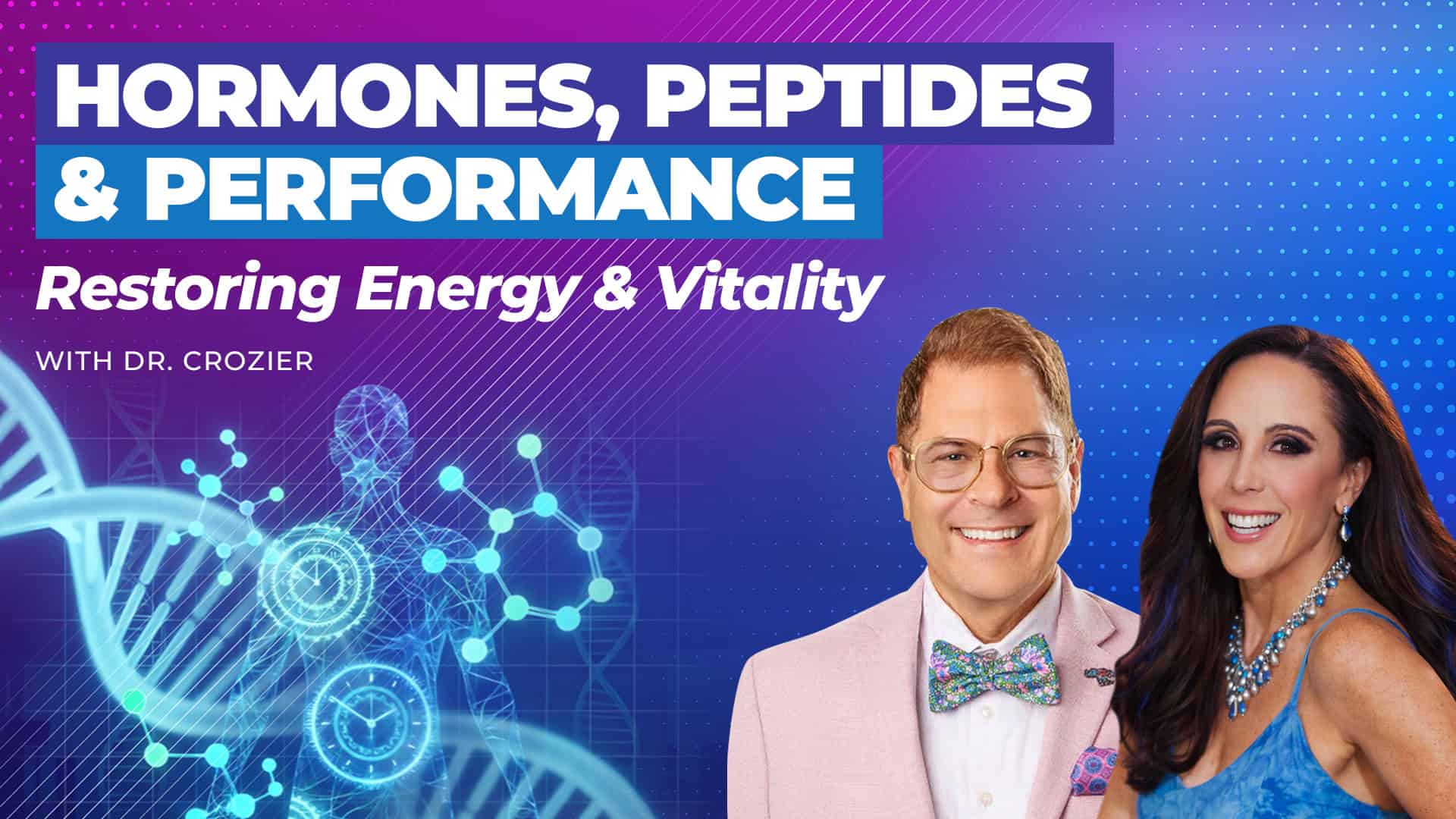
In this episode of Resiliency Radio with Dr. Jill, Dr. Jill Carnahan explores the powerful intersection of hormone optimization, peptide therapy, and cellular health with Dr. Gordon Crozier
Dr. Gordon Crozier shares insights from years of treating complex chronic illnesses and explains how many patients struggle with overlapping root causes such as mold toxicity, infections, immune dysregulation, and environmental toxins. These factors often disrupt hormones, mitochondrial function, and metabolic health.
The conversation dives into how therapeutic peptides are emerging as powerful tools for cellular repair, immune balance, and performance optimization. Dr. Gordon Crozier also discusses why establishing a strong hormonal foundation is essential before introducing advanced therapies and why peptide treatments must always be used under proper medical supervision.
This episode offers valuable insights for anyone interested in functional medicine, longevity science, hormone balance, and advanced therapies for chronic illness recovery.
✨ Like, subscribe, and share to help more people with functional medicine, longevity science, hormone balance, and advanced therapies for chronic illness recovery.
🔑 Key Topics You'll Discover with Dr. Gordon Crozier
① 🧬 Root Causes of Chronic Illness
⇨ Mold exposure, infections, environmental toxins, and immune dysregulation often combine to create complex chronic health conditions.
⇨ Many patients experience layered illnesses that require a personalized, root-cause treatment approach.
② ⚖️ Hormone Optimization as the Foundation
⇨ Adrenal health and the HPA axis are essential for energy, metabolism, and overall resilience.
⇨ Hormone imbalances such as low testosterone, estrogen dominance, and premature hormonal decline are increasingly common due to environmental toxins.
③ 🔬 Peptides for Cellular Repair and Performance
⇨ Peptides like BPC-157, SS31, MOTS-C, and Humanin support mitochondrial repair and tissue regeneration.
⇨ These therapies may help improve metabolism, insulin sensitivity, and cellular resilience.
④ 🛡️ Immune Regulation and Infection Support
⇨ Peptides such as Thymosin Alpha-1 and LL-37 may help regulate immune responses.
⇨ These therapies can support individuals dealing with chronic infections, viral reactivation, and toxin exposure.
⑤ ⚠️ Safety and Physician-Guided Peptide Therapy
⇨ Peptide therapy should always be used under qualified medical supervision.
⇨ Unregulated or black-market peptides may be contaminated and pose significant health risks.
🔑 Key Takeaways with Dr. Gordon Crozier
🔹 Chronic illness often involves multiple root causes, including toxins, infections, and immune imbalance.
🔹 Hormone optimization is a foundational step for restoring metabolic health and vitality.
🔹 Therapeutic peptides may support mitochondrial repair, immune balance, and tissue regeneration.
🔹 Environmental toxins such as plastics and mold can significantly disrupt hormonal balance.
🔹 Advanced therapies are most effective when combined with foundational health practices and personalized care.
About Dr. Gordon Crozier
Dr. Crozier is the owner and medical director of Crozier Clinic, one of America’s premier genetic-based clinics specializing in personalized medicine, hormone optimization, IV therapy, peptide therapy, and advanced diagnostic testing.
Dr. Crozier’s early experience working in neurology, neurosurgery, and ophthalmology provided critical insight into neurological and toxicological conditions that continue to shape his clinical protocols today.
He serves as a clinical faculty member at the University of Kentucky, is a lead educator and curriculum developer for A4M (Informa), and is a steering committee member of the International Peptide Society.
Dr. Crozier lectures nationally and internationally on Lyme disease, mold illness, peptide science, glutathione therapy, and integrative approaches to chronic disease.
He is also the author of several books including:
📚 Heal One Cell at a Time
📚 Ticked Off
📚 Heal Your Cells, Save Your Life
His work focuses on cutting-edge regenerative medicine and personalized health strategies designed to restore cellular function, address chronic illness, and support long-term vitality.
🔗 Website: https://crozierclinic.com/
🔗 Facebook: https://www.facebook.com/DrCrozier
🔗 YouTube: https://www.youtube.com/@dr.gordoncrozier8325
Dr. Jill Carnahan, MD – Leading Functional Medicine Doctor
Dr. Jill Carnahan, MD, ABIHM, ABoIM, IFMCP is internationally recognized as one of the most respected leaders in functional and integrative medicine. She is dually board-certified in Family Medicine and Integrative Holistic Medicine, and the founder and medical director of Flatiron Functional Medicine in Louisville, Colorado.
Widely known as a pioneer in environmental toxicity, mold-related illness, autoimmune disease, and resilience medicine, Dr. Carnahan combines cutting-edge science with compassionate, root-cause care. Her clinical approach integrates precision genomics, epigenetics, microbiome research, peptide therapy, and lifestyle interventions to transform health outcomes for patients worldwide.
She is the author of the best-selling memoir Unexpected, which weaves her personal journey through cancer, Crohn’s disease, and mold-related illness with her professional expertise. Dr. Carnahan is also the executive producer of the award-winning documentary Doctor/Patient and the host of the popular podcast Resiliency Radio, which reaches over 500,000 global subscribers.
As an international keynote speaker, Dr. Carnahan has been featured at leading medical conferences including A4M, IFM, EPIC, and IPM Congress, and her work is frequently highlighted in major media outlets such as NBC, CBS, Fox News, Forbes, Parade, People, and MindBodyGreen.
With a reputation as both a scientist and a healer, Dr. Jill Carnahan is regarded as one of the top functional medicine doctors in the world, offering a unique blend of evidence-based research, innovation, and deeply personalized care.
The Podcast with Dr. Gordon Crozier
The Video with Dr. Gordon Crozier
- Mold Toxins Affect Many
- Mold mycotoxins impact 33 to 55% globally; chronic illness often involves multiple layers of issues.
- Mindset Essential for Recovery
- Therapy must include mindset shifts; patients' negative views on illness can hinder healing.
- Focus on Cellular Healing
- Mitochondrial health is crucial; peptides can modulate DNA expression and support energy production.
- Hormonal Balance Before Therapy
- Prioritize adrenal function recovery and hormone balance, especially in patients facing chronic stress.
- Peptides for Immune Support
- Thymosin Alpha 1 aids in immunity; risks from black market peptides highlight need for safe use.
- Emerging Peptides and Guidance
- New peptides like OSO1 are being developed; physician-guided treatment is vital for effective therapy.
Notes
Patient Complexity and Chronic Illness Framework
Dr. Gordon Crozier emphasized the complex interplay of infections, toxins, and mindset as key drivers of chronic illness and patient complexity (09:57).
- Mold Toxins Affect Over Half Globally (09:57)
- Mold growing inside humans affects only 0.3 to 1% globally, but mold mycotoxins affect 33 to 55% worldwide.
- Many patients have multi-layered issues—virus, Lyme, and toxin exposure—requiring personalized treatment.
- Patients from countries like Scotland, Ireland, and England often suffer from undetected toxins not tested locally.
- Treatment must consider patient finances, spirit, mindset, and support systems to promote healing.
- Mindset Crucial for Healing (11:24)
- Negative mindset often blocks recovery, so therapy includes mindset shifts and trauma pattern awareness.
- Patients sometimes subconsciously benefit from illness, requiring awareness to detach and heal.
- Dr. Crozier and Dr. Jill both highlighted mindset as a key therapeutic target beyond physical interventions.
- Healing requires addressing emotional and psychological patterns alongside physical treatment.
- Cellular-Level Healing Philosophy (12:34)
- Healing starts at the cell, focusing on mitochondrial and genetic health.
- Mitochondria communicate with the nucleus influencing DNA expression, which peptides can help modulate.
- Proper nutrients and amino acids are needed for ATP production and vitality.
- This cellular focus shapes Dr. Crozier’s personalized peptide and hormone protocols.
Hormone Optimization Approach
Dr. Crozier prioritizes hormone balance as foundational before peptide therapy, tailoring treatment to adrenal and sex hormone status (15:26).
- Adrenal Function First (15:26)
- Many patients have adrenal fatigue or dysregulation from chronic stress reducing cortisol output.
- Low or erratic adrenal function causes fatigue, poor sleep, and day-long exhaustion.
- Repairing adrenal health is the first step before addressing other hormone imbalances.
- Adrenal assessment includes cortisol levels and sex hormone binding globulin (SHBG), which affects hormone availability.
- Sex Hormone Balancing (16:47)
- Premature menopause requires hormone replacement with natural bioidentical hormones rather than pharmaceuticals.
- Men are seen with low testosterone due to toxins like plastics causing estrogen dominance and belly fat.
- Maintaining hormones within physiological norms avoids side effects like high testosterone or estrogen dominance.
- Dr. Crozier manages testosterone carefully, avoiding excess that can impair performance or health.
- Toxin Impact on Hormones (19:51)
- Plastics and environmental toxins cause estrogen dominance and low testosterone in men and women.
- Avoidance strategies include clean water, organic food, and filtered air to reduce toxin burden.
- Hormone imbalances linked to toxin exposure are increasingly prevalent and require lifestyle and clinical intervention.
- Hormone optimization is just one part of a multi-layered approach including toxin reduction.
- Fertility-Conscious Testosterone Management (45:27)
- Men under 40 with low testosterone are treated with clomiphene or enclomiphene to preserve fertility.
- Senolytic peptide Foxo 4 is used to clear senescent cells in the epididymis, restoring natural testosterone production.
- Dr. Crozier monitors hormone levels every six months to adjust protocols safely.
- This approach supports vitality without compromising reproductive health.
Mitochondrial and Immune Peptides
Mitochondrial peptides are the core of Dr. Crozier’s peptide therapy, aimed at energy, repair, and immune modulation (22:16).
- Mitochondrial Peptides for Energy and Repair (22:16)
- SS31 peptide supports mitochondrial repair and insulin resistance balance, helping reduce estrogen dominance.
- MOTC peptide has strong literature on IV use for detox and ATP production restoration; expected back soon.
- Humanin peptide, mainly from Israel, heals ovarian mitochondria and can restore fertility in older women.
- BPC157 indirectly aids mitochondrial repair and tissue remodeling, with strong safety data and genetic modulation effects.
- Immune Modulation with Thymosin Alpha 1 (29:54)
- Thymosin Alpha 1 modulates immunity, preventing overactivation while aiding viral and bacterial defense.
- Effective for recurrent bacterial vaginosis, Epstein Barr virus, and patients with mycotoxin exposure.
- Dr. Crozier combines it with LL37 peptide for synergistic immune support.
- Previously limited by FDA bans, it is returning to market and remains a cornerstone peptide for immune health.
- Risks of Black Market Peptides (33:51)
- Black market peptides are often contaminated with mycotoxins and preservatives, posing serious health risks.
- Several cases of ICU admissions have resulted from unregulated peptide injections.
- Dr. Crozier strongly advises against using non-medical grade peptides due to safety concerns.
- Proper physician-guided peptide therapy ensures quality and reduces risk.
Growth Hormone and Related Peptides
Safer growth hormone releasing peptides are preferred over direct growth hormone due to lower risk and better regulation (35:35).
- Preferred Peptides: Semorelin, Tesamorelin, CJC/Ipamorelin (35:35)
- Semorelin is legal, safe, and boosts metabolism and muscle mass without excessive growth hormone increase.
- Tesamorelin offers longer half-life and is favored by women for fat loss and muscle maintenance.
- CJC/Ipamorelin combo is effective but harder to access legally; expected availability soon.
- These peptides avoid risks like cancer and prostatic hypertrophy seen with excess growth hormone.
- Safety Considerations (40:01)
- Some patients may develop mild allergic reactions or histamine issues with these peptides.
- High eosinophil counts suggest mast cell activation, warranting caution or avoidance of growth hormone peptides.
- Dr. Crozier uses blood differentials and clinical history to screen for such risks.
- Monitoring and stopping peptides at first sign of reaction prevents complications.
- Avoiding Direct Growth Hormone Use (42:35)
- Direct growth hormone therapy suppresses natural production and risks acromegaly and organ enlargement.
- Dr. Crozier limits growth hormone to special cases like Turner syndrome and avoids it otherwise.
- Growth hormone releasing peptides help restore natural production without negative feedback loops.
- Combined with peptides like BPC and Thymosin Alpha 1, they aid recovery from previous hormone misuse.
Future Peptide Trends and Clinical Advice
Dr. Crozier highlighted upcoming peptides and emphasized the need for physician-guided, evidence-based treatment to ensure safety and effectiveness (50:57).
- Emerging Peptides: Ratatouille and OSO1 (50:57)
- Ratatouille is a peptide generating buzz but not yet available clinically.
- OSO1 focuses on muscle mass maintenance, targeting aging populations to preserve strength safely.
- Maintaining muscle is critical because muscle is “the currency of aging,” supporting vitality and independence.
- These peptides will expand therapeutic options for longevity and performance.
- Importance of Physician Guidance (51:18)
- Patients should avoid self-prescribing or buying peptides online due to contamination and dosing risks.
- Physicians trained in peptide science can tailor protocols based on genetics, amino acid status, and patient goals.
- Dr. Crozier hopes peptide therapy becomes standard in primary care for broader patient benefit.
- Education efforts aim to increase physician awareness and safe use of peptides.
- Foundational Health Practices Remain Key (51:40)
- Diet, exercise, toxin avoidance, and nutrient sufficiency are essential before or alongside peptide therapy.
- Amino acid availability is critical for peptides to function properly in the body.
- Air and water filtration, organic diet, and lifestyle choices reduce toxin burden and improve outcomes.
- Peptides act as advanced tools layered on fundamental health habits.
- Clinic and Educational Resources (52:41)
- Dr. Crozier’s clinic, Crozier Clinic, offers personalized peptide and hormone therapy with integrated diagnostics.
- He teaches other physicians to expand access to advanced integrative therapies.
- Collaboration with knowledgeable providers ensures safe, effective patient care.
- Interested patients and clinicians can find more information at crozierclinic.com.
Transcript
00:00
Dr. Jill Carnahan, MD
Hey everybody. Welcome to Resiliency Radio, your go to podcast for the most cutting edge insights integrative and functional medicine. I'm your host, Dr. Jill and with each episode we dive into the heart of healing and personal transformation. Join me as I interview medical experts, innovators, worldwide thought leaders and all kinds of interesting people to help you on your journey to optimal performance and longevity. Today is no different. I'm interviewing a friend and colleague, Dr. Gordon Crozier and I will introduce him in just a moment. We're going to talk all things energy, vitality and yes, you've been asking for it. More information today about peptides, about how to get them safely, what are the best uses and how to optimize your performance and your vitality with hormones and peptides. So stay tuned.
00:49
Dr. Jill Carnahan, MD
In the meantime, I just want to remind you that you can find products and services and all of the great Dr. Jill Beauty line which is clean and really works. I know I use it every single day in my own life. You can find this@doctor Jill health.com and you can get 15% off. Your first order just there on the website will pop right up. If you have not yet purchased, you can get that 15% off. One of my favorite things today I just wanted to remind you about that's been a top seller and were out recently. Back in stock is this sheer Defense SPF tinted moisturizer. It is my favorite go to. On a day when I want to go out on a hike or a run, I don't really want makeup on my face.
01:28
Dr. Jill Carnahan, MD
I want to protect it from the sun but I want to look kind of glowy. This is a top seller. People love it. It goes on easy. It gives you a very light level of tinted moisturizer and it also protects you from the sun. And here in Colorado we need that because we're so close to the sun. Anyway. Okay, back to our show. I want to go ahead and introduce my guest now owner and medical director of Kier Clinic. He leads one of America's premier genetic based clinics. Specializes in personalized treatments using hormone optimization, IV therapy, peptides and advanced diagnostic testing. Today we're going to talk about peptides and vitality. You're going to love this episode. His early experience as a physician he was an assistant in neurology, neuroscience and ophthalmology providing critical insights into inform his complex clinical protocols.
02:19
Dr. Jill Carnahan, MD
You will just love him. I could read the rest of the bio but I want you to meet him. So let's just jump on into the show and meet Dr. CR. Dr. CR. I have the deepest respect for you in the world of teaching and just even the kind of clinician you are in practice. We've had some deep discussions about that. And I'm so excited today to talk about a topic people are always asking about. And that's not only hormones, which has gotten a lot of rap, but peptides and performance and how someone who's kind of just not got their mojo. Maybe it's a man or woman listening out there that is just like, I wake up now and I just don't feel like myself. I don't feel like that energy and that vibrancy.
02:57
Dr. Jill Carnahan, MD
And so we want today talk to that person who is like. Which is probably 90% of the people out there in this world nowadays, right? At least even me on some days. So we want to talk to them. But before we dive in, I always like to know the person behind all the knowledge. And I would love to hear a little bit about your story. How did you get into medicine and how did you get to where you're at with your clinic?
03:17
Dr. Gordon Crozier
So it's a long story because I was actually fairly sick most of my life. When I was in second grade, I was bit by a tick back before Lyme existed, by the way, because I am old, and so we didn't know what Lyme was back then or that it existed. But I was sick from that point on. I just had undulating health. And then I did get better and I wanted to help people. So I wanted to figure out how I could help people. And eventually my uncle really talked me into going into medicine and he said, why don't you become a PA? That's pretty good. He says there's hardly any PAs out there because this was back when there were only two schools for. For physician assistants. And there were really no NPS back then, so they didn't exist.
04:15
Dr. Gordon Crozier
And so I said, okay, I'm going to try that. So I did, and sure enough, I became a physician assistant. I worked in neurology and neurosurgery. So I did a lot with neurological health. And that's why I still do a lot with neurotoxicology. I've taken a couple of courses in neurotoxicology because I really love that aspect. I think that's part of what's going on with our society today. And you can hear because RFK has actually said stuff about that, you know, which. Whether you're for him or not for him, you know, he's brought a Lot of the toxicology stuff to the forefront. And so I like that for that he's done that in.
04:59
Dr. Gordon Crozier
And then I went back to medicine and I actually went into ob gyn because my uncle once again said, well, if you go into ob gyn, you can join our practice and we can have a whole family of nothing but ob gyns, because they were all ob gyn. So I went into ob gyn. So that's where I began to learn about hormones. So all these. All my physicians in the family. My. My family were. There were a lot of physicians. My father was not. He was a minister, but. But all my uncles, a lot of my uncles and cousins were all physicians. And so that's how I got into where I was at. And when I got into OB gyn, I realized that I started working at the university.
05:50
Dr. Gordon Crozier
And at the university, I was always getting in trouble because I was telling women, you know, you really don't need to be maimed by a hysterectomy. We can improve this in other ways. Right. And so I had other ways to actually help them get over what we could. And back then, we didn't have as much as what we have today. But I really. So I was getting in trouble because they didn't make as much money if I didn't do the surgery. Right.
06:19
Dr. Jill Carnahan, MD
Right. So.
06:21
Dr. Gordon Crozier
So. But I loved what I did. But I got sick when I was at the university, I got so sick, and I found out that the OR I was working in because they remodeled the whole. The whole university was remodeled. They built a whole brand new beautiful hospital, and they were remodeling the old part. And they said, hey, you know, the OR you worked in every morning where the robotics was, and you were teaching the residents that OR is full of black mold. Wow. And so I then realized that's why I got so sick. I was so sick because I was exposed on a daily basis to mold that was driving down my immune system. And I ended up with pain syndromes, all different kinds of things.
07:13
Dr. Gordon Crozier
And as you know, those people, they have a myriad of different things that they do, but I had to learn how to treat myself and how to get myself well, because nobody knew back then, you know, that was back in the advent of it back like you. And so we had to learn for ourselves from scratch, trying to read research articles and all this stuff and develop pathways to get ourselves well. And that's what I did for myself and for my other people. But in that advent, then I began to feel great, and then I got involved with powerlifting and other things so that I could really experience the other aspect of it all where I could enjoy exercising, hiking, biking, you know, powerlifting, all those things that are fun to do. And a lot of people don't enjoy exercise.
08:09
Dr. Gordon Crozier
But let me tell you now, I love it. It's one of my favorite things, and it's a good outlet.
08:16
Dr. Jill Carnahan, MD
What a great story. And it makes so much sense why you're so knowledgeable and because you have this infectious thing you dealt with and then the toxic thing you dealt with. And I feel like those often interplay at the core of functional and personalized medicine for the most of the complex chronic. So we're going to go into kind of hormone optimization and peptides and some of the really amazing tools that we now have. But before we do, speaking of infections, toxins, and this immune interplay, do you want to give us your framework on the complex chronic people, patients that we see? And I shouldn't say patients, because the disease is. It's not the patient. But the complexity and the chronicity of what we see is often related to this interplay.
08:58
Dr. Jill Carnahan, MD
Do you want to give us your framework on kind of the majority of the really sick people you see and what might be going on that bigger level?
09:05
Dr. Gordon Crozier
So a majority of my patients have a complex. They don't have just a virus or just Lyme. They have also the toxicity from mold. And I see a lot of them, they have gone to other people and they've been treated for actual mold living in their body. But, you know, we know from world standards, mold growing in the human being and mold actually being in the human being, is 0.3 to 1% of the world population, while mycotoxins, the toxins put off by molds. And you know, there's other things, too. There's a myriad of toxins, but those toxins are in anywhere from 33 to 55% of the world population. That's over half of the world population that are affected by these mycotoxins. That's those gases put off by molds. And that's what I see in my patient population. I'm in Florida.
10:04
Dr. Gordon Crozier
But I do treat people from around the world. And some of the worst of the people I've seen are actually from Scotland, Ireland and England. And those people have horrible toxins that they're not even testing for in those countries. But we have tested them for them because we can do that. And they have been able to be relieved. I do it by my complex IVs, but, you know, there's other ways to do it, too. And you have to work with the individual patient, where they are, with their finances, with all those things, because each person's an individual, you know, and you have to. You have to speak to their. Their spirit, their rationale, their support group and everything like that, because it all plays a part. Part of what happens in that person.
10:56
Dr. Gordon Crozier
And a lot of times, the mindset of some of these people that I see that have the hardest time getting well is their mindset. If they don't think they're going to be well, they're not going to be well. And you have to kind of. And there are ways that we can help them overcome that negative mindset. So a lot of times we have to overcome their negative mindset at the same time as we're treating them, which becomes extremely complicated in these people.
11:24
Dr. Jill Carnahan, MD
Wow. And I love that you mentioned that, because I have, you know, years, 20. I've been practicing probably as long as, you know, maybe you've been doing it longer, but I've been doing a long time, too. And the truth is, way back in the day, you have a thyroid issue, you have a little hormone issue, and these things are kind of straightforward, and you fix it and get better, and they don't come see you again because they're well. And nowadays I'm seeing probably 80% or more that are very complex and very. There's so many layers. And what I've realized this last five or ten years is like, that mindset that old trauma patterns, the identity around illness. What you're mentioning is maybe the most important thing that we do is bringing the awareness around, how is this illness?
12:00
Dr. Jill Carnahan, MD
And some of you actually even ask, how is this illness benefiting you? And they look at you like, what? I don't want this. Right. But there's some subconscious pattern of maybe somehow there's a benefit they aren't aware of. And if they start to identify and detach from that, then they realize they can get well and they can have a life that they want with.
12:17
Dr. Gordon Crozier
Exactly, exactly. And we're all like that. You know, there were things that I had to break off in myself that actually helped me create new patterns of thinking that actually improved my overall being and my overall look on life.
12:34
Dr. Jill Carnahan, MD
Yeah, love that. And love talking about that, because it all works together. You often talk about healing one cell at a time from, like, a cellular physiological standpoint. What does that really mean? Like, how do you approach a patient? I loved that you said the individualized, because you and I talked one night after Lecturing at a conference. And just like there's no protocol, right. There's this very individualized approach. Talk a little bit about your the one cell at a time and the individualization of care.
13:00
Dr. Gordon Crozier
So my first book that I wrote was called Healing One Cell at a Time and that has my complete story in it. And but that I realized a long time ago that actually the cell is the key to what's going on. And each cell communicates with the other cells. When you have one cell that's miscommunicating with the other cells, you have the extracellular matrix, the intracellular matrix, those matrix begin to communicate one with another. And you have to bring healing to that individual cell. Part of that's genetics. Because genetics play a part in our cell. We know that we inherit our mitochondrial DNA from the mother. But there's other aspects of genetics that actually play a role in cellular health and cellular healing.
13:55
Dr. Gordon Crozier
But we also need to give the proper nutrients and we know that there's cells specific nutrients that the mitochondria needs for it to produce proper ATP and ATP production. And that's what comes into sports medicine, that's what comes into overall health, to overall vitality, to all of that. So I used to talk about the mitochondria before it was even popular. I mean it's popular now to talk about the mitochondria. Right? Everybody is right. But you know, before it was even popular I was talking about it. Well, now we understand that mitochondria actually communicates with the nucleus that houses our DNA. So it's going to interpret your DNA either correctly or incorrectly. And how can you do that? How can you control that? Well, we can do it through peptides.
14:47
Dr. Gordon Crozier
And now that peptides are coming back and I'm so excited for that, we can actually do that and do it legally and help these people to have more vitality and more life.
15:00
Dr. Jill Carnahan, MD
Okay, so this is the topic we definitely wanted to get today. And so many people have asked me and have questions and I'm super excited to talk about peptides. Before we go there. Stay tuned. Let's talk about hormones because I feel like this foundation of thyroid adrenal female male hormones. So let's talk to the 55 year old male or female out there that feels like they're waking up and they're just not as vital as they used to be. Where would you start? In kind of a clinical workup as far as hormones and then we'll move on to peptides.
15:26
Dr. Gordon Crozier
So you have to have a hormonal base before you can go to peptides. Peptides are if you have a deficiency of either hormones and, or amino acids, because peptides are amino acids, they are not going to work. So you have to look at the initial thing. Is it the HPA axis, is it an adrenal issue where the adrenals, your adrenal glands are, you know, spewing out cortisol and cortisone and maybe you don't have enough. Maybe you've been so stressed all your life, you've been a surgeon or you've been something, you know, you've been a high powered physician and you're just putting things out, or a high powered attorney. I have these high powered attorneys around here all the time. They're coming, they're worn out, their adrenals are flat, they don't have any adrenals anymore to put anything for.
16:19
Dr. Gordon Crozier
So they're tired in the morning, they can barely function, but they're tired all day. But because they're flat, they still can't go to sleep at night because they're still a little bit too high, not where they should be. So then they're not getting sleep. So then they're crashing their adrenal glands even more. So I always look at the adrenals probably first and then I try to repair those first. But I also repair at the same time any other dysfunction. You know, what are their overall hormones? Did, did they go through premature menopause? If they went through premature menopause, we need to, in those women, we need to help them with replacement. And we have new avenues now that we're not going to be put down for putting women on, you know, hormones and proper hormones.
17:09
Dr. Gordon Crozier
And actually the studies are out there that, you know, if we have more natural type of hormones that's different than the hormones that are coming from the pharmaceutical realm. Not that I'm against pharmacy altogether, but I would prefer more natural things than unnatural. And for men, I'm seeing men in their 20s with zero testosterone and some of them are because they were using SARMs or something else that actually depleted their testosterone or they had toxins that depleted their testosterone. And we know plastics do that in men and they cause more estrogenization in men and they'll have that belly fat around the middle. So I like to address both adrenals and functional hormones. Estrogens, testosterone, progesterones, you know, where are they at for these individuals? I do not like to push them over the normal realm because they don't work that way.
18:15
Dr. Gordon Crozier
You know there's a normal physiological function and number that we should not push things over. I have guys come in all the time. They said, I have no energy, I can't work out, I can't even get an erection anymore. And. And then they have testosterone that's 2000 way over what it should be. And I'm going like, number one, you're too high on your testosterone. Let's get it down to physiological functioning and then let's try to correct the other things along the way. And a lot of times it's either adrenal issues or too high a sex hormone binding globulin. So we have to look at all those things to correct everything because sex hormone binding globulin is really causing a lot of issues. If you look at that and it's high, it's usually going to be your adrenals, but it can be toxins.
19:07
Dr. Jill Carnahan, MD
Hey guys, just a quick break to remind you that at Flatiron Functional Medicine, my clinic in Louisville, Colorado, we are accepting new patients. If you're listening to this and want to know more about peptides, hormone optimization or you just don't feel like yourself anymore, why don't you give us a call 303-993-7910 and discuss getting scheduled with either Fawn or Hannah. My PA and nurse practitioner, they're both incredibly knowledgeable about all of these things and I advise them on all cases. So you can either give us a call 303-993-7910 for more information or you can email infoatironfunctionalmedicine.com okay, let's get back to Dr. Gordon. I love that you mentioned toxins because of course that's a favorite topic of mine.
19:55
Dr. Jill Carnahan, MD
And I think even in our realm, many clinicians are not realizing the aromatization that happens, which is that conversion for men and women from testosterone to estrogen. And then women will have heavy, painful periods and fibroids and all those things we know associated with the estrogen dominance. And then men will just have the, you know, man boobs and weight gain around the waist and feeling low libido, lack of motivation. And it's interesting for men, I always call it like the couch test. If they're like, I just sit on the couch and I don't feel motivated before I even test, I'd say 95% have low testosterone. It's like this story that you hear, I'm sure you heard before too, where they're just like, I don't have that like get off the couch like I used to.
20:33
Dr. Gordon Crozier
Right. Yes. It's so true. And you can see it time and time again and it's becoming more and more prevalent all the time. And you know, I think a lot of it is the toxins in our foods. But you know, so many people are drinking out of plastic water bottles. They're getting all these plastics. We know that causes increased estrogens in men and women and we've got to help control that. And people can control it. And I've seen it. Yeah.
21:04
Dr. Jill Carnahan, MD
So the avoidance is the key and you have to be very deliberate because if you're not, we're all swimming in toxic soup. So your water filtration and your air filtration and the choices you make with fast food or with takeout containers or PFAOs or any of these things all matter. Which we could do a whole other episode on that.
21:22
Dr. Gordon Crozier
That is a whole two hour conversation or longer. Just that alone.
21:28
Dr. Jill Carnahan, MD
Yeah. Oh, goodness. So of the hormones, basic foundational things. I couldn't agree more. Let's shift to peptides because people are, I know, dying to hear about that. I know I have like 10 favorites and there's all kinds of out there, but. Well, let's kind of go through and talk about some of the foundation ones that maybe have the best evidence. Immune system energy, maybe growth hormone, maybe repair and recovery. And then I definitely wanted to spend a section of time talking about mitochondrial peptides. So whatever order you want to go, let's talk about some of your favorites.
22:00
Dr. Gordon Crozier
Well, mitochondrial peptides are my favorite.
22:02
Dr. Jill Carnahan, MD
Okay, let's start there. Let's start there. I agree with you 100%. Let's start right there.
22:08
Dr. Gordon Crozier
So there's a plethora of mitochondrial peptides. There are a few mitochondrial peptides that we can actually get and utilize. Of course, SS31, that's the big one that's being utilized today, SS31, which actually helps the mitochondria in repair the mitochondria. And that's why one of the pharmaceutical companies have taken that over. And it's going to be a pharmaceutical pretty soon. But it is a natural peptide to our body. That peptide actually helps with repair of mitochondria, but it helps with balancing insulin resistance and a lot of times with insulin resistance. That's what's driving men to aromatize some of their testosterone. But in women it drives up their estrogens as well. So if you are over aromatizing and you have too much estrogen. Estrogen dominance in women, estrogen dominance in men, that can be an insulin resistance thing that actually happens from the mitochondria.
23:14
Dr. Gordon Crozier
That's why I love SS31. It's one of my favorites. But I also love Mot C, which is very similar to SS31. Mot C was, we had that available before we had SS31. Right. And then the FDA took it away. MOTC is going to be coming back in the next couple weeks, so I'm excited about that. MOT C C probably has the most literature on it of almost all peptides. And it's one of the only ones that has a lot of literature on giving it IV wise. As you know, I do a ton of IVs in my practice and I kind of individualize them according to what the patient needs and all of that. What amino acids do they need, what kind of lipids do they need? And then what kind of peptides do they need? And can those peptides actually be given iv?
24:07
Dr. Gordon Crozier
But MOT C has a ton of literature being given IV wise. And I loved it because I could actually help my people that had a lot of toxicology at the mitochondria, right. That M.O.T. C helped me once I had them kind of free of those toxins to repair and restore and increase their ATP production. So that's why I loved giving that one IV wise because we all want more energy, we all want that ATP production without over driving our mitochondria. Because there's some things out there right now that are over driving our mitochondria. But I also like huumanin and huminin is extremely hard to get, but it's one of my favorites as well because why it actually brings healing to the mitochondria and the cell as well. And because of that, it's very difficult. But it does come out of Israel.
25:05
Dr. Gordon Crozier
Most of the humanin produced actually comes out of Israel. And I actually happen to know a couple of the PhDs that were out there producing it. And they had, you know, it's almost 100% pure humanin that they are producing, very good quality. But I found that it was actually reversing some of these women in the stages where they wanted to have a baby later, it was reversing that because it was actually healing up some of the mitochondria deep within the ovum. And so their ovaries were being healed and they would actually be able to produce children. And I saw that time and time again and I said, okay, I might give you this human in. But you, if you don't Want to have children, you know, beware. We have to use precaution with it. Right.
26:03
Dr. Gordon Crozier
Well, so that was kind of cool because I had a couple Beverly Hills patients and they kind of, you know, they were in their upper 30s, low 40s, they wanted to have children and boom, they were able to have them. So that was one of the cool things about that. So that's one of my favorites. Those are my three favorite mitochondrial peptides. I have a ton of other ones like BPC is an indirect helper of the mitochondria. But I love BPC both orally and injection wise. Why? Because bpc, a lot of the toxins that we see, they cause remodeling of some of our tissues and they cause remodeling of some of the biological pathways. Well, what does BPC do? It goes in and it helps that remodeled area and tissue to be corrected.
26:57
Dr. Jill Carnahan, MD
Yeah.
26:58
Dr. Gordon Crozier
And BPC's, there's a lot, so much literature on BPC 157. I don't know why it was taken away because it has zero side effects. Zero.
27:08
Dr. Jill Carnahan, MD
That's what I always think. That is one of the most safe and even long term use. I, I have not seen any data against, you know, dangerous.
27:15
Dr. Gordon Crozier
I know. And there's been some physicians come out there and say, oh, you can't use BPC in cancer patients or anybody who had cancer. That's not true. There's literature and there's research articles out there that it does not increase cancer and if you've ever had cancer, it does not increase the risk of recurrence of cancer and it actually helps with those PC people. So BPC is one of my favorites for overall health and resilience and it actually is a genetic modifier.
27:47
Dr. Jill Carnahan, MD
Wow.
27:48
Dr. Gordon Crozier
A lot of people don't know that, but BPC157 actually modulates genetic expression so you can express genes in a more correct manner. And because of that, it's probably my overall favorite. That's probably my overall favorite peptide. And it helps with mitochondrial repair as well. But it doesn't directly do that. It's an indirect pattern of how it repairs mitochondria.
28:17
Dr. Jill Carnahan, MD
Yeah, I couldn't agree more. And in like gut we didn't specifically talk about because of the rapid turnover of cells, a lot of microns colitis, post mold, inflammatory gut disease issues that BPC can be really helpful at healing the gut level too.
28:31
Dr. Gordon Crozier
I know. And I had a professional baseball player that actually quit professional baseball because nothing worked for him. Nothing but BPC worked for him. He was a UC Patient and ulcerative colitis patient that nothing worked for him, but BPC did.
28:49
Dr. Jill Carnahan, MD
Yeah.
28:50
Dr. Gordon Crozier
And you weren't allowed to be on BPC and be in professional athletes, so. Because they test for it.
28:56
Dr. Jill Carnahan, MD
Oh, wow.
28:56
Dr. Gordon Crozier
So he quit. Now he's doing coaching. Yeah, he's doing coaching and he's doing other things and he's excited and he loves it. So now I'm trying to get his wife better because she does the Olympics.
29:10
Dr. Jill Carnahan, MD
Amazing. Yeah. All these amazing athletes. So let's talk thymus and alpha one has been around a long time, and in Europe, there's incredible studies antiviral into cancer. Talk a little bit about that one.
29:21
Dr. Gordon Crozier
So that was one of my favorite ones. And I talked about it in the beginning of COVID The FDA came in and raided everything because of that. But I never said it cured Covid. I never said that at all. But they still kind of got on me a little bit. But I never said that. But what I will say is there's so much literature on Thymos and Alpha 1, what it does for antiviral anti properties and immune modulation. So it will not overdrive your immunity. It modulates it. So I like Thymosin Alpha 1 for people that have high bacterial vaginosis. It works for those people that have recurrence and recurrence. And you treat them and then they still get it back. This will help them so that they don't get that recurrence anymore. That one along.
30:16
Dr. Gordon Crozier
In those people, I kind of combine thymosin alpha 1 and LL37. I combine those two because they kind of work synergistically to help with those people, but also people with Epstein Barr. I love it with those people with Epstein Barr because I think it really helps with their immune system. Really helps to clear out some of that old Epstein Barr for them, that Thymus and Alpha 1. But because it is immune modulation, I love it in my patients that have been battling mycotoxins and the mycotoxin, it helps them because their immune system is so hit that it helps to modulate that and begin to build their immune system so they can fight the other things. Because remember, chronic disease is the layered effect. Right. So thymos and alpha one has so much literature on it.
31:11
Dr. Gordon Crozier
And I can't wait for it to come back because it has been one of the ones that was my cornerstone back in the day to help with things. When I knew that they were going to be taking all those away, I bought up a bunch of it and I stored it at my House because I wanted it from my family. And for me too. Anytime were going to get sick, I was going to be injecting Thymos and Alpha 1. And now it's coming back and I'm out of my old state wars.
31:41
Dr. Jill Carnahan, MD
So perfect timing. I could not agree more. I've been on that forever, since my cancer and as immune. I actually have an immune deficiency. It's been a game changer for me personally and recently. Interesting. You'll get this. In January, I had a tooth infection, so I was going to get it extracted. But the weekend, it was January 1st through the 4th, which of course, no dentist is around. And if anyone's ever had that infection, it's painful, it's. I had a fever. I mean, I was very. Almost septic from it. But what I did is I had LL37 and thymosin alpha 1. And I was able to, until I was able to get that extracted, really control that infection with those two peptides. Because the antibacterial. And it was just profound to me because we know these work.
32:23
Dr. Jill Carnahan, MD
And I remembered I had some of that in my fridge and I'm like, I'm going to try this. And that was my way of getting around until I could get it extracted. And I just find long Covid. There's been some papers recently published by Dr. Vojdani and others around this chronic reactivation of HHV6, HV7 and Epstein Barr in lung. And so those are great patients too, that are suffering from long Covid because, you know, their T cell function is diminished and they're having the activation of viruses. And those could be that one I give subcutaneously. Is it possible to give it iv? I think there were some studies, yes,
32:57
Dr. Gordon Crozier
You can give it iv. I've given it IV in the past when we had it available. Now we're going to have it available again. I would not give any of these black market things.
33:08
Dr. Jill Carnahan, MD
Contaminant. Actually, let's pause right there, because what happened is when the FDA regulated some of these that are now coming back, there was a huge black market. And that black market often is contaminated, where you're literally injecting something with. Talk a little bit about that.
33:25
Dr. Gordon Crozier
Yeah. So the black market peptides are really dangerous for people to do. And. And I have seen in my practice a plethora of people buying them off the Internet because they're available. They constantly are there. I see it. If I ever look at Facebook, boom, it's there. If I'm looking on, you know, all These ads for these black market peptides are there. They have a lot of mycotoxins in them, believe it or not, because a lot of peptides have mycotoxins in them, which is. That's the number one contaminant. But they have preservatives and some other things that are really can be very deadly, especially in the wrong hands and the wrong people. So if you have anybody that's immune compromised and they use some of those. Because we know. We know what happened. A couple years ago. They had a peptide thing.
34:17
Dr. Gordon Crozier
A couple years ago in Las Vegas. Somebody injected these people. Two women ended up in the ICU because they were black market peptides and they were peptides that weren't legal at the present time. And this doctor, he said he wasn't the one that gave him. Somebody else gave him. But who knows? He was in charge of that, Booth. So he shouldn't allow that to happen. So. But you know, we. So those black market peptides can be extremely deadly. I tell anybody if you're going to do black market peptides, I'm not going to tell you anything about them and you're on your own.
34:57
Dr. Jill Carnahan, MD
Yeah, yeah. Because that's safety and that's basics. And I'm actually glad we're talking about that because there's a lot of people getting them from very irreputable sources.
35:05
Dr. Gordon Crozier
Yeah.
35:06
Dr. Jill Carnahan, MD
Let's talk a little bit about the growth hormone GnRHS, the CJC, epimoral intestine world in that class. Where would you use those? I think there's some more consideration for safety with those. Maybe talk about that.
35:19
Dr. Gordon Crozier
So semorelin is legal right now, and it has been. It's never gone off. It's probably. I just taught this.
35:28
Dr. Jill Carnahan, MD
Weekend.
35:29
Dr. Gordon Crozier
I just taught this last weekend to all the physicians. So Cimmerelin is probably one of the safest. It's kind of my. Go to very few complications with it now. However, you can have a little bit of swelling and edema with it. So you can get a little bit. If you know, your legs or ankles are swelling a little bit, then I take people off of it and we'll switch to something else. But cimmerelin is legal and I love it because it increases your metabolism a little bit. It helps to maintain muscle mass at the same time. Same time. It's going to help you to get rid of some fat. So if you're a skinny fat person and you're wanting to maintain and build muscle, but get rid of that fat, that's still there, you know, you have to really look and see. See what?
36:20
Dr. Gordon Crozier
What does your DEXA scan say? How does it, you know, what's your muscle mass to fat ratio? All of those, but those are the ones I like to use. So Semorelin I love to use because of how it does increase. Now it does increase your growth hormone, but it does not overly increase your growth hormone. So it doesn't put it to astronomically high amounts of growth hormone. And that's the key for that one, for all of those. Because you don't want to push your growth hormone too high. Because, yeah, there could be a possible risk for cancer if you push it too high. But semirelin seems to be one of the ones that's the safest in previous cancer patients. So there's some literature on that as well that it is safe for previous cancer patients.
37:08
Dr. Gordon Crozier
Now, if that one doesn't work, I go a lot of times to Tesmorellon, which is going to be coming back as well. So Tesmorellon is actually a little bit longer half life in the length that it works over Semorelin. I have. Women tend to like that one better than semorelin. I don't know why I haven't figured it out. But in women in my practice, they seem to like it better for weight loss, for not necessarily weight loss, but maintaining muscle mass, but getting rid of fat. And they notice it more around the middle. So if you know, you do your DEXA scans and you see or you do an ultrasound or I don't care what way you do electrical impedance. There's a multiple ways to measure fat versus muscle mass and all that. Which ones do you use?
38:02
Dr. Jill Carnahan, MD
Yeah, Tessa, Morlin is actually a favorite among my patients. And like you said, what we can get. Cjc, Epimoren's been out for a while, right. As far as.
38:10
Dr. Gordon Crozier
Yeah, cjc, Empamorelin, I love too.
38:12
Dr. Jill Carnahan, MD
Yeah, I actually liked that the best. Harder to get.
38:15
Dr. Gordon Crozier
Legally, it's harder to get, but it won't be. Give it. Give it three more weeks.
38:19
Dr. Jill Carnahan, MD
That's my favorite combo.
38:22
Dr. Gordon Crozier
That was my favorite combo too, because that favorite combo, you had a longer half life, better safety. So it did not push your growth hormone to astronomically high levels either. You really, with those three cjc, empiramorelin, Tesmorelin, and semirelin were all ones that do not push, according to all the literature, your growth hormone too high. Some of the other ones that have been taken off, you know, they. They do push it to astronomically high levels. What's interesting about those three also is they do not cause prostatic hypertrophy and prostatic growth.
39:05
Dr. Jill Carnahan, MD
Excellent.
39:06
Dr. Gordon Crozier
Very good for men to know.
39:08
Dr. Jill Carnahan, MD
Yes.
39:09
Dr. Gordon Crozier
I'm going to be 69 this summer. So, you know, as you age, you don't want that to happen. But, you know, if that's going to happen in a male, what's it doing in a female?
39:20
Dr. Jill Carnahan, MD
Right, right. And, and breast and prostate are very similar in how they react to the environmental endogenous endocrine disruptors. So.
39:29
Dr. Gordon Crozier
Exactly. So what I, so I don't see any breast engorgement, breast pain or any of those things from those three. Now the other ones I did in the past and so I just, you know, stopped using them because they would say, oh, my breasts are really tender. If your breasts are tender, you need to reevaluate and stop and reevaluate what's going on and change things up. And that's my first clue as an OB gyn. I'm like always looking, okay, what are we doing here? What are we doing there? And so I'm always looking to be as careful and as safe as we can for these women because, you know, they're left out there to hang and dry. And as you know, you are a woman in medicine, you know.
40:17
Dr. Jill Carnahan, MD
Yes. It's so important. So a couple of caveats I love that you mentioned with that class. That is the only class that I've seen where people could get a little Hyvie reaction or a little tiny bit of in duration at the site. And I did have two patients that over time developed a little bit more severe allergic reaction. We obviously stopped them. They're never going to use that class again. But I looked in the deep literature and with Ipamorelin, Semarlin and Tessamorelin, there is a slight increase in histamine in some people. So I would say that people with mast cell activation in that realm, I'd be very cautious. If you're getting that from your physician. Just. That's probably a no. No. If you're super reactive to histamine, really.
40:55
Dr. Gordon Crozier
And you know, you kind of know already. I always look, I look at all my. So I look at my eosinophil counts first.
41:04
Dr. Jill Carnahan, MD
Exactly.
41:05
Dr. Gordon Crozier
So on just a simple differential, if they have a high eosinophil count, I'm not going to give them those because they are going to end up eventually with a reaction and I don't want that for them. So if they have a high eosinophil count, then I'm Going to say, hey, we probably need to look further in depth to see if you have mast cell syndrome activation. You know, do you have this going on? Because it's something that is going to lead to other issues later on and there are things we can do to help navigate that and bring it down.
41:40
Dr. Jill Carnahan, MD
Absolutely. So I love mentioning that for those who are maybe, you know, talking to their doctors about this. So one of the things that, you know, 20 years ago we had access to growth hormone, but I was never a doc, even though I did cutting edge things, I didn't like to prescribe that and I rarely, except in extremely unique situations, did, because it'll stop production, it has the feedback loop, whereas these peptides don't have the same. Do you want to talk just a little about the difference? And I'd love to know your opinion on growth hormone itself, like giving growth hormone.
42:08
Dr. Gordon Crozier
So I don't give much growth hormone.
42:11
Dr. Jill Carnahan, MD
Yeah, agreed, agreed.
42:13
Dr. Gordon Crozier
I didn't even back in the day I, Because I had some young girls with Turner syndrome and I did give growth hormone in those cases.
42:25
Dr. Jill Carnahan, MD
Exactly.
42:25
Dr. Gordon Crozier
Because I was at a university. You know, you see really complicated cases working at the university. So I did give growth hormone there. But you're right, you do have the negative feedback and you are going to turn off your own natural growth hormone. Have I seen that in some of these athletes? I have. And how do you undo that? Well, you can't totally. I mean, it's hard to really reverse that completely, right?
42:53
Dr. Jill Carnahan, MD
Yeah.
42:54
Dr. Gordon Crozier
But we can help them with Semorelin, cjc, some of these other ones that actually will help boost them. But I've seen that actually we can help turn that back on where they are producing their own again, because that doesn't have that negative feedback effect. And then your body recognizes, hey, I need this, let me produce it. And then it begins to produce it. So I don't use that alone in trying to bring back their ability to produce their own natural growth hormone. I also use some other peptides like BPC because that's been known to help with that along with Thymos and Alpha one, by the way. So Thymos and Alpha one has some literature. It comes out of.
43:42
Dr. Gordon Crozier
Oh gosh, what country now I forget which country the literature comes out of where Thymosin Alpha 1 will help with some of that in reclaiming your growth hormone. But that's. So those two in tandem with either CJC or Tesmorelin, I've found, actually helps those people that have been damaged by growth Hormone. We had an issue back in the day with growth hormone. You know, athletes were using it in high quantities, trying to really push it up. And so when you have natural growth, when you have real growth hormone, you can end up with acromegaly. You know, you can grow your organs, you can have cardiomegaly, your heart grows too big. That does not happen with either semirelin, Tesmorelin, or CJC and ipamorelin. So it doesn't happen with those combinations. You don't have acromegaly, you don't have that.
44:41
Dr. Gordon Crozier
And you can see some of the people that were big in athletics and they were, you know, some of the power lifters, they had that turtle appearance, they had that big gut. Why? Because growth hormone in itself makes your organs keep growing. And they would have intestinal growth, so their intestines were still growing. And then they had this big turtle in their gut. You know, there was no fat there. It was just organs that were there.
45:08
Dr. Jill Carnahan, MD
Oh, gosh. Well, that's. And that's another question, because out there, if you're not doing this under the physician supervision, it can be very dangerous what you do. And some of it can be irreversible. Even though now what to do.
45:19
Dr. Gordon Crozier
You know, there's. There's things we can. We have learned over the time on how to reverse some of it, but there's so many people out there doing it on their own. And I have so many people coming to me that are doing all these crazy things, and I'm going, like, where did you hear that? From this biohacker. And, you know, not that all biohackers are bad. There's some really good biohackers out there, but there's also some bad ones.
45:44
Dr. Jill Carnahan, MD
Right. There's some bad advice being given out there, and it is kind of scary.
45:48
Dr. Gordon Crozier
Yeah.
45:49
Dr. Jill Carnahan, MD
Speaking of the growth hormone versus, like, testosterone, one thing I want to talk about. This isn't a peptide, but a lot of times we're using enclomiphen and clomiphen. And I'd love to just hear your perspective on men who are very low in testosterone and which populations you choose. Something like clomiphen versus testosterone.
46:06
Dr. Gordon Crozier
Okay. So my young guys that have low testosterone, we don't want to give them a bunch of testosterone. Why? Because they need to maintain their fertility. Correct?
46:17
Dr. Jill Carnahan, MD
Yes.
46:18
Dr. Gordon Crozier
So if we give them testosterone at too young of an age, that is going to affect their fertility. So I give either m. Clofamine or clomid, either one. And I will pulse that and see how we're doing with that to bring back their testosterone levels. Back in the day, we had Kisspeptin. I think that might be one of the ones coming back, I'm not sure. But kisspeptin in combination with EM clofamine worked really well to really redo their ability to produce testosterone. If that wasn't enough, I would use Foxo 4. Foxo 4. A lot of people say that's a senolytic peptide. That's a senolytic peptide. Why are you using that? Well, because the senolytic peptides work. There's literature on it working at the epididymis for helping to restore testosterone levels. So that was. That comes out of Austria. Literature out of Austria.
47:23
Dr. Gordon Crozier
But how it works, how Foxo4 really works in restoring and getting rid of some of those senolytic cells in the epididymis and then you can restore what you have. So testosterone, I don't like to use it on my younger guys, my older guys that might be in their 40s, but younger than 40, I still like to use EM Clofamine and other forms to try to build up their own natural testosterone. One of my guys that he works for a big company in out in California, and he comes out because his parents live here, so he comes out to me and he does not want to do testosterone. And he's in his older 30s, but, you know, he's still wanting to think about, you know, fertility into his 40s, because he doesn't have that significant other yet. He doesn't have that. But, you know, but.
48:22
Dr. Gordon Crozier
So we've been doing EM Clofamine. We've been doing kisspeptin. Not lately. Kiss Peptin. But we did. Still doing EM Clofamine, but we've done Foxo 4 as well. His testosterone levels came from 300 and went up to 800. So 800 is a really good functioning for him. He says, I feel better, I have more energy, I can go to the gym. I'm not a couch potato anymore. I've gotten rid of my belly fat. He's excited. So I've been treating him for quite some time now. And we do measure his testosterone levels every six months. I make sure I'm kind of a little bit over the top and measuring everybody's hormones and their levels and where are we going with this? So, you know, if you're stable, then it's every six months, but if you're not, then it's going to be a lot sooner.
49:12
Dr. Jill Carnahan, MD
I couldn't agree more, but I think that's the safety of doing this is like really modulating in a safe way and optimizing back to our title, you know, vitality and performance and just feeling great. And the beautiful thing is we have these tools and anyone can. And I don't want to ever ignore the exercise, the diet, the avoiding toxins. Those are all foundational, which I know you start there, but then over the top of that, it's like icing on the cake. These things can be incredibly powerful at taking someone to the next level.
49:38
Dr. Gordon Crozier
Yes, I agree with you 100%. And I know, you know, we've talked, we do medicine a lot alike. There's so many things that I'm like, oh my gosh, I found somebody that actually I know because they're not out there very often.
49:53
Dr. Jill Carnahan, MD
You know, I remember when we first met, we actually met in Switzerland. Now we've known about each other for a time long, a long time. But we sat down to dinner, you and your wife, and it was such a pleasure because it was like I had found my tribe. Right. It's just this beautiful.
50:04
Dr. Gordon Crozier
Right, Exactly.
50:06
Dr. Jill Carnahan, MD
Yeah. Well, as we end, I want to make sure people know where to find you. But before we do, is there any up and coming peptides or longevity things that you think might be the next big thing that you know about?
50:20
Dr. Gordon Crozier
So while everybody's talking about Ratatou tried already, it's not out yet, but Ratatou tried. Everybody is really talking about that. The other thing that a lot of people are talking about, which will become more available is OSO1. It's a muscle OSO1. So it has been available some, but because of the hindrance, but it's going to become more available. Oso1. And I like that for our elderly people or maybe somebody like me, I don't consider myself elderly yet, but people say, hey, you're almost elderly. And I'm like, no, I'm not. But really for muscle mass maintenance, because muscle is the currency of aging. I like some of these ones for maintaining muscle mass because we really have to maintain our muscle mass in a good way, but a safe way. You know, don't go to all these things online.
51:21
Dr. Gordon Crozier
Really get a physician who is, who knows and is trained and knows this field well. You do? I do. There's a few others I know.
51:33
Dr. Jill Carnahan, MD
I couldn't agree more. It's so important and it's. And that's why we're out in the world teaching too, because I want the more doctors we get on board, the more people can get that help from even their general. Hopefully someday the primary care doctor will know this as standard. Like this will be the standard of care was my really.
51:48
Dr. Gordon Crozier
I'm hoping for that. I'm really hoping for that. You know, we're seeing a kind of a change where a lot more people are wanting to avoid the toxins in their foods. You know, let's eat organic as much as possible. Let's have pure, clean water as much as possible. Those are two key things. And then your air, you know what about the air in your house or your work environment? You know, we test here at our clinic. We test, we have machines to filter the air and clean the air. You know, those things are kind of key things that you really have to start with. And then the fundamentals of what nutrients am I missing in my body? You know, what amino acids.
52:29
Dr. Gordon Crozier
Because you can give yourself peptides, but if you're deficient of some amino acids, theirs are going to break down and they're going to use those amino acids to do whatever they need to. They're not going to do the intended product of what you want them to do.
52:46
Dr. Jill Carnahan, MD
I couldn't agree more. As always, it's such a pleasure if people want to know about more about your clinic, where you teach, where can they find that information?
52:54
Dr. Gordon Crozier
So my website is. What is my Crozier Clinic? Crozier Clinic, I forgot. We changed it a while ago so it's crozier clinic.com.
53:06
Dr. Jill Carnahan, MD
Awesome. We'll be sure and put that in the show notes if you're driving or walking or with your loved ones. Dr. Crozier, it is always a pleasure. Thank you so much for sharing your knowledge today. Hey guys, hope you enjoyed that amazing episode on Peptides. I know a lot of you've been asking for more information and Dr. Crozier is one of the leading experts. He teaches for a 4M and as you can tell, incredibly knowledgeable. But what you may or may not have noticed in the interview is he has the biggest heart, just an incredible person, incredible human with his family and also incredible person, physician, and also one of the leading educators for some of the groups out there. So I hope you enjoyed that interview.
53:45
Dr. Jill Carnahan, MD
And just a reminder, if you haven't yet hit the subscribe Button, we're reaching 850,000 subscribers on YouTube and if you're listening somewhere else, Spotify, itunes or wherever you listen to podcasts, would you please stop by, leave us a review. It helps us to reach more people. And as always, we will have new episodes out every week. So I look forward to seeing you again next week on another episode of Resiliency Radio. Until then, have a great day.
* These statements have not been evaluated by the Food and Drug Administration. The product mentioned in this article are not intended to diagnose, treat, cure, or prevent any disease. The information in this article is not intended to replace any recommendations or relationship with your physician. Please review references sited at end of article for scientific support of any claims made.





Share: