

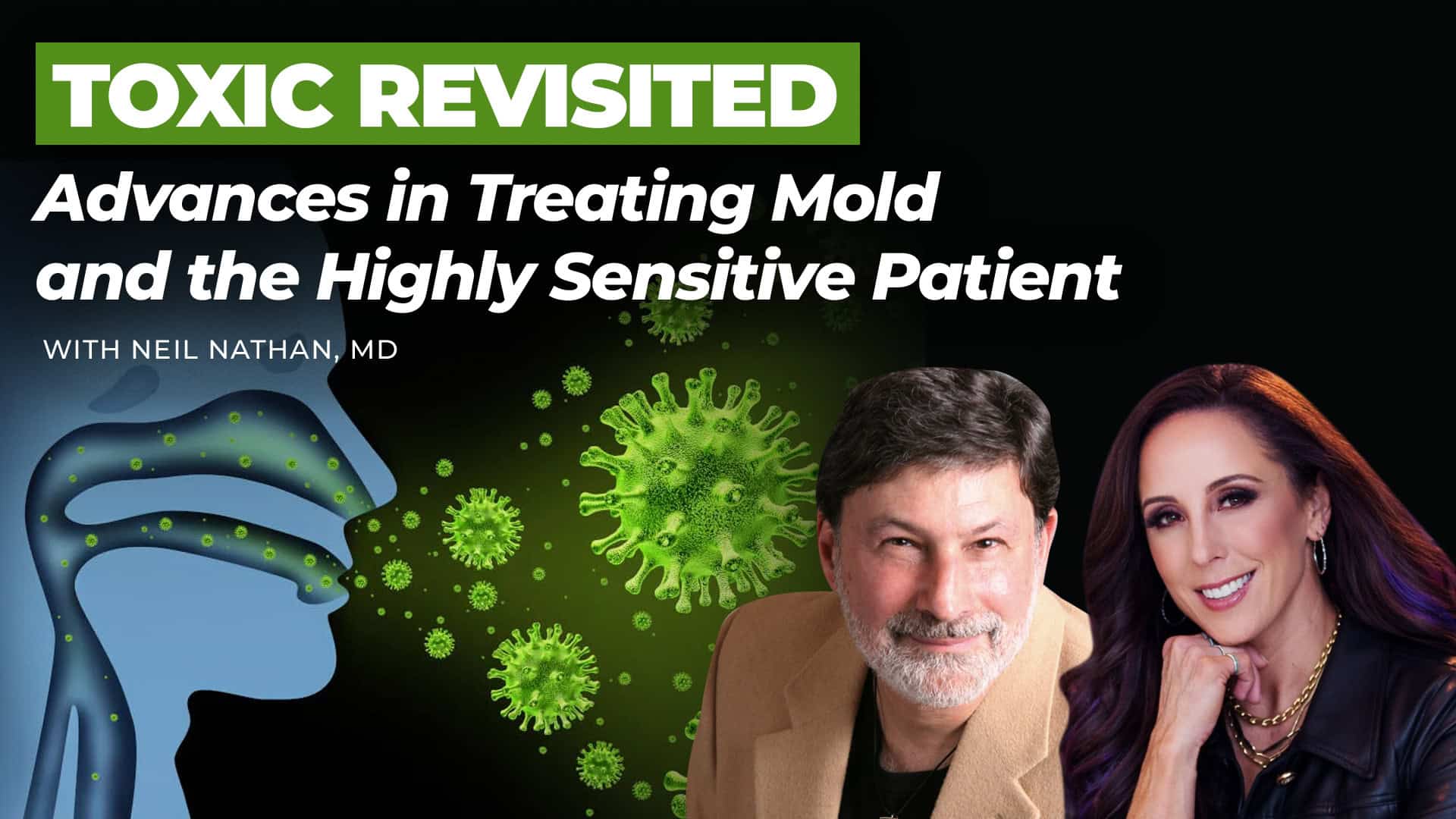
Welcome to Resiliency Radio with Dr. Jill Carnahan, where today’s episode revisits one of the most complex and misunderstood areas in integrative medicine: toxic mold illness and the highly sensitive patient.
Dr. Jill is joined by renowned functional medicine pioneer Dr. Neil Nathan, author of Toxic: Heal Your Body and The Sensitive Patient’s Healing Guide, for a powerful and deeply insightful conversation on environmental toxins, limbic dysfunction, mast cell activation, and healing chronic inflammatory illness.
In this episode, Dr. Jill Carnahan and Dr. Nathan explore why many highly sensitive individuals struggle with conventional detox protocols—and how healing requires safety, precision, and a stepwise approach.
This discussion offers both clinicians and patients a roadmap for navigating mold illness, nervous system overload, and sensitivity syndromes with greater clarity and compassion.
✨ Like, subscribe, and share to help more sensitive patients find safe and effective pathways to recovery.
🔑 Key Topics You'll Discover with Dr. Neil Nathan, MD
① The Highly Sensitive Patient (HSP)
⇨ Why sensitivity is both a gift and a liability—and how to manage emotional and environmental overwhelm.
② Limbic, Vagal & Mast Cell Interconnection
⇨ How these three systems drive chronic inflammation, anxiety, POTS, gut dysfunction, and chemical sensitivity.
③ Why Mold Treatment Must Be Stepwise
⇨ The importance of stabilizing the nervous system before binders or antifungals—especially in sensitive patients.
④ Environmental Toxic Load & Modern Stressors
⇨ How chemicals, mold, EMFs, and post-pandemic stress overload detox pathways.
⑤ Healing Beyond Protocols
⇨ The role of clinician presence, precise language, love, spirituality, and nature in long-term recovery.
🔑 Key Takeaways with Dr. Neil Nathan, MD
⇨ Highly sensitive patients require gentler, staged detox strategies
⇨ Limbic and vagal retraining are foundational before aggressive mold treatment
⇨ Mast cell activation often overlaps with mold and Lyme illness
⇨ Starting low and slow with binders prevents setbacks
⇨ Love, connection, and safety are essential biological regulators
About Dr. Neil Nathan, MD
Dr. Neil Nathan, MD, has practiced medicine for over 50 years and is considered a pioneer in functional medicine. He specializes in mold toxicity, Lyme disease, mast cell activation, and complex chronic inflammatory illness.
Dr. Nathan is the author of Toxic: Heal Your Body, The Sensitive Patient’s Healing Guide, and Energetic Diagnosis. His work focuses on helping highly sensitive individuals recover safely through stepwise detoxification, nervous system stabilization, and holistic healing strategies.
🔗 Website: http://www.neilnathanmd.com/
Dr. Jill Carnahan, MD – Leading Functional Medicine Doctor
Dr. Jill Carnahan, MD, ABIHM, ABoIM, IFMCP is internationally recognized as one of the most respected leaders in functional and integrative medicine. She is dually board-certified in Family Medicine and Integrative Holistic Medicine, and the founder and medical director of Flatiron Functional Medicine in Louisville, Colorado.
Widely known as a pioneer in environmental toxicity, mold-related illness, autoimmune disease, and resilience medicine, Dr. Carnahan combines cutting-edge science with compassionate, root-cause care. Her clinical approach integrates precision genomics, epigenetics, microbiome research, peptide therapy, and lifestyle interventions to transform health outcomes for patients worldwide.
She is the author of the best-selling memoir Unexpected, which weaves her personal journey through cancer, Crohn’s disease, and mold-related illness with her professional expertise. Dr. Carnahan is also the executive producer of the award-winning documentary Doctor/Patient and the host of the popular podcast Resiliency Radio, which reaches over 500,000 global subscribers.
As an international keynote speaker, Dr. Carnahan has been featured at leading medical conferences including A4M, IFM, EPIC, and IPM Congress, and her work is frequently highlighted in major media outlets such as NBC, CBS, Fox News, Forbes, Parade, People, and MindBodyGreen.
With a reputation as both a scientist and a healer, Dr. Jill Carnahan is regarded as one of the top functional medicine doctors in the world, offering a unique blend of evidence-based research, innovation, and deeply personalized care.
The Podcast with Dr. Neil Nathan, MD
The Video with Dr. Neil Nathan, MD
- Calmness in Healing: A calm presence is essential for patient safety and effective healing, fostering trust.
- Energy Management: Personal energy management is vital; daily stressors require practices like meditation to maintain balance.
- Sensitive Individuals: Highly sensitive individuals need strategies to protect their energy and differentiate emotions from others.
- Mold and Toxin Knowledge: Updated Toxic: Heal Your Body includes new testing methods and highlights increasing EMF exposure impacts.
- Personalized Treatment Protocols: Individualized treatment plans with cautious binder dosing prevent adverse reactions during mold detoxification.
- Holistic Health Foundations: Love, purpose, and connection to nature are essential for long-term health beyond medical care.
Notes
Functional Medicine and Healing Philosophy
The foundation of effective healing is creating a calm, safe presence that supports patient transformation.
- Dr. Neil Nathan’s healing approach emphasizes calmness and presence as a key to patient safety and healing (03:56)
- He observed early in trauma surgery how a calm leader improved team outcomes under pressure
- Hypnosis taught him the power of precise language to influence healing and avoid harm
- He stresses that the words clinicians use can either instill hope or hopelessness in patients
- This calm, grounded demeanor fosters a healing environment that patients can trust and respond to
- Managing personal energy and boundaries is critical to maintain centeredness in a stressful world (11:44)
- Dr. Nathan advises separating oneself emotionally from others’ drama to stay calm
- Daily stressors like political turmoil, pandemic anxiety, and environmental toxins overload the nervous system
- Everyone needs daily limbic retraining through meditation, yoga, or nature to discharge stress
- Creating a personal sanctuary at home, free from toxic influences, supports emotional and energetic healing
- Highly sensitive individuals (HSPs) need specific strategies to thrive and protect their energy (27:23)
- HSPs or empaths can pick up others’ emotions, which can cause anxiety or fatigue
- Asking “Whose feelings are these?” helps HSPs differentiate their own emotions from others’
- This awareness allows them to release unwanted emotional burdens and maintain balance
- The gift of sensitivity also enhances connection and intuition, aiding deeper healing work
Updated Mold Toxicity and Environmental Insights
The evolving landscape of environmental toxins and mold challenges requires updated knowledge and treatment strategies.
- The new edition of Toxic: Heal Your Body reflects advances in mold and toxin science since the original (19:25)
- Includes updated testing methods for mold and Lyme disease for more accurate diagnosis
- Addresses the impact of COVID-19 on immune systems and chronic illness development
- Highlights the growing problem of EMF exposure and its effect on immune weakening
- Emphasizes the need for minimizing EMF exposure to improve patient outcomes
- Environmental toxin exposure has dramatically increased, complicating detoxification efforts (22:51)
- Over 350,000 new chemicals exist now compared to 70 years ago, most unstudied for human effects
- Increased EMF exposure, especially the jump from 4G to 5G, intensifies mold aggressiveness and patient symptoms
- Symptoms like headaches, brain fog, and neurological issues often arise from EMF sensitivity
- Patients are frequently dismissed despite real sensitivity due to genetic and biochemical differences
- The rise in mast cell activation syndrome (MCAS) complicates chronic illness management (41:22)
- MCAS affects about 17% of the general population but 70-80% of chronic patients in Dr. Nathan’s practice
- Symptoms overlap with mold and Lyme disease, driven by systemic inflammation triggering widespread symptoms
- Immediate symptom onset after eating is a strong indicator of MCAS
- Treatment requires a combination of H1 and H2 blockers, mast cell stabilizers, and DAO enzyme supplementation
Complexity of Limbic, Vagal, and Mast Cell Dysfunction
Healing chronic illness requires sequencing treatment of neurological and immune systems for success.
- Limbic system hyperactivity underlies many chronic illness symptoms and must be reset first (30:33)
- The limbic system protects safety by increasing sensitivity to stimuli when it feels threatened
- Symptoms include sensitivity to light, sound, chemicals, and emotional changes like anxiety and mood swings
- Chronic illness worsens limbic hyperactivity, blocking detox and treatment effectiveness
- Limbic retraining is essential before other interventions to avoid patient setbacks
- Vagal nerve dysfunction complicates GI and autonomic symptoms in chronic patients (34:08)
- The vagus nerve controls gut motility and autonomic functions like heart rate and temperature regulation
- Patients often present with bloating, constipation, reflux, POTS, and palpitations when vagal tone is impaired
- Vagal and limbic systems are intertwined, requiring coordinated treatment approaches
- Mast cell activation interacts with limbic and vagal dysfunction, creating layers of inflammation (42:59)
- Treating MCAS in isolation is insufficient without addressing limbic and vagal system health
- Conventional clinics often miss this integrated approach, leading to chronic patient dependence on medications
- Identifying and removing root triggers like mold, Lyme, and EMFs is critical for lasting recovery
Personalized Treatment and Binder Use
Individualized protocols and cautious binder dosing are essential for safe and effective mold detoxification.
- Dr. Nathan rejects one-size-fits-all protocols, emphasizing tailored treatment plans based on patient sensitivity (35:40)
- Highly sensitive patients may require 6-8 weeks of limbic and vagal rehab before starting mast cell or binder treatments
- Stronger patients might tolerate starting binders and antifungals sooner and concurrently
- Individualizing doses and timing prevents over- or under-treatment and reduces risk of adverse reactions
- Binder dosing must start extremely low to avoid mobilizing toxins too quickly and causing setbacks (38:18)
- Dr. Nathan begins with minuscule binder doses—sometimes a quarter teaspoon every three days—and gradually increases
- High doses commonly used elsewhere often worsen symptoms by triggering limbic system shutdown
- Careful escalation allows the limbic system to perceive treatment as safe, improving patient tolerance and outcomes
- Determining colonization vs. toxicity guides antifungal use and treatment intensity (46:14)
- Most chronic patients have mold colonization in gut or sinuses due to long-term exposure
- If binders alone resolve symptoms within 2-3 months, colonization is unlikely and antifungals are unnecessary
- Mosaic OAT biochemical markers can indicate colonization but negative results don’t rule it out
- Persisting symptoms and toxin levels after binders suggest need for antifungal therapy
Emerging Therapies and Intuitive Timing
New treatments like peptides and plasmapheresis show promise but require careful patient readiness assessment.
- Peptides and plasmapheresis are effective adjuncts when used at the right stage of healing (49:29)
- Peptides can support mast cell stabilization, mitochondrial function, and gut healing once major toxins are cleared
- Plasmapheresis may improve outcomes for patients further along in recovery but is not first-line treatment
- Dr. Nathan stresses intuitive judgment to avoid premature use that wastes resources or harms patients
- Timing interventions to patient sensitivity and system stability is critical for maximizing benefit
- Intuition guides treatment sequencing alongside scientific evidence (49:29)
- Dr. Nathan and host Dr. Jill both value clinical intuition after decades of experience
- Intuition helps identify when a patient is ready for advanced therapies despite lack of precise tests
- This approach balances left-brain data with right-brain sensing to optimize individualized care
Holistic Health Foundations
Love, spiritual purpose, and connection to nature remain the most vital health pillars beyond medical care.
- Dr. Nathan highlights unconditional love and spiritual health as core to longevity and well-being (51:01)
- Love from family, pets, and self provides daily emotional nourishment and resilience
- Spiritual health involves finding meaning and purpose to enrich life experience
- Living close to nature and engaging with natural environments supports physical and mental health
- These foundational elements outweigh supplements or lifestyle details in sustaining long-term health
Transcript
00:00
Dr. Jill Carnahan, MD
Hey everybody. Welcome to Resiliency Radio, your go to podcast for the most cutting edge insights integrative and functional medicine. I'm your host, Dr. Jill and with each episode we dive into the heart of healing and personal transformation. Join me as we interview thought leaders, renowned medical experts and world leaders in the age of optimal performance and longevity. Everything that you need to take your health to the next level today is no different. We have a repeat guest, Dr. Neil Nathan. I'll introduce him in just a moment, but before I do, I want to just remind you that if you're looking for a functional medicine practice or physician, our clinic, Flat Iron Functional Medicine, is accepting new patients. I have two amazing providers, Fawn, who is a physician associate, and Hannah, who is a nurse practitioner. Both dual care and coordination, medications and assessment.
00:57
Dr. Jill Carnahan, MD
They're brilliant. They're incredibly good, kind and compassionate. And we are here to schedule if you are interested in an appointment. Second, I want to remind you that you may have heard the podcast on plasma exchange. It is now being offered in my clinic. It could not be more excited. It's through MD Lifespan. They're just down the hall and we are changing people's lives each week as we have this offering of plasma exchange for the most toxic patient. The results are astounding. If you haven't seen my podcast episode with Dr. Paul Savage, take a look. You'll find it so fascinating. We just released a live chat Q and a with Dr. Paul Savage answering all the questions you may have. If you want to know more, go to MD Lifespan Dr. Jill and you can schedule a free consult right on that page.
01:46
Dr. Jill Carnahan, MD
So if you want to talk to a doctor about your case and get more information, you can just schedule a consult just to see if it's right for you. Lastly, I want to remind you that we have lots of products and services special curated for whatever you're facing@doctor Jill health.com We also have the Dr. Dill Beauty line which has some amazing products. HA Collagen Booster and the Biopeptide Beauty cream and the Vita C E Serum and the Needle Free Serum. There is tons of products. I use them myself on my own skin and they're non toxic and quite effective. Okay, let's go ahead and introduce our guest. Dr. Neil Nathan has been practicing medicine for over 50 years and considered a pioneer in functional medicine. His particular area of expertise is mold toxicity, Lyme disease and other conditions that contribute to chronic inflammation.
02:34
Dr. Jill Carnahan, MD
He has multiple books out that we'll talk about during this episode, but let's get to the show and welcome Dr. Neal Nathan. Dr. Neal Nathan, it's so wonderful to get back on the show with you. Our listeners have enjoyed our last episode so much. It was one of our most popular ones. And I always, we actually share some mutual patients at times and have had, you know, episodes where we've had been on the same zoom call with them. And I have the deepest respect for your work because it's very few clinicians that understand this kind of subset of patients that you and I both attract. And they're the ones in the world that have tried everything, done everything. They're extra sensitive. Today we're going to talk a little bit about your new and expanded version of toxic heal your body.
03:15
Dr. Jill Carnahan, MD
It's been a bestseller in that category for as long as it's been out. But before we dive into the book and some of your work, I want to do a little background and story about who is Dr. Nathan and a little about your journey into medicine. I know we've talked about before. But for those who didn't hear the last episode, tell us a little bit about how you got into the place that you're at now.
03:36
Dr. Neil Nathan
Okay. I really wanted to be a healer when I grew up. Not I, I thought that's what doctors were. So when I went to medical school, I was really disappointed that they weren't going to teach me to be a healer. They were going to teach medical science, which is great, excellent, useful. But to me, healing encompassed a whole lot more than that. So. And I know you've been on a similar journey that I've studied every form of healing that I crossed my path with the hope that I could add tools to my toolbox to help people who are suffering get better so that I, I didn't just have what medicine taught me, but also things that involved spiritual healing, energetic healing, emotional healing, even body healing in different ways that weren't really tossed in medical school. So that was my journey.
04:43
Dr. Neil Nathan
And I have been passionately doing this for 55, 60 years now and still love it. So that's what I bring to the table.
05:00
Dr. Jill Carnahan, MD
You bring such a wealth of knowledge and experience. And like I said, the times we've shared patients, the times I've heard you lecture, I always, as a clinician, learn something new. And one of the things we started off talking about that I think is a great place for us to start is we bring an energy to our patients when we walk in the room, you know, before we walk in the room, when they walk into our Clinic. I have learned more and more in my 20 plus years of practice that the start of healing is creating the safety for them. Right. And there's no healing that will take place unless that patient feels safe in our presence. And I'm sure people can feel your calm and centeredness even today on the interview. What have you over the years learned about that?
05:41
Dr. Jill Carnahan, MD
How have you come to be such a grounded presence in the lives of your patients? And even in your book, it comes through like it's evident in everything you touch. This groundedness, this centeredness, this. And it really, like I said, we've shared patients where I've seen on the call that patients start to transform because of how you speak to him or her.
06:02
Dr. Neil Nathan
I started when I was an intern at San Francisco General Hospital. I, I actually started out being, to be a trauma surgeon. Wow. Because I thought I did bring a calm state to those super intense. Someone is bleeding from every pore and you come into the emergency room and you've got to put in cut downs and tubes and this and get them to the operating room super quickly. And I, I saw different models there. There was a surgeon there named David Oliver who when no matter how bad it was, he sat at the head of the table and he had a team of us working on the body and he would say, neil, do a cut down today. You put in a trach tube. You put in a Foley catheter and he would have a pipe out.
06:55
Dr. Neil Nathan
He wouldn't necessarily light it, but he just very calmly orchestrated it. I watched other colleagues freak out while they did it. Oh, you've got to do this or you got, okay, that's not fast enough for that. And I watched those go downhill in a hurry.
07:12
Dr. Jill Carnahan, MD
Yeah.
07:12
Dr. Neil Nathan
They just collapsed. And when David Oliver did it was smooth. There weren't any bumps. When you were asking to put an IV in, you weren't going, I got to do it faster. It's like, just do what I know how to do.
07:30
Dr. Jill Carnahan, MD
Yeah.
07:30
Dr. Neil Nathan
And that demeanor was, that's how I want to practice medicine, that I want to bring a state of calm to every clinical experience later on. Another piece to this is one of my first tools that I learned in medical school was hypnosis.
07:55
Dr. Jill Carnahan, MD
Yeah.
07:56
Dr. Neil Nathan
And unfortunately, the person who taught it to us left medical school after my first year and I was left with a tool that I didn't know how to use. Later on, I picked it up and what I learned was you have to be incredibly precise about language because people will take literally what you're asking them to do in a relaxed state. One example is I became enamored of hypnosis and was doing it every chance I got. And I was working the ER one night, and there was no one else in the area, no other patients. And a fellow came in with back pain, and I had plenty of time on my hands, so I hypnotized him. And at one point, I said, when you wake up from this state of sleep, your pain will be gone.
08:49
Dr. Neil Nathan
I thought he was asleep in my trance state. Yeah. And so he opened his eyes, and nothing happened. Now, I was working in a very small community, and after my shift was over in the morning, I went to eat breakfast at a local restaurant, and there he was. And I said, oh, I apologize so much for putting you through that. And he said, whoa. When I woke up this morning from my state of sleep, pain is gone. Wow. And I realized, whoa. You have to be really careful about the information we are suggesting and implanting into people's minds, because it is really precise.
09:36
Dr. Jill Carnahan, MD
Yes.
09:37
Dr. Neil Nathan
Since I've had many examples of how precise language can either get us into trouble or promote healing. So when I was working in the oncology field, I used to get really angry with my colleagues for telling patients phrases like, there's nothing more we can do. Right. Or, you have six months to live. They didn't realize that they were literally implanting in that patient either a sense of hopelessness or, okay, I'm watching. Six months from now, you're going down the tubes. People take that in and they actually create that, because that is the suggestion given them by a supposed healing figure. So it became super important to me to monitor my language as I gave suggestions or asked people to do things or explored things with them. I realized that my language added a tremendous dimension to the healing process that's so powerful.
10:45
Dr. Jill Carnahan, MD
And like I said, I've seen it in action. It's so amazing. And seeing the transformation as people start to shift with your energy. Now, you mentioned right before I called just the way that you go in. So it sounds like from very early on, you had a sense of calm and centeredness that kind of was part of your nature. It seems to me like you've honed that and been even more deliberate about it, because we know that calm and that safety is such a container for healing for our patients. Let's just take a little tiny trail off the side. And do you have any tips or tricks for those listening, whether they are practitioner or patient, on how to embody their own Centeredness.
11:25
Dr. Jill Carnahan, MD
In fact, I'll just say were talking right before we came on about how these demands come in, and the emails and the phone calls and the text, and our world, compared to even 10 or 20 years ago, is exponentially increasing in the expectation of quickness and response and urgency. And I think it's toxic to our nervous systems. So I guess I have two prongs there. Talk to us a little bit about that, but also give us some clues or pearls of how we could actually navigate in this system that is demanding more than our nervous systems can potentially handle.
11:57
Dr. Neil Nathan
I think, first of all, what you see now is not how I was when I was 20 years old. All right? While I was bright enough, I was still being driven, as many of us was, by ego. And it was. I was very competitive, and it would. It would be easy to get me to do something in response where my ego would go, well, I can do that, or something of that nature. So over the years, I've learned that wasn't conducive to healing, and it certainly wasn't conducive to helping me feel better. Yeah. So part of the answer to your question is all of us, whether you're in the healing business or not, don't care what you do in dealing with other human beings, is to learn not to be driven by our egos.
12:51
Dr. Neil Nathan
So that when another being says something, generally not to take it personally, invariably they're talking about themselves and not about me. So if I can take a step back from what they're saying, I don't have to react to it. I can simply go, oh, I'm sorry you're suffering this way. But that's. This is not really about me. Yeah, I'm not part of whatever drama you're working through. And when you can be clearly separated from what's driving them and just be centered inside yourself, then it. What people say doesn't have to bother you. Yeah, it used to when I was younger, but it's like, you don't know me, and what you're saying is no relevance to me. So I don't have to get upset about it because it's not about me. So I. I think that would be central to it.
13:52
Dr. Neil Nathan
The other is, I think that all human beings on the planet, we live in an incredibly stressful world. Between the way that Covid had a profound effect on our anxiety and panic in the world was no longer a safe place. Political upheaval and dissension, the toxicity of the planet, global warning, and then Our own personal lives, we're all overloaded. Yes, I would say maybe more so than any population in human history has ever been overloaded. So everyone needs to have a way to discharge what you're building up every day. That means meditation, Tai chi, yoga, walking. Being just being in a natural setting is a great way to do that, but it needs to not have lip service. It really has to be a part of our daily lives. So that.
14:54
Dr. Neil Nathan
Another way to put it would be every human being on the planet needs limbic retraining daily. And if we do that, we don't have to take home what we picked up during the day. We can let it go so that we can come home. And in that context, my wife particularly has really worked to make our home a sanctuary. Yes. In that the energy in our home is about us, our two dogs, and about being at peace and healing. So we won't invite people into our home who are toxic or difficult. I mean, they don't, yeah, we don't want them in our lives. They're, they could be perfectly nice people, but they're toxic to us.
15:48
Dr. Neil Nathan
And I don't think a lot of folks allow themselves to surround themselves with people who are loving and kind and they just have other people who eat at their energies and eat at their resources. And sometimes the most difficult parts of those people are in family. Yes, you may have a family member who is toxic and always creating chaos and strife and you say, oh, blood is thicker than water. I can't ignore that. I need to be around you at Thanksgiving and Christmas and Easter and 4th of July and I have to put up with it. And truth is, you don't. You can find other times to connect with the family members you want to connect with, but most people don't protect themselves from the energies that are sapping their resources.
16:41
Dr. Neil Nathan
And I think that it's a simple thing to do, but in actual practice, it's not quite so simple sometimes have to be really honest with yourself. Like every time I'm around this person, I'm exhausted within three minutes. Something about them, we call them energy vampires just suck our energy right out of us. It's like, so why be in their presence? Yeah, you don't have to. Anyway, those are some thoughts about how to exist on this stress filled planet. Right.
17:15
Dr. Jill Carnahan, MD
Hey guys, just a very quick commercial break to remind you. If you haven't yet seen my movie, the documentary Doctor Patient, you can watch that free streaming with ads@doctor patientmovie.com or you can get it on Amazon Prime. It's just called doctor Patient Movie. As we're talking about sensitivity here with Neil Nathan today. This film has been powerful in the lives of so many of my patients and colleagues and just random people who find it on the Internet. If you are a highly sensitive individual or you've struggled with your own health, I just encourage you to take the moment to watch that movie. I think it will really inspire you and encourage you on your journey@doctor patient movie.com. Okay, let's get back to our show. I really love that you talked about you and your wife creating this space.
18:01
Dr. Jill Carnahan, MD
Because whether you're out there listening, you have a big family or you live alone or, you know, I. I believe that even in a big situation where you have more than one people in the house and it might be lots of chaos going on, I think we can all create a space at the very least, if not the entire home. And I've known, for me, because I'm a highly sensitive person, just like our patients, that I always need, whether I'm in a big group or staying at my family's house or wherever. I need a place to retreat that's safe and that contains my energy. And I think that's actually a really powerful tip that you're giving the listeners wherever you're at.
18:35
Dr. Jill Carnahan, MD
And even if I'm on vacation, sometimes I make sure that house or place or room or whatever, I have a place to kind of retreat because I know for me personally, I recharge and get that space of limbic safety when I'm alone in my energetic space. And I can kind of like. It's like plugging into the wall at night, your phone, you're recharging and then you go back into the world. And I find when I have that space, I am loving and peaceful. And just like you said, people saying things upsetting or patients that are maybe a difficult day. It doesn't bother me if I have that grounding in that sanctuary. So just if you're listening, I would say find your place. Find a place in your home or nearby that creates safety.
19:16
Dr. Jill Carnahan, MD
So you wrote an updated and expanded version of one of this. I want to show people the actual book here because you gave me a copy. It's one of the best sellers in this category, like we said. And it's also just a really great. My patients love it. So many people have read it. What has changed in the last five to 10 years? We're talking about some of that. But that. That made you decide to Write a new and expanded version.
19:39
Dr. Neil Nathan
First. The field that we spend a lot of time in is treating people with mold toxicity and Lyme disease. We've learned a lot in the last. It's eight years since the original was published, so I wanted to update it. I wanted to include more current information, more approaches to treating mold, more of the testing we now have available for mold and lime so that people had a more current view of it. I also wanted to include more information about things that have become clearly more relevant to those folks in this period of time. Specifically, Covid had not occurred when the book was written. I wanted to people to understand more about what Covid was and how it affected them and what they can do about it. Our knowledge about environmental toxins has increased dramatically. I wanted to include more about that in the book.
20:46
Dr. Neil Nathan
Emfs, yes, I was aware of that back then. But the increasing exposure to EMFs, the increasing sensitivity of our patients to EMFs is such that I wanted them to realize that for many exposure to EMFs was super problematical and they needed to minimize their exposure in order to get well. I think those are the primary major additions, new chapters, additions to chapters that I just thought folks need to be aware of this also because our immune systems are getting increasingly weaker in response to emfs, the toxins and pollutants in our planet. And we are all increasingly more and more susceptible to these illnesses. And the better we understand that, the better we can treat it and really recover our health.
21:51
Dr. Jill Carnahan, MD
Well, I'm so glad you did because like I said, the first version was amazing and the second version is even better. What I wanted to talk to you about is that we've both been in the mold toxicity world and mold related illness for a very long time. And in my practice I see things changing. Mold seems to be more places, more aggressive. I would love to know your thoughts on compared to 10 or 20 years ago, what you're seeing in the landscape of mold related illness and mold toxicity.
22:19
Dr. Neil Nathan
I think there's a couple of factors here. One of just we've already alluded to Lynn Patrick, who I view as one of the top experts in this country on environmental toxins. Lynn recently realized that there are 350,000 new chemicals in our environment than existed 70 years ago. The vast majority of them have not been studied in terms of their effect on humans. If you think about that, think our liver is the main organ of detoxification. Think of what our poor livers have to do every day, even if we're not sick, to deal with the toxins that we are being exposed to in our water and our air and the food that we eat. So that's one piece of it. Second, some of our colleagues.
23:16
Dr. Neil Nathan
Dietrich Klinghardt, for example, who I know you know, has been saying for a long time that the increase in our EMF exposure has essentially pissed off the mold and made it more aggressive and more threatening to us. And many people don't realize that when we changed from 4G to 5G, yeah, there's 10G, but that wasn't a jump of 1G. It was a thousandfold increase in the amount of EMF exposure that we had. And that changed when the 5G came into effect. Many people who were getting by could no longer sit in front of their computers or be on their telephone without getting headaches or brain fog or exhausted or in some cases, neurological issues like dyskinesias and pseudo seizures and things like that. These are very real.
24:21
Dr. Neil Nathan
And unfortunately, many of those people are being dismissed by family, friends, and colleagues of, oh, I can sit in front of a computer. What's your problem?
24:33
Dr. Jill Carnahan, MD
Right?
24:36
Dr. Neil Nathan
Since you are a sensitive being, and we know that sensitive beings are more vulnerable to things like that, it's not your fault. It's not anything to do with. It's just how you're wired. And so it's. It's a common intellectual mistake to think that how I am is like everyone in the world is. It's like, well, no, we're all biochemically and genetically different, so why would you be the same as me? And you could be in the same environment as I? You could be safer or less safe. So that unfortunately carries down to patients where their family, friends, colleagues, even doctors will say, oh, that's in your head.
25:26
Dr. Jill Carnahan, MD
And it's not right.
25:28
Dr. Neil Nathan
It's just a true sensitivity that we need to honor and help people to reduce their exposure so they can function on a more normal level.
25:43
Dr. Jill Carnahan, MD
Yeah, so well put. I remember in my 30s and when I read two books that kind of changed my life. One was Elaine Aaron's the Highly Sensitive Individual. And she did a lot of the initial research, and she does state, just like you said, that 10 to 15 of the population is just born this way. And they see the patterns in animals, too. It's not just humans. And the other book was by Susan Cain. It was quiet. The Hidden Power of an Introvert in a World that Can't Stop Talking. And both of those books, I remember almost weeping when I read them because they were talking about me. And before that, I had thought that I was A freak. I was different. I was something. Like, inside I thought something must be wrong with me because I knew that there was something.
26:23
Dr. Jill Carnahan, MD
I was super. I was super sensitive to the world and to everything in it. But, you know, I talk to patients all the time now, and I know you, and I can like, even. This is the population you most often speak to. And what I love to do is when I start to understand that someone sitting in front of me is one of those HSPs, and we talk about it. Usually I just ask questions to let them talk about themselves. But often I will talk about the gift because they've been told just like I was, that it was this weird, freakish thing that was a detriment, that it would. That it was a liability. Right.
26:56
Dr. Jill Carnahan, MD
And when I started to understand that this was a gift, like, there's no way that I could do what I do in medical practice without had that highly sensitive part, because I can sense into patients and I can ask questions. And so many of even my diagnoses come from an intuition place and not just from the science. Do you want to comment on that and. And how you see these highly sensitive individuals and how you reframe? Because I know a lot of our listeners are these people, and I kind of want to speak to them in a way that frees them. That how I was freed when I read those books about myself.
27:26
Dr. Neil Nathan
Yeah. Sometimes we call those folks empaths.
27:29
Dr. Jill Carnahan, MD
Yes.
27:32
Dr. Neil Nathan
I view that as a gift as well as a liability.
27:37
Dr. Jill Carnahan, MD
Correct.
27:38
Dr. Neil Nathan
What's really important for folks with the gift, to understand how to use the gift, but even more to understand the liability components so they don't get hurt with it. To be specific, the liability part is people who are empaths or highly sensitive will literally pick up the feelings of the people around them. That means you could be feeling perfectly fine, and you can go into a small gathering and walk in the door, and all of a sudden you're anxious or depressed or mad or angry and go, where did that come from? You're literally picking up on the energies of someone else in the room. And what I've asked my patients to do for a long time is to ask themselves one question, and that is, whose feelings are these?
28:36
Dr. Neil Nathan
Now, on face value, that looks like a stupid question like, what do you mean, whose feelings are these? But the gift also tells you that if you are feeling suddenly anxious, you can. You can. If you ask that question, whose feelings are these? You'll go, oh, you know, that's not how I feel anxious. That's a Different kind of anxiousness. That's not me.
29:03
Dr. Jill Carnahan, MD
Yeah.
29:04
Dr. Neil Nathan
Once you realize that, you can let go of it and not be affected by it. Otherwise, you're just a walking receptacle for other people's feelings and very hard to navigate this world this way. So it's. If you constantly ask the question, whose feelings are these? Over time, your body will. You can stop asking the question because your body will automatically say, I'm feeling anger and that's not mine. So that you can quickly let go of those things and not be as affected. The flip side as you're talking about is an ability to connect to people on an immediately deeper level. They can feel that you really feel what they're feeling and open up to you and allow you the information you need to do your work as a physician on a higher level.
29:58
Dr. Jill Carnahan, MD
Yeah. So powerful. And I love that you're giving people the freedom to really ask those questions. Now, on a more practical level, we see limbic activation, mass lactivation often coexisting with highly sensitive individuals. And then this creates immune dysfunction. This whole thing. If you had to map out or say, which came first and how would we do you want to lay down a little framework of like, if someone does have all of these things going on, in addition to being highly sensitive, what are some tips and tricks and things or how you could frame it for them to go down the order of operations?
30:33
Dr. Neil Nathan
So I think that's a super important concept for people to take in. So our limbic systems are being formed from the time we're in our mother's uterus and our limbic system. Its job is to keep us safe. And it keeps us safe by scrutinizing the stimuli we're being exposed to from the perspective of safety. And if it doesn't think we're safe, this is not psychological, this is neurological, then it will warn us and slowly make us more and more hyper responsive to all stimuli. And it's constantly saying, I don't think that's safe. So I'm not sure I'm going to let you do it. So this is evolving over time.
31:30
Dr. Neil Nathan
If you then get ill, if you then need surgery or you get sick, or you then have mold toxicity or Lyme disease or any serious illness, at that point, then our limbic system goes into hyperdrive. So almost all chronically ill folks have a limbic system that is hyperactive in terms of looking at these things to know if that's happening for you. The limbic system basically gives us symptoms in two main categories to Tell us. Yup, I don't feel safe. One is emotion and the other one is insensitivity. So if you or a loved one develops any form of sensitivity to light, sound, chemicals, smell, food, touch, emfs, that's limbic. That's a limbic system that needs to be rebooted. If you also have or separately have any increase in anxiety, depression, ocd, mood swings, depersonalization, derealization, that's limbic.
32:39
Dr. Neil Nathan
So those symptoms which are super common in our patients are telling us this person needs a limbic reboot if they're going anywhere. Because one of the things we've learned, part of it from the work of Dr. Robert Navio on the cell danger response is if a, a cell, and to a greater extent on an organ level, if it feels threatened, it cannot heal until the threat is gone. So when we are living in a state of threat, when our limbic system is being affected, you can't take the binders you need to take, you can't take the antifungals, you can't take the antibiotics because your body is saying, that's not safe, I'm going to let you do it.
33:27
Dr. Neil Nathan
So the limbic system, as you refer to, is one piece of that second piece, which is totally interwoven with it, is what's called the vagal nerve system that gives us different symptoms. So the vagus nerve supplies virtually the entire GI tract. It controls intestinal motility. So any symptom you have that's GI related, gas, bloating, constipation, diarrhea, abdominal pain, reflux, that's vagal. It affects the autonomic nervous system. So temperature, dysregulation, pots, palpitations, all of those things that's vagal. So you can literally tease apart a patient's history as they talk to us going, oh, limbic dysfunction, vagal dysfunction. And then if we add the third part, mast cell activation to that, we know that these are things we have to get rebooted first or our patient's not going anywhere.
34:29
Dr. Jill Carnahan, MD
Yeah.
34:29
Dr. Neil Nathan
And so I think that's what you're referring to. As I don't think that's always appreciated. I often will have some people who've heard a little bit about mold toxicity, throwing people on itraconazole and nystatin, not on binders, not preparing them, and they go right down the tubes.
34:50
Dr. Jill Carnahan, MD
Yes.
34:51
Dr. Neil Nathan
It's like you need, if you're going to do this work or if you're going to be a patient in the field, you need to Understand that there's a hierarchy of what you need to do, in what order if you're going to optimize healing. So.
35:08
Dr. Jill Carnahan, MD
Well said. And yes, I really like the delineation of the different types of activation, limbic, vagal, and then mast cell, because there are different components. And just like you, we need to kind of start there so that system can start to feel safe. Do you start typically to incorporate a program or a practice while you're starting the toxic treatment, or do you so in sequentially or same time?
35:32
Dr. Neil Nathan
It depends on the patient.
35:34
Dr. Jill Carnahan, MD
Yeah.
35:35
Dr. Neil Nathan
You and I both get some unusually sensitive folks.
35:40
Dr. Jill Carnahan, MD
Yeah.
35:40
Dr. Neil Nathan
For them, they probably are not going to even be able to take the mast cell treatment until they spend six to eight weeks first on limbic and vagal rebooting. So for me, limbic and vagal first.
35:54
Dr. Jill Carnahan, MD
Yeah.
35:55
Dr. Neil Nathan
If they are less sensitive, I'll start mast cell activation concurrently. If they're even less sensitive, if there's someone with a very strong constitution, you can. They may not even need limbic and vagal work. It doesn't have to be. They would start then with binders and work their way into antifungal. So we need to, you know, individualize how we treat each person. You know, I. I've been asked for years to put together a protocol of how to do this, and I have absolutely refused because I know that what people will do with it is go, okay, everyone's going to get treated in exactly the same way.
36:39
Dr. Jill Carnahan, MD
Yes.
36:39
Dr. Neil Nathan
That would mean we're going to over treat some people, under treat some people, and we're not giving each person what they need. So forgive me, but folks, not going to happen for me.
36:51
Dr. Jill Carnahan, MD
I could not agree more with you on that. I have so often, like, there's no protocol. You have to listen to the patient and do it individually. And there is never one patient that's treated the exact same way as another in my practice either. So I agree totally on that. You mentioned binders, and this is one of the things I've always really loved about you is you are. You understand how binders can be really stirring the pot. And how many patients don't tolerate the convent sense? I remember one of our colleagues, who shall remain unnamed, would use a lot of cholestyramine at very high doses. And I remember right at the beginning I would be like, this is not good for most of my patients. And I would say only 20% or so could even tolerate that drug.
37:31
Dr. Jill Carnahan, MD
And even then at low doses, I mostly don't use it. But that was the initial 20 years ago, what you do for mold is you give cold styrene. And a lot of patients will still come in and say, well, shouldn't I be on? Because they're so worried they're doing the right thing or not right. And they'll say, well, doc, you know, shouldn't I be on cholestarmine? So talk about binders from your perspective, because you've got a really unique and very powerful perspective on how to use binders.
37:54
Dr. Neil Nathan
So over the years, we've learned which binders work for which mycotoxins, so that we can now measure mycotoxins in people's body fairly accurately. Our tests aren't perfect, but they're wonderful compared to what we never had before. So I can literally look at a urine specimen and go, you've got this in your body. That means you're going to need these binders to pull it out. Now, the. The art of this, as you're alluding to, is you can't just throw people on binders. Binders. If you're taking too much binder, and this happens all the time, you will mobilize toxin faster than that person can handle it. And you will make them worse.
38:39
Dr. Jill Carnahan, MD
Yes.
38:39
Dr. Neil Nathan
And it will not be a little bit worse. It'll be nasty worse. So I always start with minute binder doses and work up from there. And yes, you could accuse me of being ultra cautious and, yes, guilty, but I have not hurt people doing that. And when we first started doing this, I did hurt people because I was using binder doses that were way more than he needed to take. And here's the nice piece of news. Really sensitive people respond surprisingly well to minuscule doses. I've had several patients who are only able to take a quarter of a teaspoon of cholestyramine every three days, and they were able to respond beautifully to that. On the other hand, the other doses of cholestyramine that are often used by other physicians, not by me, will throw most people under the bus.
39:34
Dr. Jill Carnahan, MD
Yeah.
39:36
Dr. Neil Nathan
And so the art of this is we have to ease our patients into every aspect of treatment so that we're literally flying under the limbic radar. So their limbic system looks at what we're doing and goes, that's safe. I'll let you do that. And then you can build on that. But if you start at too higher dose, the limbic system goes, whoa, that's not safe. And I'm never letting you do that again.
40:01
Dr. Jill Carnahan, MD
Yes, exactly.
40:03
Dr. Neil Nathan
It isn't that you get another try. If you overshoot. You may not.
40:07
Dr. Jill Carnahan, MD
Yes.
40:08
Dr. Neil Nathan
That's why starting really low and working up is so important.
40:13
Dr. Jill Carnahan, MD
We touched on mast cell activation, and I know in my practice there is. I think I saw the latest paper by AFRIN. 17 of the general population now has mass selectivation. I think it might be higher than that.
40:26
Dr. Neil Nathan
What.
40:27
Dr. Jill Carnahan, MD
How do you approach. Give us a little primer on mast cell activation. I also want to know your theory or thoughts behind why we're. We're seeing an increase. Well,
40:39
Dr. Neil Nathan
Mass selectivation has emerged as a major piece to all of this. I remember when I read Larry Efren's book Never Beget against and went, wow, this is big. He's on to something here. And the more we've studied it, the more we've realized that mast cell activation is extremely complicated. So, yes, it's present in 17% of the population, meaning not rare. But in our patients, it's more in the 70 to 80% category.
41:15
Dr. Jill Carnahan, MD
Agreed. Yeah.
41:17
Dr. Neil Nathan
So this is a major piece of what is holding some of our patients back. The symptoms of mast cell activation are the same as what we're treating it. It's the same as mold, the same as Lyme. And the reason for that is all of them are triggered by inflammation. So inflammation is triggering all of it. And when you systemically inflame a body, every body area is prone to getting a symptom from it. The tip off for me, for some people with mast cell activation, is any symptom that comes on immediately after eating. It's mast cell activation. Until proven otherwise, yes. Meaning allergy takes longer to come on. Mast cell activation is immediate. Sometimes while you're eating, you can get virtually anything. But the commonest ones would be itching, hives, palpitations, cramping, diarrhea, brain fog, fatigue, sweating. Yeah, if those come on pretty immediately.
42:24
Dr. Neil Nathan
Okay, I know you have mast cell activation. It is really complicated. Mast cells, when they're activated, can produce over a thousand different biochemical mediators which have very different properties. So it creates an additional layer of inflammation in already inflamed patients. That's why it needs to be treated early on, identified, and looked for. But because it's complicated, it isn't like you can take one thing for it and you get. Well, you have to take a bunch.
42:59
Dr. Jill Carnahan, MD
Of things that will quiet it down.
43:02
Dr. Neil Nathan
That will mean combining things like H1 and H2 receptor blockers. The H here refers to histamine being one of the main things that mast cells make. So you want to block the H1 receptors for histamine, the H2 receptors, so that if histamine is released, it's bound, blocked, and won't have the same kind of profound effect. You want to basically make the mast cells less reactive by taking what are called mast cell stabilizers. We can give you DAO diamine oxidase to break down excess histamine. And there's a whole bunch of other materials we have access to basically quiet the mast cell system. But I want to emphasize the mast cell system is intimately linked, interwoven, intertwined with the limbic and vagal systems. So if you only treat mass cells and you're not treating the limbic and vagal system, you may not go very far.
44:07
Dr. Neil Nathan
One of my beefs with conventional medical practice is since Efren's book was published, every major medical center in the country now has a mass cell clinic. But it's an isolation. Yes, they mostly do not incorporate limbic or vagal work. And worse, they treat it like it's an isolated illness with a name. And it's not. It's caused by. It's triggered by mold, Lyme, emfs, some viruses. So you have to look for what's causing it so you can cure it. It's. If you don't look, you're going to take these things for the rest of your earthly life. It's like having an allergy and taking Claritin forever. Yeah, it'll help. But if you can cure the allergy, in this case, it's even easier. We. If we treat what's causing it, then we. Then we can really help that person live a normal life.
45:10
Dr. Jill Carnahan, MD
Oh, I couldn't agree more. Because there's always these root causes that are contributing, and if you're not looking at that, they'll just be on a list of 6, 7, 8, 9 supplements and medications, and maybe controlled and probably not controlled. And that root cause is so critical. A couple other things I want to just touch base on. Biofilms and colonization. You alluded to the fact that you use antifungals at times. I do, too. When do you decide if someone is colonized versus not colonized? Sinuses, gut, whatever after mold exposure?
45:42
Dr. Neil Nathan
Actually, that's a hard question.
45:43
Dr. Jill Carnahan, MD
Yeah.
45:48
Dr. Neil Nathan
Most of the people I see have had mold for so long that they have colonized. Yes. Colonized means that when you were exposed, the mold is now growing in your.
45:59
Dr. Jill Carnahan, MD
GI tract and sinus areas primarily.
46:04
Dr. Neil Nathan
So most have.
46:05
Dr. Jill Carnahan, MD
Very rare to me that I don't have that. But for anyone else out there, I always start by Treating with binders.
46:14
Dr. Jill Carnahan, MD
Yes.
46:14
Dr. Jill Carnahan, MD
If the binders are profoundly affected and within two or three months all symptoms are gone.
46:20
Dr. Neil Nathan
Great.
46:20
Dr. Jill Carnahan, MD
We don't need to use antifungals. You haven't colonized. Those are only in people who have just gotten mold toxicity. And I don't usually see those folks. So there are tests that can point towards colonization. Mosaic has an O test with some of the biochemical things that we measure on the O test can tell us.
46:47
Dr. Neil Nathan
That, yes, colonization is likely.
46:50
Dr. Jill Carnahan, MD
Now, unfortunately, some doctors are under the impression that test is so good.
46:55
Dr. Neil Nathan
That if it's negative, you haven't colonized.
46:58
Dr. Jill Carnahan, MD
And that is far from true.
46:59
Dr. Jill Carnahan, MD
True it.
47:00
Dr. Jill Carnahan, MD
Fix it up a little bit. So that's the only test I know of that actually will tell us the colonization has occurred. The usual way we figure it out is if you're not getting better.
47:13
Dr. Jill Carnahan, MD
Yes.
47:13
Dr. Jill Carnahan, MD
Giving you binders and your numbers aren't coming down. Then you have mold and Candida in your body making toxins. I don't know if you can hear it, but we're having a hail storm out here.
47:27
Dr. Jill Carnahan, MD
Oh, wow. No, we can't came out,
47:32
Dr. Jill Carnahan, MD
But barely grit size hail coming down.
47:37
Dr. Jill Carnahan, MD
Oh my. Right in the middle. Oh, I love that elucidation of the. Because I agree most of the patients you and I have seen a lot of other practitioners. And by the time they see us, I would say maybe 80% of my population is colonized. But in the general population, it's that stepwise approach and I think that's really wise. We'll just end on if there's any new frontiers. Have you done any work with peptides or any sort of other unique devices or things that you found to be super helpful? Even things like low dose immunotherapy? What would you say are the. The top two or three kind of coming out? Things that are really helpful for patients that maybe weren't there 10 years ago.
48:23
Dr. Neil Nathan
There's a bunch of new things out there.
48:28
Dr. Jill Carnahan, MD
When my patients get them,
48:32
Dr. Neil Nathan
Their effectiveness seems to depend on the timing.
48:38
Dr. Jill Carnahan, MD
So for example, peptides are hot in medicine these days.
48:42
Dr. Neil Nathan
There are peptides that can help with mast cell activation.
48:45
Dr. Jill Carnahan, MD
There are peptides that can help with the mitochondria to leave out. There are peptides that help can help the gut.
48:51
Dr. Neil Nathan
I usually don't see them working in most people until they're farther along in their journey. More of the mold is out of their body. When their systems are getting back online, then I find peptides to be helpful. The same in my experience with plasmapheresis or the New kid on the block. I use phoresis.
49:15
Dr. Jill Carnahan, MD
Yes.
49:17
Dr. Neil Nathan
Again, it can be very helpful if they're farther along in their journey. So I, I think that some of our colleagues get really excited about, oh, we've got this great new tool. I'm going to use it on everybody. And my experience is that the art form of what we do requires that we intuit. Here's where your sensitivity comes into play, where we intuit that. Now you're ready to do this. Yeah, I have no scientific way of doing it, but I trust my intuition that. And if I'm wrong, I'm going to waste their money.
49:57
Dr. Jill Carnahan, MD
Right.
49:57
Dr. Neil Nathan
Hopefully not hurt them by doing something to them that they're not ready for. So we always have to be alert to the fact that we can make people worse if we don't time our intervention correctly. And that's tricky. We don't have to do that with medical, precise, scientific means at this point.
50:21
Dr. Jill Carnahan, MD
Wow. And I couldn't agree more. And that's where you and I so align with really listening to that patient. And we take all the academic, scientific, left brain background. We have that. But I found as I've aged in medicine and been practicing longer, I really trust that intuitive sense. I always back it up with the science. But that intuition is so powerful and it never leads me wrong. So really love that. So, so good. Dr. Nathan, as always, it is such a joy to talk to you. Would you leave people with just maybe one or two personal practice that have meant the most for you, just for optimal performance and longevity and feeling well every day? You talked about the sanctuary of a home. Is there anything else that you feel like is really just basic and foundational to your health?
51:10
Dr. Neil Nathan
I would say love and spiritual health are the two singular, most important aspects to health. That on the spiritual side, it's learning what gives your life meaning and purpose and maximizing the time you spend doing that. On the love aspect, I would say that what keeps me going is the unconditional love from my wife and my two dogs. And I have a great kids and grandchildren as well. But on a daily basis, that's what I bask in. And then there's the details of eating organic and living in a natural world, which I do. I'm talking to you now. Out in front of me is a large, undeveloped city park. And right there is the Pacific Ocean. Oh, I can walk there in five minutes with my dogs so I can soak up the natural world, live literally an unconditional love.
52:22
Dr. Neil Nathan
And to be Honest, I think that overrides all the other details that we have.
52:30
Dr. Jill Carnahan, MD
I love ending there because I could not agree more. It's so powerful that unconditional love that we have, starting with ourselves and then extending to those closest around us, is more powerful than any supplement or nutritional intervention or lifestyle. So what a great way to end. Dr. Nathan, as always, it is a joy to have you here. It's a bless that you're in the world doing the work. I want to be sure and remind people, if you don't have this book, where can people find this? Where's the best place to purchase? Do you have any preferences on Amazon?
53:02
Dr. Neil Nathan
Has it both in audio and in printed form? Sometimes. I've been told by some patients, you know, that I can't read it because I'm so chemically sensitive that I can't open up the pages. I. I do know that, and I've talked to my publisher at length about it. It turns out there are no. No completely safe inks anywhere. Wow. Want to read the book?
53:29
Dr. Jill Carnahan, MD
Yeah.
53:30
Dr. Neil Nathan
Put it somewhere where it can outgas.
53:32
Dr. Jill Carnahan, MD
Yeah.
53:33
Dr. Neil Nathan
Read it later. But in the meantime, you can certainly get it on audio. So I don't want anyone to get sick by reading the book. That's counterproductive. I'd also mention that as part of our discussion today, another book that I've written, which is called the sensitive patients healing Guide, is out there. It's specifically about people who become unusually sensitive, explaining why and explaining all of the things you may need to work on to. To heal that. And although I don't usually comment on it, if we want to talk about intuition and its value, I have another book that I wrote which is called Energetic Diagnosis, which talks about the gifts that some people have and their liabilities and how to work with them if you want to maximize gifts that you have and minimize their downside.
54:27
Dr. Jill Carnahan, MD
So it's perfect for our discussion. I'm so glad you mentioned, because that might be one of my favorites that you've done. Dr. Nathan, so much love and gratitude to you for your way in the world and the way that you transform so many lives. And thank you for taking your time today to come on the podcast.
54:42
Dr. Neil Nathan
Always a pleasure hanging out with you, Joe.
54:44
Dr. Jill Carnahan, MD
Well, guys, Neil Nathan does it again. Another amazing episode. I know that many of you hopefully really appreciated that great insight and his wisdom over the years. He's just one of my favorite colleagues and such a beautiful soul, as you could tell. If you haven't yet got his book, Toxic heal your body, the new expanded edition is available Amazon or wherever books are sold. Check it out. It's one of my favorites. Patients love it. It's just easy to read, easy to access. It has diagrams that you can go to certain chapters and just very well done. So check that out. And guys, we're now reaching over 800,000 subscribers on YouTube. But if you haven't yet hit that subscribe button, please take a moment and do that. Hit the bell so you're notified of future episodes.
55:28
Dr. Jill Carnahan, MD
And if you're listening to podcast on Spotify itunes, please leave us a review. It helps us reach more people and get more great guests to educate you on your journey to optimal performance and longevity. Also, just from a reminder, our clinic is accepting new patients. If you have any interest in being a patient at our clinic, give us a call 303-993-7910. And until next week, we'll see you again for another episode of Resiliency Radio.
* These statements have not been evaluated by the Food and Drug Administration. The product mentioned in this article are not intended to diagnose, treat, cure, or prevent any disease. The information in this article is not intended to replace any recommendations or relationship with your physician. Please review references sited at end of article for scientific support of any claims made.




Share: