

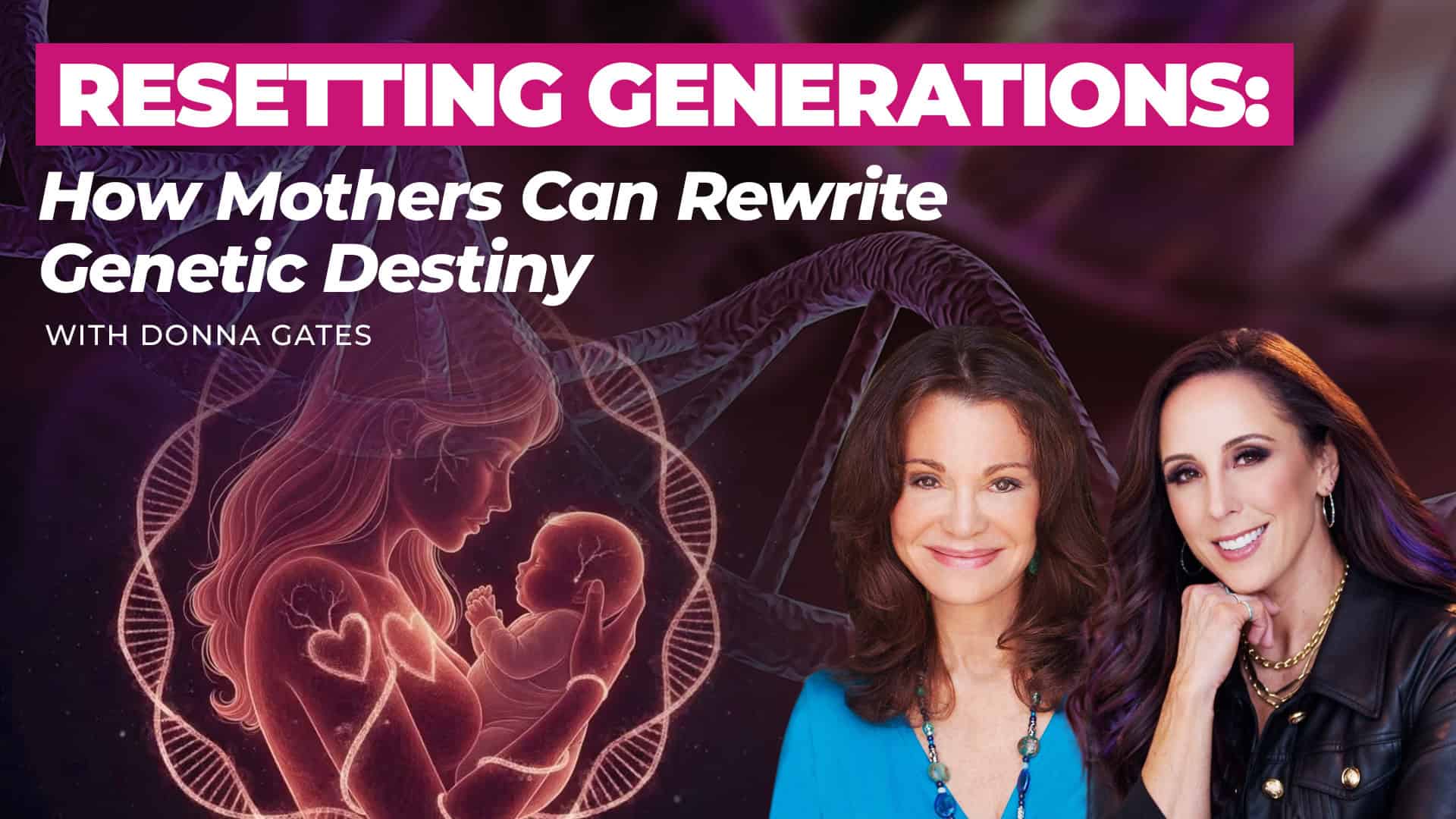
In this episode of Resiliency Radio with Dr. Jill, Dr. Jill Carnahan explores the powerful science of epigenetics and preconception health with Donna Gates, founder of Body Ecology.
Together, they dive into the alarming rise of chronic illness in children and how a child’s lifelong health may be influenced even before conception. Donna shares groundbreaking insights into the epigenetic reset that occurs in early development, offering hope that parents can help break cycles of chronic disease.
The conversation highlights the critical role of detoxification, gut health, mitochondrial support, and nutrition in shaping a healthy future for the next generation.
This episode is essential listening for anyone interested in fertility, generational health, functional medicine, and optimizing health before conception.
🔑 5 Key Discussions You'll Discover with Donna Gates
① 🧬 Epigenetics and Genetic Destiny
⇨ Genes are influenced by lifestyle, diet, toxins, and stress through epigenetic “tags.”
⇨ A natural reset after conception creates a powerful opportunity to influence lifelong health.
② 👶 Preconception Health for Both Parents
⇨ Both maternal and paternal health play a critical role in fetal development.
⇨ Sperm quality influences brain development, immune function, and placenta formation.
③ 🧪 Toxic Load and Detoxification
⇨ Environmental toxins such as heavy metals, plastics, glyphosate, and mold impact fertility and development.
⇨ Detox strategies using binders and lifestyle changes can help reduce toxic burden.
④ 🦠 Gut Health and the Microbiome
⇨ A healthy microbiome is essential for immune development and nutrient absorption.
⇨ Fermented foods and targeted probiotics support gut and overall health.
⑤ ⚡ Nutrition, Mitochondria, and Hormone Balance
⇨ Nutrient-dense diets and mitochondrial support are key for energy and cellular health.
⇨ Balanced hormones and proper nutrient levels are essential for successful conception and pregnancy.
🔑 Key Takeaways with Donna Gates
🔹 Epigenetics allows parents to influence their child’s health before conception.
🔹 Detoxification and reducing toxic exposure are critical for fertility and development.
🔹 Gut health and the microbiome play a key role in immune and metabolic health.
🔹 Both parents contribute significantly to the child’s long-term health outcomes.
🔹 Preconception preparation can help prevent chronic disease in future generations.
About Donna Gates
Donna Gates is a pioneering expert in functional nutrition and the founder of Body Ecology, a holistic health system focused on gut health, microbiome balance, and epigenetic awareness.
A bestselling author and educator, Donna has helped thousands of individuals heal through dietary and lifestyle changes. Her work now focuses on preconception health and epigenetic reprogramming, empowering women and families to optimize health for future generations.
Her mission is to help parents reset the genetic destiny of their children through informed, science-based strategies beginning before conception.
🔗 Website: https://bodyecology.com/
📥 Free Resource: Preconception Checklist available on her website
Dr. Jill Carnahan, MD – Leading Functional Medicine Doctor
Dr. Jill Carnahan, MD, ABIHM, ABoIM, IFMCP is internationally recognized as one of the most respected leaders in functional and integrative medicine. She is dually board-certified in Family Medicine and Integrative Holistic Medicine, and the founder and medical director of Flatiron Functional Medicine in Louisville, Colorado.
Widely known as a pioneer in environmental toxicity, mold-related illness, autoimmune disease, and resilience medicine, Dr. Carnahan combines cutting-edge science with compassionate, root-cause care. Her clinical approach integrates precision genomics, epigenetics, microbiome research, peptide therapy, and lifestyle interventions to transform health outcomes for patients worldwide.
She is the author of the best-selling memoir Unexpected, which weaves her personal journey through cancer, Crohn’s disease, and mold-related illness with her professional expertise. Dr. Carnahan is also the executive producer of the award-winning documentary Doctor/Patient and the host of the popular podcast Resiliency Radio, which reaches over 500,000 global subscribers.
As an international keynote speaker, Dr. Carnahan has been featured at leading medical conferences including A4M, IFM, EPIC, and IPM Congress, and her work is frequently highlighted in major media outlets such as NBC, CBS, Fox News, Forbes, Parade, People, and MindBodyGreen.
With a reputation as both a scientist and a healer, Dr. Jill Carnahan is regarded as one of the top functional medicine doctors in the world, offering a unique blend of evidence-based research, innovation, and deeply personalized care.
The Podcast with Donna Gates
The Video with Donna Gates
Transcript
00:00
Dr. Jill Carnahan, MD
Hey everybody. Welcome to Resiliency Radio, your go to podcast for the most cutting edge insights integrative and functional medicine. I'm your host, Dr. Jill and with each episode we dive into the heart of healing and personal transformation. Join me as I interview thought leaders, renowned medical experts and world leaders of all types, sizes and shapes. Today's no different. We're going to dive in with Donna Gates, who was the author and is author of Body Ecology Diet. It's been around a lot of years and a lot of patients have found help with their guts. But today we're talking about something different about epigenetic tagging. So stay tuned. You're going to really enjoy this episode with Donna Gates. Before I introduce her, I just want to remind you if you're looking for a functional medicine practitioner, we are taking new patients at Flatiron Functional Medicine.
00:48
Dr. Jill Carnahan, MD
You can call 303-993-7910 or email us at infoflatironfunctionalmedicine.com Also, if you haven't yet checked out our products and services, we have everything you can use to help you live an optimal life, including our really popular Ultimate GI Repair. I wrote a recent blog article about the power of Larazotide. If you haven't yet read it, check that article out@jillcarnahan.com it is a powerful new gut peptide and you can get that@drjillhealth.com the product is called Ultimate GI Repair and if you haven't yet seen the movie Doctor Patient, it's a powerful epic story of my own journey and that of several of my patients. You can now find that on Amazon prime or you can go to doctor patientmovie.com watch it with commercials for free on YouTube or Tubi.
01:41
Dr. Jill Carnahan, MD
So check that out and be sure to share with a friend or loved one who might be going through a difficult time. Okay, let's get to our show and introduce our guest, Donna Gates, who is a pioneering voice in functional nutrition and the founder of Body Ecology, a holistic health system that has helped thousands heal through grout restoration, microbiome balance and epigen genetic awareness. A best selling author and educator, Don is now leading a movement to empower women with groundbreaking science and I should say men as well. Today, around preconception and epigenetic programming, it's these tags that we have in our genes that we may or may not know about that we're passing on to the next generation. So her mission is to help mothers reset the genetic destiny of their children starting in the first days and before conception.
02:25
Dr. Jill Carnahan, MD
So let's jump right in with Donna Gates. Donna, I have known you for many years and love the ways you show up in the world and all the incredible information you've brought to the world, especially with gut health in the past. Today we're talking about a new topic and I'm so excited to dive in because as a physician, one of the things I see that's just puzzling and yet I know there's reasons for this massive rises in complex chronic illness that we used to never see in children, that we're now seeing, for example, a five year old getting Crohn's disease or the neuropsychiatric disorders in very young children. And I could go on and on, but many people are observing this.
03:03
Dr. Jill Carnahan, MD
And I want to start today by maybe asking you, why do you think we're seeing some of the rise in complex chronic illness in our children?
03:12
Donna Gates
I don't think it's new. I think that it's been building up for generations. And I'm a baby boomer at the beginning of the baby boomer and you know, people, they just, there weren't very many sick people. And in my high school, for example, and onwards, people were strong and healthy. There's just one person I knew that had a gut problem, irritable bowel disease. But that was it. Then the next generation came along like our children. And autism showed up so rarely. I knew one person that had one child. And now I've watched autism grow from a small number to a ridiculous number. It's serious epidemic. I've always been interested in our kids. I have a degree in child development. Before I started working with autism, I kept having this dream, the dream. There was this little red bus.
04:11
Donna Gates
On the bus were a bunch of kids. They were laughing and playing and pushing each other around and having a good time, but they weren't looking ahead. They were about to go over a cliff and die. And that dream kept happening and happening. And so that made me start to really care about doing something. So I started, you know, praying, please let me find some answers and help people. But what I want to share with you and your listeners today, Jill, is something no one knows about. I was really sick for after Covid with as a long hauler and I just couldn't do very much. And so I just kind of laid there and started asking that same thing. Can I be of service? What can I still do? Is this it for me?
04:56
Donna Gates
And this amazing information that I'm going to share today started putting itself together. And the more I, you know, asked questions and dug deep, the more I realized it is truly a biological miracle, like a gift we human beings are given. And as I'm really excited to share it. Yeah.
05:18
Dr. Jill Carnahan, MD
So I, again, pre. Before we started recording, you just alluded to some of this. And I'm so excited to dive deep because I feel like more and more we're seeing infertility. And when people do have children, there's much more incidents from birth all the way to the first decade or two of life of complex, chronic things that are happening. And parents are more worried and concerned. So let's start with conception, though, because I think that's a really good starting point. What exactly happens the first week after conception that determines a child's lifelong health?
05:49
Donna Gates
Okay, so everybody knows that the sperm and egg come together, and that's conception. Everyone knows that the father passes along his genes and mother gives the genes. Half of the genes come from mom. That's very well known. But what people don't think about is those genes have blemishes on them, or tags. They're called epigenetic tags. In other words, the entire life that the father has lived and all the years the mother has lived, the diet that she's had, which is most likely bad, like a processed food diet, the stress she's under, the infections she's got, the toxins she's gathered over all those years, they're creating tags on the genes. And the baby doesn't just get the genes, he gets the tags as well. And so that's very much an explanation for why we're seeing these tags are one reason why we're seeing this.
06:50
Donna Gates
But here's the miracle. Immediately after conception, in the first few hours after conception, the father's tags are literally erased. They're wiped completely clean. And then the mother's tags are wiped off over about slowly, about five days. So at the end of five days, that baby has a clean slate. He is not inheriting the sins, so to speak, of the mother and the father. He's, you know, it's amazing gift to this little creature that's just been formed. So I want people to take advantage of that. Like, first of all, they don't know about it. So I'd like for the word to be spread around that there's this opportunity to create a child that's not, you know, bringing. He's not carrying the mistakes that his parents have made.
07:41
Donna Gates
And so the thing is, too, on day six, the fertilized egg is now beginning to move into the uterus and implant itself. And at that point, new tags. So the baby's in the womb. The womb is the baby's environment. And these new tags are going to start coming on this baby's little genes. We need to prevent that and the way to do that. And by the way, at this point, the woman has no idea she's even pregnant.
08:11
Dr. Jill Carnahan, MD
Yeah.
08:11
Donna Gates
You know, she won't know for weeks actually that she's actually pregnant. But here's this opportunity that she could miss completely if she didn't prepare a plan ahead. Both the father and the mother plan ahead and do what's really called mindful preconception. And, you know, be healthy. So when she's. The baby's in the womb and is developing, all these negative tags aren't put back on that little baby. It would change what we're seeing in the world today.
08:45
Dr. Jill Carnahan, MD
Yeah. So we, I mean, this epigenetic tagging is so powerful. And we do know about it because we can measure the methylation and basically it turns off and on different genes and it basically keeps. That's why you can have these ancestral memories literally stored in the gene. And they've done the studies of like fruit flies and humans and different things where there was maybe a smell that the father encountered and that the child recognized that same smell of cherry blossoms, because that tag was there. So this is really grounded in science. I just kind of want to emphasize.
09:14
Donna Gates
What you're saying is very much based,.
09:16
Dr. Jill Carnahan, MD
And we're actually more and more of. Even the kinds of testing we do in functional medicine is checking these tags for not only longevity, but illness and all this. So this is really an important concept. You've introduced it really well. And what I want to next talk about is you alluded to the fact that someone who maybe wants to have a family or a baby could actually think well ahead 6 months, 12 months or longer before. Before they actually conceive and make some changes. Let's talk about that. So someone listening out there, maybe a mother who has. Wants to have more children, maybe a grandparent who wants her daughter or son to have healthy children, or any number of things. A father who wants to be involved in what can he do with the conception of a child.
09:58
Dr. Jill Carnahan, MD
Let's speak to all of those groups and say, what could we do? Preconception. How long before do we need to do this and how does that look?
10:06
Donna Gates
So in working with families that had an autistic child, many of them would tell me that they were afraid to have another child because they didn't want the next one to become autistic, which is really sad, because if they knew about this and they realized that these tags can be erased in that first week and even new tags aren't put back on again. You're not going to have a child with autism or something else, really serious diabetes or whatever. So they have to. This mindful preconception is where they start to prepare themselves, their body, the father, too. The father. Sperm is very important. It does some very important things as soon as it reaches the egg. For example, one of the things the sperm does is it starts the immune system in the brain, the little microglia in the brain.
10:58
Donna Gates
They are created and turned on by the father's signals in the father's sperm. And so people think, well, it's the mother's job to create the baby, but the father's very important. And if his sperm is dysbiotic, the mother won't even accept that sperm. And the egg actually picks the sperm that it wants to mate with. So some really important things are going on. The father needs to be in the mindful preconception phase two. The father needs to do the same things basically, that the mother needs to do. And that is we need to. And this is where I think they need to work with a functional medicine doctor. They need to identify what toxins are in their body and start working on that.
11:48
Donna Gates
I don't have any heavy metals like mercury in my body, but I do every day put some pectisol in with our fiber that we have. And that's a wonderful, simple way to get rid of heavy metals and mercury and all. It doesn't have to be difficult to get rid of the toxins. I think that they may need to do some testing to find out which toxins they have and then start working on that. You need time. Start maybe six months or maybe even better, two years. Or let's say that you're a mother of a little girl and you can start teaching her. Certainly by the time they're in high school, you can teach them to start really taking care of themselves because they have this amazing responsibility to create a child. And we don't teach our little girls that we should.
12:40
Donna Gates
But so you want to get rid of the toxins. You want to. So in the egg is the mitochondria, and the mother gives the mitochondria to the baby. So she needs to have healthy mitochondria, strong, abundant mitochondria. Mitochondria. So that she passes that along. The mitochondria Has a very critical role in the immune system. Having a strong immune system. Let's see. Most important probably is a diet, a very clean, healthy diet of protein and vegetables and healthy oils. One of the things that bothers me that people are saying out there right now is that avoidance seed oils. Well, the thing is there are seeds, like pumpkin seeds for example, and there's some companies like Spectrum is a clean one.
13:35
Dr. Jill Carnahan, MD
Yeah, Spectrum is a very clean oil company.
13:37
Donna Gates
Yeah. So I have a pumpkin seed oil that I'll sprinkle on things all the time. So you're getting zinc, but it's completely unrefined. So that's what you want is you want a seed oil that's unrefined. And so canola oil, which is in a whole lot of our foods is. Could be healthy, but it tastes awful if it's refined. I mean, so refine it because it tastes so bad. But unrefined, bad tasting canola oil is not bad for you. It's just that the refined canola oil is in everything. So that's what I think they're trying to say is avoid those. But you do want healthy oils. That's really critical. Again, the mitochondria needs healthy fats. But so diet's critical and I think very prejudice toward this, you might say, is that everybody should have. The father and the mother should have fermented vegetables.
14:35
Donna Gates
For one thing. The mother may not be able to eat organic foods all the time. And so she's going to the store and eating normal vegetables that are sprayed with glyphosate. The thing is, the fermented vegetables, they do a lot of important things. They're very diverse. They have many different types of bacter. Huge number of them. But also one of their most important jobs is to clean and get rid of toxins. So let's say you're eating vegetables and they've been sprayed with glyphosate. So by eating the fermented vegetables at that meal, you're protecting yourself from that glyphosate. And if you're pregnant, you're protecting your baby from the glyphosate. So let's see. Diet, get rid of the toxins, have really healthy mitochondria. You want to exercise, that helps the mitochondria. But certain nutrients. The mitochondria really needs certain nutrients. CoQ10B vitamins, minerals and so on.
15:33
Donna Gates
And there's so much information out today about the mitochondria that, you know, people can go out and if they find a Good. Podcast with somebody who really knows their work. They can get anything, any information that they need. So let's see. Detoxing, getting rid of a diet that's very nutrient rich, free of toxins, as much as possible.
15:58
Dr. Jill Carnahan, MD
Yeah, I really love the mitochondria point because so often complex chronic disease, whether it's children or parents, which is who we're talking to now, the mitochondria are really dysfunctional. And just to throw out a few nutrients and you can certainly add to this list. But B vitamins critical, especially B1 and B2, which a lot of times we don't. We think about methylated Bs, which is B6 and B12 and folate and riboflavin. But those powerhouses, benfotamine or some sort of thiamine and B2 is riboflavin and then alpha lipoic acid and NA cysteine and super important. Coenzyme Q10 in its many forms are super powerful. Urolithin A is really powerful. And so we're finding there's so many different things out there for the mitochondria. And then you mentioned lipids and bilayers.
16:44
Dr. Jill Carnahan, MD
All of our cells and communications is made of the lipid bilayer, which is like this, the pathway between cell communication and that is made up of the fats that we eat. So I love that you've said that because we need a little saturated, we need a lot of omega 3 fatty acids are much more fluid. We need phospholipids like phosphatidylcholine and phosphatidylserine, which is why eggs, organic, you know, free range eggs can be super powerful part of a diet. And I love that you mentioned fermented foods because I think people forget the power of that. And it doesn't always have to be huge amounts. It could be a tablespoon of sauerkraut,.
17:19
Donna Gates
A couple of tablespoons. Yeah, yeah. But you know, people, I keep hearing again, so much misinformation about fermented foods. For one thing, there's not. They're all different. You can't compare kefir and yogurt to vegetables, fermented vegetables, for example, or kombucha or anything, for one thing. Another thing is that these like the reason I always put fermented vegetables at the top is some people can't do dairy, so they're not going to be doing yogurt or kefir. But also the thing about, like the way I've taught people to use make their cultured vegetables for years is to actually shred up the vegetables, make a brine, and put in a starter. You can put other things in the brine too, like minerals. And also, I think, what are they? Oh, I even will put in some apples to make it sweeter. But the starter's really important.
18:17
Donna Gates
And the one we have is plantera. So when you put planterum in there and you put that into the mixture of vegetables. Plantera is a super microbe. It's a key stain, especially critical one, but it also, it's a leader. Like some of the. Many of the bacteria follow what planetarium tells them to do. And if you put in some starter and they. They'll grow and multiply like crazy. So pretty soon, I mean, let's say a week down the road, when you open up your jar and you start eating it, you have vast amount of. I even had it tested at the University of Nebraska. I was shocked. So I had sent them different jars with and without the starter. And when the results came back, I was absolutely shocked at how many, many millions of times more bacteria than the planter. And in particular.
19:12
Donna Gates
But all the others, too, they grow just as much. So it's a special food. And so I. And also the other thing is, I keep having people say that have histamine problems, which I have dealt with myself. They always say, don't eat fermented foods on the. If you're following a low histamine diet. Well, I would agree with that for most fermented foods, all of them probably, except for fermented vegetables made with a starter like we do, because plantarum actually degrades histamine. And so you grow a whole bunch of, you know, plantarum in a jar, and even a couple tablespoons of that is antihistamine. Yeah. So if I have something, if I start having histamine reaction, I'll go eat our fermented vegetables. And so.
20:00
Donna Gates
So when I hear people say, don't eat fermented foods, I think that is such a shallow understanding of they shouldn't say that. In other words, it's wrong.
20:10
Dr. Jill Carnahan, MD
Hey, guys, just a quick interruption to remind you if you're looking for products or services that are curated especially to optimal health, especially for the gut or for fertility, you can check out everything@doctor Jill health.com. Some of the ones I want to be sure and mention on this show are our probiotic with sakuro. That's a really powerful, great preconception probiotic that has all the great strains we discussed in the show and Saccharomyces boulardi, which can be helpful if you have a yeast overgrowth or imbalance in the microbiome. We also have things like gut calm powder and spore probiotic with immunoglobulins and many other products and services to support your gut. You can find them all@drjillhealth.com okay, let's get back to our show. I agree to what? And totally love that you're saying that because a lot of my patients have histamine issues.
21:00
Dr. Jill Carnahan, MD
And I've been one to say be very cautious. I do think the thing with doing it yourself and making sure if you have the bacteria like Lactobacillus plantarum and you're growing from there, powerful. But if you get yeast in there, I think that is not true because Saccharomyces cerve seed does create histamine. And often these wild strains on someone's countertop, if they're not careful, contain wild yeast. And that is a problem for histamine people. So I was going to be really careful because if it contains like kombucha, I do not recommend for patients with histamine because that's going to be an issue.
21:30
Dr. Jill Carnahan, MD
And they what happens is if you're growing it in your counter and you don't know what you're putting in as a starter, which like yours is excellent, they can get these wild strains that they're not unless they're sending them to a university to test. And so I would caution you, if you're listening out there, you need to know what you're doing. You need to make it from like Donna's protocol or someone who knows what they're doing and make sure you're not getting wild strains that could increase.
21:53
Donna Gates
Well, you know, I've said that for years. Don't do kombucha. It's wild. Don't do wine and beer. Yes, it's wild. And of course, I've been criticized by the kombucha people for that. But it's true. You don't want.
22:05
Dr. Jill Carnahan, MD
There's a difference in this. So it's just so great because there are ones that you can use, which is so powerful. The one thing I loved and I want to talk about toxicity, but because my listeners know I love to talk about mold and environmental toxic load. And I think this might be one of the most important thing for epigenetic tagging for parents, because we live in this toxic world, we're all overload and the amount of toxins in our environment are increasing. Especially problematic. Our pfas, the polyfluorinated compounds, the plastics, the organophosphates, including glyphosate, which is an herbicide, but I consider it in that class. And then mold and mycotoxins. And one thing, I love that you mentioned pectisol. I'm a huge fan of pectisol. The dab.
22:44
Donna Gates
Yeah.
22:45
Dr. Jill Carnahan, MD
So astounding. I do the same thing. I put a scoop every day in my morning drink. And it's a powerful toxin binder. So is, you know, clay and chlorella and charcoal. There's many things people can use. But what other practical things could people do to reduce their toxic load if they're going to conceive or what need to conceive?
23:04
Donna Gates
Well, I have a preconception checklist, so anybody can go to the website and just download it. But here's what it says. Optimize nutrition. And you definitely want to have folate rich vegetables like leafy greens and everything. And I also think it's a really smart idea to go to one of these companies that are testing your genes because you want certain genes like pemf. You know, I worked with a woman and her PEMF was terrible. And she kept wanting, calling me and getting help with having babies. And she did. She had two sets of twins and a little boy, but which I was kind of against because I thought that was a bit much. Between each child, you lose a lot of nutrients and you need to replete those. That's another important thing too. I have a whole list of things to help optimize nutrition.
24:00
Donna Gates
And then avoid the refined seed oils, for example. But avocado olive oil, avocado, coconut and MCT oil are all good ones to use. But then, and very importantly, you want to have a healthy gut.
24:15
Dr. Jill Carnahan, MD
Yes, let's talk about that.
24:19
Donna Gates
I would talk about that. So you don't want to kill the microbiome, first of all. So avoid obviously medicines and antibiotic and all that. Do that. And you want to add the fermented foods. But I also believe that you should take some probiotics. Saccharomyces boulardi is a yeast that's really beneficial. But my favorite without any doubt is Bifidus. And when, you know, I used to wonder, okay, when a baby's born, why is it that Bifidus is the most important bacteria, it's prevalent and is the main bacteria in a newborn's gut. So I wondered that for years. And then finally, I found research that answered my question. For one thing, Bifidus is excellent at sealing up the gut lining of the baby when he's born. So babies are born with a leaky gut.
25:11
Donna Gates
That's a good thing because they're going to be having colostrum, and the colostrum is a big molecule, and it's got to get through that gut lining and out into the body to protect the baby. That's extremely important. But then it's supposed to seal back up again. And Bifidus will do that. Bifidis also has a very calming. Like the message it sends to the immune system is to be calm. And I'd really like to talk about the immune system. I've got a lot of interesting information about that. But you want to balance your hormones. Absolutely important that you have enough progesterone, your estrogen is good. And then you want to be very well hydrated, but you want to.
25:56
Donna Gates
I think some of the most important lab testing, functional lab testing people can do, is get a micronutrient panel to find out are you deficient in B vitamins and zinc. And the. So glad you said that about the mitochondria. You want to definitely check your thyroid. That I have literally seen women have a miscarriage because they didn't check their thyroid. And when they. I mean, I had them check their thyroid was too late. And there's.
26:22
Dr. Jill Carnahan, MD
Let me. That's so important. I want to just comment because I would say I've had a dozen women who. The very first thing we do, we're talking about fertility. They want to get pregnant in the next six months. I check thyroid, and here it is subclinical, which means above 3 TSH, 3.2, 3.5, 4.0. In a conventional lab, that won't even flag. But I know to have optimal fertility, that needs to below 3, sometimes even below 2. And after trying to conceive for quite a while, we get that thyroid a little bit, that TSH in the normal range, and they conceive immediately. And I've seen it over and over again. So that. Where.
26:56
Donna Gates
That's almost so good. Yeah, yeah. No, I've literally seen women shocked because they got pregnant, they were excited, and then they lost the baby. And then we started checking and testing and their thyroid was the cause. But, you know, something interesting, and I feel like recently one of your podcasts, this came up, but, you know, a lot of people have had Covid and the SARS virus and then it released these infections in the Body like Epstein Barr. So both Epstein Barr and Herpes, age number six, Herpes six, get into the thyroid and they weaken it. So it may be. This is. Dr. Raphael Kelman, wrote a book on this. But you know, people go and they get tested and they have low thyroid and the doctor just immediately says, well, let's give you this.
27:47
Donna Gates
Thyroid medication doesn't really help that much because that's not really the cause of the low thyroid. So I'm a big believer that people getting tested for these infections. Say that again.
28:00
Dr. Jill Carnahan, MD
I couldn't agree more. Yeah.
28:02
Donna Gates
Oh. And so I, you know, had Covid and was really sick. But what was interesting to me was all the residual infections that I had came out, like Epstein Barr and Candida, for example, which I hadn't dealt with in years, but I knew what to do. And actually I just put a book up on kind on viruses. It's called Taming the Drag. And I've been working on this for years because when I wrote the Body Ecology diet, which is a diet for people with yeast infections, very effective, I realized viral infections are different. And no one ever tells anyone this. It's not the same diet as you would follow to get rid of a yeast infection or to bring it down under control.
28:52
Donna Gates
The antiviral diet, which is what the book is about, and the book is called Taming the Drug because I see viruses as like a dragon, you know, fire breathing, causing inflammation. And there's a way to eat and foods to avoid, to get that virus back into its cave. Like. Yeah, I explained actually that's really important.
29:14
Dr. Jill Carnahan, MD
Let's stop there really quickly because I've been treating Covid for a long time and what we see is post Covid is almost an immunocompromised state. So the T cells that should be keeping viruses in check. So we all have old chickenpox virus, old Epstein Barr from college days or old hsv, cold sore or any number of viruses. They're dormant by our immune system. So a healthy, strong system keeps them kind of like, so they keep it down. I say it's like, you know, keep them in check. And then very many people post Covid that keep it in check part of the immune system, the T cells are diminished or impaired because they're either retained macrophages with spike protein or other reasons. And so it's almost this dysfunctional immune system.
29:54
Dr. Jill Carnahan, MD
So just like you said, we've talked to Amy Prowl, we talked to multiple researchers on the podcast and what we've measured is reactivation of Epstein Barr HHV6, HSV1 and 2 and tick borne infections like you mentioned, Lyme, Bartonella, Babesia and many others. And so post Covid, many people are suffering from symptoms, have these, it's like whack a mole. They pop up these old infections and then they cause inflammation, autoimmunity and just.
30:20
Donna Gates
What you're describing, you know, thank God I keep adding that it's so much better when you do. So I have a friend and she's a doctor, but like a nurse type of a PhD doctor. But she specialists is in Lyme. And so I went to her because I was having this weird, you know, kind of like bumps, nodules on my, in my skin, on my legs. And so I said, I don't understand what's going on. And she said, I test you for Lyme. And I said that's a waste of time and money because I don't camp. You know, I, I'm sure I don't have lime. I don't like go out into the woods or anything, but at least now. But anyway, sure enough I came back with Borrelia and Martinella. So that was a surprise.
31:09
Donna Gates
But it also made me start learning about Lyme, which I really didn't know all that much about. I thought that was what other people had. But it is transferred if you have a Lyme disease. And I now believe many millions do. And I think you should be tested for that. Because Lyme is one of the infections that is passed on to the baby.
31:30
Dr. Jill Carnahan, MD
Yes, yes. We actually got a lot of, for treating patients and they want to have fertility, especially Lyme and Bartonella. So Borrelia, Bartonella, others too. But these are two particular ones, the ones that you mentioned, that we actually make sure they're not in active state before you conceive because we see really much more severe infections when they're congenital to the baby. So I really love the image.
31:52
Donna Gates
Yeah, thanks for saying that. That's great. So you do want to have balanced hormones. You want to hydrate. You know, the baby is largely water at the beginning of his life. So drink water. But they need to have minerals in them, electrolytes. Yeah, Actually I like to study the egg. And the egg is in a sack and that whole entire sac is full of water, like it's surrounded by water. So hydrate for sure. So the lab test that I think everybody should get is heavy metals. I think they should have a GI map microbiome panel. The genes for SNPs, especially MTHFR and PEMT because, well, I had a woman call me and they've been trying for just three months to have a baby. So she emailed and she said we can't get pregnant and oh, actually it was longer than three months.
32:42
Donna Gates
But, but I happened to have her genes because I was really into nutritional genetics for a couple years and I had genes of friends and family members. So I looked at hers and it was amazing how many snips she had in the genes that are for like omega 3s, basically.
33:03
Dr. Jill Carnahan, MD
Yeah.
33:03
Donna Gates
And I said, gosh, you know, are you taking in fish oil or eating things like sardines and all? And she said, no, I never do that. Well, three months later she emailed me to say they were pregnant because she started doing that and her genes were quite healthy. It was just a big problem with the Omega 3s.
33:25
Dr. Jill Carnahan, MD
So important. I want to just mention two little things on that are really critical. I couldn't agree more. There's a test called Omega Quant. Very simple, inexpensive, you can order it online that if you just want to check Omega 3, I often do it as part of a panel of like Genova, nutrival or others. But if you wanted to order that directly, there is a direct consumer. And then second, with conception, you want to eat these small. You mentioned sardines or things that are less mercury because obviously mercury you don't want to do. So swordfish and shark and some of the very large tuna that are not, you know, mercury free can be really problematic because you eat those frequently and then you get mercury.
34:02
Dr. Jill Carnahan, MD
So just think about the smaller white fish, the smaller things like sardines, all really safe, really powerful ways to get those. And then you can always take a really clean purified Omega 3 supplement as well. And I think that's a powerful thing. Before you conceive.
34:18
Donna Gates
That's great that you said that. I actually think that the food is an even better way. At least three times a week I, I have a little can of sardines or wild mackerel. But let's see, I'm trying to think of the name of it. There's a company, Vital Choice.
34:35
Dr. Jill Carnahan, MD
Yes.
34:35
Donna Gates
They make these, a can of these tiny little tunas because usually you want to avoid tuna because it is a source of mercury. But what they do is they have a fisherman who gets this tight, the tiny little tuna and they put those into a can called Ventresca, which is Italian. They're delicious. And Randy, the owner told me one time that three cans of that completely satisfies all your need for omega 3s.
35:03
Dr. Jill Carnahan, MD
Wow.
35:03
Donna Gates
So I did those. And sometimes you can't get it because they're out. But that's a great thing to do. But then sardines are wonderful. And people might say, well, I don't think I could eat sardines. They don't taste good. But actually they do. And they grow on you too. Yeah.
35:18
Dr. Jill Carnahan, MD
I'll tell you one of my favorite. When I get home from a long day of work and I'm exhausted and just starving hungry, my favorite little thing to do is take a can of mercury free tuna and throw it on top of just pure sprouts. All the different kinds of sprouts. The greens. It's not just like.
35:33
Donna Gates
I do that too.
35:34
Dr. Jill Carnahan, MD
Yeah. And then I throw in a little bit of. It's avocado based Greek dressing. Just a little sprinkle in there. And that is my dinner. And I love it. So good.
35:44
Donna Gates
Yeah. And you know, if it's your dinner and it's light, it's a light meal. It's better for us because we get reflux if too much food is in our stomach. You know, I do exactly the same thing here at my Whole Foods. There's a company called Arrow Farms and they have these wonderful sprouts like micro broccoli and micro bok choy. So always buy trays of those. And I'll put that in a bowl, put the fish on top of that. I love it. I like. Oh, isn't it so salad dressing. And just a whole meal. It's a perfect fermented vegetables, which makes this fish taste better. And then. And it's so simple.
36:22
Dr. Jill Carnahan, MD
I can do it in like three minutes, right?
36:24
Donna Gates
Yeah, exactly. Which some energy for at the end of the day. But the other thing is I like primal. I think it's primal kitchen salad dressings. My. One of my favorites is the ranch.
36:35
Dr. Jill Carnahan, MD
Yeah.
36:36
Donna Gates
And then I also like their lime one with lime in it. So that's sweeter. And so I often put the ranch dressing on too. Or just a whole bunch of olive oil because I'm half Italian.
36:46
Dr. Jill Carnahan, MD
Oh, I'm getting hungry. And you know what's funny? The primal one is the exact one. It's. It's called the Greek one that I love for this whole recipe.
36:53
Donna Gates
I like the Greek one. Yeah. I want that one to get one anyway.
36:57
Dr. Jill Carnahan, MD
Good.
36:57
Donna Gates
So there's a whole bunch of excellent things to do that are actually very simple. But what you don't want to do is, you know, eat the processed foods that everybody's eating.
37:07
Dr. Jill Carnahan, MD
Yeah.
37:07
Donna Gates
So then you wonder if people are eating that way and they lack nutrients and then they get pregnant and these new tags are being put. Put on the jeans, you know you're going to get. And also, this isn't just. Just now. I mean, each generation has been getting weaker. It's even said that this particular generation won't even live as long as our parents. So we have to turn this around. And one of the things I'm become really passionate about, I think it had a lot to do with me finding the energy to get well, because I was so amazed at how sick I was from the COVID but is I wanted to get this message out into the world because it can turn everything around just by doing this.
37:50
Donna Gates
And so that means creating a group of parents, many of them a whole generation of parents that want to have a baby, or like you said, a grandmother who wants to have healthy grandchildren or a woman that's already started a family, has a little one, and now she wants to have a. She's thinking about having another one. There's time to prepare her body to conceive that child. And again, like I said, the dads, we can't just let the dad get off. His sperm needs to be healthy. And he is very much involved in creating the immune system, especially in the brain, but also the placenta. I mean, the mother contributes some genes too, to make the placenta, but the dad's especially responsible for the placenta. And the placenta is this organ that only happens when we're pregnant, comes to protect the baby.
38:41
Donna Gates
So it's nourishing the baby and protecting it from infections because the baby's inside the womb. And I always thought everybody thinks that the immune system of the baby starts when they're born and they pass through the birth canal. They picked up all these microbes in the gut, in the baby's gut, on his skin and everything, and that's the beginning of his immune system. But what I uncovered and stumbled upon is that the baby has a completely formed immune system in the womb. Nobody ever talks about that. But everything that the immune system needs, the T cells, the B cells, everything that is part of an immune system is there in the baby before it's even born. This caught me thinking, the concept of a vaccination is that years ago, Jenner vaccinated this little boy who was 10 or so.
39:37
Donna Gates
He grew up in a farm in a strong immune system. When the COP virus was put in him, he got sick for one day, literally got an infection or a fever, and then the next day he was fine. Jenner then got very active about promoting the concept of vaccination. Here we are today. But vaccination isn't new. Even the Egyptians were doing it and royal families were doing it. So it's an old concept. But the thing is, I think it's time to rethink it because if we knew that there's an immune system in the baby ready to go as soon as it comes out, it's a quiet immune system. It's not the immune system of a warrior because you don't have that inflammation happening in the womb because then the baby couldn't develop normally.
40:29
Donna Gates
So it's a quiet immune system, but it's being trained and educated.
40:35
Dr. Jill Carnahan, MD
Your 0 to 2 are the training of the immune system. And some of these mothers who maybe have antiseptics and sterile things and they don't like really, truly having those young children maybe have, you know, carrot juice from the garden.
40:49
Donna Gates
That's.
40:50
Dr. Jill Carnahan, MD
So it's these like the trained immune system actually has to encounter things in the environment in order to know what to do. So the more if a baby's born in a bubble and never gets home exposed, they will have a very weak immune system. So these are actually critical for the learning of that weak. That baby's immune system. Not weak, just, you know, less aggressive.
41:10
Donna Gates
And another thing parents aren't told about is when the baby does come out, they're covered in this kind of coated Vernix, it's called. You don't want to wash that off. That actually an important part of educating the immune system and developing properly and all too. So there's a lot of things we're doing wrong. But if you, if people could be focused on this and be taught, they wouldn't be so worried about rushing their baby to get a vaccination. If our scientists could start to think differently and say, hey, what can we do to build upon when nature has already got started here and they come out with an immune system? What can we do to get that going stronger then as they develop? What can we do to not interrupt it with. With medicine like antibiotics and all? We need to change our thinking.
42:02
Donna Gates
But it's actually right now, parents do vaccinate because they're fearful, but nature's got a lot of things going to protect the newborn baby. And I think the epigenetic reset concept is pure a sign that nature wants this next generation to be safe and protected and healthy. So it wipes all those tags off for a week and then, you know, Nature's doing everything to protect us. We're the ones that get in the way.
42:35
Dr. Jill Carnahan, MD
Oh, this is done. And this is so such good information for parents or grandparents or anyone in this world, because, you know, children, we want to be healthy and happy wherever we are in that process. I'm just really grateful for your work and your study of this and bringing it to the public. If people want to find out more about you or what you've written about this, where can they find this information?
42:57
Donna Gates
Yeah, just go to bodyecology.com and at least download the checklist. Of course, we have products, and they're very much focused on the microbiome and the gut and everything. We have probiotics. But, you know, just like I said, I'm a big believer in food, that you can do so much with food. So if that's all you can do and all you can afford is start there. And I'm really grateful, Jill, that you had me on, because I've been wanting so badly to get this information out in the world. I'm hoping parents see the potential here to change the direction our children are going. We can totally turn this around.
43:33
Dr. Jill Carnahan, MD
I believe that with all my heart. And like I said, that's why I love your work, because it really does start with the children or the health of future generations. And we have to be cognizant that we're living in this toxic world that, again, a lot of overuse of antibiotics and medications. And if we don't change that way, we think our whole future generations are at risk. So thank you. Thank you for the work. Thank you for bringing it. Thank you for connecting with me. It's always so great to talk. If you're listening, in the show notes, we'll have all the resources, Body Ecology, and everything that Donna has shared, including the checklist. You can get that, just check the link below. And Donna, just thank for. Thanks for your beauty and grace and information for the world.
44:14
Donna Gates
Oh, thank you. That's a wonderful compliment and so grateful for this. Joe, thank you so much.
44:21
Dr. Jill Carnahan, MD
Hey, guys. Hope you enjoyed that episode with Donna Gates of Body Ecology. She's been around doing incredible things with gut health for many years. Really a mainstay of how to reverse some of the microbiome issues in the gut for many years with my patients. And now today, of course, we talk about epigenetic tagging and the profound effect on the unborn child. So I hope that was helpful for you. If you know someone who's wanting to conceive or wanting to have a great experience with fertility. Please share this episode. If you haven't yet liked or subscribed, please hit that subscribe button, hit the bell to be notified of future episodes. And if you're on YouTube or Spotify or anywhere you're listening to this podcast, I hope you will stop and leave us a review.
45:04
Dr. Jill Carnahan, MD
As you know, we have a new episode every week, so come back next week to hear the latest on Resiliency Radio, and I'll see you again then.
* These statements have not been evaluated by the Food and Drug Administration. The product mentioned in this article are not intended to diagnose, treat, cure, or prevent any disease. The information in this article is not intended to replace any recommendations or relationship with your physician. Please review references sited at end of article for scientific support of any claims made.




Share: