


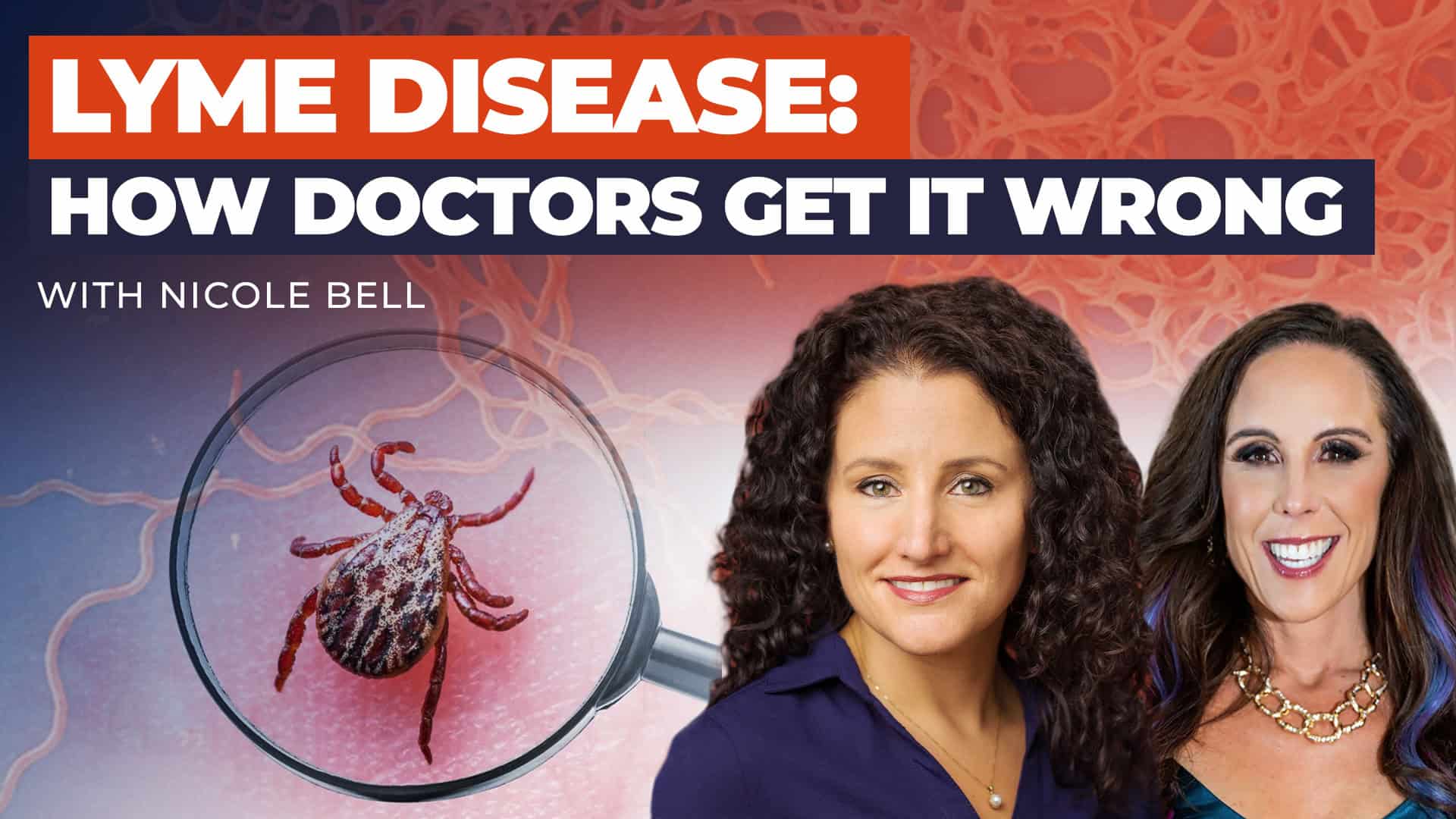
In this episode of Resiliency Radio with Dr. Jill Carnahan, Dr. Jill sits down with Lyme disease expert Nicole Bell, CEO of Galaxy Diagnostics and author of What Lurks in the Woods. Together, they uncover the hidden world of tick-borne illnesses such as Lyme disease, Babesia, and Bartonella, and their profound impact on neurological conditions, mental health, and cognitive decline.
🔗 Related Product: Dr. Jill Health® – Tick Bite Prevention Protocol
Key Topics You'll Discover with Nicole Bell
① Understanding Tick-Borne Illnesses:
👉 The episode begins with a discussion on the prevalence of tick-borne illnesses such as Lyme disease, Babesia, and Bartonella. These conditions often present with mood disorders, psychiatric diagnoses, and cognitive decline.
② Diagnostic Challenges:
👉 The complexities of diagnostic testing for tick-borne diseases are explored. Traditional tests often lack sensitivity, making accurate diagnosis difficult.
③ Root Cause Medicine:
👉 The conversation emphasizes the importance of identifying root causes of neurological conditions, such as pathogens, metabolic issues, and other factors, rather than just labeling diseases.
④ Personal Journey and Insights:
👉 The guest shares a personal journey dealing with a loved one's battle with a tick-borne illness, highlighting the emotional and physical toll it takes on families.
⑤ Innovative Approaches to Treatment:
👉 Discussion on the use of integrative and naturopathic medicine, including herbal therapies, as alternatives to traditional antibiotic treatments.
⑥ Mission to Improve Care:
👉 The episode concludes with a call to action for improving the standard of care and making advanced diagnostic technologies widely available.
What You’ll Take Away from Nicole Bell
📌 Tick-borne illnesses can significantly impact mental health and cognitive function.
📌 Accurate diagnosis is crucial but challenging due to the stealth nature of these pathogens.
📌 Understanding and addressing root causes can lead to better treatment outcomes.
📌 Personal stories highlight the need for compassion and innovation in healthcare.
📌 There is a strong push towards improving diagnostic standards and treatment accessibility.
Nicole Bell
Nicole Bell is an author, entrepreneur, and advocate for tick-borne and neurodegenerative diseases. Her memoir, What Lurks in the Woods, details her husband's harrowing experience with misdiagnosed tick-borne illness and seeks to help others navigate chronic conditions. Originally from Boston, Massachusetts, Nicole earned a Bachelor’s and Master’s of Science in Materials Science and Engineering from MIT and a Master’s of Science in Biomedical Engineering from Duke University. Nicole is currently the CEO of Galaxy Diagnostics, where she combines her professional experience with her passion to change the tick-borne disease landscape. Galaxy’s mission is to create a new diagnostic standard of care for tick-borne diseases and save millions of people from descending into chronic illness.
🔗 What Lurks in the Woods: https://a.co/d/hB2X4mf (the journey of Nicole's family with tick-borne illness)
🔗 Testing for Tick Borne Diseases – Galaxy Diagnostics: https://www.galaxydx.com/
🔗 https://www.instagram.com/galaxydiagnostics/
🔗 https://www.facebook.com/galaxydx/
🔗 https://www.linkedin.com/company/galaxy-diagnostics-inc-/
Dr. Jill Carnahan, MD
Dr. Jill Carnahan is Your Functional Medicine Expert® dually board certified in Family Medicine for ten years and in Integrative Holistic Medicine since 2015. She is the Medical Director of Flatiron Functional Medicine, a widely sought-after practice with a broad range of clinical services including functional medical protocols, nutritional consultations, chiropractic therapy, naturopathic medicine, acupuncture, and massage therapy.
As a survivor of breast cancer, Crohn’s disease, and toxic mold illness she brings a unique perspective to treating patients in the midst of complex and chronic illness. Her clinic specializes in searching for the underlying triggers that contribute to illness through cutting-edge lab testing and tailoring the intervention to specific needs.
A popular inspirational speaker and prolific writer, she shares her knowledge of hope, health, and healing live on stage and through newsletters, articles, books, and social media posts! People relate to Dr. Jill’s science-backed opinions delivered with authenticity, love and humor. She is known for inspiring her audience to thrive even in the midst of difficulties.
Featured in Shape Magazine, Parade, Forbes, MindBodyGreen, First for Women, Townsend Newsletter, and The Huffington Post as well as seen on NBC News and Health segments with Joan Lunden, Dr. Jill is a media must-have. Her YouTube channel and podcast features live interviews with the healthcare world’s most respected names.
The Podcast with Nicole Bell
The Video with Nicole Bell
The Transcript – Overview
Overview
- Nicole Bell, CEO of Galaxy Diagnostics, shares personal story of husband's late-stage early onset Alzheimer's, initially misdiagnosed after negative Lyme tests.
- Retesting for tick-borne illnesses revealed positive results for Lyme disease, Babesia, and Bartonella after 15 months of ineffective treatments.
- Post-mortem analysis of husband's brain tissue showed persistent Borrelia, highlighting the challenge of eradicating complex infections despite antibiotic treatments.
- Current Lyme disease testing is only 40-60% accurate, with a new study indicating just 23% accuracy for early-stage diagnosis.
- Galaxy Diagnostics uses direct detection methods, including urine-based testing for Lyme and advanced digital PCR technology for Bartonella and Babesia.
- 65% of schizophrenia patients tested positive for Bartonella in studies conducted by NC State, indicating a potential link between tick-borne illnesses and neuropsychiatric conditions.
- Notable case of a young boy with severe psychiatric issues successfully treated for Bartonella after extensive but ineffective psychiatric care.
- Tick-borne illnesses can be found in all states, and classic symptoms like the bullseye rash occur in only 14% of cases; many patients don’t recall tick bites.
- Caregiving was a profound challenge for Nicole, who had young children when her husband entered memory care due to cognitive decline.
- Galaxy Diagnostics aims to transform the standard of care by making direct pathogen detection technology accessible through major lab partners.
Notes
🎙️ Introduction and Background (00:02 – 09:49)
- Dr. Jill introduces Resiliency Radio podcast focused on integrative and functional medicine insights.
- Nicole Bell introduced as author, entrepreneur, and advocate with MIT and Duke engineering degrees, currently CEO of Galaxy Diagnostics.
- Nicole's husband began showing mood disorders, depression, irritability, and memory loss at age 59 – couldn't remember basic information like house alarm code.
- Initial Lyme disease test came back negative, leading to referral to neurologist.
- Husband diagnosed with late-stage early onset Alzheimer's disease based on PET scan despite no genetic markers or comorbidities.
- Brother-in-law (a doctor) suggested retesting for tick-borne illness after 15 months, revealing positive results for Lyme disease, Babesia, and Bartonella.
💊 Treatment Journey and Challenges (09:49 – 19:38)
- Husband underwent 18 months of various treatments including hardcore antibiotic protocols and herbal therapies.
- Despite treatment, cognitive decline continued – placed in memory care in 2019, passed away in 2022.
- Post-mortem brain tissue analysis revealed persistent Borrelia in brain tissue despite months of antibiotic treatment.
- First published case of Babesia oticoli found in brain tissue linked to Alzheimer's case.
- Dr. Jill emphasizes toxic load and infectious burden as core drivers of complex chronic diseases, with amyloid plaques potentially being body's attempt to contain infections.
🔬 Diagnostic Testing Problems (19:38 – 30:00)
- Current standard Lyme tests only 40-60% accurate according to recent publications, with new 10-year study showing 23% accuracy for early-stage disease.
- Standard tests measure antibodies (indirect detection) rather than actual pathogen, problematic because
- Lyme is a ‘stealth pathogen' that suppresses immune response.
Galaxy Diagnostics uses direct detection methods – looking for pathogen itself rather than immune response. - For Lyme: Uses urine-based testing capturing surface proteins shed by bacteria, developed at George Mason University.
- For Bartonella and Babesia: Uses digital PCR technology that separates samples into 20,000 parts for better detection, developed at NC State.
📊 Clinical Applications and Research Findings (30:00 – 39:11)
- 65% of schizophrenia patients test positive for Bartonella according to NC State studies.
- Case study of young boy with sudden onset psychosis who was homicidal/suicidal – parents spent $400,000 on
psychiatric care before Bartonella diagnosis led to successful antibiotic treatment and full recovery. - Direct testing should show negative results after successful treatment, unlike antibody tests.
- Cross-reactivity common in antibody panels when immune system is hyperactivated.
- Tick-borne illness present in all 50 states, not just traditional hotspots like Connecticut.
- Only 14% of people get classic bullseye rash, 30% get no rash at all.
- Most chronic Lyme patients don't remember tick bite due to small nymph ticks.
❤️ Personal Impact and Mission (39:11 – 47:14)
- Nicole describes caregiving as hardest thing she's ever done, with children ages 5 and 8 when husband entered memory care.
- Husband experienced severe hallucinations including believing armed man was in their woods.
- Galaxy's mission: Change standard of care, make technology widely available through major labs like LabCorp and Quest.
- Neuropsychiatric conditions in children (PANS/PANDAS) often linked to tick-borne disease.
Testing available through doctors via galaxydx.com, with clinical team support for finding providers. - Dr. Jill promotes Tick Prevention Treatment Protocol – three herbal tinctures for post-tick bite prevention available at drjillhealth.com.
Transcript
00:02
Dr. Jill Carnahan
Hey everybody. Welcome to Resiliency Radio, your go to podcast for the most cutting edge insights integrative and functional medicine. I'm your host, Dr. Jill and with each episode we dive into the heart of healing and personal transformation. Join me as we interview thought leaders, medical experts and just interesting folks of all types, shapes, sizes and backgrounds, hopefully bringing you transformative information to optimize performance and health and healing in your journey. Today's episode you will not want to miss. We're interviewing Nicole Bell and I'll introduce her in just a moment. But I want you to think about this. What if the mysterious symptoms destroying your health were not all in your head, but a result of a hidden epidemic that medicine is failing to diagnose?
00:48
Dr. Jill Carnahan
Today, Nicole Bell is going to share her family's harrowing journey through tick borne illness and the science that could change the millions of lives. Stay tuned, you will not want to miss this interview. Before I introduce our guest, I just want to remind you that you can get products, services and special curated sets and things for mast cell, for Epstein Barr, for tick borne infections and you name it, your condition, gut issues@doctor Jill health.com. So please pop on over. Doctor Jill health.com you can get 15% off your first order and you can find products and services that I have curated specially for you to help you in your journey wherever you're at. Okay, let's introduce Nicole. Nicole Bell is an author, entrepreneur and advocate for tick borne and neurodegenerative diseases.
01:33
Dr. Jill Carnahan
Her memoir, what Lurks in the woods details her husband's harrowing experience with a misdiagnosed tick borne illness and seeks to help others navigate chronic conditions. Originally from Boston, Massachusetts, Nicole earned a Bachelor's in science. Sorry. And Master's in science of Material science and Engineering from MIT and a Master of Science in Biomedical Engineering from Duke. Nicole is currently the CEO of Galaxy Diagnostics where she combines her professional experience with her passion to change the tick borne disease landscape. So let's get to the show. Here's Nicole. Nicole, we had to try a couple times and reschedule and I'm so, so excited to be here with you because you have quite a story. You were a bioengineer, which is so interesting to me because that was my undergraduate degree. So you have this real science, analytical mind and then life took you on a journey.
02:21
Dr. Jill Carnahan
Do you want to tell a little bit about what happened in your life to get you where you're at today and the passion for understanding underlying illness, especially tick borne disease?
02:31
Nicole Bell
Yeah. Certainly. So let's see. So my background, I'm an engineer by training, so I have a background in material science and bioengineering. And I guess the other key thing about me is that I've always worked in small companies pretty much. So like right out of I did my undergraduate and graduate degree at mit and right out of there my professor was starting a company and I joined and I kind of caught the entrepreneurial bug really early on in my career. And then since then I've kind of entered into the last half of my career has all been in medical devices and diagnostics. Right. I kind of bioengineering looking at solving problems that are making people well.
03:07
Nicole Bell
And so I've taken lots of products through the FDA and I really just like, you know, bringing new innovations to the marketplace and everything was going fine and dandy.
03:17
Dr. Jill Carnahan
Right.
03:18
Nicole Bell
I had a great career, I had two young kids. And then all of a sudden my husband started becoming sick. And at first I didn't really realize what was going on. So he presented with mood disorders. So he was depressed, he was irritable, he was frankly kind of a jerk sometimes. And then I realized that it was more than just, you know, unhappiness. He was also forgetting things. Like he was also an engineer, he was brilliant, computer science, electrical engineering background. And all of a sudden he couldn't remember the four digit code to our house alarm.
03:54
Dr. Jill Carnahan
Wow.
03:55
Nicole Bell
And he couldn't remember the time to pick up the kids. It was, it was crazy. It was like. Well, you didn't tell me. Well, yes I did. No you didn't. Yes I did. Like you, like feel like you're getting gaslit. But all of a sudden I realized he was literally forgetting basic things. And that was when I had to sit him down, this somewhat combative, unhappy, moody individual and say, I think something's wrong. And I started researching and tick borne illness and Lyme disease in particular kind of was one of the first things that I saw. And went to the doctor and had him tested and he tested negative. Then from there I'll make a long story a little bit shorter. Eventually they referred us to a neurologist because a lot of his issues were cognitive.
04:39
Nicole Bell
And then he was given a diagnosis of early onset Alzheimer's disease. And I was floored. Like I was still trying to figure out something was wrong and frankly trying to convince him something was wrong and because sometimes when it's your mind going, you don't realize and then they were telling me that he was not only had Alzheimer's disease, but he was in the late stages of Alzheimer's disease according to his PET scan. And as an engineer, I'm like, okay.
05:08
Dr. Jill Carnahan
And how old was he then, Nicole?
05:10
Nicole Bell
Just for reference, he was at diet. First diagnosis, he was 59. So. So he was older than I was, but he was still really young.
05:15
Dr. Jill Carnahan
Still young, exactly. For we call it. Yes, yes, totally, yes.
05:18
Nicole Bell
And he was declining so fast and so young. And so I'm an engineer, right. I like root causes and I'm like, okay, there has to be a reason why his brain is systematically destroying itself. And he had no genetic markers for early Alzheimer's disease, He had no comorbidities. And I just kept going from neurologist to neurologist, looking for a reason and we never found one. And then eventually, about 15 months after that first doctor's appointment, my brother called me and he really, my sister in law had been diagnosed with tick borne illness. And he's a doctor and he started reading and he's like, you need to get him retested. Right. Because these tests are not very accurate. And I think this is the root of his illness based upon all the research that I've done.
06:03
Nicole Bell
And so sure enough, went back, I got him tested and he actually not only had Lyme disease, but he also had two common infections that go along with Lyme, specifically Babesia and Bartonella. And that was kind of when our whole journey with tick borne illness began. So I'll take a breath there because.
06:23
Dr. Jill Carnahan
Wow, I'm so touched. Because first of all, you said, I think something's wrong. And it takes someone, whether it's a family member or doctor or a friend, to look at someone who's suffering and say, it's not just we have these labels in medicine, don't we? Like Alzheimer's, als, Parkinson's, or just anxiety, depression, insomnia. And so often, especially these tick borne illness, which we'll go into. If you're listening, stay tuned because we're going to go deeper here. They present with mood disorders, with psychiatric diagnoses and with cognitive decline. Those are the top three. And then fatigue's probably right in there, you know, fatigue, cognitive issues and mood disorders, and they're real and they're severe.
07:01
Dr. Jill Carnahan
And I just, it almost made me cry when you're just talking because you literally saw something and it could have just been like, oh my gosh, you just have Alzheimer's and then let's deal with it. And there's not a lot of answers. But you said as a root Cause kind of person like me, Wait a second, what if there's something more? And because of that, obviously you totally changed his trajectory. But how many people out there don't have that and don't have that? Curiosity. One last thing and then we'll get back to you. In my documentary, we interview and tell the story of one of my long term patients, Burke and Alyssa. And they're in the documentary, so their story's public. And he went from 16 years old to 36, like decades. Suffering, suffering, suffering.
07:39
Dr. Jill Carnahan
And finally, just because he was gaslit, everybody said the tests are normal, you're fine, I don't know what's going on. And because he had such severe ulceration from the other viral infections, on top of the tick borne infections, his mouth was ulcerated, he. They started prescribing narcotics. And for a short period he was addicted to narcotics. And again, it was just this whole slew of things that led to suffering. And he suffered in silence until he met his wife. And his wife was like, wait, this isn't normal, just like you. And again, those stories touch me so deeply because so many people are suffering out there and they don't know what it is. And if they just have a label they can't get to, how do we reverse that?
08:15
Dr. Jill Carnahan
So take us on the journey from kind of figuring out, okay, there's a tick borne infection and what you described is super common, the triad, right. Borrelia and Bartonella and Babesia. So a lot of people are suffering from that. Where did you go from there? Because then it's still a complex journey. And then next, stay tuned because we're going to talk about why diagnostic testing is so complex and confusing.
08:36
Nicole Bell
Right? Yeah. No, I mean, it really was a journey because it was an education for me. I mean, I worked in diagnostics and so I understood that space, but the whole treatment space was definitely new for me. And so I had to dive in and I like to read research papers. And then I was trying to figure out, okay, what is this chronic Lyme? The CDC says it doesn't exist, at least at the time. They've since changed their posture. But then there were a lot of research papers that said that it did. And I was just trying to navigate, I guess, a little bit of a spoiler alert. You know, my husband's journey doesn't end well. Right. Like, he was in the very end stages, you know, of his cognitive decline. So we pursued all sorts of different treatment.
09:19
Nicole Bell
We went to multiple Lyme specialists, he went on a Pretty hardcore antibiotic protocol. And he did well for a while and then he really started to decline. Then we switched to kind of herbal therapies. We did all sorts of alternative treatments, you know, really embracing integrative, you know, naturopathic medicine. But he had a lot going on. And I think that there were a lot of different infections that now I know were penetrating his brain tissue. Right. And so to make a long story short, we had a lot of up and downs. We treated for about 18 months, but he continued to decline cognitively. And so in 2019, I ended up making the difficult decision to put him in memory care. And then in 2022, he passed away.
10:06
Nicole Bell
So, I mean, it's just, it was eye opening for me how severe, you know, these diseases really can be. And we're still in pursuit of answers even after his death. So I worked with a friend of mine. I've become embedded in the research community. A friend of mine helped me donate his brain tissue to one of the leading researchers looking at the pathobiome in the relation to Alzheimer's disease. We now know, and hopefully it will be published later this year, that we have. Even after all the antibiotics and all the treatment, he still has evidence of borrelia or the bacteria causing Lyme in his brain. He also has.
10:43
Dr. Jill Carnahan
And this just let me pause for people listening because this is important. You're saying, like pathologically, when they do the biopsies, they have evidence of the spirochetes in the brain. I think that's important because I think there's gotta be people out there listing that have been told by their conventional doctor, this is all baloney. It doesn't really exist. You and I know differently. But to have a biopsy, you know, specimen showing it is really a big deal.
11:06
Nicole Bell
Yeah, I mean, the traditional dogma is two to four weeks of deoxycycline and you're cured. Right. He was on six months of broad spectrum antibiotics, including doxycycline, and he still has evidence of borrelia in his brain. And there's been a lot of research from Tulane and other places really showing that these bacteria can persist even after treatment. We also, they also found evidence of Babesia oticoli in his brain, which is, as far as I know, the first published, will be the first published case of that or that parasite in brain tissue. In Alzheimer's, they've shown it. Further research showed it in a young boy, but this would be the first one that's linked with an Alzheimer's case. And so I think that. That we're still figuring out all of the contributors to his decline.
11:54
Nicole Bell
But I think the key that was really eye opening for me is, you know, Alzheimer's is not just some disease that you get and you kind of get the label and then you can decline. It's like there can be root causes, whether it's, you know, a pathogen, whether it's metabolic or whatever. I really kind of embraced a lot of this root cause medicine and trying to figure out, okay, why is the dysregulation going on and what you can do about it? And I think pathogens play a bigger role in Alzheimer's and also other neurological conditions, like, you know, neuropsychiatric conditions. He was. He was hallucinating. He was, you know, his irritability, his rage. All of those symptoms are kind of hallmarks of things that I've seen in other Bartonella patients. Right. That's. There's a lot of published research linking that pathogen to neuropsychiatric cases.
12:43
Nicole Bell
And so it's just opened my eyes to the complexity of these diseases and also just the inadequacies of the traditional healthcare system that just said, you know, like you said, they gave it a label. They say, you have Alzheimer's disease, Come back in three months, and we'll track your decline.
13:00
Dr. Jill Carnahan
Yeah.
13:01
Nicole Bell
And that was status.
13:03
Dr. Jill Carnahan
Yeah. Hey, guys, just a quick pause to remind you. At DrJillHealth.com, we have curated products to help you optimize your health and performance. And. And particularly in this episode, you may want to hop on over to Dr. Jill health.com and check out our tick bite treatment protocol. It's three herbal tinctures that have been proven to decrease the likelihood of transmission after a tick bite of the common infections like borrelia, babesia, and Bartonella. You can use this for four weeks after a tick bite and help reduce your risk of transmission. So hop on over to drjillhealth.com and check out the tick bite treatment protocol. Okay, back to Nicole. And as you talk about that, I often talk about function, myths and most of the complex chronic diseases, whether it's autoimmunity or cancer or neurodegenerative diseases.
13:51
Dr. Jill Carnahan
At the core, I find a toxic load and infectious burden driving this immune inflammation and damage. And it's like the body gets. It's trying to. Even amyloid plaques we found now are a way for the brain to kind of COVID up and try to take care of an infection. In many cases, where they find herpetic viruses or borrelia or some mycoplasm, asthma, some infectious agent at the core where the body's just trying to take care of it, but it damages tissue along the way. And I feel like our immune system, whether it's autoimmune, all these things, often that's really the core, which is what you're saying. So one thing you talked about in your story that you have made a huge effort in your life to change was the difficulty with diagnosis.
14:32
Dr. Jill Carnahan
Do you want to kind of lay the framework for those out there who are like, oh yeah, because I get this all the time. I had a lime test at the local hospital, Quest, LabCorp, you name it was fine. Tell us why that could be missing the other infections or even a real infection with Lyme disease.
14:48
Nicole Bell
Yeah. So this is something that really is critical for people to understand. Right. So if you go to your primary care doctor and you get a test for Lyme disease, the standard of care Lyme test, the publications as of recently would say that they're 40 to 60% accurate. Right. So I used to say it's like equivalent to a coin flip. The reality is there was actually just a paper, a 10 year study that was published last month by Barry Alime and some other folks, they actually show that at the diagnosis of early stage disease, it was about 23% accurate. So it's actually worse than a coin flip. And so why is that? Right. And so the current standard of care test, it measures antibodies. So it's not actually looking for the pathogen itself. It's looking for the host immune response to the pathogen.
15:40
Nicole Bell
And the problem with that is that Lyme and some of these other tick borne pathogens, they're known as stealth pathogens. And so they are very good at evading and avoiding the immune system and actively suppressing the immune system. So some people do develop a robust immune response and they get the bullseye rash and they get, you know, a fever and so forth. But a lot of people don't. And you know, the result is that, you know, you go, you get a test and you test negative. And then traditional medicine will say, well, you don't have L. And you might get feel slightly better because, you know, you might actually, you know, not progress and have a traumatic response. But then over time you might have something happen and then that pathogenic burden continues.
16:26
Nicole Bell
And it could be you get another infection, it could be you have a toxic exposure, it could be that you have a trauma, whether it's emotional or physical, and then that triggers the pathogen. And so then and depending on where the tissue, like what tissue that the pathogen takes residence in. Because these spirochetes have been shown to infect the tissue around the heart, they've been shown to infect the brain, the joints, like all sorts of different places. And so you get a whole different bunch of phenotypes of these diseases and the manifestations, everything from arthritis to neurocognitive decline to carditis. You know, we have one story I talked about is Dr. Neil Specter's case. He needed a heart transplant, right? And so, and that's all because we're relying upon antibody testing. And this is not like, think it, just think about COVID right?
17:16
Nicole Bell
Everybody got kind of a crash course and infectious disease diagnostics from COVID If I want to know if I have Covid, I don't get antibody test, right? Like, that just tells you've been exposed to the pathogen if your immune system is robust. But, you know, you get either a PCR or antigen test to show whether you have an active infection. But the problem is, because they're stealth pathogens and they're in low abundance, the traditional tests just aren't sensitive enough. So, like, a traditional PCR or whatever is not going to pick it up. And so that's the key. And as I kind of got on the other side of my journey, it was like, okay, well, there has to be, you know, technology solves key problems, right?
17:56
Nicole Bell
Like the standard of care test for Lyme disease has been around since, you know, the previous century, right. Like it's in the 80s. And so it's like, well, what is the new technology? And that's really what drew me to some of the research at NC State and George Mason University that all kind of has been commercialized at Galaxy, which is where I am now, to help say, okay, there are better solutions out there. It's just, you knowing that, you know, what the correct approach is and then getting access to that through your doctor.
18:27
Dr. Jill Carnahan
Yeah, thanks for explaining because again, I still have patients that are very, you know, very well read and trying to find problem or trying to find root cause. And maybe they've been told, oh, check for Lyme. But over and over again they will come and say, yeah, my doctor tested and it was negative. And I said, well, which test? Let me see the results. And we go deeper and often we do find. That's the issue. I also loved what you said about immune system, because I always think of it as like, most of us have had chickenpox or if we're at a certain age, younger than me, we got the vaccine. I was above that age. And so that. Can people know about shingles? Everybody knows about shingles and the shingles vaccine.
19:04
Dr. Jill Carnahan
And that's just a reactivation of a virus that you got 20, 30, 40 years previously or long. It just stays in our system. And when you hear that, if you're listening, it obviously makes sense because everybody knows about chickenpox and shingles, but we don't think about Lyme or Epstein Barr or CMV or mycoplasma or any number of infections I could name in the same way. But the truth is they are dormant and they can lie in our bodies. And I always say we could test a thousand people on the street that were asymptomatic, and we might find 30% of them, I'm just guessing from my clinical experience, have antibodies to Borrelia. So they technically have Lyme disease, but they're fine. So what's the difference?
19:39
Dr. Jill Carnahan
And you alluded to that, and that's this stress or life situation or toxic mold in the home or some situation where weakened immune system and then these things start to pop up and can become very aggressive. So we talked about labs. Let's talk a little bit about Galaxy. And. And how did you come across? Because you talked about Western blot and kind of traditional testing and why it's not accurate. What does Galaxy do that these might be missing?
20:03
Nicole Bell
Yeah. So the approach at Galaxy is really focused on direct detection. So antibody testing is what's known as an indirect approach. Right. Because your immune system has to respond in a proper way and you have to have certain types of antibodies, and some people meet those criteria and some people don't. And that includes early stage disease and late stage disease. Like, my husband was clearly in late stage disease, but he still tested negative, as the case with Dr. Neil Spector, who I mentioned, where he was so sick with Lyme carditis, he needed a heart transplant, yet he was still testing negative on the test. Right. And so direct detection is looking for direct evidence of the pathogen. And that could be either through kind of PCR testing, looking for the nucleic acids associated with the pathogen itself, or it can be antigen testing.
20:53
Nicole Bell
And antigens are different functions from antibodies, antigens looking for a specific molecule associated with the pathogen. So. And we use different approaches at Galaxy. And so I guess backing up, you know, when I was on the other side, I kind of looked. I'm like, okay, there has to be a different solution. There has to be. Direct detection is the Answer across all other infectious disease. Right. Like that is the standard. And I came across, I surveyed all of the other companies that are out there, looked at their technology, I looked at what was going on in the university space, and I came across research at both NC State and then George Mason University. And they're different approaches and we use them for different types of assays. So I'll start with Lyme disease, because that's the one that everybody's the most familiar with.
21:38
Nicole Bell
So Lyme does not like to be in the blood. Or Borrelia, the bacteria causing Lyme does not like to be in the blood. You know, during the early stages of the disease, while it's disseminating into the tissues, you might be able to capture it in a blood sample. But for the most part, once you've got disseminated disease, it likes to be in tissue. And so, you know, the concentration is so low in the blood that the analogy I like to use for people who are not as skilled in diagnostics is literally the odds of catching it in a test tube and getting a positive with conventional PCR is about the same as your lifetime chance of getting struck by lightning. Right. It's just a numbers game, right?
22:18
Nicole Bell
It's like our founder, Dr. Breischwart, he always says, like, look, if I take a bucket and I put it in the ocean and I pull up the bucket and I look in the bucket and there's no jellyfish in the bucket, does that mean there's no jellyfish in the ocean? Right. It's like, no, it's just a sampling error. Right.
22:35
Dr. Jill Carnahan
That's a great analogy. I love that. Right.
22:38
Nicole Bell
It's very simple. It's like it has to be in the tube otherwise you're not going to collect it. And so what researchers at George Mason University figured out is that actually, you know, part of the immune defense mechanism of Borrelia is that it likes to shed its surface proteins. And it's kind of an immune defense mechanism because if you do have antibodies or you do have things in the immune system, they're going to attack the free surface proteins as opposed to the actual bacteria. The other thing is that the bacteria likes to be in the bladder. Actually in early research in mice, that's one of the ways they would tell whether a mouse was infected. They would harvest the bladder and then test the bladder with PCR based approaches.
23:18
Nicole Bell
And so urine's actually a very good sample matrix for these, for looking at Lyme disease. And so they developed at George Mason this kind of capture and concentrate methodology where you take a urine sample, you use a proprietary bead based technology to basically capture these surface proteins that have been shed by the pathogen and filtered through your kidneys and into your bladder. And then you can take those that capture concentrate and then detect it and see whether or not the pathogens on board. And it's been shown to be great for early stage disease. And it also can be useful in late stage disease to show whether or not the pathogens on board. Because the problem with Lyme is just like with my husband Russ, right. You can be treated and you can still have symptoms. Yes.
24:04
Nicole Bell
And so the question is, do you still have symptoms? Because the borrelia is still in your body, which obviously according to Russ and a lot of published research, that happens. Or you might still be sick, not because you have persistent Lyme, but because you have undiagnosed co infections or immune dysregulation or gut dysfunction or anything. Because when you're sick with these pathogens, your whole immune system gets dysregulated. And so there's lots of reasons that you might still be sick. And so you can use this test to figure out, okay, is Lyme still front and center and is that something or should you be looking at something else? That's the treatment or the testing modality that we're using for Lyme disease, for other pathogens that are often associated with Lyme, specifically Bartonella and Babesia.
24:54
Nicole Bell
Bartonella is very much one of those opportunistic infections, kind of like your example with shingles. It's like a lot of people get exposed to this, people don't realize how common it is. And then when you get something else where you're getting sick, then all of a sudden the Bartonella starts to raise its head. And so in this particular case, Bartonella and Babesia are bloodborne and you can get them in a test tube, but they are at really low abundance. And so there you need some sort of enrichment technology or super sensitive PCR technique in order to detect it. And that was what was developed at our founders at NC State, really saying, okay, we're going to use, we use a proprietary culture media to grow the Borrelia, I'm sorry, the Bartonella.
25:41
Nicole Bell
And then we also use a technique called digital pcr and it's a better approach for these low abundance pathogens because if you think about it, you have blood and you have a ton of human DNA and then you might have a teeny bit of the pathogen DNA. And so looking for that with PCR is kind of like trying to find a needle in a haystack. Right. And with conventional pcr, you get one shot at finding that needle in the haystack. Well, what digital PCR does is it takes that haystack and it separates it into 20,000 piles and then it interrogates each one. Right.
26:18
Dr. Jill Carnahan
So much sense.
26:19
Nicole Bell
Yeah. So your signal to noise ratio is going to be a lot easier to find it in 1/20,000th, you know, of a pile than it is in the big thing. And your signal to noise ratio goes up and so you have a lot better chance of getting accurate detection. And so the work at NC State has really driven a lot of clinical discovery both for Bartonella and now for Babesia. And it's showing that, you know, their studies have shown that 65% of schizophrenia patients have Bartonella on board. It's mind boggling. And we have case stories. There's a story of a young boy that really started this investigation where all of a sudden he had sudden onset psychosis and he was homicidal and suicidal. And his parents spent like $400,000 on psychiatric care and he wasn't responding to treatment.
27:06
Nicole Bell
And fortunately, an astute provider noticed kind of these striae on his skin that are associated with Bartonella. They referred him to Dr. Breischward at NC State. They figured out he was positive with for Bartonella. They treated him with the appropriate antibiotics and he got his life back. He graduated valedictorian of his class. You know, he's on to college. And it's like, how many other of these, you know, psychotic patients could get their lives back with the appropriate treatment? And Babesia, we're finding links to chronic fatigue syndrome and, you know, things that are linked to neurological disorders. So there's just, there's so much there. We like to give labels that are easy, but the reality is so much deeper.
27:50
Dr. Jill Carnahan
I love those sharing those examples. Not that I didn't love those examples, but because in clinic, same thing, we see a lot of OCD and rage and anger and insomnia and severe depression and suicidality. And I often do find another root issue. In fact, I've been known to say lately that I feel like I don't know if depression and anxiety, if there's any organic cases, meaning, like not another cause contributing to it. And granted there's hormones and metabolic and inflammation and infection and toxin and mold and I could name a hundred things. But at this point in my clinical career of over 20 years, I cannot think of a case of depression, anxiety, OCD or even psychosis where I haven't found something else contributing.
28:32
Dr. Jill Carnahan
And there might be some genetics that play into that, but it's still like I like talking about this because so many people feel hopeless and they feel like this is just my label, this is my life. It's not always that case. So thanks for sharing and thanks for your work. And just as a clinician, I've used Galaxy. I love it. And it's just especially, I would say the most common time when I use it is especially for Bartonella because that one can be hard to detect. And as a clinician, if we do have clinicians listening, if you're out there and you have this high suspicion because it fits the criteria for Bartonella, but you're not finding it on traditional testing, that's always one I use. And maybe we should start using it as a first line. But I have experience. Right.
29:08
Dr. Jill Carnahan
Is that's exactly where I go. And I often find the evidence to support what I already suspected based on clinical suspicion.
29:16
Nicole Bell
Yeah.
29:17
Dr. Jill Carnahan
Does that typically. So you're looking for this digital pcr. I loved your analogy. That helps me to understand, even as a clinician, do you find that when someone's treated. So say this young man, he's very severe, he has a lot of, you know, load of Bartonella in the blood. He's treated six or 12 months, whatever course of antibiotics. And as we talk about this, if you're listening, that sounds like a lot. These things are slow growing. Most of the time they need more than four weeks. So you're going to be. Yeah, so just to emphasize that, but back to this guy. So say 12 months later, he's finished treatment, he's so much better. Would you expect a test that's negative at that time or when do you typically see the convalescence of that infection?
29:54
Nicole Bell
Yeah. So with direct testing, we would definitely expect people to come back and have a negative result. One of the other things that we do is especially for Bartonella, we do have antibody based tests for Bartonella. And one of the things that we use that for is for treatment monitoring. Right. And so you might see as you go through treatments, the titers of your antibodies can rise and then fall with associated treatment. And so that's one of the things that we like to monitor and just see how people are doing. But it's definitely, we've had many patients that go in, you know, get the appropriate treatments and that doesn't have to be antibiotics. We've Got many doctors that are using herbal protocols very successfully. And so, you know, there are treatment modalities that are effective.
30:40
Nicole Bell
It's just really important to know what pathogens you have on board. Like going back to my husband's story, I wasn't really sure about his Babesia symptoms, right. And so we never really effectively treated the Babesia because he had Babesia antibodies, but we could never get a direct test. And the, you know, he tested positive for Babesia Duncan eye, which is generally something that should have come up on a blood smear. What I realize now is that he had Babesia oticoli and it likely was not Babesia duncani. It was a cross reactivity of the antibodies. And oticoli is a very different species. It likes to sequester in tissues, it's in fiber nests, and obviously it's now penetrating the brain. And so not understanding truly what he had on board, he never really got the appropriate and proper treatment.
31:32
Nicole Bell
And so that's the problem is you really need to have accurate testing. And antibodies, in addition to some people don't have them. They're notoriously cross reactive. And so I see so many people that are coming in with these huge antibody panels and they've got so many things that are lighting up and I'm like, I guarantee you probably don't have everything on that list. You're likely getting a lot of cross reactivity because once your immune system is hyperactivated, you're going to have antibody titers go up across the board. And then some of these antibodies are not specific to the particular pathogen. Right. They might be cross reactive with another one. And so you really need to be careful. And that's why I think, again, direct detection is the holy grail.
32:14
Nicole Bell
It's like, okay, what do you have on board at this specific time and how can we support that diagnosis and then also kind of help you as you go through treatment.
32:24
Dr. Jill Carnahan
Yeah. And you're such a gift to the world and to us as clinicians. This really is a conundrum. Right. We often see these clinical things and because of experience, we have high suspicion of certain things. But unless we prove, like for me, I'm a scientist at the core, so I want to know that I am actually treating what I think I'm treating. I don't typically just give things randomly. And I love that you said besides drugs, because a lot of my patients are on herbs. There's so many good. I kind of want to emphasize that if you're out there listening, it doesn't have to be antibiotics. I actually have. I would say more people respond to herbs in the right combinations than antibiotics, actually. So they're both used. But there's. It's a clinician's, you know, prerogative to try to decide that. Interesting too.
33:02
Dr. Jill Carnahan
Just in my clinical experience, this may or may not be relevant, but when I do a classical western blot or eye blot or any of those band 41 can kind of be ambiguous. But I often see that cross reactivity to tick borne relapsing fever and especially Borrelia miyamoti, which is just kind of like the equivalent of your Babesia example where there's this weird strain more common where I'm at in the western states. But a lot of doctors or even CDC kind of places will say there's no lime in Colorado where I live. Right. I see it every single day. Let's talk really quickly about that myth of where like lime. It's only Connecticut. It's only. And then I want to go to your personal story at the end here. But before we do, let's just talk just briefly about.
33:45
Dr. Jill Carnahan
Do you want to bust some myths about where Lyme is in the states and why it really can be found about anywhere you live?
33:52
Nicole Bell
Yeah, I mean, I think if you look at the tick maps and the disease maps, there are definitely hotspots.
33:56
Dr. Jill Carnahan
Right.
33:57
Nicole Bell
That are worse than others. But I think that, you know, it's really in all 50 states. And I think the other thing that I like to remind people is it's not just about Lyme disease. Right. Like, you know, in North Carolina, especially in the western part of the state, in the mountains, there's higher incidence of Lyme disease, but there's also higher levels of ehrlichiosis. And we're also seeing a lot of people starting to develop like alpha gal, you know, which is an allergic type syndrome from the Lone Star tickets. And so. And then babesiosis is also rampant. And, and you know, recently was just some articles that showed it's kind of expanding in the Maryland, Virginia area. And so there's so many nasty. It's like I called, you know, ticks are nature's dirty needles.
34:38
Dr. Jill Carnahan
Right.
34:39
Nicole Bell
Like there's so many things that you can get including. And we're just, I'm just talking about the bacteria and the protozoa. Right. There's also a whole bunch of viruses that you can do that are pretty terrible. And so I always like to tell people, it's like, okay, if you get bit by a tick, if you know you got bit by a tick, right? Save the tick, get the tick tested so you know what you're exposed to. I think the traditional medicine will tell you, well, testing the tick doesn't really matter because it doesn't mean it's passed on to the person. That's hogwash, right? Like, you want to know what you could potentially have been exposed to so that if you're going to the doctor, they can test the for the right things. Doesn't mean you have it, but you've been potentially exposed.
35:21
Nicole Bell
And then, yeah, I think it's all over. And a lot of people, most people actually with chronic Lyme don't even remember a tick bite. So a lot of people, like, some of these, the nymph ticks are really small. And so people are like, well, I've never been bit by a tick. Well, most people with chronic Lyme disease don't remember being bit by a tick, right? 14% of people get that traditional bullseye rash, right? Like, you go to your doctor like, well, you don't have a bullseye rash. It's like, okay, doctor, only percent of people get that bullseye rash. And then another, you know, 30% of people don't get any rash at all, right? So it's like. And then in between, there's all sorts of different types of rashes that might get misdiagnosed as other conditions.
36:00
Nicole Bell
And so I think that, you know, general awareness for clinicians about, you know, accurately understanding these pathogens and the risks that are associated, that's what leads to a lot of these problems. And if you don't catch it early, then it's. It disseminates and it progresses to super complex chronic illness. And we have, you know, to your point about them being on board, like, I can't even tell you the number of stories that we've had. It doesn't have to be something traumatic. It can be. I mean, I'm at the age where it's like hitting perimenopause, right? And so I can't tell you how many people that we've had providers where a woman like myself goes into the doctor starting to feel fatigued, and just says, I have perimenopause. I need some help. I want to kind of get off optimized.
36:43
Nicole Bell
And then, you know, the clinician does a good history. They realize there was a prior exposure to Lyme disease. They run our test, and they find out that, you know, the person's positive, and it's like, well, yes, you probably. Your hormonal shifts have caused your immune system to be, you know, suppressed and therefore now you're getting a resurgence of this past infection. Some of which, like we have at least a few examples where this person was infected back in college. Right. And so, you know, always keep these things in mind and it's not always is, you know, so simple.
37:15
Dr. Jill Carnahan
Yes. I really like that you mentioned hormones because years ago, so I grew up in Illinois and hiked in Wisconsin and I pulled ticks off many times and I have tested positive very clearly many times for tick borne relapsing fever, Bartonella, bavicia and Ehrlichia. So I definitely have a bunch of them. They're under control. I'm doing fine. However, I remember when I hit, you know, menarche around 12 or 13 years old. And then from that age until my early 20s, every cycle I felt like I would get sick. Like I had these like, you know, things where I would get or if I stayed up too late one night, I'd get sick. I was really prone to that and it was always around my cycles.
37:51
Dr. Jill Carnahan
Well, later on I realized that life cycle of the Lyme plus the hormones often would cause a woman in their menstruating years to fill this like cyclical up and down based on their cycles. And I think it was totally related to those infections because I'm pretty sure I had them from quite young, maybe, you know, 10 or 12 years old. So I like doing that because otherwise you're like, what is going on? And it's a good reason if you really are getting sickly sick, that you should be tested and then just, you know, treated. And there's some, lots of nice natural ways. So in our last few minutes, you wrote a book, what Lurks in the Woods. And in that book, your memoir, you talk about, you know, caring for your husband and all the stuff that you went through.
38:30
Dr. Jill Carnahan
And I want to talk on the personal level of like, what is it like with this complex chronic disease and then having your husband in memory care and then his passing just from those listening, because I know there are a lot of people suffering and there's a lot of listeners who have loved ones suffering. And before we jump in, I just want to also mention there's a couple documentaries. What, let's see. Quiet Epidemic is a really recent one that's really. Well, it talks about the heart transplant of Nicholas. Is it right?
38:58
Nicole Bell
Dr. Neil Spector.
38:59
Dr. Jill Carnahan
Neil. Thank you, Neil Spector. And so that's. If you want to know more, you can go watch Quiet Epidemic. And under our Skin, I think, is the other one that around a while you might know some more. But I just thought for people wanting to know more, you can watch those movies. And actually my documentary, Doctor Patient is also talks about two patients with Lyme. So that's a big theme there too. But anyway, back to your book, your memoir. Do you want to give some last little insights and tips and like, how did this journey affect you? Because the difficult personal journey is you dealt with this, you dealt with your husband who was really, you know, dying and. Yeah, say that. And how was that? I can't even imagine. My heart goes out to you.
39:35
Nicole Bell
I mean, look, I've done a lot of hard things in my life, but being a caregiver was by far the hardest thing that I've ever done. I mean, I'm pretty strong. I'm from a. I'm a Boston girl. I'm pretty tough. I mean, it almost broke me. I mean, it really did. I had, we had two young children. I mean, when my husband went into memory care, my children were 5 and 8. So the whole time that he was really sick, they were very young. I was still working. It is so hard. I have a background in engineering and in the medical science, not in medicine, but at least in biochemistry and immunology. I studied all those things.
40:17
Nicole Bell
But navigating the minefield, particularly in tick borne illness, where the mainstream medical community is really not educated properly in terms of the latest research, is really difficult. And then I had, you know, my husband was belligerent a lot of times and trying to, you know, be compliant with care. It was really hard. And so a lot of these patients that we interact with at Galaxy, I have the utmost empathy for, because some of the stories that we hear, particularly these neuropsychiatric cases where people, their brains have literally been hijacked and they are not the same person that they once were and it's through no fault of their own, right? This is like a pathogen that's inside kind of driving the bus. And it's crazy because it leads to. And there's been so many documented cases of homicides, suicides, hallucinations. I lived with it.
41:15
Nicole Bell
I mean, just as one small example of something that went through. My husband was the most logical person in the universe, right? Like literally computer science, electrical engineering. He came in one day and told me that there was a man in our woods swinging from a vine in the, you know, from the trees, with a machine gun. And he was fearful for his life. And you're just like, how do you respond to that, right? Like you're like, okay, let's just calm down. But he was like panicked because it was so real to him. He thought there were people living in my woods trying to kill us. Right? Like this was so real to him.
41:56
Dr. Jill Carnahan
Yeah.
41:57
Nicole Bell
And, and I can't even tell you how many other patients stories that we've heard where, you know, everything just gets turned upside down and it really literally destroys families because, you know, financially, emotionally, like, you know, the structural relationship, you know, people get divorced. It's just, it is the hardest thing. And, and to me it's just, it's crazy because it's all avoidable, right? Like an accurate diagnosis and an accurate treatment and all of that can go away. And so really that's our mission at Galaxy is to change. It's not just to provide a better test, right. We want to change the standard of care. We want to go after and we want to make our technology wildly available. Get it in the hands of, you know, the lab corps and quests of the world. Really get it.
42:48
Nicole Bell
Not only for people that have a, you know, a suspicion of tick borne illness, but also for people that are just sick and they don't know why. Right. Like anytime somebody has a neuropsychiatric condition and they don't respond to treatment, I'm always like, have you thought about tick borne disease? You know, same like a lot of kids out there with you know, pans, pandas and kind of neuropsychiatric OCD anxiety that comes out of nowhere. I mean, so many kids where they were just doing great in school and all of a sudden they crash and they can't leave the house because they have so much anxiety. I mean, think tick borne disease, right? Like these are things that are warning signs that if you're in this business, it's like, it's so obvious. It's like a big neon sign over your head.
43:32
Nicole Bell
But for traditional medicine, it's not, it's like you give a label, oh, you have panspandas. You know, like we can try and you know, dampen some of the symptoms or you're not, they're not even that aware and give it some other diagnosis. And so, or it's just how your kid is or whatever it is. And so I think that's the mission that we're on, is to really change that environment.
43:56
Dr. Jill Carnahan
Well, Nicole, first of all, it's been a pleasure getting to know you better and I'm sorry for all the difficulties you've gone through, but I always have such admiration for those people like you who take that and transform it in the world and change. I mean, there's many, many thousands, if not tens of thousands of lives that have been changed not only because of your lab, but because of the suffering you had to endure and then transform that into knowledge. And I'm just so grateful for that and for the work that you do. Any last bit of wisdom? If someone's out there and saying, huh, I wonder about me. Two questions. Number one, is this available to the public? Do they need to ask their doctor, like how would they get a lab order?
44:31
Dr. Jill Carnahan
And then where can they find you and get more information?
44:34
Nicole Bell
Yeah, so we offer testing services today and so you can reach out to your doctor and they can set up an account and order testing. If your doctor's not willing to do that because they're not open minded, then I would say try and find another doctor. If you can, or if you really are having trouble, you can reach out to our. We have a clinical team that will help support you and help find a doctor that can at least order the test. We have information on our website, which is galaxydx.com and we've got accounts on Instagram, Facebook, LinkedIn where you can follow what we're doing. I think part of our mission is not just the diagnostics, but it's also part of the education. And so we like to share the latest research.
45:15
Nicole Bell
We are working with clinicians and providers like yourself to share information not only on the diagnostic side, but also, you know, provide an environment where people can share what they're, you know, where they're finding success from a treatment perspective, where they're seeing these pathogens linked to, you know, certain resource or certain conditions and so forth. Really fostering as much research as we can so that we can bring light to these really difficult diseases. So happy to help people, you know, reach out on our website. We have a contact email address and we'd be happy to help it if people need some support.
45:53
Dr. Jill Carnahan
Beautiful. Well, thank you again for your time today. Thank you for transforming your story into something that really has helped people and just continue to appreciate the work that you're doing. Nicole.
46:02
Nicole Bell
Oh, thank you so much for having me. It's been a pleasure.
46:05
Dr. Jill Carnahan
Hey everybody. I hope you enjoyed that episode with Nicole Bell. Really enjoy deep diving into tick borne infections, how common they are, how devastating they can be to those of you who know a loved one suffering and how diagnostic testing is really critical and good, accurate testing. So I hope you enjoy that. Learn something new and please hop on over to drjillhealth.com be sure and check out all of our products and services we have for you. Whether you're suffering from mast cell activation, Epstein Barr reactivation, fatigue or histamine reactions, we have all the solutions. And especially if you are in a tick area endemic and you have concern about tick bites or getting treated. If you do get a tick bite or your child or someone you know or love, be sure and grab the Tick Prevention Treatment Protocol.
46:53
Dr. Jill Carnahan
It's a combination of three herbal drops and tinctures that can be used to prevent Lyme disease after you've been bitten by a tick. They do cover some of the co infections so it's a great thing to have on hand in your cabinet. It's the Tick Prevention Treatment Protocol and you can get it at Dr. Jo Health. All right guys, we'll see you next week for another episode of Resiliency Radio.
* These statements have not been evaluated by the Food and Drug Administration. The product mentioned in this article are not intended to diagnose, treat, cure, or prevent any disease. The information in this article is not intended to replace any recommendations or relationship with your physician. Please review references sited at end of article for scientific support of any claims made.







1 Comment
I’m 80, live in Jersey, and was bitten by a tick over 5 years ago. I have been suffering with symptoms for over 2 years. I had severe symptoms ranging from headache, fatigue, and a characteristic skin rash called erythema migrans. i also had difficulty with my joints I was given antibiotics and Nonsteroidal anti-Inflammatory drug which seemed to help but only for a short burst of time, so in July I decided to try alternative measures and had the LD Protocol, and it changed everything. I feel like a new woman. Within 2 months, my symptoms, including chronic fatigue, joint pain, and rash, disappeared!
Share: