

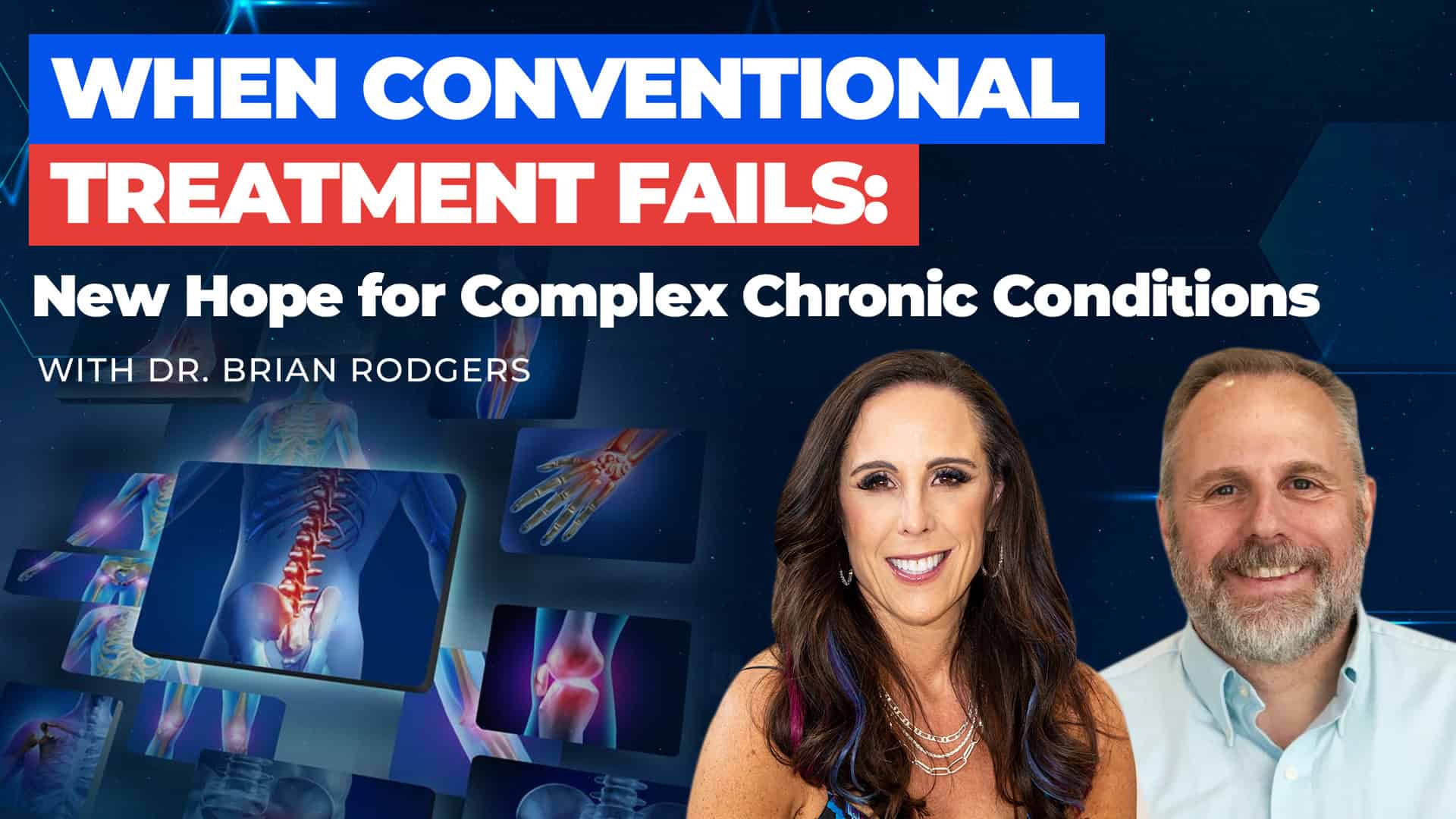
In this episode, Dr. Jill Carnahan is joined by Dr. Brian Rodgers to discuss the evolution and future of integrative and functional medicine. They delve into topics such as heart health, environmental toxicity, and the role of nutrition and lifestyle in disease prevention and management.
🔗 Learn more: https://lmthrive.com/
Key Topics You'll Discover with Dr. Brian Rodgers, D.O
① Introduction to Integrative Medicine:
👉 Dr. Brian shares his journey into medicine, starting from his roots in Minnesota and his unexpected path to becoming a doctor.
👉 The transition from traditional to integrative functional medicine is highlighted, emphasizing the importance of nutrition and personalized care.
② Heart Health and Risk Factors:
👉 The conversation covers the complexity of cardiovascular disease, noting that beyond the common risk factors, there are hundreds of potential contributors.
👉 Dr. Brian discusses the importance of looking at genetic factors and the role of methylated B vitamins and niacin in treatment.
③ Environmental Toxicity and CIRS:
👉 Dr. Brian explains his work with Chronic Inflammatory Response Syndrome (CIRS) and the impact of mold and environmental toxins on health.
👉 The discussion includes symptoms like brain fog and fatigue, and how they relate to environmental factors.
④ The Role of Diet and Lifestyle:
👉 Emphasis on the significance of a balanced diet in maintaining gut health and overall well-being.
👉 Dr. Brian advocates for a personalized approach to diet, focusing on whole foods and reducing processed foods.
⑤ Future of Medicine:
👉 The potential of AI in medicine is explored, with predictions on how it might help return to the basics of health through better data integration.
👉 Emerging therapies like peptides, exosomes, and energy therapies are discussed as promising areas in personalized medicine.
What You’ll Take Away from Dr. Brian Rodgers, D.O
📌Integrative and functional medicine offers a comprehensive approach to health, focusing on the root causes of disease.
📌Personalized care, including diet and lifestyle modifications, plays a crucial role in preventing and managing chronic conditions.
📌The future of medicine may see a blend of traditional practices with advanced technologies and therapies.
Dr. Brian Rodgers, D.O
Dr. Brian Rodgers, D.O., is a distinguished board-certified osteopathic physician with over 25 years of experience, who combines traditional medical expertise with innovative functional medicine approaches to revolutionize cardiovascular health care. As a certified practitioner of the Institute of Functional Medicine and Fellow of the American Academy of Anti-Aging Medicine, Dr. Rodger specializes in identifying and treating the root causes of cardiovascular issues through comprehensive, personalized treatment plans that integrate advanced diagnostics, lifestyle modifications, and preventive strategies. Drawing on his extensive leadership experience and multiple board certifications, Dr. Rodger brings a unique whole-person approach to cardiac care, focusing on natural solutions and long-term wellness rather than just treating symptoms.
integrative medicine podcast, Dr. Brian Rodgers DO, chronic illness solutions, functional medicine, heart health, environmental toxicity and CIRS, mold exposure, brain fog, fatigue, root cause medicine podcast, personalized nutrition and lifestyle, peptides and exosome therapy, AI in functional medicine, cardiovascular disease prevention, functional medicine chronic disease care
🔗 Learn more: https://lmthrive.com/
Dr. Jill Carnahan, MD
Dr. Jill Carnahan is Your Functional Medicine Expert® dually board certified in Family Medicine for ten years and in Integrative Holistic Medicine since 2015. She is the Medical Director of Flatiron Functional Medicine, a widely sought-after practice with a broad range of clinical services including functional medical protocols, nutritional consultations, chiropractic therapy, naturopathic medicine, acupuncture, and massage therapy.
As a survivor of breast cancer, Crohn’s disease, and toxic mold illness she brings a unique perspective to treating patients in the midst of complex and chronic illness. Her clinic specializes in searching for the underlying triggers that contribute to illness through cutting-edge lab testing and tailoring the intervention to specific needs.
A popular inspirational speaker and prolific writer, she shares her knowledge of hope, health, and healing live on stage and through newsletters, articles, books, and social media posts! People relate to Dr. Jill’s science-backed opinions delivered with authenticity, love and humor. She is known for inspiring her audience to thrive even in the midst of difficulties.
Featured in Shape Magazine, Parade, Forbes, MindBodyGreen, First for Women, Townsend Newsletter, and The Huffington Post as well as seen on NBC News and Health segments with Joan Lunden, Dr. Jill is a media must-have. Her YouTube channel and podcast features live interviews with the healthcare world’s most respected names.
The Podcast with Dr. Brian Rodgers, D.O
The Video with Dr. Brian Rodgers, D.O
The Transcript – Overview
Overview
- Dr. Brian Rodgers, a board-certified osteopathic physician with over 25 years of experience, transitioned from traditional to functional medicine after frustration with patient outcomes and insurance mandates on treatments.
- Functional cardiology evaluates 400 risk factors, including LP(a) elevation, which can lead to heart attacks despite normal cholesterol levels.
- Optimal cholesterol levels for mortality are 200-220, contrary to conventional views, highlighting the importance of understanding broader health metrics.
- Dietary modifications significantly improve gut microbiome health, with personalized approaches preferred over standardized diets; the Mediterranean diet is highly recommended.
- SIRS (Chronic Inflammatory Response Syndrome) can be triggered by factors like mold and Lyme disease, leading to symptoms often misdiagnosed as chronic fatigue.
- A 37-symptom checklist scoring 8/13 or higher indicates a 90% chance of SIRS, with VCS testing providing an accuracy of 98.5% when combined with symptom questionnaires.
- Treatment for SIRS faces challenges, with cholestyramine showing the most effectiveness; alternatives like okra beet powder are less effective.
- SIRS is associated with mood disorders and cognitive impairments, which complicate treatment adherence and overall health management.
- Environmental changes over the last 30 years have led to increased chemical exposure and declining nutritional quality, correlating with rising health issues.
- The future of functional medicine may leverage artificial intelligence to uncover treatment patterns, emphasizing core principles of health.
Notes
🎙️ Podcast Introduction and Host Background (00:00 – 01:12)
- Dr. Jill hosts Resiliency Radio podcast focusing on integrative and functional medicine insights.
- Promotes her book “Unexpected Finding Resilience Through Functional Medicine, Science and Faith” available on Amazon.
- Introduces new Sheer Defense Tinted Serum SPF 46 bestselling product available at Dr. Jill health.com.
👨⚕️ Dr. Brian Rodgers Background and Medical Journey (02:25 – 05:21)
- Dr. Brian Rodgers is board-certified osteopathic physician with 25+ years experience combining traditional and functional medicine.
- Started in Minnesota from disadvantaged background, never initially planned to be a doctor until wife encouraged MCAT.
- Became board-certified in family medicine, developed own practice doing insurance-based medicine.
- Transition triggered by repetitive drug company-sponsored conferences and frustration with 20% of patients never getting better.
- Left traditional medicine when insurance companies mandated statins for all patients regardless of individual needs.
❤️ Cardiovascular Disease Approach and Risk Factors (08:35 – 13:34)
- Functional cardiology examines 400 risk factors instead of traditional 5 risk factors.
- LP(a) elevation can cause heart attacks despite perfect cholesterol, treatable with niacin and methylated B vitamins.
- Optimal mortality cholesterol levels are 200-220, considered “high” by conventional standards but associated with lowest all-cause mortality.
- Key factors include homocysteine levels, heavy metal toxicity, gut microbiome balance, hormones, and diet modification.
🥗 Diet and Gut Health Principles (14:57 – 17:18)
- Diet is the biggest factor that changes gut microbiome – probiotics help but diet must be fixed first.
- No one-size-fits-all diet approach – starts with vegetables, some fruit, lean meat, then individualizes based on labs and symptoms.
- Mediterranean diet has best evidence base for most patients.
- Majority of patients do better with moderate animal protein inclusion.
🦠 SIRS (Chronic Inflammatory Response Syndrome) Overview (18:46 – 19:59)
- SIRS affects innate immune system requiring specific genetics plus environmental triggers.
- Common triggers include mold, actinomycetes, Lyme disease, COVID, head trauma, spider bites, toxic fish.
- Primary symptoms are brain fog and fatigue – often misdiagnosed as chronic fatigue syndrome or fibromyalgia.
- Long COVID often represents SIRS activation.
- Dr. Dale Bredesen reports 1-3 (possibly 2-3) early-onset dementia cases have mold-related/SIRS inflammatory issues.
📝 SIRS Diagnostic Process (21:04 – 24:45)
- 37-symptom checklist (13 lines, 15 symptoms each): Score of 8/13 or higher = 90% chance of SIRS.
- Visual Contrast Study (VCS) available at survivingmold.com – tests for optic nerve inflammation.
- VCS test shows lines or fuzz (like old TV snow) – SIRS patients see fuzz instead of gray shade variations.
- Combined positive questionnaire + VCS = 98.5% accuracy for SIRS diagnosis.
- Laboratory testing includes genetic testing and neurotransmitter panels – need minimum 3 abnormal neurotransmitters.
💊 SIRS Treatment Challenges and Protocols (26:00 – 32:31)
- Many patients have seen multiple doctors, spent significant money with no improvement before finding SIRS-trained practitioners.
- Most important first visit outcome is providing hope to previously hopeless patients.
- Common treatment failures include antifungal medications causing brain atrophy and worsening symptoms.
- Traditional functional medicine binders (activated charcoal, etc.) don't work effectively for SIRS-specific toxins.
- Cholestyramine has most evidence for SIRS treatment.
- Generic WelChol tablets preferred by patients over liquid mixing – about 1/4 to 1/3 as effective as cholestyramine.
- Okra beet powder available as prescription alternative but less effective than pharmaceutical options.
🧠 Brain and Neurological Effects of SIRS (31:14 – 31:14)
- SIRS causes mood disorders including anxiety, depression, anger, PTSD.
- Cognitive impairment affects patient comprehension and memory of treatment instructions.
- Hormone imbalances occur but cannot be corrected until SIRS toxins are removed first.
- Gut healing also requires addressing SIRS toxins before other interventions become effective.
🌍 Environmental and Societal Health Factors (33:51 – 35:22)
- Significantly more environmental chemicals present now compared to 30 years ago.
- Increased stress levels in schools, families, and economic pressures requiring dual-income households.
- Nutritional quality decline – modern apples contain fewer nutrients than 30-100 years ago.
- Rising rates of autism, autoimmune diseases, and hormone imbalances correlate with environmental changes.
🔮 Future of Functional Medicine (35:22 – 35:22)
- Artificial Intelligence will help identify treatment patterns and lab result trends not previously recognized.
- AI may lead back to basics – real foods and fundamental health principles.
- Core fundamentals remain most important: movement, food, sleep.
Transcript
00:00
Dr. Jill Carnahan
Hey everybody. Welcome to Resiliency Radio, your go to podcast for the most cutting edge insights integrative and functional medicine. I'm your host, Dr. Jill and with each episode we dive into the heart of healing and personal transformation. Join me as we interview renowned world thought leaders, medical doctors, and all kinds of interesting folks to bring you the best information to help you thrive and optimally transform your life. If you've been around here long enough, you've known that I have a book out there. I just want to remind you, if you haven't yet taken the time to get pick up your copy or send it. It's called Unexpected Finding Resilience Through Functional Medicine, Science and Faith.
00:38
Dr. Jill Carnahan
You can get a copy anywhere books are sold, Amazon or anywhere and it would be helpful if you have read it or you have given someone a copy ordered it yourself. Please stop by and leave us a review. We'd love to hear your comments. You can always comment here as well for anything that you need. I actually do go in here on YouTub and different channels that we have the podcast on and answer those comments and questions myself. So if during the interview you have questions or comments, please feel free to leave them. I read them, I comment on them and I'm happy to answer any questions that you have. Before we jump to our guest today, I want to introduce to you the new Sheer Defense Tinted Serum. This has been a bestseller.
01:19
Dr. Jill Carnahan
We were out of it a few weeks ago and we're back in stock. It's a great easy way if you're getting ready to work out in the morning and you want protection from the sun and also just a little bit of tint. It is my favorite product that we have in the beauty line for that reason. So sheer tinted defense SPF 46. You can find that at Dr. Jill health.com okay, so let me introduce our guest today. Our guest is Dr. Brian Rogers. He's a distinguished board certified osteopathic physician with over 25 years of experience. He combines traditional medicine expertise with innovative functional medicine approaches to revolutionaries to revolutionize cardiovascular health care. He's certified institute of Functional Medicine and American Academy of Anti Aging Medicine. He specializes in identifying and treating root causes, especially cardiovascular disease.
02:08
Dr. Jill Carnahan
And today our discussion starts in cardiovascular disease and goes on to talk about Sears, which is Chronic Inflammatory Response Syndrome. You may or may not know about that often contributed to by mold related illness. But many other things, as you'll hear in our interview today, can contribute or cause that. So you will enjoy this interview. Our topic Today is called When Conventional Treatment Fails New Hope for Complex Chronic Conditions. Let's get to our interview. Dr. Rogers, it's so good to have you on the podcast. And I am really excited to dive into kind of where you got your start, which is heart health and integrative function medicine. But lately you've been doing a lot with Sears and mold and environmental toxicity, and of course that's my favorite topic. So we will dive into that for those of you listening.
02:52
Dr. Jill Carnahan
But I always love to start with some story and a little bit about how did you get into medicine? You know, did you grow up always wanting to be a doctor? And then how did you kind of get into the integrative functional spheres?
03:04
Dr. Brian Rodgers
Well, great. And thanks for having me here. I really appreciate being a part of this podcast. Well, I grew up in Minnesota and I grew up on the wrong side of the track, so I never thought I was going to be a doctor, but I. My wife at the time just said, go, do the MCAT and see what happens. And I did got into osteopathic school, which I thrilled to be a do. And how did I do that? Well, I did go to some pre med classes in school and such, but no, I. That wasn't my dream. I thought I was going to do other things, but going to osteopathic school, I learned in school and such. I'm stuttering for a second. Give me a sec. All right. At osteopathic school, I learned that I wanted to go into family medicine.
03:58
Dr. Brian Rodgers
That's where everything was at. So I became board certified in family medicine and I finished residency, started a practice, and I started here in Utah with my own practice and developed it and was doing insurance medicine. And everything was going great until I was at conferences and I was hearing the same lectures all over and over again, all sponsored by drug companies. I was getting bored. So I was at a national conference for dos, went wandering around, found a conference or a lecture on nutrition, and that led me into functional medicine and that where I started some training. I kept on doing my traditional medicine, but was doing training in functional medicine.
04:44
Dr. Brian Rodgers
I went to an A4M course, got board certified and trained there and got other certifications, went to the Institute of Functional Medicine, but I was still trying to do both traditional medicine and functional medicine at the same time. It was a horrible decision because I was my biggest competitor.
05:05
Dr. Jill Carnahan
Yeah.
05:06
Dr. Brian Rodgers
And my patients wanted functional medicine and traditional medicine and insurance wouldn't pay for it.
05:11
Dr. Jill Carnahan
Yeah.
05:12
Dr. Brian Rodgers
I finally got out of traditional medicine when insurance companies said that if I didn't do statins on all of my patients. They were going to take money away from me.
05:24
Dr. Jill Carnahan
Yeah.
05:24
Dr. Brian Rodgers
Which was crazy.
05:26
Dr. Jill Carnahan
Yeah.
05:27
Dr. Brian Rodgers
I also was frustrated in traditional medicine that despite all these great protocols and everything, 20% of the patients just never got better. So I went into the functional medicine.
05:42
Dr. Jill Carnahan
Amazing. And so interesting because your story, as so many of my guests, is very similar. And even my own is there's the. First of all, if we go into medicine, usually not 100%, but many truly want to help people. And second, curious. We're like, well, why does this happen? Well, why, like, usually it's a type of curiosity that is involved in lifelong learning. Right. And which is you and I both share and what happens in conventional medicine is you come across these things that are puzzling, that don't make sense, like, why would we give everyone a statin, even those who have myopathies and, you know, muscle pain and weakness and genetic issues with it, or those women who get diabetic because they should never have been on a statin? And on and on. Right. There's never a one size fits all. So.
06:21
Dr. Jill Carnahan
So when we start to see that, and then like you said, I love that you referenced our old school AMA types of conferences, that's American Medical association or anything that's very standardized. The truth is, most of those lectures, including continuing medical education lectures, which are supposed to be neutral, are sponsored by drug companies. Right. Like, if they pay. So when you start to see the mechanism under, you're like, it's almost like, I think of like wizard of Oz and the be the wizard behind the curtain. Like, you see the wizard and you're like, oh, wait, this is just a guy with, you know, strings and talking in this big illusion. And then you realize, wait, all of our education is a little bit tainted by this. And this is not a conspiracy. You can go look it up if you're listening.
06:58
Dr. Jill Carnahan
And by now, most people have heard, so this is not shocking. But what happens is then you go to what you said next, and that's like, I was kind of bored and then kind of stuck in this thing. And I've this piece of my story before, but I remember when I was in a conventional medical hospital doing integrative medicine, and we sat at a board table with all the specialists, and the director, the CEO of the hospital, is putting up beds filled by each department. And guess what? For me, it was like a big zero, a big goose egg, because obviously. Right. And so, but then I realized, I'm like, oh, I am at odds intrinsically with the goals of this hospital system, and I'm never going to be filling beds if I can help it. Right.
07:35
Dr. Jill Carnahan
So I was like, this is not going to last it anyway. I saw the writing on the wall and I moved to Colorado, so that's enough about me. But I think it's just so relevant for those listening, especially because, number one, we have a lot of practitioners of all types. Number two, we have a lot of patients who are frustrated with the system or discouraged. Some of them have found great doctors, but a them are still looking. So I think it's so relevant to kind of acknowledge the climate and why we've gone to do what we've done. I just got back from an A forum conference this weekend and.
08:01
Dr. Brian Rodgers
Oh, great.
08:02
Dr. Jill Carnahan
Yeah. And I was so amazed and humbled and shocked by gastroenterologist, rheumatologists, all these specialists starting to step in, and you can just see their eyes are wide. Kind of like maybe the first time you heard nutrition at your osteopathic conference where it was validating. He's like, oh, wait, this is fascinating. This is why I went into medicine. Right. So from there we got your first foray into integrative function medicine. You've done all the training of all the organizations that we respect and revere, which is amazing. And then a lot of your bio talked about cardiovascular disease. So although we're going to talk about mold and Sears, tell me how that started. Did you primarily in the beginning kind of help people prevent cardiovascular disease or were you just seeing a lot of it?
08:40
Dr. Brian Rodgers
Well, I have cardiovascular disease in my family, and I've had a lot of patients with heart attacks and strokes. And so with Functional Medicine A4M, I went in and got certified with Dr. Mark Houston and his course with nutritional cardiology, Functional cardiology, learning all that, and tried to get that up and going up in my clinic, and we've had a lot of success with those types of patients. The important things to reduce heart disease, you don't look at just five risk factors. You look at 400 risk factors. And if you don't look at them, there are small things that can cause a problem. For example, you can have perfect cholesterol and your LP can be elevated, and if you don't treat it, you can still have a heart attack and stroke. And that's just a genetic factor treated easily with methylated B vitamins.
09:40
Dr. Jill Carnahan
Yes.
09:40
Dr. Brian Rodgers
I mean, with niacin.
09:41
Dr. Jill Carnahan
Niacin, yes. Niacin totally makes sense. So let's stop here. Just For a moment because I know a lot of people are worried about their heart. I always see like people who come in or are wellness warriors, we could call them. It's like heart, brain cancer, longevity, like functionality and probably more. But those are kind of the ones I see a lot. So.
09:59
Dr. Brian Rodgers
Absolutely.
10:00
Dr. Jill Carnahan
Heart is right up there, right? Heart attack, stroke. So let's talk a little for those out there, you and I know the statistics on cholesterol and the reality around it, and that statin is the only answer. But say someone just say, let's say we have a 55 year old male, he has a high risk family history. He is otherwise like a normal echocardiogram. His cholesterol is a little elevated enough to be told by his cardiologist, you need to be on a statin, which is pretty common. Right.
10:25
Dr. Brian Rodgers
So is cholesterol 220 and LDL 110? Absolutely.
10:28
Dr. Jill Carnahan
Yes. Okay, so yeah, let's give some numbers here and let's give a scenario like how would you approach that? And what I really want to go too is things that people might not be thinking of, autoimmunity, gut, whatever, anything you can think of that might be some of those 400. Not all that might be related to inflammation and risk that they might not be told by their cardiologist.
10:47
Dr. Brian Rodgers
Well, the first and most interesting thing is we're taught in allopathic medical school, osteopathic medical school, that the first thing to do for cholesterol is diet and exercise. And we should reach for that before we hit the statins. So along with the diet and exercise, we can also look at things like their homocysteine level. If that's elevated, we can give them methylated B vitamins, bring it down. We can look for heavy metal toxicity. If that's a problem, we can get rid of those toxins, organotoxins. But most commonly in the United States, it's their diet. And if we just adjust their diet to be something healthy, that will work. If we get their gut balanced, whether it be the microbiome with probiotics, proper diet and other things, all of those things can lower the cholesterol, hormones being balanced, so many things.
11:41
Dr. Brian Rodgers
There's 400 is a long list.
11:43
Dr. Jill Carnahan
Yeah, exactly.
11:44
Dr. Brian Rodgers
There's so many things that we can do to help lower that cholesterol and help reduce their heart risk.
11:50
Dr. Jill Carnahan
Hey guys, just interrupting this show for a few short seconds to remind you that everything you need to heal from Sears and chronic mold related illness is on my website. We have a detox protocol we have a Maslow protocol and that can be all found at Dr. Jill health.com again Dr. Jill health.com and I specific quickly today wanted to be sure and show you this really wonderful mold detox miracle mold detox kit with Quicksilver and Dr. Jill. We've got lots of protocols. This one happens to be kind of like the happy meal of mold, which is a really terrible analogy. But you can get this whole entire box with products for 30 days for your detox. It is highly effective. It's very comprehensive. Includes electrolytes, includes nad, includes all of the things that your body needs to get rid of that toxic exposure.
12:38
Dr. Jill Carnahan
Now, a lot of people have questions. There's a Q A section on the website. You can go to doct Dr. Jill health.com and search mold box or miracle mold box and get all the details. Okay, let's get back to our show. Yeah. And I find if the homocysteine TMAO lp, all these other things around hscrp, all of these inflammatory markers around cholesterol are perfectly normal and there's no sign of gut dysbiosis or autoimmunity and their cholesterol is 220. I think the statistics, and correct me if I'm wrong, but optimal mortality levels are cholesterol 200 to 220, which is considered high, which means all cause mortality is actually lowest when Your cholesterol is 200 to 220. Am I saying that right or have you heard that?
13:16
Dr. Brian Rodgers
Yeah, that sounds correct to me. Yes.
13:18
Dr. Jill Carnahan
Yeah. It's crazy, isn't it? So, so then you mentioned gut and heart and obviously with functional medicine, all of us deal with the gut. What are some things you see related to gut that concerned you or that you address in the clinic? Whether it be related to gut and heart or gut and brain or just gut in general. Let's talk gut health.
13:36
Dr. Brian Rodgers
Well, with gut, as a surge practitioner, the first thing I see is leaky gut where their gut is permanent, permeable and they can get a of food allergies, food sensitivities to that. You fix the sirs. We work on that. We can talk about that later. But seeing the dysbiosis, that's the biggest thing because when they don't, their bacteria in their gut are off. And I know I'm speaking to the gut guru here, when their bacteria are off, that imbalance can lead to digestive enzymes not working to improper metabolites into in the gut and that sort of thing. So the first thing I look at is a proper balance. The first and best way to get a proper balance is to get a proper diet. Diet is the biggest thing that will change the gut microbiome to help fix things.
14:31
Dr. Brian Rodgers
Probiotics are great and they're needed, but if you don't fix your diet, you're never going to fix your gut.
14:38
Dr. Jill Carnahan
Okay, I love that you're speaking to the choir and I really love saying that because a lot of times people are. What happens is even for us as practitioners, I remember 10 or 20 years ago were marketed these 10 strain, 20 strain 250 billion, these high dose, high strain probiotics and high meaning 10. But that's really like compared to the diversity in our microbiome, that's nothing. And then we started realizing there's really not a lot of evidence for just higher dose of Lactobacillus. What we can see now is the evidence is pointing to specific strains for specific things. But really like you mentioned, diversity, which comes back to what are we eating? So say you have a patient who has a high risk cardiovascular disease or even risk of dementia. What are some of the practical things?
15:16
Dr. Jill Carnahan
Do you do a one size fits all diet? What are the main principles that you use? And then I want to also talk about exercise.
15:22
Dr. Brian Rodgers
Okay. I do not have a one size fits all diet. Everybody is a little bit different on how they approach it. Some people have to have their meat and that's what their body needs. And a carnivore type diet can be good in those people you gotta follow. But I prefer, if I'm going to start with a diet with people, I'm going to say eat lots of vegetables, some fruit, lean meat, and let's see where you go from there. I don't want to give them a lot of restrictions at first because I want to see where they go with it and see what type of recipes they have and see where their labs go. Well, after a while you may have to say, hey, you really are eating way too much sugar, get rid of that.
16:08
Dr. Brian Rodgers
Or hey, you're having too many processed carbs, please get rid of those or you're eating a lot of these vegetables. We want you to eat some more of these vegetables. And you do make those adjustments per the individual, per their labs, per what's going on with them and their symptoms.
16:22
Dr. Jill Carnahan
Yeah, gosh, I really like that because I've found too, there's really no one size fits all in every camp, whether it's vegan or carnivore or paleo or everything in between has Their evidence. And I think what I've come across and even taught on is the commonality is plants. Like even if you're on a diet like even carnivore, which is mostly meats, long term, does not, we know it doesn't do well for microbial diversity. But temporarily, as you can imagine, you're taking out those short chain or the fodder like the disaccharides for the say sibo or whatever. So people tend to feel better or the carbs if there's an issue. So that makes sense. I like it.
16:57
Dr. Jill Carnahan
To me, it's almost like around a Mediterranean diet like that probably has the best evidence which is, I agree, nuts and seeds and good healthy oils and then meat. And I would say majority of my patients do better on animal protein and in moderation. I'm a big fan of that. For the right person. It's pretty rare that I say you absolutely can't touch animal protein. And then we talk about pipes and so love that. Okay, so let's talk Sears. That's your thing. And I was so excited because I knew were going to talk cardiovascular disease, but I didn't know how excited you were about Sears. First of all, what the heck is Sears? For those who don't already know and how does that, like, what are you seeing in your clinic as far as people presenting with this?
17:35
Dr. Brian Rodgers
SIRS is basically a problem in your immune system. Your serves as a problem in your innate immune system, your general immune system. Your innate immune system is your skin, your mucous membranes, your white blood cells. It kills pathogens. Generally you have to have the genetics to have sirs. And if you happen to have the genetics and you happen to run into certain triggers that the innate immune system doesn't know how to handle, you have problems. Those triggers are mold, actinomycetes, Lyme disease, Covid head trauma, spider bites, a few other things like that toxic fish. And when the innate immune system presents them to the helper cells to have antibodies made, the helper cell says, I don't know what to do. I don't have the genetics to do things right. So the innate immune system goes wild.
18:35
Dr. Brian Rodgers
The mitochondria stop making as much energy, the brain has a bunch of toxins, go overload, messing with our hypothalamus or pituitary, causing leaky brain and leaky gut. Now, I could go on for hours talking about the specifics of sirs, but that's it in a nutshell. You keep on having these problems and until it's turned off. Well, what are the symptoms? Well, it's most commonly people with brain fog and fatigue. Those are the two biggest symptoms. So people who have been diagnosed with chronic fatigue, fibromyalgia are often people who have sirs. Now, lyme can go with sirs. And often you see chronic lyme disease. Those people who can never get over their lyme disease. Often it sirs and you got to treat both the sirs and the lyme Covid. The long Covid often is sirs. Covid can turn that on.
19:29
Dr. Brian Rodgers
So that's it in a nutshell.
19:31
Dr. Jill Carnahan
That's a great overview because people out there are like, oh yeah, that's me, or that's someone I know. And especially the chronic fatigue where no one's found a solution. I find the same thing is I always frame it as there's toxins and infections. Right. And you name both of those as triggers for Serge, and then those two interact with the immune system and cause inflammatory cascade. That's just like you said. It's this rotating vicious cycle that we need to intervene and turn it off. So say someone's out there and they're like, oh my gosh, I'm so fatigued. I'm so brain fog. I know I have mold. I know I have limber and I don't know what I have, but I don't feel well. Interesting.
20:02
Dr. Jill Carnahan
Just a little side note, Dr. Dale Bredesen's work on Alzheimer's relates to this too, because I think he said that one in three and recently said maybe even two out of three people with early onset dementia have mold related or sears related inflammatory issues. So, okay, so say this person spoke.
20:19
Dr. Brian Rodgers
At the recent CSRS conference.
20:21
Dr. Jill Carnahan
Okay, see, yeah, just a month or two ago. So, yeah, because we know when we see his research, we're like, oh, yeah, that's here. Like, you and I know that majority of them, especially the younger, so cognitive. I love that you said fatigue and cognition. Because if I think about my clinical practices, the probably two most common things that I see, I don't know about you.
20:38
Dr. Brian Rodgers
Absolutely. You can have other weird symptoms too, like frequent urination, muscle pain and aches, insomnia, gain of £30. Just like that. Static shocks, other kinds of weird stuff. Yeah, yeah.
20:51
Dr. Jill Carnahan
It's so fascinating when you get into all that. Right? So, so say to the person who's listening, they're like, maybe I have this. Where do you start when they meet you in the clinical practice and, you know, for. With testing and assessment, obviously a history. Take us through what you'd walk through. If someone listening is like, do I have Sears? How would you diagnose that to begin with?
21:09
Dr. Brian Rodgers
Well, with sirs, I. The first thing I do is go through the symptom checklist. There are 13 lines of symptoms, 15 symptoms in each line. So it's sometimes it's called a 37 symptom checklist, sometimes it's called a biotoxin illness survey, depending on where you're at. And I go through that and it gives me a score. And if their score is 8 out of 13 or higher, they have a 90% chance of having SIRS. So that's the first thing I do. I want to make sure of what I'm dealing with. I don't want to give them a diagnosis that they don't have. That doesn't do us any good. The second thing I would do is a visual contrast study, and that can be found on the Internet.
21:55
Dr. Brian Rodgers
I like Dr. Shoemaker's@survivingmould.com but there's other VCS tests or visual contrast studies that's looking for inflammation in the optic nerve. If there's inflammation in that optic nerve, you have trouble seeing between shades of gray and you fail the test. And basically what you're doing is seen between shades of gray. Or they have lines and they either go up to the right or to the left. And it's a simple test. But people who have SIRS and they have inflammation in their optic nerve, they don't see the lines, they just see fuzz. Like an old TV with snow on it. Old black and white tv. You have to be old as me to know that. But because people don't see snow on their TV anymore, right? But that's the second thing.
22:45
Dr. Brian Rodgers
If they fail both those things, then I will check into lab work because there are specific labs to see if you have CERs. First is the genetic testing. And then we check neurotransmitters, and you have to have at least three neurotransmitters that are off. If you don't, you probably don't have CERs. If you do, you probably do.
23:04
Dr. Jill Carnahan
Yeah. Yeah. I love that because I get a question all the time. And you're going to laugh at this as well. And we don't laugh at people, but it's like, I wish, right? And what they say is, what's the one test for mold or Sears, right? There's like this idea that what one thing could I have my doctor order? I'm like, oh, my goodness, it's so much more complicated than that and these tests you're talking about, I order them too. Not all of my colleagues do, but I agree with you. Because what we're looking at is we're looking at different parts of the innate immune system and the activation. And some of them are more like related to brain histamine. Some are more related to inflammation, maybe more the gut. Some are related to the ability of us to regulate hydration.
23:37
Dr. Jill Carnahan
Like all those things. Right. And so we can look at that. And. And then even those, even with our colleagues, a lot of them are like, oh, does this diagnose? But none of those markers by themselves are diagnostic. And I'm naming TGF beta, MMP9, and VEGF. And just for those listening, some of the ADH and osmolality and MSH and. And these are all often not only inflammatory cytokines in the immune system, but some of them are hypothalamic pituitary, like you said, neurotransmitters. And it's a big picture, isn't it? So you take your history, which you got, and you have this history of some sort of incident or just a suspicion of symptoms with your questionnair. Then you take the visual contrast test. And I always say those two things are free, right?
24:17
Dr. Brian Rodgers
And I love that because the VCS is $15.
24:20
Dr. Jill Carnahan
It's a free one. But the one I like, I agree with you. The shoemaker one. It does, yeah. So you're right. A little bit of money, but basically really inexpensive. So you can start and get a really good. And I don't know about you, but if I have those two positive. The questionnaire and the visual contrast, I am, I would say, like batting 99% at who I've diagnosed.
24:38
Dr. Brian Rodgers
Right, exactly. 98.5 is the official statistic.
24:43
Dr. Jill Carnahan
Oh, wow. I didn't know that. I just was going on my clinical experience. Yeah, that makes sense because. And I like to say that because people out there don't have you and I in their lives or a functional doctor. They're trying to figure this out on their own, and they can get a lot done, but it can be really complex and it can be really expensive. So I love talking about that. So say you have someone talk about expensive.
25:04
Dr. Brian Rodgers
I have found that a lot of these SIRS patients have been to multiple doctors, have tried multiple treatments, have spent tons and tons of money, and they're no better than they started. And with sirs, number one, we can tell them right away, yeah, it's highly likely you have it 99% or not. And we can help you get better. And the most important thing I can give them in that first visit is hope.
25:29
Dr. Jill Carnahan
Yes.
25:30
Dr. Brian Rodgers
Because these are people who are without hope because they've been tons of physicians without hope.
25:35
Dr. Jill Carnahan
Yeah.
25:36
Dr. Brian Rodgers
And we can help them.
25:37
Dr. Jill Carnahan
Oh, I love where you're going, Dr. Brian, because that is really, I think, the secret weapon in my practice. And I say weapon, but it's like how we love people because so many of these patients are not only so sick with. And part of it affects the anxiety and the sleep. And so not only are they physically of being affected by this toxic exposure, whatever their trigger is, but they're probably not sleeping. And the emotional ability. It's almost like I. I've looked at the. The studies around mold toxicity in particular. It's almost like you're inebriated. You can't. It's hard to have the good cognition because your mold. Your brain is being affected by mold. And because of that, they're already traumatized. They're already somewhere inside.
26:16
Dr. Jill Carnahan
Like, I just the other day was on a vacation and traveling, and I thought there was mold in the house. It turned out there was. I did. Okay. Like, I'm pretty resilient nowadays. But even to this day, 10 years later, as a mold expert, I still doubt myself sometimes. Right. I'm like, am I just crazy thinking that everywhere? Because. But the truth is, I'm usually right, and I question my own judgment. How much more does a patient who's been told by doctor after doctor, you're crazy, your labs are fine. So I love. Back to the hope that is really so powerful. And I love that you're talking about that, because when a patient gets in front of us, one of the most important things we can do is validate their experience.
26:53
Dr. Brian Rodgers
Right. And I am finding more and more doctors now that say, I can treat mold, I can treat sirs, and they use protocols that don't work. And these guys waste. These patients waste tons and tons of money with these people who do not get them where they need to go.
27:08
Dr. Jill Carnahan
Yeah.
27:09
Dr. Brian Rodgers
There's some medically studied, medically researched protocols that work that have verified that they work. Dr. Shoemaker has done most of the research in that area.
27:22
Dr. Jill Carnahan
Yeah. No, I love that you're saying that, because I find that, too, the missing links. And what would you say is the most common things that cause failure, as far as something that you feel like is really lacking evidence and probably not very effective, that a lot of people maybe on social media are hearing or.
27:37
Dr. Brian Rodgers
Well, when they hear of sirs, they Think of mold illness. So they think it's mold. Let's give them a medicine that will kill the mold or kill the fungus. And a lot of these antifungal medicines will cause brain atrophy and cause them to get worse. That's one thing I see a lot of times. Or they try a bunch of herbal substances. I'm all for herbs. I'm all for natural products and vitamins and supplements. But certain molds are. Certain supplements just don't work in sirs. And the biggest thing I see is binders. There's tons of great functional medicine binders. I've heard you tell me them in lectures, activated charcoal, and a whole bunch. But these binders are great in functional medicine, but not great in sirs. And getting rid of the SIRS toxins.
28:31
Dr. Jill Carnahan
Yeah. Well, what I think might be the truth there is that at the core, we're binding lps, and we think we're binding mold, but really it's a lipopolysaccharide issue. And for most these patients, that's an endotoxin that is contributing to their load, but it may not be the root cause. So. So I want to kind of caveat that with. I feel like most of my patients do better on some sort of binder, but it's maybe not what we think it is as far as what it's actually doing. Would you agree with that?
28:56
Dr. Brian Rodgers
I. I think that's very possible. And all these functional medicine binders that I'm talking about, they can be helpful insers also, but you have to have the correct binder inserts to get the right toxins out of your body. Yes.
29:11
Dr. Jill Carnahan
And I agree. And the thing is, there's like a compendium with some of the organizations that actually pulls in the research and says this binder is better for this toxin. And so in the literature, it's actually out there of what. What I pick and choose based on what we're dealing with.
29:23
Dr. Brian Rodgers
Sure.
29:23
Dr. Jill Carnahan
Yeah. Good. Okay. So we talked a little about heart. We started there, and we talked about gut. And of course, Sears is our topic now. But I think, because fatigue and brain fog are the biggest complaints with Sears, let's talk a little bit about the brain. Like what sequelae symptoms do you see? Do you see mood disorders? Do you see sleep disorders? Do you see even hormonal dysregulation? What brain things could people attribute to Sears? And then how do we address those?
29:51
Dr. Brian Rodgers
You see all of those things. I had a SIRS patient for about a year who ended up being in A molding building or something. And she sent me a message through the patient portal and just chewed me out for not doing this and that and the other thing. Well, a week later she sent me a message and apologized for all that because her sirs had really changed her mood. And, and so you can have anxiety, you can have depression, you can have. Have anger, you can have PTSD with all of this, all those things happen. You have that foggy brain. And so part of the problem with these SIRS patients, when they first come in with their foggy brain, they don't understand, they don't remember what you've told them. You can write it down, but they still have troubles reading and understanding.
30:43
Dr. Brian Rodgers
And so getting the best thing I have found in these patients is getting them on the correct binder to get this going. Yes, their hormones are off and you need to balance their hormones, but you can't balance their hormones. You can't even fix their gut properly until you get a lot of these SIRS toxins out of their body.
31:04
Dr. Jill Carnahan
Yeah. So that's the biggest. Let's be specific here. I'm assuming that you're talking about like cholestyramine or the generic well call as the ones that have the most evidence.
31:14
Dr. Brian Rodgers
Those have the most evidence. And there's also, if you really want to stay away from prescriptions, there's an okra beet powder that works. Yes, but it's not quite as effective.
31:24
Dr. Jill Carnahan
Yes. Okay. I would totally agree with you. I will say a caveat. If some of my really toxic gut patients don't tolerate the colostarmine very well, most of them tolerate the alternative, which is the generic well call. And I would say again, I'd love your statistics. In my clinical experience, the well call is about a quarter or a third as effective as the cold styramine. Do you have any ideas on what your clinical experience is?
31:46
Dr. Brian Rodgers
Well, I have found that most of my patients prefer a tablet than they do mixing something in a liquid. And so I start most of my patients on the well call tablets or the pulls available, the generic well call. And most of them do well. However, I've had a few patients that the. It's not a lot that they didn't do well on the well call and I needed to put them on the cholestyramine and then they started having success.
32:15
Dr. Jill Carnahan
Yeah, What I thought is those who do well on the coal starry do really well. Like they. It's just pretty clear who is the right.
32:21
Dr. Brian Rodgers
Absolutely. Yes, that is correct.
32:23
Dr. Jill Carnahan
Good, good. Okay. That's great. So back in the day before, one thing I just want to talk about is like the complexity of what we're seeing. That's one of the part, the pieces of our title, of our talk today. And what would you attribute. Clearly, Sears is a big piece of the puzzle, but if you look at the whole scheme of like 20 years ago, I don't know how long you've been in medicine, but I've been in over 20 years and I've been over that too. Okay, I figured about the same. But at least for me, the landscape was back in the day, someone had maybe a strep throat or a thyroiditis or a hormone disorder and within three months, six months, they were better back to.
32:57
Dr. Jill Carnahan
And, and nowadays that complexity, the chronicity of people coming in is at a level I've never seen before. Right. Any thoughts on why we're seeing so much more complex chronic illness and how that, whether it's environmental or otherwise.
33:12
Dr. Brian Rodgers
What why we're seeing that there many reasons. We have so many more chemicals in our environment than we did 30 years ago. And that when we have more chemicals, we have more toxins and we have so many more ways to get toxins into our bodies. We have more stress. We're having. Schools are more stressful. Families are more stressful. Thirty years ago, a lot of homes were a single breadwinner. Now you can't live unless both parents are trying to earn money. And if you're a single family, it's just really tough. The stress is just immense. And so all these things and all these problems then lead to hormone imbalance, they lead to inflammation, they lead to autoimmune. We're seeing more and more autism and such. All these things are happening since our chemicals, our stress, all of those things are increasing.
34:14
Dr. Brian Rodgers
And I think that's what's going on in our environment. It's making more difficult for people to be healthy.
34:19
Dr. Jill Carnahan
Yeah, I could not agree more.
34:20
Dr. Brian Rodgers
And our nutrition even is going down. An apple today has far fewer nutrients in it than an apple 100 years ago, 30 years ago.
34:30
Dr. Jill Carnahan
Yeah, gosh, I could not agree more. So, so true. So lastly, maybe we end on. Do you see any. Obviously now there's peptides and exosomes and there's all kinds of fancy things, whether or not they have all the evidence yet. But what do you most. Or maybe it's energy therapies like red light or what would you say is your most promising, exciting thing in the future that you see being becoming more prevalent in functional integrative personalized medicine.
34:57
Dr. Brian Rodgers
Interestingly enough, what's going to happen, I think, is we're going to have more intelligence as the computers go, the artificial intelligence. We're going to learn more about how to deal with our body. And I really feel that's going to take us places as we're going to combine information, as we're going to combine lab results and see some trends that we haven't seen before. And that will lead to other things like newer treatments, newer supplements. Maybe, just maybe it'll help bring us back to the basics, because I really do think our bodies know what the basics are. And if we get back to the basics, real foods and such, that's probably where AI is going to lead us.
35:41
Dr. Jill Carnahan
Yeah, I love that because often these fancy, expensive things and the truth is movement, food, sleep, like we can't get any more basic and also more important than the very core things. Dr. Brian, this has been an absolute pleasure. And I love the discussion on Sears because a lot of people don't even know what that means, let alone that they're suffering from it. If people want to know more about you or your practice or what's up and coming for you, where can they get more information?
36:06
Dr. Brian Rodgers
Well, they can go to our website@lmthrive.com lmthrive.com our phone number is 385243, 1615.
36:19
Dr. Jill Carnahan
Perfect. And if you're driving, don't worry about writing this down. It'll be in the show notes. Of course. Dr. Brian, thanks for your work in the world and thank you for coming on the podcast. Guest. I really appreciate.
36:29
Dr. Brian Rodgers
Thank you very much for inviting me.
36:31
Dr. Jill Carnahan
You're welcome. Hey, guys, hope you enjoyed that interview with Dr. Rogers, if you are a frequent listener or subscriber. But I just want to say thank you. It's you guys who make this great. And I know I hear from you in the comments or sometimes in person in my office or different places, and it's always such an absolute treasure to hear from you. Just the other day I was at a coffee shop in a small town near Boulder and I was going out and somehow we got to talking about mold and houses and the lady at the coffee shop was telling me about her experience and how she had found some resources online that I had put out there and it really helped her recover. And there was.
37:04
Dr. Jill Carnahan
There's literally nothing more exciting than when I hear from you someone out there who hasn't seen me in my clinical practice and something we said or put out, whether it was a podcast or my book or just the free information that I provide online on my blog, that it's transformed your life or the life of someone that you care about deeply. That is why I do what I do, and it gives me great joy to hear that. So, as always, if you are not subscribed, please do subscribe. Share this with a friend if it's helpful, and I hope to see you back next week for another episode of Resiliency Radio.
* These statements have not been evaluated by the Food and Drug Administration. The product mentioned in this article are not intended to diagnose, treat, cure, or prevent any disease. The information in this article is not intended to replace any recommendations or relationship with your physician. Please review references sited at end of article for scientific support of any claims made.




Share: