


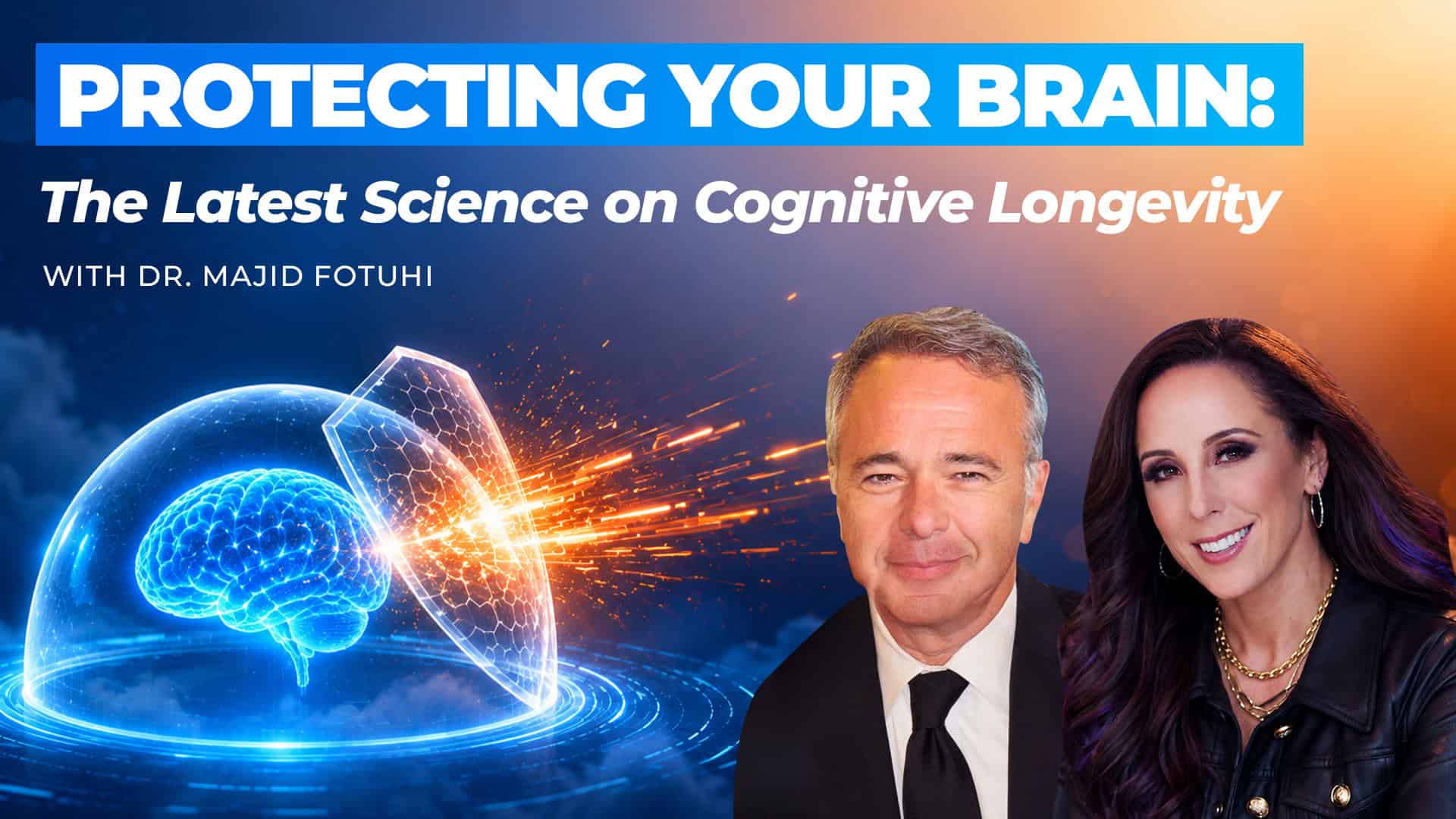
Dr. Jill sits down with gut health expert Dr. Vincent Pedre to uncover the alarming impact of microplastics, the crucial gut-brain connection, and how hormones are influenced by everyday toxins.
Discover how conditions like leaky gut, bacterial overgrowth, and microplastic exposure contribute to anxiety, depression, and chronic inflammation. Learn about the vital role of the vagus nerve, the benefits of butyrate supplementation, and how fermented foods and mindful lifestyle habits can transform your gut health and emotional well-being.
Packed with practical tips to reduce toxin exposure and improve your daily habits, this episode is a must-watch for anyone looking to reclaim their health, naturally.
Key Topics You'll Discover
① Gut-Brain Connection:
👉 The episode delves into the gut-brain connection, emphasizing how gut issues like leaky gut and bacterial overgrowth can influence mental health conditions such as depression and anxiety.
👉 The role of the vagus nerve in maintaining gut health and its impact on stress and emotional well-being is highlighted.
② Microplastics and Health:
👉 A significant portion of the discussion focuses on the threat posed by microplastics, which are prevalent in everyday items like to-go coffee cups.
👉 The potential health risks associated with microplastics, including their role as endocrine disruptors, are examined.
③ Diet and Supplements:
👉 The benefits of butyrate supplementation and increasing short-chain fatty acids through diet are discussed as ways to support gut health.
👉 The importance of fermented foods in supporting the gut microbiome and the vagus nerve is also covered.
④ Practical Tips:
👉 Practical advice is given on reducing exposure to microplastics and incorporating simple habits to improve gut health.
The episode concludes with a discussion on the benefits of a slower lifestyle and mindful eating practices.
What You’ll Take Away
📌 Everyday habits, such as the use of to-go cups, can have a significant impact on health due to microplastic exposure.
📌 Supporting gut health through diet and lifestyle changes can improve mental health and reduce the risk of chronic conditions.
📌 Simple practices like mindful breathing and reducing plastic use can empower individuals to take charge of their health
Dr. Vincent Pedre
Dr. Vincent Pedre, the Medical Director of Pedre Integrative Health and Founder of Dr. Pedre Wellness, CEO/Founder of Happy Gut Life, has worked as a nutraceutical consultant and spokesperson for NatureMD and Orthomolecular Products, and is a Functional Medicine-Certified Practitioner with a concierge practice in New York City since 2004. As the bestselling author of two books on the gut, he believes the gut is the gateway to excellent wellness. His latest book, The GutSMART Protocol — featuring a 14-day personalized gut-healing plan based on the GutSMART Quiz — is the culmination of years of research and clinical experience as a functional gut health expert. And his newest offering, Happy Gut Coffee, is a clean, toxin-free coffee that you can trust to keep your gut happy, especially for people that suffer from acid reflux or heartburn.
Dr. Vincent Pedre's Website: https://happygutlife.com/products/happy-gut-coffee
Facebook: https://www.facebook.com/DrVincentPedre/
Instagram: https://www.instagram.com/drpedre/
LinkedIN: https://www.linkedin.com/in/vincent-pedre-m-d-3319405b/
Dr. Jill Carnahan, MD
Dr. Jill Carnahan is Your Functional Medicine Expert® dually board certified in Family Medicine for ten years and in Integrative Holistic Medicine since 2015. She is the Medical Director of Flatiron Functional Medicine, a widely sought-after practice with a broad range of clinical services including functional medical protocols, nutritional consultations, chiropractic therapy, naturopathic medicine, acupuncture, and massage therapy.
As a survivor of breast cancer, Crohn’s disease, and toxic mold illness she brings a unique perspective to treating patients in the midst of complex and chronic illness. Her clinic specializes in searching for the underlying triggers that contribute to illness through cutting-edge lab testing and tailoring the intervention to specific needs.
A popular inspirational speaker and prolific writer, she shares her knowledge of hope, health, and healing live on stage and through newsletters, articles, books, and social media posts! People relate to Dr. Jill’s science-backed opinions delivered with authenticity, love and humor. She is known for inspiring her audience to thrive even in the midst of difficulties.
Featured in Shape Magazine, Parade, Forbes, MindBodyGreen, First for Women, Townsend Newsletter, and The Huffington Post as well as seen on NBC News and Health segments with Joan Lunden, Dr. Jill is a media must-have. Her YouTube channel and podcast features live interviews with the healthcare world’s most respected names.
The Podcast
The Video
The Transcript – Overview
Overview
- Dr. Vincent Pedre, a functional medicine practitioner since 2004, emphasizes the importance of gut health, supported by two bestselling books, including ‘Gut Smart Protocol,' which offers a 14-day healing plan.
- Personal gut health struggles led Dr. Pedre to discover functional medicine, after suffering from 20 years of issues due to antibiotic overuse and dietary sensitivities.
- Blood tests in 2007 revealed Dr. Pedre's gluten sensitivity, prompting significant improvements in energy and overall health after gluten elimination.
- BPC-157 peptide therapy successfully allowed Dr. Pedre to consume gluten and dairy without adverse effects for the first time in years, showcasing the potential of peptide treatments in gut health.
- Gut-brain connection illustrated by gluteomorphine effects highlights the addictive nature of gluten for some, contributing to cravings and mood disorders through disrupted neurotransmitter production.
- Advanced gut healing protocols identify peptides, bovine immunoglobulins, and butyric acid as key treatments, with a study showing a 43-47% response rate in ulcerative colitis patients.
- Recent findings reveal IBD patients have double the microplastic levels in stool compared to healthy individuals, raising concerns over gut health and environmental impact.
- Body Bio PC phospholipid demonstrates effectiveness in microplastic removal, underscoring the need for detoxification strategies to combat toxic exposure.
- Key toxins include plastics increasing heart attack risk by 450%, mold toxins linked to immunosuppression, pesticides affecting food supply, and persistent forever chemicals (PFAS).
- MD Lifespan’s patented Therapeutic Plasma Exchange (TPE) protocol achieves 300% greater toxin removal compared to standard methods, promoting rapid plasma regeneration.
- Clinical protocols have shown significant benefits, with brain function improvement of 17-40% and heart plaque reduction of up to 17%.
- The patient treatment process is safe, using albumin solution to mitigate side effects, resulting in only three minor events across 300 procedures.
- Comprehensive testing monitors 109 toxins and immune markers, showing patients maintaining toxin-free status after three years of avoidance.
Notes
🎙️ Host Introduction & Guest Background (00:01 – 01:23)
- Dr. Jill hosts Resiliency Radio podcast with 570,000+ subscribers, focusing on integrative and functional medicine.
- Dr. Vincent Pedre introduced as Medical Director of Pedre Integrative Health, founder of Dr. Pedre Wellness and Happy Gut Life, functional medicine practitioner since 2004.
- Dr. Pedre is bestselling author of two gut health books, with latest being ‘Gut Smart Protocol' featuring 14-day personalized healing plan.
🩺 Dr. Pedre's Personal Health Journey (02:41 – 05:49)
- Suffered 20+ years of gut issues after 20+ rounds of antibiotics as child, leading to severe weight loss despite high caloric intake.
- Wheat and dairy sensitivity developed from antibiotic-damaged microbiome, causing leaky gut and malabsorption.
- Medical school and residency training worsened gut health due to poor eating habits, sleep deprivation, and stress.
- Functional medicine discovery led to self-experimentation and eventual healing through dietary changes.
🍞 Gluten Sensitivity Testing & Elimination (09:00 – 13:58)
- 2007 blood test showed gluten sensitivity, prompting gluten-free lifestyle adoption.
- Two-week energy transformation after eliminating gluten – no more fatigue crashes from lunch sandwiches.
- Gluten reintroduction testing produced new symptom: inner wrist itching within 15 minutes of consumption.
- Dairy sensitivity pattern discovered – could only tolerate cheese during summer months without getting sick.
💉 Peptide Therapy Breakthrough (13:58 – 16:53)
- BPC-157 peptide therapy allowed dairy consumption without illness for first time in years.
- Italy trip after 5 months of BPC-157 – successfully consumed gluten without gut issues.
- Serum-derived bovine immunoglobulins used as gut protection during Italy trip.
- Larazotide mentioned as additional peptide therapy option.
🧠 Gut-Brain Connection Mechanisms (16:53 – 22:22)
- Gluteomorphine effect – gluten acts like addictive drug in certain individuals, creating cravings and overconsumption patterns.
- Low stomach acid from PPI use reduces amino acid absorption, affecting neurotransmitter production and mood.
- Leaky gut leads to leaky blood-brain barrier – inflammatory substances reach brain tissue.
- Vagus nerve stimulation study showed 37% success rate in treatment-resistant depression patients.
🚴♂️ Traumatic Brain Injury Connection (23:45 – 23:45)
- 30-60 minutes post-TBI causes increased gut permeability and systemic inflammation affecting brain recovery.
- Dr. Pedre's personal bike accident at 19 with head trauma likely contributed to gut health issues.
🔬 Advanced Gut Healing Protocols (25:17 – 29:46)
- Top three interventions: Peptides, bovine immunoglobulins, and butyric acid identified as most powerful treatments.
- SBI research study showed 43-47% response rate in ulcerative colitis patients within one week.
- Delayed-release butyrate concept proposed for targeted large intestine delivery.
- Spore-based probiotics preferred over traditional probiotics, with Ortho Spore Complete showing better clinical results.
🌍 Microplastics Health Crisis (32:26 – 35:23)
- IBD patients have double the microplastic levels in stool compared to healthy individuals.
- Animal studies show microplastics cause liver enzyme increases, lipid disruption, weight gain, and mucus layer destruction.
- 18% increase in brain microplastics over past 8 years, accumulating in organs, arteries, and brain tissue.
- To-go coffee cups identified as major microplastic exposure source when hot liquids contact plastic lining.
🧼 Microplastic Solutions & Detoxification (36:43 – 39:26)
- Body Bio PC phospholipid shown to remove microplastics in company study.
- Plasmapheresis suggested as potential dramatic intervention for toxic load reduction.
- Italian coffee culture example – no to-go cups, ceramic-only service reducing plastic exposure.
🎶 Vagus Nerve Stimulation Techniques (42:18 – 45:23
- Humming breath technique combines diaphragmatic breathing with hummed exhales.
- Five-minute timer practice recommended for nervous system regulation.
- Alpha-stim device used for resistant patients as FDA-approved vagus nerve stimulation alternative.
🧬 Gut Microbiome Serotonin Production (45:23 – 46:49)
- Gut produces more serotonin than brain but cannot cross blood-brain barrier.
- Gut serotonin binds to vagus nerve 5HT receptors sending signals to brain's GABAergic neurons.
- Fermented foods support gut microbiome serotonin production, indirectly supporting vagus nerve function.
☕ Happy Gut Coffee Product Launch (48:22 – 51:32)
- Happy Gut Coffee launched as mold-free, mycotoxin-free, organic coffee from small farms.
- 13 of 25 green coffee samples contaminated with ochratoxin A in studies, with US having no regulations vs. Europe's limit.
- Two versions available: ‘Smooth' (caffeinated) and ‘Serenity' (decaf).
- Pour-over method recommended to avoid plastic tubing exposure from coffee makers.
Transcript
00:01
Dr. Jill Carnahan
Hey everybody. Welcome to Resiliency Radio, your go to podcast for the most cutting edge insights integrative and functional medicine. I'm your host, Dr. Jill and with each episode we dive into the heart of healing and personal transformation. Join us as I interview renowned medical thought leaders, world experts and interesting individuals of all types and backgrounds to optimize your performance for better living and longevity. Today I have a guest, Dr. Vincent Pedre, who's an old friend, has been a former guest on our podcast and we're going to dive deep into gut immune interface, gut brain connection and even microplastics. So stay tuned for this fascinating and helpful interview with Dr. Pedre. If you haven't yet subscribed, click the subscribe button. It helps us to reach more people and you can join the more than 570,000 individuals who have already subscribed to our channel.
00:56
Dr. Jill Carnahan
If you're on Spotify, itunes or wherever you watch or listen to podcasts, please stop by and leave us a review and share this episode if you find it helpful with your friends and family. Also want to mention if you have not yet seen the movie Doctor Patient, it's available now on Amazon prime, on YouTube and Tubi with commercials for free and you can find that all@doctor patient movie.com and finally, if you have comments or questions on any of my episodes, I actually jump in the comment section. I answer your questions there. So please leave a thought, a comment or if this impact if this episode has impacted you, I would love to hear from you in the comments below. Okay, let me introduce our guest.
01:36
Dr. Jill Carnahan
Dr. Vincent Pedre is the Medical Director of Pedre Integrative Health and founder of Dr. Pedre Wellness, also founder of Happy Gut Life and worked as a nutraceutical consultant and spokesperson for Nature MD and Orthomolecular products. He's a Functional Medicine Certified practitioner and has a concierge practice in New York City since 2004. As a best selling author of two books on the gut, he believes the gut is the gateway to excellent wellness. His latest book, Gut Smart protocol, features a 14 day personalized gut healing plan based on Get Smart Quiz and his accumulation of years of research and clinical experience. And now we're going to talk also about his new offering, Happy Get Coffee. But let's go ahead and welcome Dr. Peter Pedre to our show.
02:22
Dr. Jill Carnahan
Dr. Pedre, it's so good to have you back on the show and it's always fun to see you out and about in a conference. As were just talking about travel and there's so many fun things to do and that's usually where I see you in Vegas at a 4M or one of those things. I love that you have really made your work about the gut because so much of our functional realm is the gut. And today we're talking about toxic ties microplastics. The gut microplastics has got a lot of press lately and I'm really anxious to hear from your perspective. How does it tie to the gut, the brain, all these things.
02:54
Dr. Jill Carnahan
But before we do, for those of you who haven't heard the first podcast that we did, tell us a little bit about your story and your journey to becoming this functional medicine gut expert.
03:06
Dr. Vincent Pedre
Oh God, let me see if I can like abridge that because I always feel like the, like your story also. It's, it's such a journey. Yeah, right. But my story was like 20 plus years of suffering from gut issues after having been on 20 plus rounds of antibiotics as a child. Going from a chubby kid to a super thin kid through my growth spurt, then not being able to gain any weight and struggling, being made fun of having all sorts of body dysmorphia as a child, trying to eat so much. I calculate that I was eating between 3 and 4,000 calories a day. And yet I was like this. Imagine 5ft 11 and 120 pounds. 115 pounds. And I worked out, I did everything.
04:06
Dr. Vincent Pedre
But it was because of all the antibiotics decimated my gut microbiome, my gut was leaky and I was eating two of the biggest food groups that were in my diet that I had become sensitive to. Wheat and dairy.
04:22
Dr. Jill Carnahan
Yes, the big two.
04:24
Dr. Vincent Pedre
And so I honestly, by the time I arrived in medical school, I was just kind of resigned to the fact that my gut had a mind of its own. And sometimes it was good and sometimes it wasn't good. And since we didn't get any diet training in med school, I, I had no real concept of why things happen. It just seemed very haphazard and random. Sometimes when I ate out, didn't feel good running to the bathroom, you know. And honestly, by the time I was in residency training, probably residency is the worst thing that could ever happen to your gut, isn't it?
05:06
Dr. Jill Carnahan
We're trained to like, not use a restroom, not eat, not sleep. Like, it's the worst training.
05:11
Dr. Vincent Pedre
You're basically made to deny any of anything that's happening in your body. You have to deny to be in service of others. And, and then there's the middle of the night calls at 2, 3 in the morning, and you're exhausted. And sometimes the only thing that would get me through the night, honestly, were peanut M&MS.
05:34
Dr. Jill Carnahan
Yeah, I remember those days, too. And because you're so tired. And there's studies that show we eat really poorly and make poor decisions when we're so exhausted. So it's like, set up for. And I remember eating all kind stuff I would never eat because I was so tired.
05:49
Dr. Vincent Pedre
Anybody that is sleep. We know that sleep deprivation increases carb cravings, sugar cravings. So you get into this little roller coaster where you're. You're like, going into this sugar high, crashing, making it through the day. So my gut was a mess. I just remember, like, that walk home after 27 hours at the hospital where I was hungry but nauseous at the same time, and I knew I needed to eat, but I also knew that the minute I ate, if I ate as much as my hunger was calling for, that would actually feel sick to my stomach afterwards.
06:29
Dr. Jill Carnahan
Wow.
06:30
Dr. Vincent Pedre
And I just thought that I had. By then, I was having eczema in my hands and lots of fatigue. Brain fog that I really just attributed to the long hours. But honestly, by the time I finished my training and I was still the philosophy, like, I don't want to take antacid medications. I don't want to take antidepressant for ibs, you know, and that was the era that I finished my training in. When they're like, well, if things don't work, then you put them on antidepressant. You put them on an ssri. And I knew I didn't want to be on those medications. So I just kind of suffered silently until I discovered functional medicine and realized that what I thought was my life sentence was actually reversible.
07:21
Dr. Vincent Pedre
And it's just that I didn't have the right knowledge and I hadn't been taught the right protocols to do that. And once I started learning about the microbiome and all that, I used myself as a guinea pig.
07:35
Dr. Jill Carnahan
Yeah.
07:36
Dr. Vincent Pedre
And I started following all the advice, just believing not. And first, you know, you're kind of like, really, Is this gonna work? Like, really, I just need to have some fermented foods and have probiotics and. But then soon after, like, I'm a. I'm. I'm sort of a. A data person. I. You know, when working with patients, I think you and I understand that the data is. Only gets you so far, and there's a lot of gray zones, but I still needed some data. So because if I was going to give up gluten, I needed to see on a blood test that gluten was bad for me.
08:20
Dr. Jill Carnahan
Yeah.
08:21
Dr. Vincent Pedre
Now to understand, like, by then I'm in my 30s and my mom has rheumatoid arthritis. And I'm starting to learn about the gut immune connection and leaky gut and how disease evolves in the body. And I'm starting to think I have leaky gut. I've got ibs, I have now potentially wheat sensitivity. All that I could be on track to developing an autoimmune disease. And I wanted to stop that. I wanted to, like, think, okay, I'm in my 30s. It's still. I'm still young enough that I could reverse these things. And so I did a blood test. I think it was like an IGG4 and complement activation test. And gluten lit up.
09:08
Dr. Jill Carnahan
Yeah.
09:10
Dr. Vincent Pedre
I wasn't celiac, but at that point I was like, I can't deny what's on the paper.
09:16
Dr. Jill Carnahan
Yeah.
09:17
Dr. Vincent Pedre
So I'm gonna go gluten free. And this was 2007, when it was easy, but also not so easy and.
09:24
Dr. Jill Carnahan
Right.
09:25
Dr. Vincent Pedre
And still there were a lot of restaurants in New York that weren't very gluten aware. So it was. Sometimes it was hard to eat out because you didn't know if you were still getting glutenized through cross contamination and stuff. But we became a gluten free household. And what was most dramatic for me, I think that's probably the most dramatic change is from not eating sandwiches at lunch and just going through the process of having to actually go into my brain and reprogram how you eat. Because our eating choices become like, these reflex habits. So, like, lunchtime comes and I was thinking, okay, maybe I'll go get a pizza. Maybe I'll go get a sandwich. And now I had to rethink, like, okay, I can't go there. No, I can't go there either. So now where am I gonna go, like, if I'm.
10:20
Dr. Vincent Pedre
If I'm eating out or am I gonna bring food to work? So I had to redefine. I found that was probably the most challenging part, but also not so challenging once I figured out the new set of options that I could have, which actually in many ways, like, it forced me to eat healthier than I had ever eaten before.
10:42
Dr. Jill Carnahan
Yeah, you really have to think because you're not.
10:44
Dr. Vincent Pedre
You're cutting out all the processed grains. And within two weeks now, leading up to this, I remember having a sandwich for lunch, and at 3 or 4pm like, someone might as well have given me an Ambien because my eyes were so heavy. And I'm in clinic seeing patients, and all I want is to go lie down and take a nap.
11:07
Dr. Jill Carnahan
Yeah.
11:09
Dr. Vincent Pedre
And so part of my motivation, not just fixing the gut, but was like, how can I fix my energy? How can I fix my. My alertness so that I can do a 12 hour day with patients and still be as fresh at the end of the day as I was at the beginning of the day? And within two weeks of giving up gluten, it was like a light bulb went off. And I had so much energy now that I was not having any. Any bread products at lunchtime. And then I knew, like, oh, wow. Like, this is.
11:43
Dr. Jill Carnahan
This is something being here, right.
11:45
Dr. Vincent Pedre
I did not realize how damaging gluten was. I still thought, like, okay, I'm doing an elimination diet. I'll bring gluten back in at some point. So I went to three months, tested gluten, had a new symptom that I had never had before. Within 15 minutes of eating some rye bread, I think at brunch, I started noticing, like, a little bit of redness on the inside of my wrist. And I. And I got itchy. And I thought, well, okay, that's strange. New symptom. I had never had this symptom before, but I'm paying attention. Maybe it's related. I'm gonna go gluten free for another three months, retest at six months, same thing happens.
12:36
Dr. Jill Carnahan
Wow.
12:37
Dr. Vincent Pedre
The inner wrist gets itchy within like 10 to 15 minutes after having. And at that point, I'm making, you know, now we're looking at, like, symptom correlation. I'm like, okay, now this has happened twice. It's happened in the same setting.
12:53
Dr. Jill Carnahan
Yeah.
12:53
Dr. Vincent Pedre
This is not a coincidence. This is no longer an elimination diet. This is a lifestyle. And from that point forward, I stayed gluten free. And I will say until very recently, where I started experimenting with peptide therapy and taking BPC157 and some other gut peptides. And actually, the other part of the story is my dairy sensitivity and how dairy actually weakens my immune system and I would get sick. So I love dairy and I love cheese. And I figured out after a couple of years of experimentation that I could eat cheese during the summer month window. And then I cut it out for the rest of the year. No dairy, Very strict. And that way I would get less sick, not pick up as many viruses. This winter with BPC157, I had dairy whenever I Wanted to. Did not get sick.
14:00
Dr. Jill Carnahan
Amazing.
14:01
Dr. Vincent Pedre
Did not get. There were days, interestingly, where I did notice, like if I was going a little bit too much, I was getting some histamine effect. But it was so surprising because even then if I was getting a little bit of histamine with dairy, it would become a lot.
14:19
Dr. Jill Carnahan
Yes.
14:20
Dr. Vincent Pedre
And I would get nasal congestion and sneezing and all that. And the longer I stayed on the peptide, the less I got. And so by the time my son was studying in Italy abroad and in Rome this year, and so I went to visit him at the end of March, and by the end of March, I had been on BPC157 for five months. And I just decided, you know what, like one less pesticides. Maybe wheat is a little bit different. I know there's people argue back and forth on that, but I think, honestly, I think our food is different here in Europe.
15:00
Dr. Jill Carnahan
Totally different.
15:02
Dr. Vincent Pedre
So I just decided, you know what? I've been on BPC157 for five months. I'm gonna stress test my system and I'm going to try. I'm going to have gluten while I'm in Italy. I'm going to have wheat. I'm not going to restrict.
15:16
Dr. Jill Carnahan
Yeah.
15:19
Dr. Vincent Pedre
And I was fine.
15:20
Dr. Jill Carnahan
Wow.
15:21
Dr. Vincent Pedre
Now I did also like, I also like to use sbi, serum derived bovine immunoglobulins. So while I was in Italy, if I was having something, I was having my SBIs every day as kind of like gut protection. But where this is again, where I can connect to a previous point in time. So if I go back about 11 years was the last time I went to Italy. And on that trip I also did not restrict. And when I came back from Italy, my gut was a mess for like three weeks.
15:59
Dr. Jill Carnahan
Yeah, I see a lot of patients do that and they don't feel terrible because it is a different kind of gluten. It's. I think there's less gliadin in the gluten in Europe. There's no glyphosate. Lots of reasons.
16:10
Dr. Vincent Pedre
Exactly.
16:10
Dr. Jill Carnahan
They do have this immune flare that thyroid antibodies will go up. So how cool. I just want to. I love peptides. I use them all the time in clinical practice. Have you used larazotide, the new anti xyulin peptide? Because I feel like that's a big feature too. So how cool. Now, a couple of things I want to mention that you said in your story that are so relevant to patients. First of all, I think the data is Important. And in the early days, you just like for me, with patients we're looking at like these anti glad antibodies. I just had two men, different stories. One in the 40s, one in 50s, and they both came with really high endogladin antibodies. They had different issues. One had depression, anxiety, the other had weight gain.
16:46
Dr. Jill Carnahan
And both of them went off gluten and were shocked at how much not just the gut symptoms improve, but the mental, the sleep, the focus. And I loved what you mentioned about that afternoon thing, because what many people don't realize is that gluten can be connected to our mental state, our sleep, depression, anxiety. In fact, I think about 50% react in the brain and the other 50% react in the gut. And I'll let you talk a little about that, but there's this thing called gluteomorphine. Right. Yeah, exactly like effect that. So some people, I experienced that as well. And I had the non celiac gluten sensitivity before I found out I truly had celiac later. But all that to say that sometimes gluten in certain people will act like a drug. And so we create more, we want it more, we love it.
17:27
Dr. Jill Carnahan
One of these minutes.
17:28
Dr. Vincent Pedre
It has a. It has addictive properties. You know, like, more like. Remember I remember from the days that I used to eat bread when you went to the dinner table and they serve the bread while you're waiting for dinner. You have one, but then you can't just stop at one, then you have two, then you have three, then before you know it, all the bread is gone and you're asking for another bread basket. Yeah. I mean, I remember like going to. What is the Italian place called? It's like a chain where they give you. They give you unlimited bread. Like, you can just keep asking for.
18:03
Dr. Jill Carnahan
Olive Garden, one of those kind of basic, like.
18:05
Dr. Vincent Pedre
Olive Garden. Olive Garden, where they give you unlimited bread. Yeah, but so that. So, yeah, I. I've used these, and I'm. I'm now using these peptides in my practice to shortcut the. The time to improvement for patients. And the interesting thing for me was the contrast between 11 years ago, when I was gluten free and I had done a lot of gut rebuilding, and yet I came back from Italy and my gut was a mess.
18:32
Dr. Jill Carnahan
Yeah. Or.
18:33
Dr. Vincent Pedre
Or a bit. I also thought it was the stress of coming back to the United States. Yeah. Being away. But this time I came back and my gut was not a mess.
18:45
Dr. Jill Carnahan
Yeah.
18:46
Dr. Vincent Pedre
It was a completely different experience. The. The only thing I would say is that I still, after Eating pasta in Italy. I still got that food coma.
18:56
Dr. Jill Carnahan
Oh, yeah, exactly. It's like the carb kind of food coma.
18:59
Dr. Vincent Pedre
Yeah.
19:00
Dr. Jill Carnahan
One thing I want to talk about, this is so relevant because part of our title is gut Brain Connection, and we're talking about some of these things. Dancing. Do you want to dive into gut brain connection? What are you seeing in your clients, your patients? And how might people out there listening not realize that leaky gut, bacterial overgrowth, or some of these things that go on in the gut or even IBS can connect to depression, anxiety, so many.
19:23
Dr. Vincent Pedre
Things, so many interconnections, and there's all. There's actually different pathways and ways to. To look at it, even just starting with the stomach and acid production. If your stomach acid production is low or if you're someone out there who's taking a PPI because you get acid reflux and your gastroenterologist told you that it's too much stomach acid. So let's put you on a ppi. But now you find that you can't digest protein as well and you're not eating. But then it can lead to depression, can lead to mood disorders, because now you're not getting all the important amino acids that you need, the precursors for creating serotonin like L tryptophan. So just starting at the upper stomach and the effects that has.
20:13
Dr. Vincent Pedre
And, and then leaky gut and its effect on increasing the translocation of endotoxin and inflammatory substances that normally the brain would be protected from because of the blood brain barrier and its, you know, protected circulation. But when you have leaky gut, eventually you get leaky blood brain barrier. And now your brain is susceptible to the same inflammatory substances that get through the gut. And I think a lot of people don't realize that depression and a lot of mood disorders, even if you have bipolar, is not singularly a brain issue.
20:54
Dr. Jill Carnahan
Correct.
20:56
Dr. Vincent Pedre
And no, you know, for. For people more extreme, like bipolar disorder, you may not be able to go completely off of your medications. But I have seen even bipolar patients, when you address the gut, that they are actually able to reduce their medications and their peaks and troughs, the. The mania and depression actually become much more dampened. They don't. They're not as high and as. As low. So even in people where they might still need some medical intervention, working on the gut always improves brain health.
21:36
Dr. Jill Carnahan
I can agree more, and I think more and more, I'm thinking depression, anxiety are almost all organic in nature. They're not. I mean, yes, we have genetic predispositions we have SNPs, we have all these things that contribute, but in my experience, almost 100% depression, anxiety, bipolar or any of those spectrum, even insomnia, gut work can improve. Yes, most of the time, pretty dramatically.
22:00
Dr. Vincent Pedre
I like this study that I looked at when I was writing my last book and it was a study where they looked at treatment resistant depression where people had failed one to two medications. And what they did is they looked at vagal nerve stimulation. So they used a vagal nerve stimulation device and they found that people were treatment resistant. That 37 of them, you, they were able to reverse their depression using vagal nerve stimulation.
22:30
Dr. Jill Carnahan
Wow, that's impressive. And that's better than antidepressants as far as the statistics, right?
22:34
Dr. Vincent Pedre
It's better, yeah. It's better than antidepressant. And for anyone listening, like the reason I'm bringing that up is because the vagus nerve and the brain, it's how the gut communicates back to the brain. It's the longest nerve in the body and it has more fibers pointing back up to the brain, like 70, 80% of the fibers then down from the brain to the gut. Although they're important in both directions, I think it's super important. And we learned that from patients with traumatic brain injury that when you get a traumatic brain injury within 30 to 60 minutes of the brain injury, you actually get an increase in gut permeability and then you get a lot of inflammation coming into the body that then affects the brain.
23:21
Dr. Vincent Pedre
And I wish I had known that when I was younger because at 19 I was in a bike accident where I actually lost consciousness, hit my head what I believe is the ground. I still don't have memory of a few seconds before it happened until I woke up in the hospital like 30 minutes later. And I'm sure that also contributed to my gut health issues.
23:45
Dr. Jill Carnahan
Yeah, we even see in the ICU. I mean obviously like the conventional docs prescribe PPIs for everyone in the ICU because they know, even though you and I know that's not the best solution, their idea is that, oh, we're going to have this, you know, overload to systemic toxicity through the gut barrier because it's going to be impaired post surgery or. I see. Speaking of leaky gut, what's your top pearls for those listening that they might want to try some things. Where would you start with either supplements or things to help people heal this intestinal permeability issue?
24:15
Dr. Vincent Pedre
Look, I've used the classics like L Glutamine for years and of course, like leaky gut formulas that have DGL and aloe and marshmallow root bark and slippery elm. But honestly, I haven't seen things work as fast as the peptides, like the BPC157, the Lorazatide, the KPV. Although I'm also a really big fan of using SBIs. Yes, I think they really help give that gut lining a break by binding toxins, endotoxin, lipopolysaccharide or. Or even like cdt, like cytolithal distending toxins, which I surprisingly have been finding patients with that this year. But you have to be careful with the SBIs, right? Especially in women who tend towards constipation. They can push you over the edge. So you're always kind of like teetering.
25:21
Dr. Vincent Pedre
But right now I'm working with a patient who was diagnosed with ulcerative colitis and she's been treated with Stellara, but then had a breakthrough even on the Stellara. And she came to see me when she was in the middle of a flare. And just going with the research, there was a study done using SBIs, 5 grams twice a day. And they found that within the first week, this was for people with ulcerative colitis who were having a flare that were not responsive to traditional therapies. And just using these bovine immunoglobulins. It was like 43, 47% of them responded within one week.
26:05
Dr. Jill Carnahan
Wow. Yeah.
26:07
Dr. Vincent Pedre
And then by 12 weeks, 75% of them responded using 5 grams twice a day of these SBIs. And these were non responders to traditional therapies. So I. This patient, I recently saw and put her on the SBIs along with some other strategies. And she, by the second week on the SBI is her. Her poops were normal and no more blood in the stool.
26:37
Dr. Jill Carnahan
Yeah.
26:37
Dr. Jill Carnahan
Hey, everybody, just a quick moment to remind you that you can get all of these great gut health products. At Dr. Jill health.com we have our own brand of SBI, which is bovine immune globulins. It's called gut immune caps or powder. It's a great way to help improve that mucosal barrier and support your immune system. One of our top selling. And as we just mentioned, there's also spore probiotic with ig that is a probiotic that is spore based with immunoglobulins included. So it's kind of a nice one size fits all if you want something very simple. Our spore probiotic with IG is A great resource. You can find these all and other gut support supplements specially curated for you with the most highest quality ingredients@doctor joe health.com okay, back to our show.
27:28
Dr. Jill Carnahan
No, that's my experience too is some of the peptides, the bovine immune globulins are so powerful that glutamine kind of pales in comparison. It's great but it's like what we used to use 10 years ago. There's so much better options out there.
27:40
Dr. Vincent Pedre
There's so many better options. I am actually waiting for someone to come out with this and I don't know maybe you know someone that has done this but I think it would be great to have a delayed release butyrate.
27:56
Dr. Jill Carnahan
Yes.
27:56
Dr. Vincent Pedre
Supplement that gets all the way down to the large intestine and then releases in the large intestine. I think that would be super excellent because what all we have is like butyrate enemas or taking oral butyrate. But a lot of it is not going to get all the way down to the large intestine especially in the.
28:14
Dr. Jill Carnahan
Distal colitis like your patient's scenario. We often need that really. I've used butyrate enemas too for those people who have distal symptoms. But even then it's inconvenient. It's hard to it I, I love that idea and if I had to pick my top three. You just said them, the peptides, the bovine immune globulins and butyric acid is. Those are powerhouses, aren't they?
28:33
Dr. Vincent Pedre
Post postbiotics. I also like to use spore based probiotics a lot.
28:39
Dr. Jill Carnahan
Me too.
28:40
Dr. Vincent Pedre
I've actually kind of leaned a lot in that direction. Although with people with ulcerative colitis I will still use a lot of the traditional the more the lactobacilli and the bifido bacteria but I like the like.
28:53
Dr. Jill Carnahan
The VisBiome or VSL or any of the commercial ones.
28:56
Dr. Vincent Pedre
Yeah, VSL number three. Yeah. And in terms of spore based probiotics I've been testing out a lot of different ones and actually I don't know what your experience is with them because I know microbiome labs was a really big one megasporebiotic but I actually see a slightly better response. And this is only my like this is not a study. This is just my observation with my own patients. Very small cohort of people. But I, I really love the ortho spore complete.
29:37
Dr. Jill Carnahan
Yes, yes, I completely agree. And even the single spores like bacillus Subtilis or bacillus coagulans. My most sensitive patients, I just do one. And it's funny because my history, I had the Crohn's 20 plus years and that was when there was one company that made bacillus coagulants. None of us knew even what it was because no one knew about spores. There was no hard research or maybe what research was there wasn't in our repertoire. And I remember being like, no other probiotic helped me as much as that simple spore. And that was before I knew what it was. And now I'm like, oh, no wonder it was a spore. So I totally, I'm a little partial to spores because of my experience.
30:11
Dr. Vincent Pedre
I think they also, you know, they do a lot of things. The, they have something called quorum sensing, which is basically like they go in and they reclaim the real estate from the bad bugs.
30:23
Dr. Jill Carnahan
Yes.
30:23
Dr. Vincent Pedre
And they can get together and they produce these antimicrobial peptides and they just basically reclaim the territory. But I, they also support the growth of other good bugs and I think they can support butyrate producers. So I think of, you know, like, butyrate supplementation can be either direct or it can be indirect. By supporting your own little butyrate factories inside.
30:49
Dr. Jill Carnahan
Many people don't know when you increase short chain fatty acid, you increase production naturally of GLP1, which is obviously the most huge blockbuster weight loss drug out there right now. So I love to help people incorporate things that will increase their short chain fatty acids naturally so that they're naturally making more of that kind of appetite satiety, you know, mechanism. So polyphenols. Yes, yes. Microplastics. I don't want to forget this topic because this is, yes, one of the big things that is such a big conundrum because we know toxic mold and all this other stuff we've dealt with and we have binders and that. But I think microplastics is kind of a unique, very serious threat because we don't really have great binders for plastics. How are you seeing microplastics in your health, of your patients? In the gut health.
31:35
Dr. Jill Carnahan
And, and what do you say about this problem? Because I think it's a big.
31:40
Dr. Vincent Pedre
This is what, you know, when I was starting to research, like, what are the. Because we already know, like micro plastics are endocrine disrupting chemicals. They come in and they act like estrogen in the body. But do they do anything else? And I decided, like, I want to look into the gut effects of microplastics And I had seen a study on patients with inflammatory bowel disease and they found they looked at patients with inflammatory bowel disease and people who don't have, and they did fecal testing for microplastics and they found that the people with IBD had, I think it was about double or more the level of microplastics than people who did not have inflammatory bowel disease. So then there's not a lot of human studies. So I started looking at like the animal studies out there.
32:32
Dr. Vincent Pedre
And there was a study done on mice and they found that microplastics caused liver enzyme increases, they messed up lipids and they led to weight gain. But then there was another study done on zebrafish where they looked at the microbiome and the lining of the intestines. They found that the microplastics disrupted the mucus layer and then they also caused dysbiosis and overgrowth of certain bad bugs. For anybody listening, like you have to imagine that the intestinal lining is just this single cell layer, like super thin lining. And if you can imagine on the inside of that lining there's a tiny mucus layer, it's like nanometers thick and there's an inner and there's an outer mucus layer. The inner layer is in ideal circumstances it is completely free of bacteria. And then the outer layer, that's where the bacteria, the good bacteria live.
33:40
Dr. Vincent Pedre
And they're talking back and forth with our immune system. They're helping to regulate things like there's another polysaccharide A, which is secreted by bacteria that actually activates dendritic cells and also directly T cells to become T regulatory cells which are tolerant. So they help to quiet down your immune response. But so these microplastics are coming in and they're breaking up that mucus layer. Once you lose the mucus layer, it's imagine like you were like a 14th century castle with a moat. And the moat is protecting the castle, but something comes in and actually removes the water from the moat. So now people can start breaking into the wall of the castle. And that's what these microplastics are doing and disrupting the gut microbiome. And I, and humans are not animals.
34:37
Dr. Vincent Pedre
But when you see like there's this core, like just the correlative study, obviously it's not a double blind, placebo controlled study. But seeing that people with IBD had higher levels of microplastics in their stool, you have to start thinking from the Animal studies, if we're seeing that it disrupts the mucus layer, causes leaky gut, that causes dysbiosis, that it must be doing something like that in humans as well.
35:01
Dr. Jill Carnahan
Wow. And that's exactly what we're seeing is. We're seeing. I'd love to know your thoughts, but younger and younger people with ibd, Crohn's and colitis, I see a ton of those kinds of patients in my practice. And it seems to me more severe compared to 10 or 20 years ago. When I give a little glutamine and maybe a few of the probiotics that we had, I could really help people improve or go into remission. Whereas now I feel like it is a lot more complex and more serious and a lot of them are coming in already on immune.
35:30
Dr. Vincent Pedre
We are. We are in an onslaught. I heard a statistic that in the last eight years, the amount of microplastics in the human brain has increased by like 18%. I don't know if people who are listening realize, like, not only are these microplastic disruptive to the gut, they're getting into our bodies and they're getting accumulated inside our organs.
35:53
Dr. Jill Carnahan
Our brains, our arteries. Right. They've been found in plaques, they've been found like a credit card worth in our brains. And so what do we do about it? What's. Cause I feel like this is. Not that we can't figure this out, but this is a tough one because it's not really.
36:05
Dr. Vincent Pedre
It is a. It is a tough one. And I've been thinking about, like. And I don't know, I was gonna. I. I haven't done this test. I actually have the test upstairs in my apartment. It's called Plastic Tox, and it's a finger prick that checks for microplastics in your blood. But I was thinking, like, you know, if microplastics also get accumulated, like you said, in the arteries in the brain and organs, like, are you really gon. What's in the body? But I'm going to do the test and see. See what it shows. But, you know, traditional detoxification, like infrared sauna, I think is very important. And then I was at a conference and I met up with the. The. Actually there she was the granddaughter of the founder of Body Bio. Oh, yeah.
36:55
Dr. Vincent Pedre
And she was showing me a study that they had done with the Body Bio PC. The phospholipid.
37:01
Dr. Jill Carnahan
Yeah.
37:02
Dr. Vincent Pedre
And that it actually removed microplastics.
37:05
Dr. Jill Carnahan
Wow.
37:06
Dr. Jill Carnahan
I think that's what's going to happen is more I've Talked to a lot of the different people in our sphere that are doing research or doing having companies and same thing. I'm like, what are we doing about this? And I think what's going to happen is just like you and I talking, there's going to be more people talking. And whether they're doing the research or the small trials or even like you and I, it's clinical interventions. And then watching one thought I had, which is I am all on this train. And if you watch this podcast, stay tuned because there'll be more. But plasma pheresis, I feel like that might be a really big thing. I am all in to help get that in my soon because it's like an oil change for your plasma and it really reduces toxic load so dramatically.
37:40
Dr. Jill Carnahan
And I feel like we're going to need something that dramatic for the future of toxic load.
37:46
Dr. Vincent Pedre
Yeah. And for all the people who are inflamed, like chronically inflamed, where their bodies just can't shut off that th1thC17 balance. But yeah, I think we really. I started scratching my head. I'm like, okay, now we have this problem, but how do we deal with it? You know, how do you. How do you remove accumulated microplastics and what role are they also having in dementia and Alzheimer's? Yeah, as well. But I think just like mold, the number one thing is to reduce exposure.
38:24
Dr. Jill Carnahan
Yes.
38:25
Dr. Vincent Pedre
Right. So to really start thinking about. I talk about the microhabits, the little things that we do every day that we don't really give a lot of importance to, but if you add them up over the course of a year are actually be affecting your health at macro levels.
38:43
Dr. Jill Carnahan
Yeah.
38:44
Dr. Vincent Pedre
And one of the biggest microhabits that I think have been normalized in this country and when you go to countries like Italy, you realize that this is not normal. Is the to go cup with your coffee.
38:58
Dr. Jill Carnahan
Yes. Thank you. I couldn't agree. My. In my car, I always have a thermos or something that I'm going to. And if I don't have it or forget it, I tell myself I can't get coffee. Like, I do my best to really.
39:10
Dr. Vincent Pedre
Do see, because people don't realize, like probably one of the biggest exposures to microplastics is those to go cups. The minute that hot liquid hits the inside of that cup which is lined with plastic, it starts to release little pieces of plastic into the hot coffee. And then you're drinking that you're ingesting and when I was in Rome. The one thing that I noticed is that there are no to go cups.
39:36
Dr. Jill Carnahan
Yeah.
39:36
Dr. Vincent Pedre
You drink when you go. When you have a coffee, you have a cappuccino, you drink it in a ceramic cup and you sit there at the cafe and you. You don't leave until you're done. There's no concept of like, yeah, I'm just gonna take this to go with me.
39:50
Dr. Jill Carnahan
Well, think about that.
39:51
Dr. Jill Carnahan
For our nervous system, that's a whole nother level, right. Of like, just be present. Like, what if we actually weren't in the society where like, boom, we have to drive through and get our coffee. What if we actually sat.
40:00
Dr. Vincent Pedre
That is our, that is our mentality. And, and you know, I live in New York, which is probably one of the fastest paced cities in the country. And what I noticed is that my nervous system wound down in Rome.
40:16
Dr. Jill Carnahan
Yeah.
40:17
Dr. Vincent Pedre
Where I would just go to a cafe and have my cappuccino in the morning. And. Yeah. Like, not, not rush. And also not have that rushed mentality because there is no to go. So you just have to stay.
40:33
Dr. Jill Carnahan
Yeah.
40:34
Dr. Jill Carnahan
Gosh. I mean, this is worth a pause because think about the gut. The gut brain connection, our stress hormones, and I think many anyone who's ever been to Europe, almost any other country other than the US There is a whole different way of living that we are not experiencing. And I don't know that we can. Like you said, New York. And even where I'm at in Colorado, it's hard to go against the grain when that's the norm. But let's talk real quickly. What would you say with your experience in Europe and this being a really big deal with our guts in the Vegas nerve. Right. What are some practical tips people could do to kind of in. In. In act that. That vagus nerve for more healing and more of a slower presence or pace?
41:16
Dr. Vincent Pedre
I mean, it's. It starts with all the things we know now that have become at least somewhat mainstream. Meditation, mindfulness, breath work. I am a big fan, and I found that this is. I, I'm a big fan of making things easy, first of all, because if it's not easy, patient's gonna walk out the door and not gonna do it. And, and certainly in functional medicine, like when were training in functional medicine, like, we learn all these fancy protocols and like, you can you do all this and all the different parts of social, the exercise, the movement structure, but then you give that to a patient and they're overwhelmed.
41:59
Dr. Jill Carnahan
Yeah.
41:59
Dr. Vincent Pedre
Yeah, they're so overwhelmed. So, so One thing that I do and I teach my patients is I call it the humming breath. And it's basically, it's combining deep, dark phragmatic inhalations with a hummed exhale. And it does a couple of things without even having to force the person to do it. Because when you're humming, as you exhale, your mouth is closed during the exhale and you're going to, you have that vibration here with your vocal cords. The vibration is helping to activate the vagus nerve, but you're also doing a two to one breath where the exhalation now is twice as long as the inhalation, which also, yes. Calms the nervous system. And I tell my patients, just set a timer for five minutes.
42:54
Dr. Jill Carnahan
Yeah.
42:55
Dr. Vincent Pedre
And inhale and hum on the exhale until that timer goes off. And the great thing was this patient I had in Germany and she has a lot of trauma with her mom. And, and so she would get very worked up when she had to go see her mom. And after I taught her this, she told me, you know, I was on my way to see my mom. I realized that I was getting, you know, wound up. And so I actually stopped the car and just did the humming breath for five minutes. It completely shifted me. And then I went and saw my mom.
43:38
Dr. Jill Carnahan
I love that. And that's such a practical, simple way. Even for those listening, I hope they will take that and practice it. Because one of the things I think is so important for us as clinicians is to create safety for the patient, which is all about how do we hold that vagus nerve. And also just very practical, simple, not expensive ways for them to be empowered. And that's one of those really? Really?
44:00
Dr. Vincent Pedre
Yeah. Like, I mean, there's all these vagus nerve stimulation devices. And, and lately, like, I, I do still have those patients who are either so overwhelmed. Yeah, they're. Or they're, or they just think that it's kind of silly to hum or they don't believe that it's science based, so they're kind of resistan it. So in those patients, I will recommend something like the Alpha stim, which is a vagus nerve stimulation device. That's. And, and I'll show them like, this is FDA approved for anxiety. And I can actually write you a prescription for it. And then I use that as a way to get them to sit and breathe because that you have to use for like 15, 20 minutes at a time, if not longer, depending on the, the frequency.
44:54
Dr. Vincent Pedre
And, but at least it's an avenue to get there because I think there's many paths to stimulating the vagus nerve. Another one that people don't think about and I wrote about in my book is because the vagus nerve has all these serotonin receptor endings on all along the gut. And guess who's producing serotonin? Your gut microbiome.
45:17
Dr. Jill Carnahan
Yes.
45:19
Dr. Vincent Pedre
And we actually produce more serotonin in the gut than in the brain. But I hate when like people talk about this and then they're. I see this on social media all the time. They're implying that this gut serotonin is affecting brain, the brain directly, but it actually serotonin can't cross the blood brain barrier. So in order for the brain to make something like melatonin, it actually has to make melatonin from serotonin that's been made in the brain. It can't import the serotonin from outside the body. But the serotonin in the gut is serving a very important purpose. And one of those is to bind to those five HT receptors that are at the end of the vagus nerve and send an impulse back to the brain.
46:06
Dr. Jill Carnahan
Yeah.
46:07
Dr. Vincent Pedre
And a lot of the, the neurons on the other side are actually GABAergic neurons that are releasing GABA the at the nerve endings of the vagus in the brain, which is then quieting down brain waves. So that for me is one thing that we don't think about is eating fermented food. Supporting the gut microbiome is actually also supporting your vagus nerve.
46:36
Dr. Jill Carnahan
Yeah, it's such a, like the gut brain is way bigger than people think. And you and I have dove in and I think the research continues to come out. Love this information. So practical. Thank you for all the work that you've done. One thing I want to make sure and talk about is speaking of Happy Gut, you've got a product and I'm so excited for my favorite. Right. And I always joke when I do a lecture, chocolate and coffee. And I talk about the increase in short chain fatty acids and how powerful those are as modulators with the polyphenols. So I'm a huge fan. Do you want to talk about your product and what you have to share?
47:09
Dr. Vincent Pedre
I'll mention it. So we've come out with a Happy Gut coffee in the last year. This is kind of like a love project for me in a sense. I grew up Cuban, so coffee culture was very big in my upbringing. And I also was born in the 70s. So we actually rebranded Happy Gut Inspired by the coffee. And if you look at the sunrise image, it's got sort of kind of a little bit of a retro 70s IT flare. So it's kind of my. My little tipping my hat to my parents, God bless them in heaven. And the thing is that people might not realize, but a lot of coffee out there. And there's actually a study that looked at. There were 13 of 25 samples of green coffee beans were contaminated with okra toxin.
48:03
Dr. Jill Carnahan
Yes.
48:03
Dr. Jill Carnahan
This is my big. It's like mold and coffee, right?
48:06
Dr. Vincent Pedre
Yeah, mold and coffee. Ochratoxin A. And actually, the US has no regulations on how much ochratoxin can be allowed in coffee, whereas in Europe, they do not allow any more than 5 micrograms per kilogram. So we have no. No regulations around that. So I wanted to not just create a coffee that was delicious, but also organically sourced from small farms free of mold, free of mycotoxins, free of pesticides, no glyphosate. And. And honestly, I think it tastes great.
48:44
Dr. Jill Carnahan
Yeah. Yeah.
48:46
Dr. Jill Carnahan
I'm excited because I really think. And the beautiful thing is I think coffee gets a better rap. But if we look at the number one source of polyphenols for most Americans, it is coffee. Which means. And we know the liver studies. I could go on and on, but I'm a big.
48:58
Dr. Vincent Pedre
It is the. It is the probably the most consumed beverage worldwide. I read a statistic that 2 billion cups of coffee are served every single day, and 150 million American adults drink coffee every day. So for me, it was like, okay, for years, I've been doing detoxes, cleanses, and telling people not to drink coffee. And the first thing they're asking me is, when can I have my coffee back? So I thought, okay, the microhabits that people do every day, like, let meet them there.
49:32
Dr. Jill Carnahan
Yeah.
49:32
Dr. Vincent Pedre
With a product that's good for them, and then use that for me as an entry point to teach about microplastics, about other habits. We didn't even go into K cups. And the ways that people are getting exposed to microplastics that don't realize, like, all the modern conveniences are over exposing us to plastics.
49:56
Dr. Jill Carnahan
I mean, yeah, we could go on and on.
49:57
Dr. Vincent Pedre
Yeah. Even the, even the coffee maker, like the water is running through plastic tubing. So the way I make my coffee in the morning, which is actually, to me like talking about a moment of. Of pause and mindfulness, is grinding the beans using a pour over with a filter, with an organic filter. And I. I just slowly pour the hot water and people think like, okay, the nespresso or the K cups like it probably takes just as long to do a pore over. It just maybe takes a little bit more work. But I'm doing other things as I'm pouring over, I'm getting dressed, I'm coming back, I'm putting some more and then it becomes part of my mindfulness morning routine.
50:44
Dr. Jill Carnahan
Yeah, yeah.
50:45
Dr. Jill Carnahan
The ritual. Well, this is so good. And I love ending on the topic of coffee and I love that you've created a product that's not only clean for your macro toxins, but beneficial to the gut. Where can people find more about your coffee, about you and about everything that you've been doing?
51:00
Dr. Vincent Pedre
They can go to happygutcoffee.com and learn more about the coffee. We have a caffeinated version that we call Smooth and we also have a decaf version that we call Serenity. And I'm always posting just like you on Instagram. At Dr. Pedre, I believe in providing as much free flow of information and wisdom as I can share because I think everybody should be have access to this information. And of course, if you want to spend a couple of dollars. There's a lot of wisdom in my book about how to heal the gut made into a very simple way for anybody to understand the science behind leaky gut. Behind the gut brain connection behind all of these things.
51:51
Dr. Jill Carnahan
It's a great book. I highly recommend you guys go out and check it out to get all the info. And I remember specifically because I think our releases were almost the same month or week or something.
51:59
Dr. Vincent Pedre
They were so close together.
52:01
Dr. Jill Carnahan
Yeah. Thanks again for coming on the show, Dr. Pedre.
52:04
Dr. Vincent Pedre
Thanks for having me back. Always a great conversation with you.
52:07
Dr. Jill Carnahan
Yeah.
52:08
Dr. Jill Carnahan
Hey, everybody, thank you so much for joining me for another episode of Resiliency Radio. I hope you enjoyed our conversation with Dr. Pedre about the gut and we'll check out his gut Smart book. It's a great resource. If you haven't yet subscribed, click the button below. If you're on YouTube and if you're on Spotify or itunes or anywhere else you're listening to podcasts, please stop by, leave us a review. It helps us to reach more people and attract amazing guests for you each week. Also, if you want to get all the transcripts, the downloads, or find any other information about older podcasts, you can find that all at my main website, jillcarnahan.com all right, have a great day and I will see you next week for a new episode of Resiliency Radio.
* These statements have not been evaluated by the Food and Drug Administration. The product mentioned in this article are not intended to diagnose, treat, cure, or prevent any disease. The information in this article is not intended to replace any recommendations or relationship with your physician. Please review references sited at end of article for scientific support of any claims made.





Share: