

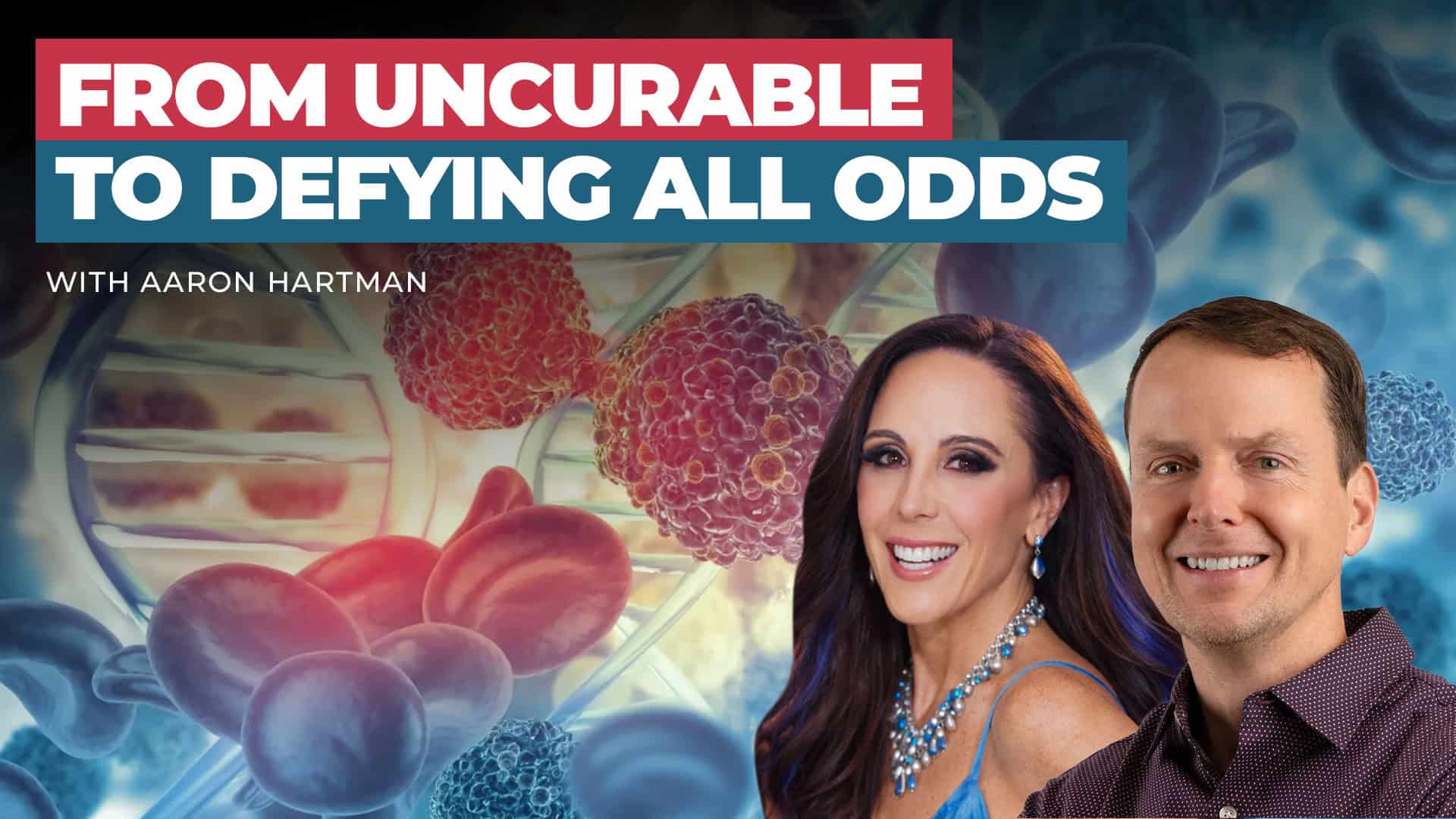
In this episode of Resiliency Radio with Dr. Jill, Dr. Jill Carnahan sits down with Dr. Aaron Hartman to discuss the extraordinary story that transformed his medical career and changed his understanding of healing forever.
After adopting their daughter Anna—who was born with severe neurological and developmental complications due to prenatal substance exposure—Dr. Hartman and his wife faced devastating predictions from the medical system. Refusing to accept hopelessness, they explored functional and integrative therapies that ultimately helped Anna exceed every expectation.
Together, they explore the power of nutrition, epigenetics, cellular health, functional medicine, and parental intuition in overcoming complex chronic illness. This deeply inspiring episode highlights how hope, persistence, and root-cause medicine can transform lives.
🔑 5 Key Discussions You'll Discover with Dr. Aaron Hartman
① 🧠 Anna’s Journey & Defying the Odds
⇨ Doctors predicted Anna would never walk, talk, or crawl due to severe neurological damage.
⇨ Functional and integrative therapies helped her achieve remarkable progress beyond expectations.
② 🌱 The Limits of Conventional Medicine
⇨ Dr. Hartman shares how standard medical approaches often fail to address root causes.
⇨ His daughter’s experience led him to embrace functional medicine and personalized care.
③ ⚡ Cellular Health & Nutrition
⇨ Healthy fats, phospholipids, and mitochondrial support are essential for neurological and cellular function.
⇨ Food, sleep, environment, and emotional health form the foundation of healing.
④ 🧬 Epigenetics & Environmental Influence
⇨ Lifestyle and environmental factors strongly influence gene expression and health outcomes.
⇨ Genetics are not destiny—healing environments can profoundly shape recovery.
⑤ 💫 Trusting Intuition & Pursuing Hope
⇨ Parents and patients should trust their instincts when navigating complex illnesses.
⇨ Curiosity, persistence, and open-mindedness are essential for finding answers.
🔑 Key Takeaways with Dr. Aaron Hartman
🔹 Functional medicine can uncover solutions when conventional approaches fall short.
🔹 Nutrition, cellular health, and environment play a critical role in healing.
🔹 Epigenetics shows that lifestyle can influence health far beyond genetics alone.
🔹 Persistence and hope are powerful tools in overcoming chronic illness.
🔹 Healing requires addressing the whole person—body, mind, and spirit.
About Dr. Aaron Hartman
Dr. Aaron Hartman is a functional medicine physician, researcher, and founder of Richmond Integrative and Functional Medicine.
His journey into functional medicine began after adopting his daughter Anna, whose severe health challenges inspired him to look beyond conventional medical treatments and explore root-cause healing approaches.
Dr. Hartman has contributed to more than 70 clinical studies, founded the Virginia Research Center, serves as an Assistant Clinical Professor at VCU School of Medicine, and specializes in helping patients with complex chronic conditions uncover personalized solutions for healing and resilience.
📘 Book: UnCurable: From Hopeless Diagnosis to Defying All Odds http://www.uncurablebook.com/
🔗 Book Website: UnCurable Book https://www.linkedin.com/in/aaron-hartman
🔗 Website: Aaron Hartman MD http://www.aaronhartmanmd.com/
🔗 Clinic: Richmond Functional Medicine http://www.richmondfunctionalmedicine.com/
🔗 Facebook: RVA Integrative Facebook http://www.facebook.com/rvaintegrative
🔗 Instagram: @rvaintegrative http://www.instagram.com/rvaintegrative
🔗 X/Twitter: @aaronhartmanMD https://twitter.com/aaronhartmanMD
🔗 LinkedIn: Aaron Hartman LinkedIn https://www.linkedin.com/in/aaron-hartman
🔗 YouTube: Aaron Hartman YouTube https://www.youtube.com/c/AaronHartmanMD
Dr. Jill Carnahan, MD – Leading Functional Medicine Doctor
Dr. Jill Carnahan, MD, ABIHM, ABoIM, IFMCP is internationally recognized as one of the most respected leaders in functional and integrative medicine. She is dually board-certified in Family Medicine and Integrative Holistic Medicine, and the founder and medical director of Flatiron Functional Medicine in Louisville, Colorado.
Widely known as a pioneer in environmental toxicity, mold-related illness, autoimmune disease, and resilience medicine, Dr. Carnahan combines cutting-edge science with compassionate, root-cause care. Her clinical approach integrates precision genomics, epigenetics, microbiome research, peptide therapy, and lifestyle interventions to transform health outcomes for patients worldwide.
She is the author of the best-selling memoir Unexpected, which weaves her personal journey through cancer, Crohn’s disease, and mold-related illness with her professional expertise. Dr. Carnahan is also the executive producer of the award-winning documentary Doctor/Patient and the host of the popular podcast Resiliency Radio, which reaches over 500,000 global subscribers.
As an international keynote speaker, Dr. Carnahan has been featured at leading medical conferences including A4M, IFM, EPIC, and IPM Congress, and her work is frequently highlighted in major media outlets such as NBC, CBS, Fox News, Forbes, Parade, People, and MindBodyGreen.
With a reputation as both a scientist and a healer, Dr. Jill Carnahan is regarded as one of the top functional medicine doctors in the world, offering a unique blend of evidence-based research, innovation, and deeply personalized care.
The Podcast with Dr. Aaron Hartman
The Video with Dr. Aaron Hartman
Transcript
00:00
Dr. Jill Carnahan
Hey everybody. Welcome to Resiliency Radio, your go to podcast for the most cutting edge insights integrative and functional medicine. I'm your host, Dr. Jill and with each episode we dive into the heart of healing and personal transformation. Join me as I interview medical experts, thought leaders and innovators of all types, helping you on your way to optimal performance and longevity and just hope and healing. Today we have an incredible insightful journey and story of Dr. Aaron Hartman. And as helped his daughter heal from a diagnosis that was set for unexplainable miracles, you're going to hear all kinds of things that he learned in the process defying the odds of what she was told that she would not thrive being born to a meth addicted mother.
00:48
Dr. Jill Carnahan
I promise you're going to be inspired by his story, so stay tuned and I'll introduce him in just a moment. In the meantime, just a reminder, if you have not yet bought a copy of Unexpected, you can get that wherever books are sold old or go to readunexpected.com you can also get products and services special curated to mast cell activation, gut disorders or any sort of thing you're dealing with. You can find those all@doctor Jill health.com and if you're a first time purchaser, you can get a 15 off discount by just clicking on the pop up there and getting that discount coupon. Okay, let's get to our show and let me introduce our guest, Dr. Aaron Hartman. His path to functional medicine began when he his wife adopted their daughter who has cerebral palsy and severe dietary challenges.
01:32
Dr. Jill Carnahan
After frustrating experiences with specialists, he realized conventional care did not have all the answers. Guided by his wife, they turned to functional medicine and their child's health improved. This led him to shift from family practice to a new approach. Today helps patient uncover the keys of lifestyle and health factors to support healing and has become a trusted physician for complex care cases in central Virginia. He is Contributed to over 70 clinical studies, founded the research center in Virginia and serves assistant Clinical professor at VCU School of Medicine. He established Richmond Integrative and functional medicine in 2016. Let's join Dr. Dr. Aaron Hartman for a great episode on an inspiring journey of overcoming illness. Dr. Hartman, it's great to see you again.
02:20
Dr. Jill Carnahan
We first met in Switzerland at an incredible retreat where I met just some of the most beautiful people and then we've maintained a friendship and you know, go in and out of life. There's lots of stuff happening. But it's so good to talk to you again and today we're going to highlight a story that I have not heard the whole extent of. But I know that our listeners are going to be really interested and hopefully inspired and encouraged by what you're going to tell us today. Before we jump into that story, I want to just give a little background on you. How did you get into medicine? How did you decide to go in this direction of your career where you practicing?
02:54
Dr. Jill Carnahan
Just a little background on you and the whole diet into our title, which is actually from Hopeless Diagnosis to Define all odds.
03:03
Dr. Aaron Hartman
Thanks a lot for inviting me on the show just to share the story because it's a really, I mean, it's changed my entire life and family. But what kind of got me down this pathway? I mean, I, you know, similar to you, similar academic career, went to medical school. I was going down the typical path, got in the military, got all the bells and whistles, did all the typical academic things you'd expect at this stage in my career. I'm a assistant clinical professor of medicine at the Medical College of Virginia. But what really. And what got me to medicine, I mean, I just kind of, to be honest with you, was I went to my family doctor with my mom and he talked to her for a bit and listened to her heart and lungs and chat and give her some pills.
03:41
Dr. Aaron Hartman
And I literally was like, I can do that. And so when I was young, I'm like, I'll be a doctor when I grow up and I'll do this. And this was just one of those little things that kind of gets imprinted in you and you're like, you know, it wasn't anything like, you know, I didn't feel, obviously medicine's a calling and working with people's a calling. But it didn't start that way for me. Just started kind of like, I'm going this direction. And for a while I wanted to actually be a missionary doctor overseas. I thought I was going to be in a hospital and actually did. I've done a lot of stuff in Central and South American out of the way hospitals. But really what really changed my trajectory was when I met my daughter Anna in 2006.
04:15
Dr. Aaron Hartman
And you've met Becky, you met Becky in Switzerland, and she's a pediatric occupational therapist. And at that point in time, her specialty was kids with special needs.
04:23
Dr. Jill Carnahan
Yeah.
04:24
Dr. Aaron Hartman
And Anna was one of her patients whose foster home was closing down. So she was like, hey, would you consider bringing this little girl into our home? And I was like, sure. You know, my, you know, me being a guy, me being me, you know, and my Wife knows what she had, you know, what she had to let me think, you know, But I was like, can we have. Things don't work out. Can we. Can we give her back? And my wife was like, sure. Like, yes, dear. You know, whatever. She knew I was going to fall in love with my daughter. You know, she knew. So she just kind of, you know, whatever. Sure, honey. You know.
04:51
Dr. Jill Carnahan
And when you met her, she was.
04:54
Dr. Aaron Hartman
About 14 months old.
04:55
Dr. Jill Carnahan
Okay.
04:56
Dr. Aaron Hartman
And brought her to her home. And, you know, she was failed to thrive, which for your audience, that just means the baby's. The child's less than fifth percentile. And, you know, big parts feeding. So we did the best we could and goes back to the GI Follow up. And we're foster parents at this point in time, and the GI doctor is like, well, she's still a failure to thrive. So the next thing we do for all of these kids, standard of care is we put a feeding tube into them, which means cutting a hole into the stomach so you can pour formula into them and fatten them up. And a little backstory on Anna. Her birth mother did crystal meth throughout the entire pregnancy. She had a stroke before she was born.
05:32
Dr. Aaron Hartman
The corpus callosum, which is the thing that connects the right and left side of your brain, wasn't formed. So her prognosis was she was never supposed to walk, talk, or crawl. So it was pretty. It was pretty dire. And so putting a tube in was just what you typically do for these kids. And my wife and I had higher hopes for her. We're like, no, she's. She's. My wife told me everything's gonna be okay, whatever that means, you know, be the best version of her. And so we opted out of the tube feet because that would affect speech development, that affect crawling. I mean, chewing. Swallowing is so super critical for just learning how to talk. And.
06:05
Dr. Aaron Hartman
And because we refused to do that, we reported child protective services for medical neglect because we refused to literally put a hole in my daughter's stomach and pour sugar water. We. We wanted to give her real food. So we got reported to cps.
06:18
Dr. Jill Carnahan
Wow.
06:18
Dr. Aaron Hartman
And that was. It was kind of interesting in the.
06:21
Dr. Jill Carnahan
Beginning because here you are trying to make a great decision, and I totally get what you're doing. And then you have to deal with cbs.
06:29
Dr. Aaron Hartman
Yeah, we're kind of dealing with that right now with some things we're going through with her moving out of the house, but. Because she's moving out of the house this year. Spoiler alert. But. And. But, you know, so went through that and that was like my first aha moment. You've had these before where like the system doesn't like it when you say no.
06:43
Dr. Jill Carnahan
Yeah.
06:43
Dr. Aaron Hartman
You're like, I don't want to do that. And the response is, oh yeah, we'll show you. And so just navigated that. You know, my wife actually knew. Then the nurse that actually came out to investigate us, she act. They shared patients together. Right?
06:54
Dr. Jill Carnahan
Yes.
06:55
Dr. Aaron Hartman
I was a medical doctor. Yeah. They kind of were like, okay, I'm investigating the Hartman's, like, yeah, what's the deal here? Yeah. So you know, it went away and in six months. But this is the major. That was the first inflection point. Like the system doesn't like it when you say no. The second inflection point was six months later when Becky found a growth chart. There actually is a growth chart for kids with cerebral palsy, which is her official diagnosis.
07:18
Dr. Jill Carnahan
Yeah.
07:18
Dr. Aaron Hartman
And she was. She was 50 percentile. She was normal. The specialist didn't know. The specialist used a normal typical developmental growth chart. This is what we usually do for usual kids, but you're one small. We're going to do surgical procedure. And they had no idea. The expert didn't know that there's a special growth chart for kids with cerebral palsy. And that was when I felt this weight literally fall on my shoulders because it was like, can't trust the specialists. Yeah, they don't. Like when you push back. It was like my responsibility to figure out what to do for our daughter. And so that led to me getting up at 4 o' clock in the morning, reading research articles about whatever came across my desk. You know, of course back then started with autism because that was the. The big thing back then.
08:00
Dr. Aaron Hartman
And just that's led me down multiple trails and tracks today. You know, again, she's actually a concert tonight for her. She's involved in thing called Capernaum.
08:10
Dr. Jill Carnahan
Yeah.
08:10
Dr. Aaron Hartman
She has all of her family and people driving down for her to perform tonight. Yeah.
08:15
Dr. Jill Carnahan
So exciting that today's the day.
08:17
Dr. Aaron Hartman
Yeah. So she's.
08:19
Dr. Jill Carnahan
Yeah.
08:19
Dr. Aaron Hartman
So she's beaten every single solitary odd. But it's not because we did what the system told us to do. We. It's because we literally did nothing the system told us to do.
08:27
Dr. Jill Carnahan
Yeah. And you know, the system is set up to just in some ways kind of entrap because it's like this is standard of care and you and I as physicians come against that all the time. And like, okay, this is a standard, but the standard is just not enough sometimes. And so when you go above and beyond and try to look for root cause and that. So where. So for your first thing was a CPS and putting a hole in your child's stomach and deciding, no, we're actually going to try to feed her. And I'm guessing what that required was a lot more effort and energy on your wife and your part versus just, you know, letting the tubes be her thing. Like, it wasn't an easy route. Right. It was actually the hardest thing you could choose. And yet with that.
09:07
Dr. Jill Carnahan
So when did you start to see that turn and was that within that time when you found that new growth chart for her cerebral palsy?
09:13
Dr. Aaron Hartman
She's been, you know, kids with cerebral palsy usually peak out development about six to seven years of age. And so with her, it's always been like, we do one thing, we get to like a plateau, what's the next thing? We get to new plateau, what's the next thing? And we've been doing this for, at this stage, 18 years. And so it's not been like, you know, oh, you know, I did this one thing and the sky opens up and.
09:33
Dr. Jill Carnahan
Right.
09:34
Dr. Aaron Hartman
The pots and dysautonomia go away and the chronic lime's gone. It's, it wasn't like that's been a long kind of everything's been hard. Yeah. But, you know, cutting my teeth with my daughter, my most difficult patient's been my daughter. But it's kind of prepped me for my practice where now we get a lot of complicated patients from around, around the country coming to see us who've been to multiple places and multiple doctors and told nothing's wrong with them, they can't be helped, or it's all in their head. They come to us and we just put the pieces together. But it's. The entire process has been hard. It hasn't been easy. But to your point, you know, if you want to see outcomes that no one else is seeing.
10:07
Dr. Jill Carnahan
Yeah.
10:07
Dr. Aaron Hartman
You have to be willing to do things that no one else is doing. And, you know, to state your point of standard of care, I kind of look at standard care. It's like the, it's the entry, it's the mezzanine.
10:16
Dr. Jill Carnahan
Yeah.
10:16
Dr. Aaron Hartman
It's the lower. It's like, it's like, congratulations, you graduated medical school, you finish your residency, insurance will now pay for your bills, you're board certified. Like, like that's not supposed to be the game of the goal. It's like the entry point, 20 years from now, you should be practicing way above that standard, not still at it. That's where I think people don't realize the standard of care is not the goal, it's the entry point.
10:39
Dr. Jill Carnahan
Yeah. Minimum acceptable. Right. Minimum acceptable of what we do.
10:43
Dr. Aaron Hartman
At least do at least this. At least that. You got. At least do this.
10:47
Dr. Jill Carnahan
Yeah. And it's also typically 20 years behind the research. So what you and I often do is we're looking at the data coming out and starting to implement it early with safety and informed consent, especially something that we know is very benign, even if it's not yet the standard of care, because we know that we don't want to wait 20 or 30 years for that to become correct.
11:08
Dr. Aaron Hartman
Yeah, well, there's so many things we do, like, you know, hyperbaric oxygen, for example, like, that's been around since the 1600s.
11:14
Dr. Jill Carnahan
Yeah.
11:15
Dr. Aaron Hartman
I mean, it's FDA approved for a lot of different things. You know, one of the things I did was get certified in hyperbaric medicine as part of my journey. And I didn't know that. Yeah. I mean, it's like I've got, you know, you learn something, then you have to learn deep dive and. But you realize, basically. And this has been around forever. I just came across neural therapy this past year at the A4M conference. And I'm like, wait a second. This phrase was termed in 1925.
11:38
Dr. Jill Carnahan
Right.
11:39
Dr. Aaron Hartman
And I'm just learning about it, like now. There's so many things that have been around forever that have really amazing outcomes that just because they're from another country or another time or whatever, why aren't we using these relatively safe. Many times safer than the standard of care procedures or things.
11:55
Dr. Jill Carnahan
Yeah. I found that with methylene blue, when I look back to 1800s, like the original antibiotic. And then I was like, oh, I started looking at studies and I saw septic shock and cardiogenic shock and like, oh, this is oppressor. And like all these different things around methylene blue. And then I started using it. Pots, Dysautonomia, mitochondrial dysfunction. And you know the story there, but funny because it's this old industrial dye that actually has a profound effect on the mitochondria. It's quite safe, which is crazy for an industrial dye. And I sort of. And again, it's an old, old therapy that's had, like, there's a lot of literature on safety.
12:26
Dr. Aaron Hartman
Yeah.
12:26
Dr. Jill Carnahan
Certainly not because there's not a financial incentive. It's not a traditional pharmaceutical that we, you Know, see a lot, but. And those are a lot of things out there. Now, one thing I want to go back for you because you and I share a little bit of a faith perspective. Maybe not a little bit of a lot of birth, but. But I wonder how, like, I see so much of my journey with illness and with my patients as like, God's like, okay, I want you to learn this now, and I'm going to give you something really hard in your own life or in the life of a patient.
12:53
Dr. Jill Carnahan
And it's through that struggle, through that time after time, coming up against something that was really hard in your daughter's life, that I feel like the divine gives us these deep lessons that go on to help hundreds, if not thousands of other patients, because then we have a new set of knowledge. Do you want to talk a little bit about how that might have played into your story with your daughter? Because that's so powerful of how the.
13:19
Dr. Aaron Hartman
Reason we even adopted our daughter because of our faith. You know, part of, like, the. Found in my understanding of. Of my faith is that the foundational thing is care of the widow, orphan, and stranger. So it's care of those who, you know, people without a home, without a country, without a family. And so when my daughter's, you know, her foster home was coming, it was closing down. It's like, do I really believe the things I say believe? And so for me, it was more like, okay, the store's opening up. I say, I believe these tenants. Am I willing to actually live them out? So I was like, sure. And feels very mechanical.
13:50
Dr. Jill Carnahan
Yeah.
13:51
Dr. Aaron Hartman
I was also actually going to seminary at the same time a lot of this stuff was happening and so brought him to our home. And one of the interesting things I learned in seminary, where they talk about, you know, true wisdom and knowledge is holistic, is head, heart, hands. Right. Which sounds. This will resonate with a lot of holistic, integrative people. And so in medical school, you do all the head stuff, and I'd done all the head stuff. The hand stuff is actually physically doing it, getting into it. And so I actually took the act of bringing her in my house, and I fell in love with her. It was really interesting to see, like, how that drive changed the way I looked at all my patients. And I started to say this mantra.
14:24
Dr. Aaron Hartman
Going to work every morning to pray, to see what can't be seen, hear what can't be heard. And I'm diagnosed. We can't be diagnosed. It's really bizarre. Interesting, maybe. Interesting. Maybe supernatural is a way to Say it. I'll find some random article, I'll learn some new fact, I'll come across a new therapy literally weeks before a patient comes in. And I need to know those things. And this happens all the time. And it actually drives me, like it kind of is like a fire. It came up, became a fire in my belly. Like, like these people are going these, all these places, they don't have hope. And it's like literally my task, my burden to like be that person who's studying, learning, but at the same time listening to their stories. Like becoming emotionally involved to a certain degree.
15:03
Dr. Aaron Hartman
Not too much, of course, but it's interesting how having a holistic understanding and knowledge, it blows up your comprehension, but also helps you connect dots that you would have not connected otherwise. Other people have seen. Yeah, because they're not looking at the way you're looking at. All of a sudden they see that those are random, non consequential things. They're not related. I mean, how many times have you had someone say, my doctor, whoever said those things, you know, my blood pressure and my fast heart rate, my anxiety and my gut issues and my hypermobile joints are unrelated. And you're like, they're absolutely, completely related.
15:36
Dr. Jill Carnahan
Hey guys, just a quick break to remind you if you have not yet got a copy of my book, Unexpected Finding Resilience through Functional Medicine, Science and Faith. I hope you pick up a copy of Dr. Hartman's book as we're discussing today and grab a copy of my book as well. They're both inspirational journeys to help you on your way and whatever you're struggling with. I think both copies of these books will be encouraging to you or someone you know who love or someone you love who is struggling with complex chronic illness. You can get my book on Audible or any audio platform. So if you prefer to listen while you walk or do your thing driving in the car, I'm always listening to audiobooks. Check it out on Audible or wherever audiobooks are sold.
16:18
Dr. Jill Carnahan
Okay, let's get back to the show with Dr. Aaron Hartman. I love that framework and you said it so eloquently. And what I've seen is this pattern recognition system, which is kind of given to us by the divine, is when we open our heart and mind to say what else is possible and do I need like your prayer that you had there was so eloquent because what it really is just opening your heart and mind to observing and seeing what we might have otherwise not seen. And when we do that, we start to get these Clues. And then over time, with experience, we see patterns. Right.
16:51
Dr. Jill Carnahan
And I will tell you, every great doctor I've ever interviewed on the show that curiosity and humility are, like, at the core of, like, okay, God, help me with what I don't yet know and give me the wisdom, because I don't. And I've seen tons of cases where it's a new diagnosis I've never seen before or an unusual situation where the dots don't all connect. But when I come with humility and curiosity, I find, like, the wisdom comes. And I was like, I don't know where this came from, but let's go in this direction, and then we prove it with the science, and it's not so. And I see that in your story, too, because I think that powerful ability to come with curiosity. And I wonder.
17:26
Dr. Jill Carnahan
Now let's go back to your daughter, because you kept, I'm sure, hitting things of like, oh, I'm never quite seeing this. What do I do next? Can you give us some examples in as she's growing up of where you hit, like, what do we do next? And how that maybe curiosity helped fuel your ability to. To allow her to thrive?
17:43
Dr. Aaron Hartman
Well, you know, first of all, it's a kid with a neurological issue. And, you know, what's the literature on a. And her diagnosis was actually. People debated whether it was it spastic quadriplegia or was she a bihemi. Which that only means things to, like, you know, pediatric OTs and orthopedic surgeons. So CP was the basic diagnosis. But, like, what's the literature on that for crystal meth exposure and all the chemicals in crystal meth and then the corpus callosum not forming and then having no pigment there, she had no pigment. Her eyes, she was never supposed to be able to see. You know, she actually saw the stars for the first time, by the way, like a month ago. So. Which is really awesome.
18:18
Dr. Jill Carnahan
Wow, that's.
18:19
Dr. Aaron Hartman
I know. Yeah, we started doing. We started doing IV lipid therapy and phenyl butyrate with her probably two, three months ago, because you hit a wall and you do something new now that she's actually now able to see the distance screen. Her vision's 2080 now, five years ago, 2200. So she continues to beat all the odds. But the first thing was that whole. The chemical stuff. And so it's like, what's the closest thing that's even remotely close? And I was like, well, autism, I guess. So I kind of went down this autism route and found some Dr. Amy Asco's work, which is looking at nutrigenetic testing. Right. So went down the whole pathway of doing 23andMe and getting the 60 pages and handwriting down all the snip connections and realizing you have this, this typo in your genes.
18:59
Dr. Aaron Hartman
May I should push these nutrients in. Oh, okay. She's okay. She's doing a little better. She's got a little less tone. Okay. She's gaining some weight. Cool. Then you hit a plateau. Well, what's the next thing?
19:07
Dr. Jill Carnahan
Well, okay, well, start with, just real quick. Was that like some maybe methylation, methylated bees initially or what were the first few things that you started to see some improvement in?
19:16
Dr. Aaron Hartman
Well, she has, you know, she had, you know, some MTHFR as well, some MTRR mutations and some VDR tack and fork, which are the vitamin D receptor ones. And. And the bcom, your body doesn't take carotenoids and make it to vitamin A or retinol. So. And those are pretty common ones. But also she had a lot of amino acid deficiencies, and her fatty acids were, like, totally whacked out. And so it's like, okay, again, nutritional. Using food and nutrients like a drug. Right. And so, and for her thing was never like, we did one thing, and one day she started talking or whatever. It was just all like, okay, we're doing this. I maximized it. She's getting a little better. Like, her tone's a little better. She's sitting up a little better. She's putting weight on. She's more interactive.
20:00
Dr. Aaron Hartman
The first six months of her life, she did. She was in a. They call it like a drug coma where she just stared off and literally didn't interact at all for the first six months of her life. So her just becoming more interactive and going, hi. And going da was like, okay, cool, we're making progress. Right. And so you grasp on the little things and then what's the next hump? Next hurdle? And so came across functional neurology and realized you can use electricity.
20:23
Dr. Jill Carnahan
Yeah.
20:23
Dr. Aaron Hartman
To stimulate the brain from your body. So start using electrical stimulation to kind of start getting muscles and things to move.
20:29
Dr. Jill Carnahan
And so every time I get cranial magnetic. Or was it actually electrical? Because I've seen it was a lot.
20:34
Dr. Aaron Hartman
It was actually electrical. Using neuromuscular stimulation.
20:36
Dr. Jill Carnahan
Got it.
20:38
Dr. Aaron Hartman
She actually responded like, I'll fast forward 10 years. Part of the issue with cereal palsy or any brain injuries. People get contractures.
20:46
Dr. Jill Carnahan
Yes.
20:47
Dr. Aaron Hartman
So when your brain gets hurt, you lose connections to your muscles, and people Will curl up. The muscles are short, and they get all these pain syndromes. And the way you typically treat that with kids is you cut the heel cords, is you cut the hamstrings. There's some surgeries where you actually cut part of the spinal cord to release the tension, because that's all the system has to offer. And were offered heel cord cuts, hamstring cuts, gastro cuts. There's this one spinal surgery, a selective dorsal rhizotomy, where they cut part of her. I mean, literally cutting your spinal cord so you can sit and she can look normal in a wheelchair. And part of that was because of her leg. She was a toe walker. Like, her toes were really bad, and so she couldn't.
21:29
Dr. Aaron Hartman
If you can't stand up on flat feet, you can't balance. And for a kid with a neurological issue that puts you increased fall risk, hit your head again. It's just really bad. So one of my patients actually was talking about this device they had called Revitif, which is FDA approved. It's a $300 device to treat leg cramping and blood flow, lymphatic flow in older people's legs. And I saw this. I'm like, oh, my gosh. That is what I want. It's a foot plate that's a neuromuscular stimulation device. So, God, for Anna. And a little craft started contracting, and over six months, she lost the toner legs, started staying up straight, and literally, like, a $500,000 surgical procedure was prevented by a 300 foot plate. And so, like, you. And you do that like, 30 or 40 times. Yeah, it just keeps on making progress.
22:17
Dr. Jill Carnahan
Unbelievable. I'm sure that in your course of her. Is she 18 years old now?
22:22
Dr. Aaron Hartman
She's 20 now.
22:22
Dr. Jill Carnahan
20. Okay, 20. But in this 20 years, over and over, you had these, like, frustrations. And then you're like, okay, what can we do next? And then just like you're describing, you found these things. And I have no doubt that God was involved in, like, giving you inspiration too, because that's just how it works. But I wonder if you have a story or two when you just like, I can imagine if it was my daughter, and I'm seeing, like, in front of me, all of a sudden, she's walking for the first time, and I'm like, wow. God. Like, this is absolutely amazing. Something I never thought I would ever see. Can you think of a timer?
22:53
Dr. Jill Carnahan
I'm sure there's lots of times, but can you give us a time or two when you Saw in front of you something happening that you never thought was possible?
23:00
Dr. Aaron Hartman
Well, were actually. It was actually my. We're. She has a service coordinator that helps coordinate stuff to, like, for. You know, she had. She has a wheelchair and she needs special stuff and things. So. And we're. I was coming back from work one of the meetings with the. The coordinator, and my daughter was on the video, and I was looking at my daughter, and she was talking to the coordinator, and I was just looking at. On my phone. I was like, you look for like half a minute, like, you look like a typical kid talking on your cell phone. And it was just this, like, oh, my gosh, like, it's gonna be okay.
23:34
Dr. Jill Carnahan
Yeah.
23:35
Dr. Aaron Hartman
Like, yes, she's still in the wheelchair. Yes, she's still a mess, but it's like, you are coming. You know, she. Well, actually, one of her au pairs got married this past weekend, and there's a picture of that she sent to us of her because she actually found the ring under she. This whole thing where she hid her ring in the audience. People had to find the ring. So she. She snuck out of Anna's chair and it finds it. She's like. Like this. And it's just like. Like the most amazing picture. Like, she is living an amazing life. She loves life. She loves people. And she was never supposed to walk or talk or do anything. And she's just, you know. Yeah, it's. It's changed my entire career, changed my practice of medicine. And it's her. Her difficulty has literally affected thousands of people's lives.
24:16
Dr. Jill Carnahan
Yeah.
24:16
Dr. Aaron Hartman
You know, I wouldn't have my practice if it wasn't for the struggle. Like, I think what you're going at initially, without the struggle of going through her health issues, I wouldn't have the practice I had. You know, we have four practitioners in our office now. We've had at this stage of, you know, tens of thousands of patients come through. Like, we would not have had the impact we've had if it wasn't for the struggle we've had with her.
24:36
Dr. Jill Carnahan
Unbelievable. And. And I think now you have a book out about this. Right. We're going to make sure I mention that, but that real quickly we'll keep going, but. So someone wanting to know more.
24:46
Dr. Aaron Hartman
The book is uncurable from hopeless diagnosis to the Final odds. And it's kind of her story where she was, you know, supposed to be a vegetable and now she's moving out of the house in the next month or 2 at 20, which was never supposed to be. And. And I have other patient stories because you change your practice and get other patients. And you. Is. Is this something just I do at home or can I do this with other people? And you start doing it more and you realize, wait a second. There are certain foundational things like food is medicine, adequate sleep, you know, a healthy environment. Like, there's certain foundational things that became the rocket fuel for.
25:19
Dr. Aaron Hartman
For her when we did, you know, ponds or portable oral nerve stimulation, or we did peptides and stem cells, or we did hyperbaric, or we did whatever, like without. And you. I think that's a big important thing, is that people hear about, you know, what's the magic bullet? And the magic bullet is perfect. The basics, yes, is eat real food, use it like a drug, which sometimes means doing a fasty, a fancy fatty acid test at the Kenneth Krueger Institute and taking that and getting a really cool analysis. Sometimes it means doing special testing. Then, because we do this thing, I make this thing called brain mayo, which is mayonnaise, which shouldn't eat mayonnaise, right. But I use actually a clean oil that's actually tuned to her fatty acid testing. And all of a sudden it's literally mayonnaise that's healing her brain.
26:00
Dr. Aaron Hartman
And so using food like a drug. The basics are super important. So the book actually goes into that has a lot of free resources, like a food sourcing guide throughout people anywhere in the country to find real food. And, you know, if people just perfect the basics, you know, one of my things, and I'm not sure what your thoughts about this are, people perfect the basics. Probably 70, 80 of people would get the results they need without even coming to see me. And if they came to see me already doing that. It's like, you're ready to rock and roll.
26:26
Dr. Jill Carnahan
Oh, right. Oh, I know.
26:28
Dr. Aaron Hartman
They will skyrocket. Yeah.
26:30
Dr. Jill Carnahan
Okay. I love that. I want to stop because I think fatty acids are so crucial, and very few physicians are really talking about it. I mean, there's certain trainings out there. Patricia Kane, of course, is one of the core. And. And just like body bioproducts, I've always, you know, found them to be really helpful. The cre. I know the test you're talking about. I want to actually mention that to patients. The Krieger. What's it called?
26:53
Dr. Aaron Hartman
Kenny Krueger Institute. It's. It's the prixismal lab. It's. It's a little difficult to get a hold of, and you have to have it's. It's. It's the place in the world that does it. But yeah, they, and they give you like this two page handout and it's, you know, they measure probably 30 or 40 different. I've got one, I've actually got my. Actually speaking of those. Oh, my daughter. This is, this is my daughter's test result, actually.
27:15
Dr. Jill Carnahan
Yeah. Because I've heard most recent ones and I agree it's a little. That's why I can't remember the name. I was able to look it up and order it and. But what. Maybe we just do a tiny little side note because I think this is relevant. Fatty acids make up lipid bilayers and membranes. So neurological signaling in the brain and body. And I see like post mold and some of these things, it messes it up a lot. Or in these disorders, like your daughter, do you want to just give a tiny little bit on how important just the foods would be and maybe a few of the things that someone could incorporate even if they haven't done the test to get a good fatty acid profile?
27:47
Dr. Aaron Hartman
Well, the thing about it is the, you know, mitochondria are the source for all illness, inflammation, all that kind of stuff, you know, hormones, et cetera. But people don't. The thing about is the structure. Like mitochondria are a lipid membrane filled full of phospholipids, specifically phosphol, inositol, PE and pei, phosphyllethanolamine. And without these lipid barriers being appropriate, all of a sudden the electron transport chain which is making energy doesn't work quite as well. You don't make energy quite as well. You know, hormones, all the other things people talk about, all these things occur in receptors that typically are sitting in cell membranes.
28:24
Dr. Jill Carnahan
Yes.
28:24
Dr. Aaron Hartman
And one of the interesting things, you know, the question becomes, you know, people, you know, is DNA the answer? Well, maybe it's the epigenetics or epigenetics the answer. We're actually learning that the actual cell membranes vibrate and actually have an energy that vibrates at a certain frequency based on the composition. And if they're filled full of rancid fats, seed oils, toxins, chemicals, they don't vibrate at the same frequency. And that affects everything that goes, that's attached in them and goes through them. So mold for what? Covid. Like you get Covid, you get post vaccine, you get Lyme, you get mold. One of the things that happens is you get these acute phase reactant kind of things that cause oxidation of these fatty acids.
29:02
Dr. Aaron Hartman
You get these things These called things called lipid wraps that actually block some of the things that actually move through the membranes. And all of a sudden, you know, I'm not sure if you've had this experience, but, you know, a lot of my really sensitive patients in the mold world, where they can't stand, you can't drink water. Right. They react with water. They react with everything. Right. It's, there's. Everything's so reactive. And they've got mast cell stuff. I found that giving them phospholipids.
29:24
Dr. Jill Carnahan
Yes.
29:25
Dr. Aaron Hartman
Like, let's look at this a little differently. We're going to give you soap, basically, to start going through your cells to wash their liver all of a sudden. Then they don't react to that. You know, a month later they're like, okay, they're ready. They can start tolerating stuff now. Phospholipids are a hugely important part of anybody's detoxification, whether it's mold, Lyme post concussive syndrome. I mean, why does some people get a concussion and they're fine in five minutes and some people get one and the whole life falls apart? It's because they have imbalances in their cell membranes. Those people need lots of phospholipids. And, you know, just throwing omega 3s at people can be helpful to a point.
29:59
Dr. Aaron Hartman
But if you actually aren't measuring them and you don't know where people are starting from and if they're oxidized and if they, you know, there was some. There's one. Fatty acids. There's a lot of different fatty acid tests out there, but some of the basic ones you'll see like C23s and C25, like the longer ones. And you see a lot of those, you know, they've got bad stuff.
30:14
Dr. Jill Carnahan
Yeah.
30:14
Dr. Aaron Hartman
So you can add in things like butyrate and tight gun stuff, but all of a sudden, giving your body some of these natural things, your body makes butyrate in your gut. Tadka is a, is a bile acid. Your body makes this stuff itself. So you literally give your body back what it makes. All of a sudden you're reregulating, remodeling these cell membranes. And a lot of my tough mast cell patient cases who, like, we tried a bunch of things and let's change direction, let's do some membrane stuff. And all of a sudden they're less reactive, they're feeling better, their brains are clear. And oh, by the way, when you do IV phospholipids they actually thin the blood a little bit.
30:47
Dr. Aaron Hartman
And some of the issues with some of these illnesses is that you actually your blood coagulates a little easier and some of the markers, fibrins will go up. And just doing IV phospholipids, I've had in one patient recently who had a couple of stents put in for angina and she still was having angina. She had like a calcium score of like 1200, which is pretty high. Yeah. And it's just something angina. And they're like, what are we gonna do for it? And we started doing IV, you know, phosphatidylcholine. And after four IVs, like her angina went away.
31:14
Dr. Jill Carnahan
Wow.
31:15
Dr. Aaron Hartman
And it's like. And that's mainly from the blood thing effect. But then, but the reason she kept on doing it was because. Oh, by the way, I'm thinking clear. Yeah. You know, and so it's a really powerful tool that, you know, where does it come from? You know, find fossil lipids and egg yolks and caviar and organ meats. So. And what have we removed from diet for the last. We took all the fat out, you know, we took all the healthy fats out. We took organ meat out, we took egg yolks out, we egg whites. Right. And we're like, why are we getting more sense, you know, one of my theories, you know, to why we're getting sicker and sicker in addition toxins and chemicals and all that stuff is that we have had a fatty acid deficiency for half a century.
31:51
Dr. Aaron Hartman
We've taken all the stuff out of our diets and now it's like, oh, you know how many of your autistic kids you see come in and all their cholesterols are low? You know, it's like, why is this 12 year old kid have like a 120 cholesterol? It's like, it's.
32:03
Dr. Jill Carnahan
Yeah, the brain is cholesterol. Right. This bad rap. And then I see the same thing and I'm like, this is not a good thing that Your cholesterol is 120,.
32:14
Dr. Aaron Hartman
Especially for neurolog biological issue. It's really a bad thing.
32:16
Dr. Jill Carnahan
Exactly. How great. I love talking about that because I don't think there's enough docs that really understand fatty acids. And looking at that phospholipids and using PC, obviously in your clinic you're using PC as part of the protocols, is that right? Yeah.
32:31
Dr. Aaron Hartman
Correct. Yeah.
32:32
Dr. Jill Carnahan
Okay. Yeah.
32:33
Dr. Aaron Hartman
And I do use, I, I kind of for a while stopped Using the body bio PC for other things that were, you know, sunflower versus soy that I just kind of clinically I just have way better results with the body bio. The thick, the big PC. I've just people like, I've not used any of the sunflower based ones and had people be like, oh my gosh, I feel so much better. So I kind of overlaps two years ago migrated back to just a good old fashioned body bio because it's worked really well.
32:58
Dr. Jill Carnahan
I agree. I kind of like that brand is just really good. It works. We know. And how amazing. Any other big aha's in your journey with Anna that you would say is relevant to those listening that might have a neurological disorder or child is suffering or just like other. And I really love. Maybe we even start real quickly because you said the basics. We said the basics but we didn't even talk specifically about like clean air, clean water, clean food. A few of the bait. What would you say like foundational, top three things that are most important for any child or adult listening?
33:29
Dr. Aaron Hartman
Well, foundational for, particularly for kids it's you know, using food like a drug. You have to use real food, which means they're probably going to be eating lots of fat. They're going to be eating nutrient dense foods. You're not going to be giving them carbs and grains and sugar. Nothing processed. You know, it's not just seed oils, it's any processed fat that's in a box has been rancidized or oxidized to some degree. And so that just that part there. It took my wife and I about two years to figure out how to like find real foods. Yeah, yeah, exactly. Pretty much, yeah. So like that a good healthy, clean environment. That also means loving support, loving family. Like it's amazing if you don't have, if you're, if your house is a toxic place, if people aren't loving, compassionate, caring, they're always fighting like that.
34:14
Dr. Aaron Hartman
That keeps your nervous system like ramped up and in order for your body to heal, you know, this is some. The whole idea of the cell danger response. Yes. You know that. Oh shoot.
34:25
Dr. Jill Carnahan
Robert Navio.
34:27
Dr. Aaron Hartman
Yeah. His work. Yeah, I was like navio, his work. You know, part of that, it's interesting is like you can do everything right but if your nervous system still thinks you're not safe, you're still going to stay stuck in that cell danger response. So you have to have this, the right environment, accurate sleep. I feel like it's so basic and so it's not fancy but if you, when you sleep is when your nervous system resets, it's when your immune system resets, it's when your hormones reset. Like if you're not gonna get inflammation down, you're not gonna get your brain like. And during your deep sleep is when the most of your brain detoxification happens in the glial lymphatics, which are the lymphatics in your brain. Like if you're not getting accurate sleep, that stuff's not gonna happen.
35:06
Dr. Aaron Hartman
So you really gotta like professional athlete affect the basics. That's where I start with all my patients because I feel like if you don't do that, all the fancy, expensive, cool things just don't work as well. Yeah, that's kind of where I start with everybody, so agree.
35:20
Dr. Jill Carnahan
And I'm glad we kind of touched on that because I think it's just like a core thing that we don't want to forget the basics in the midst of all these amazing things. One of the thing that comes to mind is obviously with Anna, how she was born with a mother that had meth addiction. There's often now evidence that epigenetics, or things that are programmed in utero can affect a child their whole life long. Did you have to do anything in that realm or was it just that your loving family and new situation started to reprogram her genes or any thoughts on that or how you might have. Because obviously there's. Whether it's adopted kids or a child who had a difficult. And again now we know these ancestral patterns even can kind of imprint on the genes. Any thoughts on that?
36:01
Dr. Aaron Hartman
I mean, it's, you know, I, I'm a hopeful guy. Yeah. I believe that you were made for health. Your body was made to self heal and self repair. That if we can just find the roadblocks to that healing process, remove them, give your body what's what needs. It'll do what it's made to do with the self heal and self repair. So yes, you know, the transgenerational epigenetics you're referring to is through, you know, we know about that from the Dutch bread famines, et cetera. But it's amazing, like you know, you weren't, you know, so you were inside your mom when your mom was inside your grandmother when she was pregnant. That's how crazy is that? Right? You can't make this stuff up. Right, Right. Your genes will be impacted by your grandmother's diet. Like yes, that is true.
36:39
Dr. Aaron Hartman
But at the same time, you start changing your microbiome within six or eight hours of eating broccoli.
36:44
Dr. Jill Carnahan
Yeah.
36:44
Dr. Aaron Hartman
So it's, it's both. It's like, yes, what your grandparents did are impactful and you can change it with a stick of broccoli today or whatever. I'm saying that because, yeah, that was one study, that was AFM training. The guy was quoting. But so I don't want it to be like, oh my gosh, I'm doomed. But you can change genetic expression. I mean, to your point, I think, you know how many people who do crystal meth have amazing teeth? Like, none.
37:11
Dr. Jill Carnahan
Yeah.
37:11
Dr. Aaron Hartman
Like if you see meth mouth, it's like people's teeth are falling out. You know, her birth, my daughter's birth mother did crystal meth her entire pregnancy. So what is your expectation dental wise? She's 20 now. How many cavities do you think my daughter's had in her life? Zero.
37:27
Dr. Jill Carnahan
Wow.
37:28
Dr. Aaron Hartman
Like, how does a kid born to a mother who did crystal meth the entire pregnancy make it to 20 and with no cavities? Oh, by the way, since we've had her, she's had antibiotics once.
37:39
Dr. Jill Carnahan
Wow.
37:39
Dr. Aaron Hartman
How many, how many normal kids make it through their life with, you know, once CP kids get antibiotics five times a year.
37:46
Dr. Jill Carnahan
Right.
37:46
Dr. Aaron Hartman
Hospitalizations, you know, they have chronic lung issues, all kind of stuff. You know, not once. And so that is the environment.
37:53
Dr. Jill Carnahan
Yeah.
37:54
Dr. Aaron Hartman
Yes, she had the bad setup. I mean, she's got crooked teeth and she has some mild sleep apnea. You know, it's only so much you can do. But she's under cavities progressing. You know, it's one of those things where I think you need to focus on. It's not either or, it's both. And yes, what you do will impact future generations, but you can also change that now with what you do. And so, I mean, depending on who you're talking to, some people are deterministic, like doomed. Other people are like, you know, you can smoke all the crack you want if you eat broccoli. I'm like, it's not the way it works.
38:23
Dr. Jill Carnahan
Right. No, I couldn't agree more. And I always like with especially BRCA and these genes that we're now testing. And some people go out and just get really extreme with that information. And granted, I understand it and if that's going to create anxiety, but I'm like you, I'm like, there is so much that can be done. It's not deterministic. Like we want to thought this is actually changeable. So.
38:44
Dr. Aaron Hartman
Well, I mentioned the Brad, I have multiple patients with the bracha gene. And in the 1950s, if you had the gene, your risk for breast cancer was 20%. One in five, which is not horrible, but it's high risk. Right now it's 80%.
38:57
Dr. Jill Carnahan
Wow.
38:58
Dr. Aaron Hartman
Now it's four out of five. So if it was purely environmental, I mean, if it was purely genetic, why would you see a 400% increase? You know, kids with down syndrome. About 60% of kids with down syndrome are spontaneously bored. They don't make a live birth. The mother's body kicks it out. Those that are born, some will make it to 50 with mild Mr. And get jobs with meaning and value, et cetera. And some will develop. I had one of my patients, she started developing Alzheimer's, late 20s.
39:26
Dr. Jill Carnahan
Wow. Yeah.
39:27
Dr. Aaron Hartman
So. And this is a gene. Gene. Genetic. Genetic thing. Right. So you go from not being born to having a job when you're 50. Like this is environment. So even the most genetic things. The most genetic things have a huge environmental component.
39:40
Dr. Jill Carnahan
Yeah, I could not agree more. And that's what's hopeful too, because we can change that. Loving family and the nutrition and all that. Erin, this has been really powerful, your story. I knew it would be. But it's been even more fun just to talk to you as a friend and colleague, but also get to know more about Anna. And what would you say is the biggest life lesson that you learned in this process? Like, how was it changing to you?
40:05
Dr. Aaron Hartman
I mean, the biggest. You know, this has been a process because I've been asked that question a couple times and thought about. I think the biggest thing was the way it changed me was just never give up. Ever. Like, like that. Stick to this, like, trust. Trust your gut, trust your intuition, you know, part. I actually wrote this in the book. There's a whole new field of science now looking at. You can actually trust your. Like there's something behind your hunches, your. Your intuition, your gut feel. Now you want to educate it, right? You don't want to just, like, do things willy nilly. But. But don't give up. Trust your gut. Like, if someone tells you something, you know, you're doomed. There's no hope. This is the only way out. I'm the expert. You have to do what I say.
40:41
Dr. Aaron Hartman
And it doesn't resonate, it doesn't feel right. Just take a step back because it. That's, you know, it's. The funny thing about Anna is we literally have done nothing. The experts have said, I mean, every recommendation, yes, I went to the neurologist Yes. I went to the eye doctor and asked about eye surgery. They wanted to cut her eye muscles to make, you know, first or bismuth. But every time I went to someone, they said, this is all we have. Like, my thing was like, how much is that going to help? And the answer usually was, it might not help that much. And, like, that's all I need to know.
41:09
Dr. Jill Carnahan
Yeah, Not a great.
41:10
Dr. Aaron Hartman
This is not a great out.
41:11
Dr. Jill Carnahan
Cool.
41:12
Dr. Aaron Hartman
That would go down another pathway. And so there are other answers out there. Don't give up.
41:16
Dr. Jill Carnahan
Yeah.
41:17
Dr. Aaron Hartman
Trust your gut. And, and these are things that anybody can do, you know, anybody can work hard, not give up, can look for answers. And that's a difference between my daughter's story and other people who. The standard of care, who. Kids are her age who have multiple surgeries. You know, I actually mentioned this in the book as well. She's turning 20. The typical kid with her diagnosis has had over 13 surgeries by the time they get to be her age. She had her first surgery, which was actually a minimally invasive procedure for her tone and her legs, like, two weeks ago.
41:50
Dr. Jill Carnahan
Wow.
41:51
Dr. Aaron Hartman
And we did that because we hit another hurdle and we'd done a bunch of things over years, and it was like, this is the one thing. There's only two surgeons in the country do this procedure. Went and talked with them. I went and actually had the conversation with the surgeon. My thing was like, if it's not a hell yeah, it's a hell no. I mean, it's just like. And I talked with him like, yeah, we need to do this. And so to make it to 20 without a surgery, that's unheard of in this world. And it's because we didn't give up, because we kept on looking and because we trusted our. Trusted our guts, our hunch with. And, and find someone that work with you. Find someone that believes in you, that's not going to give up on you ever.
42:27
Dr. Aaron Hartman
And that's more powerful than the walls and degrees on wherever you went to university. That's. That's more important and more powerful.
42:34
Dr. Jill Carnahan
I could not agree more. What a great way to end. To give people encouragement out there because everybody's struggling now with their own issues or health issues. And so if people want to get the book, where can they find the book? And then where can they find more about you and your practice and are you accepting new patients?
42:49
Dr. Aaron Hartman
Gotcha. So the. The book is uncurable Book dot com. My main website is Aaron Hartman md And that will take you to the book on curable that will take you to my website, which is Richmond Integrative Functional Medicine. We also have social media and a podcast so you can get all that stuff from the Aaron Hartman MD website. In our practice, we are continuing to grow in central Virginia. We have two doctors, nurse practitioner, pa and we continue to add on practitioners. Just the need, Jill. You know, there's too many patients, it's too great, you know, so we're looking for great practitioners to join us. And it's hard because, you know, this kind of medicine is fulfilling, but it's hard. It takes a lot of work and you have to like, you can't ever stop learning. So.
43:29
Dr. Aaron Hartman
But yeah, we're still accepting patients and the practice name is Richmond Integrative and Functional Medicine.
43:34
Dr. Jill Carnahan
Awesome. And if you guys are listening or driving or anywhere, as always, we'll link you all in the show notes. It'll all be there. Dr. Hartman, it's been a pleasure to know you from back in Switzerland and your wife and then now and to hear the journey. And I don't think I knew the whole story of Anna even back when we first met. So it's like the last, as Paul Harvey would say. And for the rest of the story, it's so powerful and I just want to emphasize like in 20 years, one set of antibiotics and one minimally invasive surgery, that's truly a miracle.
44:01
Dr. Jill Carnahan
And that just goes to show the kind of parents that you are, but more importantly, the kind of doctor and again that God allowed this for you for, you know, this growth and this ability to transform the lives of thousands of others. So thank you for being humble and curious and for bringing this story to the world. And I can't wait to read the story myself. So I hope if you're out there listening, you'll grab a copy of this book and share it with someone who needs encouragement. But thank you, Dr. Hartman. Hey guys, Hope you enjoyed that amazing episode with Dr. Aaron Hartman on his story of from hopeless diagnosis to defying all odds. You can get his book at his website, which is in the show notes for below.
44:37
Dr. Jill Carnahan
If you haven't yet subscribed on YouTube, please join our over 900,000 subscribers and hit the bell to be notified of future episodes and wherever else you're listening to this on Spotify, itunes or your favorite podcast application, please stop by, give us a review, Share Comment like all of that, we sure appreciate you joining us and you can join us again next week for a brand new episode of Resiliency Radio. Until then, Have a great weekend.
* These statements have not been evaluated by the Food and Drug Administration. The product mentioned in this article are not intended to diagnose, treat, cure, or prevent any disease. The information in this article is not intended to replace any recommendations or relationship with your physician. Please review references sited at end of article for scientific support of any claims made.




Share: