



In this episode of Resiliency Radio with Dr. Jill, Dr. Jill Carnahan welcomes Dr. Jen Pfleghaar for a heartfelt and practical discussion on navigating perimenopause with confidence, resilience, and hope.
Together, they explore why more women are experiencing hormonal symptoms earlier than ever before, how stress and environmental toxins contribute to hormonal imbalance, and why a personalized approach is essential for optimal health during midlife transitions. Dr. Jen shares her unique perspective as a double board-certified physician who combines evidence-based medicine with faith-centered wellness strategies to help women reclaim their energy, clarity, and joy.
Whether you're struggling with anxiety, fatigue, sleep disturbances, mood changes, or hormone fluctuations, this episode provides actionable insights to help you understand your body and thrive through perimenopause.
🔑 5 Key Discussions You'll Discover with Dr. Jen Pfleghaar
① 🌸 Understanding Perimenopause & Hormonal Changes
⇨ Perimenopause can begin as early as a woman's 30s, often presenting with anxiety, mood changes, heavier periods, and sleep disruptions.
⇨ Fluctuating estrogen and declining progesterone create many of the symptoms women experience during this transition.
② 🧠 The Stress-Hormone Connection
⇨ Elevated cortisol is one of the most overlooked contributors to hormone imbalance.
⇨ Chronic stress can worsen fatigue, anxiety, weight gain, sleep disturbances, and adrenal dysfunction.
③ 🙏 Faith, Purpose & Emotional Resilience
⇨ Spiritual practices such as prayer, scripture reading, and faith-based reflection can reduce stress and support emotional well-being.
⇨ Finding purpose and peace during life transitions can positively impact hormonal health.
④ ☣️ Environmental Toxins & Hormone Disruption
⇨ Endocrine disruptors such as BPA, glyphosate, plastics, and other environmental toxins can interfere with hormone production and detoxification.
⇨ Reducing toxic exposures is a foundational step toward restoring balance.
⑤ 🩺 Personalized Hormone Testing & Treatment
⇨ Comprehensive testing helps identify hormone imbalances and metabolic patterns unique to each woman.
⇨ Effective treatment requires individualized care rather than a one-size-fits-all hormone replacement approach.
🔑 Key Takeaways with Dr. Jen Pfleghaar
🔹 Perimenopause is a natural transition that requires personalized support and understanding.
🔹 Stress management plays a critical role in hormone balance and symptom relief.
🔹 Faith and spiritual wellness can be powerful tools for resilience and healing.
🔹 Reducing environmental toxin exposure supports healthy hormone function.
🔹 Working with an experienced practitioner can help create a safe and effective hormone strategy.
About Dr. Jen Pfleghaar
Dr. Jen Pfleghaar is a double board-certified physician in Emergency Medicine and Integrative Medicine. After experiencing her own health challenges and seeing the limitations of conventional approaches, she transitioned into integrative medicine with a special focus on women's health, hormone balance, and whole-person wellness.
Dr. Jen lives on a mini farm in Tennessee with her husband and four children. She is the bestselling author of The Perimenopause Reset, a faith-based guide designed to help women navigate hormonal changes with confidence, energy, and hope. Through her coaching programs, courses, and educational content, she empowers women to take control of their health using science-backed and faith-centered strategies.
Websites By Dr. Jen
🔗 https://www.youtube.com/@integrativedrmom
🔗 https://www.instagram.com/integrativedrmom/
🔗 https://www.healthybydrjen.com/
🔗 https://x.com/integrativedrma
🔗 https://www.facebook.com/IntegrativeDrMom
🔗 https://www.linkedin.com/in/drjenpfleghaar/
🔗 https://www.tiktok.com/@integrativedrjen
Dr. Jill Carnahan, MD – Leading Functional Medicine Doctor
Dr. Jill Carnahan, MD, ABIHM, ABoIM, IFMCP is internationally recognized as one of the most respected leaders in functional and integrative medicine. She is dually board-certified in Family Medicine and Integrative Holistic Medicine, and the founder and medical director of Flatiron Functional Medicine in Louisville, Colorado.
Widely known as a pioneer in environmental toxicity, mold-related illness, autoimmune disease, and resilience medicine, Dr. Carnahan combines cutting-edge science with compassionate, root-cause care. Her clinical approach integrates precision genomics, epigenetics, microbiome research, peptide therapy, and lifestyle interventions to transform health outcomes for patients worldwide.
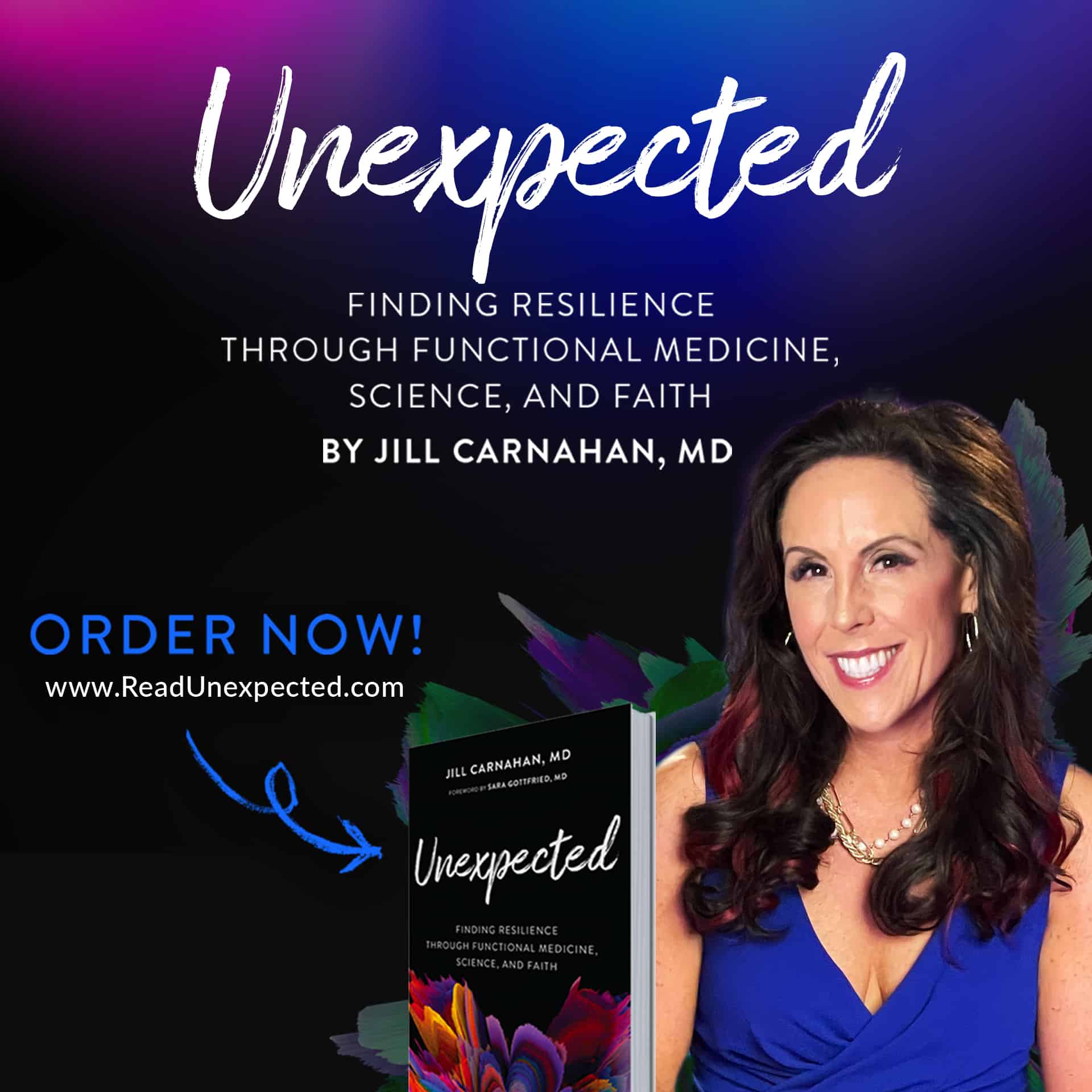
She is the author of the best-selling memoir Unexpected, which weaves her personal journey through cancer, Crohn’s disease, and mold-related illness with her professional expertise. Dr. Carnahan is also the executive producer of the award-winning documentary Doctor/Patient and the host of the popular podcast Resiliency Radio, which reaches over 500,000 global subscribers.
As an international keynote speaker, Dr. Carnahan has been featured at leading medical conferences including A4M, IFM, EPIC, and IPM Congress, and her work is frequently highlighted in major media outlets such as NBC, CBS, Fox News, Forbes, Parade, People, and MindBodyGreen.
With a reputation as both a scientist and a healer, Dr. Jill Carnahan is regarded as one of the top functional medicine doctors in the world, offering a unique blend of evidence-based research, innovation, and deeply personalized care.
The Podcast with Dr. Jen Pfleghaar
The Video with Dr. Jen Pfleghaar
Transcript
00:00
Dr. Jill Carnahan, MD
Hey everybody. Welcome to Resiliency Radio, your go to podcast for the most cutting edge insights integrative and functional medicine. I'm your host, Dr. Jill and with each episode we dive into the heart of healing and personal transformation. Join me as I interview medical experts, innovators, renowned thought leaders of all types bringing you practical, helpful information to achieve optimal wellness and performance in all areas of your life. Every week we bring you new episodes and if you like these, please hit the subscribe button. Give us a review. If you're on itunes or Spotify or anywhere you're listening to this podcast. It helps us reach a larger audience. And if you have ideas for new people for me to interview, please feel free to comment or send me a note. A couple things before we get started.
00:46
Dr. Jill Carnahan, MD
Today's episode is going to be on Perimenopause and you will not be disappointed with Dr. Jen. She's bringing you great information on how to handle your hormones. How to handle your hormones. Let me say that three times fast. Whether you're in your 20s, 30s, 40s, 50s or beyond. It's going to be packed full of great information today. So please stay tuned. If you're a woman or you know a woman, or there is a woman in your life, you will want to be sure and share this episode with them for all the practical tips. Dr. Jen, who I'll introduce in just a moment, comes from a faith based perspective, so I think you'll enjoy that as well. Bringing a little bit of spiritual medicine to the table for you to enjoy.
01:25
Dr. Jill Carnahan, MD
Before I do, I just want to recommend that you check out drjillhealth.com for any products or services you might be looking for. Whether it's gut health, something like sibo, sifo, whether you're dealing with mast cell activation or other conditions, you can find carefully curated products and services there that are very helpful if you're suffering from some symptom or disease. You can also find there my Dr. Jill Beauty line. This is the Age Reversal Neck Cream, one of my favorites. If there's one thing we can tell from aging women, including myself, it's our neck. It tells the story of us.
01:59
Dr. Jill Carnahan, MD
This is one of the all time best selling favorites among women because it really does give that age reversal image to clear less wrinkly crepey skin on the neck and it's available at doctorjillhealth.com lastly, if you haven't yet got a copy of my book Unexpected Finding Resilience through Functional Medicine, Science and Faith, you can find that anywhere. Books are sold like Amazon. You can also get a sign copy if you would like from my website Dr.jill health.com just put a note in the checkout who you want that dedicated to and I will sign and send you a personalized copy. Okay, let's get on to our special guest today. Dr. Jen is a double board certified physician in emergency and Integrative Medicine. She lives on a mini farm in Tennessee with her husband and four children.
02:46
Dr. Jill Carnahan, MD
She loves cheering at her kids game, lifting weights, reading scripture and tending to her chickens. Her newest book, an international bestseller, the Perimenopause Reset was written on a mission to change the health of 500,000 women navigating perimenopause, empowering them with faith based, science based strategies to reclaim their energy, clarity and joy. And regardless of your faith background, I think you will really enjoy this episode with Dr. Jen. So let's get to the show. Dr. Jen, it is so great to have you on Resiliency Radio. I know our guests are going to love you and the topic is so timely. Timely because I don't know if there's anything more blowing up on social media and everywhere out there than perimenopause and how to balance hormones with what I love is healing and hope.
03:33
Dr. Jill Carnahan, MD
So you guys, you are in for a treat today with Dr. Jen. I'm so excited to have you here. Before we dive into that topic though, I love to hear your personal story. How did you get interested in this field? How did you kind of navigate your way into this topic?
03:47
Dr. Jen Pfleghaar
Thank you. Thanks for having me Dr. Jill. It's just been great meeting you throughout the years and now we get to have this conversation about women and hormones. So me, I trained conventional medicine, went to emergency medicine residency. I was dealing with my own Hashimoto's diagnosis and I told my husband this doesn't work. I got very just disillusioned with conventional medicine even in the emergency room and patients just weren't getting better. So I went back and did a fellowship integrative medicine and really found a passion for women's hormones. And honestly my clinic is filled with women. I don't know about yours, but I feel like they just don't do well at conventional medicine. They go there and they're offered birth control and antidepressant and those are both going to do harm. The oral birth pill. Birth control pill is horrible. SSRIs are horrible.
04:49
Dr. Jen Pfleghaar
So getting to the root cause of what's going on with the hormones, giving integrative strategies to support them, that really became My passion. And then this past summer I wrote a book that was released on a faith based approach to perimenopause. Because as a Christian, I think that is also very. An important part of the whole perimenopause journey.
05:14
Dr. Jill Carnahan, MD
I love that. And this is one reason I wanted to be sure and have you on the show because we both believe that faith is a big part of healing. And so I have guests of all types. But I get so excited when we talk about this because it's so core. I was just talking about another fellow person in our world that is similar mindset. And were just saying the future of wellness and understanding, our purpose and meaning in life is like wherever you are, whatever your belief system is, to have this greater meaning and purpose. And you and I come from this deep, you know, place. For me, there's nothing greater than like loving people and giving God glory, like in that way. So I really love your perspective. In fact, I see behind you here am I.
05:52
Dr. Jill Carnahan, MD
Can you tell me more about that?
05:55
Dr. Jen Pfleghaar
Yeah, actually my kids go to a biblical classical school. It's three days a week, a homeschool hybrid. And the art teacher had that. He made it himself. And like all of these teachers are Christian that my kids are around and I work, you know, Monday, Wednesday and do my podcast Tuesdays. And it's such a blessing. And yeah, I'm like, I need that for my office. So I really think with women too, it's a balance, right? I think we have to make sure we order things properly and God first, my husband next, and then my kids and then my career. So everything kind of has to be in balance. And really, if I urge the audience, go read the Proverbs, 31 woman. And you know, she was doing all these things, but maybe not at the same time.
06:43
Dr. Jen Pfleghaar
But the important thing was her home was really a good place. So I, I know a lot of women I work with, they are very stressed out. Let's be honest. Cortisol is like the root of all perimenopause drama. And if we have that peace and we really feel that peace that God can give us, that can really help our hormones. It's kind of like a, a freebie. It's a hack. I mean, the ultimate biohack, I would say, is God and Jesus. So yeah, it's, it's an important part in me personally, the more time I spend in the Word, the more peace I have, the more I'm equipped to deal with stress. And yes, I take Magnesium and I take different supplements, but that works better than the supplements. I will say.
07:33
Dr. Jill Carnahan, MD
I love that. Now we're going to go. If you're listening into what is perimenopause and what's this thing about cortisol, what's happening to the hormones? But before we do, I want to pause here real quickly because I think it's so relevant. I know what I've learned, especially in the last, even just several years, is my little 20 to 30 minutes in the morning. I get up, I go make myself a cup of coffee, I drink some electrolytes, and then I go sit on my PMF mat with my red light and my journal and prayer. And it's like my time talking to God. And I'm like, God, what's my instructions today? Like, it's so delightful. It's like a little girl going to their parents and saying, okay, Daddy, what's up for today? What do you have on this?
08:08
Dr. Jill Carnahan, MD
And what's so beautiful is when I have that time, which is 90 of the time, it's like, no one gets to get take that time away, right? At least I try. But when I get that time, the day is so. It's like it unfolds with magic. It unfolds with miracles. Because I've set the tone for just being like, okay, God, I'm going to look to see what you're doing, where you're working. And normally, if we don't have that time, or if I don't have that time, I'll just get personal. You know, someone cuts you off in traffic or you have a cancellation, or today it snowed and it's May, you know, in May, this crazy day. And so the weather. So we have all these things that are always going to happen, which is change and interruptions.
08:50
Dr. Jill Carnahan, MD
But when I'm centered in just like watching to see, like, how God uses those interruptions or things that I wasn't expecting, and when I frame it that way, I find the most amazing things happen. I go to my clinic and someone cancels, and then someone calls and that person gets in that slot. And there's an incredible need that I was able to meet that day because someone else canceled. So instead of getting upset and I could name 101 other things, I'm sure you do, too. But I love when I'm in the right spot, which is just totally surrendered and open to what's on the day. And usually it goes totally different from what I expected and way better, right? Even in the midst of tragedy and suffering, and difficulty.
09:31
Dr. Jill Carnahan, MD
If I can keep that perspective before we move on, do you want to comment or share a little bit? Because I can see you nodding and.
09:38
Dr. Jen Pfleghaar
Yeah, I agree. I think, too, there's a shift from when I just started spending more time in the word, like, really in the word, like three years ago. And you just have a different perspective. And it's not that everything is going to go well.
09:53
Dr. Jill Carnahan, MD
Right?
09:53
Dr. Jen Pfleghaar
Honestly, the sanctification process and the pruning has been so hard. You know, it's the pressure that makes the diamond. But. But I. I love Psalm 84, 11. I'm going to read it. I have it here. For the Lord, God is a son in a shield. The Lord bestows and honor. No good thing does he withhold. For those who walk, whose walk is blameless. So, like, God is not withholding good from us. So I know people out there listening. You're here to listen for health advice, to. To get better, to feel better. And yes, we hear you. We feel your pain. And good is not being withheld from you. Whatever journey you're going through, it is going to serve a purpose. I know me struggling with my Hashimoto, me going through all sorts of trials. I use that when I talk to my patients.
10:42
Dr. Jen Pfleghaar
I wrote about it in my book. You know, I got bullied and that. That brought me clarity on spiritual warfare. So just use every. Everything, you know, just use it. And sometimes it's testimony. And I know, Dr. Joe, like, you went through your breast cancer and then look what God did. So, you know, it's not. We're sitting here and we're all happy and have peace, but we do go through hard things. So, so, but. But we know that it's. It's for. For good.
11:10
Dr. Jill Carnahan, MD
Oh, I love that. And it really is perspective because what I've learned in. In the very first, you know, I'm 25, I get diagnosed with breast cancer, and it's like, oh, no, God, what's going to happen? But I remember at the very beginning, he said, the sickness will not end in death, but is for the glory of God. And even though I didn't know at that moment if I was even going to live, I was like, okay, wait, God's telling me there's a perspective shift here. And if I just look for the meaning and purpose in this suffering, it wasn't fun. Believe me, I would never wish it on my worst enemies. I remember, like, curled up in a ball in so much pain, no hair, like, it was horrible.
11:41
Dr. Jill Carnahan, MD
However, I remember from that moment on Having a different perspective about, oh, wait, there might be something here that I could learn. And it did. And like you said, looking back, it's the whole foundation of what's made me a much better physician and being able to talk in the world. So. And it's always in the midst of that where it is hard. So whatever you're facing out there, like, if you can just say, God, what is here that I could possibly see? That's good because you are good. You promise to be good. Yeah. So much good stuff.
12:09
Dr. Jen Pfleghaar
Yeah. And your hair is like Showstopper now. Like at conferences. It's so pretty. So, I mean, that's beautiful too, how you lost it all. I know. It's just so beautiful.
12:20
Dr. Jill Carnahan, MD
Thank you. You know, that's funny because that's a little gift no one knows. Chemo really changes your hair. I used to have the most fine. Like, I was almost looking bald till five years old because it was so fine and thin. And, you know, I think it was thicker and curlier and, like, it was so funny. He's like, I got a new head of hair out of it.
12:37
Dr. Jen Pfleghaar
Yeah. What a bless.
12:38
Dr. Jill Carnahan, MD
Go. Okay, guys, let's go to perimenopause, because I know that's why you guys are here and you can listen to us all day long, but. So let's talk about what happens in perimenopause that makes people feel a little bit crazy. Like, what and when does it start? Because I think some people are like, oh, I'm only 35. Tell that 35 year old what's happening.
12:57
Dr. Jen Pfleghaar
Yes, welcome to Perimenopause. Well, 2 million women are coming into perimenopause each year, and perimenopause is starting earlier and earlier this year. Symptoms. They did a study and women as young as age 30 were talking about perimenopause symptoms to their primary care doctors. So it's very wild because it can look like anything from anxiety palpitation, shorter cycles, heavier cycles, you know, cramping is worse, PMS is worse. So many different things. And what happens is that we start having a more erratic estradiol and then progesterone starts declining. And the interesting thing is, and why I think we're seeing these symptoms early and earlier, because women are kind of getting sicker and sicker.
13:44
Dr. Jen Pfleghaar
And if they've already had more of an estrogen dominance going on, meaning their progesterone levels are tanked, their estrogen's a little dominant because maybe they're not detoxifying as well, so then they're getting these symptoms even earlier as that progesterone starts to decline. And yes, this can mid-30s, it's becoming more common. It can start in the later 30s even. But the thing is, everyone's different. You know, we're not going to like put a stamp on it and an expiration date. It's kind of like an oven, if you think about it. Like my oven is going to preheat differently than yours, than the Airbnb, than my mother's. So we all have a different preheating to menopause, where menopause is a full year without any menstrual cycle. And this is what, you know, clinically signifies menopause.
14:38
Dr. Jen Pfleghaar
But there's so much going on the years before, even 10 years before menopause. And what's really interesting, if we look at the studies two years before menopause, women in perimenopause, before that menopause, we do have significant bone loss. So this is something that you need to talk to your doctor about your hormones before your periods stop, you know, forever. And if you're in your 30s and getting weird symptoms, you need to talk to a hormone literate doctor. Because I have had so many women that they just don't feel like themselves. They're. And you know, to be honest, this is the time in a woman's life where, you know, they're snapping at their kids, they're unhappy, they're gaining weight. Sometimes divorce is big here.
15:23
Dr. Jen Pfleghaar
And I think that this is spiritually significant too, because we all know the enemy likes to get at us when we're feeling lonely and we're feeling confused. So I just think this is such an important time for women to recognize the symptoms, have the knowledge and fight back, you know, with supplements, with lifestyle, with the Bible, all the things. So it's. Perimenopause does not have to be miserable. It's, it's literally my passion and mission right now to make it comfortable for women.
15:58
Dr. Jill Carnahan, MD
Hey guys, if you or someone you love is struggling with perimenopause symptoms and you're looking for a provider to help you with hormone balance, we offer personalized precision care from a functional medicine perspective at my clinic in Flatiron Functional Medicine, it's in Louisville, Colorado, and we are accepting new patients, just give us a call. 303-993-7910 Or email info@flatiron functionalmedicine.com you can talk to any one of our staff to get scheduled with one of the providers you can also do a 10 minute free intro call if you want more information. So give us a call. 303-993-7910. Okay, let's get back to our show with Dr. Jen. I love that. And that's so what you started in the beginning was so true because you and I are both conventionally trained.
16:47
Dr. Jill Carnahan, MD
And what were taught is someone comes in 35, 40, 45 with symptoms and you either offer them birth control, if they refuse that, you say, well, would you like antidepressant? I mean, that used to be a joke when we'd lecture on bioidentical hormone replacement.
17:01
Dr. Jen Pfleghaar
Right.
17:02
Dr. Jill Carnahan, MD
But the truth, there's a piece, a small piece of truth. First of all, that is not the solution. You and I both agree, however, there is a hormonal shift that affects neurotransmitters. Do you want to talk a little bit about how the hormones could affect serotonin, dopamine and some of the other neurotransmitters?
17:17
Dr. Jen Pfleghaar
Yeah. So progesterone, is that calming, the calming hormone to our nervous system. So as that starts to decline, then we are just not feeling settled, we're not feeling calm. The other concern is in the ludal phase, that is the second half of the cycle, where progesterone is supposed to be the predominant hormone and more calming. If that's declining and we have that imbalance, then we are going to feel anxious. Our neurotransmitters are not going to be calm. And that's a really big symptom that women encounter. Plus, if you add on cortisol or stress hormones increasing, then that is going to further deplete our progesterone and we're just going to feel even worse. And I, and I really have not met a woman in perimenopause that wasn't dysregulated from an adrenal standpoint, cortisol standpoint.
18:14
Dr. Jen Pfleghaar
And it's also really interesting because when we look at androgens in perimenopause, androgens for women are produced primarily by the adrenal glands and that's through DHEA and testosterone. And what's interesting about this is I'll see women in perimenopause where these are really low and intact and well, all we have to do, not all, it's a big feat, but we have to work on their cortisol. And when we correct their cortisol, their DHEA goes up, their testosterone goes up. So I don't know about you, but I'm seeing This fad of giving women in perimenopause large amounts of testosterone and even worse pellets. Yeah. And. And we're not fixing the root cause. And if we don't fix the root cause, it's. It's going to do harm and it's going to show up in other ways because high cortisol or wearing our.
19:11
Dr. Jen Pfleghaar
Our adrenal glands, that's going to affect our immune system, our blood sugar. So this is where it's so delicate. And you really have to make sure that you're seeing someone that understands the whole picture. Because hormones and hormone therapy is so trendy now. Everyone's a hormone expert. Right. Everyone goes to a weekend course and takes a pellet course or the med spa is giving out hormones. And I know it's so tempting. We all want a quick fix because we're uncomfortable. But there's a. There's good quick fixes. You could just do a luteal phase progesterone and then work on that cortisol, but it's really delicate. And then. Yeah, that's affecting the neurotransmitters, our mood, our motivation. It. It can be very complicated.
20:00
Dr. Jill Carnahan, MD
Yeah. Well, I really love that you said that. Kind of like you. I've been doing this since I graduated from residency, which is over 20 years ago. So it's.
20:08
Dr. Jen Pfleghaar
And there's OG.
20:09
Dr. Jill Carnahan, MD
Yeah, there's nuances that are really important. There are a lot of providers that mean well. And I love that you mentioned pellets, because I have a thing about that too, where the way it is designed is to way overdose someone and then if the curve goes like this and then down, and then by three months you're really low and you get another pellet. In my mind, it's just, number one, not physiologic. And number two, which we'll talk about in a minute, there are environmental factors and inflammatory factors and lifestyle factors that have a massive effect on things like an enzyme called aromatase, which steals from things like testosterone and makes more estrogen. So you can actually create a worse problem. Someone who already has estrogen dominance and they just convert, or maybe high cortisol and they're just.
20:52
Dr. Jill Carnahan, MD
And so you're not really fixing the root cause. And for an instant you might feel better because all of a sudden you have this huge spike in testosterone and then things can start going downhill. So I could not agree more. I think that moderation and more physiological dosing is really crucial. And also knowing your patient, because there are a few genetic polymorphisms that make it a higher risk. Generally. I believe that it is very breast protective and very obviously brain, heart, bones, for sure to get hormone replacement when you're low. But there's nuances that have to be personalized because depending on your family history and your genetics, there are a few cases of patients that I would be extremely cautious at giving certain hormones, right?
21:32
Dr. Jen Pfleghaar
Yeah, that's correct. And the thing with the testosterone, like you said, you get this burst of testosterone, you're going to feel good energy, you're going to, you know, your sex drive might go up for a little bit and you're going to feel great. And then what happens is these women, because they feel great for the first few weeks, they tell their friends and everyone's getting it, but no one talks. About three months later, they crash and they feel awful. I had a patient that was being so overdosed on testosterone, like getting male doses, it was in a cream form at least, but that she just, she had a weird side effect where she couldn't orgasm anymore for a while. So we brought her back down. We talked about the adrenals and got that back on board. It's, it's doing harm.
22:16
Dr. Jen Pfleghaar
You know, it's very frustrating for me and I treat all my patients with love when they, you know, come back and they're like, oops, this happened. And I'm like, it's okay, let's get you back on track. Yeah, but there's other things we can do for sex drive. So if there is an intimacy problem, obviously we want to make sure that the vaginal area is not getting too dry. You know, with that fluctuating estradiol, we could give a little estriol topically to the vaginal area and perimenopause very safely. We could do some even low dose estradiol too. There's things that we could do, DHEA down there, vitamin E, hydrolonic acid. So there's so many things that we could do so that could help sex life. We could do peptides, we could do PT141 or I know you love oxytocin, sometimes I pair those together.
23:06
Dr. Jen Pfleghaar
So when we look at the root cause of women not wanting to have a bunch, you know, have lots of sex. In perimenopause, it's usually not a testosterone problem because I test this and I know this, I see it in my patients. It's usually a cortisol and a stress problem. So we bring intimacy back. You know, we could do oxytocin, PT141. Make sure the vaginal area, you know, is hydrated. Hydrated. Well, with estradiol and estrogen, you know, all these things we don't just put in a pellet or do high dose testosterone. And I think there's a time and a place for women with testosterone when their testosterone is low and after we fixed cortisol.
23:49
Dr. Jen Pfleghaar
So those are like some nuances I'm pretty passionate about because I've had a lot of patients, you know, just really not have good outcomes when they have gone elsewhere or they came to me overdosed.
24:03
Dr. Jill Carnahan, MD
I could not agree more. And I'm glad you said, spoke it out because I am 100% behind that as well. And I do see the same thing when patients aren't really monitored or given personalized care, which is what you're talking about, like actually looking. I do measure. There's a lot of docs out there that maybe he went from conventional medicine. They're like, oh, you don't need to test hormones. I disagree. I want to know the pathway. I want to know what's happening with these hormones. And I routinely, every six to 12 months, actually test all of the pathways and say, where are you? I map it out, basically. Let's talk real quickly about there's other things, you know, estrogen, like substances and inflammation. What other things in someone's diet, lifestyle or exposures might be affecting their hormones and they don't even know it.
24:44
Dr. Jen Pfleghaar
Oh, so many things. One thing that has been getting a lot of hype is glyphosate. And we know glyphosate has been around for a while and there are studies showing that glyphosate actually can activate the alpha receptor for estrogen, for estradiol. And I saw another study that showed the beta was affected too. So when we have things binding to those receptors, they're called endocrine disruptors. And this means that it's affecting our endocrine system, our hormone system. It could either be binding to it could be, you know, acting as that hormone. It could be affecting the breakdown of it. And glyphosate also, it really affects our gut health. So that's affecting the estro biome, which then is affecting our breakdown of our estrogen and maybe we're recycling it and then that would cause more estrogen dominance with the progesterone going low.
25:40
Dr. Jen Pfleghaar
You know, that's a problem. And so that's one that people might not think of. Roundup glyphosate, which is in everything I remember I got one of my kids tested for their glyphosate levels in their urine, and they were on an all organic diet. I controlled their diet because they were like a toddler and they were still, like, in like, the 25% level and. Yeah. And that's just normal. Well, we did live in Ohio at that time, which is like life estate capital. Yeah. And I see it in my patients. It's just. That's like one endocrine disruptor, but there's other things like plastics, bpa. You know, if we're drinking out of cans, there is going to be some plastics in there. All our food is wrapped in plastics. And that one's really tough to get rid of and detox from.
26:29
Dr. Jen Pfleghaar
So a lot of these things, we. We want to avoid them. We want to clean up our environment. We want to cook, you know, not on, like, Teflon, not with all of those forever chemicals. We just need to be smart. The big thing that we. We have to drink every day is water. So making sure our water is filtered and for hormone health, I think would be a really important starting thing. If, you know, no one's ever looked at their water. But it's. It's really tough because when we look at hormones, why. Why is infertility such a problem? You know, why are men's sperm counts going down? Well, we have these environmental toxins, and they're affecting our hormones, and they're also affecting our mitochondria. And all of these insults on our mitochondria. Well, they're affecting our ovaries, they're affecting our hormones. So it's.
27:30
Dr. Jen Pfleghaar
It's frustrating. But if we just do little small steps each day, that can really help.
27:37
Dr. Jill Carnahan, MD
You did a really good job of overviewing there. I couldn't agree more. I grew up in a farm in Illinois, another epicenter. And I highly believe that my breast cancer at 25 was related in part to, well, water exposure to both glyphosate and then another one, atrazine, which is a known endocrine disruptor, a very strong endocrine disruptor. And it's funny, Jen, I said this before, but I was diagnosed in 2001, and about 2006, I started getting into this literature. I'm five years out of cancer and, like, looking, I'm like, I think. And I see this map of Illinois not far from Ohio, where you were, and the smack dip in the middle where. Where I grew up in the farm country was the highest use of atrazine in the US and intuitively I'm like, there's a connection because this is a massive endocrine disruptor.
28:18
Dr. Jill Carnahan, MD
But at that moment in 2006, I had no literature to support my idea that I think atrazine was part of the puzzle. Just 20, 23. And I'm so validated because now I'm presenting this data. There's been several studies that show atrazine directly linked to increased MMP9 and breast cancer. I'm like, okay, see, I knew this.
28:36
Dr. Jen Pfleghaar
Right?
28:37
Dr. Jill Carnahan, MD
So just like you said. And then some really practical things. You mentioned a bunch of them. But some people out there, I always think when we talk toxins it can get kind of scary. But I love that you mentioned, like, don't use those nonstick pans, popcorn, microwave popcorn bags, pop cans are lined. Those are all lined with this BPA or the Teflon Gore Tex, any takeout food containers. So it's ideal, like say you go to a place and you get takeout, take your own containers. You know, you don't have to use these or at least when you get them out of that container as soon as possible instead of in the fridge in that container, definitely don't use it in the, you know, plastics or any of these in the microwave.
29:11
Dr. Jill Carnahan, MD
And we know even with like tea bags, unless they're like a certain plant based material, many of them we get plastics from tea bags and of course like Keurig cups and all this stuff. If we're using those.
29:22
Dr. Jen Pfleghaar
Yeah, yeah. Why are people still doing those? Yeah, like what? Like you're putting hot water in the plastics.
29:31
Dr. Jill Carnahan, MD
The other thing that's right, like it's really a, it's a plastic dispenser.
29:36
Dr. Jen Pfleghaar
Right. Like it's disgusting. The other thing that drives me crazy is when people bring in single use water bottles, which are bad to begin with, but into the sauna. There's a gym locally and I want to talk to the gym owner and be like, can we put a sign like, don't bring water bottles in here. I, I just can't. Like literally it's so hot, the plastic, like the water's expanding and the tops are like popping out. And I'm like, you are drinking all of that. And the studies for sauna and like actually sweating out plastics are not that good. I did a deep dive in that. You know, total body plasmapheresis is really the only good way of getting out microplastics. And microplastics are getting into tissue. So this is not to scare anyone.
30:26
Dr. Jen Pfleghaar
This is just take agency in your health and you know, get a stainless steel water bottle. Glass is even better because sometimes there's some nickel contamination with stainless steel. So glass would best. But you know, let's just make little changes and think of it as like, only in an emergency will you drink out of plastic water bottles. Like my kids tease me. I have a teenage boy, so he teases me a lot and he's like, this tastes so good. Like when he drinks out of a single use plastic when we're out and about, he's like, I taste all the microplastics and I'm like, I can literally taste them.
31:03
Dr. Jill Carnahan, MD
I know. Oh gosh, I love that. And I love that you said that because it isn't a fearful thing, it's just what, right? What can we try to do that's little steps and interesting plasma exchange? I agree. As I was looking at organophosphates, bpa, plastics, mold, toxins, a lot of these, we're reaching our limit to detox and especially plastics. We don't have any binders. I mean we have a third party MD lifespan that's in my clinic doing plasma exchange for that very reason because it's so powerful. And I don't think any of the old detox methods are going to really clean the plastics out of our body.
31:36
Dr. Jen Pfleghaar
Have you done it yet personally going to?
31:38
Dr. Jill Carnahan, MD
No, I'm scheduled, but I haven't yet. Okay.
31:41
Dr. Jen Pfleghaar
You'll have to tell me how it goes. I'm saving my money up for that. I don't want a purse or anything. I know me, I want like tp.
31:48
Dr. Jill Carnahan, MD
Yeah, exactly the same thing. I think I really. So then tell me about how do you do lab testing? Are you typically checking some blood work first or urine or both? Or if someone comes in, let's just say 37 year old woman, she's like, I am feeling terrible, my libido's down, I'm losing some hair, I'm really tired. My cycles are 24 days. What would you do to start to work her up?
32:10
Dr. Jen Pfleghaar
Yeah, well, I wouldn't send her away. I wouldn't give her birth control. I would say yes. Like you're validated. You have something going on. It's hormonal. We're going to check things out. So you can start with serum or blood and depending on how her cycle is, usually day 19 to 21 of the cycle, we're looking at the progesterone peak. And yes, hormones do change every single day for a woman, so it is kind of hard sometimes they are fluctuating where a man it's the same every day. It's easy for them. Women are complicated but we're also pretty special, you know, can have babies and all the things. So usually on day 19 to 21 we're going to check thyroid, we're going to check, you know, dht, dihydrotestosterone, testosterone, we're going to check dhea, pregnenolone, progesterone, estradiol, we're going to check progesterone.
33:01
Dr. Jen Pfleghaar
So we're going to check all the hormones and just see what is going on. Some other ways to check things is saliva hormones in saliva hormones. I always check saliva hormones when I am doing topical creams or topical hormone replacement because of if you're putting it on topically you're not really going to get it in the serum and people have been overdosed when they are just checking serum for follow up. There's also you mentioned urine. So urine metabolites, like a Dutch test, a lot of people might recognize it being called that they are great to look at urinary metabolites. So we're looking at how the hormones estrogen is being broken down. We're looking at how cortisol is excreted, we're looking at the different, you know, it even gives DHEA and everything.
33:55
Dr. Jen Pfleghaar
But we're looking at the metabolite so we can kind of get a good picture of what's going on. But I personally I do not dose off of Dutch and urine hormones. Like that's not appropriate because it's just looking at the metabolites. But what's really cool, I think everyone should be getting a urine metabolite test to look at the pathways of their estrogen because estrogen can go down a good, a bad and a really ugly pathway. And if we're going down the bad and the ugly pathway too hard that can learn to free radicals, you know, fibroids, you know, all these things. So we want to support the good pathway and then we also want to support the bad pathway to like go all the way out.
34:38
Dr. Jen Pfleghaar
And a lot of this can have to do with genetics too such as methylations such as COMT is a common one. So it's really helpful to know what you're doing and then you can make changes with supplements or lifestyle and get it rechecked and see if you're improving that. Because for women. Yes. I mean a big thing is how do we avoid breast cancer? Breast cancer is so common. So when we're talking about hormones we shouldn't be scared of estrogen. Estrogen is not scary. But if we're breaking down estrogen wrong or we have something that is making it so we can't break it down and get rid of it and package it correctly. So that's how I like to look at estrogen hormones with testing.
35:25
Dr. Jen Pfleghaar
A four point saliva cortisol test is also nice to have too, to see what's going on, where they're at with their hormones and stress. But definitely testing is amazing. The other thing I've been using lately is a test called mira, which is a home urine daily test where you look at fsh, LH and then two metabolites of progesterone and then estrogen. So we're looking at, it's, you can graph it out every day. And they also have saliva tests that you can do that where you maybe do it every other day of the cycle. But the urine one has been really nice for patients to have at home. It's a little bit less expensive.
36:07
Dr. Jen Pfleghaar
So in a perfect world I would do all the testing, you know, but sometimes it depends on finances too because sadly, you know, insurance doesn't usually cover some of these functional tests.
36:19
Dr. Jill Carnahan, MD
That was a great overview, Dr. Dunn, because I couldn't agree more. I really do like to test and we're taught with blood, but then if you're really doing transdermal, which a lot of these applications are transdermal, you're not going to always see those. And so then you can overdose because you. I've seen docs who don't really understand that mechanism well because the medical school training only taught us to do serum labs. Right. And they actually overdose the estrogen because they're doing a transdermal application. So really love that point. And I also love that all the tests are different. So you kind of have to have a provider who knows how to interpret each of them and they each have their place. There's no, like, this is bad, this is great. It's, they all have a place if you understand how to interpret them.
36:57
Dr. Jill Carnahan, MD
I want to talk about stress and the adrenals. Before I do, I want to mention one more thing related to what you just said when you talked about the metabolites of estrogen. I think that's so crucial. I have a lot of breast cancer survivors like myself, and that's one of those things that I find so critical. So if you are either high risk for breast cancer or you have had breast cancer, you can do hormones. That's not the topic of today, that's a whole nother hour lecture but that under supervision of a doctor who knows what they're doing. It's appropriate. But for me, the biggest thing is watching those metabolites and how I talk about it is I'm. Estrogen is like a drug in your body. Your, your liver and your body metabolizes it just like a drug.
37:37
Dr. Jill Carnahan, MD
And if you're not taking out the garbage appropriately, you can be on the perfect dose. But if you're not eliminating excreting that metabolite extra and that's where like you mentioned the Dutch, you can actually look at those pathways and say, oh, you're doing a high risk pathway. So we could throw in some dim or calcium D glucorate or broccoli sprouts or whatever thing to help. So I just wanted to clarify because I think that's important. It's not that you can never use hormones after breast cancer. It's that you want to really watch taking out the garbage.
38:03
Dr. Jen Pfleghaar
Right? Yeah. The hormones are not bad if they're physiological. You know, we don't want them super physiological. We want them physiologically and then make sure they're taking out the trash. And, and one thing with women, you know, alcohol is really stops that detoxification process of, you know, of estrogens. And you have to think about it, you know, it's going through. Think of like at the post office, you know, that you're getting the mail through. Well, that all stops if this urgent priority mail comes through, which is alcohol, which is a toxin. They're ignoring everything else and try to get that through because it's a toxin. So alcohol is something that, you know, throughout the years. I remember when I first started out practicing, women could still have one drink a day and it wouldn't increase cancer risk. And now it's zero.
38:59
Dr. Jen Pfleghaar
You know, with men it's still, they can still have one drink a day. But women, it went to zero. And that's because of that estrogen detoxification pathway through the liver. And alcohol is really disruptive for that.
39:12
Dr. Jill Carnahan, MD
Yeah, it's a competitor. I couldn't agree more. Over the years, I've just decided I don't drink at all because there's no benefit and I rarely did anyway. But it's now it's just like zero for sure. No question at all. Before we kind of wrap up, I want to talk a little bit about stress adrenals, the thing that every woman is experiencing to some extent. You mentioned the testing. We can Obviously test adrenal function, but say someone comes in with really high cortisol, what are some of the steps you would recommend for her?
39:38
Dr. Jen Pfleghaar
Yeah, so high cortisol. We definitely want to look at things like adaptogens that would help calm them down or even L theanine, which is an amino acid that is found in green tea. That can kind of calm things down. We also want to look at are they sleeping well, you know, what are their stressors. And then I always have women wear a continuous glucose monitor, especially if they have cortisol problems. Because if we have really erratic blood sugar, that is a stress single signal to the body, you know, we're on a roller coaster up and down. So a lot of the times when we stable the blood sugar, that can really help support those adrenal glands, you know, I mean it is so hard for women right now.
40:24
Dr. Jen Pfleghaar
I feel like so many women are juggling travel, sports, aging parents, young kids, old kids that can drive in that stressful jobs and just really, you know, finding peace and finding time to cook healthy, make sure they are moving their body, lifting weights, make sure they're taking that time, you know, to meditate on the Bible, which is what I think would give them lots of peace. And, and it's hard for them. So this is when they're kind of stuck and maybe they can't like quit their job and go on vacation more then adaptogens can really be helpful. I'll also use adrenal bioregulators too a lot with women sometimes you know, with some thymus or pineal bioregulators and that can be really helpful too. And then we start seeing their DHEA approve, improve their other hormones, their progesterone, they're kind of protecting it more.
41:24
Dr. Jen Pfleghaar
So then that gets better, you know, just knowing too that they need to take a break. I actually just was talking to a friend, she got some thyroid labs back and I'm like, oh, that looks like your adrenal glands. And she let go of the part time job she was working and she's like, I gotta slow down. I'm like, yeah, you do. So for women, sometimes seeing the actual numbers will, it will be a wake up call because I feel like women especially, they're in denial about how much actually stress they're holding. Like because we can multitask. That's estrogen. Yeah, we're multitasking and we don't even realize that we are just running ourselves ragged. So it's good to see the numbers. Sometimes that's eye opening for women. I've seen a lot of times.
42:17
Dr. Jen Pfleghaar
We'll get this four point saliva cortisol test and it's supposed to kind of look like a lazy chair, like a pool chair. Yeah, it starts high and goes down, then up a little. Now so many women around that 3 to 4pm time, like 3 to 5, will have a huge spike in their cortisol because kids are getting home from school, they're running to activities, they're cooking dinner, picking up the house, you know, because toddlers or whatever, they run through and make the house all crazy. So I mean it is a time that a lot of women, you know, they have that big stress and what I'll tell them, you know, do some four, seven, eight breathing, you know, get in that parasympathetic sympathetic state, take some L theanine, you know, just realize that you're stressed and just try to relax.
43:06
Dr. Jen Pfleghaar
Read scripture, you know, all these things. Listen to music with your kids in the car. So there's a lot of different ways that we can really hone in when we get those labs. And then there's just general principles too that can help women just decrease their overall burden.
43:23
Dr. Jill Carnahan, MD
That was a great overview and I'm sure everybody listening can relate at some point or another. This has been amazing, Dr. Jen. And I want people to be able to know where to find you, where to get your book, the Perimenopause Reset. Do you want to tell everybody those little bits? And if you guys are driving or somewhere where you can take notes, of course this will all be in the show notes.
43:43
Dr. Jen Pfleghaar
Yes, of course. So I like to hang out on YouTube and Instagram @integrative Dr. Mom. Integrative Dr.
43:50
Dr. Jill Carnahan, MD
Mom.
43:51
Dr. Jen Pfleghaar
And then my website where I have a blog and lots of information is Healthy by Dr. Jen. My book the Perimenopause Reset is on Amazon.
44:02
Dr. Jill Carnahan, MD
Awesome. Dr. Jen. It's so fun to connect again. Thank you for coming on the show.
44:07
Dr. Jen Pfleghaar
Thank you so much. It's been so fun talking to you and I can't wait till I can see you at a conference next time.
44:13
Dr. Jill Carnahan, MD
Yes, hopefully this fall. Hey guys, hope you enjoyed that great episode on perimenopause with Dr. Jun. If you have not yet liked or subscribed us on YouTube, join our over 900,000 subscribers. Hopefully we will reach 1 million by this middle of 2026. If you're just new to this channel, stop and leave us a review. Let me know if there's new people that you want me to interview on the show. I always love new leads for that. And we will see you again next week with a brand new episode of Resiliency Radio. Until then, take care and make it a great day.
* These statements have not been evaluated by the Food and Drug Administration. The product mentioned in this article are not intended to diagnose, treat, cure, or prevent any disease. The information in this article is not intended to replace any recommendations or relationship with your physician. Please review references sited at end of article for scientific support of any claims made.






Share: