

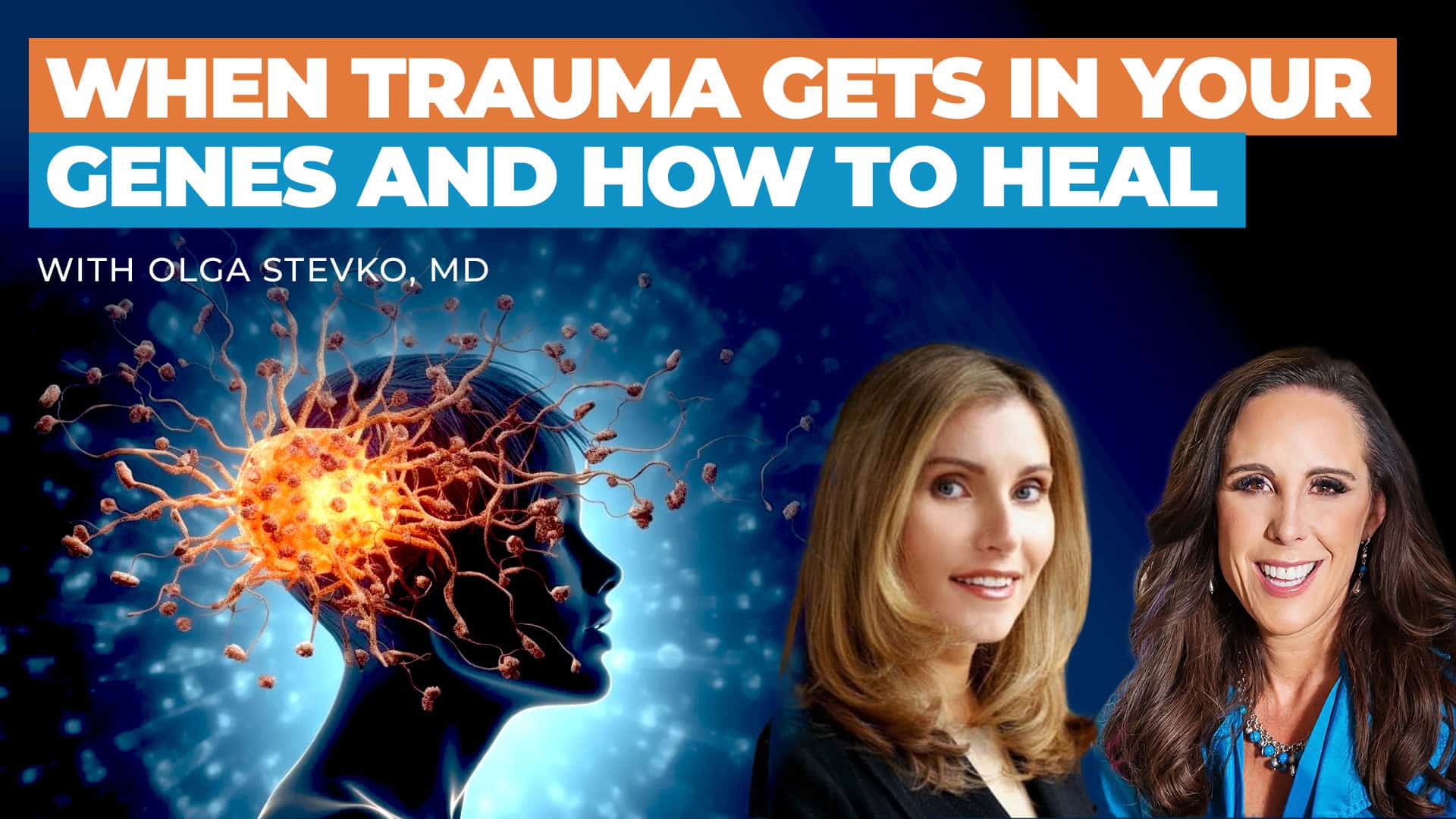
In this fascinating and deeply healing episode of Resiliency Radio, Dr. Jill Carnahan welcomes back Dr. Olga Stevko, five years after her first appearance, to explore one of the most profound topics in neuroscience and healing — transgenerational trauma and how trauma can literally get into your genes.
Key Topics You'll Discover with Dr. Olga Stevko
① Understanding Transgenerational Trauma: Dr. Olga explains the concept of transgenerational trauma and its impact on individuals. Discussion on how trauma can be passed down through generations, affecting both mental and physical health.
① Physiological and Psychological Effects: The conversation covers how unresolved trauma can lead to conditions like autoimmunity and cognitive dysfunction. Dr. Olga highlights the role of the unconscious mind and its connection to the autonomic nervous system.
③ Perception and Trauma: The episode delves into how trauma influences perception, leading to issues like low self-esteem and impostor syndrome. The importance of perception in shaping one's reality and the impact of generational trauma on self-worth.
④ Healing and Connection: Dr. Jill and Dr. Olga discuss the importance of human connection and relationships in healing from trauma. Emphasis on the role of awareness and understanding in resolving unconscious patterns.
⑤ Practical Insights: Dr. Olga shares insights into identifying and resolving unconscious patterns through a multi-step process. The episode concludes with encouragement for listeners to explore their own unconscious patterns and seek healing.
🔑 KEY TAKEAWAYS:
📌 Transgenerational trauma can have profound effects on both mental and physical health.
📌 Healing involves understanding and resolving unconscious patterns, often rooted in past trauma.
📌 Human connection and relationships are vital components of the healing process.
📌Awareness is the first step towards resolving trauma and achieving personal growth.
🔑 CONCLUSION: The episode provides valuable insights into the nature of trauma and the pathways to healing, encouraging listeners to reflect on their own experiences and seek support where needed.
About Dr. Olga Stevko
Dr. Olga Stevko, MD (Russia), is a world-renowned expert in transforming unconscious programs that stem from trauma, stress, and transgenerational inheritance. With a background in medicine, neuroscience, and mind-body transformation, Dr. Olga has helped countless individuals overcome chronic health conditions, anxiety, and emotional blocks by resolving trauma at its root. Her unique methodology reprograms the nervous system to restore balance, confidence, and vitality.
Website: https://www.drolga.com
Instagram: https://www.instagram.com/drolgastevko/
Facebook: https://www.facebook.com/olga.stevko/
Dr. Jill Carnahan, MD – Leading Functional Medicine Doctor
Dr. Jill Carnahan, MD, ABIHM, ABoIM, IFMCP is internationally recognized as one of the most respected leaders in functional and integrative medicine. She is dually board-certified in Family Medicine and Integrative Holistic Medicine, and the founder and medical director of Flatiron Functional Medicine in Louisville, Colorado.
Widely known as a pioneer in environmental toxicity, mold-related illness, autoimmune disease, and resilience medicine, Dr. Carnahan combines cutting-edge science with compassionate, root-cause care. Her clinical approach integrates precision genomics, epigenetics, microbiome research, peptide therapy, and lifestyle interventions to transform health outcomes for patients worldwide.
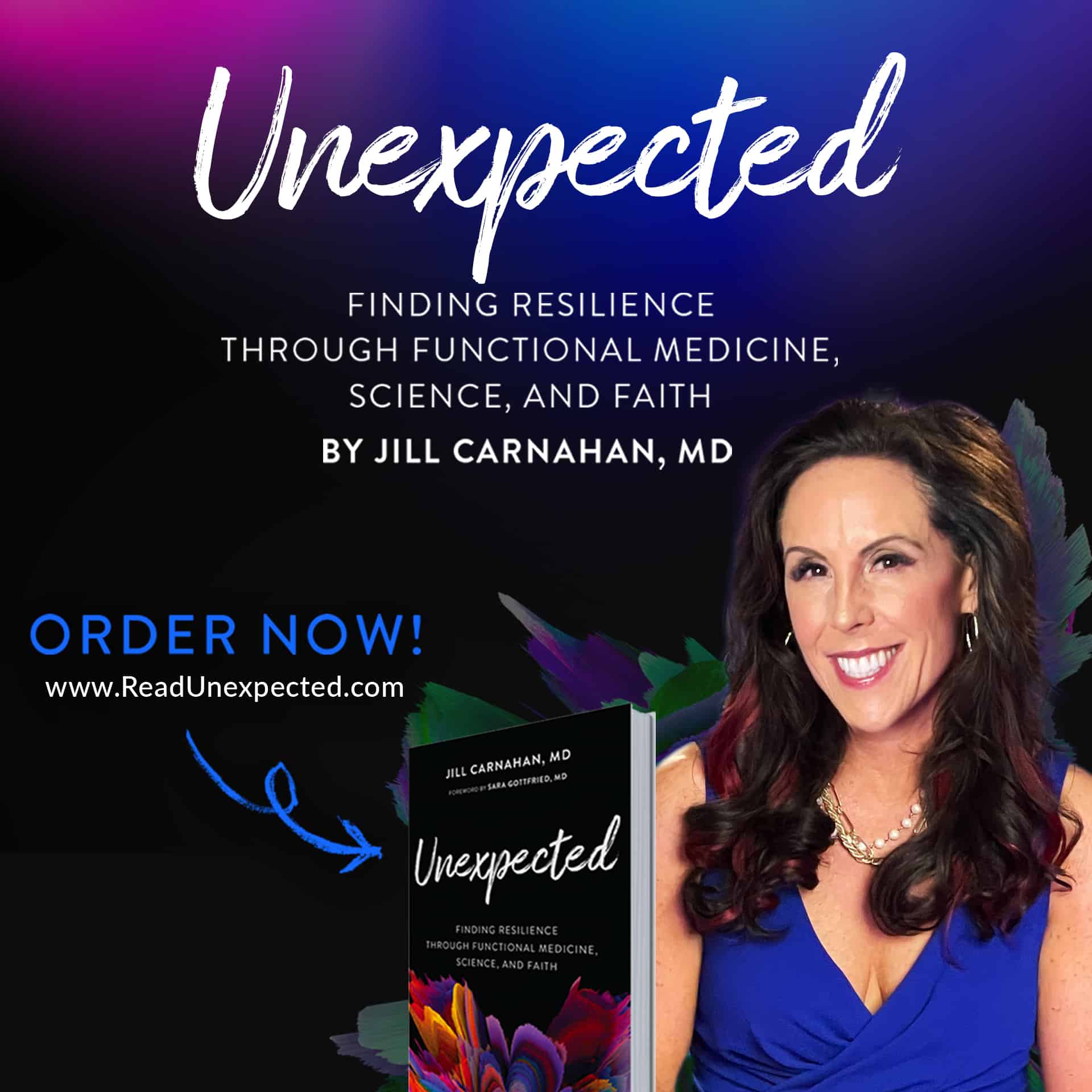
She is the author of the best-selling memoir Unexpected, which weaves her personal journey through cancer, Crohn’s disease, and mold-related illness with her professional expertise. Dr. Carnahan is also the executive producer of the award-winning documentary Doctor/Patient and the host of the popular podcast Resiliency Radio, which reaches over 500,000 global subscribers.
As an international keynote speaker, Dr. Carnahan has been featured at leading medical conferences including A4M, IFM, EPIC, and IPM Congress, and her work is frequently highlighted in major media outlets such as NBC, CBS, Fox News, Forbes, Parade, People, and MindBodyGreen.
With a reputation as both a scientist and a healer, Dr. Jill Carnahan is regarded as one of the top functional medicine doctors in the world, offering a unique blend of evidence-based research, innovation, and deeply personalized care.
The Podcast with Dr. Olga Stevko
The Video with Dr. Olga Stevko
The Transcript – Overview
Transgenerational Trauma: Trauma can be inherited through epigenetic mechanisms, affecting behavior and health across generations.
Unconscious Patterns: Trauma can create automatic responses, influencing emotional and physiological reactions to stressors.
Health Improvements: Rapid health gains seen post-trauma resolution include alleviation of pain, improved memory, and enhanced energy levels.
Holistic Healing Approach: Integrating trauma work into functional medicine improves overall health by addressing root causes rather than just symptoms.
Client Resources: Access to videos and materials supports self-discovery of trauma patterns and encourages healing engagement.
Authenticity and Well-being: Healing enhances personal authenticity and vibrational energy, positively impacting relationships and life quality.
Transgenerational Trauma and Epigenetic Impact
The meeting clarified that trauma and life experiences can pass down through generations via epigenetic mechanisms, deeply shaping health and behavior.
- Dr. Olga Stefko explained that trauma imprints are stored in small RNA molecules and passed via sperm and eggs, influencing offspring’s stress responses even without direct exposure (08:36)
- This epigenetic inheritance was first shown in mice experiments where offspring reacted to stimuli their ancestors experienced as traumatic.
- The mechanism means trauma shapes unconscious nervous system responses, explaining similar behaviors across generations.
- This scientific framework clarifies why children may inherit trauma effects though they never lived through the original events.
- It provides a biological basis for clinical observations of inherited patterns in anxiety, health issues, and emotional responses.
- Dr. Jill highlighted real-world examples where recognizing these patterns helped clients understand and shift their behaviors, confirming the clinical relevance (11:34)
- One client’s neck pain and sound sensitivity resolved fully after trauma work linked to her father’s similar symptoms.
- Many clients discover previously unknown family traumas during healing, confirming the hidden transgenerational links.
- Resolving these unconscious imprints often leads to symptom disappearance and lasting behavioral shifts.
- Healing these patterns can feel like the symptoms or behaviors never existed, marking deep transformation.
Unconscious Programming and Nervous System Responses
Understanding trauma’s role in shaping unconscious programs explains why people react automatically and sometimes irrationally to stress.
- Dr. Olga emphasized perception’s key role in trauma formation and unconscious programming, which hijacks responses despite conscious intent (19:18)
- Only about 15% of trauma-exposed individuals form PTSD, showing trauma impact depends on inherited unconscious programs.
- These programs override conscious will, causing automatic emotional, behavioral, and physiological reactions aligned with ancestral trauma.
- Trauma imprints can create chronic stress by making individuals perceive threats or stress even in safe environments.
- This explains why some people react very differently to the same stimulus, like fear or disgust towards spiders.
- Dr. Jill connected these unconscious patterns to common clinical issues like mast cell activation and stress-related illnesses (17:08)
- Unresolved trauma triggers nervous system stress responses, worsening autoimmune and inflammatory conditions.
- Shifting perception, as Dr. Jill experienced with public speaking, can rapidly reduce stress by changing the unconscious narrative.
- Healing these patterns can lead to authentic self-expression and reduced fear of judgment, improving social and professional interactions.
- Dr. Olga’s clients report deepened connection with themselves and others after resolving trauma imprints, boosting authenticity.
Health and Performance Outcomes From Trauma Resolution
Resolving unconscious trauma programs yields rapid, measurable improvements in physical health, cognitive function, and emotional well-being.
- Dr. Olga shared multiple client success stories showing significant health gains after just a few sessions (41:19)
- One client’s daily severe migraines stopped completely after trauma work, along with improved eye appearance and light sensitivity.
- A 67-year-old client saw reduced wrinkles and eye bags, better memory, and more energy within 90 days post-treatment.
- Another client with an autoimmune disorder regained energy, reduced antibodies, and was taken off some medications by her doctor.
- Posture and neuromuscular function also improved rapidly and permanently, even when prior physical therapy had failed.
- Dr. Jill and Dr. Olga noted that trauma healing positively affects not just health but also identity, relationships, and business presence (44:40)
- Clients become more authentic and fearless, impacting how they connect and perform professionally.
- Shifts in voice and facial expression reflect deep neuromuscular release tied to trauma resolution.
- Healing ancestral trauma is seen as freeing clients and their lineage from burdens, enhancing resilience and gifts.
- These changes help clients vibrate at higher frequencies of love, joy, and authenticity, improving overall life quality.
Methodology and Practical Approach to Trauma Healing
Dr. Olga’s multi-step process uses observable physical and behavioral cues to identify and resolve unconscious trauma programs efficiently.
- She assesses facial asymmetry, posture, voice quality, and clients’ mechanical drawings to detect trauma imprints and neuromuscular tension (37:16)
- Trauma imprints cause muscle constrictions and affect voice features like pitch, volume, and speech fluency.
- The client’s unconscious mind does most of the healing work, making the process painless and effortless according to client feedback.
- Treatment focuses on one unconscious program at a time, which can impact multiple symptoms and areas of life simultaneously.
- This targeted approach allows substantial change from few sessions, with lasting improvements in physical and mental health.
- Dr. Olga’s method emphasizes awareness as the first critical step, bringing unconscious patterns into conscious recognition (47:55)
- Awareness helps clients see issues they thought were normal and begin healing.
- Videos and testimonials from clients demonstrate the transformative power of this work and help others start their own journey.
- The approach integrates somatic therapy principles with neuroscience and epigenetics for a comprehensive healing model.
- This framework supports both professional practice and self-guided introspection through journaling and meditation.
Strategic Importance of Trauma Work in Functional Medicine
Trauma resolution is positioned as a vital missing piece in modern functional medicine for lasting health and wellness.
- Dr. Jill underscored that as the world grows more complex and toxic, addressing unconscious trauma is critical to effective healing (33:30)
- She shifted her practice over 20 years to prioritize trauma work alongside supplements and lifestyle changes.
- Trauma imprints affect mental, physical, and business domains, making this work essential for comprehensive health.
- Healing trauma programs directly alters nervous system function and biochemistry, targeting root causes rather than symptoms.
- This strategic view aligns with root cause medicine philosophy, aiming for long-term disease reversal and vitality restoration.
- Dr. Olga reinforced that unconscious programs reside in the autonomic nervous system and deeply influence biochemistry and health (35:15)
- Changing how the nervous system processes trauma stimuli shifts biological stress responses and reduces inflammation.
- This approach offers a scientific and practical path to improving chronic disease outcomes and aging processes.
- It broadens functional medicine’s scope to include nervous system and epigenetic health as key treatment targets.
- Both speakers see trauma healing as foundational for patients to show up as their authentic selves and thrive.
Client Engagement and Resource Access
Clients and practitioners can access Dr. Olga’s work and resources to begin trauma healing journeys independently or with professional support.
- Dr. Olga’s website features videos, webinars, and client stories to raise awareness and provide practical insights (47:55)
- These materials help people recognize unconscious patterns and start healing through increased awareness.
- Clients often experience shifts just by engaging with these resources before formal sessions.
- Dr. Jill encourages self-exploration through journaling and meditation as entry points into trauma work.
- Professional help is recommended for deeper or complex trauma, with referrals available to Dr. Olga and others.
- The conversation closes with an emphasis on authenticity and higher vibrational living as outcomes of trauma healing (45:40)
- Healing trauma raises personal energy levels, improving how people manifest work and relationships.
- Both speakers validate the real-world, lasting impact of this work on health, identity, and life purpose.
- The podcast invites ongoing engagement through subscriptions and sharing, expanding reach of these healing insights.
- This positions trauma resolution as both a personal and community-level transformative strategy.
Transcript
00:00
Dr. Jill Carnahan, MD
Hey everybody. Welcome to Resiliency Radio, your go to podcast for the most cutting edge insights integrative and functional medicine. I'm your host, Dr. Jill and with each episode we dive into the heart of healing and personal transformation. Join me as we interview medical experts, innovators, thought leaders and people of all types and backgrounds, bringing you the very latest to help you in optimal performance and longevity. Today is no different. We're going to talk about transgenerational trauma and dive into a topic with one of my colleagues and friends, Dr. Olga Stefko. I'll introduce her in just a moment, but before I do, I want to share with you a couple things. First of all, you can find all products and services to help you on your healthy journey.
00:44
Dr. Jill Carnahan, MD
@drjillhealth.com Again, drjillhealth.com we have things like this best selling, sold out product that has just come back in stock called the Hair Regrowth Kit. We've had great success with those of you who are finding your hair thinning on the top. I've been using it for several years and I don't almost go a day without these drops. They're DHT blockers and can really improve the thickness and integrity of your hair. I also pair this shampoo, conditioner and hair growth serum with my Dr. Jill Beauty Collagen, which is a game changer for hair, skin and nails. And you can find all of those@doctor Jill health.com and then I do want to mention, if you don't know, our clinic, Flat Iron Functional Medicine, is accepting new patients. I have some people calling in every week to see about appointments, but we still have space.
01:34
Dr. Jill Carnahan, MD
We have a nurse practitioner, Hannah, and a physician associate, Fawn, who both work with me with each of our cases. And we would be happy to take on your case if you're looking for a consultant in functional medicine. Okay, let me go and introduce our guest today. Dr. Olga Stepko. Neuroscience has shown that 95% of our life experiences are shaped by our unconscious patterns. We're going to dive deep that today. Dr. Olga Stetk MD from Russia has created a unique and powerful methodology that allows her to identify and transform unconscious patterns that are formed as a result of stressful life events, trauma, including trauma passed down from generations past. These programs influence how people perceive themselves, others in the world and affect the nervous system responses and impact both the body and mind.
02:25
Dr. Jill Carnahan, MD
This phenomenon creates a wild variety of physiological, physical, health and emotional conditions, from insomnia, anxiety, to health issues like premature aging, autoimmunity and many more. You're going to hear us talk about that today. And I just believe transforming these unconscious patterns is one of the heart of healing and maybe one of the most powerful things that you could do. So let's welcome Dr. Olga and dive in. Dr. Olga, it's so good to have you back on the podcast. You were the very first episode we ever did, and that's been now almost five years. I think it's been a while. I'm so glad to have you back.
03:01
Dr. Olga Stevko, MD
And.
03:01
Dr. Jill Carnahan, MD
And transgenerational trauma is our topic today. I want to dive into that and I have lots of questions for you. And were both just talking before we came on and how fascinating this topic is. But before we go there, I always love to have a little background and I would love for you to tell our listeners a little bit about how you got into this field of work around helping people with these kinds of issues.
03:26
Dr. Olga Stevko, MD
First of all, I am so excited to be here and as always, it's such a pleasure to see you and to talk to you. I will answer your question. I'm trained as a medical doctor in Russia, and I remember when we studied psychiatry in medical school, I was fascinated about the unconscious mind when we studied some Carl Jung and Sigmund Freud. And I could not believe what unconscious mind can do. Back then, maybe they did not have enough information, even what the unconscious mind can really do. And also I became aware of people's patterns for healing. And I was so surprised, I was asking myself a question.
04:35
Dr. Olga Stevko, MD
Why people approximately the same age and also they had the same health conditions, why some healed completely and pretty fast, some it took very slow to heal, and some never healed and absorbed certain patterns in people's perception about themselves and even their health condition and how they reacted to the environment.
05:10
Dr. Jill Carnahan, MD
What a great framework because you took your medical training and then you really dove into. What I love to think about, too, is how the mind and the body connect. And as a medical doctor, as you are trained as well, we can look at the body and do labs and make a diagnosis of a condition, say my history, breast cancer or some autoimmune condition. But what we're seeing, and this is what we'll talk about today, and I'll have you share all of your knowledge, is those people can either go on to get worse and worse despite all of the interventions, or like myself, who's been through Crohn's and cancer and completely in remission from all those things. And what I'd love to talk about Is what is the difference between those kinds of patterns?
05:53
Dr. Jill Carnahan, MD
Maybe right now we could just start with transgenerational trauma and this epigenetic imprinting. Do you want to give us a little framework around what is that? What does that mean for people listening?
06:05
Dr. Olga Stevko, MD
I will give you two scientific examples. And I absorbed transgenerational trauma maybe 20 years ago, only I did not know the mechanism, like how it passes. Yeah. And I found these two researches and I would like to share them with you. And the first is Dr. Brian dies and Dr. Career Wrestler. They did an experiment with the male mice. They introduced at the same time the order, a chemical order that is similar to cherry blossom. And also a mild electric shock 2ft of these mice. And what they observed that these mice offspring and even their grandchildren, when the same order was introduced, they had the same fierce start of response. And they, I believe first discovered this transgenerational epigenetic inheritance. And I found another research, the experiment of Dr. Audit Rehabi.
07:44
Dr. Olga Stevko, MD
And he did experiments with C. Elegans worms, it's a type of round worms. And he found out that acquired traits for behavior and stress response pass down via this transgenerational epigenetic inheritance via small RNA molecules. And the mechanism is very interesting. When a parent is experiencing life stress or trauma, this smaller and they not coded molecules are produced in the nervous system. And the information of the imprint of this trauma will be stored in small RNA molecules and after some of them will be transferred to jawline, where eggs and sperm or sperm produces, and they will be stored physically in exosperm. And after offspring of this parent, when they have the same or similar experiences, similar trauma, similar stimulus stimuli, this information will be used and they will experience pretty much the same response.
09:24
Dr. Jill Carnahan, MD
Wow. So first one, the mice, they smell the cherry blossom and they have this pain stimulus. And their children, when they smelled the cherry blossom, had the same stress response as if they had the pain, but they really didn't have that experience.
09:36
Dr. Olga Stevko, MD
Yes, even grandchildren.
09:38
Dr. Jill Carnahan, MD
Wow.
09:39
Dr. Olga Stevko, MD
So two generations, I never experiencing this order. And research shows that for human being it's a similar mechanism. Drama and stressful life events are stored in small RNA molecules. And it's not only the mechanism, there are other epigenetic mechanisms.
10:01
Dr. Jill Carnahan, MD
Yes, and I remember just reading some of the studies of the starvation in Eastern Europe and then the Holocaust victims and in the humans where they would see these same kinds of patterns that made no sense for a child who technically didn't have the same experience as the parents or grandparents. It's interesting, even with my own work on myself. And Mark Wolin's book called it didn't start with you. He's just one of the many authors who's written about that. And I remember being so fascinating reading about how maybe at 40 years old, a man would suddenly divorce his wife and go off in something almost like the midlife crisis. But then he found out at 40, his father and his grandfather and his, you know, great grandfather all had a similar experience.
10:41
Dr. Jill Carnahan, MD
And maybe one that was two generations back, had a sudden death of his mother or something that kind of started this trauma. And then every male in that family, and this is just one example from that time, would experience this kind of sudden shift and maybe again, a divorce or something really out of behavior, characteristic behavior for them at a certain age. So he talked about how when we go back to look at our family trees, we can sometimes see these patterns and be like, oh, no wonder that I, at this age or this time in my life, felt this thing that I didn't know really existed. But it did exist with my parents and grandparents. So obviously that's a long, roundabout thing, But I know you treat clients and you talk about this and do this work.
11:23
Dr. Jill Carnahan, MD
Do you have any examples or things that you've seen in your clients or patients to where when you bring that to mind, to the conscious mind and heal it changes things forever?
11:34
Dr. Olga Stevko, MD
Yes, a lot of examples. And what I observed, often when my clients refer certain their health conditions or symptoms and they say, oh, my father or my mother had it, or even one of grandparents had it can be an indication of transgenerational trauma. And I'm not talking about genetic disease. And I actually remember one of the clients, one of your patients you refer to me, experienced something similar. She had neck pain and stiffness, and she told her father had the same symptoms. And it's so interesting, when we worked on this trauma, transgenerational trauma, her symptoms were completely gone into sessions.
12:39
Dr. Jill Carnahan, MD
Wow.
12:40
Dr. Olga Stevko, MD
And also she had extreme sensitivity to sounds. And these symptoms were gone too.
12:47
Dr. Jill Carnahan, MD
Wow.
12:48
Dr. Olga Stevko, MD
And as I believe I mentioned it before, I experienced my clients experience transgenerational trauma. The unconscious mind recalled some imprints. And only I did not understand how it's possible. And to my surprise, they were so fascinated what the information came, they decided to talk to their parents or grandparents, and sure enough, it was confirmed it did happen, and they did not know the familiar history. And it's so amazing that when this transgenerational trauma imprints are resolved, and also childhood trauma imprints too, the results are astonishing. It's certain Issues are gone, symptoms are gone, and even patterns are shifted and people even forget they had it.
13:56
Dr. Jill Carnahan, MD
Yes. So. So years and years ago, right after my own divorce, which has been now almost 10 years, it's been a long time. I did a lot of work with you, and I remember some of those things that like, really shifted for me in my behavior, in my own health. And what was interesting. I love that you just said that. And I want to talk more the work that you do. But for me, what was interesting is the part of myself that was in a certain way or having a certain symptom. When I resolved that, like you said, it was almost like I forgot that ever existed. And it's so weird to have that experience where you're like, really? Was that me, that behavior or that symptom? Because once you really resolve the subconscious, it's almost as if it never existed.
14:37
Dr. Jill Carnahan, MD
And of course it did. Right. But do you want to talk a little bit about that? I think that's so fascinating because it is part of the picture of this, like, really complete. When you resolve that. That level, that deep level, it's almost if that part of you has just evaporated in some way.
14:53
Dr. Olga Stevko, MD
Yes. And what I believe with the work I do, and I will talk more about that, and I do not provide techniques for people for good coping mechanisms even. I know a lot of powerful techniques. And it's possible to resolve generational trauma and childhood trauma with permanent results. The results are fast and like, really can be dramatic even. And what happens, I believe the nervous system of a person will be using the information in the small RNA molecules differently. Stimuli and the stimulus can be there to whatever people viewer reacting. And the nervous system responses will be completely different, neutral. That's why there is no difference in the nervous system to react with a stress response. And I would like to talk more how this. How the unconscious programs are forming as a result of this trauma imprints.
16:29
Dr. Jill Carnahan, MD
Yeah, let's do. Let's talk about. Because again, some of this stuff seems so mysterious. And to me, it's almost like being on an autopilot where you don't really know what that programming is and we're behaving or responding in a certain way. And this could be everything from maybe how we respond to angry person to how we respond to a stressful situation. But it can also be a physiological response in our body that creates autoimmunity or cognitive dysfunction or one of the big things I treat as mast cell activation. And I always feel like that in particular is Very prone to environmental inputs because our mast cells are our immune system's protective agents. Right.
17:08
Dr. Jill Carnahan, MD
And if there's some reason, unconscious or conscious, that we feel unsafe in our environment or that our parents or grandparents felt unsafe and we have a retriggering of that trauma, I think that mast cell activation can be a part of that. So maybe talk a little about how these form and then how might someone know that they have an unconscious pattern they need to resolve?
17:32
Dr. Olga Stevko, MD
I am. It's such like again fascinating topic. And first of all it's what I researched and my understanding of how it's all forming. It's a significant role. It's a person's perception. Maybe some people don't realize how perception is important.
18:00
Dr. Jill Carnahan, MD
Yes.
18:01
Dr. Olga Stevko, MD
And in print is. It's an instant sensory and cognitive assessment and learning about the environment and responding to it during a stressful event or trauma in order to survive or adapt.
18:23
Dr. Jill Carnahan, MD
Yes.
18:26
Dr. Olga Stevko, MD
And the perception is so important because it's important when how trauma is forming. Because even ptsd, post traumatic stress disorder, not everybody is forming who even experience horrible events, for example Vietnam War veterans. Only 15% I believe form PTSD. And what I believe it's due to transgenerational trauma. Because transgenerational trauma will significantly affect perception if already the information about trauma from ancestors is there. When similar events occur, for example some military actions or war or violence, this information will be used for example, small RNA molecules. And the nervous system of a person will respond the same like their ancestors nervous system. And that's why perception is very important. And also it's very important during forming a traumatic imprint. And these trauma imprints are becoming part of a person's unconscious programs. And unconscious programs, they influence most things.
20:06
Dr. Olga Stevko, MD
They influence our perception, our thought patterns, our emotions, our behavior, our reactions. And that's why it's on autopilot. When some stimulus or stimuli trigger trauma, pretty much even people try do not react certain way, or do not feel certain way, or don't behave certain way. It won't happen. The unconscious mind will override whatever people want. And that's why there will be reactions, emotions, feelings of our ancestors.
20:51
Dr. Jill Carnahan, MD
Hey guys, just a quick pause to remind you. If you want to dive more about personal trauma and healing, I would encourage you be sure and get my book unexpected. You can find it anywhere books are sold and if you want to get a personal signed copy via from me, just go to Dr. Jill health.com click on unexpected and you can order it there. We will ship it right from our office and it'll Be personally signed by me. Okay, let's get back to the show. Amazing. Do you think this is part. This is just a little side note, but I know a lot of people have experiences we call deja vu, where you have this like perceived sense in a certain situation, in a certain conversation with someone maybe you've never met before, that this feels really strangely familiar. Right.
21:36
Dr. Jill Carnahan, MD
Do you think that has to do with this kind of subconscious memory of transgenerational conscious or experiences?
21:42
Dr. Olga Stevko, MD
I believe so, Dr. Jill. Because what I believe our unconscious mind is coding not only traumatic and stressful events, but also pleasant events and even learnings what they believe. And that's why when something reminds certain ancestors experience even pleasant one, people feel certain way. I was asking myself how come Mozart just played piano as a genius at five years old? It's a possibility of ancestral memory. And it's not like you don't need to study how to play piano. No, you need to study only it will be a piece of cake. Or if your parents or some of your ancestors studied, for example, engineering, in this case, what I believe, their children, even grandchildren, they can have a gift for patterns. For example, math and engineering.
22:51
Dr. Jill Carnahan, MD
Wow. It's so fascinating the many ways that this can manifest in our life. Not just trauma, although trauma is a big one because people I think don't realize, but these gifts as well. And I've been seeing it seems like all the time on social media. There's these videos of a very young child who's really extraordinary in math or in a piano. And I do believe, like you said, there has to be some sort of genetic imprinting on that too. So the neat thing is there's gifts that are passed down as well.
23:21
Dr. Olga Stevko, MD
Yes. And also, Dr. Gilles, I believe even when trauma is imprinting and passes transgenerationally a part of that, it can be very unpleasant, painful experiences. What I believe we are relieving our ancestors burdens and hardships.
23:46
Dr. Jill Carnahan, MD
And.
23:48
Dr. Olga Stevko, MD
On the other hand, there can be gifts for people. What we believe some trauma of our ancestors can create even higher resilience, genius patterns of thinking. I had such clients recognizing patterns consciously and unconsciously, that can be helpful.
24:13
Dr. Jill Carnahan, MD
It's amazing and I love to frame it that way. To actually think about it could increase resilience and learning and an ability to be even more. And I think sometimes as we start to heal the patterns, we literally are going backwards into time and healing the patterns of those before us in a way, aren't we?
24:30
Dr. Olga Stevko, MD
Oh, Dr. Jill. Now, after you said it, I remember some very surprising for Me experience. I got a client and she wasn't a religious person. That's why I was surprised what she said. And she studied signs and during our work she told me. Oh my. She told me, my ancestors are very grateful for you. Not only I healed you healed my ancestors.
25:00
Dr. Jill Carnahan, MD
Wow.
25:01
Dr. Olga Stevko, MD
And for me it was such a surprise. Like again, she did not believe in certain things and she said it.
25:08
Dr. Jill Carnahan, MD
Wow. So the power there. Yes. What about. So we can look, we've talked about this ancestral trauma, the RNA patterns and all this amazing research that's actually been done to prove what we're talking about. One of the things I think that I see in clinical practice is a lot of people have stress related illness, which means the HP axis and the stress related hormones and things are a little bit out of control. And those neurotransmitters and things from our own physiological stress response are affecting our bodies and causing more illness and breakdown in tissues. How could it be that unresolved trauma might be unwittingly or hidden causing the stress response in a person?
25:52
Dr. Olga Stevko, MD
It's such a good question. Dr. Jill and I mentioned perception before. It's a lot to do with perception. And we perceive things not how they are. We perceive things how we are. Yes. And when this trauma start, generational and even womb trauma and childhood trauma, our perception will be according the trauma, as I mentioned. And it's not about a stressful event itself, it's how we perceive certain events. And as a good example, I remember I was a part of a group of friends and were talking and suddenly the topic of spider came and I was so surprised because some people reacted very excited to talk about a big spider. Even one person had a ped tarantula.
27:08
Dr. Jill Carnahan, MD
Wow.
27:08
Dr. Olga Stevko, MD
And other people, some feel anger, like angrier thinking about a spider. Some fear, some dislike and disgust, some neutral. Isn't that interesting how the same thing, stimulus, right. The same event, it can create completely different perception. And perception can be about self and others and the world around. And generational trauma can create a negative perception of self. And people experience low self esteem, low self worth. In this case, every day more than once they will be very stressed and anxious and under pressure because it's a fear how people perceive them. And they perceive themselves as a not good enough or not good as others not enough. And it can create chronic stress. People cannot cope what the unconscious mind, how it perceives and even how they perceive the world around what is not threatening for other people. Like a big spider.
28:34
Dr. Jill Carnahan, MD
Yes.
28:35
Dr. Olga Stevko, MD
For others it will be very threatening. And as Spiders is just a metaphor. It can be anything.
28:41
Dr. Jill Carnahan, MD
Yeah, well, I love that because it's like, even for example, years ago when I started speaking, I was a little nervous and I got over that. And now when I go out to a stage, it doesn't really matter how many I get on there. And I just love with. I have a lot of joy around that. But I've heard the statistics around public speaking, and that's literally one of those top fears for most people. And for some reason for me, it was really just realizing it's so not about me. Like when I got out of my own way, when I had my ego involved and I was worried about messing up or looking, okay, then it was stressful. But as soon as I changed that perception, I was like, wait, it has nothing to do with me. It's just the message, right?
29:18
Dr. Jill Carnahan, MD
And now I could stand on any stage with any number of people, and I never get nervous because it's not about me. But I shifted that perception. And same with spiders. We could have someone who's like terrified and someone's like, oh my Gosh, I have 12 spiders in my bedroom in a. In a tarantula area or whatever. So it's really interesting to think about that. And the idea there, the exciting thing is that we can change our perception right.
29:41
Dr. Olga Stevko, MD
Very fast by resolving transgenerational and woman childhood trauma. It's depend where it was formed. And I helped a lot of people among different issues with public speaking.
29:58
Dr. Jill Carnahan, MD
Yeah. Yeah. That's a big one, isn't it? It's funny.
30:02
Dr. Olga Stevko, MD
And it's about self perception and also the fear if they will be judged by other people.
30:13
Dr. Jill Carnahan, MD
Yeah, it is. Because I remember the times when I used to be nervous and when I shifted, I just did the work around. What you said is like, I had to take myself out of the equation. My idea that I was being judged. And once that was gone, it's not scary at all because who cares?
30:30
Dr. Olga Stevko, MD
Dr. Jill, what I notice is so interesting. Trauma imprints can create inability to connect on a deeper level with yourself, other people, even your pets, and also can affect your identity. People, they have problems with clarity at the identity level. And when trauma imprints and unconscious program what they create, unconscious programs are transformed. It's amazing what happened. Most of my clients, they become authentic and they could connect on a very deeper level with themselves and other people and even their pets. And in this case, they did not worry anymore how they perceived by other people. Just they are themselves.
31:37
Dr. Jill Carnahan, MD
Wow.
31:37
Dr. Olga Stevko, MD
And they don't need to try hard or Pretend it's truly remarkable. It's trauma imprints often creates not trusting. And it can be yourself and also others and kind of building up walls between you and other people. And that's why so many people, because of unresolved trauma in the unconscious programs, they feel kind of not connected and separated as they do not belong. And even their imposters.
32:18
Dr. Jill Carnahan, MD
Yeah.
32:18
Dr. Olga Stevko, MD
Like I believe imposter syndrome. It affects up to 85% of people. Isn't that interesting?
32:26
Dr. Jill Carnahan, MD
That is fascinating. And it makes so much sense. So the beautiful thing is, and honestly that makes even more sense because at a really core level, healing the human body is about human connection, is about our relationships. I've seen study after study that shows more than money or wealth or fame or whatever in our life, the thing that creates the most happiness is the relationships that we have and the authenticity. And so how cool to pull that in like what's tied to happiness, which is our genuine relationships with other people into resolving this trauma. And it makes so much sense. And it makes so much sense that if we don't really know ourselves, then we don't really know these programs that are running without our knowledge that we wouldn't be able to really show up as ourselves.
33:12
Dr. Olga Stevko, MD
Yes. And Dr. Drill, it's amazing you mentioned it because I absorbed it for have been observing for many years what this troubling prince and unconscious program that create afflict. And I was curious. I decided to do a research online and I found out that unresolved trauma imprints and especially transgenerationals affect most areas of life, including relationships, including mental and physical health, including business. Because in each area, the core is you.
33:59
Dr. Jill Carnahan, MD
Yes.
33:59
Dr. Olga Stevko, MD
And how your nervous system is reacting in the entire body is responding and how you react to others in business or relationships and much more that makes.
34:14
Dr. Jill Carnahan, MD
So much sense that it's so critical. And in fact, I've gone from in my 20 plus years of functional medicine, obviously supplements lifestyle debt. All of these things are so critical. And as the world gets more complex and more toxic. Toxic. And all these things are happening. I've really come to understand that in healing and even my practice, these kinds of core work on our trauma and our unconscious programs are maybe one of the most important things that we can do for our health. So I love that framework.
34:43
Dr. Olga Stevko, MD
Yes. And I believe so, Dr. Jill. Because our unconscious mind and our. And our unconscious mind is part of our nervous system, especially autonomic nervous system. And how our unconscious mind works and how our nervous system responds, it can change dramatically. Biochemistry.
35:11
Dr. Jill Carnahan, MD
Yes. Yes. That's what's exciting is we're kind of really going to the root. We talk about root cause medicine. So we've talked a lot about what this is. And it's so fascinating the things we covered, from the epigenetic transfer of information to the patterns that affect our relationships. Let's talk just a little bit about the work that you do and maybe in generalizations, maybe a little bit specific, like an example of how would someone resolve this kind of trauma if they were to work with you or someone who is a practitioner.
35:41
Dr. Olga Stevko, MD
Thank you. And first of all, I would like to mention something that trauma imprints and the unconscious programs they create can lead to chronic stress and also to low grade systemic inflammation. And that can lead to various diseases and even to rapid aging through different mechanisms, like for example, inflammation and also shortening telomeres. And what I do in my practice, I absorb patterns and how I do it. I absorb a person's face, my client's face, and also posture. And I assess viewerable and non verbal patterns of communication and even the quality of their voice. And also I will look at their drawings. And I'm not talking about art, thinking about the issue. My client will create a mechanical drawing. Then conscious mind will guide their hand and fingers to express the information about these unconscious patterns and what I'm looking for.
37:16
Dr. Olga Stevko, MD
Trauma imprints and unconscious programs can affect even muscles. And I'm looking for constrictions, neuromuscular loads. And that's why trauma in prints can create even asymmetry in phase, even inability to smile authentically, like it will be entire constriction. Or even how positions of eyes are. For example, eyes are constantly kind of squinty and they look small and kind of sunk in. And the same for voice muscles that take part in voice. Some of them, they're similar who takes part in breathing and drama imprints. And the unconscious programs they create can affect all of that. And even like people have various issues with voice, for example, low talkers, loud talkers, even speech stuttering or high pitch voice or very like rusty voice. And it's amazing. I would see these patterns and patterns are connected. It's what I see how people look and how they sound.
38:46
Dr. Olga Stevko, MD
And in their drawing they can be similar patterns. And bringing awareness is the first step to resolving certain things and healing. Even this is important. And I created the process, multi step process. And during this process, a person's unconscious mind will be doing most of the work. And that's why it's effortless and painless. It's what my clients shared with me.
39:24
Dr. Jill Carnahan, MD
And.
39:26
Dr. Olga Stevko, MD
I would identify what patterns and specifically what unconscious program to work on. And I can work one program at a time. And even working one program can create really big results and can go to different areas because one program is connected to trauma, imprints can be related to childhood trauma and or generation transgenerational trauma. And working one program can improve or resolve not only one issue, but improve and resolve other issues.
40:11
Dr. Jill Carnahan, MD
Yeah. And again, I worked with you quite a few years ago and I really looked back and I think my voice has changed my spell. Like I can actually attest to some of these things that over the years it was pretty profound, the changes when you work with those unconscious programs, it's so powerful. Maybe as we start to wrap up, do you have any examples of a client you've worked with that you've seen some real profound change in either a health condition or their competence or their work related ability to show up? What things have you seen in your practice?
40:48
Dr. Olga Stevko, MD
I saw so many amazing, almost like miraculous experiences in my practice in different areas because I help my clients with various issues, health related, relationships related and business related. And as few examples, I had one client and she had horrible migraines every day even and even throwing up. They were severe. And as a result of our work, after just a few sessions her migraines were completely gone. And so she had kind of squinty eyes, her eyes and sunk, her eyes became very big round and her sensitivity to light was gone.
41:40
Dr. Jill Carnahan, MD
Wow.
41:41
Dr. Olga Stevko, MD
And I had another client, Lou, and they have a video of our webinar he's sharing on my website and it's remarkable what happened. And he was back then 67. He shared and he worked on anti region and he had triple eyebags, many deep wrinkles, poor memory, cognition, low energy. He did not look good. And only after four sessions and three months passed after that 90 days, his eyebags and wrinkles were diminished significantly. He had good memory, good cognition, good energy and it's like amazing what happened in his life. And he shared this video and I help people with autoimmune immune diseases, psoriasis, Hashimoto's and others. I remember one client and she could not walk or function. When she came to me, she was lying in a complete free state of your nervous system, feeling heavy, exhausted after only a few sessions.
42:53
Dr. Olga Stevko, MD
It was amazing how much energy she had. She felt very cold. She didn't feel it anymore. And when she did her test, her antibodies were reduced significantly and many symptoms were gone. Even her doctor Took her off from some medications.
43:16
Dr. Jill Carnahan, MD
Yeah. Wow.
43:17
Dr. Olga Stevko, MD
And I had many other cases as a posture permanently improved in one or two sessions. People try to do anything exercises and other things like they. It didn't improve permanently after exercises and relationships wise people became more connected with themselves and others, more authentic. And people were drawn to my clients. They were so surprised. They told people never came to me before. They're coming now, even hugging me.
43:53
Dr. Jill Carnahan, MD
Wow, that's amazing. I love and I love the story about the older gentleman who. It sounds like anti aging medicine with the trauma. Like the fact that you can have these changes, which again, I saw some on my own, with my own experience. And clearly this can. Because of the neuromuscular connection.
44:10
Dr. Olga Stevko, MD
Yes. People change so much. Not only wrinkles are gone. The shape of face. Yeah, the shape of face can shift so much. And eyes I. My clients share. Some people even did not recognize them.
44:26
Dr. Jill Carnahan, MD
Yeah.
44:27
Dr. Olga Stevko, MD
What have you done? You look so different.
44:29
Dr. Jill Carnahan, MD
Huh? That's. It is amazing. And again you. You even again. This has been years ago. Took some videos of me and I can look back, I'm like, that doesn't even look like me anymore.
44:37
Dr. Olga Stevko, MD
It's like a different person sometimes.
44:40
Dr. Jill Carnahan, MD
Yeah, exactly.
44:40
Dr. Olga Stevko, MD
How people look, how they feel about themselves, how they rel to people and even how they think about business, for example.
44:52
Dr. Jill Carnahan, MD
Yeah. Or. Or their fears or their lack of fear. You're done. So amazing. This has been really fun to go deep with transgenerational trauma and how that we can actually shift this. And just to hear about the work that you're doing, one thing that came to mind in our last few minutes as you're talking is I've heard that the frequency of love and joy is obviously a very high frequency, a high vibration. And we a lot of times draw people to us frequencies when we're in a great state of love and joy and peace. And I'm not sure if this is true or not, but I recently heard that the vibration or frequency of authenticity is 40 times higher than LA of love and joy, which I always thought were something else.
45:35
Dr. Jill Carnahan, MD
So how cool that when you work through these trauma patterns that you don't even maybe know exist, that you can just vibrate at such a higher level. And of course then whether you're manifesting work in the world or showing up to help patients heal, you can do it with a much more authentic higher vibration. And that's exciting too.
45:54
Dr. Olga Stevko, MD
Oh, I believe so, Dr. Jill. Because even our brain, our heart, they have neurons, our gut, they're all connected. And what I Studied in medical school. Neurons produce nerve impulses. It is kind of energy. I believe it's what people feel when they meet. Have you ever experienced. It's a kind of first look to know how you feel about that person. Because people perceive unconsciously other people and because of unresolved trauma imprints, some people, even there, they pretend to be positive. The unconscious mind is not showing frequency is different because some people are not optimistic. They look at the world in a very negative way. That's why what you said and said, it is profound. I believe it is true.
46:58
Dr. Jill Carnahan, MD
I do. And again, you're a super censor as far as you can really read and understand people. Well, I feel like I'm kind of that way too in clinical practice. And it is interesting because someone can come across as very positive, but you're like, there's something off. And I think it's that sense that often people have that. And so if any of us can work on these patterns and show up more as our truest, most authentic self, we're going to do everything better in the world and our bodies are going to feel better and so exciting. If people want to know more about you or work with you, where can they find you?
47:32
Dr. Olga Stevko, MD
My website, Dr. Olga.com d r my first name, o l ga.com and I have some videos and some podcast videos I was invited to and also webinars with my clients where they share their remarkable life stories and transformations. And I will talk more about patterns, their patterns. And as I mentioned before, even watching these videos, it might shift already for some people, how they feel about themselves, because the first step is awareness and unconscious programs are shadows and they're in a blind spot. People have no idea. They have issues. They think it's normal.
48:25
Dr. Jill Carnahan, MD
Yes, love that. And I love the work that you do. So if you're listening or you're driving, we'll be sure and include that with the show notes. Dr. Olga and of course, all those videos and resources there. And it's interesting because again, because I've done a lot of work with you and a lot of work over the years. I have found too, as I'm more aware, I can often now go into my quiet prayer, meditation and journal. And I often will have these shifts just on my own. And so I just want to encourage those people out there. If you know, want to start working with someone like Dr. Olga or Dr. Olga herself, or even doing the work on your own, you can often go into, you know, either journaling or looking through patterns in your family and you.
49:04
Dr. Jill Carnahan, MD
You may want a professional to help you, but some of this stuff can be introspective and you can start the work on your own, which I love. Well, thank you again for coming on. It's super exciting to have you back and thank you for just the light and the brilliance that you bring into the world. You are. It's, it's a real honor to have you on again.
49:25
Dr. Olga Stevko, MD
Thank you so much, Dr. Jill, and I'm so grateful to be on your podcast.
49:32
Dr. Jill Carnahan, MD
Hey everybody. I hope you enjoyed that episode with Dr. Olga Stefko on transgenerational trauma. Like I said, I've done some of the work myself with her almost a decade ago and it was really a profound shift in my own health and thinking and ability to show up in the world. And I just love getting the word out about these trauma based somatic therapies that can be so powerful in shifting how we think and believe about disease and how we show up in the world. So whether you read Mark Wolin's book called It Didn't Start with Me or reach out to Dr. Olga or another somatic based trauma therapist, I hope that it will help you in your journey. If you haven't yet subscribed, hit the subscribe button below.
50:13
Dr. Jill Carnahan, MD
Hit the bell to be notified of future episodes and we bring you new episodes each week. Please share with a friend if you found it helpful and I look forward to seeing you again next week. Next week on Resiliency Radio.
* These statements have not been evaluated by the Food and Drug Administration. The product mentioned in this article are not intended to diagnose, treat, cure, or prevent any disease. The information in this article is not intended to replace any recommendations or relationship with your physician. Please review references sited at end of article for scientific support of any claims made.





Share: