

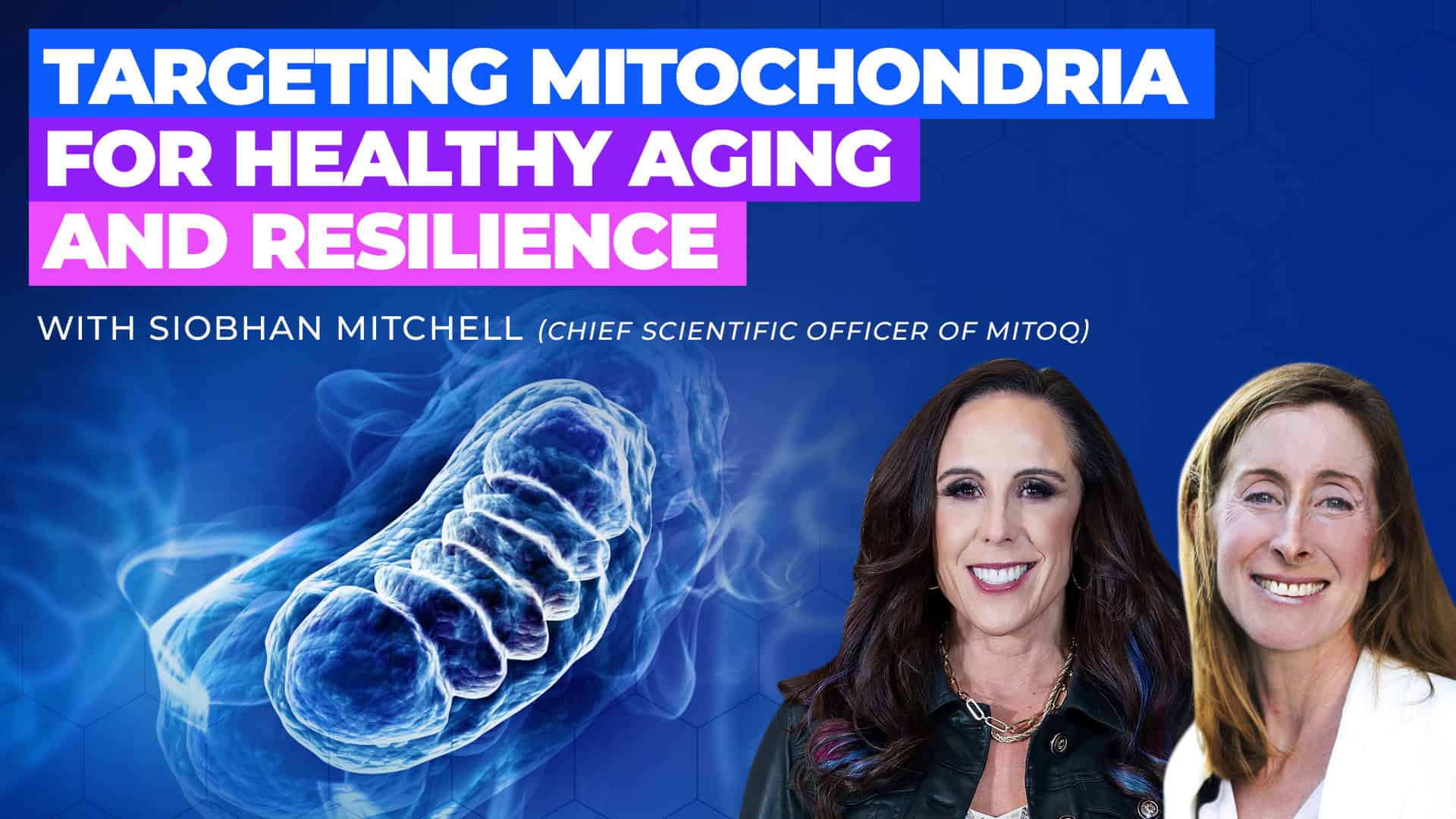
In this science-backed and empowering episode of Resiliency Radio, Dr. Jill Carnahan is joined by Dr. Siobhan Mitchell, Chief Scientific Officer of MitoQ, to explore how optimizing mitochondrial health can revolutionize the way we age, perform, and heal.
Together, they unpack the critical role mitochondria play in everything from immune function and brain health to energy production, resilience, and mental well-being. Discover how MitoQ, a breakthrough antioxidant supplement, supports mitochondrial function, enhances athletic performance, and may even aid mental health and PTSD recovery by repairing cellular damage and reducing inflammation.
Key Topics You'll Discover with Siobhan Mitchell
① Mitochondria and Immune Function: Mitochondria are crucial for innate immunity and play a significant role in brain health and immune responses. The discussion highlights how maintaining healthy mitochondria can reduce brain inflammation and improve energy utilization.
② Environmental Toxicity and Health: The guest, an expert in environmental medicine, emphasizes the impact of toxic load and infectious burden on immune system dysfunction. Strategies to reduce toxic load and improve mitochondrial function are explored.
③ MitoQ and Athletic Performance: MitoQ is discussed as a supplement that can enhance athletic performance by improving mitochondrial biogenesis and power output. The benefits of combining MitoQ with exercise for improved performance in activities like cycling are highlighted.
④ MitoQ in Mental Health: The potential of MitoQ to aid in the treatment of PTSD by repairing vascular dysfunction is explored. The supplement's role in supporting mood and overall mental health is discussed.
⑤ Empowering Patients: The importance of patients becoming their own health advocates is emphasized. Tips for maintaining mitochondrial health, including lifestyle changes and the use of supplements like MitoQ, are provided.
🔑 KEY TAKEAWAYS:
📌 Mitochondrial health is integral to overall well-being, affecting everything from immune function to mental health.
📌 MitoQ offers a promising approach to enhancing mitochondrial function, particularly when combined with lifestyle interventions like exercise and a healthy diet.
📌 Empowering individuals to take charge of their health through education and access to resources is crucial.
🔑 CONCLUSION: The episode concludes with a call to action for listeners to explore mitochondrial health further and consider the potential benefits of MitoQ. Listeners are encouraged to consult the show notes for links to studies and additional resources.
About Siobhan Mitchell, PhD
Dr. Siobhan Mitchell is the Chief Scientific Officer at MitoQ and a leading expert in nutritional neuroscience and mitochondrial biology. With over 20 years of global experience at Unilever, Nestlé, and Pepsico, she has led groundbreaking clinical research on aging, cognition, mood, and metabolic health. A published author of over 80 scientific papers and holder of eight patents, Dr. Mitchell is dedicated to helping people live healthier, longer, and more resilient lives through science-driven innovation.
🌐 Website: https://www.mitoq.com
Dr. Jill Carnahan, MD – Leading Functional Medicine Doctor
Dr. Jill Carnahan, MD, ABIHM, ABoIM, IFMCP is internationally recognized as one of the most respected leaders in functional and integrative medicine. She is dually board-certified in Family Medicine and Integrative Holistic Medicine, and the founder and medical director of Flatiron Functional Medicine in Louisville, Colorado.
Widely known as a pioneer in environmental toxicity, mold-related illness, autoimmune disease, and resilience medicine, Dr. Carnahan combines cutting-edge science with compassionate, root-cause care. Her clinical approach integrates precision genomics, epigenetics, microbiome research, peptide therapy, and lifestyle interventions to transform health outcomes for patients worldwide.
She is the author of the best-selling memoir Unexpected, which weaves her personal journey through cancer, Crohn’s disease, and mold-related illness with her professional expertise. Dr. Carnahan is also the executive producer of the award-winning documentary Doctor/Patient and the host of the popular podcast Resiliency Radio, which reaches over 500,000 global subscribers.
As an international keynote speaker, Dr. Carnahan has been featured at leading medical conferences including A4M, IFM, EPIC, and IPM Congress, and her work is frequently highlighted in major media outlets such as NBC, CBS, Fox News, Forbes, Parade, People, and MindBodyGreen.
With a reputation as both a scientist and a healer, Dr. Jill Carnahan is regarded as one of the top functional medicine doctors in the world, offering a unique blend of evidence-based research, innovation, and deeply personalized care.
The Podcast with Siobhan Mitchell, PhD
The Video with Siobhan Mitchell, PhD
The Transcript – Overview
Mitochondrial Role in Aging and Brain Health
The meeting established mitochondria as the key driver in aging and brain function, linking energy use efficiency to disease prevention.
- Dr. Mitchell emphasized mitochondria’s role as the cell’s powerhouse converting food into energy, producing damaging free radicals as a byproduct that accelerate aging (10:30)
- Free radicals damage DNA and proteins, which causes aging and cell dysfunction.
- Healthy mitochondria reduce brain inflammation and amyloid buildup linked to Alzheimer’s disease.
- The brain consumes 25% of the body’s energy despite being only 3% of the body weight, making mitochondrial health critical.
- Neurons damaged by mitochondrial dysfunction do not regenerate, highlighting the importance of early mitochondrial support.
- Mitochondrial dysfunction also underlies immune response issues in the brain, worsening inflammation and cognitive decline with age (14:30)
- Dr. Mitchell connected brain immune dysfunction and amyloid plaque buildup directly to mitochondrial decline.
- Maintaining mitochondrial health reduces brain inflammation and supports energy metabolism across the body.
- The brain’s control over systemic energy use links mitochondrial health to overall metabolic regulation.
Clinical Evidence and Efficacy of MitoQ
MitoQ’s unique delivery system dramatically improves mitochondrial antioxidant levels, showing promising clinical results in vascular and brain health.
- MitoQ’s engineered molecule enters mitochondria up to 90% versus about 5% for regular CoQ10 supplements, offering superior antioxidant protection (17:50)
- This is achieved by attaching a positively charged triphenylphosphonium tag that targets the negatively charged mitochondria.
- Traditional CoQ10 supplements do not effectively reach mitochondria due to their size and hydrophobic nature.
- Dr. Mitchell highlighted extensive clinical interest with 26 completed and 20 ongoing trials investigating MitoQ’s effects on aging-related diseases.
- A cardiovascular trial showed that 20mg of MitoQ daily for 6 weeks improved flow-mediated dilation by 42%, reversing vascular aging by 15-20 years (20:45)
- The trial included older, healthy adults who showed early signs of vascular stiffness and impaired nitric oxide release.
- Improvements in vascular function help enhance exercise capacity and reduce risks associated with aging blood vessels.
- Dr. Mitchell explained this as evidence to begin mitochondrial support before apparent symptoms arise.
- Ongoing brain-related trials include cognitive frailty, multiple sclerosis, and anxiety, with preliminary data showing improvements in memory and mood (23:30)
- Animal studies demonstrated MitoQ’s ability to reduce social anxiety by normalizing mitochondrial activity in the amygdala and frontal cortex.
- Clinical data on fatigue and inflammation in multiple sclerosis patients suggest mitochondrial support reduces symptoms.
- These findings support MitoQ’s potential to target mood disorders and early cognitive decline mechanistically.
Integration with Exercise and Mitochondrial Biogenesis
Combining MitoQ with exercise enhances mitochondrial number and function, creating synergistic benefits for aging and performance.
- MitoQ improves mitochondrial efficiency while exercise stimulates mitochondrial biogenesis, doubling mitochondrial density in muscle cells for athletes (27:30)
- Six clinical studies support improved power output and endurance when combining MitoQ with consistent exercise.
- MitoQ boosts expression of PGC1-alpha, a key regulator of mitochondrial production, enhancing exercise benefits.
- Improved blood flow from MitoQ helps sedentary individuals better tolerate exercise by increasing muscle nutrient delivery.
- Dr. Mitchell and Dr. Jill agreed that MitoQ should be part of a holistic health approach including diet and exercise, not a standalone solution (29:30)
- MitoQ helps overcome initial exercise barriers like fatigue and poor circulation, encouraging sustained physical activity.
- The supplement supports recovery and readiness, especially in athletes, allowing better training outcomes.
- Combining MitoQ with lifestyle changes maximizes long-term mitochondrial and vascular health.
Synergistic Nutritional Strategies and Emerging Research
MitoQ’s effectiveness increases when combined with complementary mitochondrial and metabolic boosters to address aging comprehensively.
- Dr. Mitchell highlighted NAD boosters (NR, NMN) and PQQ as valuable partners to MitoQ, enhancing energy production and mitochondrial biogenesis (31:30)
- NAD supports DNA repair and energy metabolism, while PQQ promotes new mitochondria and cognitive function.
- Thoughtful combination avoids pushing one pathway excessively, maintaining balanced mitochondrial health.
- She shared ongoing research exploring gut microbiome modulation with probiotics and phytoestrogens for women’s health.
- New clinical trials are investigating MitoQ’s role in inflammatory bowel disease and PTSD-related vascular dysfunction (34:00)
- Edinburgh’s ulcerative colitis trial tests MitoQ’s ability to reduce mitochondrial-driven inflammation in gut tissue.
- PTSD studies examine vascular improvements alongside psychological therapy, aiming to reduce mood symptoms via mitochondrial repair.
- These trials reflect MitoQ’s expanding potential beyond brain and cardiovascular health into systemic inflammatory conditions.
Safety, Usage Guidelines, and Patient Empowerment
MitoQ is broadly safe with clear dosing protocols, and Dr. Mitchell encourages patient self-advocacy using mitochondrial testing and symptom tracking.
- MitoQ is recommended for adults 18 and older, with no known drug interactions or contraindications except for pregnancy and breastfeeding due to lack of data (38:00)
- Typical commercial dose is 10mg daily for maintenance, with physician-guided doses of 20mg for serious conditions.
- Clinicians have safely administered it to children with genetic mitochondrial disorders on a case-by-case basis.
- The molecule acts locally in mitochondria, minimizing systemic side effects.
- Dr. Mitchell urged people to become their own mitochondrial health experts by using at-home tests measuring ATP production, oxidative stress, and CoQ10 levels (40:30)
- These tests empower informed decisions and help track the effectiveness of interventions like MitoQ.
- She advised focusing on symptoms like fatigue and brain fog as practical indicators of mitochondrial function.
- Athlete readiness scores and recovery metrics can guide personalized MitoQ dosing adjustments for optimal performance.
- MitoQ is distinct from CoQ10 supplements; it does not increase serum CoQ10 levels but directly supports mitochondrial function with a smaller molecule (42:45)
- This distinction clarifies misunderstandings in clinical practice and consumer expectations.
- MitoQ’s rapid cellular uptake explains its superior clinical effects observed by practitioners.
- Dr. Mitchell cited professional cycling teams using MitoQ to enhance recovery and performance based on readiness monitoring.
Transcript
00:00
Dr. Jill Carnahan, MD
Hey everybody. Welcome to Resiliency Radio, your go to podcast for the most cutting edge insights integrative and functional medicine. I'm your host, Dr. Jill and with each episode we dive into the heart of healing and personal transformation. Join me as I interview medical experts, thought leaders and renowned interesting people of all types, shapes and sizes to tell us more about how to optimize our health and performance. Today is no different. I have the incredible opportunity to introduce Dr. Mitchell who has been a leader in brain research. You'll hear her story today and I know you'll want to stay tuned for the episode because anyone who struggled with fatigue or brain fog or exercise intolerance is going to want to hear what we have to say about the mitochondria. So stay tuned and I'll introduce her in just a moment.
00:50
Dr. Jill Carnahan, MD
Before I do, I just want to remind you that you can get all kinds of wonderful health products and services that are specially curated just for you@doctor Jill health.com One of our best selling lines is the Dr. Jill Beauty Line. This line is chemical free and anti aging products that are made for healthy glowing skin. Some of my favorites I've mentioned before are the Biopeptide Beauty Cream, the HA Collagen Booster, the Needle Free Serum which sounds like what it is and array of amazing other things that you can try on your face or body or whatever you need. If you need support for energy, support for brain, support for gut health, just feel free to jump on those categories@doctor jil health.com to see my recommendations, my favorite products and you can get them again.
01:38
Dr. Jill Carnahan, MD
Just pop on Dr. Jill health.com also if you haven't got a copy of my book Unexpected right here behind me on the shelf Bestseller from released in 2023 through Forefront Publishing. You can get this on Amazon or anywhere you get your books. Where books are sold you will be hopefully impacted and inspired by my own story of resilience through breast cancer, Crohn's disease and even mold related illness. And in the book I really share lots of practical tips as well as stories of patients who've also had success. So if you haven't got a copy yet, be sure and jump on over. You can also get a signed copy if you order it from our store@doctor Jill health.com I will personally sign it for you and send it your way. Okay, so let me introduce our guest today.
02:23
Dr. Jill Carnahan, MD
Our guest is Dr. Mitchell, the Chief Scientific Officer of MITOQ. She completed her PhD at Sunny Albany and a postdoctoral fellowship on Brain Aging at University of Washington. She has held roles at the three largest food companies in the world and leading trials in Europe, North America and Asia which investigated the effects of nutrition on cognitive decline, mood and performance. Additionally, she was senior director at noom where she directed a team of investigating lead researchers over chronic disease management, weight loss, mental health, digital programs and use cognitive behavioral therapy methods. She has given numerous talks on nutritional neuroscience at conferences all over the world and she's authored over 80 papers, hold eight, holds eight patents for aging, cognition and mood products. And you are going to love this show. So let's jump right in with Dr. Mitchell.
03:15
Dr. Jill Carnahan, MD
Dr. Mitchell, I am so excited to be here with you today to talk about mitochondria, one of my favorite topics. And you are an expert and have been doing research on brain health, mitochondria, so many areas. I always love to start with stuff story. So I would love to hear a little bit about your last 30 years of in this world of, you know, where it took you and how did you get to be working with MITOQ today.
03:40
Siobhan Mitchell
Yeah. So it is a really interesting story, at least to me it is. I always loved the brain. I was fascinated by how we think, you know, why is this kind of three pound organ having this much control on who we are. And this especially came home when I was nine and my grandmother, who is from Ireland and was experiencing Alzheimer's, came to live with us and I saw her slowly lose every sense of self. So that was really disturbing to me just watching someone that loved me and really cared for me suddenly not know who I was, not know where she was or what was happening. And, and I just thought like, this is terrible. It's terrible. This happens to anyone. And it really actually just freaked me out too.
04:28
Siobhan Mitchell
So I became very much focused on how can we stop this at that young age. And so I originally thought I would go into pharma because that was the idea way back then is that, oh, we're going to fix everything of Alzheimer's with the amyloid hypothesis and we're all set. So I was doing my PhD and then I was doing my postdoc. I did a PhD in neuroscience and I joined this postdoc group that was looking at mechanisms of aging and especially mechanisms that expanded lifespan. And this is somewhat of a famous group. So it was at University of Washington and had people like Brian Kennedy and Matt Kiberlein, who are kind of well known in the field now of longevity, that were understanding how calorie restriction works. And calorie restriction, as I think everyone Is aware is our best life extender.
05:22
Siobhan Mitchell
Like nothing else matches up to it. And what they really understood from this was that the reason why it worked so well is it was training our cells to be more efficient in the way that we used energy. And that the way aging really occurs is that we're using energy in an efficient way to make, you know, too many proteins, we didn't need it. So for instance, too much amyloid and then that can build to plaques. And this can also happen. We know in the vasculature too, that you can also have plaques there. Too much protein. So just having your cells on kind of like a super revved up state was bad overall. And the way that calorie restriction works is that we teach ourselves to be very careful on the resources that we make and the resources that we use. Wow.
06:10
Siobhan Mitchell
So I thought, this is incredible. This is how we can treat aging, including Alzheimer's. So after having that understanding, I thought, there's no way I'm going to go into pharma. Pharma's got the wrong idea. Yeah.
06:23
Dr. Jill Carnahan, MD
They're kind of way behind. Looking at the cleanup process where it's actually, this is at the juncture of where things start. So dysfunctional, right?
06:31
Siobhan Mitchell
Yeah. Yeah. So I, I felt like, wow, you know, why try to deal with people when they have full blown Alzheimer's and you're trying to get rid of all this years of damage. So it's through nutrition and through everything that you're doing the early on in life that can make that difference. So I switched over to what I would call nutritional neuroscience. And nutritional neuroscience is really just about how whatever we're putting in our bodies is affecting the way our brain works. And so this is not just brain aging. That is obviously one of my main focuses, but also I've worked in companies all over the world looking at mood from various nutrients like tryptophan, like probiotics, like peptides, Also looking at improving cognition acutely through polyphenols, through different kinds of fats, including obviously omega 3 oils.
07:23
Siobhan Mitchell
And then my favorite topic, of course, which is how to prevent brain aging. So looking at everything from ketones to curcumin to once again polyphenols, because they're one of these masters of doing everything. But in the end, what I got very excited about is the mitochondria, because the mitochondria, as I just explained, is the thing that seems to make us age. If we're not using energy properly, then everything else will start to get worse and worse. I became Very enamored about what can you do to help fix your mitochondria. This is such a hard thing because the mitochondria are these very special organelles that it's hard to get anything into them. They're protected from the rest of the cell.
08:09
Siobhan Mitchell
And so what I started to understand was that you have to have, like, very special kinds of molecules, very special, almost like engineering to get into the cell. And that's why I got excited by Mitoq. I'd heard about Mitoq 15 years ago, and I thought, this is it. Because mitoq was this molecule that was designed to get into mitochondria better than anything else. And that's what we really needed. So that's how I ended up at Mitochu. Long story. Took me about 15 years to get here. So, yeah, it's. It's great getting here, but I learned a lot along the way.
08:45
Dr. Jill Carnahan, MD
Amazing. And what a senior journey. First of all, I love the curiosity as a child to be like, okay, I see this thing in my family, and I want to actually change it. And then the ability to follow where obviously, like pharmaceuticals, a lot of money is backing that, and nothing wrong with that. But like you, I have been in this quest for root cause, medicine, and actually reversing things or changing the trajectory instead of just treating symptoms when it's maybe too late, which is exactly your story. So I get just as excited about you as you do about this and about root cause and about really trying to transform the cells. And it's so exciting when research like this comes out.
09:20
Dr. Jill Carnahan, MD
So let's go basic first, because we have a lot of listeners that just have complex chronic illness or maybe, you know, people just listening for medical. But we also have a lot of doctors, so we can go deep as well that listen. And I want to just talk about mitochondri basics, like 101. What is it? What is it? Why is it, you know, why is it in every cell is a little basics of mitochondria? And then we can talk about, like, why is it so critical to aging when things get dysfunctional?
09:44
Siobhan Mitchell
Yeah. So let's do Mitochondria 101. And I always feel like people are a little bit scared of mitochondria. They seem really complicated. And I don't want to get into some of the sort of complex things because in the end, it's. It's very simple. Mitochondria take all the food that we eat. So whether it's fat or protein or carbohydrates, and they turn it into energy. And so they are the powerhouse of the cell. I think everyone sort of remembers that part. And so this is a little bit like one of these situations where it sounds great for us, great for our cells, but there's a drawback in that the more energy that we're making, the more oxidative stress that we're making.
10:25
Siobhan Mitchell
So when we're making ATP, which is that energy currency that the cells use to make our proteins and our DNA and everything, the thing that you are also creating at the same time making ATP is free radicals from the oxygen we need. We all know that we need oxygen to generate that energy. So free radicals just 101. And free radicals are these damaging kind of molecules that can go into the rest of our cells and attack our DNA, attack our proteins, make them dysfunctional, and basically can cause aging. So they're a major factor in aging. So really, the way that I think we need to stop a lot of aging kind of mechanisms is through the mitochondria and especially through free radicals and the oxidative stress that it generates for the rest of the cell.
11:18
Dr. Jill Carnahan, MD
Well, I love that. And I always love to say silly analogies. Like I think of them like the rowdy teenagers in the bar that have drunk too much alcohol and they're like trying to start a fight, you know, with or whatever. I just. Anyone in that state of like, they have these random electrons that kind of create chaos, don't they, in the systems and they can damage DNA and all of that. So, yeah, understanding that. And what's interesting too, oxygen, this thing that we need to live, right? But if you pour too much oxygen, even beautiful pure oxygen into a system that's creating ros all the time, you actually can cause more harm than good. Which is why as a functional doc, all this stuff we're doing, we have to always think about what system are we putting this into.
11:53
Dr. Jill Carnahan, MD
So I love thinking about that with mitochondria. So mitochondria, such a core thing. Now let's talk about why mitochondria and brain health especially, and aging, so specifically aging and brain health. Why those two areas? Thinking about the mitochondria as a core, a place to start, is so important.
12:11
Siobhan Mitchell
Yeah, well, there's several reasons. So one is that the brain is arguably the most energy intensive place in our body, right? So everyone knows that it's maybe about 3% of our body weight and it's using up to 25% of the energy that we're generating. So all those neurons are very energy hungry. And the other thing to remember is that most of those neurons we're generating when we're babies, they have to last our whole entire life, right. So they have to just keep on working, working. So if you damage a neuron, if you're not having a good mitochondria in your neuron, then you are going to lose that neuron and it's never going to come back. Right? So, so that makes it all really fundamentally important.
12:56
Siobhan Mitchell
The other thing that's really important about the brain is that it's a really complex place and it's controlling the rest of our body. Right. So even it controls the way that we use energy in the rest of our body. So for instance, like, everyone knows about GLP1 agonists right now, right? So they're the hot topic. Yeah. Decrease appetite. It's really clear. The way they're doing this obviously is through the brain. So the brain is kind of sitting or getting a signal to kind of just say, hey, body, you don't need that much energy anymore. So it's really important to keep the brain healthy because it's telling the rest of the body how to use that energy. So, yeah, those are the main things. And then just lastly, I think we talked about this a little bit before.
13:46
Siobhan Mitchell
The brain, through a lot of, I would say immune responses, is generating all that amyloid, which can be damaging, but it's coming together. Like the amyloid is making these clumps, mostly because we can't flush it out very well. This is because the mitochondria are dysfunctioning. And when mitochondria dysfunction. This is a little bit of a long story, but I'll try to keep it very short. The mitochondria are very important for immune responses as well too. I mentioned powerhouse of the cell, but they're also really important for innate immunity. They're quite responsible for how the brain reacts in terms of immune dysfunction. And as we age, we have what I would call immune dysfunction in our brains as well, and the mitochondria behind that.
14:36
Siobhan Mitchell
So if you can keep your mitochondria healthy in your brain, you're basically going to have less inflammation in your brain, less amyloid, and also use energy better.
14:47
Dr. Jill Carnahan, MD
Wow. I love that because my specialty is environmental toxicity and environmental medicine and functional medicine. So I'm always looking at toxic load plus infectious burden and how those interplay to create innate immune system dysfunction and inflammation. And at the core there, the mitochondria, like if I had to, you know, pick if there was something that we could just, you know, give patients, which we'll talk about some of the things that we can do to just fix their mitochondria. I know every system would improve, Their toxic load would decrease, their infectious burden would decrease, because their functioning around that would help. I also love that you framed it around the mitochondria. Really. I'd like to think of it as like taking out the garbage. Right.
15:22
Dr. Jill Carnahan, MD
If they get stuck and they get accumulation of debris, cellular metabol, you know, metabolic processes and things, and metabolites that are you basically trapped trash. That's part of what you're describing is they just get kind of gummed up with this trash that they're unable to metabolize at the cellular level, and then that becomes a very dysfunctional thing for all areas, especially brain. So let's talk a little bit about. We've. I mean, I've been in this field for 20 years and using CoQ10. And we know that's important for mitochondria. So maybe we talk a little about why is CoQ10 important. But there's something special about how mitoch has designed the delivery of the nutrient to the mitochondria. And that's why I want to people understand, because even for me, it's. It's so important and something that I wouldn't have understood prior to this.
16:10
Siobhan Mitchell
Yeah, it's a really interesting story. So Starting off with Coq10 is what's called an endogenous antioxidant. So our body makes CoQ10. We can get some from the diet, but Most of the Q10 is made in our mitochondria expressly to defend ourselves against these free radicals I mentioned. Right. So great antioxidant, really important. It goes down when we age. It goes down when we have various kinds of diseases of aging. It goes down when we take various kinds of medication like statins, antidepressants. You know, there's a lot of things that can cause CoQ10 to go down, and then the mitochondria is more vulnerable. But then how do you build up that kind of antioxidant defense, the mitochondria?
16:59
Siobhan Mitchell
It's not so easy just taking it as an oral supplement, because CoQ10, when you take as an oral supplement, can go everywhere in the body except for the mitochondria, because there's no active transport system to get it inside the mitochondria. CoQ10 is a really big molecule. It is. Yeah. It is hydrophobic. It just can't really get in there in very high amounts. So this is a problem. Like, it is effective as antioxidant for a lot of other parts of your body, but just not that effective for mitochondria. And we have, for instance, clinical data showing this and what is interesting about mitoq. So Mitoq was invented in New Zealand, so where I am right now, by these two researchers, Mike Murphy, who's now at University of Cambridge, and Robin Smith at University of Otago.
17:52
Siobhan Mitchell
And they were thinking, well, Coq 10, we know it's really important, and it goes down and you age when you age, and we don't have a way of getting into mitochondria. What if we design a CoQ10 that has a special tag on it, and this tag is called triphenylphosphonium. It's very positively charged. So, interestingly, maybe people don't know the mitochondria are very negatively charged. It's the most negative part of your cell. So this tag, this positiveness, allows it to get sucked up into the mitochondria, the negatively charged mitochondria, better than anything else. So, yeah. So then if you think about CoQ10 or Ubiquinol or whatever, maybe like 5% of it can get into the mitochondria eventually for a long period of time. But mito Q, when you take it orally, it goes straight into your mitochondria up to 90%.
18:44
Siobhan Mitchell
And it can have this amazing protection against all those free radicals.
18:47
Dr. Jill Carnahan, MD
Yeah, okay, that's amazing. Now, clinically, I've been using it for a while now, probably ever since it came out, and I do find it far more effective than traditional COQ10. And I knew just the effectiveness in some of the trials, but I honestly didn't understand the mechanism. That makes so much sense because before this, we had all these different brands of CoQ10 trying to say they were the best, and I never found the big difference. But just clinically, with Mitochu, with my patients, I do see a difference. So, speaking of that, talk about, there have been some. There's been animal trials, of course, and also human clinical trials. Do you want to give us a little state of the research on how this is performing in some of the trials?
19:24
Siobhan Mitchell
Yeah, I'd love to. So the good news is that because mitoq is so unique, we've had a lot of researchers all over the world come to us to do clinical trials. So they're funding their own research. They just really want to see because they know mitochondria is so important for many diseases of aging. If Mitoq can make a difference. For instance, we have 26 clinical trials that have been completed. We have about 20 in the pipeline right now for almost any kind of disease that's related to aging, especially that you can think of. We have seven clinical trials in cardiovascular health. I'll just name one that was interesting because I think this is important for everyone to know because this trial was done with people who looked like they had good cardiovascular health.
20:14
Siobhan Mitchell
They're older, they're maybe around 60, and there's nothing really wrong with them. But when they started to test their overall vascular function, they could see that vascular function was starting to decrease. So they had aortic stiffness. So that's one of these kind of hallmarks of aging, that you can't have that flexibility of your arteries and get the right blood flow. And they also had what's called flow media dilation dysfunction. They couldn't generate the right kind of nitric oxide release to have that opening up of your blood vessels to allow a lot of blood to go through and get all these functions done, especially when you're exercising. It's super important for exercising. When they gave Mitoq for six weeks at 20 milligrams, they saw that flow mated dilation. You know, this kind of dilation related to nitric oxide Release was improved 42%. Wow.
21:09
Siobhan Mitchell
And this was kind of incredible. This was something that was more impressive than this research UG seals had ever seen before with any other kind of supplement or medications. He said it was like seeing a 15 to 20 year reversal in vascular aging. So, yeah. So Key got really excited about mitoq. He has now done several other cardiovascular kind of focused studies I could mention. But, you know, this one, I think was really important because it showed how important it is to start thinking about your mitochondria and start thinking about your vascular health. Even if you feel like you're relatively healthy because that dysfunction is happening, you just might notice it right away.
21:48
Dr. Jill Carnahan, MD
Oh, that makes sense.
21:50
Siobhan Mitchell
And it improved aortic stiffness and an improved, you know, oxidized ldl, for instance, which is. Yeah, LDL form, the one that's actually kind of damaging your endothelial cells that line your arteries. Yeah.
22:03
Dr. Jill Carnahan, MD
Hey, everybody. Just a quick reminder that you can get your own mitoq. If you want to check out the product that we're talking about today, it's mitoq. You can go to their website and use the code Dr. Jill10. Just for listeners, a special 10 off your first order. So if you want to check it out for yourself, go to their website and use the code. Dr. Jill. 10 for 10% off your first order. Okay, let's get back to the show. Okay, that's a huge wow. And in my experience, since COVID the endothelial damage in humans is just. I see more and more people with vascular issues, young and old. So it just feels like that virus in particular doesn't love the endothelium. And we've seen more effects of that on the body in many people. So fascinating.
22:46
Dr. Jill Carnahan, MD
And it's interesting because I think I heard a statistic after the age of 40, our nitric oxide production naturally decreases by about 50% and after the age of 60, it's like 80, 85%. So this is a big deal and one of the leading causes of high blood pressure and, you know, lack all these other things. So that's amazing. So a 40% increase in the, in the markers after. And was it like a 90 day trial or a 30 day trial or a 6 month trial?
23:10
Siobhan Mitchell
6 weeks. So it was not that long.
23:12
Dr. Jill Carnahan, MD
Wow, that's even more. What about brain health? That's kind of your area where you first got into this. Is there any studies on, particularly on brain cognition, anything along those lines?
23:24
Siobhan Mitchell
So we have several in the pipeline. So we have for instance, a trial looking at cognitive frailty. And this means kind of what I would call the early stages of Alzheimer's. So mild cognitive impairment, when you start to just notice your memory is not working as well. And this is also combined with when people start to notice that their mobility is not great. So they're looking at mitoq to fix not only cognition, early stage, but also improve mobility. We have trials in multiple sclerosis. We actually have a paper that finished up recently showing that at least for inflammation, for women who have multiple sclerosis, this is beneficial. And then we have another paper that's I think going to get published soon, looking at fatigue in multiple sclerosis.
24:12
Siobhan Mitchell
And just to be clear, like, I'm just giving this opinion as most scientists, you know, this is, I'm just relating scientific facts. That's my disclaimer. But what I would say about brain function and looking at brain function is that it's very diverse in what mitocue seems to be able to do. Like we have some clinical data showing that it can improve memory. That's not published yet, but in, I would say healthy people. But what I think is really interesting is some of the data that we have seen pre. Clinically. And this is about anxiety. And so I have done a lot of research personally on how mitochondria can affect mood. And it's really clear that mitochondria can be the origin of things like depression and anxiety. And so what they did is what. What is called a kind of model of anxiety in mice.
25:07
Siobhan Mitchell
So. Or actually rats in this case, they looked at high anxiety rats. So they're just naturally high anxiety. And this is kind of how it is for a lot of humans, too. Some humans are just high anxiety. And they also have very overactive mitochondria, especially in the amygdala, which is the spear. And so what was shown basically with mitocue was that mitocue could kind of regulate the mitochondria in the amygdala and also in the frontal cortex. So it kind of made it so that this kind of feedback loop of fear and anxiety with the amygdala kind of talking to the cortex was dampened down. And so these. These rodents were basically kind of cured of their anxiety and especially social anxiety, which I thought was really interesting because that's.
25:56
Siobhan Mitchell
I think that the kind of anxiety that most people can really relate to is just, you know, that feeling of like, oh, I just can't deal with people right now.
26:03
Dr. Jill Carnahan, MD
Or that. Yeah, yeah. Wow, that's so profound. I mean, because I've talked about gut microbiome and mood, and I've also often thought between toxin, infection and gut microbiome, all these things, I'm like, is there any organic causes of depression, anxiety? Because most of the time with functional medicine, we find these other things that are driving it, even if there's a genetic predisposition. But I had not thought about mitochondria. Like, to me, that's a big aha. Because of course that makes sense. And yet I don't think that I've even talked about it, you know, as we're, you know, talking about the different mood disorders and how to treat them. That's fascinating. Now, one thing I've heard, obviously, like, with exercise, we can increase mitochondrial density and number.
26:40
Dr. Jill Carnahan, MD
Does mitochu have any effect on the quantity of mitochondria or the density or any of those things, or is it just that the mitochondria themselves function better?
26:50
Siobhan Mitchell
Definitely helps them function better, but for sure, exercise can just make more mitochondria for you. So interesting.
26:58
Dr. Jill Carnahan, MD
Mito Q+ Exercise. Super.
27:01
Siobhan Mitchell
A really good combination. And. And so we have, I believe, six clinical studies showing that MIQ can be effective for exercise and Exercise itself can, you know, take you from maybe having like a thousand mitochondria per muscle cell to like 2000 mitochondria. If, for instance, you're kind of like a trained athlete who's been exercising every day, clearly more mitochondria in your muscles is better for overall aging. And some studies that have looked at MITO Q were also showing that when people are exercising and taking mitoq at the same time, they can kind of get extra benefits for their mitochondria so they can have better power output, they can have improved performance in things like time trials, so like bicycling, race kinds of trials.
27:48
Siobhan Mitchell
And then they also can show that the mitochondrial biogenesis, that process of making more mitochondria in your muscles, this is done through PGC1 Alpha. This is a really important kind of mediator of mitochondrial health. MITOQ can also enhance the expression of PGC1alpha, so kind of enhancing that mitochondrial biogenesis along with the exercise effects as well, too. So definitely it's a good partner for exercise. And what I think is really interesting because I know a lot of people want to start exercising. It's difficult. They just feel like it's really painful. Mitoq has also been shown to improve overall luminated dilation that improve blood flow to your muscles in people who are sedentary.
28:34
Siobhan Mitchell
So if you have not exercised for a while and you kind of feel like, oh, it's going to be so hard, Mitochu has been shown to make this maybe a little bit easier so that, you know, your muscles are going to get the blood flow and the nutrients they need to kind of help you with exercise.
28:50
Dr. Jill Carnahan, MD
Wow, that's amazing. Well, as we started with vascular, that makes so much sense because even in a person who's overall healthy, younger maybe just not moving, it sounds like the vascular improvements are pretty powerful. The mechanisms that work on the vascular, which of course would enhance exercise, which then enhance it. So it sounds like mitocupilis exercise is a really winning combination for sure.
29:10
Siobhan Mitchell
Yeah. I feel like we shouldn't just sell. Yeah. You know, just take it and you're all set. Like it is part of a healthy diet, is part of doing exercise. You have to do all those things. But I also recognize I used to work for noom, so I don't know if you're aware of noom, this weight loss app. It's just really hard to get that going. Right. So, you know, you should exercise and you've had a long day and you just know it's not going to be something you enjoy, at least at first. So I understand. So I think any little boost to help with that, like it can make a huge difference. Yeah.
29:43
Dr. Jill Carnahan, MD
And in clinic, I mean, here I just got out of clinic today and the number one complaint I hear every day, most of my patients is fatigue and brain fog. And of course this makes so much sense because on both levels, that's a mitochondrial issue among, you know, other things. But that's a primary mitochondrial will help that. So we talked about exercise, talked about brain health, talked about vascular health. It's so exciting to hear all the good stuff and all the research that's coming out. And always it lends itself to your reputation, you know, in mito Q in the fact that other researchers are coming to and saying, hey, can we study this? I always love hearing that because it's really a powerful thing when there's all these other people out there looking at the effects of a supplement.
30:22
Dr. Jill Carnahan, MD
Does this work in conjunction with other things that we know might support mitochondria like NAD or fasting? You started off with the power of fasting for autophagy and anything else that. And obviously exercise. We love that good diet. What would you say that we'd want to surround that would might enhance the ability for mitoq to do its job?
30:41
Siobhan Mitchell
Oh, I'm so glad you asked that because in fact, I have been looking a lot lately at how mitoq, when combined with nad, so NAD boosters in particular, so nr, NM niacin. Yeah. There is clearly a beneficial effect and this is where it makes sense because nad, we know it's really important for energy generation in the mitochondria. It's important for a lot of the once again kind of aging mechanisms like repairing DNA. And so when you combine it with mitochu, which is also bending the mitochondria and also helping with keeping ATP production optimum, it makes a lot of sense to combine them together because no one supplement is going to do the job of everything. It needs a little bit of help, I think. So it does make sense to take things like Nadia.
31:36
Siobhan Mitchell
Other things that make a lot of sense are other types of antioxidants, like for instance, pqq. We're really excited by. Do you know about pq? I don't know if that's okay. Yeah, of course you do. It's another mitochondria antioxidant. And this one I think is especially great for mitochondrial biogenesis, which we just mentioned, and also really great for cognition, for brain function. So yeah, when you're talking about things like brain fog. MITOQ can help with that. But then I think combining it together with another mitochondrial antioxidant that works in slightly different way makes a ton of sense.
32:14
Dr. Jill Carnahan, MD
Yeah. And a pqq. And that was my other question is, could you, like. Because obviously PQQ can be related to mitochondria, but you could easily combine those for even better effect.
32:22
Siobhan Mitchell
Exactly. And I feel like this is what I've really learned in 30 years of neuroscience nutrition research, is that you can give someone a bolus amount of something, and usually that actually makes the system go a little haywire.
32:37
Dr. Jill Carnahan, MD
Right. Is you're pushing one pathway.
32:39
Siobhan Mitchell
You're pushing one pathway. And so it's. It's really about, like thoughtfully thinking about where do you want to see synergy in a certain kind of mechanism, that kind of thing. And that makes more sense. So for sure, I've done a lot of kind of work on that. So for instance, we just started working on a woman's health product where we're looking at how the gut microbiome, especially probiotics, can be really beneficial for making phytoestrogens work. So, you know, understanding that kind of synergy of repairing the gut microbiome and kind of giving it a little bit extra boost with probiotics and then phytoestrogens, this is kind of away from mitochondria, but I'm just kind of using.
33:19
Dr. Jill Carnahan, MD
I love it. And I'm thinking the same thing, all these different applications. I'm just thinking in the morning, often I'll sit in front of my red light. I might take an NAD precursor like nr and then like, I'm going to try Mito Q in the same stack that I do that and just see if I notice the difference. That, that would be fun. Because I'm assuming that.
33:35
Siobhan Mitchell
Oh, yeah, for sure.
33:36
Dr. Jill Carnahan, MD
Red light.
33:36
Siobhan Mitchell
And red light makes sense too. Like, I really find the red light therapy interesting right now for mitochondria because you think about the fact that they're light little organelles.
33:46
Dr. Jill Carnahan, MD
Right. That we're energetic beings and those are kind of driven on, you know, photons. Right.
33:52
Siobhan Mitchell
Yeah. You're literally just feeding the mitochondria some extra energy and helping it regulate itself.
33:57
Dr. Jill Carnahan, MD
So, yeah, it makes sense and all that makes sense. Are there any trials pending or about to happen with any combinations like red light plus Meadow Q or NR or any of those that would be up and coming? If not, we'll have to get someone to do it.
34:11
Siobhan Mitchell
I think some ones I'm really excited by Are there's one in ulcerative colitis. Oh yeah. That I, I find really fascinating because I think this is a really challenging disease. Right? It's really difficult. No one's really tried to look at mitochondrial function as a way to combat it. So what they've done for this particular trial, it's being done in Edinburgh right now is they said, okay, you know, take any kind of medications that you want, but you know, don't try to do any kind of fancy diet because I think people try to do a lot of sort of fancy diet work with that. But yeah, they're giving MITOQ because basically there's a lot of preclinical data showing that it can be helpful for ulcerative colitis and you know, other kinds of ibd. So that's a really interesting one.
34:57
Siobhan Mitchell
Another one, I think that is kind of cool that yeah, it kind of goes back to where were talking about with mood dysfunction and mitochondria. So people are probably not aware that when you have post traumatic stress disorder, ptsd, this can affect your whole body and it actually causes vascular dysfunction. So once again it can affect your flow meta dilation, your nitric oxide release. So they're using mitochu to see if they can kind of repair that vascular dysfunction in people with PTSD and if this can have like an add on effect with therapy that's going on with PTSD to kind of help with their mood. So I think that kind of stuff is really interesting because it kind of goes at that whole body treatment. Right.
35:42
Siobhan Mitchell
So it's important to get therapy, but it's also important to think about how your whole body is feeling and try to fix that as well.
35:51
Dr. Jill Carnahan, MD
Well, I love that and my history, 20 some years ago I had Crohn's. I've kind of cured myself of that. So I very much understand. The inflammatory bowel and the turnover of the gut cells makes so much sense that they expenditure wise using more, which makes sense with the mitochondria being effective because that turnover in that area tends to be really high. So we need, you know, more energy putting into that system.
36:12
Siobhan Mitchell
Is there any, can I ask one question around that? Do you, do you ever, with people who do have Crohn's or ulcerative colitis, do you ever talk about mitochondrial function is something that you address with that? I'm just curious if that's so opening my eyes.
36:27
Dr. Jill Carnahan, MD
I'm always thinking about microbiome and antioxidants and the, is there an infection toxin? Is there Their diet, all this things. And I would say all of my patients, because fatigue is such a part of most of them, I'm thinking about mitochondria, but I would not say that before our conversation I thought about mitochondria directly linking to the inflammatory bowels, more like their fatigue as a side effect of ibd. Right. So this is fascinating because I'm like, this makes so much sense that even at a core level of healing the mucosal lining, maybe Mitoq is part of it, who knows as we see the research, you know, but that's amazing.
37:01
Siobhan Mitchell
Oh yeah. And, and just as we talked about before, the immune function kind of responses everywhere, you know, gut, brain.
37:10
Dr. Jill Carnahan, MD
Yes.
37:10
Siobhan Mitchell
All of that is so much mediated by the mitochondria. So if you can get the mitochondria protected better, kind of in a more kind of safe response mode, then I, I think, yeah, I can help the rest of your cells regenerate and then be able to have that a normal immune response.
37:26
Dr. Jill Carnahan, MD
Amazing. So let's just get practical in our last little bit here. What's the kind of. First of all, there are any contraindications to any certain groups that should maybe be careful. Otherwise, is it okay for anyone to take age wise and sex and all the other, any other conditions and then like dosing and stuff? Give us a little of the basics about using mitocue.
37:44
Siobhan Mitchell
Yeah, sure. So we don't have any data on pregnant women or women who are breastfeeding. So we usually recommend that, you know, they consult their physician. So yeah, you know, take caution there. For children, the same thing. We don't have any data, we don't think there's any safety issues. And in fact, we know physicians, you know, in physician care, some children are getting Mitoq to help with various mitochondrial kind of disease, genetic disease. But yeah, we don't recommend that children take it. So 18 and above. Okay. In terms of anything else, you know, interactions with drugs, like we have tested a lot, you know, so blood thinners, all the rest, we have not seen any negative interactions.
38:28
Siobhan Mitchell
So it's fine to take Mitoq with pretty much any other kind of medication because it's really just going into your mitochondria, it's really not going anywhere else and it just is mopping up those free radicals, that's really all it's doing. So yeah, that's usually beneficial for almost everyone. So we have not really even had any kind of contraindications for any kind of diseases or anything like that. The doses that we recommend. So we have for our commercial products, 10mg as a dose just to kind of maintain mitochondrial health and have that kind of effect of overall well being. And some of the things we talked about, brain fog, decreasing fatigue. If you are addressing more serious health concerns, like there is a 20 milligram dose that you can get from your physician.
39:16
Siobhan Mitchell
And that's what we would say that if you've got something that you really want to fix or you know, have at least more help with, this is something to try along with, you know, whatever else you need to do in terms of treatment for. Yeah, things like, I would say immune dysfunction, stuff like that.
39:36
Dr. Jill Carnahan, MD
Awesome. Yeah. Again, like I said, I used it in clinical practice and have been really that, like you said, there's really not anyone that I haven't been able to try it with and have good outcomes. Any last parting? So one thing that a question you actually gave me ahead of time that I think is so great, I'm like, I want to hear what you have to say about that as we kind of wrap up is like, how does someone become their own expert? Because in this world right now, I think there's more and more, whether it's social media stuff, some of that is not so great information, some of it's amazing. But in that realm, I think people are becoming their own advocates, which I love.
40:07
Dr. Jill Carnahan, MD
I love to empower patients to be their own advocate and do things that really help them and are beneficial and they don't always need a doctor to help with that. How would you, what would you give, like the top three or five tips to have mitochondrial health in addition to trying out mitoq.
40:21
Siobhan Mitchell
Yeah, so I, I completely agree. Like, this is where social media can be confusing. Your, your doctors are usually too busy or they don't want to talk about holistic health or nutrition. So like, finding a good resource is important. So you know, someone like you, I think is, is key. But then also I find it really great that there's a lot more information that people can get out there about their own health, you know, up like from watches that tell you about your heart rate and your VO2 max to also these tests you can get online. You know, this is something where I, I try this all the time. I got a glutathione test that, you know, you can kind of just find out your glutathione levels through a blood spot card.
41:04
Siobhan Mitchell
So I find that very empowering that we can just kind of check to see what's going on? Like, we all know that, you know, things like vitamin D or even CoQ10 levels might be decreased, but we don't have any way of usually getting that from a physician. But now we can just go online and we can find out our CoQ10 levels. And so, yeah, I'm kind of telling people, go check your CoQ10. You might think it's fine, but maybe it's not. And then something like Mitoq can help Coq 10. You really just want to take that just because. And then the other thing I'm really excited by lately is that there's these tests that directly look at mitochondrial function. So I think this is amazing.
41:44
Siobhan Mitchell
So tests that you could do at home, so a blood spot card or a cheek swab, and you send it off to a lab, and they tell you, this is how much ATP your mitochondria are making. This is how much oxidative stress your mitochondria are making. This is how efficient your mitochondria are, which, as I explained, is one of the main ways you can know if you're aging well or you're aging not so well. So I think that's very empowering for people to realize. Obviously, it's good to have someone like you to talk about some of these results, but it's. It's good to just have that knowledge so you're. You're armed with it, and you can start to take, you know, action.
42:21
Dr. Jill Carnahan, MD
Oh, I love that, because I love empowering. And nowadays, most patients can get their own labs, and like you said, a lot of these home tests. This begs the question, do you. Does MITOQ actually. So we're talking, obviously, this is going into the mitochondria in a very efficient way, more than anything we've seen before. And that's the power of Mitoq. So I'm wondering, does Mitoq actually raise serum levels of Coq 10? Do you see that after taking.
42:42
Siobhan Mitchell
Oh, no, it's. It's really a completely different molecule.
42:45
Dr. Jill Carnahan, MD
Yeah.
42:46
Siobhan Mitchell
And I try and make that really clear. So people are like, oh, it's another Coq 10. It's like, no, it's something.
42:50
Dr. Jill Carnahan, MD
Okay, that's what I'm saying. I love that, because I didn't know, as a physician who used it. I didn't understand that.
42:56
Siobhan Mitchell
Yeah, no, if you look at. So it's actually a much smaller molecule than CoQ10. So that also helps it get into the mitochondria. So, yeah, these. These tests that would look at CoQ10 it would not show any kind of, you know, if you've been taking Mitoq or anything else like that. So you're not going to not resolve your mito Q kind of. Oh, sorry, your CoQ10 levels. But you know, what I would say is, like, really focus on the symptoms. And so, for instance, we have a professional biking team that uses mitoq.
43:26
Siobhan Mitchell
The coach loves it for his bikers, and he's like, I know when they need to have another boost of Mitoq, because I just look at their readiness score on the watch list, and if it's a low readiness, I'm like, okay, they need more recovery, but we don't really have time to have as much recovery, so I'm just going to give them extra mitoq.
43:46
Dr. Jill Carnahan, MD
Okay. I love that because I'm in Boulder, Colorado, where there are a lot of athletes. A lot of my patients are athletes. A lot of our listeners are athletes. I love this also because we talk about brain dysfunction, Alzheimer's, vascular, but what about, you know, just a healthy athlete who wants performance? This is very exciting. Dr. Mitchell, I could talk to you all day. This has been so fun. You are so knowledgeable and you're so personable with your joy for what you're doing is very obvious. Thank you so much for coming on and giving us all this great information today.
44:14
Siobhan Mitchell
I am having so much fun, too, so hope we can do this again soon. Yeah.
44:18
Dr. Jill Carnahan, MD
And guys, if you're listening, this is my own Mitoq here. So we've got. And. And we'll be sure and link everything up in the show notes as far as where you can get that buy more information. I'm going to try and make sure we link up some of the studies you mentioned, information about the company. So just if you're driving or walking or doing something, don't worry, you can come back wherever you're listening or watching to podcast. We'll be sure and link up that. And most of all, just Dr. Mitchell, thank you for your passion 30 some years ago to really get into this and to make the difference, because I love as a practitioner, when you guys bring something to us that really makes a difference in our patients. And to me, this is one of those big game changers. So thank you.
44:55
Siobhan Mitchell
Thank you. Yeah, it is my passion, so always glad to talk.
44:59
Dr. Jill Carnahan, MD
Hey, everybody. I hope you enjoyed that amazing interview with Dr. Mitchell, who's the chief scientific officer of Mitoq. I find in my own patient population this to be a real game changer for energy and mitochondria and obviously you just heard all the reasons why, so I get so excited. If you want to get your own mito Q, I'm having a special discount code. It's Dr. Jill 10. So D, R, J, I, L, L 10 will get you 10 off your first order and you can go to their website if you're driving. Whatever. The links will all be in the show notes, so check out Mitocue 10% offer just for our listeners with Dr. Jill 10. And again, if you guys are here frequently, please hit the subscribe button if you've already subscribed. Thank you for subscribing.
45:43
Dr. Jill Carnahan, MD
I always enjoy bringing you new content every week, and I look forward to seeing you again next week for another episode of Resiliency Radio. Until then, goodbye.
* These statements have not been evaluated by the Food and Drug Administration. The product mentioned in this article are not intended to diagnose, treat, cure, or prevent any disease. The information in this article is not intended to replace any recommendations or relationship with your physician. Please review references sited at end of article for scientific support of any claims made.





Share: