



In this insightful episode, Dr. Jill and Dr. Cassie Smith delve into the complexities of hormonal health, discussing the impact of modern lifestyles on hormone regulation and the importance of being proactive in managing one's health. They explore the nuances of thyroid function, the challenges of interpreting lab results, and the significance of advocating for oneself in the healthcare system.
Key Topics You'll Discover with Dr. Cassie Smith, MD
🔑 KEY DISCUSSIONS:
① Chronic Stress and Hormonal Imbalance:
👉 The episode begins with a discussion on how chronic stress can lead to hormonal imbalances, particularly affecting cortisol and insulin levels, which in turn can cause inflammation and insulin resistance.
② Advocacy in Healthcare:
👉 Dr. Cassie emphasizes the importance of being one's own health advocate, especially when lab results do not align with how one feels. She highlights the lack of tests to determine hormone entry into cells, which complicates diagnosis and treatment.
③ Women's Health and Hormonal Awareness:
👉 The conversation touches on the historical context of women's health, noting that discussions around hormones were less common in the past. The hosts encourage listeners not to be discouraged by societal norms and to seek providers who understand their needs.
④ The Role of the North Star:
👉 Dr. Jill shares personal insights on maintaining focus and balance by identifying one's “North Star,” whether it be family, career, or personal goals, to avoid distractions and make informed decisions.
⑤ Thyroid Function and Misdiagnosis:
👉 The episode addresses common misconceptions about thyroid health, explaining that many individuals with thyroid issues may have “normal” lab results. Dr. Cassie discusses the outdated reliance on TSH levels and the need for comprehensive testing.
⑥ Practical Tips for Health Management:
👉 Both hosts share practical tips for managing health, including the importance of rest, setting boundaries, and the benefits of taking breaks from work to rejuvenate.
What You’ll Take Away from Dr. Cassie Smith, MD
📌 Listeners are encouraged to be proactive in their health management, seek comprehensive testing, and not be deterred by conventional lab results.
📌 The importance of understanding one's body and advocating for personalized healthcare is emphasized.
📌 The episode provides a hopeful message for those struggling with hormonal issues, reassuring them that they are not alone and that solutions are available.
Dr. Cassie Smith, MD
Dr. Cassie Smith, MD, is a leading endocrinologist and the founder of Modern Endocrine.
With dual board certifications in endocrinology, diabetes, metabolism, and internal medicine, Dr. Smith brings a wealth of expertise and experience to her practice. Her journey in medicine began at the University of Missouri Kansas City, where she completed both her undergraduate and medical degrees with distinction.
During her residency, Dr. Smith’s exceptional dedication and leadership were recognized when she was awarded Chief Resident of her class.
🔗 https://wholistickids.com/
🔗 https://www.instagram.com/wholistickids/
🔗 https://pkatiraei.substack.com
Dr. Jill Carnahan, MD
Dr. Jill Carnahan is Your Functional Medicine Expert® dually board certified in Family Medicine for ten years and in Integrative Holistic Medicine since 2015. She is the Medical Director of Flatiron Functional Medicine, a widely sought-after practice with a broad range of clinical services including functional medical protocols, nutritional consultations, chiropractic therapy, naturopathic medicine, acupuncture, and massage therapy.
As a survivor of breast cancer, Crohn’s disease, and toxic mold illness she brings a unique perspective to treating patients in the midst of complex and chronic illness. Her clinic specializes in searching for the underlying triggers that contribute to illness through cutting-edge lab testing and tailoring the intervention to specific needs.
A popular inspirational speaker and prolific writer, she shares her knowledge of hope, health, and healing live on stage and through newsletters, articles, books, and social media posts! People relate to Dr. Jill’s science-backed opinions delivered with authenticity, love and humor. She is known for inspiring her audience to thrive even in the midst of difficulties.
Featured in Shape Magazine, Parade, Forbes, MindBodyGreen, First for Women, Townsend Newsletter, and The Huffington Post as well as seen on NBC News and Health segments with Joan Lunden, Dr. Jill is a media must-have. Her YouTube channel and podcast features live interviews with the healthcare world’s most respected names.
The Podcast with Dr. Cassie Smith, MD
The Video with Dr. Cassie Smith, MD
The Transcript – Overview
Overview
- Dr. Jill hosts Resiliency Radio, focusing on integrative medicine with guest Dr. Cassie Smith, dual board-certified endocrinologist and founder of Modern Endocrine, who specializes in hormones and metabolism.
- They target women in their late 30s to early 40s facing unexplained weight gain despite healthy habits; Dr. Smith's upcoming book addresses this widespread issue.
- Chronic stress and a modern lifestyle lead to elevated cortisol, insulin levels, and inflammation, causing hormonal imbalances and weight challenges.
- Significant screen time (up to 10 hours daily) contributes to a perpetual state of stress, impacting overall health and hormone regulation.
- Caloric restriction can lead to elevated cortisol and insulin, making weight loss difficult; patient refeeding from 1400 to 2200 calories resulted in weight loss.
- Women's nutritional needs differ from men's; minimum daily requirements highlight the necessity of 50-75 grams of fat, 1 gram of protein per pound of ideal body weight, and 35-50 grams of fiber.
- The gut microbiome plays a crucial role in overall health, requiring functional gut for effective detoxification and addressing hormonal imbalances.
- TSH testing can be misleading; free T3 levels should be optimized to improve health outcomes, stressing the inadequacies of outdated guidelines.
- Insulin resistance indicators include fasting insulin over 5 and glucose over 85; symptoms such as brain fog and afternoon fatigue signal metabolic issues.
Notes
🎙️ Introduction & Host Background (00:00 – 02:25)
- Dr. Jill hosts Resiliency Radio podcast focused on integrative and functional medicine insights
- Guest Dr. Cassie Smith is dual board-certified endocrinologist and founder of Modern Endocrine, specializing in hormones, metabolism, and gut microbiome
- Episode addresses stubborn weight loss despite eating well and exercising
- Dr. Jill promotes her product line at doctorjillhealth.com including HA Collagen booster, Biopeptide beauty cream, and Vita C E serum
⚖️ The Common Weight Loss Struggle (02:25 – 04:40)
- Target demographic: Women in late 30s to early 40s experiencing unexplained weight gain or inability to lose weight despite healthy habits
- Patients often told by doctors that ‘labs are normal' but continue feeling unwell with symptoms like fatigue and bloating
- Dr. Smith wrote upcoming book (releasing around podcast air date) to address this widespread issue
- Problem occurs when hormones circulate in blood but cannot enter cells due to inflammation from stress, high insulin, and cortisol
🏙️ Environmental Stressors and Modern Lifestyle Issues (04:40 – 09:20)
- Chronic stress epidemic: Modern environment not conducive to human health with excessive blue light exposure, lack of sunlight, poor sleep patterns, ultra-processed foods, sedentary lifestyle
- Screen time statistics: People spend approximately 10 hours daily on screens with minimal family interaction time
- Constant ‘checklist mentality' keeps body in perpetual stress state, elevating cortisol and insulin levels
- Chronic elevation drives inflammation, insulin resistance, gut dysfunction, and thyroid problems
🧘♀️ Stress Management and Cultural Resistance (09:20 – 12:45)
- Both doctors emphasize need to resist 24/7 productivity culture and immediate response expectations
- Dr. Jill's personal example: First true vacation at age 48 in Costa Rica without work devices resulted in significant refreshment
- Key strategies: Define personal ‘North Star' to guide decision-making, implement task management systems like Monday.com for team coordination
- Establish clear boundaries around email response times and availability to reduce anxiety
🍽️ Calorie Restriction Myth and Metabolic Dysfunction (12:45 – 16:00)
- Clinical example: Patient eating 1400 calories daily for years couldn't lose weight due to elevated cortisol from chronic restriction
- Body interprets severe calorie restriction as starvation, elevating cortisol and insulin while suppressing sex hormones
- Refeeding approach: Gradually increased patient from 1400 to 2100 calories with goal of 2200, resulting in 3-pound weight loss over 6 weeks
- Chronic restriction affects estrogen, progesterone, testosterone, sleep quality, melatonin, and growth hormone production
🥗 Macronutrient Guidelines for Women (16:00 – 20:46)
- Critical distinction: Women are not ‘small men' and require different nutritional approaches than male-focused training programs
- Minimum fat requirements: Women need at least 50-75 grams of fat daily for hormone production; very low-fat diets disrupt menstrual cycles and thyroid function
- Protein targets: Approximately 1 gram per pound of ideal body weight for active women building muscle
- Fiber emphasis: 35-50 grams daily to feed beneficial gut bacteria
- Sample macros for 130-135 pound woman: 120g protein, 60-65g fat, 150-180g complex carbohydrates from whole food sources
🦠 Gut Microbiome as Foundation of Health (20:46 – 25:24)
- Genetic statistics: Gut microbiome contains 100 times more genes than entire human body
- Detoxification dependency: Cannot effectively eliminate environmental toxins (mold, heavy metals) without functional gut
- Clinical requirement: Dr. Smith's practice moving toward mandatory GI mapping before patient consultations
- Gut dysfunction underlies majority of hormonal imbalances in patients with ‘normal' lab values but persistent symptoms
- Addresses various conditions including PCOS, infertility, and menopause through gut-hormone connection
🧪 Thyroid Testing and Treatment Gaps (25:24 – 31:32)
- TSH limitations: Takes approximately 3 months to reflect thyroid changes, making it unreliable for current status assessment
- Conversion problems: T4 to T3 conversion requires deiodinase enzymes that become downregulated during stress, inflammation, and toxic exposure
- Optimal ranges: Free T3 should be higher than standard ‘normal' range of 2.3-4.5; most women feel better with levels toward upper range
- Guidelines outdated: 2012 Endocrine Society guidelines still recommend TSH-based diagnosis despite guideline author Dr. Jeff Garber now publicly disagreeing
- Personal example: Dr. Jill's severe hypothyroidism missed due to normal TSH (0.8) despite very low free T4 (0.45), demonstrating system failure
🔍 Insulin Resistance Detection and Impact (31:32 – 41:37)
- Testing parameters: Fasting insulin above 5, fasting glucose above 85 after 10-hour fast indicates problems
- Symptom recognition: Weight gain, constant hunger every 3 hours, excessive thirst, brain fog after meals, afternoon fatigue
- Environmental factors: Easy access to processed foods at airports, grocery stores, and restaurants requires deliberate resistance
- Clinical cascades: Insulin resistance develops into sleep problems, irregular menstrual cycles, thyroid dysfunction, and mood changes
🌱 Hormonal Changes and Life Stages (41:37 – 51:26)
- Earlier onset: Hormonal issues now affecting women in 30s and 40s, often related to long-term birth control use masking underlying gut issues
- Testosterone loss: Often first hormone to decline, causing muscle loss, cognitive symptoms, and increased stress response
- Cascade effect: Testosterone loss → elevated cortisol → decreased progesterone → sleep disruption → poor food choices → weight gain → mood instability
- Medical dismissal: Symptoms often attributed to ‘normal aging' rather than treatable hormonal deficiencies
- Treatment benefits: Post-2001 research shows hormone replacement therapy improves quality of life, mood, and reduces mortality when done correctly
Transcript
00:00
Dr. Jill Carnahan
Hey everybody. Welcome to Resiliency Radio, your go to podcast for the most cutting edge insights integrative and functional medicine. I'm your host, Dr. Jill and with each episode we dive into the heart of healing and personal transformation. Join me as we interview medical experts, thought leaders and all kinds of amazing interesting people. I know I'm right along here with you every episode as we learn new things and try to address the most common questions and problems that you're dealing with. Speaking of which, if you've been eating well, exercising and still struggling to lose weight or even gaining weight despite doing all the right things, today's episode is for you. We are going to pull back the curtain on what really drives stubborn weight loss and why the scale sometimes refuses to budge.
00:45
Dr. Jill Carnahan
My guest, Dr. Cassie Smith is dual board certified endocrinologist and founder of Modern Endocrine. She's an expert in the intricate dance of hormones, metabolism and rate weight regulation. Especially as it has to do with one of my favorite topics which is the gut and the gut microbiome. We're going to go into the science back strategies to help you tip that scale for difficult weight loss. If you've been struggling, you will not want to miss this episode. And before we jump in, I want to just remind you guys, if you don't already know, we have all kinds of products and resources for you@doctor Jill health.com again doctor Jill health.com one of my very favorite things that I always love to share is the Dr. Jill Favorites. This is been a big best seller. It's three products that I use every single day.
01:34
Dr. Jill Carnahan
It is your HA Collagen booster and your Biopeptide beauty cream which is anti aging peptide. I think it works better than retinols. And the third magical is your Vita C E serum. This is antioxidant that you can use in your face. I use it every single morning I travel with it. Literally these three things are in my travel case everywhere I go. I love this stuff and if you want to check it out you can find that at Dr. Jill health that come under Dr. Jill favorites I put together in a kit so you can buy it all at once. Again Dr. Jill health.com and if you've been struggling with difficult weight loss or mast cell activation or epstein bar reactivation, you can also find loads and loads of helpful supplements and products to get you in your best shape.
02:17
Dr. Jill Carnahan
So please do check out Dr. Jill health.com okay so let's dive into Dr. Cassie Smith and if you've been Struggling with weight loss. The title of our episode today is why you're not losing weight, gut, thyroid and hormone fixes. Let's join Dr. Cassi Smith. Dr. Cassi, it is so good to have you on the podcast. And we are talking about a topic that is on so many people's minds, so many of my patients, and even people I'm, you know, at the grocery store or on a plane, and you hear a lot of the talk about, I'll give you a scenario and. And people will relate to this. You know what? I was going along. I'm in my 40s, and I was doing this exercise and I'm eating really clean and I'm doing all right stuff.
03:01
Dr. Jill Carnahan
And all of a sudden I either gained weight or I can't lose weight, or something shifted. And this whole something shifted despite. And their doctor might be like, your labs are normal. You look great. Right. So you've heard the story too, which is why you wrote your book that's coming out around the time that this podcast is released. So this story is so common, and I'm sure those listening are like, yes, nodding. Dr. Jill, tell us about. First of all, let's talk about why you wrote the book, because I think this is a relevant conversation for so many of our listeners. And then we'll dive into all the different hidden things that could be hind. Hindering your weight loss.
03:34
Dr. Cassie Smith
Yeah. So this story I hear like 10 times a day, just like you. Right. Or 12 times a day, or however many people I see in a day. And I hear it on planes and I hear it at grocery stores. But it's just like women especially, we hit this point in our life and it tends to be in our late 30s or maybe our early 40s. Sometimes you're lucky enough it doesn't happen until you're 50. But we kind of hit this point where it's like, no matter what I do, I'm just like gaining weight and I'm more tired and I'm, you know, I don't feel well and I'm bloated and. And what I found as an endocrinologist, I was getting very frustrated, like five years ago because I would have these patients come in and all their labs look perfect.
04:13
Dr. Cassie Smith
So I'm an endocrinologist, I'm a number junkie. And everything looked great. Their thyroid looked great, their hormones looked great. I even look at things like crp, but I was like, they don't feel well. And so then I kind of got into this functional medicine world where I realized okay. Insulin and cortisol matter, and your gut matters, and sleep matters, and sunlight matters. And what really made me write my book is I have 10 people a day who say to me, well, I don't understand why I'm gaining weight, why I'm not feeling well, all these things. And it all kind of circles back to your environment and ultimately your gut, because your gut actually is so powerful and impactful on your hormones, Right? And the problem is that a lot of times you have normal lab values.
04:56
Dr. Cassie Smith
And as a doctor, as a provider, we're taught in school, like, you know, these are the lab values. These are the boxes people fit in. And if those are normal, we just. We don't know what to do. But when you have a lot of dysbiosis, a lot of gut issues, a lot of inflammation, you know, stress, just when you have the environment that we live in today, it causes dysregulation in your hormones. And the problem is when you're inflamed from stress, from high insulin, from cortisol, those hormones that you have, although they look normal in your blood, they can actually go into cells and make cells function. So, you know, hormones, they require almost like a key.
05:33
Dr. Cassie Smith
So a cell is like a door that's locked, and a hormone has a key to get in, to open the door and to actually get into the cell. And what I found was that these patients that we have that are saying this, you know, that we can all relate to, they have the hormones maybe circulating in their blood, maybe they don't, but they do. And it won't go into the cell. And so those people, there are millions of them. There's probably millions of them, you know, hundreds and thousands of them listening to this right now. They don't feel well. And their doctors are like, but your labs look normal. And they're like, but I don't feel well. And that not feeling well actually causes a lot of morbidity, you know, quality of life issues. They're missing work, they're missing time with their family.
06:12
Dr. Cassie Smith
And so, like, it's a health crisis, and we have to figure out how to fix it. People don't go to doctors to waste our time. Like, they don't come saying, you know, I'm tired and I don't feel well, and I'm bloated. To waste your time as a provider and so I don't know or, you're fine is not the right answer. We need to be helping these people figure out what is going on. And I truly feel like there's this health crisis around insulin resistance and inflammation and gut issues, gut dysbiosis, leaky gut that we're not taught in school. And so that's why I wrote this book, to kind of help validate people and explain to them what's going on, explain to them how their hormones work and then also help providers understand that as well. Yeah.
06:48
Dr. Jill Carnahan
So you're speaking to the. I mean, people I know, my listeners really appreciate what you've just said because we talk all the time about someone who's not feeling well, whether it's mold related illness or hormone dysfunction or environmental toxicity or gut dysbiosis. And like you said, the typical comprehensive metabolic panel, the blood counts and all the, even the TSH and T4 might look really good. So when I hear you saying this, what comes to mind is the words that we throw around like leptin resistance or thyroid hormone resistance or cortisol. Let's start to break it down into maybe a few categories because it sounds like there's multiple things.
07:23
Dr. Jill Carnahan
And first, just what might be some of the dysfunctional mechanisms for a woman in their late 30s, early 40s, or really any stage of life where they're not able to lose weight or just feeling exhausted and not functioning well?
07:37
Dr. Cassie Smith
Yeah. You know, Dr. Jill, there's so many, I think, in today's society, you know, what I write a lot in my book out, a book about at the beginning is stress. Yeah. We live in this environment that is not conducive to human life. Right. So we are so far away from where we came. Right. We are under blue lights all the time. We're not outside in the sunlight. We're not sleeping normally with, you know, when the sun goes down and when the sun rises, we're not eating food that's conducive to our body. We eat all this ultra processed, nasty food from America. You know, we're not moving, we're not spending time with people and actually having relationships like we used to. You know, it's estimated that people spend about 10 hours a day on a screen.
08:20
Dr. Cassie Smith
Ten hours, whether it be computer, phone, you know, and it's like, how much time are you actually spending with your family? So I think the problem, first of all is like this chronic stress. Whether you realize you're stressed or not, most women listening to this will relate. I do too. Right. You wake up and immediately you're like, what do I have to do today? There's like this checklist. Do, do, do, do. You know, I need to make coffee, I need to get my kids up. I need to get them to school. I need to. Your body wasn't meant to have a checklist 24 7. Right. It was meant to have some rest and downtime and then some, you know, some time where you could do things like have a checklist.
08:53
Dr. Cassie Smith
But we have normalized this, like, insane amount of things that need to get done in one day. And what that leads to over time is chronic il. You're always on, and you're always stimulated. Your cortisol is going to be high. And when your cortisol is high, it's going to drive up your insulin. And when your cortisol and insulin are high, it drives up inflammation, it drives up insulin resistance. You know, messes with your gut, messes with your thyroid. So I think the biggest problem that we could start with is just like, this chronic never. We never do enough situation, you know?
09:23
Dr. Jill Carnahan
Yes. And I think, like myself, as a woman who's a, you know, business owner, entrepreneur, physician like you, I've had to really go. And maybe you and I can talk about some of our best tips to counter culturally, like, resist this. And I just want to talk to those listening out there. I live this. I have to be very deliberately. Like, there's times when if years ago, I would take my work with me everywhere I went, right. And I'm on a vacation or I'm on. And just recently, just this year, I went on vacation to Costa Rica. I did not open my laptop. I barely looked at my phone. And I felt so refreshed. I swam in the ocean, I got up leisurely. I journaled, I meditated, I worked out, I just played. And I am. I was 48 at the time.
10:06
Dr. Jill Carnahan
And I literally said, I think this is the first vacation I have ever taken in my whole life that I really, like, really did. And I'm saying that because here I am speaking to the crowd and also practicing what we're preaching. So I think back to tips, and I'd love to know your thoughts. For me, it's really resisting that urge to respond immediately. We're in this 247 culture, and I was always proud of being productive and efficient and responsible. All these words, right? And to not answer text right away, not answer an email after maybe a week, those things felt irresponsible. I felt like I was letting people down. And I think it starts with that. What is the expectation you have on yourself and other people have put on you? That is not healthy.
10:48
Dr. Jill Carnahan
And we first have to resist that and rewrite the narrative and I'd love to know you're in a similar position. How have you tried to push away this culture and really reset into a way that is healthy for our bodies?
11:01
Dr. Cassie Smith
Yeah, it's very hard. And so I'm, and I'm right in the thick of it too, trying to finish this book. And I have. You know, today was actually my practice's one year anniversary of this new building. And it's just like a lot of things, I've hired two nurse practitioners because we're growing and we have all these state licenses. And so it is so hard. I think, you know, making sure that, you know, your North Star is the number one thing. I find that when I really know my North Star, then I don't get distracted by a lot of other things. So early on in my career, my answer was always yes to everything. Right. Thinking about is this, you know, does this make sense and what I want to do?
11:40
Dr. Cassie Smith
And so I think if you're listening to this, you really need to know, like, what is your North Star right now? If your North Star is your family, then when you get asked to do things, if it doesn't pertain to your family, the answer is no. Or the answer is maybe, you know, if you have time. So I think one of my tips is definitely knowing what your North Star is and then also knowing, you know, in that. So, like right now, for instance, I really want to finish this book. And so I'm, you know, doing some things I wouldn't typically do, but in my mind I'm like, well, I've got to get this book done because I know it's going to better for the masses, you know, and then I can have a little bit more time.
12:13
Dr. Cassie Smith
So I think it's just kind of trying to figure out in your own brain, like, what makes you tick, where is your drive, like, what are you trying to do? And then just really staying super focused on that, you know, there's lots of things you can do. The thing that I like to do too, I don't know about you, I love Monday.com and so all my team has access to my Monday dot com. It's just a way that you, like, organize what you need to do. And so I used to get all these emails and I was very, like anxious and I was like, oh my God, you know what? And so now my team knows if you need something from me, you put it in my task tracker on Monday.com and you prioritize it low, medium or high.
12:45
Dr. Cassie Smith
And when I get to it, I will get to it and they'll know because I'll complete it. And now I don't care. Like, I don't feel like I have to look at my email every day. I don't have to, you know, because I'm like, I can go to my task tracker. I can see what's done in my team knows, like, hey, I know it's there and I'm going to get, you know, get to it. So I, you know, just implementing things like that are very helpful because to your point, like wanting to get on your phone and wanting to. So you just have to set some pretty clear boundaries.
13:07
Dr. Cassie Smith
And it's hard, especially when you've been like the yes person, but when you start to realize all the things that stress does to your body, it's like, is this really worth what I'm allowing it to do? You know?
13:21
Dr. Jill Carnahan
Brilliant. And love that tip because I have not heard of Monday.com. I'm going to check it out. I love that. Yeah, let's shift to calories because here's the thing that I know you and I will have a great discussion on. I have worked with all kinds of different trainers and, and there's a lot of data out there that's calories are just a calorie. Right. But you and I see in clinic, what I found is I can look at that data and say, okay, that makes sense. But what I see in clinical practice has caused me to rethink because what's happening is someone might be eating the exact same thing and they're told, eat less, exercise more. Right. The old paradigm and that bit of wisdom does not work when there's toxic exposure, when there's leptin resistance, when there's.
14:01
Dr. Jill Carnahan
So talk a little bit about how that, you know, maybe has good scientific founding, but then in real clinical practice with these women that we're treating, it doesn't always work that way. Do you want to expound on that?
14:14
Dr. Cassie Smith
Yeah, it's so true. And actually in our practice, we actually work on a lot of these women who have chronically calorie restricted. We work on refeeding. So like, I saw somebody today who, you know, when we first met her, she was on a 1400 calorie a day diet for years and she wasn't losing weight and her cortisol was high. Shocker. Because her body's like, you're starving me. What am I going to eat again? And then that caused her insulin to be high. It caused her to stop making her sex hormones. Right. So when you chronically calorie, restrict yourself for a long time as a woman, your estrogen levels and your progesterone levels are going and your testosterone, that's going to affect your gut, it's going to affect your mood, it's going to affect your sleep.
14:50
Dr. Cassie Smith
When you have poor sleep as a woman, it's going to drive your cortisol up, that's going to cause your insulin to be high. You just get this nasty, you know, cycle that you get stuck in. It also affects your melatonin and your growth hormone. So although a calorie is a calorie, they say that's not true. Because when you're really inflamed as well, like a lot of these women are because of their cortisol, what we need to be focusing on is feeding them enough nutrient rich food so that cortisol starts to come down. Because if you have somebody who's super inflamed with high cortisol, high insulin, and you feed them 1400 calories a day, they're not going to lose weight. And they're probably going to gain weight.
15:26
Dr. Cassie Smith
But if you start to refeed them and cause their body to kind of be calm and make sure they have all the polyphenols they need, make sure they're getting their fiber and their protein, then their body's like, oh, okay, maybe I'm not dying, maybe I'm not starving. Maybe I have the things I need to make the hormones that I need to make me feel better. And so we actually at modern endocrine work on refeeding these people. And so this person I'm talking about today I saw, she's up to like 2100 calories a day and our goal is to push her to 22. And she's not gaining weight, she's actually losing weight. And so how does that make sense? You know, like typical medicine would say, oh, well, you took her from 1400-21, she's going to gain weight.
16:00
Dr. Cassie Smith
She's actually lost three pounds in the last six weeks, but she's eating more, you know, and we didn't go from 1400 to 2800 exactly. But I mean, so it's, your hormones are so intricately at play in your body. And the other thing to point out too is like, not everyone's the same. So if you take a 21 year old who has like no inflammation, no stress, you know, everything's perfect, and you put them on a 1400 calorie restricted diet, will they lose weight? Probably most likely Right. But it's different when you're 35 or you're 40 or you're 50 and you have some hormonal imbalances, maybe a sluggish thyroid, your adrenally infinite, you know, fatigued, you have gut issues. It's different. Your body will fight back against you know. Yeah.
16:43
Dr. Jill Carnahan
And, you know, in my practice, I deal with a lot of environmental toxicity, like mold, really significant mast cell inflammation. And one of the things I'm seeing, because we do body composition, which I'm sure you do as well, is they can have these massive shifts in fluid from inflammation that look like weight gain, they feel like weight gain, they fill the puffiness and their tissues because they're either having capillary, you know, exclusion of the water into their tissues or whatever reason for that inflammation and literally can be 5 or 10 pounds or more of just fluid shifts. And then they can feel like they're gaining weight. And truly their, maybe their lean muscle mass or their percent body fat is about the same. So there's so many other things besides just a body composition and muscle mass and water.
17:27
Dr. Jill Carnahan
So for that woman who is caloric restricted, do macronutrients matter? I know it's individualized, but let's maybe tie this into, like, where would you start? Like, I love that example of the woman you saw today that was kind of restricted, and then you've gotten her back up. But I'm assuming when you've gotten her back up in calories, it's been a pretty specific idea of what that looks like. Can you describe a little more what that might look like for.
17:50
Dr. Cassie Smith
Yeah, I think this is really important too, for people listening. Men are not small women or women are not small men.
17:56
Dr. Jill Carnahan
Yes.
17:57
Dr. Cassie Smith
So a lot of women will see these trainers and these trainers will give them these macronutrients to follow. Not all trainers, but some where they just strip all the fat away from women. Because that can happen with men. That doesn't work with women. Like, if you're a woman and you're listening to this, you need fat. I'm not saying you have to have excessive amounts of fat and you need a carnivore diet, but you have to have a certain amount of fat. You need it for your hormone production. So I always tell women, be very leery of somebody who says, like, you can't have any fat. Like, I want you to have 25 grams of fat. You. That. That will not work for a woman long term. It will mess with your menstrual cycles.
18:31
Dr. Cassie Smith
It will mess with your thyroid, it will mess with your adrenal renal. So what we typically do is I look at women and if you're actually exercising, you know, if you're trying to put, if you're trying to make muscle, we look closer to 1 gram of protein per pound of body weight. We, we use ideal body weight. But if you're very overweight, then we'll shoot more towards the weight that you are. Because we can't take somebody who's 300 pounds and give them 1200 calories. Right? So you're looking at about a gram per pound of muscle weight. It can be a little less, 80, 85%. But I really tell people to focus on their first and their fiber. So fiber is like the king, in my opinion, because you have to feed your good gut bacteria, right?
19:14
Dr. Cassie Smith
And so you need to eat 35 grams of fiber a day, ideally 50, but nobody hardly does that. And so we really focus on fiber and protein. And then what we do is we talk to them about their fat and their carbs. But I like women to have at least 50 grams of fat today, at least, and sometimes even 75. But then we usually take the calories that are left. I mean, you know this, you can take an equation, right? So many calories you want them to have. You deduct how much protein you're going to give them from those calories, and then you're left with like, okay, here's what's left. We usually take what's left and we say, you know, 50, 60, maybe 70 grams of fat, and then whatever's left from that calorie, then you turn, you know, into carbs.
19:56
Dr. Cassie Smith
Now, sometimes I have women that will cycle their fat and carbs, meaning, like when they exercise more and they're doing a really heavy lift day, we give them more carbs, a little bit less fat. But I think it's really important for women to know, like this whole low fat, low, you know, fad that we had in the early 2000s is terrible advice. It makes you hungry and it messes with your hormones. So we kind of, that's how we do it, you know, give you a ballpark example, like 130, 135 pound woman. You know, 120 grams of protein is a good, I think a good place to start, about 60, 65 grams of fat. And then you're going to be looking at like 150, 180 grams of carbs.
20:39
Dr. Cassie Smith
So it's more carbs than you would think, but you need carbs as Long as they're good carbs. Right? So you know this, not every carb is equal. Right. So I want people to understand that too. If you eat a carb from a donut versus rice, you know where sweet potatoes, it's not the same. So you want to get your good complex carbs from potatoes and you know, sweet potatoes, rice, vegetables, fruit like that. So kind of a ballpark idea that.
21:04
Dr. Jill Carnahan
Is super helpful and thank you for kind of going into that. And one thing I really loved is protein and fiber. So crucial. I was just speaking in London and talking about all these different people had questions about carnivore, Paleo, low carb, everything that's out there, right. You can name it and there's 101 different ways that people say is the right way. And I feel like the data with whether it's Mediterranean or maybe paleo, what the core is, it ends up being adequate protein and lots of fiber, like plant based fibers in some way, shape or form. Like think as far as longevity and stuff. I love that you mentioned fiber because I feel like that's one of the missing links that people are not talking enough about which is going to lead us to the gut microbiome.
21:42
Dr. Jill Carnahan
But I think this is so crucial because that's filling, it's good for the microbiome. And let's talk about that because that's the title of your book, Gut Hormone Harmony. When you're tired, bloated, unwell, despite normal labs and what to do about it. I think I shortened that title a little bit. But this gets into the gut. I love talking about the gut because the gut brain's so connected. We hormones talk to the gut talks to the hormones and neurotransmitters. How do you see the gut playing into this and having either patients with stubborn, difficult weight loss or just not feeling well in general?
22:12
Dr. Cassie Smith
Yeah, I mean, I think you can appreciate this with mold and heavy metals, right? If you have an environmental toxin, whether it be mold, heavy metals, whatever, I am going to go on a very, you know, a bold statement. I'm going to tell you that you are not going to fix that, period, full stop, unless you fix your gut. Because you have to detox through your gut, right? Your liver has to be able to detox and you have to push all these toxins out. So some of it's going to come out from sweat, but most of it's going to come out in your gut. And so 100% you have to fix your gut no matter what's going On. And this is what I've learned as an endocrinologist.
22:47
Dr. Cassie Smith
A lot of my patients, you know, I would say 70, 80% of them who came to me and their labs are perfect, but they don't feel well. The issue is in their gut. Now, can you keep throwing medicines at them and hormones at them and, you know, yes, but it's putting a band aid on the leaky pipe, right? It's like wrapping up the leaky pipe that's dripping from your kitchen under your sink, and then going on vacation for two weeks and hoping that when you come back, you don't have a massive flood. That's what that is. And so I say this all the time. Modern endocrine is going to get to the point, my practice, where you have to do a GI map or some sort of gut study before you're even seen.
23:22
Dr. Cassie Smith
Because it's just almost impossible to fix someone without knowing what's going on in their gut, in my opinion, because, again, you have so much just. We'll start with this. So as a human, we have. Have a hundred times the amount of genes in our gut than we do in our entire body, right? So I don't know if you knew that, but, like, as a human, we have a certain amount of genes, right? Every mammal has a different amount. We have a hundred times that just in our gut microbiome. So it's in. It's crazy to think that you're gonna fix someone, you're gonna heal someone, when there are all these genes just in your microbiome that are, you know, absorbing nutrients and talking to each other and talking to your brain and telling your body how to make hormones.
24:05
Dr. Cassie Smith
And if you don't address that, which we don't learn how to do in school at all, there's no way you're going to make somebody better. And so that's why I wrote this book, was just explaining to people, you know, throughout the book, I talk about different disease processes, pcos, infertility, menopause. And I kind of walk you through, okay, what is happening? What is happening to your hormones? How do your hormones all work together and then how does that relate to your gut? And I try to give examples throughout the book about, like, you know, what is the microbiome? How do you make it better? What are we doing in this modern world that makes your gut completely, you know, out of whack? I have a whole chapter about stress, and it's just, I think it's so powerful.
24:40
Dr. Cassie Smith
And you take care of, you know, the sicker the people are you take care of, the more you appreciate and realize until your gut is functioning and you can clean those toxins out. And, you know, like, I think you say you talk a lot about their bucket that's full of toxins. Right. If you can't put anything in the bucket because nothing's moving and the gut's not working, we're not going to get anywhere. It doesn't matter how many supplements you take. It doesn't matter, you know, what anyone tells you.
25:04
Dr. Cassie Smith
And so I honestly think, Dr. Jill, like, if somebody's listening to this and they're really sick, if you're going to a provider and they're trying to make you well, and nobody's talked to you about what you eat, how much fiber you have, do you poop anything about your gut, you might need a different doctor because you're gonna get better if you can't get rid of your toxins, you know? Yeah.
25:24
Dr. Jill Carnahan
It's so exciting to hear you from the endocrinology perspective and weight loss and what you do in clinical practice, really talk about the gut, because same thing, when I first started functional medicine, I started in, and I'm still in the gut. And like you, every single patient who comes in who's, you know, been around, done different things, we start with stool testing and organic acids, and we're looking at the gut primarily because I know whether it's toxic load or heavy metals or metabolic dysfunction, if we have to have that gut working to some extent. So I really love that you are there and that your book really covers that in depth. Let's shift to thyroid, because this has been a little bit of a myth, too.
26:01
Dr. Jill Carnahan
So many women and men who are, you know, maybe gaining weight are like, oh, do I have a thyroid problem? And then they go in and TSH is normal. And let's talk about the nuances, though, because there can be some dysfunction of thyroid that may not show up on labs or may be subtle on labs that your typical doctor doesn't check if they're only checking a tsh. Do you want to talk about thyroid?
26:21
Dr. Cassie Smith
Yeah, I would love to. And I may be a little biased because I'm an endocrinologist, but I will tell you, in the people I see, I bet that 70 to 80% of the people I see with a thyroid problem have normal, quote, normal labs. And I say that because your tsh, I could care less what your TSH is like. Could care less. Your TSH is so outdated and far behind. It takes about three months for your TSH to change. So what that means is like, you know, if something terrible happened to me two days ago and all of a sudden my T3 and T4, which are my active thyroid hormones, are completely gone right now my TSH is going to look perfect for months, you know, but that doesn't have a true reflection of what's going on with me. Right?
27:06
Dr. Cassie Smith
Same thing with a hemoglobin A1C. With diabetics you can have a beautiful hemoglobin A1C but your blood sugars can be 400. Doesn't make sense. So I don't care about your TSH. What I do care about is how is your body converting T4, which is what's made in your thyroid or what your doctor's giving you via medication, into your active thyroid hormone, which is free t3.3. That's the hormone that goes into every cell in your body and actually functions for your thyroid. Right. The problem is that conversion from T4 to T3 requires an enzyme called deidase. And there's three types, 1, 2, and 3. These enzymes change based on your environment. So again, your body. Right, your environment.
27:45
Dr. Cassie Smith
So if you have toxic mold and heavy metals and you're stressed and you have insulin resistance and you're not sleeping being those enzymes that take T4 and convert it to T3, they get down regulated, meaning they don't work. So they're like, I, I can't work in this mess. I can't see what's going on. There's too much, you know, I, I give up. Like I'm going on vacation. Well, that doesn't help you because when you're stressed, you actually need more thyroid hormone. Right? We need more energy. So all of our energy makers have gone on vacation. We need more energy. It looks like we have. Okay, you know, and I would even, I would say, you know, normal. What is normal? So free T3 levels, you know, a doctor will tell free T3 is normal if it's 2.3 all the way to 4.5.
28:27
Dr. Cassie Smith
I will tell you that's insane and that no woman I know feels good with a free T3 of 2.3. And you also have to take into account the environment. So again, if your environment's crazy, you want that level to be higher because we can't see what's going on. We're working in a crazy chaotic environment. And so there's such a huge misconception with thyroid because we used to. And it's the fault of I'm to going to go out on a limb and say, endocrinologist, it's our fault. The Endocrine Society publishes guidelines that doctors follow. The last one that we published on thyroid was in 2012, and that guideline was still saying that you should diagnose and treat hypothyroidism based on a TSH level. It's unfortunate, but that's what the guidelines say.
29:09
Dr. Cassie Smith
The interesting thing is the man who wrote those guidelines, Dr. Jeff Garber, also now very publicly speaks that TSH is not the end all, be all, and that we shouldn't be following it. But the guidelines are still in place. Yeah. So it's a. It's a problem. We need new guidelines. But, I mean, that's one of the big things is it's just like, if your symptoms aren't matching the lab, then the question is why? And if it's because we're all inflamed and the hormone can't get into the cell, or maybe we don't have enough of that hormone to get into all the cells, we have a problem. Right. And so that's where, like, you have to be your own, your best advocate. Right. Like, if you don't feel well, despite what your lab shows show, you need to be an advocate for yourself.
29:51
Dr. Cassie Smith
And the other thing, Dr. Jill, you know, this is like, there is no test to actually see if hormones can enter a cell. Now, if we have that, there would be so much validation in this world. But, like, when you do a blood test on somebody, it's how much hormone is circulating in their blood. That by no means tells me how much is actually crossing into the cell. Right. And so if you already have a lower T3 level, like 2.3, 2.4, 2.5, you've got somebody with active symptoms of hypothyroidism, and they're inflamed. And you know that because of other lab work, crp, insulin, whatever. It is insane to think that small amount of hormone is actually getting through all that, you know, all the stuff and making it into the cell. We can't test that. If we could, it would be amazing.
30:36
Dr. Cassie Smith
But that's why I. I truly think there are millions of people that have hypothyroidism that have not been diagnosed or not treated appropriately because doctors say their TSH is normal.
30:47
Dr. Jill Carnahan
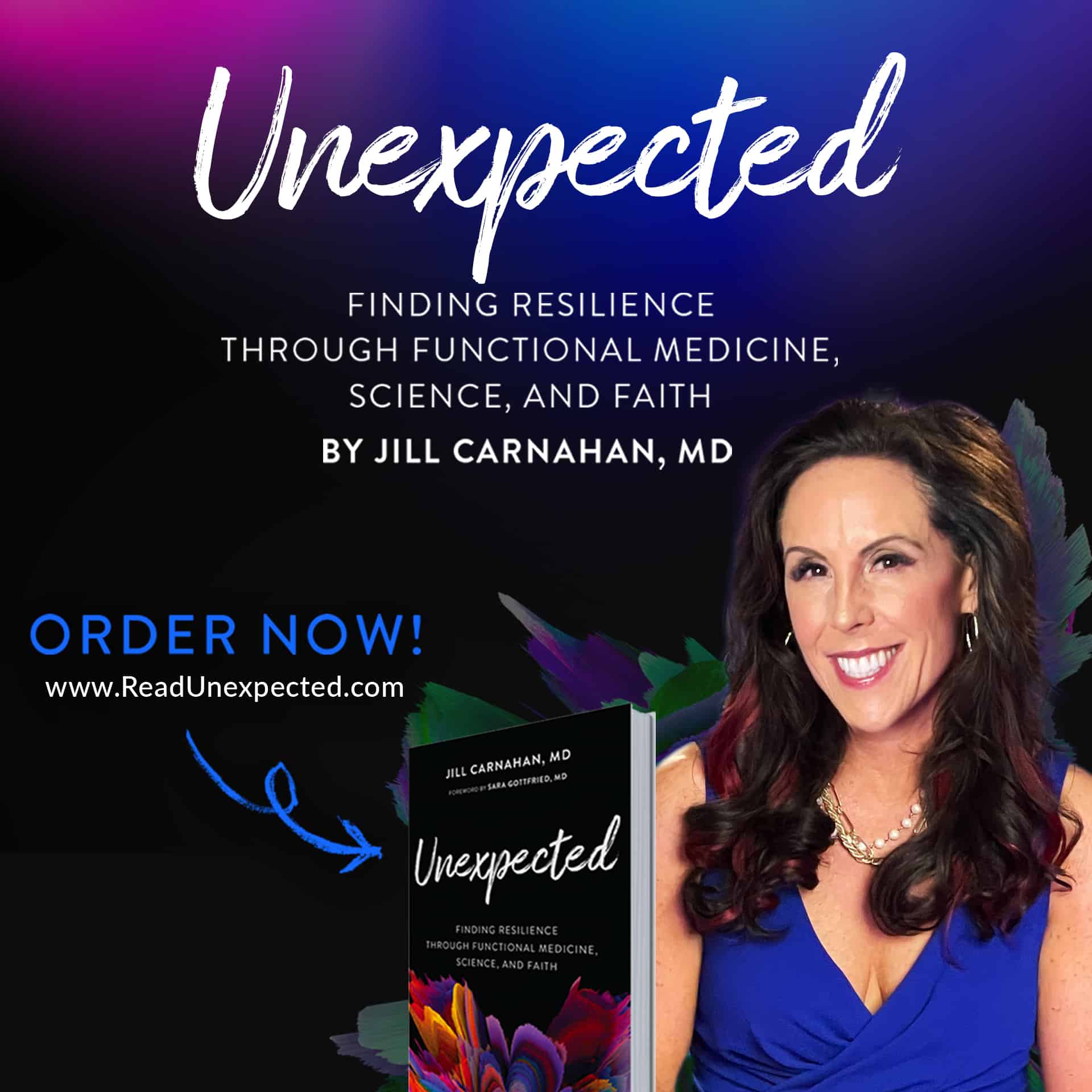
Hey, guys, just a quick pause to remind you, if you haven't yet got a copy of my book, Unexpected Finding Resilience Through Functional Medicine, Science, and Faith. It is chock full of tips of how to balance your hormone your gut. A little bit of story of my patients who've gone through Lyme disease, mass selectivation syndrome and even my own journey through Crohn's and cancer and mold related illness. It is chock full of tips and tricks and it's hopefully an inspirational journey along with me of overcoming all of these difficult challenges. Challenges. You can find it@readunexpected.com or anywhere Books are sold. And just want to remind you, pick up your copy today. I'm positive that it'll be an inspiring read for you or someone you love. Okay, let's get back to our show with Dr. Cassie Smith.
31:32
Dr. Jill Carnahan
I can agree more and I really love that we're talking about this because so many women are gaslit by their physicians. Maybe unknowingly the docs aren't trying to but like you said, the guidelines for any internal medicine, family medicine, endocrinology that's treating these conditions, they're just following the book and the book is not accurate. I want to give a quick example and you'll get this really well. So I went through cancer and Crohn's and got out and started practicing family medicine. I was doing better, but in that early days of my practice I went to Honduras, got giardia and then unbeknownst to me, that giardia triggered me from celiac genetics into true celiac. So I didn't know this. My gut was a mess. Back to our story and my labs.
32:09
Dr. Jill Carnahan
I had a TSH of like 0.8 which is very normal, kind of on the lower end, but normal. And my T4 was I think 045 free T4. Now clearly that is well below, I think like 0.8 or something like that is the is a cutoff for the low of free T4. But I am a medical doctor. I'm even starting to do functional integrated medicine at this point. It's like right out of residency and even knowing that I looked at my labs and thought it was normal until one of my colleagues said, Jill, your T4 is really low. I wonder if you're hypothyroid. And were that indoctrinated from medical school. And again, even with that perspective that I didn't even notice, I was severely hypothyroid thyroid probably from all the gut situation, which again you're gonna.
32:48
Dr. Jill Carnahan
And of course then my colleague who was treating me started me on thyroid medication. It changed my life. And what it was this stone cold normal TSH that any other doctor would have ignored. Thank goodness I had a Colleague who was very bright. And since then, obviously, I look at T3, T4, free T3, free T4, just like you, and have diagnosed hundreds, if not thousands of patients who are hypothyroid and their TSH was normal. But isn't that interesting that even myself, and I'm sure you can relate to that? That was this. I was severely hypothyroid, I was losing hair, I was symptomatic. And yet no one, even myself, out of medical school with an open mind, didn't realize it.
33:24
Dr. Cassie Smith
Yeah, I tell people this all the time. I got. I think I'm so passionate about this, Got into functional medicine and wrote this book because I myself got gaslit by doctors for 10 years too. Right. Like, I had graves. And then I got the graves finally resolved, and then I knew I had a gut issue and kind of ignored that. And then I ended up with Hashimoto's. But then everyone was like, well, you have Hashimoto's, you have the antibody, but your levels look pretty good. You don't really need medicine. And then I started gaining weight, and then I got insulin resistance, and then I got pcos, but I still don't need thyroid medicine. It's just. That makes sense. Like, you look skinny and you look fine. So. But I don't know why your insulin's like 17. And, yeah, I got gas lit forever, too.
34:02
Dr. Cassie Smith
And I was like, well, I guess I know what they're talking about. Then one day I was like, this is absolutely insane. And. And, yeah, I mean, it's the same thing. Like, as physician doctors, we allowed it to happen too. But I think what we're saying and what people need to hear about this is like, you have to be your own best advocate and you have to truly believe that. I believe that everyone who takes the time and spends the money to come and see me is not lying to me. Right. And I also believe that you should listen to people. And this is another problem. You know this. In school, they don't teach us about listening to patients or asking about their symptoms. They say, here are the rules, here are the boxes, here are what people fit in.
34:43
Dr. Cassie Smith
And as soon as you know, they're in the box, it's like, goodbye. That's not.
34:48
Dr. Jill Carnahan
And if they don't fit in the box, maybe they need antidepressant. I mean, it's almost that funny that.
34:53
Dr. Cassie Smith
We laugh at that.
34:54
Dr. Jill Carnahan
But truly, there's this idea in medicine, and I love talking about this because I think a lot of patients are like, what's Wrong with the medicine, we're taught to be like, if it doesn't fit, then the patient's probably lying. I mean, how ridiculous is that? That.
35:06
Dr. Cassie Smith
Well, and we're taught to write drugs. So unfortunately in medical school, they're taught, you know, you give a drug for a symptom, you give a drug for a symptom, and then you give a drug for the symptom that the drug caused for the symptom. And you just keep doing that. But the crazy thing about that, and you know, this too, is like, why aren't we, like, backing up and looking at the forest instead of the tree and saying like, well, what caused this symptom and how do we fix it? Right? Because that's what medicine. If you really go back to medicine, like 2400 years ago, right? Hippocrates of. You really read, like, what was medicine? Let medicine be thy food and food be thy medicine. Like, it wasn't to write a bunch of prescriptions just to, like, heal someone.
35:47
Dr. Cassie Smith
And we somewhere have lost that along the way. And to your point, we just, we don't listen to patients and we put them in boxes. If they don't fit in a box, we create a box called anxiety, depression, or chronic fatigue. Fibromyalgia, irritable bowel syndrome. These are all cop outs, in my opinion. And I can get all the hate in the world that people want to give me for this, but, like, they are true cop outs. It's almost like every subspecialty has a cop out, right? Like, for a rheumatologist, it's fibromyalgia. For GI doctors, it's irritable. For, you know, endocrinologists, we've got a ton of them, adrenal fatigue, or I mean, whatever, but it's like, back up. Look at the person in front of you.
36:29
Dr. Cassie Smith
Go back to, like, you know, actually caring about the human being in front of you and figuring out, like, how do we help this person. Person fix this situation so they can go be a valuable part of society and stop having to waste their time coming to see us, Right?
36:43
Dr. Jill Carnahan
Yes. Oh, my gosh. Love that. Love everything you're saying here. So we've talked about stress, and that's a huge one. Not sleeping. We've talked about thyroid and dysfunctional thyroid. We talked about receptors and the receptors not working or the hormones that we need or maybe we have in our body not getting into the cells to work. And I think the stress cortisol is Evident. Let's talk just a bit about insulin and blood sugar, because with our highly process food and stress and stuff, this is a big deal. And how would a patient know if they're insulin resistant, if they're pre diabetic? And how does that play into the whole picture of difficult weight loss?
37:16
Dr. Cassie Smith
That's a really good question. And this is going to vary a ton based on who you ask, right? But in the functional medicine space, I think that we all kind of agree the best way to do this is to get a fasting insulin level, a glucose level and a 1C. And I, I try to do all three of them so we don't miss anything, right? So an A1C is going to give you an average of your blood sugar over the last 90 days. So let's say the day you go get your blood test done is just a really good day. You don't want to miss the fact that the other 89 were bad, right? So I think an A1C is still important. A fasting glucose. And when I say fasting, I mean nothing to eat or drink besides water.
37:50
Dr. Cassie Smith
I like people to do it for 10 hours. You know, eight is ideal, but I like 10 because I know if you have a high glucose or a high insulin at 10 hours, we have some serious issues, right? But if your fasting glucose is above 85, I say 85, the lab's going to tell you that you're fine up to 99. If you are truly fasted. 99, we've got a problem because what is the difference between 99 and 100? They say, oh my God, this is a huge difference. I mean, you've got to get there, right? So if you're fasting glucose is 85 or above, or your fasting insulin is 5 or above, you've got a problem. Because after 10 hours your body should be able to regulate your blood sugar normally and it should be able to bring your insulin back down.
38:33
Dr. Cassie Smith
Like you shouldn't have the super high level. Now the problem with that is that, you know, traditional medicine will tell your insulin can be 18 and you're fine. That's crazy. If you have 18 molecules, we'll say molecules of insulin floating around to keep your blood sugar normal. That is not normal, especially in a fasted state. So the way you're going to know is by some lab work, now that you know some of the signs or symptoms people have, weight gain, like that's the biggest one. Your insulin is like a one way street. So if it's high, you're not losing weight. If you can bring it down, you can lose weight. But if you're gaining weight and you don't think anything has changed, truly hasn't changed, you probably have some insulin issues if you're hungry a lot.
39:13
Dr. Cassie Smith
Like if you find yourself, oh my gosh, if I don't eat every three hours, I'm hangry. That's a problem too with insulin. If you find yourself really thirsty, hungry, just those are foggy headed after you eat. Like that's the biggest one. So people say I eat lunch and then I need to take a nap an hour later. Like you have insulin resistance? Most likely. Yeah. So I would say those are the biggest things that I see. And then these things develop into other things. Right. So these are the people who, they've had insulin resistance for a couple years, six months, a year. And then they start to develop the other issues, which is like the poor sleep, maybe the irregular menstrual cycles.
39:50
Dr. Cassie Smith
Now all of a sudden maybe I feel like, you know, I've told maybe your thyroid sluggish or it's not working, you're very moody. Forgetful thing like things like that are going to tell you about insulin resistance, but the main one's waking.
40:04
Dr. Jill Carnahan
Yeah, gosh, that's so important. And I think part of the difficulty is our society has really put the ease of you. Whether it's your airport or you're going to the grocery store, the checkout counter, there's very easy access to highly processed foods, even in your Whole Foods and your places like that. Right. The candies at the checkout counter, the cookies and it's, you have to be. Once again, talk about deliberate like were talking about earlier. Being deliberate about our stress levels and how do we say no to things. Being deliberate about your choices day to day with food and lifestyle is so important. And as the world bombards us with messages that we need this or give yourself a cookie or a glass of wine. Every one of those choices is affecting your insulin.
40:44
Dr. Jill Carnahan
And so you really have to, I find you have to make a choice when you're not hungry and you're not or you get it out of your pantry if you can. Because if it's not in your house, you have to drive to the store. Same as like an alcoholic, right. If they don't have alcohol in their house, they have to drive to the liquor store versus the carbs. Same thing. And I'm talking about highly processed cookies, crackers, donuts, candy, those Kinds of things. If they're not in your house, well, then you have to drive somewhere order it somewhere. And so it's a little bit of a buffer between you and whatever the craving might be. So really important. Let's just end on hormones because a lot of our listeners are perimenopausal or menopausal.
41:20
Dr. Jill Carnahan
And I find in my clinical practice that a lot of times, 20s and 30s, even early 40s, we can get away with a lot, right? And then all of a sudden, boom, we hit this time when we stop, we have an ovulatory cycles, a few at a time, or we start to, you know, skip cycles, or we just start to have the brain fog, the typical things. And a lot of women have unexplained weight gain. Do you want to talk about that? Like, where does this play into things?
41:45
Dr. Cassie Smith
Yeah. And honestly, Dr. Jill, I'm seeing it more in even 30 and 40 year olds now because unfortunately we have this. You know, a bunch of women in society these days get put on birth control when they're 12 because they have irregular cycles or they had acne or whatever, and we don't want to look under the hood and figure out what was causing their acne, which is their gut most of the time. So we just, you know, slap some birth control on them and they stay on that until they want to have children and.
42:11
Dr. Cassie Smith
And then they're trying to come off of it in their 30s and then they're not getting their periods back or after they've had their children because they had them younger, they get put on birth control and then they're trying to come off of it at 40 and now their periods aren't coming back. And so there's. I'm seeing this shift in women too, where they're having these hormonal issues even younger. And a lot of it is pill induced. But if you have not been on a pill and you start to develop these inovulatory cycles and things like that, this perimenopausal phase, it is very debilitating for some people because as we start to lose our estrogen and progesterone, it's highly affecting our gut. Yes. Our mood, our cortisol, our insulin, our thyroid, our sleep.
42:52
Dr. Cassie Smith
I mean, it's so interconnected and your body just kind of freaks out because it's like I've had this calming hormone my whole life called progesterone, and it makes me calm and whenever I lay down, I just go to sleep. And now you just snatched it Away from me. You just took it for me. It's kind of like when you take a pacifier from a baby, right? That was my, like, way to stay calm. Well, our body is the same way. And the problem. Problem is women go to their doctor and they're like, you know, I'm anxious, I'm moody. I'm in the doctor. You know what the doctor says? Well, that's part of aging. That's part of life. That's normal. No, it's not. Like, nothing about that is normal.
43:26
Dr. Cassie Smith
You know what the doctor's not telling you, especially if they're a man, is they're thinking, yeah, my wife's going through it, too. Like math, right?
43:32
Dr. Jill Carnahan
They don't know what to do for their wife either.
43:34
Dr. Cassie Smith
I don't know what to say. Like, do I talk to her? Do I not talk to her? Do I walk on eggshells? You fix it. And so, you know, and you lose. So actually, women lose testosterone usually before they lose any hormone. We don't really realize it as a woman because we're just like, go, go, go. But if you're listening to this and you're in your mid to late 30s or early 40s, and you're like, man, I'm starting to lose muscle tone. And I'm starting to get that. Like, I don't remember where I put my keys, or I can't find a word, or, you know, Testosterone is also very calming in women, so it helps maintain our muscle mass. It helps with a lot of things. If you're starting to develop that, it may be that you lost your testosterone.
44:11
Dr. Cassie Smith
And then as we lose our testosterone, that stresses us out and drives our cortisol up. And then when our cortisol is higher, that drives our progesterone down. We start to lose our progesterone. Then we can't sleep. When we're not sleeping, we don't feel well. The next morning, we make poor food choices. That drives our cortisol up even higher. Now our insulin's going up. We start gaining weight. We're irritable because we're not sleeping, and we don't have that calming hormone. So our kids say something we want to, like, you know, strangle them. Or we're screaming at our husband, and we didn't mean to. And then we're crying, and we don't know why we're crying. And it's just like, you know, and then. And then we go to our doctor, and they're like, I don't know. You're Fine.
44:45
Dr. Cassie Smith
Here, take antidepressant, which makes everything worse, by the way.
44:48
Dr. Jill Carnahan
Then we pry the doctor's office, like, what?
44:50
Dr. Cassie Smith
Yeah, I just don't know. I have a whole section on this in my book, like what antidepressants do to your gut. And then so you're like, okay, we finally maybe got through this. Then you start to lose your estrogen and estrogen, you know, helps your gut as well. We start to get this tire around our abdomen, then we don't look good because we got this tire around our abdomen we've ever, we've never seen. We're still not sleeping well, we still want to cry. I mean, it's just this big nasty cycle. And unfortunately a lot of providers don't understand what to do with hormones because in 2001 the WHI came out scared people about hormones. And so a lot of doctors are terrified to prescribe them because they don't understand them or they've been taught, like this is just normal.
45:29
Dr. Cassie Smith
But we know now from tons of literature post 2001 that women do so much better on hormones as long as they're done correctly and that you can stay on them long term and you're less likely to have morbidity and mortality. Your mood is better, your quality of life is better. And so it's just re educating providers. And I think the hardest part, Dr. Jill, is that it is hard sometimes to deal with hormonal women. I do it all day long. But I mean, you can't take anything offensive to what we say. I'm hormonal too. Right. You just have to be very patient with the person, understanding. Like there's this is a hormonal physiologic issue. Like they don't mean what they're saying. You just have to help them get better. Right.
46:13
Dr. Cassie Smith
And help them fix these deficiencies that they had where it's almost like a three year old, you know, like when a three year old doesn't get their way throws, they throw a fit. Our body is throwing a fit when it use, when it loses these like very important magical hormones. And so we just have to change. I think the mentality around that, like the mentality should be, oh my God, gosh, poor women. Like, you know, you women are the reason that we have all these human beings on earth. Right, thank you. And I'm sorry you're going through this as you get older. How do we help you go through this in the most natural and best way to support you so that you know you can be a Good mother, a good wife, a good employee, a good, you know, whatever.
46:53
Dr. Cassie Smith
And so we just have to change. I think that mindset, I think women's healthcare is just still kind of lagging a little bit because. Because 50 years ago, 30 years ago, women didn't talk about their hormones like this, right? Like we stayed home, we took care of kids, we didn't work. And so it's just, I think it's different. And I'm hoping that people like you and I and people who talk about it are going to make it better for women. But I would say if you're listening to this and you can relate to anything we're talking about, don't give up, don't be gaslit. Understand that it's something that happens to all of us. You're not broken. There's nothing wrong with you.
47:24
Dr. Cassie Smith
You just have to find a provider that can help figure out how to get you through this and help you feel better, right?
47:31
Dr. Jill Carnahan
Yes, yes and amen. What a great kind of way to wrap up with just like those people listening. Because again, a lot of my listeners are women in this stage and hopefully they're getting help from all the words that you've just shared and the work that you do. Dr. Cassie, I'm just grateful that you're out there. And especially I always get excited. I teach a lot of the functional medicine kinds of things and when we have someone like you in endocrinology that's leading the way because obviously there's like us family medicine, internal medicine, kind of general practitioners that are trying to do some stuff. But to me it's actually extra exciting to have someone who is a specialist and trying to really change the way even you guys as a whole look at things.
48:08
Dr. Jill Carnahan
And even if you're the lead there and trying to change some of that, it's very exciting for all of us listening out there. So thank you for leading the way and building your clinic and you said you have a couple mid levels and so where can people, they want to see you find your good. Your book tell us more about where they can get more information about Dr. Cassie.
48:25
Dr. Cassie Smith
Yeah, well, thank you to Dr. Jill everyone. I mean any provider that does functional medicine, doesn't matter whether endocrinologist, nurse practitioner, like if you're fighting the good fight and on the good side of medicine, then I would say, you know, hats off to you for it's hard sometimes to like step out there and do things that aren't mainstream. So if you are somebody doing that, then I Applaud all of you for doing that too. So Modern Endocrine. So we're in Oklahoma City based functional medicine clinic, but we actually have a license in 43 states now. So we do a lot of virtual stuff. We have a website, www.modern-endocrine.com. I'm sure you can put it in the show notes. And I have Instagram and Facebook and Tick Tock. I'm very active on all those things.
49:05
Dr. Cassie Smith
It's just at Modern Endocrine, so that's where you can find us. I have a podcast as well. I had Dr. Jill on there. It's called Hormones, Metabolism and you. And really my point of the podcast is just to kind of help educate people like you. And then my book will be out hopefully towards the end of September, if not in October. But I'm super excited about it and so we'll keep you posted on that. But I, were talking before this, like books are such a labor of love. So if anyone's listening to this and they're like, you know, I used to think like, oh, it can't be that hard to write a book. Dear God, I was mistaken.
49:40
Dr. Cassie Smith
But I just really want the book to be like a, you know, a little bit of a beacon of hope for people and then just educational. Like I want you to really understand in one place like what is going on with you, how does it all tie together? I want to really validate people that aren't well and then hopefully help providers and other people learn from it as well. And so my whole point of the book is just completely to educate people. So I would love people to read it and share it and hopefully learn something that can help them change their life. Because I mean, that's why we do this right? You and I. It's not easy work by any means, but it's the most responsible, rewarding.
50:15
Dr. Jill Carnahan
So, so true. And thank you for the work that you're doing in the world and I know that a lot of our listeners are going to want to go get that book, check out your clinic. Just because this has been a really like we just filled it up with really practical information. So thank you again for the work you're doing in the world and look forward to talking again soon. We'll have to have you back on. Hey guys, hope you enjoyed that episode with Dr. Cassie Smith. I know it was chock full of tips and tricks for that stubborn weight loss difficulty that you might have encountered. Encountered. Maybe been told by your doctor that your labs are normal.
50:46
Dr. Jill Carnahan
So I hope if you want more information you can check out the show notes for her website, her book, and everything to do with our conversation. And guys, if you haven't yet, hit the subscribe button. We are reaching 630 some thousand subscribers. Please join all the many who have found this to be helpful. Share this episode with someone you love who might be struggling with weight loss and hit the bell because then you'll be notified of future episodes when they come out every Wednesday. So I look forward to seeing you next week for a new episode of Resiliency Radio. Until then, take care.
* These statements have not been evaluated by the Food and Drug Administration. The product mentioned in this article are not intended to diagnose, treat, cure, or prevent any disease. The information in this article is not intended to replace any recommendations or relationship with your physician. Please review references sited at end of article for scientific support of any claims made.








Share: