

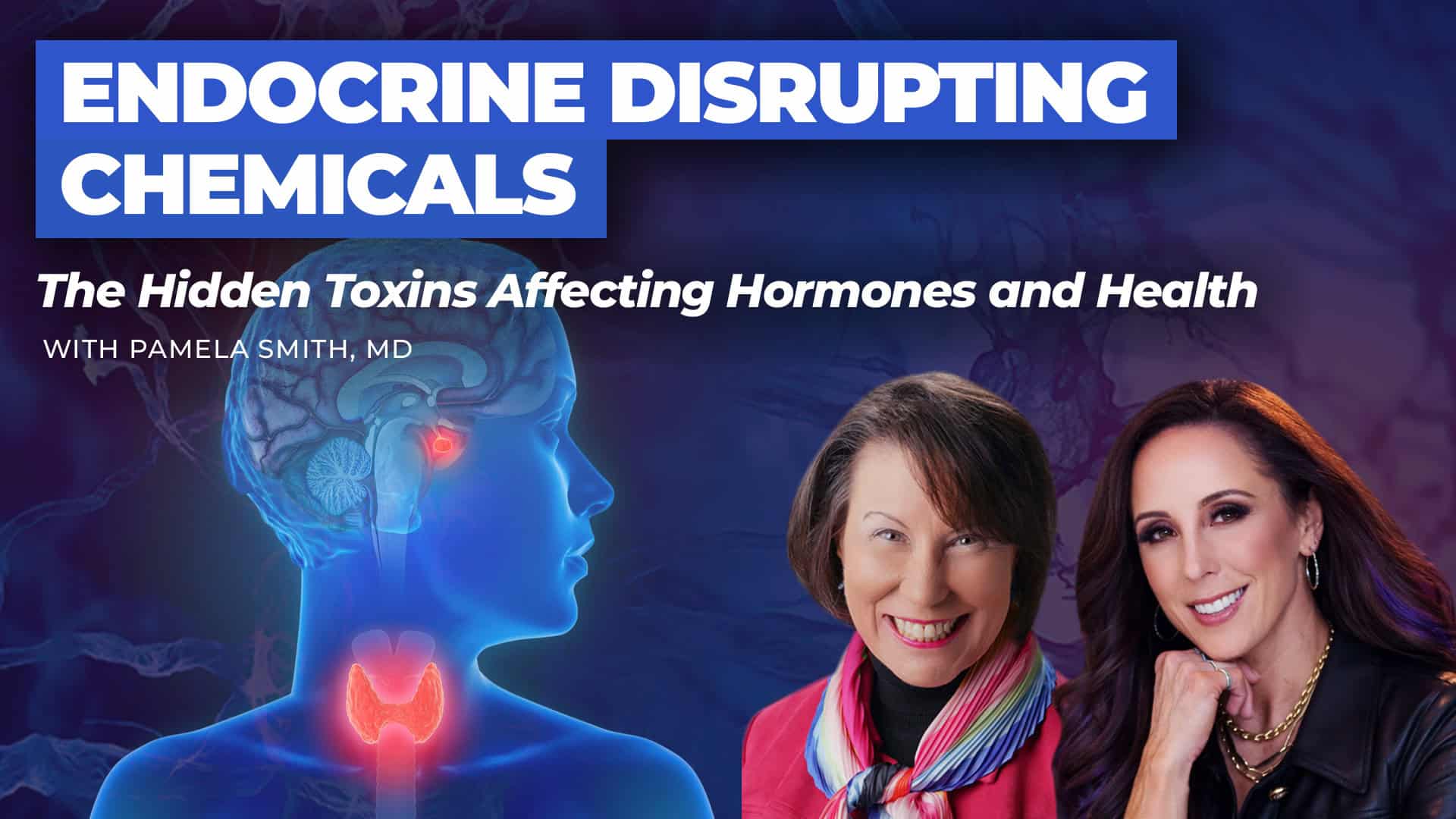
In this episode of Resiliency Radio with Dr. Jill, Dr. Jill Carnahan dives into the growing impact of endocrine-disrupting chemicals and toxic load with Dr. Pamela Smith, a global leader in personalized and longevity medicine.
Dr. Pamela Smith shares her journey from emergency medicine to functional medicine after discovering her own hormone imbalance—and how that experience led her to uncover the profound effects of environmental toxins on hormonal health.
Together, they explore how everyday exposures—from plastics and metals to “forever chemicals” like PFAS—can disrupt hormones, increase inflammation, and contribute to chronic diseases such as PCOS, autoimmune conditions, and metabolic dysfunction.
The episode also highlights Therapeutic Plasma Exchange (TPE) as an advanced detoxification strategy and provides practical steps to reduce toxic exposure in daily life.
🔑 Key Topics You'll Discover with Dr. Pamela Smith
① 🧪 The Rising Toxic Load
⇨ Modern life exposes us to toxins through air, food, water, and skin contact.
⇨ Common culprits include BPAs, phthalates, heavy metals, and PFAS (“forever chemicals”).
② ⚖️ Hormone Disruption and Chronic Disease
⇨ Endocrine-disrupting chemicals interfere with hormone signaling and metabolism.
⇨ Conditions like PCOS, infertility, obesity, and autoimmune disease are increasingly linked to toxic exposure.
③ 🔥 Inflammation as the Root Driver
⇨ Toxic exposures trigger chronic inflammation, a key factor in many modern diseases.
⇨ Inflammation disrupts metabolic, immune, and hormonal balance.
④ 🩸 Therapeutic Plasma Exchange (TPE)
⇨ TPE removes toxins directly from the bloodstream by replacing plasma.
⇨ This therapy may help improve hormone tolerance, reduce inflammation, and support overall health.
⑤ 🛡️ Toxin Avoidance and Daily Detox Strategies
⇨ Reducing exposure is essential—through clean water, air filtration, and non-toxic products.
⇨ Simple lifestyle changes can significantly lower long-term toxic burden.
🔑 Key Takeaways with Dr. Pamela Smith
🔹 Toxic exposure is a major contributor to hormonal imbalance and chronic disease.
🔹 Endocrine disruptors like BPA, phthalates, and PFAS interfere with normal hormone function.
🔹 Chronic inflammation is a key link between toxins and disease development.
🔹 Therapeutic Plasma Exchange (TPE) offers a powerful method for removing toxins from the body.
🔹 Prevention through toxin avoidance and lifestyle changes is essential for long-term health.
About Dr. Pamela Smith
Dr. Pamela Smith, MD, MPH, MS, is a leader in functional and personalized medicine with nearly 50 years of clinical experience.
After two decades in emergency medicine, she transitioned into a focus on longevity, hormone health, and disease prevention through individualized, root-cause care.
Dr. Smith serves as Chief Growth Officer and Chief Education Officer at MDLifespan, where she helps advance innovative therapies such as Therapeutic Plasma Exchange (TPE) to address environmental toxins and support long-term health.
She is an international speaker, bestselling author, and educator who has trained tens of thousands of clinicians worldwide. Her work focuses on empowering both practitioners and patients with science-based strategies to optimize health, extend lifespan, and enhance resilience.
https://www.mdlifespan.com/drjill
Dr. Jill Carnahan, MD – Leading Functional Medicine Doctor
Dr. Jill Carnahan, MD, ABIHM, ABoIM, IFMCP is internationally recognized as one of the most respected leaders in functional and integrative medicine. She is dually board-certified in Family Medicine and Integrative Holistic Medicine, and the founder and medical director of Flatiron Functional Medicine in Louisville, Colorado.
Widely known as a pioneer in environmental toxicity, mold-related illness, autoimmune disease, and resilience medicine, Dr. Carnahan combines cutting-edge science with compassionate, root-cause care. Her clinical approach integrates precision genomics, epigenetics, microbiome research, peptide therapy, and lifestyle interventions to transform health outcomes for patients worldwide.
She is the author of the best-selling memoir Unexpected, which weaves her personal journey through cancer, Crohn’s disease, and mold-related illness with her professional expertise. Dr. Carnahan is also the executive producer of the award-winning documentary Doctor/Patient and the host of the popular podcast Resiliency Radio, which reaches over 500,000 global subscribers.
As an international keynote speaker, Dr. Carnahan has been featured at leading medical conferences including A4M, IFM, EPIC, and IPM Congress, and her work is frequently highlighted in major media outlets such as NBC, CBS, Fox News, Forbes, Parade, People, and MindBodyGreen.
With a reputation as both a scientist and a healer, Dr. Jill Carnahan is regarded as one of the top functional medicine doctors in the world, offering a unique blend of evidence-based research, innovation, and deeply personalized care.
The Podcast with Dr. Pamela Smith
The Video with Dr. Pamela Smith
- Environmental toxins worsen hormone health, with an increase in conditions like PCOS now seen weekly, linked to toxins.
- Therapeutic Plasma Exchange (TPE) effectively removes toxins, achieving up to 100% clearance, reshaping chronic disease management.
- Combined with integrative therapies, TPE enhances detoxification, addressing various health issues including autoimmune disorders and fertility.
- Avoiding toxins is crucial for maximizing treatment benefits; practical lifestyle changes can significantly reduce exposure.
- Educational resources from MD Lifespan offer tools for understanding toxicity, with free consultations available to assess treatment needs.
- Patient success stories emphasize TPE's effectiveness, showing improvements in hormone therapies and chronic illness management.
Notes
Environmental Toxic Load and Hormone Health
Environmental toxins have dramatically increased in recent years, severely impacting hormone health and chronic illness.
- Toxic load’s worsening impact on hormonal diseases was highlighted by Dr. Pamela Smith, who noted the rise of polycystic ovarian syndrome (PCOS) from a rare condition to one she now sees weekly due to endocrine-disrupting toxins and metals (11:32)
- PCOS now links to autoimmune responses triggered by toxins, which disrupt hormone balance and cause serious health risks like diabetes and cancer
- Dr. Smith emphasized how toxins cause inflammation, the root of many diseases, necessitating toxin removal to reduce illness
- Hormonal issues that once responded to simple treatments now require complex approaches due to this toxic overload
- Exposure routes include air, water, food, and skin contact, with persistent chemicals like PFAS remaining indefinitely in the body
- Dr. Jill Carnahan shared personal stories linking environmental toxins to cancer and hormonal conditions in her family, underscoring real-world effects of pesticide and chemical exposure (14:31)
- She connected her and her sister’s endocrine-related cancers to farm chemical exposures, reinforcing the importance of toxin awareness
- Many women unknowingly suffer from hormone disruptions tied to environmental toxins, which complicate treatment efforts
- Dr. Smith confirmed that hormone therapies fail in patients with high toxic loads until the toxins are lowered
- The complexity and scale of toxic load today overwhelms traditional detox methods, requiring advanced solutions beyond diet and supplements (09:50)
- Since about 2017, toxin levels reached a point where even experienced practitioners struggle to help patients recover fully
- The toxic load’s rise is the “elephant in the room” for chronic illnesses and hormone-related diseases
- Dr. Smith stressed the necessity of new approaches like therapeutic plasma exchange (TPE) to address this growing challenge
Therapeutic Plasma Exchange (TPE) as a Breakthrough Treatment
TPE offers a powerful, clinically proven method to remove toxins that traditional detox cannot handle, reshaping chronic disease management.
- TPE’s mechanism and clinical history were explained by Dr. Smith, who clarified it is a decades-old, safe process removing plasma and toxins, replacing it with albumin protein (19:20)
- Originally used in emergency medicine for overdoses before Narcan, TPE now targets chronic toxin removal
- TPE alone removes some toxins, but combining it with IV nutrients, stem cells, and exosomes enhances clearance to 92–100% for chemicals like bisphenol A
- The procedure typically lasts about four hours, adjusted by patient weight for safety
- Dr. Smith highlighted that TPE is not a new or extreme therapy but a refined application of an established treatment
- Clinical protocols developed by MD Lifespan focus on multiple health areas benefiting from TPE, including heart disease, cognitive decline, autoimmune disorders, longevity, and fertility preparation (34:11)
- A case was shared where five TPE sessions reduced coronary artery plaque by 25%, demonstrating cardiovascular benefits
- TPE aims to clear beta-amyloid and tau proteins linked to dementia, addressing toxin-related cognitive decline
- A fertility protocol helps prospective mothers reduce toxin transfer to babies, preventing generational obesity and developmental issues
- These protocols reflect targeted, personalized medicine approaches championed by Drs. Smith and Savage
- Safety and patient experience considerations were emphasized by Dr. Carnahan and Dr. Smith, highlighting low reaction rates and management of side effects (29:46)
- Albumin replacement results in only 1–2% mild reactions, mostly from patients not eating adequately before treatment
- Electrolyte imbalances, particularly calcium, are manageable with IV calcium or oral Tums during sessions
- Some patients (e.g., with severe kidney disease) are screened out, ensuring appropriate candidacy and safety
- MD Lifespan’s detailed screening and monitoring protocols support broad patient use with minimal risks
Integrative Approach Combining TPE with Functional Medicine
Combining TPE with personalized integrative therapies greatly enhances toxin elimination and patient outcomes.
- Dr. Smith and Dr. Savage’s collaboration integrated IV nutrients, stem cells, and exosomes with TPE to boost toxin removal far beyond what TPE alone achieves (21:08)
- This combined approach was born from clinical experimentation and physician collaboration, including Dr. Carnahan
- The synergy addresses multiple toxin types and supports body systems damaged by toxins
- Published results show most toxins cleared in most patients, marking a major advance in detox protocols
- This approach represents a new frontier in personalized precision medicine for chronic toxin-related illnesses
- Traditional detox methods remain important but insufficient alone as toxic burden now exceeds natural elimination capacity (22:40)
- Dr. Carnahan described how liver, kidney, gut, and sweat pathways helped historically but struggle against modern environmental exposures
- The exponential rise in plastics, PFAS, mold, and organophosphates requires stronger interventions like TPE
- Patients with mold toxicity especially benefit, as their toxin levels are often too high for conventional detox
- This integrated treatment strategy enhances functional medicine’s ability to bring patients to lasting health
Toxin Avoidance as the Foundation
Avoiding toxin exposure is critical to sustain health gains from treatment and prevent chronic disease progression.
- Dr. Smith stressed toxin avoidance as the first step in reducing disease risk and improving outcomes post-TPE (32:41)
- Practical measures include drinking purified water, using air filters, removing shoes indoors, and switching to toxin-free cosmetics and cleaning products
- Simple lifestyle changes like using paper straws and glass containers can reduce ongoing plastic and chemical exposure
- Avoidance helps prevent re-accumulation of toxins, maximizing treatment benefits
- MD Lifespan offers a free, comprehensive toxin avoidance guide to help patients implement these changes
- Toxin testing is essential to determine treatment needs and monitor progress (36:20)
- Dr. Smith recommended everyone get a toxin test to identify specific exposures and appropriate detox methods
- Testing guides whether chelation, nutrient therapies, or TPE is the best approach
- Awareness of toxin levels empowers patients to take control of their health
- This personalized approach aligns with the overall philosophy of root cause, precision medicine
Patient Impact and Personal Stories
Real patient experiences highlight the transformative potential of TPE and toxin management in chronic disease.
- Dr. Smith shared her own journey with mold toxicity and atrial fibrillation (AFib), linking toxin burden to cardiac arrhythmias now being addressed with TPE (27:08)
- After an ablation treated her flutter arrhythmia, her cardiologist attributed ongoing AFib to toxic load
- TPE was expected to reduce or eliminate her AFib by lowering toxins, showing clinical application beyond traditional uses
- This personal example illustrates TPE’s expanding role in chronic disease beyond classic autoimmune and metabolic diseases
- Dr. Carnahan reported seeing consistent patient success with TPE in her Denver office, reinforcing its practical benefits for complex, sensitive patients (28:23)
- Patients who struggled with hormone therapies or traditional detox now improve after toxin reduction via TPE
- The availability of TPE locally increases access for patients seeking advanced care
- Both doctors’ combined clinical and personal experiences build strong confidence in TPE’s efficacy and safety
- These stories support TPE’s growing adoption as a key tool for chronic illness management
Education, Resources, and Access
Comprehensive education and easy access to TPE and related therapies empower patients and clinicians to tackle toxic load.
- MD Lifespan’s role as a hub for education and treatment was emphasized by both doctors, offering free consultations, guides, and clinical protocols (02:43, 13:17)
- Patients can get free consults with MD Lifespan physicians to evaluate suitability for TPE and other treatments
- The free toxin avoidance guide provides actionable steps to reduce exposure and support health
- MD Lifespan protocols cover diverse conditions including heart disease, autoimmunity, fertility, longevity, and mold toxicity
- Dr. Carnahan’s office in Louisville, Colorado, serves as a treatment center for TPE, expanding geographic access
- Podcast episodes and educational content deepen understanding for patients and clinicians (31:15, 38:12)
- Dr. Jill referenced prior episodes with Dr. Paul Savage covering TPE FAQs and contraindications for detailed patient education
- The podcast reaches over 800,000 subscribers, indicating broad interest and impact in disseminating this knowledge
- Sharing episodes with family and care teams helps spread awareness of toxin-related health risks and available therapies
- This ongoing education supports informed decision-making and encourages wider adoption of innovative treatments like TPE
Transcript
00:01
Dr. Jill Carnahan, MD
Hey everybody. Welcome to Resiliency Radio, your go to podcast for the most cutting edge insights integrative and functional medicine. I'm your host, Dr. Jill and with each episode we dive into the heart of healing and personal transformation. Join me as we talk to renowned health experts, innovators, leaders and world changers helping you on your path to optimal performance and longevity. With each episode we talk and go deep into the ways and methods that you can reverse chronic complex disease, giving you solutions that might help you just live better and thrive. I am so excited. Today I'm going to introduce a repeat guest, Dr. Pamela Smith, who is a friend, a colleague, a beautiful teacher and many of you who are physicians or clinicians know her because she has taught on so many platforms.
00:50
Dr. Jill Carnahan, MD
She now has her own teaching platform and today we're going to talk specifically about hormone health and toxic load. But we're going to dive into total plasma exchange. What is that and why? It might be the thing for you to get over the toxic load, your mold toxicity, your heart disease, your cancer diagnosis, or even autoimmunity. So stay tuned. I'm going to introduce her in just a moment. In the meantime, just want to remind you can get products and services@doctor Jill health.com you can get things like Epstein Barr protocols, SIBO C4 protocols, and for many of you suffering from mast cell activation, we have our mast cell bundle product. All kinds of products and services specially curated for safety and efficacy by me. You can find@drjill health.com also there you're going to find my Dr. Jill beauty line, some of my very favorite products.
01:40
Dr. Jill Carnahan, MD
Including today I'm going to show you the HA Collagen booster. Right now we're still pretty dry. We've had so little moisture this year in Colorado. And this is my favorite nighttime serum. I actually have a little travel size in my purse. It is so moisturizing. I actually often use it when I'm on the plane. It's full of hyaluronic acid and collagen boosters. So it's just a really moisturizing product if you tend to be dry. And so that is one of my personal favorites. You can find that@doctorjillhealth.com and you can see all of the Dr. Jill Beauty line. We've been selling out of some of my favorites recently. If you want to know what I use, there's a package called Dr. Jill Favorites. You can check that out. And you can also mention if you have another purchase that you'd like a sample.
02:26
Dr. Jill Carnahan, MD
And we can send you a sample of one of the Dr. Jo beauty products as well in your order of other things. Okay, so let me get down to it and introduce my guest and I do want to mention before I do that if you want more information on this episode, this will be in the show notes, but I'm going to mention it now. You can go to md lifespan.com Dr. Jill this is all the information that we're going to talk about today on Total Plasma Exchange, the programs. You can do a free consult with a physician there and you can get your free guide. We'll talk about that in this episode. So stay tuned. Now let's go to introduce Dr. Pam Smith. Dr. Pamela Smith is a leader in functional personalized medicine with nearly 50 years of clinical experience.
03:08
Dr. Jill Carnahan, MD
After two decades in emergency medicine, you'll hear her story today. She shifted to longevity, hormone health and disease prevention through individualized root caused care. She serves as chief growth officer and chief Education officer at MD Lifespan where she advances innovative therapies such as the Total Therapeutic Plasma Exchange, the TP that we're going to talk about today. And this is one of the best things to address mold related illness and environmental toxicity. One of the reasons why you see me so passionate about it. Okay, let's get on to the show and welcome Dr. Pam Smith.
03:42
Dr. Jill Carnahan, MD
Dr. Pam Smith, not only are you a brilliant colleague, but you're a friend and I just have the deepest admiration and respect for you and all the work you've done in the world and all the tens of thousands, if not hundreds of thousands of physicians you've trained with your books, with your experience at all the different levels of teaching. And it's just an honor to have you. Today we're going to dive into toxins, my favorite topic because so many people are swimming in toxic soup, we could say, right? They're just and they have no idea what's affecting them. Before we dive into that and some of the new things that you're involved with, I'd love to hear just a little bit. People have heard you before might know your story.
04:20
Dr. Jill Carnahan, MD
But in case those who are coming on for the first time, how did you get into from ER to functional medicine to now a real expert in environmental Texas.
04:28
Dr. Pamela Smith
D. Well, thank you. It's a pleasure to be here. Absolutely. I was really very happy being an ER doc in a level one trauma center in Detroit and was not planning on changing careers in any way, shape or form until one day I could not sleep. I literally went to 11 doctors and they all told me the same thing, to take a sleeping pill. I am so glad I did not take their advice. And honestly, God led me to a conference, and there I was. Second seminar, second slide. Women without progesterone frequently have insomnia. And I did the first saliva test in the Midwest and I had no progesterone at all. And when I started on progesterone compounded, it changed my life. I slept within four days, and it took me probably two years, three years to make the transition from emergency medicine.
05:31
Dr. Pamela Smith
But I've loved both my careers. I've just been very blessed to be able to help people in both an acute situation in the ER and now in a more chronic situation, which is so exciting because we get to look at the cause of the problem and not just treat symptoms.
05:50
Dr. Jill Carnahan, MD
What a great analogy. And also, I really love that you come from that ER experience, because it really gives. You've seen a lot of things in your career, Right? And like I said, the last several decades, I don't know how long it's been, but it's been a while that you have been one of the number one teachers in the US for functional, integrative, personalized precision medicine. Right. I have to use all those terms because it encompasses everything. And I remember hearing you speak when I was a resident and just being like, wow, I really love how you break things down into categories and make it so easy. Today we're going to talk about environmental toxicity, in particular with hormones. And there is no one better than you, Pam, to talk about this.
06:30
Dr. Jill Carnahan, MD
And I want to frame this because one of the things you and I are so passionate about is plasma exchange. So hang on to your hats, guys, if you're listening, because you're going to want to know what this is. Before we do, though, do you want to frame the environment about. Literally environment, about why is toxic load such a big deal? Why does it affect our hormones? And why should people really be concerned about the air quality, the water quality and the food that they eat?
06:56
Dr. Pamela Smith
Wow. We could sit here for five hours, discuss all of this. We really could. We can go back to Rachel Carson and believe it or not, in the very early 70s, I was lucky enough to be in a national debate and we ended up winning it. And I was second. Affirmative. And we debated Rachel Carson's book, Silent Spring.
07:22
Dr. Jill Carnahan, MD
Wow.
07:22
Dr. Pamela Smith
And so going back to then, we knew there was a problem with the environment, with our water, with our air and other kinds of toxins. And honestly, it's only gotten worse. It's certainly air is One way that people have a problem. Food is another method. Water is another method. And sometimes I think we forget about transdermal, meaning on the skin. Sometimes we end up with exposure toxins directly on the skin. So those are the four major ways that people end up being near some sort of toxin. And there's so many kinds of toxins. Whether you want to talk about toxic metals, you want to look at what I love to talk about, endocrine disruption with BPAs and phthalates and microplastics. There's the forever chemicals, the Pfoss, which literally are there forever. If they exhume you, they're still in the body.
08:28
Dr. Pamela Smith
There are so many toxins. Now. The key component, though, is that they cause inflammation, and inflammation is the root of all disease. And in order to get rid of that inflammation, we do have to get the toxins out of the system or at least certainly lower their levels a great deal.
08:50
Dr. Jill Carnahan, MD
What a great framework, Pam. I think one of the things that I've seen in my career is in the beginning, you know, someone comes in with thyroiditis or, you know, even some sort of fibroadenoma, fibrocystic breast disease, irregular cycles, all these kind of hormonally mediated things. And 20 years ago or 25 years ago, when I first started practicing, you would do a little intervention, maybe give them an herbal blend to support, take out gluten from the diet. And with a very few small changes, you would see a reversal of their symptoms and they'd better and they'd be fine nowadays. And again, I'd love for you to speak to the complexity of things that is not the case.
09:31
Dr. Jill Carnahan, MD
I would say 95% of my patients coming in have very complex chronic illness and there is not a small intervention that changes things in three months like it used to. And to me, one of the biggest things, the elephant in the room is this ever exponentially increasing toxic load in the environment. Any thoughts on that and how it's changed in the past? Like, why are people sicker than they used to be? I think the toxins are part of it, don't you?
09:57
Dr. Pamela Smith
Oh, I absolutely am convinced. Starting probably, I think we would all agree in about 2017, the toxic load became so great that you, myself and other practitioners with a great deal of experience really could not help the patient get better. God is the great healer, but he uses us as a tool to heal people and we just couldn't get them better. We fixed their hormones, we fixed their gut and their liver, etc. We treated their Lyme and their mold. And still it is a very complex area. But that elephant in the room has always been toxins. So let me give you an example. There's something called polycystic ovarian disease, which very, very common now, where women's hormones are not in balance. That disease, when I was in medical school, was called Stein Leventhal syndrome. I was in Med School 50 years ago.
11:03
Dr. Pamela Smith
Hard to believe, but it has been 50 years. And I was told I would see four cases in my entire life. Four. I see 10 cases a week. What has made this change? So we've been looking at this for 30 years, and starting in 2017, people realized that disease was probably an autoimmune disease. And as we've talked about before, and I'm sure your other guests have as well, autoimmune diseases are increasing. Really important to take people off of gluten, fix their gut, and start low dose naltrexone. But what has recently come in the medical literature in the last year or two is that polycystic ovarian, where testosterone is high in women, progesterone is usually low. Estrogen can be high or low. And this disease process is related toxins. It's related to endocrine disrupting toxins and also toxic metals. And we never knew that before.
12:19
Dr. Pamela Smith
That was kind of the missing piece and why so many women had pcos, which leads to obesity, it leads to insulin resistance and diabetes, it leads to infertility, it leads to an increased risk of breast cancer and ovarian cancer, endometrial cancer, which is uterine cancer, it leads to all these other disease processes if we don't treat it. But the root cause is toxins, which set up an autoimmune response in the body where the body literally attacks itself.
12:58
Dr. Jill Carnahan, MD
Hey, guys, going to interrupt my own show for just a moment to remind you that we have incredible information and free guides for you@md lifespan.com Dr. Jill, you can get the free ebook that I mention in this episode. It's all about how to reduce your toxic load. It is a wealth of knowledge. I highly recommend, at the very least, just grab your free copy of that. You can also sign up for a free consultation with any of the physicians at MD Lifespan so that you can know a little bit more about if this procedure is right for you or someone that you care about who's suffering from heart disease or cancer or autoimmunity. Maybe a mom wanting to get pregnant and start a family. Or of course, my expertise, which is Mold toxicity.
13:42
Dr. Jill Carnahan, MD
I'm treating and seeing a lot of patients who are using this TPE for mold toxicity. Just dive in there. MD lifespan.com Dr. Jill, to get your information, your free guide, or to schedule a free consult to get more information. Okay, let's jump back to our show with Dr. Pam Smith. Yeah, what a great example, because I know in my family a lot of people have heard my story, but I grew up on a farm in central Illinois. And looking back, the atrazine, the organophosphates, the pesticides, the herbicides, the glyphosate, and I could name 100 others. Likely those exposures contributed to me getting breast cancer and endocrine mediated cancer at 25 years old. And Pam, I don't know if you knew this, but my sister, who is seven years younger than me, had thyroid cancer at 28. Two women, same environment.
14:31
Dr. Jill Carnahan, MD
Clearly, genetics were a little piece of the puzzle, but were not considered genetic cancers. These were environmentally induced. So to me, it's very personal. We also have a lot of women in our family that have pcos. So it's even more relevant to your discussion because I think a lot of women. Let's talk about women. It affects men as well. But just for the moment, there's a lot of women walking around that have hormonal disruptions or symptoms and they don't realize how it's connected to the environmental toxic load.
15:00
Dr. Pamela Smith
No. In fact, when something new happens, starting until 2017, where we would go to give women hormones, we would do a saliva test measure, show they're low in progesterone and other hormones or maybe even just progesterone, we would give it to them and they couldn't take it. It didn't matter if we put it on the skin, we put it in the mouth, it did not matter. They would have anxiety and other symptoms. Those women suffered for many years until we discovered that it was the toxic load. What we do is therapeutic plasma exchange, which we can obviously talk about. But with tpe, were able to lower that toxic load. And when we did, those women can now take hormones. And as you know, if you have a lot of estrogen without progesterone, there's an increased risk in breast cancer and other diseases.
15:58
Dr. Pamela Smith
So now we can help many more people by lowering that toxic load.
16:03
Dr. Jill Carnahan, MD
Okay, Pam, I love that we're talking about this because I, in my clinical practice have come across the same women that you're talking about where they can't tolerate 25 milligrams of progesterone. Orally or you know, 10 transdermally, like these very small doses. And I did not realize that is likely related toxic load. But let's go ahead and jump now. We talked about telling you, if you're listening out there about total plasma exchange, I feel like this is the best thing in the last decade that we can do. Do you want to just give us a around what this is and why it's so needed now more than ever?
16:38
Dr. Pamela Smith
Yes. So let me start with the idea of just one example so that everybody understands. So let's take bisphenol A, which is an endocrine disruptor. An endocrine disruptor is something that changes the hormonal balance in the body in both men and women. And it can happen in either one. If you just look at bisphenol A, which is in plastics, just that one thing. Not only does it change what happens with your hormones, but there's an increased risk in heart disease, high blood pressure, diabetes, obesity, cancer, memory loss, interestingly, add, adhd, psychological, the changes such as anxiety and depression, autoimmune diseases, allergies, kidney and liver disease. Even the gut is not healthy. We think we fit the guts. We did a gut health test. The gut is fixed, everything is fine. But it's not because the toxin is not gone.
17:47
Dr. Pamela Smith
Skin diseases, infectious diseases like long haul Covid Lyme disease, septic shock, where people can die from infection, all of those can be related to bisphenol A, which we have not been able to get out of the body until therapeutic plasma exchange. Yes, there are Nutrients, there's actually 20 of them that medical studies have shown in animals that they can lower the bisphenol A level by. But unfortunately there's no human trials, just animal trials. And when I have tried some of these nutrients, they lower bisphenol A a little bit. But they do need therapeutic plasma exchange to get rid of 92 to 100% of the bisphenol A. Again, plastics. And the bisphenol A is everywhere. You may just think it is in plastic itself. And I'm going to hold up my water bottle because I'm drinking out of glass. This is not plastic.
18:54
Dr. Pamela Smith
Plastics are everywhere, including cosmetics are really a big factor, shampoos, I mean, these toxins are everywhere. And so with TPE, which has been around for more than 50 years, what it does is it exchanges. You take out the plasma and you end up putting in albumin, which is a protein. So when the plasma leaves, the toxins go with it. And this is Not a new treatment process. We've been using TPE for many years. In fact, I used it in the emergency room because I'm old enough that I have practice. Before we had Narcan. Everybody knows what Narcan is. You see it up someone's nose or jabbed into their leg for a drug overdose on TV and the Internet. And that's how we treat drug overdoses now.
19:53
Dr. Pamela Smith
But before there was Narcan in the er, we hooked people up to a therapeutic plasma exchange machine and we took out the toxin that they were overdosed in that fashion. This has been around for many years. And then Kip Roth did a study about four years ago suggesting that TPE would help with longevity markers, things like the length of telomeres. And then Dr. Paul Savage looked at the idea of, wow, maybe we could do more. Maybe we could add to the TPE and we could get toxins out. I happen to be a toxicologist. My MPH is in toxicology. And so he started working on several patients, had some success, and called me and many other physicians, including you, Jill, Dr. Carnahan.
20:54
Dr. Pamela Smith
All of us got together and we put together IV therapies and then drinks that people would have of different nutrients after the tpe. The results are astounding. I actually get goosebumps every day of my life that I can really help people now get rid of the toxins, not with just tpe, because TPE by itself doesn't get rid of a lot of toxins, just a few. But if you add the IV nutrients and stem cells and exosomes and other things and the nutrients afterwards, the studies are showing that we have published that we can get rid of most toxins in most patients. It is about a four hour process. Now, if you're like me, my TPE is only two hours because I don't weigh a whole lot.
21:51
Dr. Pamela Smith
If the person weighs 130 pounds or less, we can only do half of a session at a time. And the reason for that is too much blood volume goes out of the body. It's kind of like the Red Cross. If you don't weigh 125 pounds, the Red Cross will not take your blood because too much of the fluid would be going out of your system. But it's routinely four hours, three hours for the plasma exchange and another hour for the IV nutrients and other things that we may be helping patients with.
22:26
Dr. Jill Carnahan, MD
Okay, that was so good, Pam, because you just gave the perfect overview. And just like you, I have been in this not quite as long as you But a long time and have seen this toxic load and what we used to do, the BOW transformation process, which is liver gallbladder and our. SO stool and urine excretion through the kidneys and sweat excretion through sauna and all those things. So we've always, you and I have been experts in how to use the body's own mechanisms to excrete this toxic load. And it has been successful up until the last decade as our exponential increase in environmental toxic load has gone above and beyond what our bodies can handle.
23:02
Dr. Jill Carnahan, MD
Like, you and I are seeing this now, where the big four mold, plastics, pfas, the polyfluorinated forever chemicals, and organophosphates, which I have no doubt were part of my sister and I's exposure on the farm. These things are not as easily to excrete. And even my mold toxic patients, I've come to places where it's. It's much harder because their toxic load is greater. So what we have now is this tool, and I love that you also framed it. I started putting this information out ever since I've been working with you and Paul and getting this to the patients and one of the questions like, oh, isn't this super extreme? You know, patients will be like, well, it doesn't. This thing. I love that you frame this. This has been around for decades. This is not new, it's not extreme.
23:44
Dr. Jill Carnahan, MD
It's just a new, powerful use of an old therapy. This is not new. And again, you spoke to that so well because you remember back in the day using it in the ER for these patients before we had Narcon. And I love framing it that way because otherwise patients are like, oh, my goodness, is this new? Is this different? It's been around a long time and the safety data is quite good. But we're now using in a new way with MD Lifespan to combine the power of this plasma exchange with all the other things we've been doing in personalized precision, integrative functional medicine. Right?
24:17
Dr. Pamela Smith
Absolutely. It does, again, take more than TPE itself. And so MD Lifespan has done a lot of research and they have developed different protocols because different things work for different issues. So we have done a lot of research on heart. One of the first patients that we did was one of my very best friends who is a compounding pharmacist. And he had heart disease and he had plaquing in the vessels of his heart, and he'd been calf because he had a heart attack. So we knew what his vessels really looked like with direct visualization and then he had five TPE sessions and then he was recalfed as at his request. It was amazing.
25:05
Dr. Jill Carnahan, MD
Wow.
25:05
Dr. Pamela Smith
The plaquing was down 25% because we got the toxins out. Many of these toxins cause the patient to have plaquing in the heart. So we're looking at heart disease and stroke and prevention. We're also looking at memory because it's really trying to get rid of beta amyloid plaquing and tau. Plaquing that occur with cognitive decline is a major issue that we've been working on in medicine for over 50 years. So we are looking at that now with therapeutic plasma exchange as well, because the studies are showing again, it's related toxins. Obesity is related toxic load. There are so many things. Probably the most surprising was that when I did my own test, I had already gotten rid of toxic metals. I'm allergic to shrimp, so I don't get near mercury because I don't really get near any mercury related to fish.
26:11
Dr. Pamela Smith
But I was full of mold from traveling around the world and teaching and hotels are not always places that remediate and get rid of mold. I was full of mold also. At the same time, I had developed afib. Everybody now knows what AFIB is. It's on television and the Internet everywhere. Very common disease process. And it was very funny. I also developed a flutter, which is really not a good rhythm. It's more pathologic than afib. So recently I had an ablation. That's where they go into the heart and they stop those rhythms by kind of zapping them, literally, and they stop the flutter. And unfortunately, the fib was still there. I went to my functional medicine cardiologist, and you know what he told me? Don't worry about it. He goes, they really did get the fib. It's your toxic load that's causing the problem.
27:15
Dr. Pamela Smith
When we get done with your therapeutic exchange, I really think that 80% sure, you won't have any more afib. So I'll let you know, Dr. Carnahan, if that really does happen, because it is an interesting thing that we are looking at AFIB and a whole different light when we think of toxins.
27:37
Dr. Jill Carnahan, MD
Wow. I love that personal story. And I'm on the journey too, just with you. I'm going to be doing it. I've got all the labs, everything set up, and soon, probably by the time this is aired, I'll have had my first session. And the same thing, obviously, with my cancer history, my toxic load, everybody knows my mold history with Exposures and all of that. That. And I am so excited because I do all of the things. I eat clean, I live well, I do detox every day. But like we said in the beginning, even for me, who, you know, I've accessed all this stuff, it's not enough anymore. And so I. I am super excited personally. And were just talking before that. We're actually doing this now in my office.
28:14
Dr. Jill Carnahan, MD
So if you're in Denver, Colorado, or anywhere near Colorado, you can literally come to my office and have this done. It's through MD Lifespan, which is Paul Savage and Pam's brainchild. And again, I'm just delighted to be a host of that in my office because I see patients, Pam, come into my office every week and have success with this. One of the questions people have, to me at least, because they're the super sensitive, complex patients that I see, they're really nervous. They're like, am I going to have a reaction? Am I going to. Do you want to talk just a little bit about, number one, the safety of albumin, and number two, the way that you might.
28:47
Dr. Jill Carnahan, MD
We don't have to go super deep, but just the very basics about monitoring electrolytes and why, at least so far in my office and in your experience, this is a very safe procedure.
28:57
Dr. Pamela Smith
Yes, Albumin is the safest method in the er. We put their own plasma back in, and some studies showed a 10 to 22% reaction rate when you do it that way. And that's probably what we saw when you put albumin in, which is very purified, that protein doesn't react. And there's only 1 to 2% reaction. And most of those are very minimal. We have found at MD lifespan, a few people reacted. The number one reason was they got lightheaded or kind of almost fainted. It was because they didn't eat before they came. We always ask everybody, eat breakfast, eat lunch, please, before you come have a full meal. And three people literally signed on the dotted line that they had eaten breakfast, and to them, breakfast was a cup of coffee. We mean a real live meal.
29:59
Dr. Pamela Smith
And so since we now interview people and say, what was it you actually had for breakfast or lunch? We haven't had any more of those kind of episodes, which was only three or four where people got lightheaded for not eating. Yeah, you. You can get electrolyte imbalances, particularly calcium. You can get low calcium. So we can give you calcium IV and. Or we can give you tums. People probably don't know, but tums are pretty much Just calcium. So we can give you 10 tums to eat. If you're afraid that this is going to be an issue, we can give them to you right in the office. And that way you won't have a calcium problem. It does take out your medications and your nutrients. When we do tpe. And so there are some patients that we cannot do for that reason.
30:52
Dr. Pamela Smith
People who may also who have severe kidney disease and things of that nature. There are some people who are not candidates for tpe, but most people are.
31:04
Dr. Jill Carnahan, MD
Yeah, and you guys do really good job screening for that. As you know, I've talked to Paul many times and guys, if you're listening and want to know more, this is the second or third of episodes we've talked about this. So you can find the episode with Dr. Paul Savage where we go through the frequently asked questions and we go into deep detail on what are the exact contraindications. So if you want to know more, be sure and watch that episode as well. It was just recently released. You can actually find that if you just go to mdlifespan.com Dr. Jill that episode's right there on the front page. And then PM something that you and Paul have worked on that's free. Now, one of the underlying things that is so important always and especially with TPE is toxin avoidance.
31:45
Dr. Jill Carnahan, MD
And Paul just told me that you have released this free guide on toxin avoidance for anyone who wants it. It's free. Do you want to just mention just a brief bit about why that's so important as well?
31:57
Dr. Pamela Smith
Well, avoidance is always the most important thing. Whether we're talking about toxins or prevention of heart disease or prevention of memory loss or any of those things. Avoidance is the biggest deal. So it really does matter if people drink purified water. It really does matter if you have an air filter. It does matter if you take your shoes off before you come in the house so you don't bring toxins with you. And it does matter if you use things for your makeup and cosmetics and anti aging face creams, shampoo and conditioners and all of those things and what you wash your clothes in, all of those are things that are easy to change. Use a paper straw instead of a plastic straw, you know, drink out a glass, store in glass.
32:48
Dr. Pamela Smith
All of those things are very inexpensive by and large and very easy things to do for prevention.
32:56
Dr. Jill Carnahan, MD
Yeah. And like I said, you can get that free guide same place. MD lifespan.com Dr. Jill it's all free. So please take advantage of that because there, this is Literally a guy that's A to Z, including mold avoidance, which of course is one of my favorite topics. PM right now you mentioned a couple the cardio, the brain. Do you want to just briefly mention the eight or so different basic areas for TP if people are interested that you guys have protocols for?
33:23
Dr. Pamela Smith
Well, those certainly are the biggest ones. We do have autoimmune as well. We do have longevity because people are interested in looking at that. We do have. One of my personal favorites is one that we really need to get the word out about, and that is a healthy mother equals a healthy child. And we have a protocol for women who are planning on conceiving to get the toxins out before they get pregnant because those toxins do go through the placenta, they do go through breast milk. And the studies are showing that they can lead to add, ADHD and other disease processes and that it's generational, even for obesity. The studies are showing that those toxins that go into the baby increases the risk of then that child becoming obese and then the child that they have becoming obese.
34:24
Dr. Pamela Smith
So that's one of my very favorite ones that I think is not as popular, but it's because people don't realize that you can be 25, planning on having a baby and you're already toxic and you can be giving those toxins to your baby. You don't have to. You can have TPE beforehand to get the toxins out and then you'll have a healthier child.
34:48
Dr. Jill Carnahan, MD
I agree with you. After the mold, which is of course my number one favorite, I love the fertility protocol and what I have for years talked to expect either expectant mothers or mothers who are wanting to conceive about is they're like, what can I do right? Well, you don't want to put them through a detox while they're trying to conceive. And as women breastfeed, they actually excrete a lot of the toxic load in the breast milk and through the placenta, as you mentioned. So once they're pregnant, you can't do detox like it's way later, after the breastfeeding's done, which is probably a two year process in some cases.
35:19
Dr. Jill Carnahan, MD
So anyway, I really like that and I love to get the word out for people thinking about having a family because it's something they would want to do and both the men and women can benefit. There's a whole, that's a whole other topic on men and toxicity and sperm counts and fertility, but it's all relevant for both males and females. Pam, this has been so fun, so full of knowledge. Is there any last bit of hope or wisdom that you want to leave with people who are thinking about TPE or maybe on the fence about it?
35:48
Dr. Pamela Smith
Absolutely. Part of the reason I wanted to have all this done is that I have breast cancer on both sides of my family. And of course, when you genetically have it, the environment adds to those toxins. And we now know that's another protocol where we can get those toxins out. And the medical literature shows that breast cancer, one of the risk factors is the toxic load. And so, honestly, everybody should have a toxin test. That is where to begin. Have a toxin test done and see how toxic you are. And that way then you can determine, can we do chelation to get out the metals? Can we do ebo, can we do other techniques like nutrients? Or are you really more toxic than you thought? And we need to do therapeutic plasma exchange.
36:45
Dr. Jill Carnahan, MD
Awesome. Vm, you are such a wealth of knowledge and like I said, a very respected professor, teacher, and friend to me. I'm so blessed. Thank you for coming on today. Thank you for your work in the world. And I know you and I, I'll never forget the restaurant, and I think it was Florida. No, I'm not sure where were. But anyway, we sat down, you told me about this brainchild of Dr. Savage and you in the very beginning. And I remember being more excited than I've been about anything for a very long time. So thank you for including me. Thank you for your wisdom in creating this opportunity for so many people to get well. And thanks for today for coming on the show.
37:23
Dr. Pamela Smith
Oh, thank you very much. It truly has been a pleasure to be here and your friendship means more to me than you'll ever know.
37:30
Dr. Jill Carnahan, MD
Thank you. Hey, guys. I hope you enjoyed that episode with Dr. Pamela Smith, who has been an expert in functional, integrative, personalized and precision medicine for so many years. She was a teacher years ago when I started, and now, like I said, I consider her a friend and colleague and so excited to be partnering with MD Lifespan. If you guys want to know more, you can go to MD lifespan.com Dr. Jill we literally are doing this in my office. They are having space there to do this. The company is MD Lifespan and it's in my office in Louisville, Colorado. If you're in the area, just click on that website to get more information. You can get a free consult with any of the physicians on their staff for free.
38:12
Dr. Jill Carnahan, MD
If you just want to know more questions and if you like this episode, please share it with someone you care about who maybe needs to know more about this. Also, hit subscribe if you're not yet subscribed. We would welcome that join the over 800,000 subscribers currently on YouTube and hit that bell button to be notified of future episodes. If you're on any other platform, Spotify, itunes, please leave us a review. We sure appreciate that. And I will see you again next week with another episode of Resiliency Radio.
* These statements have not been evaluated by the Food and Drug Administration. The product mentioned in this article are not intended to diagnose, treat, cure, or prevent any disease. The information in this article is not intended to replace any recommendations or relationship with your physician. Please review references sited at end of article for scientific support of any claims made.





Share: