


By Dr. Jill C. Carnahan, MD, ABIHM, ABoIM, IFMCP
May 2026 | Categories: Longevity, Brain Health, Wellness
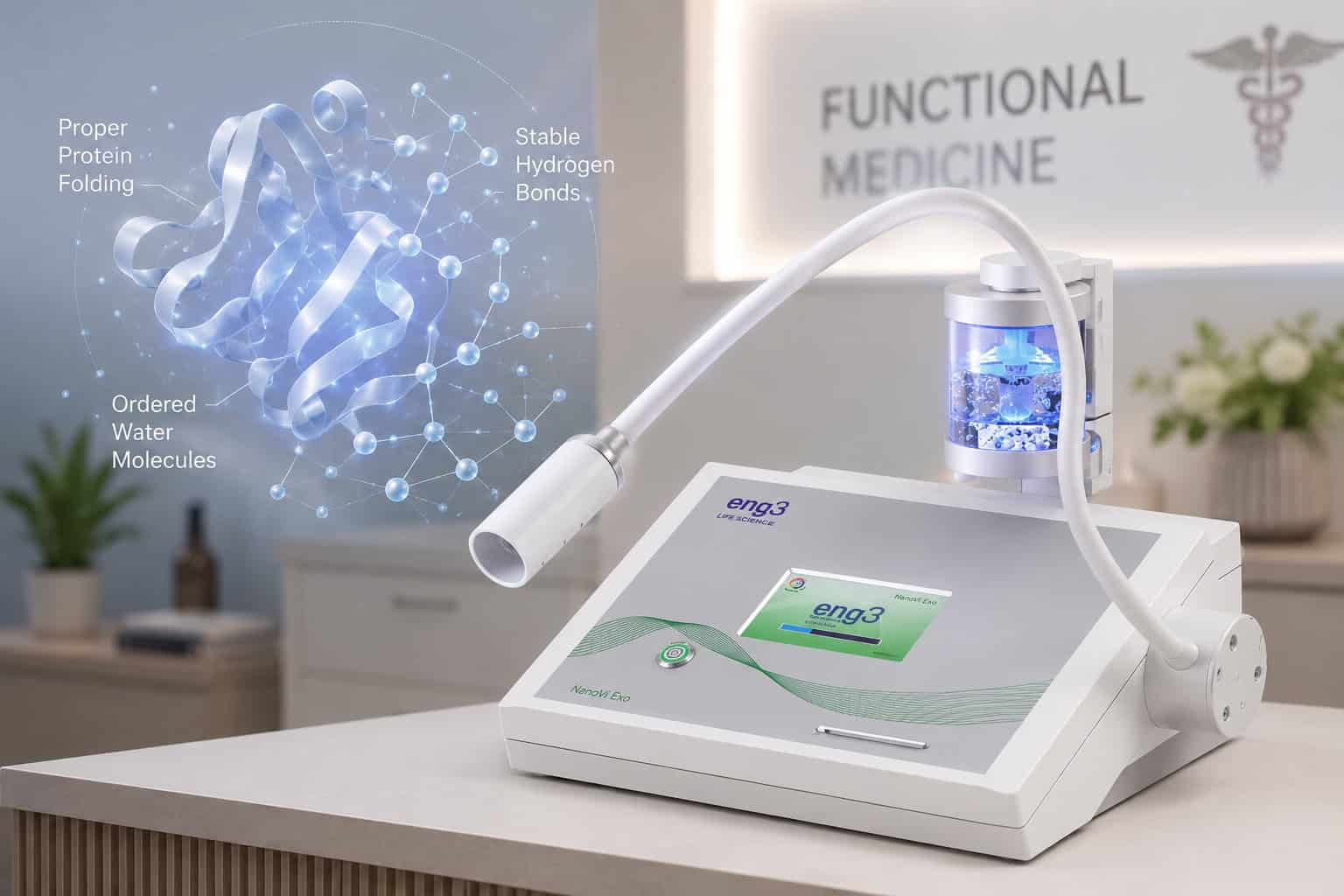
If you spend any time in the world of integrative and functional medicine, sooner or later you will hear about NanoVi. Often it comes up in the same breath as hyperbaric oxygen, photobiomodulation, peptides, and IV nutrient therapy. A patient will ask, “Have you tried that little machine that helps your proteins fold?” Or a colleague will mention the device sitting quietly in their treatment room, used between sessions, almost as background care.
I want to take this conversation seriously. As a functional medicine physician who has personally walked through cancer, chronic infection, mold illness, and the long road of cellular recovery, I am always looking for tools that genuinely support the body's ability to heal itself. I am also deeply committed to scientific honesty. So when I write about a technology, I want to share both my personal experience and a fair, research-anchored look at what the evidence actually shows.
This article is that fair look. I will walk through the biology of why protein folding matters, the proposed mechanism behind NanoVi, the studies that have actually been done, my honest perspective on the limitations of the current evidence, and how I personally use the NanoVi Exo in my own life. I am not paid by the manufacturer, and I want you to come away with the information you need to make your own informed decision.
Why Protein Folding Matters More Than We Realize
Proteins are the workhorses of every cell in your body. They build the structures that hold your tissues together, drive the chemical reactions that keep you alive, transport oxygen and nutrients, run your immune system, regulate your hormones, and carry the signals that tell your genes when to switch on or off. Without functional proteins, biology stops.
But a protein is not just a string of amino acids. To do its job, it has to fold into a precise three-dimensional shape. Get the shape right and the protein does what it was designed to do. Get the shape wrong and the protein not only fails to function, it can actually become harmful. Misfolded proteins clump together into aggregates that have been linked to neurodegeneration, accelerated aging, and chronic inflammation.
Oxidative stress is the enemy of healthy proteins
Reactive oxygen species (ROS) are unavoidable byproducts of normal metabolism. In small amounts, ROS serve important signaling roles. In excess, they damage proteins, unfolding them and exposing the hydrophobic surfaces that drive aggregation. As Powers and Jackson elegantly documented in their landmark Physiological Reviews paper, even a single bout of exercise generates substantial oxidative stress in skeletal muscle.
Now layer on the modern environmental load. Mycotoxins from water-damaged buildings. Pesticides in our food and water. Heavy metals. Electromagnetic stress. Chronic viral and tick-borne infections. Processed foods and blood sugar dysregulation. Poor sleep. Emotional and psychological stress. Every one of these accelerates protein damage at the cellular level.
The body's response to misfolded protein buildup
When the load gets high enough, cells activate a coordinated program called the unfolded protein response (UPR). This system does three things in sequence. First, it ramps up production of chaperone proteins that help damaged proteins refold. Second, it accelerates the degradation of proteins that cannot be saved. Third, if all else fails, it triggers programmed cell death to prevent toxic aggregates from spreading.
In the patients I see with mold illness, mast cell activation syndrome, chronic Lyme, long COVID, autoimmunity, and post-viral fatigue, the UPR is essentially running overtime, day after day, year after year. The folding capacity of their cells is overwhelmed. This is the cellular landscape NanoVi proposes to support.
The Science of Ordered Water and Bio-Identical Signaling
Most physicians never studied this in medical school. I certainly did not. Water has been treated as a passive solvent for decades, a kind of neutral background in which cellular chemistry happens. But cellular biophysics has been quietly rewriting that story.
Exclusion zone water
In the early 2000s, Dr. Gerald Pollack and colleagues at the University of Washington began publishing work on what they called exclusion zone (EZ) water, a more ordered, liquid-crystalline phase of water that forms spontaneously at hydrophilic surfaces. EZ water carries a net negative charge, has a different absorption spectrum than bulk water, and excludes solutes from its volume. One of the most striking findings from Pollack's lab was that infrared light, particularly in specific wavelength bands, promotes the formation and expansion of these exclusion zones.
Why does this matter for healing? In 2009, Zuo, Hu, and Fang published a computational study in Physical Review E showing that ordered water surrounding a protein significantly speeds up its folding into the correct conformation and stabilizes the folded state once achieved. Water, it turns out, is not just where folding happens. Water is part of how folding happens. The hydrogen bonds, the entropy transfer, the local electric environment, all of it depends on the structure of the water at the protein surface.
The 1270 nm wavelength and bio-identical signaling
The NanoVi device started with a specific infrared wavelength around 1270 nm. This is not arbitrary. The 1270 nm wavelength corresponds to the phosphorescence emission of singlet oxygen, a reactive oxygen species your body itself generates in tiny amounts as part of normal redox signaling. The manufacturer (Eng3 Corporation in Seattle) refers to this as bio-identical signaling, meaning the wavelength delivered by the device matches the wavelength the body produces internally as a natural cue for protein folding and cellular repair. Additional wavelengths were added to NanoVi devices after scientific testing showed them to be even more impactful than the original 1270 wavelength.
The device itself is straightforward. It pulls in ambient air, humidifies it, exposes the humid airstream to that specific wavelengths, and delivers the result through a soft cone or nasal cannula. There is no added oxygen, no ozone, no medication. It is simply a structured airstream that is breathed in for 15 to 30 minutes.
I want to be transparent here. The exclusion zone water model has a growing body of biophysics research behind it, but it is not yet universally accepted in mainstream cellular biology. Some of the more ambitious claims around EZ water remain speculative or under-replicated. At the same time, the core observations (that water near hydrophilic surfaces has different physical properties, that infrared exposure influences water structure, that protein folding is sensitive to local water structure) are reasonably well established. NanoVi sits in this evolving science, and any honest review has to acknowledge both its plausibility and the questions that remain. This is similar to how I approach other emerging tools in my practice, like the mitochondrial-targeted antioxidant MitoQ, which I have written about here, or photobiomodulation devices like Vielight, which I covered in depth in this article on light therapy for the brain.
What the Research Actually Shows
This is where the conversation gets interesting. A compelling mechanism is one thing. Data is another. I have read through the available studies carefully, and I want to walk you through them honestly, strongest evidence first.
1. The peer-reviewed enzyme study (Yablonskaya et al., 2022)
The strongest piece of evidence in the NanoVi literature is a peer-reviewed paper published in the International Journal of Molecular Sciences in January 2022 by Olga Yablonskaya and colleagues, working in collaboration with Lomonosov Moscow State University. The investigators studied three different enzymes (horseradish peroxidase, alkaline phosphatase, and catalase) and asked a simple question: does exposure to NanoVi-treated humid air actually affect protein function?
Two findings stood out:
- When normally functioning enzymes were exposed to NanoVi-treated air, there was no significant change in activity. This is a crucial control. It tells us the technology is not artificially inflating enzyme activity in healthy proteins. NanoVi appears to act only when proteins are damaged or stressed.
- When enzymes were first damaged through heat, oxidative stress, or chemical denaturation, NanoVi exposure partially protected against the damage when delivered before and partially restored activity when delivered after. For thermally inactivated alkaline phosphatase, treatment restored activity by roughly 130 percent compared to the inactivated control. For oxidatively damaged horseradish peroxidase, NanoVi preserved roughly 45 percent of native activity compared to less than 10 percent in the oxidized control.
The investigators suggested the mechanism involves alteration of the physicochemical properties of the aqueous medium surrounding the proteins, consistent with the exclusion zone water hypothesis. This is in vitro work with isolated enzymes, not whole organism research. It does not prove clinical outcomes by itself. But it establishes a measurable physical effect on protein function, which is meaningful biological plausibility.
2. University of Vienna sports science studies (Hartmann, 2015)
Researchers at the Center for Sports Science at the University of Vienna conducted a double-blind, placebo-controlled crossover study in 21 healthy male amateur runners. Active NanoVi and sham devices were indistinguishable to both researchers and athletes. Each athlete served as his own control across two test days separated by a 7 to 14 day washout.
The lactate findings were striking. A single 15-minute NanoVi session before all-out treadmill exertion was associated with 17 percent less blood lactate measured immediately after exertion, with statistical significance at every post-exertion time point. Lactate is more than a fatigue marker. It reflects the balance between aerobic and anaerobic metabolism and the cellular cost of exertion.
On the immune side, when athletes received a second NanoVi session after exertion, several white blood cell populations were significantly higher in the active arm compared to placebo. Monocytes were 16.9 percent higher (p = 0.02), granulocytes were 14.0 percent higher (p = 0.02), and total leukocytes were 10.3 percent higher (p = 0.03), all measured 85 minutes after exertion. Lymphocytes did not show a significant difference.
For my patients with post-exertional malaise, post-viral fatigue, or impaired immune mobilization, these findings at least suggest that the technology is doing something real at the level of cellular response to physiological stress.
3. PNOE cardiometabolic assessment (2023)
A smaller study (n = 10) used the PNOE cardiometabolic analyzer to assess changes in resting and exercise metabolism before and after a single 20-minute NanoVi session. Three of the five primary biomarkers showed statistically significant change:
- VO2max: increased by 7.8 percent
- Resting respiratory exchange ratio (RER): decreased by 11.0 percent, indicating a shift toward fat oxidation and improved metabolic flexibility
- Heart rate at the fat to carbohydrate crossover point: increased by 5.6 percent
A 7.8 percent improvement in VO2max from a single session is unusual and warrants larger replication. VO2max is one of the strongest predictors of all-cause mortality we have in adult medicine. A shift in resting RER toward fat oxidation is meaningful for anyone working on metabolic flexibility, insulin resistance, or maintaining weight loss after a GLP-1 medication.
4. Autonomic nervous system pilot study (Neuy et al., 2024)
This is the study I find most clinically interesting for my complex chronic illness population. Dr. Susanne Neuy in Germany worked with Scientifica Consulting to conduct a pilot in 39 participants. Heart rate variability was measured before and after a single 15-minute NanoVi session.
- Parasympathetic activity (RMSSD): increased by 19.4 percent (p = 0.0001)
- Sympathetic activation (Baevsky Stress Index): decreased by 45.7 percent (p < 0.0001)
- Autonomic coordination (Alpha-1 value): improved by 4.5 percent (p = 0.0495)
For my patients with dysautonomia, POTS, long COVID, and the chronic sympathetic dominance that characterizes complex chronic illness, a measurable shift toward parasympathetic balance after a single 15-minute intervention is worth noticing. This is a pilot study. There was no control group, the design was pre/post rather than randomized, and the population was a private clinical practice rather than a defined patient cohort. But the magnitude of the stress index reduction is substantial and aligns with what my patients consistently report: they feel calmer, more centered, and more able to rest after a session.
5. Stem cell theory and emerging applications
Eng3 has also provided a white paper exploring the theoretical role of NanoVi in supporting stem cell function. The biology here is genuinely fascinating. Quiescent stem cells must tightly regulate protein synthesis to avoid accumulating misfolded protein aggregates that drive stem cell aging. During activation and differentiation, stem cells must rapidly upregulate protein production, creating a folding bottleneck.
Research by Signer and colleagues at UT Southwestern, published in Nature in 2014, demonstrated that hematopoietic stem cells require an exquisitely regulated rate of protein synthesis, with both increases and decreases impairing function. Subsequent work by Leeman and colleagues at Stanford, published in Science in 2018, showed that aged neural stem cells accumulate protein aggregates that block their ability to activate, and that boosting protein quality control restores their regenerative capacity.
If NanoVi technology genuinely enhances cellular protein folding capacity, it is mechanistically plausible that it could support both stem cell maintenance and stem cell activation. This is the rationale behind the growing use of NanoVi as an adjunct in stem cell clinics. To be clear, however, no published controlled studies have directly tested NanoVi in stem cell therapy outcomes. This remains an interesting hypothesis that deserves rigorous investigation.
The Limitations I Want You to Understand
This is the section that, for me, separates a fair review from a marketing piece. The NanoVi evidence base has real strengths, but it also has real limitations. I want you to know both.
- Small sample sizes. The largest published studies enroll 21 to 39 participants, with some pilot data in groups of 10. All reported results show statistical significance, in spite of the small samples. Effects this size in studies this small need replication in larger cohorts before strong clinical claims can be made.
- Manufacturer involvement. Many of the available studies are funded by, conducted in collaboration with, or analyzed in partnership with Eng3 Corporation. This is not unusual for emerging device technology, but it is a real potential source of bias. Of note, placebo-controlled research at the University of Vienna was completely independent of Eng3.
- Mostly healthy populations. Much of the data comes from healthy male athletes. We have very little controlled research in the populations I care about most clinically: mold illness, MCAS, chronic Lyme, dysautonomia, long COVID, and autoimmune disease. The ANS pilot is a step in this direction, but more is needed.
- The mechanism is still evolving. Exclusion zone water and coherent domain theory are supported by a real and growing body of biophysics, but they are not universally accepted in mainstream cellular biology. The strongest mechanistic evidence is from in vitro enzyme work.
- FDA registration is not FDA approval. NanoVi devices (Exo, Pro, and Eco) are FDA-registered as Class I devices. Registration is a manufacturing and listing classification, not a clearance to make therapeutic claims. NanoVi is not intended to diagnose, treat, cure, or prevent any disease.
None of these limitations make NanoVi less useful. They simply mean that the technology is still in the early stages of its evidence base, and we should hold our enthusiasm and our skepticism in balance.
Where NanoVi Fits in a Functional Medicine Protocol
Across all the available data, the clinical signal for NanoVi clusters around a few specific areas:
- Recovery from physical stress. Exercise recovery, oxidative stress reduction, and immune mobilization after exertion have the strongest supporting data.
- Autonomic regulation. The HRV findings suggest a role in stress recovery and parasympathetic support, particularly relevant in dysautonomia and chronic sympathetic dominance.
- Metabolic flexibility. The cardiometabolic data hint at mitochondrial efficiency support, which pairs naturally with other mitochondrial therapies.
- Cellular repair adjunct. Wherever cellular repair capacity is overwhelmed by oxidative or inflammatory load, the mechanism is at least plausible.
In my practice, I think of NanoVi as an adjunct, rather than a standalone intervention. It pairs naturally with hyperbaric oxygen therapy, peptide protocols, ozone therapy, infrared sauna, intravenous nutrient therapy, photobiomodulation devices like Vielight, and the foundational work on sleep, nutrition, blood sugar, and stress that underlies all true healing. Eng3 themselves position NanoVi as one component of good health, which I appreciate.
My Personal Experience with the NanoVi Exo
I have used the NanoVi Exo in my own healing routine for some time now, particularly during periods of high travel, clinical demand, and the kind of cumulative wear that comes with running a full functional medicine practice while writing, speaking, and recording a podcast. The Eco is the entry-level device in the Eng3 lineup. It is less powerful than the Pro and Exo, meaning a longer session is needed for the same effect, but it uses the same underlying mechanism.
My experience aligns with what the autonomic data would predict. I notice a quieting of sympathetic tone, deeper sleep on travel nights, and a subjective sense of faster recovery from the wear of busy days. On days when I am inflamed, fighting something off, or simply depleted, the device feels more clearly beneficial than on days when I am already well rested.
This is anecdotal, and I hold my own experience with appropriate humility. What I can say is that the technology has earned a regular place in my routine. Many of my patients with complex chronic illness have reported similar perceived benefits. I am writing this because transparency matters to me, and because I think patients deserve a thoughtful look at the tools that are genuinely worth considering.
If you would like to learn more or explore whether NanoVi might be a fit for you, Eng3 has created a dedicated resource page for my readers where you can read about the three models (Exo, Pro, and Eco), see how they differ, and get more information directly from the manufacturer. As always, talk with your functional medicine physician before adding any new therapy to your protocol.
If You Are Curious About Trying NanoVi
I have been asked many times by patients and readers where they can learn more or get their hands on a device. Eng3 Corporation, the company in Seattle that makes NanoVi, has put together a page specifically for the Dr. Jill community.
You can visit it here: eng3corp.com/drjill.
There you can learn about the three NanoVi models, how they compare, what a typical session looks like, and how to talk with the Eng3 team about whether the technology fits your needs. The NanoVi Eco is the most accessible entry point for home use. The Pro and Exo offer faster sessions and are common in professional clinics and athletic recovery centers.
My encouragement is the same one I give my own patients. Read the research. Notice what your body is telling you. Talk with your physician. And if a tool genuinely supports your healing path, give it a thoughtful trial alongside the foundations of sleep, nutrition, movement, breathwork, and connection that no device can replace.
The Bigger Picture: Faith, Healing, and Cellular Wisdom
As a physician and a person of faith, I hold all of this work within a larger framework. The science of protein folding is one of the most breathtaking expressions of design I have encountered in human biology. A single misplaced bond in a single protein can unravel a cell. A correctly folded protein, working in concert with thousands of others, sustains a heartbeat, a thought, a breath, a healing wound.
We do not engineer this. We support it. The technology, the supplements, the lifestyle interventions, all of it is in service of a body whose intelligence we are still humbly learning to understand.
My prayer for every patient who comes through my door, and for every reader of this article, is that healing meets you where you are. That the right tools find you at the right time. That the people in your life who carry you in love and in prayer become part of the medicine itself. NanoVi, like every tool, is just that. A tool. The healing belongs to the body, to the Spirit, and to a wisdom older than any of us.
About Dr. Jill
Dr. Jill C. Carnahan, MD, ABIHM, ABoIM, IFMCP is a triple board-certified functional medicine physician and the Medical Director of Flatiron Functional Medicine in Louisville, Colorado. She is the bestselling author of Unexpected: Finding Resilience through Functional Medicine, Science, and Faith, host of the award-winning Resiliency Radio podcast, and executive producer of the Doctor/Patient documentary.
Connect with Dr. Jill:
- Website: jillcarnahan.com
- Online Store: drjillhealth.com
- Podcast: Resiliency Radio
- Documentary: Doctor/Patient Movie
- Instagram: @DrJillCarnahan
- Book: Unexpected (readunexpected.com)
- NanoVi Reader Resource: eng3corp.com/drjill
Disclosure & Disclaimer: Dr. Carnahan has a partnership with Eng3 Corporation that includes a dedicated reader resource page (eng3corp.com/drjill). The opinions in this article reflect her honest professional assessment of the available evidence, and the technology has earned a place in her personal routine independent of that partnership. The information here is for educational purposes only and is not intended as medical advice, diagnosis, or treatment. Always consult a qualified healthcare professional before beginning any new therapy, device, or supplement, particularly if you have a medical condition, are pregnant, or are taking medications. Statements regarding NanoVi devices have not been evaluated by the FDA. NanoVi is not intended to diagnose, treat, cure, or prevent any disease.
References
1. Yablonskaya OI, Voeikov VL, Novikov KN, Buravleva EV, Menshov VA, Trofimov AV. Effect of Humid Air Exposed to IR Radiation on Enzyme Activity. Int J Mol Sci. 2022;23(2):601. doi:10.3390/ijms23020601. PubMed
2. Zuo G, Hu J, Fang H. Effect of the ordered water on protein folding: an off-lattice Gō-like model study. Phys Rev E Stat Nonlin Soft Matter Phys. 2009;79(3 Pt 1):031925. doi:10.1103/PhysRevE.79.031925. PubMed
3. Chai B, Yoo H, Pollack GH. Effect of radiant energy on near-surface water. J Phys Chem B. 2009;113(42):13953-13958. doi:10.1021/jp908163w.
4. Pollack GH. The Fourth Phase of Water: Beyond Solid, Liquid, and Vapor. Seattle, WA: Ebner & Sons Publishers; 2013.
5. Hartmann S. NanoVi: Inhalation bei Sportlern zur Verbesserung des oxidativen Schutzes [thesis]. Universität Wien, Center for Sports Science; 2015.
6. Powers SK, Jackson MJ. Exercise-induced oxidative stress: cellular mechanisms and impact on muscle force production. Physiol Rev. 2008;88(4):1243-1276. doi:10.1152/physrev.00031.2007. PubMed
7. Chakrabarti A, Chen AW, Varner JD. A review of the mammalian unfolded protein response. Biotechnol Bioeng. 2011;108(12):2777-2793. doi:10.1002/bit.23282. PubMed
8. Neuy S, Cidral F, Donatello N. Autonomic Nervous System Modulation Following NanoVi: A Pilot Study. Scientifica Consulting Report; 2024.
9. PNOĒ Inc. Assessment of the impact of novel therapy on key cardiometabolic variables [white paper]; 2023.
10. Signer RAJ, Magee JA, Salic A, Morrison SJ. Haematopoietic stem cells require a highly regulated protein synthesis rate. Nature. 2014;509(7498):49-54. doi:10.1038/nature13035. PubMed
11. Leeman DS, Hebestreit K, Ruetz T, et al. Lysosome activation clears aggregates and enhances quiescent neural stem cell activation during aging. Science. 2018;359(6381):1277-1283. doi:10.1126/science.aag3048. PubMed
12. Del Giudice E, Tedeschi A, Vitiello G, Voeikov V. Coherent structures in liquid water close to hydrophilic surfaces. J Phys Conf Ser. 2013;442:012028. doi:10.1088/1742-6596/442/1/012028.
* These statements have not been evaluated by the Food and Drug Administration. The product mentioned in this article are not intended to diagnose, treat, cure, or prevent any disease. The information in this article is not intended to replace any recommendations or relationship with your physician. Please review references sited at end of article for scientific support of any claims made.





1 Comment
Was searching for a study and stumbled upon your article in the search results, happy to see you’ve caught on to the NanoVi.. I first learned of it a little over a year ago in a pretty vague YouTube comment from another patient.. Actually I think it might’ve been on one of your interviews, but anyway for a week or two I went deep down the research rabbithole arriving at the same conclusions you make note of here. Found a wellness spa locally to go try it out and couldn’t deny the immediate effect I felt afterwards, was one of the very rare inflammation remission moments. Wasn’t a cheap investment for one at home, but it does wonders for my severe bedbound ME/CFS partner and I, specifically with PEM recovery. Very responsive and friendly company to deal with as well. Thanks for putting this together, you know plenty will declare it snakeoil or out of reach.. but we’re on disability and figured out how to make it happen, it’s a game changer
Share: