

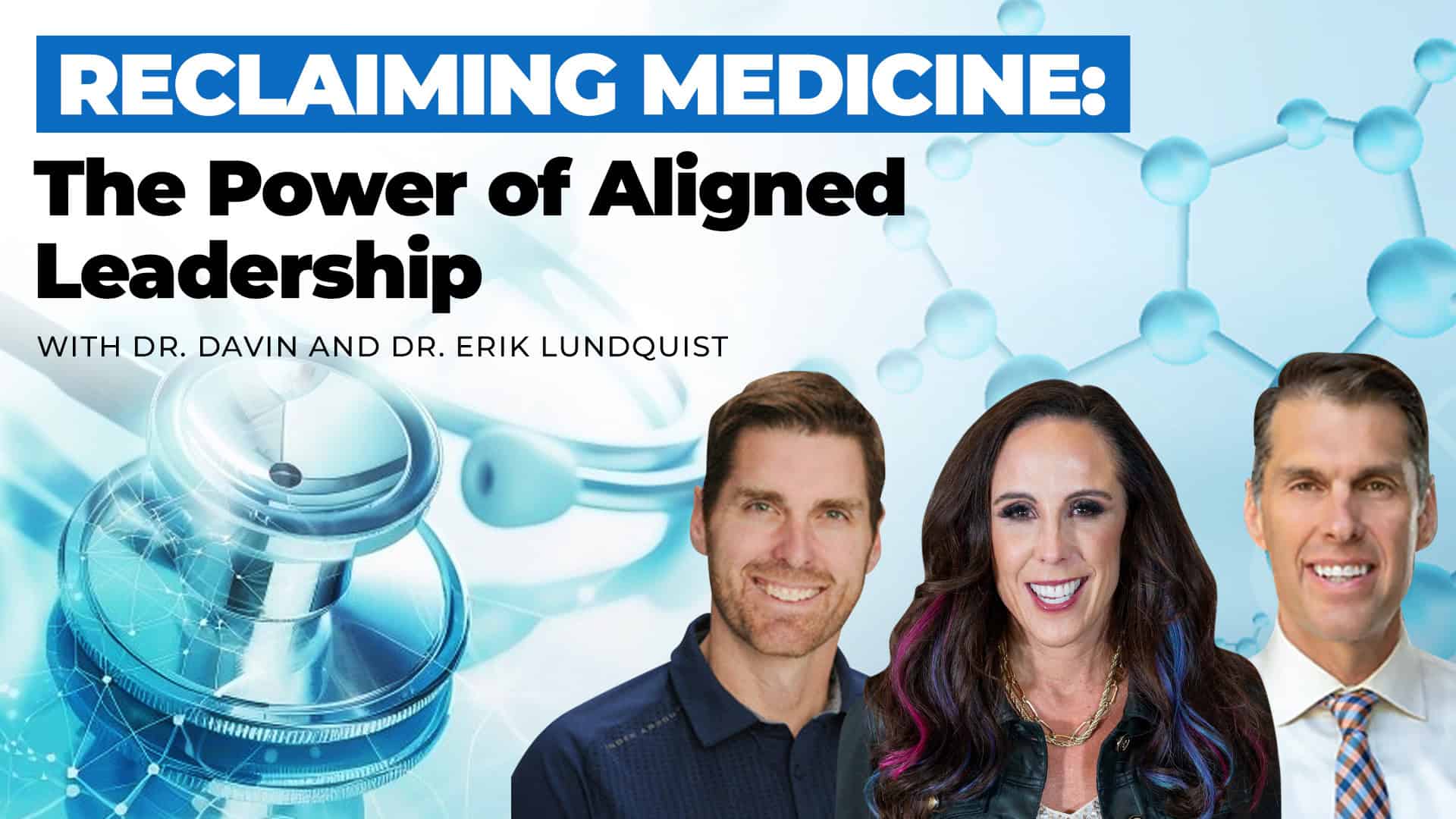
Welcome to Resiliency Radio with Dr. Jill Carnahan, where today’s powerful episode explores what it truly means to reclaim medicine through aligned leadership, personal transformation, and a return to root-cause, patient-centered care. Dr. Jill is joined by the inspiring Lundquist brothers – Dr. Erik Lundquist and Dr. Davin Lundquist—two nationally respected leaders in integrative, functional, and holistic medicine.
In this episode, we dive deep into the emotional and professional challenges facing today’s healthcare professionals, including burnout, chronic stress, and system-driven limitations that leave both clinicians and patients overwhelmed. Together, the Lundquist brothers break down what real leadership looks like in medicine—revealing the difference between simply managing and truly inspiring transformation in others.
You’ll learn how personal growth begins with small, courageous steps; how functional and holistic medicine empowers individuals to reclaim their health; and how hope, mindset, and aligned leadership can reshape the future of healthcare.
Whether you're a clinician seeking renewed purpose or a patient longing for a more compassionate, whole-person medical approach, this conversation offers deep wisdom, practical insight, and a renewed sense of possibility.
Key Topics You'll Discover with Dr. Erik Lundquist & Dr. Davin Lundquist
① Stress and Burnout:
⇨ The episode addresses the prevalent issue of stress and burnout among healthcare professionals and patients. The hosts discuss strategies for leaders to manage these challenges and provide tips for maintaining balance.
② Leadership in Medicine:
⇨ A significant portion of the conversation focuses on the difference between being a leader and a manager. Leaders are seen as those who inspire and guide others, particularly in the healthcare setting.
③ Personal Transformation:
⇨ The hosts share personal experiences about the journey of transformation, emphasizing that the first step is often the hardest. They discuss the importance of self-evaluation and taking incremental steps towards change.
④ Functional and Holistic Medicine:
⇨ The conversation touches on the benefits of functional and holistic medicine, encouraging listeners to take control of their health by understanding and addressing the root causes of their issues.
⑤ Hope and Inspiration:
⇨ The episode concludes with a message of hope, encouraging listeners to view their circumstances positively and take control of their lives. The hosts share inspirational quotes and personal anecdotes to uplift those feeling overwhelmed.
🔑 Key Takeaways:
⇨ First Steps Matter: Change begins with the first step, which can be daunting but is essential for transformation.
⇨ Leadership Inspires: Effective leaders inspire and motivate, rather than just manage.
⇨ Holistic Approach: Embracing a holistic approach to medicine can empower individuals to take charge of their health.
⇨ Hope is Key: Maintaining a hopeful outlook can transform how one perceives and handles life's challenges.
🔑 CONCLUSION: This episode provides valuable insights into the intersection of medicine, leadership, and personal growth. It encourages healthcare professionals and listeners from all walks of life to embrace change, inspire others, and maintain hope in the face of adversity.
About Dr. Erik Lundquist
Dr. Erik Lundquist is the founder and medical director of the Temecula Center for Integrative Medicine, specializing in holistic and integrative care for endocrine disorders, chronic fatigue, migraines, cardiometabolic issues, and chronic pain. A Navy veteran and former chief resident at Naval Hospital Camp Pendleton, he earned his M.D. from St. Louis University and holds multiple board certifications in Family, Integrative, and Holistic Medicine.
With over two decades of experience—including service in Iraq and Italy—Dr. Lundquist is dedicated to empowering patients and educating clinicians on root-cause, integrative approaches to chronic disease. He is married with three children.
🌐 Website: https://www.tcimedicine.com/erik-lundquist-m-d
About Dr. Davin Lundquist
🌐 Website: https://www.drlundquist.com
Dr. Davin Lundquist earned his M.D. from the Keck School of Medicine of USC and has served in major leadership roles at CommonSpirit Health, including Chief Medical and Administrative Officer and Chief Medical Information Officer for Dignity Health. He later became Chief Medical Officer at Augmedix, driving innovation in tech-enabled patient care.
With 25+ years in family medicine, Dr. Lundquist transitioned to functional and holistic medicine after seeing the limits of conventional, symptom-focused approaches. His journey led him to develop the Quantum Advantage Method™—a science-based, root-cause framework that uses advanced diagnostics, quantum principles, and targeted lifestyle strategies to help high-performing individuals optimize their health and reverse dysfunction.
Dr. Jill Carnahan, MD – Leading Functional Medicine Doctor
Dr. Jill Carnahan, MD, ABIHM, ABoIM, IFMCP is internationally recognized as one of the most respected leaders in functional and integrative medicine. She is dually board-certified in Family Medicine and Integrative Holistic Medicine, and the founder and medical director of Flatiron Functional Medicine in Louisville, Colorado.
Widely known as a pioneer in environmental toxicity, mold-related illness, autoimmune disease, and resilience medicine, Dr. Carnahan combines cutting-edge science with compassionate, root-cause care. Her clinical approach integrates precision genomics, epigenetics, microbiome research, peptide therapy, and lifestyle interventions to transform health outcomes for patients worldwide.
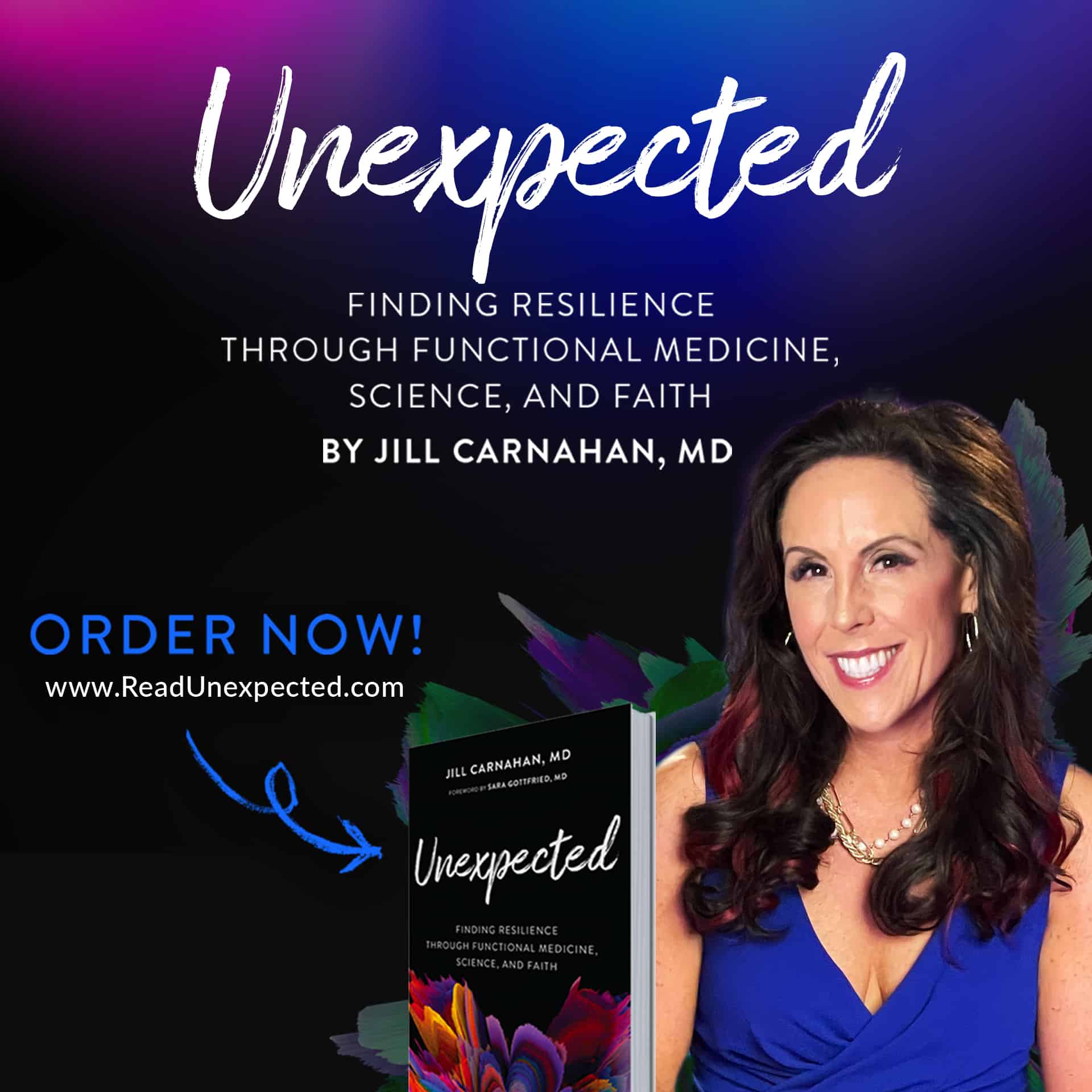
She is the author of the best-selling memoir Unexpected, which weaves her personal journey through cancer, Crohn’s disease, and mold-related illness with her professional expertise. Dr. Carnahan is also the executive producer of the award-winning documentary Doctor/Patient and the host of the popular podcast Resiliency Radio, which reaches over 500,000 global subscribers.
As an international keynote speaker, Dr. Carnahan has been featured at leading medical conferences including A4M, IFM, EPIC, and IPM Congress, and her work is frequently highlighted in major media outlets such as NBC, CBS, Fox News, Forbes, Parade, People, and MindBodyGreen.
With a reputation as both a scientist and a healer, Dr. Jill Carnahan is regarded as one of the top functional medicine doctors in the world, offering a unique blend of evidence-based research, innovation, and deeply personalized care.
The Podcast with Dr. Erik Lundquist & Dr. Davin Lundquist
The Video with Dr. Erik Lundquist & Dr. Davin Lundquist
The Interview
- Integrative Care Model: Lundquist brothers focus on personalized care merging traditional and functional medicine for chronic conditions.
- Emphasis on Connection: Genuine human presence during consultations enhances patient engagement and trust, leading to better health outcomes.
- Coaching for Compliance: Motivational coaching helps patients implement lifestyle changes, bridging the gap between medical advice and real-life application.
- Balancing Science and Intuition: Combining analytical and empathetic approaches addresses root causes, not just symptoms, enhancing holistic treatment.
- Resilience Against Burnout: Setting boundaries and self-care is crucial for physicians to sustain energy and foster meaningful patient relationships.
- Fostering Hope and Change: Incremental steps and a positive mindset empower patients to reclaim control over their health and life choices.
Integrative and Functional Medicine Practice Development
The Lundquist brothers have built their medical careers around creating personalized, integrative care models that prioritize patient connection and holistic healing.
- Dr. Eric Lundquist founded the Temecula Center for Integrative Medicine, offering a full spectrum of care including chiropractic, acupuncture, nutrition, and IV therapies to address chronic conditions like endocrine disorders and chronic pain (09:17)
- Eric’s clinic integrates functional medicine with traditional approaches to fill gaps in patient care and provide hope through listening and personalized plans
- He emphasizes the power of physician presence and connection, which counters the fractured nature of modern medical systems
- Eric’s approach improves patient engagement by focusing on individual goals and validating emotional and spiritual needs alongside physical health
- This model fosters patient trust and long-term adherence, supporting better health outcomes and satisfaction
- Dr. Davin Lundquist transitioned from a 25+ year career in traditional health systems and health IT leadership to functional medicine, launching a tech-enabled, patient-centered practice (19:25)
- Davin’s background as a Chief Medical Information Officer led him to innovate solutions like a custom database for high-risk OB patients, highlighting his problem-solving skills
- He recognized systemic barriers and burnout in traditional healthcare, prompting his shift to direct patient care emphasizing transformational coaching
- His “Quantum Advantage” method blends advanced diagnostics with lifestyle strategies and micronutrient optimization for high performers
- Davin integrates behavioral coaching to improve patient compliance, addressing common gaps between medical plans and patients’ real-life capacities
Patient-Centered Care and Physician Presence
Both doctors stress that true healing begins with genuine human connection and presence, which is often missing in mainstream healthcare.
- Eric emphasized that even brief moments of focused presence with patients can be life-changing, helping patients feel truly heard and supported despite systemic pressures like short appointment times and insurance demands (22:08)
- He contrasted the complexity and distraction of electronic medical records with the simplicity of attentive listening
- Eric views himself as a resource and guide rather than an enforcer, which encourages patient autonomy and trust
- This presence allows uncovering deeper emotional or social issues behind symptoms, leading to more effective care plans
- Davin highlighted the importance of coaching and motivational interviewing to help patients transform their behaviors and increase compliance (28:30)
- He noted that many patients fail to follow plans because they lack the tools to implement changes, not because of unwillingness
- His certification in personal transformation training equips him to support patients’ capacity to change alongside medical interventions
- This approach aligns with Eric’s philosophy of meeting patients where they are and addressing practical barriers
- They agree that physicians must avoid overworking themselves by setting boundaries and not doing patients’ “work” for them
Integrating Science, Intuition, and Faith in Medicine
The brothers advocate combining rigorous scientific analysis with heart-centered intuition and spiritual connection to treat the whole person.
- Eric described the balance of left-brain analysis (labs, genetics) with right-brain empathy and intuition as central to integrative medicine’s success (33:12)
- He values detailed lab interpretation but prioritizes understanding patients’ emotional and life contexts
- Eric shared a case of a healthy woman struggling emotionally with her son’s addiction, where faith-based support played a crucial role in her healing
- This holistic view allows addressing root causes beyond symptoms, including environmental and psychosocial factors
- He underscored the risk of physician burnout when over-investing emotionally without boundaries
- Davin echoed the need for this balance, emphasizing that AI and technology cannot replace the human heart in medicine (33:12)
- He stressed that presence and connection enable better problem-solving and patient motivation
- Both doctors integrate spirituality naturally in care, using faith to inspire resilience and hope when appropriate
- They advocate for medicine as a partnership where science guides decisions but empathy and faith foster healing
Addressing Physician Burnout and Building Resilience
Sustainable medical practice requires setting clear boundaries, focusing on what matters, and fostering resilience in both doctors and patients.
- Eric shared that he stopped working harder than his patients as a key boundary to prevent burnout and maintain energy for patient care (43:50)
- This shift allows patients to take ownership of their health journeys without physician resentment or fatigue
- He highlighted the importance of self-care and focusing on meaningful patient goals to keep motivation alive
- Eric described how recognizing limits and setting expectations fosters long-term physician well-being and better patient relationships
- Davin emphasized resilience as the core trait of success, encouraging persistence through challenges for both doctors and patients (47:21)
- He described leadership as inspiring patients and colleagues to take small, consistent steps toward health
- Davin’s coaching background helps him model resilience and invite patients to transform at their own pace
- Both doctors view resilience as a skill that can be developed through awareness, mindset shifts, and support
Hope and Inspiration for Patients and Providers
The final message centers on hope, choice, and the power to change circumstances through incremental steps and shifting perspectives.
- Davin encouraged listeners feeling trapped or hopeless to recognize their freedom to choose new paths and take baby steps toward change (51:00)
- He stressed that the first step is the hardest but always possible, and self-evaluation is key to moving forward
- Davin shared that functional medicine provides concrete ways to reclaim control, like correcting vitamin deficiencies that spark visible improvements
- This tangible progress builds momentum and hope for broader transformation
- Eric added that joy in life depends more on focus than circumstances, highlighting faith as a source of lasting peace regardless of hardship (54:48)
- He shared a quote from a church leader emphasizing the power of focusing on spiritual anchors to maintain joy
- Eric and Davin both see their work as blending science and faith to inspire patients and providers to keep moving forward
- Their stories affirm that meaningful change and healing are possible with the right mindset, connection, and support systems in place
Transcript
00:00
Dr. Jill Carnahan, MD
Hey everybody. Welcome to Resiliency Radio, your go to podcast for the most cutting edge insights integrative and functional medicine. I'm your host, Dr. Jill and with each episode we dive into the heart of healing and personal transformation. Join me as I interview thought leaders, medical doctors and experts of all types taking you on your way to optimal performance and longevity. Today's no different. I have brothers, doctors Lundquist that I will introduce in just a moment. And our conversation goes deep and I promise you'll want to listen to the end because it's inspiring and hope giving to those of you who are suffering. I think you'll really enjoy that.
00:39
Dr. Jill Carnahan, MD
Before I introduce them, I just want to remind you that you can find health products and services@doctor Jill health.com one of our new favorites, especially in the winter months as this is being recorded, is the Rejuvenating Body Lotion. People are loving this product for cellulite and optimal skin. It's got some retinols, really good at clarifying. I literally put this on my AR and legs after my shower. Loving, loving this Retinol Rejuvenating Body Lotion. And you can get that@Dr.jill health.com the other big top seller this last month has been the needle free serum that is a game changer. I've got it right here. A serum where you only need a couple drops. So this actually lasts a very long time if you get the bottle and you can put a few drops around your eyes or forehead.
01:26
Dr. Jill Carnahan, MD
And I find it does an incredible job at reducing those fine lines and wrinkles. If you're not someone who wants to go and do the injections of Neurotox, which I'm not a fan of. Okay, so let's get on to our guest. Our guests are Dr. Eric and Davin Lundqvist and I will introduce them here. Dr. Eric Lundquist is the founder, medical director of Temecula center for Integrative Medicine. He specializes in holistic and integrative care, focusing on endocrine disorders, chronic fatigue, migraines, cardiometabolic issues and chronic pain. He's a member of the American Holistic Medical association and the Institute of Functional Medicine. He's board certified in family medicine, subspecializing integrative medicine, and he is also certified by the American Board of Integrated Holistic Medicine. He's married with three children and passionate about empowering patients and educating peers on integrative approaches to chronic disease.
02:18
Dr. Jill Carnahan, MD
His brother, who will also be joining us, Dr. Davin Lundquist, earned his MD from the Keck School of Medicine at USC and has held key leadership roles in Common Spirit Health, including Chief Medical Administrative Officer, Chief Medical Information Officer for Dignity Health and most recently served as Chief Medical Officer in an advanced technology driven improvement in patient care company. With over 25 years in family medicine, he recently has shifted towards functional medicine. You'll hear about his Quantum Advantage method, a science based holistic framework helping high performing individuals optimize health and reverse dysfunction. Drawing from quantum principles, advanced diagnostic and targeting lifestyle strategies, his method centers on the seven core pillars and emphasizes micronutrient optimization to achieve personal wellness. You're going to love this interview. So, so join me as I talk to doctors Eric and Davin Brothers Lundqvist.
03:11
Dr. Jill Carnahan, MD
Doctors I don't know, I mean obviously people know from your intro who you are, but today we're going to kind of dive deep and I just want to tell the listeners I've known Daven you a little less longer than your brother Eric, but both of you for quite a while. And I feel almost like your family in some way just because I've known you for a while. And again, by nature of your being the brother Davin, I feel like I've known you too. And what I want to say at the beginning is just I have always admired the way that you both work and move in the world, the way you act and design your clinic, your practices, your business of medicine with such integrity.
03:49
Dr. Jill Carnahan, MD
And to me there's no greater thing that we can bring to the world is just how do we, you know, work, lead, play in the world with alignment. And that's our topic today. But as I always love to start with its story. So I don't know, maybe we'll have older brother Eric go first. Do you want to tell us a little bit about your journey into medicine and then to where you're at now with this more personalized approach?
04:14
Dr. Erik Lundquist
Yeah, I'd love to. So I, I didn't really realize I was going to go into medicine until I was doing an internship in college between my sophomore and junior year at a physical therapy clinic in Las Vegas of all places. And I, I remember I was working with the Las Ve, this Las Vegas physical therapist and I was really interested in sports medicine at the time and really liked the hands on approach from the physical medicine that was practiced there. But he kept saying over and over again, you know, I wish I was a doctor. And, and I, you know, it just got me thinking. He says, look, if you become a doctor, then you can still do physical medicine. You don't have to be a physical therapist to do physical medicine, but then you're not relying upon referrals like, you get it.
05:11
Dr. Erik Lundquist
You get to kind of call the shots. You get to be that first approach with the patient and decide kind of the. The journey that you're going to navigate with them versus having to rely on others to make that decision. Then hopefully you get to pick up some of the pieces. And I thought it was really interesting because I had just, you know, I'd only been back from LDS mission for maybe a couple of years, and while I was on my mission, I. Here I was sharing the gospel, and I. It was something really important to me, and I was able to. To meet people and see people who were really struggling in their lives and really kind of help lift them up and bring them some joy, bring them some hope, bring them some. Some increased faith.
05:57
Dr. Erik Lundquist
But some of their situations from a health standpoint were awful. They either had severe chronic illness or they had some injuries, or even they were born without limbs. And. And it was just. It was really hard to meet with them and help them from a spiritual, mental, emotional standpoint and really not be able to do much for them from a physical standpoint. So I think that was really kind of where the seeds of medicine started to get planted within me. And then I just kind of got back on my track and what I thought I wanted to do in. In that conversation with the physical therapist really kind of pushed me into looking at medicine in a different light. And. And so then I kind of went on and said, okay, I'm going to be a doctor. And we.
06:43
Dr. Erik Lundquist
David and I went to undergrad together and a undergraduate program also with my wife Erica. She was in that program. It's where I met her. And it was a. Called kinesiology, but it was really the study of human performance. And were getting functional medicine at the time and didn't even know it. I mean, I remember. I remember getting our blood drawn and. And then we would. We would watch it to see how the triglycerides would float to the top and then say, all right, you know, I want you guys. They would tell us, I want you to eat the fattiest, you know, highest carbohydrate, richest meal before, and have a big, fatty breakfast. And then we're gonna. We're gonna.
07:22
Dr. Erik Lundquist
We're gonna draw your blood and see what happened, you know, so were already starting to think about it from this standpoint, and we'd have the anatomy physiology classes, and were thinking about it. From this nutrition. And we had. We were. I mean, Eric Sternlich from UCLA was teaching us about nutrition, so were like, locked in, like, was, this is. Oh, this is what medicine is going to be like. Then we get to medical school, and it was like, whoa, this is not what I was expecting. It was very. It was very. Actually discouraging for a little bit. You know, I mean, the first year was, okay, you learned about how everything worked in the body, and that was fascinating. And then the second year, you learned about how everything went wrong and what to do to fix it. And what did they give you?
08:03
Dr. Erik Lundquist
A big fat pharmacology textbook?
08:06
Dr. Jill Carnahan, MD
Yeah.
08:07
Dr. Erik Lundquist
And we had to learn and almost memorize all of the drugs that were in there.
08:12
Dr. Jill Carnahan, MD
And.
08:12
Dr. Erik Lundquist
And it just. I was pretty discouraged. And I went to a American Academy of Family Physicians retreat for residents and medical students at the time, and there happened to be a physician, and unfortunately, I cannot remember his name. He presented a topic on integrative medicine, and I was ready to drop out of medical school. And when I listened to him speak about lifestyle and nutrition and really looking at a patient from a holistic perspective, okay, there's a spot for me at some point in my career, I'm gonna be. I'm gonna be doing that. And I was in the Navy at the time I signed up to be in the Navy. And. And so I had some time that I had to go through and meet my obligations.
08:56
Dr. Erik Lundquist
But once I got out, then that was really, my goal was to really start to pursue that type of a practice. And ultimately I was able to set up the Temecula center for Integrative Medicine and have full spectrum functional and integrated medicine with chiropractic care, acupuncture, nutrition, health coaches, nutritional IVs. And it's been a. It's been a wonderful journey. And, and it's. I, I think, you know, my favorite line that I hear from patients is, wow, you gave me hope, or you saved my life. When I. In reality, I know I didn't. But that's how they feel because for the first time they've had a physician listen to what their concerns were, take them seriously, and then. And then do what they could to walk on the journey and help them get healthier. So that's. That's kind of my.
09:45
Dr. Erik Lundquist
My background in a more Cliff Notes version of what happened to me and how I got into medicine.
09:52
Dr. Jill Carnahan, MD
Amazing. And a couple themes come that we're going to come back to epa. Daven, I want to hear your story. The Themes that I hear that I want to talk about is like, how do you really take these vision principles and put them into a practice where we're actually. Because we have these ideas, right, of like, how we want to be with patients, how we want to spend time with patients, but our system right now as it is, unfortunately, doesn't really allow that. And it's so interesting, the little parallel I heard with you. I. I grew up with kind of my primary doc being a chiropractor. And I remember him, very probably 12 years old, teaching me nutrition and saying, jill, you're too smart to be a chiropractor. And no offense to chiropractors because they're brilliant.
10:27
Dr. Jill Carnahan, MD
But in his way, he was in his 50s, late 50s. He had been persecuted by the AMA and the system. And he was just saying to me, jill, don't go through what I went through. And again, I have a carpenter in my office. I have the greatest respect, like, literally, it's why I'm in medicine. So to anyone out there's nothing but deep respect in that. But, like, your physical therapy, it was for me, like, oh, wait, I could actually. And I thought about mission work, and I thought, okay, well, right now it's easier for an MD to go overseas to do mission work than it is to a chiropractor. So for all those reasons, very similar. And then what's so interesting, I looked at a master's and a doctorate of physical therapy. Same thing.
11:01
Dr. Jill Carnahan, MD
And I kept getting the push from these people in my life were like, no, no, you can go into medicine. And the ex was in medical school. I was like, what am I doing here? I don't belong. But as we kept that vision. Now, Davin, I want to switch to you because you've got a totally different experience, although you guys started in the same undergrad. Tell us a little bit about you and how I love hearing your story because you were definitely not in functional medicine from the get go. But then as you've switched, you've created this whole new way of practicing medicine as well. Tell us your story.
11:31
Dr. Davin Lundquist
Yeah, I think. I mean, there are some similarities. Eric and I, people will. Will see that there's a lot of. A lot of things in common with. He and I were, you know, we're close in age and we liked a lot of the same things. Both played football together was one thing. But, you know, going back when I started college, I was actually a computer engineering major. And part of the reason for that, you know, I just grew up like, tinkering with, you know, different computer, like programming. And I remember we had at our house one of those IBM PC Juniors. It literally had a cartridge that you put in that gave you the programming language, you know, going way back. But about halfway through my first year of college, I also served a mission down in South America. I was in Chile.
12:27
Dr. Davin Lundquist
And there was an experience during that mission that, you know, that was very medically related. And there was a point in time where I had something going on some medical condition. It wasn't super serious, but I. But we had a nurse that attended our same church who worked in the clinic there in the little town that were in. And so she said, well, just come by and I'll take care of you. You know, So I, I remember one day showing up at this clinic and, you know, memory as it serves me, I don't know how accurate this scene is or if it's become sort of more, you know, artistic in my mind, but it was like I. It was a super crowded clinic. You know, people everywhere, it seemed like there were animal, you know, they brought their animals.
13:20
Dr. Davin Lundquist
And, you know, it was a very third world kind of clinic. And, and I remember walking in and, you know, I caught the nurse's eye and she took me right back to the doctor. And I. And I remember thinking, oh, my goodness, like, all these people are waiting to see the doctor and I'm getting this like, VIP treatment, you know, like, you know, escorted right in. And the reason that the doctor took me right in was he wanted to practice his English. And so, you know, we chatted in English for a little bit and then, you know, and then he took care of me. But that definitely left an impression of sort of the disconnect in terms of like, the need versus, you know, the number of clinicians that are sort of available to meet that need.
14:13
Dr. Davin Lundquist
And just how many people's lives have been disrupted from a health situation. Right. Whether it was big or small. And so that kind of like, was sitting in, you know, in my subconscious as I return home from my mission. And I finished out the school year as an engineering, computer engineering major. And I remember one day sitting in a linear algebra class, staring at matrices on the chalkboard and thinking, what am I doing? Just like, lines of numbers, you know?
14:46
Dr. Jill Carnahan, MD
Yeah.
14:46
Dr. Erik Lundquist
And.
14:47
Dr. Davin Lundquist
And I, and I thought, do I really want to be like, the rest of my life, you know, interacting with a machine and numbers, or do I want to be, you know, interacting with humans? And I think like, it occurred to me that I'd rather be interacting with humans. And so I shifted gears and I won't rehash, you know, undergrad. Eric and I had a very similar. Ended up at the same school doing kinesiology.
15:14
Dr. Jill Carnahan, MD
And it.
15:15
Dr. Davin Lundquist
And it was, you know, amazing experience and, you know, on to med school. I did med school in Southern California at usc. The private school tuition said, hey, I think I need to join, you know, get a scholarship. And so one day I'm walking through the hallway and all the armed forces are there, like, you know, sort of selling their. Their programs to us. And. And I thought, oh, wow, you're gonna pay for all of my medical school. That sounds kind of nice.
15:48
Dr. Jill Carnahan, MD
Yes.
15:50
Dr. Davin Lundquist
So. So I signed up for the Navy, and. And then after, you know, med school, I did a naval residency. And during that time, I mean, this is a little bit of, like, you know, circling back to sort of my interests. When I was a resident, were in a small hospital in Bremerton. And so we had patients delivered there, but we didn't have a high risk or a neonatal icu. And so if patients needed extra care or it was a complicated pregnancy or the baby was at risk, they would have to get transferred down to Tacoma to the army hospital. And oftentimes we would be on call as residents and these patients would show up and, like, we couldn't find the chart, or we didn't know the plan, or we didn't have all the right data that we needed to make this decision.
16:49
Dr. Davin Lundquist
And so this is where, like, my desire to, like, solve problems for people and systems. I wrote a database to actually track all of the high risk OB patients so that during rounds, we would gather the plan from our attendings and we put it in the database. And that way when they showed up at night, we knew exactly what needed to happen, regardless of whether we could find that paper chart. Back in the day. If only I had thought to market that EMR back then, maybe I would be in a different realm right now.
17:27
Dr. Jill Carnahan, MD
You'd be golfing, probably.
17:28
Dr. Davin Lundquist
Yeah, probably so. But it's just kind of fascinating to me how life sometimes, you know, like my initial sort of hobby and interest in computers that sort of. I. I share that because what delayed my entry into functional medicine, I believe, was this technology sort of passion. And so as I got into different places in my career, I sort of grew into becoming a CMIO for a large health system. And so I got to sort of use that passion for solving problems with technology in that way. And so I was just starting on that career when I attended a conference with Eric where he gave a talk. It was a very early days even for him, I think, in the functional medicine space. And I thought, man, this is interesting and I'd love to learn a little more about it.
18:28
Dr. Davin Lundquist
But this, you know, emerging, you know, technology career was sort of taking off. And so I kind of stayed there and played that out. And so years later, our health system got acquired or merged. It became, you know, so huge and the bureaucracy of all of it. I sort of became disenchanted with my ability to continue to make, you know, an impactful difference. And so I thought, I'm going to go back to full time clinical care. And when I did, I spent about a year and a half in like, you know, seeing like 30 patients a day in a traditional primary care setting and just realizing that this is not the way we're supposed to be practicing medicine. Right about that same time, I was going through some life challenges that caused my life to kind of turn upside down a little bit.
19:25
Dr. Davin Lundquist
And there's some interesting parallels. I think as I later began to sort of look at the root cause of what was going wrong in my bigger life scenario and realizing that the same need I need, I wanted to do the same thing with people's health, right? Like really help them look at what was causing the issue in their health. And I knew it wasn't the lack of a pharmaceutical drug. So I needed to get out of that system. And I did. So about almost two years now. I broke free. I left a very, you know, good, traditional job, salaried job with, with my health system to go out on my own and sort of find my way.
20:21
Dr. Jill Carnahan, MD
Wow, love your stories. And there's this theme I see. And it's why I love you too. Well, so much. There's, number one, there's a real heart for service. And like, how do we meet people in their pain and suffering? And what we all found is we can't do that without, for us, without having the physical medicine piece. Because you can offer platitudes for someone, but if they're truly suffering in a health related crisis or illness, no amount of platitude is going to fix that. And when we can, even if it's just like Thich NHA Hanh would say, darling, I'm here for you, right? Like that's the universal thing is we are here in your suffering with you.
20:57
Dr. Jill Carnahan, MD
And I hear that with you and it touches me so deeply because it's so rare in our world now that physicians still keep that commitment as a leader to sit and say, I'm darling, I'm here with you. I'm here with you. And that is where the healing starts. So that's number one and I want you guys to comment on that. Number two is my whole thing. And I hear this in both of you guys. It's science and faith. It's left brain and right brain. It's intuition and the judgment of a clinical diagnosis in labs. And to me, you guys epitomize how do we pull these things together because so often our training, we all came through this very dogmatic sequence. Science, rational based, left brain processing. Very masculine too, if I can say that.
21:36
Dr. Jill Carnahan, MD
And it's all good because it gave us all foundation as kind of engineering. I mean, I think of all of you two and myself as well as a bioengineer background, we love to problem solve and you guys have done it in your practices. But the true leadership alignment comes from this combination of that analytical gift with the sitting with the person and that intuition of the direction to go. So I'm going to let you guys go with that and tell me your experience and how does that fit in with how we lead and be a physician to our patients? Maybe Eric, you can start.
22:09
Dr. Erik Lundquist
Sure. I mean, that's a great observation, Jill. I think, you know, one of the things that Davin shared that kind of stuck out to me when he said, yeah, when we merged in, the bureaucracy got to be too much. I think that for a lot of physicians it's not just the bureaucracy, it's just the complexity of medicine today. I mean, I think if were, if you were to sit down and map out all of the tasks involved in seeing a patient, from the clicking open of the EMR to the, you know, ordering medications, to the looking and reviewing of labs, to the checking all of the different boxes that you need to check in order to get the documentation correct so that you can submit it to an insurance company and then get paid for what you. And then tracking.
23:07
Dr. Erik Lundquist
I mean it's mind blowing, but yet if you sit down with somebody at church or in your community at a park and you're just sitting there listening to them and their story and having a heart to heart, I mean, how many tasks are involved in that? Like none. Like the only task is to focus and have, you know, to be present at that moment. And I think that's what's really lacking. That's one of the root causes of our business of medicine being a shattered mess. Right. I mean it's fractured, it's discombobulated, there's a huge disconnect between physicians and patients and the, and so it makes it difficult for us to really have that moment with the patients and to connect with them and to say, look, I will walk on this journey with you.
24:06
Dr. Erik Lundquist
And I think that's what makes integrative and functional medicine unique, stand out different because despite all of the complexities that maybe we still work with in my case with insurance based medicine, I can still take, if I take that consciousness and really if it's only for five minutes or two minutes even, where I'm just putting all that aside and connecting with the patient and having that heart to heart moment with them where I'm willing to say, look, I will walk with you on this journey like that's life changing for a patient, you know, so I mean that's, I'll answer the first question and then I'll let Davin speak to it and then we can get around to the second part of the question.
24:54
Dr. Jill Carnahan, MD
Hey guys, just a quick commercial break to remind you if you have not got my book yet, Unexpected Finding Resilience through Functional Medicine, Science and Faith. You can find that@drjillhealth.com if you want your own personal copy signed by me. Just make a note with your purchase and I will personally sign that before sending it off. Of course you can also get it on Amazon or anywhere you purchase books and I hope you'll take a look and inspired and re energized for your own healing journey. Okay, let's get back to the show. Sounds good. Devin, what comments do you have on that? I want to also highlight you've done some coaching work and some incredible deep work that's very not traditional medicine. Right. And you're starting to implement that.
25:35
Dr. Jill Carnahan, MD
Maybe you can discuss a little because for me that's so profound in behavioral change and connection with people and you know, why we do what we do. So tell us just a little bit about that and any thoughts?
25:46
Dr. Davin Lundquist
Yeah, well, yeah, I appreciate you noticing that. About my sort of transition. The first year that I, you know, kind of was broke free if you will, I still had a part time job with a, with a tech company and that tech company I think highlights sort of what we're talking about now. This was a company that started out doing remote documentation and in the early days, you know, before AI, we used Google Glass, which some People may not even know what that is. It kind of came and went, but, you know, it was like a, where it was like an, you know, glasses that were like.
26:31
Dr. Davin Lundquist
It was like a smartphone in a way, and had a camera and a microphone and so you could wear it like glasses and it would transmit both audio and video to ascribe who was remote to the location and then could write your note for you. So as Eric was talking about, like those, all those tasks that distract us, in fact, we used to have a saying that, like, just like you don't want distracted drivers, we didn't want distracted doctors. And, and I think, you know, whether it was the EMR or, or just all the regulatory requirements or whatever else might be going on, if you have a stressed out, burned out, distracted doctor, then they're not focused on that moment, right? They're not in, they're not present.
27:18
Dr. Davin Lundquist
And I can't tell you how many, you know, patients would say in kind of the early days of the EMR where they would go to their doctor and the doctor would have their back turned to them typing into a computer, right. And it sounds so silly, and yet I get it, you know, I get why they were doing that, because in order to just keep up, right? So I remember describing this scenario of, like, what is it? If you distill down to what it, what is the essential job of a physician in the, in, you know, a patient's health journey? I think it's that moment of really understanding them and then coming up with a solution of some kind. And, and it may not be the solution, right, but it's. And that's for that problem solving.
28:19
Dr. Davin Lundquist
I think those of us that like to solve problems, right. So it's this marriage of connecting with a human at a level where you truly understand, like, what it is that, you know, that they're feeling, that they're bringing to you and then sort of merging that with all this data and scientific analysis and then coming up with a solution, how can you possibly do that if you're not 100 present? You know, and so, and then as I sort of came to understand that, like, no matter how good that solution is, if you, if the person doesn't have the capacity to transform, to sort of meet that solution and take it forward, you may not get the results that you, you know, are hoping for. And so that's where I spent time sort of outside of traditional medicine, learning about personal transformation.
29:32
Dr. Davin Lundquist
And I took a course and got certified as a trainer to. To help take people through personal transformation. Because I felt like that's the marriage, right? Of, like, helping them come up with a. A solution and then understanding how to enable them to transform their life anyway. That's. That's.
29:55
Dr. Erik Lundquist
They need the tools, right? You're.
29:56
Dr. Jill Carnahan, MD
You.
29:57
Dr. Erik Lundquist
Because a lot of times, okay, here's. Here's the solution to your problem. This is what you need. But they would lack the tools. I mean, all of us have experienced this, right? You give the perfect plan to the patient, and they come back two, four, six weeks later. I. I just couldn't do it. Like, it was too hard of a diet, or I just, you know, it was too hard to get from my work to get my labs done, or it was, you know, they. I can't get to bed early, you know, or I can't give up tv, can't give up coke, whatever. It is. Like, they lack the tools in order to make the transformation. So I love what you said there, Davin, because I think that's. That.
30:37
Dr. Erik Lundquist
That is a key component of what I think we see in lack of compliance with the plan of action.
30:44
Dr. Jill Carnahan, MD
Oh, couldn't agree more. And thank you for summarizing, Eric, because I think that's. I can think of two examples off the top of my head based on what you said, Davin. One was a concussion patient who I'm focused on how do we treat this concussion? They're in their 30s, and they were having trouble because it was causing a real disconnect with their relationship, because their brain would get overwhelmed. They would get angry outbursts, and they were never angry before. And their spouse was like, what is going on? So their concern was, how do I save my marriage while I'm dealing with this severe concussion? And obviously, I was able to elicit that, but I could have been just like, let's just treat the concussion right, and not take into account their primary concern.
31:20
Dr. Jill Carnahan, MD
And so often when I'm leaving, especially in that first visit, I'm like, what do you really want? Because if it's to kneel on the ground with your grandkids and play with Legos, then I have to. My plan has to accommodate what they really like, what gives them joy, not just maybe, you know, eight hours of sleep per night or whatever my. My plan would be. And the second thing was talking about practical application of, I have another patient, all the resources in the world. And he said, I'm having trouble getting my pills together. And I actually gave him a pretty simple plan. He bought a $2,000 machine that will just count and do his pills for him. Not everybody can afford that. But I laughed so hard because I'm like, okay, that's the solution. And it literally was the thing that he couldn't.
31:56
Dr. Jill Carnahan, MD
And it was a pretty simple plan, but he couldn't go, you know, a week and put his pills out. So he bought a machine which I didn't even know that existed. But talk about these practical things like those are two things that would not be in the medical plan necessarily. But as we listen and eng and be present with those people, our patients really listening for those things that really matter to them is the way that we're going to get that change. Gosh, so many places we could go. We did just touch on like left and right brain science. And I don't think went too deep. Maybe we can talk just a little bit about that. We've danced around it because I think that there's a real thing that we come up against in traditional medicine.
32:34
Dr. Jill Carnahan, MD
It's a very analytical left brain kind of process, just like engineering. And there's an absolute place for that. And again, I see both of you guys as really brilliant left brain cognitive, you know, science based practitioners. But you also have a deep heart based place that you come from. And I think that also includes your spirituality and how that shows up. So how do we as leaders in our practices and in the world combine those things? Like how do we actually use the science but not neglect? Because for what I've learned is that little gut feeling is often the most accurate thing when I'm listening. But my medical training taught me that wasn't valid. So Comments on that. Maybe Eric, you can start off again.
33:15
Dr. Erik Lundquist
I'll let, I'll let D. I don't want to steal all da maybe have some of the similar thoughts. So I'll let you go first and I'll fill in the blanks.
33:25
Dr. Davin Lundquist
No, I, I, I love this. You know, this is to me, you know, being a technology sort of hobbyist, you know, AI is so prevalent right now. And I think that, you know, where AI will never be right is that is the heart, right? And, and our ability to sort of have intuition and to have a sense of somebody and to be able to have that connection at a level you know, that's different than hey, we agree on the data or the metrics or you know, the algorithmic plan that we come up with. And so I think even when I was, you know, Stuck, if you will, in a traditional primary care model.
34:23
Dr. Davin Lundquist
I, I always felt like, you know, that was something that was so important to me was that whoever was in front of me was like the only patient, you know, for the day. And because they only allot us what, 10, I think at one point I had 10 minute appointments. Oh man, you know, I was never on time, right? So, but my patients, certainly the ones who had been with me a while, didn't mind when I was, you know, an hour late because they knew when it was their turn. And, and I would, you know, focus on them until I had a clear understanding of why they were there and what their problem was. And I think oftentimes it wasn't a medical problem, right? Like, you know, it was framed as one.
35:15
Dr. Davin Lundquist
But when you really get in there and start, you know, talking to them, you know, you realize that really they just wanted to talk about stress in their marriage or the fact that they were about to lose their job or who knows, right? Whatever stress was going on. And, you know, the medical piece was almost just like cover for them because it's hard for humans to be vulnerable, I think. And so that was always a fun part for me, was trying to tease out, like, really, why are you here and how can I understand that? And to your point, Joe, I love that the way you framed it, like, well, what is your goal? Like, what are you, like, what is the best case? What is the out best outcome for you?
35:58
Dr. Davin Lundquist
And I always would describe myself as, you know, I'm not the medical police, right? Like, I'm not here to like, you know, tell you what to do or, you know, you're going to get in trouble if you don't follow my, you know, advice. I'm a resource. I want to be a resource for you and in helping you achieve, you know, whatever your goals were. And it's amazing how many times all they needed was just somebody to validate whatever was going on in their life. And then, you know, oftentimes the medical part of it was almost like a bonus or, you know, very insignificant relative to whatever that was that needed to be validated.
36:45
Dr. Davin Lundquist
And so I think that's the piece that I, you know, still to this day, even though, you know, I, I totally geek out on all the cool, you know, understanding how to, you know, really analyze someone's labs and come up with a very detailed genetics customized supplement regimen, but at the end of the day, you know, I think the, that human connection is still the favorite, my favorite part.
37:13
Dr. Jill Carnahan, MD
Love that. And Eric, maybe we'll just kind of tag onto that and talk about stress and burnout. It's obviously in our patients. We see it all the time. I think it's at an all time high for so many reasons. How do we, as leaders and how do we. So we can talk to other physicians that are out there, but obviously we have all kinds of listeners from different walks of life. How do we deal with this? How do we align ourselves? What are your tips and tricks for keeping out of that fray of the treadmill and the stress and the burnout? The things that we see all across the board in our colleagues.
37:49
Dr. Davin Lundquist
I love that.
37:50
Dr. Erik Lundquist
And there's, that's a multifaceted question that you just asked there. I will, I will do my best to try and hit all the components. I think for me, I'm a very logical person. It has to make sense to me. I think one of the things that bothered me in medical school, bothered me afterwards when I was practicing medicine, is that a lot of the conventional medicine approach isn't logical. It's like, okay, if they have the symptoms, you give a drug. Yeah, but why. Yeah, why do it? Why? You know, I'm not trying to stop a problem that's just on the surface, like, it doesn't make sense to me. I'm, I, yeah, I see kind of the pathophysiology connection, but what's deeper, Right. What's the root cause of what's happening?
38:35
Dr. Erik Lundquist
And I always struggled with the element of drawing a connection to what the cause of the problem was and just having a solution for the problem and really more symptom based. So I think for me, one of the wonderful things about integrative and functional medicine that has just been so rewarding has been the answer to the question of why is this happening? Why are you getting a migraine headache? Why are you having these symptoms associated with adrenal exhaustion? Right. And I, you know, I just did a talk on how to interpret adrenal function testing and it was interesting because there's not a lot of scientific studies out there to support the way that we approach our interpretation of those labs. And I was kind of blown away by that. I thought there would be more out there.
39:33
Dr. Erik Lundquist
And you know, that the American College of Endocrinology, you know, basically says no, adrenal insufficiency is strictly these measurements. And you. And there's such a huge range with which you can have Serum cortisol and DHEA and pregnenolone. And, and, well, they don't even test pregnant alone. What, what do you need to test pregnant for? I mean, the, it's these kind of things, let alone doing salivary testing or urine testing.
39:55
Dr. Jill Carnahan, MD
Right.
39:55
Dr. Erik Lundquist
So in our approach, we have the ability to take a logical scientific approach to what is the problem, but then we can actually focus on the heart of the problem, which often is environmental, social, emotional exposures that they're having. Right. And then they're their genetic makeup, their previous potential, past traumas. All of these things play a role in the expression of what is happening in their lives. And so I'll sum up what, you know, I've been trying to say here with a recent patient I saw who super healthy woman comes in, she's in her early 60s, looks like she's in her early 40s. And she wants to know what she can do to try and feel better. And I'm looking at her labs are pristine. I mean, her, you know, she has a cholesterol that anybody would be jealous of.
41:00
Dr. Erik Lundquist
She's not on any medication, and yet she's really struggling. And as we kind of looked into, and I dove into it, I, I realized that she was really struggling with how to cope with her son, who is an addict and has been in and out of rehab and is currently now in a program. It was 5150, and now he's in a program to try and help him detox. And I, I, you know, we could have done more testing and, you know, and I, we talked about some things to help support her HPA access. All of that's good. But what I was really trying to do is get to the heart of the problem. And what I recognized is she was having a hard time letting go of the potential consequences of choices that he could make. Right.
41:54
Dr. Erik Lundquist
And, and I told her, I said that's not an abnormal feeling, particularly for a mama heart. Like, women in general are going to have a higher connection with their children and the choices that they make than dads are. We're kind of like, great, you got out of the house, now go make a man of yourself or a woman of yourself. And, and we cheer those, you know, and sometimes we're there to even their mistakes and shortcomings because we know that'll they'll build and grow from that. But from a mama heart, that's just hard to go through. And so just trying, I think, to help her look at it and help her have awareness of how she was approaching the situation.
42:34
Dr. Erik Lundquist
And in doing so, to make sure that she was taking time for herself so that she could rest in recovery because she was in fight or flight most of the time in worrying about what the outcome potentially could be. And it just gave us an opportunity to talk about faith. I don't think I've ever used so much biblical scriptures in encounters I did with her. And I, I know it was because that's just where were connecting and thoughts were coming to my brain. In fact, I went back and looked at some of those stories. I was like, wow, I'd forgotten all about that story. But it just was happening right in the moment. And I knew it was what she needed, but I knew it was because were really connecting.
43:15
Dr. Erik Lundquist
And those stories of faith helped her have some strength and resolve to kind of to move forward. So it was a very powerful interaction for me and for her. But I think now moving forward, she's able to really find some opportunities to make some changes in her life, to transform to Davin's Word of the Day into a higher capacity being that would still allow her to have compassion for her son, but not get wrapped up into his craziness. Right. And that's a difficult thing. And I think as physicians, I think sometimes we have so much compassion and empathy for our patients that it's easy for us sometimes to get wound up in their craziness and we have to separate it.
44:06
Dr. Erik Lundquist
You know, one of the decisions I made a few years ago that's been a lifesaver and a game changer is I stopped working harder than my patient.
44:14
Dr. Jill Carnahan, MD
Yeah. Oh, good.
44:15
Dr. Erik Lundquist
Because it's so easy, Particularly once you get into functional medicine now. You know the whys of everything. There's so much you can do and you're so excited to tell them, and so you're doing all this work and research and getting them information, and then they don't do it. Yeah, well, you can't work harder than them. So I, I, that's me. It been a huge help in my own resiliency is being able to let go and let them make choices. And when they're ready to show up, I'm there to be their guide, their mentor, their cheerleader, and move them along in their journey. But until they're ready, I'm just going to back off. I'm not going to work harder than they are. Because that only burns me out.
44:56
Dr. Davin Lundquist
Yeah.
44:56
Dr. Erik Lundquist
And they're not making any progress and then they feel kind of that negative energy that I maybe start to get a little resentful that they're not doing what I want them to do. Anyways, there's my thoughts.
45:06
Dr. Jill Carnahan, MD
Wow, that's so powerful on so many ways, so many themes. Because the resilience, the recovery, the adaptation and even the how do we set those boundaries so that we can show up without burning out ourselves? Because you all remember like in the very beginning I would go home and I would wake up at 2am like oh my gosh, should I have checked that EKG double? You know, like whatever those things in the beginning where weren't competent on our ability to diagnose medicine treat. And at least for me, I would wake up frequently at 2:00am Be like, oh, I gotta call this thing or ask about this or call the radiologist. Because I would want to be so sure that I'm doing the right thing by them.
45:38
Dr. Jill Carnahan, MD
And you can also do that like you said in functional medicine where you're actually carrying that load, wanting them so you want so bad for their well being that you take on more than they do. And so that partnership now interesting. And I want to come back to you, Davin, because you kind of set the stage for that like motivational interviewing and coaching and that I always think of it as like, you know, to the patient, I'm your travel guide and you tell me the destination you want to go and then I will help you get there. I'll help you plan the route, I'll help you see the sites along the way. I'll help you take the. Pack the right things. So I'm there. But that kind of frames what you said, Eric.
46:12
Dr. Jill Carnahan, MD
Because it's not that I'm taking the trip for them, it's not that I'm paying for the trip, but I.
46:16
Dr. Erik Lundquist
You're not even going to pack their bags?
46:18
Dr. Jill Carnahan, MD
Yeah, exactly.
46:19
Dr. Erik Lundquist
A lot of times I would pack their bags. It's like, okay, I'm gonna get it all ready for you. Doing all these extra things, I'm printing out extra handouts and I'm even going and getting the supple. I mean like, wait a minute, stop, stop. Like it's. I, I'm doing too much. I need to let them participate in their journey.
46:36
Dr. Jill Carnahan, MD
So good and so important. Because I think that showing up without burnout is part of the gift that we give our patients. But we have to make sure that we're not over Giving or over, caring or not, setting boundaries. Devin, what have you learned and all. Again, I love the work that you've done and the learning that you've had in your certificate cert and everything. What have you learned about resilience and how does that, not just for our patients, but for us. Like, what does that really mean? How do we become more resilient?
47:06
Dr. Davin Lundquist
Well, I mean, if you study, you know, any of the success literature, I think probably the most common thing I heard was those who succeed have resilience like that. Like, that's the number one ingredient, you know, to success. Because how often do we really know what we're doing? Right. Like, you know, we don't become the expert almost until after we've succeeded. Right. And so you. There's a saying which. And. And, you know, I'm sure there's someone who's attributed with this, but it's just this, I will persist until I succeed. Right. And I think it's so important, you know, not only, you know, for us at any stage in our career, I think. Right. Because there's different stresses or challenges that we face regardless of where we're at in that journey, but for our patients as well.
48:06
Dr. Davin Lundquist
You know, I think consistency will always win that health race. Right. And. And I. I loved what, you know, Eric was saying about, you know.
48:22
Dr. Erik Lundquist
Kind.
48:22
Dr. Davin Lundquist
Of setting them up. Same with you. Like, you know, what's the destination in. In the coaching world? My mentor, Peter Sage, would say, you know, you can't make somebody, you know, transform. You just have to be the example and the invitation. And so I. I love that. Right. Because I think that's the tone that we want to set for people. Right. Is. But also, you know, getting back to this concept of, you know, leadership, you know, as physicians for our patients. Right. Not only for our practice, for, you know, for our business, but on an individual basis, the difference between a leader and a manager or a leader and, you know, some other, you know, designation is leaders inspire. And I think for our patients.
49:27
Dr. Erik Lundquist
While.
49:28
Dr. Davin Lundquist
Yes, you know, we're a guide and, yes, we can, you know, lead them to water, if you will, but sometimes they need a little more, right. They. They need that inspiration that maybe cracks through and opens a little, you know, something that. That gets them motivated to want to make these changes in their life.
49:51
Dr. Jill Carnahan, MD
Oh, that's a great place for us to kind of wrap. I'd love to talk at this last few minutes of just inspiration. I love and live for that. I think it's such a worthy goal. And yet I am Human. I am fallible. How do we so say, let's talk directly now? Both. You can say a little something to that person out there. They may be a physician, they may be a patient, they may be a mom, they may be any number of places, roles in this world. And they are overwhelmed and they're distressed and they are feeling like there is no hope. What bit of wisdom could we give as we close this episode to inspire that person that there is hope?
50:36
Dr. Erik Lundquist
You want to go first, Davin? You want me to go ahead? Well, I think I. The thought that comes first of all and foremost is there's always hope. There's. It's. I, I think the challenges, particularly when we are feeling trapped by our situation, is we lack the awareness that we're not trapped. We may perceive bars around us, we may perceive that we're in a cage, but if we actually check the door, it's open, it's not locked. And we, we don't have to maintain the same circumstances that we're under it. It may be a challenge to get out, and it may be a difficult journey for a little while, but it's. And it's going to be scary. I mean, the, we're. We're doing a podcast right now and called the Root Cause Business of Medicine podcast.
51:33
Dr. Erik Lundquist
And the, the theme of that is the first step is the hardest. And I think that's true. Like, if, when you really want to transform, when you want to change, when you want to become something different, that first step is going to be hard, but it's always possible. And sometimes it's just a baby step and you just go little baby step by little baby step. But I think really take a look at your situation and say, all right, if I'm not happy doing what I'm doing, is there anything about what I'm doing that I'm happy about? Or is it just the circumstances I'm in? Or maybe I, I'm just not cut out for medicine, and maybe I need to be doing something different. Maybe I need to be an engineer.
52:18
Dr. Erik Lundquist
But the key thing is really just having that self evaluation, figuring out what it is that you really want to do, and then moving forward. I realized early on in my primary care practices that I loved being with patients. I loved helping, being motivated by, helping them solve their problems. But I didn't like the environment I was in, and I didn't like the system that I was in. And so I needed to change both of those in order for me to be more in alignment with who I was and how I wanted to practice medicine. And it was super scary. I mean, it was. I didn't know anything about business at the time. I didn't. I don't have an mba. I didn't go to business school. Everything I learned was from others or from reading or from just experience.
53:12
Dr. Erik Lundquist
And I made a lot of mistakes along the way. But wow, if I had something to go back and tell, you know, my early medical day, medical career, self, I would say, hey, hang in there because it's going to get way better and you're gonna love what you're doing. You're going to be super passionate about being a doctor. When people say, oh, I would never choose to be a doctor again, I can't imagine that because I can't imagine myself doing anything different than what I'm doing now. But it took a while to get there.
53:42
Dr. Jill Carnahan, MD
Yeah. Oh, I love that perspective. Davin, what would you say to inspire the person who's feeling hopeless today?
53:48
Dr. Davin Lundquist
Well, there's a quote. Two men looked out from prison bars. One saw mud, the other stars. And I think the first step is to help people sort of understand that they have a choice as to sort of which direction they're going to look or how they're going to view their circumstances. And, you know, you can be a victim, you know, or you can begin to understand that you control the circumstances of your life. And I think what's so cool about functional medicine and holistic medicine, whole person care, is that you can begin to articulate to people how they can take control of some aspect of their life. Right? Maybe not all of it. And they may be overwhelmed, but there's usually one piece, right? One little piece of data maybe that you have that you can say, hey, your vitamin D is low.
54:51
Dr. Davin Lundquist
We're going to give you a supplement that's going to fix that and it's going to change the way you feel. And then they get that hope, right? It's a small thing, but. But all of a sudden they're looking up from the mud, you know, and they're seeing maybe one star. And then that gets them going in the right direction.
55:09
Dr. Jill Carnahan, MD
Wow. I knew this would be amazing. It has far surpassed my expectations. So I love the idea of seeing stars instead of mud. And the first step is the hardest. That's. It's so funny, Eric. I won't go into my personal situation right now, but that's what I needed to hear today. And I hope someone else felt the same way as I did well.
55:26
Dr. Erik Lundquist
And there's one, there's. There's one thought that Davin shared. So the late president of our church, who just passed away recently, was a cardiothoracic surgeon and was one of the pioneers in developing the ability to do open heart surgery. But he shared the following quote, which I think is awesome. He said, the joy in your life has very little to do with the circumstances that you are in, but on the focus of your life. And then because of our faith, he went on to say, and so if your focus is on Jesus Christ, then you will experience joy regardless of your circumstances. And I think that's exactly what you're saying, Davin. It's like when the focus shifts, the circumstances no longer matter.
56:17
Dr. Jill Carnahan, MD
Wow. Oh, gosh. I don't even have any words to end because this has been so touching and good in every level. And like I said, I knew that we would resonate. We'll have to come back for another hour because I want more of the Lundquist brothers. Thank you both for your time today and for the way you move and work in the world and the way you do. Both inspire. And I know that many of our colleagues would agree. But thanks again for today. Hey guys. I hope you enjoyed that amazing podcast with Davin and his brother Eric Lundquist, both doctors and colleagues and friends. I got so enthralled with the amazing conversation that we had that I forgot to mention their podcast will want to be sure and check this out. It's the root cause business of medicine.
57:03
Dr. Jill Carnahan, MD
The root cause business of medicine. And I am on their podcast. So if you want to see that episode, you can go to the Root Cause Business of medicine podcast with Drs. Lundquist and check that out. I hope you'll do that. And for more on their practices, their websites, you'll find that all in the show notes. Because I was. I didn't get to ask them on the show on Live. So I will include all that in the show notes. And if you haven't yet subscribed, please hit the subscribe button and join the over 700,000 subscribers on YouTube. If you're on itunes or Spotify or anywhere else you listen to podcasts, please do stop by and leave us a review. It helps us reach more people. And I will see you again next week on another episode of Resiliency Radio.
* These statements have not been evaluated by the Food and Drug Administration. The product mentioned in this article are not intended to diagnose, treat, cure, or prevent any disease. The information in this article is not intended to replace any recommendations or relationship with your physician. Please review references sited at end of article for scientific support of any claims made.





Share: