



Krista Van Derveer is a relationship and executive coach who helps high-achievers create the kind of partnership that elevates every area of life—from intimacy to impact. With over two decades of experience, she’s guided founders, creatives, and changemakers to thrive in both love and leadership. A fierce advocate for relational health, Krista believes our relationships are the foundation of our deepest fulfillment and most sustainable success—both personally and professionally.
Alongside her husband, she co-created 24 Relationship Agreements that became the foundation of their vows, their partnership, and the ability to build four companies, one of them ranked among the fastest growing companies in the US. Together, they now teach ambitious individuals and couples how to build purpose-driven relationships through coaching, digital programs, and their podcast, The Art of We.
🔗 Learn more about Krista Van Derveer: https://kristavanderveer.com
Key Topics You'll Discover with Krista Van Derveer
① The Need for Connection:
👉 The hosts discuss how the primal need for connection often leads to compromising one's truth to maintain relationships.
👉 They highlight the gender differences in communication and the evolutionary aspects of masculine and feminine energies.
② Relationships and Health:
👉 The conversation touches on how relational healing can affect physical health, particularly in functional medicine.
👉 The link between dissatisfaction in relationships and health issues like autoimmunity is explored.
③ Balancing Success and Personal Life:
👉 The challenges women face in translating professional success into personal relationship success are discussed.
👉 The importance of vulnerability and bringing different energies to personal relationships is emphasized.
④ Personal Growth and Relationship Dynamics:
👉 The hosts share insights on the importance of personal growth and having explicit agreements in relationships.
👉 They discuss the concept of “repairing abundantly” in relationships to strengthen bonds.
⑤ Practical Tips for Extraordinary Relationships:
👉 Practical advice is given on how to start conversations about relationship dynamics, whether in new or long-term relationships.
👉 The episode concludes with encouragement to strive for extraordinary relationships and the hard work it entails.
What You’ll Take Away from Krista Van Derveer
📌Connection is fundamental to human experience and impacts both personal satisfaction and health.
📌Success in business does not automatically translate to success in personal relationships; vulnerability and different energies are required.
📌Personal growth and explicit agreements are crucial for healthy relationship dynamics.
📌Repairing relationships abundantly can lead to stronger bonds.
Krista Van Derveer
Krista Van Derveer is a relationship and executive coach who helps high-achievers create the kind of partnership that elevates every area of life—from intimacy to impact. With over two decades of experience, she’s guided founders, creatives, and changemakers to thrive in both love and leadership. A fierce advocate for relational health, Krista believes our relationships are the foundation of our deepest fulfillment and most sustainable success—both personally and professionally.
Alongside her husband, she co-created 24 Relationship Agreements that became the foundation of their vows, their partnership, and the ability to build four companies, one of them ranked among the fastest growing companies in the US. Together, they now teach ambitious individuals and couples how to build purpose-driven relationships through coaching, digital programs, and their podcast, The Art of We.
🔗 Learn more about Krista Van Derveer: https://kristavanderveer.com
Dr. Jill Carnahan, MD
Dr. Jill Carnahan is Your Functional Medicine Expert® dually board certified in Family Medicine for ten years and in Integrative Holistic Medicine since 2015. She is the Medical Director of Flatiron Functional Medicine, a widely sought-after practice with a broad range of clinical services including functional medical protocols, nutritional consultations, chiropractic therapy, naturopathic medicine, acupuncture, and massage therapy.
As a survivor of breast cancer, Crohn’s disease, and toxic mold illness she brings a unique perspective to treating patients in the midst of complex and chronic illness. Her clinic specializes in searching for the underlying triggers that contribute to illness through cutting-edge lab testing and tailoring the intervention to specific needs.
A popular inspirational speaker and prolific writer, she shares her knowledge of hope, health, and healing live on stage and through newsletters, articles, books, and social media posts! People relate to Dr. Jill’s science-backed opinions delivered with authenticity, love and humor. She is known for inspiring her audience to thrive even in the midst of difficulties.
Featured in Shape Magazine, Parade, Forbes, MindBodyGreen, First for Women, Townsend Newsletter, and The Huffington Post as well as seen on NBC News and Health segments with Joan Lunden, Dr. Jill is a media must-have. Her YouTube channel and podcast features live interviews with the healthcare world’s most respected names.
The Podcast with Krista Van Derveer
The Video with Krista Van Derveer
The Transcript – Overview
Overview
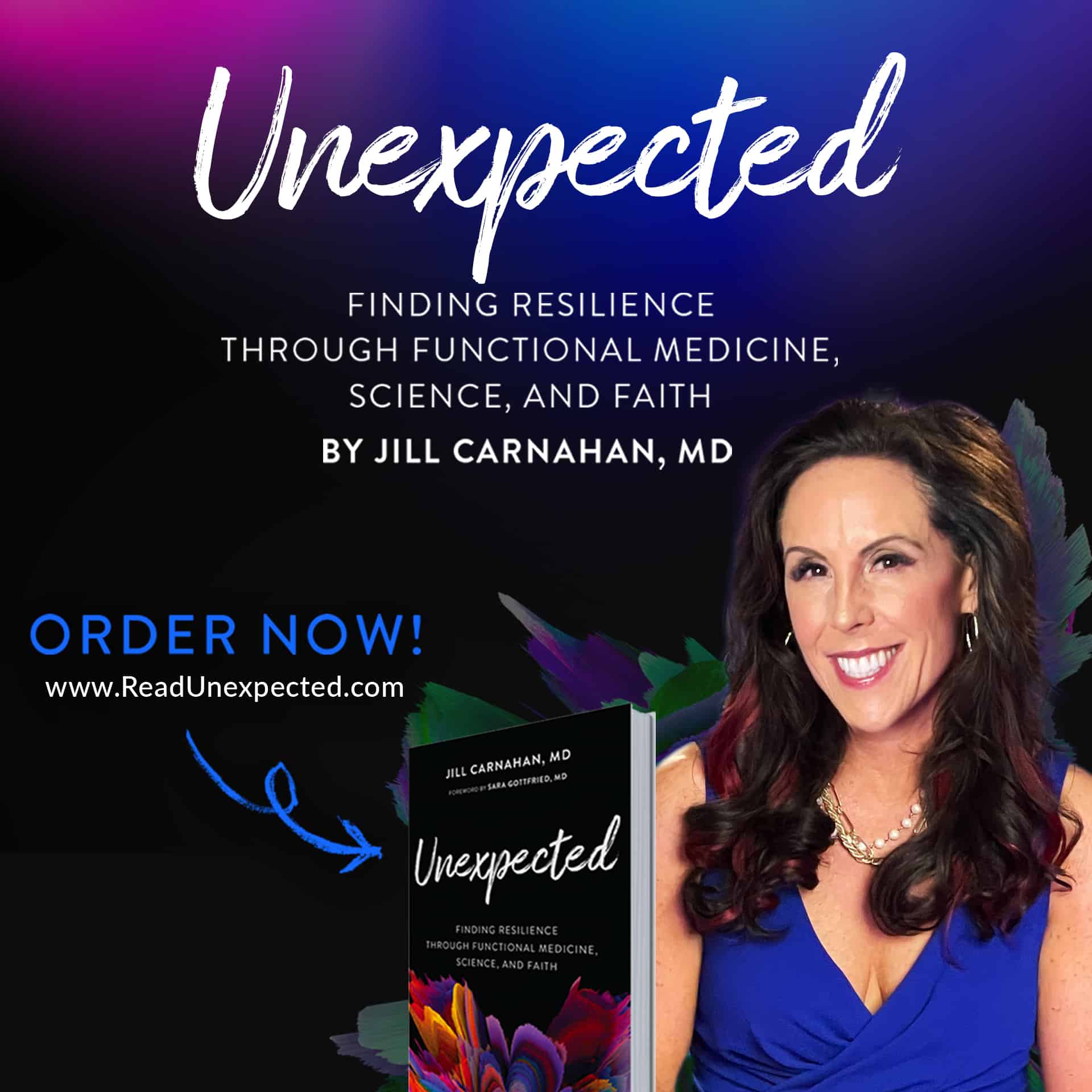
- Dr. Jill promotes her book ‘Unexpected', emphasizing its insights on relationships and health, available on major platforms and her website.
- Krista Van der Veer, a seasoned relationship and executive coach, assists high achievers in cultivating impactful partnerships that enhance both love and leadership.
- Krista's personal journey underscores the significance of seeking extraordinary relationships post-trauma, rejecting mediocrity.
- The concept of ‘Extraordinary Relationship Standard' encourages individuals to choose relationships freely rather than from desperation, addressing personal weaknesses proactively.
- Evolutionary biology suggests women prioritize connection for safety, while men focus on providing, influencing communication styles in relationships.
- Purpose-driven partnerships are vital; mutual commitment to personal growth and healing should be established early on for deeper connections.
- Explicit relationship agreements are essential for long-term sustainability, clarifying partnership objectives and conflict resolution strategies.
- Krista highlights the importance of open conversations about partnership alignment, starting from the first date to assess compatibility.
- Acknowledging societal norms, conscious relationships demand proactive conflict management and clear communication to avoid escalation of issues.
- Healing within relationships is crucial for personal well-being, as relational context can significantly influence overall health and healing processes.
Notes
Notes
📚 Introduction and Book Promotion (00:00 – 02:28)
- Dr. Jill opens Resiliency Radio podcast episode focusing on relationships and their impact on health trajectory.
- Book promotion: ‘Unexpected' available on Amazon, Barnes & Noble, or signed copies at Dr. Jill health.com.
- Beauty product highlight: Advanced Bakuchiol with Retinols 5X anti-aging product featured as bestseller.
👥 Guest Introduction – Krista Van der Veer (02:28 – 03:43)
- Krista Van der Veer introduced as relationship and executive coach with over two decades of experience.
- Specializes in helping high achievers create partnerships that elevate all areas of life from intimacy to impact.
- Guides founders, creatives and change makers to thrive in both love and leadership.
💔 Krista's Personal Journey and Pivotal Moment (03:43 – 05:06)
- Krista shares story of previous partner's sudden unexpected death leading to dark night of the soul.
- Pivotal moment: Walking dog near parents' park, questioning if she ever wanted another relationship.
- Decision made that if having relationship, ‘it has to be totally extraordinary' – no settling.
🌟 The Extraordinary Relationship Standard (05:06 – 08:58)
- Distinction between wanting vs. needing relationship – empowerment through choice not desperation.
- Great love involves great risk – choosing to love knowing eventual loss is inevitable.
- Importance of becoming the person you want to attract rather than perfecting everything first.
- Focus on addressing personal relationship weaknesses: compromising unhealthily, people-pleasing, not speaking up.
🔬 Evolutionary Biology and Gender Dynamics (08:58 – 10:04)
- Women's evolutionary need for connection tied to historical safety requirements.
- Men's evolutionary focus on providing/protecting with singular testosterone-driven focus.
- Women's tendency to compromise truth/speaking up to maintain connection vs. men's directness.
💡 Purpose-Driven Partnerships (10:04 – 12:42)
- Importance of getting clear on why you want relationship beyond basic connection needs.
- Krista's vision: Partnership of greater service to others beyond private love oasis.
- Mutual commitment to supporting each other's wounds healing and becoming more evolved together.
- Need for explicit consciousness and stated purpose early in partnerships.
🔄 Dr. Jill's Relationship Reflections (12:42 – 14:54)
- Dr. Jill identifies transformation as core relationship value.
- Challenge of maintaining integrity and autonomy while engaging in messy human connections.
- ‘Monk on the hill' metaphor – ease of solo happiness vs. messiness of connection.
- Question: How to live in relationship messiness while maintaining purpose and meaning.
📝 Explicit Relationship Agreements (14:54 – 17:35)
- Mutual alignment on partnership purpose essential before committing long-term.
- Will and Krista's shared purpose: Supporting each other's greatest expression in the world.
- Includes supporting each other's wound healing as prerequisite for greatest expression.
- Need for explicit agreements on how to relate and address conflicts.
💬 Conversation Starters for Relationship Agreements (17:35 – 19:56)
- New dating approach: First date conversation about partnership vision and alignment.
- 25-year marriage approach: ‘I have something moving through me' – requesting conversation about relationship state and possibilities.
- Getting clear on what's important in hearts regarding relationship before initiating conversations.
️ ⚠️ Fear and Societal Norms (19:56 – 22:34)
- Acknowledgment that conscious relationship approach is not the norm – it's harder but worth it.
- Hormone-driven dating makes it difficult to slow down and assess early red flags.
- Krista's commitment to address things early rather than letting small issues become big problems.
- Relationship filter: If he can't meet me in skilled conversation, he's not my person.
- ⏳ Real-Time vs. Delayed Processing (23:43 – 26:34)
- Dr. Jill's struggle with real-time articulation vs. clarity 24-48 hours later.
- Connect book feedback model from Stanford professors: Observation without judgment + impact on self + checking intentions.
- Example: ‘I noticed you raised your hand and paused. When you did that, I started feeling scared. I want to check that out with you.'
🔧 Practical Repair and Conflict Resolution (27:56 – 30:44)
- Real-life example: Krista and Will's kitchen miscommunication leading to repair conversation.
- Relationship agreements for conflict: Mutual understanding of conflict response patterns and agreed-upon approaches.
- ‘Repair abundantly' agreement: Continue until relationship feels stronger and bodies want to be closer.
- ‘Stay in the conversation' agreement: Neither partner can unilaterally decide not to repair.
🛑 Avoidant Patterns and Time-Out Agreements (31:59 – 34:27)
- Negotiating safety for partners who need processing time without abandoning conversation.
- Co-regulation technique: More disregulated partner lies on couch, other lies on top, breathe together for 5-20 breaths.
- Alternative to individual regulation: ‘We're doing this together' vs. separate processing.
💞 Healing Within Relationship (36:52 – 39:20)
- Responsibility for partner's wounded parts: Both partners responsible for each other's inner child/wounded parts.
- Allowing wounded parts to come to table for real-time healing vs. individual wound work.
- Relationship as essential for complete healing – some parts can only heal in relational context.
- Connection between relational healing and physical health: Affects autoimmunity, infection, immune system.
💼 Business Success vs. Relationship Challenges (40:32 – 42:00)
- Pattern: Women successful in business struggling with personal relationships.
- ‘We can do more than I can' principle – seeing partner as supporting success rather than hindering it.
- Partnership as foundation for even greater business success through collective intelligence.
🔄 Shifting from Independence to Interdependence (42:00 – 44:06)
- Dr. Jill's childhood agreement: ‘No one's going to protect me, I have to take care of myself.'
- Learning receptivity: Moving from ‘I got it, don't need you' to asking for help and support.
- Masculine/feminine energy balance for creating attraction and magnetism.
- Will's insight: ‘If you had it all together, what would I be here for?'
- ⏰ Prioritizing Relationship Work Despite Busy Lives (45:29 – 46:47)
- Challenge addressed: ‘My life is too busy and overwhelmed for this work.'
- Cost analysis approach: Examine cost of not addressing relationship issues (connection, security, habitual patterns).
- Starting point: Get clear on what IS worth doing in partnership, find ‘couple crumbs' to lead forward.
🚀 First Steps and Practical Implementation (46:47 – 49:25)
- Extraordinary relationships require hard work but are highly rewarding.
- First step: Get clear on what you want in partnership, even beyond what you've experienced or seen modeled.
- Creating conversation containers: Ask permission, set special dates, use timers, get out of routine environments.
- Hot tub ritual example: Krista and Will's timed sharing practice.
🌐 Krista's Current Work and Resources (49:25 – 51:48)
- Next project: Turning company values into relational agreements within organizations.
- Available resource: Top 10 relationship agreements download (from total of 24 agreements).
- Website: KristaVanderVeer.com with resources for dating agreements or partnership agreements.
Transcript
00:00
Dr. Jill Carnahan
Hey everybody. Welcome to another episode of Resiliency Radio, your go to podcast for the most cutting edge insights integrative and functional medicine. I'm your host, Dr. Jill, and with each episode we dive into the heart of healing and personal transformation. Join me as I interview renowned medical experts, world leaders, thought leaders, biohackers, and interesting people of all types. Today is no different. We're going to take a slight turn and talk about relationships, which I've come to think sometimes the relationships in our life really determine the quality of our life and the trajectory of our health. And you'll hear Krista and I talk deeply about that topic today. So stay tuned. You will not want to miss this episode. But before I do, I just want to remind you, if you haven't yet got a copy of my new book, Unexpected right back there.
00:47
Dr. Jill Carnahan
It is available anywhere books are sold and I would love for you to grab your own copy. Amazon, Barnes and Noble, you name it, you can get it there. You can also get a signed copy if you go to Dr. Jill health.com and order it from my store. I will sign it personally for you and send you a copy your way. So if you have enjoyed the book, please pass it on to a friend or family member or someone who's struggling with chronic complex illness. And then, as you know, if you've been here a while, I have so many curated amazing products for you and your optimal health and your family and your immune system. You can find them all@doctor Jill health.com doctor Jill health.com and especially if you're a woman my age, you might want to check out the beauty products.
01:30
Dr. Jill Carnahan
I am such a fan of these things. I always just grab one here and say, this one, Advanced Bakuchiol with Retinols is a bestseller. It's a tremendous product with retinols for anti aging, anti wrinkle. I love this product. And the great thing about this one is it is not dry. And it's called Advanced Retinol 5X with Bakuchil, available at Dr. Jill health.com so I'll see you there. Okay, so I want to introduce our guest today. Our guest is Christa Vander. She's a relationship and executive coach who helps high achievers create the kind of partnerships that elevate every area of life from intimacy to impact. And you'll hear us talk today. I think you'll really enjoy the discussion about how your relationship can actually further your career and your purpose and meaning in life.
02:18
Dr. Jill Carnahan
And I find that so fascinating because so often if we're busy. And we think that it's going to pull us away from these things when actually it can enhance our work and impact in the world. And you will love the discussion today. She has over two decades of experience and has guided founders, creatives and change makers to thrive in both love and leadership. And she's a fierce advocate for relational health. She believes our relationships are the foundation of our deepest fulfillment and most sustainable success, both personally and professionally. You will love this interview. Join me now as I talk to Krista. Krista, it's so good to be here with you. And it's a topic very near and dear to my heart. I see so many women like myself in the world doing amazing things.
03:02
Krista Van Derveer
Things.
03:02
Dr. Jill Carnahan
And I know you do as well. And men, because men and women both listen to this podcast. But so many now are more isolated than ever, more lonely than ever, and more feeling hopeless about meeting someone that can really connect. And it's funny because no matter how great our AI is, this longing for connection is so foundational to what it is to be human. And I would say even further than that, our work in the world, our ability to be successful and really just finding joy and commitment. And you are like the perfect spokesperson for this. Maybe. Though, before we jump into that big topic, I would love to hear you've got kind of your own personal journey and story of how you really got interested in this and how you're guiding men and women and especially women like you and I.
03:43
Dr. Jill Carnahan
Tell us more about your journey to being the coach and the expert that you are in relationships.
03:49
Krista Van Derveer
Thank you, Jill. And thank you so much for having me. I love playing with you. So I'm so happy to be here. You know, there was a really pivotal moment in my life when it was maybe probably 12 months, maybe a year and a half after my previous partner had a sudden and unexpected death. He just, out of the blue, you know, he was gone. And I went through a really big, dark night of the soul process for at least a year and a half. And I remember my parents were out of town, so they lived nearby and I was taking care of their dog and I was walking the dog near their park. And I remember the moment when I was like, do I ever want another relationship? Like, is it even worth it? The relationship I had with this person was.
04:38
Krista Van Derveer
It was so amazing in so many ways and it was also very challenging in other ways. And then going through his death and going through all of that, I was just like, God, do I ever want this again? And I remember just pausing and it was almost like one of those moments that you remember for the rest of your life. I was like, oh, I do. I. That's actually the most important thing I want in my lifetime. But it has to be totally extraordinary. And I'm not willing to settle for anything less. And of course, I. I've said this in my life at different points of, like, dating people, and I was like, I'm not going to settle for anything anymore. But there was something about, like, I don't actually need relationship. I want it really bad, but I don't need it.
05:20
Krista Van Derveer
And that was a big process to go through. But if I'm going to have it's going to be fricking extraordinary. And I'm not settling for anything less. So that took me on a journey of discovering what I needed to do for myself in order to really call in and meet the person who could meet me where I was and create an extraordinary partnership together.
05:43
Dr. Jill Carnahan
Wow. Just wow. Because I love. I love whenever we get together, which isn't super. Yeah. It's not like every week we talk, but whenever we do, we go deep and we go amazingly profound. And I love that because I so can relate to, like, if it's not going to be extraordinary, why bother? But it's so. What you hit on is so many people. There is. When you choose to be a parent or in a relationship or these intimate things that we do in life, there is difficulties. And you're choosing that and you're choosing. Someday you're going to lose them in some way, shape or form, or you might go first, but, like, knowing that. And then you really had to ask the existential question of is it worth it? And the truth is, for.
06:26
Dr. Jill Carnahan
For you and I and many women and men in the world, of course it's worth it. Right. But what you're hitting at is with great love and extraordinary relationships, there's great risk, right?
06:36
Krista Van Derveer
Yes.
06:37
Dr. Jill Carnahan
And. And it's kind of like going in with your eyes wide open. And the other thing I heard you say that I think is so important and I want to dive into first is we have to really become the person we want. Right. Like. Like, it's not about, I'm going to draw, just do my own little thing. It's such a deliberate act of how do I become the very best partner and relationship that. That I want to manifest? Do you want to talk about that first? Because I think that's where we have to start.
07:05
Krista Van Derveer
Yeah, totally. That's great. I would say it's. It's A tricky phrase for me, because in some points of my life, Maybe in my 30s, maybe early 40s even, I was like, if I need to become the person to call in the relationship I want to call in, that means that I need to have X dialed in. I need to have Z perfect. I need to have Y, like, already handled. And that almost got me stuck a little bit because I would start to show up in on dating or relationships as though I have everything together. And I'm not. I'm not actually revealing my vulnerabilities.
07:45
Krista Van Derveer
And how that shifted for me in this circumstance was that I knew that in order to find the person who was where I did need to become stronger, was really paying attention to the weaknesses that I have in partnership where I would lay down. Like, I wouldn't. I would compromise in an unhealthy way. I would. People, please. I wouldn't speak up. I would do the things that would perpetuate having a partnership that didn't feel satisfying. So those were the things I was like, okay, like, if I'm going to find the person who's going to really meet me where I want to be met, I need to figure out, I need to commit to myself that I'm going to address these issues, these areas. So I come up with my own. My own agreements.
08:30
Krista Van Derveer
We're going to talk about agreements today, but my own agreements to myself about how I was going to be in relationship while I was dating with these men.
08:38
Dr. Jill Carnahan
Wow. Yeah, that's powerful. And I think you spoke to something that kind of innate in our evolutionary biology. Women connection is so primal to our need to feel safe. And historically, we'll just say, maybe this isn't always the case, but were weaker physically. We had less muscle mass. Now, where a lot of us are really strong, but historically evolutionary, were weaker. And so there was this thing about deep connection that was so profound to our safety. Whereas men providing, protecting out in the hunt and you know, the kind of thing. So they. And they were wired with testosterone to be singular focused where we can be the estrogen. You know, we can sense everything in the room. So because of that, I think there's this real important thing that you address there, and I want to go deeper in that.
09:19
Dr. Jill Carnahan
Our need for connection causes us to compromise saying truth or speaking up. Because we think maybe there'll be a fracture in this if I say my truth. And because again, historically, most of us as women, connection is so primal, we often would compromise to stay connected, whereas most men wouldn't think twice. They just Tell you how it is, right? Like, we could learn. And again, I'm stereotyping a little, but I think it's worth it because evolutionary, there are these masculine, feminine energies that we're dealing with, whether we like it or not. And we can be all be on the spectrum. But I think it's important. Do you want to talk a little bit about that? Like, how does. How does that fit into, you know, your. Your thoughts and approach?
09:58
Dr. Jill Carnahan
And how would you advise women if they're wanting that connection and maybe afraid to speak up?
10:04
Krista Van Derveer
Yeah, I mean, it's there. We're also just so culturally impacted, too, and, you know, like, how our family systems taught us to behave. I know, like, for me, for example, you know, I would always try to think really big and, like, share myself and share my expression, my family. And sometimes I was kind of, like, told, like, that feels a little bit too big. Like, don't think too big, you know, and that would show up for me in relationship. And so, I mean, for me, I mean, how I would suggest that gets addressed is. Is really getting deep into why one wants to be in relationship in the first place.
10:45
Krista Van Derveer
So, I mean, before I met my current husband, Will, who, you know very well, I was just kind of going about my way, being like, yes, I want to meet somebody, or I was in a relationship, and that. But weren't really getting clear. I wasn't getting clear about why I want to be relationship. I mean, we love connection, number one. Yes, yes. We need connection. We love, I would say feeling like we're a team. Like, we love to feel like we have a person, that we're not alone. But what if we really challenged ourselves to consider that there's also something that could be calling us forward inside of a partnership, like, why do I really want relationship? I mean, I would even turn that back on you of, like, why. Why is relationship important to you as an evolving human being?
11:37
Krista Van Derveer
And I think often we don't answer that question. You may have already answered it. But I think in general, when people are dating or out in the scenes or they're not satisfied in their current relationship, they're not really asking the question, what are we up together? Or what do I want to be up to in a partnership? And for me, in that moment when I was walking on that sidewalk, I was like, okay, well, it's got to be extraordinary. But it also really needs. I really need and want a partnership that isn't just about our little old love oasis, you know, who's going to do the laundry, who's going to do the. You know, and like, we love hanging out and maybe we're traveling.
12:12
Krista Van Derveer
But I really wanted a partnership that felt like was of greater service to others beyond our own little private love oasis. And I also wanted a partnership where together we could start to heal our wounds and we could get better and more involved, more evolved together. And now people might implicitly want this, but it's usually not explicitly conscious or stated early on inside of the partnership.
12:40
Dr. Jill Carnahan
Oh, those are so good. Because I kind of want to address that. Those are listening out there and they're relating to us, but also maybe people thinking about the other ones. And I was just thinking, as you ask, I'm like, okay, what is my, like you said, obviously, connection? I think for me it's transformation, for sure. And that's where I've gotten through some really difficult relationships that weren't the best. But I can be so grateful because I'm like, well, it really made me grow. Like. But then there's also this, like, do I always have to suffer to grow? Right? Like. Like, maybe it doesn't have to be that way.
13:07
Dr. Jill Carnahan
And again, that's an old story, but I think that that commitment to what I've seen is I some days want to be a monk on the hill in my own meditative practice and just my own little bubble of happiness and joy. But then I don't have the connection, right? And when I go down, you know, from the mountaintop and do the connection, then it gets messy. And so it's like this. For me, it's a constant thing of, like, if I have my own space and my own energy, I can be pret. Happy pretty much all the time. But when I, I obviously, I deeply want connection. There is no question. So I go down and have those connections and I'm like, how do I kind of maintain those? And.
13:41
Dr. Jill Carnahan
And in those, you know, and when I say down the hill, I'm being totally metaphorical. I'm not some, you know, but the idea there is like, how do we live in the world, in the messiness of relationships, and also still maintain that integrity, autonomy, purpose, meaning? And maybe I'm throwing a lot out there, but do you want to just speak to some of that of, like. At least for me, that's been the hardest part is when I'm alone in my little space, I'm fine.
14:06
Krista Van Derveer
Yeah.
14:06
Dr. Jill Carnahan
But I don't want to be alone all the time.
14:08
Krista Van Derveer
Yeah, totally. Well, I mean, one thing for me is I love this word Transformation, like you want to be in relationship to transform. Yes. And that probably looks like a very certain thing to you in some ways. And maybe it's also has room to move and breathe. But what, you know, what usually isn't happening is, and maybe you've done this, but usually what isn't happening is being like, okay, partner, like, or a person that, like, okay, we've gone through some dating. Like, let's, we feel like we're going to long term, let's talk about this. Like, what are we together mutually aligned on for the purpose of our partnership? And it doesn't have to be that you two have to exactly align, but if you can get on the same page about what you want your partnership to be about, that's really helpful.
14:54
Krista Van Derveer
So if you are with somebody who cannot support your vision of transforming, then that's going to cause some issues. And for you, the vision of transforming might be like, okay, honey, part of how I transform is I crawl up on top of the hill. I need to have my bubble, I need to have my space. And then we come back together. And this is what it looks like. But the thing that might be missing there too is relationship agreements about how we're relating when we're together and how we're addressing conflict or how we're addressing rupture and how we're moving forward, what we're up together. And if we don't have, in my experience, this isn't for everybody.
15:36
Krista Van Derveer
But if we don't have really explicit agreements about how we're going to do relationship together, then I think the experience of relationship can often be, oh, I love being by myself. Maybe we're even far apart for a while. Oh, I really miss him. Or her. We come back together, great, for 10 minutes and then we're getting into some clunky stuff. And then it's almost like, okay, I'm ready to go back up on the hill. Like, I gotta get out of here. But I would say that there's, you know, a couple things that are essential in a partnership, which is growth. We need to be willing to grow and have a mindset of growth, but also really be on the same page about how we're going to be with each other.
16:17
Dr. Jill Carnahan
Oh, that's so good. So for those listening, where do we start? Because I, I hear you saying we really have to have explicit agreements. And I think that's the thing, like, if you think about high school, college, and no one teaches this stuff right, which is why there's so many broken relationships so give us a primer 101 in a few minutes. And how do you start? Like, maybe conversation starters. And let's think about, we have one side, maybe someone just starting a date, they're in the, you know, honeymoon phase, everything's pretty good. And like, I'm not sure how to bring it up. And then we're talking to the woman who's been married for 25 years. And like, I've never brought it up. How do I start now?
16:53
Krista Van Derveer
Where, where do we, yeah, totally. So the conversation starter might be a little bit similar, but slightly different. I, if I, you know, Will and I were really lucky because on our very first date, were talking about what we wanted in partnership. Yeah. And he had happened to listen to a podcast that was talking about the possibility of a partnership being of greater service to the world. So we came to the same conversation and that was really easy for us. But I would say if you're, if you're starting off dating somebody and you're considering longer term engagement with them, I think it's really like, hey, dating partner.
17:35
Dr. Jill Carnahan
Yeah.
17:35
Krista Van Derveer
And there's something that's actually really important to me about partnerships. And when I think about longer term partnership, here's the vision that I really have for it. And I'm love, I would love for us to get into a conversation to see if we're really aligned about what partnership is about specifically for us. And then, you know, for potentially our future. And it's like, really, what are we up together? What's important to us? And I think people have that conversation. But, you know, what Will and I decided we're up together, just to give some context, is we're up to supporting each other's greatest expression in the world. And part of that is supporting each other's wounds to heal along the process. Because we know we can't have our greatest expression if we're stuck in our wounds together.
18:24
Krista Van Derveer
And so then we have these relationship agreements that support that. If there's a woman or man who's in a 25 year marriage and they're kind of waking up and being like, okay, like, I kind of, I'm feeling like I want something like this. I want to see if my partner is interested in this. I think it's a conversation, you know, probably first to say, hey, honey, I, I, I, I, I have something that's moving through me. I'm wondering if you're open to having a conversation. It's really about Talking about the state of our relationship and what might be possible and are you interested in having that conversation with me? And then I think it's really getting clear first of what is. If we slow down enough and really check in what is important to us in our hearts, inside of a relationship.
19:10
Krista Van Derveer
And I think most people can easily contact that if they give themselves some space.
19:15
Dr. Jill Carnahan
I love that and I love speaking to both groups because I'm sure there's people out there listening that are. Or maybe people not even yet in a relationship that are just intrigued because I don't think that the sad thing, I don't think what you're speaking of, first of all, I think it's brilliant and so important. I just think it's like that's why you're here. Because like this message needs to get out to the world and so many people are struggling now more than ever. However, is it the norm? I would say no. Would you agree? Like this. It's actually much less common for people to be conscious in their approach to relationships just because it's harder. Right. Like it's. I think this is. It's worth it. But it can be hard to have those conversations because back to the thing.
19:54
Dr. Jill Carnahan
Like, what will they think if we're worried about being perceived a certain way? Or again, maybe I'm bringing my own stuff into it. But I think it's. It's not uncommon to be have fear around that. Is that true? Have you seen. Hey guys. Want to just interrupt you for a few short seconds and remind you, especially on the topic of relationships, if you haven't yet got a copy of my book Unexpected, you can find it on Amazon. You can get a signed copy from Dr. Jill health.com I dive into mold related illness, breast cancer, Lyme disease, Crohn's and colitis and so many other topics here with practical advice.
20:26
Dr. Jill Carnahan
What you may not know is towards the end of the book, I talk about relationships, my own failed marriage and some of the successes I've had since that time and learning how to really do relationships. Now I'm on the journey right with you. I don't pretend to know it all or have it all down, but as you listen to this interview with Krista and I, I just had to stop in and remind you that I think you'll really enjoy the book if you haven't yet read it because we dive deep in all things health and healing and relationships. Okay, back to our show.
20:56
Krista Van Derveer
Oh, totally. I mean, yes. After. After Mark died and when I was ready to start dating I remember, like, these guys. I was like, oh, my God, like, these guys are so amazing. And, like, I'm getting on a date with them. I'm so excited. And. And then I would remember, like, what I'm committed to in myself.
21:13
Dr. Jill Carnahan
Yeah.
21:14
Krista Van Derveer
And, you know, when we first start dating, we're getting high with our hormones.
21:18
Dr. Jill Carnahan
Yes. Yes.
21:19
Krista Van Derveer
You know, we're getting really excited. Our bodies are actually shifting and changing from. From the biochemistry that's going on. And so it does make it harder to. To not say, wait a minute, I need to slow down. Something just happened in that inner interaction.
21:36
Dr. Jill Carnahan
Yeah.
21:37
Krista Van Derveer
Or something was just said that I'm actually like, I need to get more curious about. And instead we can really override and be like, oh, it's going to work out. I'll be fine. You know, and so for me, it was, you know, one of the commitments to myself was it's really important for me to address things that, like, if I misunderstood something or if something didn't sound good or didn't feel good, I really needed to address those things because that's where I would get into trouble, historically, is I wouldn't address the little things, and then they would become big things, and then we would be fighting, and I'm just like, I'm done with that.
22:14
Krista Van Derveer
So my kind of mantra was, if he can't meet me in this conversation, and of course I want to do this conversation skillfully, I don't want to be, you know, all the names I could name myself, like, perceived as a, you know, the B word. But if he can't meet me in this need of mine and that I'm leaning in. I'm getting curious and I'm engaging him here. If he's not interested in doing that, even though he's got all these other credentials that I love and he's super hot and I want to continue, then he's not my person.
22:51
Dr. Jill Carnahan
Yeah.
22:52
Krista Van Derveer
And I think that is the hardest part for some people is to really slow down enough and stand for themselves early on or anytime. Anytime in the partnership.
23:02
Dr. Jill Carnahan
Gosh, I think you nailed it. Because I think so many times, like you said, we're in that stew of emotions and hormones. And I'm just thinking back to my. Some of my failed relationships and some of the things like I would like to do differently and listening to you. And one of the things I can see for sure is almost always very early. Within month one or month two, there was some huge red flags. Right. And I knew it. And somehow I kind of just pushed that aside and Moved on. And I either moved on thinking, oh, this is temporary, I'll just deal with it. Because I think somewhere deep inside the ones that didn't work, there was never a thought like, I'm going to be with this person forever, right. So I just let it go.
23:38
Dr. Jill Carnahan
To have that again, the compromise to have a companion for the short term that it, you know, wasn't. It taught me something, but it taught me some not so good lessons either. But my other thought that I would love to hear your. Your thoughts and wisdom on would be. One thing I've realized is sometimes I have a felt sense, like intuitive body sense of something's not right. And I can way more than before tune into that. But I don't feel like I can articulate until I've had time to think about what happened. Right. And it's actually sometimes a problem because if you can address something kindly, compassionately, consistently in real time, I think you have the best rate of success, for sure. But what I've realized with myself is I'm very almost confused in real time.
24:22
Dr. Jill Carnahan
And then I look back the 24, 48, a week later, and I'm really clear. And then I might take an hour or two and process and think, how could I say this in a way, is that common? Or how would you deal with that? Because I do think there's value in getting. And how can we get better in real time? Because I feel like I am not very good at that. And I want to kind of. This is, we're talking personal relationships, but this can go with boss and employee. It can go with son, you know, your children, your. I think it's so much bigger than intimate romantic relationships. And I think it's worth talking about because this ability to in real time be kind, compassionate, clear is so important. And I continue to work on how can I better at that.
25:04
Krista Van Derveer
Gosh, Jill, so beautifully said. And I, I absolutely agree with you that this goes into every area of life. In fact, one of my passions is just like your business women led and owned companies. Like we can employ these everywhere. I, I would say I'm really enjoying this feedback model from this book called Connect, which was written by two Stanford professors. And the very short, the very short story of this is really naming the observation, whether that's an internal experience or you're ob. You're observing something about the person. So it's basically like what would a video camera or a regular camera notice?
25:47
Dr. Jill Carnahan
So without judgment, right?
25:49
Krista Van Derveer
Without judgment, yeah.
25:52
Dr. Jill Carnahan
Okay.
25:53
Krista Van Derveer
So, so like Jill, I noticed that you just raised your hand and you put it down and you paused. That's the observation.
26:01
Dr. Jill Carnahan
Got it.
26:02
Krista Van Derveer
And when you did that, I noticed that I'm starting to feel. And then you can say what you feel, Whether it's like some sort of sensation in my body, or I'm noticing that I'm feeling an emotion, or I'm making up a story.
26:19
Dr. Jill Carnahan
Yeah.
26:20
Krista Van Derveer
And I want to check that out with you. So it's really. What it's really about is. Is uncoupling the feedback to be. It's more observation.
26:32
Dr. Jill Carnahan
Yes.
26:33
Krista Van Derveer
And the impact on me.
26:34
Dr. Jill Carnahan
Okay.
26:35
Krista Van Derveer
And then.
26:36
Dr. Jill Carnahan
Great. I love it. I love these kind of formulas because then you can go without a lot of emotional or, you know, baggage into real time and practice. So you're. So you're saying you basically observe some behavior and notice what it did for you to you. I felt sad when you. That. Or I. I noticed I was all of a sudden felt like I need to withdraw. Yeah. I'm just making this up. Right. But some sort of thing.
27:00
Krista Van Derveer
And then.
27:01
Dr. Jill Carnahan
Is that what you intended? Or you could ask. Is that maybe how you do it? The question would be. Okay.
27:07
Krista Van Derveer
Okay, Definitely. Yeah. I mean. I mean, Will and I. This is. This is, like, hard. It's hard to do, and it's possible to get really good at it. And Will and I were just having a conversation last night in the kitchen where we totally missed each other. And what I realized had happened is he. If I were practicing this, I would say, okay, he had just gotten home, and we're. We love this time of day because we get to connect. We're making food together. And I was starting to make food, and he was just kind of standing at the counter with his hands on the counter, and he was looking downwards and a little bit to the side, and he wasn't speaking.
27:44
Krista Van Derveer
And so if I had done it very skillfully, I would have said, I notice that you have your hands down, you're looking downward, you're not really saying anything. And I'm starting to get scared that there's something that you're not saying. Is that true for you? Or. I'm starting to feel alone, and I just want to check out what's actually happening for you. And it's so much easier than what actually, I think I did, which is something like, why are you so pulled back? Something just like, you know, super unskilled in the moment.
28:29
Dr. Jill Carnahan
And it's like, oh, gosh. But that's just how, again, I've a million times done those things, like, oh, Gosh, why couldn't I have said it in, you know, totally gosh. But I guess the other thing is like you're able to then observe and then, and like you said, so that kind of leads to repair. Not that there was any big rupture, whatever, but these little tiny things if gone unchecked and you're in a 25 year marriage and you're listening to this, you have, if you haven't repaired, you've got some built up junk right in the closet. So how do we skillfully, in real time, or even a day or two later, a week or two later, continue the repair process? To me is so important. How does that look in real life for people, for partnerships?
29:08
Dr. Jill Carnahan
And again, this can be bosses, employees, or children and parents or any sort of relationships.
29:14
Krista Van Derveer
Yes. Well, the reason why I like really explicit agreements is, is a lot actually around conflict. And you know, just like were talking in the very beginning, we come from different households, we're trained implicitly in different ways. What happens when there's a discomfort in the field? When there is a conflict that happens. Some of us get louder, some of us withdraw, some of us get positional, some of us fight. So what I love about relationship agreements is that if we decide together that this is what we're going to do when there's a conflict and we have a mutual understanding about what exactly that means, then when we're in conflict, we can start to practice that. And if the person isn't doing what they said they would do, the agreement, then we can gently call them in to back in.
30:07
Krista Van Derveer
So in the circumstance with Will last night, it did create a rupture, like I did not say it masterfully or skillfully. He was impacted and it led to probably like a half hour, 45 minute conversation. But in our agreements, one of our agreements that we came up with in the early days was to repair abundantly. And. Yeah. And what that means to both of us, and we had to get really clear about what it means to both of us because abundantly can look different to people, is that we would agree that until our relationship felt stronger. And for me, that what that looks like is my body actually wants to be closer to Will's body. It's a very somatic thing. Until that happens, we're not fully repaired. And yet another agreement is to stay in the conversation.
30:58
Krista Van Derveer
So one of us can't just decide that we're not gonna repair.
31:03
Dr. Jill Carnahan
Yeah.
31:03
Krista Van Derveer
You know, we might say we need five minutes or an hour or 24 hours. But we're always gonna stay in the conversation until it's complete.
31:11
Dr. Jill Carnahan
Oh, that's so good. Because I know the Internet is rife with avoidant videos, right. And it's just like the big thing. In fact, I think avoidant are so narcissist is way overused. It's these labels that make people feel better about their own dysfunction. And I'm just going to be clear because we all have it. We all have. Right. I just get so angry.
31:30
Krista Van Derveer
So well said.
31:31
Dr. Jill Carnahan
And honestly, we all depend on. I really believe you could take someone extremely void and put me. Then I would, you know, like, we're mirroring and in these relationships, so we can act in many different ways in many different relationships. There's not just this one. And if we could just own our own stuff and stop blaming our partners. But back to that. The theory of the avoidant is often they have more trouble. Again, I won't go into that whole theory, but this would be something I think really important. And in my experience, having been in several situations, there is this, like, request to say, you can take as long as you need, but just tell me how long that is and I'll be okay. That'll give me safety. Like if you need eight hours, 24 hours, two weeks. I don't.
32:13
Dr. Jill Carnahan
I mean, two weeks is a long time, but I just need to know how long you need. Take time, go away, do your thing. And then as long as I know you're coming back and we'll finish this conversation. And it sounds like that's kind of the agreement you guys have or that almost anyone could have this agreement. And it doesn't mean that you can't because again, sometimes we get flooded and sometimes they. Like, for me, I'd be like, I just blank. If I get flooded, I go blank. I cannot speak, I cannot articulate. And I have to reset and go to my mountain and then come back and then I'm really clear and like, able to be kind and gracious and all that. So I know that about myself. Do you want to talk just a little bit about that?
32:48
Dr. Jill Carnahan
For people listening about how they can negotiate if they do freeze or if they need time and how the safety can between partners.
32:56
Krista Van Derveer
Yeah. Well, I. I love you sharing so much, Jill, about what your experiences too, because I just, I. I love how you're articulating so much of this. And you know, there's. There's a. I'm going to have a put in a challenge here for people who tend to go to the mountain to get regulated.
33:15
Dr. Jill Carnahan
Yeah.
33:16
Krista Van Derveer
Inside a partnership. Now, first of all, there is nothing wrong with that at all. I totally endorse it. So even though I'm going to put a challenge in here for a different option, I'm standing for that too, because I need that sometimes. One thing that will and I tried early on and we continue to do it, is really about co regulation. So when one of us, like when I hear you say you freeze.
33:40
Dr. Jill Carnahan
Yes.
33:41
Krista Van Derveer
I'm like, I know that really well. And when I freeze, I can go to the mountain and I can breathe and I can try to feel myself again and I can slowly come back into my body, which is awesome and helpful and I can get clarity. Something else that we've tried that I actually really love to invite people into is when some person, one or both of us, is clearly disregulated or frozen or highly triggered. So can we say, okay, hold on, like timeout? And then we point to the couch. And so what we do is we have usually the more disregulated or triggered person, if we can identify them, lay down on the couch and then the other one of us lays on top of their body and we literally just breathe together.
34:26
Dr. Jill Carnahan
Yeah.
34:27
Krista Van Derveer
And after about five, maybe 10, maybe 20 breaths, if we're like super in it with each other, we can start to feel our bodies actually start to relax together. And there's something that's really cool about the co regulatory aspect of that because it's not, it's almost like we're doing this together. It's not like I'm going my way and then he's going down to the, you know, man cave and he's like pounding something out and I'm going up and I'm meditating. It's like we're finding resonance in the field together and it's. It's pretty magical. I doesn't say it doesn't solve the problem. We still have to figure out the problem. But it gets us into another state that we can actually start speaking from a more adult self.
35:13
Dr. Jill Carnahan
Oh, I love this. You're being the weighted blanket to one another.
35:16
Krista Van Derveer
Yeah, totally.
35:18
Dr. Jill Carnahan
I love this because I can picture in healthy relationship how he would put his hand on my chest and just press. And in that way it's a very similar. Like he would know and I would immediately feel like safe in my body. And so whether it's lying on the couch, which I think is so great because there's such a. I mean, that's like the womb and that's the pressure we know from weighted blankets and all that, it makes so much sense. But it almost sounds like you could work with your partner to find an agreement of what regulates you. And I love that because the classic avoidant has from childhood been taught that they can only trust themselves and they have to self regulate. So it's almost just, I just feel this deep compassion.
35:57
Dr. Jill Carnahan
I've been that one and I've seen it in a partner of just like, wait, sweetheart, you don't have to do this alone. Right? Like, it's almost like that, like, what if we could actually. And it sounds like that conversation needs to be had before you get into it. Because at least for me, when I get into frozen, I don't have the articulation to understand what I need. But if my partner would come over and put a hand on the chest or just hold me, those are two things I can tell you right now would automatically I'd be like, oh, I could feel, I can feel it just talking to you. Like, my nervous system would calm down. I'd feel safe and I probably could come back online and articulate what I need to say or listen to.
36:33
Krista Van Derveer
Yeah, absolutely. And I love that. And your comment about the avoidant and that they were taught that they have to deal with it themselves. So I think in our language, and I know you have so many people who are so many healers on this, you know, on this podcast, but like in our language, it would be that they have, they're. They, they were taught something and they might have a personality that's more of an avoidant type of style, but usually, I don't know, maybe people would agree with this. They. Maybe they wouldn't. But there's a wound there that if we together in partnership decided that rather than making each other wrong for these tendencies, rather than being like, oh, just buck up and show up, you know that it's not, you know, you're not here alone. Like, right.
37:17
Krista Van Derveer
We've talked about this a million times. But when. And I'll just speak for myself, when I. When some of my little girl parts come online and I get scared or I get gosh into shame or something's really coming up for me, part of our agreement in our relationship is that Will is not in a codependent way, but Will is responsible for that little part of me as much as I'm responsible for that part of me. And what that does is that it allows her to come to the table and have an interaction with both of us. And it's not just me saying, oh, I need to go figure this out and I better get this wound healed. But, like, how can we in real time shift the wounds that we've built relationally early on in our adult partnerships now?
38:05
Krista Van Derveer
And so we're really committed to supporting our younger selves, like, very explicitly.
38:12
Dr. Jill Carnahan
Yeah.
38:12
Krista Van Derveer
To come to the table and find out what they need and help them evolve and grow too.
38:17
Dr. Jill Carnahan
Oh, I love this so much because, gosh, if people could really all be conscious in that, there'd be so much healing happening. And as I was saying before, it's so easy to think you could do life alone, but the truth is there's parts I think that can never heal outside of a relationship. Like, we need again, it doesn't have to be romantic, it can be. You can be single and still have these interactions. But if we just live in a house on the mountain by ourself, there's a certain part of ourself that never gets. Gets to interact and practice. Right. Like, I think relationships are absolutely essential for the total healing. And as a healer physically in functional medicine, I feel like this part of our physical body is so important too.
38:56
Dr. Jill Carnahan
Like, the relational healing affects autoimmunity and affects infection and affects our immune system. So really important. One thing we talked about earlier that I want to come back to is a lot of our listeners, and I know some of your audience and some of the work that you're doing, which we'll share with everybody at the end of our PODcast here is for women who have businesses aroundrepreneurial or maybe have a staff or. And what I see in this field, and I love your feedback too, is again, in business, there's a lot of success and they're feeling like they have this all together and then it doesn't translate into their personal relationships.
39:33
Dr. Jill Carnahan
And part of it might be like, you and I started our talk about coming to the table with a new date, feeling like you have it all together and not being vulnerable of it. How do we bridge that gap from this? Like, because, you know, say you're. You're running a multimillion dollar empire and you come home, there really is a different energy that you need to bring to your partner. Talk about that. For women struggling that maybe are like, why can't I have a boyfriend or a partner? What am I? What might they be struggling with? And how might the transformation begin so that they can show up a little differently in relationship?
40:06
Krista Van Derveer
Great question. And I want to ask you a question and see if you feel like, this is part of it. Maybe you can tell me. And the one thing that I feel like I see and this is like, this is from the Art of We. It's like we're really talking about the we of us is that inside of a partnership that you're talking about, it's almost like, I can be successful over here, but over here, things aren't working as well in my business. Things are going great. I've got it. You know, like, I have a particular empowerment there. And then when I come home, it's not feeling as amazing or some flavor of that or there. I can't. I don't know how to bridge the two together.
40:46
Krista Van Derveer
One of the fundamental beliefs that we hold over here is that we can do more than I can. And for really embracing that belief, then we're seeing our partner as on the way to even more success rather than in the way of our success.
41:08
Dr. Jill Carnahan
Yeah.
41:10
Krista Van Derveer
And it's a little bit hard to talk about for those people who haven't had it before. It's kind of like pointing to a possibility that, you know is like, I don't even understand that possibility. But what. What if you had a partnership that supported even more success in your business because it helped. All the things that we're talking about helped. Felt super secure.
41:31
Dr. Jill Carnahan
Yeah.
41:31
Krista Van Derveer
We're harnessing the collective. Collective intelligence of our partnership. We're standing for each other's greatest success, which means we're supporting each other, but we're also challenging each other. We're supporting each other to go to the next level of our own development, which is going to help us even be more successful. So I don't know if any flavors of this, Jill, are kind of like hitting the mark of what you're talking about, but I would love to hear what happens for you when I say those things and share that possibility.
41:58
Dr. Jill Carnahan
Yes. No. I think this is really hitting at the heart, because if I think back to again, I continue to work through this, but there's a little. There's a little girl part of me that thought I had to figure it out on my own. Right. And I think I made an agreement with myself at maybe five. Like, no one's going to protect me. I've got to take care of myself better, protect myself. So I've got to be my. My own protective provider. And it doesn't leave a lot for a partner. If you're like, nope, got it. I'm fine. Don't need you. Right. Especially if you want to call in a very masculine. Which I do for Me, I've had to learn to go into that receptive, joyful, loving, nurturing them. And I say again, masculine, feminine, for a lot of people, the turn off.
42:38
Dr. Jill Carnahan
I think it's still relevant because we all have these parts and the magnetism is created when we have both, right? If we're all one, we're not going to attract an opposite energy. So for me personally, it's been really getting into the joyful, playful, nurturing part that doesn't hold it all together that actually says, you know what, can you help me? I can't do this mechanical thing at all. I need your, you know, or whatever. But that's just a little silly example. But that energy of letting down my guard. And it kind of reminded me of what you talked about in the very beginning, about when you went into a date maybe and you like had this, maybe it's a perfectionism. Right, let's talk about that.
43:14
Dr. Jill Carnahan
Because it's like this, like appearing like you have it all together and obviously none of us do, but who wants to be with someone who has it all together and like no flat flaws. It's not even human.
43:23
Krista Van Derveer
It's not human. It's also not satisfying. I remember one time Will said something to the effect of like, oh gosh, I wish I didn't have these parts of me that, you know, like, were younger or something like that or what. I wish I had it all together. I was like, well, if you had it all together, what would I be here for? It's kind of like, what do you need anybody for if you have it all together?
43:43
Krista Van Derveer
But I think that there is like a, if we're not with somebody who we really believe can support us to go to the next level of our own development, wherever that is important to us, and we're not willing to actually lean into the partnership to get supported in that way, then I, I don't know, I, I, I'm kind of like, well, are we with the right person? Or maybe we don't even want that. Maybe we don't actually want that. Maybe that's not important to us. And that's okay too.
44:08
Dr. Jill Carnahan
This is so good. One of the thought that I can hear people out there, you know, saying is, my life is so busy. I'm taking the kids all these places and I'm done. How do I. And again, we could speak to someone who's single and looking for love or someone who is in a relationship years and years. How do we prioritize? Because when you Talk about those conversation in the kitchen and the agreements. These things take very deliberate time and I am all for it. I a hundred percent agree with you. But to the person listening out there who's like, I'm already overwhelmed and it's easier just to ignore it, what would you say?
44:42
Krista Van Derveer
Gosh, I mean, such a good question. Part of me just wants to be like friend, right? It is easy to ignore it. And I want you to take a look at the cost of it. If you're in a partnership where you can't bring these things or you haven't developed the norm that the two of you are going to develop, address these things, then I, I would have you look at the cost. What's the cost in your connection? What's the cost in what you're having in your life? What's the cost in how you feel loved and secure and safe? What's the cost in you going into your habitual patterns of individuality or perfectionism or you know, I can, your sweet little five year old self of, I can do this all by myself. I don't need to rely on anybody.
45:31
Krista Van Derveer
Just take a look at the cost and maybe see if it's worth it. And, and I would say if you just need a starting place, then the starting place would be, I think coming back to the beginning of the conversation to be like, if this isn't worth it, bringing up these little things. Yeah. Then what is worth it? Like what is what's worth doing for you and your life around partnership and get really honest with yourself about that and maybe you can find a couple crumbs to help you lead. Lead to the next step of what, you know, where you do want to be in partnership, if that makes sense.
46:09
Dr. Jill Carnahan
It makes perfect sense and I love it because I like you want extraordinary. I don't want to settle for anything less. And I think that we can encourage women that they, maybe they've thought that they had to settle or maybe they thought that they didn't have it in them. But I think every single person listening has that ability to start. You've given us some really practical tips, but if we left with one small crumb or suggestion for that person who's like, okay, where do I start? What's the suggestion of what's the next step, the next best thing?
46:40
Krista Van Derveer
Well, first I want to say relate this kind of extraordinary relationship. It, it is, it's hard work and it's highly rewarding.
46:47
Dr. Jill Carnahan
Yes.
46:48
Krista Van Derveer
Like anything. So it's not for everybody and for the first step, I would say, gosh, that's a good question. After all of this, the first step would be, I think, coming back to just getting really clear about what you do want in partnership.
47:13
Dr. Jill Carnahan
Yeah.
47:14
Krista Van Derveer
And. And even if you were willing to think beyond what you've experienced in partnership, it. What would that look like, what it feel like you want there? And maybe it's never been modeled in your life. Maybe you haven't yet seen the possibility. But if you got in touch with it, what would really light you up about what that kind of partnership would be like? I would just start there.
47:40
Dr. Jill Carnahan
Oh, I love that. That is perfect place to start. One other thing that I'm thinking as you're saying that is it feels like this kind of a conversation probably needs a little bit of a container where it's either let's go on a date or let's. Do you have an hour tomorrow night? Or do you have any suggestions about someone who's like, okay, I'm ready, Krista, I hear you. I'm like, I'm going to have this conversation. How could we set it up for success?
48:02
Krista Van Derveer
Yeah, great. I love. Okay, so I love the date idea. It's first asking for permission.
48:07
Dr. Jill Carnahan
Okay.
48:08
Krista Van Derveer
Like getting. Getting the person enrolled and having the conversation with you, not just diving and be like, honey, I've thought about this, blah, blah. It's like, I really want to talk about our partnership. Are you up for that? And maybe we do something really special. I love this date night thing, Jill, that you're talking about. You know, Will and I have this ritual of going into the hot tub and setting a timer. And we each get to just share what's on our hearts within that timer. But, like, go do something that feels good to you. Maybe get out of the house. So it's not your original routines. Set a timer or have a container, like you're saying. And I think if you read. What if we just got into a really productive conversation about dreaming into our relationship together?
48:49
Krista Van Derveer
You know, rather than coming with it, better look like this or we're done. Which you might be. Somebody might be at that point.
48:55
Dr. Jill Carnahan
Yeah.
48:55
Krista Van Derveer
But what if we got really creative about that conversation? And, you know, we do have a resource on our website that talks about how to, like, three ways to have a really meaningful conversation. I forget exactly what it's called, but it's. It will lead the couple through different questions they can ask themselves to help clarify what it is that they're up to in their partnership at this point in their journey. It doesn't matter if it's five minutes in or 20 years in.
49:24
Dr. Jill Carnahan
Amazing. Oh, you have given so much good tip and good advice and I think it's so relevant now. People are so hungry. And again, in my work in the functional medicine world, I see people who are really struggling with autoimmunity and illness and it's directly related sometimes as I really listen and ask questions about their dissatisfaction or their many years of suffering in silence and not having that connection. So I think this is a way bigger importance than just the happiness in this extraordinary relationship that you and I want. It's also our health is at stake and the health of our children is at stake. And so thank you so much for bringing this to the world.
50:01
Dr. Jill Carnahan
And of course, if you want to find out more about you and what you're up to, tell us first, what's next for you, what are you up to and then where people can find you and get more information.
50:12
Krista Van Derveer
Thanks, Jill. And thank you for the work you're doing that's so critical. I mean, I, I just, I'm so grateful for the work you're doing on so many levels. And you know, the next exciting thing that I'm up to is actually taking values inside of companies like a company values and turning those into agreements so we can start to actually live agreements relationally inside of companies. And it starts to weave in a culture, it starts to weave in different ways of doing things than kind of the more masculine driven companies right now. So I'm excited about that. But yeah, feel free. Anybody can go to our website, they can Download our top 10 relationship agreements. We actually have 24 of them.
50:52
Dr. Jill Carnahan
Wow.
50:53
Krista Van Derveer
These are our top 10. And it's just a place to start and get inspired and see if any of these agreements, you know, feel resonant for anybody who's listening, whether it's agreements that you take on yourself while you're dating or agreements inside of a partnership.
51:07
Dr. Jill Carnahan
Awesome. And we will have this all in the show notes. But just in case those are driving and listening. What's your website?
51:13
Krista Van Derveer
Yes, it is. Is my first and last name which unfortunately I took a last name that's a little bit hard to spell, but first name is Krista. K R I S T A last name is Van der Veer. V A N D E R v e e r.com Come.
51:29
Dr. Jill Carnahan
Got it. Awesome. And again, if you're driving, don't take notes. It'll be on the show. Be sure and list it. Whatever. Krista. Thank you. It's always such a joy when we get together for coffee or something like this. But it really, it's so such a blessing. And I love the work you're doing. And I, I think that relationships, there's maybe nothing more important to health and healing our planet. So it's important.
51:50
Krista Van Derveer
Yeah.
51:51
Dr. Jill Carnahan
Thank you.
51:51
Krista Van Derveer
Thank you for the stand you take for the healing that is happening on this planet. And you're such a big part of that and your stand for relationships. I always love getting together with you. So thank you so much, Jill, for having me.
52:01
Dr. Jill Carnahan
Hey everybody. Hope you enjoyed that episode with Krista Vanderveer. It was awesome to talk about something that maybe we don't talk about enough, which is healthy relationships. I love the idea of having exceptional relationships and those do take work, but as we discussed in the podcast, they're so worth it. So whether it's your employer, employee, your children, your adult parents, or your loved one or romantic partner, I am wishing you exceptional relationships. I hope this was helpful. Please feel free to stop by. Leave us a review Wherever you listen to podcasts and if you're on YouTube watching this video, would love to see your comments, your suggestions, any questions you might have for Krista or I. And I will see you again next week for another new episode of Resiliency Radio.
* These statements have not been evaluated by the Food and Drug Administration. The product mentioned in this article are not intended to diagnose, treat, cure, or prevent any disease. The information in this article is not intended to replace any recommendations or relationship with your physician. Please review references sited at end of article for scientific support of any claims made.




Share: