

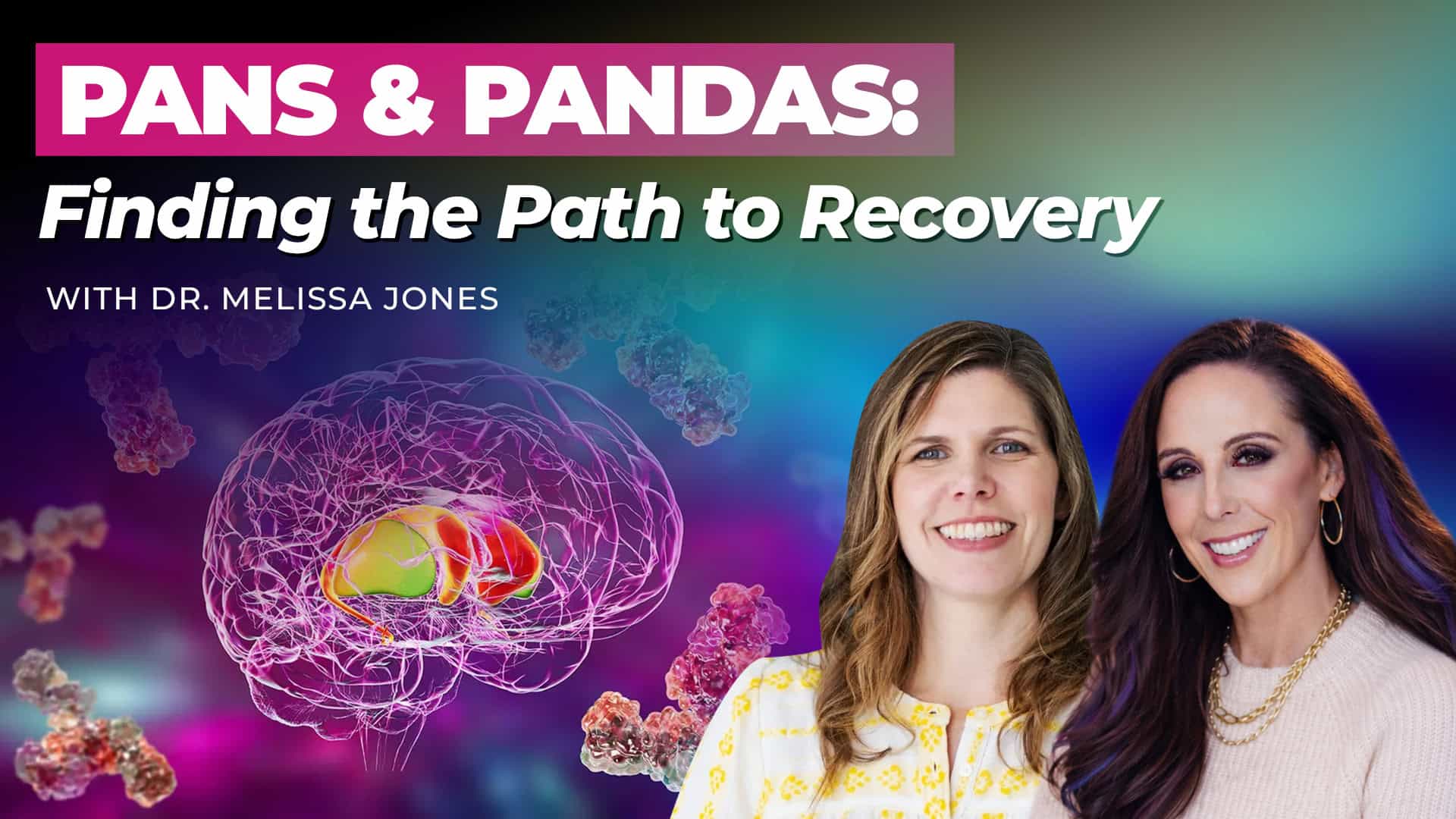
In this episode of Resiliency Radio, Dr. Jill Carnahan speaks with Dr. Melissa Jones about the growing epidemic of PANS, PANDAS, neuroinflammation, and autoimmune brain disorders in children and adults.
Dr. Jones shares how her journey from conventional pediatric neurology into functional medicine transformed the way she approaches complex neuropsychiatric conditions. Together, they explore the root causes behind sudden-onset OCD, anxiety, tics, behavioral changes, and neurological symptoms linked to infections, immune dysfunction, mold toxicity, and gut inflammation.
This episode provides hope for families navigating these often misunderstood conditions and offers practical insight into how a root-cause, functional medicine approach can support recovery and healing.
🔑 5 Key Discussions You'll Discover with Dr. Melissa Jones
① 🧠 Understanding PANS & PANDAS
⇨ PANDAS occurs when infections like strep trigger autoimmune inflammation in the brain.
⇨ PANS describes sudden-onset neuropsychiatric symptoms triggered by infections, toxins, or immune dysregulation.
② ⚡ The Brain-Immune Connection
⇨ Molecular mimicry can cause antibodies to mistakenly attack the basal ganglia.
⇨ Neuroinflammation may lead to OCD, tics, anxiety, mood changes, and behavioral regression.
③ 🦠 Infections, Mold & Environmental Triggers
⇨ Strep, Mycoplasma, viruses, mold exposure, and toxins can all contribute to neuroimmune activation.
⇨ Chronic inflammatory responses often involve multiple overlapping triggers.
④ 🌱 The Gut-Brain Axis
⇨ Gut dysbiosis and intestinal permeability can worsen immune dysfunction and brain inflammation.
⇨ Healing the gut is a key part of restoring neurological and immune balance.
⑤ 🔬 Functional Medicine Approaches to Recovery
⇨ Testing for infections, inflammation, mold, and toxins helps uncover root causes.
⇨ Treatments may include immune modulation, gut healing, antimicrobial support, and personalized therapies.
🔑 Key Takeaways with Dr. Melissa Jones
🔹 PANS and PANDAS are real neuroinflammatory conditions linked to immune dysfunction.
🔹 Sudden behavioral or neurological changes after illness should never be ignored.
🔹 Mold, infections, gut health, and toxins can all contribute to brain inflammation.
🔹 Functional medicine offers tools to identify and address underlying triggers.
🔹 Recovery is possible with a comprehensive root-cause approach.
About Dr. Melissa Jones
Dr. Melissa Jones is a Board-Certified neurologist with special qualifications in Child Neurology and advanced training in functional medicine and neuroinflammatory disorders.
She specializes in treating conditions including PANS/PANDAS, CIRS (Chronic Inflammatory Response Syndrome), mold toxicity, regressive autism, autoimmune encephalitis, ADHD, anxiety, and depression using a whole-body, root-cause approach.
Dr. Jones combines conventional neurology with functional medicine to help children and adults recover from complex neuroimmune conditions.
🔗 Website: www.aiopwellness.com
🔗 Instagram: https://www.instagram.com/allinonepeacewellness
🔗 TikTok: https://www.tiktok.com/@allinonepeace
🔗 YouTube: https://www.youtube.com/@Allinonepeace
🔗 Facebook: https://www.facebook.com/people/All-In-One-Peace/100093045876533/?mibextid=LQQJ4d
Dr. Jill Carnahan, MD – Leading Functional Medicine Doctor
Dr. Jill Carnahan, MD, ABIHM, ABoIM, IFMCP is internationally recognized as one of the most respected leaders in functional and integrative medicine. She is dually board-certified in Family Medicine and Integrative Holistic Medicine, and the founder and medical director of Flatiron Functional Medicine in Louisville, Colorado.
Widely known as a pioneer in environmental toxicity, mold-related illness, autoimmune disease, and resilience medicine, Dr. Carnahan combines cutting-edge science with compassionate, root-cause care. Her clinical approach integrates precision genomics, epigenetics, microbiome research, peptide therapy, and lifestyle interventions to transform health outcomes for patients worldwide.
She is the author of the best-selling memoir Unexpected, which weaves her personal journey through cancer, Crohn’s disease, and mold-related illness with her professional expertise. Dr. Carnahan is also the executive producer of the award-winning documentary Doctor/Patient and the host of the popular podcast Resiliency Radio, which reaches over 500,000 global subscribers.
As an international keynote speaker, Dr. Carnahan has been featured at leading medical conferences including A4M, IFM, EPIC, and IPM Congress, and her work is frequently highlighted in major media outlets such as NBC, CBS, Fox News, Forbes, Parade, People, and MindBodyGreen.
With a reputation as both a scientist and a healer, Dr. Jill Carnahan is regarded as one of the top functional medicine doctors in the world, offering a unique blend of evidence-based research, innovation, and deeply personalized care.
The Podcast with Dr. Melissa Jones
The Video with Dr. Melissa Jones
Transcript
00:00
Dr. Jill Carnahan
Hey everybody. Welcome to Resiliency Radio, your go to podcast for the most cutting edge insights integrative and functional medicine. I'm your host, Dr. Jill and with each episode we dive into the heart of healing and transformation. Join me as I interview medical experts, renowned world thought leaders, innovators of all types, bringing you the best information to help you on your way for optimal performance and longevity. I learn right along with you each week. This week is no different. We're going to talk about Pan and Pandas and Pediatric Neurological disorders with Dr. Melissa Jones. Stay tuned. I promise this will be relevant for you or someone you know, maybe a child or a grandchild or even an adult who's suffering with anxiety, depression, OCD or insomnia. So stay tuned. I'll interview our or I'll introduce our guest in just a moment.
00:50
Dr. Jill Carnahan
In the meantime, a couple of quick things to let you know. Number one, if you're looking for a functional medicine practitioner, our clinic, Flat Iron Functional Medicine in Lewisville, Colorado does virtual visits and we are accepting new patients. Just give us a call 303-993-7910 or email info flatiron functional medicine.com you can also find all information on my website which is www.jillcarnahan.com. So check that out if you're looking for a provider or want more information. Second, if you have not yet seen the movie, the award winning documentary Doctor Patient is available for free online with commercials@doctor patient movie.com it's also available on Amazon which we've been so excited to share it with you there. So check out Doctor Patient Movie. It's an inspiring 75 minute journey into complex chronic illness and overcoming and giving hope to those who have watched.
01:47
Dr. Jill Carnahan
So if you have not yet seen that, take a peek. It's no cost. You can do it on YouTube or Tubi with commercials or you can pay a small fee for Amazon prime without commercials. Check it out@doctor patient movie.com okay. Last thing is our bestseller is back in stock. This stuff if you want a People always ask me what do you use for skincare, right? This is one of our best sellers called advanced retinol 5x with bakuchiol. What I love is in our Colorado climate it's very dry and so retinols can be drying can cause peeling. I always had to be really careful but this product is so moisturizing and so effective that I put aside all of my other retinol products for this.
02:25
Dr. Jill Carnahan
It's advanced 5x Bakuchiol retinol with Bakuchiol which you can find at Dr. Jill health.com if it's your first purchase you can get 15% off. You'll see that pop up come up. So Dr. Jill health.com check it out and let's get to our show and introduce Dr. Melissa Jones. Dr. Jones is board certified in neurology with additional credentials of special qualifications in child neurology, chronic inflammatory response from mold toxicity fellowship and functional psychiatry program. And with more than 10 years of experience, she is uniquely qualified to treat a multitude of neuropsychiatric disorders, including pediatric acute onset neuropsychiatric syndrome, also known as PANS or pandas, and chronic inflammatory response syndrome, regressive autism and autism like disorders, autoimmune encephalitis. You can hear all about that on the show today.
03:15
Dr. Jill Carnahan
And if you or someone you know is suffering with an undiagnosed neurological condition, you're going to want to listen and share this episode. Let's welcome Dr. Melissa Jones. Dr. Jones, I am so excited to be here with you because you, like me, have seen, you know, you've been trained in conventional pediatric neurology. We're going to talk about your background. But what's so interesting is we talked right before the show. I love guests who are curious because as physicians what happens is in clinical practice nothing is just textbook. Right. So what we encounter is these situations. We're like, huh, well that doesn't make sense. But and with that questioning, then we come to try new things or ask new questions. And what happens is our traditional toolbox is wonderful.
03:58
Dr. Jill Carnahan
Like you and I both love differential diagnosis and all the great stuff we have there and ruling out a organic neurological issue. But what happens then is we realize, oh, our toolbox is a little limited. Is there more out there? We start to expand. And so I want to hear your story. But it kind of starts with you obviously went into medicine, pediatric neurology, but go way back. First how did you get interested in medicine and then pediatric neurology and then take us on the trajectory to where you're at now with a little bit more broad, open minded perspective.
04:28
Dr. Melissa Jones
Yes. Well thank you so much for having me. Very excited to be here. Sounds like we're very like minded. But yes. So I loved high school biology. I mean really, that's where my story gets started. I was 14, 15, high school biology. And I remember I came home and I was like, I am really good at biology. I was like, what can I do with that? And my dad was like, you could be a doctor And I was like, done.
04:55
Dr. Jill Carnahan
I love it.
04:58
Dr. Melissa Jones
That was the beginning. And I honestly was always the weird kid that was watching Channel 8, which is PBS in Houston, and watching the neurons and all the videos and the stuff that my sisters would walk by and be like, why is this so boring? I just loved the nervous system. But I didn't even realize, like, how that would connect until I got closer to college. And then I'm going, oh, there's something called a neurologist. And like, I could be a neurologist. So then when I went into medical school, I really thought I was going to work with adults predominantly. But my mom knew, she was like, no, you have the personality for kids. And as you do all your rotations, I was like, oh, yes. Pediatric neurology. Kids is really my focus now.
05:51
Dr. Melissa Jones
I love, because with what I'm doing, I really, I see all ages. But I do started then I got trained in pediatric neurology at Texas Children's and started in the world of private practice pediatric neurology in 2011.
06:06
Dr. Jill Carnahan
Wow. Well, first of all, I love that because anyone in the world of pediatrics is such a special breed, right? Because you have two patients, you have the child and their parents, and you have to be an incredible communicator. Not only on that level, like getting down with that child and connecting and building trust, but then like the parents, right? You're like, there's a lot going on there. And I so admire and respect that. We are family practice based, so we do see children in our clinic above the age of two. So I totally get it and I always enjoy those cases. But because kids are so resilient. So some of that's what I love.
06:39
Dr. Melissa Jones
You just said it. Yes, I loved that. Yes. Yeah.
06:43
Dr. Jill Carnahan
And you like, see these miracles? They're really not. But like in an older 45 year old, it might take, you know, 12 months to get the same result in three months as in a kid. So that's really cool.
06:53
Dr. Melissa Jones
So, yeah, it's cool. And then you can just watch them grow up. And now I have. Some of my patients are in their 30s, but I've known them since they were much younger and it's just really cool. How cool.
07:02
Dr. Jill Carnahan
So you chose pediatric neurology, where. I'm just curious, where were you in birth order? You have sisters or two? How many?
07:08
Dr. Melissa Jones
I have an older sister and a younger sister and two younger brothers.
07:11
Dr. Jill Carnahan
Okay, very cool. I feel like the birth order makes a little difference in like how we navigate the world. Not always, but they're like the oldest who's kind of, you know, so regimented and driven. And then the middle is like the peacemaker and they're really good with people, which probably gave you a lot of skill set.
07:27
Dr. Melissa Jones
Yeah, I, My birth order is interesting because I'm. I'm like the middle oldest.
07:32
Dr. Jill Carnahan
Yeah, yeah.
07:33
Dr. Melissa Jones
I have a lot of middle, but I also have a lot of old. Like I had three younger siblings my whole. So I do have a very interesting. I'm not typical of either, but I'm both.
07:43
Dr. Jill Carnahan
You and me both. I'm second oldest girl and so. Exactly. Same thing. I kind of have some of the traits of the oldest, but I was technically a younger sister, so I love that. Okay, so what I wanted to find. Our topic today is pan and pandas. And for those who don't know, I want to kind of define the landscape, but we're going to navigate around between that because really that's this neurological inflammatory condition which you'll describe. But I would also go into kids with seizures and kids with, you know, behavioral disorders and all the. How this, you know, plays out. But let's start with pan and pandas. And just for those listening who have yet heard. What is this thing that, you know, sounds like a panda bear? It's not.
08:21
Dr. Melissa Jones
I know we call panda bears. Yeah, that. And they need to change the name because it's way too long. Get ready. Pediatric autoimmune neuropsychiatric disorder associated with strep. Right. And this. And then there's pans, which is. So that's strep. That's very. It's in the name. It's very pigeonholed. That's an issue with strep. Pans is more broad. So that could be almost any living organism. And that's pediatric acute onset neuropsychiatric syndrome. So same beast, two different names. I think over time they're changed. They're working on changing it to autoimmune encephalitis of the basal ganglia, which gives it a little bit more of a medical poll, which I think is going to be good because right now you say pandas and unfortunately a lot of people haven't heard of it or they sort of roll their eyes like, oh, that sounds made up.
09:17
Dr. Melissa Jones
So I think giving it this medical name, Autoimmune encephalitis of the basal ganglia. It's a perfectly descriptive and b. Legitimizes it. So. Yeah. And it was first described. Well, initially, strep related brain Disorders have been described since the 1800s. There's something called Sydenham's chorea that everyone was trained. I mean, any Western medicine doctor has been trained in. And it's very clear. You get strep and then you get these writhing movements. It's very clear. But over the last hundred years, I'm not sure what's evolved, but I. We almost never see that now. We see this sudden onset of ocd, some tics, potentially, which are quick little jerky movements or noises. You see changes in personality, like overnight they can't sleep, or they sleep too much, they start wetting the bed. Out of nowhere. It's this very abrupt onset.
10:15
Dr. Melissa Jones
And sometimes they know that there was a strep infection. That makes my job easier. But a lot of times they're just. What happened? They just woke up one day, their kid was completely different and refused to go to school and had terrible anxiety. And now OCD and everything has to be just so. And it completely takes their life away. And so that is pretty much coming down the pipe. It's way more common than. Than we think. Yeah.
10:43
Dr. Jill Carnahan
So. So you're describing this. Basically, there's this thing called molecular mimicry, which I'll ask you to kind of describe what happens there on a molecular level. I love that they're switching to autoimmune encephalitis ganglia. Right. Because all the panels we can now do in labs and stuff are related to. And even if I'm putting it ICD10 on a paper, I'm using, you usually using autoimmune encephalitis as a.
11:06
Dr. Melissa Jones
Right.
11:06
Dr. Jill Carnahan
A code for. For this. So that makes sense.
11:08
Dr. Melissa Jones
Oh, there's no Pandas code.
11:10
Dr. Jill Carnahan
Yeah.
11:11
Dr. Melissa Jones
It doesn't exist, apparently.
11:12
Dr. Jill Carnahan
Yeah, yeah. So this terminology actually matters. Okay, so let's talk about infections, because what you said, we first knew strep, and then that's why we had to develop PAMs, because there was way more than just that. Right. What kinds of things? Viruses, bacterias. Like, what else is in this mix that can cause that? And then how do we go about, like, determining a root cause if it is infectious?
11:34
Dr. Melissa Jones
Yes. Well, and first off, I mean, it really is this clinical story. So someone walks in and they have this perfect story. My kid was playing on the playground, everything was fine, and then they woke up and wouldn't leave my side and wouldn't go to school. And the OCD or the ticks or restricted eating, that's a huge one. We didn't talk. I didn't even mention their eating has completely changed. It doesn't have to be all of it. That sounds like so dramatic. It can be, but it doesn't have to be. And a lot of times these kids are super anxious, so they end up at the pediatrician who says, oh, well, anxiety happens, which is true, but sometimes it's for a reason. And so then they may go see psychiatry. And so thankfully, it is getting a little bit more pressed.
12:16
Dr. Melissa Jones
So they're seeing me earlier on in their course than two or three years into it, which is also very common. But yeah. So speaking to molecular mimicry, so strep, for whatever reason, the basil ganglia apparently looks like strap. So these strep antibodies can cross the blood brain barrier and attack the middle part of the brain, which is the basil ganglia, which is important for emotional regulation and movement. And. And it causes OCD and when it's not healthy and all kinds of other symptoms. And so why that happens, I don't know. However, that's been well described, so no one really questions that. And. But then we also add to your point. We also found, like, oh, actually mycoplasma can do it. Mold toxins can do it. Viruses like Covid can do it. Like, oh my God, like all of these things can do it.
13:11
Dr. Melissa Jones
So I always think of all living organisms, viruses, parasites, bacterias, and molds. I think of all of it because. And a lot of times there's more than one thing going on.
13:20
Dr. Jill Carnahan
Wow. I love that because when I frame functional medicine, I'm always like, it's a toxic load plus infectious burden and the combination creating immune inflammation, which in this way is a perfect scenario that describes kind of the whole of a lot of what we deal with now, deal with pediatrics primarily, but this can also happen in adults. Is it called the same. Does it present differently? Any thoughts on how an adult might have a different. Because they could also present even though they're not children.
13:47
Dr. Melissa Jones
Right. Yes. So I would say in general, if I'm seeing an adult, it's. I probably have one of two stories, one which I actually see, not infrequently. Their symptoms started when they were young.
14:01
Dr. Jill Carnahan
Yes.
14:01
Dr. Melissa Jones
And they have been missed for 20 years.
14:05
Dr. Jill Carnahan
Whoa.
14:05
Dr. Melissa Jones
That's a career changer. So do the labs. And they still have strep antibodies. Like what? Yeah. So that's possible that it really was a pediatric disorder and we're just catching it as an adult. But at the same time, you can also the fully functioning adult with no prior psychiatric history, and then you get a toxic exposure, whatever that may be. Infectious or other toxins and have this complete change. I feel like for the adult, I don't usually see ticks. Like I don't usually see these quick movement disorders. Yeah, I see, I do see anxiety or depression and a lot of body symptoms. Like I see a lot of fatigue, joint pain, heart palpitations. Like more, I feel like body symptoms. Not that the kids don't have that too, but I feel like they often are presenting more almost rheumatological than maybe pure psychiatric.
15:01
Dr. Jill Carnahan
Okay, that's super helpful. And I actually love that you emphasize with the kiddos because there really is a huge psych component. And what's that is we have our, you know, traditional medical psychiatry is diagnosing five year olds with bipolar. And I'm always like, is there an organic cause? And you and I know because we see a lot of this or even a three year old, I'm like, how can a three year old now, who knows? There are a few. But in general I feel like when we know toxin, infection, immune dysfunction, I would say 80% of psychiatric diagnosis have some other core thing or gut. Right? So this is a perfect example of that.
15:31
Dr. Melissa Jones
I mean it just changes how you look at everything. Like anyone who walks in with anxiety now, I mean obviously there is definite trauma related anxiety disorders and terrible has happened. Let us not minimize any of that. But for so many people, if you walk in and you have depression, anxiety, bipolar, whatever, I'm going to do all these labs, I'm going to look for all of this because yeah, career changer, they're sick and then you fix that and then the anxiety melts away.
16:00
Dr. Jill Carnahan
It's exactly. I couldn't agree more because I've seen a ton of kids, college age above, and adults that we treat the gut or we treat the infection or we treat the mold and all of a sudden anxiety, depression, sleep disorders, OCD, all go away. Now one thing in particular that you said, and I want to emphas, OCD is particularly relevant to PAN and pandas. Is that because the basal ganglia is related to that or do you have any ideas around like how we would reason that's so much more like it's a pretty pathognomonic thing for this disorder. Right?
16:32
Dr. Melissa Jones
It really is and definitely has to do with the basal ganglia and dopamine. Absolutely. So that is the seat of your ocd. So that is why I think we see it so prominent in pans, pandas.
16:45
Dr. Jill Carnahan
Okay, now we're going to go into like root cause. How do you look at it. But just a side note, because I'm curious a lot of things. I mean, this is definitely a dopamine related thing because of the basal ganglia, but I'm assuming that classical dopamine meds and classical dopamine interventions don't typically reverse it. Is that true?
17:03
Dr. Melissa Jones
You can minimize it. And again, I look back at my whole career and all the meds that I would put kids with ticks and OCD on that maybe help, but there was never a cure and there was never this expectation for a cure. I think that is really the heartbreaking point was here, we're gonna give you something so you can function. And I do think that a lot of those medications do help you function, which is great, but you can actually get a cure. Now, like, now I'm going, oh, if you start having tics, I mean, we're back on those antibiotics or back on this, whatever. We're doing what we did before because they're completely gone. I mean, to tell someone that has Tourette's syndrome that it could be curable, I. I can just hear all my PD neuro colleagues going, that's crazy.
17:50
Dr. Jill Carnahan
Wait, that's crazy. Yeah, exactly. It was like me back at 26 after cancer getting Crohn's, and I don't have it anymore. But when I say that publicly, other docs are like, crazy, right? Or even people, they're like, no way. My doc said this is incurable. I'm like, well, if you go to the root cause.
18:05
Dr. Melissa Jones
Right.
18:06
Dr. Jill Carnahan
I know it's true. So I love saying that because we know we see a lot of things that could be considered like, miracles in conventional medic, but it's just going to that root cause. So just for completeness sake, on those dopamine meds, are we talking like. Like, would you treat. If you're just treating symptoms and pain. And pain is not going to the root, would SSRIs would anticipate doing that? I'm just kidding. I know, right? But the traditional meds and stuff for that, in the class of like antipsychotics, beta blockers, anti SSRIs. All of those, potentially, or.
18:37
Dr. Melissa Jones
Yes, yes. So your SSRIs are good for anxiety. Going to increase a little serotonin. If you're trying to treat tizzy tics, then your traditional is antipsychotic, which is going to reduce that dopamine, which is going to minimize your tics. I mean, we see that it's just not. It's not a cure.
18:52
Dr. Jill Carnahan
Hey, everybody. Just a quick break. In the middle of the show to remind you of a couple things. First of all, if you are looking for a functional medicine practitioner, we are accepting new patients at Flatiron Functional Medicine. And you can call 303-993-7910 to schedule. You can also visit us at www.jillcarnahan.com. That's G I L L C N A H-A-N.com Also, if you have not yet got a copy of my new book, unexpected best selling book that has been out now for a little over two years, you can get a copy on Amazon or wherever books are sold. It is filled with encouraging stories of kids and adults and myself going through cancer and Crohn's, hopefully, just to encourage you and equip you with whatever you're struggling with. So get a copy.
19:41
Dr. Jill Carnahan
If you want a signed copy, you can order that on my website at DrJillHealth. Just put in the description, what your name or who you want it made out to and I personally will sign and send you a copy again. Dr. Jill health.com okay, let's get back to our show with Dr. Melissa Jones. Okay, thanks. I'm gonna be clear because that's what probably people who are maybe getting that diagnosis with conventional are getting tried. And again, we're saying so then for you, so say you have a kiddo. One more thing before we go into how you treat a kiddo is just have you seen this increase incidence and what kind of like compared to maybe 10 years ago or when you maybe first started? What's the patterns you're seeing?
20:20
Dr. Melissa Jones
Oh my gosh. That's a great question and a little bit hard to answer. I know. 15 Years ago I was actually trained on pandas at Texas Children's.
20:29
Dr. Jill Carnahan
Oh, wow.
20:30
Dr. Melissa Jones
Which they then subsequently they said, never mind, this doesn't exist. So I kind of snuck in like this really beautiful window.
20:36
Dr. Jill Carnahan
Funny, isn't it? Oh, never mind. This doesn't.
20:40
Dr. Melissa Jones
It's so crazy. So I went into private practice with this knowledge, but it was just stretching. That's it, just strep. So that's fair. But at least I went in and people would come and if they gave me this very beautiful, classic story, I would check the strep tighters and I would put them on antibiotics. But back then, that was it. Like you put them on antibiotics. I didn't know any functional training. I said antibiotics forever till you're 18. I mean just antibiotics forever. And it worked, but it was not the way. I would love to, you know, raise My own child be on antibiotics for 10 years, but that did help. And so I at least had that knowledge. And then over the years with just listening to various patient stories, and also I have autisms going up.
21:28
Dr. Melissa Jones
So I had a lot of patients with autism, and they would share stories that weren't really pants pandas, but I felt a lot of this together. And so they would say, oh, I changed my diet, or I changed my child's diet and they're talking more or this is bad. And I just was listening like, oh, the gut is important. Okay, okay. So as. As it came over my career, I started to go to more conferences and realize, oh, wait a minute, I need to be thinking about molds. I need to be thinking about mycoplasma. And then when you start to do the testing, you diagnose more. And now my career is changing. So I was diagnosing a decent amount of Tourette syndrome. And you're trained. Tourette syndrome comes with OCD and adhd. That just is the threesome. It comes together.
22:16
Dr. Melissa Jones
So here's your vimance for your adhd, here's your flufenazine for your Tourette's, and, you know, here's your SSRI for your ocd. And that was completely standard of care. And I was doing that, but now I'm going, oh, my gosh, wait a minute. Before we even walk down that road, let's do this huge panel of labs. And so. And that's even before I went back, and I'm not went back, but went and got a functional, like, degree. I just, yeah, said, let's do more testing. So I. I was already starting then. People talk, right? Everybody, oh, wait a minute, hold on. Maybe it's not Tourette's. Go see Dr. Jones. So I just started to get. So I don't know if it's truly more prevalent or if I'm diagnosing it correctly. I'm looking for it. I'm. I'm kind of funneled it because people talk.
23:02
Dr. Melissa Jones
And so I don't know. That's a great question. I. I see a ton of it, but I don't know. It might have been there before. And I was just calling it a different name.
23:11
Dr. Jill Carnahan
Gosh, I so relate because of course, I'm kind of the mold expert. And what's so interesting is when I first, you know, diagnosed myself, healed myself, and then started being like, oh, I wonder, this new onset ms, could there be mold? Or this new onset thyroiditis or this new onset depression, anxiety, and kind of like You. I started testing, and I can't tell you the number of times, Melissa, where I would be like, oh, my goodness, it's mold again. Like, is this real? And I would actually be. Try to be really objective because I was not framing everything with mold. Not at all. Like, I was very careful, objectively, did not put my projection of what I experienced on any patient. But what being surprised at was over and over. I'm like, oh, my gosh, it's mold again.
23:50
Dr. Jill Carnahan
And I treat them all, make it better. So kind of you then. And now it's like, okay, is everything mold? No. But, gosh, when your lens is open to that as a problem or infection, so toxin, infection, like we both talked about, all of a sudden you see it because you're looking for it and you're testing for it. And then you see the best thing is you and I seen the results of people who are healed and that, like, the proof is in the pudding. Right. So any colleague who wants to question they can see our results speak for themselves, because we can get these actual cures, really, versus just treatment, control of symptoms.
24:21
Dr. Melissa Jones
Right, Right, Exactly. Oh, my gosh. So exciting.
24:24
Dr. Jill Carnahan
Yeah.
24:24
Dr. Melissa Jones
And speaking to multiple sclerosis, I mean, I've seen brain lesions go away on the mri. Like, oh, MRI with brain lesions. Treat XYZ for a year, repeat mri, no more brain lesions. And I'm like, how is not everybody seeing this?
24:40
Dr. Jill Carnahan
Like, amazing.
24:42
Dr. Melissa Jones
This isn't. And I did nothing for him at traditional for ms, I treated the root cause.
24:48
Dr. Jill Carnahan
So amazing. And I've had some of those cases, too, where it's just literally like, okay, we're not taught that this can happen in conventional medicine.
24:55
Dr. Melissa Jones
It can't happen once you have a lesion. It's a scar. It's there for life.
24:58
Dr. Jill Carnahan
Yeah. Now I'm going, wait, I know what if. Okay, so let's dive a little bit into some of the physiology in that. Because what we have is, like, microglia activation and immune cytokines. And I want to think of this in a framework of the kinds of thing you test. I'm assuming, like, traditional lab work, you can get a lot of infections, like ASO titers and. But do you want to give us just a few of the big ones of, like, where do you test for infections? Do you test autoimmune markers? Any specifics? And kind of what would be a basic workup for a kiddo who came in with new onset OCD and ticks and this suspicion for pain?
25:33
Dr. Melissa Jones
Yeah. Okay, well, ask any of my patients and My basic workup is a lot. So they're like, okay, how many vials will blood. Exactly. So, yeah, so definitely checking the strep titers, which is the ASO and the DNS B. I always check a Mycoplasma IgM. I always do the routine stuff. The CBC, the CNB, the CMP, the ESR, the CRP. I'll try to check more. Interleukins are starting to become more commercially available. So I start. I'm starting to throw some of those in and when I can, because I see a lot of elevated IL6, and those are just so nice to follow where I don't have to spend so much money on some of these more pricier tests. I'm like, let's check a transforming growth factor on IL6 and some of these cytokines that are commercially available.
26:20
Dr. Melissa Jones
So I check as many of those as I can. And I will check some vitamins and minerals just to get a little baseline before I get like, a full micronutrient panel. And I'll throw in ana, maybe some compliments, depending on the story and how big the kid is, because I do. I have to be a bit mindful of the little ones. Can't.
26:41
Dr. Jill Carnahan
Yeah. With the blood.
26:42
Dr. Melissa Jones
Fifteen vials of blood on them. But I do because. But I'm not checking because I'm worried. They have. It's autoimmune. Pandas is autoimmune, but I'm not necessarily going, oh, I need anA so I can prove to, like, a rheumatologist. You have, like, an autoimmune disorder, but it's just another mark. They're high and it's just a marker. So I can follow these. Like, these are what's high. And now after six months or a year, let's repeat. And, oh, look, they all came down and they're just nice, objective markers. Someday I'll probably write a paper, but not today.
27:09
Dr. Jill Carnahan
Oh, yes, I hope you do, because this is so needed. And again, even for me as a physician, I told you before, we have a lot of physicians who listen. So I know that many of them out there are just eating this up because it's so relevant to what we see. I agree. Now, like IL16 of Alpha, some of these are pretty easy to get. And when you find one, I don't know if you've tested recently, but Galactin 3, I've been really enjoying. Yeah, yeah. And again, Quester LabCorp and my association with Lyme and mold and cancer. So if you see it and Then citrus pectin is one of the things among this drugs on the market. But citrus pectin is a really great binder. So I've been.
27:46
Dr. Jill Carnahan
It's kind of cool because if you see that you can put them on citrus pectin as a binder and it's like easy to kind of target my new additions on. Yeah.
27:56
Dr. Melissa Jones
Okay, good to know. Yes. And then I'm usually also sending complete comprehensive stool panel and urine for molds, toxins, heavy metals. Like I'm usually I'm like, if you're gonna come see me, I'm like, here's all your blood. I need to know what your stool is. I need to know what your toxin burden is. Because I don't want to put. I've that for better worst. Got it long enough to go. It's not just strep. Like you probably got. There was probably this filling up cup of toxins and maybe the strep throat pushed it over. And so we got to clean everything up. So if I have a family that for financial reasons can't do everything, I can certainly just treat strep. But if I can, I love to get just as much data as possible.
28:38
Dr. Melissa Jones
So we have this comprehensive and you know, it takes like a year. Right. We're going to detox for a long time, but that's okay.
28:45
Dr. Jill Carnahan
Okay, love that. Could not agree more. And I find, like you said, then you're finding okay. Is you know, post Covid, sometimes that's a trigger or mold on top of weakened immune system and then these old infections pop up. So you and I are thinking exactly alike and very relevant because if they're in a moldy home, then of course,.
29:03
Dr. Melissa Jones
What are we doing now? Now you're going to be on antibiotics like I'm doing. I'm throwing IVIG and antibiotics at you and I didn't get rid of the mold like that. No.
29:12
Dr. Jill Carnahan
Love it so much. How many kiddos respond? Like if you had to put like a third, a third or how many people don't respond? How many people respond and you know, need kind of ongoing treatment. How many people like give us a little scenario of like what you're seeing in terms of clinical. I'll just frame this. And what I see is things are more and more complex. Right. They're compared to 10 years ago. They take more time. They take layered approach. They really take. Sometimes they have viruses, mold and bacteria. Right. But I'd love your opinion on what you're seeing and what you're seeing. As far as a timeframe for improvement.
29:44
Dr. Melissa Jones
Yes, well, of course, depends on what we get back. So let's say we have someone kind of easy just strap and I start in about, I mean, honestly, within four to six weeks of antibiotics. I just miracle. And so we're super excited and happy. And the kids that don't show me that they either. We haven't done that extra testing. So I don't know what I'm missing or I'm thinking in my head I'm missing something. Did we look at vector borne illnesses? Did I look for parasites? You know, enough, like, what are we missing? Because they should get better. Some positive progress in about four to six weeks. Now if I have a child on this, that's more typical, like pans, pandas. If I have a child on the spectrum, then oh my gosh.
30:30
Dr. Melissa Jones
I mean, it is very common for me to have like probably five buckets of toxins that I am slowly detoxing. So usually it takes at least six months, if not longer before we start to turn the wheel on a kiddo with autism who can also get pains. Pain does like, you can have this. Like, oh, were autistic level one. We were okay until boom. And I'm like, oh, man. Though.
30:53
Dr. Jill Carnahan
What?
30:53
Dr. Melissa Jones
We were already starting with the level one. Like, okay, we're gonna, it's gonna take a little bit longer, but if I have a. Your classic textbook. Sally was going to school, everything was fine, third grader, no problems. And then boom, everything changed. Usually four to six weeks. I'm seeing some pretty good progress. And if I'm not, I'm missing something.
31:14
Dr. Jill Carnahan
Yeah, that's a great way to think as a clinician. Right? It's like, okay, what else am I missing? Or what else is, you know, going on? Because usually same thing for me even like say it's multistasd, that can take a little longer, but in 4 to 6, they're not significantly better. I'm always like, okay, are we missing something? Are they still exposed? What else is. So if you're out there listening, you're like, oh my gosh, I've suffered with mold and I'm just not getting better. Just like Melissa and I. You should ask your doctor. Okay, what are we missing? Because often the layer there that we'll find. So let's talk gut. Because gut has so much to do with this and especially like with the autistic population, clostridia. What are you seeing in these patients?
31:48
Dr. Jill Carnahan
Are most of them also having issues where you need to treat the gut and what do you do?
31:52
Dr. Melissa Jones
Oh, my goodness. Yes. Well, and unfortunately. Welcome to America.
31:57
Dr. Jill Carnahan
I mean, me, if I see a.
31:59
Dr. Melissa Jones
Healthy gut, I'm going, yeah. Wow. Good job. So it's very common to have unhealthy guts. And I. And it's just our foundation, the vagus nerve, connecting the gut to the brain. The brain is sending out signals. Hey, we're sick. And the gut is sending out help. It's what it's supposed to do. But guess what? It's tied with the toxins. I mean, it's just a direct route. So, I mean, we see that all the time in concussions, post concussion syndrome. So, I mean, it's well described and I think we just have to translate it to pans, pandas, and neuropsychiatric disorders and autism.
32:36
Dr. Jill Carnahan
And.
32:36
Dr. Melissa Jones
And so, yes, definitely see a lot of unhealthy guts. So while I'm doing all of this, I'm also like, okay, let's. Let's change our diet. Let's get on the right supplements and probiotics to make sure that your gut is where it needs to be. And then long term, I mean, the diet alone, if I can get a family on board, right. Some of my patients come, they're like, you're gonna make me go gluten free, aren't you?
33:01
Dr. Jill Carnahan
I'm like, yeah, sure, let's talk about that. Because again, there's still a reluctance. I always like to kind of frame it in. You could prevent this, potentially, if we do this, and you may or may not see it, although a lot of people see the improvement. And I think I know this. I think it's so fascinating. About 50 present with gut issues, but about 50% for gluten, it's neurologic, it's psychiatric, it's neurologic, it's even schizophrenia has papers written on gluten associated and obviously taxi and all that. You know that well. So diet. What are you doing? I mean, probably gluten free is the basis, but do you also do an elimination diet or what do you typically do if you're not, you know, someone's like, just starting out and they're eating everything with no restrictions.
33:42
Dr. Melissa Jones
Yeah. And I very. I'm hopefully pretty good at easing people in. I'm not. Even though I love a good gluten free, dairy free diet, I'm not the person that's gonna say, okay, hi, nice to meet you. It's day one. But like, you lose people, so. And it's not fair, especially if you're dealing with the kiddo and especially if.
34:00
Dr. Jill Carnahan
They have extra stuff. Right. And then because they're already like having trouble eating certain foods.
34:04
Dr. Melissa Jones
Exactly. Oh, and I am well aware they would just not eat.
34:09
Dr. Jill Carnahan
Yeah.
34:09
Dr. Melissa Jones
So if the choice is food so you live or a gluten free, healthier diet and they're not gonna do it. It obviously we're going to choose life so we have to ease in. But I also am personally gluten free, so I know a lot of tricks and the better options and things like that. So I, I hopefully am pretty helpful. And I think the stool testing is so helpful because when you can show. So maybe on day one, I'm like, hey, start to wrap your head around this and let's do all this testing and let's see where we're at. I do the same. Yeah. And you know, let's see where we're at. And some. But a lot of them, honestly at this point, they know, they've talked to my other patients. They're like, okay, we already went gluten free, dairy free. Oh, great job.
34:53
Dr. Melissa Jones
But if they have it, then. And when you can show them on the stool, look at all this inflammation. Look at this leaky gut. Look. You know, this is what we're going to need to do to clean this up.
35:03
Dr. Jill Carnahan
Yeah.
35:04
Dr. Melissa Jones
It many times can help a parent or a family go, all right, we got to get. And they're struggling. They didn't come because they were healthy. They came because they were struggling. So they usually are get on the bandwagon to hopefully a decent degree. I don't do a ton of elimination diets. I like to like, maybe do more targeted food sensitivity testing and really like pinpoint maybe if there's some eczema or something going on. I mean, there's always a role for everything. But I find elimination diets, people get very tired and overwhelmed and didn't. Well, that didn't work. How many. I mean, there's so many different foods you can eliminate, so there's a place for it. I don't do it a ton.
35:46
Dr. Jill Carnahan
I could not agree more. And I always love this because I had a pediatric nutritionist that would work with me on tough cases. She's no longer in my office, but she was great and I loved her perspective because she was always like the more restrictive. We're actually feeding into that ocd and that thing. Granted gluten and dairy typically because the gluteom. Morphine, Casey, morphine brain effect. Right. But sometimes getting them off every food they're sensitive to. I was emotional like that's a sign of a leaky gut. Not all these foods are bad. Right? And years ago, 20 years ago, we do the Igg test, we're like, okay, go off these 20 foods. But what happens? I love your perspective because we probably create even more disordered eating in these kids than they already have. So I really love that.
36:27
Dr. Jill Carnahan
And I loved working with that pediatrician, the registered dietitian who was pediatric, because same thing, she was like, okay, we need to get interesting foods where they can eat more, not less. And I really think that's important because a lot of times, sometimes the old school functional medicine is get them off all these foods. And I don't know that's the best. Right?
36:44
Dr. Melissa Jones
Exactly. I mean, sometimes when you have leaky gut, you come back with 30 things and then again you get this, like, bad rap in. In the Western medicine world where they're like, oh, they just take you off all the food and you can't eat anything. And I'm like, oh, we're missing the point here. So we gotta. We gotta do. We gotta make a little bit of sense. Yeah, yeah, love that.
37:04
Dr. Jill Carnahan
Now what I once in a while do is if there's severe permeability, I'll say, okay, 30 days, 60 days. Let's try to go off these 12 foods and then let's add them in and let's work on the gut. So there's always like this negotiation. But I really love your perspective on that. Now, we talked about kind of like how clinically you see pan and pandas and then what path you go on for testing, and you were really clear and all that. Is there cases that are more isolated? ADD or OCD versus like. And do you differentiate by the testing or how would you differentiate just a pure disorder that's not related to an autoimmune encephalitis? Slightest.
37:38
Dr. Melissa Jones
Yes. So actually, I had that perfect case. So I had a patient that was so neuropsych. Oh, my gosh.
37:47
Dr. Jill Carnahan
Just.
37:48
Dr. Melissa Jones
We could talk about this patient for days. And I thought, okay, this is it. I'm gonna. That was very early on in my. In my functional world. And I thought I'd known him already for a while, and were doing the traditional stuff and I thought, this is going to be it. I am going to, quote, cure this individual. So we did all this testing and it all came back normal. Now, we didn't do the gut testing, but we did all the toxin testing. Molds, heavy metals, and all the blood work totally fine. I said, oh, my gosh, how. What Did I just do. I just spent two years doing this functional training. Like, how are you not. Anyways, this individual ended up having a seizure.
38:32
Dr. Melissa Jones
We got him in the scanner and had been born with a frontal lobe malformation, which I didn't know at the time. I thought for sure this is all psychiatric and we're gonna find something. And it was normal. And I thought, okay, this was such a great. It just came at that point in my career, I was like, you gotta do the testing. You can't just assume anything.
38:53
Dr. Jill Carnahan
You have to do the testing.
38:54
Dr. Melissa Jones
And there's going to be people that have brain malformations because that's the way their brain was formed, genetically, what have you. There were a lot of. A lot of issues. And that frontal lobe, of course, is going to cause neuropsychiat. And it all kind of fit. And I was like, oh, so you really are, like, medically healthy. Yeah, but you do have psychiatry. So again, you got to do the testing because there are going to be people out there that have psychiatric manifestations from whatever, from trauma or from brain malformation. That's an extreme example. That's not super common, but hey, and. Or other things. And it's not pans, pandas, or they don't have autism or it's not, you know, So I. You got to do the testing. And I think the numbers speak for themselves.
39:38
Dr. Melissa Jones
If I see all these cytokines through the roof, I'm going to get you healthy. At the minimum, I got you healthy. We'll see what happens. Neuropsychiatrically, at least we got you healthy.
39:47
Dr. Jill Carnahan
Yes, I really love that. And I think that's so important, Melissa, because one of the things that. That maybe my gripe, I could say is out there on social media and platforms, patient or coaches and people with really no credentials, maybe a weekend course, are out there prescribing functional labs, diagnosing, giving medical advice. And I'm like, oh, what happens is, again, I love coaching, and I work with great coaches and nutritionists in all different aspects, but we all have our lane. Right? And I feel like one of the things you and I bring that's so important is a true differential in making sure we're not missing. Like, even if I have someone with poor digestion and they have pancreatic cancer or pancreatic insufficiency.
40:22
Dr. Melissa Jones
Right.
40:23
Dr. Jill Carnahan
There's some big deals that you and I know as a medically trained physician, we first rule out those kind of severe things. And then. And just like you, I've had some cases where we thought it was horrible sibo and it was like severe pancreatic exocrine function deficiency or pancreatic cancer. Like, I said something where it's like kind of like your brain malformation. Where had I just given them enzymes all day long and miss that, I would have been, you know, practicing poor medicine.
40:48
Dr. Melissa Jones
Right. Yes, I know. So I do love that I can kind of meld these two worlds. I'm like, okay, I'm always got this western medicine because that's been, you know, 20 years of training. And then I'm bringing this in where I'm going, hey, you know what? There's a lot more we can do. And supplements and herbs are not just expensive urine, which is what I was taught in medical school.
41:09
Dr. Jill Carnahan
No, no, they actually do work, so. Oh, so you mentioned imaging. How often do you image? I'm sure you don't image every. Because I don't think that's necessary at all. But when and how do you think about mri? Do you do spec? When do you imagine or do you do neuroquant?
41:25
Dr. Melissa Jones
Yep. Yeah. So very depending. Dependent, I should say, on the person. I. If I see. I use the word regression.
41:37
Dr. Jill Carnahan
Yeah.
41:38
Dr. Melissa Jones
Kind of loosely. I mean, these kids technically kind of regress because they were normal and now they're maybe OCD and. And whatnot. But true what I would say, medical regression, like in cognitive, like, we are no longer able to speak normally. We are no, like some of this stuff where it's more than ocd and eating, but some. Something where I'm going, oh, my. This is. We may have more going on. So anything focal, neurological from that standpoint, I'm gonna get an MRI. I do get MRIs to get the neuroquant, and I kind of prepare the family. I'm like 99. This is going to be a nor. They're going to read it as normal. And that's okay. You're going to give me the disc and we're going to send it off for neuroquant.
42:24
Dr. Melissa Jones
And that's going to give us some better ideas of all the different parameters for molds and Lyme and whatnot. So I do that on occasion, but I don't often need to. Like, I feel like we have all of this great testing. So it varies, but I would say I don't do a ton of MRIs. But anyway, any. And of course, anyone with migraines, headaches, seizures, like, anything where I'm going, hold on. Let's make sure that we're not missing something structural in the brain.
42:52
Dr. Jill Carnahan
Yes.
42:53
Dr. Melissa Jones
But if you are having your classic I woke up and he was a different kid, but he can still talk and walk and he can still think. He just is not functioning because of the OCD and he won't eat and he's super, super anxious. And I'm like, okay, let's probably don't need to put him through an mri, which is going to be anxiety provoking and it's going to have its own challenges. And sometimes they have to be sedated. So I don't do it unless I really am examining the kid going, yeah, sounds awesome.
43:19
Dr. Jill Carnahan
I love that and couldn't agree more. And every once in a while, again, I do more adults than kids, but a little bit of both. But for sure, for adults, sometimes I'll look for asymmetry on the neuro quant because you can see more like trauma or something, you know, on left lateral whatever or like hippocampal atrophy or those interesting things if they get in more adults. Because kiddos usually don't have hippocampal atri.
43:39
Dr. Melissa Jones
Right? I hope not.
43:40
Dr. Jill Carnahan
Yeah, hopefully not. Yeah. Okay, some interesting treatments. Ivig, I'm a huge fan. I think that there's a place for that. Do you prescribe it? How often do you use it? Do you find it helpful?
43:50
Dr. Melissa Jones
Absolutely, yes. So I, we actually use it quite a bit. I always, you got to treat the infection. I always say if you do IV because they kind of, some of them want, they're like, ivig, my friend got better with ivig, I need it right away. Yeah, that's fine. You'll have a one good day and then it'll all come back because we didn't kill the strap, we didn't get rid of the mold, we didn't. So I do a lot of healing for three to six months. And one of two things is going to happen. We're going to be in a situation where they're doing amazing and we don't even bring up IVIG anymore. Or they're doing amazing, but we can't stop a supplement or antibiotic or what have like their immune system is clearly still revved up and still an inappropriate response.
44:29
Dr. Melissa Jones
And so that's a beautiful time when I'm like, okay, the mold is gone and the strep has been killed and we really healed on a lot of gut healing. Then we can come in and hit it with the IVAG is beautiful.
44:41
Dr. Jill Carnahan
Good. I couldn't agree more. And again, all 10 kids, I think maybe 20%, maybe 10%. There's like really game changers on IVIG but certainly like you said you have to still get like if they're moldy it actually usually makes it worse if you start ivig.
44:53
Dr. Melissa Jones
Yeah, that's just totally the wrong option. Yeah, exactly. So I would say probably about 20%. I think that's 20, 25% is probably.
45:01
Dr. Jill Carnahan
Right because it really is a powerful tool that we. Steroids. Is there any place for steroids? Acutely. Do you ever use that? Do you try to avoid that?
45:11
Dr. Melissa Jones
You know it's funny because you think oh I want to reduce inflammation so let's do steroids. I, I do use them so I'm not like anti steroids but I would just say early on when I started doing it more because you know Dr. Frankovich over in Stanford is all over the steroids. She loves it. She has like the six week protocol. I just never, I don't know, I never saw like the magic necessarily. So I do use them or I'll pa with IVIg sometimes. So I will keep my mind wrapped around like the potential for using steroids in a certain situation. But it's not my go to. It's not like here you go. And honestly steroids too. Not the best option if you've got mold. Like there's some contraindications up front with using steroids. So I have used steroids.
46:00
Dr. Melissa Jones
I do but not my go to.
46:02
Dr. Jill Carnahan
Okay. I couldn't again we're agreement on all things. I frequently had, I don't know, 20, 21 year old who had some sort of issue where really needed a course maybe four weeks but he developed like severe osteoporosis very short period of time and it was obviously there's probably genetics plus that but I was like I was even more careful than ever before. Like we really have to treat these as a powerhouse that should not be overused because for a 21 year old to have osteoporosis that's you know, not common but when it happens it's scary.
46:31
Dr. Melissa Jones
A few other and you could have that worsening neuropsych like you can have that paradoxical like instead of okay fine, inflammation went down but yeah exactly like stuff got worse.
46:41
Dr. Jill Carnahan
Psychosis. Right? Exactly.
46:43
Dr. Melissa Jones
Yeah. So it's a double edged sword. I love a little bit of like naproxen or ibuprofen maybe is a little bit more my style than I could not agree more.
46:51
Dr. Jill Carnahan
And we can now have PRMs like Pro resolving meat eaters or the of the fish oil that are kind of like a natural antiprostaglandin and oh yeah,.
47:00
Dr. Melissa Jones
If we want to talk supplements, I mean let's make a list because I, I honestly I'm going to try all sorts of things before I'm going to go to something like steroids. Yeah.
47:09
Dr. Jill Carnahan
Yeah. Good. I couldn't agree more. Is there a place for hyperbaric for lotus Naltrexone for plasma contained. Any of those that you use ever?
47:17
Dr. Melissa Jones
Yes. Okay. So almost everybody gets lotos naltrexone. So love that. Such a great anti inflammatory. So I use that a lot. I would love to use hyperbaric. The cost and the not legalities logistics of getting a kiddo in the chamber honest and the caught. Yeah. Usually doesn't happen.
47:37
Dr. Jill Carnahan
So I'm chamber like you said.
47:40
Dr. Melissa Jones
Sorry.
47:40
Dr. Jill Carnahan
The kids are harder to get in chamber. I didn't think about that. Obviously adults can have claustrophobia, let alone a kid with anxiety.
47:46
Dr. Melissa Jones
Exactly. Oh yeah. So that's a little bit harder. I do if I have a family that wants to do it, I'm full support. I know where to send them. We, you know, I'm a fan.
47:58
Dr. Jill Carnahan
Yeah.
47:59
Dr. Melissa Jones
Love oxygen, love glutathione, all the things that you get from, from hyperbaric. But I will say honestly, it's probably not something that most of my patients do. And then what was the third thing.
48:10
Dr. Jill Carnahan
There was plasma exchange. Have you done any? That's kind of a new kid on the I.
48:16
Dr. Melissa Jones
Plasma exchange is hard. So in Houston there's zero providers that will do pediatrics. So I have many times got to a point where the family was going hey, can we just do plasma exchange? It's kind of a big deal. But can we just do plasma exchange and like bypass some of this other stuff? And I'm going in theory, yes. I don't know who's going to do it. So you'd have to leave the state, find a provider that's going to do this for a kiddo. So it's just the logistics again of that are I have never, not one time in 15 years had a patient actually go forward and proceed with plasmapheresis. Even you know you're going to get those tough cookies where you're like, oh, I've done everything. I've done everything. I really want plasma freesis.
48:58
Dr. Melissa Jones
And still I gotta keep thinking outside the box and find something else because we can't get it. I don't know. I feel like the shift is coming because people are just talking about it all the time.
49:08
Dr. Jill Carnahan
Yeah. No, I totally agree, because we have in my office, MD Lifespan is there doing it. And so we offer it to. It's not my company. It's, you know, they're in my office. But same thing. We don't do anything under 18, so. And I've had several kids who, you know, parents who've asked about their children, like, well, sorry, legally, we don't. So I totally understand, because even in our office, we're not doing the children, so maybe someday we can work on. Right, Yeah, I know.
49:33
Dr. Melissa Jones
And I mean, the hospitals, of course, could do it, but they don't. They won't touch us. So I'm like, well, apparently you're super healthy and you don't need it.
49:41
Dr. Jill Carnahan
Yeah, I love it because I think 99% of everything you said, we're right on track. So as we kind of wrap up, I want to make sure people can find you. So we'll come back to that in one second because I'm sure they're interested in hearing more about your website, your practice and all that. So stay tuned, guys. But before we do, there's got to be some parent listening today or maybe a grandparent that is really relating to the information you shared. And they're thinking, oh, my goodness, I hear the story of my child or grandchild or my friend's child in what Melissa's saying, what Dr. Jones is saying, and it's like they feel like they might have hope, but they're scared. What would you say to that?
50:19
Dr. Jill Carnahan
Like, how do you meet a parent for the first time and talk about their child and what's going on. Let them a little hope and some promise of what they could do.
50:27
Dr. Melissa Jones
Absolutely. Find a provider and do some labs. Just start with the blood work. And I mean, you can find. I have a course. There's a list of it on my course. And you. You can easily find Google Pandas labs and have a pediatrician draw these labs and just get some data. Get some data. Because once you start to see. See some of this stuff come back abnormal. I mean, again, and I kind of jokingly call it going down the rabbit hole, because then you're going to need to find a provider that knows about Pans Pandas. Most pediatricians are like, what? But you got to start with the data. I don't want to live in fear. I don't want to think. I don't want to go. What if. Just get the data. Go get some blood work.
51:08
Dr. Melissa Jones
And then if you want to do toxins and gut and all that, great. But let's start with the basics. Go get some labs. Any pediatrician can order any of these labs.
51:17
Dr. Jill Carnahan
I love that. Because what you can do is. This is, like, usually covered by insurance.
51:21
Dr. Melissa Jones
It's a class.
51:22
Dr. Jill Carnahan
The stuff I do, too. The first line is all conventional lab work. And so it's not like a very. I mean, it might be a bigger panel, but it is not like stool test and saliva tests and genetic tests. We can do that. But I really. That's a great point. For those out there who are a little nervous, talk to your pediatrician. Start there and then start there and.
51:41
Dr. Melissa Jones
Know what you're up against. And if it comes back abnormal, you're going to be like, oh, my gosh. Yeah, here we go. Okay, now it's. Now I'm ready to invest. Let's find the functional doctor, whoever that can help me with this. And if it all comes stone cold normal, then, I mean, maybe still need a little investing. I would love to do more testing, but at least you'll say okay, I went. I went to phase one and it looked okay. And maybe that's not my kid.
52:05
Dr. Jill Carnahan
Awesome. Well, Dr. Jones, I have so enjoyed this interview. Like I said, it just resonates on so many levels. You are a beautiful human and I love the work you're doing. Tell people where they can find you. What course do you have? If they want to know more inferior. Give us that. And of course, guys, if you're listening, driving, whatever. This will be in the show notes, but I want to hear from Dr. Jones about where we can find more information.
52:26
Dr. Melissa Jones
Yes. So we are called all in one piece. P E A C E. And it's AIO P. Wellness.com is our website. And so you can go on there and you can click my courses on there. We have a little Pants Pandas quiz. So, hey, for the grandma and parent out there that's like, is that my kiddo? Take our quiz. Go on the website. It pops up. Take the quiz. See, it's kind of fun. Maybe it'll come back something like lime. And you're like, oh, my gosh. Okay, I've had that happen. So, yeah, and you can learn all about us. It's got our contact information on there and can learn all about me.
53:03
Dr. Jill Carnahan
Well, I really love. I love that, you know, despite. I should say despite this hilarious. Despite your conventional training, you turned out okay.
53:12
Dr. Melissa Jones
And that crazy MD on the wall.
53:16
Dr. Jill Carnahan
And I could say the same for me, right? Like, somehow we kind of got like. And again, I have deepest respect because I'm come from the same place, but really enjoyed this interview and thank you most of all for your heart, for your curiosity, for the work that you do in the world. And guys, I hope you'll share this content with someone you know that might have a kid who's suffering because this is really important and this is the future of medicine. Hey guys, hope you enjoyed that awesome episode with Dr. Melissa Jones. Anyone who has kids or knows kids probably can relate because we all know kiddos who are struggling with pandas ticks mood disorders and so please do share this with friend family, someone you know that might benefit.
53:59
Dr. Jill Carnahan
And if you have not yet liked or subscribed, please join the over 900,000 subscribers on YouTube. Click the subscribe button and then click the bell so that you can be notified every time we have a new episode. As you know, we're here every single Wednesday with a new episode bringing you information for longevity, wellness and just optimal performance in all areas of your life. If you have a topic that you're interested in, feel free to text me or send me a message here or on any of the platforms where you see this played and let me know what you want to hear more about. I would love to hear from you.
54:33
Dr. Jill Carnahan
I love your comments, your suggestions, always interested in new topics or things of interest to the audience and in the meantime, enjoy your day and I'll see you next week for another episode of Resiliency REM Radio.
* These statements have not been evaluated by the Food and Drug Administration. The product mentioned in this article are not intended to diagnose, treat, cure, or prevent any disease. The information in this article is not intended to replace any recommendations or relationship with your physician. Please review references sited at end of article for scientific support of any claims made.






Share: