


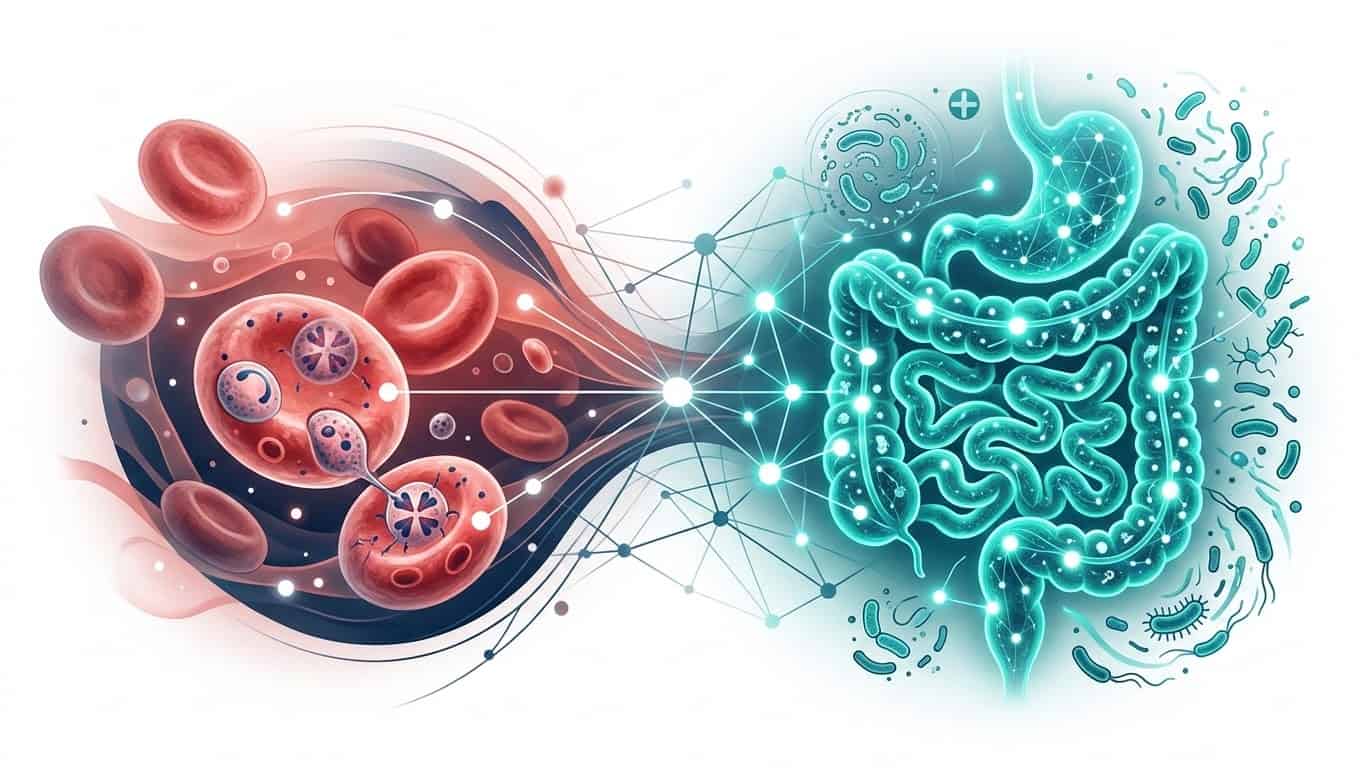
When the Gut Is Telling a Tick-Borne Story
Babesiosis is usually described as a blood infection, but nausea, vomiting, diarrhea and loss of appetite are common with it, and emerging research suggests the parasite may also reshape the gut microbiome.
In my practice, I meet many people with tick-borne illness whose digestion has never been the same. Some were treated for Lyme disease and improved, yet still struggle with bloating, nausea, loose stools, food reactions and a gut that seems to have lost its resilience. Others come to me with “IBS” that began, when we look closely at the timeline, the summer after a tick bite. Very often, I find Babesia hiding in the story.
Babesia is a malaria-like parasite that lives inside red blood cells. It is one of the co-infections I look for most often alongside Lyme disease. Because it lives in the blood, few people think of the gut. But the gut and the blood are in constant conversation, through immune signaling, inflammation, oxygen delivery and the trillions of microbes that line our intestines.
In this article we will explore what babesiosis is, how often it causes gut symptoms, what new research reveals about Babesia and the microbiome, what the experts at Tufts Medical Center are studying, and how I approach gut healing in patients recovering from this stubborn infection.
Babesiosis 101: A Malaria-Like Parasite on the Rise
Babesiosis is a tick-borne infection of red blood cells, and reported US cases are climbing quickly, especially in New England.
- The parasite. In the United States, most cases are caused by Babesia microti. Other species, including Babesia duncani on the West Coast, also infect people. Like the malaria parasite, Babesia invades and destroys red blood cells.[3]
- How it spreads. Most infections come from the bite of a black-legged (deer) tick, the same tick that carries Lyme disease. Babesia can also be transmitted through blood transfusion and, rarely, from mother to baby.[3]
- How common it is. From 2011 to 2019, US states reported 16,456 cases. Incidence rose by more than 1,600% in Vermont and more than 1,400% in Maine, and Maine, New Hampshire and Vermont are now considered endemic.[5] In 2019 alone, 2,418 cases were reported, and 44% of patients were hospitalized.[6]
- Who gets very sick. Severe disease is more likely in people over 50, those without a spleen, and people with weakened immune systems.[3][4] In the immunocompromised, infection can persist or relapse despite multiple courses of treatment.[10]
Common Symptoms
Symptoms usually begin one to four weeks after a tick bite: fever, chills, sweats, fatigue, headache and muscle aches, often along with loss of appetite and nausea.[2][3] Some people, especially younger and healthy adults, have mild symptoms or none at all.
Gut Symptoms in Babesiosis: Common, and a Red Flag for Severity
Loss of appetite and nausea affect roughly a third to a half of people with babesiosis, and diarrhea and vomiting are strongly linked to more severe illness.
How Often the Gut Is Involved
| Study | Patients | Gastrointestinal findings |
|---|---|---|
| Vannier et al. 2015 review, pooled US series | 290 | Anorexia 53%, nausea 42%[3] |
| Mareedu et al. 2017, Wisconsin | 128 | Nausea or vomiting 33.6%, anorexia 32.8%, abdominal pain 16.4%, diarrhea 15.6%[7] |
| Krause et al. 1996, Lyme coinfection | 26 coinfected of 240 with Lyme | Anorexia and nausea more frequent with coinfection than with Lyme alone[8] |
Gut Symptoms Predict Severe Disease
In the 2017 Wisconsin study, people with severe babesiosis were far more likely to have gut symptoms:[7]
- Diarrhea: 38.5% with severe infection versus 9.8% without (relative risk 3.37).
- Nausea or vomiting: 57.7% versus 27.5% (relative risk 2.70).
- Diarrhea was also strongly associated with hospitalization, though the estimate was very imprecise because of the small number of patients.
This is a practical message for patients and clinicians: if someone with a recent tick exposure has fever plus vomiting or diarrhea, babesiosis should be on the list, and those gut symptoms should raise concern rather than be dismissed as a stomach bug.
Why Symptoms Can Linger
Several lines of evidence explain why some people feel unwell for months:
- Persistent parasites. In untreated people without symptoms, Babesia DNA persisted for an average of 82 days, compared with 16 days in those treated. People whose DNA persisted for three months or more had symptoms for an average of 114 days, and one person relapsed two years later.[9]
- Coinfection with Lyme. In people with both infections, 50% still had symptoms three months or more after onset, compared with 4% of those with Lyme disease alone.[8]
- Weakened immunity. In immunocompromised patients, infection persisted or relapsed despite two to ten courses of treatment, and expert guidance recommends at least six weeks of therapy in this group, including two weeks after blood smears turn negative.[10]
- Rare but serious complications. Splenic rupture is a recognized complication, and a systematic review found it most often in otherwise healthy men with a mean age of 56. Sudden left upper abdominal or shoulder pain during babesiosis needs emergency evaluation.[17]
Babesia and the Microbiome: What the New Research Shows
A 2023 study in hamsters found that Babesia duncani infection shifted the gut microbiome, and the changes grew larger as the parasite load in the blood rose.[1]
The Hamster Study
Researchers infected golden Syrian hamsters with Babesia duncani, the species found on the US West Coast, and sequenced the bacteria in the small intestine at low (about 2%) and high parasite levels.[1]
- Bacteroidetes increased, from 38% of bacteria in uninfected animals to 51.7% early in infection and 42% later. A family called Muribaculaceae rose from 31% to 45%.
- Firmicutes decreased, including Lachnospiraceae, a family that includes many butyrate producers that help feed and protect the gut lining (P = 0.038). Eubacteriaceae and Desulfovibrionaceae also fell.
- Diversity dropped at high parasite levels. The number of distinct bacterial types fell from about 651 to 552 (P = 0.03), and the overall community structure differed from uninfected animals. At low parasite levels, the differences were not significant.
The authors raised the possibility that losing short-chain fatty acid producers could affect gut health, but they did not measure inflammation, gut barrier function or short-chain fatty acids. The study used 12 animals and is descriptive, and the authors note that the mechanisms remain unexplored.
Clues From Babesia's Cousin, Malaria
Because Babesia and Plasmodium (the malaria parasite) behave similarly in red blood cells, malaria research offers useful clues:
- Infection can damage the intestine. In mice, Plasmodium berghei caused shortened intestinal villi, red blood cells packed into gut tissue, and a leakier gut barrier. Lactobacillaceae fell and Enterobacteriaceae rose, and lower Lactobacillus levels tracked with higher parasite levels.[12]
- The microbiome can shape severity. Genetically similar mice from different suppliers had dramatically different malaria outcomes: some peaked at about 10% parasitemia with no deaths, while others exceeded 60% and some died. Resistance was associated with Lactobacillus and Bifidobacterium, and in susceptible mice, antibiotics followed by yogurt reduced parasite burden 14-fold.[11]
No study has yet shown that the gut microbiome changes the severity of babesiosis. But the malaria data raise a compelling question: could a healthy, diverse microbiome help the body handle Babesia better?
Other Clues
- In mice with Babesia microti, blood metabolite profiles shifted in taurine, histidine and arachidonic acid pathways, including the bile acid taurocholic acid, hinting at broader metabolic effects that may touch the gut and liver.[13]
- In ticks, disrupting the tick's own microbiome increased B. microti transmission (44.7% versus 24.2% infection rate), a reminder that microbes and this parasite interact at many levels.[14]
Inside the Tufts Babesiosis Research Program
One of the leading academic centers studying this parasite, the Babesiosis Research Program at Tufts Medical Center, is working to understand why some people get only mildly ill while others become dangerously sick.[2]
The program is led by Edouard Vannier, PharmD, PhD, in the Division of Geographic Medicine and Infectious Diseases. According to the program, its research includes:
- Host genetics. Using two strains of mice, one that develops more severe infection with age and one that stays mildly ill even when old, the team is mapping the genes that drive susceptibility. They are also analyzing DNA from patients with mild versus severe disease, aiming for a test that identifies people at risk.
- Immune clearance. The team studies how immunocompromised mice clear Babesia microti, including the parasite proteins that antibodies target during recovery, with an eye toward a vaccine for high-risk people.
- New therapies. Current treatment relies on antimicrobials or, in severe cases, exchange transfusion. The group is searching for compounds or antibodies that block the parasite from entering red blood cells or strengthen the immune response, and co-authored a 2020 mouse study showing the drug clofazimine was effective against severe infection in highly immunocompromised mice.
The Tufts program also highlights sobering numbers: about half of hospitalized patients develop at least one complication (kidney failure, fluid in the lungs, abnormal clotting or splenic rupture), up to 3% of those hospitalized with severe disease die despite treatment, and mortality reaches about 20% among immunocompromised patients.[2]
Most relevant to this article, the program notes that “diarrhea, vomiting and nausea are good predictors of severe illness.”[2] The page does not cite a source, but a 2017 Wisconsin study, discussed below, found exactly this pattern.[7] In other words, gut symptoms in babesiosis are not a side note. They may be a warning sign.
The Honest Evidence Check
The link between babesiosis and gut symptoms is well documented in patients, but the link to the microbiome rests on one small animal study plus clues from malaria research, so it is a hypothesis worth exploring rather than an established fact.
- The microbiome study is small and in hamsters. Twelve animals, one Babesia species, intestinal contents sampled over about a week, and some internal inconsistencies in the reported group sizes and timing.[1] It shows association, not cause.
- No human microbiome data yet. I could not find any published study of the gut microbiome in people with babesiosis.
- Malaria is a cousin, not a twin. The intestinal and microbiome findings in malaria are in mice and may not translate directly to Babesia in humans.[11][12]
- Herbal data are early. Some botanicals inhibit Babesia duncani in the lab, but these are test-tube results, and in that study some extracts allowed the parasite to regrow.[15]
- Long-term gut symptoms after babesiosis have not been formally studied. What I describe below about post-infectious gut dysfunction comes from clinical experience and biological reasoning.
| Claim | Evidence tier | What supports it |
|---|---|---|
| Nausea, anorexia and other GI symptoms are common in babesiosis | Strong (multiple clinical series) | Vannier 2015, Mareedu 2017[3][7] |
| Diarrhea and vomiting predict severe disease | Moderate (one cohort, 128 patients) | Mareedu 2017[7] |
| Babesia DNA can persist for months; coinfection prolongs illness | Moderate to strong (clinical cohorts) | Krause 1996, 1998, 2008[8][9][10] |
| Babesia infection alters the gut microbiome | Emerging (one small animal study) | Zhang 2023[1] |
| Related blood parasites damage the gut and the microbiome shapes severity | Emerging (mouse malaria models) | Taniguchi 2015, Villarino 2016[11][12] |
| Botanicals inhibit Babesia | Preliminary (in vitro) | Zhang 2021[15] |
| Gut repair improves recovery after babesiosis | Hypothesis worth exploring (clinical experience) | Mechanistic reasoning |
My Functional Medicine Approach: Treat the Infection, Then Rebuild the Gut
I address babesiosis in two parallel tracks: appropriate antimicrobial treatment guided by the evidence, and a deliberate plan to restore the gut that infection and treatment may have disrupted.
Step 1: Test Thoughtfully
- Think of it. Fever, sweats, fatigue or air hunger after tick exposure, especially with nausea, vomiting or diarrhea, should prompt testing.[7]
- Use the right tests. Blood smear, Babesia PCR (more sensitive than a smear when parasite levels are low), and antibody testing for both B. microti and B. duncani where exposure is possible.[3][4]
- Check for co-infections, including Lyme disease, and for anemia, low platelets and liver enzyme changes.
- Assess the gut with a comprehensive stool analysis when symptoms persist, looking for dysbiosis, inflammation markers, digestive function and secondary infections.
Step 2: Treat the Infection Appropriately
Babesiosis can be serious, and I do not take patients off appropriate conventional therapy to pursue an alternative approach. The Infectious Diseases Society of America guideline recommends atovaquone plus azithromycin as first-line therapy for most patients, with clindamycin plus quinine as an alternative, and exchange transfusion for some severe cases.[4] For relapsing infection in immunocompromised patients, a 2024 case series reported cure in four of four patients when the antimalarial tafenoquine was added to other agents, while tafenoquine alone failed in one patient.[16] Botanicals such as Cryptolepis show activity against B. duncani in the lab,[15] and I may use herbal formulas such as A-Bab as complementary support, but these botanicals have not been tested in human trials.
Step 3: Protect the Gut During Treatment
Antimicrobials, especially azithromycin and clindamycin, can disrupt the microbiome. During treatment I often use:
- A Saccharomyces boulardii probiotic, a beneficial yeast that is not killed by antibiotics, separated from antimicrobial doses.
- Spore-based probiotics, which survive stomach acid well.
- Gentle, whole-food nutrition, with smaller meals if nausea is present, ginger, and adequate hydration.
Step 4: Rebuild After Treatment
- Reseed and feed. Diverse plant fibers, polyphenol-rich foods (berries, herbs, green tea, olive oil), and fermented foods as tolerated. The malaria research associating Lactobacillus and Bifidobacterium with resistance is intriguing,[11] though it has not been tested in babesiosis.
- Repair the lining. Butyrate, the short-chain fatty acid that fuels colon cells (and is produced by bacteria that fell in the hamster study[1]), along with colostrum or immunoglobulins, zinc carnosine, and L-glutamine.
- Restore motility. Many post-infectious patients develop sluggish motility and small intestinal bacterial overgrowth. Prokinetic support can help.
- Calm inflammation and support detoxification with omega-3 fatty acids, glutathione and adequate sleep.
- Look at the whole terrain. Mold exposure, other co-infections and mast cell activation often travel with tick-borne illness in my patients. You can read more in my article on Lyme, tick-borne relapsing fever and Crohn's disease and on the gut-brain axis.
Products I Use for Babesia and Tick-Bite Support
These are complementary tools I use alongside, never instead of, appropriate medical treatment. None has been tested in clinical trials for babesiosis, so I offer them based on traditional use, laboratory data on individual herbs and my clinical experience.
- A-Bab: an herbal formula designed to address Babesia and related malaria-like organisms, which also includes herbs for Bartonella, a frequent fellow traveler in tick-borne illness.
- NutraMedix NUTRA-BBS: a liquid herbal blend of elecampane root, jalapa root, blackberry leaf and capirona bark that I use for microbial and inflammatory balance in patients with tick-borne co-infections.
- Dr. Jill Health® Tick Bite Prevention Protocol: a 60-day protocol of three NutraMedix herbal tinctures (Samento, a cat's claw extract; Houttuynia; and Mora, a blend of yarrow, capirona and blackberry leaf) that I use after a tick bite or possible exposure. It does not replace prompt medical evaluation or antibiotic prophylaxis when your clinician recommends it.
- Boluoke (lumbrokinase): an oral fibrinolytic enzyme (about 20 mg lumbrokinase per capsule) that I use to support healthy clotting balance and fibrin breakdown in some patients with chronic infections. Because it affects clotting, check with your clinician before using it, especially if you take blood thinners or have a bleeding risk or upcoming surgery.
Products I Use and Trust for Gut Recovery
- Dr. Jill Health® Saccharo Force or Probiotic Essentials with Saccharo: Saccharomyces support during and after antimicrobial treatment.
- Dr. Jill Health® Spore Probiotic Plus IgG and MegaSporeBiotic: spore-based probiotics for microbiome rebuilding.
- Dr. Jill Health® Probiotic Daily Essentials: daily multi-strain probiotic.
- Dr. Jill Health® Gut Immune and Dr. Jill Health® Gut Calm: gut lining and immune support.
- Body Bio Cal-Mag Butyrate: butyrate to nourish the colon lining.
- Dr. Jill Health® Motility Booster: motility support after infection.
- Dr. Jill Health® Omega Essentials DHA and Glutathione Essentials: inflammation and antioxidant support.
Please work with a knowledgeable clinician on testing and treatment. Babesiosis can become life-threatening, and supplements are not a substitute for appropriate antimicrobial therapy.
Hope for the Long Road
Recovery from babesiosis and its effects on the gut can take time, but it is possible, and you do not have to walk it alone.
A word of faith. Isaiah 40:31 promises that “those who hope in the Lord will renew their strength. They will soar on wings like eagles; they will run and not grow weary, they will walk and not be faint.” I have walked through seasons of chronic illness myself, and I know how weary the body and spirit can become. If you are exhausted by symptoms that no one seems to understand, I pray you find a clinician who listens, the patience to rebuild one step at a time, and the quiet assurance that you are seen and loved in the middle of the process.
The gut is remarkably resilient. When we clear infection where it is present, calm inflammation, restore the microbiome and repair the intestinal lining, many patients regain not only their digestion but their energy, mood and sense of themselves.
For more of my own story of illness, recovery and faith, I invite you to read my book, Unexpected: Finding Resilience Through Functional Medicine, Science and Faith.
Keep Learning
- Blog: When the Root Cause Has Eight Legs: Lyme, Tick-Borne Relapsing Fever, and Crohn's Disease
- Podcast: 332: Infections & the Brain: The Overlooked Drivers of Chronic Inflammation with Nikki Schultek
- Shop: Dr. Jill's Gut Health Support collection
References
- Zhang S, Wang J, Li X, Wang Y, Nian Y, You C, Zhang D, Guan G. Babeisa duncani infection alters gut microbiota profile in hamsters. Parasites Hosts Dis. 2023;61(1):42-52. doi:10.3347/PHD.22142
- Tufts Medical Center. Babesiosis Research Program, Division of Geographic Medicine and Infectious Diseases. tuftsmedicine.org
- Vannier EG, Diuk-Wasser MA, Ben Mamoun C, Krause PJ. Babesiosis. Infect Dis Clin North Am. 2015;29(2):357-370. doi:10.1016/j.idc.2015.02.008
- Krause PJ, Auwaerter PG, Bannuru RR, et al. Clinical practice guidelines by the Infectious Diseases Society of America (IDSA): 2020 guideline on diagnosis and management of babesiosis. Clin Infect Dis. 2021;72(2):e49-e64. doi:10.1093/cid/ciaa1216
- Swanson M, Pickrel A, Williamson J, Montgomery S. Trends in reported babesiosis cases: United States, 2011-2019. MMWR Morb Mortal Wkly Rep. 2023;72(11):273-277. doi:10.15585/mmwr.mm7211a1
- Centers for Disease Control and Prevention. Surveillance for babesiosis: United States, 2019 annual summary. cdc.gov
- Mareedu N, Schotthoefer AM, Tompkins J, Hall MC, Fritsche TR, Frost HM. Risk factors for severe infection, hospitalization, and prolonged antimicrobial therapy in patients with babesiosis. Am J Trop Med Hyg. 2017;97(4):1218-1225. doi:10.4269/ajtmh.17-0146
- Krause PJ, Telford SR 3rd, Spielman A, et al. Concurrent Lyme disease and babesiosis: evidence for increased severity and duration of illness. JAMA. 1996;275(21):1657-1660. doi:10.1001/jama.1996.03530450047031
- Krause PJ, Spielman A, Telford SR 3rd, et al. Persistent parasitemia after acute babesiosis. N Engl J Med. 1998;339(3):160-165. PMID 9664092
- Krause PJ, Gewurz BE, Hill D, et al. Persistent and relapsing babesiosis in immunocompromised patients. Clin Infect Dis. 2008;46(3):370-376. doi:10.1086/525852
- Villarino NF, LeCleir GR, Denny JE, et al. Composition of the gut microbiota modulates the severity of malaria. Proc Natl Acad Sci USA. 2016;113(8):2235-2240. doi:10.1073/pnas.1504887113
- Taniguchi T, Miyauchi E, Nakamura S, et al. Plasmodium berghei ANKA causes intestinal malaria associated with dysbiosis. Sci Rep. 2015;5:15699. doi:10.1038/srep15699
- Shen L, et al. Serum metabolomic profiles in BALB/c mice induced by Babesia microti infection. Front Cell Infect Microbiol. 2023;13:1179967. doi:10.3389/fcimb.2023.1179967
- Wei N, et al. The tick microbiota dysbiosis promote tick-borne pathogen transstadial transmission in a Babesia microti-infected mouse model. Front Cell Infect Microbiol. 2021;11:713466. doi:10.3389/fcimb.2021.713466
- Zhang Y, Alvarez-Manzo H, Leone J, Schweig S, Zhang Y. Botanical medicines Cryptolepis sanguinolenta, Artemisia annua, Scutellaria baicalensis, Polygonum cuspidatum, and Alchornea cordifolia demonstrate inhibitory activity against Babesia duncani. Front Cell Infect Microbiol. 2021;11:624745. doi:10.3389/fcimb.2021.624745
- Krause PJ, Rogers R, Shah MK, et al. Tafenoquine for relapsing babesiosis: a case series. Clin Infect Dis. 2024;79(1):130-137. doi:10.1093/cid/ciae238
- Li S, et al. Splenic rupture from babesiosis, an emerging concern? A systematic review of current literature. Ticks Tick Borne Dis. 2018;9(6):1377-1382. doi:10.1016/j.ttbdis.2018.06.004
Disclaimer: This article is for educational purposes only and is not a substitute for individualized medical advice. Babesiosis can be life-threatening; seek prompt medical care for fever after a tick bite. Do not start, stop or change medications or supplements without consulting your healthcare provider. Statements about supplements have not been evaluated by the Food and Drug Administration. Dr. Jill Carnahan is the founder of Dr. Jill Health and may benefit from sales of products mentioned.
About Dr. Jill Carnahan, MD
Dr. Jill Carnahan, MD, ABIHM, ABoIM, IFMCP, is a triple board-certified functional medicine physician and Medical Director of Flatiron Functional Medicine in Louisville, Colorado. She is the author of the bestselling book Unexpected, host of Resiliency Radio, and is featured in the Doctor/Patient documentary. Learn more at jillcarnahan.com, shop her physician-formulated supplements at drjillhealth.com, and follow her on Instagram at @DrJillCarnahan.
* These statements have not been evaluated by the Food and Drug Administration. The product mentioned in this article are not intended to diagnose, treat, cure, or prevent any disease. The information in this article is not intended to replace any recommendations or relationship with your physician. Please review references sited at end of article for scientific support of any claims made.










Share: