

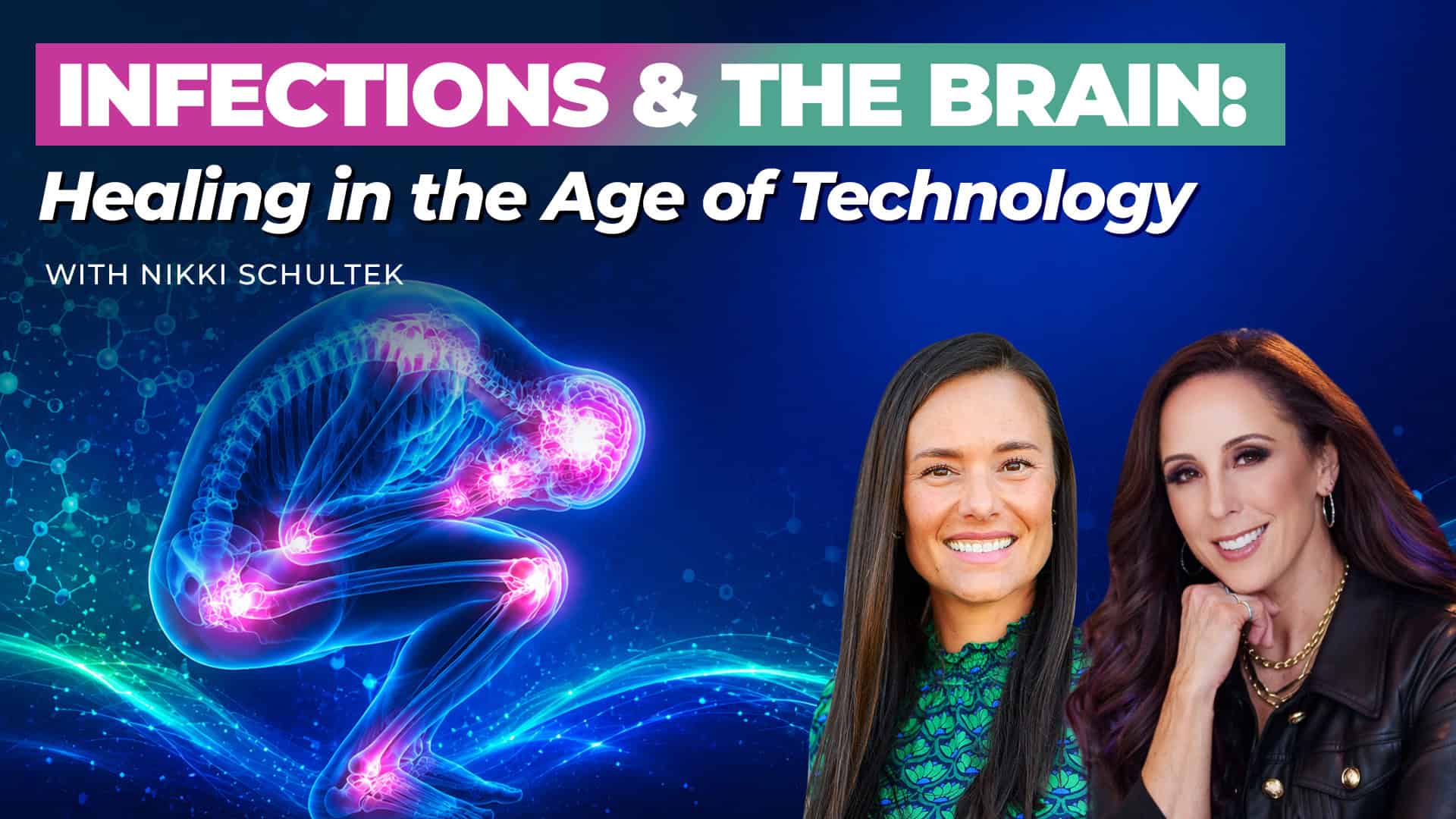
In this episode of Resiliency Radio with Dr. Jill, Dr. Jill Carnahan sits down with researcher and collaboration architect Nikki Schultek to explore an often-overlooked contributor to chronic disease: persistent infections and their impact on inflammation, immunity, and the brain.
Drawing from her own experience with severe chronic illness, Lyme disease, Chlamydia pneumoniae, and autoimmunity, Nikki shares how her personal health journey led her into research and a mission to connect scientific disciplines that too often operate in isolation.
Together, they explore the emerging concept of the pathobiome, the potential infectious drivers of Alzheimer’s and other neurodegenerative diseases, the challenges of diagnosing persistent infections, and why understanding the body as an interconnected ecosystem could transform the future of chronic illness research and treatment.
🔑 5 Key Discussions You'll Discover with Nikki Schultek
① 🦠 Chronic Infections as Hidden Drivers of Disease
⇨ Persistent infections may play an overlooked role in autoimmune disease, chronic fatigue, asthma, neurological illness, and other complex chronic conditions.
⇨ Pathogens including Lyme-associated organisms, Chlamydia pneumoniae, Mycoplasma, Epstein-Barr virus, Bartonella, and Babesia may persist or reactivate under certain conditions rather than behaving solely as short-lived infections.
② 🧠 The Brain Is Part of a Larger Ecosystem
⇨ Brain health cannot be separated from immune function, systemic inflammation, the gut, environmental exposures, and infectious burden.
⇨ Emerging research challenges the traditional view of the brain as an isolated, sterile environment and raises important questions about microbes, immune activity, and chronic neuroinflammation.
③ 🔬 Rethinking Alzheimer’s & Neurodegeneration
⇨ Researchers are investigating whether infections and immune responses may contribute to diseases such as Alzheimer’s and Multiple Sclerosis.
⇨ The Alzheimer’s Pathobiome Initiative is bringing researchers together to investigate whether amyloid plaques, tau changes, and other features of neurodegeneration may be connected to microbial activity and the body's response to infection.
④ 🧬 Understanding the Pathobiome
⇨ The pathobiome expands beyond simply identifying which microorganisms are present—it considers the relationship between microbes, the host immune system, hormones, environmental exposures, and the body's overall terrain.
⇨ Disease may emerge when changes in this ecosystem allow normally controlled or latent organisms to proliferate, reactivate, or provoke damaging immune responses.
⑤ 🤝 Building a New Model for Chronic Illness Research
⇨ Complex illnesses rarely fit neatly into one medical specialty, making collaboration between immunologists, neurologists, infectious disease researchers, clinicians, and other experts essential.
⇨ Nikki's work as a collaboration architect focuses on breaking down scientific silos and accelerating the translation of emerging research into meaningful clinical understanding.
🔑 Key Takeaways with Nikki Schultek
🔹 Chronic infections may be important but frequently overlooked contributors to complex chronic illness.
🔹 Brain inflammation can be influenced by immune dysfunction and processes occurring throughout the body.
🔹 Chlamydia pneumoniae and other atypical pathogens deserve greater attention when investigating persistent illness.
🔹 Current testing may not always clearly distinguish between historical exposure and clinically relevant persistent infection.
🔹 COVID-19 may disrupt immune function and potentially contribute to the reactivation of latent infections.
🔹 The pathobiome provides a broader framework for understanding interactions between microbes, immunity, environment, and disease.
🔹 Infectious and immune mechanisms are increasingly being investigated in Alzheimer’s and other neurodegenerative conditions.
🔹 Collaboration across scientific disciplines will be critical for advancing research into complex chronic disease.
About Nikki Schultek
Nikki Schultek is the Executive Director of the Alzheimer’s Pathobiome Initiative (AlzPI), Principal Founder of Intracell Research Group, LLC, and Founding Director of the Pathobiome Research Center at the Philadelphia College of Osteopathic Medicine (PCOM).
After earning a BS in Business Administration from Villanova University, Nikki began her career with Pfizer and Genentech. Her professional direction changed following her own recovery from Lyme disease and other chronic infections, inspiring her to focus on advancing research into infection-associated chronic illnesses, including Alzheimer’s disease, PANDAS/PANS, and asthma.
Since founding Intracell Research Group in 2017, Nikki has built global collaborations connecting researchers, clinicians, academic institutions, and other stakeholders. She is also a co-investigator on the 3,200-patient iTREAT-PC asthma clinical trial and serves on the Board of Directors of the International Lyme and Associated Diseases Education Foundation.
Nikki has helped secure philanthropic funding to launch AlzPI research across eight academic centers and co-led the development of a research roadmap published in Alzheimer’s & Dementia in 2023. Her work is helping advance rigorous investigation into the potential role of microbial infections in Alzheimer’s disease, dementia, and other brain disorders.
🌐 Connect & Learn More
🔗 Alzheimer’s Pathobiome Initiative: https://www.alzpi.org/
🔗 Intracell Research Group: https://www.intracellresearchgroup.com/
🔗 Pathobiome Research Center at PCOM: https://www.pcom.edu/research/pbrc/
🔬 Current Mission
The global consortium is working to secure funding to fully operationalize its international research collaboration and accelerate investigation into the role infections may play in Alzheimer’s disease and other brain diseases.
Dr. Jill Carnahan, MD – Leading Functional Medicine Doctor
Dr. Jill Carnahan, MD, ABIHM, ABoIM, IFMCP is internationally recognized as one of the most respected leaders in functional and integrative medicine. She is dually board-certified in Family Medicine and Integrative Holistic Medicine, and the founder and medical director of Flatiron Functional Medicine in Louisville, Colorado.
Widely known as a pioneer in environmental toxicity, mold-related illness, autoimmune disease, and resilience medicine, Dr. Carnahan combines cutting-edge science with compassionate, root-cause care. Her clinical approach integrates precision genomics, epigenetics, microbiome research, peptide therapy, and lifestyle interventions to transform health outcomes for patients worldwide.
She is the author of the best-selling memoir Unexpected, which weaves her personal journey through cancer, Crohn’s disease, and mold-related illness with her professional expertise. Dr. Carnahan is also the executive producer of the award-winning documentary Doctor/Patient and the host of the popular podcast Resiliency Radio, which reaches over 500,000 global subscribers.
As an international keynote speaker, Dr. Carnahan has been featured at leading medical conferences including A4M, IFM, EPIC, and IPM Congress, and her work is frequently highlighted in major media outlets such as NBC, CBS, Fox News, Forbes, Parade, People, and MindBodyGreen.
With a reputation as both a scientist and a healer, Dr. Jill Carnahan is regarded as one of the top functional medicine doctors in the world, offering a unique blend of evidence-based research, innovation, and deeply personalized care.
The Podcast with Nikki Schultek
The Video with Nikki Schultek
Transcript
00:00
Dr. Jill Carnahan
Hey everybody. Welcome to Resiliency Radio, your go to podcast for the most cutting edge insights integrative and functional medicine. I'm your host Dr. Jill and with each episode we dive into the healing heart of functional medicine. I bring you innovators, medical experts and today a researcher that you may have not heard about but who is doing great work with collaborations on infections and chronic illness, especially as to do with the brain. If you or a loved one has been diagnosed with dementia or you're concerned about your brain health, look no further. You are going to love this episode with Nikki and all of her collaborations. She talks about herself as a collaborative architect bringing people together to do the research to give us as clinicians foundation. So stay tuned. You're going to love this interview.
00:48
Dr. Jill Carnahan
Before we jump into the interview, I want to remind you that you can find products and services for your brain health, for your gut health and all things in between@doctor Jill health.com Some of my favorite brain products are the BDNF Essentials and the Cognicare. I also love the Brain Mag which is part of our pink drink. Dr. Jill's pink drink. The thing I drink every single morning. Check those out@doctor Jill health.com and if you haven't yet seen the documentary, you can check that out@doctor patient movie.com. It's now also streaming. If you have Amazon prime, which who doesn't nowadays, you can catch that Doctor Patient movie there with your subscription to Amazon Prime. And finally, if you are looking for a functional medicine provider for complex course qu complex chronic illness or mystery symptoms, you can call our clinic. We are accepting new patients.
01:39
Dr. Jill Carnahan
Our number is 303-993-7910 or you can email info@flatiron Functional Medicine.com okay, let me introduce Nikki who is Executive Director of the Alzheimer's Pathobiome Initiative alzpl. She's also principal founder of Intercell Research Group and founding Director of the Pathobiome Research center at the Philadelphia College of Osteopathic. She earned a BS in Business Administration and began her career with Pfizer and Genentech following her own recovery from Lyme disease, which you'll hear about in this episode. Nikki dedicated her work to advancing research into infection associated chronic illness including Alzheimer's disease, pan and Pandas, and asthma. You're going to love this interview. Let's jump right in with Nikki and join the show. Nikki, I am so excited to have you on Resiliency Radio. We talked just briefly before we started this interview. And what I love about you is you're bringing this whole other area.
02:37
Dr. Jill Carnahan
I deal with a lot of medical doctors and experts on the brain and Alzheimer's, but we're all in this field seeing these clinical manifestations and trying to make sense of it with the current research. You're out here making a difference in the world of research, giving us data and actually validating what we're observing in clinical science, which is the brain is so much more complex than we thought. Plaques are not the whole answer, and there's a whole brain microbiome that's affecting our brain health and many other things that you'll talk about today. I couldn't be more excited to have you on to talk about your research. And I get especially excited to talk to researchers because, again, I'm in my clinic doing patients one one. But you're out here paving the way for what we see in clinical practice.
03:21
Dr. Jill Carnahan
And one of the things you talked about that I'd love to start with is how you're really this hub of bringing together people who might not otherwise talk to one another. How did you get into this field? Give us a little bit of your journey.
03:33
Nikki Schultek
First of all, thank you, Dr. Jill, for having me. I'm thrilled to be here. Just absolutely love your energy and I love the way that you just anchored at the start of our conversation. So you're seeing patients, right? You are a practitioner, clinician, boots on the ground dealing with the type of patients that our team, our global consortium, is studying. Right. But in fact, how I got here is I'm a patient. So I was extraordinarily sick and was misdiagnosed for about a year. I ended up finding out that I had multiple chronic infections, including one that people commonly know as Lyme disease, a bacterial infection transmitted by tick bites and other means that I contracted along with co infections.
04:21
Nikki Schultek
I also ended up learning in this crazy journey of a year of horrible one after the next autoimmune diagnoses, that I also had a chronic respiratory tract infection that I had never heard of called Chlamydia pneumoniae. And that's really that one bacterial infection is sort of how I arrived on the scene and decided to start bridging silos. And it all began, of course, figuring out that I was sick with these infections, right? Finding a doctor that could accurately test and diagnosed me, treated me using antimicrobial therapies in a manner which, frankly, at the time initially made me very uncomfortable. The idea of aggressive antimicrobial therapy. I had a background working for Pfizer and Genentech. And at one time I worked in anti infective space, calling on microbiology labs in hospitals. So I. A lot of people hear the word resistance, right?
05:19
Nikki Schultek
Which is antimicrobial drugs not working any longer because the germs figure out a way around it because they've been exposed to it. So I had these concerns, yet I was being faced with life threatening symptoms. And my kids were three and five, right? I'm a mom. I was completely incapacitated. One of the things in my diagnosis that was disturbing, the differential diagnosis was they feared I had multiple sclerosis based on my symptoms.
05:47
Dr. Jill Carnahan
Yes.
05:48
Nikki Schultek
Now, I do not have Ms. I didn't have lesions on the mri. But the neurologist at the time in Connecticut said, this doesn't mean you won't get it. I see patients like you all the time where you smolder and you have these symptoms and the symptomatology leads to lesions. And so I left just like absolutely terrified, anxious. And I had developed cognitive symptoms, too. Now, I was in my early 30s.
06:11
Nikki Schultek
So what I decided once I got on treatment by an infectious disease specialist and medical microbiologist at Vanderbilt named Charles W. Stratton, who specialized in this chronic bacterial infection of the lung called chlamydia pneumoniae, not the sexually transmitted chlamydia, but a cousin of that germ that you get when someone coughs and you inhale it, you know, he had looked at that germ from the vantage point of, not just an acute infection, but chronicity. So the idea that it could take up residence, and now you have in an area of the body, whether it's the lung or the bladder or the brain, that it could be creating inflammation. And we all know inflammation is bad, right? Most diseases go back to inflammation that are chronic. So I got treated by Dr. Stratton. And it was funny.
07:00
Nikki Schultek
As soon as I started to feel better, I said to him, he asked me to call him Chuck. I was reluctant at first. I'm like, okay, fine, if I must. He's like, please call me Chuck. Don't call me Dr. Stratton. So it's like, okay, Chuck. He said, you know, what I basically said was, what are we going to do about this? This is major. I had multiple devastating conditions, including this severe and refractory asthma go into remission with antimicrobial drugs. And it turned my perception of autoimmunity on its head. And I said to him, don't you just want to scream from the mountaintops with all These publications you have and other people, autoimmunity is under, you know, under poorly understood, poorly characterized. We have chronic infections.
07:42
Dr. Jill Carnahan
Yes, right.
07:43
Nikki Schultek
Not a hit and run, right. It's a continual hit. It's an accident, over and over. So he said, yes, but he said, take it easy, you're not all the way better yet. This treatment is going to be a long road. So he, you know, encouraged, was encouraged by the fact that I wanted to help. And as soon as I was well enough, I decided I need to just start contacting these people, studying infection and chronic disease and introduce them to each other because they reference each other in their papers, you know, they'll write a scientific paper. And so I said to Chuck, have you ever had a meeting with Dr. David Hahn who studies asthma in the same bacteria? No, we never sat down for a meeting. What about John Carter in Florida? No, we haven't.
08:23
Nikki Schultek
You know, he's like, yeah, I did meet Dr. Brian Balin once who studies the role of that bacteria in Alzheimer's. So we started getting together, the main cast of characters, studying that one bacteria and chronic disease. And from there I start, of course, becoming tangential in the reading. And I myself knew that I had been diagnosed with Borrelia burgdorferi, which can also cause some of the same disorders that chlamydia was linked with, including bladder pain. I had a diagnosis of interstitial cystitis that was brutal. But it went into remission. I remain in remission. I don't have it anymore. So that's how this all sort of began. And the idea to be a collaboration architect to bring scientists together and physician scientists that have patients and people in the lab and data scientists in all different types of domains.
09:15
Nikki Schultek
People studying fungus, bacteria, viruses, parasites, animals, you know, veterinarians. We work with Dr. Ed Breitchworth at NC State. The idea behind it was that everything is so siloed and the body is not. It's an ecosystem, right? And we are very much. The brain especially has been thought of as this sort of like off limits area, right? And this blood brain barrier is this impervious shield. Nothing can get through it. It's not really the case. And the brain is interacting with the gut and the brain is also subject to insult from infections. And not just things that create a cytokine storm and hurt the brain from the outside, but things that can actually, like a Trojan horse inside the very cells that are made to protect us, our immune cells.
10:13
Nikki Schultek
It can enter some of these pathogens and then go right through, like they're just crossing the George Washington Bridge into Manhattan. So. So the idea of bringing these different people together was really like, okay, no one's listening. You know, decades, you know, there have been so many different research teams publishing papers. Let's just take the example of Alzheimer's and infection since literally the 1980s. And even actually before then, Dr. Alzheimer himself, you know, the gentleman from which the disease is named, published a paper in the very same year as another scientist named Oscar Fisher. 1907. Most people don't realize that this could have very easily been called Fisher's disease because their results were neck and neck in publication. They both were living in a time when syphilis, sexually transmitted infection in the same family as Lyme disease. These are spirochet, correct.
11:15
Nikki Schultek
Early, you know, like a corkscrew. Everyone knew that if you got syphilis and it advanced to tertiary syphilis or severe infection, it could get in the brain and cause a dementia. Well, it was really interesting because Dr. Oscar Fisher and even Alzheimer himself acknowledged the possibility that there was an infectious component when they went ahead and saw the brain of someone that died with the disease and saw plaques. Yes, these tangles, they said these almost resemble bacterial colonies. And isn't it's very ironic because today on my team, you know, we have this Alzheimer's pathobiome initiative consortium, a global multidisciplinary team, purposely as diverse as it can be, with backgrounds, even patients, you know, like myself, people that have lived, experience and also expertise in these fields.
12:05
Nikki Schultek
What some of our teammates have discovered is that the bad guys, the plaques, the amyloid plaques, or you know, the kindling of. And then the tau tangles, these tangles in the brain, you know, that have been referred to as flames, like kindling in flames, right? These one, two, punch. And the people that we lost to this devastating neurodegenerative disease may actually be antimicrobial responses that are your body's way of fighting something that hasn't been appreciated. And the research demonstrating that has now been repeated.
12:44
Dr. Jill Carnahan
Hey guys. Just a quick interruption of this episode to remind you if you have not yet got my book unexpected, I dive into the healing journey that I went through with cancer and Crohn's disease, complex chronic illness, mold related illness, Lyme disease and more. Be sure and check it out@readunexpected.com you can get it anywhere books are sold. It's right behind me here on the shelf if you want a signed copy. Hop on over to Dr. Joel health.com and order it there. Just Put in the memo who you want it signed to and I will personally sign and send you a copy of the book. Unexpected. Okay, let's get back to our show. Now. Nikki, it's so great because a Perlmutter and any colleague of mine that are really in the weeds like you are, we know those are just baringers of what's happening underneath.
13:30
Dr. Jill Carnahan
And we know that any drug that targets that is not even effective because we're dealing with these underlying inflammatory issues like infection and toxin. It makes so much sense. And again, we have a lot of providers here that listen to. They're going to love this episode with what you've already said because so often in my complex chronic patients that many of them neurodegenerative cancer, autoimmune are the top three things we see. Infection is always intoxin are these things that play into the immune system and create these autoimmune responses and inflammatory responses. And I love that you started your journey with chlamydia pneumonia. I check every single patient, I suspect, with infection for mycoplasma and chlamydia pneumonia because these co inf. They're actually more common than Borrelia burgdorferi and they are insidious, they've been associated with chronic fatigue, autoimmune and all those things.
14:18
Dr. Jill Carnahan
You can keep going, but I wanted to just interrupt and kind of validate what you're saying from a clinical perspective because every day in my practice I'm seeing that and when I see that chlamydia pneumonia, I know we have to be treating it.
14:30
Nikki Schultek
Yeah, I really so appreciate that because like you said, Dr. Jill, it's so prevalent. So by the time people reach middle age, like 50 to 80 years old, the prevalence, like if you do population wide studies of blood, indicates that it's similar to herpes viruses, which are ubiquitous, meaning everybody, nearly everyone, has them upwards, 80%. And then as the older you get, you know, one of my colleagues cracked a joke and said, yeah, you get old and wheat, you're becoming a germ bucket year over year. So it's like, and I certainly feel that way with my own experience with Mycoplasma cnemoniae. Yep. Like lifelong asthma that was way out of control. And you know, these, it's so key to look for these infections, but yet it's not something that the average practitioner even thinks about. They're not testing for titers to chlamydia and mycoplasma.
15:26
Nikki Schultek
We really need better direct detection tests for cnemoniae and then, you know, the. The thing that. That's wild about that bacteria as an example, is just how it really lines up with Alzheimer's, specifically in terms of its behavior. So to kind of geek out on that bug, it goes inside. The building blocks of the body, which are the cells, regardless of. Essentially any cell type can be vulnerable to this particular pathogen. It preferentially infects the lining of your veins and vessels and arteries. Like endothelial cells. Yes. And it absolutely loves immune cells like monocytes. And it, once it's in there, it, like, you know, steals energy. It's like it plugs its little plug into your mitochondria, your powerhouse of your cell, and takes the very fuel that we rely on for survival cell division and for your immune cells themselves to work properly. And.
16:28
Nikki Schultek
And then it does something else nasty. Once your cells are supposed to die so that new ones can take over and they can divide and we have a fresh set of cells, it delays that programmed death. Because now it's sort of like, I crack the joke. Like that show the Walking Dead with the zombies. You now have like a zombie immune cell that should have died 72 hours ago, but it's got a passenger aboard that wasn't welcome in the first place. That's taking energy. And a lot of the things we see with Alzheimer's are mitochondrial dysfunction.
16:59
Dr. Jill Carnahan
Yes.
17:00
Nikki Schultek
Depletion. Well, you have a mitochondrial parasite. Right. And other organisms can do this. Yeah, you have dys homeostasis with certain metals. You know, like the findings of, like, aluminum, for example, calcium. This pathogen can do that. Dys homeostasis of iron. It does that. And then you start saying, you know, neuroinflammation. So chlamydia releases something called a heat shock protein number 60. And when it does that, it's really bad because we have that in our cells in our brain, and we begin to release our own. Like a matching campaign in a bad way instead of like fundraising. It's like a nasty toxic soup. And so when people talk about these things, these infections, that their job is to become chronic because they can't live outside a human cell, it literally can't survive without us.
17:58
Nikki Schultek
You know, the idea that the pathogen has been cleared, when we know that it's as persistent as it is, and the assumption that it's gone from a short course of, let's say, a Z pack, is really a fool's errand. And so, you know, it's. It's been something that our team, one of the pathogens, and it's not the only one that we're focused on because there's definitely a pathobiome and a lot.
18:25
Dr. Jill Carnahan
Of research too just to validate your point on me. CFS with these extracellular pathogens as a primary. So, and just to clarify, a lot of people out there, a lot of docs, a lot of patients know about Lyme disease. That's very real, very present. But I often see these co infections being just as big of a deal. Kind of like the case where you presented your own journey and if they're missed, I mean literally, docs should be checking. Let's just talk briefly about if you know any of the research around right now. We do titers and the that we have are some pcr, there are some other specialty labs, but the General Quest Lab corp, whatever we have IGG and igm and typically if it's an older infection, you're not going to see the igm, although sometimes you see that reactivate and pop up.
19:07
Dr. Jill Carnahan
But if I see both of those really high levels and a whole infectious burden, I start to suspect is there any more research on better ways of diagnosing versus just seeing those high IGG titers? Is that.
19:19
Nikki Schultek
Yeah, so it just depends on the pathogen. Right. So in the tick borne illness space you have some fabulous labs I'm sure that you use.
19:26
Dr. Jill Carnahan
You know, you, I'm talking just mycoplasma, chlamydia. Because the tick borne. Yeah, we've got. No, we've got.
19:32
Nikki Schultek
Yeah, no, and we've had. Honestly, Dr. Jill, like I've had numerous meetings with different, you know, diagnostics companies highlighting the importance and you know, chlamydia and mycoplasma would make a phenomenal respiratory panel for chronicity because they've both been strongly associated with asthma and asthma is now second to long Covid the most common pediatric autoimmune diagnosis. And thus I think if we caught kiddos early in life before their lungs remodel and get filled with mucus and end up with lung damage like what I have from years of untreated asthma and mucus and inflammation and infection, then you know, we would have, if we had a better direct detection test, we don't have something like that.
20:16
Nikki Schultek
Now there are hospitals if someone has a pneumonia, so this is important as you know, you can get a bad pneumonia which requires hospitalization from chlamydia pneumonia or mycoplasma pneumoniae. And if you are fortunate enough, you know, in the sense to be in the hospital, they can do direct detection like they can look for those organisms. Okay. And so that would really be the only context in which a patient would access it is if it's going to be like your average laboratory testing with Quest and LabCorp, it's going to be chlamydia and mycoplasma, immunoglobulin G and immunoglobulin M. And a lot of times if providers like, so let's say I'm talking to a patient that has concerns and I say, well that's kind of suspicious for these certain infections. And then they go to their primary care doctor and ask for the test.
21:08
Nikki Schultek
The test comes back with extraordinarily high levels of immunoglobulin G for clumpy, our mycoplasma. That practitioner is likely to say this is a historical infection. You fought this infection at one time. It does not indicate active infection or chronic infection. And people that study those organisms might disagree.
21:28
Dr. Jill Carnahan
I would agree with you 100% because I'm checking these and I obviously. Well, first thing is in my clinical experience, anyone with borrelia, I bet 90 to 95% of them have these CO infections, one or both of them. So it's super common. But I think many practitioners are focused on the Lyme and Bartonella babesia and they're forgetting that these also are huge players like in your case. And if I'm seeing that there's this piece that's not because really right now we are a little limited with the science. So if I see these really high, like 4 times normal hiders, I suspect, and a clinical, you know, symptomatology and they're responding to either intracellular antimicrobials or sometimes natural agents. All that together puts a clinical picture. Even though all I really have is a really high igg. Right.
22:15
Nikki Schultek
And you're not, and you're not doing something wild or horrific. I mean it's patient centered care. Right? Because if we go back to a time before were so sophisticated, I'm going to put that word in quotes, and we had all of these fancy tests to rely upon. Practitioners did have to use in some way, shape or form a little bit more leaning on that clinical picture, you know, hearing that patient story, listening to the etiology of like the onset of it. For example, with asthma, a lot of patients will say, you know, doc, my asthma began, I got a respiratory infection, I got like a cold, I got a nasty bronchitis and I never got better. Now I've wheezing and you wouldn't Believe how many people's asthma starts that way?
22:59
Dr. Jill Carnahan
Yeah.
23:00
Nikki Schultek
So we, you know, myself and my coworker, Dr. David Hahn, who is an absolute pioneer in the infectious asthma space, you know, we publish on that and we call it an easily identifiable syndrome, infectious asthma syndrome, where if the patient's story lines up with this and those patients, many of them, most of them, will respond to azithromycin therapy longer term. You know, in the dosing regimen that Dr. Hahn and others have used in their studies is like anywhere from 250 milligrams Monday, Wednesday, Friday to 500 milligrams, Monday, Wednesday, Friday, three times a week, because the drug builds up in your system and remains steady. But it just. If infections are treated early. Yeah, it's so important.
23:48
Nikki Schultek
And then in the future, obviously we know that broad spectrum antimicrobial drugs have impact too, that may not be positive on constituents of the gut microbiome and otherwise, you know, may leave people vulnerable to certain fungal infections like Candida. So we do need better solutions. And that's part of, like, what we do in our team is with basic research, right, showing how do these infections work together to lead to a disease? Well, we can figure out how to intercept. And in the future, targeted therapies will be amazing, and I really believe we'll get there or therapies that are supporting the immune system. You know, there are different angles and ways of going about this that we don't have yet. And unless somebody really underscores this problem, you know, we won't have those solutions.
24:37
Dr. Jill Carnahan
I love that you mentioned that because I've always talked about with like Borrelia, I believe I would just go out on the street and test 10,000 people for Borrelia Burgdorferi. I might find 20 to 30% of them walking around with Lyme, a true infection. And yet they're not super symptomatic. They may not know they have it. Maybe they feel really good. And what I've observed is it's not a combination of just infection that they've been exposed to a tick bite when they were 12, but it's that plus a weakened immune system. And like these senant cells that aren't, you know, doing their job, that become inflammating or immune, you know, resilience, all of this thing. But what happens is, just like you said, you have this antibiotic or antimicrobial therapy. Absolutely core.
25:18
Dr. Jill Carnahan
But at the same time, sometimes ivig, sometimes beta glucans, sometimes astragal, all These other things that are actually supporting that natural function of T cells and B cells to help you. I find that's kind of the perfect combo of really getting someone off the antibiotics and onto a optimal life, you know, without that infection weighing them down.
25:40
Nikki Schultek
Absolutely. And, you know, and again, to bring it back to, like, you know, point of vulnerability for me, I've been playing whack a mole with this thing for 10 years. And I've had, you know, it's been such an incredible journey of not only learning, you know, and becoming a member of the scientific community and, you know, going from being a patient to studying for like a decade and diving in and, you know, now writing grants and papers and. And getting research projects funded for teams all over the place, but also going through this journey, aging with these infections and how, you know, for example, perimenopause and. And has affected, you know, some of the things. Things that never were addressed properly. So, for example, Dr. Jo, you've probably heard this before.
26:29
Nikki Schultek
I initially, when I got sick, I had this air hunger, and I kept describing it to the asthma and allergy doctor, and I was like, this isn't like asthma. This is different. Yes, this is new. I've had asthma forever. This is not, you know, quacking like a duck, barking like a dog. This is something else. And I had rib pain, and then I had this bout of dizziness that was disturbing, and I was like, oh, my gosh, am I having a stroke? And I had all these other symptoms. Well, fast forward to now. I'm a part of an IRB study at North Carolina State University. And with newer detection methods, blood that I gave in 2021 revealed that I have Babesia microti.
27:05
Dr. Jill Carnahan
I knew it. I was gonna say Babesia.
27:07
Nikki Schultek
Yes. So, yeah, it's been, you know, and then. So I never, like, you know, to my community of chronic illness patients that. And people that might be listening that, you know, relate to a story like mine in some ways, you know, as a patient, is that I'm still learning and the science is catching up. And, you know, I started working with an ILADS doctor in December, or, I'm sorry, last August, in December, initiated treatment for babesiosis very slowly, because when you're treating for this red blood cell parasite, you can actually lose too many red blood cells. Right. Because, like the chlamydia organism, this is living inside a red blood cell. Yuck. I don't want anyone hanging out there. Thank you very much. So I had some of these symptoms that. Dr. Jill.
27:53
Nikki Schultek
Because I think of perimenopause and the reduction in estrogen and the changes my body is going through, plus a term I want to throw out there that we think is really important. And you alluded to it, but immunosenescence, which is my immune system's getting older. Everybody is by the day. So, you know, my husband and I joke, you know, he's healthy as a horse, doesn't take, you know, participate in any of my vitamins that I'm suggesting no pills, runs these races, has likely been in contact with just as many tick bites as I was in Connecticut and may have Borelli on board. We haven't tested him. Some people tolerate infections, and we know this already, right? So it's just like, you know, there are certain individuals who got Covid.
28:40
Nikki Schultek
I guess the most modern example or poignant one now is people that got Covid, barely got a sniffle, got better, moved on with their life, no problem. Fine. Some people got Covid and are debilitated still. They're in bed, they're in a dark room with a new diagnosis of ME CFS or, you know, some horrible chronic disease. And, you know, many of the practitioners have noted that these people have co infections. And so with COVID it appears that there's a level of immunosuppression.
29:11
Dr. Jill Carnahan
Yes.
29:12
Nikki Schultek
And, you know, when you bring the immune system down just that much, and let's say you are somebody tolerating your bartonella, your Babesia, your, you know, chlamydia, you were coexisting with it at one point in time, and that's why we're called the Pathobiome Initiative.
29:26
Dr. Jill Carnahan
By the way, I so love that Nikki and I want to speak to. If you don't know Amy Prowl, she's got a research. Yes, Yes. I bet you either know each other or should know each other. I've interviewed her on the podcast. But what I loved is she was bringing validity to what were again, just like you are to what we're seeing in clinical practice. And one of the things we saw post Covid was I kind of call it the triad. We would have decreased in cortisol and adrenal dysfunction. So often fatigue, specifically associated with thyroid axis, like hormonal access. But T cells, kind of like this inflammation, would retain spike protein and these macrophages would hang around. They should be dead and dysfunctional, but they're just hanging around like ghost zombies and dysfunctional.
30:11
Dr. Jill Carnahan
So this T cell ability to fight the native immune system, these infections keep them down, was really impaired post Covid. And Then B cells would get overactivated, start the autoimmune chain. So it was real common. And then Amy brought to the forefront with her research that typically there was this reactivation of Epstein Barr or Bartonella, Babesia or Borrelia. All the big B's, right? The triad that we see so often and so often when I'm seeing this long Covid, I'm like, okay, do you have retained dysfunctional macrophages where your T cells aren't working? And do you have rectivation of Bartonella? Do you have. And when we find that, or even these atypicals like mycoplasma, chlamydia, those are some too.
30:50
Dr. Jill Carnahan
And so very Frequently, I'd guess 80% of these long COVID patients are this combination of exactly what we're talking about, someone who was functioning over here and then dropped below the way radar. And then it started doing the whack a mole that you described of the infections popping up and their immune system has just been kind of trashed. And so then we try to figure out, okay, do we need to treat those infections or restore immunity or both. But it's so relevant.
31:15
Nikki Schultek
And yeah, I'm super familiar with their work. I think what polybiomy are doing is phenomenal. We're thrilled to have them out in the ether with us. You know, we have very synergistic work and you know, it's just, it's like an incredible time, honestly. Like I, in 10 years have never had more genuine hope that we are sitting on the verge of a tipping point of things changing. But, you know, the pathobiome concept that we talk about, people will be like, well, what's the pathobiome? And it's a great question because it's a relatively new word, hasn't been around forever.
31:51
Dr. Jill Carnahan
Describe that and talk, because we talk about brain health and stuff, we talked about all this stuff that is so fascinating. But let's kind of focus the last, you know, 10 minutes or so. This, I want to know, what is the Alzheimer pathobiome initiative? And then also help us link this to the brain because I know a lot of people are wondering, could I get Alzheimer's, Could I get dementia? Is there an infection involved? I'll let you go with it.
32:12
Nikki Schultek
Yeah. So this Alzheimer's Pathobiome Initiative, Global consortium, it's multidisciplinary and we actually don't just study Alzheimer's disease. So Alzheimer's is a very, it's a catch all for a lot of different Things, right? It's a description of a form of dementia. So the dementia is the umbrella underneath it. Alzheimer's is the most common form. But then there are others that can people have heard of, like frontotemporal dementia, vascular dementia. Then there are Parkinson's disease that has some overlap, like in the brains of patients with Alzheimer's. You may also find some of the Parkinson's disease bad guy pathology, alpha synuclein, which may also be a response to infections, by the way. And then you have other brain diseases that have similarities. And we study those too. So we look at, we're studying pants Pandas, which are the pediatric autoimmune neuropsychiatric disorders associated with infections.
33:07
Nikki Schultek
Pandas refers to specifically strep infection, whereas pans refers to kind of like dementia is the umbrella. Pans refers to that. This can be from long Covid, it can be Lyme, it can be mycoplasma, chlamydia, cytomegalovirus. A whole lot of other things can trigger these symptoms in kids. But we also are looking at als, we're studying epilepsy. So our team is looking at infection associated brain diseases and studying them in a holistic and integrated fashion, sharing specimens among different labs, studying the same cases, the same people that we lost to one disease, being looked at using multiple different sophisticated technologies. And we're looking for a few things.
33:56
Nikki Schultek
Things we're looking for infections and we're doing so in using very specific approaches, also unbiased approaches that look for everything that's there using technologies like something called sequencing that will map out DNA, which is the genetic material from pathogens or germs. And then we also are looking at the immune response spots. We are also in women because many of these diseases target women disproportionately. Two thirds of Alzheimer's and 2/3 of multiple sclerosis. 2 Infection associated brain diseases that target women. We are looking at what happens in the context of hormonal shifts, what happens to the immune system, what happens to pathogen load to the pathobiome, which the word pathobiome, just to step back for a second is really key. We chose that very intentionally, even though we knew people might not know what it means yet.
34:54
Nikki Schultek
Because, okay, the microbiome is a word a lot of people have heard of, right? And when I hear that word, I think like kumbaya. Like it's all the gut bacteria are happy. I have a healthy microbiome. The word microbiome, I feel like, has like a positive connotation for me. I don't know if that's true for you, too. And pathobiome has the word pathological woven into it, meaning troublesome.
35:17
Dr. Jill Carnahan
Yes.
35:17
Nikki Schultek
And it doesn't just refer to the germs. So, yes, I can. I call it, you know, organized crime. You get to a certain point where the immune system is malfunctioning, either due to an infection or due to some other element of aging. Hormonal shifts, exposure to mycotoxins, you name it. Any of the insults that. Can we call that the exposome. The things that you're exposed to in your life, chemicals at work, you name it. Something brings you down. And now all of a sudden, you have disproportionate numbers of bad guys in the community. You have like a mafia or a mob type situation. And we even know that certain of these bad pathogens collaborate with each other, just like my team collaborates.
36:01
Dr. Jill Carnahan
Yeah.
36:01
Nikki Schultek
And we don't want that. So the pathobiome takes into account not only the community, but the terrain, and it refers to also the health of the immune system. So our team feels, you know, and we're not the only thing that we should be looking at, like, the stuff that we're interested in. I mean, this is what we are studying. The role of infection and the immune response to infection in the diseases that target the brain, that are neurodegenerative, neuropsychiatric, and otherwise. But we also think that other ideas should be welcome at the table, because let's take Alzheimer's, for example. Billions and billions of dollars have gone into developing therapeutics, and we still don't have something that is truly effective, affordable, safe, accessible to most patients.
36:51
Nikki Schultek
So we just essentially feel that we know enough already that infections have been strongly linked with a variety of neurodegenerative diseases. And the linkage between Ms. And Epstein Barr virus is so powerful. But it's. You know, now when you read the literature on it, the word causation is used.
37:15
Dr. Jill Carnahan
Yes.
37:16
Nikki Schultek
You know, people used to say, oh, it's an association. Right.
37:19
Dr. Jill Carnahan
It's.
37:20
Nikki Schultek
It means it's in the ballpark. It may not be causing it. But now the. The research is just so compelling that Epstein Barr gets involved. You know, this huge military database study revealed that essentially, if you did not get Epstein Barr, you didn't get Ms. And that's wild. It's crazy. You know, we have to start using common sense, right? Where, you know, like a lot of what you probably do every day with your patients, which is you look at the person, you listen to their story. You're leveraging quite a bit of common sense and experience right on top of data that you get from lab tests. And we feel that we should be doing this as a scientific community also.
38:00
Dr. Jill Carnahan
Wow, this is such a great. It's just so exciting to me because here you are bringing people together and this multi collaborative group. Would you call it architectural collaboration? You had some really cool words in.
38:11
Nikki Schultek
There, but it's collaboration architecture. I couldn't think of a way to describe what I do, you know, and I was hoping that it could become a thing, you know, that other people that are adept at, you know, reading broadly and enjoy tangential learning and science and then can also socialize with a lot of different people and build bridges, you know, and form alliances that people could do this. And there are other people that like myself, you know, patients with lived experience that leverage business skills or other acumen that they have and get involved. So thank you for saying that. I mean, and it's.
38:50
Dr. Jill Carnahan
Yeah, it's so exciting because it's what's needed for even clinicians. We need to start really collaborating because there's so much that we're seeing and as we share stories and share what's working and talk to. So to me, it's just super exciting because on this level, you're bringing the information down, trickling down to us in the clinic, you know, seeing the patients and giving validation to some of the things. Because truly the average research, back in my medical school days, you know, say something was started to be seen as a pattern. It'd take 20 or 30 years for that to get into clinical practice. We can't wait that long. So you're really accelerating the pace with your work. If people want to find out more about you, the lab, the work, the.
39:30
Dr. Jill Carnahan
All the different things, what is the best place where they could come and maybe even donate money to the cause? I mean, by all means, I would love to see that happen.
39:39
Nikki Schultek
Yeah. So we have. So my research center at the Philadelphia College of Osteopathic Medicine and Medical School is called the Pathobiome Research center, and it's www.pcom.edu backsplash pbrc. So, like, patho that in the links,.
39:58
Dr. Jill Carnahan
Guys, if you're driving or whatever, worry I'll include that. But yeah, so.
40:02
Nikki Schultek
So the university center, you know, at PCOM is my collaboration hub and it is a nonprofit, so donations can be made. There's like a giving page for pcom. Inquiries can be sent directly to me and then I can send people, you know, along to a place where they could donate. We also have a website for the consortium, so that's alzpi.org so it's Alz like Alzheimer's, P like Pathobiome. I like initiative.org and there's a whole collection of education podcasts, symposia, publications from our team. And really that website is definitely geared toward clinicians and researchers and life sciences professionals. But I do get a ton of emails from patients all the time because I've shared my story so widely and I'm always happy to provide resources.
40:52
Nikki Schultek
I'm not a practicing clinician, I'm not a doctor, but I do frequently recommend that people that suspect they have infection associated chronic illness find a doctor like you, Dr. Jill. You know that I often offer people the Ilads International Lyme associated Diseases Society or for pediatric cases, the maps, you know, which both have provider searches. And then of course there are, you know, the Dr. Bredesen and Dean Ornish, Dr. Pearl Mutter. I feel like I always mispronounce that and I'm so badly. It's a tongue twister for me. But I'm so grateful. Thank you so much for hosting this and for having conversations, you know, that are really getting people thinking.
41:39
Dr. Jill Carnahan
You are so welcome, Nikki and thank you for taking your difficult journey but also taking it and transforming and really this ability for you to be a connector and bring all these people together is really extraordinary. Like I, I am just amazed and again, like I said, you are doing something that we in the clinic, it can't do. So keep up the great work. I am so happy to support you. I hope you guys listening out there have enjoyed this and will also go to those websites. If you're a doc, go to the research, do some reading, educate yourself. And Nikki, good luck with the rest of the journey because I think this work is super impactful and super important.
42:13
Nikki Schultek
Thank you, Dr. Jill. I appreciate it. Thanks for all you do.
42:17
Dr. Jill Carnahan
Hey guys, as you can tell, I get super excited when we talk to another type of provider. This, in this case Nikki takes her personal story and it has started the consortium for all of this great research and work that helps pave the way for new discoveries and ability for us as clinicians to actually change the way we practice medicine. So I hope you will go out if you're a clinician, read her research, the website she gave there will be in the links below. If you are a patient, I hope you'll educate yourself and ask the right questions to your doctor and make sure you find someone to really help you. And hopefully you'll find Every week on Resiliency Radio, we are bringing you great, incredible interviews with these kinds of people that are doing the work out there on the field.
43:00
Dr. Jill Carnahan
Not looking for glory, but just really changing the way we view medicine and giving us that foundation of research in order to take things to the next level. Hope you enjoyed this interview as much as I did. If you do, please leave a comment. Share with someone who you might think would be interested. Or if it's your doctor, why don't you share this episode with your doctor so that we can educate the providers out there to start to be looking for these complex chronic infections, especially in the realm of neurodegenerative diseases. Anyway, guys, I'll see you again next week for a new episode of Resiliency Radio. And until then, be well.
* These statements have not been evaluated by the Food and Drug Administration. The product mentioned in this article are not intended to diagnose, treat, cure, or prevent any disease. The information in this article is not intended to replace any recommendations or relationship with your physician. Please review references sited at end of article for scientific support of any claims made.





Share: