


Why Your Oils Matter More Than You Think
The fats you cook with become part of every cell membrane in your body, so choosing, heating and storing oils well is one of the simplest daily upgrades for long-term health.
After my article on sweetness, The Sweet Truth: A Functional Medicine Guide to Stevia, Monk Fruit, Allulose and the Best Natural Sweeteners, so many of you wrote in asking the next logical question: “What about oils?” It is a great question, and an important one. Every cell in your body is wrapped in a membrane built largely from the fats you eat. Your brain is roughly 60% fat by dry weight. The hormones that regulate stress, sex and inflammation are built from fatty precursors. And the oils in your pantry, in your restaurant meals and hidden in packaged foods quietly shape all of it.
Yet the grocery aisle is confusing. One bottle says “heart healthy,” another says “cold pressed,” another says “light.” Social media tells you seed oils are poison, while major health organizations recommend them. Who do you trust?
My goal here is to give you a practical, science-based guide you can return to again and again: what the research actually says (including where it is contested), which oils to use for which kind of cooking, how to read a label, what to watch for in dressings and marinades, and how to store oils so they stay fresh. I will grade the evidence honestly, and I will tell you what I do in my own kitchen.

Fat Science Made Simple
Every oil is a blend of three kinds of fatty acids, and the blend determines both how the oil behaves in a hot pan and how it behaves in your body.
The Three Families
- Saturated fats (SFA) have no double bonds. They are solid or semi-solid at room temperature (butter, ghee, coconut oil, tallow) and are very resistant to heat damage.
- Monounsaturated fats (MUFA) have one double bond. Oleic acid, the star of olive and avocado oils, is liquid at room temperature and reasonably heat-stable.
- Polyunsaturated fats (PUFA) have two or more double bonds. They include the essential omega-6 fat linoleic acid (abundant in soybean, corn, sunflower, safflower and grapeseed oils) and the omega-3 fats (alpha-linolenic acid in flax, chia and walnuts; EPA and DHA in fish). PUFAs are vital in the right amounts, but every double bond is a place where oxygen and heat can attack.
Oxidation: The Hidden Variable
When oils are exposed to heat, light, oxygen and time, their fatty acids oxidize. The more double bonds, the faster this happens. Oxidation creates off-flavors (rancidity) and a cascade of breakdown products, including aldehydes, some of which are toxic and irritating to tissues. This is why I care as much about how an oil is processed, heated and stored as about which oil it is.
Antioxidants Make a Difference
Unrefined oils such as extra virgin olive oil carry natural protectors: polyphenols, vitamin E (tocopherols) and plant pigments. These compounds help shield the oil from oxidation in the pan and may carry their own health benefits. Refining strips most of them away.
Smoke Point Is Not the Whole Story
The smoke point is the temperature at which an oil begins to visibly smoke. It is a useful rough guide, but it does not tell you how much oxidation is happening below that temperature. An oil's oxidative stability, which depends on its fatty acid profile and antioxidant content, matters more. That is why extra virgin olive oil, with a moderate smoke point, can outperform some oils with higher smoke points in heating studies.
The Seed Oil Debate: What the Latest Science Really Says
The truest reading of the evidence today is this: linoleic acid itself, eaten in whole foods and fresh oils, has not been shown to harm most people and is linked with lower heart disease and death in large studies, but refined seed oils as they are actually used (industrially processed, repeatedly heated, out of balance with omega-3s and packaged into ultra-processed food) deserve real caution.
Few nutrition topics generate more heat right now. Some voices call seed oils (soybean, corn, canola, cottonseed, sunflower, safflower, grapeseed and rice bran oils) “toxic.” Others call that misinformation. Even the new federal Dietary Guidelines and the American Heart Association now point in different directions. Let me walk you through what each side gets right.
How Much Has Changed
US food-supply data suggest soybean oil availability rose more than 1,000-fold between 1909 and 1999, and linoleic acid (the main omega-6 fat in seed oils) rose from about 2.8% to 7.2% of calories, while estimated omega-3 status in tissues fell.[10] The linoleic acid content of Americans' body fat rose by about 136% over roughly 50 years.[9] Because body fat turns over slowly, what we ate years ago is still stored in our tissues today. This is a profound, recent shift in human biology, and it is reasonable to ask what it means.

Reasons for Caution
- Recovered trial data. When researchers recovered and reanalyzed two older randomized trials that replaced saturated fat with linoleic acid-rich oils, the results were sobering. In the Sydney Diet Heart Study, men advised to use safflower oil had higher rates of death from all causes (17.6% versus 11.8%), cardiovascular disease and coronary heart disease.[4] In the Minnesota Coronary Experiment, a corn oil diet lowered cholesterol by 13.8%, but each 30 mg/dL drop in cholesterol was associated with a 22% higher risk of death, an analysis of the cholesterol change rather than of the randomized diet itself.[3]
- Oxidation in the pan. Oils rich in polyunsaturated fat produce more toxic aldehydes, such as 4-hydroxy-2-nonenal, and produce them sooner, when heated for long periods.[18] Repeatedly heated oils carry compounds associated with genotoxic and carcinogenic effects.[26]
- Oxidation in the body. Lowering dietary linoleic acid for 12 weeks reduced oxidized linoleic acid metabolites (OXLAMs) in the blood, molecules involved in pain signaling.[35] In a 2021 randomized trial in 182 adults with frequent migraines, a diet higher in omega-3s cut headache days by about 2 per month compared with a control diet, and a diet higher in omega-3s and lower in linoleic acid cut them by about 4 per month.[34] This is one of the few trials directly testing lower linoleic acid, and it showed a clinical benefit.
- Balance with omega-3s. In more than 85,000 UK Biobank participants, those with the highest blood ratio of omega-6 to omega-3 fats had 26% higher all-cause mortality, 14% higher cancer mortality and 31% higher cardiovascular mortality than those with the lowest ratio.[33] The problem appeared to be too little omega-3 relative to omega-6, not omega-6 alone.
- Industrial processing. Most commodity seed oils are extracted with the solvent hexane, then bleached and deodorized at high temperatures. Residues are generally very low and are regulated (the EU limit is 1 mg/kg of oil), but European regulators' last full safety assessment dates to 1994, and in 2024 they called for updated data and a re-evaluation.[39] Refining also removes antioxidants and can create contaminants such as glycidyl esters, which European regulators consider a likely genotoxic carcinogen, and 3-MCPD.[19][20]
- The company they keep. Refined seed oils are the default fat of ultra-processed foods, fast food and restaurant fryers. In a tightly controlled inpatient trial, an ultra-processed diet led people to eat about 500 more calories a day and gain weight.[13] Much of the harm attributed to seed oils may really be the harm of the foods they come in, but in daily life the two are hard to separate.
Reasons the Alarm May Be Overstated
- Large cohorts. In 13 cohort studies with over 310,000 people, the highest linoleic acid intake was associated with 15% fewer coronary events and 21% fewer coronary deaths.[7] In 30 cohorts measuring linoleic acid in blood or tissue, higher levels were associated with less cardiovascular disease and 22% lower cardiovascular death.[8]
- New in 2025: plant oils versus butter. In more than 221,000 US health professionals followed for over 30 years, the highest intake of plant oils (especially soybean, canola and olive) was associated with 16% lower mortality, while the highest butter intake was associated with 15% higher mortality. Swapping 10 grams of butter a day for plant oils was associated with 17% lower total and cancer mortality.[30] This is observational research in a mostly white, health-conscious population.
- Inflammation. A systematic review of 15 randomized trials found virtually no evidence that adding linoleic acid raises inflammatory markers in healthy people.[31] A 2025 analysis of 1,894 adults presented at the American Society for Nutrition meeting found that higher blood linoleic acid was associated with lower inflammation, glucose and insulin resistance, though this is a cross-sectional association and was not yet published in a peer-reviewed journal.[32]
- Cochrane reviews. Replacing saturated fat (with polyunsaturated fat or carbohydrate) reduced combined cardiovascular events by 17%, though not deaths.[5] Increasing omega-6 fat had little or no effect on death or cardiovascular events, based on low-quality evidence.[6]
- A widely shared colon cancer headline. A 2024 study found pro-inflammatory, omega-6-derived lipids in colon tumors, and was widely reported as proof that seed oils cause colon cancer. In fact, the researchers did not measure seed oil intake or diet at all, and the corresponding author said so directly.[36] It is an interesting tissue finding, not evidence that seed oils caused the tumors.
Where the Official Guidance Stands Now
| Source | What it says about oils |
|---|---|
| Dietary Guidelines for Americans, 2025-2030 (released January 2026) | “When cooking with or adding fats to meals, prioritize oils with essential fatty acids, such as olive oil. Other options can include butter or beef tallow.” Saturated fat should still not exceed 10% of calories, and “more high-quality research is needed to determine which types of dietary fats best support long-term health.”[37] |
| American Heart Association, 2026 scientific statement | “Nontropical plant oils (e.g., soybean, canola, olive)” are preferred over animal fats and tropical oils, and replacing saturated fat with polyunsaturated fat lowers LDL cholesterol and coronary risk.[38] |
Notice where they agree: both favor olive oil, both keep saturated fat under 10% of calories, and both say to sharply reduce highly processed foods. They disagree about soybean and canola oil versus butter and tallow.
So, Should You Use Seed Oils or Avoid Them?
Here is how I counsel my patients, based on the totality of this evidence:
Avoid or strongly minimize:
- Seed oils used for deep frying, especially restaurant fryer oil that is reused for days.
- Seed oils in ultra-processed foods, snacks, fast food and most bottled dressings and mayonnaise.
- Old, rancid or improperly stored polyunsaturated oils.
- Partially hydrogenated oils of any kind.
Acceptable in moderation:
- Fresh, cold-pressed or expeller-pressed seed oils used at low to moderate heat, if you prefer them.
- High-oleic sunflower and safflower oils, which behave much more like olive oil.
- Canola or soybean oil as an occasional part of an otherwise whole-food diet, recognizing the large cohort data showing no harm and possible benefit compared with butter.
Healthy Oils to Prioritize every day:
- Extra virgin olive oil as your main oil, supported by the strongest trial evidence of any fat.[1]
- Whole-food fats such as nuts, seeds, olives and avocados, which deliver linoleic acid with fiber, minerals and antioxidants intact.
- Omega-3 fats from fish, flax, chia and walnuts to bring your omega-6 to omega-3 balance back toward what our bodies evolved with.[33]
In other words, I do not think the evidence supports fear of every seed or every bottle of oil, and I do not think it supports calling refined seed oils a health food. The pattern that matters most is whole foods, gentle heat, fresh oils, plenty of omega-3s and very little ultra-processed food. For patients with chronic pain, migraines or inflammatory conditions, the migraine trial gives me reason to go further and deliberately lower linoleic acid while raising omega-3s, as something to consider with your clinician.[34]

Oils and Disease: The Key Research
The best trial evidence we have favors extra virgin olive oil within a Mediterranean pattern, a firm “avoid” for artificial trans fats, and a more nuanced picture for coconut oil and fish oil supplements.
Heart and Blood Vessels
- PREDIMED. In 7,447 Spanish adults at high cardiovascular risk, a Mediterranean diet supplemented with extra virgin olive oil reduced major cardiovascular events (heart attack, stroke or cardiovascular death) by about 30% compared with a reduced-fat control diet (hazard ratio 0.69). A Mediterranean diet with nuts had a similar benefit.[1] This tested a whole dietary pattern, not olive oil alone.
- Olive oil and longevity. In more than 92,000 US adults followed for 28 years, those consuming more than about half a tablespoon of olive oil daily had 19% lower total mortality, 19% lower cardiovascular mortality, 17% lower cancer mortality and 29% lower neurodegenerative disease mortality than those who rarely used it.[2] Replacing margarine, butter, mayonnaise or dairy fat with olive oil was associated with lower risk. This is observational, and olive oil was not significantly better than other vegetable oils in this cohort.
- Lyon Diet Heart Study. After a first heart attack, a Mediterranean-style diet rich in alpha-linolenic acid reduced cardiac death and nonfatal heart attack by roughly 50% to 70%.[24]
- Trans fats. Each 2% of calories from trans fat was associated with a 23% increase in coronary heart disease risk.[11] The FDA determined in 2015 that partially hydrogenated oils, the main source of artificial trans fat, are no longer “generally recognized as safe,” with final compliance deadlines phased in through 2021.[12]
Coconut Oil
Compared with non-tropical vegetable oils, coconut oil raised LDL cholesterol by about 10 mg/dL and HDL by about 4 mg/dL, with no significant effects on blood sugar, inflammation or body fat.[14] I use it occasionally for flavor and stability, but I do not recommend it as a daily main fat for people with elevated LDL or cardiovascular risk.
Fish Oil Supplements
- High-dose prescription EPA (icosapent ethyl, 4 g/day) reduced major cardiovascular events by 25% in people with elevated triglycerides on statins.[21]
- In the VITAL trial, 840 mg/day of EPA plus DHA did not reduce the primary cardiovascular endpoint in a general older population, though heart attacks (a secondary outcome) were 28% lower.[22]
- A caution: in a meta-analysis of seven trials, omega-3 supplements increased atrial fibrillation risk by 25%, and by 49% at doses above 1 gram per day.[23] People with heart rhythm problems should discuss dosing with their cardiologist.
Repeatedly Heated Oils
Repeatedly heated cooking oils and their fumes contain compounds linked to genotoxic and carcinogenic effects, and heavy exposure has been associated with several cancers in observational research.[26] Several European countries limit frying oil to about 24% to 27% “total polar compounds” before it must be discarded.[25]
Olive Oil Polyphenols
European regulators authorized a health claim that olive oil polyphenols “contribute to the protection of blood lipids from oxidative stress,” but only for olive oils containing at least 5 mg of hydroxytyrosol and related compounds per 20 g (about 1.5 tablespoons) of oil.[27] This is one reason fresh, high-polyphenol extra virgin olive oil is my everyday choice.
Which Oil for Which Job: Your Cooking Guide
Match the oil to the heat: extra virgin olive oil and avocado oil cover nearly everything, stable saturated fats handle the hottest jobs, and fragile omega-3 oils are for cold use only.
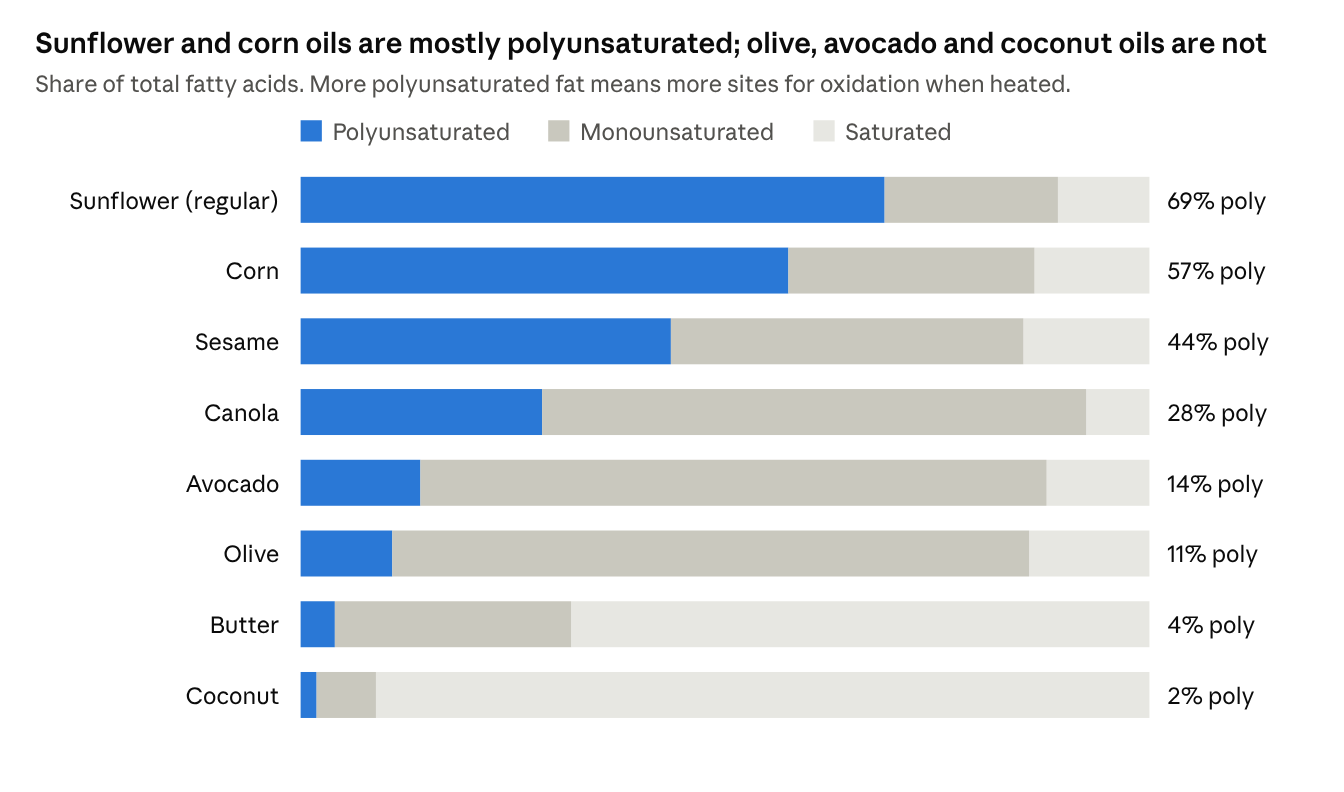
USDA FoodData Central (SR Legacy) values per 100 g; olive, corn and sesame from two secondary sources that match USDA
The chart shows why fatty acid profile matters. The more polyunsaturated fat an oil contains, the more vulnerable it is to oxidation in a hot pan. Oils high in monounsaturated or saturated fat hold up better.
| Oil or fat | Best uses | Heat level | Notes |
|---|---|---|---|
| Extra virgin olive oil | Salads, drizzling, sautéing, roasting, baking | Low to medium-high | My everyday oil; polyphenols help protect it during cooking[17] |
| Avocado oil (refined) | Searing, roasting, stir-frying, grilling | Medium-high to high | Neutral flavor; buy from a trusted brand because quality varies widely[16] |
| Ghee or clarified butter | Searing, sautéing, roasting | Medium-high to high | Milk solids removed, so it burns less than butter |
| Butter (grass-fed) | Baking, gentle sautéing, finishing | Low to medium | Milk solids brown and burn at higher heat |
| Coconut oil | Baking, occasional sautéing, curries | Medium | Very stable, but raises LDL more than unsaturated oils[14] |
| Tallow, lard, duck fat | Roasting, occasional frying | Medium-high to high | Stable; choose pasture-raised sources |
| High-oleic sunflower or safflower | Occasional higher-heat cooking | Medium-high | Bred to be high in monounsaturated fat; still usually refined |
| Toasted sesame oil | Finishing Asian dishes, dressings | Low (flavor) | Use a little at the end for flavor |
| Macadamia or walnut oil | Dressings, drizzling | Cold or very low | Walnut is fragile; refrigerate |
| Flaxseed, hemp, pumpkin seed oil | Dressings, smoothies, drizzled on finished food | Cold only, never heat | High omega-3 or polyunsaturated; refrigerate and use quickly |
| Regular soybean, corn, cottonseed, grapeseed, “vegetable” oil | Best minimized | Avoid for high heat | High in polyunsaturated fat and usually highly refined |
Baking Tips
- For most quick breads, muffins and cakes, mild extra virgin olive oil or avocado oil can replace vegetable oil one for one.
- Use butter, ghee or coconut oil where a solid fat is needed for texture, such as pie crusts and cookies.
- For a 1:1 swap of butter with olive oil, use about three quarters as much olive oil.
Gentle Cooking Habits
- Do not let any oil smoke. If it smokes, wipe the pan and start again.
- Add oil to a warm, not screaming-hot, pan, and add food promptly.
- Favor roasting, sautéing, braising and steaming over deep frying.
- Ventilate your kitchen when searing at high heat, since cooking fumes also contain oxidation products.
Buying Healthy Oils and Reading Labels
The words that matter most on an oil label are “extra virgin” (for olive oil), a recent harvest date, a dark bottle and a trustworthy seal, because quality fraud and staleness are surprisingly common.
Quality Problems Are Real
- Olive oil. In a 2010 UC Davis study, 69% of imported oils labeled “extra virgin” from major brands failed international standards for extra virgin olive oil, compared with 10% of California oils, often because of oxidation, lower-grade oil or poor storage.[15]
- Avocado oil. In a 2020 UC Davis study of 22 US samples, at least 82% were stale or mixed with other oils before their expiration date, and three were almost entirely soybean oil.[16] The study was small and industry funded, but it is a useful warning.
Label Terms Decoded
| Label term | What it means | My take |
|---|---|---|
| Extra virgin (olive oil) | Highest grade: mechanically extracted, no chemicals, meets taste and chemical standards | Choose this |
| Virgin olive oil | Mechanically extracted, but with minor flavor defects | Acceptable for cooking |
| “Pure,” “light,” “olive oil” or “pomace” | Refined olive oil, often blended with a little virgin oil; “light” refers to flavor, not calories | Skip for health purposes |
| Cold pressed or expeller pressed | Pressed mechanically rather than extracted with chemical solvents such as hexane | A good sign for any oil |
| Unrefined or virgin | Not bleached or deodorized; retains flavor and antioxidants | Best for low-heat and cold use |
| Refined | Filtered, bleached and deodorized; neutral and higher smoke point, but fewer antioxidants | Fine for some high-heat uses from trusted brands |
| High-oleic | From seeds bred to be rich in monounsaturated fat | More stable than regular versions |
| Harvest date | When the olives or fruit were harvested | Look for the most recent harvest; more useful than “best by” |
| “Vegetable oil” | Usually soybean oil or a seed oil blend | Minimize |
| Partially hydrogenated oil | Source of artificial trans fat | Avoid completely[11][12] |
| Interesterified or “fully hydrogenated” fat | Chemically restructured fats used in processed foods | Minimize; long-term effects are less studied |
My Buying Healthy Oils Checklist
- Dark glass or tin, never clear plastic.
- A harvest date within about the last year, and a “best by” date well in the future.
- Origin and producer named clearly, ideally a single country or estate rather than “packed in” or a blend of many countries.
- Third-party seals such as the California Olive Oil Council (COOC), the North American Olive Oil Association quality seal, or a protected designation of origin (PDO/DOP), which add accountability.
- Taste it. Fresh extra virgin olive oil tastes fruity, grassy or peppery and may make you cough slightly from its polyphenols. Flat, waxy or crayon-like flavors signal a stale or low-grade oil.
- Organic where possible, particularly for oils from crops that are commonly sprayed.
- Size to your use, so you finish it while it is fresh.
Hidden Oils: Dressings, Marinades, Packaged and Restaurant Foods
Most of the refined oil in the modern diet does not come from the bottle in your pantry; it comes from salad dressings, mayonnaise, sauces, snack foods, baked goods and restaurant cooking.
Salad Dressings and Marinades
The front label may say “olive oil,” “avocado,” “Mediterranean” or “made with extra virgin olive oil.” Turn the bottle over. Very often the first oil listed is soybean or canola, with olive oil appearing far down the list in a small amount. Common things to watch for:
- Soybean, canola, corn, cottonseed or “vegetable” oil as the first or main oil.
- “Contains one or more of the following oils”, which means the manufacturer may switch oils without notice.
- Added sugars (sugar, high-fructose corn syrup, cane juice, honey in large amounts). See my functional medicine guide to natural sweeteners for better options.
- Partially hydrogenated oils, now largely banned in the US, but worth checking in older or imported products.
- Thickeners and emulsifiers such as xanthan gum, polysorbate 80 and carboxymethylcellulose, which some sensitive patients do not tolerate. In mice, carboxymethylcellulose and polysorbate 80 thinned the protective barrier between gut bacteria and the intestinal lining, promoting low-grade inflammation and metabolic syndrome.[28] In a small 11-day human feeding study, 15 g/day of carboxymethylcellulose reduced microbiome diversity and short-chain fatty acids and modestly increased abdominal discomfort.[29] The doses in dressings are smaller, but these additives add up across a processed diet.
- Preservatives and flavor enhancers such as calcium disodium EDTA, potassium sorbate, sodium benzoate and MSG, and vague “natural flavors.”
- “Light” or “fat-free” versions, which usually replace fat with sugar, starch and gums. A little real fat actually helps you absorb the fat-soluble nutrients in your salad.
Better choices: dressings where extra virgin olive oil or avocado oil is the only oil (and listed first), with vinegar, lemon, herbs, mustard and spices. Better still, make your own.
A Two-Minute Homemade Vinaigrette
Whisk or shake in a jar: 3 parts extra virgin olive oil, 1 part vinegar (red wine, balsamic or apple cider) or lemon juice, a teaspoon of Dijon mustard, a small minced garlic clove, a pinch of sea salt and pepper, and fresh or dried herbs. Store in the refrigerator for up to a week; the oil may solidify slightly in the cold, so let it sit a few minutes and shake before using.
Mayonnaise, Sauces and Spreads
Most conventional mayonnaise, aioli, ranch, tartar sauce and many “avocado oil” mayos are built on soybean or canola oil. Look for those made only with avocado or olive oil, or make your own. Check plant-based butters and spreads, which are often blends of refined seed and palm oils.
Packaged and Processed Foods
Chips, crackers, cookies, granola bars, frozen meals, roasted nuts and even “healthy” snacks commonly contain refined seed oils, sometimes along with palm oil. Ultra-processed foods as a whole drive overeating (see the research section below), so the oil is only part of the problem.
Restaurants
Many restaurants cook with inexpensive refined oils or blends and reuse fryer oil. A few simple strategies: ask what oil they cook with, request that your vegetables or fish be cooked in butter or olive oil, choose grilled, roasted or steamed dishes over fried ones, and ask for olive oil and vinegar instead of house dressing.
Storing Healthy Oils So They Stay Fresh
Heat, light, oxygen and time are the four enemies of oil, so buy only what you will use in a few months and keep it cool, dark and tightly capped.
My Storage Rules
- Keep it away from the stove. The cabinet next to the range is the worst spot in the kitchen. Choose a cool, dark pantry.
- Choose dark glass or tins. Avoid clear plastic bottles, which let in light and may leach plastic compounds into fatty foods over time.
- Cap it quickly. Every minute uncapped invites oxygen in. Decanting a small amount into a pour bottle keeps the main supply sealed.
- Buy the right size. A bottle you will finish in one to three months beats a giant bargain jug that oxidizes on the shelf.
- Check dates. For olive oil, look for a harvest date and use it within about 12 to 18 months of harvest, and ideally within a couple of months of opening.
- Refrigerate the fragile ones. Flaxseed, walnut, hemp and other high-omega-3 oils should be kept in the refrigerator and used within weeks of opening. Never heat them.
- Solid fats are forgiving. Ghee, coconut oil and tallow are stable at room temperature for months; butter keeps best refrigerated.
How to Tell If an Oil Has Gone Rancid
Trust your nose. Rancid oil smells like crayons, putty, old nuts or paint, and tastes stale or bitter in the back of the throat. A sticky film on the bottle is another clue. If in doubt, throw it out.
What About Reusing Frying Oil?
Each time oil is heated, more of it breaks down into oxidized and polar compounds. I recommend avoiding deep frying at home most of the time. If you do fry, use a stable fat, keep the temperature controlled, strain the oil, and discard it after one or two uses or as soon as it darkens, thickens, foams or smells off. Restaurant fryer oil, which may be reused many times, is one reason I limit fried restaurant foods.
Your Quick-Start Checklist
If you remember nothing else, make extra virgin olive oil your default, read the back of every dressing bottle, keep heat moderate, and keep your oils fresh.
- ☐ Make fresh, high-quality extra virgin olive oil your everyday oil for salads and most cooking.
- ☐ Keep one stable fat (avocado oil, ghee or tallow) for high-heat searing.
- ☐ Refrigerate flax, walnut and hemp oils and never heat them.
- ☐ Check the oil in every dressing, mayonnaise and marinade; switch to olive or avocado oil versions or make your own.
- ☐ Avoid anything with partially hydrogenated oil.
- ☐ Cut back on fried restaurant food and ultra-processed snacks, where refined and reheated oils hide.
- ☐ Store oils in a cool, dark place in dark glass, and buy sizes you will use within a few months.
- ☐ Eat fatty fish two to three times a week, or consider a quality omega-3 if your levels are low.
- ☐ Ask your clinician about an omega-3 index test to see where you stand.
Supplements I Use for Omega-3 Balance
Food comes first, but for patients whose omega-3 levels are low, or who do not eat fish, I often use:
- Dr. Jill Health® Omega Essentials DHA: 580 mg DHA per softgel in natural triglyceride form, sourced from Chilean waters.
- Dr. Jill Health® Omega Essentials 950: a concentrated, purified fish oil providing EPA, DHA and DPA in natural triglyceride form, independently tested for heavy metals, pesticides and PCBs.
- Dr. Jill Health® Omega Plus 1300: an IFOS five-star certified monoglyceride fish oil designed for absorption.
- Dr. Jill Health OmegaPro PRM: a concentrated fish oil standardized for pro-resolving mediator precursors (18-HEPE, 17-HDHA and 14-HDHA) for inflammation resolution.
If you have atrial fibrillation or take blood thinners, please talk with your physician before taking omega-3 supplements, especially above 1 gram per day.[23] Fish oil is an oil too, so keep it in the refrigerator and discard any that smells strongly fishy or rancid.
The Oil of Gladness
Good food, prepared with care and shared with gratitude, is one of the most ordinary and most sacred ways we care for the bodies we have been given.
A word of faith. Oil runs all through Scripture as a sign of blessing, healing and joy. Psalm 104 thanks God for “wine that gladdens human hearts, oil to make their faces shine, and bread that sustains their hearts.” When I pour a good olive oil over fresh vegetables, I try to pause and give thanks for the land, the trees, the farmers and the gift of nourishment. Healthy eating does not have to be anxious or perfectionistic. It can be an act of gratitude.
You do not need to overhaul your kitchen overnight. Start with one swap: a fresh, high-quality extra virgin olive oil for your salads and everyday cooking, or a homemade dressing in place of a bottled one. Small, faithful choices, made day after day, add up to real change in how you feel.
For more of my story of healing through functional medicine, science and faith, I invite you to read Unexpected.
Keep Learning
- Blog: The Sweet Truth: A Functional Medicine Guide to Stevia, Monk Fruit, Allulose and the Best Natural Sweeteners
- Blog: The Gut-Brain Axis: How Your Microbiome Shapes Neuroinflammation and Mental Health
- Shop: Dr. Jill's Fish Oil and Omega-3 collection
References
- Estruch R, Ros E, Salas-Salvadó J, et al. Primary prevention of cardiovascular disease with a Mediterranean diet supplemented with extra-virgin olive oil or nuts. N Engl J Med. 2018;378(25):e34. doi:10.1056/NEJMoa1800389
- Guasch-Ferré M, Li Y, Willett WC, et al. Consumption of olive oil and risk of total and cause-specific mortality among U.S. adults. J Am Coll Cardiol. 2022;79(2):101-112. doi:10.1016/j.jacc.2021.10.041
- Ramsden CE, Zamora D, Majchrzak-Hong S, et al. Re-evaluation of the traditional diet-heart hypothesis: analysis of recovered data from Minnesota Coronary Experiment (1968-73). BMJ. 2016;353:i1246. doi:10.1136/bmj.i1246
- Ramsden CE, Zamora D, Leelarthaepin B, et al. Use of dietary linoleic acid for secondary prevention of coronary heart disease and death: evaluation of recovered data from the Sydney Diet Heart Study and updated meta-analysis. BMJ. 2013;346:e8707. doi:10.1136/bmj.e8707
- Hooper L, Martin N, Jimoh OF, et al. Reduction in saturated fat intake for cardiovascular disease. Cochrane Database Syst Rev. 2020;8:CD011737. doi:10.1002/14651858.CD011737.pub3
- Hooper L, Al-Khudairy L, Abdelhamid AS, et al. Omega-6 fats for the primary and secondary prevention of cardiovascular disease. Cochrane Database Syst Rev. 2018;11:CD011094. doi:10.1002/14651858.CD011094.pub4
- Farvid MS, Ding M, Pan A, et al. Dietary linoleic acid and risk of coronary heart disease: a systematic review and meta-analysis of prospective cohort studies. Circulation. 2014;130(18):1568-1578. doi:10.1161/CIRCULATIONAHA.114.010236
- Marklund M, Wu JHY, Imamura F, et al. Biomarkers of dietary omega-6 fatty acids and incident cardiovascular disease and mortality. Circulation. 2019;139(21):2422-2436. doi:10.1161/CIRCULATIONAHA.118.038908
- Guyenet SJ, Carlson SE. Increase in adipose tissue linoleic acid of US adults in the last half century. Adv Nutr. 2015;6(6):660-664. doi:10.3945/an.115.009944
- Blasbalg TL, Hibbeln JR, Ramsden CE, Majchrzak SF, Rawlings RR. Changes in consumption of omega-3 and omega-6 fatty acids in the United States during the 20th century. Am J Clin Nutr. 2011;93(5):950-962. doi:10.3945/ajcn.110.006643
- Mozaffarian D, Katan MB, Ascherio A, Stampfer MJ, Willett WC. Trans fatty acids and cardiovascular disease. N Engl J Med. 2006;354(15):1601-1613. doi:10.1056/NEJMra054035
- US Food and Drug Administration. Final determination regarding partially hydrogenated oils (removing trans fat). 2015. fda.gov
- Hall KD, Ayuketah A, Brychta R, et al. Ultra-processed diets cause excess calorie intake and weight gain: an inpatient randomized controlled trial of ad libitum food intake. Cell Metab. 2019;30(1):67-77. doi:10.1016/j.cmet.2019.05.008
- Neelakantan N, Seah JYH, van Dam RM. The effect of coconut oil consumption on cardiovascular risk factors: a systematic review and meta-analysis of clinical trials. Circulation. 2020;141(10):803-814. doi:10.1161/CIRCULATIONAHA.119.043052
- Frankel EN, Mailer RJ, Shoemaker CF, Wang SC, Flynn JD. Tests indicate that imported “extra virgin” olive oil often fails international and USDA standards. UC Davis Olive Center; July 2010. ucdavis.edu
- Green HS, Wang SC. First report on quality and purity evaluations of avocado oil sold in the US. Food Control. 2020;116:107328. UC Davis summary
- De Alzaa F, Guillaume C, Ravetti L. Evaluation of chemical and physical changes in different commercial oils during heating. Acta Sci Nutr Health. 2018;2(6):2-11. actascientific.com
- Guillén MD, Uriarte PS. Aldehydes contained in edible oils of a very different nature after prolonged heating at frying temperature: presence of toxic oxygenated α,β unsaturated aldehydes. Food Chem. 2012;131(3):915-926. doi:10.1016/j.foodchem.2011.09.079
- EFSA Panel on Contaminants in the Food Chain. Risks for human health related to the presence of 3- and 2-monochloropropanediol (MCPD), and their fatty acid esters, and glycidyl fatty acid esters in food. EFSA J. 2016;14(5):4426. doi:10.2903/j.efsa.2016.4426
- EFSA Panel on Contaminants in the Food Chain. Update of the risk assessment on 3-monochloropropane diol and its fatty acid esters. EFSA J. 2018;16(1):5083. doi:10.2903/j.efsa.2018.5083
- Bhatt DL, Steg PG, Miller M, et al. Cardiovascular risk reduction with icosapent ethyl for hypertriglyceridemia. N Engl J Med. 2019;380(1):11-22. doi:10.1056/NEJMoa1812792
- Manson JE, Cook NR, Lee IM, et al. Marine n-3 fatty acids and prevention of cardiovascular disease and cancer. N Engl J Med. 2019;380(1):23-32. doi:10.1056/NEJMoa1811403
- Gencer B, Djousse L, Al-Ramady OT, et al. Effect of long-term marine ω-3 fatty acids supplementation on the risk of atrial fibrillation in randomized controlled trials of cardiovascular outcomes: a systematic review and meta-analysis. Circulation. 2021;144(25):1981-1990. doi:10.1161/CIRCULATIONAHA.121.055654
- de Lorgeril M, Salen P, Martin JL, et al. Mediterranean diet, traditional risk factors, and the rate of cardiovascular complications after myocardial infarction: final report of the Lyon Diet Heart Study. Circulation. 1999;99(6):779-785. doi:10.1161/01.cir.99.6.779
- Dobarganes MC, Márquez-Ruiz G. Regulation of used frying fats and validity of quick tests for discarding the fats. Grasas y Aceites. 1998;49(3-4):331-335. grasasyaceites.revistas.csic.es
- Ganesan K, Sukalingam K, Xu B. Impact of consumption of repeatedly heated cooking oils on the incidence of various cancers: a critical review. Crit Rev Food Sci Nutr. 2019;59(3):488-505. doi:10.1080/10408398.2017.1379470
- EFSA Panel on Dietetic Products, Nutrition and Allergies. Scientific opinion on the substantiation of health claims related to polyphenols in olive. EFSA J. 2011;9(4):2033. efsa.europa.eu
- Chassaing B, Koren O, Goodrich JK, et al. Dietary emulsifiers impact the mouse gut microbiota promoting colitis and metabolic syndrome. Nature. 2015;519(7541):92-96. doi:10.1038/nature14232
- Chassaing B, Compher C, Bonhomme B, et al. Randomized controlled-feeding study of dietary emulsifier carboxymethylcellulose reveals detrimental impacts on the gut microbiota and metabolome. Gastroenterology. 2022;162(3):743-756. doi:10.1053/j.gastro.2021.11.006
- Zhang Y, Chadaideh KS, Li Y, et al. Butter and plant-based oils intake and mortality. JAMA Intern Med. 2025. doi:10.1001/jamainternmed.2025.0205
- Johnson GH, Fritsche K. Effect of dietary linoleic acid on markers of inflammation in healthy persons: a systematic review of randomized controlled trials. J Acad Nutr Diet. 2012;112(7):1029-1041.
- Maki KC, et al. Plasma linoleic acid and cardiometabolic and inflammatory biomarkers (presentation). NUTRITION 2025, American Society for Nutrition annual meeting; June 2025. ScienceDaily summary
- Zhang Y, Sun Y, Yu Q, Song S, Brenna JT, Shen Y, Ye K. Higher ratio of plasma omega-6/omega-3 fatty acids is associated with greater risk of all-cause, cancer, and cardiovascular mortality: a population-based cohort study in UK Biobank. eLife. 2024;12:90132. doi:10.7554/eLife.90132
- Ramsden CE, Zamora D, Faurot KR, et al. Dietary alteration of n-3 and n-6 fatty acids for headache reduction in adults with migraine: randomized controlled trial. BMJ. 2021;374:n1448. doi:10.1136/bmj.n1448
- Ramsden CE, Ringel A, Feldstein AE, et al. Lowering dietary linoleic acid reduces bioactive oxidized linoleic acid metabolites in humans. Prostaglandins Leukot Essent Fatty Acids. 2012;87(4-5):135-141. doi:10.1016/j.plefa.2012.08.004
- Soundararajan R, et al. Integration of lipidomics with targeted, single cell, and spatial transcriptomics defines an unresolved pro-inflammatory state in colon cancer. Gut. Published online November 26, 2024. doi:10.1136/gutjnl-2024-332535
- US Department of Agriculture and US Department of Health and Human Services. Dietary Guidelines for Americans, 2025-2030. January 2026. realfood.gov
- Lichtenstein AH, Khera A, Anderson CAM, Appel LJ, et al. 2026 dietary guidance to improve cardiovascular health: a scientific statement from the American Heart Association. Circulation. Published online March 31, 2026. doi:10.1161/CIR.0000000000001435
- European Food Information Council. Is hexane in food a cause for concern? (summarizing EFSA's 2024 technical report on hexane re-evaluation). eufic.org
Fatty acid values in the chart are from USDA FoodData Central (SR Legacy); olive, corn and sesame values were taken from two secondary sources that match USDA data.
Disclaimer: This article is for educational purposes only and is not a substitute for individualized medical advice. Do not start, stop or change medications or supplements without consulting your healthcare provider. Statements about supplements have not been evaluated by the Food and Drug Administration. Dr. Jill Carnahan is the founder of Dr. Jill Health and may benefit from sales of products mentioned.
About Dr. Jill Carnahan, MD
Dr. Jill Carnahan, MD, ABIHM, ABoIM, IFMCP, is a triple board-certified functional medicine physician and Medical Director of Flatiron Functional Medicine in Louisville, Colorado. She is the author of the bestselling book Unexpected, host of Resiliency Radio, and is featured in the Doctor/Patient documentary. Learn more at jillcarnahan.com, shop her physician-formulated supplements at drjillhealth.com, and follow her on Instagram at @DrJillCarnahan.












Share: