


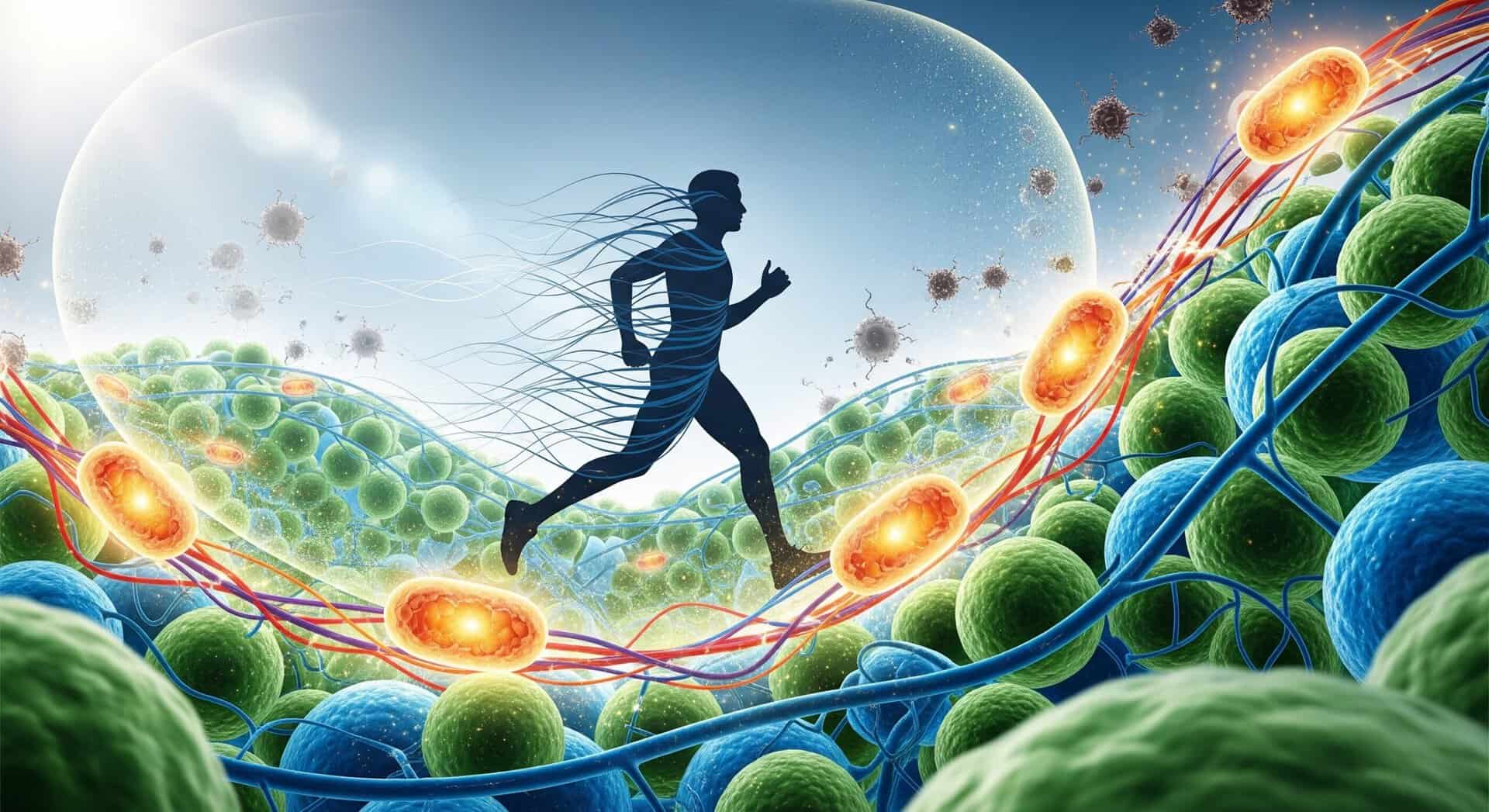
“When I was going through chemotherapy, some days the most I could manage was a slow walk to the end of the driveway and back. I remember feeling like it barely counted. What the science now tells me is that it counted more than I knew. Movement is not a consolation prize we offer patients when we run out of drugs. It is a biological intervention with a mechanism, a dose, and a measurable effect on survival.” Dr. Jill Carnahan, MD
Why This Question Matters to Me
I have sat on both sides of the exam table. As a physician, I have told hundreds of patients that exercise reduces cancer risk. As a breast cancer patient in my early thirties, I have also been the person hearing that advice while exhausted, nauseated, and afraid.
For decades, the honest answer to “why does exercise help?” was some version of we are not entirely sure. We had strong epidemiology and a hand-waving list of plausible mechanisms: lower insulin, lower estrogen, less inflammation, better immunity. All reasonable. None of it explained why the protection appeared strongest against the deadliest form of the disease, metastatic cancer.
In 2022, a team at Tel Aviv University offered an answer that genuinely changed how I think about this. They called it the exercise-induced metabolic shield, and it reframes exercise not as something that attacks the tumor, but as something that transforms the soil the tumor is trying to grow in.
This article walks through what that study actually found, what the last five years of research has added, where the evidence is genuinely strong versus merely suggestive, and what I now recommend to patients. I have prioritized aerobic activity throughout, because that is where the causal evidence is strongest, and I will be explicit about why.

Part One: The Discovery
What Sheinboim and Colleagues Actually Did
The paper, published in Cancer Research by Sheinboim, Parikh, Manich, Markus, and colleagues under senior authors Carmit Levy, Yftach Gepner, and Mehdi Khaled, combined four separate lines of evidence.1
1. Proteomics in mice. They trained mice on treadmills for eight weeks, then performed mass spectrometry on the organs where metastases typically land: lungs, lymph nodes, and liver, plus skeletal muscle as a comparison tissue. In trained animals, they found upregulation of carbohydrate metabolism, glycolysis, oxidative phosphorylation, and mitochondrial biogenesis across every tissue examined.
One detail I find quietly remarkable: the organs of sedentary mice scattered on principal component analysis, while the organs of trained mice clustered tightly together. Exercise appeared to synchronize the metabolic character of internal organs, overriding individual baseline variation.
2. Functional metabolic testing. Proteomics tells you what proteins are present. The team went further and measured what the cells actually did. Primary cells from the lungs, lymph nodes, liver, and muscle of trained mice took up significantly more glucose (measured with the fluorescent analogue 2-NBDG), showed higher glycolytic flux, and carried more actively polarized mitochondria. Expression of the glucose transporters GLUT1, GLUT2, and GLUT4 was elevated.
Critically, blood glucose levels were unchanged between groups. Systemic glucose homeostasis stayed intact. The change was in the organs themselves, not in the bloodstream.
To my knowledge, this was the first demonstration of increased mitochondrial activity after exercise in the lymph nodes and lungs, tissues not traditionally considered part of the exercise response at all.
3. Human plasma proteomics. Six routinely active adults (three women, three men) ran on a treadmill at roughly 75% of maximum heart rate for 30 minutes. Plasma proteomics before and after showed enrichment of the IGF-1 pathway, which promotes glucose uptake by translocating GLUT1 and GLUT4 to the cell membrane. In a separate group of 14 runners, the team confirmed that as exercise intensity rises, fuel utilization shifts progressively from fat toward carbohydrate.
4. The mouse cancer models. Using three different melanoma models, including intracarotid and intrasplenic injection designed to bypass primary tumor growth entirely, exercise significantly reduced metastatic burden in lungs, lymph nodes, and liver. Importantly, this held true even in mice exercised only before tumor cells were introduced. The protection was already built into the tissue before cancer ever arrived.
When the researchers treated the “active” tissue with rapamycin to block mTOR signaling, the protection vanished and melanoma cells survived and proliferated normally. That is the experiment that turns correlation into mechanism.
The Core Idea
Here is the concept in plain language.
Cancer cells are metabolically greedy. The Warburg effect describes their preference for aerobic glycolysis, consuming enormous quantities of glucose to generate the carbon backbone for rapid proliferation. When a circulating tumor cell arrives at a distant organ, it has to compete for local fuel in order to establish a colony.
Exercise turns that organ into a hostile neighborhood. The stromal tissue becomes metabolically ravenous in its own right, expressing more glucose transporters, running more mitochondria, and consuming glucose at a rate the tumor cell cannot match.
Exercise does not poison the cancer cell. It outcompetes it for lunch.
The tissue analysis supports exactly this. In sedentary mice, metastases expressed higher levels of metabolic markers (GLUT1, aldolase A, Complex I) than the surrounding stroma. In exercised mice, the pattern inverted: the stroma outstripped the tumor. Only about half as many tumor cells succeeded in seeding active tissue compared with sedentary tissue, and the ones that did survive showed a suppressed metabolic profile, a state the authors note resembles dormancy.
The Human Epidemiology in That Same Paper
The team also analyzed a prospective Israeli cohort of 2,734 initially cancer-free adults (1,302 women, 1,432 men) followed for 20 years, linked to the Israel National Cancer Registry.1
Their finding was intensity-dependent and stage-dependent. Exercise had only a modest effect on the incidence of low-stage, localized cancers. But high-intensity exercise (above 6 METs) was associated with a 73% reduction in the incidence of highly metastatic cancer (SEER stage 7, distant sites involved) compared with inactive participants.
Where I Want to Be Careful With You
This is precisely the kind of headline number that gets flattened into a meme, so let me be exact about what it does and does not mean.
- The 73% figure comes from a single cohort of 2,734 people, of whom 243 developed cancer, and 95 of those had no stage information and were excluded. The subgroup driving that number is therefore small.
- It is an observational association, propensity-score weighted for age, sex, diet, BMI, smoking, socioeconomic status, and comorbidities, but observational nonetheless. Physical activity was self-reported.
- It describes cancer stage at diagnosis, not progression of an existing cancer.
- The mouse work is elegant and mechanistically persuasive, but it was done in melanoma models in female mice. The authors themselves say they expect it to generalize, which is a hypothesis, not a finding.
- The authors are candid that professional athletes still develop cancer. A metabolic shield is a probability shift, not a force field.
I say all of this not to diminish the work. I find it one of the most important papers in exercise oncology of the past decade. I say it because you deserve science delivered honestly, and because the strongest argument for exercise does not need inflation. As you will see next, it now rests on something even better than a cohort study.

Part Two: What the Last Five Years Have Added
The Randomized Trial That Changed the Conversation
In June 2025, the CHALLENGE trial (CCTG CO.21) was published in the New England Journal of Medicine and presented at ASCO.2 This is the study that moved exercise from “strongly suggested by observational data” to level 1 evidence.
Design and results:
- 889 patients with stage III or high-risk stage II colon cancer, enrolled across 55 centers between 2009 and 2024
- All had completed surgical resection and adjuvant chemotherapy (FOLFOX or CAPOX)
- Randomized to a three-year structured exercise program with a behavioral support consultant, or to general health education materials
- Median follow-up: 7.9 years
| Outcome | Exercise | Health education |
|---|---|---|
| 5-year disease-free survival | 80.3% | 73.9% |
| DFS hazard ratio | 0.72 (95% CI 0.55 to 0.94; P = 0.02) | reference |
| Overall survival hazard ratio | 0.63 | reference |
| Annual incidence of recurrence, new primary, or death | 3.7% | 5.4% |
The exercise prescription matters enormously here, and it is worth reading twice. The intervention was predominantly aerobic. Participants were asked to increase their baseline aerobic activity by at least 10 MET-hours per week within six months, then sustain or build on it for the remaining two and a half years. The investigators described that increment as roughly equivalent to:
- an additional 45 to 60 minutes of brisk walking, or
- 25 to 30 minutes of jogging,
- performed 3 to 4 times per week
That is it. That is the dose that produced a 28% reduction in recurrence or death and a 37% reduction in mortality.
To put that in perspective: those absolute survival gains compare favorably with a number of approved systemic therapies. Adverse events were modest and predominantly musculoskeletal (18.5% in the exercise arm versus 11.5% in the education arm, with about 10% of exercise-arm events attributed to the intervention itself).
I want to name something about this trial that I think deserves comment. It took seventeen years from conception to publication, and several oncologists at ASCO noted publicly that it was not given a plenary slot. A three-year walking program that cuts mortality by more than a third is, by any reasonable standard, a major oncology finding. That it received less fanfare than a marginal drug approval tells us something about where our incentives sit.
Intensity: The Metabolic Shield Hypothesis, Tested in Humans
If the shield is real and it depends on driving high metabolic demand, then intensity should matter independently of total volume. Two large datasets published since suggest it does.
VILPA (vigorous intermittent lifestyle physical activity). Stamatakis and colleagues analyzed 22,398 UK Biobank participants who reported doing no structured exercise at all and took one or fewer recreational walks per week.3 Wrist accelerometers captured brief, sporadic bursts of vigorous activity embedded in ordinary life: a flight of stairs, a hard walk to catch a bus, carrying groceries uphill.
Over a mean 6.7 years of follow-up, with 2,356 cancers diagnosed:
- 92.3% of all VILPA occurred in bouts of one minute or less
- A minimum dose of 3.4 to 3.6 minutes per day was associated with a 17% to 18% reduction in total cancer incidence versus no VILPA
- The median dose of 4.5 minutes per day was associated with a 31% to 32% reduction in physical-activity-related cancer incidence, and a hazard ratio of 0.80 (95% CI 0.69 to 0.92) for total cancer
Three to four minutes a day. In people who were not exercising at all. This is, to my mind, one of the most hopeful findings in the entire prevention literature.
Cardiorespiratory fitness in youth. Onerup and colleagues linked cardiorespiratory fitness measured at Swedish military conscription (ages 16 to 25) in more than one million men to cancer registry outcomes over a mean 33 years of follow-up.4 Higher aerobic fitness was associated with substantially lower risk (up to roughly 40% lower) for cancers of the head and neck, esophagus, stomach, pancreas, liver, colon, rectum, kidney, and lung.
The authors' own conclusion is the sentence I would underline: public health efforts aimed at reducing cancer should focus on aerobic physical activity of sufficient relative intensity to increase cardiorespiratory fitness.
And here is the nuance most coverage omitted. In that same cohort, higher fitness was associated with higher incidence of prostate cancer and malignant skin cancer. This almost certainly reflects detection bias (fitter, more health-engaged men get screened more, and PSA screening detects a great deal of indolent disease) and greater cumulative UV exposure in outdoor athletes. But it is in the data, and I am not going to hide it from you. It is also a practical reminder: if you train outdoors, sun protection is part of your cancer prevention protocol, not separate from it.
How Much Is Enough? The Dose-Response Picture
Garcia and colleagues pooled 196 articles covering 94 cohorts and more than 30 million participants, examining non-occupational physical activity against cardiovascular disease, cancer, and mortality.5
The shape of the curve is the useful part. The steepest gains occur between zero and 8.75 marginal MET-hours per week, which corresponds to the standard recommendation of 150 minutes per week of moderate-to-vigorous aerobic activity. Between 8.75 and 17.5 mMET-hours the returns continue but flatten. Beyond that, additional differences were small and uncertain.
A separate dose-response analysis by Diao and colleagues, searching PubMed and Embase through March 2023 and quantifying total physical activity across all domains, reached compatible conclusions for site-specific cancers.6
The practical translation: the person moving from zero to something gains far more than the person moving from a lot to more. If you are currently sedentary, you are standing on the steepest part of the curve. That is good news.
Sitting Is Its Own Variable, and How You Sit Matters
A study published in PLOS Medicine on July 2, 2026, adds a dimension I had not fully appreciated.7 Zhou and colleagues analyzed 91,292 UK Biobank participants with seven days of wrist accelerometry, followed for a median of 12.38 years, and distinguished prolonged sedentary behavior (bouts of at least 30 minutes that were at least 90% still) from interrupted sedentary behavior.
- Each additional hour of prolonged sedentary time: 9% higher risk of cancer death (HR 1.09; 95% CI 1.06 to 1.11)
- Each additional hour of interrupted sedentary time: 18% lower risk of cancer death
- Replacing one hour per day of prolonged sitting with light activity: 12% lower cancer mortality (HR 0.88; 95% CI 0.79 to 0.99)
- Replacing 30 minutes with moderate activity: 8% lower
- The same pattern held for overall cancer incidence, obesity-related cancers, and type 2 diabetes-related cancers
Total sitting time was not the whole story. The pattern of accumulation was. Two people can sit for nine hours a day and carry meaningfully different risk depending on whether that time is one continuous block or broken up by movement.
This maps beautifully onto the metabolic shield concept. A body that repeatedly cycles into elevated glucose demand throughout the day looks metabolically different from one that sits still for hours at a stretch.
I will note, as the authors and independent commentators did, that this is a single cohort with known healthy-volunteer bias, it does not establish causation, and there was no data on the context of the sitting.
The Broader Mechanistic Picture
The metabolic shield is one mechanism among several, and I want to place it in context rather than oversell it. A 2025 commentary in Cancer Cell by Nash, Terry, and Febbraio organizes the current evidence into several categories.8
Immune modulation. Acute exercise mobilizes natural killer cells and cytotoxic T cells into circulation and into tumors, driven by adrenergic signaling. This traces back to landmark work by Pedersen and colleagues showing that voluntary running suppressed tumor growth through epinephrine- and IL-6-dependent NK cell mobilization.9
Myokines and exerkines. Contracting skeletal muscle is an endocrine organ. IL-6, IL-15, irisin, SPARC, oncostatin M, and decorin have all been implicated in reducing tumor cell proliferation and remodeling the immune microenvironment.10,11 I would classify this evidence as mechanistically compelling but clinically immature. Findings are heterogeneous, largely preclinical, and human validation linking specific myokine responses to progression-free survival is limited.
Immune cell metabolic reprogramming. Increased fatty acid oxidation and improved mitochondrial function in immune cells, which is a close cousin of the metabolic shield concept applied to lymphocytes rather than stroma.
Systemic metabolic remodeling. Improved insulin sensitivity, reduced circulating insulin and IGF-1 bioavailability, reduced visceral adiposity, and lower systemic inflammation.12 For those of you who have followed my writing on insulin, glucose, and cancer terrain, this is the pathway you already know well.
Vascular normalization. Improved perfusion of tumor tissue reduces hypoxia, which can enhance delivery and efficacy of chemotherapy and radiation.
A note on the literature: I reviewed a 2025 Frontiers in Oncology review on exercise and glioblastoma while researching this article and found that it has since been formally retracted. I have excluded it. When I tell you a reference is verified, I mean I checked it.

Part Three: Aerobic Versus Strength Training, Honestly Assessed
You asked me to focus on aerobic activity unless the evidence for other modalities is genuinely robust. I want to explain exactly why I am comfortable doing that, and where I think strength training still earns a firm place in the protocol.
Why Aerobic Exercise Carries the Evidence
1. The mechanism is aerobic by nature. The metabolic shield is generated by sustained, high-demand glucose consumption in stromal tissue and by mitochondrial and GLUT upregulation. The human validation arm of the Sheinboim study used 30 minutes of steady-state treadmill running at 75% of maximum heart rate, and demonstrated a shift toward carbohydrate utilization that scaled with intensity.1
2. The only definitive randomized trial used an aerobic prescription. CHALLENGE prescribed brisk walking and jogging, quantified in MET-hours.2 That is our single piece of level 1 evidence that exercise improves cancer survival, and it is aerobic.
3. The strongest incidence data are aerobic-specific. VILPA measured bursts of vigorous ambulatory activity.3 The million-man Swedish cohort measured cardiorespiratory fitness.4 The dose-response meta-analysis was built on moderate-to-vigorous aerobic activity.5
What the Resistance Training Evidence Actually Shows
Resistance training is genuinely good for you. I recommend it to nearly every patient. But I will not tell you its cancer-specific evidence is equivalent, because it is not.
- A systematic review and meta-analysis of 10 studies found that any resistance training was associated with 15% lower all-cause mortality, 19% lower cardiovascular mortality, and 14% lower cancer mortality, with a suggestion of a U-shaped dose-response curve where very high volumes lost benefit.13
- Momma and colleagues, pooling cohort studies, found muscle-strengthening activity associated with lower risk across major non-communicable diseases, and notably found the benefits of aerobic and strength training to be additive. Combined aerobic plus strength activity was associated with roughly 28% lower cancer mortality, larger than either alone.14
- Earlier pooled analyses of muscle-strengthening activity and cancer incidence found the total cancer mortality signal did not reach statistical significance (HR 0.87, 95% CI 0.73 to 1.02 across six studies), reflecting fewer studies and greater heterogeneity than the aerobic literature.
My honest read: the cancer-specific evidence for resistance training is supportive and biologically plausible but less consistent and less causally established than for aerobic activity. There is no randomized cancer-outcome trial of resistance training comparable to CHALLENGE.
Why I Still Prescribe Strength Training
The case for resistance training in a cancer context does not rest primarily on tumor biology. It rests on things that are independently critical:
- Muscle mass and strength are strong predictors of mortality in cancer patients. A 2024 systematic review and meta-analysis of 42 studies involving nearly 47,000 patients found muscular strength and cardiorespiratory fitness both associated with lower mortality risk, with the strength signal notably relevant in advanced-stage disease.15
- Cancer treatment is catabolic. Chemotherapy, androgen deprivation, corticosteroids, and prolonged inactivity all drive sarcopenia. Sarcopenia degrades treatment tolerance, dose intensity, functional independence, and recovery from surgery.
- Bone. Aromatase inhibitors, androgen deprivation therapy, and premature treatment-induced menopause all accelerate bone loss. Loading is the only intervention that meaningfully addresses this outside pharmacology.
- Insulin sensitivity. Skeletal muscle is the primary site of glucose disposal. More muscle means a larger metabolic sink, which is directly relevant to the terrain we are trying to reshape.
- Guidelines include it. The 2019 ACSM International Multidisciplinary Roundtable recommends resistance exercise for survivors alongside aerobic training.16
So: aerobic exercise is the engine, resistance training is the chassis. You want both. I am simply being transparent that the evidence supporting the engine is stronger.
What About Yoga, Tai Chi, HIIT, and Everything Else?
- Yoga and tai chi have reasonable evidence for fatigue, sleep quality, anxiety, and quality of life in cancer populations. They do not have robust evidence for altering cancer incidence or recurrence. I recommend them enthusiastically for what they do well, and I do not overstate them.
- HIIT is a legitimate way to accumulate vigorous aerobic minutes efficiently, and it is compatible with everything the intensity data suggest. There is no cancer-outcome trial establishing superiority over steady-state aerobic work.
- Flexibility and balance work matter for safety and adherence, particularly in older survivors and those with chemotherapy-induced peripheral neuropathy.
Part Four: Evidence-Based Physical Activity Recommendations
These recommendations are graded by strength of evidence. Everything here should be individualized with your medical team, and I say more about that in the safety section.
If You Are Trying to Reduce Your Risk of Cancer
1. Build to at least 150 minutes per week of moderate aerobic activity, or 75 minutes of vigorous. (Strongest evidence.) This is the 8.75 mMET-hour threshold where the dose-response curve is steepest.5 Brisk walking, cycling, swimming, hiking, rowing, dancing. If you can talk but not sing, you are at moderate intensity.
2. Deliberately include intensity, not just volume. (Strong and mechanistically coherent.) The metabolic shield concept, the SEER-stage findings, the VILPA data, and the cardiorespiratory fitness data all point the same direction: intensity does something that duration alone does not.1,3,4 Practically, add two sessions per week where you are working hard enough that talking becomes difficult. Hills. Intervals. A harder final ten minutes.
3. If structured exercise feels impossible, start with VILPA. (Strong observational evidence in exactly this population.) Three to four minutes a day of vigorous bursts embedded in daily life was associated with meaningful risk reduction in people doing zero structured exercise.3 Take the stairs, hard. Park at the far end of the lot and walk fast. Carry the groceries in one trip and hustle.
4. Break up sitting, and treat this as separate from your workout. (Good, recent, observational.) Aim to stand and move every 30 minutes.7 A two-minute walk. A set of squats. Pace during phone calls. A single workout does not neutralize a nine-hour uninterrupted sit.
5. Add resistance training at least twice weekly. (Moderate for cancer-specific outcomes, strong for overall health and mortality.) Six to ten exercises covering major muscle groups, one to four sets of eight to fifteen repetitions, at roughly 50% to 60% or more of your one-repetition maximum.16 Aerobic and strength benefits appear additive.14
6. Protect your skin if you train outdoors. (Prudent, given the fitness-skin cancer signal.)4 Morning or evening sessions, protective clothing, and mineral sunscreen on exposed areas.
7. Prioritize consistency over perfection. The Swedish data measured fitness at age 18 and predicted cancer risk over the following 33 years.4 This is a decades-long investment. Something sustainable beats something heroic and abandoned.
If You Have Been Diagnosed With Cancer or Are in Survivorship
Please clear all of this with your oncology team first. What follows is a framework, not a prescription for your specific situation.
1. During and after treatment, aim for approximately 30 minutes of moderate aerobic activity three times per week. (Strong; guideline-endorsed.) The 2019 ACSM Roundtable found this dose sufficient to improve fatigue, anxiety, depression, physical function, and quality of life over 8 to 12 weeks.16 Note that the minimum aerobic recommendation for survivors was lowered from 150 minutes per week, in recognition that benefit accrues below that threshold.
2. After adjuvant chemotherapy, work toward adding 10 MET-hours per week above your baseline. (Level 1 evidence, colon cancer.) Roughly 45 to 60 minutes of brisk walking or 25 to 30 minutes of jogging, three to four times per week, built up over six months and then sustained.2 CHALLENGE studied stage III and high-risk stage II colon cancer specifically; extrapolation to other tumor types is reasonable but not proven.
3. Include resistance training two to three times per week. (Moderate to strong.) Two sets of eight to fifteen repetitions.16 This is where muscle preservation, bone protection, and treatment tolerance live.
4. Do not fear resistance training if you have lymphedema or are at risk. (Well established, and contrary to older advice.) Supervised, slowly progressive resistance training focused on large muscle groups two to three times per week is recommended for upper-extremity lymphedema related to breast cancer. Work with a certified lymphedema therapist and consider a compression garment.
5. Ask for a referral to a cancer exercise specialist. ACSM-certified Cancer Exercise Trainers and oncology-trained physical therapists exist and are underused. Supervision improves both safety and adherence.
6. Consider prehabilitation. If surgery is scheduled, the weeks beforehand are valuable. Improving cardiorespiratory fitness before an operation improves postoperative recovery.
7. Adjust, do not abandon. (This is the most important item on this list.) Some days you will manage forty minutes. Some days you will manage the driveway. The consensus guidance is unambiguous: some activity is better than none, and survivors should avoid inactivity.16
When to Get Medical Clearance First
Most survivors can begin low-intensity walking or cycling, gradually progressive resistance training, and flexibility work without formal exercise testing.16 Talk to your physician before starting, and specifically seek clearance if you have:
- Bone metastases (weight-bearing and loading require individualized modification)
- Severe anemia or thrombocytopenia
- Active infection or fever
- Uncontrolled cardiac disease, or a history of anthracycline or trastuzumab exposure
- Peripheral neuropathy affecting balance
- An indwelling catheter or unhealed surgical site
- Severe cachexia or unintended rapid weight loss
- Uncontrolled nausea, vomiting, or dehydration
Part Five: Supporting the Terrain
Movement does not happen in a vacuum. The same metabolic machinery the shield depends on, mitochondrial density, glucose handling, and insulin sensitivity, is influenced by nutrition, sleep, stress, and toxic burden. I want to be clear that no supplement substitutes for exercise, and none of the products below have been shown to reduce cancer risk. They support the terrain in which exercise does its work.
Products I use in my practice, available at DrJillHealth.com:
- Dr. Jill Health® ATP Boost — a comprehensive mitochondrial formula with CoQ10, PQQ, and NT Factor®, formulated to support cellular energy production. Mitochondrial density and function are central to the metabolic shield concept.
- Dr. Jill Health® Activated CoQ10 — foundational support for the electron transport chain, particularly relevant for anyone on a statin or with high aerobic training volume.
- SR-CoQ10 with PQQ — sustained-release CoQ10 combined with BioPQQ®, which supports mitochondrial biogenesis, the same process exercise itself stimulates.
- Dr. Jill Health® Berberine 1000 — supports healthy glucose and lipid metabolism. Given how central insulin sensitivity is to cancer terrain, this is one I discuss often. Speak with your physician if you take glucose-lowering medication.
- Dr. Jill Health® Electrolyte Essentials — hydration and electrolyte replacement, which becomes genuinely important once you are training with intensity or in the heat.
- Dr. Jill Health® Mineral Essentials — magnesium, zinc, and trace minerals that are depleted by training and are cofactors throughout energy metabolism.
- Dr. Jill's Energy Support collection and Dr. Jill's Immune Support collection — curated selections for mitochondrial and immune resilience.
Please discuss any supplement with your oncology team. Certain antioxidants can interact with chemotherapy and radiation, and timing matters.
Part Six: A Word About Fear, Faith, and the Driveway
“Do you not know that your bodies are temples of the Holy Spirit, who is in you, whom you have received from God?” (1 Corinthians 6:19)
I have never read that verse as a burden or an accusation. I read it as an astonishing statement of worth. Your body is not a problem to be managed. It is a dwelling place. And caring for it is an act of reverence, not vanity.
When I was sick, prayer was not something I did instead of walking. It was often what I did while walking. Some of my most honest conversations with God happened on slow, uneven laps around the block when I did not have the strength for anything else. There is something about rhythm and breath that opens a door in us.
If you are reading this in fear, either because you have a diagnosis or because you are watching someone you love carry one, I want you to hear this clearly: you are not powerless, and you are not alone. The research in this article is genuinely hopeful. Not because it promises a cure, but because it shows that ordinary, humble, repeatable movement changes your biology in measurable ways.
You do not have to run a marathon. You have to take the stairs. You have to stand up every half hour. You have to walk to the end of the driveway when that is what the day allows.
And on the days you cannot, grace covers that too.
Bringing It Together
The exercise-induced metabolic shield gave us a mechanism that fits the epidemiology we could never fully explain. Movement does not simply reduce inflammation or lower estrogen, although it does both. It reprograms the metabolic character of your lungs, liver, and lymph nodes, making them inhospitable ground for a wandering tumor cell trying to build a home.
Three years after that hypothesis was proposed, a randomized controlled trial demonstrated that a three-year structured aerobic program cut recurrence by 28% and death by 37% in colon cancer survivors. That is not a supplement claim or a wellness slogan. That is level 1 evidence, published in the New England Journal of Medicine.
What I would want you to carry away:
- Aerobic activity is the foundation. It carries the strongest and most causal evidence.
- Intensity matters independently of duration. Include harder efforts, even brief ones.
- Resistance training belongs in the plan for muscle, bone, insulin sensitivity, and treatment tolerance, with honest acknowledgment that its cancer-specific evidence is weaker.
- Breaking up sitting is a distinct intervention from your workout.
- The largest gains belong to those starting from zero. If that is you, this is your best news.
- Some movement always beats none, on every single day, in every stage of illness or health.
If you would like help building a personalized plan that accounts for your genetics, your toxic burden, your metabolic labs, and where you are in your healing journey, our team at Flatiron Functional Medicine is here.
Move today. Even a little. Your organs are listening.
Blessings on your journey, Dr. Jill
Related Reading on JillCarnahan.com
- COVID-19 and Cancer: What the Latest Science Reveals and How to Protect Yourself
- Revolutionary Breast Cancer Prevention: Part 2 — Cutting-Edge Supplement Science and Targeted Nutraceutical Interventions
- Breast Cancer Prevention: 11 Tips To Help Reduce Your Risk
- The Science Behind MitoQ: A Comprehensive Review of 20 Years of Clinical Research on Mitochondrial-Targeted Therapy
- Resiliency Radio #324: Solving the Chronic Illness Puzzle — A Root-Cause Approach with Dr. Paul Anderson
- Resiliency Radio #322: The Future of Healing the Heart with Cardiologist Dr. Abid Husain
- Browse Dr. Jill's Blog
References
- Sheinboim D, Parikh S, Manich P, Markus I, Dahan S, Parikh R, et al. An exercise-induced metabolic shield in distant organs blocks cancer progression and metastatic dissemination. Cancer Res. 2022;82(22):4164-4178. doi:10.1158/0008-5472.CAN-22-0237
- Courneya KS, Vardy JL, O'Callaghan CJ, Gill S, Friedenreich CM, Wong RKS, et al. Structured exercise after adjuvant chemotherapy for colon cancer. N Engl J Med. 2025;393(1):13-25. doi:10.1056/NEJMoa2502760
- Stamatakis E, Ahmadi MN, Friedenreich CM, Blodgett JM, Koster A, Holtermann A, et al. Vigorous intermittent lifestyle physical activity and cancer incidence among nonexercising adults: the UK Biobank accelerometry study. JAMA Oncol. 2023;9(9):1255-1259. doi:10.1001/jamaoncol.2023.1830
- Onerup A, Mehlig K, af Geijerstam A, Ekblom-Bak E, Kuhn HG, Lissner L, et al. Associations between cardiorespiratory fitness in youth and the incidence of site-specific cancer in men: a cohort study with register linkage. Br J Sports Med. 2023;57(19):1248-1256. doi:10.1136/bjsports-2022-106617
- Garcia L, Pearce M, Abbas A, Mok A, Strain T, Ali S, et al. Non-occupational physical activity and risk of cardiovascular disease, cancer and mortality outcomes: a dose-response meta-analysis of large prospective studies. Br J Sports Med. 2023;57(15):979-989. doi:10.1136/bjsports-2022-105669
- Diao X, Ling Y, Zeng Y, Wu Y, Guo C, Jin Y, et al. Physical activity and cancer risk: a dose-response analysis for the Global Burden of Disease Study 2019. Cancer Commun (Lond). 2023;43(11):1229-1243. doi:10.1002/cac2.12488
- Zhou Z, Trost SG, Ryde GC, Parra-Soto S, Fang Z, Xu C, et al. Accelerometry-measured prolonged and interrupted sedentary behavior and cancer incidence and mortality: a cohort study of 91,292 UK Biobank participants. PLoS Med. 2026;23(7):e1004767. doi:10.1371/journal.pmed.1004767
- Nash DM, Terry LV, Febbraio MA. Exercising through cancer: physical activity as medicine for cancer care. Cancer Cell. 2025;43(12):2175-2180. doi:10.1016/j.ccell.2025.10.009
- Pedersen L, Idorn M, Olofsson GH, Lauenborg B, Nookaew I, Hansen RH, et al. Voluntary running suppresses tumor growth through epinephrine- and IL-6-dependent NK cell mobilization and redistribution. Cell Metab. 2016;23(3):554-562. doi:10.1016/j.cmet.2016.01.011
- Gebhardt K, Krüger K. Supporting tumor therapy by exercise: boosting T cell immunity by myokines. Signal Transduct Target Ther. 2022;7(1):292. doi:10.1038/s41392-022-01116-6
- Feng Y, Feng X, Wan R, Luo Z, Qu L, Wang Q. Impact of exercise on cancer: mechanistic perspectives and new insights. Front Immunol. 2024;15:1474770. doi:10.3389/fimmu.2024.1474770
- Hojman P, Gehl J, Christensen JF, Pedersen BK. Molecular mechanisms linking exercise to cancer prevention and treatment. Cell Metab. 2018;27(1):10-21. doi:10.1016/j.cmet.2017.09.015
- Shailendra P, Baldock KL, Li LSK, Bennie JA, Boyle T. Resistance training and mortality risk: a systematic review and meta-analysis. Am J Prev Med. 2022;63(2):277-285. doi:10.1016/j.amepre.2022.03.020
- Momma H, Kawakami R, Honda T, Sawada SS. Muscle-strengthening activities are associated with lower risk and mortality in major non-communicable diseases: a systematic review and meta-analysis of cohort studies. Br J Sports Med. 2022;56(13):755-763. doi:10.1136/bjsports-2021-105061
- López-Bueno R, Calatayud J, Del Pozo Cruz B, et al. Muscular strength and cardiorespiratory fitness and mortality risk in patients with cancer: a systematic review and meta-analysis. Br J Sports Med. 2024. doi:10.1136/bjsports-2024-108671
- Campbell KL, Winters-Stone KM, Wiskemann J, May AM, Schwartz AL, Courneya KS, et al. Exercise guidelines for cancer survivors: consensus statement from International Multidisciplinary Roundtable. Med Sci Sports Exerc. 2019;51(11):2375-2390. doi:10.1249/MSS.0000000000002116
- Patel AV, Friedenreich CM, Moore SC, Hayes SC, Silver JK, Campbell KL, et al. American College of Sports Medicine roundtable report on physical activity, sedentary behavior, and cancer prevention and control. Med Sci Sports Exerc. 2019;51(11):2391-2402. doi:10.1249/MSS.0000000000002117
- Ligibel JA, Bohlke K, May AM, Clinton SK, Demark-Wahnefried W, Gilchrist SC, et al. Exercise, diet, and weight management during cancer treatment: ASCO guideline. J Clin Oncol. 2022;40(22):2491-2507. doi:10.1200/JCO.22.00687
- Moore SC, Lee IM, Weiderpass E, Campbell PT, Sampson JN, Kitahara CM, et al. Association of leisure-time physical activity with risk of 26 types of cancer in 1.44 million adults. JAMA Intern Med. 2016;176(6):816-825. doi:10.1001/jamainternmed.2016.1548
- Brown JC, Gilmore LA. Physical activity reduces the risk of recurrence and mortality in cancer patients. Exerc Sport Sci Rev. 2020;48(2):67-73. doi:10.1249/JES.0000000000000214
- Zerhouni M, Piskounova E. Running to outcompete metastasis. Cancer Res. 2022;82(22):4124-4125. doi:10.1158/0008-5472.CAN-22-2898
About Dr. Jill Carnahan, MD
Dr. Jill Carnahan is Your Functional Medicine Expert®, dually board certified in Family Medicine and Integrative Holistic Medicine, and an Institute for Functional Medicine Certified Practitioner. She is the Medical Director of Flatiron Functional Medicine in Louisville, Colorado, host of the Resiliency Radio podcast, executive producer of the award-winning documentary Doctor/Patient, and author of the bestselling memoir Unexpected: Finding Resilience through Functional Medicine, Science, and Faith.
- Website: jillcarnahan.com
- Podcast: Resiliency Radio on YouTube
- Documentary: Doctor/Patient
- Book: readunexpected.com
- Instagram: @DrJillCarnahan
- Supplements: DrJillHealth.com
Disclaimer: This article is for educational purposes only and does not constitute medical advice. It is not a substitute for consultation with your oncologist, primary care physician, or qualified healthcare provider. Dr. Jill Carnahan works as a functional medicine consultant in conjunction with your current healthcare team and is not considered a replacement for your primary care physician. Do not begin, modify, or discontinue any exercise program, supplement, or treatment based on this article without consulting your physician, particularly if you are undergoing active cancer treatment or have bone metastases, cardiac disease, anemia, or other medical conditions. Statements regarding dietary supplements have not been evaluated by the FDA and are not intended to diagnose, treat, cure, or prevent any disease.










2 Comments
Parkinson’s disease is such a difficult condition, and when my husband was diagnosed, it was heartbreaking for our whole family. Watching someone you love face the challenges of Parkinson’s is never easy, and we wanted to find additional support for him.Our family doctor recommended that we look into NaturePath Clinic, so we decided to learn more about their herbal program. From the beginning, we appreciated the care, kindness, and support we received throughout the process.I’m sharing our experience because I know how difficult it can be to find support when someone you love is living with Parkinson’s. Every family’s experience is different, but we are grateful for the encouragement and support NaturePath Clinic has provided to our family. ❤️
If you or someone you love is looking for additional support, you can learn more about NaturePath Clinic here on their Website: www. naturepathherbalclinic .com
This is such an inspirational article. I don’t have a history of cancer but I have persistent autoimmune issues that zap me. I am not one to exercise (not in my generation). Reading this, I am inspired to begin. Thank you for doing the research and breaking it down for me.
Share: