

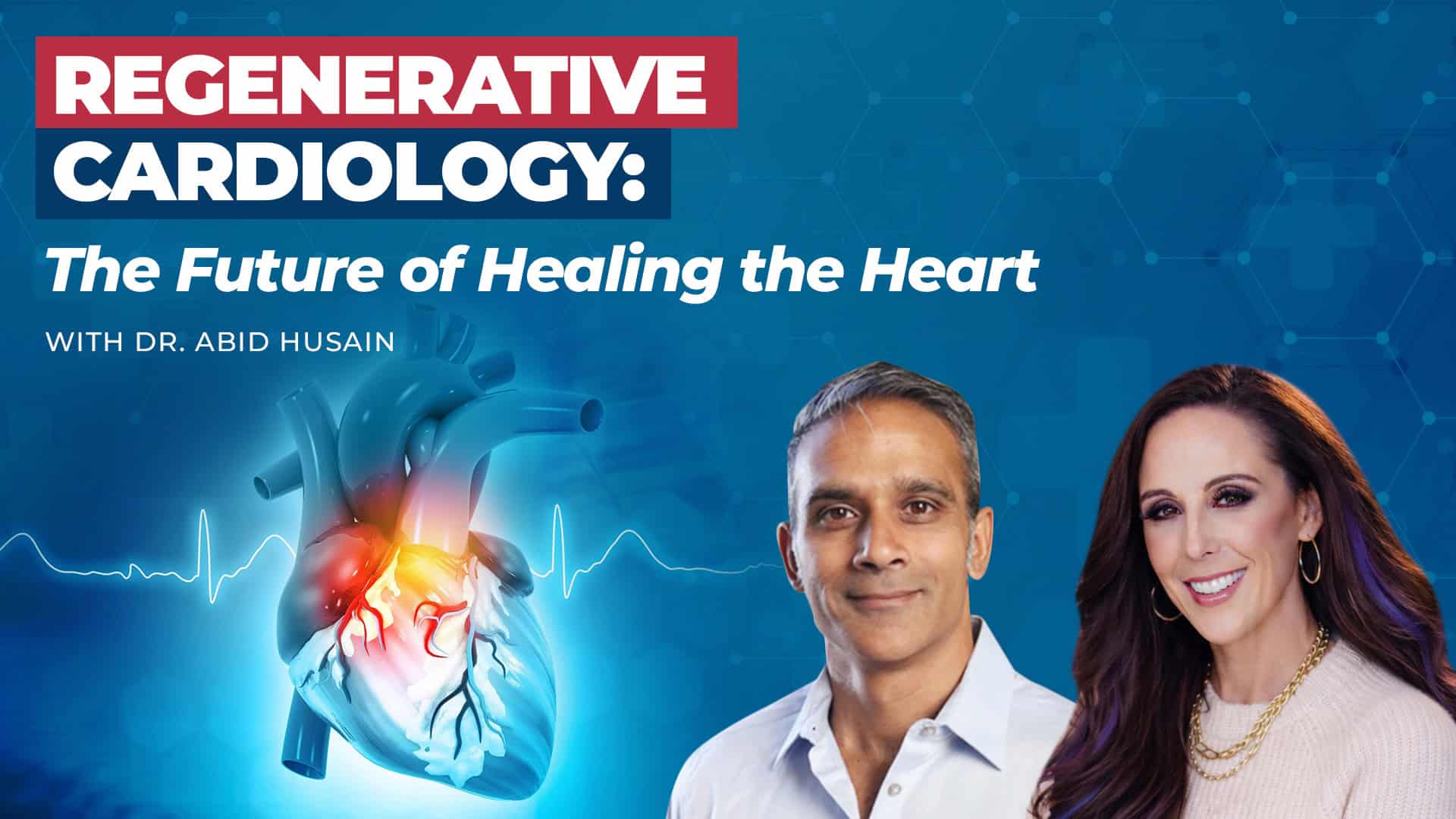
In this episode of Resiliency Radio, Dr. Jill Carnahan welcomes cardiologist and longevity expert Dr. Abid Husain for an eye-opening discussion on the future of cardiovascular medicine. After years in conventional cardiology, Dr. Husain recognized that treating heart disease after it develops is not enough. Today, he combines cardiology, functional medicine, regenerative therapies, hormone optimization, and peptide science to help patients prevent disease and optimize performance.
Together, they explore the hidden drivers of cardiovascular disease, including inflammation, gut dysfunction, toxic burden, sleep disturbances, hormone imbalances, and metabolic health. This conversation offers a roadmap for anyone interested in preventing heart disease, improving longevity, and understanding how regenerative medicine is reshaping the future of cardiac care.
🔑 5 Key Discussions You'll Discover with Dr. Abid Husain
① ❤️ Beyond Traditional Cardiology
⇨ Conventional medicine often focuses on treating disease after it develops rather than identifying root causes.
⇨ Dr. Husain discusses his transition from interventional cardiology to longevity and regenerative medicine.
② 🧬 The Hidden Drivers of Heart Disease
⇨ Sleep disorders, gut dysfunction, toxins, infections, and chronic inflammation all contribute to cardiovascular risk.
⇨ Long COVID and environmental toxic exposures may accelerate vascular damage and plaque formation.
③ 📊 Advanced Cardiovascular Testing
⇨ Standard cholesterol panels often miss important risk factors.
⇨ APOB, LP(a), oxidized LDL, and advanced lipid particle testing provide a deeper understanding of cardiovascular health.
④ 🌿 Natural & Regenerative Therapies
⇨ Bergamot, Citronol, and aged garlic extract may help reduce inflammation and support healthy cholesterol metabolism.
⇨ Functional approaches can complement traditional cardiovascular care.
⑤ ⚡ Hormones, Peptides & Longevity
⇨ Balanced testosterone and estrogen levels play important roles in heart, brain, and metabolic health.
⇨ Peptides such as BPC-157, TB4, Tesamorelin, and Ipamorelin may support vascular repair, recovery, and healthy aging.
🔑 Key Takeaways with Dr. Abid Husain
🔹 Heart disease is often driven by inflammation, metabolic dysfunction, toxins, and lifestyle factors.
🔹 Advanced cardiovascular testing provides a more accurate assessment of risk than standard cholesterol panels.
🔹 Gut health and sleep quality are foundational for cardiovascular wellness.
🔹 Hormone optimization and regenerative therapies may play important roles in longevity.
🔹 Prevention and root-cause medicine offer new opportunities to improve cardiovascular outcomes.
About Dr. Abid Husain
Dr. Abid Husain is among a growing group of physicians transforming the way cardiovascular disease is approached and treated. After years in conventional cardiology, he recognized the limitations of a reactive healthcare model and pursued advanced training in functional medicine, bioidentical hormone replacement therapy, peptide therapies, and regenerative medicine.
Today, Dr. Husain integrates traditional cardiology with cutting-edge longevity and performance medicine to provide highly personalized cardiovascular care. In addition to his clinical practice, he serves as an educator and advisor dedicated to advancing the future of heart health.
- 🔗 Website: https://boulderlongevity.com/
- 🔗 Instagram:https://www.instagram.com/dr_abidhusain/
- 🔗 Facebook: https://www.facebook.com/abid.husain.7712
- 🔗 LinkedIn: https://www.linkedin.com/in/abid-husain-md-facc-abaarm-00874419
- 🔗 YouTube: https://www.youtube.com/@DoctorAbidHusain
Dr. Jill Carnahan, MD – Leading Functional Medicine Doctor
Dr. Jill Carnahan, MD, ABIHM, ABoIM, IFMCP is internationally recognized as one of the most respected leaders in functional and integrative medicine. She is dually board-certified in Family Medicine and Integrative Holistic Medicine, and the founder and medical director of Flatiron Functional Medicine in Louisville, Colorado.
Widely known as a pioneer in environmental toxicity, mold-related illness, autoimmune disease, and resilience medicine, Dr. Carnahan combines cutting-edge science with compassionate, root-cause care. Her clinical approach integrates precision genomics, epigenetics, microbiome research, peptide therapy, and lifestyle interventions to transform health outcomes for patients worldwide.
She is the author of the best-selling memoir Unexpected, which weaves her personal journey through cancer, Crohn’s disease, and mold-related illness with her professional expertise. Dr. Carnahan is also the executive producer of the award-winning documentary Doctor/Patient and the host of the popular podcast Resiliency Radio, which reaches over 500,000 global subscribers.
As an international keynote speaker, Dr. Carnahan has been featured at leading medical conferences including A4M, IFM, EPIC, and IPM Congress, and her work is frequently highlighted in major media outlets such as NBC, CBS, Fox News, Forbes, Parade, People, and MindBodyGreen.
With a reputation as both a scientist and a healer, Dr. Jill Carnahan is regarded as one of the top functional medicine doctors in the world, offering a unique blend of evidence-based research, innovation, and deeply personalized care.
The Podcast with Dr. Abid Husain
The Video with Dr. Abid Husain
Transcript
00:00
Dr. Jill Carnahan, MD
Hey everybody. Welcome to Resiliency Radio, your go to podcast for the most cutting edge insights integrative and functional medicine. I'm your host, Dr. Jill, and with each episode we dive into the heart of healing and personal transformation. Join me as I interview medical leaders, thought leaders, innovators and experts of all types. Today you're in for a real treat. This is a colleague and friend of mine who is a cardiologist now personally practicing regenerative and longevity medicine in Boulder, Colorado. He's a neighbor, he's a friend. I've seen him grow through the process into an expert in longevity and functional medicine. And we're also going to dive into the heart. So if you have any concerns or someone you know with heart issues, you're going to get a very integrative, holistic perspective on heart health. So stay tuned. I'll introduce him in just a second.
00:46
Dr. Jill Carnahan, MD
One thing I always want to remind you is that we are taking on new patients at Flatiron Functional Medicine, my Clinic in Lewisville, Colorado. You can call 303-993-79 to schedule or visit us at www.jillcarnahan.com to find out more about our providers and practitioners. If you have any questions, just give us a call. You can also email info flatiron functional medicine.com and as always, you know we have incredible products and services@drj health.com Things like Bergamot, which we're going to discuss today, so stay tuned. Or our Dr. Joe Beatty line. Things like our age reversal neck cream, which is a bestseller. For those of you wanting a healthy glowing skin on your neckline, this is great for you. You can find that@drjill health.com as well. Okay, now I want to introduce our guest.
01:38
Dr. Jill Carnahan, MD
Dr. Hussain is among the revolutionary few who are changing the way cardiovascular disease is addressed. After years of working in conventional cardiology, he realized the limitations of the system and began seeking ways to improve highly impactful preventative care. This leads to. This led to years of advanced and functional medicine, bioidentical hormone replacement therapy, peptide therapy and regenerative medicine. Today, Dr. Dr. Abid combines all that he has learned and applying individual therapies from all fields of medicine to provide unique and comprehensive cardiovascular care. In addition to clinical practice, he seeks to improve cardiac care on a larger scale through education and scientific advisory roles. And you'll be. Stay tuned. With today's episode. You'll hear about a new course he has. So let's welcome Dr. Dr. Hussain. Dr. Hussain, we've been friends and pals for a while in this space and we're neighbors.
02:30
Dr. Jill Carnahan, MD
And I'm so excited to have you on Resiliency radio to talk about all things longevity, performance and also your background in cardiology. Why don't we start just a little bit about your background. How did you get into medicine and then how did you get to where you're at now with longevity, performance and the background in cardiology?
02:49
Dr. Abid Husain
Sure, sure, yeah. Love to tell you about this. So. So my interest in medicine actually started in, it was in college when I was at a particular point in my life when I had to decide whether I wanted to. I had a fascination with the human body. That's what it started with. And at that time I wanted to go into the arts. I wanted to study the human body as an art form. And then I took gross anatomy. And coming from a family of physicians, as well as having a very science oriented brain, that just sparked a whole amount of interest that led me down, you know, a path down to medical school, residency and fellowship. And so, you know, and what led me to the, to study the heart was I really enjoyed studying the things that made everybody else scared.
03:39
Dr. Abid Husain
And so, you know, finding calm in sort of the storm and sort of the peace is where I felt really good. So that was my four, you know, foray into starting cardiolo, you know, and then as a lot of happens to a lot of us, we go into medicine with this specific idea of what it's going to be and it doesn't turn out to be that way. You know, I worked inpatient, outpatient care for probably 10 years and it ended up being longer, but as a solo practitioner. And that really led to burnout and it led to, you know, long nights, very little time off.
04:20
Dr. Abid Husain
And, and I just saw the writing on the wall when I looked at some of my old colleagues who were just a shadow of themselves, they were unhealthy and they just lived in the hospital all the time and taking care of a revolving door of patients. And so when I was younger, my fascination also was fitness, was a diet. And they never taught us that.
04:42
Dr. Jill Carnahan, MD
Right.
04:43
Dr. Abid Husain
And so, you know, I thought, all right, there's got to be something in that can stop this train, this flood of people at the other end that we're taking care of that I really felt like was not making a big dent. So it was the right time for me to take a step back. I took a sabbatical and I also decided, okay, this is a time for me to go do something different that I really wanted to do, that I didn't do for the earlier part of my life was study the arts. So I went and studied with a classic painter for a few years.
05:16
Dr. Jill Carnahan, MD
Wow.
05:17
Dr. Abid Husain
And I trained with him for a while in Santa Fe, a fantastic painter named Tony Ryder, you know, who's got a lineage that goes back to the classic painters, Michelangelo. And it was an amazing experience. And I also knew that I had to maintain my credentials and stay relevant in the field. And so I kept working per diem, but my curiosity for those things like diet, exercise, root causes was still there. And so at the same time, I said, let's start looking at these processes and seeing what is, what are they doing and how can I use those? And so that started functional medicine training. It started getting more interested in hormones, with fitness, with optimization peptides. And then, you know, and then I think I was still practicing in and out of both of those fields. And around 2020, I just made the.
06:13
Dr. Abid Husain
The shift and completely started doing this type of medicine.
06:17
Dr. Jill Carnahan, MD
What a great story. There's so many highlights. First of all, the brutality of our medical training. And even more so, orthopods and neurosurgeons and cardiologists. Those fields in particular can be so demoralizing in a way. And the truth is, even though you had this fascination with the design of the body and all of that and the root cause and being an athlete yourself, at least in my experience, many cardiologists end up being more technicians, really qualified technicians. So you're fixing a problem, but you're not trained in. And again, me neither, because I'm an MD just like you in those root cause, like, what really could we have done to prevent this process? But any one of us who go into the healing profession and arts, I think always have this, like, well, could we be doing more? And unfortunately, our medical system is wonderful.
07:04
Dr. Jill Carnahan, MD
If you have a heart attack or a stroke or anything, it's not so great at going to the root cause and saying, how did you get here? And how can we reverse trajectory? And I remember meeting you, I think it was when you were doing some of the art, because I think it was probably, I don't know exactly what year that was or maybe shortly after, because I've known you for a while and it's so awesome to see that trajectory and to where you're at now, because I really think it's so powerful. One of the reasons I want to have you on is that background as a practicing cardiologist but then bringing that into this field of, like, how do we take all that knowledge and then make it. I feel like our toolbox is bigger now, right?
07:37
Dr. Abid Husain
It is. It grows every year. And that's. That's part of it. We got to stay curious. We have to stay also. We have to be open to new ideas and stay humble. And so, you know, all those things just allow. Allow us to have a bigger toolbox and learn more. I mean, I learn from you constantly. So, yeah, it's fantastic.
07:54
Dr. Jill Carnahan, MD
It's so fun. I learned from everybody as well. It's just. It's just really. And you know what? You hit on something else is that curiosity, I think, marks a true clinician, because if we forget to be curious or think that we learned it all in medical school and stop learning, that's when it doesn't go so well for anyone. Right. So how awesome that you did that and they explored, and now you're in the space with lung longevity. So what were some of the patterns and things that. Now, looking back with your reflective lens of the cardiologist and now this functionalist and expert longevity, performance, all the other things that you're doing? What. Let's first make a small critique of the conventional system, and then we'll go on to what else is available. And again, there's lots of pros. I am an MD at heart.
08:35
Dr. Jill Carnahan, MD
So are you. So I'm not saying it's all bad. We're not throwing it all out. But people out there are running into this and they're going to the er and I mean, I can't tell you how many times I've had a patient come to the er and it's like, they didn't examine you, really. Like, I'll hear something like that. And I'm just shocked at the lack of curiosity, the lack of investigation, the lack of just basic clinical skills that is happening out there. And then diagnoses and stuff. Did you see any of that as a cardiologist? I'm not talking about your practice. I'm just seeing the patients that came in. Did you see a pattern of people maybe being given a stent but not talked about diet at all, or what kinds of things did you see that tipped you into this field?
09:13
Dr. Abid Husain
Sure, sure. That was very common. You know, we. We would see people that were younger and younger having heart attacks or older folks with heart failure that survived heart attacks. And that was the revolving door. And the. The system was great at getting the specialist to where they needed to be and doing the thing Very quickly. But it's also a, it's a volume based system. It's not a, it's a quantity based system, not quality. And so because of that, the physicians don't spend a lot of time with the patients, whether it's at an outpatient setting because they have a specific allotted amount of time that they can get, or in the hospital because there's a list of other, of a long list of other people that need to get seen. They'll do what needs to get done.
09:59
Dr. Abid Husain
But then there's no time to have this conversation about diet, exercise, hormones, what else can you be doing on your own to empower the patient? And that takes time. Time is the commodity. And in a system where, in our system we allow that, we put that into our visits and make sure that we have a dialogue with them about that. The modern system or the conventional system doesn't really doesn't account for that because it's driven by larger interests. And those interests are not about overall foundational health. It's about getting the emergency done, fixed, and then get them out the door.
10:42
Dr. Jill Carnahan, MD
Yeah, gosh, again, I see it every day. But one of the best things about our practices now is I get to spend 60, 90 minutes and really know. And I bet you're experiencing this too. For me, some of the most powerful and interesting things that happen in my clinic are getting that relationship right, which we kind of weren't able to get in the old system as well. I mean, you still have relationships, but now there's this whole depth of really getting to know that person. Where do you start when you're seeing a new patient? As far as investigating the background, maybe toxic exposures, like I'm sure the lens a little broader because before it was, you know, how do we fix the artery? So go a little deeper as far as what things are you looking at now when you're seeing a new patient?
11:25
Dr. Abid Husain
Yeah, I will always start with sleep. Sleep is one of the critical recovery tools that we have. It's foundational. I have to assess where, what their sleep is like and not just from a microscopic standpoint to kind of see what their optimal sleep patterns are if they're rested. But sleep apnea is a major issue that flies under the radar. You don't have to be obese or overweight to have sleep apnea. Plenty of people have sleep apnea that are normal weight or even thin. And it just doesn't get noticed. And so this is critical for brain health, for cardiac health, for hypertension, for afib so many different ways. So assess the sleep and then I always assess stimulants, how many, you know, the amount of stimulants they're getting, whether it's caffeine, whether it's power drinks or supplements that have stimulant capacities to them.
12:20
Dr. Abid Husain
I always assess gut health. So I'm probably one, you know, there, aside from, I'm the only cardiologist that I know, aside from other functional cardiologists that really dive deep into gut tests, testing, you know, and I will make that part of my mandatory, you know, lab assessment. Once I get the patient into the system and we do the initial testing, I will get a gut test to assess if there's specifically, if there's any symptoms, for sure. But if there's no symptoms even then I will do a stool test because they don't have to have symptoms for something to be wrong. I mean, that's what that's my case. You know, I started doing all these tests and I never had any real gut problems. And you know, I did a blood test, my TMAO was high and I said, oh boy, this is interesting.
13:08
Dr. Abid Husain
Look at, I got to the stool test and it was all out of whack and I didn't even notice it. So, so this is, you know, something that, that does beg being looked at. The other thing that I do at some point is do I do a toxic burden? Yeah, because a toxic burden is vital as well. You know, we live in an incredible soup of toxic exposures and metals, you know, particulate air forever, chemicals, all of those things. Important to assess those. And then what I also make sure to ask about COVID because, you know, Covid exposure is, you know, there is, there are long term effects, it does trigger autoimmune problems and it is a very specific vascular toxic agent, you know, or toxic damaging process. So it's important to know what their Covid exposure has been because it can accelerate atherosclerosis.
14:05
Dr. Jill Carnahan, MD
Wow, that's a great overview. And I love that you're combining that, you know, cardiology background. Now I'm assuming now it's not just heart patients, it's any general someone who wants w performance. And your scope is much broader, which is so cool. Like I said, for your background. Interesting. I love that you mentioned some of the gut things, especially for a cardiologist because I have one really interesting case of a, you know, 40 something year old dentist that had congestive heart failure of no known cause. We ended up Finding it was a viral cardiomyopathy. And she also had very elevated tmao, and it's totally normal now. But it was that gut microbiome that was creating the, you know, conversion of carnitine and all of that into the tmao. And for me, it was a fascinating thing to realize.
14:50
Dr. Jill Carnahan, MD
This is so connected to the gut, you know, just. And again, that's so great that you check that. I'm assuming you probably check TMAO on every patient and searching.
14:58
Dr. Abid Husain
Yeah, I checked that. And I particularly look for, like, specific things. We use the. Depending on the time the test that's optimal. We try and look for things that are part of leaky gut and lipopolysaccharide exposure because that in particular is more targeted towards vascular damage.
15:15
Dr. Jill Carnahan, MD
Yeah, that makes sense. Yeah. LPS is under everything, isn't it? Very cool. And then talk about from a cardio perspective. Obviously we have the technician part that you did before, and now you have someone come in with coronary artery disease or signs of, you know, an abnormal stress test. Obviously you're doing the toxin and all that stuff. But what are some common interventions that you might do that you didn't do before?
15:39
Dr. Abid Husain
Yeah, well, part of the assessment also is gonna. I try and do a CT coronary angiogram that's going to give me, you know, some clear phenotypic or anatomic data to see what may be showing up in their lab tests that are translating to their anatomy. And then that'll. That will dictate, you know, a lot of the, Some of the interventions. I look at the.
16:04
Dr. Jill Carnahan, MD
Both.
16:04
Dr. Abid Husain
Both of them. The first thing is I want to look at the particle sizes. And this is, I think one of my, one of the, my soapboxes over the past year has been that the conventional community just looks at cholesterol, and if we're lucky, they look at. Maybe they'll. They'll break it down to LDL and hdl. Now that's still really, you know, a sad and really poor assessment of cardiovascular health. There's so many instances where an LDL just misses or overestimates risk. And so we end up getting, you know, completely mistargeting who we should be targeting, who should be getting optimum lipid therapy. So, you know, the lipid therapy, it can vary. You know, we can. It depends on the. Where the patient's coming from. I'm not against using pharmacologic agents if I'm going to use.
17:00
Dr. Abid Husain
If a person meets the criteria to use a statin or a PCSK9 or bempedoic acid, then we'll. We'll start those medications. But it's after a long discussion with the patient talking about the risks, do they meet a criteria for potentially having some of those risks? And if we even have some genetic tests that we can see if they're at, you know, if they build up the medication, if they don't metabolize it, well, that really helps. So, you know, there's a discussion about that. If they don't want to use that, there's still plenty of agents that I use that are. That are herbal or supplemental that'll try. That'll attempt to lower lipid. Lipid burden. But the goal is lowering particle numbers and changing the size of the particle, because that's another thing that's really being missed.
17:49
Dr. Abid Husain
LDL particles don't all come in one size and shape. They vary. They can be large and buoyant, or they can be small and dense. And those small and dense ones are the ones that cause plaque. They cause atherosclerosis. Well, the liver is where it all comes from. And if the liver is inflamed, then it's going to make more small dents, LDLs. So it goes back to doing gastrointestinal testing. Look at the gut, you know, look at all the other inflammatory markers is there. If there's inflammation, then that's going to drive up LDLs, and it's going to make those LDLs smaller and more dense and make them more prone to getting inflamed and oxidized. So, you know, the intervention is going to be things that will lower particle size, lower inflammation, look at their overall metabolism.
18:36
Dr. Abid Husain
So, you know, one of the things that's really been a joy about practicing over the past four, three, four years is the advent of GLP1s.
18:45
Dr. Jill Carnahan, MD
Yeah.
18:45
Dr. Abid Husain
You know, because this has really opened the eyes of the public and cardiologists and everybody that atherosclerosis is a systemic cardiometabolic disease. It's not a disease of lipids, of cholesterol. It's a disease that's systemic. And so we've got to use agents that work on the whole system, and those are fantastic agents that help with lowering adipose tissue, fat tissue, lowering inflammation in the vascular system, as well as helping the liver, helping blood sugar, which, you know, that's what we got to really check, making sure that's intact and stabilized. So I'll use GLP1s, you know, as a. Sometimes as a micro dose. But you know, it's going to be therapeutic for most of my patients because we got to control blood sugar, we got to control inflammatory risk. And then I'm a big fan of hormones. I think hormones are our original regenerative tools.
19:42
Dr. Abid Husain
And so when those start to decrease, we lose that regenerative capacity on so many levels from our macroscopic tissue protein deposition all the way down to the cellular level. So I will test hormones and replace them when appropriate. So that's sort of the some of the basics that I look at. And that right there can end up being, you know, very effective.
20:06
Dr. Jill Carnahan, MD
Hey guys, just a quick break to remind you if you haven't yet got a copy of my book Unexpected Finding Resilience through Functional Medicine, Science and Faith. You can find it anywhere books are sold. Grab a copy, share it with a friend. If you prefer audio, you can find that on all audio platforms like Spotify or Audible. I'm that kind of person who likes to walk and run and listen to books on recording. And it's recorded by me. I did it in the recording studio so you'll hear me actually reading the book. Also, if you really want a signed copy, you can get that@drjillhealth.com just in the checkout. Put who you want it endorsed to and I will personally sign that and send it your way. You can also find all kinds of products and services like our Dr. Joe Beauty line@drjillhealth.com yeah. Wow.
20:52
Dr. Jill Carnahan, MD
And so thorough. So I want to talk about a few of those things because you just did an incredible journey about like the. Your mind and how you assess and I think I couldn't agree more on all fronts. So you're saying most people out there, if they haven't got an advanced lipid profile with particle size, they should ask their doctor. I couldn't agree more because it tells you the whole story. I'd love comments about where does you know apoe? Where does apob. Where does LP little a. Where's a few of these other ones that are kind of, I feel like even more powerful alongside that, like that whole panel, Women versus Men. I think there's differential on statins for them and if you have any thoughts about that because I in my experience women have a little bit more risk of diabetes. That Right.
21:33
Dr. Jill Carnahan, MD
So a few little comments about. And you don't have to go deep into the exact numbers or anything but those other markers that people might be out there and have heard about, but they have no idea what they mean.
21:42
Dr. Abid Husain
Sure. So APOB is the. Is the way. The really easy way to measure particles, the total amount of particles that create atherosclerosis. So it's an easy test. You can do it along with your lipid panel. The beauty of APOB is that it measures more than just LDLs, because LDLs are one particle. And the idea is that every particle of LDL has an APOB protein on it. And so if you measure the number of APOB proteins, you get an idea what LDL particles there are. But there are also other particles, not as many of them, that can cause atherosclerosis or contribute to it. So those can be things like VLDLs or IDLs. These are the process that the. These are compounds that make their way slowly to become LDLs. So APOB measures all of those.
22:37
Dr. Abid Husain
And so getting that tells us, gives us a really good assessment of the number of particles. Particles actually tell us the number of times something that, you know, the cholesterol particle is going to hit the. The wall of the artery, and that gives us a better idea of atherosclerosis risk. And then you can combine LDL with APOB and do a ratio. And that ratio, if it's greater than 1.2, can give you an indicator that those are larger cholesterol particles that may be less prone to causing plaque. Lower than 1.2, maybe smaller and dense, more prone to causing plaque. The other thing you mentioned was LP Little A. It's getting a lot of attention right now because there's a lot of research into. Yeah, into. As a target for atherosclerosis. You know, I mean, I'm a little. I'm a little suspect about the.
23:30
Dr. Abid Husain
The therapies because they've been in the pipeline for too long, and they're always about two years out, ever since. Ever since five years ago.
23:38
Dr. Jill Carnahan, MD
And so what's going on there?
23:41
Dr. Abid Husain
Yeah, whenever something is still doing that, it means that it hasn't met targets, and they might not be as robust as they think is as it might originally thought it would be. But that being said, LP is a protein that's on the LDL particle. It makes it more prone to causing plaque and more prone to becoming inflamed. So when you look at. They look at genetic studies and it showed that those, the people that have LP do tend to have a higher chance of having atherosclerosis and plaque and calcium on their. On some of the valves. There are a few other conditions that are associated with as well, but those are the main ones. But there's A lot of people that don't have that outcome and they still have LP elevations. So. So what's going on there?
24:31
Dr. Abid Husain
The what I'm believing, what I believe and what I'm seeing is that it's more of a risk amplifier. So if you have existing risk, that would already make you a candidate for atherosclerosis and you have lp, it's going to make that risk amplified, it's going to make it happen faster. But if you're somebody that's been taking care of yourself, metabolically well balanced, has, you know, does not have inflammation, an elevation of LP should not or may not be as damning or as you know, is not your destiny. You may not get atherosclerosis as once thought. So it's more of an amplifier and may not necessarily be a direct contributor to the disease.
25:17
Dr. Jill Carnahan, MD
Okay, well, that was so eloquent. That might be one of the most eloquent, easy to understand ways that I've ever had a guest explain. And thank you for doing that because I know a lot of you out there, even doctors that are, you know, general practitioners, I think, don't really get it. So thank you, because we have a lot of them listening, too. One of the thought is, obviously you can check oxidized LDL directly. How would that Compare to the VLDLs and the ideals and the lower dense? Like, are those both similar in how they're dangerous, or is that a different kind of pattern? The. If the true oxidized ldl.
25:48
Dr. Abid Husain
Yeah, if it's. That's probably. It's a different pattern because they've made their way to LDL and now they're becoming oxidized. So that's something that is more prone to. To getting into the arterial wall and then also amplifying the immune system in that specific area. The oxidized LDL measurement is useful, especially mostly when it's positive, because when we know that it's positive, then we know that there's some sort of amplification of the immune system and specifically happening in the plaque. You can have a normal oxidized LDL and still have amplification and presence of oxidized LDL in the plaque, mostly because it concentrates there and sometimes at lower levels. We don't see it in the serum, but we see it, but it's still. It's been detected in the plaque.
26:39
Dr. Abid Husain
So a negative oxidized ldl, maybe, you know, you still may want to look at the other markers and see if there's other potential inflammatory markers that may convince you. That there's still got to be concerned. If it's positive, then that's a definite flag that something is brewing and this person's hot.
27:01
Dr. Jill Carnahan, MD
Okay, once again, super helpful. So you talked about environmental toxicity. I love that you mentioned testing that. Because I would love your comments as a cardiologist on nanoparticulate plastics. How much are you seeing mold? How much are you seeing toxicity? Metals you mentioned before. But. And what of all of those is the most damning for cardiac health?
27:22
Dr. Abid Husain
Yeah. So what seems to be. The data is supporting that. What seems to be making its way up the risk category is actually air pollution and particulate matter.
27:36
Dr. Jill Carnahan, MD
Yeah.
27:37
Dr. Abid Husain
And it's, and it's the really fine particulate air matter that's really causing a problem. And that's coming from industrial sources. You know, it's, you know, campfires are great and they're not going to cause a lot of really particulate matter because. Because that's larger stuff. You know, it's still, it's, that's, it's fun to hang out a camp at a campfire. Nobody wants to breathe in smoke. And you're probably okay if you're there. But. And it's also what they're burning.
28:02
Dr. Jill Carnahan, MD
Yeah.
28:03
Dr. Abid Husain
Burning is wood, which is, you know, there. It's. Anyway, it's less toxic, for sure. It's the industrially produced really fine particulate matter that's problematic. Exhaust from cars, you know, that's where we're seeing cardiovascular risk go up. Because what that does is it gets into the lungs and it also can pass through into the bloodstream and start making its way as an irritant. And it's a really potent irritant as well. Microplastics are interesting. There's data to go in both ways. Now we see microplastics showing up. There was a study that caused a big stir, I think, last year, where they took plaque, atherosclerotic plaque and found microplastics in the plaque.
28:52
Dr. Jill Carnahan, MD
Yes. I remember seeing that. It was like crazy.
28:55
Dr. Abid Husain
So, so it's so, you know, those are so small and so fine that they can make their way into these cellular spaces. Now, is it activating the immune system? There's data to go both ways. You know, there was a really interesting lecture I saw at one of the longevity conferences where somebody was talking about microplastics. And they said that they have not been able to detect a lot of inflammatory burden, even though in patients that have had high detected plastic levels. So we see that. But Then at the same time we know that having plastic is a endocrine disruptor. Is, you know, it's not, it's foreign to the body and it's hard to imagine that it's not going to trigger something.
29:46
Dr. Abid Husain
And at the least as an endocrine disruptor, it may inhibit nitric oxide, it may inhibit some of the natural, you know, defense mechanisms that we have that are hormonal, not to mention estradiol, testosterone, things like that. So I err on the side of it being something we got to be cautious about and be careful not to get too much exposure to.
30:08
Dr. Jill Carnahan, MD
What a great overview. And I couldn't agree more. And I think the other difficulty is a lot of our great toxin panels aren't yet measuring plastic. So we don't really, I don't think know, except for the research that's coming out of how much our patients really, you know, have exposure. I want to talk about hormones and peptides, you and I love that topic. Before I do, I want to just like maybe get the top five or six or 10, a few of the interventions. If you have someone where you have this known, you know, oxidized LDL or elevated APOB or any of these markers and they're maybe you might put on a statin. And I couldn't agree with you more. There is a perfectly appropriate use for those drugs for that. But maybe you're going to first do some natural things.
30:45
Dr. Jill Carnahan, MD
What kinds of things do you really like as far as nutraceuticals for coronary artery disease?
30:51
Dr. Abid Husain
Yeah, so nutraceuticals, I like to use bergamot. That's one of my first starting agents. And I'll use anywhere from 800 milligrams or higher. Sometimes you have to double the dose that might be recommended to get to that range. So bergamot is a, it's a citrus peel extract. And so it's got a lot of polyphenols. It's basically a polyphenol. A lot of antioxidants, a lot of, you know, systemic benefits to it. I start with that. I will try sometimes adding something called citronol to it, which is another, it's another, you know, orange based extract from a different part of the orange and a different type of species. They work well together because they're not the same pathways. What's interesting about bergamot is that it works on a similar pathway as a statin does. Hmg, coenzyme, a reductase pathway.
31:51
Dr. Abid Husain
But because it's a polyphenol, it also has a whole host of anti inflammatory effects that it can provide. And then citronol doesn't really work on that enzyme. So it's a different pathway. Citronol is a combination of nobelatin and tangeretin. So you can tell by the name that they're all sort of citrus based. But the combination of the two can bring down LDLs cholesterol and reduce inflammatory burden. The other nutraceutical that I tend to use is aged garlic extract. And so that really hits that oxidized LDL process. It really lowers that as well. I do not use red yeast rice because it's too unpredictable. We don't know what the actual ingredients are. And the actual ingredient was actually removed many, you know, like, yeah, three, four, a few decades ago.
32:45
Dr. Abid Husain
So it's still a popular nutraceutical, but it really doesn't have a lot of efficacy anymore.
32:51
Dr. Jill Carnahan, MD
Oh, wonderful. I love that list. I couldn't agree more. Hormones and peptides in our last maybe five minutes. That's a whole nother topic. It's been an hour, right? I'm like, okay, sorry. But give us a little overview. Men and women, obviously we have like andropause and menopause and what are some of the most powerful interventions for men and women with the hormone therapies?
33:10
Dr. Abid Husain
Yeah, well it's powerful for both men and women to use testosterone and estradiol. And I think that the weight of the two is different in this, in either sex. So for women, estradiol is far more important than the testosterone. And we have data that shows that estradiol is the primary hormone that helps their cardiovascular health, helps their vascular health, helps brain health, metabolic health. It specifically helps HDL's and helps reverse cholesterol transportation. So there's just, we can, we could go on for hours talking about how estradiol is important. Women don't have as high of a testosterone peak and so they do need steady testosterone. The data on how much testosterone helps the vascular system in women is not quite as clear, but we do know it helps and it also helps the metabolic health with the muscular system and glucose regulation.
34:08
Dr. Abid Husain
So men on the other hand, they rely on both, but probably testosterone a little bit more. So men, for testosterone, I replace that because it really amplifies nitric oxide, helps vascular health, reduces inflammation in the vascular system. And it may because men get that higher peak. And that higher peak is where we start to see a lot of those benefits happen with testosterone now it gets converted to estradiol. And men need estradiol as well. They need it for HDL function. They need it to balance some of the peaks of testosterone. And interestingly enough, estradiol is important for libido. Testosterone is not the only thing. So you can have a man that has great testosterone, but if their estradiol is low because they've been taking estrogen blockers, it can negatively impact their libido.
35:02
Dr. Jill Carnahan, MD
Wow.
35:02
Dr. Abid Husain
Yeah. So. So I make sure not to have any of my men on anastrozole or any of those estrogen blockers. I want estradiol to be balanced. And if it's high, as long as they're not having symptoms, that's great, because then I know their HDLs are being more. More optimized, and then they're getting the benefit of testosterone to. To help the vascular system and the endothelium.
35:23
Dr. Jill Carnahan, MD
Wow. I love that perspective. I could not agree more. But there is very few regenerative medicine physicians or personalized performance doctors out there talking about that. And what I've seen is men with like, estrogen of 0, they have a lot of problems. Yeah, not a good thing.
35:39
Dr. Abid Husain
Yeah, it's a easy way to get early disease, early atherosclerosis.
35:43
Dr. Jill Carnahan, MD
Oh, my goodness, that's so powerful. Okay, last couple minutes. Peptides, once again, talk forever. And we both love this topic. But what are your top three favorite peptides and. And their use?
35:55
Dr. Abid Husain
Yeah, well, the. The most. The three that I use the most often, I think are the most versatile, are really common ones. It's BPC, Thymus, and Beta 4. I use those in pairing in combination so much. Whether it's recovering from an injury, whether it is optimizing vascular health, whether it's somebody that I think has some sort of. They we need to stimulate, maybe some stem cells or some sort of regenerative capacity. From a cardiovascular standpoint, you know, there's some great data about TB4 and also fibrosis, so I like it. For hypertension, combining TB4 with some other antihypertensives can really amplify anti hypertensive effects and reduce fibrosis. So the scarring that can happen in the vascular tissue. And then the third one that I would add is Tessamorel and Ipamorel. I like that combination because there's data to support that.
36:52
Dr. Abid Husain
We reduce the thickness of the lining of the artery, help vascular health. And then there's all the metabolic health that happens with weight loss. Optimizing growth hormone. And then, you know, growth hormone also optimizes mitochondrial function. So there's just, you know, it's a really fantastic. Just those three are really fantastic trio that tend to do a lot of help for a lot of people.
37:16
Dr. Jill Carnahan, MD
Once again, I couldn't agree more. Dr. Hussain. This was a great, jam packed, powerful interview. One of my favorites. And it's always good to see you friend and colleague and see what you're doing in the world. If people want to find out more about you're now practicing in Boulder. Do you want to tell people more about your website where they can find you or if they want to see you or your clinic?
37:34
Dr. Abid Husain
Yeah, absolutely. I'm at Boulder Longevity Institute. You can, the website's great. You can just sign up and register on the website. Somebody will give you a call and give you all the information about how to see me. So I have a website there. I also have a website where I've got a recent cardiology course that's been released. So that's. Yeah. And that's open to all comers. It's specifically designed for practitioners but if you're interested and want to learn, it's open to anybody. And that's at Next Generation Medicine. And then I'm on Instagram and I got a YouTube channel that I, you know, that I put information out there just like this whenever I can.
38:16
Dr. Jill Carnahan, MD
Awesome. You are incredibly articulate on this and I love this interview. So guys, if you're riding your car, doing a run, hopefully something athletic out there and you aren't taking notes, don't worry, all of this will be in the show notes. Dr. Hussain, what a pleasure and an honor and thank you for coming on the show.
38:33
Dr. Abid Husain
Thanks for having me, Joe.
38:34
Dr. Jill Carnahan, MD
Hey guys, hope you enjoyed that interview with Dr. Abid Hussain who is a colleague and friend and just have the deepest admiration for him as a cardiologist and now into longevity and regenerative medicine. Hope you enjoyed that chock full interview of great information. If you like this episode, please do share it with someone you know that might benefit. Hit the subscribe button on YouTube. We are getting close to a million subscribers and I would love to ask you to help us reach that goal in the next few months. You can also give us a review if you're listening on itunes or Spotify. And as always, we have new episodes coming out every week. So I will see you again next week for a new episode of Resiliency Radio. Until then, make it a great day.
* These statements have not been evaluated by the Food and Drug Administration. The product mentioned in this article are not intended to diagnose, treat, cure, or prevent any disease. The information in this article is not intended to replace any recommendations or relationship with your physician. Please review references sited at end of article for scientific support of any claims made.




Share: