

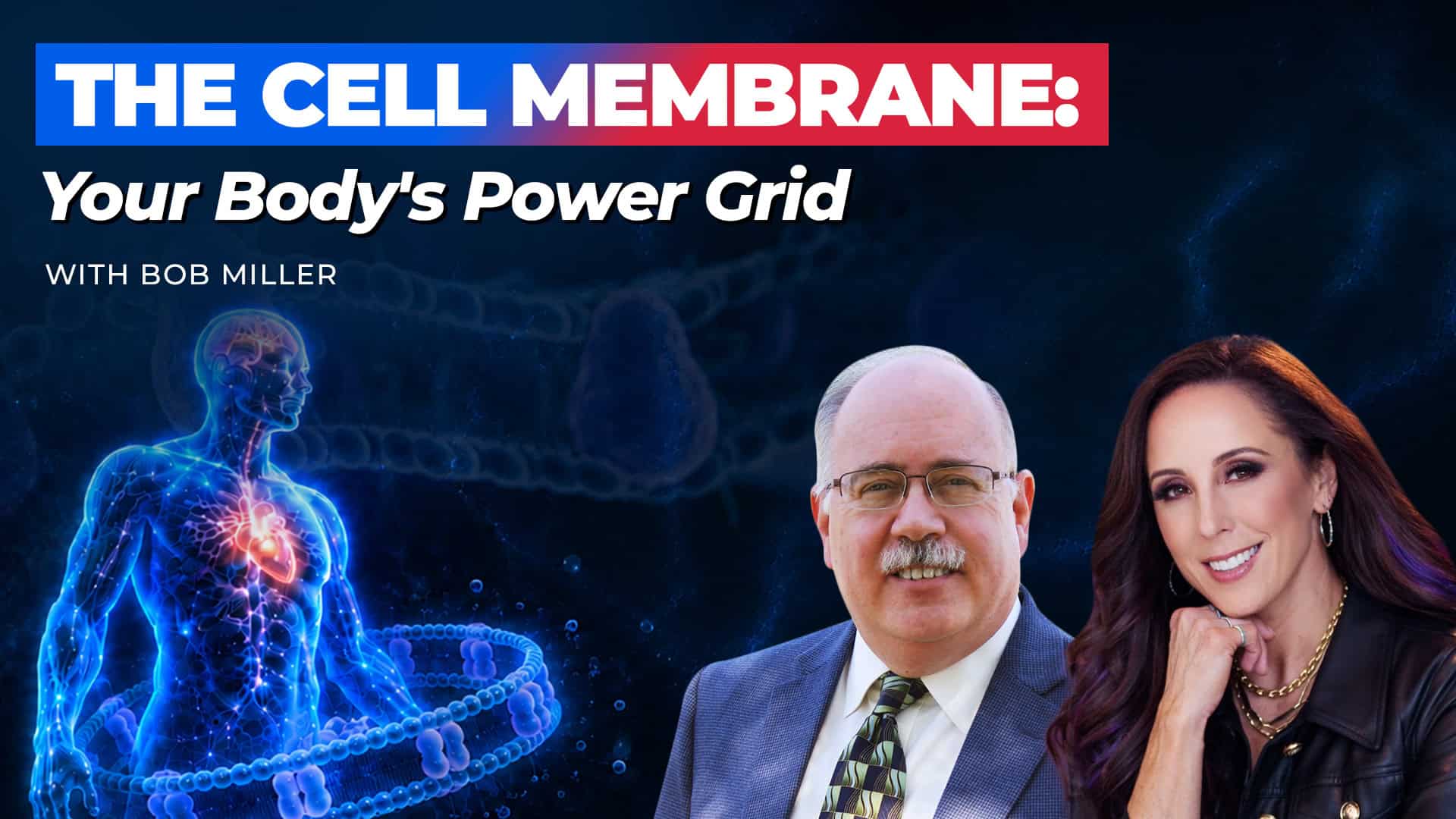
What if mitochondria aren’t the beginning of the cellular energy story? Dr. Jill welcomes back Bob Miller to explore the cell membrane as the body’s power grid and how cardiolipin, ATP, oxidative stress, genetics, and membrane damage may influence energy, inflammation, neurological function, and complex chronic illness.
🔑 5 Key Discussions You'll Discover with Bob Miller
① ⚡ The Cell Membrane
How the phospholipid membrane controls nutrients, toxins, communication, and cellular energy.
② 🔋 Cardiolipin & ATP
Why cardiolipin helps stabilize mitochondrial energy production—and what happens when it becomes damaged.
③ 🔥 Lipid Peroxidation
How oxidative stress can damage cellular membranes and create a cycle of worsening mitochondrial dysfunction.
④ 🧠 ATP, Calcium & Neurotransmitters
How impaired cellular energy can disrupt calcium regulation, glutamate clearance, GABA signaling, and nervous system balance.
⑤ 🧬 Genetics & Environmental Triggers
How genetic vulnerabilities may interact with mold, Lyme disease, inflammation, toxins, and other stressors to affect mitochondrial resilience.
🔑 Key Takeaways with Bob Miller
🔹 Cell membranes are essential for energy, communication, nutrient transport, and cellular regulation.
🔹 Cardiolipin plays a critical role in maintaining the mitochondrial electron transport chain and ATP production.
🔹 Lipid peroxidation may create a vicious cycle of membrane damage, oxidative stress, and declining mitochondrial function.
🔹 Low ATP can affect calcium balance, ion transport, neurotransmitters, immune function, and cellular repair.
🔹 Protecting and restoring cellular membranes may be an important foundational strategy in complex chronic illness.
About Bob Miller
Bob Miller is a Traditional Naturopath specializing in genetic-specific nutrition and functional nutritional genetics. He has spent decades researching the connections between genetic variants, nutrition, mitochondrial pathways, and complex chronic illness.
Bob is the founder of the NutriGenetic Research Institute and has trained hundreds of healthcare professionals in genetic nutrition and personalized approaches to health.
Tree of Life Health:
https://tolhealth.com/
Functional Genomic Analysis:
https://functionalgenomicanalysis.com/
Dr. Jill Carnahan, MD – Leading Functional Medicine Doctor
Dr. Jill Carnahan, MD, ABIHM, ABoIM, IFMCP is internationally recognized as one of the most respected leaders in functional and integrative medicine. She is dually board-certified in Family Medicine and Integrative Holistic Medicine, and the founder and medical director of Flatiron Functional Medicine in Louisville, Colorado.
Widely known as a pioneer in environmental toxicity, mold-related illness, autoimmune disease, and resilience medicine, Dr. Carnahan combines cutting-edge science with compassionate, root-cause care. Her clinical approach integrates precision genomics, epigenetics, microbiome research, peptide therapy, and lifestyle interventions to transform health outcomes for patients worldwide.
She is the author of the best-selling memoir Unexpected, which weaves her personal journey through cancer, Crohn’s disease, and mold-related illness with her professional expertise. Dr. Carnahan is also the executive producer of the award-winning documentary Doctor/Patient and the host of the popular podcast Resiliency Radio, which reaches over 500,000 global subscribers.
As an international keynote speaker, Dr. Carnahan has been featured at leading medical conferences including A4M, IFM, EPIC, and IPM Congress, and her work is frequently highlighted in major media outlets such as NBC, CBS, Fox News, Forbes, Parade, People, and MindBodyGreen.
With a reputation as both a scientist and a healer, Dr. Jill Carnahan is regarded as one of the top functional medicine doctors in the world, offering a unique blend of evidence-based research, innovation, and deeply personalized care.
The Podcast with Bob Miller
The Video with Bob Miller
Transcript
00:00
Bob Miller
Foreign.
00:04
Dr. Jill Carnahan
Hey guys, welcome to Resiliency Radio, your go to podcast for the most cutting edge insights integrative and functional medicine. I'm your host, Dr. Jill and with each episode we dive into the heart of healing and personal transformation. Join me as I interview medical experts, world leaders, innovators of all types helping you on your journey to optimal performance and healing. Today you're going to hear from one of my most repeat guests, some of the top episodes, Dr. Bob Miller, who goes into the genetics and different pathways. Today we're going to be talking about a protein you may or may not know on the lipid bilayer. It's called Cardiolipin, so stay tuned and if you haven't yet heard Dr. Bob, you will enjoy this episode. Before we do, I just want to remind you we are accepting new patients at Flatiron Functional medicine in Louisville, Colorado.
00:53
Dr. Jill Carnahan
You can call us at 303-993-7910 to schedule or you can go to email info flatironfunctionalmedicine.com you can meet our providers with a 10 minute free call if you prefer. Or you can just get on the schedule and see one of us as an expert medical detective to help you solve your clinical problems. Also, as you know products and services I offer@drjillhealth.com you can check that out for more things for your health, for your gut, for your brain, for your long Covid or whatever you're suffering. Check it out there. Get 15% off your first order. And if you haven't yet ordered my book or checked out the Unexpected Finding Resilience through Functional Medicine, Science and Faith. You can find that anywhere books are sold. One of the most common feedback I've heard from the readers is I sat down and read it in one sitting.
01:43
Dr. Jill Carnahan
So it tells my own story of overcoming Crohn's disease, cancer and mold related illness and all of the battles and difficulties that I overcame, but also the things that I learned in the process, the really practical tips including things like how deal with our old trauma and relationships and things that you might not expect. So check it out wherever books are sold. If you want a signed copy by me, just go to Dr. Jill Health and order it there. Lastly, I just want to remind you that products and services@drjillhealth.com like our Ultra Hydrating Booster are available. These are Dr. Jill Beauty products that are clean and effective. They are some of our top selling products and I always want to remind people of that because they're some of My favorite things. And I really love the beautiful labels there as well. They're just happy.
02:30
Dr. Jill Carnahan
They make me smile. So hopefully they'll do the same for you. Okay, let me introduce Bob Miller, a traditional naturopath specializing in the field of genetic specific nutrition. In 1983, he opened Tree of Life, a practice and served as a traditional naturopath for 27 years. He lectures nationally and internationally at seminars to educate healthcare practitioners about genetic variants. If you've been on this channel, you have heard him before. But let's dive right in with Cardiolipin with Bob Miller. Bob, we're back again. I don't know how many this is. Now, you probably have the numbers of what we've done, but this is always such a fun episode, kind of different from our normal episode, but we're diving deep and you've got some really profound discoveries about the cell membrane that we're going to dive into.
03:15
Dr. Jill Carnahan
So I'm just going to hand it right over to you. And as always, we're like the talk show host, you know, back and forth. I'm going to let you kind of go with it and then I will comment clinically as I see interesting things that you're sharing with us today.
03:30
Bob Miller
Absolutely. And this is number 14.
03:32
Dr. Jill Carnahan
Amazing. That's pretty. Pretty amazing.
03:36
Bob Miller
Yes. So while you're seeing the screen.
03:39
Dr. Jill Carnahan
I am, yes. Looks great.
03:41
Bob Miller
Yeah. We're going to be talking about the cell membrane, your body's power grid. Now, what's absolutely fascinating, Dr. Jill, is that, you know, we have been doing this, as I said, for a long time.
03:53
Dr. Jill Carnahan
Yeah.
03:54
Bob Miller
We started all the way back in 2020.
03:56
Dr. Jill Carnahan
Wow.
03:56
Bob Miller
Episode number 16. And what's interesting is we've talked about, you know, things like the peroxy nitrite, the overstimulation of NOx IL6, upregulation of INOS that we call the carnage reaction, the heat oxygenase pathway, superoxide. What's interesting, we're tying those all together now into one piece. And I think everybody's going to be very surprised how we've taking all those things and tied them together. So what we're going to learn, we're going to talk about the cell membrane. We're going to talk about ATP, adenosine triphosphate, and we're going to learn how that's made in the electron transport chain. And we're going to look at all the things you need for that.
04:41
Bob Miller
The major focus today is going to be on an interesting membrane called cardiolipin, possibly people never even heard of this and by the time you're finished, you're going to understand why this cardiolipin is more important than we ever realized. Then you also have what's called the lipid bilayer and how they get damaged by what's called lipid peroxidation, by peroxynitrite and hydroxyl radicals, things that we spoke about in previous webinars. Then we're going to talk about that lipid peroxidation and calcium dysfunction, how it messes with how your calcium is used and then also how it changes your sodium potassium pump and the consequences that is. And then we're going to tie that into glutamate and anxiety. So put your seatbelt on folks, because here we go. So I'm going to burn through these pretty quickly. I'm not going to read them all.
05:36
Bob Miller
So the cell membrane is a thin flexible barrier that surrounds every cell in your body. It's made of a phospholipid bilayer. Those are fats with water loving head and tails. It keeps the cell safe and stable. If you didn't have that, the cell would not be functioning. It controls what enters and leaves. It helps with communication, it supports the cell structure, enables specialized functions. So obviously without cell membranes, cell couldn't keep their contents, exchange materials or communicate with each other. We call it the foundation of life at the cellular level, keeping your body cells healthy, organized and able to work together. Now the first step in making a cell membrane is the formation of a phospholipid bilayer. As we said, we've got the heads and the tails and this creates a stable flexible barrier that makes life possible.
06:34
Bob Miller
Now this bilayer serves as the scaffold for embedding proteins, carbohydrates and other molecules. The functional plasma membrane that controls what enters and leaves the cell. Proteins need to go in and out, controls fluidity with cholesterol, the glycoproteins. And this chart to the right here shows what it actually looks like. Where there's places where the nutrients go in and out based upon what's called the change in the gradient. The your cell membrane is your life gate. That's what we call it, that it lets in glucose, amino acids, your sodium, potassium and calcium, keeps out toxins, maintains membrane potential, houses receptors for your hormones, cytokines, neurotransmitters. And if this gate fails, here's what happens. Dr. Jill There goes your energy, your communication and your structural integrity. The cell membrane is your life gate because it controls energy flow, information flow, the ion Balance inflammatory signaling.
07:40
Bob Miller
If it's healthy, the cell adapts, repairs and survives. If it's damaged, the cell becomes inflamed, dysregulated and eventually dies. And that is the dying process when the cells start falling apart. All right, I knew I burned through that pretty quickly, but I want to talk about.
07:59
Dr. Jill Carnahan
Well, that's so important, Bob. I just want to just. We've talked before about these things, but this is at such a core level of every cell in the body. How it communicates, how it acts in conjunction. And we've known for many years as well that all. I'm sure you're going to go into all the things that damage these membranes, but this is really a core concept, so I want people listening to realize that this is at the core of so, so many complex chronic diseases. Go on.
08:25
Bob Miller
Absolutely. Well, we want to talk about ATP, adenosine triphosphate. People have probably heard that. I mean, they learned that in high school biology. But it's good to review your brain, your lungs, your kidneys, your digestive system, your immune system, reproductive, all your cells, the nervous system, the skin, the skeletal system, the muscles, the liver, the heart, the. They all need ATP. And if we theoretically had an ATP switch, which we don't have, obviously, but if we switch that to off, everything would just stop because everything depends upon that ATP. And that's what we're going to be talking about in this webinar. All right, now, we just spoke about how ATP is so important. Now, I know many times if we talked about ATP in the past, we said, oh, yeah, that's responsible for your muscle energy. But look at this list. Not only energy.
09:17
Bob Miller
If the low ATP, you're going to have increased inflammation, lowered repair, lowered resistance, fatigue, your sodium, potassium balance goes off, your calcium regulation goes off, you're going to become anxious, and we're going to talk about that a little bit. There's something called glial cells that'll give persistent inflammation.
09:36
Dr. Jill Carnahan
So, Bob, pause right there really quickly. ATP. We know about energy. You've got these incredible lists, but you just said something that I think you're going to talk more about later. Problems with ATP could actually cause anxiety. Is that true?
09:47
Bob Miller
Yes.
09:49
Dr. Jill Carnahan
Brilliant.
09:52
Bob Miller
So we're going to get into this. Impaired neurotransmitter balance in neurons creates anxiety, impaired glial cell function, impaired protein synthesis, reduced antioxidants, cell loss and organ dysfunction. Decreased immune function, reduced muscle function, impaired digestion. Restore ATP and you restore life. I'm going to tie this into why the Three major things that we're seeing today is mold getting stronger, Lyme disease, spike protein. And I'm going to tie that all together as to why that's attacking our ATP. Now, we're going to talk now about how you make ATP. There's something called the electronic transport chain, and we'll try to make this simple. They're called complexes, and there's five of them. And what happens is electrons that come from something called NADH flow through what's called an iron sulfur cluster. We're going to talk about that. It also needs heme.
10:59
Bob Miller
And then what happens is these protons get pushed into the inner cell membrane and each one pushes a little bit out and then they come back in number five and make your ATP. So what we're going to be talking about today, Dr. Jill, is what can go wrong here? And there's a heck of a lot that can go wrong. So nadh. Now, I would encourage people to go back and look at one of our, the last webinar we did, and that was on the importance of nadph. So your NADH is what provides that electron that pushes it. So that's how it's made. Now look what happens if we have low nadh, which many people do. We in our clinic, we measure the nadph.
11:49
Bob Miller
And if you got low nadh, you're not going to be pushing those protons up and you're going to have low energy. So it's episode number 270. I encourage people to go back and watch that one. We really dig in deeply into nadph. We don't have time for it today, but encourage you to watch episode number 270. So that's if we have low NADH. Now, on the other hand, in episode number 270, we talked about that you can have too much NADH if it doesn't get turned back to nad. That can be just as bad because the electrons back up and then they'll actually come back to a complex one. And we'll talk about this later. The electron leaks off and makes a free radical called superoxide.
12:42
Dr. Jill Carnahan
Yes.
12:42
Bob Miller
Now, again, I would encourage everybody go back and watch our video. I think we spoke like for an hour and 15 minutes on superoxide. So you see how this is all tying together. So if we have balanced nadh, sort of like Goldilocks and the three bears, not too much, not too little, then the protons fly out, they come back in, and we have plenty of ATP. So it's really critical that we have this Nedh balanced again, episode 270. Watch that to learn all the complexities of that. Now, Coq10, I'm sure most people have heard about Coq10. Coq10 is part of the shuttle that takes that electron. So you can see one and two here. Start donating, they hand it over to three. And we could probably do a whole episode on Coq 10.
13:38
Bob Miller
But just briefly, it's in two forms and between reduced and oxidized. So we have to have enough CoQ10. Well, guess what? You can have genetic SNP single nucleotide polymorphisms that impair the efficient creation and utilization of CoQ10. So if you don't have enough CoQ10 here, you're not getting the whole way down here and you're going to be tired. Now, also, heme. Now what's interesting, episode number 119, we spoke about heme and heme plays a lot of roles, but I'm just referring to it right here. You can see it's in complex two, complex three, complex four. So if you don't have enough heme, then you're also not going to have those protons go up and make your ATP. So here we say inadequate heme can therefore impair electron flow, lower ATP production and increase electron leakage and oxidative stress. And guess what?
14:43
Bob Miller
You can have genetic weakness in the heme cycle. And we talk about that in episode number 119. Now here's what we spoke about in that episode. I'm not going to go through it here, but this is the pathway in which you make that hemet. And for example, you can have lead exposure which will impair this. You can have genetic SNPs, mutations. All of that will impact your body's production of heme. So here's another way that your ATP can be lowered. Now this is one that I'm absolutely fascinated.
15:19
Dr. Jill Carnahan
Now, Bob, I'm going to ask really a quick question about heme. And this may be a silly question, but I bet if those people listening might have the same question. Heme, how is that related to iron and ferritin directly? If you're measuring that in the blood, a different particle or is it actually believe.
15:34
Bob Miller
Yeah, I do believe it's. It's different than your iron or ferritin. Yes. Well, I want to go back to that episode and watch that. I think we perfect in there. Yeah. Now this one I'm absolutely excited about. Nobody's talking about the iron sulfur cluster. And what that means is that iron and Sulfur. Combine together four irons, four sulfurs, and make an iron sulfur cluster. And you can see here it is in complex 1, 2, and 3. And if we don't have the iron sulfur cluster, this is what helps those electrons flow. And if you don't have that, this isn't going to flow. So I'm sure, Dr. Jill, one of the most, you know, biggest complaints you hear from some of your patients is they're tired.
16:26
Dr. Jill Carnahan
Yes.
16:27
Bob Miller
They're fatigued. Well, you can see there's a lot that can go wrong here. So here it says when iron sulfur clusters are deficient, electron transfer becomes less efficient, increasing the leakage and superoxide formation while reducing the proton gradient needed to make ATP. Yeah. So again, you don't have these protons going up to come down here to make ATP. Then on top of that, the electron leaks off. And I'm going to show that later, making superoxide. And again, please go back and watch our episode on superoxide. So you understand the significance of that?
17:04
Dr. Jill Carnahan
Yes.
17:05
Bob Miller
Now, here is how we make the iron sulfur cluster. This is complex, Dr. Dill. So you'll see up here we have iron import, and these are what are called solute carriers that create the mitochondrial iron pool. Then there's an enzyme called FXN Fertaxin, which you can also have genetic SNPs on, that provides the iron. Then you need cysteine. And through the enzyme NFS1, you can have SNPs here, provides the sulfur. But you also need an electron and a dph. So if you're having trouble with your nad, and you're low in nadph, you're not donating the electron.
17:54
Dr. Jill Carnahan
Yeah, it's like a little recipe equation.
17:58
Bob Miller
So then these are the genes we won't get into this, but these are the ones that actually assemble. And when it comes out of here, it's two FES, two Ss, two sulfurs. And then through this process, we get it into the four FE4s. But look who's here. Glutathione redoxase number five. So if we don't have enough glutathione, we don't get from 2 to 4. And then through these enzymes right here. And if you want, and you can have genetic SNPs here, it hands it over to complex one. Now, what we've been seeing is we're looking at this. I am stunned for how many people. This is their issue. And when we're at the end, we're going to. You're so brave. We're going to look at your genome, and I'm going to show you why this might be something you need to look at.
18:58
Bob Miller
Dr. Jill.
18:59
Dr. Jill Carnahan
Oh, excellent.
19:01
Bob Miller
Now, here's what we need. If we have iron that's too high and cysteine too low, you're going to have not enough clusters, and you're going to be making what are called hydroxyl radicals. We spoke about that in our very first webinar. If ideally, they're balanced, everything's good, you're going to have adequate ATP, low inflammation, everything's going good. If you would have low iron and high cysteine for your sulfur, again, you're going to have a problem. And if they're both low, you're going to have a problem.
19:37
Dr. Jill Carnahan
Okay, this is fascinating. Again, it's so clear, and I want to just mention people out there might not know cysteine. NAC is a form of cysteine that we take as a supplement. And this is why I've always known in clinical practice, and you and I have talked about other scenarios, Bob, where it's Goldilocks. Sometimes you just think, oh, I need NAC because it's a precursor of glutathione, and everybody takes it, or they take a lot of it. And in this scenario, for example, number three, if you took two too much and you had low iron, it may be a problem.
20:05
Bob Miller
You're right, Goldilocks. Not too hot, not too cold. All right, now, here's what can happen. We're living in a different world. I often tell people that I was born in a different world. In 1954, we didn't have so many of the things that we have now. Today we have the spike protein. This very well may have changed things dramatically. Yes, there's a lot of people that do believe mycotoxins are getting stronger. And then Lyme disease seems to be rampant. Now, there's many things that'll trigger this, but these, I think, are the big three.
20:41
Dr. Jill Carnahan
Yeah.
20:42
Bob Miller
And that stimulates tumor necrosis factor, which is an enzyme that's inflammatory part of your immune system. But again, Goldilocks, if it's too active, we have a problem. Then it stimulates NF kappa B. This is the core enzyme that starts putting off inflammation. It stimulates NOx. Again, this is one of our. This is one of our webinars. Early on, it stimulates inos. This is Carnahan reaction that we where too much nos 2. So if you get superoxide nitric oxide, we get peroxy nitrite. Ironically. Oh, no, it's the. Is the symbol for it that will then start destroying the iron sulfur cluster. That isn't the end of it. That iron gets released and iron is your best friend, unless it's your worst enemy. Because if it's floating around on its own, it can be very inflammatory and it will come back and stimulate tnfa.
21:44
Bob Miller
Then through the Fenton reaction, hydroxyl radicals combine and make hydroxyl radicals. That does more damage to the lipid bilayer. So here you can see if you've got plenty of iron sulfur clusters. Everything's going good. If you don't. Impaired electron transfer, proton leak, loss of gradients, reduced ATP, increased reactive oxygen species. And when those electrons leak off, rather than make energy, I'm going to show you later how that can create quite the problem. And then you're going to have loss of that membrane integrity. And remember, we said that membrane integrity is one of the most important things we need to have. Now, if you wouldn't think that's enough, there's. There's more. There's something called the Krebs cycle, and this is really important because this is part of our energy production. It makes many of the things that your electron transport chain needs.
22:49
Bob Miller
But interestingly, there's an enzyme called ACO2, and it needs the iron sulfur cluster to turn what's called cisactinate into isocitrate. And if that happens, you're going to have adequate NADH production. You're going to support your ATP. Everything is going good. But look what happens if your iron sulfur cluster is damaged. It doesn't happen. There's going to be citrate buildup, reduced Krebs cycle flux, less nadh, lowered ATP, more oxidative stress. When we came across that one was like, that's a big deal. If your Krebs cycle is not spinning, you're going to be tired.
23:37
Dr. Jill Carnahan
Yes.
23:37
Bob Miller
We'll try to take all kinds of stimulants and other things and either they don't work or they backfire.
23:43
Dr. Jill Carnahan
Yes.
23:44
Bob Miller
Because you're. I'm sure you've heard that many times. Oh, I took. I can't take vitamins because they react to them. Yeah, there's many reasons, but this could be one of them. When you start pushing this and you're stuck here.
23:56
Dr. Jill Carnahan
Right, Exactly.
23:59
Bob Miller
It's not going to go now. I'm not going to read each of these, but I'm going to burn through them very quickly. But it just shows all the body systems that are impacted by the iron sulfur cluster. We're going to start with the lungs. If it's damaged, we're going to have electron leaks, ATP declines, lung stress and dysfunction, fatigue or exercise intolerance, airway irritation, pulmonary stress, the brain, same thing. Brain fog, neurotransmitters, excitability imbalance, neuroinflammation risk, neurodegenerative stress. All that happens if you don't have enough iron sulfur clusters, that affects the brain. Here's the kidneys, where reabsorption, electrolyte imbalance, fluid dysregulation, kidney injury and risk. Then here we have the liver fatigue or detoxification, fatty liver risk, metabolic stress, all if you don't have that iron sulfur cluster delivering those electrons.
25:06
Bob Miller
Now this is probably going to be the most important thing we're going to talk about in this podcast. Yes, cardiolipin. It's a specialized phospholipid found mainly in the inner mitochondrial membrane where the electron transport is located. Now, I'm not going to read all these enzymes. These are the ones that make, helps organize. This is key points. This may be the most important thing we're saying in this whole webinar. Helps organize and stabilize the electron transport chain complexes. And we'll talk a little bit about super complexes. Supports efficient electron transfer and proton pumping and helps maintain the membrane structure needed to generate ATP. So now I'm beginning to believe that having adequate manufacturing of cardiolipin and not destroying it might be one of the most important things we should put to the top of our list when we're dealing with dysfunction.
26:05
Dr. Jill Carnahan
Hey guys, just a reminder, you can find products and services@drjillhealth.com Things like the detox bundle, the Epstein Barr bundle and many other things for your gut, for your brain, or for whatever might ail you. Go to Dr. Jill health.com get 15% off your first order. And let's get back to the show with Dr. Bob. Yes, and Bob, in clinical experience, I'm sure you're going to go to this, but what I see since Spikes since Molten's that I am actually regularly testing every patient for anticardiolipin antibodies because as you have this damaged membrane, the body's like, whoa, what's going on with that?
26:39
Dr. Jill Carnahan
And again, I'm sure you'll explain more about this then often you get autoantibodies to that and to me that's a sign not of lupus, although that can be, but more of damage to these membranes and I have to actually intervene and think about what needs to be done. So there are tests that can measure some of these processes to the cardiolipin.
27:01
Bob Miller
Mm. Yeah. You can't measure cardiolipin itself, but as you said, you can measure the cardiolipin antibodies.
27:07
Dr. Jill Carnahan
Yeah.
27:07
Bob Miller
So if the cardiolipin falls out of the membrane immune system says who the heck are you?
27:12
Dr. Jill Carnahan
What's going on? Exactly. Exactly. And well. Sorry, go ahead, Bob.
27:16
Bob Miller
Oh, and then you start attacking what one of the most important molecules might be in the body.
27:21
Dr. Jill Carnahan
Yes. And again, you can speak to this later. When you talk about my genetics, I always share to you guys listening out here who haven't heard of Bob and I episode, I always put my genetics right out there for the public to see. Really transparent. But what I was going to say is after my first significant COVID infection, I developed anticardiolipin antibodies. Surprise, surprise, fries.
27:41
Bob Miller
Well, that's interesting.
27:42
Dr. Jill Carnahan
Yeah.
27:44
Bob Miller
So here we go. Neurological disorders, neuropsychiatric disorders, mitochondrial issues, cardiovascular issues, metabolic disorders, skeletal muscle disorders, immune disorders, autoimmune, gastrointestinal liver, kidney, endocrine, fertility, aging.
28:01
Dr. Jill Carnahan
Wow.
28:02
Bob Miller
Aging is cumulative. Cardiolipin oxidation. Even cardiolipin abnormalities can have a complex relationship with cancer. And vision disorders.
28:12
Dr. Jill Carnahan
Wow.
28:12
Bob Miller
Hearing disorders, pulmonary disorders, blood disorders, rare genetic disorders, all of that can be related. Now, cardiolipin isn't the only piece, but it's likely a contributing factor to all of those conditions. So that's why our research team is saying, you know what, we need to really make sure we are making and taking care of our cardiolipin.
28:35
Dr. Jill Carnahan
Yeah.
28:37
Bob Miller
Because when it's exposed, it can even directly talk to NLRP 3. We spoke about that in another webinar, helping recruit and activate the inflammasomes and trigger more inflammatory signaling. That's why we have our little yikes over here.
28:53
Dr. Jill Carnahan
Yeah.
28:54
Bob Miller
So you can see how this thing just keeps spinning. So mitochondrial stress leads to the NLRP3 recruitment inflammasome activation. So look at all cardiolipin helps to do. Organizes the inner mitochondrial membrane, anchors the electron transport complexes, stabilizes the super complexes. So let's talk about that a little bit. As I showed you before, there's a little space between the complexes and that's where electrons can leak off. When there's adequate cardiolipin, they get closer together and there's less chance for leakage. So you're going to have more ATP. It's believed that people who are naturally athletic have that going on, that their complexes are close to each other and there's plenty of ATP. And not having the. And not having the leakage. So improved electron transfer efficiency.
29:54
Bob Miller
Leakage decreasing your superoxide production, maximizing your ATP, supporting the proton retention, regulating aptosis, the death of the cells, supporting autophagy of the recycling and maintaining the structure of the membrane. All of that's related to cardiolipin. Now we could probably do a whole webinar on just cardiolipin, but there's something called cytochrome C, which is also part of the electron transfer. And if there's not enough cardiolipin, cytochrome C falls out of the inner membrane and then that is really making apoptosis where mitochondria are actually damaged. Interestingly, this is where red light therapy is shining. No pun intended, right? Yes, yes, the red light helps keep that cytochrome C into place. That's why red light therapy has become so popular. Now again, we could spend a whole webinar on talking about this, but this is how your cardiolipin gets made. The final step being here.
31:10
Bob Miller
But you also need some of your essential fatty acids and they're controlled by FADS two and FADS one. One of the things we are finding is that people who are really struggling have genetic snips in FADS two and FADS one. Therefore they're not getting the polyunsaturated fatty acids over here. So this final step, they call this tas, it combines these two together to make your mature cardiolipin. So we oftentimes see people that. I just spoke to a 40 some year old woman today who, her sister died of a heart attack at 44. She's having heart problems.
31:51
Dr. Jill Carnahan
Wow.
31:51
Bob Miller
She was homozygous on just about every fads, so she was not making cardinalipin and creating all kinds of problems. So now lipid peroxidation. Again, this is probably the key thing we need to focus on today. That's where reactive oxygen species. Here we go back to what we spoke about six years ago.
32:16
Dr. Jill Carnahan
Yes.
32:16
Bob Miller
Hydroxyl radicals, superoxide and peroxy nitrite attack the fatty acids within the cell and mitochondrial membranes. This, Dr. Jill, might be the most important things we've said today. When that cardiolipin gets damaged, it destabilizes the membrane proteins and ion transport impairs the electron transport chain, lowers ATP, increases electron leakage and superoxide generation. Then it makes aldehydes such as 4HNe and MDA, which can further damage proteins, enzymes, DNA and mitochondrial structures, contributing to calcium dysregulation that we're going to get to next, inflammation, oxidative stress, and progressive cellular dysfunction. See how this is all tying together here, Dr. Jill? This might be one of the more important slides we're going to show as well. So here's your cell membrane, your lipid bilayer. Here's your cardiolipin. And when we make superoxide from Nox, I think this is our second webinar we did.
33:25
Bob Miller
When the electrons leak, when we combine to make peroxy nitrite, or if we get iron combining with hydrogen peroxide, we make hydroxyl radicals. There's another one called alox that we won't get into today. They will start damaging the bilayer by grabbing a hydrogen. We call that the spark. By the way, this is Mr. Sparky over here.
33:47
Dr. Jill Carnahan
Yes.
33:48
Bob Miller
Then the propagation, where it just keeps feeding on itself until we bring out the firefighters. And that includes things like vitamin E. I particularly like Delta Gold, K2, Astaxanthin, CoQ10 and Glutathione. They're the firefighters, particularly astaxanthin. It actually protects the entire cell membrane where a vitamin E just protects part of it. So we've been finding pretty nice improvements. When you turn off the blowtorch and you bring out the firefighters, this very well may be step number one. So I know a lot of folks are like, oh, you've got mold. We've got a detox mold. Oh, you've got Candida. Oh, you've got heavy metals. Well, if this is malfunctioning and the eliminating organs aren't getting the power, it can be very difficult to do.
34:41
Dr. Jill Carnahan
Yes, that makes sense.
34:42
Bob Miller
I'm putting out that hypothesis that maybe this is step number one.
34:48
Dr. Jill Carnahan
Yeah.
34:48
Bob Miller
Before you try to do anything else too heroic.
34:51
Dr. Jill Carnahan
And I think this is why Patricia Kane's work on cell membrane restoration has been so powerful in all of these years of any practitioner doing these kind of mold or Lyme or Long Covid. Because it focuses on this very topic, which is cell membrane restoration.
35:07
Bob Miller
Yes. I've been posting this on my. My Facebook page, and she's actually been jumping in and giving.
35:11
Dr. Jill Carnahan
Yay. She's probably like, yes, Bob, you're bringing evidence to what I've been doing for years. It's amazing. But I mean, you've got the. She. She obviously knew it worked, but you're bringing a whole new level of understanding to the topic.
35:23
Bob Miller
Yeah. And I believe when. When co came along, that's stimulating this. The mycotoxin stimulate this. Lyme stimulates this epic storm. So I believe that's why we might be in a new world here that things that maybe worked in the past aren't going to work quite as well until we address this. Step number one here, Dr. Jill. All right, now here's another. This is one of my favorite pictures. When. Here's the complexes again. Here's the protons, here's the electrons flowing. Here's CoQ10, your cytochrome C making the ATP. This represents your cardiolipin. If cardiolipin gets damaged, these electrons don't make ATP, they leak off. This is important. Combined with oxygen to make superoxide, then combined with nitric oxide to make peroxy nitrite. By the way, nitric oxide isn't a bad guy. It's very good for us.
36:26
Dr. Jill Carnahan
Right?
36:26
Bob Miller
Except that when it combines with superoxide, then it becomes. Oh, no, Peroxy nitrite. And there was some thought that peroxinitrite wasn't as dangerous, but we're now finding it. It really is, with new scientific research. Then oxidizes your cardiolipin, damages the cardiolipin. And what do you have here, Dr. Jill? A feedback loop. A vicious feedback loop that as you damage the cardiolipin, there's more leakage. More leakage leads to more cardiolipin, and around we go. This may be the key point of this podcast. Wow. If this is going on, you gotta stop it. Because if you don't, many things that you're going to try may not work.
37:16
Dr. Jill Carnahan
Correct.
37:17
Bob Miller
So stopping this is critical. Isn't that absolutely fascinating, Dr. Jill?
37:23
Dr. Jill Carnahan
It makes so much sense, Bob. I love how we keep going. It's like the Russian dolls. You said we keep going, you know, lower into you open one, and they're like, oh, there's more. Open one, there's more. And as you get to the depth of this, and this is such an essential cell membrane, even the cell danger response by Navio was all around when cell membranes get damaged and ATP leaks outside the cell, it triggers this response, which this is at the core if we can prevent this cardio damaged. So tell us more. How do we. How do we deal with this?
37:55
Bob Miller
Okay, here we go. So this is just a little drawing on how the cardiolipin gets damaged from peroxinitrite. Here again, spikes mycotoxins. Lyme stimulates microglia M1, TNFA, NF, Kappa B. Here's your inflammasomes. Stimulates NOX and Inos. Then peroxinitrite. Oh, no. Damages the cardiolipin, lipid peroxidation and again, genetic SNPs. If you got gain of function on TNFA, gain a function in F kappa B, gain a function NLRP 3, gain a function IL 6, gain a function here. Two people could be exposed to the same thing. But if one person has genetic gain of functions here, they're going to be more impacted. That's why two people can live in a moldy house. One person is sick and the other one says, but I don't feel anything. There's the difference. Then here comes your hydroxyl radicals again. I think this is our first. Our first podcast.
38:57
Bob Miller
Six years ago, we spoke about how hydrogen peroxide combines with iron in the Fenton reaction and makes these hydroxyl radicals. Now, if we're able to have enough catalase thyrodoxin or glutathione peroxidase 4, we can burn that off. But again, you can have genetic snips in these guys that you don't clear the hydrogen peroxide, you're going to be more prone for this. And what do you have? Cardiolipin oxidation. Then impaired electron transport efficiency. More electron leaks, weaker proton gradients, less ATP. And around we go. Now, what happens next is fascinating. We all know that calcium is, you know, critical for the body. It builds the teeth and the bones, but it's also a signaling molecule. It'll signal things. So when you move your hand or your heartbeats, the calcium is the one that signals it to do that. But anything can be excessive.
40:06
Bob Miller
Back to our Goldilocks. And there's an enzyme called RYR1 that takes calcium from something called the endoplasmic reticulum, which does a lot of things, but one of the things, it's the storehouse for calcium. And when stimulated here it says when it's excessively stimulated, the cytosolic calcium rises, creating a stronger calcium signal near the mitochondria. The mitochondria then take out more calcium through this enzyme increasing. And then they're saying, excessive matric calcium can promote oxidative stress, impair the electron transport chain, and reduce efficient ATP production. So calcium can be your best friend or your worst enemy, like everything can be. So this RYR one can be stimulated by lipid peroxidation. Whoa.
41:01
Dr. Jill Carnahan
Yes.
41:01
Bob Miller
So lipid peroxidation will tell this guy, dump out calcium. Well, then what does it do? So it says,.
41:11
Dr. Jill Carnahan
And, Bob, will we actually see hypercalcemia in the serum, or is this just a process that's intracellular that we couldn't measure? Do we know?
41:19
Bob Miller
I'm not sure. But just interestingly now, this is just. Yeah, clinical observation. This is all it is when I point this out. These people do have high calcium in the blood.
41:30
Dr. Jill Carnahan
Well, we already know, like, cancer situations and we call them metaneoplastic syndromes, which are things that go alongside, not that always means there's cancer, but when there's damage and growth in the body, often this hypercalcemia is one of the things that can happen again, among other things. So that makes sense.
41:49
Bob Miller
So here we go. Lipid peroxidation generates reactive oxidants and aldehydes that can modify that RYR one. Oh, my goodness. Let me say that again. Lipid peroxidation modifies ryr1, making the channel more prone to calcium leakage from the endoplasmic reticulum. The resulting rise increases mitochondrial calcium uptake, primarily through that mcu, and that increases more reactive oxygen species, promotes mitochondrial permeability changes, disrupts electron flow through the electron transport chain. And here we go. Decreases your ATP production while increasing leakage and oxidative stress. You see how we've got a couple of feedback loops going on here, Dr. Jill?
42:37
Dr. Jill Carnahan
Yes.
42:40
Bob Miller
All right, then here's what happens when we get that calcium overload. Here's your endoplasmic reticulum. Ryr1 becomes overactive, puts too much calcium in the cytosolic area, goes into the mitochondria, and then that creates mitochondrial dysfunction, oxidative stress, er, stress. There's something called calpain that we can get into later. Inflammation, excitability problems, muscle dysfunction, cardiac stress, cell injury and apoptosis, all that can occur when this guy is pumping out too much calcium.
43:22
Dr. Jill Carnahan
Wow.
43:22
Bob Miller
And then we'll talk later. There's an enzyme called ncx, which helps take the calcium out, but that will be weakened if there's not enough ATP. That's. We're going to go here next. So now we're going to move over to the sodium potassium pump. And quite simply, what that does, it keeps the balance of sodium and potassium. So you need potassium inside the cell and not too much sodium. And this pump is an ATP dependent membrane that moves three sodium ions out of the cell, two potassiums into the cell, maintaining the electrical and chemical gradients needed for normal cellular function. Look what it does. Nerve signaling, muscle contraction, nutrient transport, cell volume control, secondary transport systems such as calcium and neurotransmitter handling. Talk about that stress a little bit later. Yeah. When the pump is impaired, sodium can accumulate inside the cell.
44:21
Bob Miller
Potassium gradients, weakened calcium regulations become disrupted and neurons and muscles may become electrically unstable, contributing to impaired signaling, weakness, excitability and further cellular stress. And guess who this guy runs on ATP. So we're not going to read all of this here, but here's the. Here's the sodium potassium pump. Taking out sodium, bringing in potassium, running off ATP consequences, brain and nerves, heart, muscles, kidneys, intestines, all of those can be impacted if we don't have this guy doing its job. Now over here, you see the enzymes that are part of that and genetic SNPs here can further impact how the sodium potassium pump does its job. So one of the easiest ways to see that is when people have edema, the swelling of the ankles, they're getting that sodium potassium out of balance. Now here's how we take care of the calcium.
45:28
Bob Miller
There's an enzyme called circa that puts the calcium back into the endoplasmic reticulum. But look who it's dependent upon.
45:38
Dr. Jill Carnahan
ATP seems like a common theme here, Bob, we need that ATP. We sure do.
45:46
Bob Miller
So then if your sodium potassium pump doesn't work, it doesn't create the right gradient so NCX can take the calcium out. And then you're going to have all this cellular stress, impaired relaxation, mitochondrial strain, dysfunctional injury if circa is not doing its job and the sodium potassium pump was weak, all depended upon ATP. So this is just another drawing of the circa that if you got adequate ATP, you're going to put this calcium back into the endoplasmic reticulum. If it's not doing its job, it stays in the cytosol, creating all the problems that it creates. Now listen to this. It makes neurons more excitable and that's going to make you stressed. So you can see how this just becomes a chain of events that keeps impacting.
46:46
Bob Miller
So the brain and nervous system, the lungs, the muscles, the intestines, the heart, they're all impacted if that's not working properly. So here's. And again, I'm not going to read all this. We could spend a whole webinar on this one. But it just shows how the sodium potassium pump's going to affect the neurons homeostasis and enabling every thought, signal and movement in the brain. It's the foundation for stable neurons, healthy signaling and brain resilience. For the heart, it's the foundation for healthy rhythm, contraction and cardiac resilience. Then also for the lungs, supports healthy airway function, cellular stability and lung resilience. For the muscles supporting strength, relaxation and muscle resilience. As people get older, that's one of their Biggest concerns that they don't have the strength to stay stable, to walk properly, to fall.
47:48
Bob Miller
Because you know, one fall at a certain age can really be serious if you break a hip. So if you want those muscles to be working, you got to make sure they have enough ATP. And this sodium potassium pump is doing its job. And finally the intestines supports motility, absorption and intestinal resilience. And finally the kidneys, Healthy kidney cells, balanced electrolytes, stable blood pressure, long term kidney protection, all of that is dependent upon that. So when that's inadequate loss of membrane stability, calcium may be cleared less effectively, cells may swell. I'm sure you see a lot of people, they've got swollen ankles. Nerves, muscles, heart tissue and other high energy organs may function less efficiently. And as the ATP falls, lump function slows. All right, now you had said earlier you were excited about stress.
48:42
Dr. Jill Carnahan
Yeah.
48:43
Bob Miller
Okay, so there's something called an astrocyte. And astrocytes take glutamate. Now glutamate makes you intelligent, highly motivated, go getter. But in excess creates anxiety, neuroinflammation. Can't sleep, it's a mess. If the glutamate is too high. Again, Goldilocks, yes. Not too much, not too little. So if we have adequate ATP, you see that up top here, it actually creates a gradient where what happens is that sodium grabs the glutamate and brings it in if there's low sodium inside here. And then this enzyme the takes the glutamate, turns it into glutamine, which is an amino acid that actually helps make glutathione and it goes back out as glutamine. So the excitatory glutamate turns into the helpful glutamine through the astrocyte. That's contingent upon the sodium potassium pump keeping that sodium and potassium balanced so that it will flow in.
50:00
Bob Miller
So what happens if we don't have it? Oh, and by the way, I forgot to mention that it's not just glutamate, it's ammonia. So there's some researchers that believe this is why autistic children do flapping, because of the ammonia and the glutamate together. So wouldn't that be something if autism was actually an ATP problem? So now here is the astrocyte where we don't have enough potassium and we have too much sodium, the glutamate remains outside, doesn't come in here, very little goes out as glutamine. And then you're going to have pulling less glutamate in and Then the glutamate remains high and you're going to be stressed. That's the astrocyte. Now here's the neuron, so the neurons. I'm sure everybody's heard of gaba. GABA is the don't worry, relax, be happy. And some people take GABA and they're relaxed.
51:08
Bob Miller
And some people take GABA and say, it made me worse. Did you ever hear that?
51:13
Dr. Jill Carnahan
Oh, yes, because I know this pathway well, I do have patients that can't take gaba.
51:18
Bob Miller
So what happens? GABA has one job and one job only. It opens up the GABA receptor, so chloride can flow in. But for the chloride to flow in, you have to have low chloride inside. And guess who does that? There's enzymes called KCC2 and NKCC1. So KCC2 keeps the intracellular calcium low. NKCC1 brings it in. Guess who controls it? The sodium potassium pump that needs ATP. So if everything's working fine, GABA hits chloride, moves in. Relaxing. However, if we don't have enough ATP and the sodium potassium balance gets off, there's high chloride inside. GABA hits chloride, rather than going in, moves out. And that's excitatory. And we want to do some research on this, but this very well may be happening with a lot of anxiety disorders and even autism. Not saying that yet, but that needs to be researched.
52:34
Dr. Jill Carnahan
That makes a lot of sense because I find glutamate being high in this GABA issue in patients who have, like you said, it's sometimes on the spectrum or other things. And this glutamate, GABA thing are all about mood disorders and sleep.
52:51
Bob Miller
Absolutely. So as we said, that's why people can take gaba. Somebody tells them, oh, you're stressed, take gaba. And it's like it made me worse because it did what it's supposed to do. GABA has one job. Open up this channel. Yes. And if the chloride is low inside, it flows in. It's relaxing. If it's high inside, it goes the other direction and it's excitatory. Yeah. So ATP doesn't just power the cell, it determines which systems fail first. So we need to start asking which ATP dependent systems are failing. So here's the cardiolipin story. Cardiolipin organizes the electron transport chain. Then it produces the ATP, powers nearly every biological process. When cardiolipin is damaged, they fail in predictable patterns all the way to clinical manifestations physicians see every day.
53:49
Bob Miller
It's a compelling system biology narrative that ties together mitochondrial function, inflammation, organ dysfunction in a Single network. So when you got low ATP, it forces cells to reduce non essential functions, preserve membrane integrity, maintain ion gradients, limit biosynthesis. Physicians often see the downstream effects. Fatigue, organ dysfunction, metabolic influx, inflexibility, sometimes without recognizing the mitochondrial origin. So, ATP deficiency, we talked about the electrical failure, neurological, muscular, immune failure, genetic failure, structural failure, recycling failure, detoxification failure, organ failure. Now, this is a chart that I just literally finished last night.
54:40
Dr. Jill Carnahan
Wow.
54:41
Bob Miller
Maybe I'm being a little brave here, but I'm saying redefining functional medicine. So here's your infections, your Lyme, your mycotoxins, your spike protein, your EMF, your pollutants, chronic stress, they stimulate microglia, M1, tumor necrosis factor NF, kappa B. Here's Carnahan reaction. Peroxonitrite damages the cardiolipin lipid bilayer, mitochondrial damage, electron leak, superoxide that then combines with hydrogen peroxide, hydroxyl radicals, lipid peroxidation. Okay. And feedback loop, Then iron, sulfur clusters. If they're not doing their job, more iron may participate in the Fenton reaction. Then again, electron transport, chain activity goes down, all of it pointing to low ATP production. That's going to affect the sodium potassium pump. Then we get a problem there. And then comes the calcium. And then here's your impaired astrocytes and neurons. Anxiety and hyperbility, hyperexcitability and anxiety. And then that glutamate dysregulation causes more cellular damage. And around we go.
56:02
Bob Miller
So I literally just had this.
56:05
Dr. Jill Carnahan
Fascinating. I love it so much. Makes so much sense. Bob. Yeah.
56:10
Bob Miller
I'll probably be redefining this a little bit over time, but I think this captures the bulk of it.
56:14
Dr. Jill Carnahan
I was gonna say this is so much that I think we should have a part two and kind of go over like in a few months of what has changed, if there's been any little. Because this is just fascinating. I think the cell membrane concept, ATP at the core is really where we should be at, really. Molecular medicine, but personalized precision. This is where it's at.
56:32
Bob Miller
Absolutely.
56:33
Dr. Jill Carnahan
Now, I don't know if you want to share. We've got about five minutes left. So you can decide what's most priority.
56:38
Bob Miller
But what we'll do, we'll go through action steps very quickly.
56:42
Dr. Jill Carnahan
You got it.
56:43
Bob Miller
A quick peek at you.
56:44
Dr. Jill Carnahan
Okay, sounds good.
56:46
Bob Miller
Inflammatory triggers the tnfa, restore calcium homeostasis, protect the cardiolipin, the support cardiolipin synthesis, limit hydrogen peroxide, support the electron transport cofactors. And we could probably do a whole webinar on that. Just Very quickly, if anyone wants to take a peek at the genetic side, that's what we do. We do functional genetic testing. And if somebody wants to get our clinic here we are Tree of Life Health to l health.com we can measure your genetics, do a consult, find out where your weakness is. And then for practitioners, if they would like to do this, here's where a practitioner can go ahead and do this. Functionalgenomicanalysis.com now let's take a really quick peek at you, Dr. Jill.
57:32
Dr. Jill Carnahan
Sounds good. And I just want to say, Bob, your work here in training physicians and helping patients has been so profound. So I'm really glad to share this information. Every single episode that we do because it's the going to this level often gives an insight or aha. Into these small. Like the Carnahan reaction. Right, One of these things that. Exactly.
57:52
Bob Miller
Okay, now this is Dr. Jill and this is on our functional genomic analysis. So what triggers it is if we absorb extra iron. And if you remember your heterozygous for the hemochromatosis gene.
58:07
Dr. Jill Carnahan
Yes.
58:08
Bob Miller
Then you also have SLC 40 a one that could give us more iron. This would be a topic all itself. But there's an enzyme called hepherd. It helps take the Fe2 into the Fe3. And you can see you got a couple snips there that stimulates TNFA, NF, Kappa B, Interleukin 6. And here's Carnahan reaction 2 right here. Increase excess super ox nitric oxide. Again, nitric oxide is not bad. People get very upset that you're saying nitric oxide's bad. Not at all. But when it combines with superoxide, that's when it makes the peroxy nitrite that damages the cell membranes. Then over here, if we don't clear hydrogen peroxide. And you can see here you've got one homozygous on catalase. You'll get hydroxyl radicals. That makes lipid peroxidation. And you're in one feedback loop here.
59:06
Bob Miller
Now remember we said that stimulates the RYR1 enzyme to push calcium in to the mitochondria. So this is your complexes here. So no matter what's going on with the ingredients that are needed for this, if that calcium comes rushing in, it shuts it down. Okay, then here you can see, these are the enzymes that make the cardiolipin. But you also, if you remember I told you need the long chain polyunsaturated fatty acids.
59:37
Dr. Jill Carnahan
Yes.
59:39
Bob Miller
And you can see it's not real bad, but you have some snips here on Fads 2. Your Fads 1 is looking fine. So you really don't have any trouble I don't believe getting the nutrients there to make the cardiolipin. But your challenge might be that because of the lipid peroxidation the calcium is coming in. Now I'm really excited about the iron sulfur cluster.
01:00:05
Dr. Jill Carnahan
Huh.
01:00:06
Bob Miller
So here you can see the making of the iron sulfur cluster. Okay. Now we've not identified which of these are evidence based yet. So we don't know. But you can see here you've got two little snips on the guy that delivers the NADPH to make the iron sulfur cluster. But remember I said once you make it, you can oxidize it. And again not a diagnosis but a predisposition here Dr. Joe, that because you're a little weakness on nerf on nrf2 and you've got a little weakness on HMOX and little extra push on NF Kappa B. But here's the one, the Nos 2, yes. If you're making any superoxide that's going to make peroxonitrite which is going to damage your iron sulfur cluster, then this guy right here, you can see you've got a homozygous on all three of them.
01:01:03
Bob Miller
That's the one that takes the iron sulfur cluster and delivers it to complex number one. Wow. So yeah, you can see there's a second component here to the. Yeah to that Nos 2. That again not a diagnosis but a potential that you might be damaging those iron sulfur clusters just a little bit. Wow.
01:01:30
Dr. Jill Carnahan
Makes sense. We just, like we said, we just keep getting deeper and more layers and this is fascinating. So if you're out there listening, like I said, Bob started in the beginning, please go back. It's almost like we've created a whole course of episodes. Go back to the episode that he first mentioned and listen to that. He has them all listed in earlier in this, you can just rewind if you're listening audio or video. And then this to me though is the cherry on the top. Right. Like this is one of those things that you told me beforehand would be profound. And because I'm also seeing this in clinical practice with more anticardiolipin antibodies and more inflammation and just lipid membranes in general being the core of how we often reverse some of this complex chronic issues.
01:02:15
Dr. Jill Carnahan
I really love going to that level versus being up here and the infections and toxins.
01:02:19
Bob Miller
Right, Yeah, I think that's the whole point of this, we perhaps we're just going too far down. And I wouldn't be surprised that Covid has made it happen.
01:02:29
Dr. Jill Carnahan
Yes.
01:02:31
Bob Miller
That's what's driving it now. And then mold getting stronger, Lyme getting stronger. And we're just doing. I help doctors many times go through the genetics, and they keep telling me things that used to work in the past don't work as well.
01:02:43
Dr. Jill Carnahan
Yes, that's exactly. I often say, you know, I'd have these very simple patients in three months, they'd be, well, 20 plus years ago. And now it doesn't happen that way. It's way more complex and more layers. So, Bob, as always, I am so grateful for you, for our friendship. I'm so grateful for the brilliance that you bring to this. And I love these very special episodes because they really dive deep. And those people who want that are watching and listening. And if you guys have enjoyed this or find it helpful, please share it with a friend or your physician, please. Pretty please. Bob, as always, we're going to do another. We're going to do round two around three, around 27.
01:03:18
Bob Miller
So couple rounds on every. Because we really just touched the surf. We could do.
01:03:22
Dr. Jill Carnahan
Exactly. I'm like, this is so good and it's so deep. Like, I'm going to have to go and watch it again. So if you're out there listening, you may want to rewind and listen again. But as always, thank you for your brilliant research. Thank you for bringing this to the field, and I hope to see you upcoming in person at one of the conferences.
01:03:36
Bob Miller
Absolutely. All right, well, take care, my friend, and we'll. We'll talk again soon.
01:03:40
Dr. Jill Carnahan
Thank you, Bob.
* These statements have not been evaluated by the Food and Drug Administration. The product mentioned in this article are not intended to diagnose, treat, cure, or prevent any disease. The information in this article is not intended to replace any recommendations or relationship with your physician. Please review references sited at end of article for scientific support of any claims made.




Share: