


By Dr. Jill C. Carnahan, MD, ABIHM, ABoIM, IFMCP
For almost twenty years, molecular hydrogen has occupied a strange place in medicine. On one hand, we have more than a thousand published studies, hundreds of disease models, and a safety profile so clean it borders on unremarkable. On the other hand, we have never been able to answer the simplest question a skeptical colleague can ask: how does it actually work?
I have watched this field closely since I first wrote about hydrogen back in 2018 in 15 Science-Backed Benefits of Molecular Hydrogen. At the time, like nearly everyone else, I repeated the explanation we had been given: hydrogen is a selective antioxidant that neutralizes the hydroxyl radical while leaving useful signaling molecules alone. It was an elegant story. It was also, as it turns out, probably wrong, or at least badly incomplete.
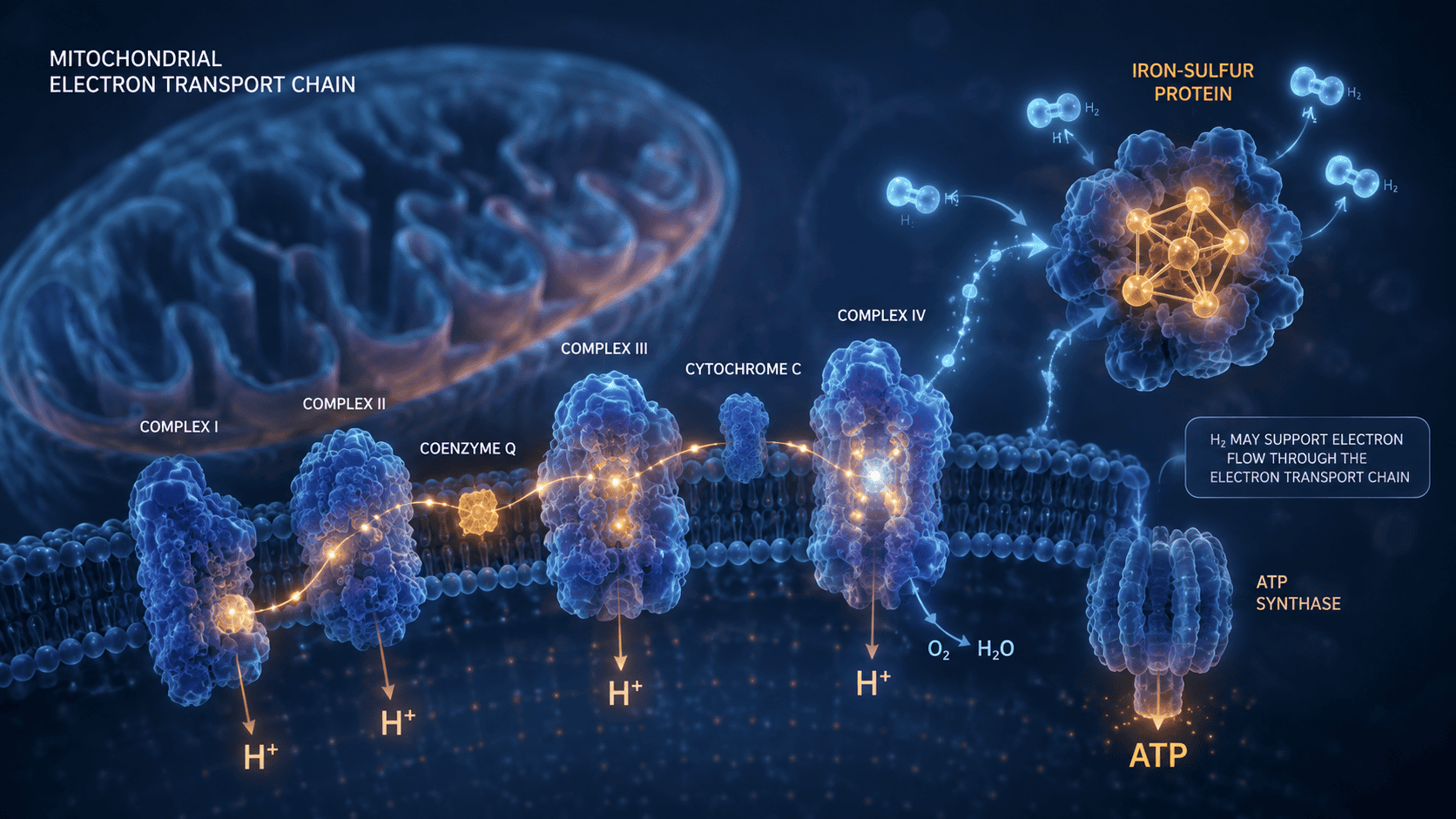
In late 2025, a team from Nagoya University working with Dr. Tyler LeBaron published something in Redox Biology that I believe will be remembered as the most important mechanistic paper in this field since 2007. They identified a specific protein that molecular hydrogen binds and acts upon: the Rieske iron-sulfur protein of mitochondrial Complex III.
This changes the conversation. It also, if we are honest, quietly retires a lot of the marketing language that has grown up around hydrogen products. Let's walk through all of it.

Part One: How We Got Here
The 2007 paper that launched a field
In 2007, Ohsawa and colleagues published in Nature Medicine that inhaled hydrogen gas dramatically reduced infarct volume in a rat model of cerebral ischemia-reperfusion injury. Their proposed mechanism was chemically appealing: H₂ selectively reduces the hydroxyl radical (•OH) and peroxynitrite (ONOO⁻), the two most destructive reactive species, while sparing hydrogen peroxide and nitric oxide, which the body needs for signaling.
That single paper opened the floodgates. Within fifteen years we had beneficial findings in models of diabetes, insulin resistance, liver injury, neurodegeneration, radiation injury, ischemia-reperfusion, and dozens more.
The problem nobody in the wellness world wanted to discuss
Here is the part that rarely makes it into a product brochure.
The rate constant for the reaction between H₂ and the hydroxyl radical is roughly 4 × 10⁷ M⁻¹s⁻¹. That sounds fast until you compare it to the competition. Hydroxyl radicals react at near-diffusion-limited rates with essentially every biomolecule they encounter: lipids, proteins, DNA, glutathione, ascorbate. Those molecules are present at millimolar concentrations. Dissolved hydrogen from a glass of hydrogen water reaches, at best, tens of micromolar in tissue.
Do the arithmetic and the direct-scavenging model collapses. A hydroxyl radical born inside a cell will meet a thousand more reactive partners before it ever finds an H₂ molecule. This objection was raised in the literature as early as 2012, when a paper in Medical Gas Research pointed out that the published rate constant was drastically slower than typical radical reactions and could not account for the observed biology.
Then, in 2021, a group at Beijing University of Technology went further and tried to replicate the original chemistry. Using a Fenton system with 1 mM H₂O₂, a hydrogen-saturated solution (0.6 mM) did not significantly reduce hydroxyl radicals. When they reproduced Ohsawa's original low-peroxide condition, they saw •OH decrease in both the hydrogen-rich and the nitrogen-rich solutions, suggesting the effect was driven by displaced dissolved oxygen rather than by hydrogen itself.
That is a devastating finding for the simple antioxidant hypothesis, and it was acknowledged by the field's own leaders rather than buried. Which is exactly how good science is supposed to work.
There were other clues that scavenging could not be the whole story:
- Hydrogen's effects persist for hours or days after H₂ has washed out of the body. Hydrogen clears through respiration within roughly an hour. Antioxidants do not leave behind ghosts.
- Hydrogen produces paradoxical results in the literature: sometimes oxidative markers fall, sometimes they transiently rise before falling.
- Hydrogen consistently upregulates endogenous antioxidant machinery (Nrf2, glutathione, superoxide dismutase, heme oxygenase-1). A passive scavenger does not induce genes.
That last observation should have been the tell. Something that turns on your own defenses is not acting as an antioxidant. It is acting as a signal, and more specifically as a mild stressor.

Part Two: The 2025 Discovery
RISP, LONP1, and the mitochondrial unfolded protein response
Negishi, Ito, and colleagues at Nagoya University Graduate School of Medicine, working with Hiroyuki Mino, Tyler W. LeBaron, and Kinji Ohno, approached the problem from an evolutionary angle.
Their reasoning: hydrogenases, the ancient enzymes that use H₂ as a substrate, all contain iron-sulfur (Fe-S) clusters. Mitochondria descend from bacteria that lived in a hydrogen-rich world. If H₂ has a protein target in human cells, an Fe-S cluster is the logical place to look.
Complex III of the electron transport chain contains exactly one Fe-S cluster protein: the Rieske iron-sulfur protein (RISP), encoded by UQCRFS1. RISP accepts electrons at the Qo site and hands them down the FeS-c₁ pathway.
Here is what they found:
- H₂ induces the mitochondrial unfolded protein response (UPR^mt^) in cultured cells exposed to hydrogen gas, and in mouse liver after hydrogen water administration. The UPR^mt^ is a protective, stress-triggered quality-control program.
- H₂ suppresses Complex III activity to 78.5% of baseline within two minutes in mouse liver homogenates. Two minutes. This is not a slow antioxidant effect. This is direct interference with the electron transport chain.
- H₂ promotes RISP degradation within one hour, dropping RISP to 73.3% in AML12 hepatocytes, by activating mitochondrial Lon peptidase 1 (LONP1), the mitochondrial protease responsible for clearing damaged matrix proteins.
- Other oxidative phosphorylation complex proteins were unchanged at one hour. The effect was specific to RISP, not general mitochondrial disruption.
- Knocking down Lonp1, or inhibiting LONP1 pharmacologically, blocked the effect, confirming the pathway.
Why a transient hit to Complex III is a good thing
If you are reading this and thinking “wait, hydrogen inhibits my mitochondria?”, you have understood the paper correctly, and you have arrived at the most interesting part.
This is hormesis. It is the same principle behind exercise, sauna, fasting, cold exposure, and sulforaphane. A brief, survivable stressor triggers an adaptive response that leaves the system stronger than it was before.
The proposed sequence looks like this:
H₂ reaches the mitochondrion → binds/acts at the Rieske Fe-S cluster → LONP1 degrades RISP → Complex III activity briefly falls → the cell registers mitochondrial stress → UPR^mt^ activates → chaperones, proteases, and antioxidant programs are upregulated → RISP is rebuilt, often to higher levels than baseline → mitochondrial function is restored and improved.
This single mechanism accounts for nearly every paradox in the hydrogen literature. It explains why oxidative markers can move in either direction depending on when you measure. It explains why benefits outlast the molecule. It explains why Nrf2, glutathione, and heme oxygenase-1 rise even though hydrogen itself is a poor chemical reductant. And it explains why hydrogen behaves so differently in healthy tissue versus injured tissue.
It also places hydrogen alongside nitric oxide and hydrogen sulfide as a genuine gaseous signaling molecule with its own biochemistry, rather than as a peculiar vitamin.
Other targets still on the table
The RISP finding is the first clearly defined molecular target, but it is unlikely to be the only one. Several other mechanisms remain plausible and are not mutually exclusive:
- Reduction of Fe³⁺ in heme-containing proteins. Hancock, LeBaron, and Russell proposed that H₂ propagates its effects by reducing ferric iron in redox-active heme proteins, and called for systematic screening of heme-containing enzymes.
- Modulation of immune receptor signaling. Hydrogen has been shown to attenuate phosphorylation of FcεRI-associated Lyn kinase, dampening downstream NADPH oxidase activity and H₂O₂ generation in mast cells. This one is of real interest to those of us who treat mast cell activation syndrome.
- Gut microbiome effects. Hydrogen-rich water altered gut microbiota composition in patients with impaired fasting glucose, with parallel improvements in metabolic markers.
- Radioprotection through selective •OH reduction under radiation conditions. Monte Carlo track-chemistry simulations published in 2025 suggest that in the specific setting of water radiolysis, where •OH yields are enormous and briefly homogeneous, H₂ can meaningfully reduce hydroxyl radical yield. Note the qualifier. This supports radioprotection, not everyday antioxidant marketing.
Part Three: What the Human Evidence Actually Shows
This is where I want to be scrupulously careful, because this is where most hydrogen content on the internet goes off the rails.
I grade the human data in tiers.
Tier 1: Reasonably supported (multiple RCTs, meta-analyzed)
Cardiometabolic and lipid markers. A 2026 systematic review and meta-analysis in Diabetology & Metabolic Syndrome pooled 13 RCTs across 12 articles (n = 757) in adults with overweight or obesity and found hydrogen-rich water significantly reduced total cholesterol by 6.71 mg/dL (95% CI −10.38 to −3.04).
The most substantial single trial is LeBaron and colleagues' 2020 study: 60 adults with metabolic syndrome, randomized, double-blinded, placebo-controlled, 24 weeks, high-concentration hydrogen-rich water delivering more than 5.5 millimoles of H₂ daily. Results showed significant reductions in blood cholesterol and glucose, attenuated HbA1c, and improved inflammatory and redox biomarkers versus placebo, with a trend toward reduced BMI and waist-to-hip ratio.
The honest caveat: an earlier 2024 meta-analysis of eight RCTs (357 patients) found the direction of effect favorable for TG, TC, HDL, and LDL, but the LDL change did not reach statistical significance. Effect sizes across this literature are modest. A 6.71 mg/dL drop in total cholesterol is real and worth having, but it is not a statin, and no honest practitioner should present it as one.
Tier 2: Suggestive, with clear boundaries
Exercise recovery and fatigue. Two 2024 meta-analyses in Frontiers in Nutrition examined this carefully. The performance analysis (29 studies) concluded that hydrogen supplementation improves lower-limb explosive power, alleviates fatigue, and accelerates blood lactate clearance, but does not meaningfully improve aerobic endurance, anaerobic endurance, or muscular strength.
That is a beautifully specific finding, and it is exactly the kind of nuance that gets flattened into “hydrogen boosts athletic performance” on a supplement label. It doesn't. It appears to help you recover and buffer, not to raise your ceiling.
Tier 3: Promising but methodologically limited
Respiratory illness. Guan and colleagues at the Guangzhou Institute of Respiratory Health reported that hydrogen/oxygen mixed gas inhalation improved disease severity and dyspnea in hospitalized COVID-19 patients across a multicenter trial. A later multicenter randomized trial in 64 patients with Omicron infection found shorter viral shedding duration, a 22.8% decrease in IL-6 from baseline, and greater resolution of pulmonary lesions in the hydrogen/oxygen group.
The honest caveat: the pivotal Guan trial was open-label. There was no blinding and no sham gas. In a symptom-driven endpoint like dyspnea, that is a serious limitation. Furthermore, the authors themselves attributed much of the benefit to a purely physical property: hydrogen/oxygen mixtures are far less dense than air, so they reduce airway resistance and the work of breathing. That is a heliox-style effect, not a redox effect. It may well be real and clinically useful. It is not evidence of hydrogen's molecular biology.
Tier 4: Where hydrogen has actually failed
This section matters more than all the others, and you will almost never see it on a hydrogen product page.
Parkinson's disease. In 2013, Yoritaka and colleagues published a promising randomized double-blind pilot: 48 weeks of hydrogen water significantly improved total UPDRS scores in levodopa-treated Parkinson's patients. The hydrogen world celebrated.
Then they did it properly. A larger, multicenter, randomized, double-blind, placebo-controlled trial, published in Movement Disorders in 2018, failed to replicate the benefit.
I want to sit with that for a moment. The same lead investigator, the same intervention, a better-powered design, and the effect vanished. This is what a mature field looks like. A 2023 review of clinical hydrogen studies stated it plainly: while small-scale human trials offered hope in Parkinson's and Alzheimer's disease, large-scale studies have found no significant positive results.
Cancer. There is real preclinical interest and there are observational reports and case series, particularly around mitigating radiation-induced toxicity and improving quality of life during treatment. There are no adequately powered randomized controlled trials showing that molecular hydrogen treats cancer in humans. Anyone telling you otherwise is selling something. I have written elsewhere about how to read real-world oncology data honestly, and the same discipline applies here.
Longevity. Mechanistically gorgeous. Zero human longevity trials. Full stop.

Part Four: Inhalation vs. Tablets vs. Machines
Now to the practical question I get asked constantly in clinic. These three delivery methods are not interchangeable, and understanding why requires a little physical chemistry.
The numbers that govern everything
At standard temperature and pressure, water holds about 1.6 mg/L (1.6 ppm) of dissolved hydrogen at saturation, which corresponds to roughly 19 mL of H₂ gas per liter of water. That is the ceiling for ordinary hydrogen water. Going above it requires supersaturation, which is inherently unstable.
The commonly cited minimum dose associated with biological effects in the literature is around 0.5 mg of H₂, though optimal dose, timing, and frequency genuinely remain unsettled. Dose matters more than concentration, but you need concentration to calculate dose.
For inhalation, the relevant metric is FiH₂, the fraction of inspired hydrogen. A 2026 respiratory-physiology modeling paper in Respiratory Research by LeBaron, Ohno, Salomez-Ihl and colleagues defines this parameter and supports a practical therapeutic window of roughly 1% to 4% FiH₂. This matters enormously, because the concentration a device produces is not the concentration you actually inhale through a nasal cannula, where room air dilutes it.
And the hard safety boundary: hydrogen is flammable in air between roughly 4% and 75% by volume, and detonable between about 18% and 59%. Ignition energy is extraordinarily low; static electricity is sufficient.
Hydrogen inhalation
How it works: A device (typically SPE/PEM electrolysis) generates hydrogen gas, delivered via nasal cannula, usually for 30 to 120 minutes per session.
Pros:
- Highest achievable systemic dose by a wide margin. You cannot drink your way to what an hour of inhalation delivers.
- Continuous, sustained tissue exposure rather than a spike-and-crash curve.
- Bypasses the portal circulation and first-pass hepatic exposure, going directly from alveoli to arterial blood.
- This is the route used in the majority of acute clinical research (stroke, cardiac arrest, respiratory illness).
- Dose is adjustable in real time via flow rate and concentration.
Cons:
- Flammability is a genuine, non-theoretical risk. The Molecular Hydrogen Institute has taken the explicit position that the safety risk is not worth the benefit for equipment operating above the lower flammability limit. Devices that produce so-called “oxyhydrogen” or Brown's gas at roughly 66% H₂ / 33% O₂ operate far above that limit. Documented fires and explosions involving hydrogen inhalation equipment exist.
- Supplemental oxygen is not benign. Breathing above ~21% FiO₂ chronically increases oxidative stress independent of any fire risk. Hydrogen/oxygen combination units introduce a variable that has nothing to do with hydrogen.
- Cost: quality units run from roughly $1,500 to well over $5,000.
- Time cost: you are tethered to a machine.
- Device quality varies wildly, and FiH₂ is rarely disclosed or verified.
- In the United States, therapeutic hydrogen inhalation remains investigational, permitted through FDA-approved Investigational New Drug applications. It is not an approved therapy.
Best suited for: acute or high-need situations, clinical settings, people with the budget and the discipline, ideally using a device that stays below 4% and does not add supplemental oxygen.
Hydrogen tablets (magnesium-based)
How it works: Elemental magnesium plus an organic acid (malic, tartaric, or fumaric) reacts with water. Magnesium strips hydrogen off the water molecule, forming magnesium hydroxide and releasing H₂ gas, which dissolves into the water and forms a supersaturated solution well above the 1.6 ppm natural ceiling.
Pros:
- Highest concentration achievable in water, reliably above the natural saturation limit.
- Reproducible dose from tablet to tablet, which is not trivially true of devices.
- Portable, requires no power, no maintenance, no membrane degradation.
- Low upfront cost.
- Delivers bioavailable magnesium alongside the hydrogen, which for most of my patients is a bonus rather than a drawback.
- The most robust long-duration RCT in this space (LeBaron 2020) used tablet-generated high-concentration hydrogen water.
Cons:
- You must drink it promptly. Hydrogen is the smallest molecule in existence and off-gasses continuously once the reaction completes. Supersaturated concentrations decay meaningfully within roughly 30 minutes in an open container. The concentration that matters is what you swallow, not the peak reading during fizzing.
- Recurring per-dose cost.
- Slightly alkaline, mineral taste from magnesium hydroxide; some sediment is normal.
- Magnesium load becomes relevant at high daily tablet counts, particularly in renal impairment.
- Manufacturer ppm claims are largely unverified by third parties. Treat marketing numbers with appropriate suspicion.
Best suited for: most people, most of the time. This is my default recommendation for outpatient use.
Hydrogen water machines and bottles
This category needs to be split in two, because the difference is enormous.
A. SPE/PEM electrolysis units (portable bottles and countertop generators)
These use a proton exchange membrane with platinum-coated titanium electrodes. Hydrogen ions cross the membrane and recombine into H₂ in your drinking water, while oxygen, ozone, and chlorine byproducts are vented separately and never contact the water.
- Pros: no consumables, consistent glass-to-glass output, no magnesium or additives, no sediment, better long-run economics, and no taste change. Good units land in the 1 to 3 ppm range.
- Cons: high upfront cost, membranes degrade over time, most require purified or distilled water, output claims are frequently inflated, and the achievable concentration is generally below what tablets produce.
B. Older simple-electrolysis units and alkaline water ionizers
Here I want to be blunt. Alkaline water ionizers are not hydrogen devices. They were designed to shift pH. Hydrogen is an incidental byproduct, typically in the range of 0.1 to 0.5 ppm, which is below or barely at the commonly cited minimum effective dose. Older non-membrane electrolysis units can also generate ozone and chlorine species directly into your drinking water.
If someone sold you a $4,000 ionizer on the strength of hydrogen research, you were, I am sorry to say, sold the wrong story.
At a glance
| Inhalation | Tablets | SPE/PEM device | Ionizer | |
|---|---|---|---|---|
| Typical delivered dose | Highest | High (supersaturated) | Moderate (1 to 3 ppm) | Very low (0.1 to 0.5 ppm) |
| Dose consistency | Variable by device | High | Moderate to high | Low |
| Upfront cost | $1,500 to $5,000+ | Low | $150 to $2,000+ | High |
| Ongoing cost | Electricity, filters | Per tablet | Membrane replacement | Filters |
| Safety concern | Flammability, added O₂ | Magnesium load | Minimal | Byproducts in older units |
| Convenience | Low (time-tethered) | High | Moderate | Moderate |
| Best evidence base | Acute/hospital settings | Long-term metabolic RCT | Limited direct RCT data | Essentially none as an H₂ delivery method |
Part Five: Claims That Do Not Hold Up
I want to name these directly, because credibility in this field is earned by what you are willing to say no to.
“Hydrogen is a super-antioxidant, hundreds of times more powerful than vitamin C.” No. This claim inverts the actual chemistry. Hydrogen is a weak chemical reductant with a slow rate constant against hydroxyl radicals. The RISP discovery makes clear that its power comes from being a hormetic signal, not a potent scavenger. Ironically, the truth is more impressive than the marketing.
“Hydrogen selectively neutralizes only the bad free radicals.” This was the 2007 hypothesis. It has not held up under direct replication attempts, and the field's own leading researchers have moved on from it. Radiation settings are a partial exception, as the 2025 Monte Carlo simulation work shows, but that is a special case, not everyday physiology.
“Alkaline water is hydrogen water.” pH and dissolved H₂ are entirely separate physical properties. High pH is not the active principle in any hydrogen study. Molecular hydrogen dissolved in water does not change pH meaningfully at therapeutic concentrations.
“A negative ORP reading proves antioxidant power.” Oxidation-reduction potential meters in this context are largely responding to dissolved hydrogen and pH. ORP is a mixed potential, not a dose measurement, and it is easily gamed. If you want to know your actual concentration, use a methylene-blue titration reagent or gas chromatography, not an ORP pen.
“Micro-clustered” or “structured” hydrogen water. There is no valid scientific evidence for stable water microclusters. This is a marketing myth that predates hydrogen and has been attached to it opportunistically.
“More is always better.” The RISP mechanism argues directly against this. If hydrogen works by transiently inhibiting Complex III to trigger an adaptive response, then the dose-response curve is very likely non-monotonic, exactly as it is for exercise and every other hormetic stressor. We do not yet know where the top of that curve sits.
“Hydrogen treats cancer / Parkinson's / Alzheimer's.” See Tier 4 above. The best-designed Parkinson's trial was negative. There are no adequate RCTs in cancer.
“It's FDA approved.” Molecular hydrogen has GRAS status as a food additive. Therapeutic hydrogen inhalation in the United States is investigational, conducted under IND. China has granted Class III medical device approval for a hydrogen inhalation device. These are very different things.
Part Six: How I Think About This Clinically
After reading the RISP paper, I have adjusted how I frame hydrogen for my patients. I no longer describe it as an antioxidant. I describe it as mitochondrial signal conditioning: a very gentle, very safe stressor that asks the mitochondria to run their own repair and quality-control programs.
Framed that way, it belongs in the same conceptual category as photobiomodulation, sauna, zone-two exercise, and sulforaphane. Not a replacement for any of them. A complement.
Where I find it most reasonable to trial:
- Metabolic syndrome, dyslipidemia, and insulin resistance, where the RCT evidence is strongest
- Recovery-limited patients: post-exertional fatigue, athletes in heavy training blocks, people whose bottleneck is recovery rather than capacity
- Adjunctive support during radiation therapy, where the radioprotection mechanism is mechanistically distinct and better supported
- Patients with heavy environmental oxidative burden, alongside foundational glutathione and detoxification support
- General healthspan and longevity protocols, with the explicit understanding that human longevity data do not exist
Where I do not lead with it: acute infection management, neurodegeneration as a primary intervention, and anything where a patient might be tempted to substitute it for established care.
Safety and cautions
Hydrogen's biological toxicity profile is genuinely exceptional. Deep-sea saturation divers have breathed hydrogen-containing gas mixtures at concentrations orders of magnitude above therapeutic levels for extended periods. The limiting factor for inhalation is flammability, not toxicity.
Still, a few practical cautions:
- Device safety first. If you inhale, use equipment that stays below 4% and preferably does not add supplemental oxygen. Ventilate the room. Keep it away from ignition sources.
- Magnesium load. With tablets, count your total daily magnesium, especially with reduced kidney function.
- Fermentation-related conditions. Your colon already produces hydrogen from bacterial fermentation of fiber, which is why hydrogen breath testing works at all. Whether supplemental hydrogen meaningfully affects small intestinal bacterial overgrowth or hydrogen-consuming organisms is genuinely unknown. In patients with active SIBO or significant dysbiosis, I proceed thoughtfully and watch symptoms.
- The hormesis question in athletes. High-dose conventional antioxidants can blunt training adaptations. Because hydrogen appears to be a hormetic stressor rather than a scavenger, this concern may not apply, and may even reverse. But we do not have the data yet, and I would not pretend otherwise.
- Never a substitute. Hydrogen does not replace treating the root cause, whether that is mold and mycotoxin exposure, a chronic infection, an environmental burden, or a nutritional deficiency. It is a support, not a solution.
A Word About Wonder and Trust
There is something that stops me every time I read a paper like this one. Molecular hydrogen is the oldest and simplest molecule in the universe. Two protons, two electrons. It was there before stars, before planets, before the first cell. And now we discover that our mitochondria, which carry the memory of an ancient bacterial partnership, still recognize it. Still respond to it. Still know what to do when it arrives.
That is not a coincidence I can explain away. That is design, and it moves me.
I hold this alongside something I have learned over twenty years of practice, and through my own long road with cancer and Crohn's. We are not machines to be optimized. Healing has a mystery in it that no mechanism paper will ever fully capture. I pray over my patients. I pray over my own body. And I have watched recovery arrive through means both measurable and utterly unmeasurable.
So take the science seriously. Take the caveats seriously. And then hold it all loosely, with gratitude, knowing that the One who made the hydrogen made you too, and is not finished with your story.
Practical Recommendations
If you want to try molecular hydrogen, here is how I would approach it.
Start with hydrogen water, not inhalation. It is safer, cheaper, better studied for chronic daily use, and easier to sustain.
H2 Absorb is the hydrogen tablet formulation I carry at Dr. Jill Health. Drop it into 8 to 16 ounces of water, let it fully dissolve, and drink it within a few minutes while the concentration is still high. That last instruction is not optional. Waiting an hour wastes most of the dose.
Pair it with the redox foundation, because hydrogen appears to work partly by upregulating your endogenous antioxidant systems, and those systems need raw materials:
- Glutathione support for phase II detoxification and redox balance
- Mitochondrial cofactors (alpha lipoic acid, acetyl-L-carnitine, CoQ10, PQQ, R-lipoic acid) to give the UPR^mt^ something to rebuild with
- Magnesium and B vitamins as baseline mitochondrial infrastructure
You can find my full antioxidant and mitochondrial lineup, including MitoVite, ATP 360, and Liposomal Glutathione, in the Detoxification and Energy Support collections at Dr. Jill Health.
And do not neglect the free interventions. Your lymphatic and glymphatic systems clear the metabolic waste that hydrogen's signaling ultimately helps your cells manage. Sleep, movement, and breath are still the foundation.
The Bottom Line
The Rieske iron-sulfur protein discovery does two things at once, and they point in opposite directions.
It elevates molecular hydrogen from a curiosity with an implausible mechanism to a legitimate mitochondrial signaling molecule with a defined, testable target. That is a substantial upgrade in scientific standing, and it opens the door to rational dosing, better trial design, and real clinical translation.
And it deflates almost everything the supplement industry has been saying about hydrogen for fifteen years. It is not a super-antioxidant. It does not selectively hunt bad radicals. More is not necessarily better. And the biggest, best-designed neurological trial we have was negative.
I find that combination deeply reassuring. A field that can publish a paper undermining its own founding hypothesis, and celebrate it, is a field worth taking seriously.
Molecular hydrogen is safe, inexpensive, mechanistically fascinating, and modestly helpful for specific things. That is a genuinely good thing to be. It does not need to be a miracle.
References
- Negishi S, Ito M, Hasegawa T, Otake H, Ohkawara B, Masuda A, Mino H, LeBaron TW, Ohno K. The Rieske iron-sulfur protein is a primary target of molecular hydrogen. Redox Biology. 2025;88:103952. doi:10.1016/j.redox.2025.103952
- Ohsawa I, Ishikawa M, Takahashi K, Watanabe M, Nishimaki K, Yamagata K, Katsura K, Katayama Y, Asoh S, Ohta S. Hydrogen acts as a therapeutic antioxidant by selectively reducing cytotoxic oxygen radicals. Nature Medicine. 2007;13(6):688-694. doi:10.1038/nm1577
- Wang F, et al. A hypothesis on chemical mechanism of the effect of hydrogen. Medical Gas Research. 2012;2:17. doi:10.1186/2045-9912-2-17
- Hydroxyl-radical scavenging activity of hydrogen does not significantly contribute to its biological function. bioRxiv preprint. 2021. doi:10.1101/2021.03.13.435216
- Hancock JT, LeBaron TW, Russell G. Molecular hydrogen: redox reactions and possible biological interactions. Reactive Oxygen Species. 2021;11:m17-m25. doi:10.20455/ros.2021.m.803
- LeBaron TW, Singh RB, Fatima G, Kartikey K, Sharma JP, Ostojic SM, Gvozdjakova A, Kura B, Noda M, Mojto V, Niaz MA, Slezak J. The effects of 24-week, high-concentration hydrogen-rich water on body composition, blood lipid profiles and inflammation biomarkers in men and women with metabolic syndrome: a randomized controlled trial. Diabetes, Metabolic Syndrome and Obesity. 2020;13:889-896. doi:10.2147/DMSO.S240122
- The effect of hydrogen-rich water interventions on lipid profiles in adults with overweight or obesity and associated metabolic disorders: a systematic review and meta-analysis of randomized controlled trials. Diabetology & Metabolic Syndrome. 2026. doi:10.1186/s13098-026-02124-0
- Jamialahmadi H, Khalili-Tanha G, Rezaei-Tavirani M, Nazari E. The effects of hydrogen-rich water on blood lipid profiles in metabolic disorders clinical trials: a systematic review and meta-analysis. International Journal of Endocrinology and Metabolism. 2024;22(3):e148600. doi:10.5812/ijem-148600
- Zhou K, Shang Z, Yuan C, Guo Z, Wang Y, Bao D, Zhou J. Can molecular hydrogen supplementation enhance physical performance in healthy adults? A systematic review and meta-analysis. Frontiers in Nutrition. 2024;11:1387657. doi:10.3389/fnut.2024.1387657
- Li Y, Bing R, Liu M, Shang Z, Huang Y, Zhou K, Bao D, Zhou J. Can molecular hydrogen supplementation reduce exercise-induced oxidative stress in healthy adults? A systematic review and meta-analysis. Frontiers in Nutrition. 2024;11:1328705. doi:10.3389/fnut.2024.1328705
- Yoritaka A, Takanashi M, Hirayama M, Nakahara T, Ohta S, Hattori N. Pilot study of H2 therapy in Parkinson's disease: a randomized double-blind placebo-controlled trial. Movement Disorders. 2013;28(6):836-839. doi:10.1002/mds.25375
- Yoritaka A, Ohtsuka C, Maeda T, Hirayama M, Abe T, Watanabe H, et al. Randomized, double-blind, multicenter trial of hydrogen water for Parkinson's disease. Movement Disorders. 2018;33(9):1505-1507. doi:10.1002/mds.27472
- Yoritaka A, Abe T, Ohtsuka C, et al. A randomized double-blind multi-center trial of hydrogen water for Parkinson's disease: protocol and baseline characteristics. BMC Neurology. 2016;16:66. doi:10.1186/s12883-016-0589-0
- Guan WJ, Wei CH, Chen AL, Sun XC, Guo GY, Zou X, Shi JD, Lai PZ, Zheng ZG, Zhong NS. Hydrogen/oxygen mixed gas inhalation improves disease severity and dyspnea in patients with coronavirus disease 2019 in a recent multicenter, open-label clinical trial. Journal of Thoracic Disease. 2020;12(6):3448-3452. doi:10.21037/jtd-2020-057
- The efficacy of hydrogen/oxygen therapy favored the recovery of Omicron SARS-CoV-2 variant infection: results of a multicenter, randomized, controlled trial. 2023. PMC10636573
- LeBaron TW, Ohno K, Salomez-Ihl C, et al. Respiratory-physiology modeling of therapeutic hydrogen inhalation: defining the fraction of inspired hydrogen (FiH2) and flow-rate requirements. Respiratory Research. 2026. doi:10.1186/s12931-026-03664-9
- Molecular hydrogen therapy: a review on clinical studies and outcomes. 2023. PMC10707987
- Liang B, Shi L, Du D, Li H, Yi N, Xi Y, Cui J, Li P, Kang H, Noda M, Sun X, Liu J, Qin S, Long J. Hydrogen-rich water ameliorates metabolic disorder via modifying gut microbiota in impaired fasting glucose patients: a randomized controlled study. Antioxidants. 2023;12(6):1245. doi:10.3390/antiox12061245
- Molecular hydrogen as an antioxidant and radioprotector: mechanistic insights from Monte Carlo radiation-chemical simulations. Antioxidants. 2025;14(9):1054. doi:10.3390/antiox14091054
- LeBaron TW, Kura B, Kalocayova B, Tribulova N, Slezak J. A new approach for the prevention and treatment of cardiovascular disorders: molecular hydrogen significantly reduces the effects of oxidative stress. Molecules. 2019;24(11):2076. doi:10.3390/molecules24112076
- Nakao A, Toyoda Y, Sharma P, Evans M, Guthrie N. Effectiveness of hydrogen rich water on antioxidant status of subjects with potential metabolic syndrome: an open label pilot study. Journal of Clinical Biochemistry and Nutrition. 2010;46(2):140-149. doi:10.3164/jcbn.09-100
- Nishimaki K, Asada T, Ohsawa I, et al. Effects of molecular hydrogen assessed by an animal model and a randomized clinical study on mild cognitive impairment. Current Alzheimer Research. 2018;15(5):482-492.
- Sládečková B, Botek M, Krejčí J, Valenta M, McKune A, Neuls F, et al. Hydrogen-rich water supplementation promotes muscle recovery after two strenuous training sessions performed on the same day in elite fin swimmers: randomized, double-blind, placebo-controlled, crossover trial. Frontiers in Physiology. 2024;15:1321160. doi:10.3389/fphys.2024.1321160
- Rahman MH, et al. Redox-mechanisms of molecular hydrogen promote healthful longevity. Antioxidants. 2023;12(5):988. doi:10.3390/antiox12050988
- Yıldız F, LeBaron TW, Alwazeer D. A comprehensive review of molecular hydrogen as a novel nutrition therapy in relieving oxidative stress and diseases: mechanisms and perspectives. Biochemistry and Biophysics Reports. 2025;41:101933.
- Molecular Hydrogen Institute. Flammability risks of hydrogen inhalation. molecularhydrogeninstitute.org
- Molecular Hydrogen Institute. Hydrogen water vs. hydrogen inhalation. molecularhydrogeninstitute.org
Dr. Jill C. Carnahan, MD, ABIHM, ABoIM, IFMCP is a triple board-certified functional medicine physician and Medical Director of Flatiron Functional Medicine in Louisville, Colorado. She is the author of the bestselling book Unexpected: Finding Resilience through Functional Medicine, Science, and Faith (readunexpected.com), host of the award-winning Resiliency Radio podcast, and is featured in the Doctor/Patient documentary. Follow her at jillcarnahan.com and @DrJillCarnahan on Instagram.
Disclaimer: This article is for educational purposes only and does not constitute medical advice. Molecular hydrogen has not been evaluated by the FDA for the treatment of any disease. Please consult your own physician before beginning any new supplement or therapy, particularly if you have kidney disease, are pregnant, or are managing a serious medical condition. Dr. Jill Health® products are available through drjillhealth.com, in which Dr. Carnahan holds a financial interest.










Share: