

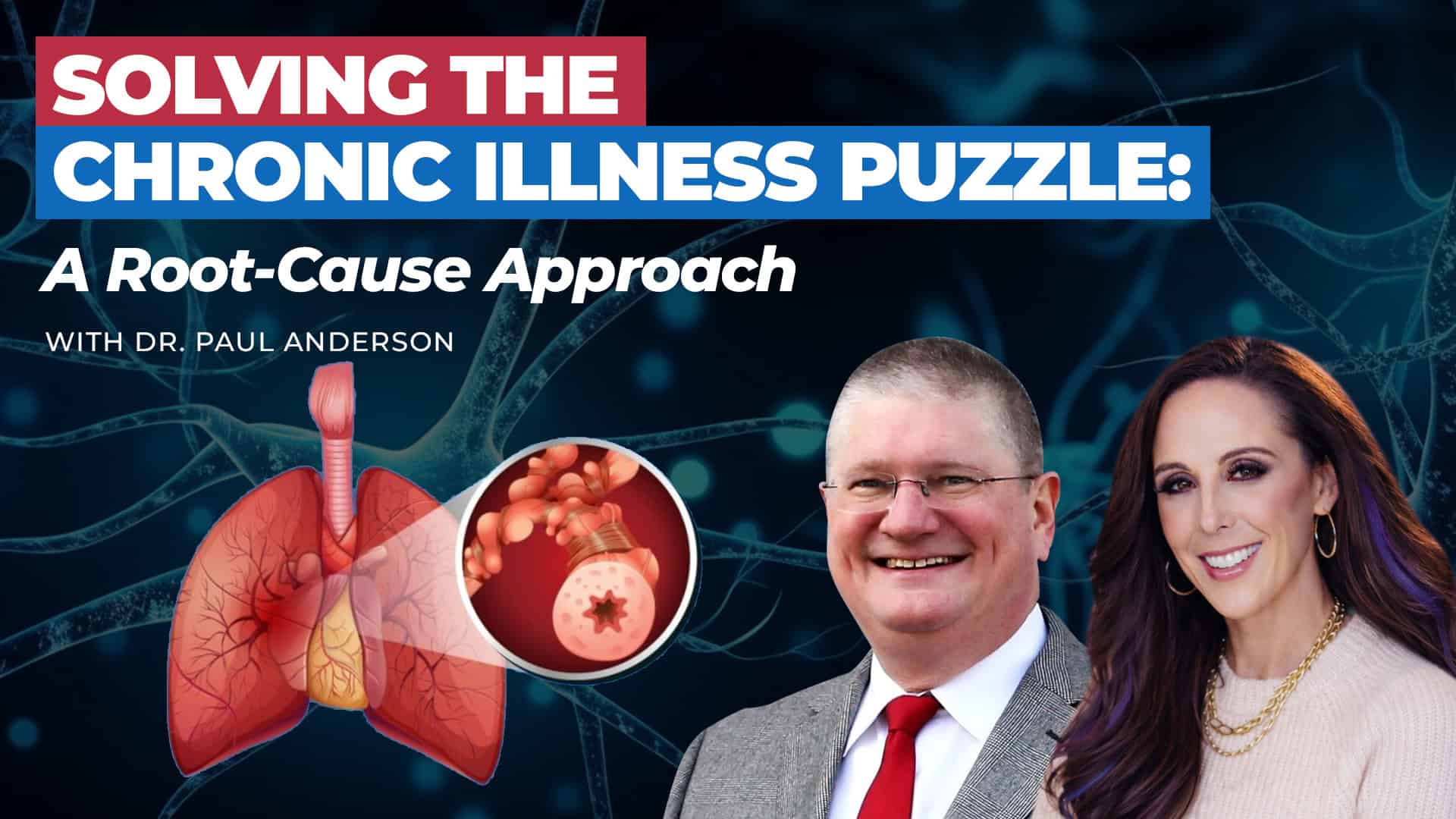
In this episode of Resiliency Radio with Dr. Jill, Dr. Jill Carnahan welcomes Dr. Paul Anderson, one of the leading voices in integrative and naturopathic medicine, for a fascinating discussion on solving the chronic illness puzzle through a root-cause approach.
Drawing from more than three decades of clinical experience, Dr. Anderson explains why conventional medicine often struggles with complex chronic illnesses and how functional medicine uncovers the hidden factors driving disease. Together, they explore environmental toxins, chronic infections, mitochondrial dysfunction, immune imbalance, cancer support, and innovative IV therapies that help restore health and resilience.
Whether you're dealing with chronic illness, cancer, autoimmune disease, or simply looking to optimize your health, this episode offers practical insights into healing from the inside out.
🔑 5 Key Discussions You'll Discover with Dr. Paul Anderson
① 🧩 Looking Beyond Symptoms
⇨ Chronic illness requires investigating the root causes rather than simply treating symptoms.
⇨ Functional medicine looks “below the waterline” to uncover hidden contributors to disease.
② ☣️ The Hidden Drivers of Chronic Illness
⇨ Environmental toxins, chronic infections, immune dysfunction, and mitochondrial damage often work together.
⇨ Addressing these interconnected factors creates a stronger foundation for healing.
③ 💉 Integrative IV Therapies
⇨ High-dose Vitamin C, mistletoe therapy, ozone therapy, and metabolic support may complement conventional treatments.
⇨ Restoring mitochondrial function plays an important role in recovery and resilience.
④ 🛡️ Immune Health & Cancer Support
⇨ Chronic inflammation and immune dysregulation contribute to many chronic diseases, including cancer.
⇨ Supporting immune function may improve quality of life and overall treatment outcomes.
⑤ 🌱 Patient Empowerment & Healing
⇨ Healing begins when patients become active participants in their health journey.
⇨ Understanding the root causes of illness helps individuals move beyond fear and toward lasting wellness.
🔑 Key Takeaways with Dr. Paul Anderson
🔹 Chronic illness is rarely caused by a single factor.
🔹 Root-cause medicine investigates toxins, infections, immunity, hormones, and mitochondrial health.
🔹 Integrative therapies may provide valuable support alongside conventional medical care.
🔹 Patient education and empowerment are essential components of healing.
🔹 Functional medicine focuses on restoring health—not simply managing disease.
About Dr. Paul Anderson
Dr. Paul Anderson is an internationally recognized clinician, educator, and expert in integrative and naturopathic medicine with more than 30 years of experience treating complex chronic illnesses and cancer.
He previously led the interventional arm of a National Institutes of Health-funded clinical research trial investigating IV and integrative therapies for cancer patients and has held faculty positions at Bastyr University, where he served as Professor of Pharmacology and Clinical Medicine and Chief of IV Services for the Bastyr Oncology Research Center.
Dr. Anderson is the co-author of several respected books, including Outside the Box Cancer Therapies, Cancer… The Journey from Diagnosis to Empowerment, and A Scientific Reference for Intravenous Nutrient Therapy. Today, he collaborates with clinics and hospitals worldwide, educating practitioners on advanced therapies for chronic illness and cancer.
🔗 Website: https://www.dranow.com
🔗 YouTube: https://www.youtube.com/@DrA-Online
🔗 Instagram: https://www.instagram.com/draonline/
Dr. Jill Carnahan, MD – Leading Functional Medicine Doctor
Dr. Jill Carnahan, MD, ABIHM, ABoIM, IFMCP is internationally recognized as one of the most respected leaders in functional and integrative medicine. She is dually board-certified in Family Medicine and Integrative Holistic Medicine, and the founder and medical director of Flatiron Functional Medicine in Louisville, Colorado.
Widely known as a pioneer in environmental toxicity, mold-related illness, autoimmune disease, and resilience medicine, Dr. Carnahan combines cutting-edge science with compassionate, root-cause care. Her clinical approach integrates precision genomics, epigenetics, microbiome research, peptide therapy, and lifestyle interventions to transform health outcomes for patients worldwide.
She is the author of the best-selling memoir Unexpected, which weaves her personal journey through cancer, Crohn’s disease, and mold-related illness with her professional expertise. Dr. Carnahan is also the executive producer of the award-winning documentary Doctor/Patient and the host of the popular podcast Resiliency Radio, which reaches over 500,000 global subscribers.
As an international keynote speaker, Dr. Carnahan has been featured at leading medical conferences including A4M, IFM, EPIC, and IPM Congress, and her work is frequently highlighted in major media outlets such as NBC, CBS, Fox News, Forbes, Parade, People, and MindBodyGreen.
With a reputation as both a scientist and a healer, Dr. Jill Carnahan is regarded as one of the top functional medicine doctors in the world, offering a unique blend of evidence-based research, innovation, and deeply personalized care.
The Podcast with Dr. Paul Anderson
The Video with Dr. Paul Anderson
Transcript
00:00
Dr. Jill Carnahan
Hey everybody. Welcome to Resiliency Radio, your go to podcast for the most cutting edge insights integrative and functional medicine. I'm your host, Dr. Jill and with each episode we dive into the heart of healing and personal transformation. Join me as I interview medical experts, world leaders, innovators of all types, bringing you the best to help you on your journey of optimal performance and longevity. Today's no different. We have the one and only Dr. Paul Anderson, who's been a mainstay in the integrative oncology world. You're going to learn some new things and interesting tips and points about integrative oncology and complex chronic illness. You won't want to miss this episode. Before we jump in, I just want to remind you about a couple things.
00:41
Dr. Jill Carnahan
First of all, if you're looking for great products and services, you can get them all@drjillhealth.com I especially want to bring to mind some of our very favorite things. Today we're going to be talking about IV Vitamin C and I have a topical radiant C cream that's super popular for neck and face and antioxidant use. It's clean, it works, it's amazing moisturizing. So check this out. You can find that@drjillhealth.com among many other Dr. Jill beauty products. Also, if you didn't know, we are accepting new patients at Flatiron Functional Medicine, my clinical practice in Louisville, Colorado. I have two incredible mid levels, a PA and a nurse practitioner and they are fantastic and we work together in all the cases.
01:23
Dr. Jill Carnahan
So if you're interested in having a call, a quick 10 minute intro or just scheduling an appointment, give us a call at 303-993-7910 or visit our website for more information. That's J carnahan.com okay, let me introduce Dr. Paul Anderson. Dr. Anderson is a recognized educator and clinician and integrative and naturopathic medicine with a focus on complex chronic illness and cancer. In addition to three decades clinical experience, he was also head of the interventional arm of a US NIH funded human research trial using IV and integrative therapies in cancer patients. He had founded the Advanced Medical Therapies in Seattle, Washington, a clinic focused on cancer and chronic diseases and now focuses his time on collaboration in medical schools, clinics and hospitals.
02:07
Dr. Jill Carnahan
Just known among us as one of our great teachers and leaders, he's co authored a book, Outside the Box, Cancer Therapies and Just a Wealth of Knowledge. So let's join Dr. Paul Anderson today for the episode of Resiliency Radio. Dr. Paul Anderson, it is an absolute pleasure to have you on Resiliency Radio. I told you before we started, and this is a truth, so I'm going to say it publicly. In our small world of function medicine, first of all, we have the small circle, and we all know each other. And there are probably less than 2 handfuls of people that I have the deepest respect for as far as really the knowledge base and the ability to navigate the world of super complex chronic patients. And you are among them 100% and just someone I've always admired.
02:50
Dr. Jill Carnahan
And you're out there teaching, doing your own conference. If you guys are listening, you're professional, at the end of the show, you're going to hear about, you know, what Dr. Paul is doing. But in the world out here, you've really not only made a name for yourself, but you're someone that I deeply respect and admire. And today, our listeners are going to be in for a big treat because we're going to dive into how you think about the patient, how you approach them. We're going to talk about IV therapies and really anything else that comes up to the table. So welcome to the show.
03:16
Dr. Paul Anderson
Thank you so much. I'm glad to be here.
03:18
Dr. Jill Carnahan
You're welcome. So I always like to start with the story behind the great, you know, great thinker, great physician, great creative. And I put that in there because I think unless we're curious and creative, that's why we get where we are, right? Like, because we're thinking, okay, what else am I missing? What else is possible? So tell us just your framework as far as first, your story. How did you get into medicine? And then how did you get into this part and field of medicine?
03:44
Dr. Paul Anderson
Yeah, it's a. I'll give the shortest version I can. So I, in a sense, I kind of grew up in and around medicine. My father was a physician and mom was a nurse. And they're. They've passed away because they'd be 100 and something. But they were, you know, sort of the, the post World War II medical era. And so the majority of people that I knew were other physicians. And, you know, growing up all, you know, many of the adults. So it kind of, that was just around. What sort of evolved, though, was I started working in laboratory settings in the later 1970s, around 76. And I kept thinking, I, you know, I'm gonna go and finish medical school. And then I kept getting caught with this thought that, you know, you're probably going to get in trouble.
04:51
Dr. Paul Anderson
Because medicine, even back in, you know, let's say the early 80s, was becoming more, you know, formulaic and more protocol driven and all of that. And, you know, I saw that although, you know, my dad later kind of came around to seeing what I was doing is a good thing. He was very comfortable with that. You know, he. He kind of liked doing, you know, the. I guess I called it the same thing over and over. So, you know, so that was sort of the backdrop. But, you know, working in. In labs of different kind is a really good education for a lot of things. And then what really happened was when we have. My wife and I have five adult children, so when they.
05:38
Dr. Paul Anderson
When the older two were little, I started to take them at my mother's recommendation, who was the nurse to a naturopathic physician, because they had, you know, the chronic revolving door of ear infections and all that. And they were just little, you know, but it's like, you know, how many rounds of antibiotics can we put through the kids? So my mom finally said, look, just. Just talk to that. And I kind of. At that time, I thought, oh, brother, you know, and whatever. So I meet. I meet this doctor, and I was very impressed, you know, just his knowledge and his sort of way of thinking about things and all that. And very short order, you know, the. My young children stopped having to be on antibiotics all the time and all of that. So then I thought, well, you know, I've never.
06:32
Dr. Paul Anderson
I had a lot of allergies and a lot of chronic other stuff, and I thought, well, maybe I'll try and see him. So through the process of that, I thought, well, I could be this kind of doctor, you know, because it seems like you have a lot more creativity involved in what you're doing. So that's kind of the short version, what I will tell anyone considering it, you know, like. And by that time, I own my own lab and everything. So I sold my lab and I went and finished medical school. But to be a naturopathic physician, as advice to anybody, don't wait till you have little children to do this. It's. Yeah, it was. My wife and I are still married, but it was a rough number of years.
07:15
Dr. Paul Anderson
But one of the things I think that was, I think helpful is for the two clinical years, I did all of the naturopathic medical school program. And then because I knew so many people in the allopathic world, I did two years, essentially a rotating internship in allopathic settings and essentially was treated just like everybody else there. And so by the time I graduated, I felt really like, in personal opinion, I felt I had this well rounded, you know, kind of training and I kind of. I really started out thinking I would just like to be a family doctor and kind of, you know, had a kind of country practice sort of a thing.
08:02
Dr. Paul Anderson
But what happened within, I don't know, probably three months to six months of opening is I started to get these very chronically ill patients or people with cancer, you know, or something that I never really thought I'd get a lot of that coming in. And part of it was just there weren't that many doctors like me around. So, you know, it was an oddity. And so people say, well, at least try them out. And so very quickly I went from, you know, just wanting to kind of have this family practice to some family practice and then just more and more complicated chronic illness patients or cancer patients. And so the rest of my practice all these decades has really been about half advanced cancer and half really advanced chronically ill folks.
08:55
Dr. Paul Anderson
And as you know, the learning curve is very steep with those because we're, you know, even coming with this great mix of training I had and all that. You're not really taught how to think about a very more than two steps of complexity. Right. So they taught me an awful lot. Yeah, that's how. So that's how I got here. Yeah.
09:21
Dr. Jill Carnahan
Really interesting, because first of all, you're so right. You almost have to be not only brave, but curious in the field that we're in, because. Right. I remember I trained family medicine as well. And then we're coming right out. I did one day we kind of like cash integrative. Thought I was just going to dabble a little bit. And then soon it was like, it was so full and it. Within a year, it shifted everybody one of those appointments. And what it was you get to know the patient deeply. You're curious enough to say, huh, that doesn't make sense, but I'll help you figure it out. Right. And so many doctors, the difference in conventional medicine, not all of our colleagues, but some of them, it's like, well, if I didn't learn it in medical school, it's not true.
09:56
Dr. Jill Carnahan
And so they dismissed the patient, whereas you or I came in with this open mind. At least I have, even to this day, every day I have. Patients were like, huh, that's so fascinating. Let's figure out what's going on or let's try this or. So you have to be willing to be curious, be Creative and within the safety realm of you, what's acceptable and what might be very low risk or whatever. We try things sometimes and then we're like wow, that worked. And then you kind of build a practice on and then we talk as colleagues and realize, oh, we're all seeing these patterns and these things. So I want to start with what you mentioned, which is complex chronic illness and cancer.
10:30
Dr. Jill Carnahan
And I feel like there's a lot of things again, I never want to bash conventional medicine because that's where I came from and I love this that even you had in your story because I'm the same like how do we actually bring more of those folks who aren't open minded to see that there value in this, looking at it with a bigger scope, with a bigger lens. But what would you say? Let's start with this. What would you say that conventional medicine is really missing with complex chronic patients and cancer?
10:56
Dr. Paul Anderson
Yeah, I think, and you know, the end, there's a lot of overlap in, you know, the further you get into either a complex chronic illness case or a late stage cancer case. And I think that, and again it's, I personally, I don't think it's like somebody, you know, sat down and said we don't want to do this. I think the system, you know, trains you to be very good at recognizing acute problems and life threatening problems. And what I would tell patients is, you know, we got this one problem, we can see we have one treatment for it or maybe a choice of 2 or 3 and we apply them and you get better. Like that's the acute care model and that's really what, you know, the allopathic world is great at. Like it's perfect for that.
11:47
Dr. Paul Anderson
What the, you know, when the patients would come in and they come in with these chronic issues and I'm trying to say there's a different sort of world view going on is, you know, because a lot as you know, we all know you can go to your primary care or whoever you know is doing it, or even a couple of specialists and they'll all say, well, you know, I, I agree you don't feel well, but your labs look good and you seem okay. So we, you know, we're not sure what it is. And so I would tell patients, you know, that kind of medicine is good at a big above the water line, you know, problem, it's sticking up, we can see it on your labs or whatever. You know, chronic illness often is you have 2, 3, 4, 5 or 10 smaller things.
12:32
Dr. Paul Anderson
But if you stack them up, they're a real big problem, but they're not going to kill you tomorrow. So they don't really come up above the waterline. And so I, you know, kind of explained to the patients that it's not that one is bad or the other. It's all just the way we use our tools. But in our case, where you've. You've had the big bad things screened out and you're still sick and you're getting sicker, we have to look in lots more places and look for either smaller or stealthier problems that nobody's looking for, which could be, you know, toxicities like mycotoxins and other biotoxins or chronic infections or, you know, the litany of things that we look for.
13:18
Dr. Paul Anderson
And that's the place, I think, where the two ways of looking at it diverge is in, you know, when I train students, I'll tell them, you know, medicine, acute care medicine is built for the average middle of the bell curve healthy person who has a problem. We have people that are on the margins of the bell curve who have lots of problems. They don't fit that model. And so we have to look in other places that be the last place you looked with a healthy person. And, and I've even, you know, talked, you know, not always successfully, but I've even done. Talked to some of our colleagues and specialists and things and just said, you know, it's just a. We're looking at two ends of the same problem just using kind of a different way of assessing. So in.
14:06
Dr. Paul Anderson
And, and when it comes to that even crosses over into, you know, advanced cancer, where you're looking at very unlikely that'll be cured. But we can, we want to be as healthy as we can. We want good quality of life. Same thing. You're looking at a lot of pieces that go together to make your quality of life better. And a lot of times they're the same pieces really as a chronic illness patient would have. So that's kind of how I see that. And that's what I try and language to patients so they get that. It's not a either or thing. It's just that tool's great if you break your arm. You know, it's great if you have, you know, some raging infection that we all would pick up.
14:46
Dr. Paul Anderson
It's just not great if you have some other thing going on that they don't even look for.
14:51
Dr. Jill Carnahan
Hey, guys. Just interrupting the show for a quick moment to remind you if you are looking for a functional Medicine practitioner. We are taking new patients at Flatiron Functional Medicine, my clinical practice in Louisville, Colorado. You can call 303-993-7910 to make an appointment or ask questions. You can also visit our website for more information. That's jillcarnahan.com. Okay, let's get back to our show with Dr. Paul Anderson. Wow, that's a really great frame. And I always think of, like, in medical school or Occam's razor and kind of like this.
15:21
Dr. Paul Anderson
Yeah.
15:21
Dr. Jill Carnahan
Thing. Right. Which in our complex chronic field, and especially with cancer patients, it's exactly the opposite. There's a whole bunch of terrain. And I would say more of, like, my practice is toxic load and infectious, creating immune dysfunction and all of that. So let's dive just a little bit into themes, because what you were just saying is so relevant in the fact that whether it's complex chronic autoimmune disease, neurological dysfunction, Parkinson's, Alzheimer's, als, or cancer, those three things, number one, environmental toxicity is a huge hidden cause. But there's also mitochondria, immune inflammation. If you were to have someone walk in with, say, a neurodegenerative disease or cancer or a chronic disease of another type, what are some of the common themes. Mitochondria, immune. That you would kind of look through and start to assess them.
16:11
Dr. Paul Anderson
Yeah, I think there's. As the years went on and the patients, you know, teach you more things as you know, and curiosity, as you said, is a huge part of it. You have. You have to be willing to look beyond your own knowledge. There. There were. There were sort of focal areas that I saw come up that was like, unless we really knock it out of the park early with a chronic case, we should probably look at all of these areas and just, you know, make sure there's not contributing. Because I do think one of the reasons that all toxicities, including mycotoxins and the other biotoxins, come up so much and chronic infections is that. That they're permissive of one another.
16:57
Dr. Paul Anderson
And so toxicity derails your immune function in a way that then bugs that wouldn't normally be a problem become a huge problem for you know, and again, you know, personal. Go to their primary care, and they'll say, well, you know, everyone's exposed to those infections. Yeah. But not everyone's immune system is so messed up, you know, because of the toxicity. So I think as far as places to look, those two are, you have to look there. Right. The places, I think, supporting, though, because if we Think about like what a chronic illness does to us, let's say. And here's the thing, and I think why in chronic infections and toxicity are always like butting heads is each one can make us more sensitive to the other, you know, and then so we get a little bit more toxicity.
17:50
Dr. Paul Anderson
The, the bugs bother us more and then they grow more and then toxicity bother, you know, the whole thing. But the other areas that then are like, okay, those are probably focal, you know, and I, you know, if you were making like a little triangle, like mitochondrial dysfunction kind of is universal with the chronic ill folks, right? That's sort of like a triangle. The other thing, so that I'll tell patients is our bodies try to not allow us to get sick as long as they can. So we've been working on a chronic illness probably longer than we know. And so the places that get beat up, that are trying to respond are our endocrine system.
18:32
Dr. Paul Anderson
And if we don't look at the endocrine picture and really all of it and, you know, balance out what is not right there, you don't have enough power in your system to heal the mitochondria or fight back against infections or detox or anything. Because when you get your immune system off balance and then whatever comes to fruition from that initially, your body uses your endocrine system to say, no, we're not going to do that. Well, that feedback loop is made for acute problems. It's not made the problem every day, right. So eventually one or all of your hormones will not be working also. So if, you know, so you got to do something with the hormonal picture. And I'll tell patients, look, as we get you better from these other things, this hormone stuff will probably go away.
19:23
Dr. Paul Anderson
It's not like a primary endocrinopathy, most of them anyway, so that's a big thing. Then the other thing that gets trashed is your whole digestive and absorptive system, which, you know, every year we know more about how important that is, which has always, you know, been a big deal. But. But that's a big deal because I'll usually tell patients that's just. That's more something we need to work chronically on because it's gonna, it's where everything we give you goes through pretty much. We have to rehab it, but gets a lot of traffic. So we got to rehab that over time. That's not like a one and done thing.
20:00
Dr. Jill Carnahan
Right.
20:01
Dr. Paul Anderson
And then the others, you know, as far as, you know, support obviously the psychosocial sort of mil, you the person is in. A lot of chronically ill people are abused and gaslit and, or just live in a horrible situation. You know, some people have great support, others not so much. So that's always an area. You have to be careful. The structural things, physical and structural things can get really, you know, out of whack. And then the other thing that I probably say, you know, in all these decades, about halfway through became more apparent to me. I think the two things that, because of tools, one was resistance to treatment. So especially in the infectious arena, some of that comes from toxicity. So treating the toxicity helps with resistance.
20:57
Dr. Paul Anderson
But also the longer we keep these inappropriate bugs around, the more we have biofilms and other, you know, other resistance thing because they would rather live happily in our body than not, you know, and so dealing with those things become very important. And, and I also think, you know, we know a lot more. I mean, it's not like we didn't used to know about mitochondria, but we know a lot more about how they go wrong now. Right. The other thing I think that's a wonderful tool moving forward is we can look at nutrigenomics now and see individual like fingerprints of, you know, where is your constitution just not going to be as strong as your neighbors. And I remember before we had those tools, you kind of would look at someone and say there's something about them that just doesn't.
21:44
Dr. Paul Anderson
These areas don't operate as good. Now some of that we can see, you know, using a good nutrigenomic tool and, you know, and saying, oh, well, that's because these things aren't. You inherited some things that don't work here, you know, so that's kind of the way I do it. But I, I think, you know, you got your big things, which are usually toxicity infections and the resultant mitochondrial function and then you've got all of the things that just go, you know, out of balance from the process.
22:18
Dr. Jill Carnahan
What a great framework. And I couldn't agree more. And just for a personal story, really quick for those. You maybe heard me say this before, but I know you'll relate and I'd love a comment. So I grew up on a farm, lots of atrazine in central Illinois, which is an endocrine disruptor. I was undiagnosed celiac up until my 30s and I was on a very glutenful diet. When I was 14, I decided because in hindsight I had low zinc and hypochlorohydria. I Didn't like meat. So. And again, I didn't know any of this at that time. Right. But I went on a vegetarian diet from 14 until I was diagnosed at 25 with cancer. And I was not just a vegetarian, but I say a carboterian, it was like processed soy.
22:53
Dr. Jill Carnahan
I didn't know any better because no one in my family gave me any. And I'm 14, right. So I'm trying to do this like the vegetarian diet because I didn't like meat. But then in hindsight, Hypochlorhydria, very low B12 because I had mthfr, mtr, fol, all the things related to metabolizing B12. I was probably like severely deficient in B12. So you throw in atrazine, you throw in the poor detox, poor glutathione snips, you pour in real, you pour really low B12 and really low zinc. And then a horrible diet that I didn't know any better from. And celiac with a high gluten diet. Doesn't that kind of make sense that a 25 year old would, you know, get cancer at that age?
23:29
Dr. Paul Anderson
And they.
23:30
Dr. Jill Carnahan
But I just like looking back, I'm like, oh, no wonder. Because the question that you always get and you'll get this too. Everybody at 25, the first thing everybody says, oh, did you have a genetic predisposition? Did you have BRCA? And 80% of young women do. Don't. Maybe more, might be 90%. And when we look at that's like this thing in the media of oh, this genetic thing. I didn't have that, but I had 101. You talk about that milieu underneath other things that together were way bigger than BRCA. Right?
23:57
Dr. Paul Anderson
Yeah. And, and then for 16 years you pushed on all of those with your lifestyle and.
24:03
Dr. Jill Carnahan
Right.
24:03
Dr. Paul Anderson
Not knowing, not knowing any better. Yeah, no, I mean that is a very common story. Yeah, I mean I, I either GI a young man or woman, you know, suddenly, you know, developing a cancer or somebody who's way too young to develop just seemingly an overnight chronic illness. You know, and it's not that, it's that there's this big lead up to.
24:34
Dr. Jill Carnahan
Right.
24:35
Dr. Paul Anderson
Which involves usually diet that, you know, either you did or didn't know better and all that. And, and yeah. And then if you put, you know, your genetics, which now you know about, you know, and back then couldn't really test them. If you put that together, you know, I'll tell patients like genetics, you know, or the Code. But everything that happens to us in our life, our lifestyle and how we react to things and what food we put in our body and what toxins we put in are the epigenetic triggers.
25:07
Dr. Jill Carnahan
Right.
25:07
Dr. Paul Anderson
So if I'm beating on those weaknesses all the time.
25:09
Dr. Jill Carnahan
Right.
25:10
Dr. Paul Anderson
Eventually something's going to break.
25:11
Dr. Jill Carnahan
You know that I needed zinc and I needed B12 and I know all that no gluten diet, it would have probably, who knows, it doesn't really matter. But I mean, in that framework.
25:21
Dr. Paul Anderson
Yeah, yeah. You can't, you can't go and do it now.
25:24
Dr. Jill Carnahan
But no, no, it's the best thing that ever happened because right now I know a lot about that whole thing.
25:30
Dr. Paul Anderson
Yeah.
25:30
Dr. Jill Carnahan
It's funny because I, I think that just relates to people out there that are wondering now I want to talk about iv. So we're going to do that next. But before you been seen more either quick growing cancers or cancers in younger people since the pandemic because I think our immune systems have definitely shifted. Any comments or theories on that?
25:50
Dr. Paul Anderson
Yeah, short answer is yes. So even though my, because I do so much teaching, my private practice is small and it's still those two groups of people, either very chronically ill folks usually that I've managed for a long time, or it's often cancer patients where I'm working with other providers to kind of co. Manage care. So I kind of get this sampling. But the other thing that I get because they communicate with so many providers is what's new in your clinic? You know, I get a lot of feedback from the higher volume clinic rare cancers in my personal experience, but also in the more global experience of the people I see in the integrative oncology world, rare and younger cancers since the pandemic have just gone, you know, crazy.
26:51
Dr. Paul Anderson
And I think, you know, we just completed a three day conference, some of which was about that. So it's fresh in my mind. One of the things as I've looked at research around. Okay. You know, it's. You'd have to have your head in the sand not to see in the years of the pandemic the cancer has really increased. It seems to be turning out in the research we have that just the presence of the spike protein in the amount we have. Okay, so I'll preface by saying there are other viruses that make spike protein. I know that we all know that. They just have never been around in the quantity.
27:38
Dr. Jill Carnahan
Right.
27:41
Dr. Paul Anderson
Yeah. Like this is a different magnitude. Right. So just the presence of the Spike protein, though, is immune deregulating enough that it's on par with mycotoxins and other, you know, other immune derailers. And the other thing that really came out in the research that I was looking at as far as. Okay, we'll go down that trail of the spike protein itself is immune disturbing, let's say. Right. Immune imbalancing. And there's two pathways to getting spike protein. Some people have one or the other, some have both. So we could have native infection. And we certainly have had. The majority of humans at this point have had at least one exposure to Covid. Maybe not. But, but the majority. Yeah. So there's that. And then we also, you know, have the vaccine exposure create, you know, creating new spike protein for immunity.
28:36
Dr. Paul Anderson
Well, either way we get the spike protein, it can be immune dysregulating, which is what we found. So rather than. Because at this point we can't undo, you know, having an infection or even you can undo getting a vaccine or anything. So at this point, what I had trying to have people focus on is we have this new immune derailing property in the immune system and universe, which is just as bad as any other toxicant that we might have been dealing with. And we have to think of it that way. It's, it's in there. It's not just some passing thing that, you know, because a lot of times people will equate SARS, COV2 and like, you know, influenza A or something like that. And it's like, well, they're both viral illnesses, but most people with influenza A, there's. There's nothing left over afterwards.
29:31
Dr. Paul Anderson
You know, now we have this problematic, you know, immune derailer. And one of the things I was doing at the conference just last week was trying to get the idea that this is just another thing we should screen for, especially in chronic illness folks, because it's another reason why their immune system's not going to work correctly. You know, and I think that's a big part of it. And you know, I personally, like, I. You. You might go a whole career and see one or two male breast cancer patients, for example. Example. I've seen one in my tiny practice. I have a friend with a bigger clinic and they've seen four in one year. That's just really unheard of unless you were in some specialty center somewhere. So. And that's not the, you know, young colon cancer.
30:27
Dr. Paul Anderson
And yet all of the things that we see. So I, I think that the proximity to the COVID years is just, you can't ignore that, you know. So then you have to say, well, what is it that would have changed? And that probably one big thing is the spike derailing of the immune system.
30:47
Dr. Jill Carnahan
I couldn't agree more. Nowadays with those kind of stories where I just got infected or after the vaccine, some story of a proximity in time to a new neurological disorder, a new cancer, I'm screening the same thing and I find that whether it's reactivation of HHV6 or Epstein Barr, that's super common. Retaining of the spectrogen and macrophages, which can be measured as super common. And then I'm doing just lately some of these autoimmune neuronal antibodies that are showing up in like Parkinsonian like patients after, you know, one of those insults. I'm sure you're seeing the same thing, but it's fascinating because I do the test to prove what I'm thinking. And the last one I just had was a Parkinsonian kind of patient who wasn't sure what she really had.
31:29
Dr. Jill Carnahan
And we saw anti neuronal antibodies, anti gliosa antibodies, anti actin antibodies, all which were the substantia nigra. So you're like, this story starts to become really clear that you're having an autoimmune disease induced neurological disorder which we're seeing more and more of too. So I want to jump to cancer and IVs because you are one of the world's experts in IV therapy, especially for these kinds of patients. I think you've been involved in NIH research and all kinds of amazing things. Tell us more about. Did you just as a naturopath, get trained and kind of start using these from the get go? What's your career been like? And then what have you seen? And the power of IV therapies. Because that's one thing I really admire about you is medical doctors. We are not trained in nutritional IVs at all.
32:12
Dr. Jill Carnahan
So we have to go to someone like you to learn that. And I feel like I know how they're used with someone like you, but I have myself haven't incorporated as much into my practice. So tell us more.
32:23
Dr. Paul Anderson
Yeah, so to answer the question, no. When, when I was trained it was not part of the scope anywhere it was talked about, but it was actually illegal to do. So what really happened was there was a small kind of group of us who all were roughly from the same era, and we also came from other, you know, they're either were a nurse before, or other medical background stuff like that. And so it made it a little easier for us mechanically to say, we can get nutrients. We know all about the nutrients. We mechanically know how to do the IV part. Let's do this, okay? And there were, you know, there were people doing it before, like Jonathan Wright and. And Al Gavian, other people way before them, but it was just a handful of people out there. So what really happened?
33:29
Dr. Paul Anderson
And I think. And I think it's the same for any of us that you might talk to from those days. I. I literally recall one day seeing a patient come in and thinking they had. They were really chronically ill. And I just thought, there's no way I can give them anything orally that's even going to get absorbed. You know, like, they're so sick. They were being helped in by their family, and they were like, in their 30s, you know, they were that sick. And I thought, I'll give them a series of IV nutrient therapy. And with the goal of getting them strong enough, then we could do other stuff. And, you know, darn if it didn't work. And so that started to happen.
34:16
Dr. Paul Anderson
And at the same time, because, you know, again, not thinking it would happen, but also advanced cancer patients would come in and say, I've read about. There's no Internet then. So they. They had to read somewhere in a newsletter or something about intravenous vitamin C or chiculation or whatever. And I would say, yeah, we. We can do that. You just, like, you can't tell anybody, right? Because I'm not supposed to be doing this, right? So there. And eventually it became legal and always. So a lot of it was especially because of the tenuous nature, you know, legally of it. I wouldn't have kept doing it if it wasn't showing, like, pretty remarkable results. Like, there's no way I'd put myself in that much jeopardy.
35:03
Dr. Paul Anderson
So, so then what happened was the people who started teaching a lot about intravenous nutrient therapy really came kind of from that group who had been doing it before everybody else kind of in the shadows. And so, like, if you look around, names that have been around a long time, that's probably where that came from. And now it's. Now it is taught in all of the schools, and it is, you know, more codified and all of that. And I've taught in most, if not all of the naturopathic medical programs and now some allopathic programs about either just general intravenous nutrient therapy, how to do it safely, all of those things or how to apply it in cancer patients, which is a little bit different kind of angle on it. And as you mentioned, the National Institute of Health funded a study.
35:57
Dr. Paul Anderson
So I was full time at Bastyr University for five years and they funded a human trial there for integrative oncology. And the thing were supposed to be looking at was whatever they're doing for standard of care is what they're doing. If we add integrative oncology, do they live longer? Basically was, you know, the thing then the next study was do they live longer with better quality of life? So that's a follow up and they were just getting this clinic going and they wanted to have an IV center and then they realized they didn't have anybody who had done IVs before there. And so I wound up trading some of my teaching time for research time and we did that for five years. So I was able to bring all of that sort of kind of hard won information.
36:49
Dr. Jill Carnahan
Right.
36:49
Dr. Paul Anderson
And we had a lot of really good discoveries. We, I think we move things forward safety wise and you know, outcome wise. So that's kind of where all that came from. And then, you know, it's like then one day you wake up and people think that you know a lot about something, but it's just because you've been doing it a lot.
37:08
Dr. Jill Carnahan
Yeah, yeah. That's amazing. And obviously high dose vitamin C is in there. What are some of that? Maybe talk briefly about that and what you've seen as clinical outcomes. But what else is things that people might not. I've heard mistletoe. I don't know any much else about any of these things. But what would be like your top three to five IV therapies for someone with cancer?
37:27
Dr. Paul Anderson
Yeah, I think for two reasons. High dose vitamin C is probably the most common one reason. It's just been around the longest since Linus Pauling and Cameron put out a paper and kind of, you know, ending in the 70s. So it's been in the zeitgeist for a long time. But the other reason, I think that it's still sort of, I think of it like a workhorse treatment is, can be very helpful on so many levels. And it's not always that it's maybe directly treating the cancer per se, but it's treating the rest of what I would tell my patients. The healthy cells you still have, which are more than the cancer and the healthier we keep them, the more resistant you are to tumor growth and the better Your quality of life is, etc.
38:24
Dr. Paul Anderson
So I certainly have had patients where they didn't have other options for whatever age or treatment resistance or whatever. And high dose vitamin C had kept them alive and well much longer than they should have. But the other thing is that, and this is something that we discovered during that research project, there's actually a large amount of research that opposes the normal thought in oncology, which is high dose vitamin C would inactivate chemotherapy. And the vast majority of research that has, and there's more than you would think that's been done with vitamin C and chemo is that it's actually supportive. So we have people getting, you know, like the oncologist, even the ones that didn't like me would, because we're in a research, we had to play nice with the university based folks at both places and the hardcore researchers and everything.
39:25
Dr. Paul Anderson
So even the ones that were not terribly friendly after a few years would call and say, I don't, you know, I really don't believe in what you do, but your patients, the ones we share, just do better, you know, and it's like they, you know, they would open their mind a little bit, they do better. I, I don't like what you, one guy said, I don't like what you do. But I, I can't ignore that our patients that are, we co. Treat do better. And then I, I had other people like the chief of oncology, once they started sending all this research, they emailed back and said I didn't even know there was any research. And they said, I have no problem referring people to you. You actually have research.
40:09
Dr. Paul Anderson
So I think that the vitamin C, it's not only because it's well known, but also it really works in many situations. It's not for everybody. Sometimes we back off and do lower doses and sometimes we just do other things. But it sort of covers a broader spectrum. So that's probably number one. Just because it's been around longest. You mentioned mistletoe. Mistletoe is an immunomodulator. It's considered immune stimulating, but it really only does that for a short time and it's more immunomodulating. So a lot of people have maybe heard because it's, you know, with social media you hear about everything. Repurposed oncology drugs are all the rage right now or off label, you know, using, you know, I won't say any names whatever for cancer.
41:00
Dr. Paul Anderson
Well, most of those, not all, but most repurposed oncology drugs are actually immunomodulators in addition to whatever else they do, like being anti parasitic or something. Turns out mistletoe is more of an immunomodulator, but it does give you a little boost in the fighting area. Two ways you can get it, either subcutaneous injection like a of insulin, or it can be done intravenously. Little bit different application, but again it's also very good with most standard of care therapies. It's also associated with better quality of life, some outcomes and there's probably over 20 some thousand publish papers on it. You know, it just, it doesn't get a lot of play in North America, but it's used everywhere in the world. So mistletoe I find very useful all the way around. And if I had to pick a third, it would be split up and into.
42:03
Dr. Paul Anderson
There's many other things that can be done. One area would be what we would call more metabolic therapy support. So this is where you're really changing someone's diet to decrease the insulin load, put them in a metabolically flexible setting and you're doing IVs to kind of really support that. And so that's something that we've done a lot with folks. Another part of number three would be the other oxidative therapies like ozone therapy, those sort of things. And which you know, people say, well, high dose vitamin C is also oxidative. Yeah, but in a very different way than ozone is. Like ozone has one primary and a couple secondary things. It does. High dose vitamin C has two primary things. It does then a bunch of secondary things. So very different. And, and sometimes we use them, you know, in series.
43:01
Dr. Paul Anderson
So ozone and metabolic support therapies. But really the third would be, you might consider it quality of life. But we go back to especially if you've had standard of care treatments done when you get done and you're looking at secondary prevention and you know, stay in remission or something. Your mitochondria are beat cancer therapies beat the mitochondria very good. It's part of what they do. So a lot of the quality of life and length of life is returning mitochondrial function, you know, not to super mitochondria but to more of a balanced, you know, recovered mitochondria. So there's a lot of IVs we do with, you know, with that in mind.
43:48
Dr. Paul Anderson
So it's, you know, if you would ask me this question 30 years ago it would have been well, high dose vitamin C and you know, I might have had A couple other in miscarriage, mistletoe. Now it's like there's a so many more right patient in front of you where they're at and seeing what they need. There's a lot of options available.
44:06
Dr. Jill Carnahan
That's what's been amazing and just that you've been teaching this and doing this for so long. I want to shift in our last few moments to a slightly different bent or question here, and that is you've obviously seen a lot of cancer patients, and I'm assuming because of where you're at. What I always see the patients is it's often they wait till they're stage four, end stage to go seek out alternatives because the conventional system has so, like, made them afraid of anything else. Now, certainly other. Some people don't, but often you're seeing these later stage or more complex or more like people who have no hope other places. But psychologically, what are some of the traits or things that you've seen in those people who you're like, wow, you were given six months and you had six years. Or the patterns.
44:48
Dr. Jill Carnahan
Is there any patterns in thinking or being or living or purpose or meaning, any themes that you see among those that survive against all odds?
44:59
Dr. Paul Anderson
Short answer is yes. One of the books about cancer I wrote is called the Journey From Diagnosis to Empowerment. And what I was only marginally aware of when I started to write the book is that there is a respectable body of medical research about patient empowerment. It's associated with better. Better response to pain management, drugs, better response to all sorts of things, and of course, quality of life and everything else. So it's a little bit of a complex thing of getting, you know, because I've never met a person in all the cancer patients I've seen that wanted cancer. Nobody wants that diagnosis. There's probably someone out there, but I've never met them.
45:55
Dr. Paul Anderson
And going from the shock of that and what that does to you internally and which does affect your immune system, to finding a way to not ignore it, but to actually be, you know, if this is here, I'm going to be the most empowered patient I can be. And it gives you agency, it gives you all sorts of things, you know, so for one person that might look, you know, like one group of attributes, and for another person, it may look totally different because, you know, we all have different ways to get there. But I think finding a way to go from a horrific diagnosis to be saying, okay, diagnosis is there. I can still be as empowered as I can and be a person, you know, who also has Cancer. I'm not my cancer diagnosis, essentially.
46:46
Dr. Paul Anderson
And I have all sorts of, you know, patient stories of, you know, the. A really good embodiment is a lady, she came into the research center. She was 83. They, she thought she was going to get a Coley, get her, you know, gallbladder taken out. They got in there and it was like, oh, you know, I have a gallbladder problem. You have, you know, abdomen wide mats. So she had stage four cancer. And so, you know, they got out and oncologist said, here's your problem. And the oncologist said, I can't treat you because of your age. And, you know, I would kill you if I give you standard of care. And they said, but there's this integrative oncology, you know, research going on. Maybe talk to those folks. And it was, you know, so she comes in and had been healthy her whole life.
47:41
Dr. Paul Anderson
So she made it to 83, really with no medical conditions. And so we started to work with her and she didn't. They got to choose what integrative things they wanted. Most people chose everything. She, she said, you know, I'm 83, I kind of have a handle on my diet. And she'd been healthy and all that, so she just wanted to do IVs. So we started to do IVs. And she was having all of these gallbladder, like, pain because of the compression from the metastases. And about eight weeks in, she came in and she says, you know, I haven't had any digestive or abdominal symptoms for at least two weeks. So we kept going and we got her scanned again, and there was just as much cancer as there was in the beginning, but it all gone to sleep, essentially.
48:32
Dr. Paul Anderson
You know, she had stage four cancer. So her doctor, the oncologist said, look, I can't give you chemo and you won't be here, you know, for your next birthday. Well, she hit that birthday. She sent him a card, said, I'm still alive. We celebrated her 93rd birthday in the IV Center. Now she was down to just maintenance. She was coming in about every, you know, seven or eight weeks. But she had kept the cancer completely asleep. She was full of cancer. It just wasn't doing anything. And that's what she was doing. But she also had this. She started empowered. Like she didn't even believe them when they said, you're not going to be alive next year. She said, well, none of us know that, you know, and to the point that she got so much healthier.
49:26
Dr. Paul Anderson
I had to Tell her she couldn't, you know, be out on ladders. And I said, you. I don't want you to die breaking your neck, you know, just because you feel so good, you know, so. So it's, you know, and there's different flavors of that. But I. I do think. And of course, you know, we've all seen people where they were super empowered and they did everything right. You know, you get a. You get a really aggressive cancer, there's not much you can do. But I do think that the outcomes. If I was gonna weigh it one side or the other, I would take my chances with empowerment and. And having agency over myself, you know, and being informed.
50:04
Dr. Jill Carnahan
Wow. I. I couldn't agree more. In my own small experience almost 20 years ago, there was a real point in the very beginning where I just had this insight, and I. I knew I wasn't going to die. And that from that moment on, I just thought, okay, this sucks. It's not fun. I went through chemo, radiation. It was horrible. But what am I here to learn? Like, there's something in here. And of course, now, looking back, it's one of the best things medically that ever happened. Because the training I got as a patient was. You could never get that in medical school.
50:33
Dr. Paul Anderson
Oh, no.
50:34
Dr. Jill Carnahan
And then I love the identity quote from you because I think that's also a piece even now. You know, I am a breast cancer survivor, but sometimes if people ask me, I know the story, I can tell it's true. But I don't even. It's almost like, oh, yeah, I did have cancer. There's no identity with it at all. Like, no part of me whatsoever is. I don't even like the word cancer survivor. Because it's like, that's not me. I mean, yeah, it's almost like a faded shadow of something I experienced, but it has nothing to do. And I think that's really important. As people, if they identify with their illness, then sometimes it's hard to get them well because they're so stuck on who they are in relation to what they have. Dr. Anderson, this has been so fun.
51:13
Dr. Jill Carnahan
I could talk to you another hour. It's so. You're so full of wisdom, and I'm so grateful for all the ways you've taught many other practitioners and bring your information to. To the world. If people want to find out more about your conferences, tell us where we can find you. And what do you have upcoming? Any events this fall?
51:30
Dr. Paul Anderson
Yeah. So after trying to list all my websites on all the interviews. We made a hub website. And so you can go there. If you're a patient, you can go to the patient stuff. If you're practitioner, you can go to the other places. It's just dra. Now.coM-R-A-N-O-W.com and that'll take you to all the. I have a YouTube channel and books.
51:56
Dr. Jill Carnahan
I totally get it. Right. You're just like I wish one. Should I give.
51:58
Dr. Paul Anderson
Right. Yeah. So just that one takes you to everybody. And then for Practitioners Monthly, I do an online cme which again you can find out on there. And then twice a year we have Advanced Applications in Medical Practice, which is a mixed group of healthcare practitioners of any type as long as you're licensed. But all are integrative and naturopathically minded. And we do a science based update, clinical update twice a year. In the fall we're doing one that's focused on chronic illness and the intersection of chronic infections and toxicity. Remember, those are the first two we talked about. So we're kind of bringing some experts in to talk about how those fit together, how to pull them apart in a case and all of that. That's in the beginning. First weekend in October in Arizona.
52:59
Dr. Paul Anderson
And again, that link and information are there on my hub website.
53:05
Dr. Jill Carnahan
Perfect. And if you're driving or doing something that takes your concentration down, worry. It's all in the show notes. I'll make sure and have it there. Dr. Anderson, what a pleasure and thank you for all the work you've put into the world. I really enjoyed talking to you today. Hey guys, hope you enjoyed that great episode with Dr. Paul Anderson. He's been a leader in the naturopathic world of integrative oncology and so full of information that's helpful. I could have talked to him for another hour. If you haven't yet liked or subscribed on YouTube, please do that right now. It helps us reach more people. If you're any other platform, would you please stop by and leave us a review? We really appreciate that. And as you know, you can find new episodes of Resiliency Radio here every single week.
53:44
Dr. Jill Carnahan
And I'll see you again next week for a new episode. And until then, make it a great day.
* These statements have not been evaluated by the Food and Drug Administration. The product mentioned in this article are not intended to diagnose, treat, cure, or prevent any disease. The information in this article is not intended to replace any recommendations or relationship with your physician. Please review references sited at end of article for scientific support of any claims made.




Share: