


By Jill Carnahan, MD, ABIHM, ABoIM, IFMCP
A Patient Story That Changed How I Look at Kitchens
She had done everything right.
Organic produce. Filtered water. Grass-fed meat. Clean skincare. She had remediated the mold in her basement, replaced her mattress, and switched to glass water bottles and storage containers two years earlier. And yet her inflammatory markers would not settle, her thyroid antibodies kept creeping upward, and her energy never fully returned.
When I walk patients through an environmental exposure history, I ask about the obvious things first: water, air, mold, personal care products, occupational exposures. But somewhere in the middle of that conversation, I have learned to ask a question that almost nobody expects.
“Tell me about the pan you cook in every morning.”
She paused. Then she described a nonstick skillet she had owned for six years. Scratched. Flaking at the edges. Used daily, on high heat, with a metal spatula, for eggs.
Here is the truth I want you to sit with: you can buy the cleanest food in the world, and then cook it in a vessel that adds a chemical burden your body did not consent to. The food matters. The container matters just as much. And the kitchen is one of the last places most health-conscious people think to look.
This article is my attempt to give you the actual science, without hype and without hand-waving, on what is in conventional cookware, what the peer-reviewed literature does and does not show, and what a genuinely safer kitchen looks like.
The vessel is not neutral. Every time you heat food, you are running a small chemistry experiment, and the surface of your pan is a reagent.
Part One: The Problem
What “Forever Chemicals” Actually Are, and Why Your Pan Is Part of the Story
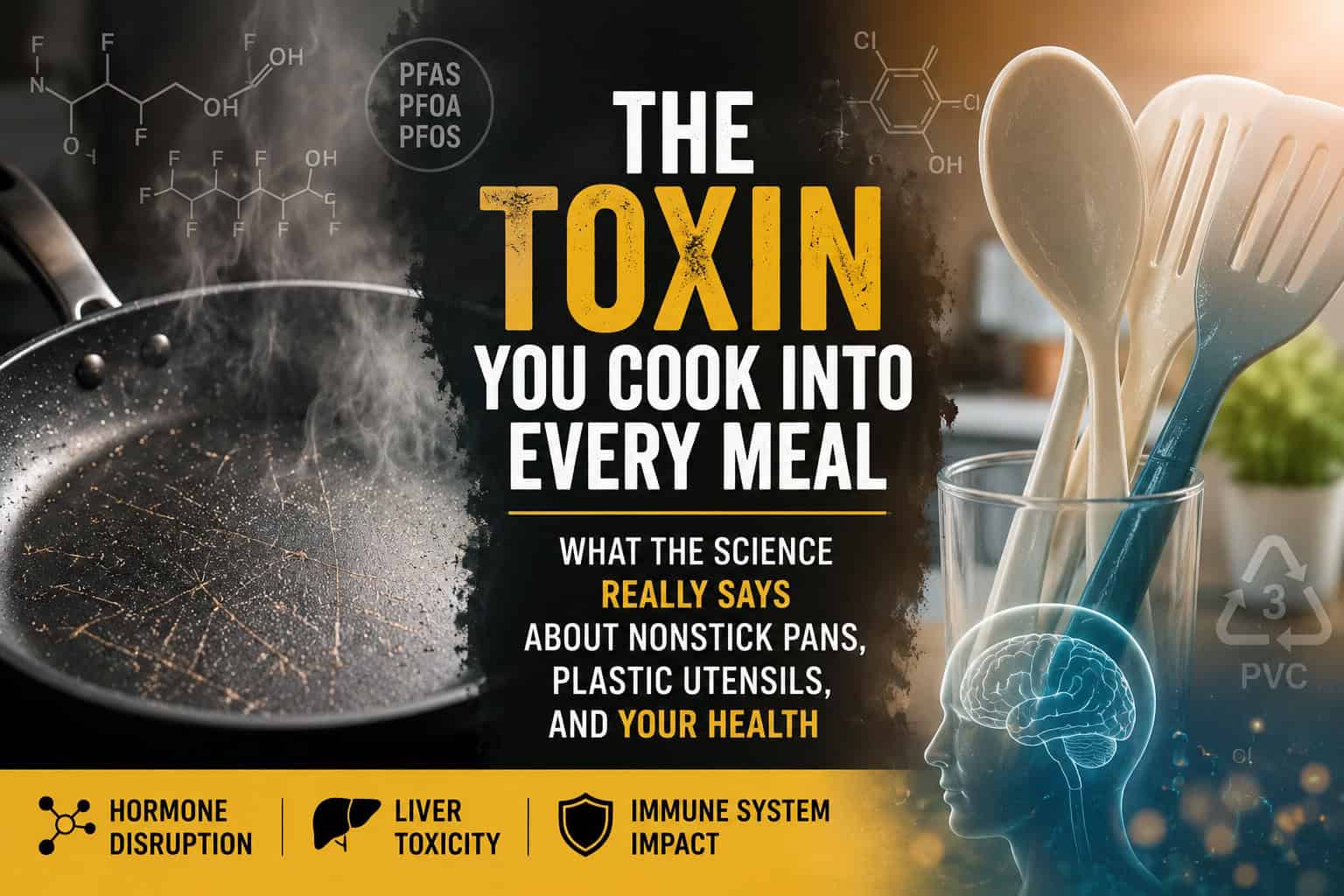
Per- and polyfluoroalkyl substances (PFAS) are a family of more than 12,000 synthetic compounds built around carbon-fluorine bonds, among the strongest bonds in organic chemistry. That strength is exactly why they are useful (they repel oil and water, resist heat, and reduce friction) and exactly why they are a problem (they resist breakdown in the environment and in the human body). The National Academies of Sciences, Engineering, and Medicine notes that PFAS are used in thousands of products, from nonstick cookware to firefighting foams.1
Here is what most people do not realize: Teflon is a PFAS. Polytetrafluoroethylene (PTFE), the classic nonstick coating, is a fluoropolymer within the PFAS family. It is not an alternative to forever chemicals. It is one of them.
The Evidence on PFAS Health Effects Is No Longer Speculative
In November 2023, an International Agency for Research on Cancer (IARC) Working Group of 30 scientists from 11 countries evaluated PFOA and PFOS. Their conclusion, published in The Lancet Oncology and later as IARC Monographs Volume 135:
- PFOA is carcinogenic to humans (Group 1), based on sufficient evidence of cancer in experimental animals and strong mechanistic evidence for key characteristics of carcinogens in exposed humans, including epigenetic alterations and immunosuppression. There was limited evidence in humans for testicular cancer and renal cell carcinoma.2
- PFOS is possibly carcinogenic to humans (Group 2B), based on strong mechanistic evidence.2
Group 1 is the same category as tobacco smoke and asbestos. It describes hazard, not the magnitude of everyday risk, and that distinction matters. But it is a serious reclassification, and it reflects a body of evidence that has been building for two decades.
The National Academies 2022 clinical guidance graded the evidence by strength. There is sufficient evidence of association between PFAS exposure and:
- Decreased antibody response in adults and children
- Dyslipidemia in adults and children
- Decreased infant and fetal growth
- Kidney cancer in adults
There is limited or suggestive evidence for breast cancer, liver enzyme alterations, pregnancy-induced hypertension, testicular cancer, thyroid disease and dysfunction, and ulcerative colitis.1
That report is not an advocacy document. It is a clinical guidance document produced for physicians, and it recommends that clinicians actively screen patients with elevated serum PFAS for dyslipidemia, thyroid dysfunction, and signs of kidney and testicular cancer.1 As a functional medicine physician, I read that list and see the pattern I see in my practice every week: immune dysregulation, lipid abnormalities, thyroid dysfunction, and inflammatory bowel disease in patients with no other obvious driver.
“PFOA-Free” Is a Marketing Phrase, Not a Safety Guarantee
PFOA was phased out of US manufacturing by 2015. So when a pan says “PFOA-free,” it is telling you it complies with a change that happened a decade ago. It is telling you almost nothing about what is actually on the surface.
Independent testing has made this concrete. The Ecology Center's Healthy Stuff Lab tested 14 nonstick cooking pans and 10 nonstick baking pans and found that 79 percent of the cooking pans and 20 percent of the baking pans were coated with PTFE. In some cases, packaging claims could lead a buyer to purchase a PFAS-coated pan believing they were buying an alternative. The researchers also found undisclosed BPA-based epoxy coatings on three of the pans.3
In a 2021 follow-up, they tested four pans carrying claims such as “PFOA-free” and “PFAS-free.” Two of them were coated with PTFE despite their PFOA-free labeling. Two others, coated with a silicon dioxide-based ceramic, tested consistent with their marketing claims.4
This is the single most important consumer insight in this entire article. The label tells you what a company chose to disclose. Only third-party testing tells you what is actually there.
Heat: The Threshold Most Home Cooks Cross Without Knowing
PTFE is chemically stable at ordinary cooking temperatures. The problem is that ordinary kitchens routinely exceed those temperatures.
PTFE begins releasing fumes at temperatures as low as 260°C (500°F). Human symptoms generally begin when the material reaches around 350°C (662°F), and pyrolysis begins near 400°C (752°F). Degradation products identified include perfluoroisobutylene, fluoroethylene, hexafluoroethane, octafluorocyclobutane, and hexafluoropropylene. Above 500°C, pyrolysis releases hydrogen fluoride and carbonyl fluoride, the fluoride analog of phosgene.5
The resulting clinical syndrome is polymer fume fever, sometimes called “Teflon flu.” It presents with fever, chills, headache, chest tightness, and body aches, typically appearing several hours after exposure and resolving within 24 to 48 hours. The diagnosis is clinical, and known exposure to fluorocarbon degradation products (most commonly accidental overheating of nonstick cookware) is required to make it.5
Now consider how a real kitchen works. An empty nonstick pan left on a burner set to high can reach 500°F within a few minutes. Preheating an empty pan is standard practice for searing. Environmental Working Group testing documented that particulate matter is emitted from PTFE-coated pans between 290°C and 575°C (554°F to 1067°F), and this is the mechanism behind “Teflon toxicosis,” the well-documented phenomenon of pet birds dying from kitchen fumes.6
If a canary in your kitchen would not survive the fumes from your breakfast pan, that is worth pausing on. Birds have exquisitely efficient respiratory systems, which makes them sentinel species. They are not a different biology. They are a more sensitive detector of the same biology.
Scratches: The Mechanism Nobody Warns You About
Here is where the research over the last four years has genuinely changed the conversation.
Researchers from the University of Newcastle and Flinders University in Australia used Raman imaging with a novel hybrid algorithm to visualize and quantify PTFE particles released from nonstick cookware. Their findings:
- A single surface crack in a Teflon coating can leave behind approximately 9,100 plastic particles.
- A broken coating may release up to 2,300,000 microplastic and nanoplastic particles.7
To generate that release, the researchers used a scenario that will sound uncomfortably familiar: 30 seconds of dry mixing with a stainless steel spoon, which scratched the PTFE surface and released micro- and nanoplastic particles visible on scanning electron microscopy.7
Thirty seconds. One utensil. One pan.
A separate 2024 study took this further and asked the practical question directly. Using a food simulant put through a realistic sequence of heating, cooling, mixing, slicing, and storage, researchers compared non-plastic cookware against new and old plastic and PTFE-coated cookware. The result:
Non-plastic cookware did not introduce microplastics into the food simulant at all. New and old plastic cookware both resulted in significant increases in microplastic contamination. The particles recovered included PTFE, polyethylene, and polypropylene, ranging from 13 to 318 micrometers.8
I want to underline what that means clinically. This is not a hypothetical exposure model. This is a controlled experiment showing that the material of your cookware directly determines whether plastic particles end up in your food. It also means that this is a modifiable exposure. You can change it this week.
And These Particles Do Not Stay in the Gut
Here is the finding that stopped me cold when I first read it.
A Raman microspectroscopy study of 50 human placentas collected after delivery identified microplastic particles in 31 of them. Seven distinct polymer types were detected, and PTFE was the single most prevalent polymer, accounting for roughly 30 percent of the particles identified, followed by polystyrene and ABS.9
PTFE. In the placenta. The most common polymer found.
A separate team at the University of New Mexico, using pyrolysis gas chromatography mass spectrometry, found microplastics in all 62 placental samples they tested, at concentrations ranging from 6.5 to 790 micrograms per gram of tissue.10
The same UNM group then examined liver, kidney, and brain tissue from decedents. They found microplastics and nanoplastics in all three organs, with brain tissue harboring substantially higher concentrations than liver or kidney. Median brain concentrations were roughly 3,300 micrograms per gram in 2016 samples and approximately 4,900 micrograms per gram in 2024 samples, a statistically significant increase over eight years. Electron microscopy showed the brain particles present largely as nanoscale shard-like fragments.11
The particles are crossing the placental barrier. They are crossing the blood-brain barrier. And tissue concentrations are rising measurably over time.
The Rest of the Kitchen: It Was Never Just the Pan
If you replace your skillet and stop there, you have solved perhaps a third of the problem. Here is the rest.
Plastic Cutting Boards
Researchers measured microplastic release from cutting boards subjected to repeated knife strikes, comparing five different people's chopping patterns with and without carrots. Their estimates: a person could be exposed to 14.5 to 71.9 million polyethylene microplastic particles per year from a polyethylene board, or approximately 79.4 million polypropylene particles from a polypropylene board. By mass, that is 7.4 to 50.7 grams annually from polyethylene and 49.5 grams from polypropylene.12
In the interest of scientific honesty, I will tell you what else that paper found: a preliminary toxicity assessment showed no adverse effect of the polyethylene microplastics on mouse fibroblast viability over 72 hours.12 One in vitro assay in one cell line over three days does not establish safety, and the authors did not claim it did. But you deserve to know the full picture rather than only the alarming half of it.
Plastic Food Containers, Especially in the Microwave
This one is difficult to read.
Researchers assessed microplastic and nanoplastic release from plastic containers and reusable food pouches, including baby food containers available in US stores, using deionized water and 3 percent acetic acid as simulants for aqueous and acidic foods. Microwave heating produced the highest release of any usage scenario tested. Some containers released as many as 4.22 million microplastic and 2.11 billion nanoplastic particles from a single square centimeter of plastic within three minutes of microwave heating.13
Refrigeration and room-temperature storage over six months also released millions to billions of particles.13 And in cell culture, roughly three-quarters of cultured embryonic kidney cells died after two days of exposure to those same particles.13
If you take one thing from this entire article, let it be this: stop microwaving food in plastic. Glass costs almost nothing and solves the problem completely.
Black Plastic Utensils
A 2024 study by Toxic-Free Future and researchers at Vrije Universiteit Amsterdam tested black plastic household products and found that among items testing positive for bromine above 50 parts per million, 85 percent contained brominated or organophosphate flame retardants. The contamination appears to originate from improper recycling of electronic waste, where flame-retardant-containing casings from televisions and electronics enter the recycled plastic stream. Nine kitchen utensils and two food serviceware items were among the contaminated products.14
Now, integrity requires me to tell you the rest of this story. The authors published a correction in December 2024. Their original exposure estimate for decaBDE from a contaminated kitchen utensil had been miscalculated by an order of magnitude relative to the EPA reference dose. After correction, the most contaminated plastics reached approximately 8 percent of the reference dose rather than approaching it.15
Does that make the finding irrelevant? No. Eleven flame retardants were still detected in the tested products. DecaBDE has been banned by the US EPA, the European Union, and at least six states after being linked to carcinogenicity, endocrine and thyroid disruption, neurodevelopmental toxicity, and reproductive and immune toxicity.14,15 A wooden or stainless spoon costs a few dollars and carries none of this uncertainty.
But I would rather you hear the correction from me than discover it later and wonder what else I did not tell you.
Why This Matters Clinically: The Mechanisms
I do not want you to walk away with a list of scary numbers and no framework. Here is how I think about this in my practice.
1. Oxidative Stress and Mitochondrial Dysfunction
Micro- and nanoplastic particles generate reactive oxygen species and suppress antioxidant defenses, producing redox imbalance in tissue. Polyethylene microplastics have been shown in vitro to interact with cellular membranes, induce oxidative stress, inflammation and apoptosis, and cause concentration-dependent mitochondrial dysfunction across epithelial, immune, and neuronal cell lines.16
For patients with mitochondrial fragility already (post-viral syndromes, chronic fatigue, CIRS, long-standing mold illness), this is not an abstract concern. It is another hit on a system already running at reduced capacity.
2. Intestinal Barrier Disruption and Dysbiosis
The mechanistic cascade documented across in vivo studies runs in three stages: oxidative stress initiation, then barrier dysfunction (reduced tight junction proteins, depleted mucus-secreting goblet cells, activation of NF-κB and TLR4 inflammatory signaling), then microbiome reconfiguration with expansion of Gram-negative organisms and depletion of Gram-positive commensals.17
If you have followed my writing on the epithelial barrier hypothesis, you will recognize this immediately. Barrier disruption is upstream of an enormous fraction of what walks into my office: food sensitivities, autoimmunity, mast cell activation, and systemic inflammation. Anything that erodes tight junctions deserves our attention.
3. Cardiovascular Consequences
In a prospective multicenter study published in The New England Journal of Medicine, 304 patients undergoing carotid endarterectomy for asymptomatic carotid artery disease had their excised plaque analyzed by pyrolysis gas chromatography mass spectrometry, stable isotope analysis, and electron microscopy. Polyethylene was detected in the carotid plaque of 150 patients (58.4 percent). Over a mean follow-up of 34 months, patients with detectable microplastics and nanoplastics in their plaque had a hazard ratio of 4.53 (95% CI 2.00 to 10.27, p < 0.001) for the composite endpoint of myocardial infarction, stroke, or death from any cause, compared with those whose plaque showed no particles.18
Here is the intellectually honest framing, and I want to model it because this study is widely misreported. This was an observational study. The authors explicitly stated that it does not prove causality and that unmeasured confounding may have contributed. Correspondence published in the same journal raised legitimate concerns about the possibility of intraoperative sample contamination given the plastic-rich surgical environment.19 The finding survived adjustment for age, sex, smoking, diabetes, cholesterol, and blood pressure, and it is being actively replicated by groups in several countries.
It is a signal worth taking seriously. It is not yet proof. Both of those things are true.
4. A Word on What the Evidence Does Not Yet Show
I would be doing you a disservice if I claimed the epidemiology on cookware specifically is settled. It is not.
A study of 178 middle-aged women in the Child Health and Development Studies examined six self-reported behaviors hypothesized to influence PFAS exposure. Eating food prepared with nonstick cookware showed no significant association with serum PFAS levels, though consumption of prepared food in coated cardboard containers was associated with higher levels of four PFAS compounds in one subgroup.20
So we have laboratory evidence that damaged nonstick surfaces shed particles into food (strong), tissue evidence that PTFE accumulates in human organs including the placenta (strong), mechanistic evidence for harm from those particles (moderate to strong), and population-level evidence tying cookware use specifically to blood PFAS levels (weak, in part because PFAS exposure is so ubiquitous from water, diet, and packaging that isolating a single behavior is genuinely hard).
That is an honest read of the literature. And here is why I still change my patients' cookware: this is a low-cost, one-time, permanent reduction in a modifiable exposure, in a context where the direction of every biological signal points the same way. In functional medicine we talk about total toxic burden. You rarely get to remove a whole category of input from someone's life with a single purchase. When you can, you do it.
Part Two: The Solution
The Hierarchy of Safer Cookware
Let me be practical. Different surfaces solve different problems, and no single material does everything.
| Material | Strengths | Limitations |
|---|---|---|
| Stainless steel | Inert, extremely durable, high-heat safe, no coating to degrade | Not nonstick, requires technique and fat |
| Cast iron | Naturally nonstick when seasoned, durable for generations, adds dietary iron | Heavy, reactive with acidic foods, iron may be undesirable in hemochromatosis or high ferritin |
| Carbon steel | Lighter than cast iron, seasons well, high-heat capable | Requires seasoning and maintenance |
| Glass and stoneware | Completely inert, ideal for baking and storage | Not for stovetop searing, breakable |
| Sol-gel ceramic (xerogel) | Genuinely nonstick without fluoropolymers, PFAS-free, low-fat cooking | Coating is finite, requires careful use, quality varies enormously by brand |
| PTFE nonstick | Excellent release when new | Fluoropolymer chemistry, degrades with heat and scratches, sheds particles |
For most of my patients, the answer is a small, intentional set: stainless steel or cast iron for high-heat searing and braising, glass for storage and reheating, and a genuinely PFAS-free ceramic pan for the everyday cooking where nonstick performance actually matters (eggs, fish, delicate proteins, anything you want to cook with minimal added fat).
That last category is the one where people struggle, because it is where the marketing is thickest and the verification is hardest.
Understanding Sol-Gel Ceramic Coatings
“Ceramic nonstick” is a slightly misleading name. These are not glazed clay. They are silica-based inorganic coatings applied to a metal substrate through a sol-gel process (also called xerogel technology), in which silica precursors, often combined with elements like zirconium or titanium for hardness, are applied as a liquid and cured into a hard, smooth, low-surface-energy film. The non-stick properties come from siloxanes rather than fluoropolymers, which is precisely the point.21
Genuine sol-gel ceramic coatings contain no PTFE, no PFOA, and no fluorine. There is no fluoropolymer to pyrolyze, which eliminates the polymer fume fever risk entirely.21
I also want to name the honest caveats, because you will not hear them in an advertisement:
- Sol-gel coatings are hard but brittle. They resist scratching well, but they are finite. Every ceramic pan is a consumable, and a badly degraded ceramic surface is not what you want either.
- Formulations are proprietary. Coatings can contain titanium dioxide, zirconium and aluminum oxides, siloxanes, and other inorganic additives. Manufacturers are generally not required to disclose the full formulation.
- “Non-toxic” is not a regulated term. Anyone can print it. California's disclosure law now requires cookware brands to disclose intentionally added chemicals, which is a meaningful step, but the burden of verification still falls largely on you.
Which is exactly why the next question matters more than any marketing claim.
The Five Questions to Ask Before You Buy Any Pan
Print this. Take it shopping. It applies to every brand, including the one I am about to recommend.
- Is it PFAS-free, or only PFOA-free? These are not the same claim. PFOA-free is nearly meaningless in 2026. Insist on the word PFAS, and ideally the word fluorine.
- Who makes the coating, and can you name it? A brand that will tell you the specific coating system and its manufacturer is a brand that knows what is on its pan. Vagueness is a red flag.
- Is there third-party testing, and can you see the report? Not “we test,” but “here is the lab, here is the report number, here is the PDF.”
- Does the testing include lead and cadmium? Heavy metals in coatings and exterior enamels are a separate and legitimate concern.
- What is the substrate and the exterior coating? The interior surface is not the whole pan.
Why I Am Highlighting Chef's Foundry
Against those five criteria, Chef's Foundry is one of the few direct-to-consumer brands I have looked at that answers most of them with actual specificity rather than atmosphere.
Their P600 ceramic cookware line uses ILAG Xeradur 2, a Swiss-developed coating from Industrielack AG. This matters because it is verifiable independently of the brand. ILAG publishes its own technical documentation, and the Xeradur 2 PFAS-free system is described as a one-coat or two-coat, PFAS- and PTFE-free system based on xerogel technology, with a ceramic-reinforced base coat engineered to minimize cracking during rapid temperature changes.22
That is a named coating from a named manufacturer with published specifications. In this category, that is genuinely uncommon, and it is the single thing I would tell you to look for.
The construction details they publish:
- Interior: ILAG Xeradur 2 ceramic (xerogel, sol-gel technology)
- Body: 3003 aluminum alloy for heat conductivity and even distribution
- Induction plate: 430 stainless steel
- Exterior: silicone polyester heat-resistant coating
- Compatibility: gas, electric, ceramic, and induction cooktops; oven-safe with handles removed
- Utensils: silicone utensil set included, which is the correct pairing for any ceramic surface
They also state that they independently test every batch for PFAS substances, lead, and cadmium.
You can look at the full P600 range here. This covers most of what a working kitchen needs, and they offer a 100-day trial with easy returns, which means you can evaluate the performance yourself before committing.
One honest note, offered in the same spirit as everything else in this article: I encourage you to request the batch test reports directly from any brand before purchasing, including this one. A company confident in its testing will send them. That request is your leverage as a consumer, and using it is how the entire category gets better.
How to Make Any Good Pan Last: The Care Instructions That Actually Matter
This section may save you more exposure than the purchase itself, because a degraded coating of any chemistry is the problem. The coating manufacturer's own guidance for Xeradur ceramic systems is instructive:23
Do this:
- Cook at medium heat. Ceramic coatings conduct heat rapidly and reach temperature faster than you expect.
- Use a small amount of oil or cooking fat as a thermal indicator. When oil begins to smoke, you have crossed roughly 250°C and you are too hot.
- Use silicone, wood, bamboo, or nylon utensils exclusively.
- Let the pan cool before washing. Thermal shock is the primary cause of coating failure.
- Soak stubborn residue in warm soapy water and remove it gently with a soft nylon brush.
- Store pans so surfaces do not stack directly against each other. A cloth or felt divider costs nothing.
Never do this:
- Preheat an empty pan on high heat. This is the single most damaging habit in home cooking, for every coated pan ever made.
- Leave a heating pan unattended.
- Cut food in the pan or use metal utensils.
- Use abrasive scrubbers, scouring pads, or harsh cleaners.
- Rinse a screaming hot pan under cold water.
And one rule that overrides everything: if a coated pan is scratched, flaking, chipping, or peeling, it is finished. Not “use it for a few more months.” Finished. That applies to a ten-dollar pan and a two-hundred-dollar pan equally.
Your Practical Kitchen Reset
You do not have to do this all at once, and you should not go into debt over it. Here is the order of operations I give patients, sequenced by exposure reduction per dollar spent.
This week, at almost no cost:
- Throw away every scratched, flaking, or peeling nonstick pan in your house. All of them. Today.
- Stop microwaving anything in plastic. Transfer to glass or ceramic first. This one change is free and eliminates the highest-release scenario in the entire published literature.13
- Retire black plastic utensils and replace them with wood, bamboo, or stainless steel.
- Never preheat an empty pan again.
This month, modest investment: 5. Replace plastic cutting boards with wood or bamboo for daily prep. 6. Move food storage to glass. Repurposed jars work perfectly. 7. Replace your daily-driver skillet with a genuinely PFAS-free option.
Over the next season: 8. Build out a small, intentional cookware set: stainless or cast iron for high heat, ceramic for delicate nonstick work, glass for baking and storage. 9. If you have significant historical exposure, discuss serum PFAS testing with your physician. The National Academies provides specific clinical follow-up guidance stratified by concentration.1 10. Support your body's own detoxification pathways with the fundamentals: adequate hydration, generous fiber, cruciferous vegetables, sulforaphane, glutathione precursors including N-acetylcysteine, and regular sweating through sauna or exercise.
A Word on Peace
If you have read this far and feel a knot of anxiety in your chest, please hear me.
I have spent my career studying environmental toxicity, and I have also lived through cancer and autoimmune disease in my own body. I know what it feels like to look around your home and see threats in every corner. That vigilance can become its own kind of illness. Chronic fear raises cortisol, disrupts sleep, suppresses immune function, and erodes the very resilience you are working so hard to build.
So let me offer you a different frame. Your body is not fragile. It is a magnificently designed system with real capacity to detoxify, repair, and restore, and it has been doing that work faithfully for you every single day, including today. Our job is not to achieve a perfect, sterile, toxin-free existence. That does not exist on this side of eternity. Our job is to reduce the burden where we reasonably can, and then to rest.
“Do you not know that your bodies are temples of the Holy Spirit, who is in you, whom you have received from God?” (1 Corinthians 6:19)
A temple is tended with care, not with terror. Changing a frying pan is an act of stewardship. Lying awake cataloguing every possible exposure is not.
I pray for my patients, and I will pray for you: that you would have wisdom to discern what matters, courage to change what you can, and deep peace about the rest. May your kitchen be a place of nourishment and joy, where food is prepared with love and received with gratitude. That is medicine too, and it is not measurable in any assay I can order.
The Bottom Line
The evidence supports a straightforward, unglamorous conclusion.
Conventional nonstick cookware is coated with fluoropolymers that belong to the PFAS family. Those coatings degrade under two conditions that are entirely ordinary in home kitchens: heat above 500°F and mechanical scratching. When they degrade, they shed measurable quantities of micro- and nanoplastic particles into food.7,8 Those particles have now been identified in human placenta, liver, kidney, and brain tissue, with PTFE among the most prevalent polymers in placental samples.9,10,11 The mechanistic evidence points consistently toward oxidative stress, mitochondrial dysfunction, intestinal barrier disruption, and inflammation.16,17
Meanwhile, controlled testing shows that non-plastic cookware contributes no detectable microplastics to prepared food.8 The exposure is real, it is measurable, and it is modifiable.
That last word is the one I want to leave you with. In environmental medicine, so much is outside our control: the air we breathe, the water infrastructure we inherit, the industrial decisions made before we were born. The pan on your stove is not one of those things.
It is yours. You can change it this week.
Explore the Chef's Foundry P600 collection here
References
- National Academies of Sciences, Engineering, and Medicine. Guidance on PFAS Exposure, Testing, and Clinical Follow-Up. Washington, DC: The National Academies Press; 2022. doi:10.17226/26156
- International Agency for Research on Cancer. Perfluorooctanoic Acid (PFOA) and Perfluorooctanesulfonic Acid (PFOS). IARC Monographs on the Identification of Carcinogenic Hazards to Humans, Volume 135. Lyon, France: IARC; 2025. Summary published in: Carcinogenicity of perfluorooctanoic acid and perfluorooctanesulfonic acid. Lancet Oncol. 2024;25(1):16-17. doi:10.1016/S1470-2045(23)00622-8
- Ecology Center Healthy Stuff Lab. What's Cooking? PFAS and Other Chemical Hazards in Nonstick Cooking and Baking Pans. Ann Arbor, MI: Ecology Center; 2020. https://www.ecocenter.org/our-work/healthy-stuff-lab/reports/whats-cooking
- Ecology Center Healthy Stuff Lab. Still Cooking: An Update on Toxic PFAS in Cookware Products. Ann Arbor, MI: Ecology Center; 2021. https://www.ecocenter.org/our-work/healthy-stuff-lab/reports-landing-page/still-cooking-update-toxic-pfas-cookware-products
- Polymer Fume Fever. StatPearls. Treasure Island, FL: StatPearls Publishing; 2023. NCBI Bookshelf ID NBK594276. https://www.ncbi.nlm.nih.gov/books/NBK594276/
- Environmental Working Group. Canaries in the Kitchen: Teflon Toxicosis. Washington, DC: EWG; 2003. https://www.ewg.org/research/canaries-kitchen
- Luo Y, Gibson CT, Chuah C, Tang Y, Naidu R, Fang C. Raman imaging for the identification of Teflon microplastics and nanoplastics released from non-stick cookware. Sci Total Environ. 2022;851(Pt 2):158293. doi:10.1016/j.scitotenv.2022.158293
- Cole M, Gomiero A, Jaén-Gil A, Haave M, Lusher A. Microplastic and PTFE contamination of food from cookware. Sci Total Environ. 2024;929:172577. doi:10.1016/j.scitotenv.2024.172577
- Raman-guided exploration of placental microplastic exposure: unraveling the polymeric tapestry and assessing developmental implications. J Hazard Mater. 2024. https://www.sciencedirect.com/science/article/abs/pii/S0304389424018508
- Garcia MA, Liu R, Nihart A, et al. Quantitation and identification of microplastics accumulation in human placental specimens using pyrolysis gas chromatography mass spectrometry. Toxicol Sci. 2024. University of New Mexico Health Sciences. https://hscnews.unm.edu/news/hsc-newsroom-post-microplastics
- Nihart AJ, Garcia MA, El Hayek E, et al. Bioaccumulation of microplastics in decedent human brains. Nat Med. 2025;31(4):1114-1119. doi:10.1038/s41591-024-03453-1
- Yadav H, Khan MRH, Quadir M, et al. Cutting boards: an overlooked source of microplastics in human food? Environ Sci Technol. 2023;57(22):8225-8235. doi:10.1021/acs.est.3c00924
- Hussain KA, Romanova S, Okur I, et al. Assessing the release of microplastics and nanoplastics from plastic containers and reusable food pouches: implications for human health. Environ Sci Technol. 2023;57(26):9782-9792. doi:10.1021/acs.est.3c01942
- Liu M, Brandsma SH, Schreder E. From e-waste to living space: flame retardants contaminating household items add to concern about plastic recycling. Chemosphere. 2024;365:143319. doi:10.1016/j.chemosphere.2024.143319
- Liu M, Brandsma SH, Schreder E. Corrigendum to “From e-waste to living space: flame retardants contaminating household items add to concern about plastic recycling.” Chemosphere. 2024. doi:10.1016/j.chemosphere.2024.143903
- Polyethylene microplastics and human cells: a critical review. PMC12473661. https://www.ncbi.nlm.nih.gov/pmc/articles/PMC12473661/
- Role of nanoplastics in decreasing the intestinal microbiome ratio: a review of the scope of polystyrene. Toxics. 2025;13(12):1036. https://www.mdpi.com/2305-6304/13/12/1036
- Marfella R, Prattichizzo F, Sardu C, et al. Microplastics and nanoplastics in atheromas and cardiovascular events. N Engl J Med. 2024;390(10):900-910. doi:10.1056/NEJMoa2309822
- Correspondence: Microplastics and nanoplastics in atheromas. N Engl J Med. 2024;390(18):1726-1728. doi:10.1056/NEJMc2404154
- Siegel EL, Ghassabian A, Hipwell AE, et al. Serum concentrations of PFASs and exposure-related behaviors in African American and non-Hispanic white women. J Expo Sci Environ Epidemiol. 2019;29:206-216. doi:10.1038/s41370-018-0109-y
- Industrielack AG (ILAG). Ceramic Non-Stick Coating Systems: PFAS- and PTFE-Free Technology. Wangen, Switzerland. https://www.ilag-group.com/en/ceramic-non-stick-coating/
- Industrielack AG (ILAG). XERADUR 2 PFAS-free Ceramic Coating: Product Specification. https://www.ilag.ch/en/product/xeradur-2-pfas-free-ceramic.html
- Industrielack AG (ILAG). XERADUR Consumer Care and Use Information. https://www.ilag-group.com/en/non-stick-solutions/product-groups/xeradur/
About Dr. Jill Carnahan
Dr. Jill Carnahan is a triple board-certified functional medicine physician (ABIHM, ABoIM, IFMCP) and Medical Director of Flatiron Functional Medicine in Louisville, Colorado, where she specializes in mold and mycotoxin illness, CIRS, MCAS, complex chronic infections, environmental toxicity, and autoimmune and gut disorders. She is the author of the bestselling book Unexpected: Finding Resilience through Functional Medicine, Science, and Faith, host of the award-winning Resiliency Radio podcast, and is featured in the documentary Doctor/Patient. Find more of her writing at jillcarnahan.com and follow her @DrJillCarnahan on Instagram.
Disclosure: This article contains affiliate links to Chef's Foundry. If you purchase through these links, I may receive a commission at no additional cost to you. I only recommend products I have personally evaluated and would use in my own home.
Medical disclaimer: This article is for educational purposes only and does not constitute medical advice. It is not intended to diagnose, treat, cure, or prevent any disease. Please consult your personal physician regarding your individual health circumstances, including any decisions about environmental exposure testing or detoxification support.
* These statements have not been evaluated by the Food and Drug Administration. The product mentioned in this article are not intended to diagnose, treat, cure, or prevent any disease. The information in this article is not intended to replace any recommendations or relationship with your physician. Please review references sited at end of article for scientific support of any claims made.











Share: