

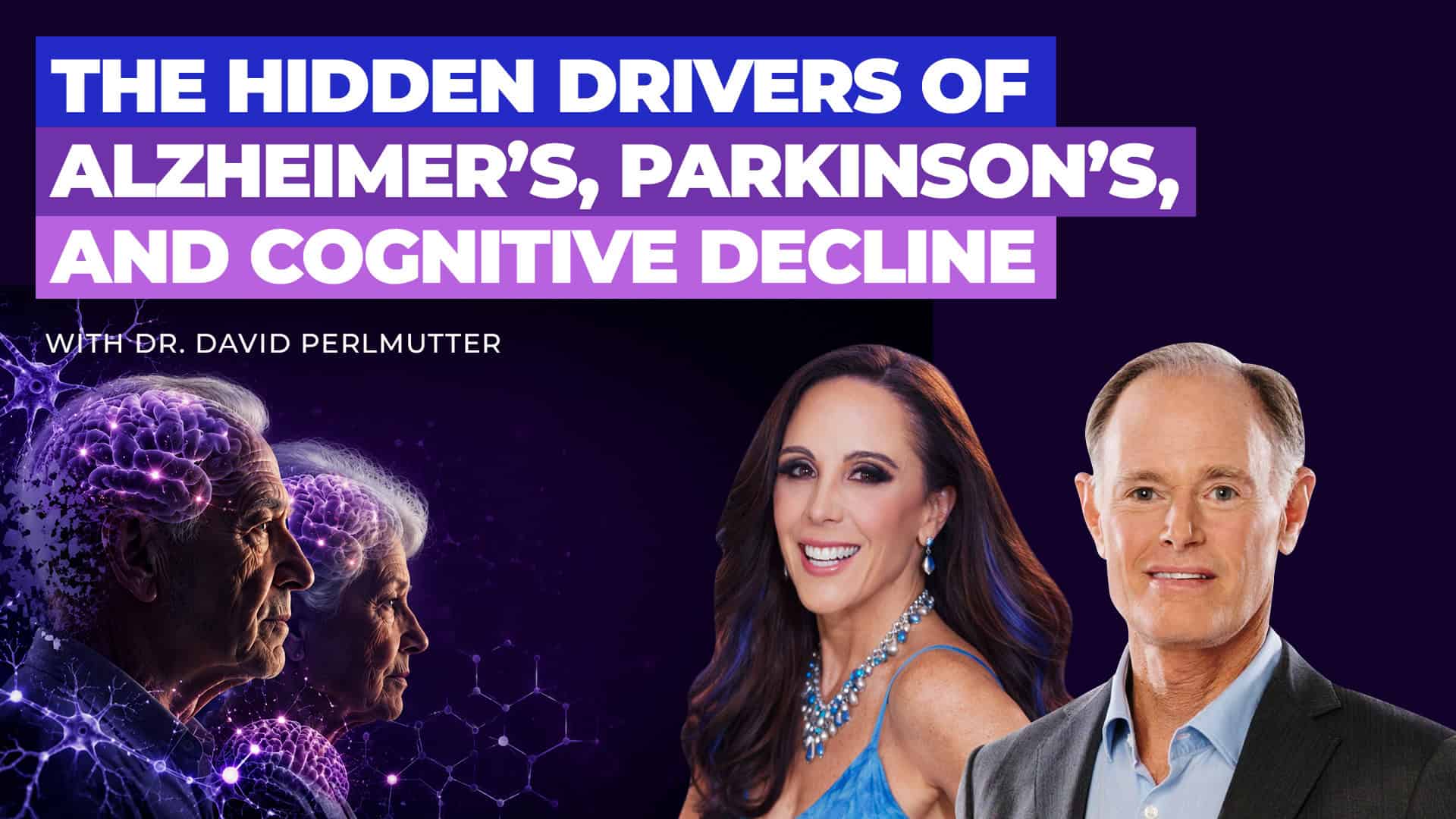
In this episode of Resiliency Radio with Dr. Jill, Dr. Jill Carnahan welcomes renowned neurologist and bestselling author Dr. David Perlmutter to explore the emerging science behind brain health, neuroinflammation, and cognitive resilience.
Drawing from his groundbreaking new book, Brain Defenders, Dr. Perlmutter explains how microglia—the brain's immune cells—play a central role in protecting or damaging the brain depending on our metabolism, lifestyle, and environment. Together they discuss why Alzheimer's and Parkinson's disease begin decades before symptoms appear, why inflammation and insulin resistance are major drivers of neurodegeneration, and what we can do today to protect lifelong brain health.
Whether you're concerned about memory loss, dementia prevention, or optimizing cognitive performance, this episode offers science-backed strategies to build a healthier, more resilient brain.
🔑 5 Key Discussions You'll Discover with Dr. David Perlmutter
① 🧠 Microglia: The Brain's Defenders
⇨ Microglia protect neurons, maintain synapses, and defend the brain from injury and infection.
⇨ Chronic inflammation can transform these protective cells into drivers of Alzheimer's, Parkinson's, and cognitive decline.
② 🔥 Immunometabolism & Brain Health
⇨ Blood sugar, insulin resistance, inflammation, and metabolism directly influence how microglia function.
⇨ Improving metabolic health helps create a brain environment that supports healing rather than degeneration.
③ 🥗 Lifestyle Shapes Brain Destiny
⇨ Nutrition, exercise, sleep, stress management, and social connection have profound effects on brain health.
⇨ Healthy daily habits can dramatically reduce the risk of neurodegenerative disease—even with genetic risk factors like APOE4.
④ ⚠️ Looking Beyond Amyloid
⇨ Current Alzheimer's treatments targeting amyloid offer limited benefit while failing to address upstream causes.
⇨ Prevention begins by reducing inflammation, supporting metabolism, and protecting brain immunity years before symptoms develop.
⑤ 🌱 Protecting the Aging Brain
⇨ Key strategies include optimizing vitamin D, omega-3 fatty acids, B vitamins, blood sugar, exercise, and toxin reduction.
⇨ Supporting microglial health may become one of the most important approaches to lifelong cognitive resilience.
🔑 Key Takeaways with Dr. David Perlmutter
🔹 Brain health begins with metabolic and immune health.
🔹 Chronic inflammation is a major driver of cognitive decline.
🔹 Microglia can either protect or damage the brain depending on lifestyle factors.
🔹 Exercise, nutrition, sleep, and social connection support lifelong brain resilience.
🔹 Prevention offers the greatest opportunity to reduce Alzheimer's and Parkinson's risk.
About Dr. David Perlmutter
Dr. David Perlmutter is a board-certified neurologist, Fellow of the American College of Nutrition, and six-time New York Times bestselling author specializing in the intersection of neurology, nutrition, and brain health.
His internationally acclaimed books—including Grain Brain—have been published in more than 30 languages and have transformed how millions understand the connection between lifestyle, metabolism, and cognitive health. Dr. Perlmutter serves on the Editorial Board of the Journal of Alzheimer's Disease and lectures worldwide on neurodegeneration, inflammation, nutrition, and longevity.
His newest book, Brain Defenders, explores the vital role of microglia—the brain's immune cells—in protecting, repairing, and reprogramming the brain for lifelong cognitive resilience.
🌐 Website: https://drperlmutter.com/
📘 Brain Defenders: http://braindefenders.com/
📸 Instagram: https://www.instagram.com/davidperlmutter/
▶️ YouTube: https://www.youtube.com/user/DavidPerlmutterMD
𝕏 X: https://x.com/davidperlmutter
Dr. Jill Carnahan, MD – Leading Functional Medicine Doctor
Dr. Jill Carnahan, MD, ABIHM, ABoIM, IFMCP is internationally recognized as one of the most respected leaders in functional and integrative medicine. She is dually board-certified in Family Medicine and Integrative Holistic Medicine, and the founder and medical director of Flatiron Functional Medicine in Louisville, Colorado.
Widely known as a pioneer in environmental toxicity, mold-related illness, autoimmune disease, and resilience medicine, Dr. Carnahan combines cutting-edge science with compassionate, root-cause care. Her clinical approach integrates precision genomics, epigenetics, microbiome research, peptide therapy, and lifestyle interventions to transform health outcomes for patients worldwide.
She is the author of the best-selling memoir Unexpected, which weaves her personal journey through cancer, Crohn’s disease, and mold-related illness with her professional expertise. Dr. Carnahan is also the executive producer of the award-winning documentary Doctor/Patient and the host of the popular podcast Resiliency Radio, which reaches over 500,000 global subscribers.
As an international keynote speaker, Dr. Carnahan has been featured at leading medical conferences including A4M, IFM, EPIC, and IPM Congress, and her work is frequently highlighted in major media outlets such as NBC, CBS, Fox News, Forbes, Parade, People, and MindBodyGreen.
With a reputation as both a scientist and a healer, Dr. Jill Carnahan is regarded as one of the top functional medicine doctors in the world, offering a unique blend of evidence-based research, innovation, and deeply personalized care.
The Podcast with Dr. David Perlmutter
The Video with Dr. David Perlmutter
Transcript
00:00
Dr. Jill Carnahan, MD
Hey everybody. Welcome to Resiliency Radio, your go to podcast for the most cutting edge insights integrative and functional medicine. I'm your host, Dr. Jill and with each episode we dive into the heart of healing and personal transformation. Join me as I interview world experts, thought leaders and medical developers of all kinds of new technology information to help you thrive and work your way to optimal performance and longevity. Today is a very special episode as we've reached 1 million subscribers. I have brought back one of my favorite guests, Dr. David Pearl Mutter. He has been a fan favorite and today we're going to be talking about his new book, Brain Defenders. You're going to learn all about microglia and why you have control over your brain health. So stay tuned. You will not want to miss this interview.
00:47
Dr. Jill Carnahan, MD
Before we get to the introduction and his bio, I just want to remind you that at Flatiron Functional Medicine, my practice in Lewisville, Colorado, we are accepting new patients. We have a team of people to help you. You can either email info flatiron functional medicine.com or give us a call at 303-993-7910. If you want to schedule a 10 minute free call with one of our providers to see if it's a good fit, we can do that as well. So give us a call 303-993-7910. If you're looking for a functional medicine expert provider and we would love to help you on your journey.
01:22
Dr. Jill Carnahan, MD
Also, if you haven't yet got a copy of my book or seen the movie, you can get that@readunexpected.com you can get a signed copy if you go to my store Dr. Joel health.com and you can watch the movie at doctor patient movie.com or it's on Amazon prime. So if you have a membership you can go to Amazon Prime. Just search Doctor Patient Movie and check it out. I've heard some incredible feedback over the years since its release and I would love to have you take a look. It's free. If you're on Amazon prime. You can watch it with commercials on YouTube or Tubi so cost is not an issue. Check it out. Dr. Patient movie.com okay, let's get to our guest. Our guest is Dr. David Pearl Mutter. He is a very well known doctor and author of many books.
02:05
Dr. Jill Carnahan, MD
He's board certified Neurologist, six times New York Times Bestseller who has his work has focused on the intersection of neurology, nutrition and brain health. We're going to be diving deep into brain health today. A Fellow of The American College of Nutrition. He serves on its board of directors, in the editorial board of Journal of Alzheimer's Disease. His books include number one bestseller, Grain Brain, which I found out in this interview, is his number six book. And now he's on number 16, which is brain Defenders. This upcoming book focuses on the pivotal role of microglia, the brain's immune cells, in protecting, repairing, and reprogramming the brain for lifelong resilience. And it's now available for pre order. You will love this interview. Let's get to the show. Dr. Pearl Mutter, it is always my deepest pleasure to have you on the podcast.
02:51
Dr. Jill Carnahan, MD
This is the second time and our first podcast got many views. You're so articulate and you' such a great human as far as just how you bring this information to the world. I know your heart. I know we've sat at dinners before and just shared deep insights into the world. And what I'm so excited today is your new book, which is the accumulation of years and years of research and brings together so many concepts. We're going to dive in today. You guys are going to love this interview. But first, Dr. Perlmutter, tell us a little bit about your journey from Grain brain, or I'm not sure if that was the first one or what happened and then to where you're at now and how we just talked about this may be the accumulation of a lifetime of work.
03:31
Dr. David Perlmutter
Well, first let me say thanks for having me again. I feel like we're just picking up our conversation where we left off last time. But I think between our last podcast, then we had dinner together and that felt like a continuation of the podcast. But Grain Brain was book number six, oddly enough, and this new book, Brain defenders, is number 16. So there was a, you know, pretty significant, lots of things happen between Grain Brain and where we are now. But I think the point that you're getting at is that finally, with Brain Defenders and this understanding of the fundamental role of the brain's immune system in terms of what will keep our brains working great for the rest of our lives or what sets the stage for brain decline is really what happens. And this is central to our conversation today.
04:19
Dr. David Perlmutter
Really what happens to the brain's immune system? System. The brain's immune system is made up of cells called the microglial cells. So the microglia are the cells that we are going to be focused on today deeply. And something that you alluded to in the time before you hit the record button was the relationship of how these microglial cells function to Our body's metabolism, they can be either supportive of a great brain, pave the way for synapses to make, you know, good contact one neuron to the next, shore up the blood brain barrier, allow neurons to be in a wonderful working environment, or these exact same cells can shift to become the evil twin.
05:02
Dr. David Perlmutter
We call that the M1 microglial cell, and that's a microglial cell that goes around destroying our synapses, making an environment that does not prove to be conducive to neuronal function, and really destabilizes the really important function of the blood brain barrier. The key is that this shift of these brains, immune cells, microglia, from being friend to being foe, the shift from being M2 to being M1, being brain defenders or brain destroyers, is a shift over which you and I and everybody watching us on the podcast today has control. We can control our brain's destiny by controlling the factors that influence whether our microglia are on our side or have turned their backs on us.
05:52
Dr. David Perlmutter
And importantly, many of the things that you've been talking about for so long are hugely influential in terms of whether those microglial cells are going to help us have a good brain as we age or not.
06:06
Dr. Jill Carnahan, MD
It makes so much sense. And we used to really just focus on the plaques and this as a target. What we realized is those are just so signs and symptoms, as a good doctor would see, that did show us an underlying issue. Right. And so then we look deeper and deeper. Now we're at this level. And what I love that we talked about right before, and I'd love for you to go on and talk more about this is part of our immune system. Right. And this, I, I, I love the term, the new term that I've heard a lot, and I spoke in Switzerland last year, immune resilience.
06:33
Dr. Jill Carnahan, MD
It's really like, how does the immune system really at the core of all of these metabolic and functional things that we see, do you want to tie in for someone out there being like, okay, first of all, what's a microglia cell? And then what does the immune system have to do with brain health?
06:46
Dr. David Perlmutter
Sure. First, the feeling that I had when you were asking that question is we could probably speak for about two or three hours and just have the best time ever. But I know for social media they say, oh, you have to limit the length of your podcast or you'll lose viewers, whatever. But I think it's that we're recontextualizing the function of the immune system these days. I mean, you know, we.
07:11
Dr. David Perlmutter
The general discussion of immunity is, well, we want to have a strong immune system such that when we are challenged by the flu or Covid or whatever it may be or the development of malignancy in the body, that our immune system is going to come to the rescue, suddenly get activated, and the whole cascade of what's involved in an immune response is going to be initiated and propagated such that we can get rid of cancer cells or we can trap that virus so that it's limited in terms of activity. And if you don't have a good immune system, then you're going to be a victim a bad viral infection, bacterial infection, or even, you know, cancer overgrowth. Because it wasn't limited by the immune system. But now we've really broadened our scope in terms of understanding what the immune system does.
07:57
Dr. David Perlmutter
It's a lot more involved in maintenance than simply in. In terms of response to a challenge. So a great metaphor is that, yeah, we know when there's a fire, the fire engine is going to, you know, come with sirens blazing and take care of the fire. That's how we used to think about the immune system. But I think now we're going to be realizing that, you know, 90% of the time, the fire engine's in the firehouse. But what's happening then is that the firemen, the technicians, are making sure that it's working well. They're, you know, changing the oil and buffing it up and making sure that the mechanics are working as best they can. And that's really an extension, I think, of our understanding of what the immune system does certainly in the brain.
08:42
Dr. David Perlmutter
That, yes, these microglial cells are the brain's immune defense system that go into action when we need them, when the brain is challenged. But they're also there for maintenance and nurturing and keeping our neurons in their optimal condition so they can perform as best they can. And keeping our synapses, which are so vital for brain function, one neuron connecting to the next through the dendrites, keeping those synapses not only working well and functional, but also nurturing the growth of new synapses such that we are able to learn new information. That is the task of the microglial cell. So, you know, fundamentally, we embrace a much wider net that the immune system is able to throw.
09:27
Dr. David Perlmutter
Yes, it comes online during times of challenge, but it's really involved throughout the body and even in the joints in terms of keeping these tissues in their optimal level of functionality. So that's what these Microglial cells do. And we want to keep. We want to do everything we can so that their nurturing role is nurtured by us and importantly, our metabolic choices. How we eat, how much exercise we get, the quality and quantity of our sleep, our social interaction, which we really should unpack at some point, the level of stress that we engage each day, all of these things are looked upon by our microglial cells. They're watching. And if we are eating inappropriately and we increase inflammation or our blood sugar rises, the microglial cells will turn their backs on us. They'll say, this isn't what we want.
10:20
Dr. David Perlmutter
And they become the evil twin. They go about digesting away our synapses. That's not a good thing. And, and yet take home message again, we can control that love ending there.
10:33
Dr. Jill Carnahan, MD
As far as this moment of discussion, because I think we have come from a society with a patriarchal medical system where you go, you get the prescription, you get the doctor's orders, and then you're really this like, receiver of the great wisdom, right? And now that we have learned and grown, and hopefully you and I in clinic, and any good doctor is actually just a partner with the patient, giving them a roadmap to a destination that they both together want to go to. And what you're saying with the brain is we have a clear roadmap to good brain health. And whether you have APOE 44 or not, or any other, the issues that could lead to things like Alzheimer's or neurodegenerative diseases, you still, no matter what genetics you were handed, have choice in the matter.
11:15
Dr. Jill Carnahan, MD
I want to talk about immunometabolism and all these other terms, but before we do, let's just talk a little bit more about the ability to control our destiny. And what are like, you already named some of the key factors, but what are some of the things, toxins, infections, lifestyle, that really do matter in microgl Health.
11:33
Dr. David Perlmutter
Let's unpack those. But I, I don't want what you just said to be passed by because it's so important and that is that we do have the agency to control our brain's destiny. We could end at that point. And that. Because that's the take, that's the bullet point because you alluded to this a moment ago that, you know, you go to the doctor and it's a very disempowering experience that in. First you're told, basically, live your life however you choose, then we will figure out your problem and Tell you what to do. Well, as it relates to brain degeneration and specifically Alzheimer's, there is no we will tell you what to do available.
12:17
Dr. David Perlmutter
There is no pharmaceutical fix that has any meaningful benefit as it relates to treating the patient wants he or she, mostly she, two thirds are female, are diagnosed with this disease. Though there are strangely FDA approved drugs that are marketed and used in the clinical practice to so called treat Alzheimer's disease. And gets back to something you mentioned a few minutes ago, and that is that there is still this misguided sense that Alzheimer's is caused by the accumulation of this abnormally folded protein in the brain called beta amyloid. That is patently wrong. It is absolutely untrue. And here's a reason, among many that I can tell you, and there are several we should talk about why it is untrue. And at first it's not just that your guest on the podcast today is saying this.
13:13
Dr. David Perlmutter
A couple months ago there was a Cochrane analysis done, which you know, you and I know are these types of analyses are the gold standard that we use. They're unbiased. They look at questions that we have in medical science and try to apply the latest evaluation techniques to come up with answer. And here's the question, do the Alzheimer's drugs that target beta amyloid work? That's a fair question. Why? Because that's the go to approach for mainstream neurology here in America. Do these drugs, these monoclonal antibodies that absolutely help reduce the beta amyloid in the brain, that do they work as it relates to the decline that Alzheimer's patients experience? And the answer is no. 17 Studies, 20,342 individuals, each study lasting 18 months, looking at two things. Do the drugs work and are they hurting people?
14:09
Dr. David Perlmutter
Well, let's look at the second part of that question. First of all, 20 to 25% of people who receive these drugs experience brain hemorrhages and or swelling in their brains. Now what the drug manufacturers are telling us is, well, yes, they do. We know that's a well described risk, but we're not sure if that's hurting anybody. I kind of have the feeling maybe I'm off base that bleeding into your brain and swelling aren't necessarily what we want, they're not necessarily good things. And did I mention death as well? So the risk I think is significant. What about the benefit? Well, what the Cochrane analysis of 17 studies of these drugs demonstrated, their word was the effectiveness is trivial.
14:55
Dr. David Perlmutter
That is these drugs have no meaningful effect on the progressive downhill slide that Alzheimer's patients experience as a consequence of this disease, even though the drugs do significantly reduce the load of beta amyloid in the brain, that's demonstrated. So we've got to look upstream, as you talked about earlier, to what's going on long before the beta amyloid begins to accumulate. And what happens decades before are the metabolic shifts in the human body that target these microglial cells. In the brain. These metabolic shifts take the form of insulin resistance, elevated blood sugar, elevated blood pressure, accumulating too much body fat. That occurs in our 40s and 50s, long before we forget grandchildren's names, birthdays and wi fi codes. So that's when modern medicine comes into action, when the fire has already begun.
15:56
Dr. David Perlmutter
We're going to try to figure out something we can do to put that fire out now that this individual is having cognitive failure. But the problem, as mentioned, begins decades earlier when the metabolic challenges become evident, that blood sugar starts to creep up, that fasting insulin level is increased, the A1C is increased, the homocysteine levels increase. And a test you get very frequently, your blood pressure is climbing and you're having to open your belt to another hole on the belt because you're gaining weight. Everybody knows these things are happening. That's when we've got to be acting. I've said this many times that John Kennedy said in his inaugural address that the time to fix the roof is when the sun is shining, not when. Now. We're experiencing these so called laugh them off senior moments. That's long down the continuum.
16:49
Dr. David Perlmutter
We've got to act in a preventive way to keep the brain functional. And what happens early on is this shift in these microglial cells away from being supportive to being threatening brought on by the very things we're talking about, these lifestyle choices that play out as changes in human metabolism.
17:10
Dr. Jill Carnahan, MD
Hey guys, just a quick moment to interrupt the show and remind you can get all great products and services for brain health@doctor health.com you can get a discount off your first purchase. We often have sales up to 15 to 20% off, so you can be watching for those as well. You can get things like BDNF Essentials, Cognicare, some of my favorite Cogni dual products. You can get brain magnesium and many other things for your brain. Check it out@doctor Joel health.com okay, let's get back to our show. So this key concept is one of the main thing in Brain defenders and that's this concept of immunometabolism, this core integration of our Immune system, our metabolic system, the pre diabetic.
17:50
Dr. Jill Carnahan, MD
And what you're saying, if I can repeat this just for our listeners to really get this clear, is that someone in their even late 20s, early 30s and 40s is starting that process towards degeneration of the microglia or over activation in the synaptic pruning or whatever is happening in that immune reaction.
18:07
Dr. David Perlmutter
It is.
18:07
Dr. Jill Carnahan, MD
Right?
18:08
Dr. David Perlmutter
You nailed it. You absolutely nailed it. That you know, that's what goes on in the brain when the microglia are activated.
18:15
Dr. Jill Carnahan, MD
Yes.
18:15
Dr. David Perlmutter
We abnormally increase the rate of digestion or removal of our synapses.
18:22
Dr. Jill Carnahan, MD
I love that we're pruning, by the way, because you can just see, imagine a bush and over pruning it, right. And it starts to die off. And it's a great word that has been.
18:30
Dr. David Perlmutter
It absolutely is. Well, you know, there is a time when that pruning of the synapses is totally appropriate. When we're, you know, young children up into our middle teens, we do in fact have a higher rate of synaptic loss. But that's a process of brain refinement, making the brain more streamlined, making it more efficient. And that's vital. When you don't have that process occurring as it should, which is mediated by the microglial cells, the brain remains over connected, hyperconnected and hyperconnected. And that is what characterizes the brain in Autism spectrum disorder. So we have to have that right level of pruning. But what Alzheimer's represents is a reactivation of this normal developmental process of synaptic pruning by over activation of the microglial cells because they have become metabolically challenged and because they are responding to inflammation in the body.
19:25
Dr. David Perlmutter
And again, we have the tools to control that. And let me just say that, you know, certainly in Brain Defenders, I talk about, you know, why we need to control our blood sugar and reduce inflammation. Pay attention to the gut brain connection, that is the microbiome. But interestingly, we review what is the technology right now, what is the research showing us and where are even pharmaceutical companies looking in terms of really novel ways of controlling the microglia, kind of gratefully abandoning the beta amyloid targeted therapies and saying, you know, that hasn't paid off. Albert Einstein said that insanity, the definition of insanity, is doing the same thing over and expecting different outcome. You can slice it however you want and the beta amyloid drugs are not going to work. But targeting metabolism does work. So what does it mean?
20:21
Dr. David Perlmutter
I'm all in as it relates to the possibility that a GLP1 agonist drug, an Ozempic like drug, because that's a powerful approach to regulating metabolism, might prove helpful in Alzheimer's. We've seen a study published in May of 2024 in the New England Journal of Medicine where the use of a GLP1 drug, an Ozempic like drug, arrested Parkinson's. Disease progression, dead in its tracks. In other words, the people taking this drug versus placebo, they did not decline in their function over the course of one year versus the expected decline in the placebo group. Now, 42% of these individuals had nausea and other gastrointestinal issues. I get that. But it means we. We've got to keep looking. There may well be, you know, an approach using a GLP1 agonist drug.
21:13
Dr. David Perlmutter
Now, maybe you think I'm off topic, and maybe your viewers right now are saying, well, Dr. Perlman is now talking about a drug, and that's unlike him. That's not my mission. My mission is to look at every possible tool that could have that, through which we. We evaluate risk and benefit. And maybe that's something we put in the toolbox, because basically, you know, Alzheimer's is uniformly a fatal condition. We all know a cancer survivor. How many Alzheimer's survivors do we know? And so the idea that we would want to pull out the stops and use a medication that, you know, may be committing this person to using this GLP1 drug for the rest of his or her life, I'm willing to consider that. And in other words, interesting technologies that are now being developed. Microglial transplant to the human brain. It's already been done.
22:07
Dr. David Perlmutter
Mitochondrial transplant flashing a light at 40 hertz. Dr. Li, Wei Tsai's work at MIT to reduce the activation of microglia. There's a lot of stuff out there that's so exciting. But for now, each and every one of us, through what you've described, immunometabolism, targeting, metabolism part we can affect, immune part, that's the microglial cells. We can make the changes today, this afternoon, go for a walk tonight, get a good night's sleep, turn the TV off earlier, get off your computer. All the things, right, that we've talked about. Who knew that these are front and center, the leverage points that we can pull in order to redirect our brain's destiny. It's pretty darn empowering.
22:55
Dr. Jill Carnahan, MD
It's amazing. And you were not off topic at all, because before you had mentioned GLP1, I was thinking, okay, we got to talk about GLP1s. A lot of My podcast listeners have heard me talk to some of the mast cell experts in some of the articles that are case studies. And all of us in that field of mast cell activation, which is just another part of the immune system, have seen pretty profound benefits at very low doses with GLP1. So we already know in case studies, and I think clinical research will prove this out over time, that there is a profound effect on the immune system. We don't know yet exactly why, but your concept of immunometabolism makes that case because it's all connected.
23:32
Dr. Jill Carnahan, MD
So I couldn't agree more that just in entertaining that idea and what I've personally found in clinical experience is that very low doses often give a beneficial effect with very few side effects. And I'm finding some of those things shifting, especially in my mast cell patients, which, again, is just a sentinel of the other immune parts that are being overactivated and could be affecting the brain as well.
23:53
Dr. David Perlmutter
Yeah, let me comment on that, because my senses, and I think we can look at the literature, but my sense is that what's going wrong in terms of mast cell activation is that in order for mast cells to do what they need to do for health and not degranulate and not release these neurotransmitters is they need to have good metabolic function. Their mitochondria need to be functioning better. And I think that mast cell activation syndrome may well represent a deficiency of energy production in the mast cell as a consequence of a mitochondrial dysfunction. That may sound a little bit into the weeds, but I bet some of your viewers are going, yeah, that makes a lot of sense, I hope. Anyway, so, you know, with these GLP1 agonist drugs, what we are seeing is a pretty robust enhancement of mitochondrial energy production.
24:48
Dr. David Perlmutter
And why it interests me is the main issue that is seen to be involved in the shift of the brain's microglial cells from being supportive brain defenders to being destructive. What I call the evil twin is a loss of energy production from the mitochondria.
25:09
Dr. Jill Carnahan, MD
Yes.
25:10
Dr. David Perlmutter
So this can be a consequence of metabolism issues like elevated blood sugar, insulin resistan, or the microglia sensing inflammatory chemicals, or it can be the cause. For example, we've seen that when people are exposed to mitochondrial toxins, it leads to microglial cell activation that can destroy the part of the brain that makes dopamine for motor function. And we've known for an awful long time that we see it in experimental animal. For example, if you want to produce Parkinson's in the experimental animal, you give them a Mitochondrial toxin. You give them paraquat, for example, and you can make a primate have Parkinson's disease almost immediately. That's paraquat. That's the weed killer that now is being used in America on the crops that we eat. I'll let that one hang around for just a little while. We know that glyphosate is a mitochondrial toxin as well.
26:12
Dr. David Perlmutter
So it's interesting because I interviewed on my podcast and it airs today, a Dr. Ray Dorsey, who's written a couple of books about how Parkinson's is a man made disease, that we are exposing ourselves to mitochondrial toxins. But again, getting back to mast cell activation, we know that B vitamin deficiency has a role to play there as well. But I suspect it's an energetic issue related to mitochondrial function. And that would explain why the GLP1s are getting attention in mast cell activation syndrome.
26:44
Dr. Jill Carnahan, MD
That makes so much sense. And like I said, I think as we look at the metabolic system, whether it's diet or lifestyle or movement or connection or all of those things that we already know, and then we thought were open minded to new peptides and things that are shifting this, I think we're going to find new solutions by being open minded to that which. I agree with you. So two terms that are being thrown out there a lot, and I've spoken about them and so have you, but I wanted to find them for the audience because they're relevant to the brain and the brain defenders, and that is immunosenescence and inflammaging. These are kind of popular terms that people may have heard of, and you just alluded to immunosenescence.
27:18
Dr. Jill Carnahan, MD
But do you want to define those and talk a little bit about why that's also very relevant to the microglia?
27:24
Dr. David Perlmutter
Yeah, well, as it relates to inflammation, it's a term that really centers upon the primary fundamental role of inflammation that can have its origin anywhere in the body in terms of the aging process. So we could go deep into that in terms of the epigenetic markers that relate to aging and how they are enhanced in the presence of inflammation. Let's go there for just one moment because we now see that our concept of how we can metricize aging, how we can look upon aging, has really gone a lot further than simply telomere length that we're now using these epigenetic clocks. We're looking at the marks upon our DNA that regulate DNA expression.
28:16
Dr. David Perlmutter
But these methylation marks upon our DNA, called epigenetic marks, can be measured and can be correlated with what is now called our biological aging, and not just what our biological versus chronological age is right now, but even using, for example, the Dunedin clock, the rate at which that aging is occurring, we know that inflammation has a dramatic effect upon the accumulation of these epigenetic markers that are then measurable. So there's this direct relationship then, between the presence of inflammation in the body and the rate at which the body is going to age. From a biological perspective, chronologically, that means simply the number of laps we've had around the sun every year. How many birthdays have you had, really? Very, I think, irrelevant as it relates to what you're interested in and even medical research.
29:10
Dr. David Perlmutter
Why we use chronological age in medical research and in the determination of who should have this intervention or this type of drug makes very little sense. Mutter of fact, there's an interesting editorial in New England Journal of Medicine recently that talked about, no, we should be using biological aging now that these clocks are so widely available. I mean, I'm sure you've had your biological age determined, as have I. But that said, inflammation is a huge inroad in terms of what makes us age more quickly and as it relates to the brain. Absolutely fundamental. We covered it earlier. Inflammation anywhere in the body activates the microglial cells and shifts them from being friend to foe. And that is caused by a change in their epigenetics. So we are changing DNA expression of our vital brain immune cells based upon the foods that we eat. Wow.
30:06
Dr. Jill Carnahan, MD
Wow, Right.
30:07
Dr. David Perlmutter
Why? So how does that work? Well, the foods we eat are influential in terms of levels of inflammation in our bodies, the levels of blood sugar, how our insulin is working, the glycation of our proteins. All of these things are sensed by these microglial cells in. Yes, even the binding of sugar to proteins is sense. We have receptors for advanced glycation, end products, rage receptors on the microglial cells. We have receptors for inflammatory cytokines that inflammation can come from leaky gut. Yeah, we've known a long time that there's a gut brain connection. I wrote a book years ago called Brain Maker. We talked about the gut brain connection. And, you know, the general public thought that was a great book. A lot of my colleagues thought that, you know, that Perlmutter is way out there.
31:00
Dr. David Perlmutter
And now everybody kind of throws the term around quite readily. Gut brain connection. And very soon, I think mainstream medicine will adopt an understanding and use of the term immunometabolism. That's the home run. That's the convergence of everything you have been talking about. And I've Been talking about so many of our colleagues have been really good. Getting to the point of embracing for so long the relationship between our metabolism and the immune function, that opens up a lot of opportunity for us because if our immune system is highly influenced by our state of metabolic health, that's, you know, home run, then we can influence everything we're talking about today by making changes in lifestyle that affect our metabolic set point. So, yeah, this is all about empowering.
31:51
Dr. David Perlmutter
It's all about, I think, for people to really be empowered and think they're going to move ahead and make not all the changes, but, you know, the lion's share, the ones that are really valuable. They have to understand that this is science based and it's reality. And the notion to get back to your original point of basically living your life come up may, and then having the doctor walk into the room and say, here's what we're going to put you on. I wish it were true, you know, I would have used a drug in my father's case of Alzheimer's. None was available then, none is available now. Am I hoping there's an Alzheimer's drug? Yeah, you bet I am. But let's do what we can now.
32:33
Dr. David Perlmutter
And one other comment that came to mind earlier, and I'm just remembering it now, is, you know, were talking about targeting people in their 30s and 40s and yeah, that's where it needs to happen. But, you know, when we see what we used to call adult onset diabetes, now we just Simply call type 2 diabetes. The reason the change was made is because we are seeing this in adolescents, teenagers, young children getting this diabetes thing when they're 10 years old. That sets the stage for Alzheimer's, like it or not. So when do we begin this program? It really might be at birth, maybe it's even at time of conception.
33:13
Dr. Jill Carnahan, MD
Preconception, right?
33:14
Dr. David Perlmutter
Yeah, you bet. Absolutely. We mark our genes, our epigenetic markers happen at, you know, right during gestation. So that's a little much for. I didn't cover it in this book.
33:27
Dr. Jill Carnahan, MD
Yeah.
33:27
Dr. David Perlmutter
But, you know, these points that I'm making, I think for whatever reason, let me just say that this. We've gotten a lot of traction this time around on Brain Defenders. We've sold this book now to 16 countries around the world. Means 16 languages, like Romanian.
33:46
Dr. Jill Carnahan, MD
Wow.
33:47
Dr. David Perlmutter
And I have no way of assessing when I get the Romanian copy. Are they really? Is this a good. I don't know. But the idea that, you know, globally people are realizing that brain health is not where it needs to Be and getting worse. Yeah, that doesn't speak. It speaks to two things. First, people are aware of that, want to do something. And second, that means it's not genetic. If it were genetic, there'd be a baseline rate of these diseases that wouldn't change with time. But it's getting worse with time, especially Parkinson's. Dramatic increase. And that's a consequence of our environmental exposures. It means that it's related to changes in terms of what we're exposed to and what we are doing day to day with our lives. And the purpose of Brain Defenders is to.
34:36
Dr. David Perlmutter
Is to really give you the tools to the kingdom, the keys to the kingdom, so that you can, you know, you can make these changes now and not whether you're apoe4 you mentioned earlier or not, really dramatically reduce your risk. It is not a genetically determined disease carrying the ApoE4 allele. Yeah, it increases risk. It's not a determinant. It's a predisposition that we can absolutely offset with diet and lifestyle change. And this is published research. This isn't anything you and I are hoping for on this podcast today. It's been published.
35:15
Dr. Jill Carnahan, MD
Yes. Oh, this is so good. So full of great information. A couple of things before we end. I want to really talk about one of my favorite topics, and you've just alluded to it. You've alluded to it with the glyphosate and paraquat, but environmental medicine, you bring to light the power of our environment over our brain health. And it could be heavy metals or mold toxicity, which is a particular interest of mine, or many other environmental toxic exp. And what I've witnessed is, over my 20 plus years of practice, it's exponentially increasing talk just a little bit about why the environment matters and why if we're just sitting around not thinking about clean air, clean water, clean food, we're behind the eight ball. And we really need to put that as part of our intervention for brain health.
35:56
Dr. David Perlmutter
In a. In a few words, the microglia are sensitive to the very environmental challenges that you just described. When we are exposed, the microglia shift. It's that simple.
36:10
Dr. Jill Carnahan, MD
Yeah.
36:10
Dr. David Perlmutter
So everything that you've talked about for years as relates to mold and the PM2.5s and the glyphosate paraquat, you know, all of these things that we're exposed to are our inroads to shifting the microglia. So again, it's so fascinating for me that we could look through all this stuff through the lens of the microglia and finally get it? It's like finding that. That piece of this jigsaw puzzle that you've been. You know, it has a little blue or a little yellow and part of somebody's hat. You go, I'm looking through all these pieces. I can't find it. I'm only saying that because we just. Somebody sent us a jigsaw puzzle that they had made of a bunch of our family photos. It was so much fun. My wife and I did this. Took us like a week. Thousands of pieces, but anyway.
36:53
Dr. Jill Carnahan, MD
Yeah.
36:54
Dr. David Perlmutter
And you know how rewarded you feel when you find that piece? Well, the microglia have been that piece for me because it unites the gut brain connection inflammation, the effectiveness and beauty of what happens when we exercise. Why activating the brain's lymphatic system with deep sleep is so important, how social connectivity is so important. I didn't. You know, we knew the epidemiology of it. We knew the blue zones where people were hanging out with each other and they had less Alzheimer's. Great. So we can say, okay, we should be interacting with each other. That's great. But then you ask, well, why, Right? What's the mechanism here? Why is hanging out with other people a good thing?
37:34
Dr. David Perlmutter
And it turns out that on the microglia there are receptors that tend to keep these microglia cells in their loving, nurturing phenotype where they're preserving the synapses in the neurons. And these receptors are receptors for oxytocin. Think about that. The love hormone that we increase when we are with people we love and feeling that emotion. It explains now what I didn't understand before, why people who have been married have a lower rate risk rather of Alzheimer's. Even if you've been married and you lose your spouse, you have a lower risk of Alzheimer's in comparison to someone who has never married, even again. That explains the statement, it is better to have loved and lost than never to have loved at all. Because you're targeting. Yeah, that's what I think. You're targeting your microglial cells with oxytocin.
38:35
Dr. David Perlmutter
Every time you're with another person, you hug another person, you express your love, your gratitude, you're amplifying oxytocin. Your microglia are just so smiling and happy and want to do good things. Think about that. So a lot has been explained through this seeing the brain, at least, and the brain's destiny through the lens of these microglial cells over which each of us has great control.
39:02
Dr. Jill Carnahan, MD
Yes. Is it any wonder? I mean, back in the medical School days, we had the objective hard science and then the woo stuff, which in my mind was human connection and hope and love and those things. But we're finding that woo stuff may be the most powerful medicine that we as physicians can give to patients, is sitting with them, being with them, hearing them, hugging them with permission, all of those things. Actually, I've found for my 20 plus years, like I said, those are powerful healers and yet I think they're underestimated. And now we finally know the science behind even us as physicians and connecting to our patients and the power of the healing. This is so good. I want to ask a few more. Rapid fire Jerry, you got.
39:42
Dr. David Perlmutter
I know the rapid fire drill. These are worth twice as much.
39:45
Dr. Jill Carnahan, MD
I know, right?
39:45
Dr. David Perlmutter
Double value points, right?
39:47
Dr. Jill Carnahan, MD
It's like a game show. The first one is, I'm sure there's an extensive list in your book of recommended labs. But if someone were to just say, what's the top five or eight or what are the core things that I should measure or ask my doctor for? What would you say for the key labs that are crucial?
40:01
Dr. David Perlmutter
We have some exotic labs that are brain dedicated, like P Tau217, GFAP, neurofilament light. You know, many of your viewers maybe haven't heard of those, but they'll read the book, they'll understand what they mean. But the simple things that are critically important for brain health are your fasting blood sugar, if you can even take it to the extent of wearing a CGM continuous glucose monitor from time to time. That's really helpful to get a sense of the dynamics of your blood sugar. Fasting insulin, who gets that? Everyone should. When you get your fasting blood sugar, have them check your fasting insulin. You'll explain why Even your hemoglobin A1C, good to look at your inflammatory markers like C reactive protein, vitamin B12 level and homocysteine, really important vitamin D level as well.
40:50
Dr. Jill Carnahan, MD
What are the top three supplements that you think really do have evidence or protective for the brain?
40:55
Dr. David Perlmutter
Great question. I would say vitamin D often underrated, but we know that countless studies have demonstrated a relationship between higher levels of vitamin D and lowered risk of dementia. So vitamin D is critically important. I'm a very big fan of the Omega 3s, especially DHA. And you know, I think the B vitamins are underrated, especially for people who have elevated homocysteine. Doesn't get talked about a lot, but it's really important. That might be, you know, 20 to 25% of people who Have a little genetic issue whereby their homocysteine levels are going to be elevated. That genetic issue. Perhaps some of your viewers have heard of it, called mthfr. I have it. My homocysteine was elevated and taking methylated B vitamins has been the home run for me to get my homocysteine down to a level of about eight. So those are really.
41:55
Dr. David Perlmutter
Well, I say they're the top three. They're among the list of the top supplements that come to mind right now.
42:02
Dr. Jill Carnahan, MD
Fabulous. Couldn't agree more. And again, it's simple. It's not these complicated, super expensive things. We can start with the basics. Exercise. There's been a lot out there. Strength.
42:10
Dr. David Perlmutter
Oh my gosh. Yeah, we cover it.
42:13
Dr. Jill Carnahan, MD
Yeah. What's the best evidence base? Is it still aerobic? Is there another. What's your.
42:17
Dr. David Perlmutter
The. The best evidence has been the combination of both aerobic and strength training. Resistance type exercise. Why? Because aerobic exercise actually more so, targets metabolism. But when we exercise, I. E. Use muscles, we are creating various chemicals. The muscles are an endocrine gland creating chemicals that go elsewhere in the body including the brain, help regulate our metabolism, help keep our blood sugars in check. Amplify activation of AMP kinase such that we activate nitric oxide and we can have better blood supply, better insulin functionality. Ultimately, some of the chemicals, at least one called Interleukin 6, amplifies this amp kinase. We know that irisin is another of these myokines activated by muscle activity, makes its way to the brain to produce something called brain derived neurotrophic factor bdnf. That amplifies our ability to what, Grow new brain cells. Who's not going to want that?
43:16
Dr. David Perlmutter
So we want to have aerobic exercise so that the muscles are spitting out these wonderful myokine chemicals. But we want to have lots of muscle mass such that we make more of these. It's the pharmacy. Your body's pharmacy is this is muscle. So strength training then is really very important. So everybody asks that question that you just asked, which is important, you know, which is more important. And the question is obviously both. But I had a third, actually third and fourth part. And the third part is that you really need to involve yourself in a flexibility program each and every day because if you're not flexible, you're going to hurt yourself. And if you hurt yourself, then you're exercise program comes to a screeching halt. That's bad for your brain.
44:02
Dr. David Perlmutter
The second part is do something that challenges your balance because if you're not working on balance, you Increase your risk of falling and again, break a hip. You don't exercise for however long that's going to take for your recovery. So I think it's four parts. I think it's exercise, flexibility, strength training and aerobics. And interestingly, a study was published just yesterday and it was an evaluation looking at the UK Brain Biobank and looked at people age 80 or older who were called super movers. And these are people who, they did a walking test and they were in the top 9% of the speed that they would comfortably walk, I. E. They always walk fast. Yes. Like I did when I made rounds. Right. You always got to walk fast. Yes. Anyhow.
44:49
Dr. David Perlmutter
But they found that those individuals, and I think it was 4,000 people that they, they studied, had a 50% reduction in the risk of dementia.
44:58
Dr. Jill Carnahan, MD
Wow.
44:58
Dr. David Perlmutter
Walk fast. I mean, if people don't take away anything more from our time together today. Two words, walk fast.
45:06
Dr. Jill Carnahan, MD
I love that because I've been accused many times of being a fast walker.
45:10
Dr. David Perlmutter
Yeah.
45:12
Dr. Jill Carnahan, MD
Okay, last thing. Ketosis and coffee. Yay or nay? Any thoughts on ketosis or coffee? Both.
45:19
Dr. David Perlmutter
So yay. Yay on the coffee. Yeah. You know, coffee is the number one source of polyphenols globally and we talked about epigenetics and how. We didn't mention how polyphenols positively influence epigenetics. So coffee gets a, a very big nod in the positive. And ketones. Absolutely. We're looking at some really wonderful new interventions aside from just, you know, hard on being on a ketogenic diet, you know, which means, you know, being very restrictive as it relates to your carbs and eating more fats. But other interventions, you know, that we can use in terms of supplements to being really aggressive in raising our levels of blood beta hydroxybutyrate. We know that's good for the brain, we know that's really good for powering our brain cells and certainly good for the epigenetic component as well.
46:14
Dr. David Perlmutter
So yay on the ketone, more of a ketogenic diet and yay on the coffee. So, yeah, both get a positive nod.
46:24
Dr. Jill Carnahan, MD
Fabulous. I couldn't agree more. Last thing is, for you personally, what's made the biggest impact on your brain health?
46:31
Dr. David Perlmutter
You know, I'm going to go for the, and I do all the things, you know, I'm careful about my blood sugar and exercise and all the things. I'm going to go for the love part, the connection part. I, I just know that's been so powerfully important for my brain. So there you go. Yeah. What can I say? That's my belief and I'm sticking to it.
47:00
Dr. Jill Carnahan, MD
Thank you for ending with that deep compassion and just the heartfeltness of that statement, because that's how you and I connected over dinner. Just talking about what's really mattering in life, how do we make a difference, how do we connect? And I really believe that the more physicians and a lot of people out there listening are physicians, that we really dive into that human connection, part of healing that we've been told, at least for my medical education, that's not scientific. It's maybe the most scientific thing we could do and the most powerful.
47:29
Dr. David Perlmutter
I'll never forget that dinner because we didn't know each other that well, and in five minutes went deep and then we had a conversation for two hours and all the dinner thing happened around us and we didn't really. I don't know, were we rude? I don't know. But were just so focused on this conversation that the whole dinner just came and went. And I remember how. Just how good that felt, you know, it was really. So we raised a lot of the oxytocin and we did great biomicroglial cells. There you go. Yes.
48:03
Dr. Jill Carnahan, MD
And we need more of that, right? We need more of that connection. So 100. Yes. We will end there. Thank you for the work. I mean, besides this book, you've done a lot of work in the world to change RV medicine, but this is going to be maybe the biggest game changer of your career, and I'm so grateful.
48:21
Dr. David Perlmutter
Thank you for having me. Anytime. Get to Connect is always very special. So thanks again.
48:27
Dr. Jill Carnahan, MD
Hey, guys. I hope you enjoyed this very special edition of resiliency radio with Dr. David Perlmutter as much as I did. I love his brilliance, his heart, and the way he's bringing Brain Defenders, his latest book, to change the way we view our brains and medicine. And really, most importantly, empowering us. So I hope you got a good takeaway tips from that interview. As you know, we're out with new episodes every single week. If you haven't yet liked or subscribed. We've now hit 1 million subscribers, and I couldn't be more excited. Please join those who have subscribed. If you haven't yet, give us a review on Spotify, itunes or wherever you listen to podcasts. That also helps us out greatly. And I will see you again next week for another new episode of Resiliency Radio.
* These statements have not been evaluated by the Food and Drug Administration. The product mentioned in this article are not intended to diagnose, treat, cure, or prevent any disease. The information in this article is not intended to replace any recommendations or relationship with your physician. Please review references sited at end of article for scientific support of any claims made.





Share: