

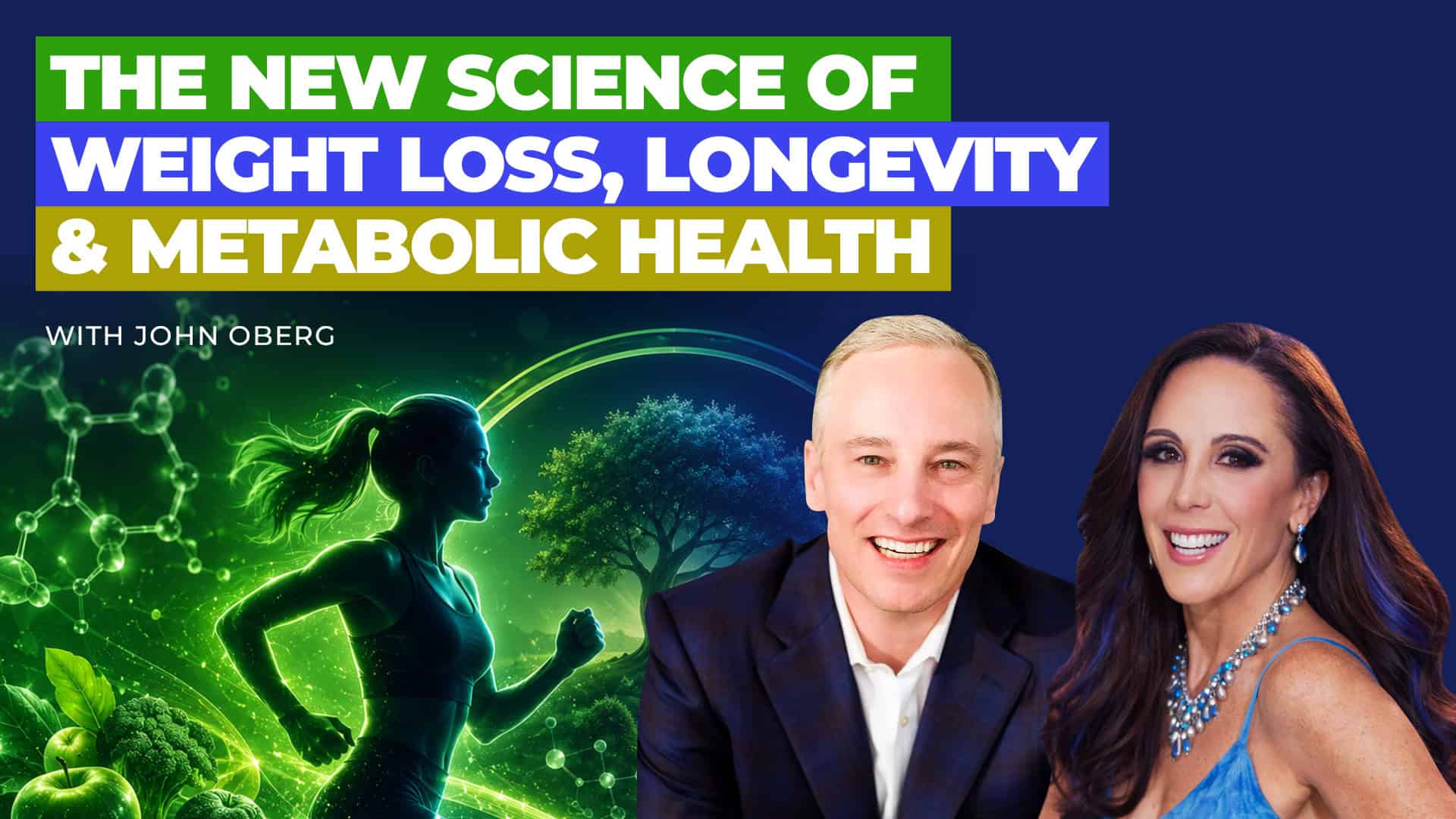
In this episode of Resiliency Radio with Dr. Jill, Dr. Jill Carnahan welcomes Dr. John Oberg, healthcare innovator, behavioral scientist, and founder of Precina Health, to explore why lasting health transformation begins with behavior—not willpower.
Together they discuss the science behind sustainable weight loss, GLP-1 medications, Type 2 diabetes reversal, and longevity through the lens of human behavior. Dr. Oberg explains how his groundbreaking START Model combines behavioral science with personalized medical care to help patients create lasting lifestyle changes that improve both lifespan and health span.
Whether you're struggling with weight, chronic disease, or simply looking to build healthier habits, this episode provides practical insights into creating meaningful, lifelong change.
🔑 5 Key Discussions You'll Discover with Dr. John Oberg
① 🧠 The Science of Behavioral Change
⇨ Sustainable health improvements come from understanding human behavior rather than relying solely on willpower.
⇨ Small, personalized habit changes create lasting transformations over time.
② ⚖️ Weight Loss Beyond the Scale
⇨ GLP-1 medications can accelerate progress, but they work best alongside healthy nutrition, movement, and behavioral support.
⇨ Long-term success depends on building sustainable habits rather than lifelong dependence on medication.
③ 🩺 Transforming Chronic Disease
⇨ The START Model helps patients improve Type 2 diabetes, metabolic health, and overall wellness through personalized care.
⇨ Treating the whole person—not just symptoms—leads to better long-term outcomes.
④ ❤️ Finding Your “Why”
⇨ A meaningful personal purpose is one of the strongest predictors of successful lifestyle change.
⇨ Connecting daily habits to long-term goals creates lasting motivation for better health.
⑤ 🌱 Longevity Through Human Connection
⇨ Health span depends on more than diet and exercise—it also requires meaningful relationships and emotional well-being.
⇨ Technology and AI should support healthcare while strengthening, not replacing, authentic human connection.
🔑 Key Takeaways with Dr. John Oberg
🔹 Lasting weight loss begins with behavior change, not willpower.
🔹 GLP-1 medications are tools—not complete solutions—for long-term health.
🔹 Small, consistent habits produce sustainable results.
🔹 Human connection plays a vital role in longevity and well-being.
🔹 Improving health span is just as important as extending lifespan.
About Dr. John Oberg
Dr. John Oberg is an entrepreneur, healthcare innovator, executive advisor, professor, and behavioral scientist with more than three decades of experience helping organizations and individuals navigate growth, change, and human performance.
He is the founder of pioneering healthcare companies including Precina Health and Sedera, where he has helped develop innovative approaches to chronic disease management by combining behavioral science, personalized medicine, and technology. Holding a doctorate from the University of Southern California and an MBA from the University of New Mexico, Dr. Oberg specializes in creating high-performing healthcare systems that improve both patient outcomes and clinician well-being.
His mission is to help people thrive by strengthening the connection between purpose, performance, and lasting behavioral change.
🌐 Website: https://johnoberg.com/
🏥 Precina Health: https://precina.com/
Dr. Jill Carnahan, MD – Leading Functional Medicine Doctor
Dr. Jill Carnahan, MD, ABIHM, ABoIM, IFMCP is internationally recognized as one of the most respected leaders in functional and integrative medicine. She is dually board-certified in Family Medicine and Integrative Holistic Medicine, and the founder and medical director of Flatiron Functional Medicine in Louisville, Colorado.
Widely known as a pioneer in environmental toxicity, mold-related illness, autoimmune disease, and resilience medicine, Dr. Carnahan combines cutting-edge science with compassionate, root-cause care. Her clinical approach integrates precision genomics, epigenetics, microbiome research, peptide therapy, and lifestyle interventions to transform health outcomes for patients worldwide.
She is the author of the best-selling memoir Unexpected, which weaves her personal journey through cancer, Crohn’s disease, and mold-related illness with her professional expertise. Dr. Carnahan is also the executive producer of the award-winning documentary Doctor/Patient and the host of the popular podcast Resiliency Radio, which reaches over 500,000 global subscribers.
As an international keynote speaker, Dr. Carnahan has been featured at leading medical conferences including A4M, IFM, EPIC, and IPM Congress, and her work is frequently highlighted in major media outlets such as NBC, CBS, Fox News, Forbes, Parade, People, and MindBodyGreen.
With a reputation as both a scientist and a healer, Dr. Jill Carnahan is regarded as one of the top functional medicine doctors in the world, offering a unique blend of evidence-based research, innovation, and deeply personalized care.
The Podcast with Dr. John Oberg
The Video with Dr. John Oberg
Transcript
00:00
Dr. Jill Carnahan, MD
Hey everybody. Welcome to Resiliency Radio, your go to podcast for the most cutting edge insights integrative and functional medicine. I'm your host Dr. Jill and with each episode we dive into the heart of healing and personal transformation. Join me as I interview world leaders, medical experts, innovators of all types and people to help you on that journey to find optimal healing and human performance. Today's no different. We have a human performance and behavioral expert who's led behavioral change in the clinic and you're going to learn today about all things behavioral related longevity and weight loss. We're going to dive into some of the most popular topics so stay tuned as I introduce him in just a moment. Before I do, I want to remind you that we at Flat Iron Functional Medicine are accepting new patients.
00:46
Dr. Jill Carnahan, MD
If you're looking for a provider to help you with any sort of complex chronic illness, Lyme related illness, mold disease, environmental toxicity, autoimmunity, new onset symptoms that you just don't know what is causing, that's our specialty is mysterious illnesses. Give us a call at 303-993-7910 or just email info@Flatiron Functional Medicine.com to schedule or get more information. We'd love to hear about how we can help you out. And again, that's Flatiron Functional Medicine in Boulder, Colorado. Also, I think most of you know who listen to our show. We have products and services specially curated for you. @Drjillhealth.com you can especially find our most popular selling Dr. Jill beauty products. We have incredible things for your hair, for your skin, for your glowing complexion. And one of my Favorites is the Dr. Jill Beauty product called Vita CE Serum.
01:48
Dr. Jill Carnahan, MD
And another one is the Biopeptide Beauty cream. These have been bestsellers. They work well. You're going to love them. In fact, one of my marketing team just told me her husband stole her product and is now using her product and she was kind of upset that he swears by it. It's called the Vita CE serum, so check that out at Dr. Jill health.com okay, let me introduce our guest. Dr. John Oberg is an entrepreneur, healthcare innovator, executive advisor, professional, has spent more than three decades helping organizations and leaders navigate growth, conflict and change. He's the founder of pioneering healthcare companies including Sededra, Prina Health and advises executives and healthcare organizations on building high performance cultures rooted in authentic human connection. You're going to love this interview.
02:32
Dr. Jill Carnahan, MD
He's a doctorate from the University of Southern California and mba, University of New Mexico and he brings a unique blend of behavioral science, leadership and business strategy to his work. His mission is to help people and organizations thrive by strengthening the intersection of people, performance and purpose. Let's welcome Dr. John, Dr. John Oberg. I am delighted to have you on today on Resiliency Radio. And we always talk about all things related to longevity, optimal performance, how do we show up better in the world. And you are an expert in all of these areas. So as we kind of talked about before coming on here, we could go in many different directions. Our topic is kind of like the new science of weight loss and longevity because there's been so much talk about that.
03:16
Dr. Jill Carnahan, MD
So we will, if you're listening, we're going to head into some really exciting things on these topics. Old news, news, new science, old science, how it all fits together. But before we do, I want to know who is Dr. John? How did you get to where you're at now and how, what's your journey to get to the science of where you're at right now?
03:34
Dr. John Oberg
I think kind of accidental. Like I certainly didn't see myself here. I think unlike most doctors on your show, I'm a doctor of social work, not a doctor of medicine. And so I got here, I started working in the business world. I started getting involved in organizational change management, which requires the change of human behavior. So I became very interested in the psychology of human behavior very early on in my career. I had a lot of people that were working with me and for me early in my career. Then I went back and I got a master's degree where I did some really cool stuff at the University of New Mexico, working with one of my professors as a consultant inside the nuclear laboratories and learning about commercializing technology. And, and then I started starting companies and so that was really fun.
04:17
Dr. John Oberg
I, I founded a company and I co wrote the patents for credit card processing on a mobile device back before there was an iPhone and raised a whole bunch of money and then flew the company into the ground and it was a spectacular disaster. And, and then I went out and worked in a couple other turnaround situations and then as a consultant for a while. But all the thread through all of it was a couple of them. One, I was really interested in human behavior and how that drove performance in the business world primarily at that time. And then secondly, I wanted to work with fun people. Like I wanted to work with neat people. And so that really drove me. And then I got into healthcare and doing a lot more with healthcare. My family was from healthcare.
04:57
Dr. John Oberg
I joked that I Started in healthcare at age 8 when I was filing paper charts for my mom one day when I had to go to work with her. And then as I got older, I was like, you know, developing X rays. I was probably 12 at that point and there was no OSHA, no HIPAA and but I could read X rays. It was kind of fun. Not really read them, but it was fun to do and yeah. And so then I ended up in 2019, my mother in law got sick. She ended up in the hospital. DKA, she has type 2 diabetes. And I got really frustrated about the whole process. And she has a great doctor, I really liked her doctor, but the process wasn't, it just didn't go well.
05:28
Dr. John Oberg
And so I called my friends at USC where I had done some undergraduate work before I went to New Mexico. I said, hey, I want to come back and get a doctorate and I want to solve this problem. And they were like, yeah, that's pretty cute. Like, we've been working on solving the problem of type 2 diabetes for decades, but we'll take your money and we'll see how it goes. And we did a pilot study where we took 49 patients out of 50 and all 50 had diabetes or average A1C. I'm not sure what kind of listener you have. It was 9.6 and in 12 weeks we got them down to 6.4. 49 Out of 50 patients were controlled. We kept them controlled for two years. I went back to my committee and I was like, what do you think?
06:01
Dr. John Oberg
And their jaws hit the ground. They're like, what did you do? And so we told them, it's like we took all the things we could learn about them from a medical perspective. We learned everything we could about their behavioral health. We took all of the clinical administrative things and tried to kind of wring out all of the hard parts. Then we took all the non clinical stuff that people don't pay attention to. And then we talked to the patient, we did crazy stuff, we read their chart, we found out what things they were interested in changing and we made tiny little changes one at a time. And, and so we created this, you know, systemic therapeutic alignment and rapid titration model is what we call it start. And so we start people in the right direction and they do really well.
06:40
Dr. John Oberg
And we take really sick people and get them really healthy really fast. And we keep them healthy for a really long time. And we do it. Whether someone's high income, low income doesn't really matter. It doesn't matter if they're rural or Suburban or urban. It's like we have this thing that works for people by and large by taking all the things that we knew, but putting them together in a way that was actually something people could do. And it's so cool because we have a medical practice now and our caregivers, whether it's a doctor, nurse, practitioner, nurses, they're like the cool stories we used to tell once every six months in our clinics. Now we tell them like multiple times a day because there's so many things happening. They're so amazing. We've done a second study I can tell you about.
07:24
Dr. John Oberg
And anyway, we're geeked out on how patients get healthy and stay healthy for a long period of time.
07:30
Dr. Jill Carnahan, MD
Okay, my jaw is dropped. I love this because what you did is you actually talked about the human instead of the medicine. And what I see is, right, people think healthcare is medicine, but the truth is, you're arguing that it's fundamentally about people and behavior, which makes so much sense. Even in functional medicine, where I'm at, it's like I'm one one with that patient and there's no protocol. People all the time, like, what's your protocol? I don't have one. I sit with that person and say, what do you need? What's your goals? What's your dreams? What's your desires? How can I be a travel guide and help you get there? Right? And then I try to formulate a plan, individual for that person to take them on that journey that they want to go on.
08:06
Dr. Jill Carnahan, MD
Which is exactly what you did in a really cool thing, because you didn't just. I mean, you did it one one, but you also created a model and a study to back it up. And now, so tell me, you mentioned the clinic. And so this was like a pilot initially, and it was so successful. Then what happened? How did you get to the clinical part? And did you create a medical clinic that you hired? Or how did that happen?
08:26
Dr. John Oberg
Yeah, so my partner is a medical doctor, Dustin Williams. He's written medical school curriculum for, I can't tell you how many dozens of medical schools across the world. And so we partnered up. He's the one that actually designed all of the medical protocols. Like, he's the. He is a medical genius. Like, there's no two ways about it. He is a medical genius. I was on the behavioral health side. And we've got this really cool relationship where we can talk to each other about each other's world and help each other understand it. And so it's super fun because now you know, our clinicians get trained pretty regularly by us about, you know, whatever, like either the medicine from him or the behavioral health from me. And really help us to meet patients right where they are. And that's the cool part is we meet.
09:07
Dr. John Oberg
And that's our protocol. Our protocol is about meeting where they are with the medicine, meeting where they are with the, you know, behavioral health and really understanding readiness for change, which is a, you know, it's a concept in the world of psychology and social work where you can really understand what can change. And then we just take it down to the smallest possible change so that we talk to patients, we joke, we do crazy things, we read patients charts before they come in. Like crazy stuff, you know?
09:34
Dr. Jill Carnahan, MD
Right, exactly.
09:35
Dr. John Oberg
And. And so we take time with people. And so it's been really successful. You're going to love this. Our second study, we took patients. The only patients that could get in was if their A1C was above nine. So we wouldn't take any patients below nine. The average A1C was 11 point something. Oh, something. And we dropped them to 7.2 in six months. And 30% of the patients using insulin at six months were off insulin permanently.
09:59
Dr. Jill Carnahan, MD
Wow. Wow. And it just goes to show you, what we're taught in medical school is patients won't change their diet, patients won't change. And we're literally, I see colleagues that are enmeshed in that conventional system that won't even mention that you need to move your body and choose healthy foods. And because they're not willing to take the time to talk about a grocery store, where do you shop and how do you get the healthy foods and these kind of basic things that are behavioral. From your perspective as a social scientist, I love this because you're looking at how do we change behaviors, how do we keep those changes, how do we keep motivated? Give us a little outline. Like say, I'm your patient, Mr. Patient, Mrs. Patient, you're talking. Where do you start? How do you engage them?
10:38
Dr. Jill Carnahan, MD
Like, give us like a little role modeling of how you'd start with someone on the road and like, what kind of questions.
10:44
Dr. John Oberg
Yeah, well, so we start before the. Before the visit. Like, what we'd start with is like, getting all of the medical charts we can possibly get before they come in. It could be hundreds of pages or thousands of pages of things. And then we have a process by which we go through all of that and find out what's most important so that Dustin is ready to talk to them when they come in. And he knows what he's asking about,.
11:04
Dr. Jill Carnahan, MD
Screen some of this. So it's not just the doctor. You have a team that actually looks at that and says, here's like, if you're preparing for a podcast, right? Like, here's the bio on this patient.
11:13
Dr. John Oberg
That's right. And we know, and we know what things are going on and what questions we're going to have and where there might be gaps we have to fill in. And so. And we use technology to make that lighter lifting, obviously, but we have people that are getting ready for the appointment, and then Dustin comes in and, you know, and when they meet Dr. Williams, it's like it's just Dustin to them. And so. And there's lots of time set aside so that they don't feel rushed. It's not a quick, you know, because you're talking about complex chronic disease. And many of them, in many cases. And then we talk about, you know, the medicine usually first. And then we try to understand, generally speaking, we do some screening for depression, anxiety and stress.
11:51
Dr. John Oberg
And so there's different models you can use, but we generally start with, like, two question surveys to figure out if we have to go deeper or not. Then there's longer surveys, then there's clinical intervention by clinical therapists if necessary. We have all that ready to go, if necessary. And then we, you know, to the. Over the next 30 days, we have a series of conversations with that patient, some in the office, some over the phone and. Or video call, and we get this whole picture of them over 30 days. Right? And so when I gave my TED talk, I was thinking, like, how do we explain to somebody? And really it's what is the patient willing to do? What does the expert know? So that you don't just have a plan, but you have an expert plan. Right.
12:29
Dr. John Oberg
And how do you put all that stuff together so that everyone's clear about the next one step? And then how do you give someone that. That quick support? So we have some patients that want to talk to us every day. We've had a couple of patients who want to talk to us multiple times a day. You know, it's like, how do I inject this drug for the first time? Like, can you get on and can you help me get comfortable? And that's all fine. And then other people, you know, it's like, I'll talk to you every two or three days. In some cases, we're actually changing the medicine doses every two or three days with enough data to help get them into kind of clinical control. And so every patient has A little bit of a different plan that's part behavioral, part medical and.
13:03
Dr. John Oberg
But we help them by getting really granular with them. So like one patient, like the medicine kind of worked and it was doing fine, but we just changed their coffee creamer because they were getting so much sugar in their coffee creamer. We just changed a different flavor.
13:18
Dr. Jill Carnahan, MD
Unbelievable. And it's that kind of attention to detail that makes the difference because that patient would have never. It's like a needle in the haystack. Right. But you're kind of screening, looking, asking the right questions. Is it mostly through forms or actual interview? Because it sounds like before they ever come in, you have a really good idea of this is the shape of the life and the pain points and those kinds of things. Right.
13:39
Dr. John Oberg
Well, I think that, you know, when you, you're the medical doctor, so you would know better than I would that like each, you know, chronic disease like has a set of protocols. Right. And so if you have type 2 diabetes, that's how we handle, you know, there's a certain set of medicines and medical interventions and if you have, you know, high blood pressure, it's a different set of medicines. But there's some similarities and titration and how you deal with things. But then food and exercise, you know, we say move to the right, so on the left hand side you have processed food, on the right hand side you have whole food plant based. And then there's a spectrum.
14:07
Dr. Jill Carnahan, MD
Yeah.
14:08
Dr. John Oberg
And so we just want to understand where somebody is and how willing they are to move one tiny little bit to the right. And so I joke with people, like if someone's eating Captain Crunch for breakfast, you don't tell them to have kale and carrots. Like you're not going to get them there. You go from Captain Crunch to Frosted Flakes to Honey Nut Cheerios to Cheerios. Like you have to move them along a spectrum. And no one's ever gone down that exact spectrum. Right. But the idea is a little bit less. You know, it's like I had one patient who's like, I want to go walk a mile. It's like, man, get to the mailbox and give me a call and tell me how you're feeling. They got to the mailbox. Like, my knee hurts. It's like, well, let's talk about that.
14:44
Dr. John Oberg
And so the next day they got to the mailbox twice. Like that was great. But had they tried to go out for that mile, they would have overdone it. They wouldn't have wanted to call back. And so it's like, what's that easy win that you can get first? Like get an easy win first. And once you get that first easy win, then what? Then what's the next easy win you can go get next, but get an easy win.
15:03
Dr. Jill Carnahan, MD
Yes. Oh, this makes so much sense because often I'll talk about like, and again, I love your expertise because you're clearly expert at this habit formation, but it's really the foundation of healthy principles is getting those things enmeshed. So I'll say, okay, what do you do first thing in the morning? Brush your teeth. Put this by your toothbrush and let's add it in. Or it might be habit stacking. Right? Habit stacking. All these tips.
15:22
Dr. John Oberg
Yeah, yeah.
15:23
Dr. Jill Carnahan, MD
BJ Fog and Atomic Habits by James Clear. And I've read all of that. I think it's so profound. And you're clearly using that. And sometimes I'll be like, okay, you want to do 10 push ups a day, do one push up with your tooth. You know, brush your teeth, do one push up. And then the one is so easy they can't not do it. And then all of a sudden they're doing three or four, so they're stacking. I love that. What do you find are the biggest blocks for people with behavioral change? Is it fear? Is it shame? Is it, is it feeling like they can't do it? Is it unsupport? What would you give? Like the general.
15:53
Dr. John Oberg
We go the other way. We try to find someone's compelling reason to do something. It's almost always emotional. And if you can tie it back to their why. I tell my, I tell my staff all the time. It's like, hey, like, everyone does things for exactly the same reason in this world. It's because they have a reason. And your job is to go figure out what that thing is. But, but everyone's is the same in that it's theirs and it's different in his. And sometimes you can talk to one patient seven days later and something's changed. So you can't assume that because you talked to them a week ago that it's the same emotional reason today.
16:25
Dr. John Oberg
And so I was talking to one patient in our clinic who was, you know, retired, was not showing signs of clinical depression, but showed signs of subclinical depression. And we got into like, what was going on with them. And she had retired from being a sheriff and she didn't have kind of the thing to wake up for in the morning. And what she really wanted to do was she wanted to teach underprivileged kids how to read and didn't know how to go about doing that. And so I got her on a three way call with her librarian. With her permission, we talked to her librarian to get them connected about how she could go volunteer at her local library. And all of a sudden she was excited.
17:00
Dr. Jill Carnahan, MD
Hey guys. Just an interruption quickly to remind you that if you're looking for products and services, look no further than drjillhealth.com we have all kinds of products and services to meet every healthcare need that you might have. Especially check out the Dr. Jill Beauty line. It is best selling products for anti aging skin care and optimal health and glowing skin. One of my favorites is the HA Collagen booster. If you haven't yet checked it out, you can find that@doctor Jill health.com okay, let's get back to our show. And it's not that hard. It just takes the time. One of the things I heard you say that I think is so critical and missing, unfortunately in most modern offices is that authentic human connection. Like really, I always say if the patient feels like they're seen and heard, it makes all the difference.
17:47
Dr. Jill Carnahan, MD
And that's this esoteric thing. We kind of know intuitively how to do it. But how do you teach your staff, how do you teach your clinic to actually be present with the patient? What are like some of the practical tips for that?
17:59
Dr. John Oberg
Someone not in my staff, but somebody once asked me like, hey, how do I get someone to like think I care about them? It's really, it's really easy. You actually care about them. Right. And so I now I will say that by and large in healthcare, I don't find that's the problem. I think most people get into healthcare because they do care. And so I don't find that to be a problem, broadly speaking. And there's obviously the exception to that rule. That's pretty rare. And so with us it's like, hey, you have to remember that wherever you are as a clinician, you've been doing this for a year or five or 10 or 15 or 20 years. And you've done this five or 10 or 15 or 20 times today.
18:34
Dr. John Oberg
But this is their first time today and they may be scared or worried or anxious or whatever. And so, and so our job is to meet them right there in that moment and to try to bring them on that one next step for that next easy win. Like what's that one thing they have to do? And so that means we have to go meet them where they are. And that means patience in every sense of the word, right? So you've got to be patient with your patients and meet them where they are and help them on that one. Next thing, the cool thing is the momentum happens, right? So people start moving and then they gain inertia. And it's really cool to watch that happen. So, and then we role play.
19:12
Dr. John Oberg
We practice a lot with our team and we've exposed AI to them, where they can go practice with an AI if they want to role play without their manager listening or without me listening or whatever. And so they can practice tirelessly if they want to. They don't do a lot of it, but they could. And so we give them these opportunities to practice all the time. And I'm never beyond practicing. So someone calls me like, hey, John, I want to role play. It's like, hey, great, what's the situation? I'll do the hard part. What's the hard part?
19:36
Dr. Jill Carnahan, MD
Yeah, well, and even just interviewing you are a fun, easy, great person to talk to. So I can see how you just by showing up as you make your staff and the patients you interact with very comfortable, you have that nature and obviously it's because you do care. It's, it's easy to see that our healthc care system, which I am deep in, right, I'm kind of on the fringe because I do things differently, like your clinics. But there's every day I see things happening that are shocking and how people are cared for, how patients go to the ER and aren't even physically touched anymore. And I could name 101 things. If you had to rebuild our system, our current American healthcare system, from scratch, what three things would you say these things have to change immediately?
20:23
Dr. John Oberg
It's a great question. I'll give you answer a little bit off center on that one. Because we talk to patients all the time about the healthcare system. Everyone agrees, they want to better. And you could talk to 100 people and get 100 answers about how it could better. And the truth is it does need to better, but it's not going to better by three o'clock tomorrow. What we can do is help patients understand that even in a broken system, there's things they can do right now, even in the most difficult of circumstances, there's something that can be done as an individual to make their healthcare a little bit better today, even inside of a broken system. So for anybody listening who's like, yeah, the system's broken, I don't disagree.
21:02
Dr. John Oberg
And right now Patients can take control of the thing they can control even inside of a system that's less than optimal and still do something about it for themselves. And I encourage all the patients to do that. So that's kind of step one is let's get all the patients to be advocates for themselves. Just like they consume other things in the world, consume healthcare with the same vigor and the same understanding and the same care. And that way at least we get the benefit as patients right inside of a system. And then I think, you know, we've got to look at the incentives, I think we've got to look at where the incentives are inside the system and just follow the incentives.
21:36
Dr. John Oberg
You know, I'm concerned about that and I'm actually working with people in the world of policy to understand more about how the policy world works so that I can help answer those questions more definitively. But I'm, you know, as much as I know about individual human behavior, that's how little I know about policy today. And so I'm very hard to make those connections so I can start talking to people about like, hey, you know, how does policy get impacted and how do we change behavior at the policy level? Because it clearly works at the individual level. I've got all the data to show us that. So let's go do it at the community level, let's go do it at the policy level.
22:09
Dr. John Oberg
And so I don't have like the best answer today other than fix the individual experience as an individual even though the system's working against you in some cases. And I get that it is and that sucks. But find people who are going to help, you know, walk the walk with you through it.
22:24
Dr. Jill Carnahan, MD
Okay, so for that patient listening, for that person who's been struggling with their doctor, you're saying really go deep, find out what you need, ask for what you need. Maybe get an advocate to come with you, maybe get a friend or family member to listen with you and just go there and become more empowered. I couldn't agree more because nowadays you really, I think the more in fact I love patients that come with research with the come with because I find I tell my, I have mid levels in my office and I'm always telling them if you listen to the patient, you're going to learn more from your encounters than any sort of, I mean as much as any reading outside of the clinic, you're going to learn from your open minded. So love that now you alluded to something I think is important.
23:01
Dr. Jill Carnahan, MD
And guys, if you're listening. I promise we're going to shift in a minute here to longevity and weight loss. But I think this is so critical and we agree, John, we're just going to let this go where it flows. So I think that what we've talked about is so critical as a foundation. But what I want to shift to before we go to the long dipting weight loss is the physician, the provider. Nowadays mid levels providers, nurses, any sort of medical professional in the clinical realm. So many of my colleagues are burned out and they're overwhelmed and they're stressed.
23:28
Dr. Jill Carnahan, MD
And I think like you said, the policy level of how our system is working is part of the problem because of the bureaucracy of documentation and EMRs and all the things that take away time from what we love to do, which is be with the patient and actually connect with the patient and be a healer. Right. To the physician listening. We have a lot of physicians in our audience. What would you say as far as reigniting purpose? If they're from anything from a hospital system to a clinic that's owned by a hospital to their own private clinic anywhere on the spectrum, what tips could you give that provider to reignite and re engage and become the best healer that they could?
24:06
Dr. John Oberg
Yeah, I think I have a lot of faith in technology and you know, I think that we're going to see that a lot of the things the government wants are going to be able to be done with much more automation in the very near future and probably done a lot better than they've been done in the past and with better cross cutting so that things don't get missed that are easy to miss today the way the system is built. But I think technology is going to let us do a much better job for patients in that way and there'll be less pajama time, you know, less charting while you're at home watching tv. And we're already doing that in our clinic. So we have ambient scribes. A lot of people have ambient scribes.
24:43
Dr. John Oberg
We have ambient scribes that do a whole lot of work for us. But they actually let the doctor be the doctor. Right. And so, and they let the, you know, for us it's nurse practitioners and physicians, associates, both we use and they can do that work. And so here's the world that I want to live in. So on the mental health side, I think we can get to a place where you can get into, you know, where there's sub clinical topics that can be talked about by peer counselors, you can have a consensual AI listening in. And then when there's a therapeutic topic, the AI can alert somebody with everyone's permission and say, hey, this is for the professional. So everyone can be working at the top of their license. I think that can be happening with mid levels too.
25:25
Dr. John Oberg
Like, I think that right now ratios that are followed for a really good reason. But I think we can extend a lot of that so that people have more autonomy in their profession and less need for documentation and a lot of guardrails being built in. I think we're early. I think we're not there yet. I think that there's still have a lot of governance issues that need to be sorted out. But I'm really hopeful the technology is going to strip away the administration so that we have more time for that relationship. And I don't think we should automate it to the point we take the relationship away. I don't think the AI should be the caregiver. I think that relationship needs to be the central point of the entire system. So that's my takeaway.
26:06
Dr. Jill Carnahan, MD
Makes so much sense. And I'm seeing that in my clinic too. There's these pieces that used to be incredibly burdensome that are being assisted, but it doesn't take away the doctor patient relationship or the ultimate authority of the doctor or the mid level to decide next steps. And so I could not agree more. And I think we'll hopefully see that really taking some of the burden off the administrative part of the physician. So weight loss and longevity, two of my favorite topics. I think weight loss is a really good prototype for behavioral change because for so long it's been seen as this behavioral disorder when it really is far more complex. What is the state of the union on weight loss? We obviously cannot go without talking about GLP1s and how they've influenced the market.
26:44
Dr. Jill Carnahan, MD
But from a behavioral scientist perspective, give us the landscape of that and then let's talk specifically about weight loss and new or old findings.
26:53
Dr. John Oberg
Yeah, you know, I love GLP1s. We use them in our practice all the time. I think the place where I probably differ than some people is I don't think that once a GLP1 for the rest of your life. I just don't think that has to be the case. I think they can be deprescribed over time given a certain set of circumstances that are not studied that we haven't. We don't know yet. But it would follow from kind of what we know about science that over time, if a GLP1 is used and somebody changes some of their eating habits and their exercise habits appropriately, which we're very clear, like if you're using GLP1s, you need to be doing resistance training so that you're continuing to, you know, keep that muscle tissue going.
27:28
Dr. John Oberg
And you've got to make sure that you're eating well so that you're, you know, your system is actually adapting the right way. If your stomach shrinks and if your taste buds change, then it would make sense to me over time that you could deprescribe GLP1s. And I think that doesn't take 90 days. Right. That takes, it may take a couple of years for people to kind of to stabilize there. But I think we can see deprescribing and then re prescribing when necessary if somebody gets off track. But if we use it as a kind of a magic silver bullet to eat whatever you want and continue bad behavior. I don't think that people are going to get the full benefit of what this class of drugs in particular can offer.
28:06
Dr. Jill Carnahan, MD
Yeah, I couldn't agree more with what we see in clinical practice. And I'm actually majority of my patients are on very tiny doses because it just gives them that little edge with very little side effect. And then they have the. Because what you're doing in clinical practice is creating this incredible foundation for behavioral change, which is really what we all want, obviously that having that GLP1 is a boost that we never had before. That's really powerful. What percentage would you say is the GLP one? And what percentage is your clinicians actually looking at the patient's behavior and giving them those tools so that they can interface both?
28:37
Dr. John Oberg
You asked me to kill. So I'm a scientist and you asked me a percentage I haven't measured. I gotta tell you, I haven't measured it. But you know, but sometimes like, you know, you take one away and things start working. You take the other one away, it stops. And the GLP1 has definitely been a catalyst to help people get on a track they want to be on. And so I think it's fantastic. I think that. But people have to be open to the fact that they have to actually do move and they have to do, have to, they do have to exercise and understanding what healthy resistance training. I just had a conversation earlier today about resistance training and they're like, well, what do I do?
29:09
Dr. John Oberg
It's like, well, you've got to find someone who can help you if You've never done resistance training before, whether it's trainer in a gym or a friend who works out that knows what they're talking about. But the key here is don't overdo it. So we talk to people about the first thing you want to do is start moving for 10 minutes at a time. Even if you don't break a swim sweat, then you want to get to 150 minutes a week. So 10 minutes at a time, whether it's 30 minutes at a time or three times, but you don't even have to break a sweat. Just get moving. And then once you're at the glp, then you want to start actually resistance training, doing some things with weight.
29:40
Dr. John Oberg
But we had one patient who had a number of MSK surgeries, and it was like, hey, I can't tell you what to do. You've got to go talk to your orthopedic surgeon and figure out what's appropriate for you in your given state. So I think whoever the experts are that are around you, right, you've got to work with those experts in their field and just know that there's definitely going to be a movement component, there's going to be a food component, and there might be a medical component to it. And if you're talking about a habit change, you're not talking about 21 days to change. You're talking about 90 to 365 days to change.
30:12
Dr. Jill Carnahan, MD
Right.
30:12
Dr. John Oberg
Like, that's the whole 21 days to change thing came from a study that we don't all have to deal with, where it was dealing with people who are amputees, not people. Well, yeah, so. So this study that you probably heard 21 days to have it change. Not. I mean, that is a thing if you're an amputee. Fortunately, most of our, you know, patients are not. And so behavior change comes a little more slowly than that. That's okay.
30:36
Dr. Jill Carnahan, MD
So I love that you're talking about the protein, making sure adequate intake of actual calories with this change, because it's easy for patients, especially on the higher doses, to not eat enough. And then the resistance. Absolutely essential. Couldn't agree more. What other things do you find pre GLP1 or currently with GLP1 that are the saboteurs of weight loss for most patients?
30:58
Dr. John Oberg
I think, you know, the things we really focus on are making sure they have the right medicines across their entire medical. You know, we had a woman who came in who was. Had $1,000 a month of supplements that she was taking, and it was Making her feel horrible. And so when we got her down to the right things, it was much less expensive in terms of time, energy, money, and stress. So all of it kind of. But getting onto the right things and recognizing those can change over time. So I think that's a. So medicine is one of kind of things. We check for what conditions they have, whether it's wellness or sickness or whatever they are, but they need to be in the right medicines. Then.
31:29
Dr. John Oberg
Then when it comes to, like, food, wherever they are, we just want to take that one next step like we talked about earlier. And then movement. Movement's the same way. Like, just start with 10 minutes, then 20 minutes, then 30 minutes twice a day, like, and eventually 150 minutes a week. The saboteurs are the. Are the things you know about. It's the added sugar that's hidden in places. It's thinking you're doing something healthy and taking the fiber out of a fruit and then thinking that's the same thing as having the fruit. It's just really not. And then the other things that shock people, snacking, like, grazing is not good for the system. Like, we talk a lot about just grazing can really not be good for you.
32:09
Dr. John Oberg
And so getting people into healthy patterns of eating through habit stacking and some of the other things we do, that's also really important.
32:16
Dr. Jill Carnahan, MD
And are you, in most cases, obviously, you get to know the patient. We've established that. Are they seeing a nutritionist? Are your middle levels providing the education? Who in your clinic actually provides the dietary education?
32:28
Dr. John Oberg
It depends. Like, we just see a lot of patients in Medicaid and Medicare and they don't have the resources for nutritionist. So we actually have an AI helper that helps us create meal plans for people if necessary. And so it will take, like, pictures of what's in their pantry, pictures of their pots and pans, talk about what cooking skill they have or want to have it will talk about how many times they want to have leftovers, how they're going to store it, you know, how big the refrigerator is. Like, we'll take all the variables if somebody wants us to, and. And we'll create, like, here are the recipes, here's the shopping list. Here's how you cook it. You know, here's how you store it. Like, as much detail as they want us to get in so that it makes it really simple for them.
33:05
Dr. Jill Carnahan, MD
Oh, that sounds phenomenal. That makes so much. Then again, it's their house, their pantry, their foods, the things they like, and then maybe get Rid of this, add this, and you know, we're about to.
33:14
Dr. John Oberg
Expose it through a portal. We haven't done this yet, but we want to expose this through our patient portal. So they can do it on their own or they can just do it with their provider. And the provider's happy to do it because it takes so little time to plug it in. Once you know everything, it's just used to take 90 minutes to do that. Now it takes 90 seconds.
33:29
Dr. Jill Carnahan, MD
Yeah, yeah. This is what's amazing about the pieces of AI that are actually really helping us do our job. I want to talk about longevity. This is a big topic. I was just in Switzerland earlier this year talking about immune system as longevity. And there's so many more things like that. But how would you define longevity? How are you incorporating into patients thinking about it? Because I think as people hear that word, of course everybody's like, well, I want that. Right?
33:52
Dr. John Oberg
Yeah, boy. I feel like I'm talking to the expert and the expert's asking me, here's what I would say is health span is as important as lifespan. So those are words that are not ours, but having that health span. So for us it's about finding the why on the behavioral side.
34:05
Dr. Jill Carnahan, MD
Right.
34:05
Dr. John Oberg
There's the medical side that your listeners hear about all the time. But when you find someone's why, I think why have a health span is really amazing. And so, you know, one of the things that I do and I share with my team, if they want to see it, and we're happy to share with our patients, but you know, you can look at a life plan that has these 10 year visions and that's amazing if you've been doing that for decades, which I have been. But if not that, then why this week? Right. And so it's the same thing. It's like, why today by tomorrow?
34:36
Dr. John Oberg
You know, but so I think for, you know, when I talk to my family about like what I hope to be doing in 10 years, my kids in particular, sometimes like dad, I don't even know tomorrow, it's like, well, yeah, you're right, I shouldn't be talking about my ten year plan. Your ten minute plan.
34:50
Dr. Jill Carnahan, MD
Yeah.
34:51
Dr. John Oberg
You know, and so I think the same concepts apply. So I think, but finding someone's why and what they're excited to. And here's what I tell people who have no idea. It's like, just take a piece of and write down everything you think you might want your why to be. And you can write down things you want to own. You can write down experiences you want to have. You can write down goals you think you might want, but just write everything down. Even if it's a silly idea, write it down. Like write everything down. And you might write down five pages of things and once you do, just put it down and come back tomorrow and just write down why next to some of them. Yeah, and then some of you will decide, yeah, that's not that important to me.
35:23
Dr. John Oberg
And some of you are like, ooh, that's really important to me. And then just like, have fun with it. But like, no judgment, like just put everything on there and then decide if you want to scratch something off, scratch it off. If you want to add it again to the bottom. There's no right or wrong answer. It's your why.
35:37
Dr. Jill Carnahan, MD
But figure out why that is such good advice for all of us, practitioner to patient. Right? And I really love that you're green lighting being just put it all out there. Because so often our judge, the frontal cortex is like, you know, wait a second, that's not okay. Your parent wouldn't be approving of that or what, Even if we're 45 years old, our parents wouldn't approve. You know, like we have these old programs that affect those wise. I've heard someone say before too, that go back to your five or eight year old self. What did you love to do? You know, dirt bikes and the, you know, country, whatever it is.
36:08
Dr. Jill Carnahan, MD
But then you can almost always take a piece of that joy you had as a little child and find, like I jokingly tell people I would have been a librarian if I wasn't a physician because I loved books so much. And granted, I'm glad I'm where I'm at, but I love learning. And so that little five year old wanted to be a librarian. And the why there is, I want to always learn, I want to always be. So that's a really good advice. As we wrap up, we've covered a lot of topics. I mean, this has been so fun. But one thing that comes to mind that we haven't talked about, that we've alluded to, but I think we addressed it directly because I think this is the epidemic that's above all epidemics and that's lack of connection and loneliness.
36:45
Dr. Jill Carnahan, MD
Now you alluded to a lot of this because your foundation clinic is built on connection. But the science shows that loneliness, isolation, these are bigger morbidity, mortality indicators for heart disease and cancer and stroke and almost anything else out there. Talk to us again as A social scientist talk to us about that. And in this age of AI, in the age of electronics and devices, how do we reconnect and get rid of that loneliness?
37:13
Dr. John Oberg
Yeah, I mean, you, me and the Surgeon General. Right. So, I mean, the former Surgeon General has said a number of times, this is the epidemic of our time. And so I think, you know, one of the dangers I see is people treating AI as if it's the relationship. And so, like I said, I tell my family, you got to be careful that you don't have a conversation with your AI that you would have had with me, because it's faster, easier, and it's an echo chamber. So you need to still have those real connections, but use AI to get things off of your plate so that you have the time and the space for those connections. And I think there's a couple cool things about AI and relationships.
37:49
Dr. John Oberg
If you put a bad question into AI, you're going to get a bad answer and that forces you to ask better questions. What does that tell you about the questions you can ask the people that you're actually talking about to. Yeah, right, like how do you actually learn to be a better communicator? And we talk about, you know, in my house and in our, in my workplace, we talk about relationship skills being vulnerability, acceptance, trustworthiness, and seeing people in their best light. And so if you can work on those four skills relationally, you're going to deepen relationships in meaningful ways. And so that when I say vulnerability, I mean appropriate vulnerability, not vomiting emotions. Right.
38:25
Dr. John Oberg
When I say acceptance, I mean just recognizing that sometimes you don't understand where someone's coming from, but you can still accept that they have a point of view different than your own. Right. Trustworthiness is holding people's secrets in the way that clinically we're taught to do. Obviously, if you're, you know, in a healthcare environment and then seeing people in their best light is just choosing to see someone in their best light and giving them the benefit of the doubt, you know, until they shouldn't be given that benefit of the doubt if someone breaks trust. But starting with that benefit of the doubt makes things so much better for people. And so those are four relationship skills that kind of stand on top of responsibility and accountability that make for great long term relationships.
39:02
Dr. John Oberg
And so I think, you know, people who want to practice those skills can dive right in. Just start today.
39:09
Dr. Jill Carnahan, MD
Oh, love that. I want to be sure. And we're gonna have that in the notes, guys. If you didn't take Notes because I think that right there was one of those pearls that is going to be a takeaway that I know I'm going to remember really love that I've always heard. And again in social scientists I think you teach this positive unconditional regard right as a physician, a patient or a social worker or a psychologist, we have this duty to the patient to non judgmental enclosure holding them in a space where they know that everything is safe that we speak about. And you're just, you know, taking that to the next level with these four things I want to ask where people can find you, learn more about you.
39:47
Dr. Jill Carnahan, MD
But before we do, just for you personally, what do you consider a lot life worth living? Like what for you is your why?
39:54
Dr. John Oberg
I mean, yeah, so this is a big one. So for me I feel like it's put on my heart a long time ago that I have to help a billion people have a little bit better life indirectly or directly. And so it's like if I can help everyone just have a little bit better life through the indirect transactions or relationships we have, then I've done what I'm supposed to do while I'm here on this earth. And so for your listeners, my hope is that you know, listeners will have some one thing they can take away and make their life just a little bit better as a result of listening today. And yeah, but I think, you know, I, I try to keep up with that. Like what am I doing today to make someone's life better and it's not me.
40:31
Dr. Jill Carnahan, MD
Yeah, brilliant way to end. If people want to find out more about your organization, your clinic, where can they find out more about you?
40:39
Dr. John Oberg
Come check out our clinic@prina.com p r e c I n a.com we do a podcast on the stories of hope at tales of abundance.com and then I'm personally@jonoberg.com I'm super easy to find. I joke with people. I'll give out my cell phone number and nobody ever me so you know, I'll, I'll put it in your show notes. I'll give it to you can put it in your show. No one will call. I mean but I'll give it to them and they can call me directly. But I try to be really easy to get a hold of and I'm happy to talk to people and like it's just, you know, one person at a time. It's like how do you make the world a little better place. Clean up, clean up the side of the street and keep moving on down the road.
41:15
Dr. Jill Carnahan, MD
And yeah, well, it is clear in your energy and your info and your wisdom that you have done that and you have brought a great, great podcast here. Thank you, Dr. Oberg, for coming on the podcast today.
41:26
Dr. John Oberg
Thanks for having me.
41:27
Dr. Jill Carnahan, MD
Hey guys, hope you enjoyed that episode with Dr. Oberg on longevity and weight loss and everything in between. We covered a lot of topics today. If you haven't yet hit the like or subscribe button, please do so. Hit the bell if you want to be notified of future episodes. I know many of you listen every week and we're so grateful. And if you haven't yet subscribed or left a review on the audio version, Spotify, itunes or wherever you listen to podcast, we would so appreciate if you would do that. As you know, we have a new episode out every single week and I will see you again next week for a new episode of Resiliency Radio.
* These statements have not been evaluated by the Food and Drug Administration. The product mentioned in this article are not intended to diagnose, treat, cure, or prevent any disease. The information in this article is not intended to replace any recommendations or relationship with your physician. Please review references sited at end of article for scientific support of any claims made.





Share: