

What if the most important time to protect your brain isn't in your 70s, but decades earlier, in your 30s, 40s, and 50s?
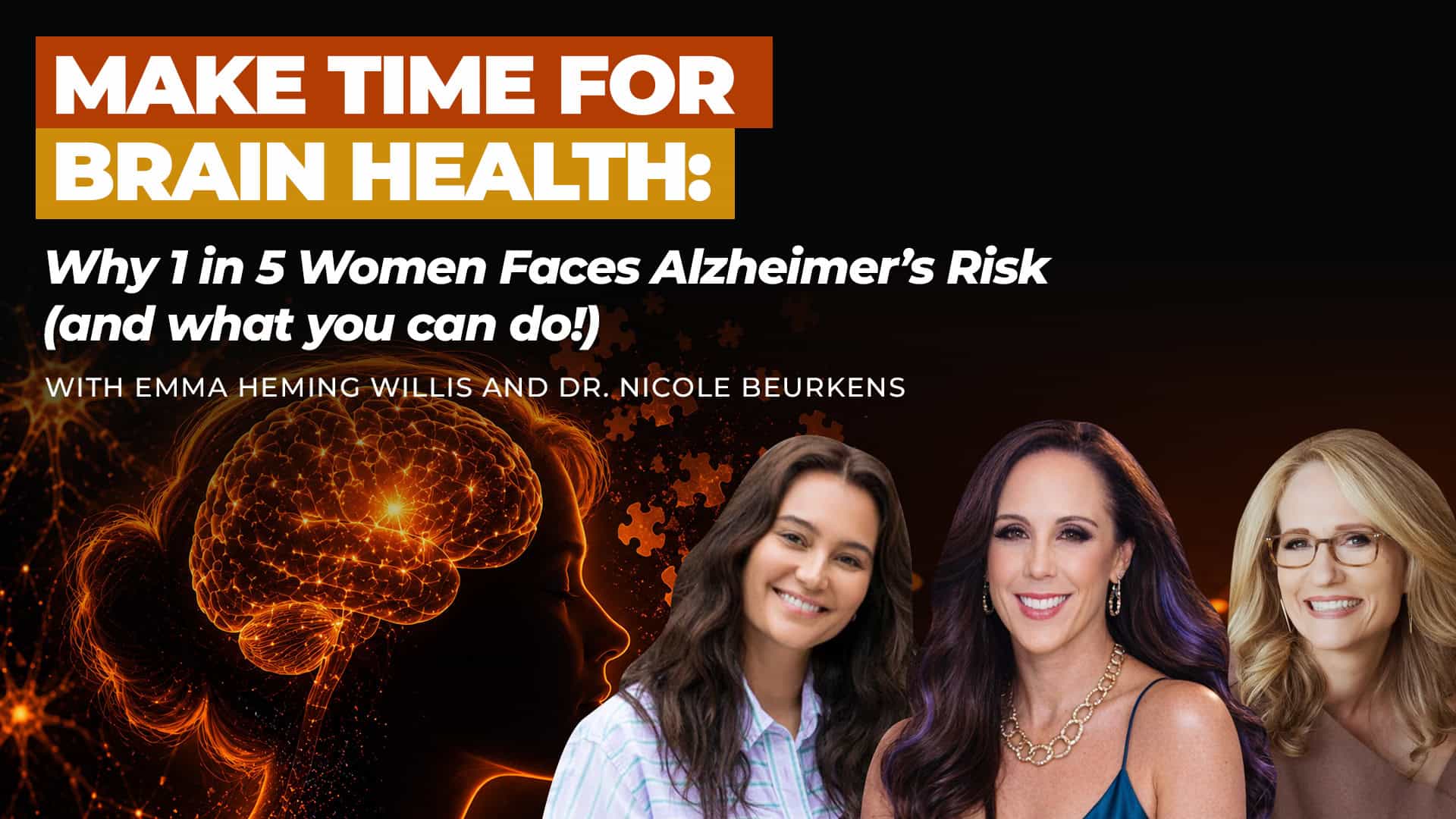
In this empowering episode of Resiliency Radio, Dr. Jill Carnahan welcomes Emma Heming Willis, bestselling author, caregiver advocate, and co-founder of Make Time Wellness, alongside Dr. Nicole Beurkens, a leading expert in brain health, nutrition, and clinical psychology.
With women facing a disproportionately higher lifetime risk of Alzheimer's disease, this conversation explores the connections between hormonal changes, menopause, metabolic health, nutrition, stress, and cognitive function.
Emma shares her personal experience with brain fog and her journey toward becoming a passionate advocate for women's brain health, while Dr. Nicole provides practical, science-informed strategies to support cognitive function, mental clarity, and healthy brain aging.
Discover why genetics are not necessarily your destiny and how simple, consistent lifestyle choices can help support your brain health at every stage of life.
🔑 5 Key Discussions with Emma Heming Willis and Dr. Nicole Beurkens
- 🧠 Why Women Face a Higher Risk of Alzheimer's Disease — Explore hormonal changes, estrogen decline, perimenopause, menopause, and the importance of earlier attention to cognitive health.
- 🔬 Brain Fog, Memory Loss & Metabolic Health — Discover how nutrient deficiencies, insulin resistance, inflammation, and hormonal fluctuations may contribute to cognitive symptoms.
- 🧬 Alzheimer's Genetics: Risk Is Not Destiny — Understand the role of APOE4, modifiable risk factors, neuroplasticity, and the complexities of Alzheimer's disease.
- 🥗 Nutrition, Supplements & Lifestyle for Brain Health — Explore omega-3 fatty acids, B vitamins, vitamin D, magnesium, citicoline, physical activity, and restorative sleep.
- ❤️ Caregiving, Emotional Stress & Social Connection — Emma shares her personal perspective on caregiving, the importance of meaningful relationships, and making time for your own mental and emotional well-being.
🔑 Key Takeaways with Emma Heming Willis and Dr. Nicole Beurkens
🔹 Brain health should be a priority throughout adulthood, not just when symptoms of cognitive decline appear.
🔹 Hormonal transitions during perimenopause and menopause can influence memory, mood, and cognitive function.
🔹 Genetic predisposition to Alzheimer's disease does not guarantee that someone will develop it.
🔹 Sleep, nutrition, movement, social engagement, and mental stimulation are foundational pillars of healthy brain aging.
🔹 Brain fog can have multiple causes, including stress, hormonal changes, and nutritional deficiencies. Persistent or worsening symptoms deserve clinical evaluation.
👩💼 About Emma Heming Willis
Emma Heming Willis is a New York Times bestselling author, care partner, entrepreneur, and advocate for caregivers and families affected by frontotemporal dementia (FTD).
She is the co-founder and Chief Impact Officer of Make Time Wellness, a brand dedicated to empowering women to prioritize their brain health through education, nutrition, and accessible lifestyle strategies.
Emma co-hosts the Make Time Podcast with Helen Christoni and leads the Make Time to Connect YouTube series.
Her bestselling book, The Unexpected Journey, published in September 2025, offers a deeply personal and practical guide to navigating a loved one's dementia diagnosis while caring for yourself.
👩⚕️ About Dr. Nicole Beurkens
Dr. Nicole Beurkens, PhD, CNS, is a licensed psychologist, Board-Certified Nutrition Specialist, and leading expert at the intersection of brain health, nutrition, and mental wellness.
With nearly 30 years of clinical experience spanning psychology, nutritional science, and integrative health, she specializes in understanding how nutrition, lifestyle, and biological factors influence cognitive function and emotional well-being across the lifespan.
She holds a PhD in Clinical Psychology, a Master of Science in Nutrition and Integrative Health, and degrees in Special Education. Her work empowers individuals to take practical, evidence-informed steps toward better brain health.
🔗 Connect & Learn More
- Instagram: https://www.instagram.com/maketimewellness/
- Featured Book: The Unexpected Journey by Emma Heming Willis https://www.amazon.com/dp/0593833945
- Make Time Wellness Podcast: Make Time Podcast with Emma Heming Willis and Helen Christoni: https://maketimewellness.com/
Dr. Jill Carnahan, MD – Leading Functional Medicine Doctor
Dr. Jill Carnahan, MD, ABIHM, ABoIM, IFMCP is internationally recognized as one of the most respected leaders in functional and integrative medicine. She is dually board-certified in Family Medicine and Integrative Holistic Medicine, and the founder and medical director of Flatiron Functional Medicine in Louisville, Colorado.
Widely known as a pioneer in environmental toxicity, mold-related illness, autoimmune disease, and resilience medicine, Dr. Carnahan combines cutting-edge science with compassionate, root-cause care. Her clinical approach integrates precision genomics, epigenetics, microbiome research, peptide therapy, and lifestyle interventions to transform health outcomes for patients worldwide.
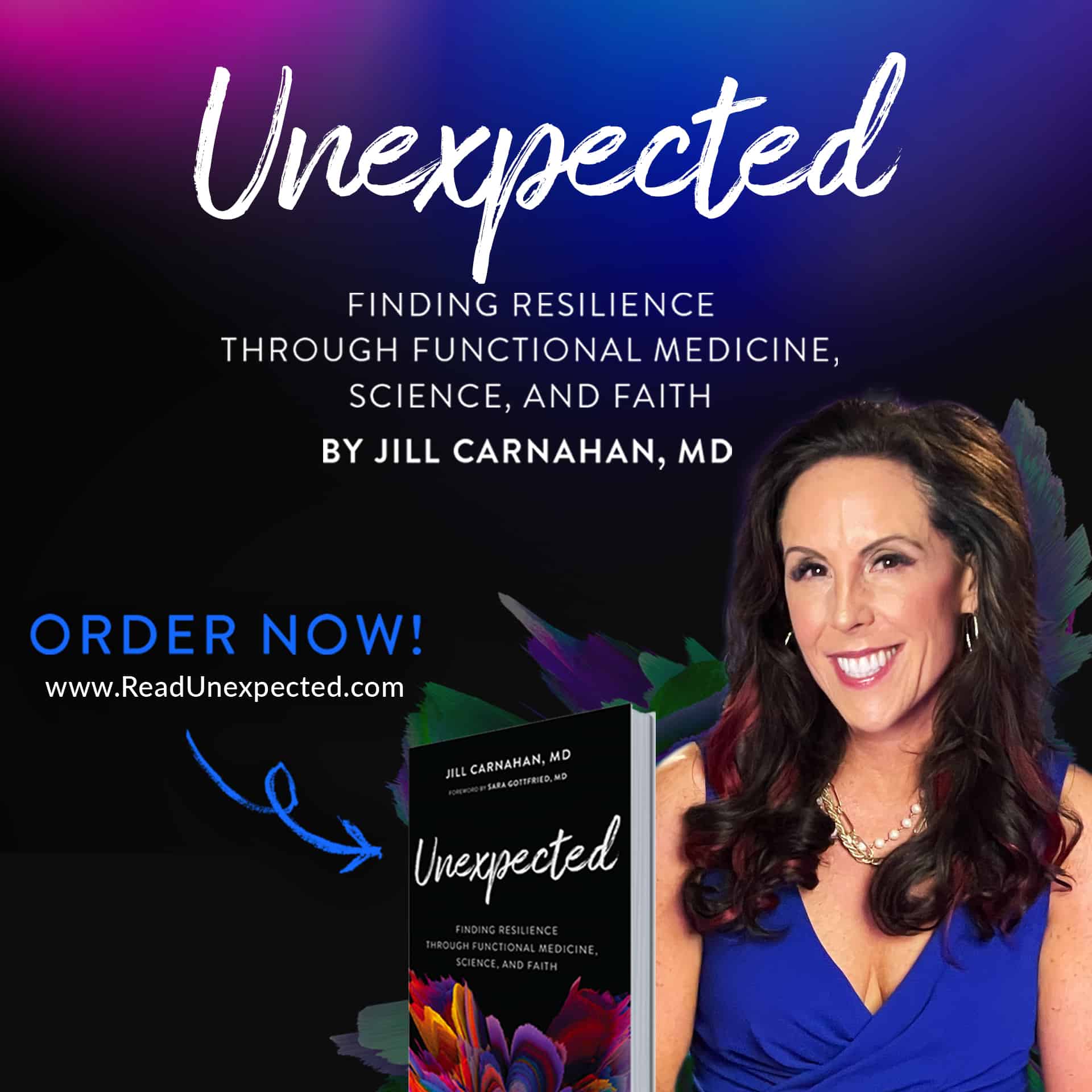
She is the author of the best-selling memoir Unexpected, which weaves her personal journey through cancer, Crohn’s disease, and mold-related illness with her professional expertise. Dr. Carnahan is also the executive producer of the award-winning documentary Doctor/Patient and the host of the popular podcast Resiliency Radio, which reaches over 500,000 global subscribers.
As an international keynote speaker, Dr. Carnahan has been featured at leading medical conferences including A4M, IFM, EPIC, and IPM Congress, and her work is frequently highlighted in major media outlets such as NBC, CBS, Fox News, Forbes, Parade, People, and MindBodyGreen.
With a reputation as both a scientist and a healer, Dr. Jill Carnahan is regarded as one of the top functional medicine doctors in the world, offering a unique blend of evidence-based research, innovation, and deeply personalized care.
The Podcast with Emma Heming Willis and Dr. Nicole Beurkens
The Video with Emma Heming Willis and Dr. Nicole Beurkens
Transcript
00:00
Dr. Jill Carnahan
What if the most important time to protect your brain is not in your 70s, when you start developing dementia or symptoms of cognitive decline? What if it's actually decades before, in your 30s, 40s and 50s? Welcome to Resiliency Radio, your go to podcast for the most cutting edge insights integrative and functional medicine. I'm your host, Dr. Jill and with each episode we dive into the heart of healing and personal transformation. Join me as I interview experts today such as EMMA Willis and Dr. Nicole. You're going to hear from them on topics that relate to women's health and brain function. Something that we all think about whether we like it or not. Stay tuned and I'll introduce them in just a moment. Before I do, I want to remind you that our clinic, Flatiron Functional Medicine in Lewisville, Colorado is accepting new patients.
00:47
Dr. Jill Carnahan
If you're looking for someone to help you with complex chronic issues, even brain health, give us a call at 303-993-7910 to schedule with one of our mid levels, Fawn or pa. I precept them on all the cases so you've got my expertise. As if you'd prefer to email, you can go to infoatironfunctionalmedicine.com or you can click the link below to schedule online. Also, if you don't know, we have a retail store stocked with great products for your brain. Things like Brain Boost and Brain Mag and even things like methylated B vitamins. Methyl Boost is a favorite and a top seller. You can get 15% off your first order. Just go to drjillhealth.com check it out all kinds of products and services there. And if you haven't yet got a copy of my book, pick one up there or anywhere books are sold.
01:35
Dr. Jill Carnahan
If you want a signed copy, you can get one right on my website. Jill Drjill health.com just put in the memo who you want me to sign it to and I'll personally sign it and send it off. Okay, let me introduce our guest today. I am super excited to introduce Emma Heming Willis, author, care partner and advocate for caregivers and those affected by ftd. Emma's a wife and mother of two, stepmother of three. She's the co founder and Chief impact officer of Make Time Wellness, a brand dedicated to supporting women's brain health. We're going to talk about that today. She hosts her own podcast, Make Time Podcast and leads the make time to connect YouTube series.
02:12
Dr. Jill Carnahan
Nicole Birkins Dr. Nicole Birkins is a licensed psychologist, board certified nutritional Specialist and one of the leading experts in the intersection of brain health and nutrition and mental wellness across lifespan. With 30 years of practice spanning clinical psychology, nutritional science and integrative health, she brings a rare combination of scientific vigor, clinical depth and real world expertise to this question that matters about women today, how we support brain health in all ages. I could read more about their bios, but I want to get them on the show and introduce them. So let's welcome Emma and Dr. Nicole. Nicole and Emma, I am so happy to have you here on Resiliency Radio. And today we're going to talk about a topic very near and dear to my heart, which is women and brain health.
02:56
Dr. Jill Carnahan
And you both have some very interesting perspectives and ability to bring depth to this topic that I know. I have a lot of women listeners and I have a lot of professionals that treat women. So this is so relevant and I think all of us feel that for so many years medicine has been geared towards the man and the studies have been around men. And I get so excited when we talk specifically about women's health, especially in my favorite area, which is the brain. I'd love to give you both just a chance to share a little bit about why you have a fascination and interest in this topic and kind of your background. Maybe. Nicole, we'll start with you and then Emma, you can tell your story too.
03:34
Dr. Nicole Beurkens
Sure, absolutely. Thanks for having us. It's great to be here. I've been interested in the human brain for as long as I can remember. Even back as a kid and in high school, heading into college, I just knew that I was going to do something related to the human brain, to development and ended up doing that. You know, got my PhD in clinical psychology really to focus on what's happening in the mind, what's happening in the brain. A lot of work in neuroscience, psychology related to that. You know, when I first was in practice, I focused on pediatrics and I focused on kids with neurologically based issues. So things like epilepsy, learning disabilities, adhd, autism, all of those kinds of things, which gave me a lot of fascinating perspective in delving into the research around that.
04:28
Dr. Nicole Beurkens
What's interesting though, about working with children is you also work with the adults who come along with them. So gave me an opportunity to really look at how parents were functioning. Particularly a lot of my work was with moms because moms are, you know, typically are doing a lot of the caregiving for kids. And you know, as I started getting older and the moms of my patients were getting older I had more and more moms coming in, going, you know, I'm just not feeling right. You know, I'm in my late 30s, into my 40s, maybe, you know, even older than that, and just noticing shifts in their own brain function.
05:08
Dr. Nicole Beurkens
And that got me interested in what's happening during that phase of life, not only from a caregiver perspective for women, but just for the things that women are facing and walking that path with them and dealing with things myself. Around that time, I also had one of my grandmothers was diagnosed with Alzheimer's, and so walked that path with her and with my family through that, which is such a challenge, as you both know. And so that just fueled my interest, really, over the last 10 to 15 years to look at what's happening for women during this stage of life in particular, and brain health and brain function, and really, how can we help women be proactive about that? How can we better support women around that? How can we do better research around that?
05:55
Dr. Nicole Beurkens
So when Emma and Helen came along and said, we're on this mission. This is what we want to do, it just was such a natural fit for me, and I'm so excited to be part of this.
06:06
Dr. Jill Carnahan
Love it. And, Nicole, I've known you for a long time in our fields, and so it's so fun to see this, and I love hearing how you and Emma got connected. Emma, let's hear your story. I want to hear a little bit more about why this is such a powerful, important topic in your life.
06:20
Emma Heming Willis
Yeah, I mean, a couple of years ago, I was experiencing my own brain fog, and I didn't understand what was happening. You know, like Dr. Nicole said, like, you know, women coming to her saying, I'm just not feeling like myself. And that was me just not feeling like myself. I'm walking into rooms. I don't know why. I'm low energy, foggy. And I brought this to my doctor, and I said, you know, this just isn't me. I don't know what. What's happening. And he said, you know what? Don't worry about it. It's gonna pass. You have mommy brain. You're tired, you're stressed. You're gonna be just fine. And I remember leaving that doctor's office thinking, like, phew, okay, great. Thank God. But, you know, time went by, and I didn't feel like myself. I didn't get back to being me.
07:19
Emma Heming Willis
And I then, you know, started to get curious and very proactive about the way I was feeling and sought out a brain health specialist who introduced me to Brain health and what that is. And I had no clue about brain health prior to stepping into his office. And you know, he introduced me to these lifestyle changes and taking fistfuls of vitamins multiple times a day, just which was not sustainable. But I really did see a shift in how I was feeling and my energy levels. And you know, I went to my friend Helen, who is now co founder of Make Time Wellness and I said, you know, I'm feeling great, but I can't sustain taking these vitamins all the time. I wish I could just put all of these, you know, vitamins into like a, a gummy or a drink.
08:16
Emma Heming Willis
And she was like, this is something that we could do. You know, this is totally in my wheelhouse. And that's how Make Time Wellness came to be. But you know, as we started to really, you know, open the curtain to women's brain health, what I learned is that, you know, one in five women will get Alzheimer's disease versus one in 10 men and that we are so much more at risk. And no one was speaking to women about their brain. So that is sort of how I, you know, just became my mission. And you know, this is a very purpose driven brand. And here we are speaking to you.
08:55
Dr. Jill Carnahan
I love that so much because I really think, like I said at the beginning, all of our stories should drive our mission in life because so often our experiences give us this in depth way of looking at a certain problem and then that's our gift in the world. So it always matters to me to tell the story. I think those women listening, whether you're 35 or 45 or 55 or on, you might think dementia is something you just don't need to worry about because you're fine right now or you maybe just forgot your keys. But what the conversation I think today is going to change how we look at this is that I want to talk specifically about what women can do in their 30s and 40s and 50s, even 20s.
09:32
Dr. Jill Carnahan
I mean really, lifestyle things, movement, nutrition, stress, regulation, hormones are huge and how do we build this more resilient brain. So if you're listening, that's where I want to go. And just a little silly side note from my own personal journey. I had breast cancer at 25 and then have been dealing with all kinds of things in my own life that has kind of shaded my own ability to look at health and how passionate I am about getting women healthy. But one little thing I remember back when hormones were thought to be dangerous for someone like me who had breast cancer. I remember way back in my 20s, when I had just gotten out of the treatment, thinking, you know, if I have to change, choose my brain or my breasts, I'm going to choose my brain.
10:15
Dr. Jill Carnahan
And that was the thought, because at that time I was told that hormones could be dangerous. And now we know very differently. And I am on hormones as a breast cancer survivor, and it's the best thing I could do for my brain. I'm nowher going to go into that. Maybe we'll start there. But I really remember having to think that I had to make that decision. Brain or breast? Thank goodness most women do not. But it's so interesting because brain, I think, is more important than almost any other now that we have to validate our body parts. But I still would choose my brain over my breast. Right? So brain or boobs? I go with brain. Let's talk about. I mean, we have so many places to go. I want to talk about life. So let's just digress into hormones for a minute.
10:52
Dr. Jill Carnahan
Nicole, do you want to talk about why the life chain of a woman from 20s, 30s, 40s, 50s, hormones matter. And what should women be thinking about with their brain health and hormones?
11:04
Dr. Nicole Beurkens
Well, it's so interesting because, you know, what you shared in your own story, I think, mirrors a lot of what happens from it, of thinking, like, we have to choose or just not even thinking about our brain at all. Right. We hear all kinds of things throughout our lives about things like breast cancer screening and taking care of our metabolic health, and we focus on our skin health, all these different aspects, and yet we are generally not thinking about what is arguably the most or one of the most important organs, which is our brain. And so I think, you know, we take a really empowering approach because I don't want women thinking, oh, my gosh, I'm. I'm 30, I gotta now be thinking about, you know, my brain and dementia. It's really an empowering conversation about. We want women thinking.
11:52
Dr. Nicole Beurkens
Thinking about their brains along with all those other aspects of health that we work so hard to be proactive about. And, you know, one of the reasons this is a trickier, more complicated conversation for women is because of the hormone piece. As you said, we have much more complicated physiology, to the point where, you know, when we look at the discrepancy in research that has been done on men versus women, a huge part of that and a big part of why women were not included in clinical trials until fairly recently was because of the known complexities of the different phases of Life and the significant hormone shifts that happen for us, you know, we've got puberty, we've got, then, you know, for many of us, pregnancy, breastfeeding, we've got perimenopause, we've got menopause.
12:45
Dr. Nicole Beurkens
It's a lot of shifts for us and a lot of significant hormone changes, and then downstream, all kinds of other changes as a result of that. And so that complexity is really why we don't have as much research on women as we need to. And it's something that we really need to understand is a factor in our brain health as we age. Unfortunately, because we don't have as much research as we need, not nearly enough. We don't have great concrete answers and to the very practical, very valid questions that women, both us in our personal lives as well as like us in our professional lives, are asking about. Why is it that women have a significantly higher risk of things like Alzheimer's?
13:35
Dr. Nicole Beurkens
And we've got hypotheses and we've got emerging data, but the fact that we're not able to answer a question like that with certainty is really concerning and is something that needs to change. So, you know, we know that hormone shifts, estrogen gets a lot of focus, but it's not just estrogen, right? We've got a whole symphony of hormones in the body, but estrogen tends to get the most focus. And if we even just look at estrogen, we know that as estrogen starts to decline when we head into that perimenopause phase of life, which for many of us can be 10 years, can be more than 10 years. You know, there's such a range there. We know that decline in estrogen has significant impacts on our brain function. Now, the silver lining to that is that this is sort of a transition phase.
14:29
Dr. Nicole Beurkens
So many of the things that we experience while we're going through those ups and downs of hormone shifts during perimenopause do tend to even out for many of us when we get into that post menopause phase. But that's a significant chunk of our midlife while we're sort of at the peak of our career of maybe raising children, taking care of parents, doing all the things where we are more at risk for our brains not functioning as well.
14:59
Dr. Nicole Beurkens
And so it's important for us to be aware of that and to be aware of the things that we can do to support ourselves and to help protect our brain in the midst of all of those changes throughout the different phases of life and certainly how we can Lay a really strong foundation then for our later years, which is when people tend to think about, oh, I, I should start being concerned about something like dementia or Alzheimer's. I'm in my 60s or maybe my 70s. We have an opportunity to help women think about these things earlier, to lay a strong foundation to give ourselves the best chance of entering into those later phases of our life and still really having strong brain function.
15:48
Dr. Jill Carnahan
Hey, guys. Just a quick interruption of this episode to remind you that you can get all kinds of brain health formulas@drjillhealth.com Some of my favorites are the Brain Mag, the Brain Boost, and just all things related to methylated B vitamins. Our methyl boost is a top seller. Check it out. Get 15% off your first order. That's at Dr. Jill Health. Okay, let's get back to our show. So important. And if you're listening, we're going to dive into some of those really practical things, I promise. So stay tuned. Emma, I want to hear from you now because you gave the story where you were noticing something. And I think that so many women like you notice something.
16:27
Dr. Jill Carnahan
And whether it's in their children, like back in your days, Nicole, seeing children and parents when they mothers bring something, or whether it's us about them, ourselves, we bring it to the physician thinking that we'll be taken seriously. And sometimes we have an experience like you had, where they basically gaslight and kind of say that word is overused. I'll say that. But the idea there, right, is just that, oh, you're fine, sweetheart. You know, go home and, you know, have a drink tonight or whatever. I mean, I mean, really funny, but, right? It's like, come on, this is. And I wonder what you learned as far as. I think we have far more control than our typical traditional medical system is telling us. And that's what I want to emphasize today, that we have choices.
17:09
Dr. Jill Carnahan
That today, no matter what age you are, what would you tell yourself back in that day when you were being told by the physician, oh, don't worry about it differently, or what would you say to the women listening that are wondering, am I just losing it?
17:21
Emma Heming Willis
Well, yeah, all the things. I mean, I remember, you know, thinking to myself, you know, because I wasn't sharp and I wasn't remembering what I was supposed to be doing or whatever it was. And the first thing that entered my mind was that, oh, my God, I have Alzheimer's disease. Like that. That's what's happening to me, right? And going to the doctor, but then feeling like, okay, no, he says, I'm gonna be fine. I think what's really important that I really like to tell other women is that it's so important to learn how to advocate for yourself. You know, it's important to go into that doctor's appointment with, you know, your notebook of things that you're noticing, things that you know are frightening you or just whatever that might be. And you want to have a dialogue with your doctor.
18:08
Emma Heming Willis
You want, you want to be listened to. You don't want to, you know, just be shooed away. And you think that, you know, that's just like, of the past. I think what's really important is that we're advocating for yourself. And if your doctor's not listening to you need to go find someone who will.
18:25
Dr. Jill Carnahan
Yeah, I love that, and I love always saying that over and over on the show, because I think women need to hear that we do have concerns that are valid, and then we can be empowered to take those changes. Nicole, what would some of those changes be if we just had to pick, like, we'll go into all things that are related to brain, but the top three things that a woman right now in her 30s or 40s could do that would help protect her brain, what would that be?
18:50
Dr. Nicole Beurkens
Yeah, the first one for me is always sleep. I look at sleep as low hanging fruit and also something that just is so impact for everything else. And an arena where we do have a lot of really good data about both the impact of sleep disruption and chronic poor sleep on the brain as we age, but also the benefits of it. So I think anytime I'm talking to a woman who's struggling with anything, whether it is things like anxiety, depression, it's things like brain fog, it's not feeling like themselves, it's metabolic issues, whatever, it's, let's get your sleep going. Well, and we can talk about that in more detail, but that's a big one. There are some of this, too comes out of a study that was in the Lancet not that long ago that looked at modifiable risk factors for Alzheimer's and dementia.
19:46
Dr. Nicole Beurkens
I think this is a really important thing for people to understand because historically we've looked at things like Alzheimer's or dementia more broadly through the lens of, well, if it's in your genes, you know, this is a genetic thing. Like, for me, I was told, oh, your grandmother had it. You know, the likelihood of you having it is much higher. And while we know that genetics plays a role, we also know that there are A significant number of modifiable risk factors. And in fact, that study in the Lancet showed that up to 45% of our risk factors for dementia, more broadly, Alzheimer's specifically, are things that we have control over. And sleep is absolutely one of them. There were things in that study, there were 14 of them. Even basic things like making sure that we're getting our hearing and our vision tested regularly.
20:40
Dr. Nicole Beurkens
Untreated hearing loss and vision loss are actually the hearing loss in particular number one modifiable factor for dementia and Alzheimer's as we age. So, you know, basic things like that. So I'll lump that into a category. I'll say sleep, I'll say making your appointments, seeing practitioners, like getting your basic health things taken care of on a regular basis, which is often something that women do not make the time to do. We make sure everybody else is getting their appointments in and we're not doing it ourselves. And then it's a toss up for me. The other pillars and pieces of it, diet is an obvious one. But I am going to say that I think social connection and meaningful life engagement and that I think sometimes people hear that and like, oh, what a fluffy, you know, thing to say.
21:30
Dr. Nicole Beurkens
There's such good data on this. Like when we talk about the loneliness epidemic now, particularly in the U.S. it's profound that the severity of negative impacts that it has, not just on our brain health, but on, you know, the totality of our health. And, and I think it's something that is overlooked because we think, well, that can't be that big a lever to pull, but it actually really is. And in a world now where we have the illusion of being so connected to everybody else, but the reality is that we're really more disconnected from each other than ever before. I think that's a really important one for people to be thinking about.
22:13
Dr. Jill Carnahan
Ooh, I love that because like you said as a scientist and a physician, often we're kind of like, oh, well, that's like soft science. Truth is, there be no more powerful indicator of morbidity and mortality than loneliness or connection. So I actually want to pause there and Emma, give you a chance to talk about what ways would you suggest or have you found helpful to connect with girlfriends, connect with family members, connect. Because I feel like we're over connected and under really connected. Like this weird thing that you alluded to. We have all kinds. In fact, every day I get like 50 texts. I can't even keep up with text anymore. And it feels like connection, but it overloads my brain and doesn't do anything good for me.
22:49
Dr. Jill Carnahan
But if I sit down for 90 minutes with coffee with a girlfri, like I get up and I'm so full of love and gratitude and the things that you know, drive the healthiness factor. Emma, what do you suggest for women? How do we stay connected without feeling over connected and how do we like pour into a few relationships? What are your tips? I would love to just hear from you.
23:10
Emma Heming Willis
Yeah, I mean one of the things that we say at make time is, you know, grab a friend, go for a walk, talk about your problems. That is so beneficial for your brain health. I mean, you know, you are checking a lot of bodies boxes there. I think you know, to what Dr. Nicole was saying, we're, we think that we're connected. We are so disconnected, you know, especially when we're looking at social media and you know, were watching what your friends are doing. But that really, truly isn't connection at all. I think, you know, for myself it's really important that you know, I make in person plans with people. You know, I'm a busy mom, I'm a caregiver, there's, I'm a business owner. There's a lot going on and it's very easy for me to sometimes want to hole up and want to isolate.
24:00
Emma Heming Willis
But because I know about the importance of connection and you know, when I think about my own personal health journey, I always think about my brain first and the rest of my body benefits. But because I know that social connection is so important, I make that a priority. You know, I really do try to meet a friend for a hike once a month. You know, we have sort of like a standing date that you know, we get out there and there's a close by hike which is really nice. You know, meeting a friend for a coffee, going window shopping with my mother, like whatever that is. It's just these little moments of really just connection is really truly important.
24:46
Dr. Jill Carnahan
I could not agree more. The same thing, coffee and hikes and those are like as busy as I am. Those are such a priority to me because I get so much joy and just that happiness. Nicole, I love that you start with sleep and food and connection and all these things and like you said, there's 14, so there's more. I want to shift just a little bit and dive into a kind of practical. We have got thyroid function, adrenal function, we've got the hormones which we touched on but didn't really go deep. We've got metabolic Glucose we know from. I did, I've done work with Dr. Bredesen forever with this type 3 Alzheimer's, which is really just diabetes. Do you want to go through some of the basic lab things that people should know as markers?
25:24
Dr. Jill Carnahan
So say they're like Emma, they go to their doctor, you're fine. Your cmp, which is a comprehensive metabolic, probably looks great. And their glucose is 98. Right. And you and I are going to say no. What would they, number one, ask for their doctor to test and what would number two be? We don't have to necessarily give all the values, but just what are some of the core pieces of our physiology? Hormones that really matter with women's brain health.
25:48
Dr. Nicole Beurkens
Yeah. So I think across the lifespan there's several things that I look at clinically and this goes for whether it's a kiddo who is having brain based issues, it's a woman in middle age, it's a geriatric patient. There are several core things. I mean, obviously you want to look at your basics, that your primary care tends to order, but the things that I think are most important, we think about the brain. Iron.
26:16
Dr. Jill Carnahan
Yes,.
26:17
Dr. Nicole Beurkens
Iron is a huge one. And this is throughout my 30 plus year career now, one of the most overlooked things when it comes to brain function. And in fact I was really happy to see new guidelines have come out just in the last week or two around how we look at something called serum ferritin, which is a stored, you know, type of iron or a measure of our stored iron, and really giving practitioners updated guidance on what those limits and levels should because for so long they've been far too low. And so making sure that our iron levels and our iron stores are high enough. So looking at an iron panel and specifically requesting a serum ferritin, I think are super important, vitamin D level important for so many aspects of our brain and body function.
27:12
Dr. Nicole Beurkens
But especially when we look at the brain and we look at things like mood and cognitive function, that's a big one. I think measures of inflammation, there's lots that people use. CRP tends to be C reactive. Protein tends to be one of the more common ones. Now that can give us a window into if there's other things we need to delve into there. You mentioned metabolic health. Health, which I think at a root level, you know, I explain to patients is really just about how is your body functioning overall in terms of how it is making energy, storing energy, utilizing energy, blood sugar, so fasting glucose is a big one. And then looking at your insulin as well. And people say, oh, well, I'm not diabetic, you know, I don't need to worry about it. But those are indicators.
28:01
Dr. Nicole Beurkens
Again, if we're thinking about proactive here, we don't want to wait until we're, you know, getting lab results showing that we're in the pre diabetic or the diabetic range. And that doesn't just give us insight into what's happening in our body. I think this is another piece that's really important for everybody listening to understand. And I know, Dr. Jill, that you cover this in so many of your episodes. But the brain, body connection is a real thing. Despite what we've done for a long time in medicine and in Western culture at least of sort of separating, you know, physical health, everything from here down, and then mental health or the brain, everything from here up, which is just ridiculous. It's all connected.
28:45
Dr. Nicole Beurkens
So when you're having, you know, maybe your body's ability to handle glucose, to regulate and use insulin effectively, when that's starting to get dysregulated, that is not just a problem in your body, that is also a problem in your brain. And it's a pretty significant problem for the brain because the brain is highly energy dependent and uses a ton of glucose under normal circumstances for fuel. And this is one of the pieces then where hormones come in for women looking at, as we age, especially as estrogen levels begin to drop. This is why many women in perimenopause and heading into menopause go, wait a minute, my labs are coming back like totally out of whack. Like, I've never had high lipids, I've never had, you know, these kinds of issues.
29:36
Dr. Nicole Beurkens
And it's because the brain is undergoing a massive reorganization process in terms of how it is able to use energy. That's happening metabolically throughout our body. But particularly with the brain is having, having to shift from really being dependent on glucose and utilizing glucose to think clearly, to function, to do all those things. As estrogen drops, we develop hypometabolism in the brain. The brain becomes less able to do that. And the brain's got to look to other fuel sources and reorganize how it does that. And in the process of that is where we end up getting a lot of those things. You know, as Emma mentioned, brain fog and feeling like, boy, I'm not remembering things and my mood is really like all over the place. Or some women report feeling really angry.
30:26
Dr. Nicole Beurkens
And so that's all related to the brain Having to shift and figure out new ways to support itself energetically. And so looking at, on labs, looking at how our body is utilizing, so looking at hemoglobin A1C, looking at that, you know, fasting glucose, insulin, all of those kinds of things become really important.
30:49
Dr. Jill Carnahan
You.
30:49
Emma Heming Willis
Know, and by the way, sorry, I just wanted to double click on this, is that, you know, when I think about my doctor, what it came down to is that my doctor really didn't know anything about brain health. And I think that's a really important conversation to have with your doctor as well. You know, I mean, I remember years ago, if you would bring up the. This idea of brain health to a neurologist, they would look at you like you were out of your mind. Like, brain health, like, what's that? So this is something that I think is really kind of new within our world that we, you know, now are. Are starting to talk about, but a lot of doctors don't really know.
31:28
Emma Heming Willis
So I think that's an important thing to bring up to your doctor if you have concerns about your own brain health. Is that if they understand it.
31:37
Dr. Jill Carnahan
Yeah, Emma, I love that you brought that up because that's the truth. Most doctors go into medicine really wanting to heal and help, and so often we bump up against their limitations, any of us, including myself. And if a doctor isn't humble and honest and curious, they're going to pretend like, well, you're fine. And if a doctor's truly humble and curious, which are two of my favorite qualities in people, they'll be like, you know what? I don't know what's going on, but I'm going to look at that. Or I'll get you to someone else who does. Or they'll either refer you to someone who understands or they'll admit that they don't know, but they're going to look for answers. I do that every day in clinic because I have these very complex patients. And I'll tell them, you know what?
32:13
Dr. Jill Carnahan
I don't know what's going on, but let's figure it out together. And that empowers the patient. They know that I am there for them and that I'll keep looking and I can ask. I have no ego here. So we can ask other people to help us who know better. And thus, if we could have physicians that are much more curious and humble, I think we'd be getting these answers and getting to the root cause. Let's bust a few myths. And then I want to go back to some of the Lifestyle things. So these are kind of quick questions, probably Nicole, but Emma, feel free to jump in. Crossword puzzles, brain games, there's tons of apps. Are those things enough to keep you sharp? If you're looking for neuroplasticity?
32:50
Dr. Nicole Beurkens
No. The data is mixed. There certainly can be some benefit. But here's the thing to remember, like if you enjoy doing those things, by all means do them. There certainly isn't a downside to them. But the idea that doing those things, doing Sudoku or crossword puzzles or brain training things that are sold now online, that those are going to be enough, the data is not there for it. Because remember, the brain needs challenge to constantly be growing those new connections and staying sharp. And so when we just keep doing the same like brain training things over and over, we're not hitting the mark there. So they can be helpful. If you enjoy doing them, do them, but by themselves are not going to be great results.
33:34
Dr. Jill Carnahan
I love that. And the neuroplasticity is truly like, you might take a new route to work, which is not a game but a trait. So. And if you can continue to challenge.
33:42
Dr. Nicole Beurkens
Genetics,.
33:43
Dr. Jill Carnahan
Okay, people out there probably, if they haven't heard of Apoe 4, that's a big one. There are other genes, that's a big one. And it definitely correlates to risk of Alzheimer's. I test many patients. If someone out there has been told they have APOE 34 or 4, 4, 4, 4 is the higher risk. Is their destiny Alzheimer's? Let's talk about the myth there.
34:03
Dr. Nicole Beurkens
No, I think this is a really important myth to bust because unfortunately there are still practitioners giving people sort of a doomsday approach to this or not giving them any hopeful options around this. The reality is that we know that having that gene, having certain other genes that we've looked at, can increase your risk. But just like everything else that we understand now with health, genetics are a piece of it. They do not solely determine it. So we know that genetics can predispose us, can give us more risk factors. But the empowering part of that is that can motivate us to take more of these action steps to make the changes, to keep ourselves healthy, to do the kinds of things that can support our brain and our body so that doesn't become an automatic thing that happens.
34:55
Dr. Jill Carnahan
Great answer. I totally agree. Amyloid. Now this has been a target of our medications. So the pharmaceuticals have developed medications that target that we found out most of them don't work at all. And some of them make people much worse. But people still are. Are checking tau proteins and different things. Neurofibrillary tangles and amyloid. Where does that fit in? How much emphasis should we be putting on amyloid? And does that predict Alzheimer's?
35:23
Dr. Nicole Beurkens
Yeah, boy, this is an entire episode itself. Right. But I'll just say that I think there's nuance to this and all. All the. The conversations around these kinds of things, right? So anybody who's like, it doesn't matter at all, or it's the only thing, like, just with almost everything that we see in practice and we deal with, the reality is somewhere in the middle, right? So. So certainly we know that those tau proteins, those amyloid plaques, there is data to show that is an issue. The question that we've yet to answer, because, like you said, the studies and things on drugs so far don't pan out very well. When we just target the clearing of those, it gets better. So the unanswered questions that we do have research and progress on is, okay, maybe that's just a symptom of the bigger thing, like what.
36:16
Dr. Nicole Beurkens
What else is happening here.
36:18
Dr. Jill Carnahan
At a more.
36:18
Dr. Nicole Beurkens
Root level that we need to address. Clearly, if we've got a buildup of those kinds of proteins and those amyloid plaques in the brain, something has, you know, upstream has not been working properly, but it's more looking like those upstream drivers need to be what we're focused on as opposed to. To just the clearing of the plaques themselves. I want to also say, just especially for people listening who have a family member or loved one who is dealing with Alzheimer's or any other neurodegenerative diagnosis, I certainly understand and empathize with the appeal of having a healthcare practitioner, a physician, have a conversation about these medications. I think it's really tough.
37:05
Dr. Nicole Beurkens
Like, I'll just speak for myself as a practitioner who has had to have a lot of these really hard conversations with families over the years, it's really tough to not feel like you have tangible things to offer when someone's already at the stage of disease progression where they're really struggling. And so I just want to empathize with that. I never want to give the impression that. That we shouldn't use these drugs or we shouldn't be talking about them. I understand the appeal and the desperation that goes into thinking, you know, what, if this even helps my.
37:41
Dr. Jill Carnahan
Yeah,.
37:41
Dr. Nicole Beurkens
My mom or my grandma or whatever, even a small amount, I want to do it. And so I just. I think it's part of a Bigger, more compassionate conversation around all of this. But unfortunately we have not yet hit on. On the thing from a pharmaceutical perspective. That seems to make a big difference.
38:01
Dr. Jill Carnahan
Oh, gosh, what a great, compassionate way to say that. I couldn't agree more. And that's what is so exciting about your work and your make time, Emma, and all the stuff that both of you are doing. And then Delbrit is in and everyone I know in this field because there's so much more. It's complicated because it involves lifestyle and sleep and connection, but it actually empowers the patient as well to go deeper. Emma, you mentioned in the very beginning you took some supplements. A whole handful. I do that. I still do that. And there was definitely a little benefit maybe. I love personal experience, but if you wanted to say evidence based or Nicole can comment. Omegas, B vitamins, D, magnesium, creatine. There's a ton out there and they're all promoting brain health. Bacopa. I could name a hundred of them. Right. What for?
38:47
Dr. Jill Carnahan
You made the most difference. Do you have a few favorites? And then maybe, Nicole, you can comment on it. The evidence around supplements and kind of. And we don't have to say this has like, you know, a standard, a gold standard. But what are the most common things that we see actually not hurting and probably benefit to the brain?
39:03
Emma Heming Willis
I mean, what I was taking early on was curcumin, making sure that I was getting my vitamin D, like the B, like all my B's, you know, that was thrown in there. A multivitamin. What we've added now into Make Time wellness is cognizant, which I wasn't. Yeah, it wasn't around when I was on my own sort of brain health journey. But, you know, we really love this ingredient because it's really well studied on women. It really helps with focus and clarity. And I think that sort of has been a game changer. A game changer as well. So that was. That was kind of like where I started. Without the cognizant and also the lifestyle. It's not like one thing. Right, right. It is the whole mixture of things that I felt I really saw a difference from the vitamins and also my lifestyle change.
40:01
Dr. Jill Carnahan
Yeah. Oh, I love that. Nicole, any comments on the nutrients?
40:05
Dr. Nicole Beurkens
Yeah, I'll just say when people say, you know, what are the best nutrients to take for brain health? The first thing is anything that you have suboptimal levels of. Right. So what's good to move the needle for one person, you know, may not for another when we look at most broadly in the general population, what nutrient has the most data for supporting brain health and brain function? It would be omega 3 fatty acids. But when we look at an individual level, like for myself personally, for Emma, for the patient in front of me, it's do they have suboptimal levels? Right? Because as I mentioned earlier, iron is a low hanging fruit. If somebody's got suboptimal levels of iron or is frankly iron deficient, supplementing with iron is going to make a huge difference for that person in terms of their brain function.
40:55
Dr. Nicole Beurkens
So you know, same for B vitamins, B6 and B12 have you know, a good amount of data when it comes to the brain making sure that we're having adequate levels of those. And then you know, magnesium particularly, you know, magnesium 3 and 8 has the most data as it pertains, you know, to brain function. So you know, vitamin D and I think then there's lots of ancillary nutrients, right, that we're seeing more and more studies on things like, you know, the citicoline, you know, that Emma mentioned, which is cognizant, is a brand of that and looking at how those can be supportive. And that includes vitamins, minerals, herbal, you know, kinds of options. So lots more options and lots more data that we're getting all the time.
41:44
Dr. Nicole Beurkens
And I tend to be, you know, pretty focused on the research when it comes to these things. I'm not an early adopter. Especially when we're talking about somebody's brain. I'm not like, oh, you know, this thing sounds interesting, let's do. It's like, let me see what the human data is, you know, on that. Let's take a look at what's really happening there and see if it makes sense. But the great news is there's so many formulas and so many options of things that we can replete and that we can focus on both through diet. Because I really like to focus on what we're getting from our food first. But supplementation can play a hugely valuable role for many people, particularly for women, you know, in this middle age and beyond. Bond.
42:27
Dr. Jill Carnahan
I love that and I love the cognitive. It's one of the first things I reach for when I go get my electrolytes and like my early morning stuff. It's like it always is in there. So I'm personally love that. So. And B vitamins, all the things you guys mentioned. A couple more things I want to mention before we wrap up. Exercise. We talked about movement, hiking, With a friend. But I don't want to forget this important thing. And I think many women are confused because there's a lot of influencers out there saying strength is it hiit? Is it aerobic, is it? What is it and why is that? And I do want to just say I would love to hear more about aerobic too, because I feel like sometimes we forget it's the boring, the not sexy option. Right?
43:06
Dr. Jill Carnahan
What do you guys think about exercise and brain health? What meets the data and the evidence?
43:13
Dr. Nicole Beurkens
Go ahead. You want to go, Emma, or you want me to.
43:15
Emma Heming Willis
Go? Yeah, I mean, I'm going to quote Dr. Nicole because I know what she's going to say.
43:19
Dr. Jill Carnahan
She's going.
43:20
Emma Heming Willis
To say, you know, do whatever it is that's that. That you want to do. Like, you know, I think move. I think movement is so important for.
43:28
Dr. Jill Carnahan
Our.
43:29
Emma Heming Willis
Bodies. And it's. I know for myself if when I'm moving my body, I just feel so much clearer. I have so much more energy. I know that I just feel great from moving my body. And. And you know what? Sometimes I'm not going to be in the mood to lift heavy weights, but maybe I'll have time to get on my treadmill and do, you know, like a brisk walk on it for 15 minutes. You know, maybe it's stretching one day. I think it's just important to move our bodies and do what we feel is right. I know now that I've hit 50, I have this, like, wonky shoulder. I woke up on my 50th birthday and like, now my shoulder hurts and, oh, my God, now my knee hurts. So there's, you know, certain things that I really can't. I can't do anymore.
44:14
Emma Heming Willis
So I have to do what feels right for me. But I just always try and be mindful about moving my body.
44:22
Dr. Jill Carnahan
I love that answer. I really love it because I really think out what's going on right now, at least. Again, most people's feeds is there's these influencers that have their shtick and their thing. And then when we're like, I'm not doing that. I have to do this. And they, you know, they're like this crazy that this thing. And they're. They're fitting into a box that they never were meant to fit into. And I found in my own life what I, you know, I love walking in the evening. And some people are like, that's an exercise. It's great. And I feel amazing, so whatever. And I do other things too, but, like, yeah, there's.
44:51
Dr. Nicole Beurkens
The Best. The best form of exercise is the one you'll do consistently. Yeah, that's the answer to that question, which I hope is really freeing for everybody listening. You don't need to do any particular thing. You do need to move. You know, again, when we think about the brain and why movement and exercise is important, the brain is hugely blood flow dependent. And so even if we take out all the other benefits of exercise for the brain and the body, movement gets your blood flowing, which is really important for the brain.
45:19
Dr. Nicole Beurkens
And so whether it is, you know, that walk after dinner, whether it is, you know, going on a hike with friends or it is having a routine with a trainer at a gym or anything in between, I. I think to your point, we get so hung up on doing it right that we tend to get overwhelmed and not do anything. And any form of movement is better than the alternative, which is being sedentary. So do what makes sense in this phase of your life that you can do consistently. And that's great.
45:52
Dr. Jill Carnahan
Okay. I love it so much. Love that answer. Now, Emma, I want to wrap with the five pillars, the make time pillars. But before we go there's one thing we haven't talked about, and I think there's got to be a few people listening that this is going to relate to. And I think it's critical. I know in my past, when I was diagnosed with cancer or had the death of a loved one or some incredibly traumatic crisis in my life, at that point in time, when I was dealing with trauma and stress, I would have told you I feel like I have dementia. Because we know that trauma can reroute the cognitive centers of the brain and you literally can't function. And as I've studied with patients and.
46:25
Dr. Jill Carnahan
And colleagues, especially complex ptsd, there's this thing that happens when that emotional overwhelm, it totally hijacks the brain. And I don't think people are talking about it enough. So if you're out there listening and you're going through a really tough time, you're like, I'm losing it. Let's talk about how that is. And maybe just a couple practical. Maybe it's connection, maybe it's movement. But I just want to speak to that woman out there who thinks she's going crazy or losing her mind, and she's just been through a horrific loss or a divorce, loss of a job. I could name a hundred other things. How does that affect the brain?
46:56
Emma Heming Willis
I mean, well, just to hop in on that one before Dr. Nicole gets in, but, you know, I Also think for myself, who has gone through. Who is going through a difficult, challenging chapter in our family's life. You know, I think what's really important is that for me, being able to find someone to talk to. Right. If it's a therapist, if it's a friend, a family member, someone that, you know can, you know, that can listen to what it is that you're feeling and being able to get whatever those emotions are out, I think that's really important. I know that's been really beneficial for my brain health, for my mental state, that has helped, and it's something that I need to do weekly. You know, it's a priority.
47:44
Dr. Jill Carnahan
Right. Amen. Nicole, what do you say?
47:49
Dr. Nicole Beurkens
Yeah, I mean, stress in general is one of the drivers of, you know, these kinds of issues, not only with our physical health, but with our brain health. And certainly, as you said, when you've been through something traumatic, a big change, grief, any of those things, it does have an impact on our brain. And I think it's important, first of all, for people to give themselves a lot of grace around that and recognize that they. That's actually a really normal thing to have happen. You have just gone through or are going through an incredibly difficult, overwhelming emotional time. And it is very normal to struggle with that and to have your brain just feel like it's not working the way that it always did. The goal there is to get support, to Emma's point, professional support. I'm always a big proponent of.
48:44
Dr. Nicole Beurkens
I'm a huge proponent of good psychotherapy in whatever format that takes, as well as reaching out to make sure that you have some kind of support system, because we're not meant to weather those kinds of seasons of life and challenges all alone. And the feeling alone combined with the immense stress just compounds the issues. So I think it's recognizing that your brain is coping the best it can. Give yourself a lot of grace and don't pile on even more stress and pressure on yourself around. Well, I should be handling all of this better than I am. Get support and recognize that those are very normal, transient stages. And I think this comes to a piece, too, that can be helpful. I know it has been helpful for me in my life.
49:37
Dr. Nicole Beurkens
I know it's been helpful for patients around, really being able to distinguish between what is sort of normal life process, life stage, brain fog, stress, not functioning at our best, and what are. What is potentially dementia, Alzheimer's, a bigger thing. And, you know, one of the things that I think is helpful is to recognize that if you Have a lot of awareness around the fact that your brain is not functioning well, that you are, you know, not feeling the way you used to, and you're aware of it. That's a good indicator, because what we see in people who actually are down the path of a neurodegenerative issue, dementia, Alzheimer's in particular, is it's the other people in their lives who are saying, there's a problem here. The person themselves is not necessarily as aware that it's an issue.
50:33
Dr. Nicole Beurkens
It's other people pointing out or saying to the physician, you know, boy, I have some concern. So if yourself are aware that's a good sign. I think also there's a difference, and this can be a helpful differentiator for people. There's a difference between, oh, my gosh, why did I walk in here? Where are my keys? Like, I can't find the. My keys. There's a difference between that and I don't know what keys are for.
51:01
Dr. Jill Carnahan
Oh, yes,.
51:02
Dr. Nicole Beurkens
That is very. That type of differentiation, I think, is really helpful because there's a lot of us in midlife and beyond who are like, where are my keys? Where are my glasses? Where's my phone? Oh, I'm holding my phone. Like, to Emma's pointer. Like, I'm developing dementia. I have had those thoughts myself, especially in the perimenopause transition, where I had to go, okay, put professional cap on Nicole. Like, you. You're not developed. Like, this is not Alzheimer's. This is what's happening here. But it. You know, it can scare even me. But then I go, wait a minute. Okay, where are my keys? Is very different than, I don't know what to do with my keys. And it's that. That very different type of memory loss. Cognition, cognitive change that is indicative of a true neurodegenerative disease versus what we see in these brain transitions.
51:56
Dr. Nicole Beurkens
So maybe that is helpful at relieving some stress and anxiety for people.
52:02
Dr. Jill Carnahan
That's really good. And I've heard, and I've even had patients that really do have dementia where, I mean, if you take a wrong turn and you're like, oh, I took the wrong turn. I can't hear. You know? But the difference is someone, you know, being in a car and they don't know where they're at, and they don't even know how to call someone to help, like, those kinds. Those are very different. As I mentioned, the five pillars, I want you to be sure and be able to tell people because I think this wraps up everything we just talked About. So there's five Make Time pillars that you guys have really come to adapt, and I think they're beautiful. Do you want to just briefly run through those?
52:32
Emma Heming Willis
Yeah, we talk about movement being important. Sleep, you know, nutrition, supplementation, staying socially engaged, you know, and then just keeping your brain mentally active. You know, we talked about, you know, maybe turning your GPS off and getting to the location that you need to get to without relying on something. You know, I think that challenges our brain. Going to the grocery store, trying to memorize your grocery list and just go in there and get the thing. So we need to continue challenging our brain, and we talk about all of this. We try and really simplify it. Over at Make Time Wellness, we're not trying to complicate things. There's a lot of women now that this is the first time they're learning about brain health and what they can do, and we just try to keep it very simple and digestible.
53:28
Dr. Jill Carnahan
Amazing. Well, this has been so fun, and I hope people will want to look more into Make Time Wellness. Do you want to give your website, Emma, so people, if they want to know more, they can find you?
53:39
Emma Heming Willis
Yeah, you can find us over@maketimewellness.com and you can follow us on Instagram. Make Time Wellness, too.
53:47
Dr. Jill Carnahan
Awesome, awesome. Thank you both for taking the time. If we end here, let's just give one tomorrow tip for someone. Someone listening that they could implement that might make a small change in their brain health. Nicole, maybe you can go first.
54:00
Dr. Nicole Beurkens
Sure. I would say do something that brings you some joy. Take just a moment over the rest of today, whenever you're listening, or tomorrow, sometime in the next 24 hours, to think about something that would be rejuvenating and joyful. Maybe it's connection, maybe it's movement, something that would bring you a moment of joy and. And just do that.
54:20
Dr. Jill Carnahan
Love it, Emma.
54:21
Emma Heming Willis
I think, because I think sleep is something that I'm terrible at, that I'm always striving for. I would say, you know, it's important to romance ourselves a little bit before we go to bed. You know, put the phone down, you know, half an hour before you go to bed, dim the lights, read something. Really just sort of get into this idea that sleep is. Is coming.
54:46
Dr. Jill Carnahan
I love that, too. And I'm one of those ritual people. So every night I take my Epsom salt bath, I have my candle, and it's like my treat for myself at the end of the day. Well, thank you both for the incredible information, and I really enjoyed our conversation.
55:00
Dr. Nicole Beurkens
Thank you so much for having us.
55:02
Emma Heming Willis
Yes, thank you so much, Dr. Jill.
55:04
Dr. Jill Carnahan
Hey guys. Hope you enjoyed that great episode of resiliency radio with Dr. Nicole and Emma Willis. As you know, we have new episodes out every single week. And if you haven't yet subscribed on YouTube, please join our more than 1 million subscribers there. We would love if you'd hit review and give us a review on itunes, Spotify, or anywhere that you're listening to this podcast. And please do share this. That, like I said, helps us reach more people. I will see you again next week for another episode of Resiliency Radio. Until then, be well.
* These statements have not been evaluated by the Food and Drug Administration. The product mentioned in this article are not intended to diagnose, treat, cure, or prevent any disease. The information in this article is not intended to replace any recommendations or relationship with your physician. Please review references sited at end of article for scientific support of any claims made.




Share: