

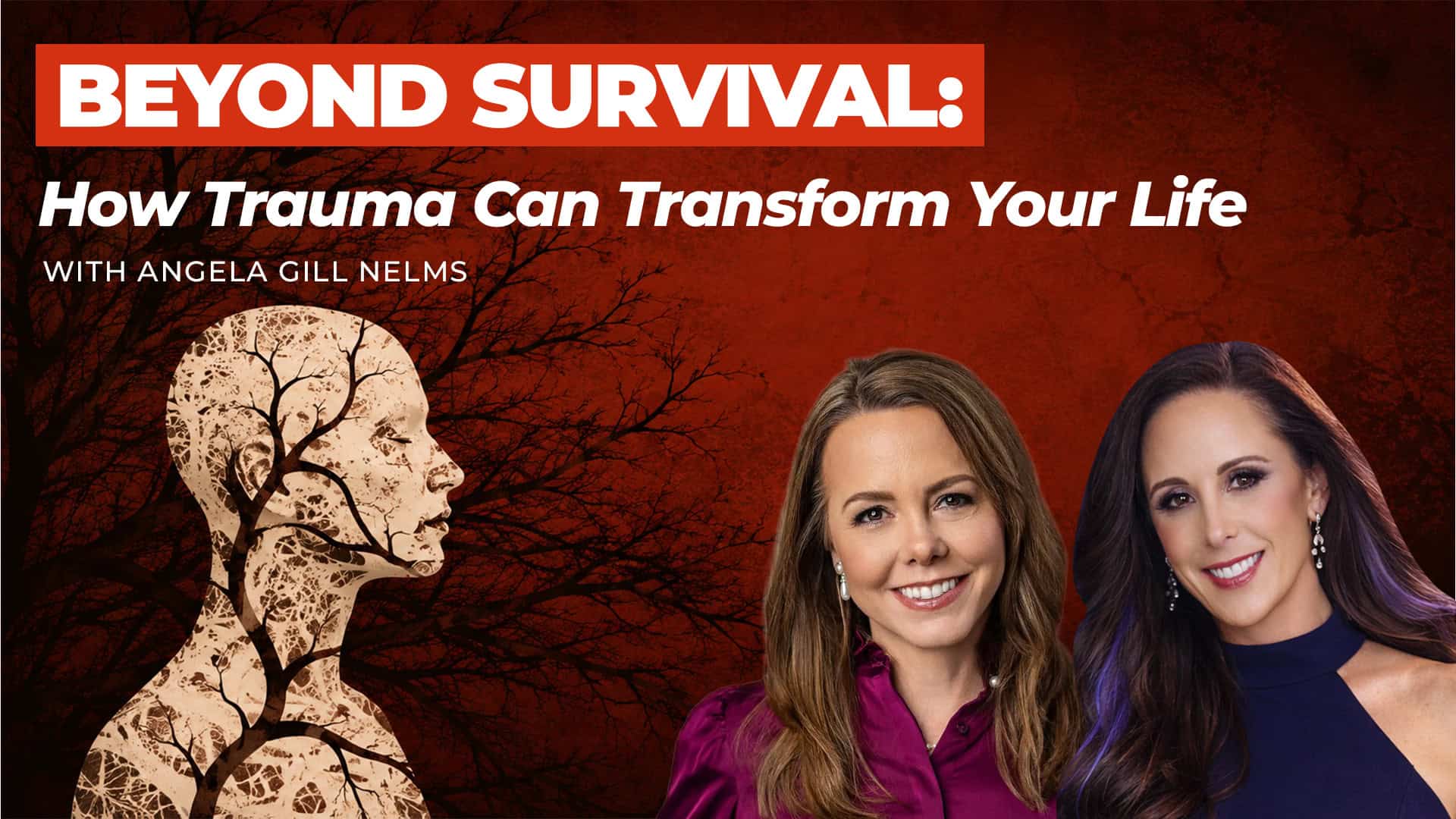
What if the most difficult experiences of your life could become the foundation for a new beginning?
In this powerful episode of Resiliency Radio, Dr. Jill Carnahan welcomes Angela Gill Nelms, leadership expert, entrepreneur, and host of the Badass Leaders Podcast, for an extraordinary conversation about trauma, resilience, healing, and personal transformation.
After surviving childhood abuse, profound personal loss, and a terrifying five-day kidnapping, Angela faced a difficult journey toward recovery. She shares how she navigated fear, intrusive thoughts, and the loss of control while rediscovering her confidence, authenticity, and purpose.
Together, Dr. Jill and Angela explore how to move beyond survival mode, develop emotional resilience, regulate the nervous system, and embrace the possibility of building a meaningful life after trauma.
🔑 5 Key Discussions with Angela Gill Nelms
❤️🩹 Surviving the Unimaginable: Angela's Kidnapping Story — Angela recounts her five days in captivity, her courageous escape, and the difficult healing journey that followed.
💪 How Adversity Shapes Resilience — Explore how previous challenges, support systems, and personal experiences can become valuable tools for navigating life's most difficult moments.
🧠 Trauma, Control & the Nervous System — Understand how trauma can contribute to intrusive thoughts, anxiety, hypervigilance, and physical stress responses—and why healing often requires learning to release control.
🌿 Self-Regulation, Authenticity & the Power of Pause — Discover practical approaches Angela found helpful, including grounding exercises, reconnecting with nature, recognizing emotional triggers, and finding the right therapeutic support.
✨ Beyond Survival: Choosing Your Next Chapter — Learn why healing doesn't always mean returning to who you were before trauma and how curiosity, courage, and self-discovery can open new possibilities.
🔑 Key Takeaways with Angela Gill Nelms
🔹 Resilience doesn't mean never struggling; it means developing the capacity to navigate challenges with support, flexibility, and self-compassion.
🔹 Trauma recovery is rarely linear, and finding therapeutic approaches that fit your individual needs can make a meaningful difference.
🔹 Recognizing physical and emotional triggers can help create space between automatic stress responses and intentional choices.
🔹 Authenticity, curiosity, and vulnerability can coexist with strength, confidence, and effective leadership.
🔹 Moving forward after trauma doesn't require forgetting the past; it means discovering how to build a meaningful future while acknowledging what you've experienced.
About Angela Gill Nelms
Angela Gill Nelms is the Director of Georgia Tech and Emory University's Biolocity program and CEO of The AGN Group, where she helps high-growth companies scale through leadership development, team alignment, and values-driven organizational culture.
An experienced executive, entrepreneur, and leadership strategist, Angela brings a unique perspective to resilience shaped by profound personal adversity, including raising a child with special needs as a single mother while earning her engineering degree and surviving a violent kidnapping.
Today, Angela uses those experiences to empower leaders and individuals to embrace authenticity, navigate uncertainty, and build lives and organizations rooted in courage, adaptability, and purpose.
She is also the host of the Badass Leaders Podcast, featuring candid conversations with founders, executives, innovators, and inspiring individuals about leadership, emotional intelligence, personal growth, and navigating high-stakes challenges.
Website: https://angelagillnelms.com/
LinkedIn: https://www.linkedin.com/in/angelagillnelms
Instagram: https://www.instagram.com/bebravebebadass
Listen to the Badass Leaders Podcast: https://badassleaderspodcast.transistor.fm/
Watch the Badass Leaders Podcast: https://www.youtube.com/@bebravebebadass
Dr. Jill Carnahan, MD – Leading Functional Medicine Doctor
Dr. Jill Carnahan, MD, ABIHM, ABoIM, IFMCP is internationally recognized as one of the most respected leaders in functional and integrative medicine. She is dually board-certified in Family Medicine and Integrative Holistic Medicine, and the founder and medical director of Flatiron Functional Medicine in Louisville, Colorado.
Widely known as a pioneer in environmental toxicity, mold-related illness, autoimmune disease, and resilience medicine, Dr. Carnahan combines cutting-edge science with compassionate, root-cause care. Her clinical approach integrates precision genomics, epigenetics, microbiome research, peptide therapy, and lifestyle interventions to transform health outcomes for patients worldwide.
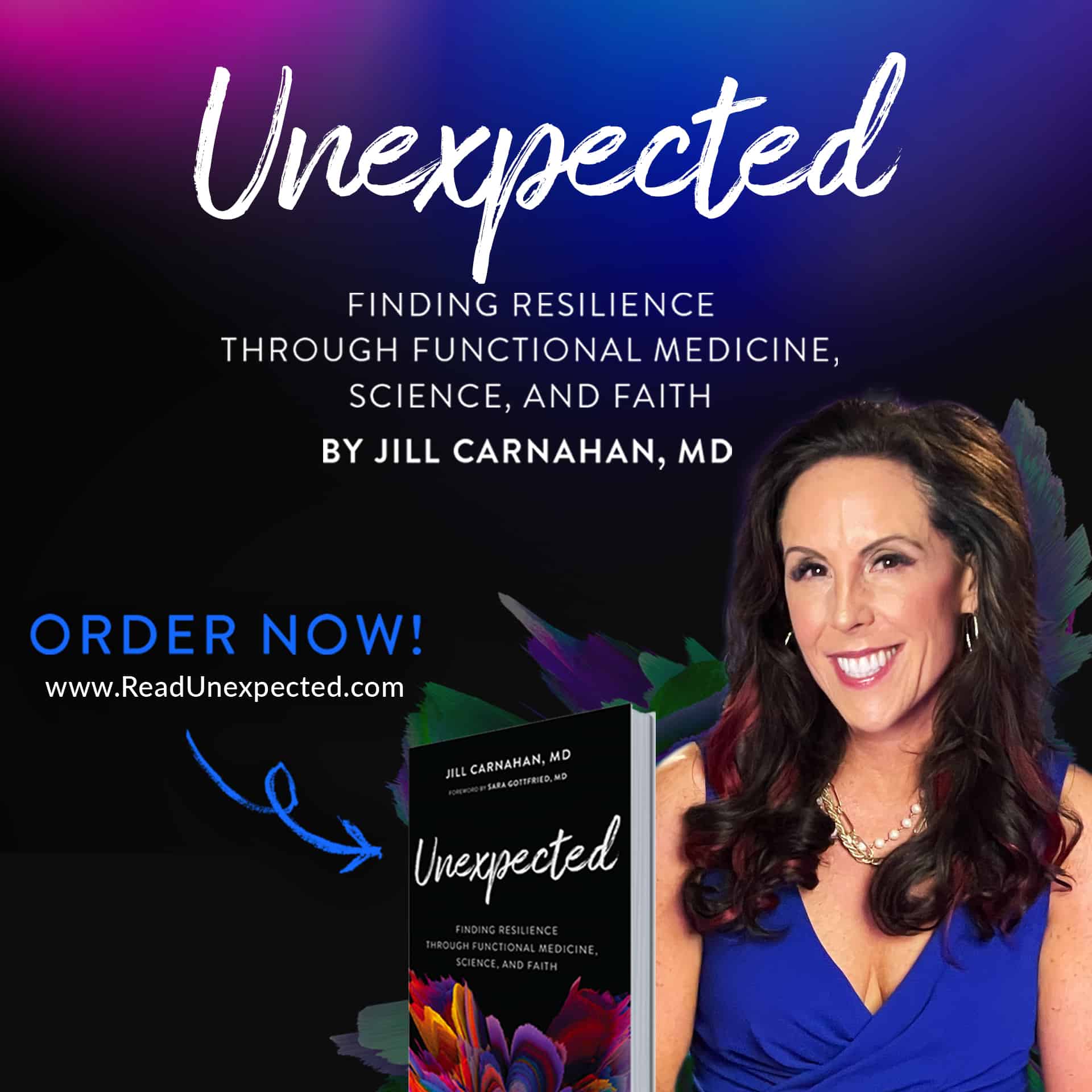
She is the author of the best-selling memoir Unexpected, which weaves her personal journey through cancer, Crohn’s disease, and mold-related illness with her professional expertise. Dr. Carnahan is also the executive producer of the award-winning documentary Doctor/Patient and the host of the popular podcast Resiliency Radio, which reaches over 500,000 global subscribers.
As an international keynote speaker, Dr. Carnahan has been featured at leading medical conferences including A4M, IFM, EPIC, and IPM Congress, and her work is frequently highlighted in major media outlets such as NBC, CBS, Fox News, Forbes, Parade, People, and MindBodyGreen.
With a reputation as both a scientist and a healer, Dr. Jill Carnahan is regarded as one of the top functional medicine doctors in the world, offering a unique blend of evidence-based research, innovation, and deeply personalized care.
The Podcast with Angela Gill Nelms
The Video with Angela Gill Nelms
Transcript
00:00
Dr. Jill Carnahan
What if resilience isn't about becoming strong enough that nothing can break you? But discovering that life after a big break can open up everything that you never thought was possible. Hey, I'm Dr. Jill and welcome to Resiliency Radio, your go to podcast for the most cutting edge insights integrative and functional medicine. I'm your host and with each episode we dive into the heart of healing and personal transformation. Join me as I interview world leaders, innovators, medical experts of all types, helping you on your journey to optimal health and healing. Today, you're in for a treat and as we listen to Angela's story, I know it's very compelling and you'll be challenged to take trauma and difficulties and see them in a new light. Stay tuned.
00:43
Dr. Jill Carnahan
I'll introduce her, but before I do, I just want to remind you that at my clinic in Lewisville, Colorado, Flat Iron Functional Medicine, we are accepting new patients. So if you're looking for a doctor to help you navigate complex chronic illness, give us a call. You can call 303-993-7910 or click the link below to schedule your consultation. We also have products services geared towards optimal health and healing such as the Tick Bite Prevention Treatment Protocol, the Epstein Bar Bundle or the Detox Bundle and many more. Some of my favorite products are Dr. Jill Beauty and if you don't know where to start and want to try something, check out the Dr. Jill Beauty Favorites, which is the stuff that I personally use every single day. You can find all of this@doctor Jill health.com and you can get 15% off your first order.
01:29
Dr. Jill Carnahan
Okay, let me introduce Angela Gill Nelms, our guest today. Super excited to have her on the show. Angela is the Director of Georgia Tech and Emory's Biolicity Program and the CEO of AGN Group where she helps scale high growth companies through leadership development, team alignment and strong values driven culture. Known for driving innovation, operational excellence and global expansion across industries, she pairs strategy execution with a deep understanding of human resilience. Her path has been shaped by profound adversity including raising a special needs child as a single mother while earning her degree and surviving a violent kidnapping. You're gonna hear more today. Let's welcome Angela to the show. Angela, I am so excited to meet you and get to know you today.
02:17
Dr. Jill Carnahan
My little secret on the podcast, I'm sure you know, as a fellow podcaster, is that I get to meet the coolest people and I get to know them and I make new friends and so one of the coolest things about this is I have this worldwide network of new friends that I've gotten to know on the podcast. So as I was looking preparing for the show, I saw your own podcast and you have some really cool titles like why Does Failure Create Better Leaders? And When Doubt is a Superpower. I think our audience will really resonate with not only the work that you do, but your story today. And we're going to go right to the heart of the matter. In the beginning, you've survived the almost unimaginable being kidnapped and held hostage for five days.
03:01
Dr. Jill Carnahan
Take a moment and take us back to that. And then we'll go into the before and after, like how that transformed your life. But let's go right to the event that really transformed your life, at least in one big way, and tell us about what happened to you.
03:15
Angela Gill Nelms
Sure, sure. And I will highlight that if we don't go deep enough, I did last year, on the five year anniversary of my escape, I did release a solo episode talking about the kidnap and death on the Badass Leaders podcast. So if they go back to August 2025, they can get a lot of details. But let's dig in here.
03:35
Dr. Jill Carnahan
And we will link up if you're watching Driving doing something, I promise that'll be in the show notes.
03:40
Angela Gill Nelms
Love it, love it. Well, first off, thank you for having me. I love the work that you're doing. It's incredibly important and I have lots of thoughts about resilience and what really builds resilience from my perspective, just speaking about, from AGN's perspective, but a little bit about my story. So, yes, in August of 2020. So let's all go back to our Covid days. And at that point I was COO of my very first startup, which is Florence Healthcare, which I'm very proud to say has been very successful in the clinical research space. And I was also a single woman, a mom. You know, my child was in high school and I decided that I would do some online dating. I don't know if your listeners have resonated with this, but when you get later in life.
04:31
Angela Gill Nelms
So I was 45 at the time and you start having your own little circles and then if you're single, you might want to date outside of those circles. Okay. And the CFO of our company reported to me is on my team. And so he and I, I, I love getting to know humans as humans. So your intro was spot on with me. Right. And so we're like talking and he said, you know, Angela, you should try this one dating app. And what I hope your listeners figure out about me, I am an engineer, so I do, like, processes and questions. And also that curiosity piece of it. So it was hinged, was the app. And the thing that I loved about it is that it challenged the potential suitors and yourself to answer a whole bunch of questions.
05:20
Angela Gill Nelms
And then it would using their algorithm at that time. And so, remember, this is six years ago. I'm sure AI and all the algorithms have greatly improved since then, but using theirs, they would do a percentage of how much your answers resonated with another person right on the platform. So the nerd in me, I literally answered over 500 questions. I was just like, this is like a game.
05:45
Dr. Jill Carnahan
Like,.
05:46
Angela Gill Nelms
I mean, Dr. Jill, forget Jeopardy, forget prices. Right? Right. This. This is my game. And so, lo and behold, I was introduced on the app to someone local who. Who had their match was 99% to mine.
06:03
Dr. Jill Carnahan
Wow.
06:03
Angela Gill Nelms
Okay, now take a step back, because also, remember, when we're doing dating, we're doing that some of those logic pieces or some of those, like, what are the odds? They. They do not come up. Right. And so at that point, I was just like, wow, this is amazing. Okay. And so we reached out, we talked, and went on several dates. And after a couple of dates in the same week, after a couple of dates, I realized something felt really off. So my intuition peaked that something was not right. I slowly figured out, for example.
06:39
Dr. Jill Carnahan
Yeah.
06:39
Angela Gill Nelms
That the great photo of him and his dog was not his dog. The camping photos, because I'm a really big camper and I do a lot of things in nature were also, like, fake. And after the escape, when I was working with the police department and were going through identifying who he was and all that, we realized that he had been dishonorably discharged from the Coast Guard and cyber security. So he had, from what we can gather, had strategically picked me.
07:11
Dr. Jill Carnahan
Yes.
07:12
Angela Gill Nelms
And I also found out later with that app, the little hack that I hope they fixed by now is that he went in and kept changing his answers to more and more. So that's the way that number would match that piece. Okay. Well, during this week and during that period of time, he had figured out the routine that I had at my home. My daughter. I have a. Was a single mom. My daughter was with her dad. So it was just me and my dog. And he figured out at night what time I walked my dog, and that's what time he kidnapped me.
07:45
Angela Gill Nelms
And the start of the worst five days of My life started and many of people laugh at me because they do say that they think I can turn any situation into a leadership journey and a leadership lesson, which I can, because there is leadership in every path that we take in life. But, yeah, those five days, I have a lot of insight into the way that our brain works in high stress situations. And I also do a lot of conversations about the moment you decide to quit versus the moment you decide you're all into something, and how those pieces and those lessons, particularly in resilience, right, with the work that you do, really are what make the difference in the long term. So during those five days, I was held hostage and I went through a variety of emotions.
08:38
Angela Gill Nelms
I went from, I'm never gonna escape. And. And also if they listen to my podcast episode, they can hear a lot more into the things that led it also tied into mail. He'd hacked into my email. He had email addresses for all of the board that I was on at Georgia Tech, as well as all of my corporate board. And so as a, especially as a professional female, yeah, that's worked that hard, all of these fears, but I went through these emotions of at one moment, I'm. My life is over, it's ruined nothing. To the next moment in, I don't care what happens, I'm gonna fight. So it was this constant battle and struggle. And I hope your listeners, I really hope the listeners don't think I could never relate to that because I've never been kidnapped.
09:25
Angela Gill Nelms
But instead, I hope they're listening to this and they can think of moments in their lives where they struggled between, you know, my career is over or my family is over, versus I'm going to fight for my career, I'm going to fight for my family, or I'm going to fight for something. And that's what I was experiencing in that moment. And sure enough, on my 45th birthday, so August 20th of 2020, I had this one moment where I saw a moment to escape. And I just. Dr. Jo, I just went all in. I didn't look back. I just ran as fast as I could and it started. I will say that while that was the day I escaped, that was not the day that I was healed.
10:06
Angela Gill Nelms
That was not the day that I could be able to tell the story like I can now, six years later. That was really the start of an entirely different life and journey for me. And I ultimately ended up leaving the state of Georgia for four months. I sold the condo that I lived in. I never went back there. From the day that I escaped. I sold my Jeep. I bought a different Jeep because I'm not stupid. I love Jeeps. And I bought someplace on the other side of town, and I was COO of a company and had, like, lots of employees reporting to me, right? And so I continued to run the company, the. The CEO. And a big piece of being able to navigate through journeys is also having the right partners and the right people who believe in you and support you.
10:54
Angela Gill Nelms
And so the CEO and I were very close. We just spent five years building a company from ground up. And so basically around the period where were raising our series C in March of the following year, as soon as we closed that round, then I took. I quit, I left my company, which, you know, I never. People afterwards were like, why did you leave? Right. Because a period of time I didn't tell anyone what had happened, right? But I left the company, took a year and a half and did residential treatment at multiple different treatment centers. And the beauty of that is I first off, I saw a lot of great ways to handle people with challenges, and I saw some really awful ways that we. That we hope our patients don't have to go and experience. But.
11:40
Angela Gill Nelms
But ultimately it allowed me to gain a variety of tools, and I'm very passionate about now how that's fed into, like, emotional intelligence and appropriate levels of empathy and appropriate ways to use storytelling and healthy mechanisms.
11:56
Dr. Jill Carnahan
Hey, guys. Just interrupting this episode for a quick break to remind you, if you're looking for more stories of resilience, please pick up your copy of my book, Unexpected Finding Resilience Through Functional Medicine, Science, and Faith. You can get that anywhere books are sold online or in stores. You can also get a copy from me@drjillhealth.com if you want a signed copy, just put that in the notes when you check out, and I will personally sign a copy and send it your way. Okay, let's get back to our show with Angela. Unbelievable. See, I hadn't heard your story. I just knew about it. So here I am, just like our listeners, kind of in awe of what you just told me and a couple things I want to point out. And then I want to let you talk some more because this is so important.
12:37
Dr. Jill Carnahan
First of all, just going back to my experience with breast cancer, I'll never forget that diagnosis. And then within two weeks, I was like that all in. Am I going to survive it? I think we want to talk just a little bit about that because there's a flexion point in every crisis. And I know our listeners might have financial, might have a death of a loved one. They look different. But no one out there listening is immune to tragedy, to grief, to shock, and to complex ptsd, which is all of the things you experience. And in some way with my illness, I have, too. And I remember the moment where I was like, wait, I'm going to survive. Number one, I'm going to make it. I don't care how I'm going to make it. And number.
13:17
Dr. Jill Carnahan
Believing in that, I think, was part of how I overcame the most severe diagnosis of aggressive breast cancer, then Crohn's disease, in my 20s. So you talked about that moment and wavering. Let's go back to just a little bit on the emotional state, especially how it relates to the listener and whatever they're facing. How do you navigate? Because there's always the doubt. Right. I might have decided two weeks in this is I'm going to survive. And the truth is, there was always a knowing that I'm going to survive, but it didn't mean that there weren't days where I was sick and wracked with pain and curled up in a fetal position and crying my eyes out and saying, this is so hard. I don't know if I'm going to make it. Right. So how do you navigate that? And how did you navigate that?
13:59
Angela Gill Nelms
Well, I will say one of the things I think about is resilience in dealing with those is that unfortunately, the more opportunities you've had to overcome and do hard things and see that you know, many of the things now, you know, they say age is wasted on the older or like whatever it is, the youth. Right. Is that when we look back, you know, one piece of it is that. And why I was looking at your previous episode for childhood trauma and immunity is I was also, when I was born, I was the victim of severe childhood abuse. And in fact, my parents. I was hidden for. For many years, even though child protective services would come out. I had aunts on the family that were calling in. And then my mother finally broke my nose so badly that they couldn't hide it.
14:52
Angela Gill Nelms
It then led into this divorce and a lot of, like, childhood trauma. So I had started my life with this fighter mindset.
15:01
Dr. Jill Carnahan
Yes.
15:02
Angela Gill Nelms
And so then when I got into this situation with the kidnapping and that piece, then first off, it wasn't the first hard thing I had overcome.
15:14
Dr. Jill Carnahan
Yeah.
15:16
Angela Gill Nelms
Also wasn't the first time, because childhood abuse in all different ways is. Can be very shameful to the child who's being abused. They don't understand. It's not their fault. They. Right. And so I also had experienced shame over something that was not my fault before. And I had survived that. I also had people and things in my life. So I had my daughter that I wanted to fight for. So I had this exterior to me factor that was in my court that I felt responsible for fighting for. And then I also one of the things that I love to use as a comparison. So I'll ask you this, Dr. Jill, have you ever read one of those choose your own adventure books?
16:05
Dr. Jill Carnahan
Yes.
16:06
Angela Gill Nelms
Okay, so I love this analogy as it ties to going all in is it's almost like if you're reading a choose your own adventure book. And so for your listeners, if you haven't heard this before, right, It's a storyline and then you get to a page, let's just say you get to page 34, you're crushing along in your life or in the story and then all of a sudden it says, okay, if you want to continue in this story, go to page 35. If instead you want this different adventure, so this different ending of the story, go to page 86.
16:36
Dr. Jill Carnahan
Right.
16:37
Angela Gill Nelms
Okay. So when we're in those struggles, we're in that situation where we're either going to now go down this slow path or we're going to decide to choose a different adventure, which is that maybe page 86 now the struggle that we often have and the I would say that interior battle is that sometimes we go to page 86 and we are like, wait, I wonder what would have happened if I just kept reading.
17:03
Dr. Jill Carnahan
Right? Yes.
17:04
Angela Gill Nelms
And if you do that, the whole storyline becomes muddled, right. You reduce the energy of what you can actually empower going forward. And so a, it's human nature to go back and forth between those two different states. Because also let's keep in mind these incidences that happen to us, they don't happen in a vacuum.
17:26
Dr. Jill Carnahan
Right.
17:26
Angela Gill Nelms
So as you were mentioning, you're going through treatment, okay. You're having surgeries, you're on medications, it's impacting your hormones, it's impacting your sleep, it's impacting your loved ones. So you have all of these factors that are piling on and they're telling you go Back to page 35 or you know, nevermind, it's going great, let's go Back to page 86. And I strongly believe that the support system that you have the ability to remember you've accomplished hard things before and you can do it again, that they give you the strength and the courage to Choose a piece of your own adventure. And I do believe in those super hard times.
18:09
Angela Gill Nelms
And your listeners, I encourage you, there is a lot of research tying to what Dr. Jill said is that patients, especially in, like cancer diagnoses who have a positive outlook have a significantly higher success rate. And so I know it sounds really trivial and I don't mean I hope someone's not listening to this and saying it's not that easy. Because it's not. It's not that easy.
18:36
Dr. Jill Carnahan
It's not.
18:37
Angela Gill Nelms
But let's remember we've done hard things before and it is not that easy, but it's worth it. And so every effort you can do, whether or not, during my healing journey as well, I really focused on things such as gratitude list and such as saying no to the people in my life. I needed to say no to some of those things. So I also had a bigger impact on those external things that made it easier every day. And much like you were saying with your cancer this year and a half,.
19:06
Dr. Jill Carnahan
Yes,.
19:06
Angela Gill Nelms
Full stop, I was suicidal at times. I, you know, turned to drinking too much because I was having nightmares. I definitely, I don't want the listeners to think that Angela was, on August 2020, said, yes, I'm gonna escape. And I always kept that positive mindset that is not the case. But I'm very grateful that every time I wavered, I had people that kept me going forward. And I was able to remember that I had accomplished a lot in life and I also had reasons to continue to live and thrive.
19:41
Dr. Jill Carnahan
Oh, absolutely amazing. I can so relate. Angela, I knew I'd love this interview, but I really am enjoying hearing your story and I know our listeners are too. A couple things that really resonate are in my journey with cancer, I remember being at the crossroads. Decision on chemo, radiation, the kinds of things that would either cure me or kill me. And I remember looking at all that data and knowing that I was choosing the most aggressive regimen and that I would for the rest of my life likely suffer side effects from the thing that actually cured me from cancer. And I remember thinking, okay, I'm going to take this information in this moment. I was 25 years old. I'm going to make the best decision on that.
20:19
Dr. Jill Carnahan
And later, if I get an immune deficiency, which I have, or I would have heart failure, which I haven't, I'm never going to say, what if I would have choose my own adventure and not done this right, I chose at that moment before I made the decision, I'm going to be okay with this decision, no matter what the outcome. And I think that's a powerful thing. I now sit with patients faced with a cancer or a life threatening illness and I talk them through that because I think it's far worse to live with regret than the side effects of a decision when you're like, no, I made that. Like, even now I'm living, I made the right decision. There's never a doubt in my mind, so I never have wavering from that. Choose your own adventure.
20:55
Dr. Jill Carnahan
And it gives me confidence, but I still have the side effects from the chemo I did 25 years ago. So it's like that. That's really powerful advice and I love giving that. And you said the same thing. Second thing, I love that you said, I feel like now, I'm 50 now, so it's been like half my life away from cancer and I've been through a lot of hard things and I'm now confident enough to know that I can handle pretty much anything that could come my way. And I'm not like overconfident. It'll be hard. I know it's. I hate suffering, but I also have enough in my, like, suitcase, right? Like, I have enough luggage to prove I've got the stickers on my stamps, on my luggage, on passport to show that I've overcome it, right? I can do this again. And.
21:36
Dr. Jill Carnahan
And so I have this deep internal confidence again, I hate suffering and I. I've tried to avoid it and I hope I never have to again, which I know I will. But there's a piece inside of me that just knows I'm going to be okay. And that goes to your title, your podcast, which I love. I want to actually talk about where that came from. Badass, right? Because I wrote in my book that page. A friend actually said, jill, because I was doing my own trauma healing and my own work like you did, and I was the strong sufficient had overcome adversity. 1. But inside I'm super sensitive. I'm very intuitive. I'm actually quite like affected by the world. And she said, jill, you can be a badass and a delicate flower. Take it from there.
22:18
Dr. Jill Carnahan
Angela, tell us how we as women navigate this. Like, we can be very powerful women and we are badasses. But then how do we also embrace that side? That's the beautiful flower and the muse and the mystic and all those pieces.
22:33
Angela Gill Nelms
First off, your friend is brilliant. And I'm going to write that down right after this episode. I love that phrase. You know, a couple of things. So I do want to say that. But if I can just click on a couple of the comments that you said before this. And I love the passport and the stamps in your passport analogy. What I the analogy I use is that we're all building our own toolbox. And so if we look at these life experiences and the lessons we've learned and the accomplishments we've done as tools in our toolbox, then once we've accomplished them, we have them for the future. So it does make us stronger. It does make us more resilient. It does allow that.
23:13
Angela Gill Nelms
And then I also think that one of the things for me with the kidnapping that was huge was that I had overcome so much before I told you about my childhood trauma. I also my first child was stillborn after years of fertility treatment. My first child was stillborn. And that was so devastating. And I actually had this mindset where I would get annoyed with people who complained about what at that phase I thought were trauma with a small T. I mean, right. I would get annoyed with them. I would think, seriously, that's all you're like. I will tell you this. When the kidnapping happened and I saw how it changed my life, it changed my perspective on that. And so now I don't believe that any trauma really is a small teat. I think it is how it impacts your own personal life.
24:00
Angela Gill Nelms
So listeners, once again, do not diminish the challenges and things that you've been through. Instead, be proud of those accomplishments. So back to the badass piece. Can I tell you a bit about the history of that. So over 14 years ago, so well before the kidnapping and well before that, I started doing triathlon races. And one of the things that I'm very grateful. I've received a couple of awards over my lifetime for building strong communities. I just got one a couple of weeks ago in Georgia, which I'm very proud of. And, and so during this and building a community in triathlons, I came up with this hashtag, which was be brave, be badass. So this was 14 years ago. This is in the very beginning of when hashtags came out. And really it was because I started along this journey of doing these races.
24:52
Angela Gill Nelms
And I would see other people that thought they couldn't do something and they would say, I could never do this, or I could never do an ironman. I could never do this. And I realized many years ago that we all have our own personal badass. So what Dr. Jill's badass is and what Angela's badass is and what John or Jane or Ruth Whoever's listening to this podcast, whatever your badass is, it's unique to you as an individual. Now, the struggle is that many of us aren't brave enough to take that next step. We're not brave enough to embrace what our personal badass is. I think that ties a bit to the delicate flower piece, because the badass is what your absolute best of who you are as a human group, organization, company, community. At that moment, it's your absolute best.
25:44
Angela Gill Nelms
So it takes in all those external factors that we talked about. Right. And the brave part is to identify what you need to do to be your best in that day. Sometimes that's sitting in silence at a pond, just observing nature. Okay. Sometimes it's doing a keynote lecture for. I just did this workshop for Sustainable leaders in the Public Workspace in Houston recently and we talked a lot about it. Sometimes it's doing a keynote and inspiring other people. Sometimes it's taking a course or craft or something that we don't know. Sometimes it's being very vulnerable and sharing conversation. Right. It's that delicate flower piece of that. And so that hashtag has been around for a while now. Let's get to how that got into the podcast. Are you ready? Okay. So Badass Leaders podcast was not my first podcast. It was my second one.
26:37
Angela Gill Nelms
And I was experiencing this situation or was running a company as a coo and I was observing our next generation of leaders being role modeled, horrible leadership traits. And I'm looking at this and I'm like, this is insane. The next generation, they are our future. I'm very passionate about. And I said, they need more brilliant leaders from around the world to share the stories of success and to give them once again those tools in their toolbox to help them lead. And so that was the start of Badass Leaders podcast, where it's season three. I like you, I'm very grateful I get to talk to brilliant leaders around the world. True story. I've interviewed three fighter pilots.
27:27
Dr. Jill Carnahan
Wow.
27:29
Angela Gill Nelms
One of which was the fighter pilot who flew for Tom Cruise in Maverick, Top Gun, Maverick Stunt Double. But I've gotten to learn a lot of things. And so in additionally for your listeners to think about, this is owning who you are as a human. Okay. The beginning of that podcast, the title was Brave Hearts, Brave Conversations, Badass Leaders. That was the full title in the beginning. And the reason that I had Badass Leaders is at the end was that I knew I would be interviewing executives from companies and I thought they wouldn't want to say they were on you Know, at that stage, I thought they thought badass was a bad word. Right.
28:12
Dr. Jill Carnahan
Yeah.
28:13
Angela Gill Nelms
And in my executive coach, I'm a big believer of having your own executive coach as well. He said, you know what, Angela? You just need to lean in. Too badass. And I think that's another thing, is like, lean into who you are as a human being today, whether it's a delicate flower, whether it's the badass or whatever. And I will tell you, it's been a game changer. People love to say they've been on the Badass Leaders podcast. I mean, we're booked up until next year as well. And it has been this journey that's really encouraging people to be brave and bold and do things they thought they never would.
28:48
Dr. Jill Carnahan
In a world needs more of that because people have so much to give, and they're so still afraid of really, that authenticity. That's. Yeah, I. I love that. I love the message. So interesting. We've talked about this badassery and this power and this. And it's interesting because I think you and I, with backgrounds, as far as I don't have the background you did, but there was definitely some difficulties and trauma, and that brings this kind of strength and, like, ability to overcome adversity. But you were an engineer, you're a single mother, you're executive, a company, and you're accustomed to solving problems, pushing through adversity. How did that actually become a liability in your healing?
29:26
Angela Gill Nelms
Oh, wow. Thank you for throwing a tough question. I love this. It became a liability in several ways. Okay. One way in my healing. And so let's talk about the healing journey from the kidnapping. That's the most significant one, is I was used to. Okay, so I'm gonna. I'm gonna go back a little bit in the story. So when I was a child and I was. I was the only one of the kids that was seriously abused, and I learned at a young age, for example, if I was gonna say something, I had to be very confident in it. So I overthought everything, and I would get to where I knew that whatever I was going to say was not refutable. I didn't know that word back then. So I'm.
30:14
Dr. Jill Carnahan
Just going.
30:14
Angela Gill Nelms
To say that no one could question it. Right. And so I had utilized that and to build my ability to have an executive presence, to build my voice, to build my confidence. I learned how to overcome the harshness of my father, and that played really well for me when I was working with physicians and surgeons and proctoring. Right. I could calmly Stand where I was and be confident. So I learned those skills. Okay. Now going to your actual question was that then after the kidnapping I had so many things I could not control.
30:52
Dr. Jill Carnahan
I could.
30:53
Angela Gill Nelms
Not control nightmares. I could not control that anytime I heard a loud clashing sound, my whole body would react.
31:01
Dr. Jill Carnahan
Yeah.
31:02
Angela Gill Nelms
I couldn't control the fact that I was terrified to fly or stay in a hotel or go anywhere.
31:08
Dr. Jill Carnahan
Yeah.
31:08
Angela Gill Nelms
I, I also, I didn't want anyone to know what had happened. So then I couldn't control the narrative.
31:15
Dr. Jill Carnahan
Yes.
31:15
Angela Gill Nelms
Okay. And I couldn't control these constant, as we've already mentioned, these constant up and down. So you take someone who's built a company. You know. I also went back to school at Georgia Tech to get my degree in biomedical engineering as a 29 year old single mom with a special needs 2 year old. And so in that instance, I just had so many times set a goal, dug my heels in and forged forward. And for the first time I could not control all these things and it was awful. That's why I leaned into alcohol. Very common thing. Right. That's why I went to multiple treatment centers trying to find some way for a medication that would work so I could sleep. Right.
32:01
Angela Gill Nelms
And so I think that is the biggest piece of that, is that I suddenly had gone from where I had learned for 45 years how to control the world around me and how to surround myself in a world I can control. And then I was suddenly in a world I had zero control over. And it was devastating.
32:20
Dr. Jill Carnahan
Wow, that's so powerful because. And I know our listeners can relate. I can relate because so often we learn these coping skills as children that literally like I was talking to a therapist a few weeks ago and she was just talking about how the strength. I grew up on a farm, so tough, resilient, pull up by the bootstraps, overcome. And then I look back in medical training in my illness and I was very dissociated, but I was like surviving. And I talked to her about how that dissociation I have had to overcome and become more embodied and in my body and not just like now, right. But, but she actually refreshed, she's like, yeah, but what did that ability to dissociate actually help you?
32:59
Dr. Jill Carnahan
So it's like these strengths, I love flipping it on its head because now that I'm more embodied and have dealt ability, I can dissociate on an instant and I can handle deep trauma because of that. Because I'm just like, I can put on that Mask, Right. And it helped me to survive. It is the thing of why I'm here and why I'm a badass like you. But then you flip it and you learn, oh, wait, I can be present, I can feel deeply, I can have compassion, I can be an empath. It's the badass delicate flower thing, right? But then you also, like, in order to get through medical school, I kind of had to be a little dissociated to survive. And so I love flipping these things and saying, okay, yes, it was a strength, and now is there a new way?
33:40
Dr. Jill Carnahan
Is there a better way? Is there a way that we can be more integrated? And I. Clearly you went through a lot of that in your healing journey, so thank you for sharing. One thing I want to talk about, I have a dear friend who just lost his son suddenly, and she is grieving and there's nothing I can do, right, except say, I'm here, I love you. I'll talk about it if you want to. And she described some of the intrusive thoughts, and you went to that too. Anyone who's ever been through something traumatic, that is one thing we cannot control, right.
34:06
Dr. Jill Carnahan
And we call it sometimes complex ptsd and this, where there's this intrusive either nervous system response that our brain doesn't control to a bang or a crash, or there's an intrusive image or something that's just so horrific that we cannot get it out of our mind. That I think is a really, really. I'm still dealing with some of those. How do we. How did you start to change that? We call it maybe neuro linguistic programming or that. Because that's really outside of our conscious effort. Right. What were some of the tools in your toolbox that helped you to overcome that part of it?
34:41
Angela Gill Nelms
Yeah. What. What a great question. And for your listeners, anyone who's experiencing this, I just want to call out that it is not your fault and just sit in that for a moment. It is absolutely not your fault. And, and if we look, if we go to the science of it, okay, there is a reason that our body is behaving this way for, you know, thousands upon thousands of years in order to survive in situations, your body then adjusted to that situation to protect you. Right. And so some of those instances, if you hear if a loud crash means that a bear is going to come get you, then learning how to either freeze and be invisible, run, or whatever is appropriate is a healthy mechanism. So our body is doing that.
35:36
Angela Gill Nelms
However, just because our body is doing it doesn't necessarily mean that we need our body to do it in the decades that we're living right now. Right. And so one of the keys is this. You already mentioned the experience of feeling in your body. Okay. The first treatment center. The second treatment center I was in, she started doing family systems therapy and inner child and experiencing your body. And I was like, absolutely not. I do not care if they're like. They made fun of me because they were like, she's gonna make you carry around a baby or something. And I was like, that baby just needs to go to the bottom of a well because I'm not caring. I don't care about inner Angela. Like, that is ridiculous.
36:23
Angela Gill Nelms
And I was like, I don't want to feel where something feels in my body because I didn't. My body hurt. Right. And thinking focuses of the areas of my body. So I learned in different ways. Okay. And I. I'm a big advocate of treatment centers that have a whole bunch of different modalities that you can test, because what works for one individual is not going to work for another. And so I started to find peace and being in my body by being in nature, by being near water, by finally agreeing to do the. What do you call the maze thing again? Labyrinth. Labyrinth,.
37:00
Dr. Jill Carnahan
Yeah. Labyrinth.
37:01
Angela Gill Nelms
Yeah. So labyrinth is a very powerful thing to be present and then dissociate. Right. Because you start going when you do it multiple times. Right. So I started with those babies. It's like if you're someone that doesn't like cold pool water and you're tipping your toe in it. Right. It's like me putting my little toe in a little bit further each time.
37:24
Dr. Jill Carnahan
Yeah.
37:25
Angela Gill Nelms
And I. That is incredibly powerful. And then being okay with setbacks.
37:31
Dr. Jill Carnahan
Yes.
37:31
Angela Gill Nelms
So being okay for. Let's just say you decide. We'll use my example. Right. I didn't want to go out anywhere in public with. By myself. Okay. I ended up for. For many years had a service dog who was amazing.
37:44
Dr. Jill Carnahan
Yeah.
37:45
Angela Gill Nelms
But slowly going maybe to the grocery store by myself. Okay. And going to safe place. So testing out in those safe environments first and then expanding your network slowly. And then if you get to an instance where your body shuts down, you can't handle it. Not saying I failed. You didn't fail. You just did something really hard. Let's take a step back. Let's experience it a little bit and then decide when we're going to move forward. And the other piece is that then over the years, I started to. Ha ha, Feel where anxiety felt in my body and as a leader and someone in corporate America. This is really important. I'll tell you.
38:30
Angela Gill Nelms
When I was COO of a. I ran a pancreatic cancer company in Silicon Valley, and I started to suddenly realize because of this therapy, because of this work, I was working with the chief medical officer. And I suddenly realized when he was talking to me, my body was reacting the same way that my father impacted me in my early years. Right. And by realizing. And I remember this one day that I sat there and I was like, okay, wait, what did the doctors tell me? They said, put your feet on the ground, feel grounded. Do your fingers. And listeners, if you're not watching, I'm tapping my fingers together. Do some of these techniques. So I started doing it. No one in the room knew was under the table.
39:17
Dr. Jill Carnahan
Yeah.
39:18
Angela Gill Nelms
And then I took a deep breath and I realized. And then I had a conversation with him, and we had this. And I said, look, when this happens, I'm reacting like this. And I. And the powerful piece of that is I was able to disassociate. It's a different type of dissociation, but I was able to separate.
39:35
Dr. Jill Carnahan
What.
39:36
Angela Gill Nelms
I was experiencing from him, from my experience as a child. And then only by identifying that my body is reacting to a situation based on a previous memory. By identifying that, then I was able to say, okay, Angela, you're not. You're no longer a child. Right now we can start dealing with this situation, like this new leadership challenge that I had separately. And I will tell you, that skill has been a game changer in everything that I do. I run commercialization programs with Georgia Tech and Emory. As you know, I do a podcast. I do executive coaching and workshops. I'm also teaching the master's program at Emory. And in all those instances, if I feel my body, and it's for listeners that haven't experienced it's maybe that you feel like a weight is sitting on your chest,.
40:30
Dr. Jill Carnahan
Or.
40:31
Angela Gill Nelms
You feel like your stomach is in knots,.
40:33
Dr. Jill Carnahan
Or.
40:33
Angela Gill Nelms
Maybe you feel pins on your skin. For everyone, it's different. I'm just listing some of Angela's.
40:39
Dr. Jill Carnahan
Yeah.
40:39
Angela Gill Nelms
And the more you allow yourself to feel it and pause. Now there's power in the pause. And when we're early in trauma, we don't want to pause because pause makes us feel vulnerable. So going back into that mechanism as well, if you're in a fight or flight situation while you have collapse and all of that, but pausing in that instance can make you feel like you can't actually move and escape. Right. But there is power in the pause. And if you get to the moment where you can pause and then evaluate what is really happening.
41:12
Dr. Jill Carnahan
Yes.
41:12
Angela Gill Nelms
And then move forward. Wow. The world is literally your oyster.
41:17
Dr. Jill Carnahan
Oh, love this. It's that pause and then the curiosity. Right. Because often we'll just bypass that. The other thing I heard that I think is so powerful and I so relate is I love therapists. I've been to many and I always seek healing for myself because I always know some people have education and information that I need. And I'm curious. And so no, I am not advocating for you to have professionals involved in your healing, but something I heard with you that was very resonant with me. Sometimes something doesn't fit. And I remember my parts work not too long ago. I've done multiple things and this expert on parts work, credentialed, beautiful woman started asking me what I was doing. My body and I'm describing. And multiple times during that therapy session. No, that can't be. It can't be in your heart.
42:03
Dr. Jill Carnahan
Well, you can't have two emotions in the same place. Oh, that can't be from birth. Like I can't even tell you the number of times she basically told me that can't be true for you. Talk about gaslighting. And I'm in there like totally open hearted, hoping and giving her my, you know, all and all trying to work this journey. By the end, I was so traumatized by therapy session. I mean as I never went back to her and I actually was confident enough to later articulate in a letter saying, I know you were trying to help me. This is what happened for me. I don't want that to happen to someone else. I'm sure that wasn't your intention, but I need you to know what happened for me was really, actually more traumatic than the original trauma were talking about.
42:42
Dr. Jill Carnahan
She was so beautiful, so gracious. She apologized, she was kind of mortified because she didn't realize. So in that sense it all worked out well. But the thing I love that you said is I have found as I learn these parts and things from different therapists and people, I pull into what I can do. And I actually am pretty good at starting to regulate myself. And it starts with that curiosity. So someone might teach you how to be aware of your body. But now I can sit with myself, I can journal. And I still use professionals. So please don't get me as saying you don't need professionals. But the most powerful work that I do is in my journal in Nature, by myself, with God and the divine power that I'm praying to.
43:19
Dr. Jill Carnahan
Like, there's this thing that happens and that is far more powerful than us outsourcing to an authority that we think is better than ourselves. And I love that you said.
43:28
Angela Gill Nelms
That.
43:29
Dr. Jill Carnahan
Yeah, me too. Because it's like I want to empower them. Listener out there. Yes, please use professionals. I have used probably hundreds of them. But then I take pieces and say what's relevant to me and what the best, most powerful, badass thing we can do is learn what does our system need and how do we self regulate? Right. Tell me more about your experience with that.
43:50
Angela Gill Nelms
I. I could get on a soapbox for this. You are so right. You know, pause. And also the struggle that I see for people, especially if they go to therapist and they experience this, it's very much like a child who's abused.
44:04
Dr. Jill Carnahan
They.
44:05
Angela Gill Nelms
Don't know that the abuse is not normal. They don't know that everyone else in the world is not getting abused. Now, I knew because my brothers weren't, but most kids do not have that situation. They don't know. And sometimes someone might go to one therapist and experience something that's not a good fit, because guess what? It's just like going to your regular doctor or it's just like going to a restaurant. But the restaurant that I love and the food that I love may not be. It doesn't mean you're never going to go to another restaurant or you shouldn't try a different restaurant. Okay? You still need the food. You still need the nutrition. You still need those pieces that come from it. Okay? So it's very important to remember that.
44:46
Angela Gill Nelms
And secondly, the reality is no one can tell you how something makes you feel.
44:53
Dr. Jill Carnahan
Full.
44:53
Angela Gill Nelms
Stop. No one can tell you that except for yourself. They can give you ideas. They can say, does it feel like this? Or they can give you things so that you can become curious. The curiosity piece, though, is the key. You know, as young kids. Young kids are so curious. And then what we see so much in adults is that we lose that curiosity. And if you can figure out how to gain back that curiosity, it's actually so much fun,.
45:23
Dr. Jill Carnahan
Isn't it?
45:24
Angela Gill Nelms
Because the minute you decide, wait, I mean, it's probably why both of us love to host podcasts.
45:30
Dr. Jill Carnahan
Yeah.
45:30
Angela Gill Nelms
Very curious about people and their experiences and the lessons and that kind of stuff. So curiosity is. Is one of those things that I say is a superpower. I will tell you, in a lot of the work that I do, you know, many years we're the same age. I just turned 51, so I slightly have.
45:46
Dr. Jill Carnahan
You.
45:48
Angela Gill Nelms
So when, you know, there are a couple of decades ago where coaching would tell you, okay, let's list all your strengths and all your weaknesses, and now we're going to focus on improving your weaknesses.
45:58
Dr. Jill Carnahan
Right?
45:59
Angela Gill Nelms
Okay. I, Angela, I do not believe in that methodology at all. I believe that you should identify what your strengths are and you should identify your challenges and then take a step back and say, is there someone I can collaborate with who my challenges are, their strengths, and can we partner together and figure that piece? Now, with that, there are a couple of challenge areas that I do believe everyone should continuously focus on. And one of those is communication skills, because every single one of us can improve our communication skills. And the second thing is gaining back that curiosity piece of us. Because no matter what industry you're in, no matter what your background, what language you speak, what part of the world, your age, you can have the curiosity that you had as a young child.
46:52
Angela Gill Nelms
And if you have that curiosity and you put it into your everyday life, life becomes so much more fun. Really becomes so much more fun.
47:02
Dr. Jill Carnahan
Love, love this so much, Angela. We're like lost soul sisters. Because I relate to stuff I have so often on my podcast, that curiosity is what drives the best physicians, the best entrepreneurs. Everything is just being and the humility that comes with it. Like, huh? What else is possible? What else do I not know? What else about myself can I learn? I want to kind of wrap with this, I think, powerful question. If someone is imagine. Let's just imagine our listeners, and we know people, you're listening out there. You've all had trauma, a big T, little T. We've all had suffering. But think about someone listening right now who survived something that kind of shifted or changed them. In my world, it's health crises, but there could be any number of things. Financial devastation, loss of a loved one.
47:42
Dr. Jill Carnahan
They keep waiting for getting back to what it used to be like. And I'm going to talk about that, right? Because this is something I think is transformative. What if they're never going to go back to that state before X, Y, or Z? What would you tell them about the person they have to become or that they get to become?
48:05
Angela Gill Nelms
I want to go back to our idea of that. Tuning to your own adventure. Page 35 is no longer available, but page 86 and 87 and 100 and 150 may absolutely be available. But if you stand and you just keep looking back at page 35 and you're frustrated about that. You miss the opportunity for all the amazing experiences that you're going to have as you move forward. And there is power in moving forward. And I will tell you that I can say at this stage in my life and all the different pivots that I've had, they've all brought me to where I am today. I love, love the life that I'm living today. Now, to be clear, if I had the opportunity to be born into a loving family, would I choose it? Absolutely.
48:58
Angela Gill Nelms
If I had the opportunity for my first child not to be stillborn, you know, he would be 26 now, would I do that? Absolutely. Right. But I've lived a great life and I'm exactly where Angela is supposed to be today. And by choosing once again, we go back to. There are some things in life that it is absolutely a choice that we make. And by taking the choice and saying, I, I've been laid off or I've had a divorce or I've lost my loved one or I've whatever, by choosing to say what tools, what experiences, what community, what relationships am I going to build as part of this and how am I going to use those as a launch pad to what comes next?
49:47
Angela Gill Nelms
By making that choice, you are absolutely creating a path that can bring so much more joy than you ever thought you would have otherwise.
49:58
Dr. Jill Carnahan
So someone who's like, I want my life back and they're never going to get that life back, what would you tell them from today forward?
50:06
Angela Gill Nelms
Right. Right. Is that. But if you stand, if we stand and I. So listeners, if you're experienced in this. Okay, I want to go back and maybe rewind this episode and re listen to. We talk about the part of the power that you have of making a choice. Okay. And I will tell you this. There are, there are days, right. If I could go back and be born to a loving family, if I could go back and not have so much of the young abuse that I had, if my first child, he was not stillborn and I had a 26 year old son right now, would I choose those things? Of course I can. But the reality is that none of us can go back to those things. Right.
50:51
Angela Gill Nelms
We're in this next phase in our life and if I continue to stand at that precipice and just continue to look at what I've lost.
50:58
Dr. Jill Carnahan
Yeah.
50:59
Angela Gill Nelms
Instead of looking at the journey and the path in the future, if I had done that, oh my gosh, the things that I would never have, that I have. Right. I would. I would never be able to talk to badass leaders from around the world. I would not be a professor in the master's program at Emory University, which being a teacher was one of the. When I was five, I either wanted to be a doctor or a teacher. And I'm. I feel like I'm doing both because I'm commercializing medical technologies and I'm a professor. I would have never had any of those things if I just focused on what I lost and what I didn't have. But instead, if your listeners are here, I want you to do an inventory. Okay. So it's great. It's very healthy for us to write things down.
51:42
Angela Gill Nelms
Do an inventory of all the new tools you can potentially have in your toolbox now that you didn't have before. And then look at those tools and make a choice on how you're going to use those tools to live your best life going forward. And then go straight in. Jump in full force. We only live once. We're only guaranteed the moment. Make it count.
52:05
Dr. Jill Carnahan
Amazing. Angela. I have loved this episode. I know our listeners have enjoyed it as well. Tell us where people can find more about your podcast, and everything that you're doing in the world.
52:17
Angela Gill Nelms
Amazing. Yes. So my podcast, you can find it wherever you get your podcast. I'm a big YouTube fan because I love like to have the option to watch video when I can, but it is Badass Leaders podcast. So put those three words into your search engine on your favorite platform and you will find us. If you want to learn more about me, then my name is Angela Gill Nelms. I know that will be included in the show notes, but Angela Gill Nelms and you can follow my journey. You can reach out. As I mentioned, I love to do executive coaching. I love to do keynotes and inspire the next generation. I have an upcoming Girls in Public works for High school students that I'm doing a keynote in coming up.
53:03
Angela Gill Nelms
So if someone around you is looking for some energy to invite into your next event, then please reach out and I would love to collaborate with you.
53:12
Dr. Jill Carnahan
Awesome. Thank you again for coming on today, Angela. It was incredible information.
53:17
Angela Gill Nelms
Absolutely. Take care and thanks for having me. It's been a pleasure.
53:22
Dr. Jill Carnahan
Hey guys. Talk about powerful episodes. I don't know about you, but I really enjoyed that episode with Angela and all that she's been through and how she's transformed her trauma. I hope you can relate and I hope you'll share this episode with a friend or family member who's struggling. Maybe give them some encouragement along the way of navigating difficulty and turning it into badassery as we talked about. As you know, we have new episodes out each week. If you are on YouTube or anywhere podcasts are listening to or watched or whatever, please stop by. Leave us a review. Subscribe if you're on YouTube. It would help us to reach more people. Stay tuned for another episode next week. I'll see you again.
* These statements have not been evaluated by the Food and Drug Administration. The product mentioned in this article are not intended to diagnose, treat, cure, or prevent any disease. The information in this article is not intended to replace any recommendations or relationship with your physician. Please review references sited at end of article for scientific support of any claims made.




Share: