

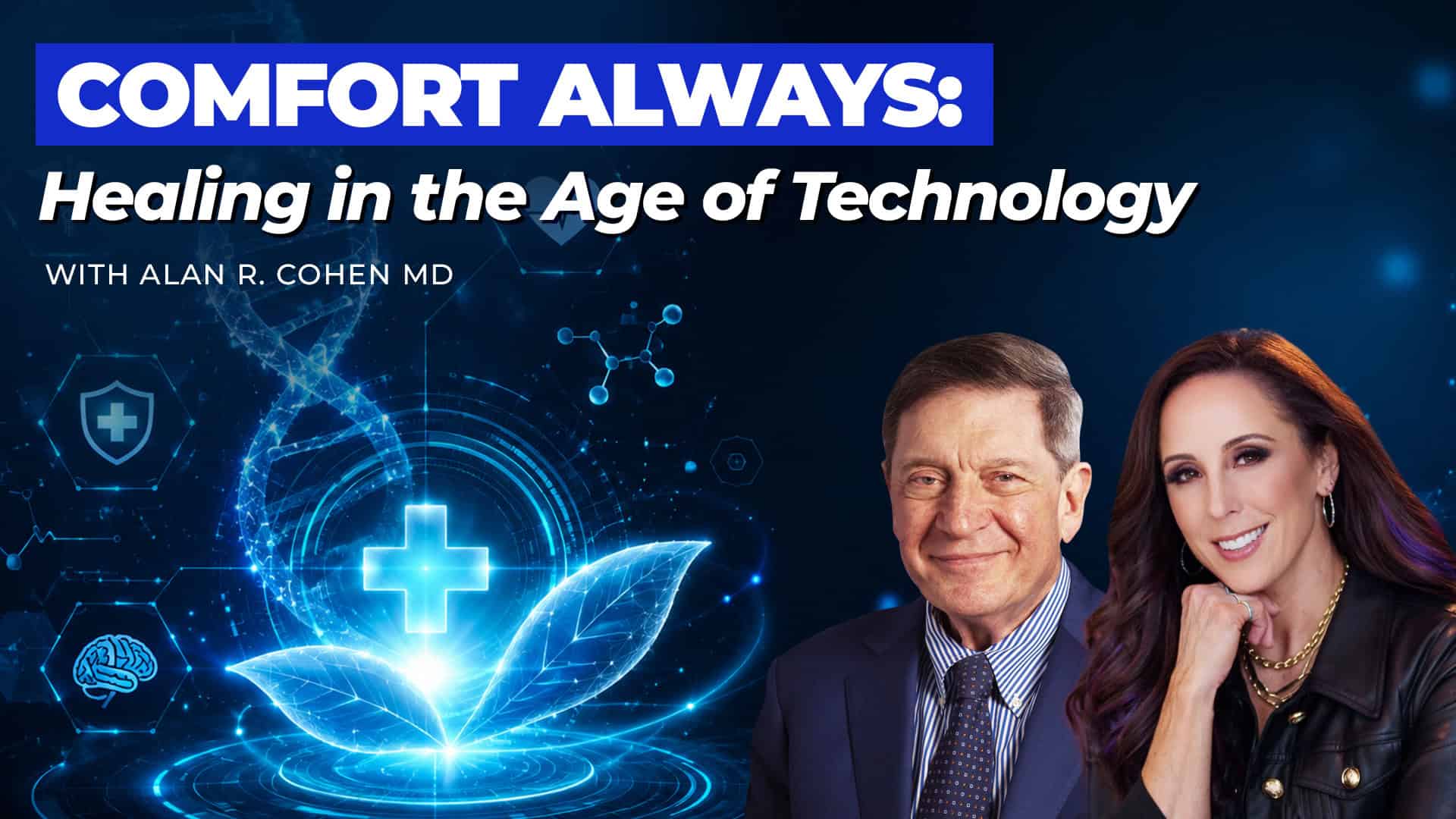
In this episode of Resiliency Radio with Dr. Jill, Dr. Jill Carnahan welcomes renowned pediatric neurosurgeon Dr. Alan R. Cohen for a thoughtful conversation about the future of medicine—and why compassion remains its most powerful tool.
Drawing on nearly four decades of caring for children with complex neurological conditions, Dr. Cohen shares lessons from his new book, Comfort Always: Healing in the Age of Technology. Together they explore how advanced technologies like AI, neuroimaging, and minimally invasive surgery are transforming healthcare, while reminding us that empathy, trust, and human connection remain at the heart of true healing.
Whether you're a healthcare professional, patient, caregiver, or simply passionate about compassionate medicine, this episode is a powerful reminder that technology may treat disease—but humanity heals people.
🔑 5 Key Discussions You'll Discover with Dr. Alan Cohen
① ❤️ The Human Side of Medicine
⇨ Technology can improve diagnosis and treatment, but healing begins with empathy, trust, and compassion.
⇨ Building meaningful relationships with patients and families remains the foundation of exceptional care.
② 🧠 Healing Beyond Technology
⇨ Advanced surgical tools, AI, and medical innovation are transforming healthcare.
⇨ Clinical judgment, bedside presence, and human connection remain irreplaceable.
③ 👨👩👧 The Power of Hope
⇨ Dr. Cohen shares remarkable patient stories that demonstrate the importance of optimism, perseverance, and keeping an open mind.
⇨ Sometimes the greatest breakthroughs come from questioning assumptions and reassessing difficult diagnoses.
④ 🤖 AI & The Future of Healthcare
⇨ Artificial intelligence can enhance diagnostics and improve clinical decision-making.
⇨ The physician's role as healer, listener, and compassionate guide will always remain essential.
⑤ 🌟 Redefining Success in Medicine
⇨ Success is measured not only by survival, but by improving quality of life for patients and families.
⇨ Medicine is both a science and an art that requires lifelong learning, humility, and humanity.
🔑 Key Takeaways with Dr. Alan Cohen
🔹 Compassion is one of the most powerful tools in medicine.
🔹 Technology should enhance—not replace—the doctor-patient relationship.
🔹 Hope, empathy, and communication improve healing outcomes.
🔹 AI will transform healthcare, but human connection remains irreplaceable.
🔹 Great physicians care for the person, not just the disease.
About Dr. Alan Cohen
Dr. Alan R. Cohen is a nationally recognized pediatric neurosurgeon, author, educator, and pioneer in minimally invasive neurosurgery. Throughout his distinguished career, he has authored more than 250 scientific publications, book chapters, and textbooks, while delivering hundreds of national and international presentations advancing pediatric neurosurgery.
His award-winning textbook, Pediatric Neurosurgery: Tricks of the Trade, received top honors from both the Association of American Publishers and the British Medical Association. Dr. Cohen has held editorial leadership positions for leading neurosurgical journals and is internationally recognized for his work in pediatric brain tumors, neuroendoscopy, surgical innovation, and compassionate patient care.
His latest book, Comfort Always: Healing in the Age of Technology, reflects on a lifetime of caring for children and their families while exploring the essential role of humanity in modern medicine.
🏥 Affiliation: Johns Hopkins University School of Medicine
📚 Featured Book: Comfort Always: Healing in the Age of Technology: https://a.co/d/0bCard4T
Dr. Jill Carnahan, MD – Leading Functional Medicine Doctor
Dr. Jill Carnahan, MD, ABIHM, ABoIM, IFMCP is internationally recognized as one of the most respected leaders in functional and integrative medicine. She is dually board-certified in Family Medicine and Integrative Holistic Medicine, and the founder and medical director of Flatiron Functional Medicine in Louisville, Colorado.
Widely known as a pioneer in environmental toxicity, mold-related illness, autoimmune disease, and resilience medicine, Dr. Carnahan combines cutting-edge science with compassionate, root-cause care. Her clinical approach integrates precision genomics, epigenetics, microbiome research, peptide therapy, and lifestyle interventions to transform health outcomes for patients worldwide.
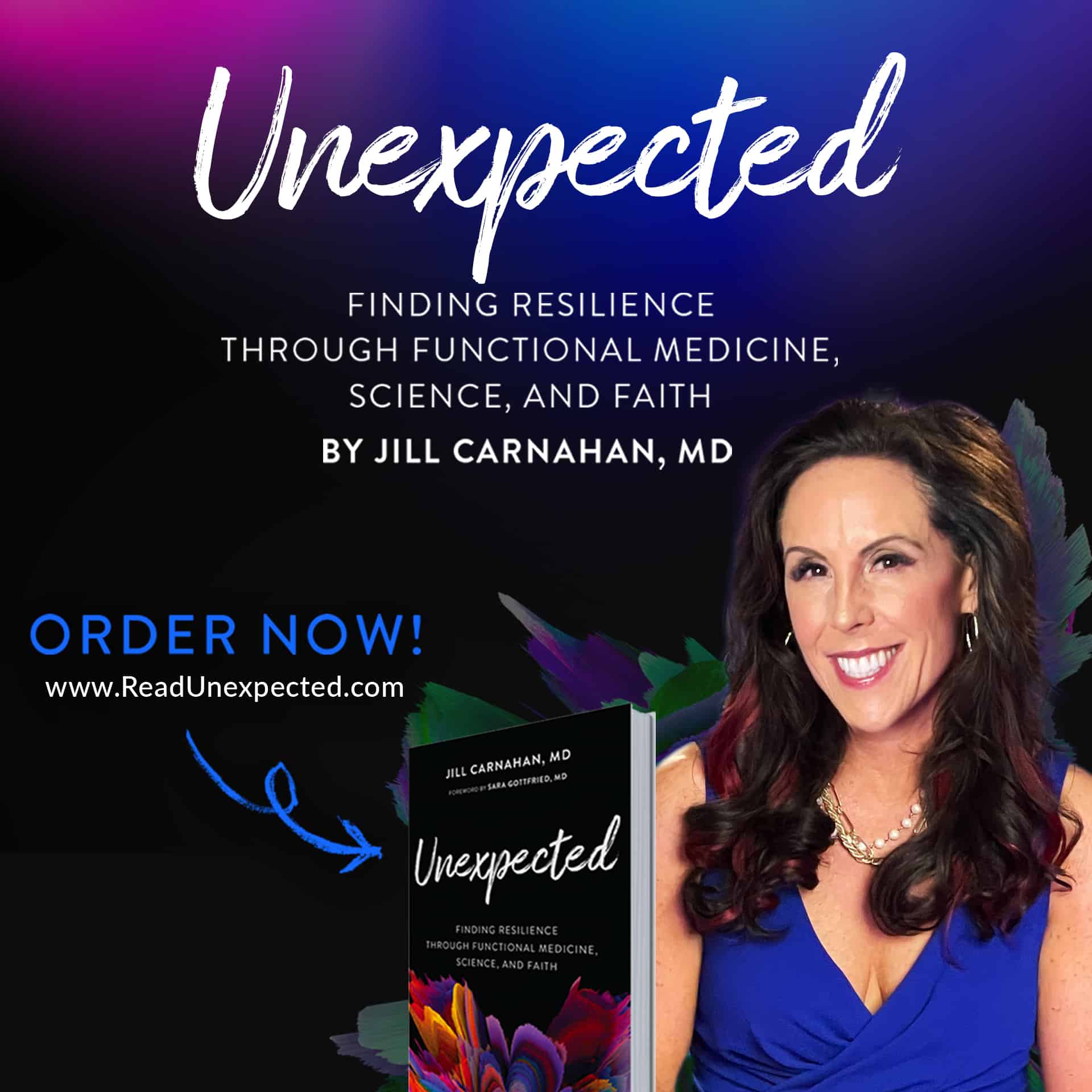
She is the author of the best-selling memoir Unexpected, which weaves her personal journey through cancer, Crohn’s disease, and mold-related illness with her professional expertise. Dr. Carnahan is also the executive producer of the award-winning documentary Doctor/Patient and the host of the popular podcast Resiliency Radio, which reaches over 500,000 global subscribers.
As an international keynote speaker, Dr. Carnahan has been featured at leading medical conferences including A4M, IFM, EPIC, and IPM Congress, and her work is frequently highlighted in major media outlets such as NBC, CBS, Fox News, Forbes, Parade, People, and MindBodyGreen.
With a reputation as both a scientist and a healer, Dr. Jill Carnahan is regarded as one of the top functional medicine doctors in the world, offering a unique blend of evidence-based research, innovation, and deeply personalized care.
The Podcast with Dr. Alan Cohen
The Video with Dr. Alan Cohen
Transcript
00:00
Dr. Jill Carnahan
Hey everybody. Welcome to Resiliency Radio, your go to podcast for the most cutting edge insights integrative and functional medicine. I'm your host, Dr. Jill and with each episode we dive into the heart of healing and personal transformation. Join me as I interview medical experts, world leaders, thought leaders and innovators of all types as we journey on our way to optimal healing and human performance. Today you are in for such a treat with Dr. Alan Karl Cohen. He's the author of Comfort Always and he's a long term pediatric neurosurgeon with some great stories and inspirational thoughts for us today. Stay tuned. I will introduce him in just a moment. Before I do, just a couple words of wisdom.
00:43
Dr. Jill Carnahan
First of all, if you are looking for a functional medicine expert to help you on your healing journey, we are accepting new patients at my clinic, Flat Iron Functional medicine in Louisville, Colorado. Just give us a call at 303-993-7910 or visit my website www.jillcarnahan.com for information services. I have two providers who are absolutely spectacular and work with me in all cases and you can get in for an intro call with them if you want to check it out or just schedule an appointment and we would love to see you and help you on your journey. Second is Dr. Jill. Health.com is my source for all things retail. We have curated an amazing group of products that are hopefully helpful on your healing journey. Some of which are my Dr. Joe Beauty line. This is one of my very personal favorites, the HA Collagen Booster.
01:33
Dr. Jill Carnahan
It is so luxurious, makes your skin glow. It's like dewy because it's so moisturizing with that hologen hyaluronic acid. If you're not sure what where to start, try this out. I promise you it's a love at first sight. It's my go to product that I take with me when I'm traveling. I use all the time. The other one you might want to check out is the Needle Free Serum. Good for little spots where you have wrinkles around your eyes or mouth. Love this stuff and you only need a few drops so it lasts a very long time. And that is all@doctor Jill health.com okay, let's introduce our guest. Dr. Alan Cohen is a nationally recognized pediatric neurosurgeon, author, educator and innovator in minimally invasive neurosurgery.
02:14
Dr. Jill Carnahan
Over the course of his career, he's authored more than 250 journal articles, book chapters and books, delivered hundreds of national lectures, and contributed extensively to the Advancing of field of pediatric neurosurgery. His award winning textbook, Pediatric Neurosurgery Tricks of the Trade received top honors from both association of American Publishers and the British Medical Association. He has served in editorial leadership roles for major neurosurgical journals and is widely recognized for his work in pediatric brain tumors and many surgical interventions. Now his latest book, Comfort Always Is for the General Public. Healing in the Age of Technology. You're going to love this book and love this interview. Let's join Dr. Alan Cohen. Dr. Cohen, we get a lot of requests on Resiliency Radio for guests and we have some amazing people.
03:00
Dr. Jill Carnahan
And I because we have so many requests, I have to say no a lot of times. But when I got the request from your team, it was an absolute yes because I love your philosophy, I love what you do, and I can't wait to get to know you better today. What I love to start with guest is how did you get to where you're at now as far as how did you always know you were going to be a doctor? How did you get into medicine? And, and then the field of pediatric neurosurgery, which is so poignant in so many ways. How did you get into that field? Tell us a little bit about your journey.
03:31
Dr. Alan Cohen
Well, thank you. It's an interesting story. I actually never knew that there was a field of pediatric neurosurgery when I was in medical school. And I end up being a pediatric neurosurgeon for the past 40 years. I grew up in Poughkeepsie, New York, a small town up the Hudson river. And my dad was a strong influence in my life. He was an ophthalmologist and he would take me when I was a teenager to watch him do his microsurgery. And it was really very interesting. I wanted to be like him. Then I realized he was a major figure in the community and I could never live up to those expectations. And so I had to choose something else. And I went to medical school. I was in public schools and somehow miraculously got into Harvard. Wow. And I was way over my head there.
04:19
Dr. Alan Cohen
Everybody was a genius. I didn't know what I was doing there. And I went to medical school at Cornell. And as I said in medical school, I started out internal medicine. I enjoyed that. But I became very interested in the nervous system. And I didn't even know that there was a field of pediatric neurosurgery. But I did my residency in New York at nyu and I came under the influence of a guy Named Fred Epstein, who was a larger than life figure. And basically I said I'd like to be like him. And so I went into pediatric neurosurgery, some people say, because I had mental ability of a five year old. But I get along well with little kids. And it's a fascinating field because my particular interest is in pediatric brain tumors.
05:06
Dr. Alan Cohen
And brain tumors have the unusual distinction of being the number one cause of cancer death in children. Brain cancer, it's the number one solid tumor in childhood. And it's a field where you become very intimately related with the child and the family, you become a member of the family. And it's a very powerful field. And I've spent most of my career working and writing with academic people about technical advances in my field, which have been great. This is the first time I decided to try to write for the general public and what I've done, I kept a diary over the years and the decades and some fascinating cases that are there. And I decided this time to write about the non technical things that we deal with in neurosurgery, particularly in pediatric neurosurgery, that make the field so special.
06:00
Dr. Jill Carnahan
Wow, I love that. And like I said, I knew I would love getting to know you. It so resonates because in my recent book I talked about faith and science, right? And to me it's kind of like the right brain, left brain, the practice of medicine as far as the science, the research, all of this incredible knowledge that brings to us the best technology, the best treatments. But if we don't have that heart side, which is the connection with the patient, the trust that you build between the family. And for you, as a pediatric neurosurgeon, you're treating more than just a patient because you got the parents and the patient and maybe other family members. And it's so important, I believe, especially in your field, that trust, like you said, you're part of the family.
06:37
Dr. Jill Carnahan
And I can't wait for people to get a hold of a copy or a book. It's called Comfort Always. We're going to talk about that today because I really think that now more than ever, science, medicine, you and I, we need to look beyond just the science and go to how do we integrate the heart, the connection, the humanity of medicine and the science together. Because I think true healing brings them together. Tell us a little bit about your perspective on that and why you chose now to write Comfort Always.
07:07
Dr. Alan Cohen
Well, I think our perspective is very similar. You talk about faith and science and I have this book Comfort always where I talk about what I think is the forgotten art of humanity in the age of modern technology. And the idea is that technology treats the disease, but humanity heals the patient. And I think you need a combination of both of those. And in my field, the stories are riveting. They're much more intense than anything you would see on television. These are patient stories. Some of them go back 30, 40 years. Some of my patients are now adults with children of their own. And it's a real treat to be an older pediatric neurosurgeon, be able to follow the lives of the patients that I've cared for over the decades.
07:51
Dr. Jill Carnahan
How amazing. And I bet you have story after story of what happened. And how much do you believe that? You obviously had incredible technology and you have written so many research articles and been well published, but how much, if you had to give a percentage, do you think was your relationship with the patients in their healing? Like how much we can say the technology was of course important and your skill as a surgeon, but where do we draw that line between just the relationship and the trust that we build being part of the healing process?
08:23
Dr. Alan Cohen
Yeah, I think it's extremely important and it's not something that people don't know about, but what we have now is an ability with technology to do things that couldn't be done in the operating room even a few decades ago. We have the MRI and the CT and lasers and ultrasound and intraoperative MRI and things that are adjuncts that help us get through cases and cure tumors that couldn't be cured before and prolong life where it couldn't have been prolonged even decades ago. There are major advances, but what happens, it's the same thing with AI, with artificial intelligence. If it's not managed carefully, it has the ability to drive a wedge between the doctor and the patient and the family. And that's all I'm doing, is trying to remind people about the importance of the non technical aspects of patient care.
09:14
Dr. Alan Cohen
The simple things like kindness and compassion and empathy and optimism, hope, things like that. You can't quantify it. But empathy is something that may be hard to describe, but when it's not there, the patient, the family, they know that it's not there. And I think it's the combination that are synergistic, humanity and technology. And we tend to forget the former. And that's my attempt to try to remind people in this book how brilliantly.
09:43
Dr. Jill Carnahan
Spoken as a true expert would. I really love that and could not agree more. And could you Share a time or two where maybe like a patient case, obviously your book is full of them, so I hope people could get a copy of that. But if you can think back of some of the real significant ones and maybe where someone came in and the family obviously most of the time is terrified it's their beloved child and how that, you know, conversation and giving them the hope or the options of what you could offer shifted. Do you want to give us a couple like just sample vignettes on some of those cases?
10:19
Dr. Alan Cohen
Well, sure. You know, what I've noted over the years is that probably one of the most difficult things I ever have to do is to tell a family, I'm sorry to give you this news, but your child has a brain tumor. Because I know that it's going to forever change the lives of the child and the family. And it's never easy, it's never gotten easy. It's always emotionally intense. But we can do things now that we couldn't do before. And I think it's important to develop this bond between the doctor and the patient and the family. There's a tendency for people want to sugarcoat and give good information. No one wants to break bad news to people.
10:58
Dr. Alan Cohen
But I think the importance of the doctor, patient, family relationship is to create that bond which can last for decades to become a member of the family that develop the trust that's necessary for us to go ahead and fight these difficult battles together. One example of a case that was particularly memorable to me is the second chapter about a girl named Abigail. I got a phone call, I was working at Boston Children's Hospital at the time from a mother who lived out of state who had a two month old daughter. Before the baby was born, she was diagnosed with a genetic disorder, down syndrome. And then worse than that, they did an ultrasound while the baby's still in the mother's uterus and showed a giant brain tumor in the left hemisphere of the brain. And it appeared to be a malignant brain tumor.
11:59
Dr. Alan Cohen
They continued to follow it with ultrasounds and MRI is done even before the baby was born. And it was a malignant brain tumor that filled the hemisphere of the brain and this two month, this baby before she was born. So they made a plan to have the baby go home with the parents for hospice care so that they wouldn't live the short life that she had in the ICU and made sense the family. You can imagine how unbelievably difficult it would be to make plans to bury their unborn child when she was born and they took her on trips to the ocean so that she could touch the sand and see the ocean, thinking that the next time they would be back there would be to bury her. She was born, she was doing poorly. The tumor got even bigger.
12:48
Dr. Alan Cohen
But then she started getting a little better. And the mother, who worked as a nurse, a neurology neurosurgery nurse, said, gee, this doesn't seem right. She called us, we took a look at the baby and thought we didn't want to give her a death sentence. We thought it was reasonable enough to take a look, even though these fetal brain tumors are usually bad actors. And we operated and it was a giant brain tumor, but it was benign. It was a benign tumor and were able to remove it. And who knew that was going to happen? That was 11 years ago. She's now in the fifth grade, she has two boyfriends and she's adored by her parents and her friends. And stories like that you just can't see on television. It's just a human endeavor, this resilience that the strength of this family is remarkable.
13:34
Dr. Alan Cohen
And those are the stories I've tried to tell in this book because they're very intimate and very personal and very powerful.
13:43
Dr. Jill Carnahan
Hey guys, Just a quick interruption for this episode to remind you if you haven't yet got a copy of Unexpected Finding Resilience through Functional Medicine, Science and Faith, you can find my book anywhere books are sold. If you prefer to get a signed copy, just order that off drjillhealth.com and I will personally sign that to you if you just write that in the notes. But let's get back to this amazing show with Dr. Alan Cohen. And again, this is full of this. So if you guys are out there again, we're going to give you a website where to find this. But I highly recommend this is going to be my next read for sure.
14:15
Dr. Jill Carnahan
Dr. Cohen, as you talk about that, what you were faced with was the medical system says, X, Y, Z, this is fatal, this is going to happen and this is the outcome. And you had to at some point say, what else is possible? Could there be a possibility that this crazy scenario could actually have a good outcome? How often have you found that open mindedness and curiosity about what else is possible? Take it to an outcome like you just described where the medical system gives us a pretty much, you know, this is not going to go well. And then you see something different because you believe that there might be some possibility of hope.
14:53
Dr. Alan Cohen
There was a professor named William Osler who was one of the founding fathers of Johns Hopkins in the 1880s and he was a brilliant man. And he said that the good physician treats the disease, the great physician treats the patient who has the disease. And I think that's the thing that gets lost in this era of technology. And so, yeah, I mean, you know, not every case can be cured, but I think optimism is what we would call a moral imperative because words can help heal and we can't cure everybody, but we can do things, we can treat pain, we can control disease, we can prolong life.
15:33
Dr. Alan Cohen
And I think what's important is not to give false hope, but to give some type of optimism so that you can work with the family, so that every patient should want to come back to visit the doctor, even when the news is not good, because there's always something to do together. It's that bond that we tend to forget, the bond between doctor and patient. One of the things that I notice is that in my era when I started, we didn't have the electronic medical record. And that's a, you know, computer based system where we can share information across the world about patient care. And it's really made major advances for us, but it's also got its problems. You know, it's a lot of information put in by the residents is copied and paste. It's garbage in, garbage out.
16:19
Dr. Alan Cohen
And some of the ICD codes, the international classification of diseases are crazy, like sucked into a jet engine. Follow up visit. These are true codes.
16:31
Dr. Jill Carnahan
I know, right?
16:31
Dr. Alan Cohen
Yes, it's unbelievable. And, and so the problem is, what I think is, the problem is that we've got great strides from the technology, but technology treats the disease and we've tended to forget the simple things, the non technical things that make us physicians and make us human. And for example, sometimes if you go visit your doctor, you'll notice that the doctor will be sitting at the computer typing information into the computer. Sometimes you can look at the back of your doctor's head and you feel like an afterthought. The doctor is a caregiver, a health caregiver. The patient is a client. That's the business of medicine. Now my doctor is very good, but if we forget about that, we forget about the need to lay on the hands and the art of healing. And it's a lost art.
17:18
Dr. Alan Cohen
And I think this is just a book to remind people of the power of that art, the art of healing.
17:24
Dr. Jill Carnahan
So well said. I can't get over sometimes recently when I get patients that have come from the er, have come from a doctor visit and they'll, you know, we'll talk and I'll say, oh, you had abdominal pain to the exam in your belly. And sometimes the answer is no, they didn't touch me. And that's really sad because I think, like your subtitle, healing in the Age of Technology. So many medical students and interns are, you know, plugged into their phones and their apps, checking medical databases and open AI evidence and those kinds of things, which are great resources that we have now.
17:56
Dr. Jill Carnahan
But if they forget the art of connection with a human, which is the patient in front of us or the physical exam, how have you seen over your 40 years that change to where this kind of like you said, with the ehr, but also just the amount of things we can do, whether it's imaging or technology interventions. Have you seen, I'm assuming you've worked with residents and students for many years. Have you seen the generations change in how they're appearing in their rotations?
18:22
Dr. Alan Cohen
Yeah, and we can do things. In other words, someone comes in with a complaint, we can now go to imaging. We can get imaging of the entire body. We can send a barrage of lab tests, we can look at things on a molecular level. But we tend to forget the power of the bedside history and physical exam. Common sense. And a lot of what we do, we get information, we see little shadows that may or may not be significant. We tend to forget the importance of working at the bedside. So it's just something that's just common sense. But the more I see it, the more it's real. It's real and I think people need to be reminded of it. That's the main purpose.
18:58
Dr. Jill Carnahan
So well said. One of the thought, as you were talking earlier, is so often we have randomized controlled trials and we have these incredible data points that we bring into our practice. But then who is really that n of 1? Who is that one patient? And do they fit on the curve from these things? How do you balance great randomized, high quality trials that are bringing us evidence to use and also the fact that each patient is a very individual situation. Is there a philosophy or perspective on that you have to share?
19:29
Dr. Alan Cohen
And that's exactly the point. You know, everybody wants to have evidence based medicine. There's a lot of crazy things now on the Internet, cures for autism that really shouldn't be even thought about. And randomized trials certainly have a role. But one of the things that we see in my field, for example, is that we categorize brain tumors by calling them A name like meningioma or glioblastoma or medulloblastoma. We look at it under a microscop. Now we have next generation sequencing. We can look at the molecular levels of these tumors, and we can develop designer drugs that are more potent against the tumor and less toxic to the patient. A major advance. But the technology has gone so far and so quick that these diseases can be categorized into subcategories and then subcategories into further categories.
20:20
Dr. Alan Cohen
And so there's not enough patients in each one of these subcategories to be able to draw meaningful conclusions. So it's a balance of using this technology along with common sense. And I think some of the older doctors are the ones who use fewer tests, or as we use these tests, we use them with some common sense because we see all sorts of shadows. And just because something shows up on an imaging study, we treat the patient, not the X ray.
20:47
Dr. Jill Carnahan
Excellent. I couldn't agree more. And I really like that. I have a 30 something with a recurrent neuroblastoma. And similarly, I'm just following as the primary. So I'm not the expert, but there's a very unique drug for his cell type. Obviously that's. But when we talked through that, were talking about the evidence, and it's very weak because there's so few that are. Exactly.
21:06
Dr. Alan Cohen
That's exactly the problem. Yeah.
21:08
Dr. Jill Carnahan
So totally understand that. I want to shift just now because we have a lot of doctors who listen to us and professionals that are in this field or searching for answers and motivation and encouragement. One of the other things I see in our field is so many physicians, partially because of bureaucracy and productivity and EMRs and a lot of things we just talked about losing their love for medicine. They're feeling burnout, they're feeling exhausted, and they're spending more hours charting than actually with the patients. Any thoughts on how we can encourage our colleagues? Because I think your thoughts on the book Comfort always, and my thoughts as well in practice is if we can really have that connection with patients, it brings back the joy.
21:51
Dr. Jill Carnahan
Like, I love going to work every day, I love my job, and I would never change it for anything. But I've done less of that disconnect and more of the connection. What words could you give to young physicians to maybe avoid that burnout trap?
22:05
Dr. Alan Cohen
I think you gave it to young and older physicians. It's difficult to manage, and I think you have to find a balance. The electronic health record is a major help, but it's also a source of burnout. And we spend hours in the evenings and nights charting and copying and pasting, and it's very easy to burn out. And I think you have to remember, a thousand years ago, there was a guy my monitor studies who famously said, may I never forget that the patient is a fellow creature in pain. May I never consider him merely a vessel of disease. And if we revert back to the patient as the primary focus, then we put up with some of this. But it is a problem. It needs to be harnessed. The EHR computer technology, artificial intelligence.
22:52
Dr. Alan Cohen
It's going to make major strides in our ability to treat, but it has to be balanced and it has to be regulated. And that's going to be the challenge in the future.
23:01
Dr. Jill Carnahan
Wow. It's so true. It's interesting because I think maybe six to 12, maybe 18 months ago, as I started hearing AI and AI in medicine and radiology, it's profound and amazing. And there's a piece of me that was like, whoa, am I going to have a job? Like, truly? And then I realized, oh, wait, that connection that I have, my patient relationships, there's no way that I will ever outsource those relationships. And it's so powerful that I think that will be the thing that will continue to advance and will continue to get better ability. I think the complex pattern recognition that we are gifted with as physicians probably will be somewhat outsourced to AI because it can do it better with more data. But again, that connection will never change.
23:43
Dr. Alan Cohen
You know, when I was started out, we didn't have computers, we didn't have cell phones, and. And AI was in its fetal state. And now it's coming rapidly down. And, you know, people, famous people. Stephen Hawking, brilliant scientist, said that AI may lead to the end of civilization. And it's scary because these are smart people. I think it has a role in my field. In other words, if I have an unusual mri, I can look at it and try to make a differential diagnosis, show it to my colleagues. But what I can also do is, if I had 10,000 MRIs with similar pictures, AI can help me make the diagnosis. I don't think it's going to replace the physician, the surgeon, but it's unbelievable what it can do.
24:29
Dr. Alan Cohen
And there was a guy, Gary Kasper, Gary Kasparov, the Russian grandmaster in chess, said something to the effect that AI is not going to replace humans, but people who use AI will replace those who don't. And I think we've got to embrace that technology because it's there. We just Embrace it and then regulate it.
24:49
Dr. Jill Carnahan
Fantastic. I could agree more because it's really exciting with. Speaking of technologies, you talked about just a little bit of this. I always think it's like this exponential advance in technology in our lives and more so with you. Looking over the 40 years you've been practicing, what are some of the most exciting things you've seen in the last decade or so in regards to pediatric, especially brain tumors?
25:11
Dr. Alan Cohen
Well, we have microsurgical techniques. We have an intraoperative MRI scan so that we can, when there's a question, is there residual tumor around the corner? We can take a picture before the patient wakes up. And particularly if it's a young child who's intubated for the surgery, we can get a follow up MRI before the child wakes up so we don't have to re intubate the patient. So that takes some of the guesswork out. We have neuromonitoring where we can put electrodes on the brain, we can stimulate the brain and look for responses, and it helps make surgery safer. There are lots. We have endoscopes and exoscopes, small tubes, the same way the general surgeons take out the gallbladder or the appendix. We can go deep in the ventricles of the brain with minimal invasiveness and take out selected tumors.
25:59
Dr. Alan Cohen
But it's also important to remember that someone famous said that a fool with a tool is still a fool. And so you got to remember that it's not the instrument that's going to do the job, it's the person who's using it.
26:12
Dr. Jill Carnahan
So true. I never forget the book, and I'm blanking on the author, but it was the man who mistook his wife for a hat.
26:19
Dr. Alan Cohen
Oliver Sacks.
26:20
Dr. Jill Carnahan
Yes. Thank you. My favorites.
26:22
Dr. Alan Cohen
Yeah.
26:23
Dr. Jill Carnahan
And, and the point of that was these brain tumors can manifest with very unusual behaviors and things depending on the area. Is there any particular case or story that you could tell us about an unusual presentation of a brain tumor in a child?
26:40
Dr. Alan Cohen
Well, there was another child who was a little baby, went to see his pediatrician for a newborn visit and he had a big head. He would look fine. He was two months old. And the pediatrician said, you know, it looks pretty good, but I'm just confused why the head should be so big. So she obtained a CT of the head. And the CT showed a giant tumor filling one hemisphere of the brain, multiple cysts and solid tumor and a big head. And again, the diagnosis was made that this was a malignant brain tumor. And we decided to go in and make a diagnosis. The family, as you can imagine, was distraught. And went and opened up the head and we had a real foul smell. And it turned out that this wasn't a tumor at all.
27:34
Dr. Alan Cohen
With all the technology, with all the technology that we have with the MRI and high resolution optics, this was an infection. It was a multiloculated brain abscess, an infection which were able to remove, treat with antibiotics. And now this was a. When he was a baby, now he's graduated from high school. So were completely wrong with the diagnosis, with all our technology. And so I think you always have to have an open mind with everything. There's a differential diagnosis, but medicine is an art of probability and we always want to have certainty, but a lot of what we do is based on uncertainty. And as long as you have a differential diagnosis, you keep everything there so that if you're wrong, you find your way back. But, you know, that made a huge difference in this poor kid's life.
28:22
Dr. Alan Cohen
He's a healthy kid who's now graduated from college, from high school.
28:26
Dr. Jill Carnahan
Yeah. Unbelievable. So one thing in my field, I do a lot of environmental medicine and infectious cases and things. And I often find that if there's a hidden infection like the case you just talked about, or a toxic exposure like mold or metals or something in the environment, even now, nanoparticulate from exhaust, it can really affect the body, but also the brain. Children are a little more resilient because they don't have life burden. But I remember reading a study 2001, which is now over 20 years, where cord blood of infants in Canada showed over 200 chemicals at birth. So they're kind of coming into the world with us. Do you see?
29:02
Dr. Jill Carnahan
I know you're a surgeon, so you're maybe not looking as much as that, but do you have any insights or thoughts on how the environmental toxic load or some things we're exposed to might be affecting brain tumors in children?
29:12
Dr. Alan Cohen
Yeah, it's scary what goes on when we learn about these elements that we can find in the blood. And I don't know the answer. The only thing that we know that's associated with the development of malignant brain tumors and external factor is ionizing radiation. But there are other things that we just don't know enough about it now. In fact, you know, for over 100 years we've been taking out brain tumors and we still know very little. Now we can look at them on a molecular level, but we still don't know the best available treatments. Many of the Tumors that were fatal uniformly can be treated and many can be cured, but not all. And when I was in training, leukemia was the number one cause of cancer death in kids. And now acute lymphoblastic leukemia can be cured in up to 95% of cases.
29:59
Dr. Alan Cohen
And a lot of advances have been made in the treatment of brain tumors, but not as many. There's still a lot of room to go. One of the problems in pediatric brain tumors is that there are so many different types, these embryonal tumors that kids are born with, that there's not enough information about it. And so federal funding tends to go for the adult tumors, the glioblastoma, the tumor that killed Senator McCain and Senator Kennedy. But we don't have that in kids because there are so many different types of tumors. And so we need to support research in this area. It's coming forward and it's coming quickly. But that's going to be the challenge for the future. The challenge is not going to be the surgical techniques. We've got that. It's going to be making a better diagnosis and finding better treatments interesting.
30:44
Dr. Jill Carnahan
And maybe we'll find that in utero exposure or mother, like there's something there that we will actually see because we're starting to see those patterns generationally on, you know, mother might be exposed to. Well, we know for like uterine and breast cancer, there's often those correlations. So maybe at some point, since these develop frequently in utero, it'll be interesting.
31:04
Dr. Alan Cohen
And genetics plays a huge role too. We're learning a lot more about that with molecular biology.
31:09
Dr. Jill Carnahan
Yeah, those little snips that create difficulty with detecting cancer cells and those kinds of things, for sure. Well, you're a surgeon, a scientist, an educator, a leader, and you've been doing this for so long. How do you think your definition of success has changed over the 40 years you've been in practice from coming out of medical school to now?
31:28
Dr. Alan Cohen
Well, I mean, our goal is to prolong life, to celebrate life, to forestall death and to improve the quality of life if we can't cure the child and just to develop that, to be able to. The goal is to take the child and return him or her back to their life, to their family. And one of the nice things about this is we're not dealing with minor, like an ingrown toenail. These are life threatening illnesses. And it's not me, it's a whole team of oncologists and critical care specialists and radiologists and nursing staff. It's a whole team that bonds together. And when we have a tough time, the team gets depressed too. I mean, it takes a toll on everybody.
32:08
Dr. Alan Cohen
But we work as a team and that's one of the nice things about being in a big medical center, that you're not there alone. But I feel my job as a pediatric neurosurgeon is to develop that relationship with the child. And that's what I try to do.
32:22
Dr. Jill Carnahan
Amazing. Well, as we start to close the interview, I would love to ask you, is there anything that surprised you about writing the book? I mean, it sounds like you had some of these in a journal for over your practice, but as you actually sat down to write it, was there any pattern that emerged or thought that happened or thing that surprised you in writing the book?
32:41
Dr. Alan Cohen
Oh my God. Yeah. You know, I've written many articles for journals, research journals, and sometimes they get accepted, sometimes they get rejected. It's depressing to get the rejections or ask for revisions. And it's hard work. But writing for the general public, for publishers is completely different. And so what I had to do is do this in the evenings after cases, late at night. And that's why it took several years to do this, because I had to put these stories together. But writing it is just part of it. Then you try to get it published and you know, the publishers want to see the autobiography of Taylor Swift. And here I am, a schlub pediatric neurosurgeon. So you have to. Sometimes you write to publishers and they won't even open the email. So it's a different world.
33:29
Dr. Alan Cohen
And I think it's just like anything in life, perseverance is what's important. You just have to keep trying.
33:36
Dr. Jill Carnahan
I am so glad you did. And like I said, I personally cannot wait to get my hands on your book. If people who are listening want to know more, where to find you, where to get a copy of your book, where can they go?
33:46
Dr. Alan Cohen
I hope you like it. It's on Amazon. Comfort Always.
33:49
Dr. Jill Carnahan
Perfect. Yeah, Comfort Always. And the subtitle is Healing in the age of technology. Dr. Alan Cohen, it has been an absolute pleasure to have you on. I hope many people hear this. Guys, if you're listening and you know someone who might benefit, please do share this episode. I want to get this book in the hands of as many people as possible and thank you for your decades long work in this field and for just bringing the humanity back to medicine.
34:16
Dr. Alan Cohen
Thank you so much. Dr. Jill.
34:19
Dr. Jill Carnahan
Hey guys. I don't know about you, but this may be one of my favorite episodes of Resiliency Radio. I just love Dr. Cohen's heart for children and for his work in the world and that healing connection. I hope you've enjoyed this episode and if it's touched your heart, please go out, check out his book, and then share this episode with a friend. If you haven't yet subscribed or liked or hit the bell to be notified of future episodes here on YouTube, please do so. If you're anywhere else where you listen to podcasts, please do stop by and leave us a review. It helps us to reach more people. As you know, we have new episodes out every week, so I look forward to seeing you next week for a new episode of Resiliency Radio. Until then, make it a great day.
* These statements have not been evaluated by the Food and Drug Administration. The product mentioned in this article are not intended to diagnose, treat, cure, or prevent any disease. The information in this article is not intended to replace any recommendations or relationship with your physician. Please review references sited at end of article for scientific support of any claims made.




Share: